

Epigenetic Silencing of Nucleolar rRNA Genes in Alzheimer's Disease
Open accessThe DOI matches its Crossref record; 38 of the 38 references it cites were found in a registry or an index.
Abstract
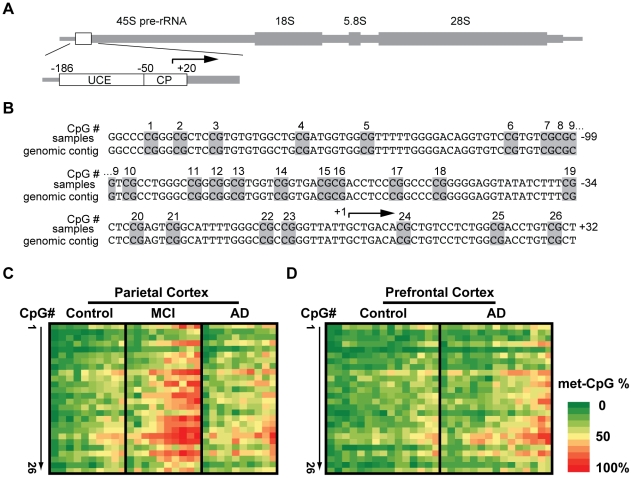
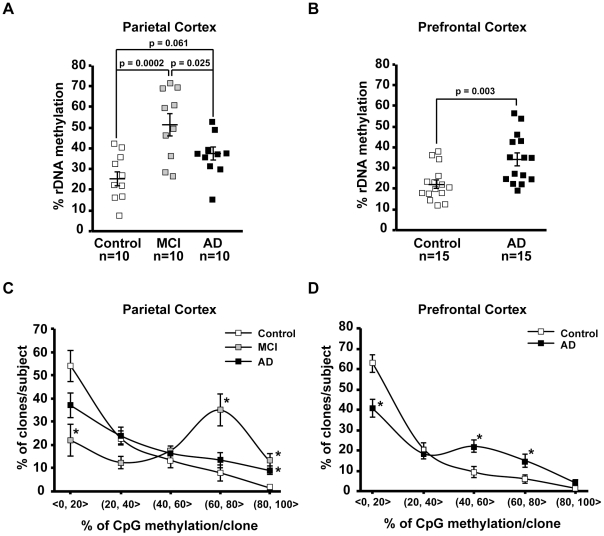
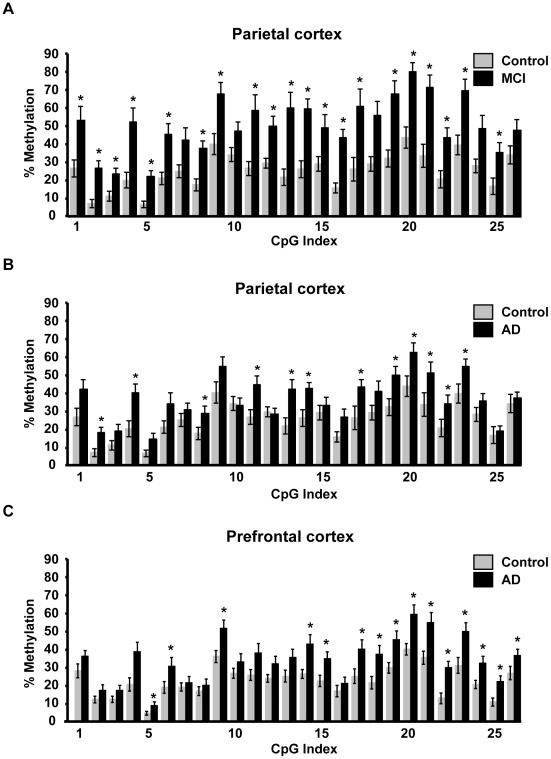
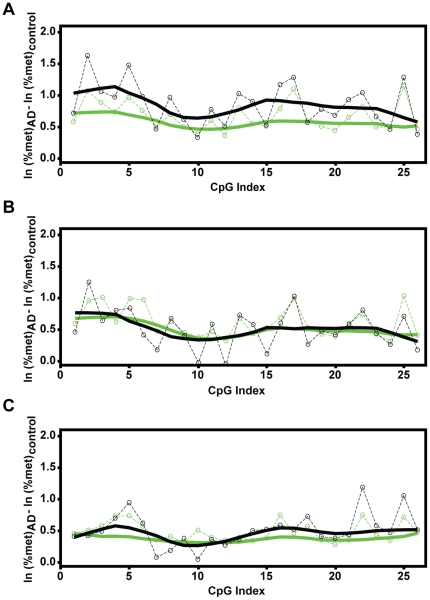
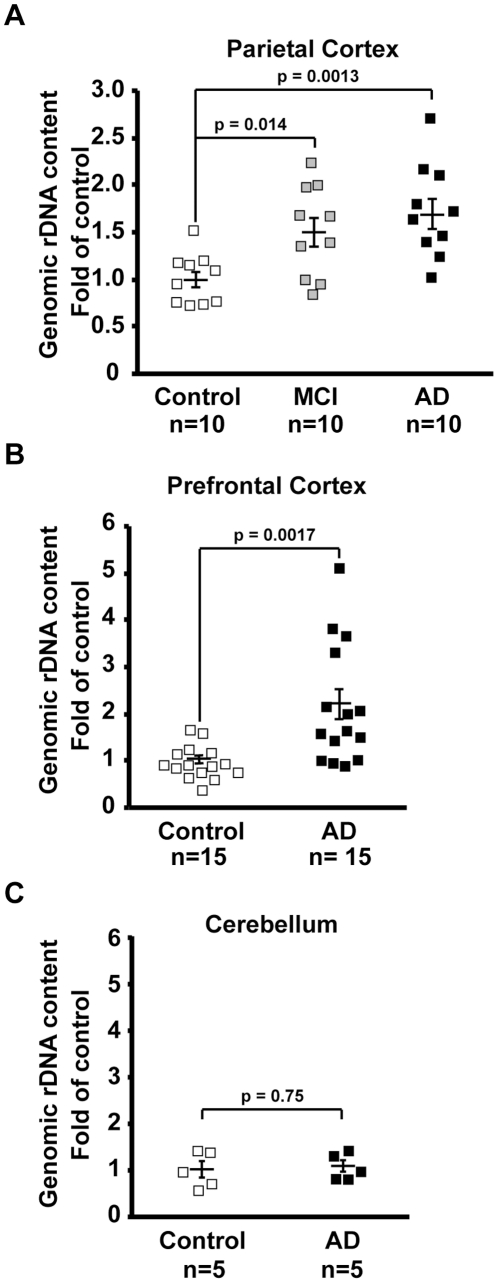
BACKGROUND: Ribosomal deficits are documented in mild cognitive impairment (MCI), which often represents an early stage Alzheimer's disease (AD), as well as in advanced AD. The nucleolar rRNA genes (rDNA), transcription of which is critical for ribosomal biogenesis, are regulated by epigenetic silencing including promoter CpG methylation. METHODOLOGY/PRINCIPAL FINDINGS: To assess whether CpG methylation of the rDNA promoter was dysregulated across the AD spectrum, we analyzed brain samples from 10 MCI-, 23 AD-, and, 24 age-matched control individuals using bisulfite mapping. The rDNA promoter became hypermethylated in cerebro-cortical samples from MCI and AD groups. In parietal cortex, the rDNA promoter was hypermethylated more in MCI than in advanced AD. The cytosine methylation of total genomic DNA was similar in AD, MCI, and control samples. Consistent with a notion that hypermethylation-mediated silencing of the nucleolar chromatin stabilizes rDNA loci, preventing their senescence-associated loss, genomic rDNA content was elevated in cerebrocortical samples from MCI and AD groups. CONCLUSIONS/SIGNIFICANCE: In conclusion, rDNA hypermethylation could be a new epigenetic marker of AD. Moreover, silencing of nucleolar chromatin may occur during early stages of AD pathology and play a role in AD-related ribosomal deficits and, ultimately, dementia.
Overview
The claims and statistics of this paper haven’t been checked yet.
Free: it reads the open-access text and checks the first 5 claims that cite a source we can check. Create a free account to check every claim.
Integrity signals
Registry
Cites
Statistics
Figures
Verification
Claims the paper makes
The claims and statistics of this paper haven’t been checked yet.
Free: it reads the open-access text and checks the first 5 claims that cite a source we can check. Create a free account to check every claim.
Claims other papers make about this one
Each is checked against this paper’s own text: does it say what the citing paper says it does?
The cited source says what the claim attributes to it.
In the citing paper
“other factors, as epigenetic regulation of rDNA 80, are probably implicated in the altered rRNA biogenesis in AD.”
From Altered Machinery of Protein Synthesis in Alzheimer's: From the Nucleolus to the Ribosome (2016) · cites this paper as [80]
Self-check
Percentages, sums and reported differences re-computed from the paper’s own numbers.
The self-check needs the paper’s full text.
Citations
Cites
In silico prediction of protein-protein interactions in human macrophages
Souiai, O., Guerfali, F., Ben Miled, S., Brun, C., & Benkahla, A. (2014) · BMC Research Notes · doi:10.1186/1756-0500-7-157 · Cited by 10,803
Significance analysis of microarrays applied to the ionizing radiation response
Tusher, V. G., Tibshirani, R., & Chu, G. (2001) · Proceedings of the National Academy of Sciences · doi:10.1073/pnas.091062498 · Cited by 10,568
Epigenetic programming by maternal behavior
Weaver, I. C. G., Cervoni, N., Champagne, F. A., D'Alessio, A. C., Sharma, S., Seckl, J. R., Dymov, S., Szyf, M., & Meaney, M. J. (2004) · Nature Neuroscience · doi:10.1038/nn1276 · Cited by 6,177 · cited 1×
“reducing methylation of the glucocorticoid receptor gene promoter in the brain [3].”
BackgroundDNA methylation landscapes: Provocative insights from epigenomics
Suzuki, M. M., & Bird, A. (2008) · Nature Reviews Genetics · doi:10.1038/nrg2341 · Cited by 3,039 · cited 1×
“. Instead, they involve chemical modifications of DNA and/or histones. Cytosine methylation at DNA CpG sites is the principal epigenetic modification of DNA that silences gene expression”
BackgroundHydroxylation of 5-Methylcytosine by TET1 Promotes Active DNA Demethylation in the Adult Brain
Guo, J. U., Su, Y., Zhong, C., Ming, G.-L., & Song, H. (2011) · Cell · doi:10.1016/j.cell.2011.03.022 · Cited by 1,360
GtRNAdb: a database of transfer RNA genes detected in genomic sequence
Chan, P. P., & Lowe, T. M. (2009) · Nucleic Acids Research · doi:10.1093/nar/gkn787 · Cited by 877 · cited 1×
“For normalization, the gene for tRNA was selected as it represents repeated DNA (17 almost identical copies per haploid) that, in contrast to rDNA, is not clustered together [23].”
BackgroundThe Epigenetics of rRNA Genes: From Molecular to Chromosome Biology
McStay, B., & Grummt, I. (2008) · Annual Review of Cell and Developmental Biology · doi:10.1146/annurev.cellbio.24.110707.175259 · Cited by 526 · cited 5×
“The rDNA promoter methylation reduces Pol1-mediated transcription of rRNA [7].”
BackgroundResultInfluentialAge-Specific Epigenetic Drift in Late-Onset Alzheimer's Disease
Wang, S.-C., Oelze, B., & Schumacher, A. (2008) · PLoS ONE · doi:10.1371/journal.pone.0002698 · Cited by 466
Ribosome Dysfunction Is an Early Event in Alzheimer's Disease
Ding, Q., Markesbery, W. R., Chen, Q., Li, F., & Keller, J. N. (2005) · The Journal of Neuroscience · doi:10.1523/jneurosci.3040-05.2005 · Cited by 433 · cited 3×
“The ribosome is the nexus for all cellular protein translation and reduced ribosomal activity has been suggested to be a major contributor to the pathology of Alzheimer’s disease (AD) [11,12,13,14].”
BackgroundResultSiegmund, K. D., Connor, C. M., Campan, M., Long, T. I., Weisenberger, D. J., Biniszkiewicz, D., Jaenisch, R., Laird, P. W., & Akbarian, S. (2007) · PLoS ONE · doi:10.1371/journal.pone.0000895 · Cited by 414 · cited 3×
“involved in AD pathogenesis appeared differentially methylated [5,6].”
BackgroundInfluential
Research works printed but not linked: 1
- Kalita K Makonchuk D Gomes C Zheng JJ Hetman M 2008 Inhibition of nucleolar transcription as a trigger for neuronal apoptosis. J Neurochem 105 2286 2299 18315559 PMC2909334 · DOI · Paper page
Cited by
Ribosome biogenesis in disease: new players and therapeutic targets
Jiao, L., Liu, Y., Yu, X.-Y., Pan, X., Zhang, Y., Tu, J., Song, Y.-H., & Li, Y. (2023) · Signal Transduction and Targeted Therapy · doi:10.1038/s41392-022-01285-4 · Cited by 313
“Of note, the level of lncRNA is elevated in the mouse model of Alzheimer’s disease and is associated with nucleolar stress and reduced rRNA production.(67,68) Ribosome biogenesis in disease: new players and therapeutic targets Jiao et al.”
BackgroundNucleolar stress with and without p53
James, A., Wang, Y., Raje, H., Rosby, R., & DiMario, P. (2014) · Nucleus · doi:10.4161/nucl.32235 · Cited by 285
Altered Machinery of Protein Synthesis in Alzheimer's: From the Nucleolus to the Ribosome
Hernández‐Ortega, K., Garcia‐Esparcia, P., Gil, L., Lucas, J. J., & Ferrer, I. (2016) · Brain Pathology · doi:10.1111/bpa.12335 · Cited by 245
Impaired ribosome biogenesis: mechanisms and relevance to cancer and aging
Turi, Z., Lacey, M., Mistrik, M., & Moudry, P. (2019) · Aging · doi:10.18632/aging.101922 · Cited by 215
“For instance, Alzheimer’s disease (AD) has been reported to associate with reduced number of the ribosomes [306], which may be the linked to the increased oxidation of rRNA [307, 308] and/or epigenetic silencing of rDNA, seen in AD patient’s brains [309, 310].”
BackgroundLong noncoding RNAs (lncRNAs) and the molecular hallmarks of aging
Grammatikakis, I., Panda, A. C., Abdelmohsen, K., & Gorospe, M. (2014) · Aging · doi:10.18632/aging.100710 · Cited by 214
“LncRNAs controlling epigenetic changes Xist DNA methylation Declines with senescence [34] H19 DNA methylation Cell division cycle Increases in some cancers Enhances proliferation [39] [37-40] Kcnq1ot1 DNA methylation, cell division Implicated in cancer and diabetes [43] Airn DNA methylation Controls IGF signaling path…”
BackgroundWatson, C. T., Roussos, P., Garg, P., Ho, D. J., Azam, N., Katsel, P. L., Haroutunian, V., & Sharp, A. J. (2016) · Genome Medicine · doi:10.1186/s13073-015-0258-8 · Cited by 201
“Locus-specific examples from targeted gene studies also demonstrate a role for DNA methylation changes in AD and include observed disease-associated differences at ribosomal RNA gene promoters [38], genome-wide LINE-1 elements [39], and known AD susceptibility genes [40].”
Basic mechanisms in RNA polymerase i transcription of the ribosomal RNA genes
Goodfellow, S. J., & Zomerdijk, J. C. B. M. (2013) · Subcellular Biochemistry · doi:10.1007/978-94-007-4525-4_10 · Cited by 197
“In contrast, decreased rRNA production, as a result of rDNA promoter hypermethylation in the cerebral cortex, has been described as a feature of the neurodegeneration that accompanies Alzheimer’s disease (Pietrzak et al. 2011).”
DNA methylation, a hand behind neurodegenerative diseases
Lu, H., Liu, X., Deng, Y., & Qing, H. (2013) · Frontiers in Aging Neuroscience · doi:10.3389/fnagi.2013.00085 · Cited by 174
“…2008), it was reported later that the rDNA promoter become hypermethylated Frontiers in Aging Neuroscience www.frontiersin.org December 2013 | Volume 5 | Article 85 | 4 in studied AD cerebrocortical samples, suggesting that rDNA hypermethylation could be implicated in AD (Pietrzak et al., 2011).”
BackgroundNuclear Tau and Its Potential Role in Alzheimer’s Disease
Bukar Maina, M., Al-Hilaly, Y., & Serpell, L. (2016) · Biomolecules · doi:10.3390/biom6010009 · Cited by 161
“Indeed, the rDNA becomes hypermethylated in the mild cognitive impairment (MCI) and AD brain [120].”
BackgroundVillar-Menéndez, I., Blanch, M., Tyebji, S., Pereira‐Veiga, T., Albasanz, J. L., Martín, M., Ferrer, I., Pérez‐Navarro, E., & Barrachina, M. (2013) · NeuroMolecular Medicine · doi:10.1007/s12017-013-8219-0 · Cited by 161
Epigenetics in Alzheimer’s Disease: Perspective of DNA Methylation
Qazi, T. J., Quan, Z., Mir, A., & Qing, H. (2018) · Molecular Neurobiology · doi:10.1007/s12035-016-0357-6 · Cited by 153
Emerging roles of the neuronal nucleolus
Hetman, M., & Pietrzak, M. (2012) · Trends in Neurosciences · doi:10.1016/j.tins.2012.01.002 · Cited by 127
Self-citationCAG expansion induces nucleolar stress in polyglutamine diseases
Tsoi, H., Lau, T. C.-K., Tsang, S.-Y., Lau, K.-F., & Chan, H. Y. E. (2012) · Proceedings of the National Academy of Sciences · doi:10.1073/pnas.1204089109 · Cited by 141
“It has been reported that inhibition of rRNA transcription results in apoptosis in neurons (4), and perturbation of rRNA transcription has recently been observed in patients with Alzheimer’s disease (5).”
BackgroundGlobal changes in DNA methylation in Alzheimer’s disease peripheral blood mononuclear cells
Francesco, A. D., Arosio, B., Falconi, A., Bonaventura, M. V. M. D., Karimi, M., Mari, D., Casati, M., Maccarrone, M., & D’Addario, C. (2014) · Brain Behavior and Immunity · doi:10.1016/j.bbi.2014.11.002 · Cited by 145
Epigenetic control of RNA polymerase I transcription in mammalian cells
Grummt, I., & Längst, G. (2013) · Biochimica et Biophysica Acta (BBA) - Gene Regulatory Mechanisms · doi:10.1016/j.bbagrm.2012.10.004 · Cited by 132
Long noncoding RNAs in aging and age-related diseases
Kour, S., & Rath, P. C. (2015) · Ageing Research Reviews · doi:10.1016/j.arr.2015.12.001 · Cited by 127
Activity dependent LoNA regulates translation by coordinating rRNA transcription and methylation
Li, D., Zhang, J., Wang, M., Li, X., Gong, H., Tang, H., Chen, L., Wan, L., & Liu, Q. (2018) · Nature Communications · doi:10.1038/s41467-018-04072-4 · Cited by 127
Baloni, P., Arnold, M., Buitrago, L., Nho, K., Moreno, H., Huynh, K., Brauner, B., Louie, G., Kueider-Paisley, A., Suhre, K., et al. (2022) · Communications Biology · doi:10.1038/s42003-022-04011-6 · Cited by 111
Nucleolar activity in neurodegenerative diseases: a missing piece of the puzzle?
Parlato, R., & Kreiner, G. (2012) · Journal of Molecular Medicine · doi:10.1007/s00109-012-0981-1 · Cited by 121
“For example, silencing of rDNA may occur during early stages of Alzheimer ́s disease (AD) pathology and play a role in AD-related ribosomal deficits and, ultimately, in dementia [22].”
BackgroundSalminen, A., Haapasalo, A., Kauppinen, A., Kaarniranta, K., Soininen, H. S., & Hiltunen, M. O. (2015) · Progress in Neurobiology · doi:10.1016/j.pneurobio.2015.05.001 · Cited by 113
“Interestingly, Pietrzak et al. (2011) reported that nucleolar ribosomal DNA was hypermethylated and its content was increased in cerebrocortical samples from both mild cognitive impairment (MCI) and AD patients.”
BackgroundRibosomal DNA and the Nucleolus as Keystones of Nuclear Architecture, Organization, and Function
Cerqueira, A. V., & Lemos, B. (2019) · Trends in Genetics · doi:10.1016/j.tig.2019.07.011 · Cited by 103
Paredes, S., Angulo-Ibanez, M., Tasselli, L., Carlson, S. M., Zheng, W., Li, T.-M., & Chua, K. F. (2018) · Journal of Biological Chemistry · doi:10.1074/jbc.ac118.003325 · Cited by 83
“Furthermore, age-related disorders such as Hodgkin’s, Parkinson’s and Alzheimer’s disease show rDNA rearrangements, nucleolar disruption, and changes in rDNA chromatin marks, respectively (47-49).”
BackgroundHow Parkinson's disease meets nucleolar stress
Parlato, R., & Liss, B. (2014) · Biochimica et Biophysica Acta (BBA) - Molecular Basis of Disease · doi:10.1016/j.bbadis.2013.12.014 · Cited by 96
Cockayne syndrome group A and B proteins converge on transcription-linked resolution of non-B DNA
Scheibye-Knudsen, M., Tseng, A., Borch Jensen, M., Scheibye-Alsing, K., Fang, E. F., Iyama, T., Bharti, S. K., Marosi, K., Froetscher, L., Kassahun, H., et al. (2016) · Proceedings of the National Academy of Sciences · doi:10.1073/pnas.1610198113 · Cited by 88
“Although ERC accumulation appears to be an age-associated phenomenon particular to yeast, recent data have shown increased rDNA content in the brains of patients suffering from of Alzheimer’s disease or Lewy body dementia (43, 44).”
BackgroundRole of lncRNAs in aging and age‐related diseases
He, J., Tu, C., & Liu, Y. (2018) · Aging Medicine · doi:10.1002/agm2.12030 · Cited by 91
The epigenetic pathways to ribosomal DNA silencing
Srivastava, R., Srivastava, R., & Ahn, S. H. (2016) · Microbiology and Molecular Biology Reviews · doi:10.1128/mmbr.00005-16 · Cited by 90
“relatively early stages of mild cognitive impairment (192).”
BackgroundThe Nucleolus: In Genome Maintenance and Repair
Tsekrekou, M., Stratigi, K., & Chatzinikolaou, G. (2017) · International Journal of Molecular Sciences · doi:10.3390/ijms18071411 · Cited by 89
“rDNA copy number variability has been associated with neurodegeneration: increased number was detected in patients with dementia with Lewy bodies [138] and elevated repeats of the 18S rDNA locus combined with increased silent chromatin marks in Alzheimer’s disease patients [143].”
BackgroundA neuroprotective phase precedes striatal degeneration upon nucleolar stress
Kreiner, G., Bierhoff, H., Armentano, M., Parkitna, J. M. R., Sowodniok, K., Naranjo, J. R., Bonfanti, L., Liss, B., Schütz, G., Grummt, I., et al. (2013) · Cell Death and Differentiation · doi:10.1038/cdd.2013.66 · Cited by 89
Small RNA modifications in Alzheimer's disease
Zhang, X., Trebak, F., Souza, L. A. C., Shi, J., Zhou, T., Kehoe, P. G., Chen, Q., & Feng, Y. (2020) · Neurobiology of Disease · doi:10.1016/j.nbd.2020.105058 · Cited by 88
Methylation of the ribosomal RNA gene promoter is associated with aging and age‐related decline
D'Aquila, P., Montesanto, A., Mandalà, M., Garasto, S., Mari, V., Corsonello, A., Bellizzi, D., & Passarino, G. (2017) · Aging Cell · doi:10.1111/acel.12603 · Cited by 83
“nucleolar chromatin and, in turn, in the alteration of the ribosomal biogenesis and protein synthesis (Pietrzak et al., 2011).”
BackgroundThe Nucleolus: Structure and Function
Dubois, M., & Boisvert, F. (2016) · Springer eBooks · doi:10.1007/978-3-319-38882-3_2 · Cited by 87
“This is further confirmed by recent studies which demonstrate that rRNA promoter region is hypermethylated in early Alzheimer's disease, leading to a diminution in transcription of rRNA (Pietrzak et al.”
ResultEmerging Role of the Nucleolar Stress Response in Autophagy
Pfister, A. S. (2019) · Frontiers in Cellular Neuroscience · doi:10.3389/fncel.2019.00156 · Cited by 80
Stimulation of mTORC1 with L-leucine Rescues Defects Associated with Roberts Syndrome
Xu, B., Lee, K. K., Zhang, L., & Gerton, J. L. (2013) · PLoS Genetics · doi:10.1371/journal.pgen.1003857 · Cited by 81
Fenech, M. F. (2017) · Advances in Nutrition · doi:10.3945/an.117.015610 · Cited by 83
“Furthermore, methylation of promoters of nucleolar ribosomal RNA (rRNA) genes are decreased in MCI and AD relative to healthy control brains (56, 57).”
BackgroundNucleolus and Nucleolar Stress: From Cell Fate Decision to Disease Development
Hua, L., Yan, D., Wan, C., & Hu, B. (2022) · Cells · doi:10.3390/cells11193017 · Cited by 77
“rDNA hypermethylation and transcriptional silencing have been observed in the cerebrocortical tissues of subjects with early- and late-stage AD [164].”
BackgroundAbundance of ribosomal RNA gene copies in the genomes of schizophrenia patients
Chestkov, I. V., Jestkova, E. M., Ershova, E. S., Голимбет, В. Е., Лежейко, Т. В., NIu, K., Porokhovnik, L. N., Lyapunova, N. A., Izhevskaya, V. L., Kutsev, S. I., et al. (2018) · Schizophrenia Research · doi:10.1016/j.schres.2018.01.001 · Cited by 76
“There is an article (Pietrzak et al., 2011) that reports varying results of quantification of genomic rDNA depending on the methylation level.”
Expression of Expanded CAG Transcripts Triggers Nucleolar Stress in Huntington's Disease
Tsoi, H., & Chan, H. Y. E. (2013) · The Cerebellum · doi:10.1007/s12311-012-0447-6 · Cited by 75
“Recently, downregulation of rRNA expression has been observed in neurodegeneration [9, 10].”
BackgroundNew Roles for the Nucleolus in Health and Disease
Núñez-Villacís, L., Wong, M. S., Ferguson, L. L., Hein, N., George, A. J., & Hannan, K. M. (2018) · BioEssays · doi:10.1002/bies.201700233 · Cited by 75
Neurodegeneration-associated instability of ribosomal DNA
Hallgren, J., Pietrzak, M., Rempała, G. A., Nelson, P. T., & Hetman, M. (2014) · Biochimica et Biophysica Acta (BBA) - Molecular Basis of Disease · doi:10.1016/j.bbadis.2013.12.012 · Cited by 72
Self-citationInsights into lncRNAs in Alzheimer’s disease mechanisms
Li, D., Zhang, J., Li, X., Chen, Y., Feng, Y., & Liu, Q. (2020) · RNA Biology · doi:10.1080/15476286.2020.1788848 · Cited by 71
“During the early stages of AD pathology, silencing of the rDNA appears to account for AD-related ribosomal deficiency [142].”
BackgroundAltered mechanisms of protein synthesis in frontal cortex in Alzheimer disease and a mouse model.
Garcia‐Esparcia, P., Sideris-Lampretsas, G., Hernández‐Ortega, K., Grau‐Rivera, O., Sklaviadis, T., Gelpí, E., & Ferrer, I. (2017) · Europe PMC (PubMed Central) · Cited by 66
Genetic and epigenetic regulation of skeletal muscle ribosome biogenesis with exercise
Figueiredo, V. C., Wen, Y., Alkner, B., Fernandez‐Gonzalo, R., Norrbom, J., Vechetti, I. J., Valentino, T., Mobley, C. B., Zentner, G. E., Peterson, C. A., et al. (2021) · The Journal of Physiology · doi:10.1113/jp281244 · Cited by 64
“2020b) and consistent with levels reported in other non-muscle tissues in humans (Pietrzak et al. 2011;Uemura et al. 2012).”
ResultZeng, J., Libien, J. M., Shaik, F., Wolk, J., & Hernandez, A. I. (2016) · Neural Plasticity · doi:10.1155/2016/8987928 · Cited by 60
“Epigenetic silencing of rDNA by DNA methylation has been found to be a common feature of mild cognitive impairment (MCI) and AD and may represent a newmarker of the disease [34].”
BackgroundExploring the power of yeast to model aging and age-related neurodegenerative disorders
Oliveira, A. V., Vilaça, R., dos Santos, C. N., Costa, V., & Menezes, R. (2016) · Biogerontology · doi:10.1007/s10522-016-9666-4 · Cited by 59
“(Hallgren et al. 2014; Pietrzak et al. 2011) Molecular mechanisms of aging: insights from yeast Yeast cells have been used to study two aspects of lifespan: replicative lifespan (RLS) and chronological lifespan (CLS) (Fig.”
BackgroundDiesch, J., Hannan, R. D., & Sanij, E. (2014) · Cell & Bioscience · doi:10.1186/2045-3701-4-43 · Cited by 55
“Altered rRNA gene transcription and disruption of nucleolar integrity and function are associated with the pathogenesis of age-related neurological disorders such as Alzheimer’s disease [157], Huntington’s diseases [183,184], Parkinson disease [185] and spinocerebellar ataxias [186].”
BackgroundRepression of rRNA transcription by PARIS contributes to Parkinson's disease
Kang, H., & Shin, J. (2014) · Neurobiology of Disease · doi:10.1016/j.nbd.2014.10.003 · Cited by 55
“Notably, epigenetic silencing of rDNA has been observed during the early stages of Alzheimer's disease (AD) (Pietrzak et al., 2011).”
BackgroundBEND3 represses rDNA transcription by stabilizing a NoRC component via USP21 deubiquitinase
Khan, A. A., Giri, S., Wang, Y., Chakraborty, A., Ghosh, A. K., Anantharaman, A., Aggarwal, V., Sathyan, K. M., Ha, T., Prasanth, K. V., et al. (2015) · Proceedings of the National Academy of Sciences · doi:10.1073/pnas.1424705112 · Cited by 52
GenEpi: gene-based epistasis discovery using machine learning
Chang, Y., Wu, J., Hong, M., Tung, Y., Hsieh, P., Yee, S. W., Giacomini, K. M., Oyang, Y.-J., Chen, C., & Initiative, A. D. N. (2020) · BMC Bioinformatics · doi:10.1186/s12859-020-3368-2 · Cited by 52
“The first is a synergistic regulation of transcription [41], the second is a synergistic interaction between transcriptional and post-transcriptional regulation [42], and the third is an intra-molecular SNP pair modulating the expression of two separate neighboring genes [43].”
BackgroundKoren, S. A., Galvis-Escobar, S., & Abisambra, J. F. (2020) · Neurobiology of Disease · doi:10.1016/j.nbd.2020.104939 · Cited by 49
Hall, A. N., Turner, T. N., & Queitsch, C. (2021) · Scientific Reports · doi:10.1038/s41598-020-80049-y · Cited by 49
Bhattacharyya, N., Pandey, V., Bhattacharyya, M., & Dey, A. (2021) · Asian Journal of Pharmaceutical Sciences · doi:10.1016/j.ajps.2021.02.006 · Cited by 48
Evidence for nucleolar dysfunction in Alzheimer’s disease
Nyhus, C., Pihl, M., Hyttel, P., & Hall, V. J. (2019) · Reviews in the Neurosciences · doi:10.1515/revneuro-2018-0104 · Cited by 49
Translational control in aging and neurodegeneration
Skariah, G., & Todd, P. K. (2020) · Wiley Interdisciplinary Reviews - RNA · doi:10.1002/wrna.1628 · Cited by 45
Impaired rRNA synthesis triggers homeostatic responses in hippocampal neurons
Kiryk, A., Sowodniok, K., Kreiner, G., Parkitna, J. M. R., Soenmez, A., Górkiewicz, T., Bierhoff, H., Wawrzyniak, M., Janusz, A., Liss, B., et al. (2013) · Frontiers in Cellular Neuroscience · doi:10.3389/fncel.2013.00207 · Cited by 41
“Recent studies have shown that rRNA transcription is specifically downregulated in the hippocampus of AD and suicide subjects by epigenetic modifications (McGowan et al., 2008; Pietrzak et al., 2011).”
BackgroundInfluentialGil, L., Niño, S. A., Chi-Ahumada, É., Rodríguez‐Leyva, I., Guerrero, C., Poves, A. B. R., Navalón, J. A. A., & Jiménez-Capdeville, M. E. (2020) · International Journal of Molecular Sciences · doi:10.3390/ijms21051841 · Cited by 38
“Similarly, in Tau-deprived NADs [24], H4K20me3 silences rDNA genes and stabilizes its amplification and that from nucleolar satellite DNAs [35,94].”
BackgroundDNA-dependent protein kinase and DNA repair: relevance to Alzheimer's disease
Kanungo, J. (2013) · Alzheimer's Research & Therapy · doi:10.1186/alzrt167 · Cited by 35
“Lately, linking genomic lesions during neurodegeneration to transcriptional insuffi ciency is fast emerging [93].”
BackgroundDosage effects of human ribosomal genes (rDNA) in health and disease
Porokhovnik, L. N., & Lyapunova, N. A. (2018) · Chromosome Research · doi:10.1007/s10577-018-9587-y · Cited by 38
MicroRNAs and long non-coding RNAs as novel regulators of ribosome biogenesis
McCool, M. A., Bryant, C. J., & Baserga, S. J. (2020) · Biochemical Society Transactions · doi:10.1042/bst20190854 · Cited by 38
Aberrant DNA Methylation of rDNA and PRIMA1 in Borderline Personality Disorder
Teschler, S., Gotthardt, J., Dammann, G., & Dammann, R. (2016) · International Journal of Molecular Sciences · doi:10.3390/ijms17010067 · Cited by 36
“Previously, aberrant DNA methylation of rRNA genes has been reported for different human diseases, including dementia [34,35].”
BackgroundKhalouei, S., Chow, A. M., & Brown, I. R. (2014) · Journal of Neurochemistry · doi:10.1111/jnc.12970 · Cited by 35
“(2014) 131, 743--754 and Gall 2006; Matera et al. 2009; Mao et al. 2011; Meldi and Brickner 2011; Lusic et al. 2013) as is the investigation of their alteration in human diseases including neurodegeneration (Donmez-Altuntas et al. 2005; Woulfe 2008; Pietrzak et al. 2011; Lusic et al. 2013).”
BackgroundVascular factors and epigenetic modifications in the pathogenesis of Alzheimer's disease
Leszek, J., Sochocka, M., & Gąsiorowski, K. (2012) · Journal of the Neurological Sciences · doi:10.1016/j.jns.2012.09.010 · Cited by 36
“AD [105].”
Ji, B., Higa, K. K., Kim, M., Zhou, L., Young, J. W., Geyer, M. A., & Zhou, X. (2014) · Human Molecular Genetics · doi:10.1093/hmg/ddu285 · Cited by 35
Nucleolar Integrity Is Required for the Maintenance of Long-Term Synaptic Plasticity
Allen, K., Gourov, A. V., Harte, C., Gao, P. P., Lee, C., Sylvain, D., Splett, J. M., Oxberry, W. C., van de Nes, P. S., Regier, M., et al. (2014) · PLoS ONE · doi:10.1371/journal.pone.0104364 · Cited by 37
“, [59], it was found that the rDNA promoter was hypermethylated in cerebrocortical samples from patients diagnosed with Mild Cognitive Impairment (MCI) and AD compared to controls, suggesting that epigenetic silencing of rDNA might play a role in the memory deficits common to the two disorders.”
BackgroundNuclear dynamics and stress responses in Alzheimer’s disease
Iatrou, A., Clark, E. M., & Wang, Y. (2021) · Molecular Neurodegeneration · doi:10.1186/s13024-021-00489-6 · Cited by 34
“It has been reported that AD patients have hypermethylated rDNA promoters and reduced rDNA transcription [25] (Fig.”
BackgroundThe nucleolar size is associated to the methylation status of ribosomal DNA in breast carcinomas
Bacalini, M. G., Pacilli, A., Giuliani, C., Penzo, M., Treré, D., Pirazzini, C., Salvioli, S., Franceschi, C., Montanaro, L., & Garagnani, P. (2014) · BMC Cancer · doi:10.1186/1471-2407-14-361 · Cited by 32
“Hypermethylation of rDNA promoter was described in brain from Alzheimer’s disease [11] and suicide subjects [12], while methylation levels of 18S and 28S 5’ regions were decreased in white blood cells from systemic lupus erythematosus subjects [13].”
BackgroundrRNA and tRNA Bridges to Neuronal Homeostasis in Health and Disease
Tuorto, F., & Parlato, R. (2019) · Journal of Molecular Biology · doi:10.1016/j.jmb.2019.03.004 · Cited by 32
Aging and Alzheimer’s disease connection: Nuclear Tau and lamin A
Gil, L., Niño, S. A., Capdeville, G., & Jiménez-Capdeville, M. E. (2021) · Neuroscience Letters · doi:10.1016/j.neulet.2021.135741 · Cited by 31
Allen, K., Regier, M., Hsieh, C., Tsokas, P., Barnard, M., Phatarpekar, S., Wolk, J., Sacktor, T. C., Fenton, A. A., & Hernandez, A. I. (2018) · PLoS ONE · doi:10.1371/journal.pone.0203374 · Cited by 30
“Studies of neurodegenerative disorders such as Alzheimer’s, Huntington’s and Parkinson’s diseases reveal nucleolar dysfunction and aberrant rDNA methylation as common features ([49, 50, 51] respectively).”
BackgroundDoes SCFD1 rs10139154 Polymorphism Decrease Alzheimer’s Disease Risk?
Stamati, P., Siokas, V., Aloizou, A., Karampinis, E., Arseniou, S., Rakitskii, V. N., Tsatsakis, A. M., Spandidos, D. A., Gozes, I., Mitsias, P. D., et al. (2019) · Journal of Molecular Neuroscience · doi:10.1007/s12031-019-01363-3 · Cited by 30
Alzheimer’s disease is an inherent, natural part of human brain aging: an integrated perspective
Ferrer, I. (2022) · Free Neuropathology · doi:10.17879/freeneuropathology-2022-3806 · Cited by 30
Roles of the nucleolus in the CAG RNA-mediated toxicity
Tsoi, H., & Chan, H. Y. E. (2013) · Biochimica et Biophysica Acta (BBA) - Molecular Basis of Disease · doi:10.1016/j.bbadis.2013.11.015 · Cited by 30
Sun, X., Chen, H., Deng, Z., Hu, B., Luo, H., Zeng, X., Han, L., Cai, G., & Ma, L. (2015) · Human Molecular Genetics · doi:10.1093/hmg/ddv213 · Cited by 30
“In mammalian cells, the epigenetic regulation of rDNA loci involves DNAmethylation and histone modifications (25,26).”
Non-Coding RNA-Driven Regulation of rRNA Biogenesis
Kaliatsi, E. G., Γιαρίμογλου, Ν., Stathopoulos, C., & Stamatopoulou, V. (2020) · International Journal of Molecular Sciences · doi:10.3390/ijms21249738 · Cited by 29
“Deficiency in rRNA synthesis and nucleolar stress are now considered as early signs of aging and neurodegenerative disorders [41,46].”
BackgroundQuantitative analysis of L1-retrotransposons in Alzheimer’s disease and aging
Protasova, M. S., Gusev, F. E., Grigorenko, A. P., Kuznetsova, I. L., Rogaev, E. I., & Andreeva, T. V. (2017) · Biochemistry (Moscow) · doi:10.1134/s0006297917080120 · Cited by 24
Roles for Non-coding RNAs in Spatial Genome Organization
Khosraviani, N., Ostrowski, L., & Mekhail, K. (2019) · Frontiers in Cell and Developmental Biology · doi:10.3389/fcell.2019.00336 · Cited by 29
Insights into the regulation of neuronal viability by nucleophosmin/B23
Pfister, J. A., & D’Mello, S. R. (2015) · Experimental Biology and Medicine · doi:10.1177/1535370215579168 · Cited by 28
Morphology of nuclear transcription
Weipoltshammer, K., & Schöfer, C. (2016) · Histochemistry and Cell Biology · doi:10.1007/s00418-016-1412-0 · Cited by 26
“Hypermethylation of rDNA is associated with Alzheimer (Pietrzak et al. 2011), aging (Oakes et al. 2003) and premature aging in Werner syndrome patients (Machwe et al. 2000).”
BackgroundEvidence for Decreased Nucleolar PARP-1 as an Early Marker of Cognitive Impairment
Regier, M., Liang, J., Choi, A. H., Verma, K. C., Libien, J. M., & Hernandez, A. I. (2019) · Neural Plasticity · doi:10.1155/2019/4383258 · Cited by 23
“A similar theory has been proposed by Hetman ’ s group to explain the fi nding that rDNA hypermethylation is more severe in MCI than AD [24].”
InfluentialGensous, N., Ravaioli, F., Pirazzini, C., Gramignoli, R., Ellis, E. C. S., Storci, G., Capri, M., Strom, S. C., Laconi, E., Franceschi, C., et al. (2020) · Nutrients · doi:10.3390/nu12020277 · Cited by 23
“Tissue-specific hypermethylation was also described in brain samples from patients with mild cognitive impairment and Alzheimer’s disease [55].”
BackgroundMacBean, L. F., Smith, A. R., & Lunnon, K. (2020) · Current Genetic Medicine Reports · doi:10.1007/s40142-020-00190-y · Cited by 21
Advances in the Genetics and Epigenetics of Neurodegenerative Diseases
Coppedè, F. (2013) · Epigenetics of Degenerative Diseases · doi:10.2478/end-2012-0002 · Cited by 20
Aldrich, J. C., & Maggert, K. A. (2014) · PLoS ONE · doi:10.1371/journal.pone.0109906 · Cited by 20
“‘‘Real-Time’’or ‘‘Quantitative’’ Polymerase Chain Reaction (qPCR) has been successfully used to accurately quantify rDNA copy-number variation in numerous studies [31–35], and is theoretically directly applicable to any repetitive sequence element whose repeat unit is longer than the typical approximately 100 base pai…”
MethodRole of nucleolar dysfunction in neurodegenerative disorders: a game of genes?
Parlato, R., & Bierhoff, H. (2015) · AIMS molecular science · doi:10.3934/molsci.2015.3.211 · Cited by 18
“While for these other diseases a systematic analysis of changes in the nucleolar structure changes and in the chromatin status of the rDNA locus is still missing, a very detailed and accurate description of nucleolar volume and changes in rDNA promoter methylation states has been known since many years in cortical and…”
BackgroundSanokawa‐Akakura, R., Akakura, S., Ostrakhovitch, E. A., & TABIBZADEH, S. S. (2019) · Mechanisms of Ageing and Development · doi:10.1016/j.mad.2019.111149 · Cited by 18
Wang, M., Bissonnette, N., Dudemaine, P.-L., Zhao, X., & Ibeagha-Awemu, E. M. (2021) · Genes · doi:10.3390/genes12111727 · Cited by 19
Pietrzak, M., Rempała, G. A., Nelson, P. T., & Hetman, M. (2016) · Gene · doi:10.1016/j.gene.2016.03.028 · Cited by 17
“Methylation-sensitive restriction analysis was performed as described previously (Pietrzak et al. 2011).”
BackgroundMethodResultSelf-citationCommuting to Work: Nucleolar Long Non-Coding RNA Control Ribosome Biogenesis from Near and Far
Mamontova, V., Trifault, B., Boten, L., & Burger, K. (2021) · Non-Coding RNA · doi:10.3390/ncrna7030042 · Cited by 17
“LoNA levels are increased in a mouse model for Alzheimer’s disease, where the demand for ribosomes is greatly reduced [64].”
BackgroundThe role of ribosomal DNA methylation in embryonic development, aging and diseases
Yang, F., Guo, X., Bào, Y., & Li, R. (2024) · Epigenetics & Chromatin · doi:10.1186/s13072-024-00548-4 · Cited by 15
“In contrast, patients with MCI exhibit a broader range of global methylation, with higher methylation levels compared to late-stage AD patients [34].”
BackgroundResultKrzyżanowska, M., Steiner, J., Brisch, R., Mawrin, C., Busse, S., Braun, K., Jankowski, Z., Bernstein, H., Bogerts, B., & Gos, T. (2014) · European Archives of Psychiatry and Clinical Neuroscience · doi:10.1007/s00406-014-0518-4 · Cited by 15
“[30], and molecular studies have revealed that this activity is disturbed in cortical areas in mental disorders [26, 27, 48, 53].”
BackgroundVeiko, N. N., Ershova, E. S., Veiko, R. V., Umriukhin, P. E., Kurmyshev, M. V., Kostyuk, G. P., Kutsev, S. I., & Kostyuk, S. V. (2022) · Frontiers in Genetics · doi:10.3389/fgene.2022.967448 · Cited by 15
“An increase in the rDNA CN was found in the brains of old people with signs of dementia (Hallgren et al., 2014; Pietrzak et al., 2011).”
BackgroundrDNA Copy Number Variation and Methylation During Normal and Premature Aging
Geisen, A. B. C., Acevedo, N. S., Oshima, J., Dittrich, M., Potabattula, R., & Haaf, T. (2025) · Aging Cell · doi:10.1111/acel.14497 · Cited by 14
“One study (Pietrzak et al. 2011) re-ported that rDNA silencing occurs in the brain during early stages of Alzheimer disease pathogenesis, while the absolute CN remains unchanged.”
Epigenetics of cell fate reprogramming and its implications for neurological disorders modelling
Grzybek, M., Golonko, A., Walczak, M., & Lisowski, P. (2016) · Neurobiology of Disease · doi:10.1016/j.nbd.2016.11.007 · Cited by 14
The nucleolus fine-tunes the orchestration of an early neuroprotection response in neurodegeneration
Erickson, J. D., & Bazan, N. G. (2013) · Cell Death and Differentiation · doi:10.1038/cdd.2013.107 · Cited by 14
rDNA Transcription in Developmental Diseases and Stem Cells
Sun, Y., Hu, X., Qiu, D., Zhang, Z., & Lei, L. (2023) · Stem Cell Reviews and Reports · doi:10.1007/s12015-023-10504-6 · Cited by 13
“Furthermore, it was discovered in 2011 that hypermethylation of the rDNA promoter correlated with AD [25].”
BackgroundRole of Post-Transcriptional Regulation in Learning and Memory in Mammals
Liegro, C. M. D., Schiera, G., Schirò, G., & Liegro, I. D. (2024) · Genes · doi:10.3390/genes15030337 · Cited by 12
“Reduced levels of rRNA and tRNA were found in the parietal cortex, but not in the cerebellum, which is in agreement with Langstrom’s findings [220].”
ResultMechanisms of RNA ‐Induced Toxicity in Diseases Characterised by CAG Repeat Expansions
Schilling, J., Griesche, N., & Krauß, S. (2016) · Wiley eBooks · doi:10.1002/9780470015902.a0026464 · Cited by 12
Ravaioli, F., Bacalini, M. G., Giuliani, C., Pellegrini, C., D’Silva, C., Fanti, S. D., Pirazzini, C., Giorgi, G., & Re, B. D. (2023) · International Journal of Molecular Sciences · doi:10.3390/ijms24119380 · Cited by 11
“For instance, changes in rDNA methylation have been described in human blood cells and hepatocytes with ageing [53], in blood samples from persons with Down Syndrome [54] and in brain samples from patients with Alzheimer’s disease [52,55].”
BackgroundFaria, T. C., Maldonado, H. L., Santos, L. C., Delabio, R., Payão, S. L. M., Turecki, G., Mechawar, N., Santana, D. A., Gigek, C. O., Lemos, B., et al. (2020) · Molecular Neurobiology · doi:10.1007/s12035-020-01902-9 · Cited by 11
Nucleolar Organizer Regions as Transcription-Based Scaffolds of Nucleolar Structure and Function
Cockrell, A. J., & Gerton, J. L. (2022) · Results and problems in cell differentiation · doi:10.1007/978-3-031-06573-6_19 · Cited by 11
Mayburd, A. L., & Baranova, A. V. (2013) · BMC Systems Biology · doi:10.1186/1752-0509-7-121 · Cited by 11
“In case of neurons, the global hypomehylation and site-specific hypermethylation was found to be associated with degenerative and psychotic diseases [57,58].”
Background
Metadata
- Authors
- Pietrzak, M., Rempala, G., Nelson, P. T., Zheng, J.-J., & Hetman, M.
- Affiliations
- University of Louisville (US)
- University of Kentucky (US)
- Corresponding author
- Hetman, Michal
- Venue
- PLoS ONE
- Publisher
- Public Library of Science (PLoS)
- Published
- 2011-07-22
- Volume
- 6
- Issue
- 7
- Pages
- e22585
- ISSN
- 1932-6203 (ISSN-L)
- PMC
- PMC3142181
- OpenAlex
- W2063969996
- Cited by
- 155
- References
- 38
- Citations by year
- 2026: 14 · 2025: 4 · 2024: 6 · 2023: 7 · 2022: 6 · 2021: 10 · 2020: 15 · 2019: 12 · 2018: 12 · 2017: 7 · 2016: 15 · 2015: 10 · 2014: 16 · 2013: 14 · 2012: 7
- FWCI
- 4.80
- Type
- journal article
- Language
- en
- Open access
- gold
- doi.org
- Locations
- PLoS ONE (publishedVersion, cc-by)
- Europe PMC (PubMed Central) (publishedVersion, cc-by)
- PubMed Central (publishedVersion, cc-by)
- PubMed (publishedVersion)
- UKnowledge (University of Kentucky) (submittedVersion, cc-by)
- DOAJ (DOAJ: Directory of Open Access Journals) (submittedVersion)
- Figshare (submittedVersion, cc-by)
- Funders
- National Science Foundation (1021860, 0840695)
- National Institutes of Health (5r01de019243-05, 5r01ca152158-06, IOS1021860, RR015576)
- National Institute on Aging (P30AG028383)
- National Cancer Institute (R01CA-152158)
- National Institute of Neurological Disorders and Stroke (R01NS047341, NS047341)
- National Institute of Dental and Craniofacial Research (R01-DE019243)
- National Center for Research Resources (RR015576, P20RR015576)
- Topics
- Life Sciences › Biochemistry, Genetics and Molecular Biology › Molecular Biology › Epigenetics and DNA Methylation
- Life Sciences › Neuroscience › Cellular and Molecular Neuroscience › Alzheimer's disease research and treatments
- Health Sciences › Medicine › Psychiatry and Mental health › Dementia and Cognitive Impairment Research
- Keywords
- Alzheimer's disease, mild cognitive impairment, DNA methylation, epigenetic silencing, ribosome biogenesis, epigenetic biomarkers, rDNA copy number
- MeSH terms
- Aged, 80 and over, Alzheimer Disease, Base Sequence, Cell Nucleolus, Cytosine, DNA, Ribosomal, Female, Humans, Male, Molecular Sequence Data, Promoter Regions, Genetic, RNA, Ribosomal, CpG Islands, DNA Methylation, Gene Silencing, Epigenesis, Genetic
About these checks
Registry, retraction, Cites and statistics results are computed, not judged, with one exception: a printed reference that no index lists is read once by a model before it counts as a citation error. Claims are extracted by a model and kept only when their quote appears verbatim in the text; each cited source is then checked, with a model’s help, for whether it says what the claim relies on. Those verdicts can be wrong — read the claim’s quote and the cited source before relying on one.
Statistics and arithmetic are recomputed, not judged.
Confidence bands are shown only for fields calibrated on our annotated test set. None is calibrated yet, so no band is shown.
What counts as a claim ›How we measure confidence ›How we check this ›
Are you an author, or do you see a problem with this page? Request a review
Data sources
Bibliographic data: Semantic Scholar, OpenAlex, Crossref.
Contains information from the Semantic Scholar Academic Graph Datasets, made available under the ODC Attribution License (ODC-BY 1.0).
Semantic Scholar’s data is described in: Kinney, R., et al. (2023). The Semantic Scholar Open Data Platform. arXiv:2301.10140.
