

Amyloid Triggers Extensive Cerebral Angiogenesis Causing Blood Brain Barrier Permeability and Hypervascularity in Alzheimer's Disease
Open accessThe DOI matches its Crossref record; 72 of the 73 references it cites were found in a registry or an index.
Abstract
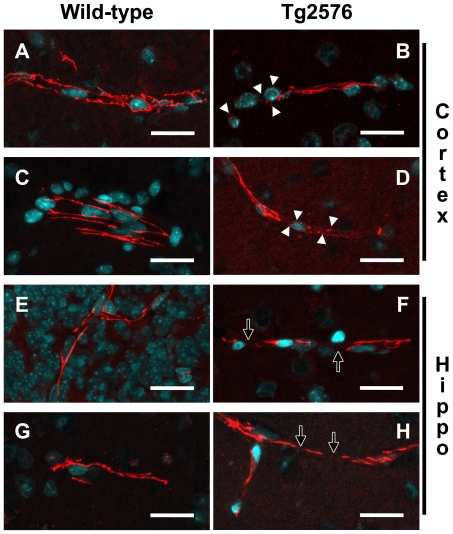
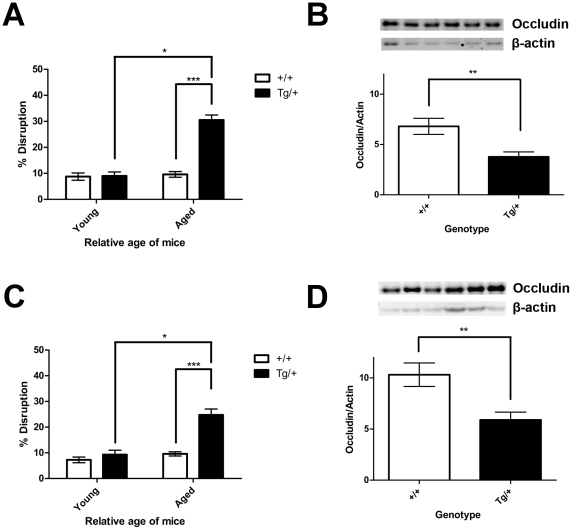
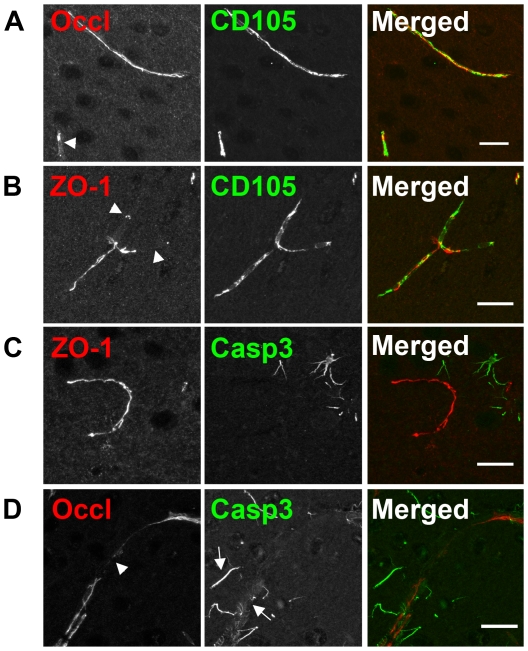
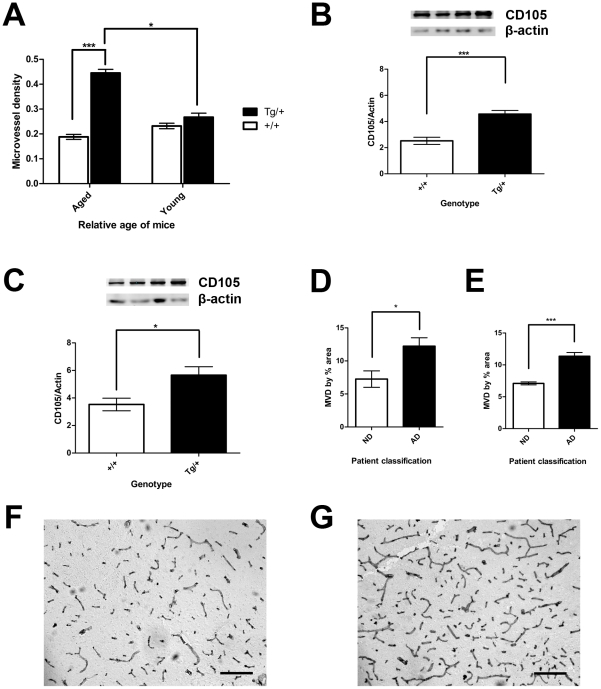
Evidence of reduced blood-brain barrier (BBB) integrity preceding other Alzheimer's disease (AD) pathology provides a strong link between cerebrovascular angiopathy and AD. However, the "Vascular hypothesis", holds that BBB leakiness in AD is likely due to hypoxia and neuroinflammation leading to vascular deterioration and apoptosis. We propose an alternative hypothesis: amyloidogenesis promotes extensive neoangiogenesis leading to increased vascular permeability and subsequent hypervascularization in AD. Cerebrovascular integrity was characterized in Tg2576 AD model mice that overexpress the human amyloid precursor protein (APP) containing the double missense mutations, APPsw, found in a Swedish family, that causes early-onset AD. The expression of tight junction (TJ) proteins, occludin and ZO-1, were examined in conjunction with markers of apoptosis and angiogenesis. In aged Tg2576 AD mice, a significant increase in the incidence of disrupted TJs, compared to age matched wild-type littermates and young mice of both genotypes, was directly linked to an increased microvascular density but not apoptosis, which strongly supports amyloidogenic triggered hypervascularity as the basis for BBB disruption. Hypervascularity in human patients was corroborated in a comparison of postmortem brain tissues from AD and controls. Our results demonstrate that amylodogenesis mediates BBB disruption and leakiness through promoting neoangiogenesis and hypervascularity, resulting in the redistribution of TJs that maintain the barrier and thus, provides a new paradigm for integrating vascular remodeling with the pathophysiology observed in AD. Thus the extensive angiogenesis identified in AD brain, exhibits parallels to the neovascularity evident in the pathophysiology of other diseases such as age-related macular degeneration.
Overview
The claims and statistics of this paper haven’t been checked yet.
Free: it reads the open-access text and checks the first 5 claims that cite a source we can check. Create a free account to check every claim.
Integrity signals
Registry
Cites
Statistics
Figures
Verification
Claims the paper makes
The claims and statistics of this paper haven’t been checked yet.
Free: it reads the open-access text and checks the first 5 claims that cite a source we can check. Create a free account to check every claim.
Claims other papers make about this one
Each is checked against this paper’s own text: does it say what the citing paper says it does?
The source backs part of the claim, not all of it — or backs it for a different population, condition or comparison.
In the citing paper
“Inflammation affects the BBB,126”
From Mechanisms of sporadic cerebral small vessel disease: insights from neuroimaging (2013) · cites this paper as [126]
Experimental — accuracy not yet measuredThe check wasn’t confident either way, so it gives no verdict — never disputed.
In the citing paper
“we were unable to demonstrate a decrease in claudin‐5 in AD, as previously reported [127]”
From Gliovascular alterations in sporadic and familial Alzheimer's disease: APOE3 Christchurch homozygote glioprotection (2023) · cites this paper as [127]
Experimental — accuracy not yet measured
Self-check
Percentages, sums and reported differences re-computed from the paper’s own numbers.
The self-check needs the paper’s full text.
Citations
Cites
1 retracted
RETRACTED ARTICLE: A specific amyloid-β protein assembly in the brain impairs memory
Lesné, S., Koh, M. T., Kotilinek, L., Kayed, R., Glabe, C. G., Yang, A., Gallagher, M., & Ashe, K. H. (2006) · Nature · doi:10.1038/nature04533 · Cited by 2,769 · cited 1×
“Another potential mediator of cerebrovascular disruption in AD is a highly toxic dodecameric 56 kDa abeta oligomer, referred to as “abeta*56” that has been directly implicated in memory loss in Tg2576 mice”
BackgroundRetractedCleavage of Structural Proteins during the Assembly of the Head of Bacteriophage T4
LAEMMLI, U. K. (1970) · Nature · doi:10.1038/227680a0 · Cited by 249,961
Tumor Angiogenesis and Metastasis — Correlation in Invasive Breast Carcinoma
Weidner, N., Semple, J. P., Welch, W. R., & Folkman, J. (1991) · New England Journal of Medicine · doi:10.1056/nejm199101033240101 · Cited by 5,627 · cited 1×
“Areas within the brain section containing high density (‘‘hotspots’’) [39] CD105 staining were imaged using the 206/0.”
MethodStructure and function of the blood–brain barrier
Abbott, N. J., Patabendige, A. A. K., Dolman, D. E. M., Yusof, S. R., & Begley, D. J. (2010) · Neurobiology of Disease · doi:10.1016/j.nbd.2009.07.030 · Cited by 5,185 · cited 1×
“The physical seal of the BBB is maintained by several different interendothelial tight junctional complexes (reviewed by [31,32]) comprised of a variety of plasma membrane spanning proteins (like occludin), scaffold cytoplasmic proteins (like ZO-1) and the actin cytoskeleton.”
BackgroundCorrelative Memory Deficits, Aβ Elevation, and Amyloid Plaques in Transgenic Mice
Hsiao, K., Chapman, P., Nilsen, S., Eckman, C., Harigaya, Y., Younkin, S., Yang, F., & Cole, G. (1996) · Science · doi:10.1126/science.274.5284.99 · Cited by 4,210 · cited 2×
“These mice express human APP695 containing the Swedish missense mutations (K670N/M671L) or APPsw [33], under control of the hamster prion protein promoter (Taconic).”
BackgroundMethodDiabetes mellitus and the risk of dementia: The Rotterdam Study
Ott, A., Stolk, R. P., van Harskamp, F., Pols, H. A. P., Hofman, A., & Breteler, M. M. B. (1999) · Neurology · doi:10.1212/wnl.53.9.1937 · Cited by 2,175
APP Processing and Synaptic Function
Kamenetz, F., Tomita, T., Hsieh, H., Seabrook, G., Borchelt, D., Iwatsubo, T., Sisodia, S., & Malinow, R. (2003) · Neuron · doi:10.1016/s0896-6273(03)00124-7 · Cited by 1,644
Kivipelto, M., Helkala, E.-L., Laakso, M. P., Hänninen, T., Hallikainen, M., Alhainen, K., Soininen, H., Tuomilehto, J., & Nissinen, A. (2001) · BMJ · doi:10.1136/bmj.322.7300.1447 · Cited by 1,618 · cited 1×
“However, recent studies have found that vascular risk factors and neurovascular dysfunction associated with hypotension, hypertension [6,7], cholesterol levels, type II diabetes mellitus [8], smoking [9] and oxidative stress [10] play integral roles in the pathogenesis of AD [11].”
BackgroundRAGE mediates amyloid-β peptide transport across the blood-brain barrier and accumulation in brain
Deane, R., Du Yan, S., Submamaryan, R. K., LaRue, B., Jovanovic, S., Hogg, E., Welch, D., Manness, L., Lin, C., Yu, J., et al. (2003) · Nature Medicine · doi:10.1038/nm890 · Cited by 1,611 · cited 2×
“dysfunction leads to neurodegenerative changes including accumulation of Ab [27,28], neuroinflammation [29] and ensuing”
BackgroundResultBell, R. D., Winkler, E. A., Sagare, A. P., Singh, I., LaRue, B., Deane, R., & Zlokovic, B. V. (2010) · Neuron · doi:10.1016/j.neuron.2010.09.043 · Cited by 1,448
Research works printed but not linked: 2
- Verbeek MM Ruiter DJ de Waal RM 1997 The role of amyloid in the pathogenesis of Alzheimer's disease. Biol Chem 378 937 950 9348103
- Spalton D Hitchings R Hunter P 2005 Atlas of Clinical Ophthalmology 3rd, Revised ed St Louis/US Mosby - Elsevier - Health Sciences Division 764
Cited by
Mechanisms of sporadic cerebral small vessel disease: insights from neuroimaging
Wardlaw, J. M., Smith, C., & Dichgans, M. (2013) · The Lancet Neurology · doi:10.1016/s1474-4422(13)70060-7 · Cited by 1,657
Alzheimer’s disease: A matter of blood–brain barrier dysfunction?
Montagne, A., Zhao, Z., & Zlokovic, B. V. (2017) · Journal of Experimental Medicine · doi:10.1084/jem.20171406 · Cited by 672
“…of exogenous tracers 4 and 10 mo Cortex Ujiie et al., 2003 Loss of BBB tight junctionsa,d 18 and 24 mo; not studied before 18 mo Cortex, hippocampus Biron et al., 2011 Loss of LRP1 endothelial expression 4 and 6 mo Cortex, hippocampus, thalamus Deane et al., 2004 Increased RAGE vascular…”
BackgroundThe vascular basement membrane in the healthy and pathological brain
Thomsen, M. S., Routhe, L. J., & Moos, T. (2017) · Journal of Cerebral Blood Flow & Metabolism · doi:10.1177/0271678x17722436 · Cited by 490
“This would gradually lead to vessel wall rigidity and reduced cerebral blood flow, hence creating the basis for accumulation of Ab and subsequent CAA and capillary sprouting.(115,145) The reduced cerebral blood flowwas further correlated to the accumulation of Ab in the AD brain.”
BackgroundKent, S. A., Spires-Jones, T. L., & Durrant, C. S. (2020) · Acta Neuropathologica · doi:10.1007/s00401-020-02196-w · Cited by 446
Neurological Diseases in Relation to the Blood–Brain Barrier
Rosenberg, G. A. (2012) · Journal of Cerebral Blood Flow & Metabolism · doi:10.1038/jcbfm.2011.197 · Cited by 445
“In a study in transgenic mice with genes for the familial form of Alzheimer’s disease, amylodogenesis was found to mediate BBB disruption and leakiness through promoting neoangiogenesis and hypervascularity by causing a redistribution of tight junction proteins (Figure 6) (Biron et al, 2011).”
BackgroundLochhead, J. J., Yang, J., Ronaldson, P. T., & Davis, T. P. (2020) · Frontiers in Physiology · doi:10.3389/fphys.2020.00914 · Cited by 445
Daulatzai, M. A. (2017) · Journal of Neuroscience Research · doi:10.1002/jnr.23777 · Cited by 429
“Indeed, hypoperfusion, hypoxia, and neuroinflammation from various factors may lead to BBB leakiness and apoptosis in AD (Biron et al., 2011; Hartz et al., 2012; Heye et al., 2014; Yang et al., 2015; Michael et al., 2015; Banks et al., 2015; Nathoo et al., 2016).”
BackgroundRonaldson, P. T., & Davis, T. P. (2020) · Journal of Cerebral Blood Flow & Metabolism · doi:10.1177/0271678x20951995 · Cited by 392
“Biron et al.(153) demonstrated that transgenic Alzheimer’s disease mice that overproduce Ab have reduced levels of occludin and ZO-1 in their cerebral microvasculature.”
BackgroundVascular endothelial growth factor: a neurovascular target in neurological diseases
Lange, C., Storkebaum, E., de Almodóvar, C. R., Dewerchin, M., & Carmeliet, P. (2016) · Nature Reviews Neurology · doi:10.1038/nrneurol.2016.88 · Cited by 382
Bennett, R. E., Robbins, A. B., Hu, M., Cao, X., Betensky, R. A., Clark, T., Das, S., & Hyman, B. T. (2018) · Proceedings of the National Academy of Sciences · doi:10.1073/pnas.1710329115 · Cited by 299
“Addition of Aβ in APP/PS1-Tg4510 mice did not appear to enhance this phenotype, though a previous report indicates that 18–24-mo-old Tg2576 mice expressing the APPSWE mutation exhibit increased CD105, which is primarily expressed in endothelial cells (35).”
BackgroundGovindpani, K., McNamara, L. G., Smith, N. R., Vinnakota, C., Waldvogel, H. J., Faull, R. L., & Kwakowsky, A. (2019) · Journal of Clinical Medicine · doi:10.3390/jcm8050651 · Cited by 275
“Aged (18+ month-old) Tg2576 mice with the human APPsw Swedish mutation exhibit increased angiogenesis, increased vascular density, abnormal morphology of tight junctions composed of occludin and tight junction protein-1 and compromised BBB function, but without significant vascular cell death [127].”
BackgroundInfluentialWardlaw, J. M., Makin, S. J., Valdés Hernández, M. C., Armitage, P. A., Heye, A. K., Chappell, F. M., Muñoz‐Maniega, S., Sakka, E., Shuler, K., Dennis, M. S., et al. (2017) · Alzheimer's & Dementia · doi:10.1016/j.jalz.2016.09.006 · Cited by 260
“It could also provide a route for entry of b-amyloid and inflammatory cells into the brain in AD [26,27].”
BackgroundHussain, B., Fang, C., & Chang, J. (2021) · Frontiers in Neuroscience · doi:10.3389/fnins.2021.688090 · Cited by 255
Tight junction modulation of the blood brain barrier: CNS delivery of small molecules
Greene, C., & Campbell, M. (2016) · Tissue Barriers · doi:10.1080/21688370.2015.1138017 · Cited by 246
“Previous reports have shown that Ab can disrupt BBB integrity contributing to AD-related pathogenesis.(81,82) The receptor for advanced glycation end products (RAGE) is the major route for the movement of Ab from the blood to brain.”
BackgroundImpaired blood–brain/spinal cord barrier in ALS patients
Garbuzova-Davis, S., Hernandez-Ontiveros, D. G., Rodrigues, M. C. O., Haller, E., Frisina-Deyo, A., Mirtyl, S., Sallot, S., Saporta, S., Borlongan, C. V., & Sanberg, P. R. (2012) · Brain Research · doi:10.1016/j.brainres.2012.05.056 · Cited by 237
Cognitive impact of COVID-19: looking beyond the short term
Miners, S., Kehoe, P. G., & Love, S. (2020) · Alzheimer's Research & Therapy · doi:10.1186/s13195-020-00744-w · Cited by 226
Amyloid β Oligomers Disrupt Blood–CSF Barrier Integrity by Activating Matrix Metalloproteinases
Brkic, M., Balusu, S., Van Wonterghem, E., Gorlé, N., Benilova, I., Kremer, A., Van Hove, I., Moons, L., De Strooper, B., Kanazir, S., et al. (2015) · The Journal of Neuroscience · doi:10.1523/jneurosci.0006-15.2015 · Cited by 182
“rity, which leads to an increase in permeability and a decrease in tight junction expression, was found in both mouse and human Alzheimer’s disease studies (Romanitan et al., 2010; Biron et al., 2011; Carrano et al., 2011; Hartz et al., 2012).”
BackgroundHunter, J. M., Kwan, J., Malek-Ahmadi, M., Maarouf, C. L., Kokjohn, T. A., Belden, C., Sabbagh, M. N., Beach, T. G., & Roher, A. E. (2012) · PLoS ONE · doi:10.1371/journal.pone.0036893 · Cited by 178
“The data support the need for understanding the processes that control microvascular density, capillary loss, angiogenesis [57] and string vessel genesis [27], all in the context of atrophic grey and white matter [58].”
BackgroundTohidpour, A., Morgun, A. V., Boitsova, E. B., Malinovskaya, N. A., Martynova, G. P., Khilazheva, E. D., Kopylevich, N. V., Gertsog, G. E., & Salmina, A. B. (2017) · Frontiers in Cellular and Infection Microbiology · doi:10.3389/fcimb.2017.00276 · Cited by 178
“Such changes are linked to β-amyloid-induced hypervascularity (extensive angiogenesis) and hyperpermeability of newly-formed cerebral microvessels (Biron et al., 2011).”
BackgroundPathological angiogenesis and inflammation in tissues
Jeong, J.-H., Ojha, U., & Lee, Y. M. (2021) · Archives of Pharmacal Research · doi:10.1007/s12272-020-01287-2 · Cited by 174
Wan, W., Cao, L., Liu, L., Zhang, C., Kalionis, B., Tai, X., Li, Y., & Xia, S. (2015) · Journal of Neurochemistry · doi:10.1111/jnc.13122 · Cited by 168
Clearance of Amyloid-β Peptides By Microglia and Macrophages: the Issue of What, When and Where
Lai, A. Y., & McLaurin, J. (2012) · Future Neurology · doi:10.2217/fnl.12.6 · Cited by 162
Reed, M. J., Damodarasamy, M., & Banks, W. A. (2019) · Tissue Barriers · doi:10.1080/21688370.2019.1651157 · Cited by 157
“In contrast to normal aging, it is controversial whether vessel density or morphology changes in Alzheimer’s disease (AD) relative to age-matched controls.(25,26) AD brains demonstrate decreases in the function of certain BBB proteins such as GLUT-1, a glucose receptor that is a key transporter.”
BackgroundAshraf, A., Clark, M., & So, P.-W. (2018) · Frontiers in Aging Neuroscience · doi:10.3389/fnagi.2018.00065 · Cited by 158
“For instance, cerebral vasculature inflammation is regarded as an early event in the progression of neuroinflammation and Aß pathology (Biron et al., 2011).”
BackgroundDementia of the eye: the role of amyloid beta in retinal degeneration
Ratnayaka, J. A., Serpell, L. C., & Lotery, A. J. (2015) · Eye · doi:10.1038/eye.2015.100 · Cited by 153
Autoregulated paracellular clearance of amyloid-β across the blood-brain barrier
Keaney, J., Walsh, D. M., O’Malley, T., Hudson, N., Crosbie, D. E., Loftus, T., Sheehan, F., McDaid, J., Humphries, M. M., Callanan, J. J., et al. (2015) · Science Advances · doi:10.1126/sciadv.1500472 · Cited by 153
“Reduced claudin-5 and occludin in aged Tg2576 mouse brains in response to soluble Ab Given that aberrant tight junction protein expression has previously been described in clinical AD samples (14) and in AD mouse models (15, 16), we next sought to evaluate the physiological integrity of the cerebral microvasculature b…”
BackgroundTaurine and central nervous system disorders
Menzie, J., Pan, C., Prentice, H., & Wu, J.-Y. (2012) · Amino Acids · doi:10.1007/s00726-012-1382-z · Cited by 144
“In Alzheimer's disease, the integrity of the BBB is compromised as a result of amyloidogenesis, which disrupts tight junctions (Biron et al. 2011).”
BackgroundAndersen, H. H., Johnsen, K. B., & Moos, T. (2014) · Cellular and Molecular Life Sciences · doi:10.1007/s00018-013-1509-8 · Cited by 151
Enciu, A.-M., Gherghiceanu, M., & Popescu, B. O. (2013) · Oxidative Medicine and Cellular Longevity · doi:10.1155/2013/297512 · Cited by 150
“In the neocortex and hippocampus of aged Tg2576 mice, the ratio of occludin to β-actin was reduced by nearly half, when compared to age-matched wild type controls, but also with young transgenic mice [84].”
ResultCan Infections Cause Alzheimer's Disease?
Mawanda, F., & Wallace, R. (2013) · Epidemiologic Reviews · doi:10.1093/epirev/mxs007 · Cited by 150
Blood-CNS Barrier Impairment in ALS patients versus an animal model
Garbuzova-Davis, S., & Sanberg, P. R. (2014) · Frontiers in Cellular Neuroscience · doi:10.3389/fncel.2014.00021 · Cited by 146
“Supporting the likelihood of ALS neovascularization, Biron et al. (2011) similarly (to our results) demonstrated increased microvascular density in brains from Alzheimer’s patients, suggesting a relationship between hypervascularity, neoangiogenesis and BBB disruption.”
ResultJohnsen, K. B., & Moos, T. (2015) · Journal of Controlled Release · doi:10.1016/j.jconrel.2015.11.032 · Cited by 147
Pathological changes within the cerebral vasculature in Alzheimer’s disease: New perspectives
Fisher, R. A., Miners, J. S., & Love, S. (2022) · Brain Pathology · doi:10.1111/bpa.13061 · Cited by 131
Blood-brain barrier leakage in Alzheimer’s disease: From discovery to clinical relevance
Nehra, G., Bauer, B., & Hartz, A. M. S. (2022) · Pharmacology & Therapeutics · doi:10.1016/j.pharmthera.2022.108119 · Cited by 127
Endothelial Dysfunction and Amyloid-β-Induced Neurovascular Alterations
Koizumi, K., Wang, G., & Park, L. (2016) · Cellular and Molecular Neurobiology · doi:10.1007/s10571-015-0256-9 · Cited by 118
“In AD, VEGF immunoreactivity overlaps with Ab plaques and is found in association with reactive astrocytes, neurons, and blood vessel walls (Biron et al. 2011).”
Amyloid-beta and tau protein beyond Alzheimer’s disease
Abyadeh, M., Gupta, V., Paulo, J. A., Mahmoudabad, A. G., Shadfar, S., Mirshahvaladi, S., Gupta, V. B., Nguyen, C. T. O., Finkelstein, D. I., You, Y., et al. (2023) · Neural Regeneration Research · doi:10.4103/1673-5374.386406 · Cited by 133
“…and low concentration promotes angiogenesis through increasing cell proliferation, migration, and tube formation; in vivo studies showed increased cerebral vascularization in human AD brains and also APP transgenic animals (Biron et al., 2011; Cameron et al., 2012; Ristori et al., 2020).”
BackgroundHypertension Accelerates the Progression of Alzheimer-Like Pathology in a Mouse Model of the Disease
Cifuentes, D., Poittevin, M., Dere, E., Broquères-You, D., Bonnin, P., Benessiano, J., Pocard, M., Mariani, J., Kubis, N., Merkulova-Rainon, T., et al. (2015) · Hypertension · doi:10.1161/hypertensionaha.114.04139 · Cited by 111
Xiao, M., Xiao, Z. J., Yang, B., Lan, Z., & Fang, F. (2020) · Frontiers in Neuroscience · doi:10.3389/fnins.2020.00764 · Cited by 138
Alzheimer's disease pathophysiology in the Retina
Gaire, B. P., Koronyo, Y., Fuchs, D.-T. S., Shi, H., Rentsendorj, A., Danziger, R., Vit, J., Mirzaei, N., Doustar, J., Sheyn, J., et al. (2024) · Progress in Retinal and Eye Research · doi:10.1016/j.preteyeres.2024.101273 · Cited by 111
Zhao, Y., Li, D., Zhao, J., Song, J., & Zhao, Y. (2016) · Reviews in the Neurosciences · doi:10.1515/revneuro-2015-0069 · Cited by 101
“Such impact of Aβ fibrils on BBB permeability was detected in vivo, occurring in a dose- and time-dependent manner (Biron et al., 2011).”
BackgroundNeurovascular abnormalities in humans and mice with Huntington's disease
Lin, C.-Y., Hsu, Y.-H., Lin, M.-H., Yang, T.-H., Chen, H.-M., Chen, Y.-C., Hsiao, H.-Y., Chen, C.-C., Chern, Y., & Chang, C. (2013) · Experimental Neurology · doi:10.1016/j.expneurol.2013.08.019 · Cited by 98
“Cerebral angiogenesis often follows arterial occlusion in brain stroke (Beck and Plate, 2009), and both impaired functioning of the BBB and upregulation of the microvasculature are observed in AD (Biron et al., 2011).”
BackgroundDithmer, S., Blasig, I. E., Fraser, P. A., Qin, Z., & Haseloff, R. F. (2024) · International Journal of Molecular Sciences · doi:10.3390/ijms25115601 · Cited by 111
“Leakage of Blood-Brain Barrier Tight Junction Alteration neurodegeneration - m. Alzheimer mouse model [319,320]; iBEC layer, mutant transfected [321] - ß-amyloid triggered angiogenesis → Cldn1, -5 down-regulated [319,320] → Cldn3, -5 up-regulated [321] - multiple sclerosis [322] - EAE [228] →…”
BackgroundRole of Notch signaling in neurovascular aging and Alzheimer’s disease
Kapoor, A., & Nation, D. A. (2020) · Seminars in Cell and Developmental Biology · doi:10.1016/j.semcdb.2020.12.011 · Cited by 101
Tamibarotene: A Candidate Retinoid Drug for Alzheimer’s Disease
Fukasawa, H., Nakagomi, M., Yamagata, N., Katsuki, H., Kawahara, K., Kitaoka, K., Miki, T., & Shudo, K. (2012) · Biological and Pharmaceutical Bulletin · doi:10.1248/bpb.b12-00314 · Cited by 91
Ott, B. R., Jones, R. N., Daiello, L. A., de la Monte, S. M., Stopa, E. G., Johanson, C. E., Denby, C., & Grammas, P. (2018) · Frontiers in Aging Neuroscience · doi:10.3389/fnagi.2018.00245 · Cited by 91
“, 2016), and neoangiogenesis as inciting factors (Biron et al., 2011).”
BackgroundRetinal Vasculopathy in Alzheimer’s Disease
Shi, H., Koronyo, Y., Rentsendorj, A., Fuchs, D.-T. S., Sheyn, J., Black, K. L., Mirzaei, N., & Koronyo‐Hamaoui, M. (2021) · Frontiers in Neuroscience · doi:10.3389/fnins.2021.731614 · Cited by 94
Tayler, H., Miners, J. S., Güzel, Ö., MacLachlan, R., & Love, S. (2021) · Brain Pathology · doi:10.1111/bpa.12935 · Cited by 86
“Studies on rodent and human microvascular endothelial cell monolayers (18,19), human APP transgenic mouse models (20) and in human post-mortem brain tissue (21) also indicate that A β peptides directly impair BBB function, by reducing the expression of tight junction proteins including occludin and claudin.”
BackgroundAdjusting the compass: new insights into the role of angiogenesis in Alzheimer’s disease
Jefferies, W. A., Price, K. A., Biron, K. E., Fenninger, F., Pfeifer, C. G., & Dickstein, D. L. (2013) · Alzheimer's Research & Therapy · doi:10.1186/alzrt230 · Cited by 87
“Although CBF decay is associated with normal aging, more severe CBF reductions have been detected in older individuals at a high risk of developing AD prior to the onset of Aβ accumulation and cognitive decline [4-8].”
InfluentialSelf-citationVisser, P. J., Reus, L. M., Gobom, J., Jansen, I., Dicks, E., van der Lee, S. J., Tsolaki, M., Verhey, F. R. J., Popp, J., Martinez-Lage, P., et al. (2022) · Molecular Neurodegeneration · doi:10.1186/s13024-022-00521-3 · Cited by 87
Blood‐brain barrier damage in vascular dementia
Ueno, M., Chiba, Y., Matsumoto, K., Murakami, R., Fujihara, R., Kawauchi, M., Miyanaka, H., & Nakagawa, T. (2016) · Neuropathology · doi:10.1111/neup.12262 · Cited by 86
“In addition, another mechanism on BBB damage of the AD model is proposed by Biron et al.(73) They reported that amyloidogenesis in the AD model mediates BBB disruption through promoting neoangiogenesis and hypervascularity, resulting in the redistribution of tight junctions.”
BackgroundRed/near-infrared irradiation therapy for treatment of central nervous system injuries and disorders
Fitzgerald, M., Hodgetts, S. I., van den Heuvel, C., Natoli, R., Hart, N. S., Valter, K., Harvey, A. R., Vink, R., Provis, J. M., & Dunlop, S. A. (2013) · Reviews in the Neurosciences · doi:10.1515/revneuro-2012-0086 · Cited by 84
Microvascular Alterations in Alzheimer's Disease
Steinman, J., Sun, H.-S., & Feng, Z.-P. (2021) · Frontiers in Cellular Neuroscience · doi:10.3389/fncel.2020.618986 · Cited by 81
“Studies in the Tg2576 mouse model suggest amyloid could trigger angiogenesis, causing BBB leakage and hypervascularity (Biron et al., 2011).”
BackgroundWan, W., Chen, H., & Li, Y. (2014) · International Journal of Neuroscience · doi:10.3109/00207454.2013.825258 · Cited by 81
“Alzheimer’s disease (AD) is the most common form of senile dementia with accumulation of amyloid β-peptide (Aβ) in the brain as a hallmark of pathological change [1, 2].”
BackgroundSopova, K., Gatsiou, K., Stellos, K., & Laske, C. (2014) · Current Alzheimer Research · doi:10.2174/1567205010666131120100743 · Cited by 79
“A contrary hypothesis points out that amyloidogenesis promotes extensive neoangiogenesis, leading in its turn to BBB leakage in AD [16].”
BackgroundInfluentialLee, P., Kim, J., Williams, R., Sandhir, R., Gregory, E., Brooks, W. M., & Berman, N. E. J. (2012) · Experimental Neurology · doi:10.1016/j.expneurol.2011.12.016 · Cited by 78
“Tight junction disruption is thought to contribute to disease progression in Alzheimer’s disease (Biron et al., 2011).”
BackgroundHolohan, K. N., Lahiri, D. K., Schneider, B. P., Foroud, T., & Saykin, A. J. (2013) · Frontiers in Genetics · doi:10.3389/fgene.2012.00323 · Cited by 76
The intestinal microbiome and Alzheimer's disease: A review
Li, Z., Zhu, H., Zhang, L., & Qin, C. (2018) · Animal Models and Experimental Medicine · doi:10.1002/ame2.12033 · Cited by 83
“Moreover, metabolic alterations in neuronal and glial cells and the disruption of calcium homeostasis in neurons and astrocytes induce large‐scale neuroinflammation and the loss of neurons, which is associated with hypervascularity and hyperpermeability.(52) Recognition of the inflammatory hypothesis of AD has been”
BackgroundCerebrovascular plasticity: Processes that lead to changes in the architecture of brain microvessels
Bogorad, M. I., DeStefano, J. G., Linville, R. M., Wong, A. D., & Searson, P. C. (2019) · Journal of Cerebral Blood Flow & Metabolism · doi:10.1177/0271678x19855875 · Cited by 85
Divecha, Y. A., Rampes, S., Tromp, S., Boyanova, S., Fleckney, A. L., Fidanboylu, M., & Thomas, S. A. (2025) · Pharmacological Reviews · doi:10.1016/j.pharmr.2025.100052 · Cited by 92
“It is possibly caused by amyloidogenesis and disruption of TJ integrity causing pathologic angiogenesis (Biron et al, 2011).”
Ponce-Lopez, T. (2025) · International Journal of Molecular Sciences · doi:10.3390/ijms26094209 · Cited by 75
Ma, F., Zhang, X., & Yin, K. (2019) · Experimental Neurology · doi:10.1016/j.expneurol.2019.113094 · Cited by 74
“BBB leakiness is likely due to hypoxia and neuroinflammation-triggered vascular deterioration and apoptosis, resulting in the redistribution of TJs (Biron et al., 2011).”
BackgroundInfluentialPark, J. S., Choe, K., Khan, A., Jo, M. H., Park, H. Y., Kang, M. H., Park, T. J., & Kim, M. O. (2023) · International Journal of Molecular Sciences · doi:10.3390/ijms24065283 · Cited by 80
Intravenous Delivery of Targeted Liposomes to Amyloid-β Pathology in APP/PSEN1 Transgenic Mice
Tanifum, E. A., Dasgupta, I., Srivastava, M., Bhavane, R. C., Sun, L., Berridge, J., Pourgarzham, H., Kamath, R., Espinosa, G., Cook, S. C., et al. (2012) · PLoS ONE · doi:10.1371/journal.pone.0048515 · Cited by 73
“In a recent study, Biron and coworkers [26] showed that amyloidogenesis may promote extensive neoangiogenesis, leading to increased vascular permeability and subsequent hypervascularization in brain tissue samples from both a transgenic AD mouse model and human patients.”
BackgroundThomas, R., Zuchowska, P., Morris, A. W. J., Marottoli, F. M., Sunny, S., Deaton, R., Gann, P. H., & Tai, L. M. (2016) · Acta Neuropathologica Communications · doi:10.1186/s40478-016-0387-3 · Cited by 72
“The counter argument is that AD-pathways induce angiogenesis, causing hypersprouting and tight junction disruption, which increase CV permeability [7, 9, 13].”
BackgroundA Review of Oxidative Stress Products and Related Genes in Early Alzheimer’s Disease
Cioffi, F., Adam, R. H. I., Bansal, R., & Broersen, K. (2021) · Journal of Alzheimer s Disease · doi:10.3233/jad-210497 · Cited by 76
“How hemoglobin crosses the blood-brain barrier is unclear, but researchers speculate that hemoglobin infiltration into the brain could be the result of the report loss of blood-brain barrier integrity which is observed at early stage AD [207].”
BackgroundParodi‐Rullán, R., Ghiso, J., Cabrera, E., Rostagno, A., & Fossati, S. (2020) · Aging Cell · doi:10.1111/acel.13258 · Cited by 69
“2.4 | Effects of Aβ peptides, truncated fragments, and the Dutch mutant on angiogenesis Angiogenesis has been reported as a repair system in conditions associated with brain trauma and neurodegenerative disorders (Zhang et al., 2018), including AD and CAA (Merkulova-Rainon et al., 2018).”
BackgroundResultInfluentialShi, H., Koronyo, Y., Fuchs, D.-T. S., Sheyn, J., Wawrowsky, K., Lahiri, S., Black, K. L., & Koronyo‐Hamaoui, M. (2020) · Acta Neuropathologica Communications · doi:10.1186/s40478-020-01076-4 · Cited by 73
Altered microglia and neurovasculature in the Alzheimer's disease cerebellum
Singh‐Bains, M. K., Linke, V., Austria, M. D. R., Tan, A. Y. S., Scotter, E. L., Mehrabi, N. F., Faull, R. L. M., & Dragunow, M. (2019) · Neurobiology of Disease · doi:10.1016/j.nbd.2019.104589 · Cited by 78
Age-Related Macular Degeneration and Risk of Degenerative Dementia among the Elderly in Taiwan
Tsai, D., Chen, S., Huang, C., Yuan, M.-K., & Leu, H. (2015) · Ophthalmology · doi:10.1016/j.ophtha.2015.07.033 · Cited by 77
Annexin A1 restores cerebrovascular integrity concomitant with reduced amyloid-β and tau pathology
Ries, M., Watts, H. R., Mota, B. C., Lopez, M. Y., Donat, C. K., Baxan, N., Pickering, J. A., Chau, T. W., Semmler, A., Gurung, B., et al. (2021) · Brain · doi:10.1093/brain/awab050 · Cited by 68
Neuroinflammation in Alzheimer's disease: an understanding of physiology and pathology
Obulesu, M., & Jhansilakshmi, M. (2014) · International Journal of Neuroscience · doi:10.3109/00207454.2013.831852 · Cited by 66
“ROS produced from microglial activation and inflammation also perturb blood-brain barrier (BBB) integrity (Figure 2) [48, 49].”
BackgroundMarottoli, F. M., Katsumata, Y., Koster, K. P., Thomas, R., Fardo, D. W., & Tai, L. M. (2017) · ASN Neuro · doi:10.1177/1759091417719201 · Cited by 67
“Contrastingly, higher vessel coverage (potentially angiogenesis) is also observed by other studies in AD patients and in vivo (Boscolo et al., 2007; Biron et al., 2011; Cameron et al., 2012).”
BackgroundResultBlood-brain barrier-supported neurogenesis in healthy and diseased brain
Пожиленкова, Е. А., Lopatina, O. L., Komleva, Y. K., Salmin, V. V., & Salmina, A. B. (2017) · Reviews in the Neurosciences · doi:10.1515/revneuro-2016-0071 · Cited by 71
Dissecting the Contribution of Vascular Alterations and Aging to Alzheimer’s Disease
Janota, C. S., Lemere, C. A., & Brito, M. A. (2015) · Molecular Neurobiology · doi:10.1007/s12035-015-9319-7 · Cited by 78
“Another study showed that Aβ t r iggers extensive neoangiogenesis and hypervascularization, which results in increased BBB permeability [77], whereas immunization of Tg2576 AD mice with Aβ peptides abrogated neoangiogenesis and reversed the hypervascularity, also preventing BBB hyperpermeability [78].”
BackgroundFuttrup, J., Margolinsky, R., Benros, M. E., Moos, T., Routhe, L. G., Rungby, J., & Krogh, J. (2020) · Brain Behavior & Immunity - Health · doi:10.1016/j.bbih.2020.100102 · Cited by 75
Imaging the microvessel caliber and density: Principles and applications of microvascular MRI
Troprès, I., Pannetier, N., Grand, S., Lemasson, B., Moisan, A., Péoc'h, M., Rémy, C., & Barbier, E. L. (2015) · Magnetic Resonance in Medicine · doi:10.1002/mrm.25396 · Cited by 63
Li, W., Maloney, R. E., & Aw, T. Y. (2015) · Redox Biology · doi:10.1016/j.redox.2015.03.005 · Cited by 69
“Disrupted expressions of ZO-1 and occludin have been described in the brains of various neurological disorders, such as multiple sclerosis [27], HIV-associated dementia [28], and in animal models of Alzheimer's disease [29], Parkinson’s disease [30], and temporal lobe epilepsy [31].”
BackgroundMorphometry of the hippocampal microvasculature in post‐stroke and age‐related dementias
Burke, M. J. C., Nelson, L., Slade, J. Y., Oakley, A. E., Khundakar, A. A., & Kalaria, R. N. (2014) · Neuropathology and Applied Neurobiology · doi:10.1111/nan.12085 · Cited by 63
Ashok, A., Rai, N. K., Raza, W., Pandey, R., & Bandyopadhyay, S. (2016) · Neurobiology of Disease · doi:10.1016/j.nbd.2016.07.013 · Cited by 61
Salmina, A. B., Kharitonova, E. V., Gorina, Y. V., Тепляшина, Е. А., Malinovskaya, N. A., Хилажева, Е. Д., Mosiagina, A. I., Morgun, A. V., Shuvaev, А. N., Salmin, V. V., et al. (2021) · International Journal of Molecular Sciences · doi:10.3390/ijms22094661 · Cited by 66
A Leaky Blood–Brain Barrier to Fibrinogen Contributes to Oxidative Damage in Alzheimer’s Disease
McLarnon, J. G. (2021) · Antioxidants · doi:10.3390/antiox11010102 · Cited by 69
“Breakdown of BBB and loss of cortical endothelial tight junctions have been documented in AD brain [40,41].”
BackgroundA New Hypothesis for Alzheimer’s Disease: The Lipid Invasion Model
Rudge, J. D. (2022) · Journal of Alzheimer's Disease Reports · doi:10.3233/adr-210299 · Cited by 58
“These mechanisms are detailed in the Supplementary Material, and include reduced junctional strength between BBB endothelial cells (especially TJs) [27, 45, 65, 76, 82, 182–190], inflammation and oxidative stress [191–194], lowered pericyte numbers and activity levels [135, 195–201], impaired astrocyte activity [189,…”
BackgroundAlzheimer’s-Related Peptide Amyloid-β Plays a Conserved Role in Angiogenesis
Cameron, D. J., Galvin, C., Alkam, T., Sidhu, H., Ellison, J., Luna, S., & Ethell, D. W. (2012) · PLoS ONE · doi:10.1371/journal.pone.0039598 · Cited by 58
“A) Dorsal view of 4 dpf embryos: control – top, Ab [25] treated – middle, and GSI treated – bottom.”
BackgroundMethodPhysiological Roles of Monomeric Amyloid-β and Implications for Alzheimer’s Disease Therapeutics
Jeong, H., Shin, H., Hong, S., & Kim, Y. S. (2022) · Experimental Neurobiology · doi:10.5607/en22004 · Cited by 66
“Among different hypotheses for AD pathogenesis, ‘the vascular hypothesis’ states that acute changes in cerebral vasculature system such as disrupted blood-brain barrier (BBB) and neoangiogenesis could lead to AD, and amyloidosis has been suspected to trigger such an event [146-148].”
BackgroundDurán-Prado, M., Frontiñán, J., Santiago-Mora, R., Peinado, J. R., Parrado-Fernández, C., Gómez-Almagro, M. V., Moreno, M., López-Domínguez, J. A., Villalba, J. M., & Alcaín, F. J. (2014) · PLoS ONE · doi:10.1371/journal.pone.0109223 · Cited by 57
“In this sense, circulating Ab affects the blood brain barrier to compromise its permeability and integrity [3] while also impairing”
BackgroundExpression and Processing of Amyloid Precursor Protein in Vascular Endothelium
d'Uscio, L. V., He, T., & Katusic, Z. S. (2017) · Physiology · doi:10.1152/physiol.00021.2016 · Cited by 57
Glio-vascular changes during ageing in wild-type and Alzheimer׳s disease-like APP/PS1 mice
Janota, C. S., Brites, D., Lemere, C. A., & Brito, M. A. (2015) · Brain Research · doi:10.1016/j.brainres.2015.04.056 · Cited by 57
“…clearance of Aβ from the brain (Shin et al., 2007), an alternative hypothesis states that the vascular dysfunction in AD occurs because amyloidogenesis promotes intense neoangiogenesis contributing to augmented hypervascularization and subsequent vascular permeability (Biron et al., 2011).”
BackgroundMalinovskaya, N. A., Komleva, Y. K., Salmin, V. V., Morgun, A. V., Shuvaev, А. N., Panina, Y. A., Boitsova, E. B., & Salmina, A. B. (2016) · Frontiers in Physiology · doi:10.3389/fphys.2016.00599 · Cited by 63
“…Alzheimer’s type of neurodegeneration, accumulation of amyloid results in excessive angiogenesis and leaky BBB whereas the levels of circulating EPC is dramatically reduced (Lee et al., Frontiers in Physiology | www.frontiersin.org 2 December 2016 | Volume 7 | Article 599 2009; Biron et al., 2011).”
BackgroundWan, W., Cao, L., Liu, L., Kalionis, B., Chen, C., Tai, X., Li, Y., & Xia, S.-J. (2014) · PLoS ONE · doi:10.1371/journal.pone.0113126 · Cited by 58
“However, in a number of AD transgenic animal models, accumulation of Ab in blood vessels results in the disruption of the BBB [15,20,31].”
BackgroundAlzheimer’s disease: An update of the roles of receptors, astrocytes and primary cilia (Review)
ARMATO, U., CHAKRAVARTHY, B., PACCHIANA, R., & WHITFIELD, J. F. (2013) · International Journal of Molecular Medicine · doi:10.3892/ijmm.2012.1162 · Cited by 55
“However, as in vitro (45), the accumulating Aβs in the key regions of the pre-AD brain such as the dentate gyrus and the CA3 subregions also stimulate astrocytes to make VEGF-A (52-54), which as expected stimulates the growth”
BackgroundInfluentialIncreased Hyaluronan and TSG-6 in Association with Neuropathologic Changes of Alzheimer’s Disease
Reed, M. J., Damodarasamy, M., Pathan, J. L., Chan, C. K., Spiekerman, C. F., Wight, T. N., Banks, W. A., Day, A. J., Vernon, R. B., & Keene, C. D. (2018) · Journal of Alzheimer s Disease · doi:10.3233/jad-180797 · Cited by 55
Anwar, M. M., Özkan, E., & Özdemir, Y. (2021) · European Journal of Neuroscience · doi:10.1111/ejn.15372 · Cited by 60
“It is known that AD is an age-related progressive type of neurodegenerative disorder characterized by persistent irreversible brain tissue shrinkage associated with a decline in memory and cognitive functions (Biron et al., 2011; Lepelletier et al., 2017; Zlokovic, 2011).”
BackgroundAl-Kuraishy, H. M., Jabir, M. S., Al-Gareeb, A. I., Albuhadily, A. K., Albukhaty, S., Sulaiman, G. M., & Batiha, G. E. (2023) · Ageing Research Reviews · doi:10.1016/j.arr.2023.102119 · Cited by 64
Systems biology of neurodegenerative diseases
Wood, L. B., Winslow, A. R., & Strasser, S. D. (2015) · Integrative Biology · doi:10.1039/c5ib00031a · Cited by 53
Ruan, Q., Hu, X., Ao, H., Ma, H., Gao, Z., Liu, F., Kong, D., Bao, Z., & Yu, Z. (2014) · Gerontology · doi:10.1159/000358235 · Cited by 54
Ureña‐Guerrero, M. E., Castañeda‐Cabral, J. L., Rivera-Cervantes, M. C., Vélez, R., Jarero-Basulto, J. J., Gudiño‐Cabrera, G., & Beas‐Zárate, C. (2020) · Current Pharmaceutical Design · doi:10.2174/1381612826666200114104342 · Cited by 57
Beck, T. N., Nicolas, E., Kopp, M. C., & Golemis, E. A. (2014) · Oncoscience · doi:10.18632/oncoscience.64 · Cited by 50
“VEGF is a major driver of angiogensis and it has been reported that angiogenesis increases vascular permeability and hypervascularity in AD [152].”
BackgroundT Cells—Protective or Pathogenic in Alzheimer’s Disease?
McManus, R. M., Mills, K. H. G., & Lynch, M. A. (2015) · Journal of Neuroimmune Pharmacology · doi:10.1007/s11481-015-9612-2 · Cited by 55
“These mice display enhanced gadolinium extravasation by MRI, greater fibrinogen immunoreactivity, increased chemokine expression and decreased expression of TJ proteins (Biron et al. 2011; Minogue et al. 2014).”
BackgroundLi, W., & Ehrich, M. F. (2012) · Journal of Applied Toxicology · doi:10.1002/jat.2762 · Cited by 51
“Disruption of the TJs of the BBB is characteristic of many central nervous system (CNS) diseases, including multiple sclerosis (MS), stroke and Alzheimer’s disease (Bennett et al., 2010; Biron et al., 2011; Huber et al., 2001; Pfeiffer et al., 2011).”
BackgroundKim, S., Lee, M., & Choi, Y. K. (2019) · Biomolecules & Therapeutics · doi:10.4062/biomolther.2019.119 · Cited by 53
“Hypoxia facilitates plaque formation and consequent angiogenesis in an aged AD Tg mouse model, leading to memory deficits (Sun et al., 2006; Biron et al., 2011).”
Background
Metadata
- Authors
- Biron, K. E., Dickstein, D. L., Gopaul, R., & Jefferies, W. A.
- Affiliations
- University of British Columbia (CA)
- Icahn School of Medicine at Mount Sinai (US)
- Corresponding author
- Biron, Kaan E.
- Dickstein, Dara L.
- Gopaul, Rayshad
- Jefferies, Wilfred A.
- Venue
- PLoS ONE
- Publisher
- Public Library of Science (PLoS)
- Published
- 2011-08-31
- Volume
- 6
- Issue
- 8
- Pages
- e23789
- ISSN
- 1932-6203 (ISSN-L)
- PMC
- PMC3166122
- OpenAlex
- W2063038783
- Cited by
- 300
- References
- 73
- Citations by year
- 2026: 15 · 2025: 19 · 2024: 18 · 2023: 18 · 2022: 25 · 2021: 31 · 2020: 29 · 2019: 11 · 2018: 17 · 2017: 14 · 2016: 20 · 2015: 20 · 2014: 26 · 2013: 22 · 2012: 14
- FWCI
- 11.13
- Type
- journal article
- Language
- en
- Open access
- gold
- doi.org
- Locations
- PLoS ONE (publishedVersion, cc-by)
- PubMed Central (publishedVersion, cc-by)
- PubMed (publishedVersion)
- DOAJ (DOAJ: Directory of Open Access Journals) (submittedVersion, cc-by-sa)
- Funders
- Canadian Institutes of Health Research
- Topics
- Life Sciences › Neuroscience › Neurology › Barrier Structure and Function Studies
- Life Sciences › Neuroscience › Cellular and Molecular Neuroscience › Alzheimer's disease research and treatments
- Life Sciences › Neuroscience › Neurology › Neurological Disease Mechanisms and Treatments
- Keywords
- Alzheimer's disease, amyloidogenesis, cerebral angiogenesis, blood-brain barrier permeability, hypervascularity, tight junctions, occludin, ZO-1, cerebrovascular integrity, vascular remodeling, neovascularization
- MeSH terms
- Aging, Alzheimer Disease, Amyloid, Animals, Blood-Brain Barrier, Brain, Female, Humans, Male, Mice, Transgenic, Neovascularization, Pathologic, Permeability, Signal Transduction, Apoptosis, Tight Junctions, Mice, Microvessels
About these checks
Registry, retraction, Cites and statistics results are computed, not judged, with one exception: a printed reference that no index lists is read once by a model before it counts as a citation error. Claims are extracted by a model and kept only when their quote appears verbatim in the text; each cited source is then checked, with a model’s help, for whether it says what the claim relies on. Those verdicts can be wrong — read the claim’s quote and the cited source before relying on one.
Statistics and arithmetic are recomputed, not judged.
Confidence bands are shown only for fields calibrated on our annotated test set. None is calibrated yet, so no band is shown.
What counts as a claim ›How we measure confidence ›How we check this ›
Are you an author, or do you see a problem with this page? Request a review
Data sources
Bibliographic data: Semantic Scholar, OpenAlex, Crossref.
Contains information from the Semantic Scholar Academic Graph Datasets, made available under the ODC Attribution License (ODC-BY 1.0).
Semantic Scholar’s data is described in: Kinney, R., et al. (2023). The Semantic Scholar Open Data Platform. arXiv:2301.10140.
