

Helios Expression Is a Marker of T Cell Activation and Proliferation
Open accessThe DOI matches its Crossref record; 48 of the 48 references it cites were found in a registry or an index.
Abstract
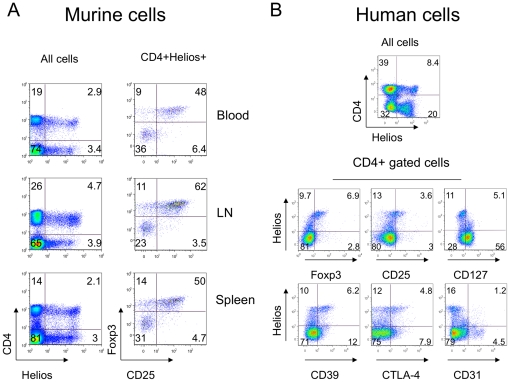
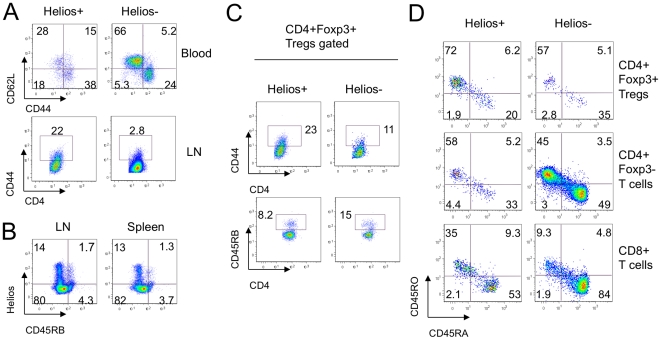
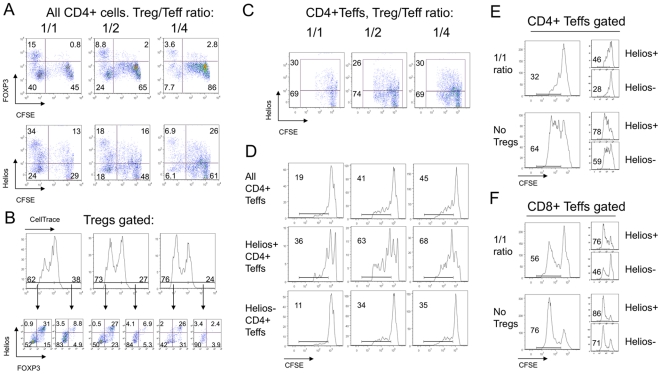
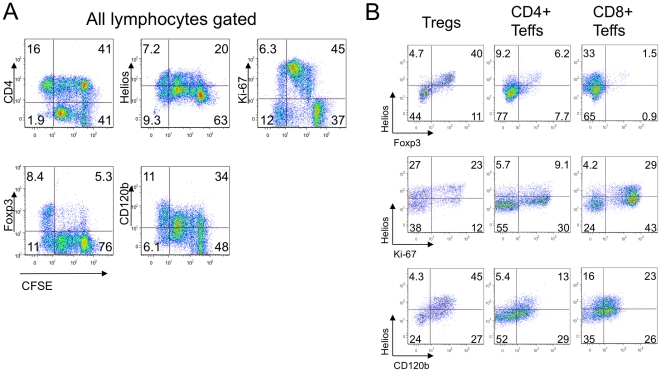
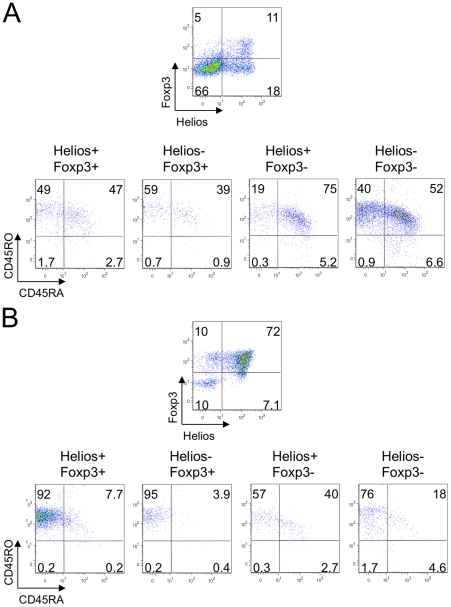
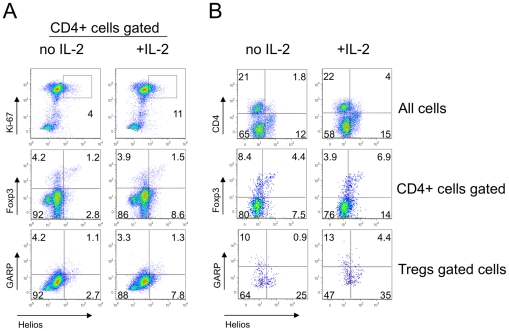
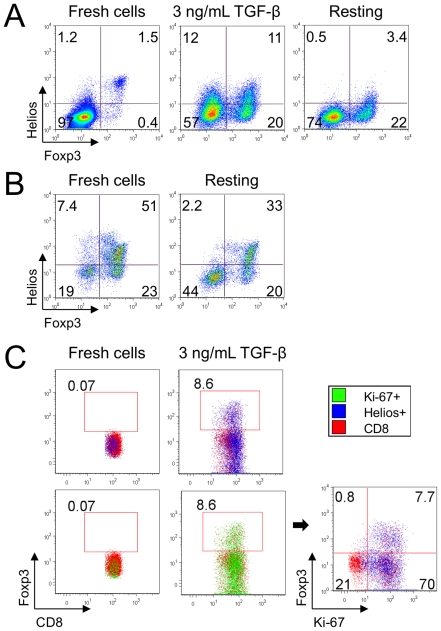
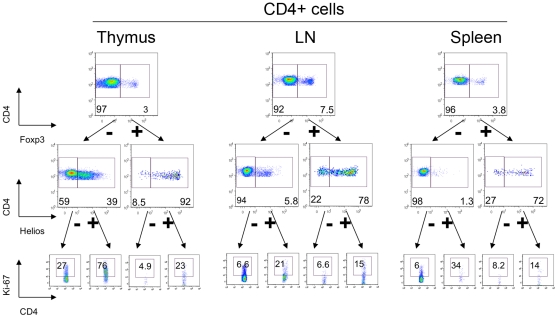
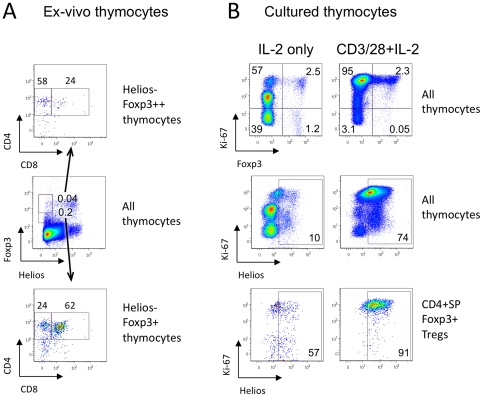
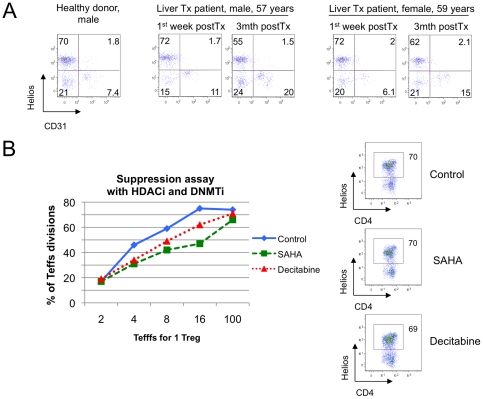
Foxp3+ T-regulatory cells (Tregs) normally serve to attenuate immune responses and are key to maintenance of immune homeostasis. Over the past decade, Treg cells have become a major focus of research for many groups, and various functional subsets have been characterized. Recently, the Ikaros family member, Helios, was reported as a marker to discriminate naturally occurring, thymic-derived Tregs from those peripherally induced from naïve CD4+ T cells. We investigated Helios expression in murine and human T cells under resting or activating conditions, using well-characterized molecules of naïve/effector/memory phenotypes, as well as a set of Treg-associated markers. We found that Helios-negative T cells are enriched for naïve T cell phenotypes and vice versa. Moreover, Helios can be induced during T cell activation and proliferation, but regresses in the same cells under resting conditions. We demonstrated comparable findings using human and murine CD4+Foxp3+ Tregs, as well as in CD4+ and CD8+ T cells. Since Helios expression is associated with T cell activation and cellular division, regardless of the cell subset involved, it does not appear suitable as a marker to distinguish natural and induced Treg cells.
Overview
The claims and statistics of this paper haven’t been checked yet.
Free: it reads the open-access text and checks the first 5 claims that cite a source we can check. Create a free account to check every claim.
Integrity signals
Registry
Cites
Statistics
Figures
Verification
Claims the paper makes
The claims and statistics of this paper haven’t been checked yet.
Free: it reads the open-access text and checks the first 5 claims that cite a source we can check. Create a free account to check every claim.
Claims other papers make about this one
Each is checked against this paper’s own text: does it say what the citing paper says it does?
The cited source doesn’t support the claim as written.
In the citing paper
“Yet, Helios, Nrp-1 or ROR-γt are widely accepted for the discrimination of tTreg and pTreg cells under homeostatic conditions [364-366, 437-440].”
From Guidelines for the use of flow cytometry and cell sorting in immunological studies (third edition) (2021) · cites this paper as [366]
Checked by a reasoning model — may be wrong.
Experimental — accuracy not yet measuredThe cited source says what the claim attributes to it.
In the citing paper
“In humans, however, the validity of these markers is less clear because not all naive/thymus-derived Tregs express Helios [173] and it has been reported that this protein can also be expressed by activated T cells [366].”
From Guidelines for the use of flow cytometry and cell sorting in immunological studies (third edition) (2021) · cites this paper as [366]
Self-check
Percentages, sums and reported differences re-computed from the paper’s own numbers.
The self-check needs the paper’s full text.
Citations
Cites
Control of Regulatory T Cell Development by the Transcription Factor Foxp3
Hori, S., Nomura, T., & Sakaguchi, S. (2003) · Science · doi:10.1126/science.1079490 · Cited by 8,187
Foxp3 programs the development and function of CD4+CD25+ regulatory T cells
Fontenot, J. D., Gavin, M. A., & Rudensky, A. Y. (2003) · Nature Immunology · doi:10.1038/ni904 · Cited by 7,745 · cited 1×
“function [3,4].”
Veldhoen, M., Hocking, R. J., Atkins, C. J., Locksley, R. M., & Stockinger, B. (2006) · Immunity · doi:10.1016/j.immuni.2006.01.001 · Cited by 3,605 · cited 1×
“Thus, in vitro induced murine Tregs do not have a stable iTreg phenotype and lose Foxp3 after TGFbeta withdrawal, while human iTregs generated this way may be unstable and/or poorly suppressive [24,30,31].”
BackgroundVignali, D. A. A., Collison, L. W., & Workman, C. J. (2008) · Nature Reviews Immunology · doi:10.1038/nri2343 · Cited by 3,463
CD127 expression inversely correlates with FoxP3 and suppressive function of human CD4+ T reg cells
Liu, W., Putnam, A. L., Xu-yu, Z., Szot, G. L., Lee, M. R., Zhu, S., Gottlieb, P. A., Kapranov, P., Gingeras, T. R., de St. Groth, B. F., et al. (2006) · The Journal of Experimental Medicine · doi:10.1084/jem.20060772 · Cited by 2,606 · cited 8×
“5) from BD Biosciences; CD4 (Pacific blue, PE, FITC, APC-eFluor 780), CD25 (APCeFluor 780, Pe-Cy5, Pe-Cy7), CD39 (Pe-Cy7), CD45RA (PECy7), CD45RO (PE), CD62L (Pe-Cy5, APC-eFluor 780), CD127 (FITC, PE, Alexa Fluor 647) and FOXP3 (PE, Alexa Fluor 647, Pacific blue and FITC, clones PCH101 and 236A/E7) from eBioscience; C…”
BackgroundInfluentialDeaglio, S., Dwyer, K. M., Gao, W., Friedman, D., Usheva, A., Erat, A., Chen, J.-F., Enjyoji, K., Linden, J., Oukka, M., et al. (2007) · The Journal of Experimental Medicine · doi:10.1084/jem.20062512 · Cited by 2,470 · cited 4×
“However, we did find a common association between high Helios expression and a set of Treg-known markers including Foxp3, CD25, CD39, CTLA-4 and low levels of CD127.”
BackgroundInfluentialRegulatory T Cell Lineage Specification by the Forkhead Transcription Factor Foxp3
Fontenot, J. D., Rasmussen, J. P., Williams, L. M., Dooley, J. L., Farr, A. G., & Rudensky, A. Y. (2005) · Immunity · doi:10.1016/j.immuni.2005.01.016 · Cited by 2,279 · cited 1×
“Recently, several microarray studies indicated an up-regulation of the Ikaros family transcription factor, Helios, in Tregs [16,17,18].”
BackgroundThornton, A. M., Korty, P. E., Tran, D. Q., Wohlfert, E. A., Murray, P. E., Belkaid, Y., & Shevach, E. M. (2010) · The Journal of Immunology · doi:10.4049/jimmunol.0904028 · Cited by 1,382 · cited 9×
“The fast down-regulation of Helios upon removing TCR stimulation, or the absence of stimulatory signals, might explain the effect observed by Thornton et al. whereby in vitro induced iTregs remained Helios- [21].”
BackgroundInfluentialNatural and Adaptive Foxp3+ Regulatory T Cells: More of the Same or a Division of Labor?
Curotto de Lafaille, M. A., & Lafaille, J. J. (2009) · Immunity · doi:10.1016/j.immuni.2009.05.002 · Cited by 1,055
The Foxp3+ regulatory T cell: a jack of all trades, master of regulation
Tang, Q., & Bluestone, J. A. (2008) · Nature Immunology · doi:10.1038/ni1572 · Cited by 1,031 · cited 1×
“and share multiple suppressive mechanisms [11].”
Cited by
Items 101–200 of 388
Zafari, P., Yari, K., Mostafaei, S., Iranshahi, N., Assar, S., Fekri, A., & Taghadosi, M. (2018) · Immunological Investigations · doi:10.1080/08820139.2018.1480029 · Cited by 64
“healthy subject also a positive correlation between Helios and Foxp3 gene expression was detected which was similar to other previous reports (Akimova et al., 2011; Getnet et al., 2010).”
ResultBlom, K. G., Braun, M., Pakalnienė, J., Dailidyte, L., Béziat, V., Lampen, M. H., Klingström, J., Lagerqvist, N., Kjerstadius, T., Michaëlsson, J., et al. (2015) · PLoS Pathogens · doi:10.1371/journal.ppat.1004622 · Cited by 64
“The expression of T-bet and Eomes have been suggested to impact exhaustion and terminal differentiation of CD8 T cells [31], whereas Helios have been suggested as a marker of activation and proliferation in T cells [32].”
BackgroundRegulatory functions of γδ T cells
Kabelitz, D., Peters, C., Wesch, D., & Oberg, H. (2013) · International Immunopharmacology · doi:10.1016/j.intimp.2013.01.022 · Cited by 65
“Alternatively, it could identify a subset of cytokine-producing γδ T cells [69] or might simply characterize a differential activation stage of some γδ T cells, similarly to what has been described for αβ T cells [70].”
ResultThe making of a lymphocyte: the choice among disparate cell fates and the IKAROS enigma
Georgopoulos, K. (2017) · Genes & Development · doi:10.1101/gad.297002.117 · Cited by 72
“HELIOS (Ikzf2) expression is low in the HSCs, extinguished in B-cell precursors, and specifically increased in T-cell precursors and regulatory T cells (Kelley et al. 1998; Thornton et al. 2010; Akimova et al. 2011).”
BackgroundThe Therapeutic Potential of Regulatory T Cells: Challenges and Opportunities
Bayati, F., Mohammadi, M., Valadi, M., Jamshidi, S., Foma, A. M., & Sharif‐Paghaleh, E. (2021) · Frontiers in Immunology · doi:10.3389/fimmu.2020.585819 · Cited by 68
“marker by itself, as it applies to any other cell markers used to recognize the cells such as Foxp3 (31), Neuropilin (NRP-1) (32) and Helios (33).”
BackgroundRegulatory T Cell Dysfunction in Autoimmune Diseases
Honing, D. Y., Luiten, R. M., & Matos, T. R. (2024) · International Journal of Molecular Sciences · doi:10.3390/ijms25137171 · Cited by 72
“This phenomenon is not only observed in human and murine Tregs but also in CD4 + and CD8 + T cells [81].”
BackgroundDixit, N., Fanton, C. P., Langowski, J. L., Kirksey, Y. M., Kirk, P. B., Chang, T., Cetz, J., Dixit, V., Kim, G., Kuo, P., et al. (2021) · Journal of Translational Autoimmunity · doi:10.1016/j.jtauto.2021.100103 · Cited by 63
“Conflicting evidence exists as to whether Helios is a specific marker for thymic-derived Tregs or if additional markers should be used to further identify these distinct Treg populations [39,40].”
BackgroundIdentification of germline monoallelic mutations in IKZF2 in patients with immune dysregulation
Shahin, T., Mayr, D., Shoeb, M. R., Kuehn, H. S., Hoeger, B., Giuliani, S., Gawriyski, L. M., Petronczki, Ö. Y., Hadjadj, J., Bal, S. K., et al. (2022) · Blood Advances · doi:10.1182/bloodadvances.2021006367 · Cited by 60
Helios defines T cells being driven to tolerance in the periphery and thymus
Ross, E. M., Bourges, D., Hogan, T. V., Gleeson, P. A., & van Driel, I. R. (2014) · European Journal of Immunology · doi:10.1002/eji.201343999 · Cited by 56
B7-H4Ig inhibits mouse and human T-cell function and treats EAE via IL-10/Treg-dependent mechanisms
Podojil, J. R., Liu, L. N., Marshall, S. A., Chiang, M.-Y., Goings, G. E., Chen, L., Langermann, S., & Miller, S. D. (2013) · Journal of Autoimmunity · doi:10.1016/j.jaut.2013.04.001 · Cited by 58
“6A, B) arguably indicating drug-induced in vivo expansion of both nTregs and iTregs [31,32].”
BackgroundMayer, C. T., Berod, L., & Sparwasser, T. D. (2012) · Frontiers in Immunology · doi:10.3389/fimmu.2012.00183 · Cited by 70
“According to recent studies, the previously reported candidate Helios seems to be less specific for natural Tregs than originally thought (Thornton et al., 2010; Akimova et al., 2011; Gottschalk et al., 2012).”
Bouvy, A. P., Klepper, M., Kho, M. M. L., Boer, K., Betjes, M. G. H., Weimar, W., & Baan, C. C. (2014) · Nephrology Dialysis Transplantation · doi:10.1093/ndt/gfu079 · Cited by 65
Clinical Outlook for Type-1 and FOXP3+ T Regulatory Cell-Based Therapy
Gregori, S., Passerini, L., & Roncarolo, M. (2015) · Frontiers in Immunology · doi:10.3389/fimmu.2015.00593 · Cited by 62
“However, this notion was later challenged by the demonstration that Helios is also expressed by non-tTregs (9, 10).”
BackgroundCD4+FOXP3+ Regulatory T-Cell Subsets in Human Immunodeficiency Virus Infection
Simonetta, F., & Bourgeois, C. (2013) · Frontiers in Immunology · doi:10.3389/fimmu.2013.00215 · Cited by 63
“Moreover, Helios was reported to represent a T cell activation and proliferation marker thus being independent from Treg lineage commitment (96).”
BackgroundNg, M. S. F., Roth, T. L., Mendoza, V. F., Marson, A., & Burt, T. D. (2019) · Science Immunology · doi:10.1126/sciimmunol.aav5947 · Cited by 57
Promises and paradoxes of regulatory T cells in inflammatory bowel disease
Lord, J. D. (2015) · World Journal of Gastroenterology · doi:10.3748/wjg.v21.i40.11236 · Cited by 62
Sun, H., Gao, W., Pan, W., Zhang, Q., Wang, G., Feng, D., Geng, X., Yan, X., & Li, S. (2017) · Inflammation · doi:10.1007/s10753-017-0577-6 · Cited by 56
GPA33: A Marker to Identify Stable Human Regulatory T Cells
Opstelten, R., de Kivit, S., Slot, M. C., van den Biggelaar, M., Iwaszkiewicz‐Grześ, D., Gliwiński, M., Scott, A. M., Blom, B., Trzonkowski, P., Borst, J. G., et al. (2020) · The Journal of Immunology · doi:10.4049/jimmunol.1901250 · Cited by 58
“Helios is also not a perfect marker (60), as Helios Treg cells and recent thymic emigrant (RTE) Tconv can convert into Helios Treg cells under certain conditions (61, 62).”
BackgroundAlemtuzumab-induced immune phenotype and repertoire changes: implications for secondary autoimmunity
Ruck, T., Barman, S., Schulte‐Mecklenbeck, A., Pfeuffer, S., Steffen, F., Nelke, C., Schroeter, C. B., Willison, A., Heming, M., Müntefering, T., et al. (2022) · Brain · doi:10.1093/brain/awac064 · Cited by 61
Liver X receptor activation promotes differentiation of regulatory T cells
Herold, M. V. B., Breuer, J., Hucke, S., Knolle, P. A., Schwab, N., Wiendl, H., & Klotz, L. (2017) · PLoS ONE · doi:10.1371/journal.pone.0184985 · Cited by 61
Xu, W., Zhang, A., Ren, M., Zhang, X.-D., Wang, F., Xu, X., Li, Q., Wang, J., Din, B.-S., Wu, Y., et al. (2012) · Journal of Clinical Immunology · doi:10.1007/s10875-012-9685-0 · Cited by 53
“noticed that CD4, CD8 and CD4CD8 cells all expressed Helios, but Helios expression on CD4FOXP3 Tregs was the highest among human and murine peripheral blood mononuclear cells [30].”
BackgroundRead, K. A., Jones, D. M., Freud, A. G., & Oestreich, K. J. (2020) · Immunological Reviews · doi:10.1111/imr.12936 · Cited by 57
Mercer, F. K., Khaitan, A., Kozhaya, L., Aberg, J. A., & Unutmaz, D. (2014) · The Journal of Immunology · doi:10.4049/jimmunol.1302936 · Cited by 51
Park, K.-H., Mun, C. H., Kang, M.-I., Lee, S., Lee, S.-K., & Park, Y. (2016) · Cell Transplantation · doi:10.3727/096368915x687949 · Cited by 50
“Helios is coexpressed in CD4FoxP3 Tregs, which are pivotal to maintaining self-tolerance and preventing autoimmunity (1).”
BackgroundDefining Human Regulatory T Cells beyond FOXP3: The Need to Combine Phenotype with Function
Gootjes, C., Zwaginga, J. J., Roep, B. O., & Nikolić, T. (2024) · Cells · doi:10.3390/cells13110941 · Cited by 55
“…how to distinguish pTregs from tTregs/nTregs (markers like Helios and Neuropilin (Nrp-1) have been proposed but discarded since the publication of [53–56]) and whether some of the pTregs found in patients compare to those induced in vitro, such as Type 1 regulatory T cells (Tr1), which are…”
BackgroundRabe, H., Nordström, I., Andersson, K. M., Lundell, A., & Rudin, A. (2014) · Immunology · doi:10.1111/imm.12209 · Cited by 51
McPherson, S. W., Heuss, N. D., Pierson, M. J., & Gregerson, D. S. (2014) · Journal of Neuroinflammation · doi:10.1186/s12974-014-0205-4 · Cited by 52
“Other studies argued that Helios was upregulated in pTregs and activated T cells [15,16] and was not expressed in all tTregs [17].”
ResultYoshimatsu, Y., Sujino, T., Miyamoto, K., Harada, Y., Tanemoto, S., Ono, K., Umeda, S., Yoshida, K., Teratani, T., Suzuki, T., et al. (2022) · Cell Reports · doi:10.1016/j.celrep.2022.110773 · Cited by 54
Luevano, M., Madrigal, J. A., & Saudemont, A. (2012) · Frontiers in Immunology · doi:10.3389/fimmu.2012.00319 · Cited by 47
Samid, M. A. A., Chaudhary, B., Khaled, Y. S., Ammori, B. J., & Elkord, E. (2016) · Oncotarget · doi:10.18632/oncotarget.7334 · Cited by 50
“GARP and FoxP3 have been proposed to form a positive feedback loop, although more recent work showed that regulation of GARP is independent of FoxP3 and GARP was also shown not to correlate with Helios expression in FoxP3+ T cells [34, 35].”
ResultPro‐inflammatory self‐reactive T cells are found within murine TCR‐αβ+CD4−CD8−PD‐1+ cells
Rodríguez‐Rodríguez, N., Apostolidis, S. A., Fitzgerald, L., Meehan, B. S., Corbett, A. J., Martín‐Villa, J. M., McCluskey, J., Tsokos, G. C., & Crispín, J. C. (2016) · European Journal of Immunology · doi:10.1002/eji.201546056 · Cited by 48
Roux, C., Saviane, G., Pini, J., Belaïd, N., Dhib, G., Voha, C., Ibáñez, L., Boutin, A., Mazure, N. M., Wakkach, A., et al. (2018) · Frontiers in Immunology · doi:10.3389/fimmu.2017.01991 · Cited by 50
“But Helios has also been described to be highly expressed on induced Treg cells and is a marker of T-cell activation and proliferation (61, 62).”
BackgroundHelios—controller of Treg stability and function
Chougnet, C. A., & Hildeman, D. A. (2016) · Translational Cancer Research · doi:10.21037/tcr.2016.07.37 · Cited by 49
“However, more recent work has described Helios as being expressed in lymphocytes, particularly a unique subset of CD4+ T cells, termed regulatory T cells (Treg) (8,9).”
BackgroundPhenotypic and Functional Diversity in Regulatory T Cells
Sjaastad, L. E., Owen, D. L., Tracy, S. I., & Farrar, M. A. (2021) · Frontiers in Cell and Developmental Biology · doi:10.3389/fcell.2021.715901 · Cited by 54
“, 2012), but this is somewhat controversial (Akimova et al., 2011; Szurek et al., 2015) and may only be true under steady-state conditions in the absence of inflammation (Weiss et al.”
BackgroundLü, L., Feng, M., Gu, J., Xia, Z., Zhang, H., Zheng, S., Duan, Z., Hu, R., Wang, J., Shi, W., et al. (2013) · Journal of Molecular Cell Biology · doi:10.1093/jmcb/mjt042 · Cited by 47
“The CD4+Foxp3+Helios+ cells were designated as nTregs, while the CD4+Foxp3+Helios2 cells were regarded as peripheral iTregs (Thornton et al., 2010; Akimova et al., 2011).”
BackgroundStability of regulatory T cells in T helper 2–biased allergic airway diseases
Lan, F., Zhang, N., Bachert, C., & Zhang, L. (2020) · Allergy · doi:10.1111/all.14257 · Cited by 48
A three-stage developmental pathway for human Vγ9Vδ2 T cells within the postnatal thymus
Perriman, L., Tavakolinia, N., Jalali, S., Li, S., Hickey, P. F., Amann‐Zalcenstein, D., Ho, W. W. H., Baldwin, T. M., Piers, A. T., Konstantinov, I. E., et al. (2023) · Science Immunology · doi:10.1126/sciimmunol.abo4365 · Cited by 44
Cell-mediated immunity to human CMV infection: a brief overview
Terrazzini, N., & Kern, F. (2014) · F1000Prime Reports · doi:10.12703/p6-28 · Cited by 53
“Alternative markers, such as the transcription factor Helios (Izf2) [98] and the surface protein neuropilin-1 [99-101], have, likewise, remained unsatisfactory for the discrimination of nTregs and iTregs.”
BackgroundFew Foxp3+ regulatory T cells are sufficient to protect adult mice from lethal autoimmunity
Mayer, C. T., Ghorbani, P., Kühl, A. A., Stüve, P., Hegemann, M., Berod, L., Gershwin, M. E., & Sparwasser, T. D. (2014) · European Journal of Immunology · doi:10.1002/eji.201344315 · Cited by 51
Akimova, T., Levine, M. H., Beier, U. H., & Hancock, W. W. (2016) · Methods in Molecular Biology · doi:10.1007/978-1-4939-3139-2_4 · Cited by 43
“In the current manuscript, and previously [15], we showed that murine and human Tregs indeed divide vigorously during Treg suppression assays, and the level of IL-2 produced by Teffs, even at a 1:1 Treg:Teffs ratio, is sufficient to overcome any “anergic” Treg state in vitro.”
BackgroundInfluentialSelf-citationShahin, T., Kuehn, H. S., Shoeb, M. R., Gawriyski, L. M., Giuliani, S., Repiščák, P., Hoeger, B., Petronczki, Ö. Y., Bal, S. K., Zoghi, S., et al. (2021) · Science Immunology · doi:10.1126/sciimmunol.abe3981 · Cited by 45
“As Helios is up-regulated upon T cell activation and proliferation (19), we hypothesized a delay in the onset of a downstream transcriptional program in the patient T cells.”
BackgroundRattik, S., Engelbertsen, D., Wigren, M., Ljungcrantz, I., Östling, G., Persson, M., Fredrikson, G. N., Bengtsson, E., Nilsson, J. Å., & Björkbacka, H. (2018) · Diabetes and Vascular Disease Research · doi:10.1177/1479164118817942 · Cited by 41
Scarpellini, F., Klinger, F. G., Rossi, G., & Sbracia, M. (2019) · International Journal of Molecular Sciences · doi:10.3390/ijms21010285 · Cited by 45
“However, other studies reported that Helios is a marker for activation, proliferation and immunosuppressive activity of Tregs instead than a marker of thymic origin [40].”
BackgroundAlvarez-Salazar, E. K., Cortés-Hernández, A., Alemán-Muench, G. R., Alberú, J., Rodríguez‐Aguilera, J. R., Targa, F. R., de Sánchez, V. C., Cuevas, E., Mancilla-Urrea, E., García, M. P., et al. (2017) · Frontiers in Immunology · doi:10.3389/fimmu.2017.00219 · Cited by 42
“Our data showed a decrease in percentage and suppressor function of circulating Tregs; however, no specific markers are currently available to reliably distinguish thymic versus peripherally induced Treg populations (24).”
Tang, Q., Leung, J., Melli, K., Lay, K., Chuu, E. L., Liu, W., Bluestone, J. A., Kang, S., Peddi, V. R., & Vincenti, F. G. (2012) · Transplant International · doi:10.1111/j.1432-2277.2012.01565.x · Cited by 44
“HELIOS is initially reported as a marker of natural Tregs [23], but later reported to be also expressed in some adaptive Tregs [27] and even recently activated Tconv cells [28].”
BackgroundChen, H., Zhang, L., Zhang, H., Xiao, Y., Shao, L., Li, H., Yin, H., Wang, R., Liu, G., Corley, D., et al. (2013) · The FASEB Journal · doi:10.1096/fj.13-235408 · Cited by 40
“It has been reported that expression of Helios, an Ikaros transcription factor family member, differentiates thymus-derived from peripherally induced CD4 CD25 Treg cells (29), although helios expression may be related to T-cell activation and proliferation as well (30).”
BackgroundNegorev, D. G., Beier, U. H., Zhang, T., Quatromoni, J. G., Bhojnagarwala, P. S., Albelda, S. Μ., Singhal, S. K., Eruslanov, E. B., Lohoff, F. W., Levine, M. H., et al. (2018) · Scientific Reports · doi:10.1038/s41598-018-21450-6 · Cited by 44
Self-citationCapelle, C., Ciré, S., Hedin, F., Hansen, M., Pavelka, L., Grzyb, K., Kyriakis, D., Hunewald, O. E., Konstantinou, M., Revets, D., et al. (2023) · Nature Communications · doi:10.1038/s41467-023-43053-0 · Cited by 49
Regulatory T-cells: The Face-off of the Immune Balance
Singer, M., Elsayed, A. M., & Husseiny, M. I. (2024) · Frontiers in Bioscience-Landmark · doi:10.31083/j.fbl2911377 · Cited by 49
Regulatory T Cells Control Immune Responses through Their Non-Redundant Tissue Specific Features
Lehtimäki, S., & Lahesmaa, R. (2013) · Frontiers in Immunology · doi:10.3389/fimmu.2013.00294 · Cited by 46
“However, under certain activating conditions, Helios is also expressed by iTreg cells (14, 15), and in humans, a small subset of naïve Foxp3+ cells with suppressive function can lack Helios expression (16).”
BackgroundBehzad, M., Kasapoğlu, P., Jafari, R., & Rezaei, N. (2015) · Expert Review of Clinical Immunology · doi:10.1586/1744666x.2015.1047345 · Cited by 43
Diet-induced dyslipidemia induces metabolic and migratory adaptations in regulatory T cells
Amersfoort, J., Schaftenaar, F. H., Douna, H., van Santbrink, P. J., van Puijvelde, G. H. M., Slütter, B., Foks, A. C., Harms, A. C., Moreno-Gordaliza, E., Wang, Y., et al. (2020) · Cardiovascular Research · doi:10.1093/cvr/cvaa208 · Cited by 43
“Cholesterol accumulation after 4 weeks of WTD (where the inflammatory response is not at its peak in Ldlr mice) was observed specifically in Heliosþ Treg cells (Supplementary material online, Figure S2A), suggesting that lipid accumulation may be subset specific.(25) The percentages of Treg cells in spleen and medLN w…”
BackgroundAdiponectin/AdipoR1 Axis Promotes IL-10 Release by Human Regulatory T Cells
Ramos‐Ramírez, P., Malmhäll, C., Tliba, O., Rådinger, M., & Bossios, A. (2021) · Frontiers in Immunology · doi:10.3389/fimmu.2021.677550 · Cited by 43
Lei, H., Kuchenbecker, L., Streitz, M., Sawitzki, B., Vogt, K., Landwehr-Kenzel, S., Millward, J. M., Juelke, K., Babel, N., Neumann, A. U., et al. (2015) · American Journal of Transplantation · doi:10.1111/ajt.13315 · Cited by 40
miR-181a/b-1 controls thymic selection of Treg cells and tunes their suppressive capacity
Łyszkiewicz, M., Winter, S. J., Witzlau, K., Föhse, L., Brownlie, R. J., Puchałka, J., Verheyden, N. A., Kunze‐Schumacher, H., Imelmann, E., Blume, J., et al. (2019) · PLoS Biology · doi:10.1371/journal.pbio.2006716 · Cited by 38
“Elevated Helios expression has been associated with Treg-cell activation and proliferation [34].”
BackgroundCoexpression of Helios in Foxp3+ Regulatory T Cells and Its Role in Human Disease
Yu, W., Ji, N., Gu, C., Wang, Y., Huang, M., & Zhang, M.-S. (2021) · Disease Markers · doi:10.1155/2021/5574472 · Cited by 40
“Among these factors, Helios has emerged as an important marker and functional modulator of Tregs, and it may even have potential as a molecular target for improving immune-related diseases [18, 19].”
BackgroundThe Role of Regulatory T Cells in the Regulation of Upper Airway Inflammation
Palmer, C., Mulligan, J. K., Smith, S. E., & Atkinson, C. (2017) · American Journal of Rhinology and Allergy · doi:10.2500/ajra.2017.31.4472 · Cited by 40
Pinheiro, D., Chang, Y., Bryant, H., Szladovits, B., Dalessandri, T., Davison, L. J., Yallop, E., Mills, E., Leo, C., Lara‐Garcia, A., et al. (2014) · PLoS ONE · doi:10.1371/journal.pone.0105027 · Cited by 42
“While Helios has been criticized as a marker for thymic Tregs [109], it is still generally regarded to be a valid surrogate for this population of regulatory cells [110].”
BackgroundChaudhary, B., & Elkord, E. (2014) · Expert Opinion on Therapeutic Targets · doi:10.1517/14728222.2014.977784 · Cited by 38
“This has previously been reported in human studies both in vitro and in vivo where FoxP3Helios, but not FoxP3Helios, T cell populations were expanded following treatment with IL-2 [27,42].”
ResultKritikou, E., van Puijvelde, G. H. M., van der Heijden, T., van Santbrink, P. J., Swart, M., Schaftenaar, F. H., Kröner, M. J., Kuiper, J., & Bot, I. (2016) · Scientific Reports · doi:10.1038/srep37585 · Cited by 35
Murine CD83-positive T cells mediate suppressor functions in vitro and in vivo
Kreiser, S., Eckhardt, J., Kuhnt, C., Stein, M. F., Krzyzak, L., Seitz, C., Tucher, C., Knippertz, I., Becker, C., Günther, C., et al. (2014) · Immunobiology · doi:10.1016/j.imbio.2014.08.005 · Cited by 43
Digre, A., Singh, K. N., Åbrink, M., Reijmers, R. M., Sandler, S., Vlodavsky, I., & Li, J. (2017) · Scientific Reports · doi:10.1038/srep46229 · Cited by 33
Beyond FOXP3: a 20-year journey unravelling human regulatory T-cell heterogeneity
Nirmala, S. S., Kayani, K., Gliwiński, M., Hu, Y., Iwaszkiewicz‐Grześ, D., Piotrowska, M., Sakowska, J., Tomaszewicz, M., Morales, J. M. M., Lakshmi, K., et al. (2024) · Frontiers in Immunology · doi:10.3389/fimmu.2023.1321228 · Cited by 45
“More recent studies have disputed this consensus (54, 55), demonstrating inducible Helios expression in pTregs (56), fi ndig Helios expression with Treg activation and proliferation (57).”
BackgroundZhong, H., & Yazdanbakhsh, K. (2013) · Blood · doi:10.1182/blood-2012-11-469122 · Cited by 32
“Helios expression in Tregs was originally reported to be a marker to distinguish natural from induced Tregs,(5) although conflicting results have since emerged.(6,7) In mice and man, Helios(1) Tregs represent about 70%, whereas Helios(2)Tregs constitute around 30% of Foxp3(1)T cells in the periphery.”
ResultImmune tolerance at the maternal‐placental interface in healthy pregnancy and pre‐eclampsia
Valencia‐Ortega, J., Saucedo, R., Peña-Cano, M. I., Hernández-Valencia, M., & Cruz-Durán, J. G. (2020) · Journal of obstetrics and gynaecology research · doi:10.1111/jog.14309 · Cited by 32
“It is worth mentioning that there is controversy regarding the use of Helios for this classification.(74,75)”
MethodClay, S. L., Bravo‐Blas, A., Wall, D. M., MacLeod, M. K. L., & Milling, S. W. F. (2020) · Mucosal Immunology · doi:10.1038/s41385-020-0299-1 · Cited by 35
Phenotypic alterations, clinical impact and therapeutic potential of regulatory T cells in cancer
Chaudhary, B., Samid, M. A. A., al-Ramadi, B. K., & Elkord, E. (2014) · Expert Opinion on Biological Therapy · doi:10.1517/14712598.2014.900539 · Cited by 35
“FoxP3 X [9] SATB1 ?? Negative marker ?? ?? [66,67] Helios X Murine tTreg marker but unconfirmed role as human pTreg/tTreg marker (also expressed on activated CD8 T cells) [59,62,135]”
BackgroundRevisiting regulatory T cells in type 1 diabetes
Zhang, Y., Bandala‐Sanchez, E., & Harrison, L. C. (2012) · Current Opinion in Endocrinology Diabetes and Obesity · doi:10.1097/med.0b013e328355a2d5 · Cited by 36
“The last decade has seen controversial reports on defects in the phenotype or function of Treg in T1D, in part based on inadequate characterization of human Treg from FOXP3þ Tconv.”
BackgroundInfluentialTreg in inborn errors of immunity: gaps, knowns and future perspectives
Kennedy-Batalla, R., Acevedo, D., Luo, Y., Esteve‐Solé, A., Vlagea, A. D., Correa‐Rocha, R., Seoane-Reula, E., & Alsina, L. (2024) · Frontiers in Immunology · doi:10.3389/fimmu.2023.1278759 · Cited by 39
“In human tTreg, Helios expression is not universal and, similar to FoxP3, its expression has been reported in activated T cells (148, 149).”
BackgroundBjörkander, S., Hell, L., Johansson, M. A., Forsberg, M. M., Lasaviciute, G., Roos, S., Holmlund, U., & Sverremark‐Ekström, E. (2016) · Scientific Reports · doi:10.1038/srep22083 · Cited by 36
Regulatory T Cells: Concept, Classification, Phenotype, and Biological Characteristics
Du, Y., Fang, Q., & Zheng, S. G. (2021) · Advances in experimental medicine and biology · doi:10.1007/978-981-15-6407-9_1 · Cited by 34
Regulatory T Cells in the Tumor Microenvironment
Dadey, R., Workman, C. J., & Vignali, D. A. A. (2020) · Advances in experimental medicine and biology · doi:10.1007/978-3-030-49270-0_6 · Cited by 34
Wang, C., Lee, J. H., & Kim, C. H. (2012) · PLoS ONE · doi:10.1371/journal.pone.0030793 · Cited by 30
“Indeed, expression of Helios is transiently detected in activated T cells that are undergoing proliferation [36].”
BackgroundHelios expression in FoxP3+T regulatory cells
Elkord, E., & al-Ramadi, B. K. (2012) · Expert Opinion on Biological Therapy · doi:10.1517/14712598.2012.711310 · Cited by 30
“Some studies reported that Helios expression can be induced in vitro, depending on themethod of activation rather than the origin of FoxP3 cells [4-6].”
BackgroundDendritic Cells in the Periphery Control Antigen-Specific Natural and Induced Regulatory T Cells
Yamazaki, S., & Morita, A. (2013) · Frontiers in Immunology · doi:10.3389/fimmu.2013.00151 · Cited by 34
“Helios may be another marker for thymicderived T-regs (Thornton et al., 2010), but can be expressed on Induced T-regs in some conditions (Akimova et al., 2011; Gottschalk et al., 2012).”
BackgroundPreferential control of induced regulatory T cell homeostasis via a Bim/Bcl-2 axis
Wang, X., Szymczak-Workman, A. L., Gravano, D. M., Workman, C. J., Green, D. R., & Vignali, D. A. A. (2012) · Cell Death and Disease · doi:10.1038/cddis.2012.9 · Cited by 30
Du, W., Shen, Y.-W., Lee, W.-H., Wang, D., Paz, S., KANDEEL, F. R., & Liu, C. (2013) · PLoS ONE · doi:10.1371/journal.pone.0056209 · Cited by 30
“Alternatively, Helios can be used as a marker for T-cell activation and proliferation [34], and can be expressed in iTreg after antigen exposure [41].”
BackgroundWhich Types of Regulatory T cells Play Important Roles in Implantation and Pregnancy Maintenance?
Saito, S., Shima, T., Inada, K., & Nakashima, A. (2013) · American Journal of Reproductive Immunology · doi:10.1111/aji.12101 · Cited by 28
Lord, J. D., Chen, J., Thirlby, R. C., Sherwood, A., & Carlson, C. S. (2014) · Inflammatory Bowel Diseases · doi:10.1097/mib.0000000000000242 · Cited by 30
Holohan, D. R., Gool, F. V., & Bluestone, J. A. (2019) · PLoS ONE · doi:10.1371/journal.pone.0217728 · Cited by 33
Nasser, R., Pelegrín, M., Plays, M., Gros, L., & Piechaczyk, M. (2012) · Blood · doi:10.1182/blood-2012-06-432153 · Cited by 30
Local “On-Demand” Generation and Function of Antigen-Specific Foxp3+ Regulatory T Cells
McPherson, S. W., Heuss, N. D., & Gregerson, D. S. (2013) · The Journal of Immunology · doi:10.4049/jimmunol.1202625 · Cited by 32
“Expression of the transcription factor Helios has been proposed to mark nTregs (14), but more recent studies (15, 67) have associated Helios expression with T cell activation, calling into question whether it can be used as a definitive marker for discriminating nTregs from iTregs.”
BackgroundGao, J., Jiang, Z., Wang, S., Zhou, Y., Shi, X., & Feng, M. (2015) · Journal of Gastroenterology and Hepatology · doi:10.1111/jgh.13163 · Cited by 28
Richert-Spuhler, L. E., & Lund, J. M. (2015) · Progress in molecular biology and translational science · doi:10.1016/bs.pmbts.2015.07.015 · Cited by 28
Therapeutic Potential of Regulatory T cells in Autoimmune Disorders
Fessler, J., Felber, A., Duftner, C., & Dejaco, C. (2013) · BioDrugs · doi:10.1007/s40259-013-0026-5 · Cited by 31
“A study published in 2011, however, indicates that Helios is also upregulated in activated and proliferating non-regulatory T cells and is thus of limited value identifying Tregs [8].”
Revilla‐Nuin, B., de Bejar, Á., Martínez-Alarcón, L., Herrero, J. I., Martínez, C. M., Ramı́rez, P., Baroja‐Mazo, A., & Pons, J. A. (2016) · Liver Transplantation · doi:10.1002/lt.24691 · Cited by 27
“Although HELIOS was initially proposed to be a potential marker of nTregs,((4)) it has been associated with T cell activation((27)) and is thought to be a marker of activated Tregs expressing LAP.”
BackgroundJacobo, P. V., Guazzone, V. A., Pérez, C. V., & Lustig, L. (2014) · American Journal of Reproductive Immunology · doi:10.1111/aji.12312 · Cited by 26
Exploring the Origin and Antigenic Specificity of Maternal Regulatory T Cells in Pregnancy
Ahn, S. H., Nguyen, S. L., & Petroff, M. G. (2020) · Frontiers in Immunology · doi:10.3389/fimmu.2020.01302 · Cited by 26
Brown, M. E., Peters, L. D., Hanbali, S., Arnoletti, J. M., Sachs, L. K., Nguyen, K. Q., Carpenter, E. B., Seay, H. R., Fuhrman, C. A., Posgai, A. L., et al. (2022) · Frontiers in Immunology · doi:10.3389/fimmu.2022.873560 · Cited by 25
“Moreover, in instances of lymphopenia, increased serum levels of IL-7 are known to decrease CD127 expression on Tconv, significantly complicating efforts to isolate tolerogenic Tregs for ACT in patients with autoimmune diseases (21–23).”
BackgroundInfluentialIntestinal development and homeostasis require activation and apoptosis of diet-reactive T cells
Visekruna, A., Hartmann, S., Sillke, Y. R., Glauben, R., Fischer, F., Raifer, H., Mollenkopf, H., Bertrams, W., Schmeck, B., Klein, M., et al. (2019) · Journal of Clinical Investigation · doi:10.1172/jci98929 · Cited by 30
“Activated T lymphocytes, including Foxp3+ and Foxp3– T cell subsets, were shown to express the transcription factor Helios (17).”
BackgroundThe ‘Treg paradox’ in inflammatory arthritis
Schnell, J. T., Briviesca, R. L., Kim, T., Charbonnier, L., Henderson, L. A., van Wijk, F., & Nigrovic, P. A. (2024) · Nature Reviews Rheumatology · doi:10.1038/s41584-024-01190-w · Cited by 32
Natural and inducible Tregs in swine: Helios expression and functional properties
Käser, T., Mair, K. H., Hammer, S. E., Gerner, W., & Saalmüller, A. (2014) · Developmental & Comparative Immunology · doi:10.1016/j.dci.2014.12.005 · Cited by 25
Muto, S., Owada, Y., Inoue, T., Watanabe, Y., Yamaura, T., Fukuhara, M., Okabe, N., Matsumura, Y., Hasegawa, T., Osugi, J., et al. (2015) · International Journal of Oncology · doi:10.3892/ijo.2015.3196 · Cited by 25
“Thereafter, several reports showed iTregs also express Helios in vitro and in vivo, which suggests that, rather than a definite marker of nTregs, Helios could be a marker of T cell activation (23-26).”
BackgroundVerhagen, J., Wegner, A., & Wraith, D. C. (2015) · Immunology · doi:10.1111/imm.12458 · Cited by 25
Ahmetlić, F., Riedel, T., Hömberg, N., Bauer, V., Trautwein, N., Geishauser, A., Sparwasser, T. D., Stevanović, S., Röcken, M., & Mocikat, R. (2019) · Cancer Immunology Research · doi:10.1158/2326-6066.cir-18-0419 · Cited by 25
Peyer’s patch T H 17 cells are dispensable for gut IgA responses to oral immunization
Gribonika, I., Strömberg, A., Lebrero‐Fernández, C., Schön, K., Moon, J. J., Bemark, M., & Lycke, N. Y. (2022) · Science Immunology · doi:10.1126/sciimmunol.abc5500 · Cited by 23
“The Ikzf2 (Helios) gene transcripts were not restricted to Treg-like cells but were also found in TFH-like cells, in particular the M3 cluster, suggesting highly activated cells (28).”
BackgroundNeuroinflammation: Extinguishing a blaze of T cells
Benallegue, N., Kébir, H., & Alvarez, J. I. (2022) · Immunological Reviews · doi:10.1111/imr.13122 · Cited by 26
Föhse, L., Reinhardt, A., Oberdörfer, L., Schmitz, S., Förster, R., MALISSEN, B., & Prinz, I. (2013) · The Journal of Immunology · doi:10.4049/jimmunol.1301359 · Cited by 25
“However, Helios might be rather a marker for T cell activation and proliferation (51).”
BackgroundLiu, D., Ferrer, I. R., Konomos, M., & Ford, M. L. (2013) · The Journal of Immunology · doi:10.4049/jimmunol.1300267 · Cited by 24
“These findings are corroborated by more recent studies (30, 34) examining iTreg induced in a variety of experimental models.”
ResultIu, D. S., Maya, J., Vu, L. T., Fogarty, E. A., McNairn, A. J., Ahmed, F., Franconi, C. J., Munn, P. R., Grenier, J. K., Hanson, M. R., et al. (2024) · Proceedings of the National Academy of Sciences · doi:10.1073/pnas.2415119121 · Cited by 30
“…genes related to effector function, includ ing GNLY , encoding a cytotoxic peptide ( 30 ), IKZF2 (HELIOS), a TF required for T cell activation ( 31 ), and IL18R1 , a receptor downregulated in chronic infections, which normally interacts with IL - 18 to activate downstream effectors ( 32 ; SI…”
Metadata
- Authors
- Akimova, T., Beier, U. H., Wang, L., Levine, M. H., & Hancock, W. W.
- Affiliations
- Children's Hospital of Philadelphia (US)
- Hospital of the University of Pennsylvania (US)
- Corresponding author
- Hancock, Wayne W.
- Venue
- PLoS ONE
- Publisher
- Public Library of Science (PLoS)
- Published
- 2011-08-30
- Volume
- 6
- Issue
- 8
- Pages
- e24226
- ISSN
- 1932-6203 (ISSN-L)
- PMC
- PMC3168881
- OpenAlex
- W2088046822
- Cited by
- 389
- References
- 48
- Citations by year
- 2026: 11 · 2025: 11 · 2024: 27 · 2023: 15 · 2022: 14 · 2021: 21 · 2020: 19 · 2019: 24 · 2018: 19 · 2017: 28 · 2016: 29 · 2015: 37 · 2014: 43 · 2013: 53 · 2012: 37
- FWCI
- 18.94
- Type
- journal article
- Language
- en
- Open access
- gold
- doi.org
- Locations
- PLoS ONE (publishedVersion, cc-by)
- Europe PMC (PubMed Central) (publishedVersion, cc-by)
- PubMed Central (publishedVersion, cc-by)
- PubMed (publishedVersion)
- DOAJ (DOAJ: Directory of Open Access Journals) (submittedVersion, cc-by-sa)
- Funders
- University of Southern California
- University of Pennsylvania
- National Institutes of Health
- National Institute of Diabetes and Digestive and Kidney Diseases (K08DK092282, DK087270-01, RC1DK087270)
- Topics
- Life Sciences › Immunology and Microbiology › Immunology › T-cell and B-cell Immunology
- Life Sciences › Immunology and Microbiology › Immunology › Psoriasis: Treatment and Pathogenesis
- Life Sciences › Biochemistry, Genetics and Molecular Biology › Molecular Biology › Signaling Pathways in Disease
- Keywords
- Helios, Foxp3+ regulatory T cells, T cell activation, T cell proliferation, naive T cells, memory T cells, CD4+ T cells, CD8+ T cells, Treg markers
- MeSH terms
- Animals, Cells, Cultured, DNA-Binding Proteins, Female, Flow Cytometry, Humans, Lymphocyte Activation, Male, T-Lymphocytes, Transcription Factors, Cell Proliferation, T-Lymphocytes, Regulatory, Mice, Ikaros Transcription Factor, Forkhead Transcription Factors
About these checks
Registry, retraction, Cites and statistics results are computed, not judged, with one exception: a printed reference that no index lists is read once by a model before it counts as a citation error. Claims are extracted by a model and kept only when their quote appears verbatim in the text; each cited source is then checked, with a model’s help, for whether it says what the claim relies on. Those verdicts can be wrong — read the claim’s quote and the cited source before relying on one.
Statistics and arithmetic are recomputed, not judged.
Confidence bands are shown only for fields calibrated on our annotated test set. None is calibrated yet, so no band is shown.
What counts as a claim ›How we measure confidence ›How we check this ›
Are you an author, or do you see a problem with this page? Request a review
Data sources
Bibliographic data: Semantic Scholar, OpenAlex, Crossref.
Contains information from the Semantic Scholar Academic Graph Datasets, made available under the ODC Attribution License (ODC-BY 1.0).
Semantic Scholar’s data is described in: Kinney, R., et al. (2023). The Semantic Scholar Open Data Platform. arXiv:2301.10140.
