

Helios Expression Is a Marker of T Cell Activation and Proliferation
Open accessThe DOI matches its Crossref record; 48 of the 48 references it cites were found in a registry or an index.
Abstract
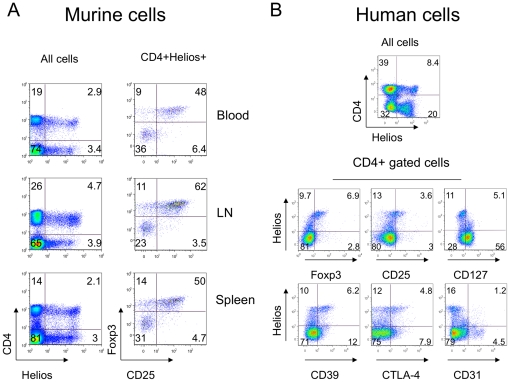
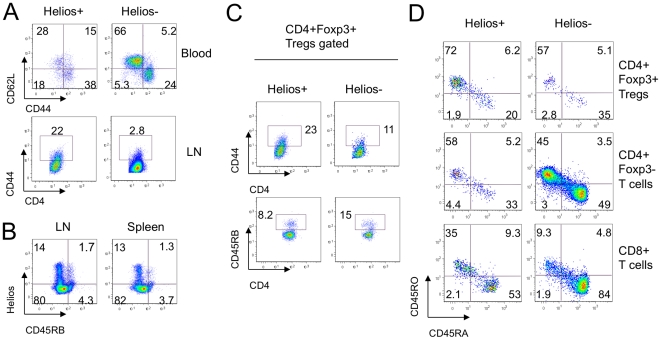
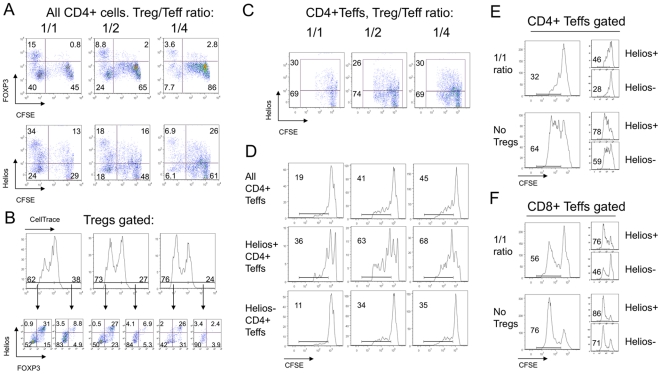
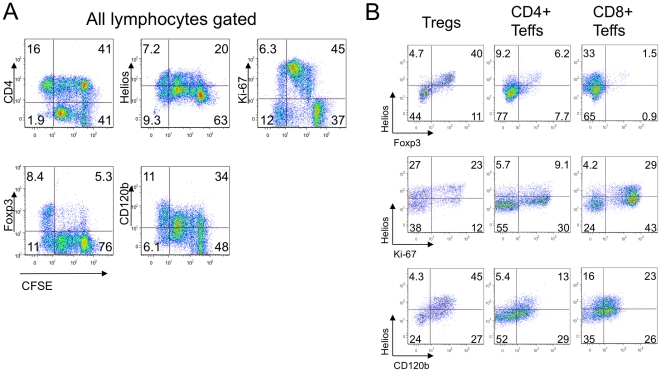
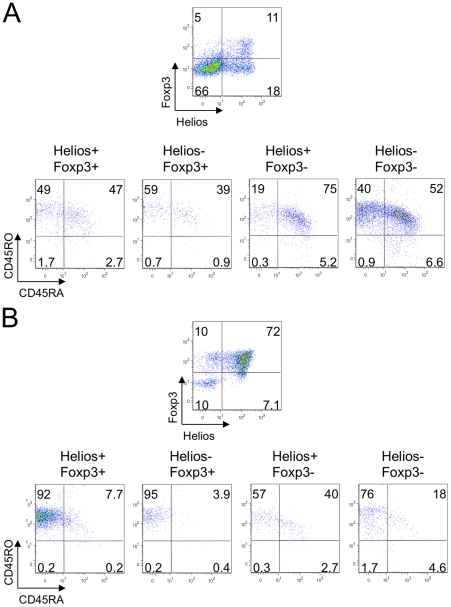
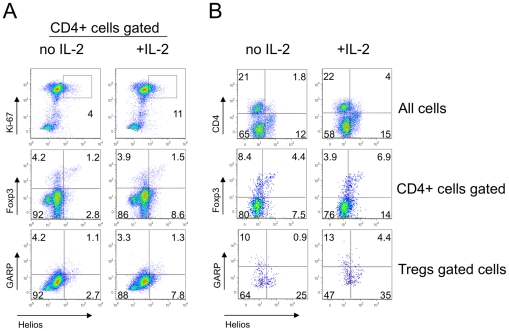
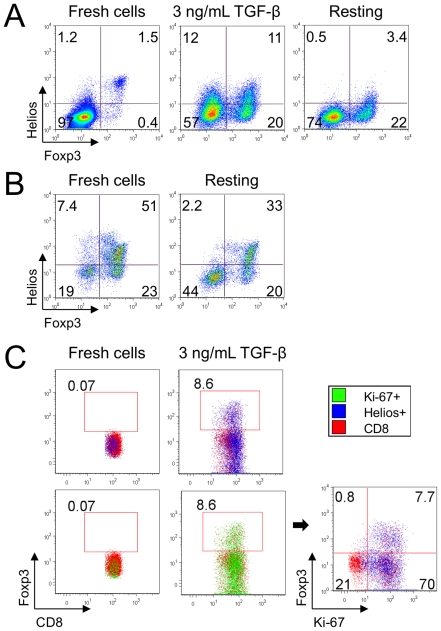
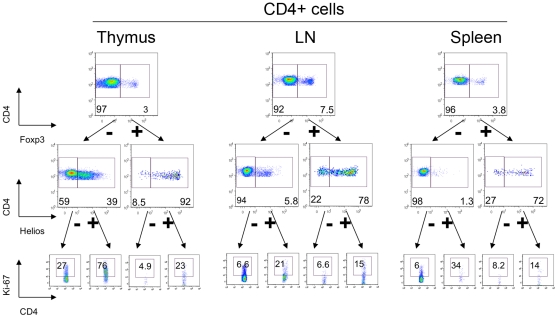
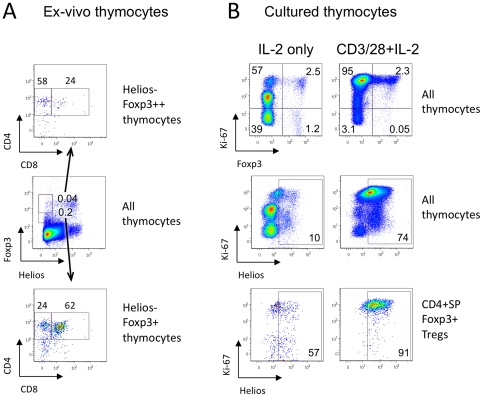
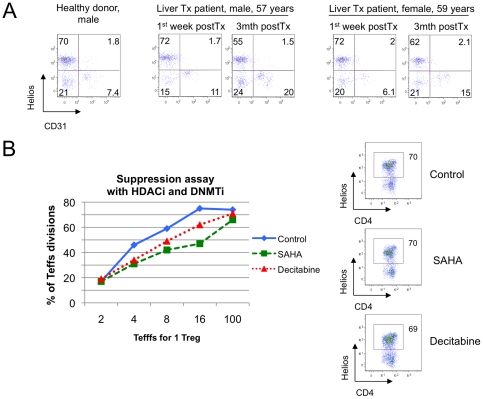
Foxp3+ T-regulatory cells (Tregs) normally serve to attenuate immune responses and are key to maintenance of immune homeostasis. Over the past decade, Treg cells have become a major focus of research for many groups, and various functional subsets have been characterized. Recently, the Ikaros family member, Helios, was reported as a marker to discriminate naturally occurring, thymic-derived Tregs from those peripherally induced from naïve CD4+ T cells. We investigated Helios expression in murine and human T cells under resting or activating conditions, using well-characterized molecules of naïve/effector/memory phenotypes, as well as a set of Treg-associated markers. We found that Helios-negative T cells are enriched for naïve T cell phenotypes and vice versa. Moreover, Helios can be induced during T cell activation and proliferation, but regresses in the same cells under resting conditions. We demonstrated comparable findings using human and murine CD4+Foxp3+ Tregs, as well as in CD4+ and CD8+ T cells. Since Helios expression is associated with T cell activation and cellular division, regardless of the cell subset involved, it does not appear suitable as a marker to distinguish natural and induced Treg cells.
Overview
The claims and statistics of this paper haven’t been checked yet.
Free: it reads the open-access text and checks the first 5 claims that cite a source we can check. Create a free account to check every claim.
Integrity signals
Registry
Cites
Statistics
Figures
Verification
Claims the paper makes
The claims and statistics of this paper haven’t been checked yet.
Free: it reads the open-access text and checks the first 5 claims that cite a source we can check. Create a free account to check every claim.
Claims other papers make about this one
Each is checked against this paper’s own text: does it say what the citing paper says it does?
The cited source doesn’t support the claim as written.
In the citing paper
“Yet, Helios, Nrp-1 or ROR-γt are widely accepted for the discrimination of tTreg and pTreg cells under homeostatic conditions [364-366, 437-440].”
From Guidelines for the use of flow cytometry and cell sorting in immunological studies (third edition) (2021) · cites this paper as [366]
Checked by a reasoning model — may be wrong.
Experimental — accuracy not yet measuredThe cited source says what the claim attributes to it.
In the citing paper
“In humans, however, the validity of these markers is less clear because not all naive/thymus-derived Tregs express Helios [173] and it has been reported that this protein can also be expressed by activated T cells [366].”
From Guidelines for the use of flow cytometry and cell sorting in immunological studies (third edition) (2021) · cites this paper as [366]
Self-check
Percentages, sums and reported differences re-computed from the paper’s own numbers.
The self-check needs the paper’s full text.
Citations
Cites
Control of Regulatory T Cell Development by the Transcription Factor Foxp3
Hori, S., Nomura, T., & Sakaguchi, S. (2003) · Science · doi:10.1126/science.1079490 · Cited by 8,187
Foxp3 programs the development and function of CD4+CD25+ regulatory T cells
Fontenot, J. D., Gavin, M. A., & Rudensky, A. Y. (2003) · Nature Immunology · doi:10.1038/ni904 · Cited by 7,745 · cited 1×
“function [3,4].”
Veldhoen, M., Hocking, R. J., Atkins, C. J., Locksley, R. M., & Stockinger, B. (2006) · Immunity · doi:10.1016/j.immuni.2006.01.001 · Cited by 3,605 · cited 1×
“Thus, in vitro induced murine Tregs do not have a stable iTreg phenotype and lose Foxp3 after TGFbeta withdrawal, while human iTregs generated this way may be unstable and/or poorly suppressive [24,30,31].”
BackgroundVignali, D. A. A., Collison, L. W., & Workman, C. J. (2008) · Nature Reviews Immunology · doi:10.1038/nri2343 · Cited by 3,463
CD127 expression inversely correlates with FoxP3 and suppressive function of human CD4+ T reg cells
Liu, W., Putnam, A. L., Xu-yu, Z., Szot, G. L., Lee, M. R., Zhu, S., Gottlieb, P. A., Kapranov, P., Gingeras, T. R., de St. Groth, B. F., et al. (2006) · The Journal of Experimental Medicine · doi:10.1084/jem.20060772 · Cited by 2,606 · cited 8×
“5) from BD Biosciences; CD4 (Pacific blue, PE, FITC, APC-eFluor 780), CD25 (APCeFluor 780, Pe-Cy5, Pe-Cy7), CD39 (Pe-Cy7), CD45RA (PECy7), CD45RO (PE), CD62L (Pe-Cy5, APC-eFluor 780), CD127 (FITC, PE, Alexa Fluor 647) and FOXP3 (PE, Alexa Fluor 647, Pacific blue and FITC, clones PCH101 and 236A/E7) from eBioscience; C…”
BackgroundInfluentialDeaglio, S., Dwyer, K. M., Gao, W., Friedman, D., Usheva, A., Erat, A., Chen, J.-F., Enjyoji, K., Linden, J., Oukka, M., et al. (2007) · The Journal of Experimental Medicine · doi:10.1084/jem.20062512 · Cited by 2,470 · cited 4×
“However, we did find a common association between high Helios expression and a set of Treg-known markers including Foxp3, CD25, CD39, CTLA-4 and low levels of CD127.”
BackgroundInfluentialRegulatory T Cell Lineage Specification by the Forkhead Transcription Factor Foxp3
Fontenot, J. D., Rasmussen, J. P., Williams, L. M., Dooley, J. L., Farr, A. G., & Rudensky, A. Y. (2005) · Immunity · doi:10.1016/j.immuni.2005.01.016 · Cited by 2,279 · cited 1×
“Recently, several microarray studies indicated an up-regulation of the Ikaros family transcription factor, Helios, in Tregs [16,17,18].”
BackgroundThornton, A. M., Korty, P. E., Tran, D. Q., Wohlfert, E. A., Murray, P. E., Belkaid, Y., & Shevach, E. M. (2010) · The Journal of Immunology · doi:10.4049/jimmunol.0904028 · Cited by 1,382 · cited 9×
“The fast down-regulation of Helios upon removing TCR stimulation, or the absence of stimulatory signals, might explain the effect observed by Thornton et al. whereby in vitro induced iTregs remained Helios- [21].”
BackgroundInfluentialNatural and Adaptive Foxp3+ Regulatory T Cells: More of the Same or a Division of Labor?
Curotto de Lafaille, M. A., & Lafaille, J. J. (2009) · Immunity · doi:10.1016/j.immuni.2009.05.002 · Cited by 1,055
The Foxp3+ regulatory T cell: a jack of all trades, master of regulation
Tang, Q., & Bluestone, J. A. (2008) · Nature Immunology · doi:10.1038/ni1572 · Cited by 1,031 · cited 1×
“and share multiple suppressive mechanisms [11].”
Cited by
Items 301–388 of 388
Araishi, K., Shima, T., Yasuda, I., Tsuda, S., Morita, K., Yamaki‐Ushijima, A., Nakashima, A., & Saito, S. (2022) · Journal of Reproductive Immunology · doi:10.1016/j.jri.2022.103792 · Cited by 4
París‐Muñoz, A., León‐Triana, O., Pérez‐Martínez, A., & Barber, D. F. (2023) · International Journal of Molecular Sciences · doi:10.3390/ijms25010452 · Cited by 5
“However, the validity of this latter assumption has become increasingly controversial due to the more recent detection of Helios in CD4 + pTregs [67], in activated and exhausted CD4 + Tconvs [68–70], and in iTregs [71].”
BackgroundWaikar, Y. (2018) · Neonatal and Pediatric Medicine · doi:10.4172/2572-4983.1000153 · Cited by 4
Holohan, D. R., Gool, F. V., & Bluestone, J. A. (2019) · bioRxiv (Cold Spring Harbor Laboratory) · doi:10.1101/644229 · Cited by 4
van Bentem, K., Verleng, L. J., Lafeber, G., Tian, X., Beelen, E., van der Keur, C., Kapsenberg, J. M., Lashley, E. E. L. O., Eikmans, M., & van der Hoorn, M. (2024) · Journal of Reproductive Immunology · doi:10.1016/j.jri.2024.104387 · Cited by 3
Liapopoulos, D., Sarantis, P., Zogas, G., Trifylli, E.-M., Bousou, T.-E., Kamitaki, K., Anastasiou, I. A., Kokkali, S., Mavromatis, S., Koustas, E., et al. (2026) · International Journal of Molecular Sciences · doi:10.3390/ijms27104630 · Cited by 5
“Moreover, CRISPR ablation studies show that Helios is a marker, not a driver, of human Treg stability, and it can be induced outside the thymus [7,33].”
A homozygous CTLA-4 variant causes CTLA-4 deficiency with severe immune dysregulation
Çatak, M. C., Can, S., Hubrack, S., Catak, F. B., Elmi, A., Babayeva, R., Amirov, R., Altunbaş, M. Y., Eltan, S. B., Ertem, D., et al. (2026) · Journal of Human Immunity · doi:10.70962/jhi.20250227 · Cited by 3
“Notably, the increased expression of Helios and CD39 in T con cells may also reflect chronic T cell activation, consistent with reports indicating that CD39 is upregulated in exhausted T cells (35, 36).”
Zhao, Y.-M., Zhao, M., Li, M., Ma, X., Zheng, M., Nie, Y., Zhu, Y., Ren, J., Hasimu, A., Yuan, Z., et al. (2023) · Immunobiology · doi:10.1016/j.imbio.2023.152749 · Cited by 3
CD177 drives the transendothelial migration of Treg cells enriched in human colorectal cancer
Ke, S., Yi, L., Guo, Y., Xie, F., Yu, Y., Geng, H., Zhong, Y., Xu, D., Liu, X., Yu, F., et al. (2024) · Clinical & Translational Immunology · doi:10.1002/cti2.1506 · Cited by 5
Development of Thymic Regulatory T Lymphocytes
Vasconcelos‐Fontes, L., Ferreira‐Reis, R., Ortigão‐Farias, J. R., Jurberg, A. D., & Cotta-de-Almeida, V. (2019) · Springer eBooks · doi:10.1007/978-3-030-12040-5_12 · Cited by 3
TNFR2 and Regulatory T Cells: Potential Immune Checkpoint Target in Cancer Immunotherapy
He, X., & Wang, X. (2019) · IntechOpen eBooks · doi:10.5772/intechopen.85632 · Cited by 3
“Although TNFR1 expression is not different between Treg and non-Treg cells, human Treg constitutively express high levels of TNFR2 compared to CD25- Tconv.”
ResultInfluentialChen, W., Liu, J., Chuang, H., Chang, Y.-L., Yeh, C., Wu, C., & Wu, S.-F. (2020) · Life · doi:10.3390/life10090189 · Cited by 3
“In prev ous studies, Helios is expressed in a small subset of CD4+ Foxp3− and CD8+ T c lls, a d th expression is associated with T cell activation a d proliferation both in CD4+ and CD8+ T cells [16,17].”
BackgroundMethodRegulatory T Cells in Tumor Immunity
Nagarsheth, N., Kryczek, I., Wei, S., Frankel, T. L., & Zou, W. (2016) · Elsevier eBooks · doi:10.1016/b978-0-12-374279-7.17009-2 · Cited by 3
Meyiah, A., Al-Harrasi, A., Rehman, N. U., & Elkord, E. (2025) · Fitoterapia · doi:10.1016/j.fitote.2025.106641 · Cited by 2
Nirmala, S. S., Hu, Y., Floegel, F., Cruz, H., Morgenstern, J., Platz, A., Vollroth, M., & Fuchs, A. (2026) · Frontiers in Immunology · doi:10.3389/fimmu.2026.1697723 · Cited by 2
Isolation of Pure Stable Human Treg Cells Based on Expression of GPA33
Morgana, F., Slot, E. M., & Amsen, D. (2026) · European Journal of Immunology · doi:10.1002/eji.70107 · Cited by 2
“Although Helios – human Treg cells can transiently express this factor upon activation [50], persistent expression of Helios seems the most reliable criterion available to identify stable Treg cells.”
H2-O deficiency promotes regulatory T cell differentiation and CD4 T cell hyperactivity
Welsh, R. A., Song, N., Park, C., Peske, J. D., & Sadegh‐Nasseri, S. (2024) · Frontiers in Immunology · doi:10.3389/fimmu.2023.1304798 · Cited by 2
Zeng, X., Alimu, X., Bahabayi, A., Zhang, Z., Zheng, M., Yuan, Z., Liu, T., & Liu, C. (2024) · Clinical and Experimental Medicine · doi:10.1007/s10238-023-01289-6 · Cited by 4
“There have reported that Helios could be induced during the activation and proliferation of T cells [48], and Helios+ FoxP3 + cells in mice had a higher level of CD44 expression while Helios-FoxP3 + cells expressed lower CD44 [49].”
BackgroundIntestinal Regulatory CD4 + T Cells
Gagliani, N., Huber, S., & Flavell, R. A. (2015) · Elsevier eBooks · doi:10.1016/b978-0-12-415847-4.00038-0 · Cited by 2
Physiology and Pathology of Immune Dysregulation: Regulatory T Cells and Anergy
Tores, M. I., López‐Casado, M. Á., de León, C. P., Lorite, P., & Palomeque, T. (2017) · InTech eBooks · doi:10.5772/intechopen.71770 · Cited by 5
“Nevertheless, the Helios used as a marker for nTregs has been disputed because, depending on the cell-activation conditions, Helios is also expressed in conventional T cells (T conv) of humans [16].”
BackgroundOstadkarampour, M., Müller, M., Öckinger, J., Kullberg, S., Lindén, A., Eklúnd, A., Grünewald, J., & Wahlström, J. (2016) · PLoS ONE · doi:10.1371/journal.pone.0164751 · Cited by 2
Pasquale, C. D., Drommi, F., Calabrò, A., Botta, C., Migliore, G. S., Carrega, P., Vento, G., Gaeini, A., Pezzino, G., Freni, J., et al. (2025) · Journal of Allergy and Clinical Immunology · doi:10.1016/j.jaci.2025.01.024 · Cited by 2
Bai, J., Wang, M., Luo, Y., Duan, B., Yang, Y., Fu, Y., Li, S., Yang, Z., Zheng, P., Yu, T., et al. (2025) · Journal of Nanobiotechnology · doi:10.1186/s12951-025-03471-2 · Cited by 4
“For example, regulatory T cells (Tregs), tumor-associated macrophages (TAMs), and exhausted CD8 + T cells are known to play crucial roles in promoting tumor progression and immune evasion [44, 45].”
Regulatory T Cells and Nanomaterials: Dual Perspectives in Therapeutics and Immunomodulation
Chen, Y. H., Huang, H., Wang, X., Yu, X., Huang, Z., Jin, Z., Chen, C., Chen, Y., Blazar, B. R., Xu, Y., et al. (2025) · Small Science · doi:10.1002/smsc.202500481 · Cited by 2
Striking a balance: how the gut microbiome shapes the fate of intestinal CD4+ T cells
Till, J. M., Brock, O. D., & Ahern, P. P. (2025) · Discovery Immunology · doi:10.1093/discim/kyaf020 · Cited by 1
A stage-based framework to interpret regulatory T cell biology after heart transplantation
Wang, Y., Ni, M., Zheng, A., Peng, Y., Liu, J., Xiong, Q., Wang, X., Savković, V., & Kang, S. (2026) · Frontiers in Cardiovascular Medicine · doi:10.3389/fcvm.2026.1777360 · Cited by 2
Cherney, E. C., Nair, S. K., Penmetsa, S. B. V. K., Shimpukade, B., Huang, A., Bilder, D. M., Degnan, A. P., Kumi, G. K., Zhang, L., Purandare, A. V., et al. (2026) · Journal of Medicinal Chemistry · doi:10.1021/acs.jmedchem.6c01271 · Cited by 2
Turk, M. J. (2014) · Springer eBooks · doi:10.1007/978-1-4899-8056-4_1 · Cited by 1
“However, more recent studies show that helios can be expressed by iTreg under in vitro activation conditions [43], on activated conventional CD4 and CD8 T cells [44], and”
BackgroundThe Continuing Flight of Ikaros
Brown, K. E. (2016) · Springer eBooks · doi:10.1007/978-3-319-38882-3_8 · Cited by 1
Dissecting Emerging Aspects of Regulatory Circuitry in Man and Mice: Regulatory T Cell Biology
Rahman, T., Seraj, M. F., & Casellato, A. (2018) · Advances in Bioscience and Biotechnology · doi:10.4236/abb.2018.99031 · Cited by 1
“However, others have described that pTreg can express Helios as when T cells were stimulated with irradiated splenocytes, more than half of the pTreg expressed Helios [126].”
BackgroundInfluentialBelyayev, L. A., Kang, J., Sadat, M., Loh, K. S., Patil, D., Muralidaran, V., Khan, K., Kaufman, S. S., Subramanian, S., Gusev, Y., et al. (2024) · Human Immunology · doi:10.1016/j.humimm.2024.110773 · Cited by 1
Lupsa, N., Érsek, B., Böröczky, C., Kis, D., Szarka, E., Lumniczky, K., Sáfrány, G., Zádori, Z., Szöőr, Á., Buzás, E. I., et al. (2024) · European Journal of Immunology · doi:10.1002/eji.202350619 · Cited by 1
“Helios is considered a T-cell activation marker on many T-cell subsets, including, but not limited to, Treg [30, 31], the expression of which is inducible by in vitro TCR activation or TGF-β treatment [25].”
BackgroundGut bacteria, regulatory T cells and allergic sensitization in early childhood
Rabe, H. (2014) · Gothenburg University Publications Electronic Archive (Gothenburg University) · Cited by 2
Levine, M. H., Akimova, T., Murken, D. R., & Hancock, W. W. (2017) · Liver Transplantation · doi:10.1002/lt.24786 · Cited by 1
“Second, compared with non-Tol patients, Tol patients showed increased expression of FOXP3 and another transcription factor, HELIOS, characteristic of activated T cells,((11)) as well as markers linked with antigen-stimulated or differentiated (“activated effector-memory”) rather than na€ıve Treg cells.”
ResultSelf-citationAnalysis of Lymphocytes with T regulatory Phenotype in Kidney Allografts of Saint-Petersburg
Kara, T. (2018) · eDiss (Georg-August-Universität Göttingen) · doi:10.53846/goediss-6654
Lu, H. Y., Vaseghi‐Shanjani, M., Lam, A. J., Sharma, M., Mohajeri, A., Gillies, J. K., Yang, G. X., Lin, S. X., Fu, M. P., Salman, A., et al. (2023) · medRxiv · doi:10.1101/2023.09.09.23295301 · Cited by 1
Regulatory T cells in haematopoietic stem cell transplantation
Mavin, E. (2014)
Ostadkarampour, M. (2014) · Figshare
Regulatory T cells : molecular and clinical aspects
Winerdal, M. E. (2015) · Figshare · Cited by 1
Natural CD4+CD25+FOXP3+ regulatory T cells in graft-versus-host disease
Edinger, M., & Hoffmann, P. (2013) · Elsevier eBooks · doi:10.1016/b978-0-12-416004-0.00012-4 · Cited by 1
Immune system modulation by infections with Helminths and HIV-1
Chachage, M. (2013) · Electronic Theses of LMU Munich (Ludwig-Maximilians-Universität München) · doi:10.5282/edoc.16806
Regulatory Immune Responses and Repair Mechanisms in Atherosclerosis
Rattik, S. (2015) · Lund University Publications (Lund University)
On Mesenchymal Stem Cells and Regulatory T Cells in Organ Transplantation
Engela, A. U. (2013) · EUR Research Repository (Erasmus University Rotterdam)
Himmel, M. E. (2012) · cIRcle (University of British Columbia) · doi:10.14288/1.0072834
“For example, Tregs migrating to the skin express the alpha E integrin chain CD103 and CC-chemokine receptor 4 (CCR4), and generate carbohydrate ligands via the "-(1,3)-fucosyltransferase VII enzyme that are recognized”
BackgroundInfluentialHalford, E. E. (2016) · University of Birmingham Institutional Research Archive (University of Birmingham)
Immune modulation by zinc induced regulatory T cells
Rosenkranz, E., & Rink, L. (2014) · RWTH Publications (RWTH Aachen) · Cited by 1
Atuação de células T reguladoras em episódios reacionais na hanseníase
Vieira, A. P. (2017) · Digital Library of Theses and Dissertations (Universidade de São Paulo) · doi:10.11606/t.5.2017.tde-11052017-134754
A Unique Gene Expression Profile to Identify Operationally Tolerant Liver Transplant Recipients
Rojas-Luengas, V. (2016) · TSpace (University of Toronto)
Suen, A. Y. W. (2016) · ERA: Education and Research Archive (University of Alberta) · doi:10.7939/r3zc7s288
CD4 T Cell Interaction with Intestinal Microbes under Homeostasis and Inflammation
Chai, J. N. (2018) · Open Scholarship Institutional Repository (Washington University in St. Louis) · doi:10.7936/v4y0-9r96
The role of T cell subsets in experimental autoimmune encephalomyelitis
Edwards, S. C. (2015) · Arrow@dit (Dublin Institute of Technology)
THE ROLE OF MAIT CELL IN PROTECTION AGAINST INFECTION IN-VIVO
Sengar, R. (2018) · International Journal of Medical and Biomedical Studies · doi:10.32553/ijmbs.v2i6.63
Thymus-Derived CD4+CD25+ FOXP3+ Regulatory T Cells in GVHD
Edinger, M., & Hoffmann, P. (2019) · Elsevier eBooks · doi:10.1016/b978-0-12-812630-1.00013-x
Clay, S. L., Bravo‐Blas, A., Wall, D. M., MacLeod, M. K. L., & Milling, S. W. F. (2019) · bioRxiv (Cold Spring Harbor Laboratory) · doi:10.1101/710665
Nomura, T., & Shinohara, A. (2016) · Springer eBooks · doi:10.1007/978-4-431-55855-2_5
The Role of Langerin⁺ CD8α⁺ Dendritic Cells in Tumour Immunotherapy
Gibbins, J. D. (2014) · Open Access Victoria University of Wellington | Te Herenga Waka (Figshare) · doi:10.26686/wgtn.17008219.v1
Scurr, M. J., Pembroke, T., Bloom, A. C., Roberts, D., Thomson, A., Smart, K., Bridgeman, H. M., Adams, R., Brewster, A. E., Jones, R., et al. (2023) · doi:10.1158/1078-0432.c.6525245.v1
Der p 1-specific Treg and Breg cells in allergen immunotherapy and mechanism of immune tolerance
Boonpiyathad, T. (2018) · Chula Digiverse · doi:10.58837/chula.the.2018.145
SMALL-MOLECULE DEGRADERS OF IKAROS ZINC FINGER (IKZF) TRANSCRIPTION FACTORS
Holmberg‐Douglas, N., Shunatona, H. P., Kumi, G. K., & Purandare, A. V. (2023) · Medicinal chemistry reviews · doi:10.1021/mc-2023-vol58.ch10 · Cited by 1
Inborn Errors of Immunity and Cytokine Storm Syndromes
Reid, W., & Romberg, N. D. (2024) · Advances in experimental medicine and biology · doi:10.1007/978-3-031-59815-9_14
Васильевич, Б. Е., Ostanin, A., & Chernykh, E. R. (2025) · Archive of oncology · doi:10.2298/aoo241217003b
Regulatory T Cells in Tumor Immunity
Kang, J. H., Nagarsheth, N., Kryczek, I., Wei, S., Frankel, T. L., Zou, W., & Zappasodi, R. (2025) · Elsevier eBooks · doi:10.1016/b978-0-12-824465-4.00201-5
The Role of MYC Rearrangements and Relative Copy Number Gain in Prostate Cancer
Silva, M. P. (2013) · Portuguese National Funding Agency for Science, Research and Technology (RCAAP Project by FCT) · doi:10.34626/wty7-sk58
The influence of biologic therapy on the capacity of regulatory T cells to restrain Th17 responses
McGovern, J. L. (2012) · UCL Discovery (University College London)
Sun, Y., Lin, S., Wang, H., Wang, L., Qiu, Y., Zhang, F., Hao, N., Wang, F., & Tan, W. (2024) · Figshare · doi:10.6084/m9.figshare.26701051
Self-citationAraishi, K., Shima, T., Yasuda, I., Tsuda, S., Morita, K., Yamaki-ushijima, A., Nakashima, A., & Saito, S. (2022) · Reproductive Immunology and Biology · doi:10.3192/jsirib.37.32
Potentiel thérapeutique des lymphocytes régulateurs de type 1 (Tr1) dans l'arthrite expérimentale.
Martire, D. (2013) · theses.fr (ABES) · doi:10.70675/b63af179z4fd3z47d1z9a6ez42df33c95b34
Metabolic fueling of hematopoietic stem cell differentiation to the erythroid lineage
Oburoglu, L. (2014) · theses.fr (ABES) · doi:10.70675/2a8ca582z1bd3z4b90z96c1z5964d1e426b9
Navas-Penaherrera, V. (2015) · theses.fr (ABES) · doi:10.70675/4e70213bzce3bz4c4fz82b5zc67a1f3c8fff
Impact des inhibiteurs de la voie mTOR sur la réponse immunitaire T anti-tumorale
Beziaud, L. (2015) · theses.fr (ABES) · doi:10.70675/02936eacz6998z4fd1zb56cz2535d854411e
Hamdani, S. (2016) · theses.fr (ABES) · doi:10.70675/9e24450czb094z4495zafbfz117b8e3adf32
Impact de l'inflammation intestinale sur la dynamique et la fonction des lymphocytes T régulateurs
Boschetti, G. (2016) · theses.fr (ABES) · doi:10.70675/88c2556cz80e4z4822z9448zbf8db6b1c051
Génération et analyse d’un nouveau modèle de la maladie APECED par déficience pour Aire chez le rat
Ossart, J. (2018) · theses.fr (ABES) · doi:10.70675/96586792zd58bz497dza907zfe0a41d8d94d
Roux, C. (2018) · theses.fr (ABES) · doi:10.70675/d6ac8d0az8227z4463zb0c5z74a382a84245 · Cited by 1
Regulation of the T cell response in Multiple Sclerosis
Benallegue, N. (2021) · theses.fr (ABES) · doi:10.70675/1139fcb3z40a7z4b84zbd80z1d8a0860fb29
Takahashi, K., Kawagoe, J., Takehara, I., Matsukawa, J., Takeda, Y., Ohta, T., Asao, H., & Nagase, S. (2026) · Reproductive Sciences · doi:10.1007/s43032-026-02096-6
“We acknowledge that Helios expression can also reflect activation [27 ] and may be induced in peripherally generated Treg cells depending on context [ 28].”
NKG2C + CD27 − Defines Human CD8 + Regulatory T CellsPreprint
Li, X., Mistri, S. K., Cao, T., Krishnan, R. K., Hemberg, M., Weiner, H. L., & Hu, D. (2026) · bioRxiv (Cold Spring Harbor Laboratory) · doi:10.64898/2026.06.15.732401
“Additionally, although Helios is induced during T cell activation and proliferation, it is not a Treg-specific marker ( 44 ), given that it is expressed in mouse CD8 + Tregs ( 16 ) and human CD8 + KIR + cells ( 18 ); We used co-expression of IKZF2 (encodes Helios) and KIR genes as one of the…”
Fagniez, I., Tsumura, M., Guérin, A., Abolhassani, H., Sharafian, S., Mesdaghi, M., Nishimura, T., Lashkari, H. P., Rao, S., Richards, S., et al. (2026) · The Journal of Experimental Medicine · doi:10.1084/jem.20252038
TCR γδ cell–specific STAT5 gain of function induces a druggable chronic human immune dysregulation
Meyer, B. J., Loureiro, J. P., Nosi, V., Hupfer, R., Ghosh, A., Poletti, F., Jauch, A., Hirsiger, J. R., Berkemeier, C. M., Heijnen, I., et al. (2026) · Journal of Human Immunity · doi:10.70962/jhi.20250175
“In contrast, TCR γδ cells from P1 had reduced expression of genes that coordinate inhibition of cell proliferation and migration ( SH3BGRL2 ) (36), T cell activation ( ENPP1 , IKZF2 , CTL4 , HK2 , IRF4 , TNFSF10 ) (37, 38, 39, 40, 41, 42), and exhaustion ( ENPP1 , IRF4 ) (37, 43).”
Targeting IKZF2 with molecular glue degraders for cancer immunotherapy
Huang, Y., Huang, S., & Liu, Y. (2026) · Drug Discovery Today · doi:10.1016/j.drudis.2026.104820
Metadata
- Authors
- Akimova, T., Beier, U. H., Wang, L., Levine, M. H., & Hancock, W. W.
- Affiliations
- Children's Hospital of Philadelphia (US)
- Hospital of the University of Pennsylvania (US)
- Corresponding author
- Hancock, Wayne W.
- Venue
- PLoS ONE
- Publisher
- Public Library of Science (PLoS)
- Published
- 2011-08-30
- Volume
- 6
- Issue
- 8
- Pages
- e24226
- ISSN
- 1932-6203 (ISSN-L)
- PMC
- PMC3168881
- OpenAlex
- W2088046822
- Cited by
- 389
- References
- 48
- Citations by year
- 2026: 11 · 2025: 11 · 2024: 27 · 2023: 15 · 2022: 14 · 2021: 21 · 2020: 19 · 2019: 24 · 2018: 19 · 2017: 28 · 2016: 29 · 2015: 37 · 2014: 43 · 2013: 53 · 2012: 37
- FWCI
- 18.94
- Type
- journal article
- Language
- en
- Open access
- gold
- doi.org
- Locations
- PLoS ONE (publishedVersion, cc-by)
- Europe PMC (PubMed Central) (publishedVersion, cc-by)
- PubMed Central (publishedVersion, cc-by)
- PubMed (publishedVersion)
- DOAJ (DOAJ: Directory of Open Access Journals) (submittedVersion, cc-by-sa)
- Funders
- University of Southern California
- University of Pennsylvania
- National Institutes of Health
- National Institute of Diabetes and Digestive and Kidney Diseases (K08DK092282, DK087270-01, RC1DK087270)
- Topics
- Life Sciences › Immunology and Microbiology › Immunology › T-cell and B-cell Immunology
- Life Sciences › Immunology and Microbiology › Immunology › Psoriasis: Treatment and Pathogenesis
- Life Sciences › Biochemistry, Genetics and Molecular Biology › Molecular Biology › Signaling Pathways in Disease
- Keywords
- Helios, Foxp3+ regulatory T cells, T cell activation, T cell proliferation, naive T cells, memory T cells, CD4+ T cells, CD8+ T cells, Treg markers
- MeSH terms
- Animals, Cells, Cultured, DNA-Binding Proteins, Female, Flow Cytometry, Humans, Lymphocyte Activation, Male, T-Lymphocytes, Transcription Factors, Cell Proliferation, T-Lymphocytes, Regulatory, Mice, Ikaros Transcription Factor, Forkhead Transcription Factors
About these checks
Registry, retraction, Cites and statistics results are computed, not judged, with one exception: a printed reference that no index lists is read once by a model before it counts as a citation error. Claims are extracted by a model and kept only when their quote appears verbatim in the text; each cited source is then checked, with a model’s help, for whether it says what the claim relies on. Those verdicts can be wrong — read the claim’s quote and the cited source before relying on one.
Statistics and arithmetic are recomputed, not judged.
Confidence bands are shown only for fields calibrated on our annotated test set. None is calibrated yet, so no band is shown.
What counts as a claim ›How we measure confidence ›How we check this ›
Are you an author, or do you see a problem with this page? Request a review
Data sources
Bibliographic data: Semantic Scholar, OpenAlex, Crossref.
Contains information from the Semantic Scholar Academic Graph Datasets, made available under the ODC Attribution License (ODC-BY 1.0).
Semantic Scholar’s data is described in: Kinney, R., et al. (2023). The Semantic Scholar Open Data Platform. arXiv:2301.10140.
