

The DOI matches its Crossref record; 61 of the 61 references it cites were found in a registry or an index.
Development Trends of White Matter Connectivity in the First Years of Life
Open accessAbstract
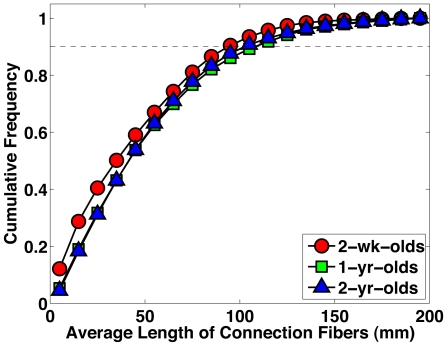
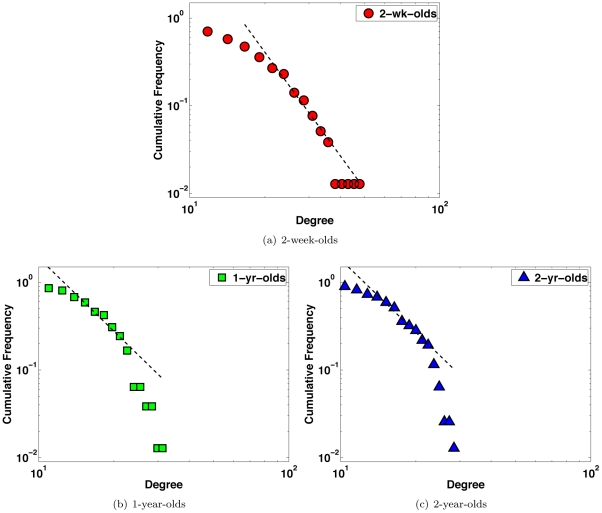
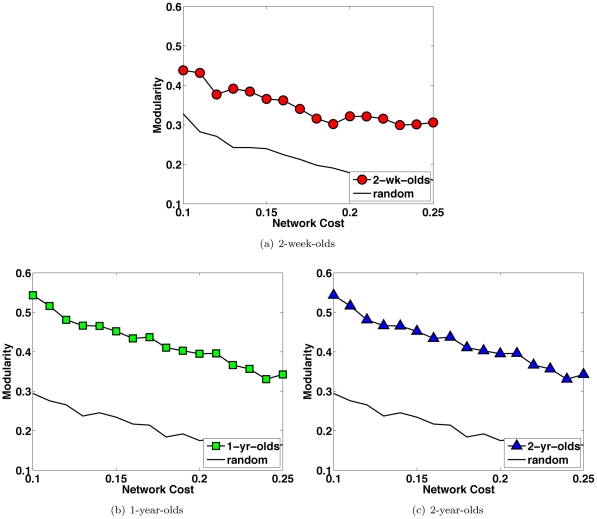
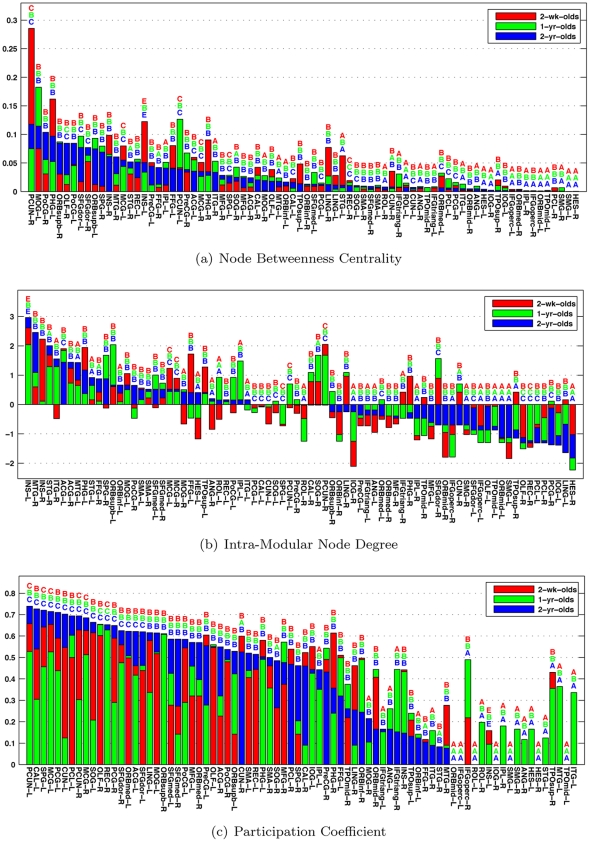
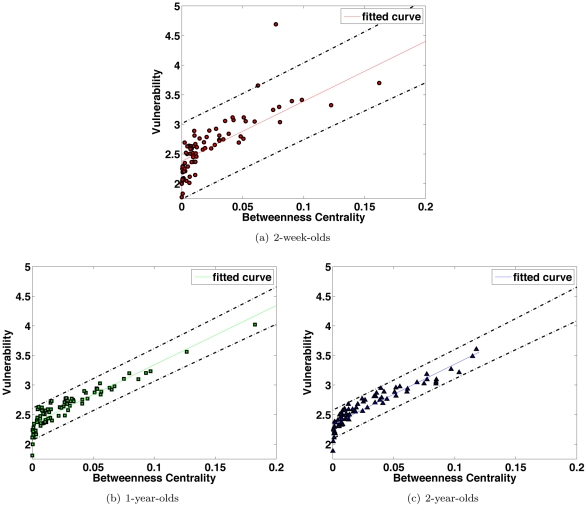
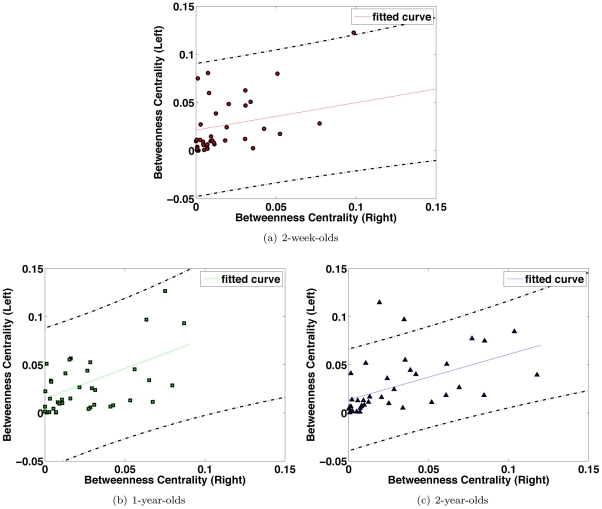
The human brain is organized into a collection of interacting networks with specialized functions to support various cognitive functions. Recent research has reached a consensus that the brain manifests small-world topology, which implicates both global and local efficiency at minimal wiring costs, and also modular organization, which indicates functional segregation and specialization. However, the important questions of how and when the small-world topology and modular organization come into existence remain largely unanswered. Taking a graph theoretic approach, we attempt to shed light on this matter by an in vivo study, using diffusion tensor imaging based fiber tractography, on 39 healthy pediatric subjects with longitudinal data collected at average ages of 2 weeks, 1 year, and 2 years. Our results indicate that the small-world architecture exists at birth with efficiency that increases in later stages of development. In addition, we found that the networks are broad scale in nature, signifying the existence of pivotal connection hubs and resilience of the brain network to random and targeted attacks. We also observed, with development, that the brain network seems to evolve progressively from a local, predominantly proximity based, connectivity pattern to a more distributed, predominantly functional based, connectivity pattern. These observations suggest that the brain in the early years of life has relatively efficient systems that may solve similar information processing problems, but in divergent ways.
Overview
The claims and statistics of this paper haven’t been checked yet.
Run the check — free, no account needed. It reads the open-access text and checks the sources it cites.
Integrity signals
Registry
Cites
Statistics
Figures
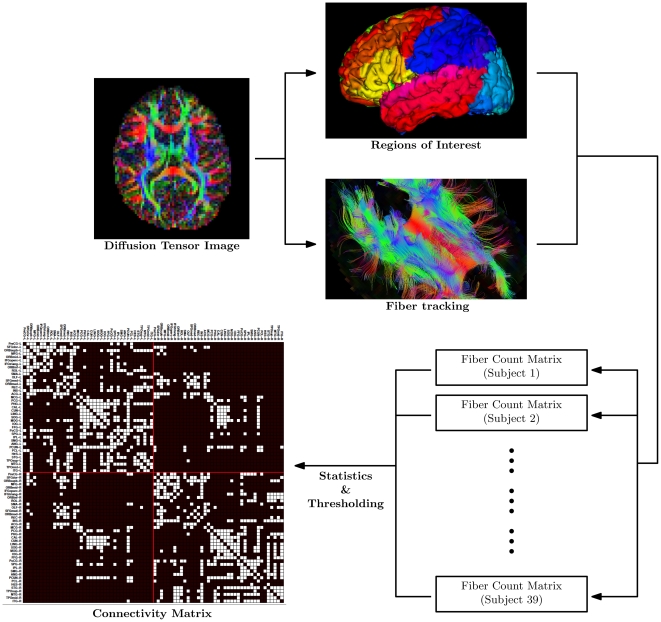
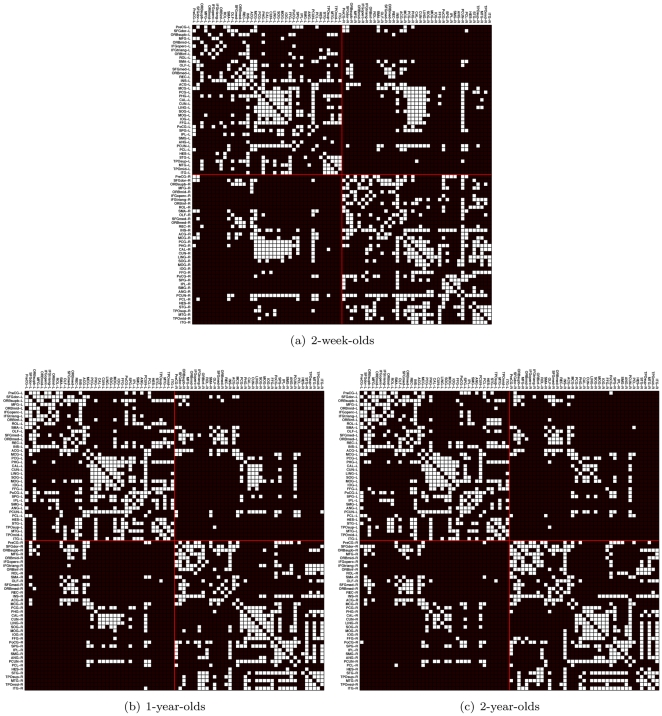
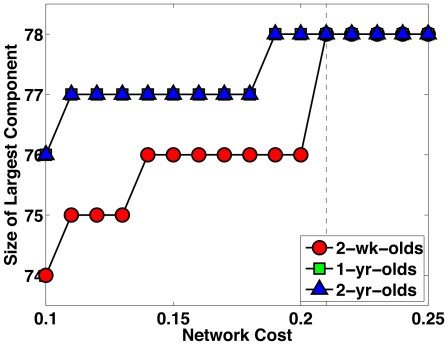
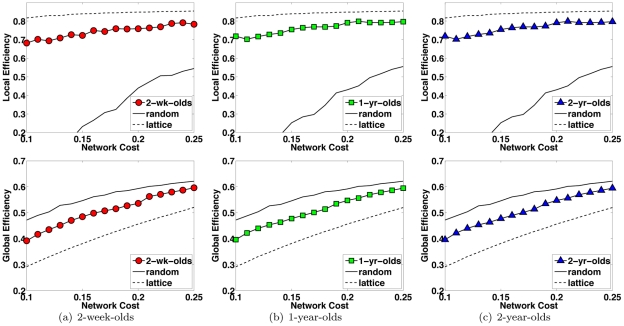
Verification
Claims the paper makes
The claims and statistics of this paper haven’t been checked yet.
Run the check — free, no account needed. It reads the open-access text and checks the sources it cites.
Claims other papers make about this one
Each is checked against this paper’s own text: does it say what the citing paper says it does?
The source backs part of the claim, not all of it — or backs it for a different population, condition or comparison.
In the citing paper
“Network maturation in the first 2 years after birth generally consists of increased network efficiency and network integration [G], decreased network segregation [G], and some changes in the modularity48, 51, with most major hubs and modules in place by age 2 years52.”
From Imaging structural and functional brain development in early childhood (2018) · cites this paper as [48]
Experimental — accuracy not yet measuredThe source backs part of the claim, not all of it — or backs it for a different population, condition or comparison.
In the citing paper
“The centrality of the pre-cuneus and cuneus still increases before pre-adolescence (Huang et al., 2015; Yap et al., 2011).”
From Quantitative mapping of the brain’s structural connectivity using diffusion MRI tractography: A review (2022) · cites this paper as Yap et al., 2011
Experimental — accuracy not yet measuredThe source backs part of the claim, not all of it — or backs it for a different population, condition or comparison.
In the citing paper
“although neonatal brains already show similar structural hub distribution as adult brains”
From Quantitative mapping of the brain’s structural connectivity using diffusion MRI tractography: A review (2022) · cites this paper as Yap et al., 2011
Experimental — accuracy not yet measuredThe cited source says what the claim attributes to it.
In the citing paper
“many refinements occur for the topological roles for each node (Yap et al., 2011).”
From Quantitative mapping of the brain’s structural connectivity using diffusion MRI tractography: A review (2022) · cites this paper as Yap et al., 2011
In the citing paper
“Overall, the white-matter connectome at birth is highly organized and includes hub regions and connections that are similar to those observed in adults48,49.”
From Imaging structural and functional brain development in early childhood (2018) · cites this paper as [48]
Self-check
Percentages, sums and reported differences re-computed from the paper’s own numbers.
The self-check needs the paper’s full text.
Citations
Cites
Collective dynamics of ‘small-world’ networks
Watts, D. J., & Strogatz, S. H. (1998) · Nature · doi:10.1038/30918 · Cited by 43,060
Tzourio-Mazoyer, N., Landeau, B., Papathanassiou, D., Crivello, F., Etard, O., Delcroix, N., Mazoyer, B., & Joliot, M. (2002) · NeuroImage · doi:10.1006/nimg.2001.0978 · Cited by 16,319
Finding and evaluating community structure in networks
Newman, M. E. J., & Girvan, M. (2004) · Physical Review E · doi:10.1103/physreve.69.026113 · Cited by 13,931
A set of measures of centrality based upon betweenness
Freeman, L. (1977) · Sociometry · doi:10.2307/3033543 · Cited by 10,557
Strogatz, S. H. (2001) · Nature · doi:10.1038/35065725 · Cited by 8,236
Error and attack tolerance of complex networks
Albert, R., Jeong, H., & Barabási, A.-L. (2000) · Nature · doi:10.1038/35019019 · Cited by 7,534
Finding community structure in very large networks
Clauset, A., Newman, M. E. J., & Moore, C. (2004) · Physical Review E · doi:10.1103/physreve.70.066111 · Cited by 7,390
Error and attack tolerance of complex networksPreprint
Albert, R., Jeong, H., & Barabási, A.-Ĺ. (2000) · Cited by 6,554
The precuneus: a review of its functional anatomy and behavioural correlates
Cavanna, A. E., & Trimble, M. R. (2006) · Brain · doi:10.1093/brain/awl004 · Cited by 5,128
Efficient behavior of small-world networks
Latora, V., & Marchiori, M. (2001) · Physical Review Letters · doi:10.1103/physrevlett.87.198701 · Cited by 5,119
Cited by
Sorted by citations
BrainNet Viewer: A Network Visualization Tool for Human Brain Connectomics
Xia, M., Wang, J., & He, Y. (2013) · PLoS ONE · doi:10.1371/journal.pone.0068910 · Cited by 4,106
Imaging structural and functional brain development in early childhood
Gilmore, J. H., Knickmeyer, R. C., & Gao, W. (2018) · Nature Reviews Neuroscience · doi:10.1038/nrn.2018.1 · Cited by 1,013
Self-citationDubois, J., Dehaene-Lambertz, G., Kulikova, S., Poupon, C., Hüppi, P. S., & Hertz-Pannier, L. (2014) · Neuroscience · doi:10.1016/j.neuroscience.2013.12.044 · Cited by 851
Deep convolutional neural networks for multi-modality isointense infant brain image segmentation
Zhang, W., Li, R., Deng, H., Wang, L., Lin, W., Ji, S., & Shen, D. (2015) · NeuroImage · doi:10.1016/j.neuroimage.2014.12.061 · Cited by 817
Self-citationBetzel, R. F., Byrge, L., He, Y., Goñi, J., Zuo, X.-N., & Sporns, O. (2014) · NeuroImage · doi:10.1016/j.neuroimage.2014.07.067 · Cited by 807
Metadata
- Authors
- Yap, P.-T., Fan, Y., Chen, Y., Gilmore, J. H., Lin, W., & Shen, D.
- Affiliations
- University of North Carolina at Chapel Hill (US)
- Corresponding author
- Shen, Dinggang
- Venue
- PLoS ONE
- Publisher
- Public Library of Science (PLoS)
- Published
- 2011-09-23
- Volume
- 6
- Issue
- 9
- Pages
- e24678
- ISSN
- 1932-6203 (ISSN-L)
- PMC
- PMC3179462
- OpenAlex
- W2171775073
- Cited by
- 190
- References
- 60
- Citations by year
- 2026: 7 · 2025: 5 · 2024: 6 · 2023: 5 · 2022: 13 · 2021: 11 · 2020: 9 · 2019: 9 · 2018: 18 · 2017: 19 · 2016: 15 · 2015: 11 · 2014: 26 · 2013: 25 · 2012: 11
- FWCI
- 10.07
- Type
- journal article
- Language
- en
- Open access
- gold
- doi.org
- Locations
- PLoS ONE (publishedVersion, cc-by)
- PubMed Central (publishedVersion, cc-by)
- PubMed (publishedVersion)
- Carolina Digital Repository (University of North Carolina at Chapel Hill) (submittedVersion)
- DOAJ (DOAJ: Directory of Open Access Journals) (submittedVersion, cc-by-sa)
- UNC Libraries
- Funders
- National Institutes of Health (MH064065)
- National Institute of Mental Health (MH064065, P50MH064065, R03MH076970, MH076970)
- National Institute of Biomedical Imaging and Bioengineering (EB009634, R01EB009634)
- Eunice Kennedy Shriver National Institute of Child Health and Human Development (HD05300)
- Topics
- Life Sciences › Neuroscience › Cognitive Neuroscience › Functional Brain Connectivity Studies
- Health Sciences › Medicine › Radiology, Nuclear Medicine and Imaging › Advanced Neuroimaging Techniques and Applications
- Physical Sciences › Physics and Astronomy › Statistical and Nonlinear Physics › Complex Network Analysis Techniques
- Keywords
- white matter connectivity, brain network development, small-world networks, brain network efficiency, network modularity, network hubs, network resilience, early infancy, functional segregation, graph theory, diffusion tensor imaging, fiber tractography, child brain development
- MeSH terms
- Algorithms, Brain, Brain Mapping, Child, Preschool, Female, Humans, Infant, Infant, Newborn, Longitudinal Studies, Male, Models, Neurological, Nerve Net, Neural Pathways, Diffusion Tensor Imaging
About these checks
Registry, retraction, Cites and statistics results are computed, not judged, with one exception: a printed reference that no index lists is read once by a model before it counts as a citation error. Claims are extracted by a model and kept only when their quote appears verbatim in the text; each cited source is then checked, with a model’s help, for whether it says what the claim relies on. Those verdicts can be wrong — read the claim’s quote and the cited source before relying on one.
Statistics and arithmetic are recomputed, not judged.
Confidence bands are shown only for fields calibrated on our annotated test set. None is calibrated yet, so no band is shown.
What counts as a claim ›How we measure confidence ›How we check this ›
Are you an author, or do you see a problem with this page? Request a review
