

The DOI matches its Crossref record; 66 of the 66 references it cites were found in a registry or an index.
Rare variants in APP, PSEN1 and PSEN2 increase risk for AD in late-onset Alzheimer’s disease families
Open accessAbstract
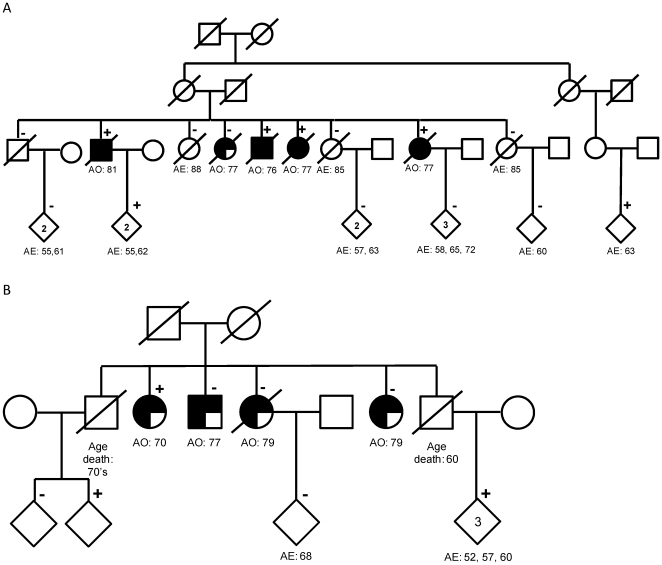
Pathogenic mutations in APP, PSEN1, PSEN2, MAPT and GRN have previously been linked to familial early onset forms of dementia. Mutation screening in these genes has been performed in either very small series or in single families with late onset AD (LOAD). Similarly, studies in single families have reported mutations in MAPT and GRN associated with clinical AD but no systematic screen of a large dataset has been performed to determine how frequently this occurs. We report sequence data for 439 probands from late-onset AD families with a history of four or more affected individuals. Sixty sequenced individuals (13.7%) carried a novel or pathogenic mutation. Eight pathogenic variants, (one each in APP and MAPT, two in PSEN1 and four in GRN) three of which are novel, were found in 14 samples. Thirteen additional variants, present in 23 families, did not segregate with disease, but the frequency of these variants is higher in AD cases than controls, indicating that these variants may also modify risk for disease. The frequency of rare variants in these genes in this series is significantly higher than in the 1,000 genome project (p = 5.09 × 10⁻⁵; OR = 2.21; 95%CI = 1.49-3.28) or an unselected population of 12,481 samples (p = 6.82 × 10⁻⁵; OR = 2.19; 95%CI = 1.347-3.26). Rare coding variants in APP, PSEN1 and PSEN2, increase risk for or cause late onset AD. The presence of variants in these genes in LOAD and early-onset AD demonstrates that factors other than the mutation can impact the age at onset and penetrance of at least some variants associated with AD. MAPT and GRN mutations can be found in clinical series of AD most likely due to misdiagnosis. This study clearly demonstrates that rare variants in these genes could explain an important proportion of genetic heritability of AD, which is not detected by GWAS.
Overview
The claims and statistics of this paper haven’t been checked yet.
Run the check — free, no account needed. It reads the open-access text and checks the sources it cites.
Integrity signals
Registry
Cites
Statistics
Figures
Verification
Claims the paper makes
The claims and statistics of this paper haven’t been checked yet.
Run the check — free, no account needed. It reads the open-access text and checks the sources it cites.
Claims other papers make about this one
Each is checked against this paper’s own text: does it say what the citing paper says it does?
The cited source says what the claim attributes to it.
In the citing paper
“suggesting that rare variants in genes associated with AD pathogenesis could explain a significant proportion of genetic heritability of AD, which is not detected by genomewide association studies (53)”
From Molecular Basis for Increased Risk for Late-onset Alzheimer Disease Due to the Naturally Occurring L28P Mutation in Apolipoprotein E4 (2014) · cites this paper as [53]
The cited source says what the claim attributes to it.
In the citing paper
“A characteristic example involves a mutation screening study that showed that rare variants in amyloid  precursor protein, presenilin 1, and presenilin 2 increased the risk for AD in LOAD families, suggesting that rare variants in genes associated with AD pathogenesis could explain a significant proportion of genetic heritability of AD, which is not detected by genomewide association studies (53)”
From Molecular Basis for Increased Risk for Late-onset Alzheimer Disease Due to the Naturally Occurring L28P Mutation in Apolipoprotein E4 (2014) · cites this paper as [53]
In the citing paper
“In support, sequencing studies have identified rare variants in APP, PSEN1, and PSEN2 that increase risk for LOAD [157].”
From Genetic architecture of Alzheimer's disease (2020) · cites this paper as [157]
Self-check
Percentages, sums and reported differences re-computed from the paper’s own numbers.
The self-check needs the paper’s full text.
Citations
Cites
McKhann, G., Drachman, D., Folstein, M., Katzman, R., Price, D., & Stadlan, E. M. (1984) · Neurology · doi:10.1212/wnl.34.7.939 · Cited by 27,915
A method and server for predicting damaging missense mutations.
Adzhubei, I. A., Schmidt, S., Peshkin, L., Ramensky, V. E., Gerasimova, A., Bork, P., Kondrashov, A. S., & Sunyaev, S. R. (2010) · Nature Methods · doi:10.1038/nmeth0410-248 · Cited by 13,194
Goate, A., Chartier-Harlin, M.-C., Mullan, M., Brown, J., Crawford, F., Fidani, L., Giuffra, L., Haynes, A., Irving, N., James, L., et al. (1991) · Nature · doi:10.1038/349704a0 · Cited by 4,659
Self-citationHarold, D., Abraham, R., Hollingworth, P., Sims, R., Gerrish, A., Hamshere, M. L., Pahwa, J. S., Moskvina, V., Dowzell, K., Williams, A., et al. (2009) · Nature Genetics · doi:10.1038/ng.440 · Cited by 3,326
Self-citationGenome-wide association study identifies variants at CLU and CR1 associated with Alzheimer's disease
the European Alzheimer's Disease Initiative Investigators, Lambert, J.-C., Heath, S., Even, G., Campion, D., Sleegers, K., Hiltunen, M., Combarros, O., Zelenika, D., Bullido, M. J., et al. (2009) · Nature Genetics · doi:10.1038/ng.439 · Cited by 2,234
Initiative, T. A. D. N., Hollingworth, P., CHARGE consortium, EADI1 consortium, Harold, D., Sims, R., Gerrish, A., Lambert, J.-C., Carrasquillo, M. M., Abraham, R., et al. (2011) · Nature Genetics · doi:10.1038/ng.803 · Cited by 1,997
Self-citationNaj, A. C., Jun, G., Beecham, G. W., Wang, L.-S., Vardarajan, B. N., Buros, J., Gallins, P. J., Buxbaum, J. D., Jarvik, G. P., Crane, P. K., et al. (2011) · Nature Genetics · doi:10.1038/ng.801 · Cited by 1,901
Self-citationRole of Genes and Environments for Explaining Alzheimer Disease
Gatz, M., Reynolds, C. A., Fratiglioni, L., Johansson, B., Mortimer, J. A., Berg, S., Fiske, A., & Pedersen, N. L. (2006) · Archives of General Psychiatry · doi:10.1001/archpsyc.63.2.168 · Cited by 1,798
The Clinical Diagnosis of Alzheimer's Disease
Wade, J. P. H., Mirsen, T. R., Hachinski, V. C., Fisman, M., Lau, C. S., & Merskey, H. (1987) · Archives of Neurology · doi:10.1001/archneur.1987.00520130016010 · Cited by 1,416
Genome-wide Analysis of Genetic Loci Associated With Alzheimer Disease
Seshadri, S. (2010) · JAMA · doi:10.1001/jama.2010.574 · Cited by 1,219
Cited by
Sorted by citations
Items 101–200 of 320
GPR3 Stimulates Aβ Production via Interactions with APP and β-Arrestin2
Nelson, C. D., & Sheng, M. (2013) · PLoS ONE · doi:10.1371/journal.pone.0074680 · Cited by 42
State of Play in Alzheimer’s Disease Genetics
Zhu, J.-B., Tan, C., Tan, L., & Yu, J. (2017) · Journal of Alzheimer s Disease · doi:10.3233/jad-170062 · Cited by 44
Association of HLA-DRB1 polymorphism with Alzheimer's disease: a replication and meta-analysis
Lu, R.-C., Yang, W., Tan, L., Sun, F.-R., Tan, M.-S., Zhang, W., Wang, H.-F., & Tan, L. (2017) · Oncotarget · doi:10.18632/oncotarget.21479 · Cited by 43
Blood Ammonia as a Possible Etiological Agent for Alzheimer’s Disease
Jin, Y., Singh, P., & Chung, H. (2018) · Nutrients · doi:10.3390/nu10050564 · Cited by 42
Balanced translocation linked to psychiatric disorder, glutamate, and cortical structure/function
Thomson, P. A., Duff, B. J., Blackwood, D., Romaniuk, L., Watson, A., Whalley, H. C., Li, X., Dauvermann, M. R., Moorhead, T. W. J., Bois, C., et al. (2016) · Schizophrenia · doi:10.1038/npjschz.2016.24 · Cited by 41
Analysis of neurodegenerative disease-causing genes in dementia with Lewy bodies
Orme, T., Hernandez, D. G., Ross, O. A., Kun‐Rodrigues, C., Darwent, L., Shepherd, C. E., Parkkinen, L., Ansorge, O., Clark, L. N., Honig, L. S., et al. (2020) · Acta Neuropathologica Communications · doi:10.1186/s40478-020-0879-z · Cited by 41
Self-citationConsidering a new paradigm for Alzheimer's disease research
Langley, G. R. (2014) · Drug Discovery Today · doi:10.1016/j.drudis.2014.03.013 · Cited by 42
Challenge accepted: uncovering the role of rare genetic variants in Alzheimer’s disease
Khani, M., Gibbons, E., Bras, J., & Guerreiro, R. (2022) · Molecular Neurodegeneration · doi:10.1186/s13024-021-00505-9 · Cited by 39
Identification of Alzheimer's Disease-Related Genes Based on Data Integration Method
Hu, Y., Zhao, T., Zang, T., Zhang, Y., & Cheng, L. (2019) · Frontiers in Genetics · doi:10.3389/fgene.2018.00703 · Cited by 38
Synapses, Microglia, and Lipids in Alzheimer’s Disease
Paasila, P. J., Aramideh, J. A., Sutherland, G. T., & Graeber, M. B. (2022) · Frontiers in Neuroscience · doi:10.3389/fnins.2021.778822 · Cited by 40
Human fibroblast and stem cell resource from the Dominantly Inherited Alzheimer Network
the Dominantly Inherited Alzheimer Network (DIAN), Karch, C. M. M., Hernández, D., Wang, J., Marsh, J. A., Hewitt, A. W., Hsu, S., Norton, J. B., Levitch, D., Donahue, T. A., et al. (2018) · Alzheimer s Research & Therapy · doi:10.1186/s13195-018-0400-0 · Cited by 39
Self-citationRahman, M. H., Rana, H. K., Peng, S., Kibria, M. G., Islam, M. Z., Mahmud, S. M. H., & Moni, M. A. (2021) · Computers in Biology and Medicine · doi:10.1016/j.compbiomed.2021.104859 · Cited by 37
Jordan, D. M., & Do, R. (2018) · Annual Review of Genomics and Human Genetics · doi:10.1146/annurev-genom-083117-021136 · Cited by 35
Zhang, W., Hu, C., Yang, Z., Zhou, Q., Peng, D., Yuan, X., Lv, Z., Pang, S., Jiang, W., Yang, C., et al. (2014) · Neural Regeneration Research · doi:10.4103/1673-5374.130117 · Cited by 36
Quan, X., Liang, H., Chen, Y., Qin, Q., Wei, Y., & Liang, Z. (2020) · Medical Science Monitor · doi:10.12659/msm.919311 · Cited by 35
New genetic players in late-onset Alzheimer's disease
Misra, A., Chakrabarti, S. S., & Gambhir, I. S. (2018) · The Indian Journal of Medical Research · doi:10.4103/ijmr.ijmr_473_17 · Cited by 36
Immunotherapy for Alzheimer's Disease: Current Scenario and Future Perspectives
Usman, M. B., Bhardwaj, S., Roychoudhury, S., Kumar, D., Alexiou, A. T., Kumar, P., Ambasta, R. K., Prasher, P., Shukla, S. D., Upadhye, V. J., et al. (2021) · The Journal of Prevention of Alzheimer s Disease · doi:10.14283/jpad.2021.52 · Cited by 37
Cerebral amyloidosis associated with cognitive decline in autosomal dominant Alzheimer disease
Wang, F., Gordon, B. A., Ryman, D. C., Ma, S., Xiong, C., Hassenstab, J. J., Goate, A., Fagan, A. M., Cairns, N. J., Marcus, D. S., et al. (2015) · Neurology · doi:10.1212/wnl.0000000000001903 · Cited by 34
Self-citationAnalysis of neurodegenerative Mendelian genes in clinically diagnosed Alzheimer Disease
Fernández, M. V., Kim, J. H., Budde, J., Black, K., Medvedeva, A., Saef, B. A., Deming, Y. K., Del‐Aguila, J. L., Ibáñez, L., Dube, U., et al. (2017) · PLoS Genetics · doi:10.1371/journal.pgen.1007045 · Cited by 35
Self-citationShi, Z., Wang, Y., Liu, S., Liu, M., Liu, S., Zhou, Y., Wang, J., Cai, L., Huo, Y. R., Gao, S., et al. (2014) · Dementia and Geriatric Cognitive Disorders · doi:10.1159/000366272 · Cited by 33
Wang, J., Yu, J., & Tan, L. (2014) · Molecular Neurobiology · doi:10.1007/s12035-014-8779-5 · Cited by 33
Güven, G., Lohmann, E., Brás, J., Gibbs, J. R., Gurvit, H. I., Bılgıç, B., Hanagasi, H. A., Rizzu, P., Heutink, P., Emre, M., et al. (2016) · PLoS ONE · doi:10.1371/journal.pone.0162592 · Cited by 33
Olive, C., Ibanez, L., Farias, F. H. G., Wang, F., Budde, J. P., Norton, J. B., Gentsch, J., Morris, J. C., Li, Z., Dube, U., et al. (2020) · Journal of Alzheimer’s Disease · doi:10.3233/jad-200019 · Cited by 32
Self-citationGidalevitz, T., Wang, N., Deravaj, T., Alexander-Floyd, J., & Morimoto, R. I. (2013) · BMC Biology · doi:10.1186/1741-7007-11-100 · Cited by 32
New Genetic Approaches to AD: Lessons from APOE-TOMM40 Phylogenetics
Lutz, M. W., Crenshaw, D. G., Welsh-Bohmer, K. A., Burns, D. K., & Roses, A. D. (2016) · Current Neurology and Neuroscience Reports · doi:10.1007/s11910-016-0643-8 · Cited by 33
Genetics of Alzheimer’s Disease in the African American Population
Logue, M. W., Dasgupta, S., & Farrer, L. A. (2023) · Journal of Clinical Medicine · doi:10.3390/jcm12165189 · Cited by 29
Argyri, L., Dafnis, I., Theodossiou, T. A., Gantz, D., Stratikos, E., & Chroni, A. (2014) · Journal of Biological Chemistry · doi:10.1074/jbc.m113.538124 · Cited by 30
Blue, E., Bis, J. C., Dorschner, M. O., Tsuang, D. W., Barral, S., Beecham, G. W., Below, J. E., Bush, W. S., Butkiewicz, M., Cruchaga, C., et al. (2018) · Dementia and Geriatric Cognitive Disorders · doi:10.1159/000485503 · Cited by 30
Self-citationGenetic and regulatory architecture of Alzheimer's disease in the APOE region
Kulminski, A. M., Shu, L., Loika, Y., He, L., Nazarian, A., Arbeev, K. G., Ukraintseva, S. V., Yashin, A. I., & Culminskaya, I. V. (2020) · Alzheimer s & Dementia Diagnosis Assessment & Disease Monitoring · doi:10.1002/dad2.12008 · Cited by 29
Aberrant splicing of PSEN2 , but not PSEN1 , in individuals with sporadic Alzheimer’s disease
Course, M. M., Gudsnuk, K. M., Keene, C. D., Bird, T. D., Jayadev, S., & Valdmanis, P. N. (2022) · Brain · doi:10.1093/brain/awac294 · Cited by 33
Self-citationFernández, M. V., Budde, J., Del‐Aguila, J. L., Ibáñez, L., Deming, Y. K., Harari, O., Norton, J. B., Morris, J. C., Goate, A., NIA-LOAD family study group, et al. (2018) · Frontiers in Neuroscience · doi:10.3389/fnins.2018.00209 · Cited by 30
Self-citationAutosomal dominantly inherited alzheimer disease: Analysis of genetic subgroups by machine learning
Castillo-Barnés, D., Su, L., Ramírez, J., Salas-Gonzalez, D., Martínez-Murcia, F. J., Illán, I. A., Segovia, F., Ortíz, A., Cruchaga, C., Farlow, M. R., et al. (2020) · Information Fusion · doi:10.1016/j.inffus.2020.01.001 · Cited by 29
Self-citationAmyloid-β1–43 cerebrospinal fluid levels and the interpretation of APP, PSEN1 and PSEN2 mutations
Perrone, F., Bjerke, M., Hens, E., Sieben, A., Timmers, M., Roeck, A. D., Vandenberghe, R. R., Sleegers, K., Martin, J., Deyn, P. P. D., et al. (2020) · Alzheimer s Research & Therapy · doi:10.1186/s13195-020-00676-5 · Cited by 28
Lee, W., Choi, S. H., Shea, M. G., Cheng, P., Dombroski, B. A., Pitsillides, A., Heard‐Costa, N. L., Wang, H., Bulekova, K., Kuzma, A. B., et al. (2024) · Alzheimer s & Dementia · doi:10.1002/alz.14283 · Cited by 28
Progranulin mutations in clinical and neuropathological Alzheimer's disease
Vardarajan, B. N., Reyes‐Dumeyer, D., Piriz, A. L., Lantigua, R., Medrano, M. Z., Rivera, D., Jiménez‐Velázquez, I. Z., Martin, E. R., Pericak‐Vance, M. A., Bush, W. S., et al. (2022) · Alzheimer s & Dementia · doi:10.1002/alz.12567 · Cited by 26
Self-citationGenetic screening in early-onset Alzheimer's disease identified three novel presenilin mutations
Wong, T. H., Seelaar, H., Melhem, S., Rozemüller, A. J. M., & Swieten, J. C. V. (2019) · Neurobiology of Aging · doi:10.1016/j.neurobiolaging.2019.01.015 · Cited by 27
Pleiotropic Effects of Variants in Dementia Genes in Parkinson Disease
Ibáñez, L., Dube, U., Davis, A. A., Fernández, M. V., Budde, J., Cooper, B., Díez-Fairén, M., Ortega‐Cubero, S., Pástor, P., Perlmutter, J. S., et al. (2018) · Frontiers in Neuroscience · doi:10.3389/fnins.2018.00230 · Cited by 28
Self-citationObesity impacts the expression of Alzheimer's disease–related genes: The Framingham Heart Study
Charisis, S., Lin, H., Ray, R., Joehanes, R., Beiser, A., Levy, D. A., Seshadri, S. S., Sargurupremraj, M., & Satizábal, C. L. (2023) · Alzheimer s & Dementia · doi:10.1002/alz.12954 · Cited by 27
Ting, S. K. S., Chong, M.-S., Kandiah, N., Hameed, S., Tan, L., Au, W.-L., Prakash, K. M., Pavanni, R., Lee, T.-S., Foo, J.-N., et al. (2013) · Neurobiology of Aging · doi:10.1016/j.neurobiolaging.2013.04.012 · Cited by 26
New Genes and New Insights from Old Genes
Ringman, J. M., & Coppola, G. (2013) · CONTINUUM Lifelong Learning in Neurology · doi:10.1212/01.con.0000429179.21977.a1 · Cited by 27
ADNI, Nho, K. T., Horgusluoglu, E., Kim, S., Risacher, S. L., Kim, D., Foroud, T., Aisen, P. S. S., Petersen, R. C., Jack, C. R., et al. (2016) · BMC Medical Genomics · doi:10.1186/s12920-016-0190-9 · Cited by 26
Self-citationDel‐Aguila, J. L., Fernández, M. V., Jiménez, J. A., Black, K., Ma, S., Deming, Y. K., Carrell, D., Saef, B. A., Initiative, A. D. N., Howells, B., et al. (2015) · Alzheimer s Research & Therapy · doi:10.1186/s13195-015-0154-x · Cited by 25
Self-citationMonoclonal antibodies and aptamers: The future therapeutics for Alzheimer's disease
Barrera-Ocampo, A. A. (2024) · Acta Pharmaceutica Sinica B · doi:10.1016/j.apsb.2024.03.034 · Cited by 30
Animal Models of Alzheimer’s Disease
Newman, M., Kretzschmar, D., Khan, I., Chen, M., Verdile, G., & Lardelli, M. T. (2017) · Elsevier eBooks · doi:10.1016/b978-0-12-809468-6.00040-1 · Cited by 25
Contribution of rare variant associations to neurodegenerative disease presentation
Dilliott, A. A., Abdelhady, A., Sunderland, K. M., Farhan, S. M. K., Abrahão, A., Binns, M. A., Black, S. E., BORRIE, M. J., Casaubon, L. K., Dowlatshahi, D. D., et al. (2021) · npj Genomic Medicine · doi:10.1038/s41525-021-00243-3 · Cited by 24
Rho Guanine Nucleotide Exchange Factor ARHGEF17 Is a Risk Gene for Intracranial Aneurysms
Yang, X., Li, J., Fang, Y., Zhang, Z., Jin, D., Chen, X., Zhao, Y. E., Li, M., Huan, L., Kent, T. A., et al. (2018) · Circulation Genomic and Precision Medicine · doi:10.1161/circgen.117.002099 · Cited by 25
Pathogenesis of Alzheimer’s Disease
Castellani, R. J., Plascencia‐Villa, G., & Perry, G. L. (2022) · Springer eBooks · doi:10.1007/978-3-031-15080-7_162 · Cited by 24
Whole Exome Sequencing in 20,197 Persons for Rare Variants in Alzheimer DiseasePreprint
Raghavan, N. S., Brickman, A. M., Andrews, H., Manly, J. J., Schupf, N., Lantigua, R., The Alzheimer’s Disease Sequencing Project, Wolock, C. J., Kamalakaran, S., Petrovski, S., et al. (2018) · bioRxiv (Cold Spring Harbor Laboratory) · doi:10.1101/305631 · Cited by 24
Self-citationSORL1 variants across Alzheimer’s disease European American cohorts
NIA-LOAD family study group, N., Fernández, M. V., Black, K., Carrell, D., Saef, B. A., Budde, J., Deming, Y. K., Howells, B., Del‐Aguila, J. L., Ma, S., et al. (2016) · European Journal of Human Genetics · doi:10.1038/ejhg.2016.122 · Cited by 20
Self-citationEvaluation of Animal Models by Comparison with Human Late-Onset Alzheimer’s Disease
Kim, B., Lim, H.-S., Kim, Y., Kim, Y. J., Koo, I., & Jeong, S. (2018) · Molecular Neurobiology · doi:10.1007/s12035-018-1036-6 · Cited by 23
Lamp, M., Origone, P., Geroldi, A., Verdiani, S., Gotta, F., Caponnetto, C., Devigili, G., Verriello, L., Scialò, C., Cabona, C., et al. (2018) · Neurobiology of Aging · doi:10.1016/j.neurobiolaging.2018.01.013 · Cited by 22
Stojanovic, M., Jin, Y., Fagan, A. M., Benzinger, T. L. S., Hassenstab, J. J., Cruchaga, C., Morris, J. C., & Head, D. M. (2020) · Alzheimer Disease & Associated Disorders · doi:10.1097/wad.0000000000000385 · Cited by 24
Self-citationPhenotypic Similarities Between Late-Onset Autosomal Dominant and Sporadic Alzheimer Disease
Day, G. S., Musiek, E. S., Roe, C. M., Norton, J. B., Goate, A., Cruchaga, C., Cairns, N. J., & Morris, J. C. (2016) · JAMA Neurology · doi:10.1001/jamaneurol.2016.1236 · Cited by 21
Self-citationGenetic architecture of plasma Alzheimer disease biomarkers
Bradley, J., Gorijala, P., Schindler, S. E., Sung, Y. J., Ances, B., the Alzheimer’s Disease Neuroimaging Initiative, T. H. C. P., Ertekin-Taner, N., Younkin, S., Golde, T., Price, N., et al. (2023) · Human Molecular Genetics · doi:10.1093/hmg/ddad087 · Cited by 20
Self-citationLu, Z., Hongtu Zhu, B., Knickmeyer, R. C., Sullivan, P. F., Williams, S., Zou, F., & Initiative, A. D. N. (2015) · Genetic Epidemiology · doi:10.1002/gepi.21932 · Cited by 22
Alzheimer's disease: mimics and chameleons
Schott, J. M., & Warren, J. D. (2012) · Practical Neurology · doi:10.1136/practneurol-2012-000315 · Cited by 21
BACE2 as a new diabetes target: a patent review (2010 – 2012)
Southan, C. (2013) · Expert Opinion on Therapeutic Patents · doi:10.1517/13543776.2013.780032 · Cited by 21
Next-generation sequencing-based molecular diagnosis of neonatal hypotonia in Chinese Population
Wang, Y., Peng, W., Guo, H., Li, H., Tian, J., Shi, Y., Yang, X. Q., Yang, Y., Zhang, W., Liu, X., et al. (2016) · Scientific Reports · doi:10.1038/srep29088 · Cited by 22
Yashooa, R. K., Nabi, A. Q., Smail, S. W., Azeez, S. S., Nooh, W. A., Mustafa, S. A., Al-Farha, A. A.-B., Capitanio, N., & Shekha, M. S. (2026) · Frontiers in Neurology · doi:10.3389/fneur.2025.1737468 · Cited by 21
Pihlstrøm, L., Rengmark, A. H., Bjørnarå, K. A., & Toft, M. (2014) · Annals of Human Genetics · doi:10.1111/ahg.12060 · Cited by 19
Lizama, B. N., North, H. A., Pandey, K., Williams, C., Duong, D., Cho, E., Di Caro, V., Ping, L., Blennow, K., Zetterberg, H., et al. (2024) · Neurobiology of Disease · doi:10.1016/j.nbd.2024.106575 · Cited by 19
Saad, M., Brkanac, Z., & Wijsman, E. M. (2015) · Genes Brain & Behavior · doi:10.1111/gbb.12250 · Cited by 19
Reyes‐Dumeyer, D., Faber, K. M., Vardarajan, B. N., Goate, A., Renton, A. E., Chao, M., Boeve, B. F., Cruchaga, C., Pericak‐Vance, M. A., Haines, J. L., et al. (2022) · Alzheimer s & Dementia · doi:10.1002/alz.12514 · Cited by 17
Self-citationHippocampal functional connectivity across age in an App knock-in mouse model of Alzheimer's disease
Morrissey, Z. D., Gao, J., Zhan, L., Li, W., Fortel, I., Saido, T. C., Saito, T., Bakker, A., Mackin, S. R., Ajilore, O., et al. (2023) · Frontiers in Aging Neuroscience · doi:10.3389/fnagi.2022.1085989 · Cited by 18
Recent advances in Alzheimer disease genetics
Nicolas, G. (2024) · Current Opinion in Neurology · doi:10.1097/wco.0000000000001242 · Cited by 19
Ramos‐Campoy, O., Antonell, A., Falgàs, N., Balasa, M., Borrego‐Écija, S., Rodríguez‐Santiago, B., Datta, D., Armengol, L., Fernández‐Villullas, G., Bosch, B., et al. (2020) · Neurobiology of Aging · doi:10.1016/j.neurobiolaging.2020.02.008 · Cited by 18
Androgen receptor gene and sex-specific Alzheimer's disease
Ferrari, R., Dawoodi, S., Raju, M., Thumma, A., Hynan, L. S., Maasumi, S. H., Reisch, J., O’Bryant, S. E., Jenkins, M., Barber, R. C., et al. (2013) · Neurobiology of Aging · doi:10.1016/j.neurobiolaging.2013.02.017 · Cited by 17
Advances in the Genetics and Epigenetics of Neurodegenerative Diseases
Coppedè, F. (2013) · Epigenetics of Degenerative Diseases · doi:10.2478/end-2012-0002 · Cited by 17
Synonymous variants associated with Alzheimer disease in multiplex families
Tang, M., Alaniz, M. E., Felsky, D., Vardarajan, B. N., Reyes‐Dumeyer, D., Lantigua, R., Medrano, M. Z., Bennett, D. A., Jager, P. L. D., Mayeux, R. P., et al. (2020) · Neurology Genetics · doi:10.1212/nxg.0000000000000450 · Cited by 17
Self-citationNext Generation Sequencing in Alzheimer’s Disease
Bertram, L. (2015) · Methods in molecular biology · doi:10.1007/978-1-4939-2627-5_17 · Cited by 18
Joseph‐Mathurin, N., Feldman, R. L., Lu, R., Shirzadi, Z., Toomer, C., Clair, J. S., Ma, Y., McKay, N. S., Strain, J. F., Kilgore, C. B., et al. (2024) · Alzheimer s & Dementia · doi:10.1002/alz.13729 · Cited by 15
Self-citationThe complex relationship between genotype, pathology and phenotype in familial dementia
Kwok, J. B., Loy, C. T., Dobson‐Stone, C., & Halliday, G. M. (2020) · Neurobiology of Disease · doi:10.1016/j.nbd.2020.105082 · Cited by 17
Piccoli, E., Rossi, G., Rossi, T., Pelliccioni, G., D’Amato, I., Tagliavini, F., & Fede, G. D. (2016) · Neurobiology of Aging · doi:10.1016/j.neurobiolaging.2016.01.134 · Cited by 15
Tau mRNA Metabolism in Neurodegenerative Diseases: A Tangle Journey
da Costa, P. J., Hamdane, M., Buée, L., & Martin, F. (2022) · Biomedicines · doi:10.3390/biomedicines10020241 · Cited by 16
Fu, Y., Zhao, D., Pan, B., Wang, J., Cui, Y., Shi, F., Wang, C., Yin, X., Zhou, X., & Yang, L. (2015) · Journal of Alzheimer s Disease · doi:10.3233/jad-150312 · Cited by 14
Mutation burden profile in familial Alzheimer's disease cases from India
Adhikarla, S., Sen, S., Kota, L. N., Viswanath, B., Purushottam, M., Varghese, M., Jain, S., Panicker, M. M., & Mukherjee, O. (2017) · Neurobiology of Aging · doi:10.1016/j.neurobiolaging.2017.12.002 · Cited by 14
Anasagasti, A., Barandika, O., Irigoyen, C., Benítez, B. A., Cooper, B., Cruchaga, C., de Munaín, A. L., & Ruiz‐Ederra, J. (2013) · Experimental Eye Research · doi:10.1016/j.exer.2013.10.011 · Cited by 14
Self-citationPresenilin E318G variant and Alzheimer’s disease risk: the Cache County study
Hippen, A. A., Ebbert, M., Norton, M. C., Tschanz, J. T., Munger, R. G., Corcoran, C. D., & Kauwe, J. S. K. (2016) · BMC Genomics · doi:10.1186/s12864-016-2786-z · Cited by 14
Tosto, G., & Reitz, C. (2016) · Molecular and Cellular Probes · doi:10.1016/j.mcp.2016.09.001 · Cited by 14
Expanding the Genetic Landscape of Usher-Like Phenotypes
Fuster‐García, C., García‐García, G., Jaijo, T., Blanco‐Kelly, F., Tian, L., Hakonarson, H. H., Ayuso, C., Aller, E., & Millán, J. M. (2019) · Investigative Ophthalmology & Visual Science · doi:10.1167/iovs.19-27470 · Cited by 14
Jiang, Y., Conneely, K. N., & Epstein, M. P. (2014) · Genetic Epidemiology · doi:10.1002/gepi.21839 · Cited by 13
Genetic Loci Associated With Alzheimer‘s Disease
Reitz, C. (2014) · Future Neurology · doi:10.2217/fnl.14.1 · Cited by 14
Barthelson, K., Newman, M., & Lardelli, M. T. (2021) · Disease Models & Mechanisms · doi:10.1242/dmm.049187 · Cited by 14
Variants regulating ZBTB4 are associated with age‐at‐onset of Alzheimer's disease
Blue, E., Yu, C., Thornton, T. A., Chapman, N. H., Kernfeld, E. M., Jiang, N., Shively, K. M., Buckingham, K. J., Marvin, C. T., Bamshad, M. J., et al. (2017) · Genes Brain & Behavior · doi:10.1111/gbb.12429 · Cited by 12
Self-citationÖzcan, G. G., Lim, S., Canning, T., Tirathdas, L., Donnelly, J., Kundu, T., & Rihel, J. (2024) · iScience · doi:10.1016/j.isci.2024.108870 · Cited by 12
A biologically informed method for detecting rare variant associations
Moore, C., Basile, A. O., Wallace, J. R., Frase, A., & Ritchie, M. D. (2016) · BioData Mining · doi:10.1186/s13040-016-0107-3 · Cited by 12
Using Polygenic Hazard Scores to Predict Age at Onset of Alzheimer’s Disease in Nordic Populations
Motazedi, E., Cheng, W., Thomassen, J. Q., Frei, O., Rongve, A., Athanasiu, L., Bahrami, S., Shadrin, A. A., Ulstein, I. D., Stordal, E., et al. (2022) · Journal of Alzheimer s Disease · doi:10.3233/jad-220174 · Cited by 12
Shaking up the silence: consequences of HMGN1 antagonizing PRC2 in the Down syndrome brain
Farley, S. J., Grishok, A., & Zeldich, E. (2022) · Epigenetics & Chromatin · doi:10.1186/s13072-022-00471-6 · Cited by 13
Xiao, X., Liu, H., Zhou, L., Liu, X., Xu, T., Zhu, Y., Yang, Q., Hao, X., Liu, Y., Zhang, W., et al. (2022) · CNS Neuroscience & Therapeutics · doi:10.1111/cns.13987 · Cited by 11
Rare Variants and Transcriptomics in Alzheimer disease
Humphries, C., & Kohli, M. A. (2014) · Current Genetic Medicine Reports · doi:10.1007/s40142-014-0035-9 · Cited by 11
Hereditary vulnerabilities to post-operative cognitive dysfunction and dementia
Hogan, K. J. (2013) · Progress in Neuro-Psychopharmacology and Biological Psychiatry · doi:10.1016/j.pnpbp.2013.02.018 · Cited by 11
Zhan, Y., Zheng, H., Wang, C., Rong, Z., Xiao, N., Ma, Q., & Zhang, Y. (2016) · Neurobiology of Aging · doi:10.1016/j.neurobiolaging.2016.10.010 · Cited by 12
A lzheimer's Disease Biomarkers: More Than Molecular Diagnostics
Anderson, D. C. (2013) · Drug Development Research · doi:10.1002/ddr.21073 · Cited by 9
Talukdar, G., Orr, H. T., & Lei, Z. (2023) · Human Molecular Genetics · doi:10.1093/hmg/ddad103 · Cited by 12
Genetic Editing and Pharmacogenetics in Current And Future Therapy Of Neurocognitive Disorders
Prendecki, M., Kowalska, M., Totoń, E., & Kozubski, W. P. (2020) · Current Alzheimer Research · doi:10.2174/1567205017666200422152440 · Cited by 10
Influence of low frequency PSEN1 variants on familial Alzheimer’s disease risk in Brazil
Abdala, B. B., dos Santos, J. M., Gonçalves, A. P., da Motta, L. B., Laks, J., de Borges, M. B., Pimentel, M. M. G., & Santos-Rebouças, C. B. (2017) · Neuroscience Letters · doi:10.1016/j.neulet.2017.05.053 · Cited by 10
Evaluating pathogenicity of variants of unknown significance in APP, PSEN1, and PSEN2
Marsh, J. A., Huang, G., Bowling, K., Renton, A. E., Ziegemeier, E., Ball, T., Pottier, C., Cruchaga, C., Day, G. S., Bateman, R. J., et al. (2025) · Neurotherapeutics · doi:10.1016/j.neurot.2025.e00527 · Cited by 9
Self-citationSi, Y., Huang, Z., Fang, Z., Yuan, Z., Huang, Z., Li, Y., Wei, Y., Wu, F. Q., & Yao, Y. (2024) · Briefings in Bioinformatics · doi:10.1093/bib/bbae443 · Cited by 9
Zhao, A., Cui, E., Leroux, A., Zhou, X., Muschelli, J., Lindquist, M. A., & Crainiceanu, C. M. (2024) · The Journals of Gerontology Series A · doi:10.1093/gerona/glae287 · Cited by 12
Patel, S., Park, M. T. M., Chakravarty, M. M., & Knight, J. (2016) · Frontiers in Neuroinformatics · doi:10.3389/fninf.2016.00014 · Cited by 11
Metadata
- Authors
- Cruchaga, C., Chakraverty, S., Mayo, K., Vallania, F. L. M., Mitra, R. D., Faber, K., Williamson, J., Bird, T., Diaz-Arrastia, R., Foroud, T. M., Boeve, B. F., Graff-Radford, N. R., St. Jean, P., Lawson, M., Ehm, M. G., Mayeux, R., Goate, A. M., & for the NIA-LOAD/NCRAD Family Study Consortium
- Affiliations
- Washington University in St. Louis (US)
- Indiana University Indianapolis (US)
- Columbia University (US)
- University of Washington (US)
- The University of Texas Southwestern Medical Center (US)
- Mayo Clinic (US)
- GlaxoSmithKline (United States) (US)
- Corresponding author
- Cruchaga, Carlos
- Goate, Alison M.
- ORCID
- Venue
- PLoS ONE
- Publisher
- Public Library of Science (PLoS)
- Published
- 2012-02-01
- Volume
- 7
- Issue
- 2
- Pages
- e31039
- ISSN
- 1932-6203 (ISSN-L)
- PMC
- PMC3270040
- OpenAlex
- W2023381648
- Cited by
- 320
- References
- 66
- Citations by year
- 2026: 15 · 2025: 14 · 2024: 23 · 2023: 12 · 2022: 20 · 2021: 25 · 2020: 25 · 2019: 10 · 2018: 22 · 2017: 28 · 2016: 26 · 2015: 22 · 2014: 29 · 2013: 32 · 2012: 17
- FWCI
- 21.43
- Type
- journal article
- Language
- en
- Update notices
- correction (2012-05-10)
- Open access
- gold
- doi.org
- Locations
- PLoS ONE (publishedVersion, cc-by)
- Europe PMC (PubMed Central) (publishedVersion, cc-by)
- PubMed Central (publishedVersion, cc-by)
- PubMed (publishedVersion)
- DOAJ (DOAJ: Directory of Open Access Journals) (submittedVersion, cc-by-sa)
- Figshare (submittedVersion, cc-by)
- Funders
- U.S. Department of Veterans Affairs
- Massachusetts General Hospital
- University of Southern California
- University of Pennsylvania (U24 AG026395)
- Northwestern University
- Foundation for Barnes-Jewish Hospital
- University of Washington
- University of Pittsburgh
- Rush University
- National Institutes of Health (5p30ns069329-02, 5r37ag015473-15)
- University of California, Los Angeles
- National Institute on Aging (AG 16208, R37AG15473, R37-AG015473, AG21886, R01AG035083, U24 AG21886, P 50 AG05681, R01AG041797, P50AG008702, P50AG005681, P01 AG0 3991, P01AG003991, AG035083, U24AG026395, P30AG013846, R01AG016208, AG026395, U24AG056270, P01AG026276, U24AG021886)
- National Institute of Mental Health (R01MH060009)
- National Institute of Neurological Disorders and Stroke (P30-NS069329, 1P30NS069329-01)
- Topics
- Life Sciences › Neuroscience › Cellular and Molecular Neuroscience › Alzheimer's disease research and treatments
- Health Sciences › Medicine › Psychiatry and Mental health › Dementia and Cognitive Impairment Research
- Health Sciences › Medicine › Clinical Neurology › Amyotrophic Lateral Sclerosis Research
- Keywords
- late-onset Alzheimer's disease, familial Alzheimer's disease, rare variants, APP, presenilin 1, presenilin 2, MAPT, gene regulatory networks, pathogenic variants, genetic risk, heritability, novel variants, age of onset, penetrance, misdiagnosis, mutation detection
- MeSH terms
- Progranulins, Adult, Aged, Aged, 80 and over, Alzheimer Disease, Female, Humans, Male, Middle Aged, Mutation, Pedigree, Amyloid beta-Protein Precursor, tau Proteins, Genetic Predisposition to Disease, Intercellular Signaling Peptides and Proteins, Presenilin-1, Presenilin-2
About these checks
Registry, retraction, Cites and statistics results are computed, not judged, with one exception: a printed reference that no index lists is read once by a model before it counts as a citation error. Claims are extracted by a model and kept only when their quote appears verbatim in the text; each cited source is then checked, with a model’s help, for whether it says what the claim relies on. Those verdicts can be wrong — read the claim’s quote and the cited source before relying on one.
Statistics and arithmetic are recomputed, not judged.
Confidence bands are shown only for fields calibrated on our annotated test set. None is calibrated yet, so no band is shown.
What counts as a claim ›How we measure confidence ›How we check this ›
Are you an author, or do you see a problem with this page? Request a review
