

The DOI matches its Crossref record; 67 of the 67 references it cites were found in a registry or an index.
Targeting the Lactate Transporter MCT1 in Endothelial Cells Inhibits Lactate-Induced HIF-1 Activation and Tumor Angiogenesis
Open accessAbstract
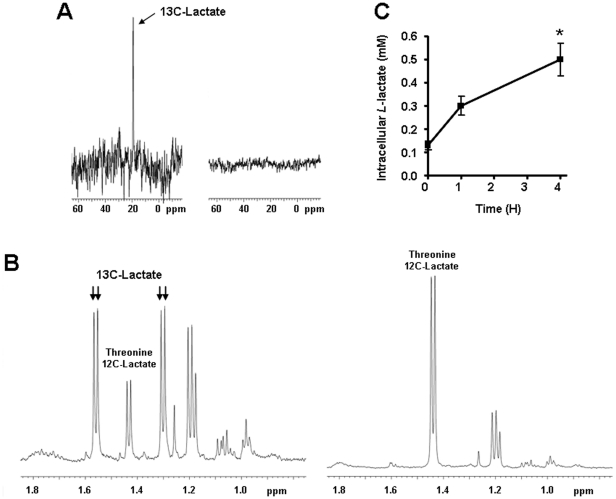
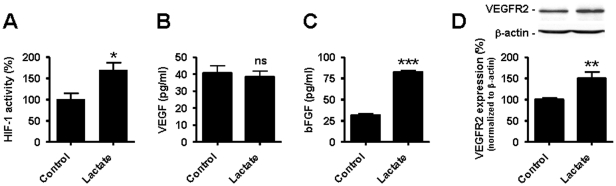
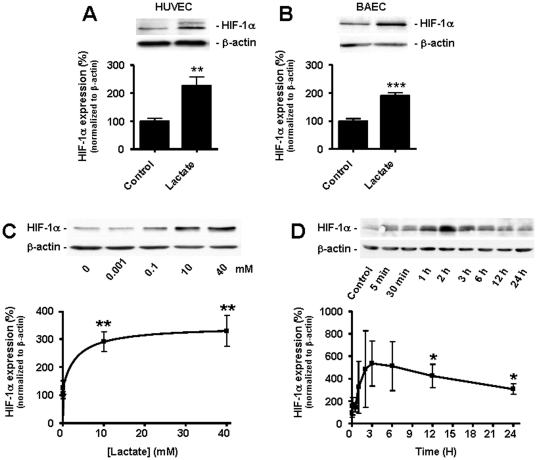
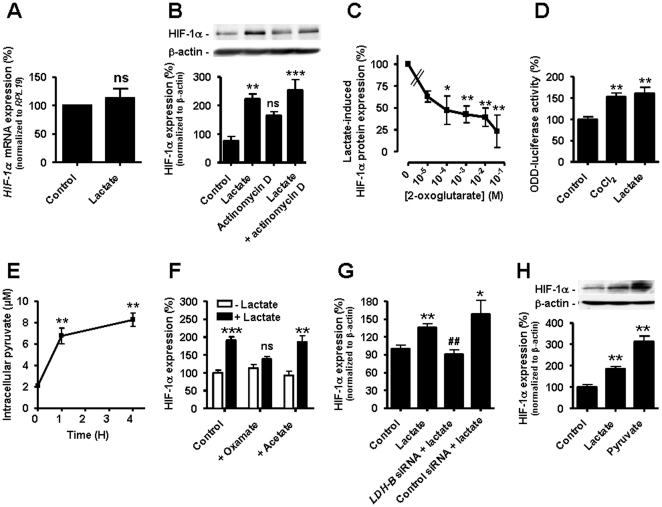
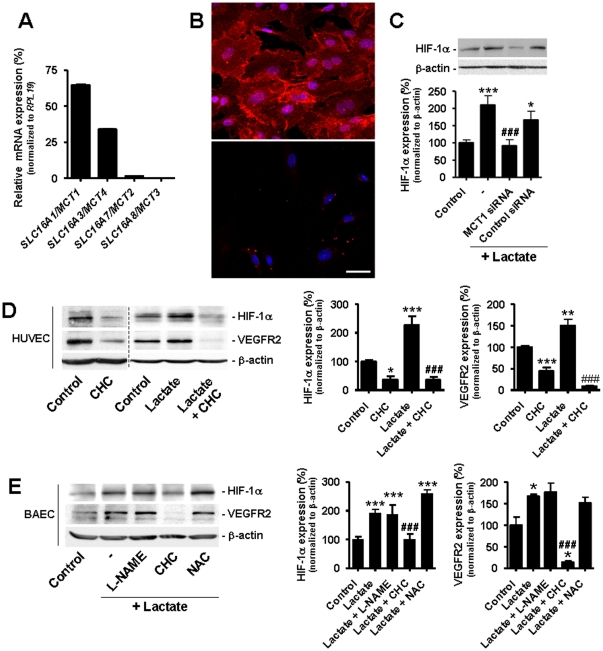
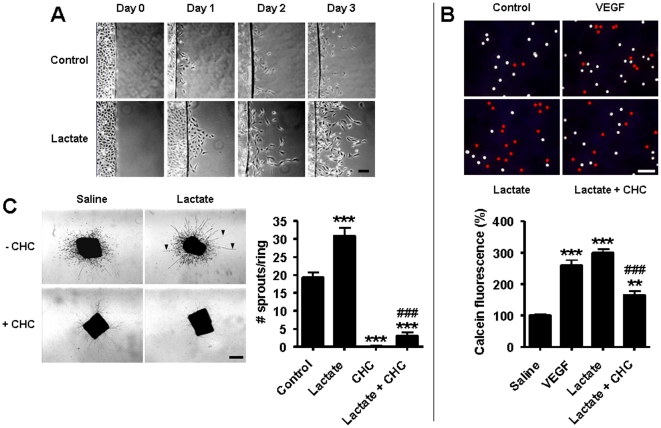
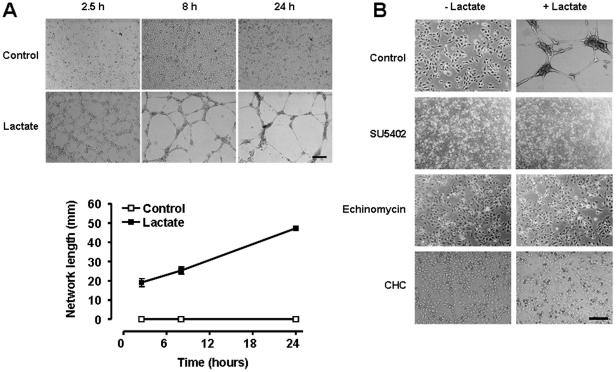
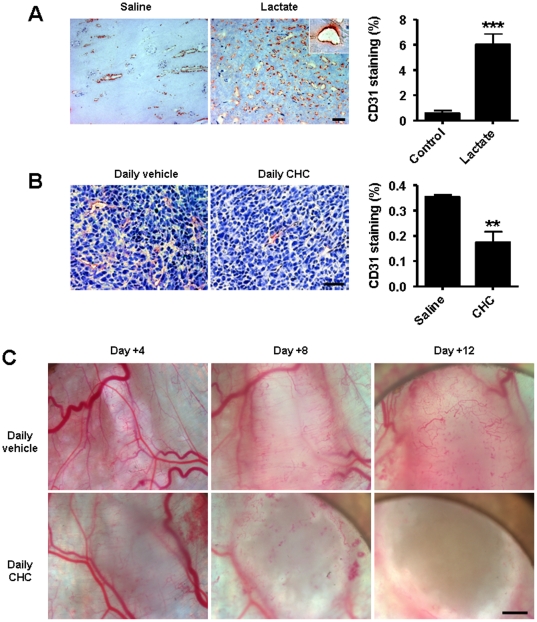
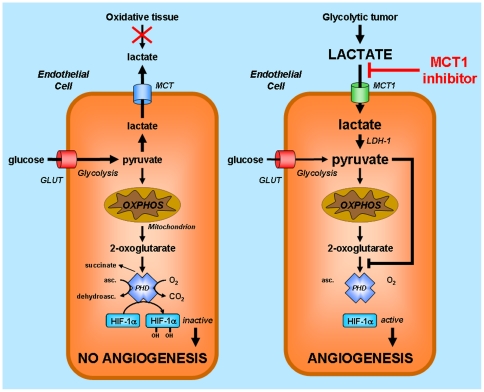
Switching to a glycolytic metabolism is a rapid adaptation of tumor cells to hypoxia. Although this metabolic conversion may primarily represent a rescue pathway to meet the bioenergetic and biosynthetic demands of proliferating tumor cells, it also creates a gradient of lactate that mirrors the gradient of oxygen in tumors. More than a metabolic waste, the lactate anion is known to participate to cancer aggressiveness, in part through activation of the hypoxia-inducible factor-1 (HIF-1) pathway in tumor cells. Whether lactate may also directly favor HIF-1 activation in endothelial cells (ECs) thereby offering a new druggable option to block angiogenesis is however an unanswered question. In this study, we therefore focused on the role in ECs of monocarboxylate transporter 1 (MCT1) that we previously identified to be the main facilitator of lactate uptake in cancer cells. We found that blockade of lactate influx into ECs led to inhibition of HIF-1-dependent angiogenesis. Our demonstration is based on the unprecedented characterization of lactate-induced HIF-1 activation in normoxic ECs and the consecutive increase in vascular endothelial growth factor receptor 2 (VEGFR2) and basic fibroblast growth factor (bFGF) expression. Furthermore, using a variety of functional assays including endothelial cell migration and tubulogenesis together with in vivo imaging of tumor angiogenesis through intravital microscopy and immunohistochemistry, we documented that MCT1 blockers could act as bona fide HIF-1 inhibitors leading to anti-angiogenic effects. Together with the previous demonstration of MCT1 being a key regulator of lactate exchange between tumor cells, the current study identifies MCT1 inhibition as a therapeutic modality combining antimetabolic and anti-angiogenic activities.
Overview
The claims and statistics of this paper haven’t been checked yet.
Run the check — free, no account needed. It reads the open-access text and checks the sources it cites.
Integrity signals
Registry
Cites
Statistics
Figures
Verification
Claims the paper makes
The claims and statistics of this paper haven’t been checked yet.
Run the check — free, no account needed. It reads the open-access text and checks the sources it cites.
Claims other papers make about this one
Each is checked against this paper’s own text: does it say what the citing paper says it does?
In the citing paper
“Furthermore, lactate accumulation is instrumental for the promotion of angiogenesis.”
From The emerging hallmarks of cancer metabolism (2016) · cites this paper as Sonveaux et al., 2012
Self-check
Percentages, sums and reported differences re-computed from the paper’s own numbers.
The self-check needs the paper’s full text.
Citations
Cites
Hallmarks of Cancer: The Next Generation
Hanahan, D., & Weinberg, R. A. (2011) · Cell · doi:10.1016/j.cell.2011.02.013 · Cited by 66,590
Understanding the Warburg Effect: The Metabolic Requirements of Cell Proliferation
Vander Heiden, M. G., Cantley, L. C., & Thompson, C. B. (2009) · Science · doi:10.1126/science.1160809 · Cited by 16,197
Angiogenesis in cancer and other diseases
Carmeliet, P., & Jain, R. K. (2000) · Nature · doi:10.1038/35025220 · Cited by 9,070
Targeting HIF-1 for cancer therapy
Semenza, G. L. (2003) · Nature Reviews Cancer · doi:10.1038/nrc1187 · Cited by 6,717 · cited 1×
“transporter 4 (MCT4) and key pro-angiogenic effectors such as vascular endothelial growth factor (VEGF) [11,12].”
BackgroundThe tumour suppressor protein VHL targets hypoxia-inducible factors for oxygen-dependent proteolysis
Maxwell, P. H., Wiesener, M. S., Chang, G.-W., Clifford, S. C., Vaux, E. C., Cockman, M. E., Wykoff, C. C., Pugh, C. W., Maher, E. R., & Ratcliffe, P. J. (1999) · Nature · doi:10.1038/20459 · Cited by 5,180
Activation of vascular endothelial growth factor gene transcription by hypoxia-inducible factor 1
Forsythe, J. A., Jiang, B.-H., Iyer, N. V., Agani, F., Leung, S. W., Koos, R. D., & Semenza, G. L. (1996) · Molecular and Cellular Biology · doi:10.1128/mcb.16.9.4604 · Cited by 3,981
Regulation of angiogenesis by hypoxia: role of the HIF system
Pugh, C. W., & Ratcliffe, P. J. (2003) · Nature Medicine · doi:10.1038/nm0603-677 · Cited by 2,520
Role of HIF-1α in hypoxia-mediated apoptosis, cell proliferation and tumour angiogenesis
Carmeliet, P., Dor, Y., Herbert, J.-M., Fukumura, D., Brusselmans, K., Dewerchin, M., Neeman, M., Bono, F., Abramovitch, R., Maxwell, P., et al. (1998) · Nature · doi:10.1038/28867 · Cited by 2,502
Cellular and developmental control of O 2 homeostasis by hypoxia-inducible factor 1α
Iyer, N. V., Kotch, L. E., Agani, F., Leung, S. W., Laughner, E., Wenger, R. H., Gassmann, M., Gearhart, J. D., Lawler, A. M., Yu, A. Y., et al. (1998) · Genes & Development · doi:10.1101/gad.12.2.149 · Cited by 2,476
Kerbel, R. S. (2008) · New England Journal of Medicine · doi:10.1056/nejmra0706596 · Cited by 2,011
Cited by
Sorted by citations
The emerging hallmarks of cancer metabolism
Pavlova, N. N., & Thompson, C. B. (2016) · Cell Metabolism · doi:10.1016/j.cmet.2015.12.006 · Cited by 5,926
Microenvironmental regulation of tumour angiogenesis
De Palma, M., Biziato, D., & Petrova, T. V. (2017) · Nature Reviews Cancer · doi:10.1038/nrc.2017.51 · Cited by 1,847
The Science and Translation of Lactate Shuttle Theory
Brooks, G. A. (2018) · Cell Metabolism · doi:10.1016/j.cmet.2018.03.008 · Cited by 1,486
Lactate in the brain: from metabolic end-product to signalling molecule
Magistretti, P. J., & Allaman, I. (2018) · Nature Reviews Neuroscience · doi:10.1038/nrn.2018.19 · Cited by 1,298
Acidic extracellular microenvironment and cancer
Kato, Y., Ozawa, S., Miyamoto, C., Maehata, Y., Suzuki, A., Maeda, T., & Baba, Y. (2013) · Cancer Cell International · doi:10.1186/1475-2867-13-89 · Cited by 1,295
Targeting lactate metabolism for cancer therapeutics
Doherty, J. R., & Cleveland, J. L. (2013) · Journal of Clinical Investigation · doi:10.1172/jci69741 · Cited by 1,195
Regulation of glycolysis by the hypoxia-inducible factor (HIF): Implications for cellular physiology
Kierans, S. J., & Taylor, C. T. (2021) · The Journal of Physiology · doi:10.1113/jp280572 · Cited by 1,015
Monocarboxylate transporters in cancer
Payen, V. L., Mina, E., Hée, V. F. V., Porporato, P. E., & Sonveaux, P. (2019) · Molecular Metabolism · doi:10.1016/j.molmet.2019.07.006 · Cited by 688
Self-citationHow the Warburg effect supports aggressiveness and drug resistance of cancer cells?
Icard, P., Shulman, S. D., Farhat, D., Steyaert, J., Alifano, M., & Lincet, H. (2018) · Drug Resistance Updates · doi:10.1016/j.drup.2018.03.001 · Cited by 664
San-Millán, I., & Brooks, G. A. (2016) · Carcinogenesis · doi:10.1093/carcin/bgw127 · Cited by 640
Eelen, G., de Zeeuw, P., Treps, L., Harjes, U., Wong, B. W., & Carmeliet, P. (2017) · Physiological Reviews · doi:10.1152/physrev.00001.2017 · Cited by 614
Cancer metabolism and the Warburg effect: the role of HIF-1 and PI3K
Courtnay, R., Ngo, D. C., Malik, N., Ververis, K., Tortorella, S. M., & Karagiannis, T. C. (2015) · Molecular Biology Reports · doi:10.1007/s11033-015-3858-x · Cited by 590
Lactate: A Metabolic Driver in the Tumour Landscape
Ippolito, L., Morandi, A., Giannoni, E., & Chiarugi, P. (2018) · Trends in Biochemical Sciences · doi:10.1016/j.tibs.2018.10.011 · Cited by 541
Lactate and lactylation in cancer
Chen, J., Huang, Z., Chen, Y., Tian, H., Chai, P., Shen, Y., Yao, Y., Xu, S., Ge, S., & Jia, R. (2025) · Signal Transduction and Targeted Therapy · doi:10.1038/s41392-024-02082-x · Cited by 545
Gut Bacteria Products Prevent AKI Induced by Ischemia-Reperfusion
Andrade‐Oliveira, V., Amano, M. T., Corrêa-Costa, M., Castoldi, Â., Felizardo, R. J. F., de Almeida, D. C., Bassi, Ê. J., Moraes‐Vieira, P. M., Hiyane, M. I., Rodas, A. C. D., et al. (2015) · Journal of the American Society of Nephrology · doi:10.1681/asn.2014030288 · Cited by 514
Brown, T., & Ganapathy, V. (2019) · Pharmacology & Therapeutics · doi:10.1016/j.pharmthera.2019.107451 · Cited by 518
The ever-expanding role of HIF in tumour and stromal biology
LaGory, E. L., & Giaccia, A. J. (2016) · Nature Cell Biology · doi:10.1038/ncb3330 · Cited by 445
Role of Endothelial Cell Metabolism in Vessel Sprouting
Bock, K. D., Γεωργιάδου, Μ., & Carmeliet, P. (2013) · Cell Metabolism · doi:10.1016/j.cmet.2013.08.001 · Cited by 437
Monocarboxylate transporters in the brain and in cancer
Pérez‐Escuredo, J., Hée, V. F. V., Sboarina, M., Falces, J., Payen, V. L., Pellerin, L., & Sonveaux, P. (2016) · Biochimica et Biophysica Acta (BBA) - Molecular Cell Research · doi:10.1016/j.bbamcr.2016.03.013 · Cited by 415
Self-citationDoherty, J. R., Yang, C., Scott, K. E. N., Cameron, M. D., Fallahi, M., Li, W., Hall, M. A., Amelio, A. L., Mishra, J. K., Li, F., et al. (2013) · Cancer Research · doi:10.1158/0008-5472.can-13-2034 · Cited by 411
Lactate in the Tumor Microenvironment: An Essential Molecule in Cancer Progression and Treatment
Pérez‐Tomás, R., & Pérez-Guillén, I. (2020) · Cancers · doi:10.3390/cancers12113244 · Cited by 418
CTLA-4 blockade drives loss of Treg stability in glycolysis-low tumours
Zappasodi, R., Serganova, I. S., Cohen, I., Maeda, M., Shindo, M., Şenbabaoğlu, Y., Watson, M. J., Leftin, A., Maniyar, R. R., Verma, S., et al. (2021) · Nature · doi:10.1038/s41586-021-03326-4 · Cited by 401
Hypoxia induces mitochondrial protein lactylation to limit oxidative phosphorylation
Mao, Y.-Z., Zhang, J., Zhou, Q., He, X., Zheng, Z., Wei, Y., Zhou, K., Lin, Y., Yu, H., Zhang, H., et al. (2024) · Cell Research · doi:10.1038/s41422-023-00864-6 · Cited by 412
Harmon, C., Robinson, M. W., Hand, F., Almuaili, D., Mentor, K., Houlihan, D. D., Hoti, E., Lynch, L., Geoghegan, J., & O’Farrelly, C. (2018) · Cancer Immunology Research · doi:10.1158/2326-6066.cir-18-0481 · Cited by 384
Structural basis of human monocarboxylate transporter 1 inhibition by anti-cancer drug candidates
Wang, N., Jiang, X. J., Zhang, S., Zhu, A., Yuan, Y., Xu, H., Lei, J., & Yan, C. (2020) · Cell · doi:10.1016/j.cell.2020.11.043 · Cited by 357
Zhong, X., He, X., Wang, Y., Hu, Z., Huang, H., Zhao, S., Wei, P., & Li, D. (2022) · Journal of Hematology & Oncology · doi:10.1186/s13045-022-01358-5 · Cited by 356
Teplensky, M. H., Fantham, M., Li, P., Wang, T. C., Mehta, J. P., Young, L. J., Moghadam, P. Z., Hupp, J. T., Farha, O. K., Kaminski, C. F., et al. (2017) · Journal of the American Chemical Society · doi:10.1021/jacs.7b01451 · Cited by 337
Cell Surface Lactate Receptor GPR81 Is Crucial for Cancer Cell Survival
Roland, C. L., Arumugam, T., Deng, D., Liu, S. H., Philip, B., Gomez, S., Burns, W. R., Ramachandran, V., Wang, H., Cruz‐Monserrate, Z., et al. (2014) · Cancer Research · doi:10.1158/0008-5472.can-14-0319 · Cited by 345
Lactylation, a Novel Metabolic Reprogramming Code: Current Status and Prospects
Chen, A.-N., Luo, Y., Yang, Y.-H., Fu, J.-T., Geng, X.-M., Shi, J.-P., & Yang, J. (2021) · Frontiers in Immunology · doi:10.3389/fimmu.2021.688910 · Cited by 324
Lactic Acid: No Longer an Inert and End-Product of Glycolysis
Sun, S., Li, H., Chen, J., & Qian, Q. (2017) · Physiology · doi:10.1152/physiol.00016.2017 · Cited by 331
Immunity, Hypoxia, and Metabolism–the Ménage à Trois of Cancer: Implications for Immunotherapy
Riera-Domingo, C., Audigé, A., Granja, S., Cheng, W.-C., Ho, P.-C., Baltazar, F., Stockmann, C., & Mazzone, M. (2020) · Physiological Reviews · doi:10.1152/physrev.00018.2019 · Cited by 310
Hypoxia, cancer metabolism and the therapeutic benefit of targeting lactate/H(+) symporters
Marchiq, I., & Pouysségur, J. (2016) · Journal of Molecular Medicine · doi:10.1007/s00109-015-1307-x · Cited by 300
Masson, N., & Ratcliffe, P. J. (2014) · Cancer & Metabolism · doi:10.1186/2049-3002-2-3 · Cited by 305
ROS homeostasis and metabolism: a critical liaison for cancer therapy
Kim, J., Kim, J., & Bae, J. (2016) · Experimental & Molecular Medicine · doi:10.1038/emm.2016.119 · Cited by 304
Agnihotri, S., & Zadeh, G. M. (2015) · Neuro-Oncology · doi:10.1093/neuonc/nov125 · Cited by 302
Metabolism shapes the tumor microenvironment
Reina‐Campos, M., Moscat, J., & Díaz-Meco, M. T. (2017) · Current Opinion in Cell Biology · doi:10.1016/j.ceb.2017.05.006 · Cited by 292
Lactate Activates HIF-1 in Oxidative but Not in Warburg-Phenotype Human Tumor Cells
Saedeleer, C. J. D., Copetti, T., Porporato, P. E., Verrax, J., Féron, O., & Sonveaux, P. (2012) · PLoS ONE · doi:10.1371/journal.pone.0046571 · Cited by 283
Self-citationAcellular and cellular approaches to improve diabetic wound healing
Cho, H., Blatchley, M. R., Duh, E. J., & Gerecht, S. (2018) · Advanced Drug Delivery Reviews · doi:10.1016/j.addr.2018.07.019 · Cited by 273
Aerobic glycolysis and high level of lactate in cancer metabolism and microenvironment
Jiang, B. (2017) · Genes & Diseases · doi:10.1016/j.gendis.2017.02.003 · Cited by 277
Carrière, A., Jeanson, Y., Berger-Müller, S., André, M., Chenouard, V., Arnaud, E., Barreau, C., Walther, R., Galinier, A., Wdziekonski, B., et al. (2014) · Diabetes · doi:10.2337/db13-1885 · Cited by 277
Porporato, P. E., Payen, V. L., Saedeleer, C. J. D., Véronique Préat, A., Thissen, J., Féron, O., & Sonveaux, P. (2012) · Angiogenesis · doi:10.1007/s10456-012-9282-0 · Cited by 263
Self-citationDysbiosis of the microbiome in gastric carcinogenesis
Castaño‐Rodríguez, N., Goh, K., Fock, K. M., Mitchell, H. M., & Kaakoush, N. O. (2017) · Scientific Reports · doi:10.1038/s41598-017-16289-2 · Cited by 259
Lactate at the crossroads of metabolism, inflammation, and autoimmunity
Pucino, V., Bombardieri, M., Pitzalis, C., & Mauro, C. (2016) · European Journal of Immunology · doi:10.1002/eji.201646477 · Cited by 253
Comito, G., Iscaro, A., Bacci, M., Morandi, A., Ippolito, L., Parri, M., Montagnani, I., Raspollini, M. R., Serni, S., Simeoni, L., et al. (2019) · Oncogene · doi:10.1038/s41388-019-0688-7 · Cited by 257
Cancer metabolism, stemness and tumor recurrence
Curry, J., Tuluc, M., Whitaker‐Menezes, D., Ames, J. A., Anantharaman, A., Butera, A., Leiby, B. E., Cognetti, D. M., Sotgia, F., Lisanti, M. P., et al. (2013) · Cell Cycle · doi:10.4161/cc.24092 · Cited by 235
Polet, F., & Féron, O. (2013) · Journal of Internal Medicine · doi:10.1111/joim.12016 · Cited by 232
Lactate promotes glutamine uptake and metabolism in oxidative cancer cells
Pérez-Escuredo, J., Dadhich, R. K., Dhup, S., Cacace, A., Van Hée, V. F., De Saedeleer, C. J., Sboarina, M., Rodriguez, F., Fontenille, M.-J., Brisson, L., et al. (2016) · Cell Cycle · doi:10.1080/15384101.2015.1120930 · Cited by 231
Self-citationNon-Canonical Mechanisms Regulating Hypoxia-Inducible Factor 1 Alpha in Cancer
Iommarini, L., Porcelli, A. M., Gasparre, G., & Kurelac, I. (2017) · Frontiers in Oncology · doi:10.3389/fonc.2017.00286 · Cited by 231
Lactate, histone lactylation and cancer hallmarks
Lv, X., Lv, Y., & Dai, X. (2023) · Expert Reviews in Molecular Medicine · doi:10.1017/erm.2022.42 · Cited by 239
Hypoxia/pseudohypoxia‐mediated activation of hypoxia‐inducible factor‐1α in cancer
Hayashi, Y., Yokota, A., Harada, H., & Huang, G. (2019) · Cancer Science · doi:10.1111/cas.13990 · Cited by 229
Baek, G., Tse, Y. F., Hu, Z., Cox, D., Buboltz, N., McCue, P. A., Yeo, C. J., White, M. A., DeBerardinis, R. J., Knudsen, E. S., et al. (2014) · Cell Reports · doi:10.1016/j.celrep.2014.11.025 · Cited by 227
Payen, V. L., Porporato, P. E., Baselet, B., & Sonveaux, P. (2015) · Cellular and Molecular Life Sciences · doi:10.1007/s00018-015-2098-5 · Cited by 226
Self-citationCancer metabolism in space and time: Beyond the Warburg effect
Danhier, P., Bański, P., Payen, V. L., Grasso, D., Ippolito, L., Sonveaux, P., & Porporato, P. E. (2017) · Biochimica et Biophysica Acta (BBA) - Bioenergetics · doi:10.1016/j.bbabio.2017.02.001 · Cited by 230
Self-citationThe role of gastric microbiota in gastric cancer
Stewart, O. A., Wu, F., & Chen, Y. (2020) · Gut Microbes · doi:10.1080/19490976.2020.1762520 · Cited by 214
Schnitzler, J. G., Hoogeveen, R. M., Ali, L., Prange, K. H. M., Waissi, F., van Weeghel, M., Bachmann, J. C., Versloot, M., Borrelli, M. J., Yeang, C., et al. (2020) · Circulation Research · doi:10.1161/circresaha.119.316206 · Cited by 213
Role of Lactate in Inflammatory Processes: Friend or Foe
Manosalva, C., Quiroga, J., Hidalgo, A. I., Alarcón, P., Ansoleaga, N., Hidalgo, M. A., & Burgos, R. A. (2022) · Frontiers in Immunology · doi:10.3389/fimmu.2021.808799 · Cited by 216
Goveia, J., Stapor, P. C., & Carmeliet, P. (2014) · EMBO Molecular Medicine · doi:10.15252/emmm.201404156 · Cited by 203
Fischer, G. M., Gopal, Y. N. V., McQuade, J. L., Peng, W., DeBerardinis, R. J., & Davies, M. A. (2017) · Pigment Cell & Melanoma Research · doi:10.1111/pcmr.12661 · Cited by 200
Wagner, W., Ciszewski, W. M., & Kania, K. (2015) · Cell Communication and Signaling · doi:10.1186/s12964-015-0114-x · Cited by 202
Intermediates of Metabolism: From Bystanders to Signalling Molecules
Haas, R., Cucchi, D., Smith, J., Pucino, V., Macdougall, C. E., & Mauro, C. (2016) · Trends in Biochemical Sciences · doi:10.1016/j.tibs.2016.02.003 · Cited by 199
Jiang, H., Wei, H., Wang, H., Wang, Z., Li, J., Ou, Y., Xiao, X., Wang, W., Chang, A., Sun, W., et al. (2022) · Cell Death and Disease · doi:10.1038/s41419-022-04632-z · Cited by 197
Anderson, M., Marayati, R., Moffitt, R. A., & Yeh, J. J. (2016) · Oncotarget · doi:10.18632/oncotarget.9760 · Cited by 198
Catabolism of exogenous lactate reveals it as a legitimate metabolic substrate in breast cancer
Kennedy, K. M., Scarbrough, P. M., Ribeiro, A., Richardson, R., Yuan, H., Sonveaux, P., Landon, C. D., Chi, J.-T., Pizzo, S., Schroeder, T., et al. (2013) · PLoS ONE · doi:10.1371/journal.pone.0075154 · Cited by 190
Self-citationYetkin-Arik, B., Vogels, I. M. C., Nowak-Sliwinska, P. M., Weiss, A., Houtkooper, R. H., Noorden, C. J. F. V., Klaassen, I., & Schlingemann, R. O. (2019) · Scientific Reports · doi:10.1038/s41598-019-48676-2 · Cited by 189
Targeting monocarboxylate transporters (MCTs) in cancer: How close are we to the clinics?
Singh, M., Afonso, J., Sharma, D., Gupta, R., Kumar, V., Rani, R., Baltazar, F., & Kumar, V. (2023) · Seminars in Cancer Biology · doi:10.1016/j.semcancer.2023.01.007 · Cited by 194
Metabolic Modulation of Immunity: A New Concept in Cancer Immunotherapy
Guerra, L., Bonetti, L., & Brenner, D. (2020) · Cell Reports · doi:10.1016/j.celrep.2020.107848 · Cited by 194
Proton channels and exchangers in cancer
Spugnini, E. P., Sonveaux, P., Stock, C. M., Pérez‐Sayáns, M., Milito, A. D., Avnet, S., Garcı́a, A. G., Harguindey, S., & Fais, S. (2014) · Biochimica et Biophysica Acta (BBA) - Biomembranes · doi:10.1016/j.bbamem.2014.10.015 · Cited by 186
Self-citationRuan, G.-X., & Kazlauskas, A. (2013) · Journal of Biological Chemistry · doi:10.1074/jbc.m113.474619 · Cited by 192
The impact of tumour pH on cancer progression: strategies for clinical intervention
Ward, C., Meehan, J., Gray, M., Murray, A. F., Argyle, D. J., Kunkler, I. H., & Langdon, S. P. (2020) · Exploration of Targeted Anti-tumor Therapy · doi:10.37349/etat.2020.00005 · Cited by 180
Binet, F., & Sapieha, P. S. (2015) · Cell Metabolism · doi:10.1016/j.cmet.2015.07.010 · Cited by 178
Tong, H., Jiang, Z., Song, L., Tan, K., Yin, X., He, C., Huang, J., Li, X., Jing, X., Hong, Y., et al. (2024) · Cell Metabolism · doi:10.1016/j.cmet.2024.10.019 · Cited by 180
Crosstalk between Hypoxia and ER Stress Response: a Key Regulator of Macrophage Polarization
Díaz-Bulnes, P., Saiz, M. L., López-Larrea, C., & Rodríguez, R. M. (2020) · Frontiers in Immunology · doi:10.3389/fimmu.2019.02951 · Cited by 175
Lactate as a Signaling Molecule That Regulates Exercise-Induced Adaptations
Nalbandian, M., & Takeda, M. (2016) · Biology · doi:10.3390/biology5040038 · Cited by 174
Lessons from patient-derived xenografts for better in vitro modeling of human cancer
Choi, S. Y. C., Lin, D., Gout, P. W., Collins, C. C., Xu, Y., & Wang, Y. Z. (2014) · Advanced Drug Delivery Reviews · doi:10.1016/j.addr.2014.09.009 · Cited by 181
Microbial carcinogenesis: Lactic acid bacteria in gastric cancer
Vinasco, K., Mitchell, H. M., Kaakoush, N. O., & Castaño‐Rodríguez, N. (2019) · Biochimica et Biophysica Acta (BBA) - Reviews on Cancer · doi:10.1016/j.bbcan.2019.07.004 · Cited by 176
Where Metabolism Meets Senescence: Focus on Endothelial Cells
Sabbatinelli, J., Prattichizzo, F., Olivieri, F., Procopio, A. D., Rippo, M. R., & Giuliani, A. (2019) · Frontiers in Physiology · doi:10.3389/fphys.2019.01523 · Cited by 173
Overexpression of hypoxia-inducible factor and metabolic pathways: possible targets of cancer
Singh, D. P., Arora, R., Kaur, P., Singh, B., Mannan, R., & Arora, S. (2017) · Cell & Bioscience · doi:10.1186/s13578-017-0190-2 · Cited by 171
Noble, R. A., Bell, N. M., Blair, H. J., Sikka, A., Thomas, H. D., Phillips, N., Nakjang, S., Miwa, S., Crossland, R. E., Rand, V., et al. (2017) · Haematologica · doi:10.3324/haematol.2016.163030 · Cited by 166
Interactions between gastric microbiota and metabolites in gastric cancer
Dai, D., Yang, Y., Yu, J., Dang, T., Qin, W., Teng, L., Ye, J., & Jiang, H. (2021) · Cell Death and Disease · doi:10.1038/s41419-021-04396-y · Cited by 169
Lactate Beyond a Waste Metabolite: Metabolic Affairs and Signaling in Malignancy
Baltazar, F., Afonso, J., Costa, M. F., & Granja, S. (2020) · Frontiers in Oncology · doi:10.3389/fonc.2020.00231 · Cited by 165
Metabolic Adaptations in Cancer Stem Cells
Yadav, U. P., Singh, T., Kumar, P., Sharma, P., Kaur, H., Sharma, S., Singh, S., Kumar, S., & Mehta, K. (2020) · Frontiers in Oncology · doi:10.3389/fonc.2020.01010 · Cited by 158
Exercise as adjunct therapy in cancer
Ashcraft, K. A., Warner, A. B., Jones, L. W., & Dewhirst, M. W. (2019) · Seminars in Radiation Oncology · doi:10.1016/j.semradonc.2018.10.001 · Cited by 148
Self-citationAltered copper homeostasis underlies sensitivity of hepatocellular carcinoma to copper chelation
Davis, C. I., Gu, X., Kiefer, R. M., Ralle, M., Gade, T. P. F., & Brady, D. C. (2020) · Metallomics · doi:10.1039/d0mt00156b · Cited by 150
Perspective of mesenchymal transformation in glioblastoma
Kim, Y., Varn, F. S., Park, S., Yoon, B. W., Park, H. R., Lee, C., Verhaak, R. G. W., & Paek, S. H. (2021) · Acta Neuropathologica Communications · doi:10.1186/s40478-021-01151-4 · Cited by 152
Colson, A., Sonveaux, P., Debiève, F., & Sferruzzi-Perri, A. N. (2020) · Human Reproduction Update · doi:10.1093/humupd/dmaa053 · Cited by 149
Self-citationCrosstalk between Notch, HIF-1α and GPER in Breast Cancer EMT
Francesco, E. M. D., Maggiolini, M., & Musti, A. M. (2018) · International Journal of Molecular Sciences · doi:10.3390/ijms19072011 · Cited by 148
Sormendi, S., & Wielockx, B. (2018) · Frontiers in Immunology · doi:10.3389/fimmu.2018.00040 · Cited by 147
Hypoxia Inducible Factor Pathway Inhibitors as Anticancer Therapeutics
Burroughs, S. K., Kaluz, S., Wang, D., Wang, K., Van Meir, E. G., & Wang, B. (2013) · Future Medicinal Chemistry · doi:10.4155/fmc.13.17 · Cited by 140
Zhang, J., Yao, M., Xia, S., Zeng, F., & Liu, Q. (2025) · Cellular & Molecular Biology Letters · doi:10.1186/s11658-024-00682-7 · Cited by 150
Metabolic features of cancer stem cells: the emerging role of lipid metabolism
Mancini, R., Noto, A., Pisanu, M. E., Vitis, C. D., Maugeri‐Saccà, M., & Ciliberto, G. (2018) · Oncogene · doi:10.1038/s41388-018-0141-3 · Cited by 140
Oncometabolites lactate and succinate drive pro-angiogenic macrophage response in tumors
Kes, M. M. G., den Bossche, J. V., Griffioen, A. W., & Huijbers, E. J. M. (2020) · Biochimica et Biophysica Acta (BBA) - Reviews on Cancer · doi:10.1016/j.bbcan.2020.188427 · Cited by 138
Chen, Z., Liu, M., Zhang, M., Wang, S., Xu, L., Li, C., Gao, F., Xie, B., Zhong, Z., & Zhang, X. (2018) · Advanced Functional Materials · doi:10.1002/adfm.201803498 · Cited by 135
The Warburg Effect in Endothelial Cells and its Potential as an Anti-angiogenic Target in Cancer
Fitzgerald, G., Soro-Arnáiz, I., & Bock, K. D. (2018) · Frontiers in Cell and Developmental Biology · doi:10.3389/fcell.2018.00100 · Cited by 137
Augustin, R. C., Delgoffe, G. M., & Najjar, Y. G. (2020) · Cancers · doi:10.3390/cancers12123802 · Cited by 139
Extracellular vesicles are independent metabolic units with asparaginase activity
Iraci, N., Gaude, E., Leonardi, T., Costa, A. S. H., Cossetti, C., Peruzzotti-Jametti, L., Bernstock, J. D., Saini, H. K., Gelati, M., Vescovi, A. L., et al. (2017) · Nature Chemical Biology · doi:10.1038/nchembio.2422 · Cited by 134
Vallée, A., Guillevin, R., & Vallée, J.-N. (2017) · Reviews in the Neurosciences · doi:10.1515/revneuro-2017-0032 · Cited by 137
Alternative fuels for cancer cells
Keenan, M. M., & Chi, J.-T. (2015) · The Cancer Journal · doi:10.1097/ppo.0000000000000104 · Cited by 131
Mudassar, F., Shen, H. M., O’Neill, G. M., & Hau, E. K. C. (2020) · Journal of Experimental & Clinical Cancer Research · doi:10.1186/s13046-020-01724-6 · Cited by 134
Pértega‐Gomes, N., Felisbino, S. L., Massie, C. E., Vizcaino, J. R., Coelho, R., Sandi, C., Simoes‐Sousa, S., Jurmeister, S., Ramos‐Montoya, A., Asim, M., et al. (2015) · The Journal of Pathology · doi:10.1002/path.4547 · Cited by 128
Active glycolytic metabolism in CD133(+) hepatocellular cancer stem cells: regulation by MIR-122
Song, K., Kwon, H., Han, C., Zhang, J., Dash, S., Lim, K., & Wu, T. (2015) · Oncotarget · doi:10.18632/oncotarget.5812 · Cited by 125
Metadata
- Authors
- Sonveaux, P., Copetti, T., De Saedeleer, C. J., Végran, F., Verrax, J., Kennedy, K. M., Moon, E. J., Dhup, S., Danhier, P., Frérart, F., Gallez, B., Ribeiro, A., Michiels, C., Dewhirst, M. W., & Feron, O.
- Affiliations
- Duke Medical Center (US)
- UCLouvain (BE)
- Duke University (US)
- University of Namur (BE)
- Corresponding author
- Sonveaux, Pierre
- ORCID
- Venue
- PLoS ONE
- Publisher
- Public Library of Science (PLoS)
- Published
- 2012-03-13
- Volume
- 7
- Issue
- 3
- Pages
- e33418
- ISSN
- 1932-6203 (ISSN-L)
- PMC
- PMC3302812
- OpenAlex
- W2003842905
- Cited by
- 536
- References
- 67
- Citations by year
- 2026: 34 · 2025: 38 · 2024: 25 · 2023: 50 · 2022: 58 · 2021: 46 · 2020: 62 · 2019: 34 · 2018: 36 · 2017: 36 · 2016: 30 · 2015: 32 · 2014: 26 · 2013: 22 · 2012: 6
- FWCI
- 9.21
- Type
- journal article
- Language
- en
- Open access
- gold
- doi.org
- Locations
- PLoS ONE (publishedVersion, cc-by)
- PubMed Central (publishedVersion, cc-by)
- PubMed (publishedVersion)
- DIAL (Catholic University of Leuven) (submittedVersion, other-oa)
- DOAJ (DOAJ: Directory of Open Access Journals) (submittedVersion, cc-by-sa)
- Figshare (submittedVersion, cc-by)
- Repository of the University of Namur (submittedVersion, other-oa)
- Funders
- Belgian American Educational Foundation
- Fonds De La Recherche Scientifique - FNRS
- National Institutes of Health (FP7/2007-2013, 5p01ca042745-23)
- National Cancer Institute (CA40355, R01CA040355, CA40355-24, P01-CA042745, CA40355-25)
- FP7 Ideas: European Research Council (243188)
- Topics
- Life Sciences › Biochemistry, Genetics and Molecular Biology › Cancer Research › Cancer, Hypoxia, and Metabolism
- Life Sciences › Biochemistry, Genetics and Molecular Biology › Molecular Biology › Angiogenesis and VEGF in Cancer
- Health Sciences › Medicine › Oncology › Lymphatic System and Diseases
- Keywords
- MCT1, MCT1 inhibition, lactate transport, endothelial cells, tumor angiogenesis, tumor hypoxia, glycolytic metabolism, VEGFR2, basic fibroblast growth factor, anti-angiogenic therapy, tumor microenvironment
- MeSH terms
- Monocarboxylate Transport Protein 1, Analysis of Variance, Animals, Cell Movement, Enzyme-Linked Immunosorbent Assay, Fibroblast Growth Factors, Humans, Immunohistochemistry, Luciferases, Neoplasms, Neovascularization, Pathologic, Blotting, Western, Polymerase Chain Reaction, Lactic Acid, Nuclear Magnetic Resonance, Biomolecular, Monocarboxylic Acid Transporters, Symporters, RNA Interference, RNA, Small Interfering, Vascular Endothelial Growth Factor Receptor-2, Endothelial Cells, Mice, Hypoxia-Inducible Factor 1
About these checks
Registry, retraction, Cites and statistics results are computed, not judged, with one exception: a printed reference that no index lists is read once by a model before it counts as a citation error. Claims are extracted by a model and kept only when their quote appears verbatim in the text; each cited source is then checked, with a model’s help, for whether it says what the claim relies on. Those verdicts can be wrong — read the claim’s quote and the cited source before relying on one.
Statistics and arithmetic are recomputed, not judged.
Confidence bands are shown only for fields calibrated on our annotated test set. None is calibrated yet, so no band is shown.
What counts as a claim ›How we measure confidence ›How we check this ›
Are you an author, or do you see a problem with this page? Request a review
