

The Airway Microbiota in Cystic Fibrosis: A Complex Fungal and Bacterial Community—Implications for Therapeutic Management
Open accessThe DOI matches its Crossref record; 104 of the 104 references it cites were found in a registry or an index.
Abstract
BACKGROUND: Given the polymicrobial nature of pulmonary infections in patients with cystic fibrosis (CF), it is essential to enhance our knowledge on the composition of the microbial community to improve patient management. In this study, we developed a pyrosequencing approach to extensively explore the diversity and dynamics of fungal and prokaryotic populations in CF lower airways. METHODOLOGY AND PRINCIPAL FINDINGS: Fungi and bacteria diversity in eight sputum samples collected from four adult CF patients was investigated using conventional microbiological culturing and high-throughput pyrosequencing approach targeting the ITS2 locus and the 16S rDNA gene. The unveiled microbial community structure was compared to the clinical profile of the CF patients. Pyrosequencing confirmed recently reported bacterial diversity and observed complex fungal communities, in which more than 60% of the species or genera were not detected by cultures. Strikingly, the diversity and species richness of fungal and bacterial communities was significantly lower in patients with decreased lung function and poor clinical status. Values of Chao1 richness estimator were statistically correlated with values of the Shwachman-Kulczycki score, body mass index, forced vital capacity, and forced expiratory volume in 1 s (p = 0.046, 0.047, 0.004, and 0.001, respectively for fungal Chao1 indices, and p = 0.010, 0.047, 0.002, and 0.0003, respectively for bacterial Chao1 values). Phylogenetic analysis showed high molecular diversities at the sub-species level for the main fungal and bacterial taxa identified in the present study. Anaerobes were isolated with Pseudomonas aeruginosa, which was more likely to be observed in association with Candida albicans than with Aspergillus fumigatus. CONCLUSIONS: In light of the recent concept of CF lung microbiota, we viewed the microbial community as a unique pathogenic entity. We thus interpreted our results to highlight the potential interactions between microorganisms and the role of fungi in the context of improving survival in CF.
Overview
The claims and statistics of this paper haven’t been checked yet.
Free: it reads the open-access text and checks the first 5 claims that cite a source we can check. Create a free account to check every claim.
Integrity signals
Registry
Cites
Statistics
Figures
Verification
Claims the paper makes
The claims and statistics of this paper haven’t been checked yet.
Free: it reads the open-access text and checks the first 5 claims that cite a source we can check. Create a free account to check every claim.
Claims other papers make about this one
Each is checked against this paper’s own text: does it say what the citing paper says it does?
The cited source says what the claim attributes to it.
In the citing paper
“The fungal biota is indeed complex in CF patients and includes mostly members of Eurotiales (Aspergillus and Penicillium), Candida, and, surprisingly, Malassezia, a skin inhabitant that appears to be more ubiquitous than originally described (550, 556, 557).”
From Aspergillus fumigatus and Aspergillosis in 2019 (2019) · cites this paper as [557]
Self-check
Percentages, sums and reported differences re-computed from the paper’s own numbers.
The self-check needs the paper’s full text.
Citations
Cites
Basic local alignment search tool
Altschul, S. F., Gish, W., Miller, W., Myers, E. W., & Lipman, D. J. (1990) · Journal of Molecular Biology · doi:10.1006/jmbi.1990.9999 · Cited by 98,669 · cited 1×
“) release 102 (updated on February 15, 2010) comprising 1,246,462 SSU rRNA sequences using BLASTN software”
MethodMrBayes 3: Bayesian phylogenetic inference under mixed models
Ronquist, F., & Huelsenbeck, J. P. (2003) · Bioinformatics · doi:10.1093/bioinformatics/btg180 · Cited by 29,077
Search and clustering orders of magnitude faster than BLAST
Edgar, R. C. (2010) · Bioinformatics · doi:10.1093/bioinformatics/btq461 · Cited by 20,826
A human gut microbial gene catalogue established by metagenomic sequencing
MetaHIT Consortium, Qin, J., Li, R., Raes, J., Arumugam, M., Burgdorf, K. S., Manichanh, C., Nielsen, T., Pons, N., Levenez, F., et al. (2010) · Nature · doi:10.1038/nature08821 · Cited by 11,624 · cited 1×
“Although we observed lower diversity in CF airways than in other communities such as human skin, gut, or water microbiomes [12,14,19], reduced diversity and richness of fungal and bacterial Figure 1.”
BackgroundDatabase resources of the National Center for Biotechnology Information: update
Wheeler, D. L. (2004) · Nucleic Acids Research · doi:10.1093/nar/gkh073 · Cited by 10,641
Nonparametric estimation of the number of classes in a population
Chao, A. (1984) · Scandinavian Journal of Statistics · Cited by 5,880
Gouy, M., Guindon, S., & Gascuel, O. (2010) · Molecular Biology and Evolution · doi:10.1093/molbev/msp259 · Cited by 5,782
MEGAN analysis of metagenomic data
Huson, D. H., Auch, A. F., Qi, J., & Schuster, S. C. (2007) · Genome Research · doi:10.1101/gr.5969107 · Cited by 3,312
Topographical and Temporal Diversity of the Human Skin Microbiome
Grice, E. A., Kong, H. H., Conlan, S., Deming, C. B., Davis, J., Young, A. C., Program, N. C. S., Bouffard, G. G., Blakesley, R. W., Murray, P. R., et al. (2009) · Science · doi:10.1126/science.1171700 · Cited by 2,953 · cited 1×
“Although we observed lower diversity in CF airways than in other communities such as human skin, gut, or water microbiomes [12,14,19], reduced diversity and richness of fungal and bacterial Figure 1.”
BackgroundCounting the Uncountable: Statistical Approaches to Estimating Microbial Diversity
Hughes, J. B., Hellmann, J. J., Ricketts, T. H., & Bohannan, B. J. M. (2001) · Applied and Environmental Microbiology · doi:10.1128/aem.67.10.4399-4406.2001 · Cited by 1,296 · cited 1×
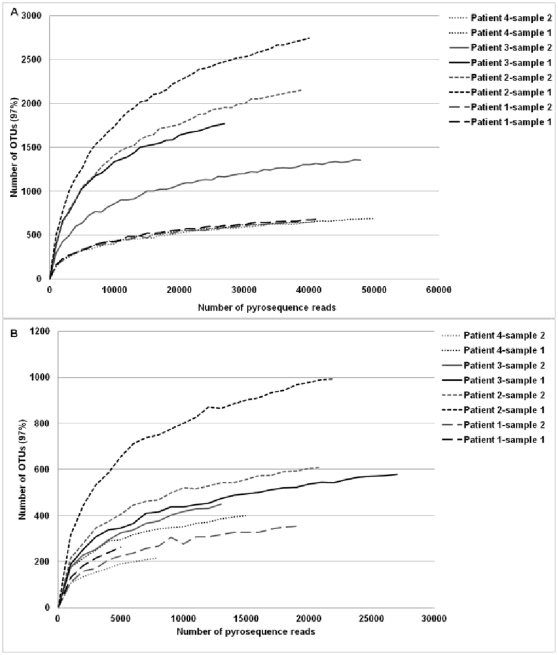
“The quality of the sampling effort was assessed through the calculation of rarefaction curves, i.e. the number of operational taxonomic units (OTUs) with respect to the number of reads”
MethodWang, Y., & Qian, P.-Y. (2009) · PLoS ONE · doi:10.1371/journal.pone.0007401 · Cited by 1,265 · cited 1×
“), was designed to amplify a 465 bp region containing the complete V3 domain of all prokaryotic 16S rDNA genes”
MethodDendroscope: An interactive viewer for large phylogenetic trees
Huson, D. H., Richter, D. C., Rausch, C., Dezulian, T., Franz, M., & Rupp, R. (2007) · BMC Bioinformatics · doi:10.1186/1471-2105-8-460 · Cited by 1,239
Analysis of the lung microbiome in the “healthy” smoker and in COPD.
Erb-Downward, J. R., Thompson, D. L., Han, M. K., Freeman, C. M., McCloskey, L., Schmidt, L. A., Young, V. B., Toews, G. B., Curtis, J. L., Sundaram, B., et al. (2011) · PLoS ONE · doi:10.1371/journal.pone.0016384 · Cited by 973 · cited 1×
“. Regarding the temporal changes in the microbiota in each patient, we observed similar patterns, namely a disappearance of or major decrease in some bacterial genera recently described as members of the “core” pulmonary microbiome”
ResultEmerging opportunistic yeast infections
Miceli, M. H., Díaz, J. A., & Lee, S. A. (2011) · The Lancet Infectious Diseases · doi:10.1016/s1473-3099(10)70218-8 · Cited by 811
Database resources of the National Center for Biotechnology Information
Sayers, E. W., Barrett, T., Benson, D. A., Bryant, S. H., Canese, K., Chetvernin, V., Church, D. M., DiCuccio, M., Edgar, R., Federhen, S., et al. (2009) · Nucleic Acids Research · doi:10.1093/nar/gkn741 · Cited by 768
Oral microbial communities in sickness and in health
Jenkinson, H. F., & Lamont, R. J. (2005) · Trends in Microbiology · doi:10.1016/j.tim.2005.09.006 · Cited by 628
Tavanti, A., Davidson, A. D., Gow, N. A. R., Maiden, M. C. J., & Odds, F. C. (2005) · Journal of Clinical Microbiology · doi:10.1128/jcm.43.1.284-292.2005 · Cited by 593
Pseudomonas aeruginosa Anaerobic Respiration in Biofilms
Yoon, S. S., Hennigan, R. F., Hilliard, G. M., Ochsner, U. A., Parvatiyar, K., Kamani, M. C., Allen, H. L., DeKievit, T. R., Gardner, P. R., Schwab, U., et al. (2002) · Developmental Cell · doi:10.1016/s1534-5807(02)00295-2 · Cited by 585
A Pseudomonas aeruginosa quorum‐sensing molecule influences Candida albicans morphology
Hogan, D. A., Vik, Å., & Kolter, R. (2004) · Molecular Microbiology · doi:10.1111/j.1365-2958.2004.04349.x · Cited by 575
Colombo, A. P. V., Boches, S. K., Cotton, S. L., Goodson, J. M., Kent, R., Haffajee, A. D., Socransky, S. S., Hasturk, H., Van Dyke, T. E., Dewhirst, F., et al. (2009) · Journal of Periodontology · doi:10.1902/jop.2009.090185 · Cited by 563 · cited 1×
“. The metagenomic approach has been recently used for the identification of human bacterial populations in the gut as well as in the mouth saliva and skin of patients”
MethodThe role of microbiota in infectious disease
Stecher, B., & Hardt, W.-D. (2008) · Trends in Microbiology · doi:10.1016/j.tim.2007.12.008 · Cited by 535
Developments in Fungal Taxonomy
Guarro, J., Gené, J., & Stchigel, A. M. (1999) · Clinical Microbiology Reviews · doi:10.1128/cmr.12.3.454 · Cited by 534
Detection of Anaerobic Bacteria in High Numbers in Sputum from Patients with Cystic Fibrosis
Tunney, M. M., Field, T. R., Moriarty, T. F., Patrick, S., Doering, G., Muhlebach, M. S., Wolfgang, M. C., Boucher, R., Gilpin, D. F., McDowell, A., et al. (2008) · American Journal of Respiratory and Critical Care Medicine · doi:10.1164/rccm.200708-1151oc · Cited by 468
Willner, D., Furlan, M., Haynes, M., Schmieder, R., Angly, F. E., Silva, J., Tammadoni, S., Nosrat, B., Conrad, D., & Rohwer, F. (2009) · PLoS ONE · doi:10.1371/journal.pone.0007370 · Cited by 441 · cited 4×
“aeruginosa [17,57,58], and to a lesser degree for fungi [9,25] or viruses [18].”
BackgroundInfluentialClinical Significance of Microbial Infection and Adaptation in Cystic Fibrosis
Hauser, A. R., Jain, M., Bar-Meir, M., & McColley, S. A. (2011) · Clinical Microbiology Reviews · doi:10.1128/cmr.00036-10 · Cited by 411 · cited 2×
“We acknowledge that the present CF cohort is small but comparable to sample size recently published (from 4 to 14 sputum samples [17,23,76]), lacks a specific control group — which is difficult to choose [7], e.”
BackgroundResultAspergillus lentulus sp. nov., a New Sibling Species of A. fumigatus
Balajee, S. A., Gribskov, J. L., Hanley, E., Nickle, D., & Marr, K. A. (2005) · Eukaryotic Cell · doi:10.1128/ec.4.3.625-632.2005 · Cited by 404
Amin, R., Dupuis, A., Aaron, S. D., & Ratjen, F. (2010) · Chest · doi:10.1378/chest.09-1103 · Cited by 376
Harris, J. K., De Groote, M. A., Sagel, S. D., Zemanick, E. T., Kapsner, R., Penvari, C., Kaess, H., Deterding, R. R., Accurso, F. J., & Pace, N. R. (2007) · Proceedings of the National Academy of Sciences · doi:10.1073/pnas.0709804104 · Cited by 372 · cited 7×
“Few culture-independent strategies have been developed to evaluate bacterial [1,8,16,17,20,23,24,29,31], fungal [9], and viral [18] diversities in sputum samples from CF patients.”
BackgroundResultInfluentialRogers, G. B., Carroll, M. P., Serisier, D. J., Hockey, P. M., Jones, G., & Bruce, K. D. (2004) · Journal of Clinical Microbiology · doi:10.1128/jcm.42.11.5176-5183.2004 · Cited by 318
Assessment of Bias Associated with Incomplete Extraction of Microbial DNA from Soil
Feinstein, L. M., Sul, W. J., & Blackwood, C. B. (2009) · Applied and Environmental Microbiology · doi:10.1128/aem.00120-09 · Cited by 313
Sibley, C. D., Parkins, M. D., Rabin, H. R., Duan, K., Norgaard, J. C., & Surette, M. G. (2008) · Proceedings of the National Academy of Sciences · doi:10.1073/pnas.0804326105 · Cited by 312
Alvarez‐Ortega, C., & Harwood, C. S. (2007) · Molecular Microbiology · doi:10.1111/j.1365-2958.2007.05772.x · Cited by 304
Pihet, M., Carrere, J., Cimon, B., Chabasse, D., Delhaes, L., Symoens, F., Bouchara, J.-P., Pihet, M., Carrere, J., Cimon, B., et al. (2009) · Medical Mycology · doi:10.1080/13693780802609604 · Cited by 303 · cited 1×
“Therefore, culture methods are probably inadequate for assessing CF respiratory fungal microbiota, although culture methods can be improved with increased standardization [3,81] and are still required to determine drug susceptibility.”
BackgroundSelf-citationIntestinal microbiota in inflammatory bowel disease: Friend of foe?
Fava, F. (2011) · World Journal of Gastroenterology · doi:10.3748/wjg.v17.i5.557 · Cited by 300 · cited 1×
“The metagenomic approach has been recently used for the identification of human bacterial populations in the gut as well as in the mouth saliva and skin of patients [11– 15].”
MethodComparison of Six DNA Extraction Methods for Recovery of Fungal DNA as Assessed by Quantitative PCR
Fredricks, D. N., Smith, C., & Meier, A. (2005) · Journal of Clinical Microbiology · doi:10.1128/jcm.43.10.5122-5128.2005 · Cited by 279 · cited 1×
“). Furthermore, DNA extraction from clinical samples is the first crucial step in ensuring faithful molecular detection. Non-homogenous lysis of bacterial and fungal cells, which are known to require strong lysis in order to extract DNA, may introduce biases as in any method based on DNA amplification”
MethodPartitioning core and satellite taxa from within cystic fibrosis lung bacterial communities
van der Gast, C. J., Walker, A. W., Stressmann, F. A., Rogers, G. B., Scott, P., Daniels, T. W., Carroll, M. P., Parkhill, J., & Bruce, K. D. (2011) · The ISME Journal · doi:10.1038/ismej.2010.175 · Cited by 266
Talking to Themselves: Autoregulation and Quorum Sensing in Fungi
Hogan, D. A. (2006) · Eukaryotic Cell · doi:10.1128/ec.5.4.613-619.2006 · Cited by 262
Sibley, C. D., Duan, K., Fischer, C., Parkins, M. D., Storey, D. G., Rabin, H. R., & Surette, M. G. (2008) · PLoS Pathogens · doi:10.1371/journal.ppat.1000184 · Cited by 261
Bjarnsholt, T., Jensen, P. Ø., Jakobsen, T. H., Phipps, R., Nielsen, A. K., Rybtke, M. T., Tolker-Nielsen, T., Givskov, M., Høiby, N., Ciofu, O., et al. (2010) · PLoS ONE · doi:10.1371/journal.pone.0010115 · Cited by 261
Phylogenetic analysis of Aspergillus species using DNA sequences from four loci
Peterson, S. W. (2008) · Mycologia · doi:10.3852/mycologia.100.2.205 · Cited by 250
Semighini, C. P., Hornby, J. M., Dumitru, R., Nickerson, K. W., & Harris, S. D. (2006) · Molecular Microbiology · doi:10.1111/j.1365-2958.2005.04976.x · Cited by 232
Bacterial flora-typing with targeted, chip-based Pyrosequencing
Sundquist, A., Bigdeli, S., Jalili, R., Druzin, M. L., Waller, S., Pullen, K. M., El-Sayed, Y. Y., Taslimi, M. M., Batzoglou, S., & Ronaghi, M. (2007) · BMC Microbiology · doi:10.1186/1471-2180-7-108 · Cited by 231
Seidler, M. J., Salvenmoser, S., & Müller, F.-M. C. (2008) · Antimicrobial Agents and Chemotherapy · doi:10.1128/aac.00234-08 · Cited by 229
Gilgado, F., Cano, J., Gené, J., Sutton, D. A., & Guarro, J. (2008) · Journal of Clinical Microbiology · doi:10.1128/jcm.01122-07 · Cited by 228
Molecular Detection of Multiple Emerging Pathogens in Sputa from Cystic Fibrosis Patients
Bittar, F., Richet, H., Dubus, J.-C., Reynaud-Gaubert, M., Stremler, N., Sarles, J., Raoult, D., & Rolain, J.-M. (2008) · PLoS ONE · doi:10.1371/journal.pone.0002908 · Cited by 224 · cited 7×
“Few culture-independent strategies have been developed to evaluate bacterial [1,8,16,17,20,23,24,29,31], fungal [9], and viral [18] diversities in sputum samples from CF patients.”
BackgroundMethodResultInfluentialKlepac‐Ceraj, V., Lemon, K. P., Martin, T. R., Allgaier, M., Kembel, S. W., Knapp, A. A., Lory, S., Brodie, E. L., Lynch, S. V., Bohannan, B. J. M., et al. (2010) · Environmental Microbiology · doi:10.1111/j.1462-2920.2010.02173.x · Cited by 218
Molecular Studies Reveal Frequent Misidentification of Aspergillus fumigatus by Morphotyping
Balajee, S. A., Nickle, D., Varga, J., & Marr, K. A. (2006) · Eukaryotic Cell · doi:10.1128/ec.00162-06 · Cited by 207
Lockhart, S. R., Messer, S. A., Pfaller, M. A., & Diekema, D. J. (2008) · Journal of Clinical Microbiology · doi:10.1128/jcm.00803-08 · Cited by 206
Mowat, E., Rajendran, R., Williams, C., McCulloch, E., Jones, B., Lang, S., & Ramage, G. (2010) · FEMS Microbiology Letters · doi:10.1111/j.1574-6968.2010.02130.x · Cited by 199
Phylogenetic and metabolic diversity of bacteria associated with cystic fibrosis
Guss, A. M., Roeselers, G., Newton, I. L. G., Young, C. R., Klepac-Ceraj, V., Lory, S., & Cavanaugh, C. M. (2011) · The ISME Journal · doi:10.1038/ismej.2010.88 · Cited by 197 · cited 10×
“Few culture-independent strategies have been developed to evaluate bacterial [1,8,16,17,20,23,24,29,31], fungal [9], and viral [18] diversities in sputum samples from CF patients.”
BackgroundResultInfluentialSputum Candida albicans Presages FEV1 Decline and Hospital-Treated Exacerbations in Cystic Fibrosis
Chotirmall, S. H., O'Donoghue, E., Bennett, K., Gunaratnam, C., O'Neill, S. J., & McElvaney, N. G. (2010) · Chest · doi:10.1378/chest.09-2996 · Cited by 193
Monchy, S., Sanciu, G., Jobard, M., Rasconi, S., Gerphagnon, M., Chabé, M., Cian, A., Meloni, D., Niquil, N., Christaki, U., et al. (2011) · Environmental Microbiology · doi:10.1111/j.1462-2920.2011.02444.x · Cited by 180 · cited 3×
“Although we observed lower diversity in CF airways than in other communities such as human skin, gut, or water microbiomes [12,14,19], reduced diversity and richness of fungal and bacterial Figure 1.”
BackgroundMethodSelf-citationWheat archive links long-term fungal pathogen population dynamics to air pollution
Bearchell, S. J., Fraaije, B. A., Shaw, M. W., & Fitt, B. D. L. (2005) · Proceedings of the National Academy of Sciences · doi:10.1073/pnas.0501596102 · Cited by 179
Spatial distribution of microbial communities in the cystic fibrosis lung
Willner, D., Haynes, M. R., Furlan, M., Schmieder, R., Lim, Y. W., Rainey, P. B., Rohwer, F., & Conrad, D. (2012) · The ISME Journal · doi:10.1038/ismej.2011.104 · Cited by 177 · cited 4×
“The most represented genera identified in the present study were Pseudomonas, Streptococcus, Haemophilus, and anaerobes, in agreement with published data [1,16,17,20,23,24,30,31].”
BackgroundResultInfluentialWolcott, R. D., Gontcharova, V., Sun, Y., & Dowd, S. E. (2009) · BMC Microbiology · doi:10.1186/1471-2180-9-226 · Cited by 173 · cited 1×
“In addition, metagenomic studies have been successfully used for providing an overview of community composition with semiquantitative information [13,14,16–19].”
MethodVilela, D. M., Pereira, G. V. D. M., Silva, C. F., Batista, L. R., & Schwan, R. F. (2010) · Food Microbiology · doi:10.1016/j.fm.2010.07.024 · Cited by 171
Signal-mediated interactions between Pseudomonas aeruginosa and Candida albicans
McAlester, G., O'Gara, F., & Morrissey, J. P. (2008) · Journal of Medical Microbiology · doi:10.1099/jmm.0.47705-0 · Cited by 164
Reen, F. J., Mooij, M. J., Holcombe, L. J., McSweeney, C. M., McGlacken, G. P., Morrissey, J. P., & O'Gara, F. (2011) · FEMS Microbiology Ecology · doi:10.1111/j.1574-6941.2011.01121.x · Cited by 159
Dumitru, R., Hornby, J. M., & Nickerson, K. W. (2004) · Antimicrobial Agents and Chemotherapy · doi:10.1128/aac.48.7.2350-2354.2004 · Cited by 143 · cited 1×
“can also grow under anaerobic conditions, showing mating type modifications that may promote yeast development”
BackgroundHall, R. A., Turner, K. J., Chaloupka, J., Cottier, F., De Sordi, L., Sanglard, D., Levin, L. R., Buck, J., & Mühlschlegel, F. A. (2011) · Eukaryotic Cell · doi:10.1128/ec.05060-11 · Cited by 131
Prevalence and risk factors for recovery of filamentous fungi in individuals with cystic fibrosis
Sudfeld, C. R., Dasenbrook, E. C., Merz, W. G., Carroll, K. C., & Boyle, M. P. (2010) · Journal of Cystic Fibrosis · doi:10.1016/j.jcf.2009.11.010 · Cited by 128 · cited 2×
“parapsilosis represented typical dominant yeasts isolated from CF sputa [2,4,5,40,65] for which we observed diversity similar to that already reported (mainly a single predominant C.”
MethodThe D1/D2 domain of the large-subunit rDNA of the yeast species is unusually polymorphic
LACHANCE, M., DANIEL, H., MEYER, W., PRASAD, G., GAUTAM, S., & BOUNDYMILLS, K. (2003) · FEMS Yeast Research · doi:10.1016/s1567-1356(03)00113-2 · Cited by 126 · cited 1×
“); this ascomycete has already been isolated from sputa”
BackgroundFischer, B., Flückiger, S., Linder, M. T., Johansson, C., Scheynius, A., Crameri, R., & Schmid‐Grendelmeier, P. (2006) · Journal of Investigative Dermatology · doi:10.1038/sj.jid.5700431 · Cited by 121
Pseudomonas aeruginosa inhibits in-vitro Candida biofilm development
Bandara, H., Yau, J., Watt, R., Jin, L., & Samaranayake, L. (2010) · BMC Microbiology · doi:10.1186/1471-2180-10-125 · Cited by 111
Borman, A. M., Palmer, M. D., Delhaes, L., Carrère, J., Favennec, L., Ranque, S., Gangneux, J.-P., Horré, R., & Bouchara, J.-P. (2010) · Medical Mycology · doi:10.3109/13693786.2010.511287 · Cited by 105 · cited 5×
“parapsilosis represented typical dominant yeasts isolated from CF sputa [2,4,5,40,65] for which we observed diversity similar to that already reported (mainly a single predominant C.”
BackgroundMethodInfluentialMicrobial diversity in the sputum of a cystic fibrosis patient studied with 16S rDNA pyrosequencing
Armougom, F., Bittar, F., Stremler, N., Rolain, J., Robert, C., Dubus, J. ‐., Sarles, J., Raoult, D., & Scola, B. L. (2009) · European Journal of Clinical Microbiology & Infectious Diseases · doi:10.1007/s10096-009-0749-x · Cited by 104 · cited 4×
“The most represented genera identified in the present study were Pseudomonas, Streptococcus, Haemophilus, and anaerobes, in agreement with published data [1,16,17,20,23,24,30,31].”
BackgroundResultInfluentialThe airway microbiome in cystic fibrosis and implications for treatment
Zemanick, E. T., Sagel, S. D., & Harris, J. K. (2011) · Current Opinion in Pediatrics · doi:10.1097/mop.0b013e32834604f2 · Cited by 100
Perkins, S. D., Woeltje, K. F., & Angenent, L. T. (2010) · International Journal of Medical Microbiology · doi:10.1016/j.ijmm.2010.02.005 · Cited by 97
In Vivo and In Vitro Anaerobic Mating in Candida albicans
Dumitru, R., Navarathna, D. H. M. L. P., Semighini, C. P., Elowsky, C. G., Dumitru, R. V., Dignard, D., Whiteway, M., Atkin, A. L., & Nickerson, K. W. (2007) · Eukaryotic Cell · doi:10.1128/ec.00316-06 · Cited by 94
Mortensen, K. L., Johansen, H. K., Fuursted, K., Knudsen, J. D., Gahrn-Hansen, B., Jensen, R. H., Howard, S. J., & Arendrup, M. C. (2011) · European Journal of Clinical Microbiology & Infectious Diseases · doi:10.1007/s10096-011-1229-7 · Cited by 92
Characterization of biofilms formed by Candida parapsilosis, C. metapsilosis, and C. orthopsilosis
Lattif, A. A., Mukherjee, P. K., Chandra, J., Swindell, K., Lockhart, S. R., Diekema, D. J., Pfaller, M. A., & Ghannoum, M. A. (2009) · International Journal of Medical Microbiology · doi:10.1016/j.ijmm.2009.09.001 · Cited by 92
Comparison of techniques to examine the diversity of fungi in adult patients with cystic fibrosis
Nagano, Y., Elborn, J. S., Millar, B. C., Walker, J. M., Goldsmith, C. E., Rendall, J., & Moore, J. E. (2010) · Medical Mycology · doi:10.3109/13693780903127506 · Cited by 85 · cited 3×
“aeruginosa [17,57,58], and to a lesser degree for fungi [9,25] or viruses [18].”
BackgroundDelhaes, L., Harun, A., Chen, S. C. A., Nguyen, Q., Slavin, M., Heath, C. H., Maszewska, K., Halliday, C., Robert, V., Sorrell, T. C., et al. (2008) · Emerging Infectious Diseases · doi:10.3201/eid1402.070920 · Cited by 84
Inácio, J., PORTUGAL, L., Spencer‐Martins, I., & Fonseca, Á. (2005) · FEMS Yeast Research · doi:10.1016/j.femsyr.2005.05.007 · Cited by 79 · cited 1×
“), probably corresponding to the signature of the outdoor environment that the patients are exposed to”
BackgroundChabé, M., Aliouat-Denis, C.-M., Delhaes, L., Aliouat, E. M., Viscogliosi, E., & Dei-Cas, E. (2011) · FEMS Yeast Research · doi:10.1111/j.1567-1364.2010.00698.x · Cited by 76 · cited 1×
“), as well as new or as yet unknown pathogens [8–10].”
BackgroundSelf-citationBouchara, J.-P., Hsieh, H. Y., Croquefer, S., Barton, R., Marchais, V., Pihet, M., & Chang, T. C. (2009) · Journal of Clinical Microbiology · doi:10.1128/jcm.01668-08 · Cited by 73 · cited 6×
“Few culture-independent strategies have been developed to evaluate bacterial [1,8,16,17,20,23,24,29,31], fungal [9], and viral [18] diversities in sputum samples from CF patients.”
BackgroundResultInfluentialMixed bacterial-fungal infections in the CF respiratory tract
Leclair, L. W., & Hogan, D. A. (2010) · Medical Mycology · doi:10.3109/13693786.2010.521522 · Cited by 72 · cited 2×
“According to recent publications [19,22], the number of pyrosequences obtained corresponds to the number of genome copies present in the sputum sample.”
BackgroundMethodSibley, C. D., & Surette, M. G. (2011) · Canadian Journal of Microbiology · doi:10.1139/w10-105 · Cited by 59
Tré‐Hardy, M., Nagant, C., Manssouri, N. E., Vanderbist, F., Traore, H., Vaneechoutte, M., & Dehaye, J. (2010) · Antimicrobial Agents and Chemotherapy · doi:10.1128/aac.00372-10 · Cited by 58
Rogers, G. B., Skelton, S., Serisier, D. J., van der Gast, C. J., & Bruce, K. D. (2010) · Journal of Clinical Microbiology · doi:10.1128/jcm.01324-09 · Cited by 58
Comparing the microbiota of the cystic fibrosis lung and human gut
Rogers, G. B., Carroll, M., Hoffman, L., Walker, A. W., Fine, D. R., & Bruce, K. D. (2010) · Gut Microbes · doi:10.4161/gmic.1.2.11350 · Cited by 57
Persistence of Candida species in the respiratory tract of cystic fibrosis patients
Muthig, M., Hebestreit, A., Ziegler, U., Seidler, M., & Müller, F.-M. C. (2010) · Medical Mycology · doi:10.3109/13693780802716532 · Cited by 55
The Implication of Pseudomonas aeruginosa Biofilms in Infections
Rybtke, M., Jensen, P. Ø., Høiby, N., Givskov, M., Tolker‐Nielsen, T., & Bjarnsholt, T. (2011) · Inflammation & Allergy - Drug Targets · doi:10.2174/187152811794776222 · Cited by 53
A morphological and phylogenetic revision of the Nectria cinnabarina species complex
Hirooka, Y., Rossman, A. Y., & Chaverri, P. (2011) · Studies in Mycology · doi:10.3114/sim.2011.68.02 · Cited by 51
DIDYMELLA EXITIALIS AND LATE SUMMER ASTHMA
Harries, M. G., Tee, R. D., Lacey, J., Cayley, G. R., & Taylor, A. J. N. (1985) · The Lancet · doi:10.1016/s0140-6736(85)92368-2 · Cited by 51
Molecular epidemiology of airway colonisation by Aspergillus fumigatus in cystic fibrosis patients
CIMON, B., SYMOENS, F., ZOUHAIR, R., CHABASSE, D., NOLARD, N., DEFONTAINE, A., & BOUCHARA, J.-P. (2001) · Journal of Medical Microbiology · doi:10.1099/0022-1317-50-4-367 · Cited by 50
Longitudinal study ofAspergillus fumigatus strains isolated from cystic fibrosis patients
Neuvéglise, C., Sarfati, J., Debeaupuis, J. P., Vu-Thien, H., Just, J., Tournier, G., & Latgé, J. (1997) · European Journal of Clinical Microbiology & Infectious Diseases · doi:10.1007/bf01709257 · Cited by 50
Aspergillus penicilloides and Eurotium halophilicum in association with house-dust mites
Samson, R. A., & van de Lustgraaf, B. (1978) · Mycopathologia · doi:10.1007/bf00443082 · Cited by 50
Grinwis, M. E., Sibley, C. D., Parkins, M. D., Eshaghurshan, C. S., Rabin, H. R., & Surette, M. G. (2009) · Journal of Clinical Microbiology · doi:10.1128/jcm.01807-09 · Cited by 50
Fréalle, É., Decrucq, K., Botterel, F., Bouchindhomme, B., Camus, D., Dei‐Cas, E., Costa, J., Yakoub‐Agha, I., Bretagne, S., & Delhaès, L. (2008) · European Journal of Clinical Microbiology & Infectious Diseases · doi:10.1007/s10096-008-0616-1 · Cited by 47
Self-citationNagano, Y., Millar, B. C., Goldsmith, C. E., Walker, J. M., Elborn, J. S., Rendall, J. C., & Moore, J. E. (2008) · Journal of Cystic Fibrosis · doi:10.1016/j.jcf.2008.06.007 · Cited by 45 · cited 2×
“Candida albicans and species from the Candida parapsilosis complex have been recently recognized as medically important organisms colonizing CF patients [2,4,40,42,43].”
BackgroundFungal respiratory infections in cystic fibrosis: a growing problem
Horré, R., Symoens, F., Delhaes, L., & Bouchara, J.-P. (2010) · Medical Mycology · doi:10.3109/13693786.2010.529304 · Cited by 45 · cited 1×
“many fungi also colonize the respiratory tract of CF patients [2–5], although their involvement in respiratory infections remains controversial and largely unsolved [6,7].”
BackgroundColonization by Candida in children with cancer, children with cystic fibrosis, and healthy controls
Gammelsrud, K. W., Sandven, P., Høiby, E. A., Sandvik, L., Brandtzaeg, P., & Gaustad, P. (2011) · Clinical Microbiology and Infection · doi:10.1111/j.1469-0691.2011.03528.x · Cited by 38
Dynamic colonisation by different Pneumocystis jirovecii genotypes in cystic fibrosis patients
Montes-Cano, M., de la Horra, C., Dapena, J., Mateos, I., Friaza, V., RESPALDIZA, N., Muñoz-Lobato, F., Medrano, F. J., Calderón, E. J., & VARELA, J. M. (2007) · Clinical Microbiology and Infection · doi:10.1111/j.1469-0691.2007.01789.x · Cited by 37
Nahimana, A., Francioli, P. B., Blanc, D., Billé, J., Wakefield, A. E., & Hauser, P. M. (2000) · Journal of Eukaryotic Microbiology · doi:10.1111/j.1550-7408.2000.tb00062.x · Cited by 35
Femur Osteomyelitis Due to a Mixed Fungal Infection in a Previously Healthy Man
Cimerman, M., Gunde‐Cimerman, N., Zalar, P., & Perković, T. (1999) · Journal of Clinical Microbiology · doi:10.1128/jcm.37.5.1532-1535.1999 · Cited by 34
Vanhee, L. M. E., Symoens, F., Bouchara, J., Nelis, H. J., & Coenye, T. (2008) · European Journal of Clinical Microbiology & Infectious Diseases · doi:10.1007/s10096-008-0527-1 · Cited by 33
Fegan, M., Francis, P., Hayward, A. C., & Fuerst, J. A. (1991) · Journal of Clinical Microbiology · doi:10.1128/jcm.29.10.2151-2157.1991 · Cited by 32
Reihill, J. A., Moore, J. E., Elborn, J. S., & Ennis, M. (2011) · Journal of Cystic Fibrosis · doi:10.1016/j.jcf.2011.06.006 · Cited by 32
Friaza, V., de la Horra, C., Rodríguez-Domínguez, M., Martín‐Juan, J., Cantón, R., Calderón, E. J., & del Campo, R. (2010) · Journal of Microbiological Methods · doi:10.1016/j.mimet.2010.03.026 · Cited by 31 · cited 3×
“aeruginosa (80% of cases), which may be related to its recently proposed core status [21] and the bidirectional signalling pathway observed [for review60,72–75].”
BackgroundMolecular identification and susceptibility profile in vitro of the emerging pathogen Candida kefyr
Gómez‐López, A., Pan, D., Cuesta, I., Alastruey‐Izquierdo, A., Rodríguez-Tudela, J. L., & Cuenca‐Estrella, M. (2009) · Diagnostic Microbiology and Infectious Disease · doi:10.1016/j.diagmicrobio.2009.06.007 · Cited by 24
Moore, J. E., Xu, J., Millar, B. C., & Elshibly, S. M. (2002) · Mycopathologia · doi:10.1023/a:1015236422992 · Cited by 21
Occupational Immunoglobulin E-Mediated Asthma due to Penicillium camemberti in a Dry-Sausage Packer
Merget, R., Sander, I., Rozynek, P., Heinze, E., Imöhl, M., Raulf, M., & Bruening, T. (2006) · Respiration · doi:10.1159/000097137 · Cited by 20
An Alignment-Free Approach for Eukaryotic ITS2 Annotation and Phylogenetic Inference
Agüero-Chapin, G., Sánchez‐Rodríguez, A., Hidalgo-Yanes, P. I., Pérez‐Castillo, Y., Molina, R., Marchal, K., Vasconcelos, V. M., & Antunes, A. (2011) · PLoS ONE · doi:10.1371/journal.pone.0026638 · Cited by 12
Research works printed but not linked: 1
- Gammelsrud KW Sandven P Høiby EA Sandvik L Brandtzaeg P 2011 Colonization by Candida in children with cancer, children with cystic fibrosis, and healthy controls. Clin Microbiol Infect 10.1111/j.1469-0691.2011.03528.x 21745258 · DOI · Paper page
Cited by
Aspergillus fumigatus and Aspergillosis in 2019
Latgé, J.-P., & Chamilos, G. (2019) · Clinical Microbiology Reviews · doi:10.1128/cmr.00140-18 · Cited by 1,400
Enaud, R., Prevel, R., Ciarlo, E., Beaufils, F., Wieërs, G., Guery, B., & Delhaes, L. (2020) · Frontiers in Cellular and Infection Microbiology · doi:10.3389/fcimb.2020.00009 · Cited by 738
“In contrast to the intestinal or oral microbiota, data highlighting the interactions between bacteria and fungi in the human respiratory tract are more scattered (Delhaes et al., 2012; Soret et al., 2019).”
BackgroundThe mycobiota: interactions between commensal fungi and the host immune system
Underhill, D. M., & Iliev, I. D. (2014) · Nature Reviews Immunology · doi:10.1038/nri3684 · Cited by 695
The emerging world of the fungal microbiome
Huffnagle, G. B., & Noverr, M. C. (2013) · Trends in Microbiology · doi:10.1016/j.tim.2013.04.002 · Cited by 567
Pseudomonas aeruginosa Biofilms in Disease
Mulcahy, L. R., Isabella, V. M., & Lewis, K. (2014) · Microbial Ecology · doi:10.1007/s00248-013-0297-x · Cited by 518
Metadata
- Authors
- Delhaes, L., Monchy, S., Fréalle, E., Hubans, C., Salleron, J., Leroy, S., Prevotat, A., Wallet, F., Wallaert, B., Dei-Cas, E., Sime-Ngando, T., Chabé, M., & Viscogliosi, E.
- Affiliations
- Centre National de la Recherche Scientifique (FR)
- Institut Pasteur (FR)
- Université de Lille (FR)
- Hôpital Albert Calmette (FR)
- Venue
- PLoS ONE
- Publisher
- Public Library of Science (PLoS)
- Published
- 2012-04-27
- Volume
- 7
- Issue
- 4
- Pages
- e36313
- ISSN
- 1932-6203 (ISSN-L)
- PMC
- PMC3338676
- OpenAlex
- W2029374202
- Cited by
- 347
- References
- 104
- Citations by year
- 2026: 3 · 2025: 12 · 2024: 20 · 2023: 10 · 2022: 16 · 2021: 29 · 2020: 31 · 2019: 28 · 2018: 17 · 2017: 37 · 2016: 24 · 2015: 47 · 2014: 34 · 2013: 27 · 2012: 12
- FWCI
- 30.96
- Type
- journal article
- Language
- en
- Open access
- gold
- doi.org
- Locations
- PLoS ONE (publishedVersion, cc-by)
- PubMed Central (publishedVersion, cc-by)
- PubMed (publishedVersion)
- HAL (submittedVersion)
- DOAJ (DOAJ: Directory of Open Access Journals) (submittedVersion, cc-by-sa)
- Figshare (submittedVersion, cc-by)
- LillOA (Université de Lille (University Of Lille)) (submittedVersion, other-oa)
- Funders
- Pfizer
- Institute Pasteur De Lille
- Topics
- Health Sciences › Medicine › Pulmonary and Respiratory Medicine › Cystic Fibrosis Research Advances
- Life Sciences › Biochemistry, Genetics and Molecular Biology › Molecular Biology › Bacterial biofilms and quorum sensing
- Life Sciences › Biochemistry, Genetics and Molecular Biology › Molecular Biology › Gut microbiota and health
- Keywords
- cystic fibrosis, airway microbiome, fungal communities, bacterial communities, sputum microbiome, fungal diversity, bacterial diversity, Pseudomonas aeruginosa, Candida albicans, Aspergillus fumigatus, lung function, species richness, anaerobic bacteria
- MeSH terms
- Adult, Bacteria, Cystic Fibrosis, DNA, Bacterial, DNA, Fungal, Female, Fungi, Humans, Male, Respiratory System, Sequence Analysis, DNA, DNA, Ribosomal Spacer, Biodiversity, Metagenome
About these checks
Registry, retraction, Cites and statistics results are computed, not judged, with one exception: a printed reference that no index lists is read once by a model before it counts as a citation error. Claims are extracted by a model and kept only when their quote appears verbatim in the text; each cited source is then checked, with a model’s help, for whether it says what the claim relies on. Those verdicts can be wrong — read the claim’s quote and the cited source before relying on one.
Statistics and arithmetic are recomputed, not judged.
Confidence bands are shown only for fields calibrated on our annotated test set. None is calibrated yet, so no band is shown.
What counts as a claim ›How we measure confidence ›How we check this ›
Are you an author, or do you see a problem with this page? Request a review
Data sources
Bibliographic data: Semantic Scholar, OpenAlex, Crossref.
Contains information from the Semantic Scholar Academic Graph Datasets, made available under the ODC Attribution License (ODC-BY 1.0).
Semantic Scholar’s data is described in: Kinney, R., et al. (2023). The Semantic Scholar Open Data Platform. arXiv:2301.10140.
