

The DOI matches its Crossref record; 20 of the 20 references it cites were found in a registry or an index; none of the 9 sources its claims cite is checked for support yet.
Association of Sedentary Time with Mortality Independent of Moderate to Vigorous Physical Activity
Open accessAbstract
BACKGROUND: Sedentary behavior has emerged as a novel health risk factor independent of moderate to vigorous physical activity (MVPA). Previous studies have shown self-reported sedentary time to be associated with mortality; however, no studies have investigated the effect of objectively measured sedentary time on mortality independent of MVPA. The objective our study was to examine the association between objectively measured sedentary time and all-cause mortality. METHODS: 7-day accelerometry data of 1906 participants aged 50 and over from the U.S. nationally representative National Health and Nutrition Examination Survey (NHANES) 2003-2004 were analyzed. All-cause mortality was assessed from the date of examination through December 31, 2006. RESULTS: Over an average follow-up of 2.8 years, there were 145 deaths reported. In a model adjusted for sociodemographic factors, lifestyle factors, multiple morbidities, mobility limitation, and MVPA, participants in third quartile (hazard ratio (HR):4.05; 95%CI:1.55-10.60) and fourth quartile (HR:5.94; 95%CI: 2.49-14.15) of having higher percent sedentary time had a significantly increased risk of death compared to those in the lowest quartile. CONCLUSIONS: Our study suggests that sedentary behavior is a risk factor for mortality independent of MVPA. Further investigation, including studies with longer follow-up, is needed to address the health consequences of sedentary behavior.
Overview
AI snapshot
Written from the paper’s full text.
TL;DR
In a nationally representative sample of US adults aged 50 and older, objectively measured sedentary time was associated with higher all-cause mortality after adjustment that included moderate to vigorous physical activity (MVPA). The association persisted in sensitivity analyses, but follow-up was short.
Key findings
- Over an average 2.8 years of follow-up, 145 deaths occurred among 1,906 participants. In the fully adjusted model, the highest quartile of sedentary hours had an HR of 3.26 (95% CI: 1.59–6.69) for mortality compared with the lowest quartile.
- For percent sedentary time, fully adjusted mortality HRs were 4.05 (95% CI: 1.55–10.60) in the third quartile and 5.94 (95% CI: 2.49–14.15) in the fourth quartile compared with the lowest quartile.
- MVPA was also associated with mortality: the lowest quartile of MVPA had an HR of 5.60 (95% CI: 2.25–13.96) compared with the highest quartile in a model adjusted for sociodemographic factors, lifestyle factors, morbidities, and mobility limitation.
- Sensitivity analyses excluding participants with mobility limitation, diabetes/coronary heart disease/congestive heart failure/stroke, cancer, or the first year of follow-up showed that positive associations between sedentary time and mortality remained; results were similar when selecting participants with 4 or more valid accelerometry days.
Methods
- The study analyzed 2003–2004 NHANES accelerometry data from 1,941 participants aged 50 and older with at least 1 valid day of accelerometry data (≥10 hours wear time); 35 participants with missing mortality or covariate data were excluded, leaving 1,906 for analysis.
- Sedentary time was measured with a uniaxial ActiGraph AM-7164 accelerometer and defined as counts per minute below 100; percent sedentary time was total sedentary time divided by total wear time; MVPA was defined as counts per minute ≥2020. Mortality was assessed through December 31, 2006 via linkage to the National Death Index.
- Cox proportional hazard models estimated hazard ratios by gender-specific quartiles of sedentary time, with progressive adjustment for sociodemographic factors, lifestyle factors, morbidities, mobility limitation, and MVPA; interactions with gender and age were not statistically significant (all p>0.10), and analyses accounted for the complex survey design and sample weights.
Limitations
- The paper states that accelerometers are not sensitive to all activities, such as standing still, upper body movements, and biking; the MVPA cutpoint based primarily on younger adults may underestimate MVPA in older adults, potentially leading to residual confounding; and the sedentary cutpoint’s accuracy may vary by age, though small cutpoint variations were judged unlikely to affect quartile classification.
- The paper states that the short follow-up may increase the risk of reverse causation, that unknown or unmeasured factors may account for some associations, and that longer follow-up and larger studies are needed.
- Evident from the text: the observational design cannot establish causality, and the sample is restricted to US adults aged 50 and older with only 2.8 years average follow-up and 145 deaths, limiting precision and generalizability.
Model-written summary. Check it against the paper before relying on it.
Integrity signals
Registry
Cites
Statistics
Figures
Verification
Claims the paper makes
11 Own result · 7 Own method · 6 Not checked yet · 4 Own interpretation
A result the paper reports from its own data — it cites no other source for it, so there is none to check. The quote shows it is in the paper.
In the paper
“Further, after excluding the first year of follow-up to exclude deaths (n = 55) in the first year of the study the positive association between sedentary time and mortality remained (Table 3, Model 4).”
§ Association of Sedentary Time with Mortality Independent of Moderate to Vigorous Physical Activity > Results
plaincorrelationaln = 55- Asserted: passes — The authors put it forward as true.
- Checkable: passes — It can be checked against evidence.
- Load-bearing: passes — The paper’s conclusions depend on it.
- Based: passes — The paper gives a reason why it holds.
A result the paper reports from its own data — it cites no other source for it, so there is none to check. The quote shows it is in the paper.
In the paper
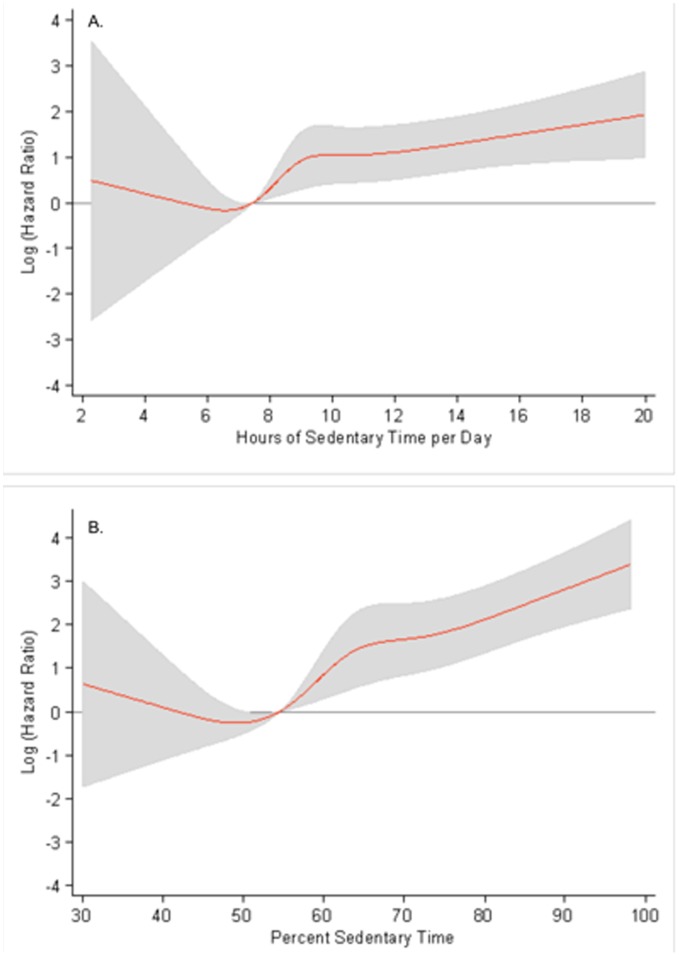
“Figure 1 shows that mortality risk increased significantly with greater sedentary time adjusted for sociodemographic factors.”
§ Association of Sedentary Time with Mortality Independent of Moderate to Vigorous Physical Activity > Results
plaindirect- Asserted: passes — The authors put it forward as true.
- Checkable: passes — It can be checked against evidence.
- Load-bearing: passes — The paper’s conclusions depend on it.
- Based: passes — The paper gives a reason why it holds.
A result the paper reports from its own data — it cites no other source for it, so there is none to check. The quote shows it is in the paper.
In the paper
“Participants in the third quartile (hazard ratio (HR):4.05; 95%CI:1.55–10.60) and fourth quartile (HR:5.94; 95%CI:2.49–14.15) of percent sedentary time had a significantly increased risk of death compared to those in the lowest quartile.”
§ Association of Sedentary Time with Mortality Independent of Moderate to Vigorous Physical Activity > Results
plaincorrelational- Asserted: passes — The authors put it forward as true.
- Checkable: passes — It can be checked against evidence.
- Load-bearing: passes — The paper’s conclusions depend on it.
- Based: passes — The paper gives a reason why it holds.
A result the paper reports from its own data — it cites no other source for it, so there is none to check. The quote shows it is in the paper.
In the paper
“In model 3 that included sociodemographic factors, lifestyle factors, multiple morbidities, mobility limitation, and MVPA, those in the highest quartile of sedentary hours had a 3.3 times increased risk of mortality compared to participants in lowest quartile (95% confidence interval (CI):1.59–6.69).”
§ Association of Sedentary Time with Mortality Independent of Moderate to Vigorous Physical Activity > Results
plaincorrelational- Asserted: passes — The authors put it forward as true.
- Checkable: passes — It can be checked against evidence.
- Load-bearing: passes — The paper’s conclusions depend on it.
- Based: passes — The paper gives a reason why it holds.
A result the paper reports from its own data — it cites no other source for it, so there is none to check. The quote shows it is in the paper.
In the paper
“When we selected participants with 4 or more valid days (n = 1701) of accelerometry data instead of the 1 or more valid day in the current analysis, results remained very similar (Table 4).”
§ Association of Sedentary Time with Mortality Independent of Moderate to Vigorous Physical Activity > Results
plainn = 1,701- Asserted: passes — The authors put it forward as true.
- Checkable: passes — It can be checked against evidence.
- Load-bearing: unclear — It is unclear whether the paper’s conclusions depend on it.
- Based: passes — The paper gives a reason why it holds.
A result the paper reports from its own data — it cites no other source for it, so there is none to check. The quote shows it is in the paper.
In the paper
“Interactions with gender and age were not statistically significant (all p>0.10); therefore all results are shown for men and women and all ages combined.”
§ Association of Sedentary Time with Mortality Independent of Moderate to Vigorous Physical Activity > Methods > Study Population
plain- Asserted: passes — The authors put it forward as true.
- Checkable: passes — It can be checked against evidence.
- Load-bearing: passes — The paper’s conclusions depend on it.
- Based: passes — The paper gives a reason why it holds.
A result the paper reports from its own data — it cites no other source for it, so there is none to check. The quote shows it is in the paper.
In the paper
“Those in the lowest quartile of MVPA had 5.6 times greater mortality risk compared to those in the highest quartile of MVPA (95%CI: 2.25–13.96) in a model that was adjusted for sociodemographic factors, lifestyle factors, multiple morbidities, and mobility limitation.”
§ Association of Sedentary Time with Mortality Independent of Moderate to Vigorous Physical Activity > Results
plaincorrelational- Asserted: passes — The authors put it forward as true.
- Checkable: passes — It can be checked against evidence.
- Load-bearing: unclear — It is unclear whether the paper’s conclusions depend on it.
- Based: passes — The paper gives a reason why it holds.
In the paper
“These studies are limited by their use of self-reported data, which is known to be prone to reporting errors of physical activity duration and intensity [13].”
§ Association of Sedentary Time with Mortality Independent of Moderate to Vigorous Physical Activity > Introduction
What the sources say
- Not checked yetcites [13] JF Sallis, 2000, Assessment of physical activity by self-report: status, limitations, and future directions., Res Q Exerc Sport source
boosted- Asserted: passes — The authors put it forward as true.
- Checkable: passes — It can be checked against evidence.
- Load-bearing: passes — The paper’s conclusions depend on it.
- Based: passes — The paper gives a reason why it holds.
None of the sources cited for this claim have been checked yet.
In the paper
“Previous studies have shown self-reported sedentary time to be associated with mortality”
- Also stated in: § Introduction · plain
“Additionally, self-reported sedentary time in several domains including sitting [8], [9], riding in a car [10], and TV watching [11], [12] is positively associated with mortality.”
§ Association of Sedentary Time with Mortality Independent of Moderate to Vigorous Physical Activity > Abstract > Background
What the sources say
- Not checked yetcites [8] PT Katzmarzyk, 2009, Sitting time and mortality from all causes, cardiovascular disease, and cancer., Med Sci Sports Exerc source
- Not checked yetcites [9] AV Patel, 2010, Leisure time spent sitting in relation to total mortality in a prospective cohort of US adults., Am J Epidemiol source
- Not checked yetcites [10] TY Warren, 2010, Sedentary behaviors increase risk of cardiovascular disease mortality in men., Med Sci Sports Exerc source
plaincorrelational- Asserted: passes — The authors put it forward as true.
- Checkable: passes — It can be checked against evidence.
- Load-bearing: passes — The paper’s conclusions depend on it.
- Based: passes — The paper gives a reason why it holds.
- Also stated in: § Introduction · plain
A conclusion the paper draws from its own results — it cites no other source for it, so there is none to check. The quote shows it is in the paper.
In the paper
“This study shows that time spent in sedentary behavior is positively associated with mortality in this representative sample of adults aged 50 and older.”
§ Association of Sedentary Time with Mortality Independent of Moderate to Vigorous Physical Activity > Discussion
boostedcorrelational- Asserted: passes — The authors put it forward as true.
- Checkable: passes — It can be checked against evidence.
- Load-bearing: passes — The paper’s conclusions depend on it.
- Based: passes — The paper gives a reason why it holds.
- The quote only partly states this claim. 2
- Probably not a substantial claim. 11
- It may state two separate claims as one. 6
A result the paper reports from its own data — it cites no other source for it, so there is none to check. The quote shows it is in the paper.
In the paper
“In these groups of healthier individuals, sedentary time remained positively associated with mortality.”
§ Association of Sedentary Time with Mortality Independent of Moderate to Vigorous Physical Activity > Results
plaincorrelational- Asserted: passes — The authors put it forward as true.
- Checkable: passes — It can be checked against evidence.
- Load-bearing: passes — The paper’s conclusions depend on it.
- Based: passes — The paper gives a reason why it holds.
The quote only partly states this claim.
A result the paper reports from its own data — it cites no other source for it, so there is none to check. The quote shows it is in the paper.
In the paper
“Participants in the highest quartile of percentage of time spent sedentary, which corresponds to more than 73.5% of time in men and more than 70.5% in women, had more than 5 times greater risk of death compared to those in the lowest quartile.”
§ Association of Sedentary Time with Mortality Independent of Moderate to Vigorous Physical Activity > Discussion
plaincorrelational- Asserted: passes — The authors put it forward as true.
- Checkable: passes — It can be checked against evidence.
- Load-bearing: passes — The paper’s conclusions depend on it.
- Based: passes — The paper gives a reason why it holds.
The quote only partly states this claim.
A result the paper reports from its own data — it cites no other source for it, so there is none to check. The quote shows it is in the paper.
In the paper
“Over an average follow-up of 2.8 years, 145 deaths were reported.”
§ Association of Sedentary Time with Mortality Independent of Moderate to Vigorous Physical Activity > Results
plain- Asserted: passes — The authors put it forward as true.
- Checkable: passes — It can be checked against evidence.
- Load-bearing: fails — The paper’s conclusions may not depend on it.
- Based: passes — The paper gives a reason why it holds.
Probably not a substantial claim. The paper’s conclusions may not depend on it.
A result the paper reports from its own data — it cites no other source for it, so there is none to check. The quote shows it is in the paper.
In the paper
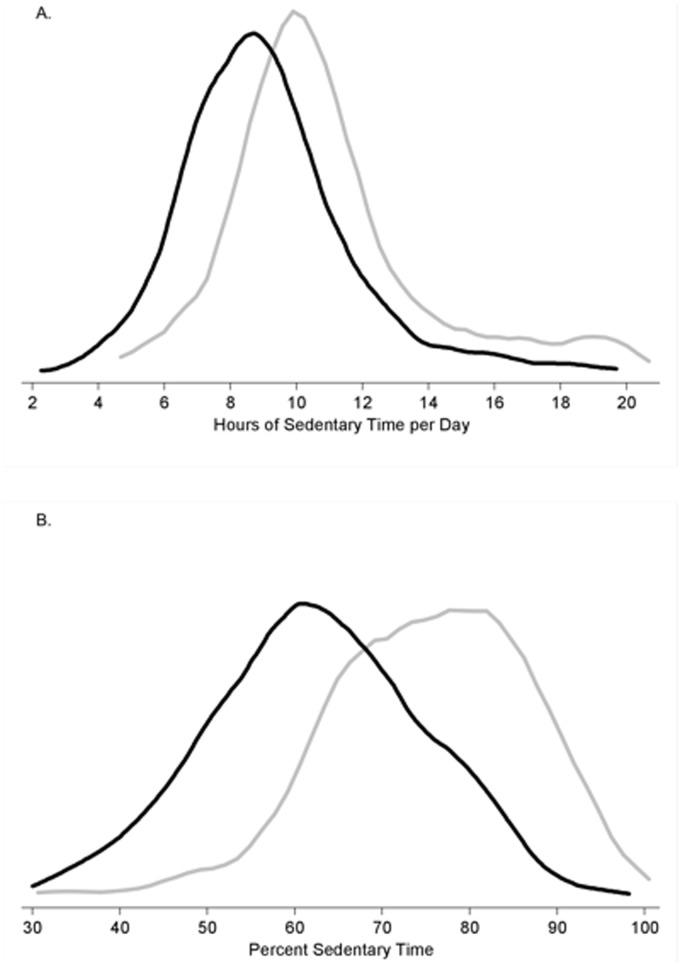
“Figure 2 clearly illustrates the shifted distribution of more time spent sedentary in those who died compared with those who survived.”
§ Association of Sedentary Time with Mortality Independent of Moderate to Vigorous Physical Activity > Results
boostedcorrelational- Asserted: passes — The authors put it forward as true.
- Checkable: passes — It can be checked against evidence.
- Load-bearing: fails — The paper’s conclusions may not depend on it.
- Based: passes — The paper gives a reason why it holds.
Probably not a substantial claim. The paper’s conclusions may not depend on it.
None of the sources cited for this claim have been checked yet.
In the paper
“Recent studies with objectively measured sedentary time data have shown that prolonged time in sedentary behaviors is a cardiometabolic risk factor independent of moderate to vigorous physical activity [6], [7].”
§ Association of Sedentary Time with Mortality Independent of Moderate to Vigorous Physical Activity > Introduction
What the sources say
- Not checked yetcites [6] A Bankoski, 2011, Sedentary Activity Associated With Metabolic Syndrome Independent of Physical Activity., Diabetes Care source
- Not checked yetcites [7] GN Healy, 2008, Objectively measured sedentary time, physical activity, and metabolic risk: the Australian Diabetes, Obesity and Lifestyle Study (AusDiab)., Diabetes Care source
plaincorrelational- Asserted: passes — The authors put it forward as true.
- Checkable: passes — It can be checked against evidence.
- Load-bearing: passes — The paper’s conclusions depend on it.
- Based: passes — The paper gives a reason why it holds.
Probably not a substantial claim.
In the paper
“Similarly, while the cutpoint we used to define sedentary time has been evaluated for validity [17], it is possible that the accuracy of this threshold varies in different age groups.”
§ Association of Sedentary Time with Mortality Independent of Moderate to Vigorous Physical Activity > Discussion
What the sources say
- Not checked yetcites [17] CE Matthews, 2008, Amount of time spent in sedentary behaviors in the United States, 2003–2004., Am J Epidemiol source
hedgedconditional- Asserted: passes — The authors put it forward as true.
- Checkable: passes — It can be checked against evidence.
- Load-bearing: fails — The paper’s conclusions may not depend on it.
- Based: passes — The paper gives a reason why it holds.
Probably not a substantial claim. The paper’s conclusions may not depend on it.
What the paper did — it cites no source for this, so there is none to check. The quote shows it is in the paper.
In the paper
“The follow-up time of our study was short which may increase the risk of reverse causation.”
§ Association of Sedentary Time with Mortality Independent of Moderate to Vigorous Physical Activity > Discussion
hedgedconditional- Asserted: passes — The authors put it forward as true.
- Checkable: passes — It can be checked against evidence.
- Load-bearing: unclear — It is unclear whether the paper’s conclusions depend on it.
- Based: passes — The paper gives a reason why it holds.
It may state two separate claims as one.
What the paper did — it cites no source for this, so there is none to check. The quote shows it is in the paper.
In the paper
“We adjusted our analyses for a wide range of potential confounding variables, we can however not exclude that other unknown or unmeasured factors may account for some of the reported associations.”
§ Association of Sedentary Time with Mortality Independent of Moderate to Vigorous Physical Activity > Discussion
hedged- Asserted: passes — The authors put it forward as true.
- Checkable: passes — It can be checked against evidence.
- Load-bearing: fails — The paper’s conclusions may not depend on it.
- Based: passes — The paper gives a reason why it holds.
Probably not a substantial claim. The paper’s conclusions may not depend on it. It may state two separate claims as one.
What the paper did — it cites no source for this, so there is none to check. The quote shows it is in the paper.
In the paper
“However, accelerometers are not sensitive to detect all activities such as standing still, upper body movements and biking.”
§ Association of Sedentary Time with Mortality Independent of Moderate to Vigorous Physical Activity > Discussion
plain- Asserted: passes — The authors put it forward as true.
- Checkable: passes — It can be checked against evidence.
- Load-bearing: fails — The paper’s conclusions may not depend on it.
- Based: passes — The paper gives a reason why it holds.
Probably not a substantial claim. The paper’s conclusions may not depend on it.
What the paper did — it cites no source for this, so there is none to check. The quote shows it is in the paper.
In the paper
“Data were analyzed using SAS Software 9.1 (SAS Institute Inc., Cary, NC) and SUDAAN 10.0 (RTI International, Research Triangle Park, NC) to account for the complex survey design and incorporate sample weights.”
§ Association of Sedentary Time with Mortality Independent of Moderate to Vigorous Physical Activity > Methods > Study Population
plain- Asserted: passes — The authors put it forward as true.
- Checkable: passes — It can be checked against evidence.
- Load-bearing: fails — The paper’s conclusions may not depend on it.
- Based: passes — The paper gives a reason why it holds.
Probably not a substantial claim. The paper’s conclusions may not depend on it. It may state two separate claims as one.
In the paper
“The NHANES data were linked to death certificate data from the National Death Index”
§ Association of Sedentary Time with Mortality Independent of Moderate to Vigorous Physical Activity > Methods > Study Population
What the sources say
- Not checked yetcites [15] NHANES (1999–2004). Linked Mortality Files.
plaincorrelational- Asserted: passes — The authors put it forward as true.
- Checkable: passes — It can be checked against evidence.
- Load-bearing: passes — The paper’s conclusions depend on it.
- Based: passes — The paper gives a reason why it holds.
Probably not a substantial claim.
What the paper did — it cites no source for this, so there is none to check. The quote shows it is in the paper.
In the paper
“However, small variations in the cut-point selected (e.g., 50, 100, 150 counts per minute) would not be likely to affect the classification of individuals into quartiles of sedentary time. Thus, our results are unlikely to be affected by the cutpoint chosen to define sedentary time.”
§ Association of Sedentary Time with Mortality Independent of Moderate to Vigorous Physical Activity > Discussion
hedged- Asserted: passes — The authors put it forward as true.
- Checkable: passes — It can be checked against evidence.
- Load-bearing: fails — The paper’s conclusions may not depend on it.
- Based: fails — The paper may give no reason why it holds.
Probably not a substantial claim. The paper’s conclusions may not depend on it. The paper may give no reason why it holds. It may state two separate claims as one.
In the paper
“This study used data from the 2003–2004 NHANES survey, a nationally representative survey with a stratified, multistage design [14].”
§ Association of Sedentary Time with Mortality Independent of Moderate to Vigorous Physical Activity > Methods > Study Population
What the sources say
- Not checked yetcites [14] National Cancer Institute Risk factor monitoring and methods: SAS programs for analyzing NHANES 2003–2004 accelerometer data.
plain- Asserted: passes — The authors put it forward as true.
- Checkable: passes — It can be checked against evidence.
- Load-bearing: fails — The paper’s conclusions may not depend on it.
- Based: passes — The paper gives a reason why it holds.
Probably not a substantial claim. The paper’s conclusions may not depend on it. It may state two separate claims as one.
What the paper did — it cites no source for this, so there is none to check. The quote shows it is in the paper.
In the paper
“Use of an accelerometer definition of MVPA based on studies of primarily younger adults may lead to an underestimate of MVPA for older adults due to the decline in exercise capacity with age, which may lead to residual confounding.”
§ Association of Sedentary Time with Mortality Independent of Moderate to Vigorous Physical Activity > Discussion
hedgedconditional- Asserted: passes — The authors put it forward as true.
- Checkable: passes — It can be checked against evidence.
- Load-bearing: fails — The paper’s conclusions may not depend on it.
- Based: passes — The paper gives a reason why it holds.
Probably not a substantial claim. The paper’s conclusions may not depend on it. It may state two separate claims as one.
The paper relies on this without support.
No studies have investigated the effect of objectively measured sedentary behavior on mortality and whether this association is independent of MVPA.
“however, no studies have investigated the effect of objectively measured sedentary time on mortality independent of MVPA.”
“To our knowledge no studies have investigated the effect of objectively measured sedentary behavior on mortality and whether this association is independent of MVPA.”
Claims other papers make about this one
Each is checked against this paper’s own text: does it say what the citing paper says it does?
The cited source says what the claim attributes to it.
In the citing paper
“Five studies assessed daily total sitting time by self-report[10,11,32-34]. One study used objective measurement of daily sedentary time[30].”
From Daily Sitting Time and All-Cause Mortality: A Meta-Analysis (2013) · cites this paper as [30]
In the citing paper
“Five of the six studies also presented data for models without adjustment for physical activity[10,11,30,32,33], which allowed us to examine associations between daily total sitting time and mortality risk, with and without adjustment for physical activity.”
From Daily Sitting Time and All-Cause Mortality: A Meta-Analysis (2013) · cites this paper as [30]
In the citing paper
“We observed similar effect sizes for all study samples across dose of sitting, except in the accelerometer study[30], which showed considerably larger hazards of dying from all causes among respondents whose total daily sitting time exceeded the first quartile of the sample (7.6 h/day for men, 7.2 h/day for women).”
From Daily Sitting Time and All-Cause Mortality: A Meta-Analysis (2013) · cites this paper as [30]
In the citing paper
“Individual study PAFs ranged from 1.9% for the largest study with self-report data [11] to 58% for the smaller objective measure study by Koster and colleagues[30].”
From Daily Sitting Time and All-Cause Mortality: A Meta-Analysis (2013) · cites this paper as [30]
In the citing paper
“When the Koster et al study was excluded, the overall weighted PAF for all-cause mortality attributable to total daily sitting time was 4.4% (range: 1.9% - 15.6%), after accounting for physical activity.”
From Daily Sitting Time and All-Cause Mortality: A Meta-Analysis (2013) · cites this paper as [30]
In the citing paper
“Another study conducted sensitivity analyses by excluding participants with mobility limitations, cardio-metabolic disease, and cancer and found that the associations between sedentary time and mortality were maintained[30].”
From Daily Sitting Time and All-Cause Mortality: A Meta-Analysis (2013) · cites this paper as [30]
In the citing paper
“Nonetheless, all three studies that had a short follow up period conducted sensitivity analyses in order to check for potential reverse causality (at least by excluding people who died in the first year), and all three reported similar associations between sitting time and all-cause mortality in their sensitivity analyses[10,30,33].”
From Daily Sitting Time and All-Cause Mortality: A Meta-Analysis (2013) · cites this paper as [30]
In the citing paper
“A sensitivity analysis excluding the results of the Koster et al [30] study did not change the pooled estimate (HR=1.02; 95% CI: 1.01-1.03), nor improve heterogeneity (I2=81.0%, p <0.001).”
From Daily Sitting Time and All-Cause Mortality: A Meta-Analysis (2013) · cites this paper as [30]
In the citing paper
“However, this was also the smallest study (145 deaths) and the average follow up was relatively short (2.8 years), which increases the risk of reverse causality.”
From Daily Sitting Time and All-Cause Mortality: A Meta-Analysis (2013) · cites this paper as [30]
Self-check
Percentages, sums and reported differences re-computed from the paper’s own numbers.
Each contradiction between two passages listed here was confirmed by an independent check.
Rated minor: it would not touch a result — a value no result rests on, a p-value that stays on the same side of the significance level, or a conflict that is clerical, resolved elsewhere in the paper, or outside its own findings.
In the paper
§ Association of Sedentary Time with Mortality Independent of Moderate to Vigorous Physical Activity > Results
“When we selected participants with 4 or more valid days (n = 1701) of accelerometry data”
§ Association of Sedentary Time with Mortality Independent of Moderate to Vigorous Physical Activity > Methods > Study Population
“Table 4 Mortality rates and hazard ratios and 95% confidence intervals of mortality according to quartiles of sedentary time selecting participants with 4 or more valid days of accelerometry data (n = 1711).”
Citations
Cites
‘Small Changes' to Diet and Physical Activity Behaviors for Weight Management
Hills, A. P., Byrne, N. M., Lindstrom, R. C., & Hill, J. O. (2013) · Obesity Facts · doi:10.1159/000345030 · Cited by 9,526
Garber, C. E., Blissmer, B., Deschenes, M. R., Franklin, B. A., Lamonte, M. J., Lee, I.-M., Nieman, D. C., & Swain, D. P. (2011) · Medicine & Science in Sports & Exercise · doi:10.1249/mss.0b013e318213fefb · Cited by 9,319 · cited 1×
“A recent Position Stand from the American College of Sports Medicine on the quantity and quality of exercise in adults mentions the importance to reduce sedentary time irrespective of a person’s exercise habit [21].”
BackgroundPhysical Activity in the United States Measured by Accelerometer
TROIANO, R. P., BERRIGAN, D., DODD, K. W., MÂSSE, L. C., TILERT, T., & MCDOWELL, M. (2008) · Medicine & Science in Sports & Exercise · doi:10.1249/mss.0b013e31815a51b3 · Cited by 7,638
Self-citationAmerican College of Sports Medicine position stand
Otis, C. L. (1997) · Medical Entomology and Zoology · Cited by 4,407
Amount of Time Spent in Sedentary Behaviors in the United States, 2003-2004
Matthews, C. E., Chen, K. Y., Freedson, P. S., Buchowski, M. S., Beech, B. M., Pate, R. R., & Troiano, R. P. (2008) · American Journal of Epidemiology · doi:10.1093/aje/kwm390 · Cited by 2,631
Self-citationAssessment of physical activity by self-report: Status, limitations, and future directions
Sallis, J. F., & Saelens, B. E. (2000) · Research Quarterly for Exercise and Sport · doi:10.1080/02701367.2000.11082780 · Cited by 2,351
Hamilton, M. T., Hamilton, D. G., & Zderic, T. W. (2007) · Diabetes · doi:10.2337/db07-0882 · Cited by 1,655
Sitting time and mortality from all causes, cardiovascular disease, and cancer
KATZMARZYK, P. T., CHURCH, T. S., CRAIG, C. L., & BOUCHARD, C. (2009) · Medicine & Science in Sports & Exercise · doi:10.1249/mss.0b013e3181930355 · Cited by 1,611
Healy, G. N., Dunstan, D. W., Salmon, J., Cerin, E., Shaw, J. E., Zimmet, P. Z., & Owen, N. (2008) · Diabetes Care · doi:10.2337/dc07-2046 · Cited by 1,465
Objectively Measured Sedentary Time, Physical Activity, and Metabolic Risk
Healy, G. N., Wijndaele, K., Dunstan, D. W., Shaw, J. E., Salmon, J., Zimmet, P. Z., & Owen, N. (2008) · Diabetes Care · doi:10.2337/dc07-1795 · Cited by 1,100
Cited by
Sorted by citations
Items 101–200 of 339
Validity of self-report methods for measuring sedentary behaviour in older adults
Aguilar-Farías, N., Brown, W. J., Olds, T., & Peeters, G. M. E. E. (2014) · Journal of science and medicine in sport · doi:10.1016/j.jsams.2014.08.004 · Cited by 52
Giné‐Garriga, M., Coll‐Planas, L., Guerra-Balic, M., Domingo, À., Figuls, M. R. I., Caserotti, P., Denkinger, M. D., Rothenbacher, D., Tully, M. A., Kee, F., et al. (2017) · Trials · doi:10.1186/s13063-017-1956-x · Cited by 54
Self-citationDi, J., Spira, A. P., Bai, J., Urbanek, J. K., Leroux, A., Wu, M. N., Resnick, S. M., Simonsick, E. M., Ferrucci, L., Schrack, J. A., et al. (2019) · Statistics in Biosciences · doi:10.1007/s12561-019-09236-4 · Cited by 53
Pinto, A. J., Miyake, C. N. H., Benatti, F. B., Silva, C. A., Sallum, A. M. E., Borba, E. F., de Sá‐Pinto, A. L., Bonfá, E., & Gualano, B. (2016) · Arthritis Care & Research · doi:10.1002/acr.22905 · Cited by 50
Fast Univariate Inference for Longitudinal Functional Models
Cui, E., Leroux, A., Smirnova, E., & Crainiceanu, C. M. (2021) · Journal of Computational and Graphical Statistics · doi:10.1080/10618600.2021.1950006 · Cited by 54
Murabito, J. M., Pedley, A., Massaro, J. M., Vasan, R. S., Esliger, D., Blease, S. J., Hoffman, U., & Fox, C. S. (2015) · Journal of the American Heart Association · doi:10.1161/jaha.114.001379 · Cited by 51
Chen, T., Narazaki, K., Haeuchi, Y., Chen, S., Honda, T., & Kumagai, S. (2015) · Journal of Physical Activity and Health · doi:10.1123/jpah.2015-0090 · Cited by 47
Di, J., Leroux, A., Urbanek, J. K., Varadhan, R., Spira, A. P., Schrack, J. A., & Zipunnikov, V. (2017) · bioRxiv (Cold Spring Harbor Laboratory) · doi:10.1101/182337 · Cited by 49
Midlife Determinants Associated with Sedentary Behavior in Old Age
van der Berg, J. D., Bosma, H., Caserotti, P., Eiríksdóttir, G., Arnardóttir, N. Ý., Martin, K. R., Brychta, R. J., Chen, K. Y., Sveinsson, Þ., Jóhannsson, E., et al. (2014) · Medicine & Science in Sports & Exercise · doi:10.1249/mss.0000000000000246 · Cited by 47
Self-citationChen, T., Narazaki, K., Honda, T., Chen, S., Haeuchi, Y., Nofuji, Y., Matsuo, E., & Kumagai, S. (2015) · Europe PMC (PubMed Central) · Cited by 46
Associations between sitting time and a range of symptoms in mid-age women
Peeters, G. M. E. E., Burton, N. W., & Brown, W. J. (2012) · Preventive Medicine · doi:10.1016/j.ypmed.2012.12.008 · Cited by 46
van der Velde, J. H. P. M., Savelberg, H. H. C. M., Schaper, N. C., & Koster, A. (2015) · International Journal of Environmental Research and Public Health · doi:10.3390/ijerph120302330 · Cited by 44
Self-citationActivity restrictions after gynecologic surgery: is there evidence?
Nygaard, I., Hamad, N. M., & Shaw, J. M. (2013) · International Urogynecology Journal · doi:10.1007/s00192-012-2026-2 · Cited by 42
Aguilar-Farías, N., & Leppe, J. (2016) · Journal of Sports Sciences · doi:10.1080/02640414.2016.1229010 · Cited by 42
Vincent, G. E., Jay, S. M., Sargent, C., Kovac, K., Vandelanotte, C., Ridgers, N. D., & Ferguson, S. A. (2017) · Neurobiology of Sleep and Circadian Rhythms · doi:10.1016/j.nbscr.2017.09.001 · Cited by 42
Sex differences in the association of risk factors for heart failure incidence and mortality
Sillars, A., Ho, F. K. W., Pell, G. P., Gill, J. M. R., Sattar, N. A., Gray, S. R., & Celis-Morales, C. A. (2019) · Heart · doi:10.1136/heartjnl-2019-314878 · Cited by 44
Lee, S., Son, C., Yeo, S., & Ha, I. (2019) · BMC Public Health · doi:10.1186/s12889-019-7653-9 · Cited by 43
Physical activity and cognitive and imaging biomarkers of Alzheimer's disease in down syndrome
Fleming, V., Piro‐Gambetti, B., Patrick, A., Zammit, M. D., Alexander, A. L., Christian, B. T., Handen, B. L., Cohen, A. D., Klunk, W. E., Laymon, C. M., et al. (2021) · Neurobiology of Aging · doi:10.1016/j.neurobiolaging.2021.07.016 · Cited by 41
von Haaren‐Mack, B., Loeffler, S. N., Haertel, S., Αναστασοπούλου, Π., Stumpp, J., Hey, S., & Boes, K. (2013) · Frontiers in Psychology · doi:10.3389/fpsyg.2013.00163 · Cited by 40
Saidj, M., Jørgensen, T., Jacobsen, R. K., Linneberg, A. R., & Aadahl, M. (2013) · PLoS ONE · doi:10.1371/journal.pone.0070213 · Cited by 40
Lee, I.-M. M., Shiroma, E. J., Evenson, K. R., Kamada, M., LaCroix, A. Z., & Buring, J. E. (2018) · Journal for the Measurement of Physical Behaviour · doi:10.1123/jmpb.2018-0005 · Cited by 40
Objectively Measured Physical Activity and Mortality Risk Among American Adults
Borgundvaag, E., & Janssen, I. (2017) · American Journal of Preventive Medicine · doi:10.1016/j.amepre.2016.09.017 · Cited by 38
Increased Hippocampal Blood Flow in Sedentary Older Adults at Genetic Risk for Alzheimer's Disease
Zlatar, Z. Z., Wierenga, C. E., Bangen, K. J., Liu, T. T., & Jak, A. J. (2014) · Journal of Alzheimer s Disease · doi:10.3233/jad-132252 · Cited by 39
Bellavia, A., Bottai, M., Wolk, A., & Orsini, N. (2013) · International Journal of Behavioral Nutrition and Physical Activity · doi:10.1186/1479-5868-10-94 · Cited by 37
Santos, C. C. S. D., Manta, S. W., Maximiano, G., Confortin, S. C., Benedetti, T. B., d'Orsi, E., & Rech, C. (2018) · Journal of Physical Activity and Health · doi:10.1123/jpah.2017-0456 · Cited by 22
Webber, S. C., Ripat, J. D., Pachu, N. S., & Strachan, S. M. (2019) · Disability and Rehabilitation · doi:10.1080/09638288.2018.1543463 · Cited by 47
Sedentary behaviour among elite professional footballers: health and performance implications
Weiler, R., Aggio, D., Hamer, M., Taylor, T., & Kumar, B. (2015) · BMJ Open Sport & Exercise Medicine · doi:10.1136/bmjsem-2015-000023 · Cited by 42
Joint effects of objectively-measured sedentary time and physical activity on all-cause mortality
Loprinzi, P. D., Loenneke, J. P., Ahmed, H. M., & Blaha, M. J. (2016) · Preventive Medicine · doi:10.1016/j.ypmed.2016.06.026 · Cited by 40
Association of objective sedentary behaviour and self-rated health in English older adults
Wilson, J. J., Blackburn, N. E., O’Reilly, R., Kee, F., Caserotti, P., & Tully, M. A. (2019) · BMC Research Notes · doi:10.1186/s13104-019-4050-5 · Cited by 39
Self-citationPhysical Fitness in Young Men between 1975 and 2015 with a Focus on the Years 2005–2015
Santtila, M., Pihlainen, K., Koski, H., Vasankari, T. J., & Kyröläinen, H. (2017) · Medicine & Science in Sports & Exercise · doi:10.1249/mss.0000000000001436 · Cited by 34
Circulatory factors associated with function and prognosis in patients with severe heart failure
Rullman, E., Melin, M., Mandić, M., Gonon, A. T., Fernandez‐Gonzalo, R., & Gustafsson, T. P. (2019) · Clinical Research in Cardiology · doi:10.1007/s00392-019-01554-3 · Cited by 31
Adjustment for physical activity in studies of sedentary behaviour
Page, A., Peeters, G. M. E. E., & Merom, D. (2015) · Emerging Themes in Epidemiology · doi:10.1186/s12982-015-0032-9 · Cited by 35
Blood Pressure Response to Interrupting Workplace Sitting Time With Non-Exercise Physical Activity
Mainsbridge, C. P., Ahuja, K., Williams, A. D., Bird, M., Cooley, D., & Pedersen, S. (2018) · Journal of Occupational and Environmental Medicine · doi:10.1097/jom.0000000000001377 · Cited by 29
Yerrakalva, D., Cooper, A., Westgate, K. L., Khaw, K., Wareham, N. J., Brage, S., Griffin, S. J., & Wijndaele, K. (2017) · International Journal of Epidemiology · doi:10.1093/ije/dyx123 · Cited by 32
Household physical activity and mortality in older adults: A national cohort study in Spain
Martínez‐Gómez, D., Guallar‐Castillón, P., León-Muñoz, L. M., & Rodríguez‐Artalejo, F. (2014) · Preventive Medicine · doi:10.1016/j.ypmed.2014.01.006 · Cited by 30
Arem, H. E., Pfeiffer, R. M., Moore, S. C., Brinton, L. A., & Matthews, C. E. (2016) · Cancer Causes & Control · doi:10.1007/s10552-016-0813-7 · Cited by 30
Self-citationGillen, J. B., Estafanos, S., Williamson, E., Hodson, N. W., Malowany, J. M., Kumbhare, D. A., & Moore, D. R. (2020) · Journal of Applied Physiology · doi:10.1152/japplphysiol.00796.2020 · Cited by 30
Dharmastuti, D. P., Agni, A. N., Widyaputri, F., Pawiroranu, S., Sofro, Z. M., Wardhana, F. S., Haryanto, S., Widayanti, T. W., Kotha, S. P., Gupta, P., et al. (2017) · Ophthalmic Epidemiology · doi:10.1080/09286586.2017.1367410 · Cited by 31
Shin, J. (2018) · Osong Public Health and Research Perspectives · doi:10.24171/j.phrp.2018.9.4.10 · Cited by 31
Kulinski, J. P., Sanghavi, M., Ayers, C. R., Das, S. R., Banerjee, S., Berry, J. D., Addo, T., De Lemos, J. A., & Kumbhani, D. J. (2015) · Vascular Medicine · doi:10.1177/1358863x15573837 · Cited by 28
Menai, M., Fezeu, L., Charreire, H., Kesse‐Guyot, E., Touvier, M., Simon, C., Weber, C., Andreeva, V. A., Herçberg, S., & Oppert, J. (2014) · PLoS ONE · doi:10.1371/journal.pone.0106850 · Cited by 28
Ku, P., Steptoe, A., Liao, Y., Hsueh, M., & Chen, L. (2019) · Journal of Clinical Medicine · doi:10.3390/jcm8040564 · Cited by 42
Greaney, M. L., Kunicki, Z. J., Drohan, M. M., Ward‐Ritacco, C. L., Riebe, D. A., & Cohen, S. A. (2021) · BMC Public Health · doi:10.1186/s12889-021-11294-7 · Cited by 29
McDonnell, M. N., Hillier, S., Judd, S. E., Yuan, Y., Hooker, S. P., & Howard, V. J. (2016) · Preventive Medicine · doi:10.1016/j.ypmed.2016.02.013 · Cited by 28
Patterns of physical activity and sedentary behavior after bariatric surgery: An observational study
Chapman, N., Hill, K., Taylor, S., Hassanali, M., Straker, L. M., & Hamdorf, J. M. (2013) · Surgery for Obesity and Related Diseases · doi:10.1016/j.soard.2013.10.012 · Cited by 27
Raichlen, D. A., Klimentidis, Y. C., Hsu, C., & Alexander, G. E. (2018) · The Journals of Gerontology Series A · doi:10.1093/gerona/gly247 · Cited by 27
Larsson, K., Kallings, L., Ekblom, Ö. B., Blom, V., Andersson, E. A., & Ekblom, M. (2019) · BMC Public Health · doi:10.1186/s12889-018-6329-1 · Cited by 29
Symptom Diary Use and Improved Survival for Patients With Heart Failure
Park, L. G., Dracup, K., Whooley, M. A., McCulloch, C., Jin, C., Moser, D. K., Clark, R. A., Pelter, M. M., Biddle, M., & Howie Esquivel, J. (2017) · Circulation: Heart Failure · doi:10.1161/circheartfailure.117.003874 · Cited by 27
Targeting Sedentary Behavior in CKD
Lyden, K. A., Boucher, R. E., Wei, G., Zhou, N., Christensen, J. C., Chertow, G. M., Greene, T., & Beddhu, S. (2021) · Clinical Journal of the American Society of Nephrology · doi:10.2215/cjn.12300720 · Cited by 30
The Positive Role of Tai Chi in Responding to the COVID-19 Pandemic
Xu, S., Baker, J. S., & Ren, F. (2021) · International Journal of Environmental Research and Public Health · doi:10.3390/ijerph18147479 · Cited by 27
Melin, M., Hagerman, I., Gonon, A. T., Gustafsson, T. P., & Rullman, E. (2016) · PLoS ONE · doi:10.1371/journal.pone.0153036 · Cited by 25
McMillan, L. B., Aitken, D. A., Ebeling, P. R., Jones, G., & Scott, D. S. (2018) · Osteoporosis International · doi:10.1007/s00198-018-4446-4 · Cited by 24
Morris, K. A., Arundell, L., Cleland, V. J., & Teychenne, M. J. (2020) · International Journal of Behavioral Nutrition and Physical Activity · doi:10.1186/s12966-020-01015-5 · Cited by 24
Sedentary Behavior in Individuals With Diabetic Chronic Kidney Disease and Maintenance Hemodialysis
Anderton, N., Giri, A., Wei, G., Marcus, R. L., Chen, X., Bjordahl, T. S., Habib, A. N., Herrera, J., & Beddhu, S. (2015) · Journal of Renal Nutrition · doi:10.1053/j.jrn.2015.01.018 · Cited by 24
Fernández‐García, Á. I., Marín-Puyalto, J., Gómez‐Cabello, A., Matute-Llorente, Á., Subías-Perié, J., Pérez‐Gómez, J., Lozano‐Berges, G., Mañas, A., Guadalupe‐Grau, A., González‐Gross, M., et al. (2021) · BioMed Research International · doi:10.1155/2021/5528866 · Cited by 28
Sport facility proximity and physical activity: Results from the Study of Community Sports in China
Guo, X., Dai, J., Xun, P., Jamieson, L. M., & He, K. (2014) · European Journal of Sport Science · doi:10.1080/17461391.2014.982203 · Cited by 23
Telerehabilitation nach Schlaganfall im häuslichen Umfeld
Keidel, M., Vauth, F., Richter, J., Hoffmann, B., Soda, H., Griewing, B., & Scibor, M. (2017) · Der Nervenarzt · doi:10.1007/s00115-016-0275-x · Cited by 23
Chu, C. M., Khanijow, K. D., Schmitz, K. H., Newman, D. K., Arya, L. A., & Harvie, H. S. (2018) · Urogynecology · doi:10.1097/spv.0000000000000552 · Cited by 23
The impact of standing desks on cardiometabolic and vascular health
Bodker, A. M., Visotcky, A. M., Gutterman, D. D., Widlansky, M. E., & Kulinski, J. P. (2021) · Vascular Medicine · doi:10.1177/1358863x211001934 · Cited by 23
García‐Hermoso, A., Notario‐Pacheco, B., Recio-Rodriguez, J. I., Martínez‐Vizcaíno, V., de Pablo, E. R., Magdalena-Belio, J. F., Gómez-Marcos, M. Á., & García‐Ortiz, L. (2015) · Atherosclerosis · doi:10.1016/j.atherosclerosis.2015.10.004 · Cited by 22
Sedentary time assessed by actigraphy and mortality: The Rotterdam Study
Koolhaas, C. M., Dhana, K., van Rooij, F. J. A., Kocevska, D., Albert Hofman, D., Franco, O. H., & Tiemeier, H. W. (2016) · Preventive Medicine · doi:10.1016/j.ypmed.2016.11.021 · Cited by 22
Factores asociados a sedentarismo en Chile: evidencia de la Encuesta Nacional de Salud 2009-2010
Martínez-Sangüinetti, M. A., Leiva, A. M., Petermann-Rocha, F. E., Garrido, A., Díaz, X., Álvarez, C., Salas, C., Cristi‐Montero, C., Rodríguez‐Rodríguez, F., Aguilar-Farías, N., et al. (2018) · Revista médica de Chile · doi:10.4067/s0034-98872018000100022 · Cited by 23
Sedentary Behavior and Cardiovascular Disease Risk Factors among Latino Adults
Silfee, V., Lemon, S. C., Lora, V., & Rosal, M. C. (2017) · Journal of Health Care for the Poor and Underserved · doi:10.1353/hpu.2017.0075 · Cited by 22
Diurnal Physical Activity Patterns across Ages in a Large UK Based Cohort: The UK Biobank Study
Wrobel, J., Muschelli, J., & Leroux, A. (2021) · Sensors · doi:10.3390/s21041545 · Cited by 21
Independent and joint association of physical activity and sedentary behavior on all-cause mortality
Zhou, W., Wei, Y., Wang, T., Zhu, L., Xu, Y., Zhao, J. Y., Yu, L., Bao, H.-H., & Cheng, X. (2021) · Chinese Medical Journal · doi:10.1097/cm9.0000000000001730 · Cited by 21
NHANES 2011–2014: Objective Physical Activity Is the Strongest Predictor of All-Cause Mortality
Leroux, A., Cui, E., Smirnova, E., Muschelli, J., Schrack, J. A., & Crainiceanu, C. M. (2024) · Medicine & Science in Sports & Exercise · doi:10.1249/mss.0000000000003497 · Cited by 21
Köykkä, K., Absetz, P., Araújo‐Soares, V., Knittle, K. P., Sniehotta, F. F., & Hankonen, N. E. (2018) · Journal of Experimental Social Psychology · doi:10.1016/j.jesp.2018.08.004 · Cited by 27
dos Santos, R. R. C., Rosa, É. C. C. C., Rosa, T. D. S., Ferreira, E. A., Gris, E. F., de Andrade, R. V., & Amato, A. A. (2019) · International Journal of Environmental Research and Public Health · doi:10.3390/ijerph16122156 · Cited by 23
Lawlor, D. A., Howe, L. D., Anderson, E. L., Kipping, R., Campbell, R. M., Wells, S. L., Chittleborough, C., Peters, T. J., & Jago, R. (2015) · BMC Public Health · doi:10.1186/s12889-016-2734-5 · Cited by 22
Objectively measured physical activity profile and cognition in Finnish elderly twins
Iso‐Markku, P., Waller, K. L., Vuoksimaa, E., Vähä‐Ypyä, H., Lindgrén, N., Heikkila, K. V., Sievänen, H. T., Rinne, J. O., Kaprio, J. A., & Kujala, U. M. (2018) · Alzheimer s & Dementia Translational Research & Clinical Interventions · doi:10.1016/j.trci.2018.06.007 · Cited by 22
Kim, H. J., Jae, S. Y., Choo, J., Yoon, J. K., Kim, S., Königstein, K., Schmidt‐Trucksäss, A., & Franklin, B. A. (2019) · American Journal of Human Biology · doi:10.1002/ajhb.23297 · Cited by 19
Bartholdy, C. R., Christensen, R., Kristensen, L. E., Gudbergsen, H., Bliddal, H., Overgaard, A., Rasmussen, M. U., & Henriksen, M. (2019) · Arthritis Care & Research · doi:10.1002/acr.23868 · Cited by 20
The relationship between changes in sitting time and mortality in post-menopausal US women
Lee, J., Kuk, J. L., & Ardern, C. I. (2015) · Journal of Public Health · doi:10.1093/pubmed/fdv055 · Cited by 20
Chuang, M., Wang, H.-W., Huang, Y., Ho, C., & Jiang, M. (2023) · Kidney360 · doi:10.34067/kid.0000000000000313 · Cited by 18
Ramírez-Marrero, F. A., Santana-Bagur, J. L., Joyner, M. J., Rodríguez-Zayas, J., & Frontera, W. R. (2014) · PubMed · Cited by 17
Profiles of sedentary and non-sedentary young men – a population-based MOPO study
Pyky, R., Leinonen, A., Ahola, R., Ikäheimo, T. M., Koivumaa-Honkanen, H. T., Mäntysaari, M., Jämsä, T. J., & Korpelainen, R. (2015) · BMC Public Health · doi:10.1186/s12889-015-2495-6 · Cited by 17
Effects of the 3-year Sigue la Huella intervention on sedentary time in secondary school students
Pardo, B. M., Bengoechea, E. G., Lanaspa, E. G., Casterad, J. Z., & Clemente, J. A. J. (2014) · European Journal of Public Health · doi:10.1093/eurpub/cku194 · Cited by 23
Reinders, I., van Schoor, N. M., Deeg, D. J. H., Huisman, M. A., & Visser, M. (2017) · European Journal of Public Health · doi:10.1093/eurpub/ckx173 · Cited by 17
Coll‐Planas, L., Alias, S. B., Tully, M. A., Caserotti, P., Giné‐Garriga, M., Blackburn, N. E., Skjødt, M., Wirth, K., Deidda, M., McIntosh, E., et al. (2019) · BMJ Open · doi:10.1136/bmjopen-2018-027073 · Cited by 17
Self-citationPolycyclic aromatic hydrocarbon metabolites and mortality risk in an adult population
Chen, Y., Kao, T., Wang, C., Chen, Y.-J., Wu, C., Lai, C., & Chen, W. (2020) · Environmental Geochemistry and Health · doi:10.1007/s10653-020-00663-7 · Cited by 17
Sedentary behaviour among general practitioners: a systematic review
Mayne, R., Hart, N. D., & Heron, N. (2021) · BMC Family Practice · doi:10.1186/s12875-020-01359-8 · Cited by 20
Prince, S. A., Gresty, K. M., Reed, J. L., Wright, E., Tremblay, M. S., & Reid, R. D. (2014) · Systematic Reviews · doi:10.1186/2046-4053-3-120 · Cited by 17
Loprinzi, P. D. (2016) · Journal of Hypertension · doi:10.1097/hjh.0000000000000869 · Cited by 16
Guo, L., & Wang, C. (2025) · Frontiers in Public Health · doi:10.3389/fpubh.2025.1470947 · Cited by 20
Wearable sensor and algorithm for automated measurement of screen time
Fletcher, Chamberlain, Richman, Oreskovic, & Taveras (2016) · Wireless Health · doi:10.1109/wh.2016.7764564 · Cited by 15
Salerno, E. A., Saint‐Maurice, P. F., Wan, F., Peterson, L. L., Park, Y., Cao, Y., Duncan, R. P., Troiano, R. P., & Matthews, C. E. (2023) · JNCI Cancer Spectrum · doi:10.1093/jncics/pkad007 · Cited by 17
Self-citationClayton, C., Feehan, L. M., Goldsmith, C. H., Miller, W. C., Grewal, N., Ye, J., Yoo, J. Y., & LI, L. C. (2015) · Pilot and Feasibility Studies · doi:10.1186/s40814-015-0027-x · Cited by 15
Relationship Between Sedentary Time and Sleep Duration Among Korean Adolescents
Choi, H., Kim, C., Ko, H., & Park, C. G. (2019) · The Journal of School Nursing · doi:10.1177/1059840519842230 · Cited by 15
Hishii, S., Miyatake, N., Nishi, H., Katayama, A., Ujike, K., Koumoto, K., Suzuki, H., & Hashimoto, H. (2019) · PubMed · doi:10.18926/amo/57372 · Cited by 16
Demmelmaier, I., Åsenlöf, P., Bergman, P., Nordgren, B., & Opava, C. H. (2017) · Rheumatology International · doi:10.1007/s00296-016-3641-x · Cited by 14
A “NEAT” Approach to Obesity Prevention in the Modern Work Environment
Malaeb, S., Perez‐Leighton, C. E., Noble, E. E., & Billington, C. J. (2018) · Workplace Health & Safety · doi:10.1177/2165079918790980 · Cited by 17
Matenchuk, B. A., Carson, V., Riske, L. A., Carnio, A., & Davenport, M. H. (2022) · Canadian Journal of Public Health · doi:10.17269/s41997-022-00634-8 · Cited by 14
Low-Force Muscle Activity Regulates Energy Expenditure after Spinal Cord Injury
Woelfel, J. R., Kimball, A., Yen, C.-L., & Shields, R. K. (2016) · Medicine & Science in Sports & Exercise · doi:10.1249/mss.0000000000001187 · Cited by 14
Greenwalt, D., Phillips, S. A., Ozemek, C., Arena, R. A., & Sabbahi, A. (2023) · Current Problems in Cardiology · doi:10.1016/j.cpcardiol.2023.101871 · Cited by 18
Single parent status and children’s objectively measured level of physical activity
Singhammer, J., Ried‐Larsen, M., Møller, N. C., Lund-Kristensen, P., Froberg, K., & Andersen, L. B. (2015) · Sports Medicine - Open · doi:10.1186/s40798-015-0020-1 · Cited by 14
Heffernan, K. S., Tarzia, B. J., Kasprowicz, A. G., Lefferts, W. K., Hatanaka, M., & Jae, S. Y. (2013) · American Journal of Hypertension · doi:10.1093/ajh/hpt053 · Cited by 13
Pellegrini, C. A., Song, J., Chang, R. W., Semanik, P. A., Lee, J. J., Ehrlich‐Jones, L., Pinto, D., & Dunlop, D. D. (2015) · Journal of Physical Activity and Health · doi:10.1123/jpah.2015-0404 · Cited by 13
Mear, E., Gladwell, V., & Pethick, J. (2022) · International Journal of Environmental Research and Public Health · doi:10.3390/ijerph192114597 · Cited by 12
Willoughby, T. N., & Copeland, J. L. (2015) · Applied Physiology, Nutrition, and Metabolism · doi:10.1139/apnm-2015-0066 · Cited by 12
Drenowatz, C. J., DeMello, M. M., Shook, R. P., Hand, G. A., Burgess, S., & Blair, S. N. (2016) · AIMS Public Health · doi:10.3934/publichealth.2016.2.375 · Cited by 12
Metadata
- Authors
- Koster, A., Caserotti, P., Patel, K. V., Matthews, C. E., Berrigan, D., Van Domelen, D. R., Brychta, R. J., Chen, K. Y., & Harris, T. B.
- Affiliations
- National Institutes of Health (US)
- University of Southern Denmark (DK)
- National Institute on Aging (US)
- National Cancer Institute (US)
- Corresponding author
- Koster, Annemarie
- ORCID
- Venue
- PLoS ONE
- Publisher
- Public Library of Science (PLoS)
- Published
- 2012-06-13
- Volume
- 7
- Issue
- 6
- Pages
- e37696
- ISSN
- 1932-6203 (ISSN-L)
- PMC
- PMC3374810
- OpenAlex
- W1978604479
- Semantic Scholar
- 572382a89975df5200d007cd85074febef10282f
- Cited by
- 340
- References
- 20
- Citations by year
- 2026: 6 · 2025: 4 · 2024: 14 · 2023: 18 · 2022: 14 · 2021: 29 · 2020: 23 · 2019: 29 · 2018: 26 · 2017: 32 · 2016: 45 · 2015: 37 · 2014: 35 · 2013: 25 · 2012: 3
- FWCI
- 21.45
- Type
- journal article
- Language
- en
- Open access
- gold
- doi.org
- Licence
- Locations
- PLoS ONE (publishedVersion, public-domain)
- PubMed Central (publishedVersion, public-domain)
- PubMed (publishedVersion)
- University of Southern Denmark Research Portal (University of Southern Denmark) (publishedVersion)
- Research Publications (Maastricht University) (submittedVersion, cc-by)
- DOAJ (DOAJ: Directory of Open Access Journals) (submittedVersion, cc-by-sa)
- Research Publications (Maastricht University) (submittedVersion, other-oa)
- Topics
- Health Sciences › Medicine › Public Health, Environmental and Occupational Health › Physical Activity and Health
- Physical Sciences › Computer Science › Computer Vision and Pattern Recognition › Context-Aware Activity Recognition Systems
- Social Sciences › Health › Health disparities and outcomes
- Keywords
- sedentary behavior, all-cause mortality, moderate-to-vigorous physical activity, accelerometry, older adults, mortality risk factors, physical inactivity
- MeSH terms
- Aged, Female, Humans, Male, Middle Aged, Mortality, Motor Activity, Sedentary Behavior
About these checks
Registry, retraction, Cites and statistics results are computed, not judged, with one exception: a printed reference that no index lists is read once by a model before it counts as a citation error. Claims are extracted by a model and kept only when their quote appears verbatim in the text; each cited source is then checked, with a model’s help, for whether it says what the claim relies on. Those verdicts can be wrong — read the claim’s quote and the cited source before relying on one.
A language model drew the claims from the paper on 2026-10-09, under version 3 of the claim definition (model deepseek-v4.1-flash, prompt extract-v3).
A second model labelled each claim on 2026-10-09 (model jev-1.13-20260917, definition revision gold-guideline-v0.2).
Statistics and arithmetic are recomputed, not judged.
Confidence bands are shown only for fields calibrated on our annotated test set. None is calibrated yet, so no band is shown.
What counts as a claim ›How we measure confidence ›How we check this ›
Are you an author, or do you see a problem with this page? Request a review
