

Restoring Specific Lactobacilli Levels Decreases Inflammation and Muscle Atrophy Markers in an Acute Leukemia Mouse Model
Open accessThe DOI matches its Crossref record; 52 of the 53 references it cites were found in a registry or an index, and 1 are not checked yet.
Abstract
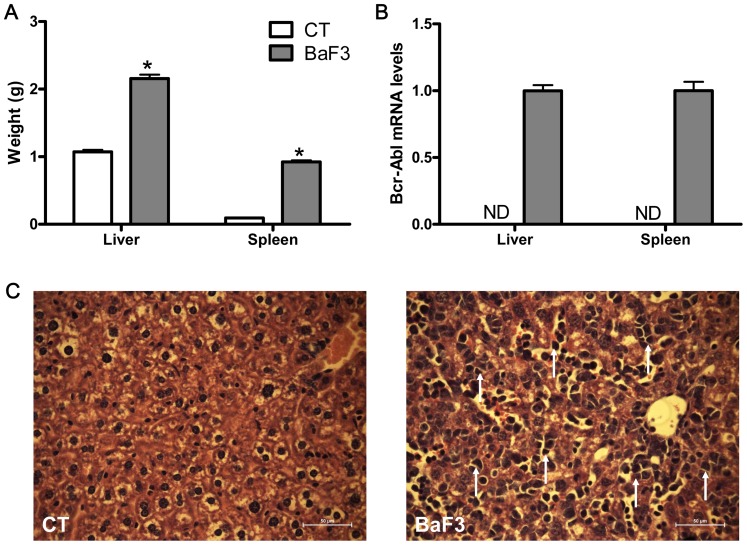
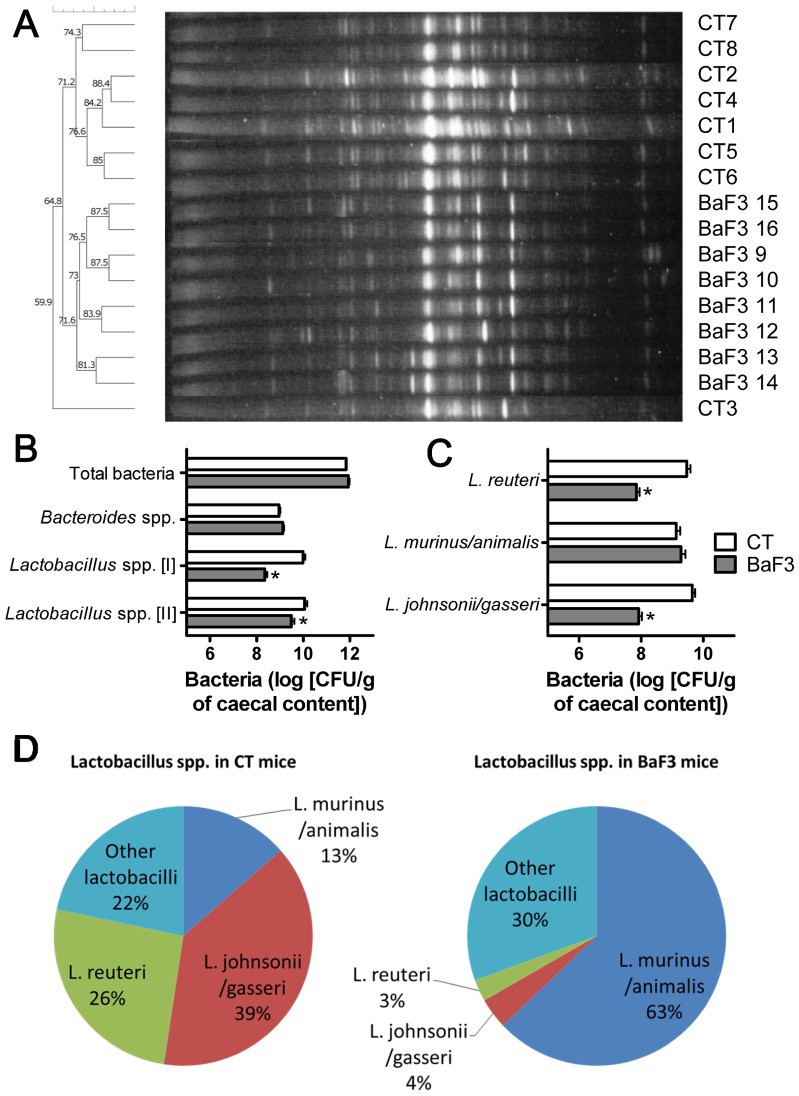
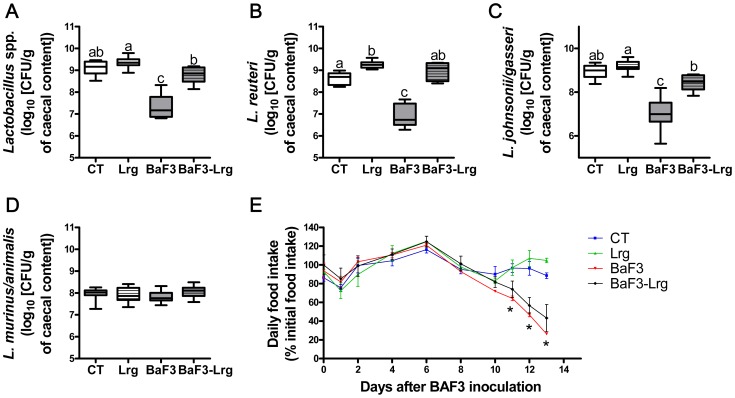
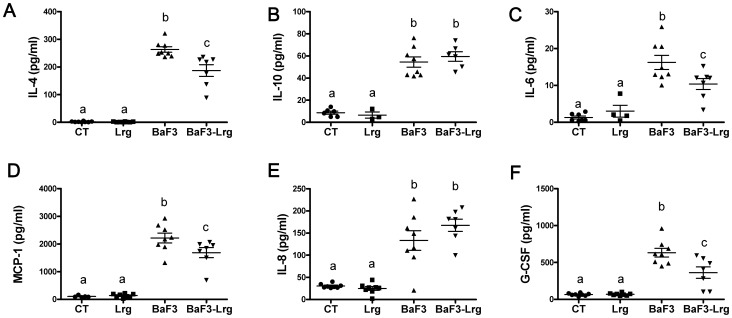
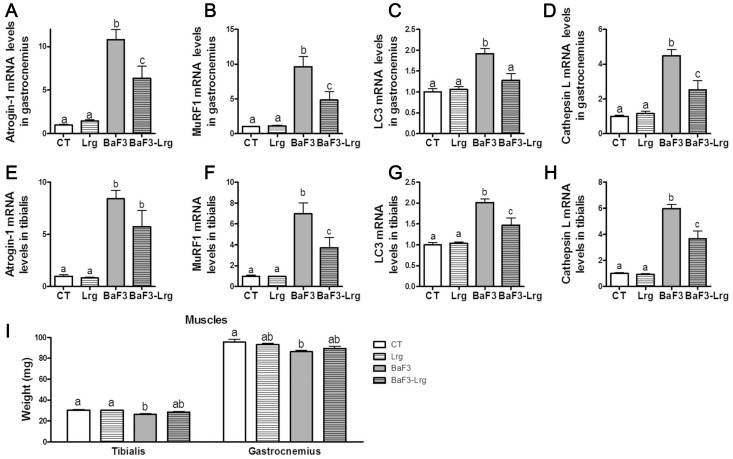
The gut microbiota has recently been proposed as a novel component in the regulation of host homeostasis and immunity. We have assessed for the first time the role of the gut microbiota in a mouse model of leukemia (transplantation of BaF3 cells containing ectopic expression of Bcr-Abl), characterized at the final stage by a loss of fat mass, muscle atrophy, anorexia and inflammation. The gut microbial 16S rDNA analysis, using PCR-Denaturating Gradient Gel Electrophoresis and quantitative PCR, reveals a dysbiosis and a selective modulation of Lactobacillus spp. (decrease of L. reuteri and L. johnsonii/gasseri in favor of L. murinus/animalis) in the BaF3 mice compared to the controls. The restoration of Lactobacillus species by oral supplementation with L. reuteri 100-23 and L. gasseri 311476 reduced the expression of atrophy markers (Atrogin-1, MuRF1, LC3, Cathepsin L) in the gastrocnemius and in the tibialis, a phenomenon correlated with a decrease of inflammatory cytokines (interleukin-6, monocyte chemoattractant protein-1, interleukin-4, granulocyte colony-stimulating factor, quantified by multiplex immuno-assay). These positive effects are strain- and/or species-specific since L. acidophilus NCFM supplementation does not impact on muscle atrophy markers and systemic inflammation. Altogether, these results suggest that the gut microbiota could constitute a novel therapeutic target in the management of leukemia-associated inflammation and related disorders in the muscle.
Overview
The claims and statistics of this paper haven’t been checked yet.
Free: it reads the open-access text and checks the first 5 claims that cite a source we can check. Create a free account to check every claim.
Integrity signals
Registry
Cites
Statistics
Figures
Verification
Claims the paper makes
The claims and statistics of this paper haven’t been checked yet.
Free: it reads the open-access text and checks the first 5 claims that cite a source we can check. Create a free account to check every claim.
Claims other papers make about this one
Each is checked against this paper’s own text: does it say what the citing paper says it does?
The source backs part of the claim, not all of it — or backs it for a different population, condition or comparison.
In the citing paper
“the administration of probiotics or butyrate to mouse models of muscle wasting has been associated with improved muscle mass”
From Gut Microbiota, Muscle Mass and Function in Aging: A Focus on Physical Frailty and Sarcopenia (2019) · cites this paper as [67]
Experimental — accuracy not yet measuredThe source backs part of the claim, not all of it — or backs it for a different population, condition or comparison.
In the citing paper
“probiotic rescue (Lactobacillus reuteri and gasseri) of inflammation and muscle/bone loss in mice proposes that gut microbiota initiate this relationship [19, 67, 89].”
From Gut Microbiota Contribute to Age-Related Changes in Skeletal Muscle Size, Composition, and Function: Biological Basis for a Gut-Muscle Axis (2018) · cites this paper as [19]
Experimental — accuracy not yet measuredThe cited source says what the claim attributes to it.
In the citing paper
“associations between gut ecology and cancer [16], cardiovascular disease [17], obesity [6], diabetes [18], and muscle wasting [19]”
From Gut Microbiota Contribute to Age-Related Changes in Skeletal Muscle Size, Composition, and Function: Biological Basis for a Gut-Muscle Axis (2018) · cites this paper as [19]
The cited source says what the claim attributes to it.
In the citing paper
“the leukemic mice were given an oral probiotic containing Lactobacillus reuteri and L. gasseri that appeared to decrease serum levels of inflammatory cytokines (IL-6 and MCP-1) and atrogene expression (MuRF1 and Atrogin-1) in conjunction with an increase in mass of the tibialis anterior.”
From Gut Microbiota Contribute to Age-Related Changes in Skeletal Muscle Size, Composition, and Function: Biological Basis for a Gut-Muscle Axis (2018) · cites this paper as [19]
In the citing paper
“In a mouse model of leukemia, the administration of a probiotic blend containing several Lactobacilli was associated with reduced inflammation and reduced levels of atrogin-1 and other muscle atrophy markers [67].”
From Gut Microbiota, Muscle Mass and Function in Aging: A Focus on Physical Frailty and Sarcopenia (2019) · cites this paper as [67]
4 more claims about this paper
Create a free account to see every claim other papers make about this one.
Self-check
Percentages, sums and reported differences re-computed from the paper’s own numbers.
The self-check needs the paper’s full text.
Citations
Cites
An obesity-associated gut microbiome with increased capacity for energy harvest
Turnbaugh, P. J., Ley, R. E., Mahowald, M. A., Magrini, V., Mardis, E. R., & Gordon, J. I. (2006) · Nature · doi:10.1038/nature05414 · Cited by 12,444 · cited 1×
“through the fermentation products and the inhibition of the fasting induced adipose factor [18–22].”
Muyzer, G., de Waal, E. C., & Uitterlinden, A. G. (1993) · Applied and Environmental Microbiology · doi:10.1128/aem.59.3.695-700.1993 · Cited by 11,429 · cited 1×
“Denaturing Gradient Gel Electrophoresis (DGGE) was performed on the total bacteria amplicons that were generated with primers targeting the V3 region of bacterial 16S rRNA gene [27].”
The gut microbiota as an environmental factor that regulates fat storage
Bäckhed, F., Ding, H., Wang, T., Hooper, L. V., Koh, G. Y., Nagy, A., Semenkovich, C. F., & Gordon, J. I. (2004) · Proceedings of the National Academy of Sciences · doi:10.1073/pnas.0407076101 · Cited by 6,245 · cited 1×
“through the fermentation products and the inhibition of the fasting induced adipose factor [18–22].”
(2016) · Repository@Hull (Worktribe) (University of Hull) · doi:10.1111/j.1365 · Cited by 5,304
The gut microbiota shapes intestinal immune responses during health and disease
Round, J. L., & Mazmanian, S. K. (2009) · Nature Reviews Immunology · doi:10.1038/nri2515 · Cited by 5,029
Identification of ubiquitin ligases required for skeletal muscle atrophy.
Bodine, S. C., Latres, E., Baumhueter, S., Lai, V. K.-M., Nunez, L., Clarke, B. A., Poueymirou, W. T., Panaro, F. J., Na, E., Dharmarajan, K., et al. (2001) · Science · doi:10.1126/science.1065874 · Cited by 3,521 · cited 2×
“These markers are therefore considered as potential drug targets for the treatment of muscle atrophy [7].”
Mechanisms underlying the resistance to diet-induced obesity in germ-free mice
Bäckhed, F., Manchester, J. K., Semenkovich, C. F., & Gordon, J. I. (2007) · Proceedings of the National Academy of Sciences · doi:10.1073/pnas.0605374104 · Cited by 2,615 · cited 1×
“also reported an increased AMPK activity in the muscle of germ-free animals [21].”
Cani, P. D., Possemiers, S., Van de Wiele, T., Guiot, Y., Everard, A., Rottier, O., Geurts, L., Naslain, D., Neyrinck, A., Lambert, D. M., et al. (2009) · Gut · doi:10.1136/gut.2008.165886 · Cited by 2,518 · cited 1×
“Lipopolysaccharides (LPS) are pro-inflammatory compounds of bacterial origin [48].”
Self-citationPrognostic effect of weight loss prior tochemotherapy in cancer patients
Dewys, W. D., Begg, C., Lavin, P. T., Band, P. R., Bennett, J. M., Bertino, J. R., Cohen, M. H., Douglass, H. O., Engstrom, P. F., Ezdinli, E. Z., et al. (1980) · The American Journal of Medicine · doi:10.1016/s0149-2918(05)80001-3 · Cited by 2,354 · cited 1×
“39% of patients with acute non lymphocytic leukemia experience weight loss in the six month-period preceding chemotherapy [3].”
Atrogin-1, a muscle-specific F-box protein highly expressed during muscle atrophy
Gomes, M. D., Lecker, S. H., Jagoe, R. T., Navon, A., & Goldberg, A. L. (2001) · Proceedings of the National Academy of Sciences · doi:10.1073/pnas.251541198 · Cited by 1,774 · cited 1×
“We thus concluded, in accordance with previously reported in vivo kinetics [8,30], that Atrogin-1, MuRF1, LC3 and Cathepsin L are valuable early markers of muscle atrophy in this mouse model of leukemia.”
Cited by
Items 201–296 of 296
Castellani, C., Singer, G., Eibisberger, M., Obermüller, B., Warncke, G., Miekisch, W., Kolb-Lenz, D., Summer, G., Pauer, T. M., ElHaddad, A., et al. (2019) · Pediatric Research · doi:10.1038/s41390-019-0283-1 · Cited by 12
Jamshidi, S., Masoumi, S. J., Abiri, B., & Vafa, M. (2022) · Trials · doi:10.1186/s13063-022-06598-x · Cited by 12
“Probiotics also contribute to muscle physiology via increased access to amino acids, suppression of inflammatory cytokine production, and effects on bile acid metabolites [18].”
Backgroundde Maria, Y. N. L. F., Barbosa, D. A., Menegídio, F. B., Santos, K. B., Humberto, A. C., Alencar, V. C., Silva, J. F. S., de Oliveira, R. C., Júnior, M. L. B., Nunes, L. R., et al. (2021) · Microbiology · doi:10.1099/mic.0.001088 · Cited by 15
Research progress on the mechanism and treatment of cachexia based on tumor microenvironment
Zhao, B., Shi, G., Shi, J., Li, Z., Xiao, Y., Qiu, Y., He, L., Xie, F., Yu, D. N., Cao, H., et al. (2025) · Nutrition · doi:10.1016/j.nut.2025.112697 · Cited by 10
Imanian, B., Hemmatinafar, M., Maymandinejad, I., Binazade, M. R., Jäger, R., Jahan, Z., Naseri, K., Rezaei, R., & Suzuki, K. (2025) · Nutrients · doi:10.3390/nu17182959 · Cited by 10
“Findings from rodent models suggest that selected probiotics can mitigate sarcopenia/cachexia and influence performance-related pathways; however, these data are hypothesis-generating and not directly generalizable to elite swimmers [20].”
Gut microbiota in cancer cachexia: a new frontier for research and therapy
Ardis, C. K., Bui, T. P. N., & Nieuwdorp, M. (2025) · Genes & Nutrition · doi:10.1186/s12263-025-00791-8 · Cited by 10
“This builds upon their previous work, referencing a 2012 study where restoring Lactobacillus levels (specifically L. reuteri and L. johnsonii/gasseri ) mitigated cachexia symptoms [99].”
Gut microbiome and pancreatic cancer cachexia: An evolving relationship
Hendifar, A. E., Akinsola, R., Muranaka, H., Osipov, A., Thomassian, S., Moshayedi, N., Yang, J. C., Jacobs, J. P., Devkota, S., Bhowmick, N. A., et al. (2022) · World Journal of Gastrointestinal Oncology · doi:10.4251/wjgo.v14.i7.1218 · Cited by 11
First Responders’ Perceptions of the Presence of Support Canines in the Workplace
Curley, T., Campbell, M. A., Doyle, J. N., & Freeze, S. M. (2021) · Journal of Police and Criminal Psychology · doi:10.1007/s11896-021-09477-4 · Cited by 10
Ali, A. M., Ali, E. M., Ahmed, M. E., & Hendawy, A. O. (2021) · Medico-Legal Update · doi:10.37506/mlu.v21i2.2665 · Cited by 11
Gut microbiota in sarcopenia and heart failure
Liu, C., & Tang, W. H. W. (2022) · The Journal of Cardiovascular Aging · doi:10.20517/jca.2022.07 · Cited by 10
Understanding the gut microbiota in cancer cachexia
da Rocha, I. M. G., Fonseca, D. C., Torrinhas, R. S., & Waitzberg, D. L. (2023) · Current Opinion in Clinical Nutrition & Metabolic Care · doi:10.1097/mco.0000000000000957 · Cited by 9
Heat exposure promotes sarcopenia via gut microbiota‐derived metabolites
Guo, Y., Liu, Z., Zhou, M., Kuang, W., Liu, Y., Huang, Y., Yin, P., & Xia, Z. (2024) · Aging Cell · doi:10.1111/acel.14370 · Cited by 9
“Sarcopenia has a high prevalence in the elderly and may be affected by dysbiosis of the gut microbiota (Bindels et al., 2012; Siddharth et al., 2017 ).”
She, Y., Ma, Y., Zou, P., Yang, P., An, Y., Chen, H., Luo, P., & Wei, S. (2024) · Life · doi:10.3390/life14070784 · Cited by 8
“…have found that transplantation of gut microbiota from pathogen-free mice to germ-free mice can increase skeletal muscle mass and reduce markers of muscle atrophy [13], and probiotic supplementation inhibited inflammatory signaling pathways such as NF-κ B and improved muscle atrophy [15,16].”
BackgroundPicimbon, J., Yue, S., & Chinnapandi, B. (2014) · SOJ Microbiology & Infectious Diseases · doi:10.15226/sojmid.2014.00119 · Cited by 9
Park, J.-Y., Lee, J. Y., Kim, Y., & Kang, C.-H. (2023) · Fermentation · doi:10.3390/fermentation9070659 · Cited by 8
Zhou, R., Liu, T., Qin, Y., Xie, J., Zhang, S., Xie, Y., Lao, J., He, W., Zeng, H., Tang, X., et al. (2025) · Frontiers in Pharmacology · doi:10.3389/fphar.2025.1503785 · Cited by 10
“Mouse IL-6 (ZC-37988), TNF-α (ZC-39024), NF-kB (ZC-39080), LPS (ZC-39007), and ELISA Kit were obtained from ZCIBIO Technology Co., Ltd (Wuhan, China). β -Actin (ab8226), ATP5A1 (ab14748), TOM20 (ab186735), COXIV (ab16056), and cytochrome C (ab133504) were provided by Abcam Co., Ltd (Cambridge, United Kingdom).”
InfluentialAnimal-Assisted Therapy for Children and Adolescents with Autism Spectrum Disorders
Burke, S. L., & Iannuzzi, D. A. (2014) · Palgrave Macmillan UK eBooks · doi:10.1057/9781137372291_8 · Cited by 9
Diet as a Potential Moderator for Genome Stability and Immune Response in Pediatric Leukemia
Wang, S., Maxwell, C. A., & Akella, N. M. (2021) · Cancers · doi:10.3390/cancers13030413 · Cited by 8
“However, this effect was not seen when supplemented with other strains of lactobacillus [58].”
BackgroundPancreatic cancer cachexia: A systemic consequence of multi-organ interactions
Xiao, A., Feng, Y., Yin, B., Zhang, J., Cao, Z., Liu, X., Liang, Y., & Wu, W. (2025) · hLife · doi:10.1016/j.hlife.2025.05.002 · Cited by 6
Unraveling the gut microbiota–SCFAs–cathepsin C pathway in preeclampsia: a novel therapeutic target
Lü, F., Lei, H., Xiao, X., & Yu, L. (2025) · Frontiers in Immunology · doi:10.3389/fimmu.2025.1700781 · Cited by 6
Probiotics and Disease: A Comprehensive Summary-Part 9, Cancer.
Gossard, C. M., Pizano, J. M., Burns, C. M., Williamson, C. B., Dolan, K. E., Finley, H. J., Gasta, M. G., Parker, E., & Lipski, E. A. (2018) · Europe PMC (PubMed Central) · Cited by 8
Sadowsky, C. L. (2023) · Children · doi:10.3390/children10050837 · Cited by 6
Li, S., Huang, H., Shi, H., Chen, Z., Jiang, S., Yu, X., Ren, K., Huang, Q., & Zhao, Q. (2025) · Innovation in Aging · doi:10.1093/geroni/igaf065 · Cited by 5
Lee, D., Lee, Y., Park, G.-S., Park, J., Ko, S.-H., Lee, Y.-K., Jeong, D. Y., Lee, Y. H., & Kang, J. (2025) · Journal of Microbiology and Biotechnology · doi:10.4014/jmb.2506.06004 · Cited by 5
“Recent preclinical and basic studies have suggested that L. reuteri may exert beneficial effects on muscle atrophy [26-28].”
Castelucci, B. G., Consonni, S. R., Rosa, V. S., & Joazeiro, P. P. (2019) · Biology of Reproduction · doi:10.1093/biolre/ioz107 · Cited by 6
Dissociable Effects of Task Irrelevant Emotional Information on Decision Making Under Risk
Bandyopadhyay, D., Srinivasan, N., & Pammi, V. S. C. (2013) · Neuroscience of Decision Making · doi:10.2478/ndm-2013-0001 · Cited by 5
Advance bioremediation techniques for treatment of phenolic compounds in wastewater
Satapathy, M., Yadu, A., Sahariah, B. P., Banerjee, A., & Anandkumar, J. (2020) · Elsevier eBooks · doi:10.1016/b978-0-12-821011-6.00014-1 · Cited by 4
Simonson, M., Cueff, G., Thibaut, M. M., Giraudet, C., Salles, J., Chambon, C., Boirie, Y., Bindels, L. B., Gueugneau, M., & Guillet, C. (2024) · Journal of Proteome Research · doi:10.1021/acs.jproteome.4c00143 · Cited by 4
Self-citationGut microbiome in children undergoing hematopoietic stem cell transplantation
Józefczuk, P., Biliński, J., Minkowska, A., & Laguna, P. J. (2024) · Best Practice & Research Clinical Gastroenterology · doi:10.1016/j.bpg.2024.101955 · Cited by 4
Restaino, S., Pellecchia, G., Arcieri, M., Pericolini, E., Bogani, G., Poli, A., Paparcura, F., Pregnolato, S., Armenise, D., Frossi, B., et al. (2025) · Cells · doi:10.3390/cells14201590 · Cited by 4
“While these findings are promising, validation in human studies is needed by comparing the microbiota composition in healthy individuals versus cachectic ovarian cancer patients [41–43].”
Chae, S., & Lee, S. (2023) · Current Topic in Lactic Acid Bacteria and Probiotics · doi:10.35732/ctlabp.2023.9.2.45 · Cited by 4
Effects of lactic acid bacteria on protein metabolism of Sunit lamb
Zhai, M., Wang, H., Liu, T., Zhang, T., Kang, L., Duan, Y., & Jin, Y. (2024) · Journal of Food Composition and Analysis · doi:10.1016/j.jfca.2024.106091 · Cited by 4
Klingbeil, E. A., Schade, R., Lee, S. H., Kirkland, R., & Serre, C. B. D. L. (2024) · Physiology & Behavior · doi:10.1016/j.physbeh.2024.114643 · Cited by 4
Aleksandrov, V. V., Romero, M. R., Aleksandrov, V. V., & Alexandrova, T. B. (2014) · IEEE International Symposium on Inertial Sensors and Systems (INERTIAL) · doi:10.1109/isiss.2014.6782526 · Cited by 4
Gut Microbiota and Aging: Targets and Anti-aging Interventions
Singh, B., Catanzaro, R., Mal, G., Gautam, S., Mohania, He, F., Yadav, H., Bissi, L., & Marotta, F. (2019) · Elsevier eBooks · doi:10.1016/b978-0-12-801238-3.62181-5 · Cited by 4
Nutritional Interventions in Cancer Cachexia Prevention and Treatment
Son, W., Lin, J. C., & Puppa, M. (2020) · OBM Integrative and Complementary Medicine · doi:10.21926/obm.icm.2004044 · Cited by 4
“conducted an animal experiment to determine if inulin-type fructans (ITF), Lactobacillus strains influence cancer cell proliferation [66, 67].”
BackgroundColon cancer cachexia remodels gut microbiota and metabolite profiles in a murine model
Zou, T., Zheng, J., Xie, Z., Hu, Y., Yang, X. W., Xue, X., Lu, L., Chen, X., Mao, S., & Niu, M. (2026) · Journal of Gastrointestinal Oncology · doi:10.21037/jgo-2025-720 · Cited by 3
Chen, Y., Zhu, L., Wu, H., Yu, Y., Zheng, X., Liu, B., 孙存新, 邴旭文, Tian, H., Naqeebullah, E., et al. (2026) · Fishes · doi:10.3390/fishes11030188 · Cited by 3
Song, H., Xue, S., Zhao, W., & Yu, Z. (2026) · Food Research International · doi:10.1016/j.foodres.2026.119392 · Cited by 3
Probiotics in Orthopedics: From Preclinical Studies to Current Applications and Future Perspective
Mazzotti, A., Langone, L., Arceri, A., Artioli, E., Zielli, S. O., Bonelli, S., Abdi, P., & Faldini, C. (2023) · Microorganisms · doi:10.3390/microorganisms11082021 · Cited by 3
Morcom, C. R., Williams, C. M. D., Al-Qadami, G. H., Vieyra, C. P., Fabbro, E. D., Naito, T., Yokota, T., Le, H. V., Franzese, C., Bonomo, P., et al. (2025) · Oral Oncology · doi:10.1016/j.oraloncology.2025.107548 · Cited by 3
Ultramicroscopy of Nerve Fibers and Neurons: Fine-Tuning the Light Sheets
Saghafi, S., Becker, K., Jährling, N., Hahn, C., & Dodt, H. (2020) · Neuromethods · doi:10.1007/978-1-0716-0428-1_11 · Cited by 3
Joshi, S., & Navinskey, M. (2017) · Elsevier eBooks · doi:10.1016/b978-0-12-805376-8.00006-x · Cited by 4
Zhang, P., Shao, L., Zhang, J., Wang, L., Pang, X., Tao, W., Fan, G., Peng, L., Kan, G., Li, W., et al. (2022) · JCSM Rapid Communications · doi:10.1002/rco2.60 · Cited by 4
Im, J. Y., Jung, E. J., Lee, J. G., Han, B. K., Hong, J., & Kim, Y. J. (2025) · Journal of Medicinal Food · doi:10.1177/1096620x251362009 · Cited by 2
Verdi, A. M. O. H., Rizzardi, M. L., Soares, J. M., Schiessel, D. L., Coletti, D., Seelaender, M. C. L., & Gonçalves, D. C. (2025) · Biology · doi:10.3390/biology14091159 · Cited by 2
“The liver, involved in the Cori cycle producing glucose de novo from tumor-derived lactate, prioritizes the synthesis of acute-phase proteins—such as C-reactive protein (CRP) and fibrinogen—at the expense of albumin and transferrin [26].”
Ilozumba, M. N., Gomez, M. F., Lin, T., Himbert, C., Round, J. L., Stephens, W. Z., Warby, C. A., Hardikar, S. S., Li, C. I., Figueiredo, J. C., et al. (2025) · Cancer Causes & Control · doi:10.1007/s10552-025-02042-y · Cited by 4
“…of the gut microbiome with cancer cachexia mostly includes animal experimental studies, such as those demonstrating that cachectic mice have differential gut microbiota composition and diversity, and increased gut permeability and translocation of pro-inflammatory microbial compounds [10–12].”
Microbiome and human aging (literature review)
Shyrobokov, V., Yankovskyi, D., & Dyment, H. (2019) · JOURNAL OF THE NATIONAL ACADEMY OF MEDICAL SCIENCES OF UKRAINE · doi:10.37621/jnamsu-2019-4-463-475 · Cited by 2
Quorum Sensing Peptides and Their Interactions with the Host
Wynendaele, E., Debunne, N., Verbeke, F., Janssens, Y., Spiegeleer, A. D., & Spiegeleer, B. M. J. D. (2020) · ACS symposium series · doi:10.1021/bk-2020-1374.ch009 · Cited by 2
Byerley, L. O., Lorenzen, B., Chang, H.-M., Hartman, W. G., Keenan, M. J., Page, R. C., Luo, M., Dowd, S. E., & Taylor, C. M. (2024) · Nutrients · doi:10.3390/nu16071076 · Cited by 2
“For example, Bindels et al. [17] administered lactobacilli to cachectic leukemia mice and found it decreased muscle atrophy.”
BackgroundInfluentialGut Microbiota and Aging: A Broad Perspective
Pitchumoni, C. S., Mishra, S. P., & Yadav, H. (2020) · Springer eBooks · doi:10.1007/978-3-319-90761-1_59-1 · Cited by 4
Nutraceuticals Approach as a Treatment for Cancer Cachexia
Chiocchetti, G. D. M. E., Viana, L. R., Lopes‐Aguiar, L., Miyaguti, N. A. D. S., & Gomes‐Marcondes, M. C. C. (2022) · Wiley eBooks · doi:10.1002/9781119746843.ch14 · Cited by 3
Staff, T. P. O. (2015) · PLoS ONE · doi:10.1371/journal.pone.0133787 · Cited by 2
Immunomodulatory Potential of Lactobacillus acidophilus : Implications in Bone Health
Bhardwaj, A., Sapra, L., Verma, B., & Srivastava, R. K. (2021) · IntechOpen eBooks · doi:10.5772/intechopen.97063 · Cited by 2
“Dysbiosis is also observed in leukemia where selective modulation of Lactobacillus species is reported [68].”
BackgroundExercise and the Brain–Gut Axis
Godinho, D. B., Fighera, M. R., & Royes, L. F. F. (2024) · Elsevier eBooks · doi:10.1016/b978-0-323-99971-7.00019-9 · Cited by 1
Han, L., Huang, X., Chen, Q., Zhi, R., Li, S., Peng, Q., Li, H., Peng, Z., Qi, M., Fu, R., et al. (2026) · Frontiers in Microbiology · doi:10.3389/fmicb.2026.1896270 · Cited by 1
“Skeletal muscle mass and composition are maintained by a dynamic balance between protein synthesis and degradation, and disruption of this balance commonly leads to muscle atrophy and functional decline (Bindels et al., 2012).”
The gut microbiota in cachexia: master regulator of neuro-immune-metabolic cross-talk
Gao, K., Xi, W., Lei, Y., Ni, J., Zhang, C., Feng, W., Ouyang, Y., An, Y., Li, X., Wu, B., et al. (2026) · Molecular Aspects of Medicine · doi:10.1016/j.mam.2026.101502 · Cited by 1
Finneran, J. J., Wu, T., Borror, N., Tormey, M. N., Brewer, A. M., Black, A., & Bakhtiari, K. L. (2013) · The Journal of the Acoustical Society of America · doi:10.1121/1.4824678 · Cited by 1
Nutritional Strategies Against Sarcopenia of Aging
Calvani, R., Landi, F., Collamati, A., Serafini, E., Bernabei, R., & Marzetti, E. (2015) · Elsevier eBooks · doi:10.1016/b978-0-12-418680-4.00022-1 · Cited by 3
Gut Microbiota and Aging: A Broad Perspective
Pitchumoni, C. S., Mishra, S. P., & Yadav, H. (2021) · Springer eBooks · doi:10.1007/978-3-030-30192-7_59 · Cited by 1
Giron, M., Thomas, M., Jarzaguet, M., Mayeur, C., Ferrere, G., Noordine, M.-L., Bornes, S., Dardevet, D. P., Chassard, C., & Savary‐Auzeloux, I. (2023) · Frontiers in Nutrition · doi:10.3389/fnut.2022.1109835 · Cited by 1
Fu, W., Xu, T., Zhang, L., & Yang, X. (2023) · Research Square · doi:10.21203/rs.3.rs-2930205/v1 · Cited by 1
Jollet, M. (2020) · theses.fr (ABES) · doi:10.70675/ee9d8194z0dd3z46e4z8de0z4e5992bb08a0 · Cited by 1
Probiotics and Physical Strength
Tripathi, A. S., & Marathe, S. J. (2015) · Elsevier eBooks · doi:10.1016/b978-0-12-802189-7.00047-2 · Cited by 1
Alterações da barreira e da microbiota intestinais na caquexia associada ao câncer de cólon.
Costa, R. (2018) · Digital Library of Theses and Dissertations (Universidade de São Paulo) · doi:10.11606/t.42.2019.tde-13022019-100457
WITHDRAWN: This article has been withdrawn
Spiegeleer, A. D., Elewaut, D. S., Noortgate, N. J. V. D., Janssens, Y., Debunne, N., Langenhove, S. V., Govindarajan, S., Spiegeleer, B. M. J. D., & Wynendaele, E. (2019) · Biochimica et Biophysica Acta (BBA) - Molecular Basis of Disease · doi:10.1016/j.bbadis.2019.165585
RetractedDietary Protein and Muscle in Aging People
Cesari, M., & Marzetti, E. (2018) · MDPI eBooks · doi:10.3390/books978-3-03897-458-1
Eid, A. A., Njeim, R., Khuri, F. R., & Thomas, D. K. (2022) · Wiley eBooks · doi:10.1002/9781119000822.hfcm125.pub2
Chung, Y., Lim, T.-J., Park, Y. K., Kim, J., Cho, J. H., Kwon, C., Lee, H. Y., Chung, M. J., & Lim, S. (2023) · Journal of the Korean Society of Food Science and Nutrition · doi:10.3746/jkfn.2023.52.6.616
Inflammation and myosteatosis in pancreatic cancer cachexia
Deng, M. (2023) · Research Publications (Maastricht University) · doi:10.26481/dis.20230712md
Caetano, H. R. D. S., Bremer, S. D. C., de Oliveira, L. W., de Souza, A. M., de Oliveira, W. G. A., Keller, R., & Bremer‐Neto, H. (2023) · Peer Review · doi:10.53660/1385.prw2912
Effet du microbiote intestinal sur la pharmaco-onco-immunologie des statines
Pukar, K. C. (2020) · theses.fr (ABES) · doi:10.70675/ff8b34e6z83e6z4a77z8a50z14b3a52080e9
Li, B., Ding, M., Chen, C., Shi, G., Liu, X., Zhao, J., Ross, R. P., Stanton, C., Chen, W., & Yang, B. K. (2024) · Food Science and Human Wellness · doi:10.26599/fshw.2024.9250323
Zhang, P., Shao, L., Zhang, J., Wang, L., Yuan, H., Pang, X., Fan, G., Peng, L., Guanghan, K. A. N., 李文炯, et al. (2021) · Research Square · doi:10.21203/rs.3.rs-142735/v1
Detection and investigation of a malassimilation syndrome in dogs
Wojcieszak, C. (2023) · HAL
Nishikawa, Y. (2019) · OhioLink ETD Center (Ohio Library and Information Network) · Cited by 1
La interrelación entre la microbiota intestinal, dieta y ejercicio: revisión
Von Proschek, F. J. (2023) · El Servicio de Difusión de la Creación Intelectual (National University of La Plata)
Nasrah, R. (2025) · eScholarship@McGill (McGill) · doi:10.82308/7850
Barbosa, D. A., de Maria, Y. N. L. F., Menegídio, F. B., de Oliveira, R. C., Jabes, D. L., & Nunes, L. R. (2026) · Archives of Virology · doi:10.1007/s00705-026-06522-7
“The role of Firmicutes in the development of CC is particularly interesting, since studies conducted with different murine models have reported both reduction and expansion of this bacterial population in CC animals [ 8 , 9].”
Hillege, L. E., Stevens, M. A. M., de Vos‐Geelen, J., Iersel, L. V., van Kuijk, S. M. J., Rensen, S. S., Roeselers, G., van Helvoort, A., Penders, J., Smidt, M. L., et al. (2026) · Research Square · doi:10.21203/rs.3.rs-8436668/v1
Crossroad between metabolism and immunity in cancer treatment
Zunino, B. (2014) · theses.fr (ABES) · doi:10.70675/4c08e224z28e0z485eza09cz14b8900b8a06
Lien entre muscle et microbiote intestinal dans la cachexie cancereuse
Simonson, M. (2024) · theses.fr (ABES) · doi:10.70675/7cd50e31z01f8z40f3z953az7777c5c68fac
Gut Microbiota‐Linked Benefits of Low‐Intensity Pulsed Ultrasound Rejuvenate the Ageing Muscle
Jhuang, J.-H., Lan, K., Chang, T., Chan, D., & Liu, S. J. (2026) · Journal of Cachexia Sarcopenia and Muscle · doi:10.1002/jcsm.70291
Mixed acid fermentation products from Lachnospira eligens counteract myotube atrophyPreprint
Lecop, S., Piron, E., Neyrinck, A. M., Loriot, A. E., Pötgens, S. A., Helaers, R., Jacquet, A., Morigny, P., Scorletti, E., Bilson, J., et al. (2026) · bioRxiv (Cold Spring Harbor Laboratory) · doi:10.64898/2026.06.10.729780
Self-citationRingseis, R., Eder, K., & Geßner, D. K. (2026) · Animals · doi:10.3390/ani16162594
“Administration of Lactobacillus (L.) reuteri reduces inflammatory and atrophy markers while increasing muscle mass in cachectic mice [45,46].”
Degraeve, A. L., Li, X., Lefevre, C., Piron, E., Loriot, A. E., Delzenne, N. M., Neyrinck, A. M., & Bindels, L. B. (2026) · bioRxiv (Cold Spring Harbor Laboratory) · doi:10.64898/2026.09.17.752337
Self-citationINNOVATIVE NUTRITIONAL STRATEGIES TO COUNTERACT CANCER CACHEXIA
CASTILLO, L. G. (n.d.) · Institutional Research Information System University of Turin (University of Turin)
The interaction mechanisms between sarcopenia and gut microbiota based on the gut-muscle axis
Ma, Y., Sui, Y., Xia, X., Zhou, L., Yue, J., Dong, B., Ge, N., & Liu, X. (2026) · Frontiers in Medicine · doi:10.3389/fmed.2026.1892866
Genton, L., Lazarevic, V., Stojanovic, O., Spiljar, M., Djaafar, S., Koessler, T., Dutoit, V., Gaïa, N., Mareschal, J., Macpherson, A. J., et al. (2021) · doi:10.3389/fcimb.2021.752889.s001
Giron, M., Thomas, M., Jarzaguet, M., Mayeur, C., Ferrere, G., Noordine, M.-L., Bornes, S., Dardevet, D., Chassard, C., & Savary-Auzeloux, I. (2022) · doi:10.3389/fnut.2022.928798.s001
Metadata
- Authors
- Bindels, L. B., Beck, R., Schakman, O., Martin, J. C., De Backer, F., Sohet, F. M., Dewulf, E. M., Pachikian, B. D., Neyrinck, A. M., Thissen, J.-P., Verrax, J., Calderon, P. B., Pot, B., Grangette, C., Cani, P. D., Scott, K. P., & Delzenne, N. M.
- Affiliations
- UCLouvain (BE)
- University of Aberdeen (GB)
- Centre National de la Recherche Scientifique (FR)
- Corresponding author
- Delzenne, Nathalie M.
- ORCID
- Venue
- PLoS ONE
- Publisher
- Public Library of Science (PLoS)
- Published
- 2012-06-27
- Volume
- 7
- Issue
- 6
- Pages
- e37971
- ISSN
- 1932-6203 (ISSN-L)
- PMC
- PMC3384645
- OpenAlex
- W2105503795
- Cited by
- 278
- References
- 52
- Citations by year
- 2026: 9 · 2025: 21 · 2024: 27 · 2023: 31 · 2022: 29 · 2021: 32 · 2020: 31 · 2019: 24 · 2018: 17 · 2017: 17 · 2016: 6 · 2015: 11 · 2014: 13 · 2013: 6 · 2012: 4
- FWCI
- 16.69
- Type
- journal article
- Language
- en
- Open access
- gold
- doi.org
- Locations
- PLoS ONE (publishedVersion, cc-by)
- Europe PMC (PubMed Central) (publishedVersion, cc-by)
- PubMed Central (publishedVersion, cc-by)
- PubMed (publishedVersion)
- Aberdeen University Research Archive (Aberdeen University) (submittedVersion)
- Digital Access to Libraries (submittedVersion, other-oa)
- DOAJ (DOAJ: Directory of Open Access Journals) (submittedVersion)
- Figshare (submittedVersion, cc-by)
- VUBIR (Vrije Universiteit Brussel) (submittedVersion)
- Funders
- Rural and Environment Science and Analytical Services Division
- Scottish Government
- University of Aberdeen
- Fonds De La Recherche Scientifique - FNRS
- Topics
- Life Sciences › Agricultural and Biological Sciences › Food Science › Probiotics and Fermented Foods
- Life Sciences › Biochemistry, Genetics and Molecular Biology › Molecular Biology › Gut microbiota and health
- Health Sciences › Medicine › Physiology (medical) › Nutrition and Health in Aging
- Keywords
- gut microbiota, Lactobacillus, acute leukemia, BCR-ABL, muscle atrophy, inflammation, dysbiosis, Lactobacillus reuteri, Lactobacillus gasseri, Lactobacillus acidophilus, strain-specific effects, atrogin-1, MuRF1, interleukin-6, cytokines, gastrocnemius, tibialis, fat loss, anorexia, microbiota-based therapy
- MeSH terms
- Acute Disease, Animals, Cells, Cultured, Disease Models, Animal, Female, Inflammation, Lactobacillus, Leukemia, Experimental, Liver Neoplasms, Mice, Inbred BALB C, Muscular Atrophy, Splenic Neoplasms, Fusion Proteins, bcr-abl, Inflammation Mediators, Dietary Supplements, Gastrointestinal Tract, Mice, Precursor Cells, B-Lymphoid, Metagenome
About these checks
Registry, retraction, Cites and statistics results are computed, not judged, with one exception: a printed reference that no index lists is read once by a model before it counts as a citation error. Claims are extracted by a model and kept only when their quote appears verbatim in the text; each cited source is then checked, with a model’s help, for whether it says what the claim relies on. Those verdicts can be wrong — read the claim’s quote and the cited source before relying on one.
Statistics and arithmetic are recomputed, not judged.
Confidence bands are shown only for fields calibrated on our annotated test set. None is calibrated yet, so no band is shown.
What counts as a claim ›How we measure confidence ›How we check this ›
Are you an author, or do you see a problem with this page? Request a review
Data sources
Bibliographic data: Semantic Scholar, OpenAlex, Crossref.
Contains information from the Semantic Scholar Academic Graph Datasets, made available under the ODC Attribution License (ODC-BY 1.0).
Semantic Scholar’s data is described in: Kinney, R., et al. (2023). The Semantic Scholar Open Data Platform. arXiv:2301.10140.
