

Restoring Specific Lactobacilli Levels Decreases Inflammation and Muscle Atrophy Markers in an Acute Leukemia Mouse Model
Open accessThe DOI matches its Crossref record; 52 of the 53 references it cites were found in a registry or an index, and 1 are not checked yet.
Abstract
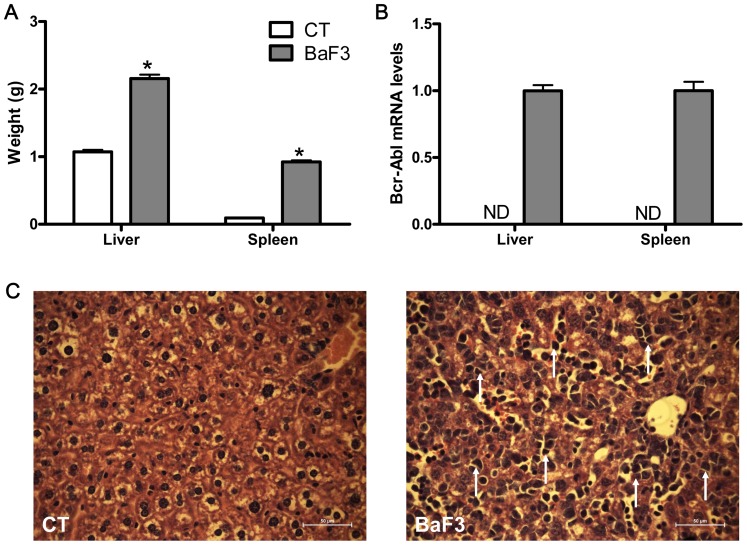
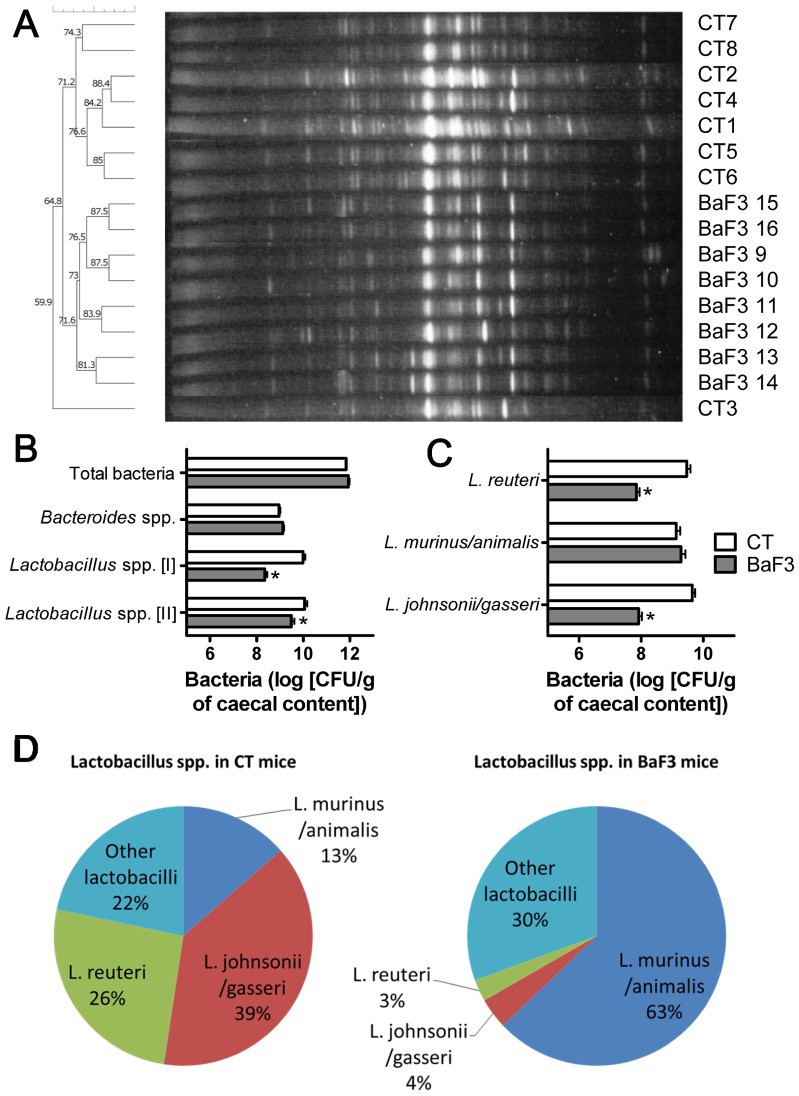
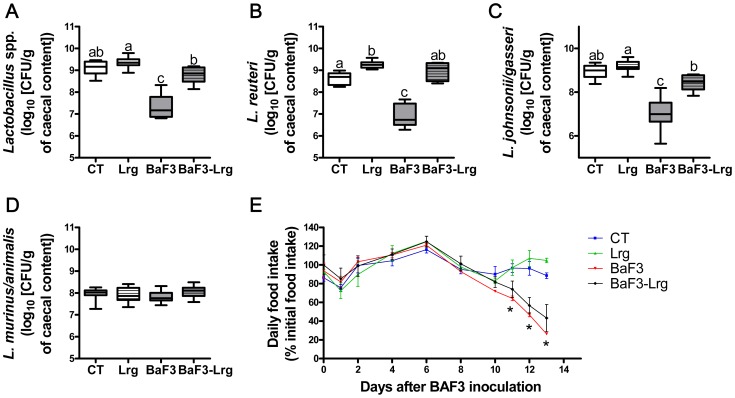
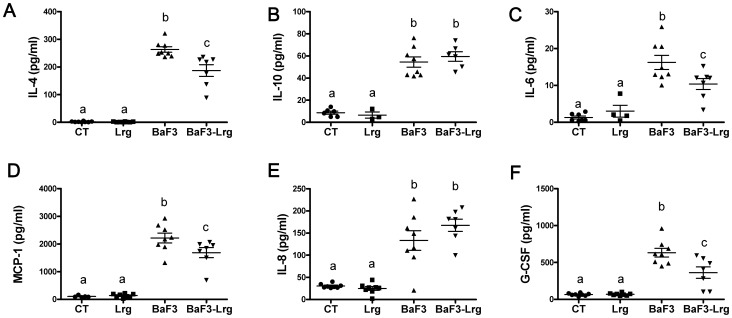
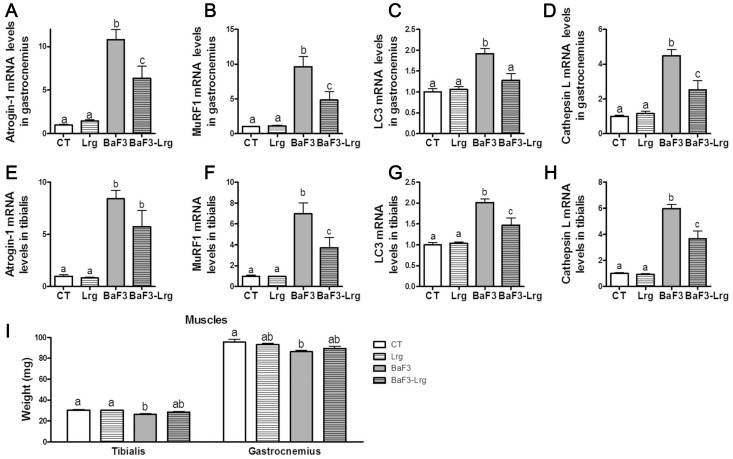
The gut microbiota has recently been proposed as a novel component in the regulation of host homeostasis and immunity. We have assessed for the first time the role of the gut microbiota in a mouse model of leukemia (transplantation of BaF3 cells containing ectopic expression of Bcr-Abl), characterized at the final stage by a loss of fat mass, muscle atrophy, anorexia and inflammation. The gut microbial 16S rDNA analysis, using PCR-Denaturating Gradient Gel Electrophoresis and quantitative PCR, reveals a dysbiosis and a selective modulation of Lactobacillus spp. (decrease of L. reuteri and L. johnsonii/gasseri in favor of L. murinus/animalis) in the BaF3 mice compared to the controls. The restoration of Lactobacillus species by oral supplementation with L. reuteri 100-23 and L. gasseri 311476 reduced the expression of atrophy markers (Atrogin-1, MuRF1, LC3, Cathepsin L) in the gastrocnemius and in the tibialis, a phenomenon correlated with a decrease of inflammatory cytokines (interleukin-6, monocyte chemoattractant protein-1, interleukin-4, granulocyte colony-stimulating factor, quantified by multiplex immuno-assay). These positive effects are strain- and/or species-specific since L. acidophilus NCFM supplementation does not impact on muscle atrophy markers and systemic inflammation. Altogether, these results suggest that the gut microbiota could constitute a novel therapeutic target in the management of leukemia-associated inflammation and related disorders in the muscle.
Overview
The claims and statistics of this paper haven’t been checked yet.
Free: it reads the open-access text and checks the first 5 claims that cite a source we can check. Create a free account to check every claim.
Integrity signals
Registry
Cites
Statistics
Figures
Verification
Claims the paper makes
The claims and statistics of this paper haven’t been checked yet.
Free: it reads the open-access text and checks the first 5 claims that cite a source we can check. Create a free account to check every claim.
Claims other papers make about this one
Each is checked against this paper’s own text: does it say what the citing paper says it does?
The source backs part of the claim, not all of it — or backs it for a different population, condition or comparison.
In the citing paper
“the administration of probiotics or butyrate to mouse models of muscle wasting has been associated with improved muscle mass”
From Gut Microbiota, Muscle Mass and Function in Aging: A Focus on Physical Frailty and Sarcopenia (2019) · cites this paper as [67]
Experimental — accuracy not yet measuredThe source backs part of the claim, not all of it — or backs it for a different population, condition or comparison.
In the citing paper
“probiotic rescue (Lactobacillus reuteri and gasseri) of inflammation and muscle/bone loss in mice proposes that gut microbiota initiate this relationship [19, 67, 89].”
From Gut Microbiota Contribute to Age-Related Changes in Skeletal Muscle Size, Composition, and Function: Biological Basis for a Gut-Muscle Axis (2018) · cites this paper as [19]
Experimental — accuracy not yet measuredThe cited source says what the claim attributes to it.
In the citing paper
“associations between gut ecology and cancer [16], cardiovascular disease [17], obesity [6], diabetes [18], and muscle wasting [19]”
From Gut Microbiota Contribute to Age-Related Changes in Skeletal Muscle Size, Composition, and Function: Biological Basis for a Gut-Muscle Axis (2018) · cites this paper as [19]
The cited source says what the claim attributes to it.
In the citing paper
“the leukemic mice were given an oral probiotic containing Lactobacillus reuteri and L. gasseri that appeared to decrease serum levels of inflammatory cytokines (IL-6 and MCP-1) and atrogene expression (MuRF1 and Atrogin-1) in conjunction with an increase in mass of the tibialis anterior.”
From Gut Microbiota Contribute to Age-Related Changes in Skeletal Muscle Size, Composition, and Function: Biological Basis for a Gut-Muscle Axis (2018) · cites this paper as [19]
In the citing paper
“In a mouse model of leukemia, the administration of a probiotic blend containing several Lactobacilli was associated with reduced inflammation and reduced levels of atrogin-1 and other muscle atrophy markers [67].”
From Gut Microbiota, Muscle Mass and Function in Aging: A Focus on Physical Frailty and Sarcopenia (2019) · cites this paper as [67]
4 more claims about this paper
Create a free account to see every claim other papers make about this one.
Self-check
Percentages, sums and reported differences re-computed from the paper’s own numbers.
The self-check needs the paper’s full text.
Citations
Cites
An obesity-associated gut microbiome with increased capacity for energy harvest
Turnbaugh, P. J., Ley, R. E., Mahowald, M. A., Magrini, V., Mardis, E. R., & Gordon, J. I. (2006) · Nature · doi:10.1038/nature05414 · Cited by 12,444 · cited 1×
“through the fermentation products and the inhibition of the fasting induced adipose factor [18–22].”
Muyzer, G., de Waal, E. C., & Uitterlinden, A. G. (1993) · Applied and Environmental Microbiology · doi:10.1128/aem.59.3.695-700.1993 · Cited by 11,429 · cited 1×
“Denaturing Gradient Gel Electrophoresis (DGGE) was performed on the total bacteria amplicons that were generated with primers targeting the V3 region of bacterial 16S rRNA gene [27].”
The gut microbiota as an environmental factor that regulates fat storage
Bäckhed, F., Ding, H., Wang, T., Hooper, L. V., Koh, G. Y., Nagy, A., Semenkovich, C. F., & Gordon, J. I. (2004) · Proceedings of the National Academy of Sciences · doi:10.1073/pnas.0407076101 · Cited by 6,245 · cited 1×
“through the fermentation products and the inhibition of the fasting induced adipose factor [18–22].”
(2016) · Repository@Hull (Worktribe) (University of Hull) · doi:10.1111/j.1365 · Cited by 5,304
The gut microbiota shapes intestinal immune responses during health and disease
Round, J. L., & Mazmanian, S. K. (2009) · Nature Reviews Immunology · doi:10.1038/nri2515 · Cited by 5,029
Identification of ubiquitin ligases required for skeletal muscle atrophy.
Bodine, S. C., Latres, E., Baumhueter, S., Lai, V. K.-M., Nunez, L., Clarke, B. A., Poueymirou, W. T., Panaro, F. J., Na, E., Dharmarajan, K., et al. (2001) · Science · doi:10.1126/science.1065874 · Cited by 3,521 · cited 2×
“These markers are therefore considered as potential drug targets for the treatment of muscle atrophy [7].”
Mechanisms underlying the resistance to diet-induced obesity in germ-free mice
Bäckhed, F., Manchester, J. K., Semenkovich, C. F., & Gordon, J. I. (2007) · Proceedings of the National Academy of Sciences · doi:10.1073/pnas.0605374104 · Cited by 2,615 · cited 1×
“also reported an increased AMPK activity in the muscle of germ-free animals [21].”
Cani, P. D., Possemiers, S., Van de Wiele, T., Guiot, Y., Everard, A., Rottier, O., Geurts, L., Naslain, D., Neyrinck, A., Lambert, D. M., et al. (2009) · Gut · doi:10.1136/gut.2008.165886 · Cited by 2,518 · cited 1×
“Lipopolysaccharides (LPS) are pro-inflammatory compounds of bacterial origin [48].”
Self-citationPrognostic effect of weight loss prior tochemotherapy in cancer patients
Dewys, W. D., Begg, C., Lavin, P. T., Band, P. R., Bennett, J. M., Bertino, J. R., Cohen, M. H., Douglass, H. O., Engstrom, P. F., Ezdinli, E. Z., et al. (1980) · The American Journal of Medicine · doi:10.1016/s0149-2918(05)80001-3 · Cited by 2,354 · cited 1×
“39% of patients with acute non lymphocytic leukemia experience weight loss in the six month-period preceding chemotherapy [3].”
Atrogin-1, a muscle-specific F-box protein highly expressed during muscle atrophy
Gomes, M. D., Lecker, S. H., Jagoe, R. T., Navon, A., & Goldberg, A. L. (2001) · Proceedings of the National Academy of Sciences · doi:10.1073/pnas.251541198 · Cited by 1,774 · cited 1×
“We thus concluded, in accordance with previously reported in vivo kinetics [8,30], that Atrogin-1, MuRF1, LC3 and Cathepsin L are valuable early markers of muscle atrophy in this mouse model of leukemia.”
Cited by
Items 101–200 of 296
Chen, S., Zhang, P., Duan, H., Wang, J., Qiu, Y., Cui, Z., Yin, Y., Wan, D., & Xie, L. (2023) · The Innovation · doi:10.1016/j.xinn.2023.100479 · Cited by 53
Prevotella copri alleviates sarcopenia via attenuating muscle mass loss and function decline
Liu, X., Wu, J., Tang, J., Xu, Z., Zhou, B., Liu, Y., Hu, F., Zhang, G., Cheng, R., Xia, X., et al. (2023) · Journal of Cachexia Sarcopenia and Muscle · doi:10.1002/jcsm.13313 · Cited by 45
Leucine Supplementation in Cancer Cachexia: Mechanisms and a Review of the Pre-Clinical Literature
Beaudry, A. G., & Law, M. L. (2022) · Nutrients · doi:10.3390/nu14142824 · Cited by 46
Cancer-Associated Cachexia: A Systemic Consequence of Cancer Progression
Biswas, A., & Acharyya, S. (2019) · Annual Review of Cancer Biology · doi:10.1146/annurev-cancerbio-030419-033642 · Cited by 47
“In addition, reduced muscle atrophy was observed in a mouse model of acute leukemia that was given oral supplementation with L. reuteri and L. gasseri,which correlated with decreased circulating proinflammatory cytokine levels (Bindels et al. 2012).”
BackgroundSarcopenia in Children with Solid Organ Tumors: An Instrumental Era
Ritz, A., Lurz, E., & Berger, M. (2022) · Cells · doi:10.3390/cells11081278 · Cited by 45
“When lactobacilli were given to mice with cancer cachexia, muscle atrophy was reversed [92,95].”
BackgroundRole of the Gut Microbiome in Skeletal Muscle Physiology and Pathophysiology
Lefevre, C., & Bindels, L. B. (2022) · Current Osteoporosis Reports · doi:10.1007/s11914-022-00752-9 · Cited by 43
Self-citationGut microbiota in common elderly diseases affecting activities of daily living
Shimizu, Y. (2018) · World Journal of Gastroenterology · doi:10.3748/wjg.v24.i42.4750 · Cited by 40
Frailty syndrome: A target for functional nutrients?
Davinelli, S., Corbi, G., & Scapagnini, G. (2021) · Mechanisms of Ageing and Development · doi:10.1016/j.mad.2021.111441 · Cited by 42
Chen, S., Huang, L., Liu, B., Duan, H., Li, Z., Liu, Y., Li, H., Fu, X., Lin, J., Xu, Y., et al. (2023) · Science China Life Sciences · doi:10.1007/s11427-023-2400-3 · Cited by 37
“L . reuteri has been shown to participate in repairing the intestinal mucosal layer, decreasing systemic inflammation and muscle atrophy markers, and inhibiting cachexia (Bindels et al., 2012; Varian et al., 2016).”
The Microbiota in Hematologic Malignancies
Song, Y., Himmel, B., Öhrmalm, L., & Gyarmati, P. (2020) · Current Treatment Options in Oncology · doi:10.1007/s11864-019-0693-7 · Cited by 38
Zhang, J., Yu, Y., & Wang, J. (2020) · Journal of Agricultural and Food Chemistry · doi:10.1021/acs.jafc.0c00688 · Cited by 40
Morella, I., Negro, M., Dossena, M., Brambilla, R., & D’Antona, G. (2023) · Neuropharmacology · doi:10.1016/j.neuropharm.2023.109718 · Cited by 37
“These effects were supposed to be mediated by inhibited proteolysis (Bindels et al., 2012) and increased protein synthesis with enhanced phosphorylation of protein kinase B (also known as AKT) and mammalian target of rapamycin (mTOR) (An et al., 2019).”
Ichim, T. E., Kesari, S., & Shafer, K. (2018) · Oncotarget · doi:10.18632/oncotarget.25778 · Cited by 41
“Measurement of IL-6 was performed as known pro-inflammatory signature of LPS-stimulated macrophages, and also of colonic mucosal cells [36, 37].”
BackgroundInfluentialBian, Y., Chen, X., Cao, H., Xie, D., Zhu, M., Yuan, N., Lu, L., Lu, B., Wu, C., Azami, N. L. B., et al. (2021) · Chinese Medicine · doi:10.1186/s13020-021-00529-9 · Cited by 40
“However, some studies found the relative abundance of Parabacteroides are increased in heart diseases [46], leukemia [47, 48] and early hepatocellular carcinoma [49].”
Targeting Gut Microbiota in Cancer Cachexia: Towards New Treatment Options
Panebianco, C., Villani, A., Potenza, A., Favaro, E., Finocchiaro, C., Perri, F., & Pazienza, V. (2023) · International Journal of Molecular Sciences · doi:10.3390/ijms24031849 · Cited by 37
“However, it was assumed that the positive effects obtained could be species-specific since, in the same study, these effects were not demonstrated for Lactobacillus acidophilus [34].”
BackgroundResultInfluentialEvolving Roles of Probiotics in Cancer Prophylaxis and Therapy
Patel, S. V., & Goyal, A. (2013) · Probiotics and Antimicrobial Proteins · doi:10.1007/s12602-012-9124-9 · Cited by 39
“[6] also reported that probiotics can moderate the adverse effects of leukemia.”
BackgroundFoubert, A., Lecomte, F., Legendre, P., & Cusson, M. (2017) · Hydrobiologia · doi:10.1007/s10750-017-3457-z · Cited by 36
Behroozmand, R., Sangtian, S., Korzyukov, O., & Larson, C. R. (2016) · Brain Research · doi:10.1016/j.brainres.2016.01.040 · Cited by 32
Gut-muscle axis and sepsis-induced myopathy: The potential role of gut microbiota
Liu, Y., Xu, L., Yang, Z., Wang, D., Li, T., Yang, F., Li, Z., Bai, X., & Wang, Y.-C. (2023) · Biomedicine & Pharmacotherapy · doi:10.1016/j.biopha.2023.114837 · Cited by 34
Marullo, A. L., & O’Halloran, K. D. (2023) · Experimental Physiology · doi:10.1113/ep091063 · Cited by 35
“Oral supplementationofspecifictypesoflactobacillihasalsobeenshownto mitigate muscle wasting in leukaemia mouse models, reducing atrophy marker expression and inflammation (Bindels et al., 2012), which may translate to muscular dystrophy.”
BackgroundEffects of ferulic acid on muscle development and intestinal microbiota of zebrafish
Yin, X., Liu, W., Chen, H. H., Qi, C., Chen, H., Niu, H., Yang, J., Kwok, K. W. H., & Dong, W. (2021) · Journal of Animal Physiology and Animal Nutrition · doi:10.1111/jpn.13631 · Cited by 35
Pötgens, S. A., Havelange, V., Lecop, S., Li, F., Neyrinck, A. M., Bindels, F., Neveux, N., Demoulin, J., Moors, I., Kerre, T. C. C., et al. (2024) · Haematologica · doi:10.3324/haematol.2023.284138 · Cited by 33
“16,17 Cachexia is a multifactorial systemic syndrome characterized by substantial weight loss (coming from atrophy of the skeletal muscle and adipose tissue), often accompanied by anorexia, muscle weakness, insulin resistance, and inflammation, which occurs in approximately 50-80% of patients with…”
BackgroundSelf-citationBoisseau, N., Barnich, N., & Koechlin‐Ramonatxo, C. (2022) · Nutrients · doi:10.3390/nu14050924 · Cited by 37
“Supplementation also reduced lysosomal autophagy, involved in muscle breakdown, via protein 1A/1B-light chain 3 (LC3) downregulation [144].”
BackgroundPötgens, S. A., Lecop, S., Havelange, V., Li, F., Neyrinck, A. M., Neveux, N., Maertens, J. A., Walter, J., Schoemans, H. M., Delzenne, N. M., et al. (2023) · Clinical Nutrition · doi:10.1016/j.clnu.2023.09.021 · Cited by 33
“…that counter-acting gut microbiota alterations using rationally selected pre-and probiotics was able to improve cachectic features in leukemic mice [25 e 27], we aimed to explore the associations between gut microbiome alterations and cachectic features in AML patients using a multi -omics…”
BackgroundSelf-citationExploring the Relationship Between Gut Microbiota and Sarcopenia Based on Gut–Muscle Axis
Li, W., Sheng, R., Cao, M., & Rui, Y. (2024) · Food Science & Nutrition · doi:10.1002/fsn3.4550 · Cited by 36
Dong, J., Gao, H.-L., Wang, W., Yu, X., & Liu, L. (2020) · Biochimica et Biophysica Acta (BBA) - Reviews on Cancer · doi:10.1016/j.bbcan.2020.188484 · Cited by 31
Targeting the Gut Microbiota to Improve Dietary Protein Efficacy to Mitigate Sarcopenia
Castro, E. D. M., Murphy, C. H., & Roche, H. M. (2021) · Frontiers in Nutrition · doi:10.3389/fnut.2021.656730 · Cited by 33
“Oral probiotic supplementation (Lactobacillus reuteri and Lactobacillus gasseri, but not Lactobacillus acidophilus) restored gut microbiota health from a baseline status of dysbiosis, reduced serum levels of pro-inflammatory cytokines, and increased muscle mass (66).”
BackgroundCardiac Cachexia: Unaddressed Aspect in Cancer Patients
Saha, S., Singh, P. K., Roy, P., & Kakar, S. S. (2022) · Cells · doi:10.3390/cells11060990 · Cited by 33
Antiulcerogenic activity of Carica papaya seed in rats
Pinto, L. A., Cordeiro, K. W., Carrasco, V., Carollo, C. A., Cardoso, C. A. L., Sanjinez‐Argandoña, E. J., & Freitas, K. D. C. (2014) · Naunyn-Schmiedeberg s Archives of Pharmacology · doi:10.1007/s00210-014-1069-y · Cited by 31
Thibaut, M. M., Roumain, M., Piron, E., Gillard, J., Loriot, A. E., Neyrinck, A. M., Rodriguez, J., Massart, I. S., Thissen, J., Huot, J. R., et al. (2025) · Gut Microbes · doi:10.1080/19490976.2025.2449586 · Cited by 30
Self-citationProbiotics and muscle health: the impact of Lactobacillus on sarcopenia through the gut-muscle axis
Zhu, J., Peng, F., Yang, H., Luo, J., Zhang, L., Chen, X., Liao, H., Lei, H., Liu, S., Yang, T., et al. (2025) · Frontiers in Microbiology · doi:10.3389/fmicb.2025.1559119 · Cited by 38
Unlocking the wasting enigma: Highlights from the 8th Cachexia Conference
Ebner, N., & von Haehling, S. (2016) · Journal of Cachexia Sarcopenia and Muscle · doi:10.1002/jcsm.12106 · Cited by 31
“expression in the gastrocnemius muscle (Atrogin-1, MurF1, LC3 and Cathepsin L).(9) Moreover, they impressively demonstrated that cancer cachexia was associated with profound alterations of the gut microbiota in two animal models.”
BackgroundCrosstalk between gut microbiota and osteoarthritis: A critical view
Korotkyi, O., Kyriachenko, Y., Kobyliak, N. M., Falalyeyeva, T. M., & Остапченко, Л. І. (2020) · Journal of Functional Foods · doi:10.1016/j.jff.2020.103904 · Cited by 31
Selective enrichment of commensal gut bacteria protects againstCitrobacter rodentium-induced colitis
Vong, L., Pinnell, L. J., Määttänen, P., Yeung, C. W., Lurz, E., & Sherman, P. M. (2015) · American Journal of Physiology-Gastrointestinal and Liver Physiology · doi:10.1152/ajpgi.00053.2015 · Cited by 32
Roy, S., Bahmani, A. H. A., Davids, M., Herrema, H., & Nieuwdorp, M. (2025) · Microorganisms · doi:10.3390/microorganisms13061356 · Cited by 29
“Similar results were seen in a previous study by Bindels et al. in using ITFs in the BaF3 liver cancer model, although not specifically cachexia, suggesting that propionate might be responsible for the anti-tumor effect, although they found no direct correlation to the anti-inflammatory effect [45].”
Ren, G., Zhang, J., Li, M., Yi, S., Xie, J., Zhang, H., & Wang, J. (2017) · Nutrition Research · doi:10.1016/j.nutres.2017.08.002 · Cited by 29
Lapauw, L., Rutten, A., Dupont, J., Amini, N., Vercauteren, L., Derrien, M., Raes, J., & Gielen, E. (2024) · Journal of Cachexia Sarcopenia and Muscle · doi:10.1002/jcsm.13569 · Cited by 56
Ali, A. M., & Kunugi, H. (2021) · BioMed · doi:10.3390/biomed1010002 · Cited by 35
“acidophilus exhibited no effect on markers of inflammation or atrophy in cachexic mice [161].”
BackgroundMetabolomics and its Applications in Cancer Cachexia
Cui, P., Li, X., Huang, C., Li, Q., & Lin, D. (2022) · Frontiers in Molecular Biosciences · doi:10.3389/fmolb.2022.789889 · Cited by 29
Deng, Y., Zhao, L., Huang, X., Zeng, Y., Xiong, Z., & Zuo, M. (2022) · Nutrition · doi:10.1016/j.nut.2022.111829 · Cited by 31
The Role of Microbiota in Pancreatic Cancer
Papa, V., Schepis, T., Coppola, G., Chiappetta, M. F., Vecchio, L. E. D., Rozera, T., Quero, G., Gasbarrini, A., Alfieri, S., & Papa, A. (2023) · Cancers · doi:10.3390/cancers15123143 · Cited by 28
Wu, J., Zhang, R., Yin, Z., Chen, X., Mao, R., Zheng, X., Yuan, M., Li, H., Lu, Y., Liu, S., et al. (2024) · Pharmacological Research · doi:10.1016/j.phrs.2024.107476 · Cited by 28
Obermüller, B., Singer, G., Kienesberger, B., Klymiuk, I., Sperl, D., Stadlbauer, V., Horvath, A., Miekisch, W., Gierschner, P., Grabherr, R. M., et al. (2020) · Nutrients · doi:10.3390/nu12072029 · Cited by 28
“Alterations of the intestinal microbiome, especially decreased levels of Lactobacillus, have already been demonstrated in animal models of TAC [8,11].”
BackgroundFood, Nutrition, Physical Activity and Microbiota: Which Impact on Lung Cancer?
Nigro, E., Perrotta, F., Scialò, F., D’Agnano, V., Mallardo, M., Bianco, A., & Daniele, A. (2021) · International Journal of Environmental Research and Public Health · doi:10.3390/ijerph18052399 · Cited by 28
Acetate and succinate benefit host muscle energetics as exercise‐associated post‐biotics
Ismaeel, A., Valentino, T. R., Burke, B. I., Goh, J. Z., Saliu, T. P., Albathi, F. A., Owen, A. M., McCarthy, J. J., & Wen, Y. (2023) · Physiological Reports · doi:10.14814/phy2.15848 · Cited by 28
Meier, G., Brown, J. F., Evelsizer, R. J., & Vogelmann, J. E. (2014) · Ecological Indicators · doi:10.1016/j.ecolind.2014.05.033 · Cited by 26
Genton, L., Lazarević, V., Stojanović, O., Spiljar, M., Djaafar, S., Koessler, T., Dutoit, V., Gaïa, N., Mareschal, J., Macpherson, A. J., et al. (2021) · Frontiers in Cellular and Infection Microbiology · doi:10.3389/fcimb.2021.752889 · Cited by 25
“…with muscle wasting, we could hypothesize that microbiota may stimulate fat wasting by mechanisms involving pro-inflammatory cytokines, pathogen-associated molecular patterns, as lipopolysaccharides, or microbial metabolites as short-chain fatty acids or bile acids (Bindels and Delzenne, 2013).”
BackgroundLi, W., Han, L., Yu, P., Ma, C., Wu, X., Moore, J. E., & Xu, J. (2014) · Microbial Ecology · doi:10.1007/s00248-013-0345-6 · Cited by 27
Nutrition in cancer patients with cachexia: A role for the gut microbiota?
Bindels, L. B., & Thissen, J.-P. (2015) · Clinical Nutrition Experimental · doi:10.1016/j.yclnex.2015.11.001 · Cited by 27
“In a first article, we showed that administration of a mixture of Lactobacillus reuteri 100-23 and Lactobacillus gasseri 311476 to leukaemic mice with cachexia restored the levels of these bacteria in the caecum, reduced inflammation in the plasma and partially counteracted the induction of atrophy markers in muscle […”
BackgroundSelf-citationYang, C., Wang, M., Tang, X., Yang, H., Li, F., Wang, Y., Li, J., & Yin, Y. (2021) · Frontiers in Microbiology · doi:10.3389/fmicb.2021.693839 · Cited by 26
Nutritional Mechanisms of Cancer Cachexia
Compton, S. L. E., Heymsfield, S. B., & Brown, J. C. (2024) · Annual Review of Nutrition · doi:10.1146/annurev-nutr-062122-015646 · Cited by 26
Parment, R., Dubois, M., Desrues, L., Mutel, A., Dembélé, K.-P., Belin, N., Tron, L., Guérin, C., Coëffier, M., Compère, V., et al. (2022) · Cancers · doi:10.3390/cancers14184403 · Cited by 25
Álvarez‐Herms, J., González, A., Corbi, F., Odriozola, I., & Odriozola, A. (2023) · AIMS Public Health · doi:10.3934/publichealth.2023049 · Cited by 25
In vivo monitoring of Y ersinia ruckeri in fish tissues: progression and virulence gene expression
Méndez, J., & Guijarro, J. A. (2012) · Environmental Microbiology Reports · doi:10.1111/1758-2229.12030 · Cited by 23
Authier, H., Salon, M., Rahabi, M. C., Bertrand, B., Blondeau, C., Kuylle, S., Holowacz, S., & Coste, A. (2021) · Journal of Fungi · doi:10.3390/jof7010057 · Cited by 23
Du, H., Zhu, J., Chen, J., Zhou, H., Yang, J., & Wan, H. (2021) · Aging · doi:10.18632/aging.203098 · Cited by 23
“In addition, lipopolysaccharides cause inflammatory effects and are also pro-inflammatory compounds of bacterial origin [27].”
BackgroundGavryushina, I. A., Георгиева, М. Л., Kuvarina, A. E., & Sadykova, V. S. (2021) · Applied Biochemistry and Microbiology · doi:10.1134/s0003683821050070 · Cited by 22
Castellani, C., Singer, G., Kaiser, M., Kaiser, T., Huang, J., Sperl, D., Kashofer, K., Fauler, G., Guertl‐Lackner, B., Höfler, G., et al. (2017) · Pediatric Blood & Cancer · doi:10.1002/pbc.26425 · Cited by 22
Head and Neck Cancer and Sarcopenia: An Integrative Clinical and Functional Review
Endo, K., Ichinose, M., Kobayashi, E., Ueno, T., Hirai, N., Nakanishi, Y., Kondo, S., & Yoshizaki, T. (2024) · Cancers · doi:10.3390/cancers16203460 · Cited by 24
“Supplementation with Lactobacillus reduced muscle atrophy in mice, and a symbiotic intervention involving insulin-type fructans and Lactobacillus reuteri attenuated muscle wasting and prolonged survival in tumor-bearing mice [119,120].”
BackgroundInvolvement of the gut microbiota in cancer cachexia
VanderVeen, B. N., Cardaci, T. D., Bullard, B. M., Madden, M., Li, J., Velázquez, K. T., Kubinak, J. L., Fan, D., & Murphy, E. A. (2024) · American Journal of Physiology-Cell Physiology · doi:10.1152/ajpcell.00327.2024 · Cited by 23
Therapeutic Aspects of Probiotics and Prebiotics
Ahmad, A., & Khalid, S. (2018) · Elsevier eBooks · doi:10.1016/b978-0-12-811440-7.00003-x · Cited by 26
Lactobacillus curvatus CP2998 Prevents Dexamethasone-Induced Muscle Atrophy in C2C12 Myotubes
KATSUKI, R., SAKATA, S., Nakao, R., Oishi, K., & Nakamura, Y. (2019) · Journal of Nutritional Science and Vitaminology · doi:10.3177/jnsv.65.455 · Cited by 23
Liver X Receptor Activation Impairs Neutrophil Functions and Aggravates Sepsis
Souto, F. O., Castanheira, F. V. S., Trevelin, S. C., Lima, B. H. F., Cebinelli, G. C. M., Turato, W. M., Auxiliadora‐Martins, M., Basile-Filho, A., Alves-Filho, J. C., & Cunha, F. Q. (2019) · The Journal of Infectious Diseases · doi:10.1093/infdis/jiz635 · Cited by 22
Marked Increased Production of Acute Phase Reactants by Skeletal Muscle during Cancer Cachexia
Massart, I. S., Paulissen, G., Loumaye, A., Lause, P., Pötgens, S. A., Thibaut, M. M., Balan, E., Deldicque, L., Atfi, A., Louis, E. J., et al. (2020) · Cancers · doi:10.3390/cancers12113221 · Cited by 21
“Consistent with our results in C26 mice, we observed increased mRNA levels for the selected proteins in muscles originated from BaF3 (Figure 4B) and KP53 (Figure 4C) cachectic mice [19,20].”
MethodResultSelf-citationFungal Dysbiosis Correlates with the Development of Tumor-Induced Cachexia in Mice
Jabes, D. L., de Maria, Y. N. L. F., Barbosa, D. A., Santos, K. B., de Carvalho, L. M., Humberto, A. C., Alencar, V. C., de Oliveira, R. C., Júnior, M. L. B., Menegidio, F., et al. (2020) · Journal of Fungi · doi:10.3390/jof6040364 · Cited by 22
Wang, L., Meng, F., Jin, Y., Wu, L., Tang, R.-Y., Xu, K., Guo, Y., Mao, J.-J., Ding, J.-P., & Li, J. (2024) · Journal of Exercise Science & Fitness · doi:10.1016/j.jesf.2024.04.004 · Cited by 22
“56,57 Buigues et al. 58 found that 13-week probiotic mixture supplementation increased endurance and muscle strength in the elderly.”
BackgroundSong, Q., Zhu, Y., Liu, X., Liu, H., Zhao, X., Xue, L., Yang, S., Wang, Y., & Liu, X. (2024) · Frontiers in Nutrition · doi:10.3389/fnut.2024.1429242 · Cited by 20
“Studies have shown that oral probiotic supplements containing Lactobacillus Roche and Lactobacillus galaei reduce serum levels of pro-inflammatory cytokines and improve muscle mass (91).”
BackgroundGiron, M., Thomas, M., Jarzaguet, M., Mayeur, C., Ferrere, G., Noordine, M.-L., Bornes, S., Dardevet, D. P., Chassard, C., & Savary‐Auzeloux, I. (2022) · Frontiers in Nutrition · doi:10.3389/fnut.2022.928798 · Cited by 20
“This difference probably arises from the fact that such studies used models simulating situations of dramatic inflammation, such as cancer cachexia (81, 82).”
BackgroundRelevance of Dietary Supplement Use in Gastrointestinal-Cancer-Associated Cachexia
Yoon, S. L., & Grundmann, O. (2023) · Nutrients · doi:10.3390/nu15153391 · Cited by 19
Insight into the Role of Gut Microbiota in Duchenne Muscular Dystrophy
Jollet, M., Mariadassou, M., Rué, O., Pessemesse, L., Ollendorff, V., Ramdani, S., Vernus, B., Bonnieu, A., Bertrand‐Gaday, C., Goustard, B., et al. (2023) · American Journal Of Pathology · doi:10.1016/j.ajpath.2023.10.010 · Cited by 20
“However, in the absence of a curative treatment, prevention of secondary processes that exacerbate DMD pathophysiology and offer improvement in the patients ’ quality of life are a priority.”
BackgroundMicrobiota changes in a pediatric acute lymphocytic leukemia mouse model
Song, Y., & Gyarmati, P. (2019) · MicrobiologyOpen · doi:10.1002/mbo3.982 · Cited by 18
“In addition, there was an elevation of Lactobacilli in controls compared to leukemic feces in our study, which was also demonstrated in a different ALL mouse model system using denaturing gradient gel electrophoresis (Bindels et al., 2012).”
ResultHandajani, Y. S., Turana, Y., Hengky, A., Hamid, G., Schröder‐Butterfill, E., & Kristian, K. (2024) · Frontiers in Aging · doi:10.3389/fragi.2024.1307762 · Cited by 19
van de Vorst, R., & Gracco, V. L. (2017) · Journal of Fluency Disorders · doi:10.1016/j.jfludis.2017.05.004 · Cited by 18
Authier, H., Bardot, V., Berthomier, L., Bertrand, B., Blondeau, C., Holowacz, S., & Coste, A. (2022) · Microbiology Spectrum · doi:10.1128/spectrum.02355-21 · Cited by 19
Seifi, N., Rezvani, R., Sedaghat, A., Nematy, M., Khadem‐Rezaiyan, M., & Safarian, M. (2022) · Trials · doi:10.1186/s13063-022-06668-0 · Cited by 18
Han, D., Walsh, M. C., Kim, K. S., Hong, S., Lee, J., Yi, J., Rivas, G., Surh, C. D., & Choi, Y. (2015) · PLoS ONE · doi:10.1371/journal.pone.0118795 · Cited by 17
“Lactobacillus species have been well known to possess antiinflammatory properties in the context of commensal microbiota homeostasis of the large intestine [16], and have been employed in the prevention of inflammatory bowel disease [17,18].”
Dai, X.-C., Zhang, Y., Huang, Y., Wu, X., Fang, Y., Gao, Y., & Wang, F. (2022) · Experimental and Therapeutic Medicine · doi:10.3892/etm.2022.11758 · Cited by 16
“Previous research has identified that oral preparations containing Lactobacillus strains restore intestinal barrier function and immune markers and decrease systemic inflammation and/or cancer progression (53,54).”
BackgroundTherapeutic strategies to modulate gut microbial health: Approaches for sarcopenia management.
Das, S., Preethi, B., Kushwaha, S., & Shrivastava, R. (2024) · PubMed · doi:10.14670/hh-18-730 · Cited by 16
Exploring the Gut Microbiota–Muscle Axis in Duchenne Muscular Dystrophy
Mostosi, D., Molinaro, M., Saccone, S., Torrente, Y., Villa, C., & Farini, A. (2024) · International Journal of Molecular Sciences · doi:10.3390/ijms25115589 · Cited by 17
“Normalizing the gut microbiota through oral probiotic supplementation reduced inflammation, autophagy, and proteolysis markers in muscles, preventing skeletal muscle inflammation and atrophy [56].”
BackgroundDeciphering Osteosarcopenia through the hallmarks of aging
Franulic, F., Salech, F., Rivas, D., & Duque, G. (2024) · Mechanisms of Ageing and Development · doi:10.1016/j.mad.2024.111997 · Cited by 19
“The beneficial effect of probiotics on muscle and bone function and mass has been extensively studied separately (Bindels et al., 2012; Chiang and Pan, 2011; Guo et al., 2022; Lee et al., 2021a; Lee et al., 2021b; Zhang et al., 2022), with few studies evaluating the effect on both tissues.”
BackgroundImpact of auditory feedback alterations in individuals with stuttering
Fiorin, M., Marconato, E., Palharini, T. A., Picoloto, L. A., Frizzo, A. C. F., Cardoso, A. C. V., & de Oliveira, C. M. C. (2019) · Brazilian Journal of Otorhinolaryngology · doi:10.1016/j.bjorl.2019.08.005 · Cited by 17
Attention Dynamics During Emotion Recognition by Deaf and Hearing Individuals
Krejtz, I., Krejtz, K., Wisiecka, K., Abramczyk, M., Olszanowski, M., & Duchowski, A. T. (2019) · The Journal of Deaf Studies and Deaf Education · doi:10.1093/deafed/enz036 · Cited by 18
Ren, Y., He, X., Wang, L., & Chen, N. (2025) · Frontiers in Cellular and Infection Microbiology · doi:10.3389/fcimb.2025.1480293 · Cited by 40
Pathological features of tissues and cell populations during cancer cachexia
Girolamo, D. D., & Tajbakhsh, S. (2022) · Cell Regeneration · doi:10.1186/s13619-022-00108-9 · Cited by 16
“Additionally, restoring the lactobacilli levels, through hexogen administration, counteracted muscle atrophy and decreased systemic inflammation in a mouse model of leukemia and cachexia (Bindels et al., 2012).”
BackgroundWu, S., Ou, C., Lee, M., Hsin, I., Kang, Y., Jan, M., & Ko, J. (2023) · Microbiology Spectrum · doi:10.1128/spectrum.03130-22 · Cited by 17
Yin, X., Lee, B., Zaragoza, J., & Marco, M. L. (2017) · Scientific Reports · doi:10.1038/s41598-017-07428-w · Cited by 15
Wang, B., Hu, W., Zhang, X., Cao, Y., Shao, L., Xu, X., & Liu, P. (2023) · Chinese Journal of Cancer Research · doi:10.21147/j.issn.1000-9604.2023.04.05 · Cited by 14
Zhang, J., Guo, J., Zhang, J., Liu, H., Zhou, L., Cheng, C., & Cao, H. (2025) · Frontiers in Immunology · doi:10.3389/fimmu.2025.1552525 · Cited by 14
Targeting the gut to prevent and counteract metabolic disorders and pathologies during aging
Milenković, D., Capel, F., Combaret, L., Comte, B., Dardevet, D. P., Evrard, B., Guillet, C., Monfoulet, L., Pinel, A., Polakof, S., et al. (2022) · Critical Reviews in Food Science and Nutrition · doi:10.1080/10408398.2022.2089870 · Cited by 16
“Reversing the dysbiosis with oral supplementation of the deficient Lactobacillus population reduced the expression of muscular atrophy markers and the plasma levels of pro-inflammatory cytokines (Bindels et al. 2012; Bindels et al. 2016).”
BackgroundKhan, U., Afsana, S., Kibtia, M., Hossain, M., Choudhury, N., & Ahsan, C. R. (2019) · The Journal of Infection in Developing Countries · doi:10.3855/jidc.10968 · Cited by 14
Silva-Sperb, A. S., Moraes, H. A., de Moura, B. C., Alves, B. C., Bertani, J. P. B., Azevedo, V. Z., & Dall’Alba, V. (2019) · Trials · doi:10.1186/s13063-019-3679-7 · Cited by 15
Oneda, E., Manno, A., Noventa, S., Libertini, M., Cherri, S., & Zaniboni, A. (2025) · Frontiers in Oncology · doi:10.3389/fonc.2025.1600425 · Cited by 13
Seifi, N., Safarian, M., Nematy, M., Rezvani, R., Khadem-Rezaian, M., & Sedaghat, A. (2020) · Trials · doi:10.1186/s13063-020-4136-3 · Cited by 13
Hes, C., & Jagoe, R. T. (2023) · BJC Reports · doi:10.1038/s44276-023-00008-8 · Cited by 16
“By contrast, weight-losing animals with acute leukaemia or colon cancer had lower abundance of Lactobacillus spp. versus controls [37, 38].”
BackgroundLi, S., Miao, X., Zhang, J.-S., Wei, D., Dong, H., Xue, R., Li, J.-C., Zhang, Y., Feng, X., Li, J., et al. (2024) · Scientific Reports · doi:10.1038/s41598-024-67220-5 · Cited by 13
Kaźmierczak-Siedlecka, K., Skonieczna‐Żydecka, K., Biliński, J., Roviello, G., Iannone, L. F., Atzeni, A., Sobocki, B. K., & Połom, K. (2021) · Cancers · doi:10.3390/cancers13184665 · Cited by 14
“What is worth pointing is that the administration of probiotics in colon cancer treated with irinotecan, indicated significant reduction of severity and incidence of the gastrointestinal toxicity [91,96].”
BackgroundProbiotics and Relationship Between Probiotics and Cancer Types
ŞENER, D., BULUT, H. N., & Bayır, A. G. (2021) · Bezmialem Science · doi:10.14235/bas.galenos.2021.5375 · Cited by 13
Microbiome dysbiosis and chemotherapy resistance in acute myeloid leukemia (AML)
Tian, M., Samarkhazan, H. S., Alemohammad, S. S., Fakhraei, M., Tavakoli, F., Shams, A., & Zeynalabadi, A. (2025) · npj Biofilms and Microbiomes · doi:10.1038/s41522-025-00891-8 · Cited by 11
“The restoration of Lactobacillus species as oral probiotics was effective in the management of leukemia-induced muscle atrophy in an acute leukemia mouse model 116 .”
Sarcopenia in chronic liver diseases: a translational overview
Barbero-Becerra, V. J., López-Méndez, I., Romo‐Araiza, A., Visag-Castillo, V., Chávez-Tapia, N. C., Uribe, M., & Juárez-Hernández, E. (2020) · Expert Review of Gastroenterology & Hepatology · doi:10.1080/17474124.2020.1757427 · Cited by 11
“reuteri to cachectic leukemic mice reduces levels of pro-inflammatory cytokines, such as IL-6, IL-4 and monocyte chemoattractant protein-1, as well as the induction of muscle atrophy markers such as atrogin-1, LC3, muscle ring-finger protein-1 (MuRF1) and cathepsin-L in gastrocnemius and tibialis muscles [24].”
BackgroundTelomere length in Agave tequilana Weber plants during the in vitro to ex vitro transition
Rescalvo-Morales, A., Monja-Mio, K. M., Robert, M. L., & Sánchez‐Teyer, L. F. (2018) · Plant Cell Tissue and Organ Culture (PCTOC) · doi:10.1007/s11240-018-1499-1 · Cited by 11
Metadata
- Authors
- Bindels, L. B., Beck, R., Schakman, O., Martin, J. C., De Backer, F., Sohet, F. M., Dewulf, E. M., Pachikian, B. D., Neyrinck, A. M., Thissen, J.-P., Verrax, J., Calderon, P. B., Pot, B., Grangette, C., Cani, P. D., Scott, K. P., & Delzenne, N. M.
- Affiliations
- UCLouvain (BE)
- University of Aberdeen (GB)
- Centre National de la Recherche Scientifique (FR)
- Corresponding author
- Delzenne, Nathalie M.
- ORCID
- Venue
- PLoS ONE
- Publisher
- Public Library of Science (PLoS)
- Published
- 2012-06-27
- Volume
- 7
- Issue
- 6
- Pages
- e37971
- ISSN
- 1932-6203 (ISSN-L)
- PMC
- PMC3384645
- OpenAlex
- W2105503795
- Cited by
- 278
- References
- 52
- Citations by year
- 2026: 9 · 2025: 21 · 2024: 27 · 2023: 31 · 2022: 29 · 2021: 32 · 2020: 31 · 2019: 24 · 2018: 17 · 2017: 17 · 2016: 6 · 2015: 11 · 2014: 13 · 2013: 6 · 2012: 4
- FWCI
- 16.69
- Type
- journal article
- Language
- en
- Open access
- gold
- doi.org
- Locations
- PLoS ONE (publishedVersion, cc-by)
- Europe PMC (PubMed Central) (publishedVersion, cc-by)
- PubMed Central (publishedVersion, cc-by)
- PubMed (publishedVersion)
- Aberdeen University Research Archive (Aberdeen University) (submittedVersion)
- Digital Access to Libraries (submittedVersion, other-oa)
- DOAJ (DOAJ: Directory of Open Access Journals) (submittedVersion)
- Figshare (submittedVersion, cc-by)
- VUBIR (Vrije Universiteit Brussel) (submittedVersion)
- Funders
- Rural and Environment Science and Analytical Services Division
- Scottish Government
- University of Aberdeen
- Fonds De La Recherche Scientifique - FNRS
- Topics
- Life Sciences › Agricultural and Biological Sciences › Food Science › Probiotics and Fermented Foods
- Life Sciences › Biochemistry, Genetics and Molecular Biology › Molecular Biology › Gut microbiota and health
- Health Sciences › Medicine › Physiology (medical) › Nutrition and Health in Aging
- Keywords
- gut microbiota, Lactobacillus, acute leukemia, BCR-ABL, muscle atrophy, inflammation, dysbiosis, Lactobacillus reuteri, Lactobacillus gasseri, Lactobacillus acidophilus, strain-specific effects, atrogin-1, MuRF1, interleukin-6, cytokines, gastrocnemius, tibialis, fat loss, anorexia, microbiota-based therapy
- MeSH terms
- Acute Disease, Animals, Cells, Cultured, Disease Models, Animal, Female, Inflammation, Lactobacillus, Leukemia, Experimental, Liver Neoplasms, Mice, Inbred BALB C, Muscular Atrophy, Splenic Neoplasms, Fusion Proteins, bcr-abl, Inflammation Mediators, Dietary Supplements, Gastrointestinal Tract, Mice, Precursor Cells, B-Lymphoid, Metagenome
About these checks
Registry, retraction, Cites and statistics results are computed, not judged, with one exception: a printed reference that no index lists is read once by a model before it counts as a citation error. Claims are extracted by a model and kept only when their quote appears verbatim in the text; each cited source is then checked, with a model’s help, for whether it says what the claim relies on. Those verdicts can be wrong — read the claim’s quote and the cited source before relying on one.
Statistics and arithmetic are recomputed, not judged.
Confidence bands are shown only for fields calibrated on our annotated test set. None is calibrated yet, so no band is shown.
What counts as a claim ›How we measure confidence ›How we check this ›
Are you an author, or do you see a problem with this page? Request a review
Data sources
Bibliographic data: Semantic Scholar, OpenAlex, Crossref.
Contains information from the Semantic Scholar Academic Graph Datasets, made available under the ODC Attribution License (ODC-BY 1.0).
Semantic Scholar’s data is described in: Kinney, R., et al. (2023). The Semantic Scholar Open Data Platform. arXiv:2301.10140.
