

Restoring Specific Lactobacilli Levels Decreases Inflammation and Muscle Atrophy Markers in an Acute Leukemia Mouse Model
Open accessThe DOI matches its Crossref record; 52 of the 53 references it cites were found in a registry or an index, and 1 are not checked yet.
Abstract
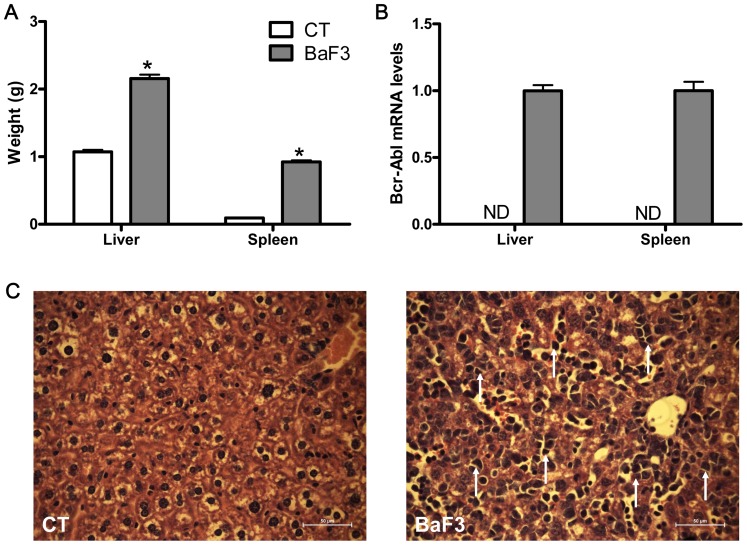
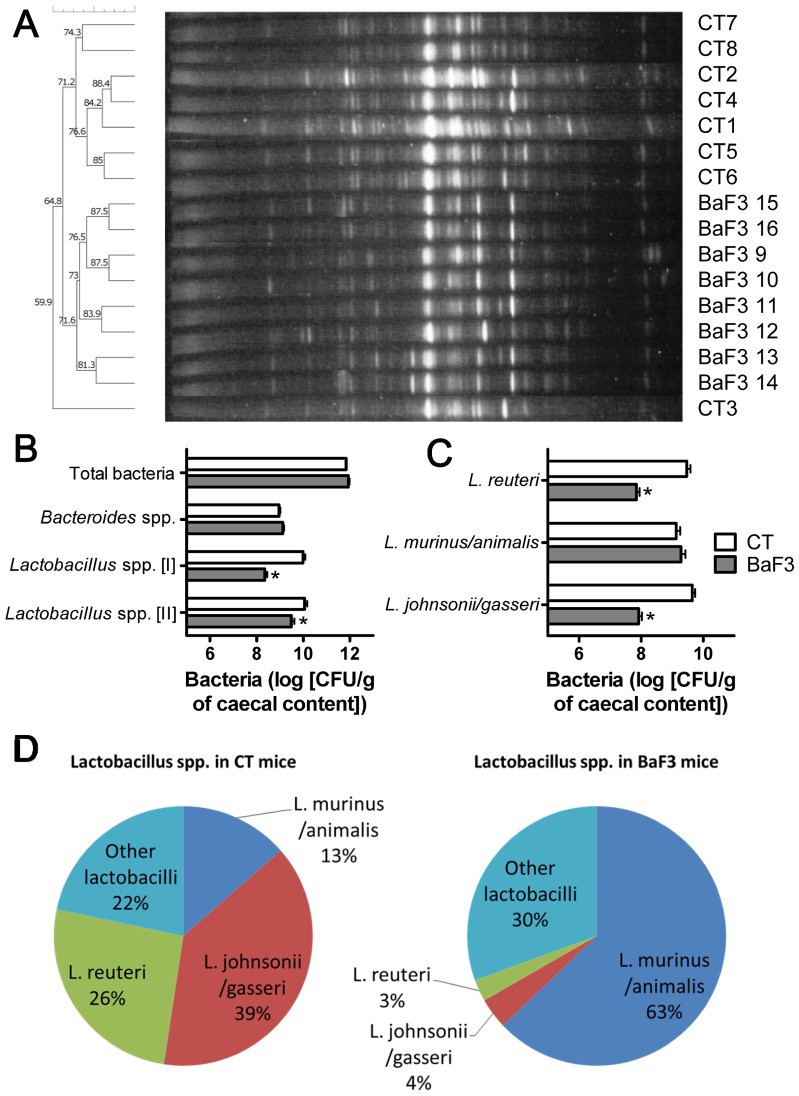
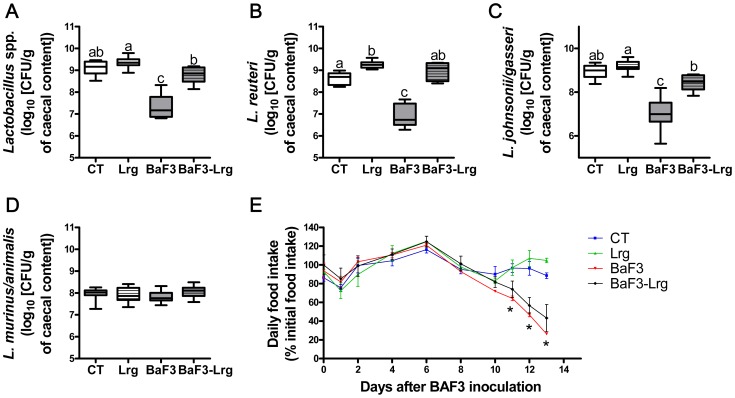
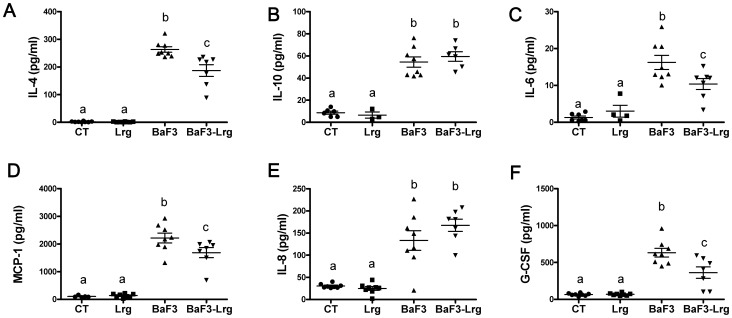
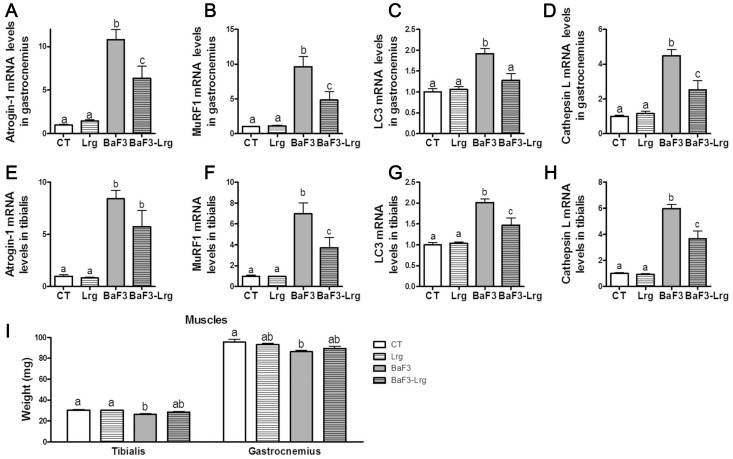
The gut microbiota has recently been proposed as a novel component in the regulation of host homeostasis and immunity. We have assessed for the first time the role of the gut microbiota in a mouse model of leukemia (transplantation of BaF3 cells containing ectopic expression of Bcr-Abl), characterized at the final stage by a loss of fat mass, muscle atrophy, anorexia and inflammation. The gut microbial 16S rDNA analysis, using PCR-Denaturating Gradient Gel Electrophoresis and quantitative PCR, reveals a dysbiosis and a selective modulation of Lactobacillus spp. (decrease of L. reuteri and L. johnsonii/gasseri in favor of L. murinus/animalis) in the BaF3 mice compared to the controls. The restoration of Lactobacillus species by oral supplementation with L. reuteri 100-23 and L. gasseri 311476 reduced the expression of atrophy markers (Atrogin-1, MuRF1, LC3, Cathepsin L) in the gastrocnemius and in the tibialis, a phenomenon correlated with a decrease of inflammatory cytokines (interleukin-6, monocyte chemoattractant protein-1, interleukin-4, granulocyte colony-stimulating factor, quantified by multiplex immuno-assay). These positive effects are strain- and/or species-specific since L. acidophilus NCFM supplementation does not impact on muscle atrophy markers and systemic inflammation. Altogether, these results suggest that the gut microbiota could constitute a novel therapeutic target in the management of leukemia-associated inflammation and related disorders in the muscle.
Overview
The claims and statistics of this paper haven’t been checked yet.
Free: it reads the open-access text and checks the first 5 claims that cite a source we can check. Create a free account to check every claim.
Integrity signals
Registry
Cites
Statistics
Figures
Verification
Claims the paper makes
The claims and statistics of this paper haven’t been checked yet.
Free: it reads the open-access text and checks the first 5 claims that cite a source we can check. Create a free account to check every claim.
Claims other papers make about this one
Each is checked against this paper’s own text: does it say what the citing paper says it does?
The source backs part of the claim, not all of it — or backs it for a different population, condition or comparison.
In the citing paper
“the administration of probiotics or butyrate to mouse models of muscle wasting has been associated with improved muscle mass”
From Gut Microbiota, Muscle Mass and Function in Aging: A Focus on Physical Frailty and Sarcopenia (2019) · cites this paper as [67]
Experimental — accuracy not yet measuredThe source backs part of the claim, not all of it — or backs it for a different population, condition or comparison.
In the citing paper
“probiotic rescue (Lactobacillus reuteri and gasseri) of inflammation and muscle/bone loss in mice proposes that gut microbiota initiate this relationship [19, 67, 89].”
From Gut Microbiota Contribute to Age-Related Changes in Skeletal Muscle Size, Composition, and Function: Biological Basis for a Gut-Muscle Axis (2018) · cites this paper as [19]
Experimental — accuracy not yet measuredThe cited source says what the claim attributes to it.
In the citing paper
“associations between gut ecology and cancer [16], cardiovascular disease [17], obesity [6], diabetes [18], and muscle wasting [19]”
From Gut Microbiota Contribute to Age-Related Changes in Skeletal Muscle Size, Composition, and Function: Biological Basis for a Gut-Muscle Axis (2018) · cites this paper as [19]
The cited source says what the claim attributes to it.
In the citing paper
“the leukemic mice were given an oral probiotic containing Lactobacillus reuteri and L. gasseri that appeared to decrease serum levels of inflammatory cytokines (IL-6 and MCP-1) and atrogene expression (MuRF1 and Atrogin-1) in conjunction with an increase in mass of the tibialis anterior.”
From Gut Microbiota Contribute to Age-Related Changes in Skeletal Muscle Size, Composition, and Function: Biological Basis for a Gut-Muscle Axis (2018) · cites this paper as [19]
In the citing paper
“In a mouse model of leukemia, the administration of a probiotic blend containing several Lactobacilli was associated with reduced inflammation and reduced levels of atrogin-1 and other muscle atrophy markers [67].”
From Gut Microbiota, Muscle Mass and Function in Aging: A Focus on Physical Frailty and Sarcopenia (2019) · cites this paper as [67]
4 more claims about this paper
Create a free account to see every claim other papers make about this one.
Self-check
Percentages, sums and reported differences re-computed from the paper’s own numbers.
The self-check needs the paper’s full text.
Citations
Cites
An obesity-associated gut microbiome with increased capacity for energy harvest
Turnbaugh, P. J., Ley, R. E., Mahowald, M. A., Magrini, V., Mardis, E. R., & Gordon, J. I. (2006) · Nature · doi:10.1038/nature05414 · Cited by 12,444 · cited 1×
“through the fermentation products and the inhibition of the fasting induced adipose factor [18–22].”
Muyzer, G., de Waal, E. C., & Uitterlinden, A. G. (1993) · Applied and Environmental Microbiology · doi:10.1128/aem.59.3.695-700.1993 · Cited by 11,429 · cited 1×
“Denaturing Gradient Gel Electrophoresis (DGGE) was performed on the total bacteria amplicons that were generated with primers targeting the V3 region of bacterial 16S rRNA gene [27].”
The gut microbiota as an environmental factor that regulates fat storage
Bäckhed, F., Ding, H., Wang, T., Hooper, L. V., Koh, G. Y., Nagy, A., Semenkovich, C. F., & Gordon, J. I. (2004) · Proceedings of the National Academy of Sciences · doi:10.1073/pnas.0407076101 · Cited by 6,245 · cited 1×
“through the fermentation products and the inhibition of the fasting induced adipose factor [18–22].”
(2016) · Repository@Hull (Worktribe) (University of Hull) · doi:10.1111/j.1365 · Cited by 5,304
The gut microbiota shapes intestinal immune responses during health and disease
Round, J. L., & Mazmanian, S. K. (2009) · Nature Reviews Immunology · doi:10.1038/nri2515 · Cited by 5,029
Identification of ubiquitin ligases required for skeletal muscle atrophy.
Bodine, S. C., Latres, E., Baumhueter, S., Lai, V. K.-M., Nunez, L., Clarke, B. A., Poueymirou, W. T., Panaro, F. J., Na, E., Dharmarajan, K., et al. (2001) · Science · doi:10.1126/science.1065874 · Cited by 3,521 · cited 2×
“These markers are therefore considered as potential drug targets for the treatment of muscle atrophy [7].”
Mechanisms underlying the resistance to diet-induced obesity in germ-free mice
Bäckhed, F., Manchester, J. K., Semenkovich, C. F., & Gordon, J. I. (2007) · Proceedings of the National Academy of Sciences · doi:10.1073/pnas.0605374104 · Cited by 2,615 · cited 1×
“also reported an increased AMPK activity in the muscle of germ-free animals [21].”
Cani, P. D., Possemiers, S., Van de Wiele, T., Guiot, Y., Everard, A., Rottier, O., Geurts, L., Naslain, D., Neyrinck, A., Lambert, D. M., et al. (2009) · Gut · doi:10.1136/gut.2008.165886 · Cited by 2,518 · cited 1×
“Lipopolysaccharides (LPS) are pro-inflammatory compounds of bacterial origin [48].”
Self-citationPrognostic effect of weight loss prior tochemotherapy in cancer patients
Dewys, W. D., Begg, C., Lavin, P. T., Band, P. R., Bennett, J. M., Bertino, J. R., Cohen, M. H., Douglass, H. O., Engstrom, P. F., Ezdinli, E. Z., et al. (1980) · The American Journal of Medicine · doi:10.1016/s0149-2918(05)80001-3 · Cited by 2,354 · cited 1×
“39% of patients with acute non lymphocytic leukemia experience weight loss in the six month-period preceding chemotherapy [3].”
Atrogin-1, a muscle-specific F-box protein highly expressed during muscle atrophy
Gomes, M. D., Lecker, S. H., Jagoe, R. T., Navon, A., & Goldberg, A. L. (2001) · Proceedings of the National Academy of Sciences · doi:10.1073/pnas.251541198 · Cited by 1,774 · cited 1×
“We thus concluded, in accordance with previously reported in vivo kinetics [8,30], that Atrogin-1, MuRF1, LC3 and Cathepsin L are valuable early markers of muscle atrophy in this mouse model of leukemia.”
Cited by
Cancer cachexia: understanding the molecular basis
Argilés, J. M., Busquets, S., Stemmler, B., & López-Soriano, F. J. (2014) · Nature Reviews Cancer · doi:10.1038/nrc3829 · Cited by 1,517
“(AgRP(83-132)) prevents cachexia-related symptoms”
Salt-responsive gut commensal modulates TH17 axis and disease
Wilck, N., Matus, M. G., Kearney, S. M., Olesen, S. W., Forslund, K., Bartolomaeus, H., Haase, S., Mähler, A., Balogh, A., Markó, L., et al. (2017) · Nature · doi:10.1038/nature24628 · Cited by 1,310
Role of intestinal microbiota and metabolites on gut homeostasis and human diseases
Lin, L., & Zhang, J. (2017) · BMC Immunology · doi:10.1186/s12865-016-0187-3 · Cited by 731
“Gut microbes may produce metabolites other than SCFAs and QS signaling molecules, for instance, poly-γglutamic acid (γ-PGA) during fermentation of soybeans.”
BackgroundInfluentialUnderstanding cachexia as a cancer metabolism syndrome
Porporato, P. E. (2016) · Oncogenesis · doi:10.1038/oncsis.2016.3 · Cited by 562
Short-chain fatty acids as potential regulators of skeletal muscle metabolism and function
Frampton, J., Murphy, K. G., Frost, G., & Chambers, E. S. (2020) · Nature Metabolism · doi:10.1038/s42255-020-0188-7 · Cited by 516
Gut Microbiota, Muscle Mass and Function in Aging: A Focus on Physical Frailty and Sarcopenia
Ticinesi, A., Nouvenne, A., Cerundolo, N., Catania, P., Prati, B., Tana, C., & Meschi, T. (2019) · Nutrients · doi:10.3390/nu11071633 · Cited by 418
Grosicki, G. J., Fielding, R. A., & Lustgarten, M. S. (2018) · Calcified Tissue International · doi:10.1007/s00223-017-0345-5 · Cited by 388
“supplementation did not appear to affect inflammatory or atrophy markers [19].”
BackgroundCancer cachexia and its pathophysiology: links with sarcopenia, anorexia and asthenia
Peixoto da Silva, S., Santos, J. M. O., Costa e Silva, M. P., Gil da Costa, R. M., & Medeiros, R. (2020) · Journal of Cachexia, Sarcopenia and Muscle · doi:10.1002/jcsm.12528 · Cited by 371
“and help associating alterations in the gut microbiome with cancer cachexia.(130,131)”
BackgroundUnderstanding the gut microbiota and sarcopenia: a systematic review
Liu, C., Cheung, W., Li, J., Chow, S. K., Yu, J., Wong, S. H., Ip, M., Sung, J. J. Y., & Wong, R. M. Y. (2021) · Journal of Cachexia, Sarcopenia and Muscle · doi:10.1002/jcsm.12784 · Cited by 363
Gut microbiota-derived propionate reduces cancer cell proliferation in the liver
Bindels, L. B., Porporato, P., Dewulf, E. M., Verrax, J., Neyrinck, A. M., Martin, J. C., Scott, K. P., Buc Calderon, P., Feron, O., Muccioli, G. G., et al. (2012) · British Journal of Cancer · doi:10.1038/bjc.2012.409 · Cited by 305
“RESULTS: Inulin-type fructans treatment reduces hepatic BaF3 cell infiltration, lessens inflammation and increases portal propionate concentration.”
BackgroundMethodInfluentialSelf-citationInter-tissue communication in cancer cachexia
Argilés, J. M., Stemmler, B., López-Soriano, F. J., & Busquets, S. (2019) · Nature Reviews Endocrinology · doi:10.1038/s41574-018-0123-0 · Cited by 305
Chen, Y.-M., Wei, L., Chiu, Y.-S., Hsu, Y.-J., Tsai, T.-Y., Wang, M.-F., & Huang, C.-C. (2016) · Nutrients · doi:10.3390/nu8040205 · Cited by 297
“reduced the expression of atrophy markers [30] and the levels of systemic inflammatory cytokines, and restoration of these Lactobasilli levels reduced the markers of the autophagy-lysosomal pathway, a major system of protein breakdown in gastrocnemius and tibialis muscle [31].”
BackgroundMunukka, E., Rintala, A., Toivonen, R., Nylund, M., Yang, B., Takanen, A., Hänninen, A., Vuopio, J., Huovinen, P., Jalkanen, S., et al. (2017) · The ISME Journal · doi:10.1038/ismej.2017.24 · Cited by 278
“Notwithstanding, the studies on the mechanistic effects of the so-called beneficial microbes on muscles are scarce (Bindels et al., 2012), and definitely are increasingly needed, as for instance, cancer-associated cachexia is an important health problem.”
BackgroundNi, Y., Yang, X., Zheng, L., Wang, Z., Wu, L., Jiang, J., Yang, T., Ma, L., & Fu, Z. (2019) · Molecular Nutrition & Food Research · doi:10.1002/mnfr.201900603 · Cited by 255
Bilski, J., Pierzchalski, P., Szczepanik, M., Bonior, J., & Zoladz, J. (2022) · Cells · doi:10.3390/cells11010160 · Cited by 251
“Interestingly, it was observed that sarcopenia is alleviated by oral supplementation with specific Lactobacillus species in a mouse model of acute leukemia [135], whereas the muscle mass and function increased [136].”
BackgroundCathepsins: Proteases that are vital for survival but can also be fatal
Patel, S., Homaei, A., El-Seedi, H. R., & Akhtar, N. (2018) · Biomedicine & Pharmacotherapy · doi:10.1016/j.biopha.2018.05.148 · Cited by 224
Cancer Cachexia: More Than Skeletal Muscle Wasting
Schmidt, S. F., Rohm, M., Herzig, S., & Berriel Diaz, M. (2018) · Trends in Cancer · doi:10.1016/j.trecan.2018.10.001 · Cited by 220
Gut bacteria are critical for optimal muscle function: a potential link with glucose homeostasis
Nay, K., Jollet, M., Goustard, B., Baati, N., Vernus, B., Pontones, M., Lefeuvre-Orfila, L., Bendavid, C., Rué, O., Mariadassou, M., et al. (2019) · American Journal of Physiology-Endocrinology and Metabolism · doi:10.1152/ajpendo.00521.2018 · Cited by 215
“suggested a link between gut microbiota profile and skeletal muscle mass in pathological conditions (4, 6).”
BackgroundBindels, L. B., Neyrinck, A. M., Claus, S. P., Le Roy, C. I., Grangette, C., Pot, B., Martinez, I., Walter, J., Cani, P. D., & Delzenne, N. M. (2016) · The ISME Journal · doi:10.1038/ismej.2015.209 · Cited by 209
“We have previously demonstrated the therapeutic interest of the restoration of lactobacilli (Bindels et al ., 2012a).”
InfluentialSelf-citationRole of interleukin-6 in cachexia: therapeutic implications
Narsale, A. A., & Carson, J. A. (2014) · Current Opinion in Supportive & Palliative Care · doi:10.1097/spc.0000000000000091 · Cited by 207
“Restoring the levels of these bacteria led to the suppression of systemic levels of IL-6 and monocyte chemoattractant protein-1, and reduced muscle atrophy by inhibition of both proteasome and autophagy pathways in the gastrocnemius muscle [44,45].”
BackgroundMuscle wasting: The gut microbiota as a new therapeutic target?
Bindels, L. B., & Delzenne, N. M. (2013) · The International Journal of Biochemistry & Cell Biology · doi:10.1016/j.biocel.2013.06.021 · Cited by 198
Self-citationGut microbes and muscle function: can probiotics make our muscles stronger?
Giron, M., Thomas, M., Dardevet, D., Chassard, C., & Savary‐Auzeloux, I. (2022) · Journal of Cachexia, Sarcopenia and Muscle · doi:10.1002/jcsm.12964 · Cited by 193
Gut Dysbiosis and Muscle Aging: Searching for Novel Targets against Sarcopenia
Picca, A., Fanelli, F., Calvani, R., Mulè, G., Pesce, V., Sisto, A., Pantanelli, C., Bernabei, R., Landi, F., & Marzetti, E. (2018) · Mediators of Inflammation · doi:10.1155/2018/7026198 · Cited by 181
“Interestingly, muscle wasting induced in a mice model of acute leukemia was attenuated by oral supplementation with specific Lactobacillus species [91].”
BackgroundGut-Muscle Axis Exists and May Affect Skeletal Muscle Adaptation to Training
Przewłócka, K., Folwarski, M., Kaźmierczak-Siedlecka, K., Skonieczna‐Żydecka, K., & Kaczor, J. J. (2020) · Nutrients · doi:10.3390/nu12051451 · Cited by 197
“Moreove , anim l studies cl arly emphasize the reduction of muscle atrophy ma kers (Atrogin-1, MuRF1, LC3 protein, Cathepsin L) in mic supplemented with Lactobacillus strains as well s an increase of muscle mass and strength in mice supplemented with Lactobacillus plan arum [51,52].”
BackgroundResistant starch can improve insulin sensitivity independently of the gut microbiota
Bindels, L. B., Segura Munoz, R. R., Gomes-Neto, J. C., Mutemberezi, V., Martínez, I., Salazar, N., Cody, E. A., Quintero-Villegas, M. I., Kittana, H., de los Reyes-Gavilán, C. G., et al. (2017) · Microbiome · doi:10.1186/s40168-017-0230-5 · Cited by 175
Self-citationTahmasbpour, E., Balasubramanian, D., & Agarwal, A. K. (2014) · Journal of Assisted Reproduction and Genetics · doi:10.1007/s10815-014-0280-6 · Cited by 182
Gut microbiota–bile acid–skeletal muscle axis
Mancin, L., Wu, G. D., & Paoli, A. (2023) · Trends in Microbiology · doi:10.1016/j.tim.2022.10.003 · Cited by 164
Rohm, M., Zeigerer, A., Machado, J., & Herzig, S. (2019) · EMBO reports · doi:10.15252/embr.201847258 · Cited by 163
“For example, the selective modulation of Lactobacillus spp. affects muscle atrophy, inflammatory marker levels, and cachexia in a mouse leukemia model [23], suggesting a gut-muscle signaling axis contributing to wasting.”
Fielding, R. A., Reeves, A. R., Jasuja, R., Liu, C., Barrett, B. B., & Lustgarten, M. S. (2019) · Experimental Gerontology · doi:10.1016/j.exger.2019.110722 · Cited by 163
“Atrogin-1, MuRF1, LC3, Cathepsin L) and increased muscle mass in a mouse model of leukemia (Bindels et al., 2012), and probiotic supplementation with Lactobacillus plantarum increased lean mass, grip strength, and swimming endurance in young mice (Chen et al.”
Gut microbiota and short‐chain fatty acid alterations in cachectic cancer patients
Ubachs, J., Ziemons, J., Soons, Z., Aarnoutse, R., van Dijk, D. P. J., Penders, J., van Helvoort, A., Smidt, M. L., Kruitwagen, R. F. P. M., Baade‐Corpelijn, L., et al. (2021) · Journal of Cachexia, Sarcopenia and Muscle · doi:10.1002/jcsm.12804 · Cited by 161
Probiotic supplementation attenuates age‐related sarcopenia via the gut–muscle axis in SAMP8 mice
Chen, L., Chang, S., Chang, H., Wu, C., Pan, C., Chang, C., Chan, C., & Huang, H. (2022) · Journal of Cachexia, Sarcopenia and Muscle · doi:10.1002/jcsm.12849 · Cited by 160
“A mixed supplement of multiple Lactobacilli probiotics also reduced inflammation and muscle atrophy markers.(9) Moreover, one of the most well-known probiotics, Lactobacillus casei Shirota (LcS), has significant anti-ROS and anti-inflammatory effects in numerous mouse and human studies.”
BackgroundInfluentialDelzenne, N. M., Olivares, M., Neyrinck, A. M., Beaumont, M., Kjølbæk, L., Larsen, T. M., Benítez‐Páez, A., Romaní‐Pérez, M., Garcia‐Campayo, V., Bosscher, D., et al. (2019) · Clinical Nutrition · doi:10.1016/j.clnu.2019.03.002 · Cited by 165
Self-citationChase, D. M., Goulder, A., Zenhausern, F., Monk, B. J., & Herbst‐Kralovetz, M. M. (2015) · Gynecologic Oncology · doi:10.1016/j.ygyno.2015.04.036 · Cited by 167
“This report showed that the relative abundance of Lactobacillus in the gut, which has immunomodulatory properties, was decreased in the mice with cachexia compared with healthy mice [62].”
Sarcopenia in Autoimmune and Rheumatic Diseases: A Comprehensive Review
An, H. J., Tizaoui, K., Terrazzino, S., Cargnin, S., Lee, K. H., Nam, S. W., Kim, J., Yang, J. W., Lee, J. Y., Smith, L., et al. (2020) · International Journal of Molecular Sciences · doi:10.3390/ijms21165678 · Cited by 156
“In an acute leukemia mouse model, oral supplementation of lactobacillus species decreased atrogin-1, MuRF1, and inflammatory cytokines [105].”
BackgroundGenton, L., Cani, P. D., & Schrenzel, J. (2015) · Clinical Nutrition · doi:10.1016/j.clnu.2014.10.003 · Cited by 148
Self-citationIncreased gut permeability in cancer cachexia: mechanisms and clinical relevance
Bindels, L. B., Neyrinck, A. M., Loumaye, A., Catry, E., Walgrave, H., Cherbuy, C., Leclercq, S., Van Hul, M., Plovier, H., Pachikian, B., et al. (2018) · Oncotarget · doi:10.18632/oncotarget.24804 · Cited by 147
“First, administration of lactobacilli counteracted muscle atrophy in mouse models of cancer cachexia [16, 17].”
BackgroundSelf-citationDietary Protein and Muscle in Aging People: The Potential Role of the Gut Microbiome
Ni Lochlainn, M., Bowyer, R. C. E., & Steves, C. J. (2018) · Nutrients · doi:10.3390/nu10070929 · Cited by 138
Bindels, L. B., Neyrinck, A. M., Salazar, N., Taminiau, B., Druart, C., Muccioli, G. G., François, E., Blecker, C., Richel, A., Daube, G., et al. (2015) · PLOS ONE · doi:10.1371/journal.pone.0131009 · Cited by 134
“We have recently shown that the composition of the gut microbiota is altered in leukemic mice suffering from cachexia [13].”
BackgroundMethodResultInfluentialSelf-citationDietary Protein and Muscle in Aging People: The Potential Role of the Gut Microbiome
Ni Lochlainn, M., Bowyer, R. C. E., & Steves, C. J. (2018) · doi:10.20944/preprints201806.0152.v1 · Cited by 138
Turroni, S., Magnani, M., KC, P., Lesnik, P., Vidal, H., & Heer, M. (2020) · Frontiers in Physiology · doi:10.3389/fphys.2020.553929 · Cited by 117
Intestinal Microbiota: A Novel Target to Improve Anti-Tumor Treatment?
Villéger, R., Lopès, A., Carrier, G., Veziant, J., Billard, E., Barnich, N., Gagnière, J., Vazeille, E., & Bonnet, M. (2019) · International Journal of Molecular Sciences · doi:10.3390/ijms20184584 · Cited by 119
“For example, restoration of lactobacilli levels counteracted muscle atrophy and decreased systemic inflammation in preclinical models of cancer cachexia [140,141].”
BackgroundNi, Y., Lohinai, Z., Heshiki, Y., Döme, B., Moldvay, J., Dulka, E., Gálffy, G., Berta, J., Weiss, G. J., Sommer, M. O. A., et al. (2021) · The ISME Journal · doi:10.1038/s41396-021-00998-8 · Cited by 137
Steves, C. J., Bird, S., Williams, F. M., & Spector, T. D. (2016) · Journal of Bone and Mineral Research · doi:10.1002/jbmr.2765 · Cited by 119
“Muscle wasting induced by a model of acute leukemia in mice was reduced by orally supplementing the mice with specific Lactobacillus species.((44)) The Authors suggest that gut microbiota may influence muscle physiology through altering amino acid bioavailability; influencing metabolites such as bile acids; and modula…”
BackgroundCollins, K. H., Paul, H. A., Hart, D. A., Reimer, R. A., Smith, I. C., Rios, J. L., Seerattan, R. A., & Herzog, W. (2016) · Scientific Reports · doi:10.1038/srep37278 · Cited by 125
Prokopidis, K., Giannos, P., Kirwan, R., Ispoglou, T., Galli, F., Witard, O. C., Triantafyllidis, K. K., Kechagias, K. S., Morwani‐Mangnani, J., Ticinesi, A., et al. (2022) · Journal of Cachexia Sarcopenia and Muscle · doi:10.1002/jcsm.13132 · Cited by 132
Ness, K. K., Kaste, S. C., Zhu, L., Pui, C., Jeha, S., Nathan, P. C., Inaba, H., Wasilewski‐Masker, K. J., Shah, D., Wells, R. J., et al. (2014) · Leukemia & lymphoma/Leukemia and lymphoma · doi:10.3109/10428194.2014.944519 · Cited by 118
Prokopidis, K., Chambers, E., Ni Lochlainn, M., & Witard, O. C. (2021) · Frontiers in Physiology · doi:10.3389/fphys.2021.770455 · Cited by 102
Pötgens, S. A., Brossel, H., Sboarina, M., Catry, E., Cani, P. D., Neyrinck, A. M., Delzenne, N. M., & Bindels, L. B. (2018) · Scientific Reports · doi:10.1038/s41598-018-30569-5 · Cited by 114
Self-citationEngineering Vascularized Bone Grafts by Integrating a Biomimetic Periosteum and β-TCP Scaffold
Kang, Y., Ren, L., & Yang, Y. (2014) · ACS Applied Materials & Interfaces · doi:10.1021/am502056q · Cited by 111
A Narrative Review of Gut-Muscle Axis and Sarcopenia: The Potential Role of Gut Microbiota
Zhao, J., Huang, Y., & Yu, X. (2021) · International Journal of General Medicine · doi:10.2147/ijgm.s301141 · Cited by 113
The Gut Microbiome as Therapeutic Target in Central Nervous System Diseases: Implications for Stroke
Winek, K., Dirnagl, U., & Meisel, A. (2016) · Neurotherapeutics · doi:10.1007/s13311-016-0475-x · Cited by 108
“the protein breakdown in skeletal muscle [106].”
Gut microbiota as a promising therapeutic target for age-related sarcopenia
Zhang, T., Cheng, J.-K., & Hu, Y. (2022) · Ageing Research Reviews · doi:10.1016/j.arr.2022.101739 · Cited by 112
Biomarkers of Physical Frailty and Sarcopenia: Coming up to the Place?
Picca, A., Calvani, R., Cesari, M., Landi, F., Bernabei, R., Coelho-Júnior, H. J., & Marzetti, E. (2020) · International Journal of Molecular Sciences · doi:10.3390/ijms21165635 · Cited by 100
Ali, A. M., & Kunugi, H. (2020) · Foods · doi:10.3390/foods9101362 · Cited by 112
Early Diet Impacts Infant Rhesus Gut Microbiome, Immunity, and Metabolism
O’Sullivan, A., He, X., McNiven, E. M. S., Haggarty, N. W., Lönnerdal, B., & Slupsky, C. M. (2013) · Journal of Proteome Research · doi:10.1021/pr4001702 · Cited by 98
Impact of Protein Intake in Older Adults with Sarcopenia and Obesity: A Gut Microbiota Perspective
Prokopidis, K., Cervo, M. M., Gandham, A., & Scott, D. (2020) · Nutrients · doi:10.3390/nu12082285 · Cited by 99
“For instance, in leukemia-disordered mice, Lactobacillus-species restoration reduced muscle atrophy, which is also correlated with a decrease in various proinflammatory cytokines [85].”
BackgroundThe Microbiota and Cancer Cachexia
Herremans, K. M., Riner, A. N., Cameron, M. E., & Trevino, J. G. (2019) · International Journal of Molecular Sciences · doi:10.3390/ijms20246267 · Cited by 92
The environment as a determinant of successful aging or frailty
Ciaula, A. D., & Portincasa, P. (2020) · Mechanisms of Ageing and Development · doi:10.1016/j.mad.2020.111244 · Cited by 95
Gut-muscle crosstalk. A perspective on influence of microbes on muscle function
Chew, W., Lim, Y. P., Lim, W. S., Chambers, E. S., Frost, G. S., Wong, S. H., & Ali, Y. (2023) · Frontiers in Medicine · doi:10.3389/fmed.2022.1065365 · Cited by 94
Microbiome and pancreatic cancer: A comprehensive topic review of literature
Ertz-Archambault, N. M., Keim, P., & Hoff, D. D. V. (2017) · World Journal of Gastroenterology · doi:10.3748/wjg.v23.i10.1899 · Cited by 86
Advances and perspectives in tissue clearing using CLARITY
Jensen, K. H. R., & Berg, R. W. (2017) · Journal of Chemical Neuroanatomy · doi:10.1016/j.jchemneu.2017.07.005 · Cited by 78
Gut microbiota alteration in a mouse model of Anorexia Nervosa
Breton, J., Tirelle, P., Hasanat, S., Pernot, A., L'Huillier, C., do Rego, J.-C., Déchelotte, P., Coëffier, M., Bindels, L. B., & Ribet, D. (2021) · Clinical Nutrition · doi:10.1016/j.clnu.2020.05.002 · Cited by 71
“Lactobacillus reuteri, Lactobacillus murinus/animalis and Lactobacillus johnsonii/gasseri) using specific primers [46,47].”
MethodSelf-citationde Clercq, N. C., van den Ende, T., Prodan, A., Hemke, R., Davids, M., Pedersen, H., Nielsen, H. B., Groen, A. K., de Vos, W. M., van Laarhoven, H. W. M., et al. (2021) · Clinical Cancer Research · doi:10.1158/1078-0432.ccr-20-4918 · Cited by 84
“partly restored the gut microbiota composition, reduced cachexia parameters and prolonged survival (17).”
BackgroundSmethurst, D. G. J., & Shcherbik, N. (2021) · Journal of Biological Chemistry · doi:10.1016/j.jbc.2021.101374 · Cited by 69
Can prebiotics and probiotics improve therapeutic outcomes for undernourished individuals?
Sheridan, P. O., Bindels, L. B., Saulnier, D. M. A., Reid, G., Nova, E., Holmgren, K., O’Toole, P. W., Bunn, J., Delzenne, N. M., & Scott, K. P. (2013) · Gut Microbes · doi:10.4161/gmic.27252 · Cited by 87
“gasseri 311476 decreased systemic inflammation and atrophy markers in the muscle, two features of the cachexia syndrome.(88) In the second study, an increase in Clostridium clusters I and IX and in Enterobacteriaceae was reported in feces of rats subcutaneously implanted with a colon tumor.”
BackgroundSelf-citationGut microbes-muscle axis in muscle function and meat quality
He, Y., Hu, H., Liang, X., Liang, J., Li, F., & Zhou, X. (2025) · Science China Life Sciences · doi:10.1007/s11427-024-2885-4 · Cited by 83
Interactions between gut microbiota and skeletal muscle
Gizard, F., Fernandez, A., & Vadder, F. D. (2020) · Nutrition and Metabolic Insights · doi:10.1177/1178638820980490 · Cited by 81
Gut microbiota bridges the iron homeostasis and host health
Xiao, L., Tang, R., Wang, J., Wan, D., Yin, Y., & Xie, L. (2023) · Science China Life Sciences · doi:10.1007/s11427-022-2302-5 · Cited by 72
“Probiotics supplemented with specific Lactobacilli, such as Lactobacillus reuteri and Lactobacillus gallinii, reduced the expression of the muscular atrophy gene in a mouse model of leukemia (Bindels et al., 2012).”
BackgroundPötgens, S. A., Thibaut, M. M., Joudiou, N., Sboarina, M., Neyrinck, A. M., Cani, P. D., Claus, S. P., Delzenne, N. M., & Bindels, L. B. (2021) · Journal of Cachexia Sarcopenia and Muscle · doi:10.1002/jcsm.12684 · Cited by 75
“1 mL saline) were injected into the tail vein of anaesthetized female Balb/c mice (6 weeks old) as previously described.(27)”
MethodSelf-citationProspective views for whey protein and/or resistance training against age-related sarcopenia
Liao, Y., Peng, Z., Chen, L., Zhang, Y., Cheng, Q., Nüssler, A. K., Bao, W., Liu, L., & Yang, W. (2019) · Aging and Disease · doi:10.14336/ad.2018.0325 · Cited by 68
“could decrease the inflammation and muscle atrophy markers in female BALB/c mice with acute leukemia [171].”
BackgroundDevelopment of a Zebrafish Sepsis Model for High-Throughput Drug Discovery
Philip, A. M., Wang, Y., Mauro, A., El‐Rass, S., Marshall, J. C., Lee, W. L., Slutsky, A. S., dos Santos, C. C., & Wen, X. (2017) · Molecular Medicine · doi:10.2119/molmed.2016.00188 · Cited by 73
Microbiota and body weight control: Weight watchers within?
Boscaini, S., Leigh, S., Lavelle, A., García‐Cabrerizo, R., Lipuma, T., Clarke, G. A., Schellekens, H., & Cryan, J. F. (2021) · Molecular Metabolism · doi:10.1016/j.molmet.2021.101427 · Cited by 74
Wang, Y., Li, Y., Bo, L., Zhou, E., Chen, Y., Naranmandakh, S., Xie, W., Ru, Q., Chen, L., Zhu, Z., et al. (2023) · Gut Microbes · doi:10.1080/19490976.2023.2263207 · Cited by 73
“136 Restoring specific lactobacilli levels decreases inflammation and muscle atrophy markers in an acute leukemia mouse model 137 .”
BackgroundIron supplementation is sufficient to rescue skeletal muscle mass and function in cancer cachexia
Wyart, E., Hsu, M. Y., Sartori, R., Mina, E., Rausch, V., Pierobon, E. S., Mezzanotte, M., Pezzini, C., Bindels, L. B., Lauria, A., et al. (2022) · EMBO Reports · doi:10.15252/embr.202153746 · Cited by 71
“Baf3 cachexia was induced as previously reported (Bindels et al, 2012), injecting Bcr-Abl-transfected Baf3 intravenously in 6-weeks-old Balb/C mice.”
Self-citationBereswill, S., Ekmekçiu, I., Escher, U., Fiebiger, U., Stingl, K., & Heimesaat, M. M. (2017) · Scientific Reports · doi:10.1038/s41598-017-02436-2 · Cited by 66
Role of the intestinal microbiota in contributing to weight disorders and associated comorbidities
Hul, M. V., Neyrinck, A. M., Everard, A., Abot, A., Bindels, L. B., Delzenne, N. M., Knauf, C., & Cani, P. D. (2024) · Clinical Microbiology Reviews · doi:10.1128/cmr.00045-23 · Cited by 72
“We showed several times that gut microbial alterations occur in mouse models of cancer cachexia (157–159), a finding confirmed by other teams (160–162).”
Self-citationJansson-Verkasalo, E. M., Eggers, K., Järvenpää, A., Suominen, K., den Bergh, B. R. H. V., Nil, L. D., & Kujala, T. (2014) · Journal of Fluency Disorders · doi:10.1016/j.jfludis.2014.07.001 · Cited by 76
Nutraceuticals in the Prevention and Treatment of the Muscle Atrophy
Wang, Y., Liu, Q., Quan, H., Kang, S.-G., Huang, K., & Tong, T. (2021) · Nutrients · doi:10.3390/nu13061914 · Cited by 61
Cutuli, D., Decandia, D., Giacovazzo, G., & Coccurello, R. (2023) · International Journal of Molecular Sciences · doi:10.3390/ijms241914686 · Cited by 64
Nonmuscle Tissues Contribution to Cancer Cachexia
Argilés, J. M. A., Stemmler, B., López-Soriano, F. J., & Busquets, S. (2015) · Mediators of Inflammation · doi:10.1155/2015/182872 · Cited by 65
“Indeed, decreased levels of bacteria, which have immunomodulating properties, are decreased during experimental cancer cachexia [18].”
BackgroundUsutu Virus in Blackbirds (Turdus merula), Czech Republic, 2011-2012
Hubálek, Z., Rudolf, I., Čapek, M., Bakonyi, T., Betášová, L., & Nowotny, N. R. (2012) · Transboundary and Emerging Diseases · doi:10.1111/tbed.12025 · Cited by 58
Stress in Obesity and Associated Metabolic and Cardiovascular Disorders
Holvoet, P. (2012) · Scientifica · doi:10.6064/2012/205027 · Cited by 49
Yin, X., Heeney, D. D., Srisengfa, Y. T., Golomb, B. L., Griffey, S. M., & Marco, M. L. (2017) · Beneficial Microbes · doi:10.3920/bm2017.0096 · Cited by 56
van Krimpen, S. J., Jansen, F. A. C., Ottenheim, V. L., Belzer, C., van der Ende, M., & van Norren, K. (2021) · Nutrients · doi:10.3390/nu13041115 · Cited by 58
“[21] showed that supplementation with a combination of L.”
BackgroundMethodInfluentialCortiula, F., Hendriks, L. E. L., van de Worp, W. R. P. H., Schols, A. M. W. J., Vaes, R. D. W., LANGEN, R. C. J., & Ruysscher, D. D. (2022) · Journal of Cachexia Sarcopenia and Muscle · doi:10.1002/jcsm.12900 · Cited by 57
“Moreover, restoring the Lactobacillus spp. by oral supplementation led to a reduction of atrophy markers (MuRF1, Atrogin1, LC3, and Cathepsin L) in the gastrocnemius muscle, along with a reduction in circulating IL-6.”
ResultDysbiosis of the gut microbiome impairs mouse skeletal muscle adaptation to exercise
Valentino, T. R., Vechetti, I. J., Mobley, C. B., Dungan, C. M., Golden, L. R., Goh, J. Z., & McCarthy, J. J. (2021) · The Journal of Physiology · doi:10.1113/jp281788 · Cited by 57
“Additionally, the findings from this study add to the growing body of evidence supporting a gut microbiome–skeletal muscle axis (Bindels et al. 2012; Fielding et al. 2019; Lahiri et al. 2019; Whon et al. 2021).”
ResultCatry, É., Pachikian, B. D., Salazar, N., Neyrinck, A. M., Cani, P. D., & Delzenne, N. M. (2015) · Life Sciences · doi:10.1016/j.lfs.2015.04.004 · Cited by 57
Self-citationInto the wild: microbiome transplant studies need broader ecological reality
Greyson‐Gaito, C. J., Bartley, T., Cottenie, K., Jarvis, W. M. C., Newman, A. E. M., & Stothart, M. R. (2020) · Proceedings of the Royal Society B Biological Sciences · doi:10.1098/rspb.2019.2834 · Cited by 54
Cachexia, a Systemic Disease beyond Muscle Atrophy
Wyart, E., Bindels, L. B., Mina, E., Menga, A., Stanga, S., & Porporato, P. E. (2020) · International Journal of Molecular Sciences · doi:10.3390/ijms21228592 · Cited by 52
Self-citationZhong, S., Sun, Z., Tian, Q., Wen, W., Chen, F., Huang, X., & Li, Y. (2024) · The FASEB Journal · doi:10.1096/fj.202400969rr · Cited by 53
“37,38 Activation of NF-κ B signaling pathway and overproduction of intramuscular cytokines could contribute to skeletal muscle atrophy mainly by the initiation of protein degradation.”
Quorum sensing molecules as a novel microbial factor impacting muscle cells
Spiegeleer, A. D., Elewaut, D. S., Noortgate, N. J. V. D., Janssens, Y., Debunne, N., Langenhove, S. V., Govindarajan, S., Spiegeleer, B. M. J. D., & Wynendaele, E. (2019) · Biochimica et Biophysica Acta (BBA) - Molecular Basis of Disease · doi:10.1016/j.bbadis.2019.165646 · Cited by 53
Cancer cachexia: lessons from Drosophila
Liu, Y., Saavedra, P. H. V., & Perrimon, N. (2022) · Disease Models & Mechanisms · doi:10.1242/dmm.049298 · Cited by 52
“Consistent with this idea, introduction of certain gut bacteria strains in a mouse model of acute leukemia can antagonize muscle wasting through suppression of proinflammatory cytokines (Bindels et al., 2016, 2012).”
de Pace, F., Carvalho, B. M., Zanotto, T. M., Santos, A., Guadagnini, D., Silva, K. L. C., Mendes, M. C. S., Rocha, G. Z., Allegretti, S. M., dos Santos, G. A., et al. (2018) · Pharmacological Research · doi:10.1016/j.phrs.2018.04.008 · Cited by 53
Fluitman, K. S., de Clercq, N. C., Keijser, B. J. F., Visser, M., Nieuwdorp, M., & IJzerman, R. G. (2017) · Expert Review of Endocrinology & Metabolism · doi:10.1080/17446651.2017.1318060 · Cited by 50
“Interestingly, supplementation of these Lactobacillus species resulted in a reduction in atrophy markers and inflammatory cytokines [78].”
Exploring the Preventive Effect and Mechanism of Senile Sarcopenia Based on “Gut–Muscle Axis”
Liao, X., Wu, M., Hao, Y., & Hong, D. (2020) · Frontiers in Bioengineering and Biotechnology · doi:10.3389/fbioe.2020.590869 · Cited by 48
Gut microbiota and metabolic aspects of cancer cachexia
Ziemons, J., Smidt, M. L., Damink, S. W. M. O., & Rensen, S. S. (2021) · Best Practice & Research Clinical Endocrinology & Metabolism · doi:10.1016/j.beem.2021.101508 · Cited by 50
Exploring the microbiota to better understand gastrointestinal cancers physiology
Panebianco, C., Potenza, A., Andriulli, A., & Pazienza, V. (2018) · Clinical Chemistry and Laboratory Medicine (CCLM) · doi:10.1515/cclm-2017-1163 · Cited by 46
Cancer cachexia as a multiorgan failure: Reconstruction of the crime scene
Ferrara, M., Samaden, M., Ruggieri, E., & Vénéreau, E. (2022) · Frontiers in Cell and Developmental Biology · doi:10.3389/fcell.2022.960341 · Cited by 49
“Gut microbiota dysbiosis highly affect blood metabolome (Oliphant and Allen-Vercoe, 2019), and, accordingly, restoration of gut microbiota reduces systemic levels of inflammatory cytokines and relieves muscle wasting in mice (Bindels et al., 2012; Varian et al., 2016; Huang et al., 2017).”
BackgroundGut-muscle axis mechanism of exercise prevention of sarcopenia
Li, T., Yin, D., & Shi, R. (2024) · Frontiers in Nutrition · doi:10.3389/fnut.2024.1418778 · Cited by 53
“These findings suggest that the gut microbiota, especially Lactobacillus species, can modulate the body’s immune-inflammatory response and inhibit muscle atrophy (62).”
BackgroundLee, J., Kang, M., Yoo, J., Lee, S., Kang, M., Yun, B., Kim, J. N., Moon, H., Chung, Y., & Oh, S. (2023) · Journal of Microbiology and Biotechnology · doi:10.4014/jmb.2303.03001 · Cited by 45
“This has been confirmed to cause skeletal muscle loss [20-23].”
Metadata
- Authors
- Bindels, L. B., Beck, R., Schakman, O., Martin, J. C., De Backer, F., Sohet, F. M., Dewulf, E. M., Pachikian, B. D., Neyrinck, A. M., Thissen, J.-P., Verrax, J., Calderon, P. B., Pot, B., Grangette, C., Cani, P. D., Scott, K. P., & Delzenne, N. M.
- Affiliations
- UCLouvain (BE)
- University of Aberdeen (GB)
- Centre National de la Recherche Scientifique (FR)
- Corresponding author
- Delzenne, Nathalie M.
- ORCID
- Venue
- PLoS ONE
- Publisher
- Public Library of Science (PLoS)
- Published
- 2012-06-27
- Volume
- 7
- Issue
- 6
- Pages
- e37971
- ISSN
- 1932-6203 (ISSN-L)
- PMC
- PMC3384645
- OpenAlex
- W2105503795
- Cited by
- 278
- References
- 52
- Citations by year
- 2026: 9 · 2025: 21 · 2024: 27 · 2023: 31 · 2022: 29 · 2021: 32 · 2020: 31 · 2019: 24 · 2018: 17 · 2017: 17 · 2016: 6 · 2015: 11 · 2014: 13 · 2013: 6 · 2012: 4
- FWCI
- 16.69
- Type
- journal article
- Language
- en
- Open access
- gold
- doi.org
- Locations
- PLoS ONE (publishedVersion, cc-by)
- Europe PMC (PubMed Central) (publishedVersion, cc-by)
- PubMed Central (publishedVersion, cc-by)
- PubMed (publishedVersion)
- Aberdeen University Research Archive (Aberdeen University) (submittedVersion)
- Digital Access to Libraries (submittedVersion, other-oa)
- DOAJ (DOAJ: Directory of Open Access Journals) (submittedVersion)
- Figshare (submittedVersion, cc-by)
- VUBIR (Vrije Universiteit Brussel) (submittedVersion)
- Funders
- Rural and Environment Science and Analytical Services Division
- Scottish Government
- University of Aberdeen
- Fonds De La Recherche Scientifique - FNRS
- Topics
- Life Sciences › Agricultural and Biological Sciences › Food Science › Probiotics and Fermented Foods
- Life Sciences › Biochemistry, Genetics and Molecular Biology › Molecular Biology › Gut microbiota and health
- Health Sciences › Medicine › Physiology (medical) › Nutrition and Health in Aging
- Keywords
- gut microbiota, Lactobacillus, acute leukemia, BCR-ABL, muscle atrophy, inflammation, dysbiosis, Lactobacillus reuteri, Lactobacillus gasseri, Lactobacillus acidophilus, strain-specific effects, atrogin-1, MuRF1, interleukin-6, cytokines, gastrocnemius, tibialis, fat loss, anorexia, microbiota-based therapy
- MeSH terms
- Acute Disease, Animals, Cells, Cultured, Disease Models, Animal, Female, Inflammation, Lactobacillus, Leukemia, Experimental, Liver Neoplasms, Mice, Inbred BALB C, Muscular Atrophy, Splenic Neoplasms, Fusion Proteins, bcr-abl, Inflammation Mediators, Dietary Supplements, Gastrointestinal Tract, Mice, Precursor Cells, B-Lymphoid, Metagenome
About these checks
Registry, retraction, Cites and statistics results are computed, not judged, with one exception: a printed reference that no index lists is read once by a model before it counts as a citation error. Claims are extracted by a model and kept only when their quote appears verbatim in the text; each cited source is then checked, with a model’s help, for whether it says what the claim relies on. Those verdicts can be wrong — read the claim’s quote and the cited source before relying on one.
Statistics and arithmetic are recomputed, not judged.
Confidence bands are shown only for fields calibrated on our annotated test set. None is calibrated yet, so no band is shown.
What counts as a claim ›How we measure confidence ›How we check this ›
Are you an author, or do you see a problem with this page? Request a review
Data sources
Bibliographic data: Semantic Scholar, OpenAlex, Crossref.
Contains information from the Semantic Scholar Academic Graph Datasets, made available under the ODC Attribution License (ODC-BY 1.0).
Semantic Scholar’s data is described in: Kinney, R., et al. (2023). The Semantic Scholar Open Data Platform. arXiv:2301.10140.
