

The DOI matches its Crossref record; 45 of the 45 references it cites were found in a registry or an index.
Energy Metabolism during Repeated Sets of Leg Press Exercise Leading to Failure or Not
Open accessAbstract
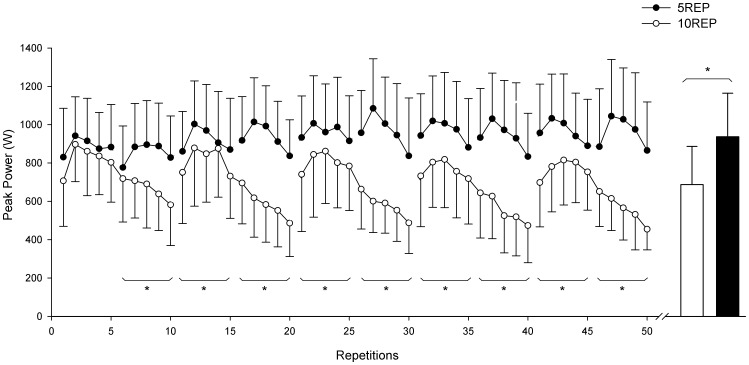
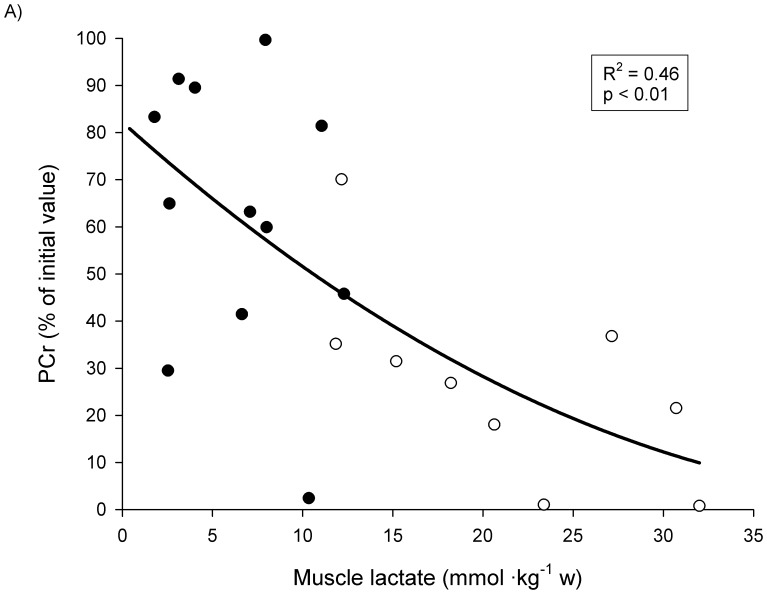
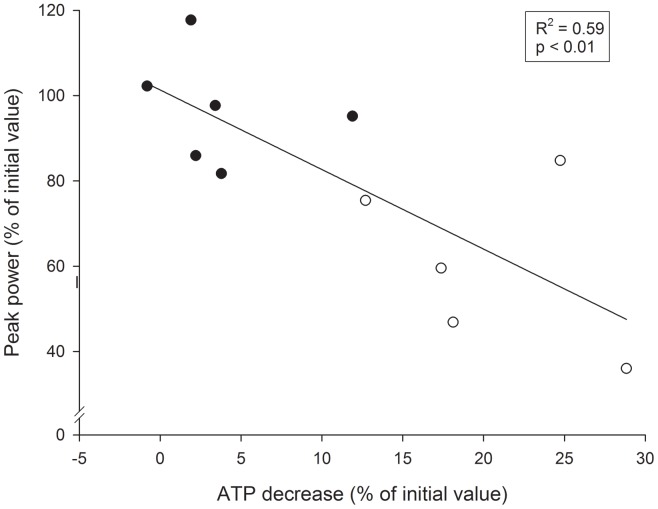
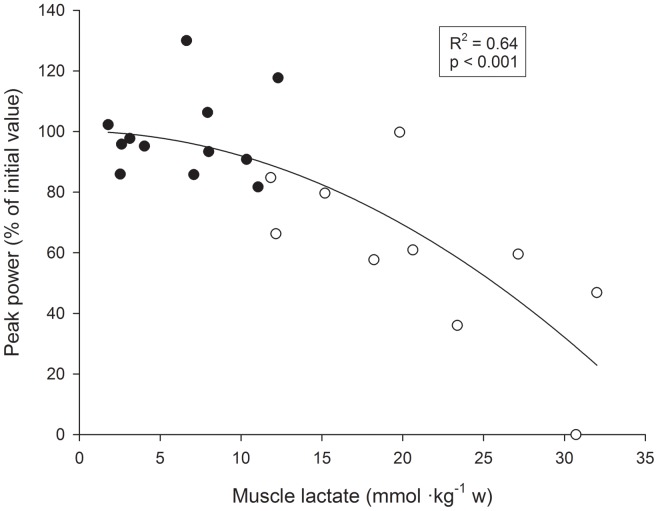
This investigation examined the influence of the number of repetitions per set on power output and muscle metabolism during leg press exercise. Six trained men (age 34 ± 6 yr) randomly performed either 5 sets of 10 repetitions (10REP), or 10 sets of 5 repetitions (5REP) of bilateral leg press exercise, with the same initial load and rest intervals between sets. Muscle biopsies (vastus lateralis) were taken before the first set, and after the first and the final sets. Compared with 5REP, 10REP resulted in a markedly greater decrease (P<0.05) of the power output, muscle PCr and ATP content, and markedly higher (P<0.05) levels of muscle lactate and IMP. Significant correlations (P<0.01) were observed between changes in muscle PCr and muscle lactate (R(2) = 0.46), between changes in muscle PCr and IMP (R(2) = 0.44) as well as between changes in power output and changes in muscle ATP (R(2) = 0.59) and lactate (R(2) = 0.64) levels. Reducing the number of repetitions per set by 50% causes a lower disruption to the energy balance in the muscle. The correlations suggest that the changes in PCr and muscle lactate mainly occur simultaneously during exercise, whereas IMP only accumulates when PCr levels are low. The decrease in ATP stores may contribute to fatigue.
Overview
The claims and statistics of this paper haven’t been checked yet.
Run the check — free, no account needed. It reads the open-access text and checks the sources it cites.
Integrity signals
Registry
Cites
Statistics
Figures
Verification
Claims the paper makes
The claims and statistics of this paper haven’t been checked yet.
Run the check — free, no account needed. It reads the open-access text and checks the sources it cites.
Claims other papers make about this one
Each is checked against this paper’s own text: does it say what the citing paper says it does?
The source backs part of the claim, not all of it — or backs it for a different population, condition or comparison.
In the citing paper
“This implies that when the last repetitions of a set are being performed in the MaxV condition, only moderate levels of velocity loss and metabolic stress occur [ 12 , 32 ] .”
From Effect of Movement Velocity during Resistance Training on Neuromuscular Performance (2014) · cites this paper as [12]
Experimental — accuracy not yet measuredThe source backs part of the claim, not all of it — or backs it for a different population, condition or comparison.
In the citing paper
“Intra‐set VL is correlated with mechanical and metabolic fatigue markers, in addition to proximity to muscular failure (Gorostiaga et al., 2012).”
From Acute systemic and energy metabolism responses to velocity-based resistance training following an oral glucose load in individuals with excess body weight (2026) · cites this paper as Gorostiaga et al., 2012
Experimental — accuracy not yet measuredThe cited source says what the claim attributes to it.
In the citing paper
“The metabolic stress and degree of fatigue induced by the RT protocols used in this investigation are far from those typically associated with exhaustive resistance training [ 12 , 32 ] .”
From Effect of Movement Velocity during Resistance Training on Neuromuscular Performance (2014) · cites this paper as [12]
Self-check
Percentages, sums and reported differences re-computed from the paper’s own numbers.
The self-check needs the paper’s full text.
Citations
Cites
American College of Sports Medicine position stand
Otis, C. L. (1997) · Medical Entomology and Zoology · Cited by 4,407
Progression Models in Resistance Training for Healthy Adults
(2009) · Medicine & Science in Sports & Exercise · doi:10.1249/mss.0b013e3181915670 · Cited by 4,332 · cited 1×
“Regular resistance exercise is an essential component of effective intervention programs designed to improve strength in athletes and adults with chronic diseases and disabilities [1,2].”
BackgroundProgression Models in Resistance Training for Healthy Adults
(2002) · Medicine and Science in Sports and Exercise · doi:10.1097/00005768-200202000-00027 · Cited by 2,979
Colberg, S. R., Sigal, R. J., Fernhall, B., Regensteiner, J. G., Blissmer, B. J., Rubin, R. R., Chasan-Taber, L., Albright, A. L., & Braun, B. (2010) · Diabetes Care · doi:10.2337/dc10-9990 · Cited by 1,955
The AMP‐Activated Protein Kinase: Fuel Gauge of the Mammalian Cell?
Hardie, D. G., & Carling, D. (1997) · European Journal of Biochemistry · doi:10.1111/j.1432-1033.1997.00259.x · Cited by 1,317
Percutaneous Needle Biopsy of Skeletal Muscle in Physiological and Clinical Research
Bergström, J. P. (1975) · Scandinavian Journal of Clinical and Laboratory Investigation · doi:10.3109/00365517509095787 · Cited by 1,173
AMP-activated protein kinase, a metabolic master switch: possible roles in Type 2 diabetes
Winder, W. W., & Hardie, D. G. (1999) · American Journal of Physiology-Endocrinology and Metabolism · doi:10.1152/ajpendo.1999.277.1.e1 · Cited by 1,000
Structure of mammalian AMPK and its regulation by ADP
Xiao, B., Sanders, M. J., Underwood, E., Heath, R., Mayer, F. V., Carmena, D., Jing, C., Walker, P. A., Eccleston, J. F., Haire, L. F., et al. (2011) · Nature · doi:10.1038/nature09932 · Cited by 926
Bogdanis, G. C., Nevill, M. E., Boobis, L. H., & Lakomy, H. K. (1996) · Journal of Applied Physiology · doi:10.1152/jappl.1996.80.3.876 · Cited by 691
Human Muscle Function and Fatigue
Edwards, R. H. T. (1981) · Novartis Foundation symposium · doi:10.1002/9780470715420.ch1 · Cited by 668
Cited by
Sorted by citations
Fragala, M. S., Cadore, E. L., Dorgo, S., Izquierdo, M., Kraemer, W. J., Peterson, M. D., & Ryan, E. D. (2019) · Journal of Strength and Conditioning Research · doi:10.1519/jsc.0000000000003230 · Cited by 1,290
Self-citationThe importance of muscular strength: Training considerations
Suchomel, T. J., Nimphius, S., Bellon, C. R., & Stone, M. H. (2018) · Sports Medicine · doi:10.1007/s40279-018-0862-z · Cited by 940
Pareja‐Blanco, F., Rodríguez‐Rosell, D., Sánchez‐Medina, L., Sanchis‐Moysi, J., Dorado, C., Mora‐Custodio, R., Yáñez‐García, J. M., Morales‐Alamo, D., Pérez‐Suárez, I., Calbet, J. A. L., et al. (2017) · Scandinavian Journal of Medicine & Science in Sports · doi:10.1111/sms.12678 · Cited by 505
Self-citationEgan, B., & Sharples, A. P. (2023) · Physiological Reviews · doi:10.1152/physrev.00054.2021 · Cited by 278
González‐Badillo, J. J., Rodríguez‐Rosell, D., Sánchez‐Medina, L., Gorostiaga, E. M., & Pareja‐Blanco, F. (2014) · European Journal of Sport Science · doi:10.1080/17461391.2014.905987 · Cited by 243
Self-citationEffect of Movement Velocity during Resistance Training on Neuromuscular Performance
Pareja-Blanco, F., Rodríguez-Rosell, D., Sánchez-Medina, L., Gorostiaga, E., & González-Badillo, J. (2014) · International Journal of Sports Medicine · doi:10.1055/s-0033-1363985 · Cited by 218
Self-citationTime course of recovery following resistance training leading or not to failure
Morán-Navarro, R., Pérez, C. E., Mora-Rodríguez, R., de la Cruz-Sánchez, E., González-Badillo, J. J., Sánchez-Medina, L., & Pallarés, J. G. (2017) · European Journal of Applied Physiology · doi:10.1007/s00421-017-3725-7 · Cited by 178
Theoretical and Practical Aspects of Different Cluster Set Structures: A Systematic Review
Tufano, J. J., Brown, L. E., & Haff, G. G. (2016) · The Journal of Strength and Conditioning Research · doi:10.1519/jsc.0000000000001581 · Cited by 192
Balsalobre‐Fernández, C., Santos‐Concejero, J., & Grivas, G. V. (2015) · The Journal of Strength and Conditioning Research · doi:10.1519/jsc.0000000000001316 · Cited by 167
Impact of Resistance Training on Skeletal Muscle Mitochondrial Biogenesis, Content, and Function
Groennebaek, T., & Vissing, K. (2017) · Frontiers in Physiology · doi:10.3389/fphys.2017.00713 · Cited by 162
Short-term Recovery Following Resistance Exercise Leading or not to Failure
González‐Badillo, J. J., Rodríguez‐Rosell, D., Sánchez‐Medina, L., Ribas, J., López-López, C., Mora‐Custodio, R., Yáñez‐García, J. M., & Pareja‐Blanco, F. (2015) · International Journal of Sports Medicine · doi:10.1055/s-0035-1564254 · Cited by 124
Jukić, I., García‐Ramos, A., Helms, E. R., McGuigan, M. R., & Tufano, J. J. (2020) · Sports Medicine · doi:10.1007/s40279-020-01344-2 · Cited by 133
Balsalobre‐Fernández, C., Kuzdub, M., Poveda-Ortiz, P., & del Campo-Vecino, J. (2015) · The Journal of Strength and Conditioning Research · doi:10.1519/jsc.0000000000001284 · Cited by 115
Time Course of Recovery From Resistance Exercise With Different Set Configurations
Pareja‐Blanco, F., Rodríguez‐Rosell, D., Aagaard, P., Sánchez‐Medina, L., Ribas‐Serna, J., Mora‐Custodio, R., Otero‐Esquina, C., Yáñez‐García, J. M., & González‐Badillo, J. J. (2018) · The Journal of Strength and Conditioning Research · doi:10.1519/jsc.0000000000002756 · Cited by 114
Acute and delayed response to resistance exercise leading or not leading to muscle failure
Pareja‐Blanco, F., Rodríguez‐Rosell, D., Sánchez‐Medina, L., Ribas‐Serna, J., López-López, C., Mora‐Custodio, R., Yáñez‐García, J. M., & González‐Badillo, J. J. (2016) · Clinical Physiology and Functional Imaging · doi:10.1111/cpf.12348 · Cited by 128
Latella, C., Teo, W., Drinkwater, E. J., Kendall, K. L., & Haff, G. G. (2019) · Sports Medicine · doi:10.1007/s40279-019-01172-z · Cited by 95
Vieira, A. F., Umpierre, D., Teodoro, J. L., Lisboa, S. C., Baroni, B. M., Izquierdo, M., & Cadore, E. L. (2021) · Journal of Strength & Conditioning Research · doi:10.1519/jsc.0000000000003936 · Cited by 94
Self-citationBlood Ammonia and Lactate as Markers of Muscle Metabolites During Leg Press Exercise
Gorostiaga, E. M., Navarro-Amézqueta, I., Calbet, J. A. L., Sánchez‐Medina, L., Cussó, R., Guerrero, M., Granados, C., González‐Izal, M., Courel‐Ibáñez, J., & Izquierdo, M. (2014) · The Journal of Strength and Conditioning Research · doi:10.1519/jsc.0000000000000496 · Cited by 93
Self-citationVitamin D: Recent Advances and Implications for Athletes
Todd, J. J., Pourshahidi, L. K., McSorley, E. M., Madigan, S. M., & Magee, P. J. (2014) · Sports Medicine · doi:10.1007/s40279-014-0266-7 · Cited by 90
Velocity Drives Greater Power Observed During Back Squat Using Cluster Sets
Oliver, J. M., Kreutzer, A., Jenke, S. C., Phillips, M. D., Mitchell, J. B., & Jones, M. T. (2015) · The Journal of Strength and Conditioning Research · doi:10.1519/jsc.0000000000001023 · Cited by 86
Acute response to cluster sets in trained and untrained men
Oliver, J. M., Kreutzer, A., Jenke, S. C., Phillips, M. D., Mitchell, J. B., & Jones, M. T. (2015) · European Journal of Applied Physiology · doi:10.1007/s00421-015-3216-7 · Cited by 93
Coratella, G. (2022) · Sports Medicine - Open · doi:10.1186/s40798-022-00492-1 · Cited by 84
Jump height loss as an indicator of fatigue during sprint training
Jiménez‐Reyes, P., Pareja‐Blanco, F., Cuadrado‐Peñafiel, V., Ortega‐Becerra, M., MONTILLA, J. A. P., & González‐Badillo, J. J. (2018) · Journal of Sports Sciences · doi:10.1080/02640414.2018.1539445 · Cited by 68
Martorelli, S., Cadore, E. L., Izquierdo, M., Celes, R. S., Martorelli, A., Cleto, V. A., Alvarenga, J. G., & Bottaro, M. (2017) · European Journal of Translational Myology · doi:10.4081/ejtm.2017.6339 · Cited by 75
Self-citationMetabolic time-course response after resistance exercise: A metabolomics approach
Berton, R., Conceição, M. S., Libardi, C. A., Canevarolo, R. R., Gáspari, A. F., Chacon-Mikahil, M. P. T., Zeri, A. C., & Cavaglieri, C. R. (2017) · Journal of Sports Sciences · doi:10.1080/02640414.2016.1218035 · Cited by 65
da Silva, L. X. N., Teodoro, J. L., Menger, E., Lopez, P., Grazioli, R., Farinha, J., Moraes, K., Bottaro, M., Pinto, R. S., Izquierdo, M., et al. (2018) · Experimental Gerontology · doi:10.1016/j.exger.2018.03.017 · Cited by 63
Self-citationVieira, J. G., Sardeli, A. V., Dias, M. R., Filho, J. E., Campos, Y., Sant’Ana, L. D. O., Leitão, L., Reis, V. M., Wilk, M., Novaes, J. D. S., et al. (2021) · Sports Medicine · doi:10.1007/s40279-021-01602-x · Cited by 73
Larsen, S., Kristiansen, E. L., & van den Tillaar, R. (2021) · PeerJ · doi:10.7717/peerj.10663 · Cited by 60
Effort Index as a Novel Variable for Monitoring the Level of Effort During Resistance Exercises
Rodríguez‐Rosell, D., Yáñez‐García, J. M., Torres‐Torrelo, J., Mora‐Custodio, R., Marques, M. C., & González‐Badillo, J. J. (2018) · The Journal of Strength and Conditioning Research · doi:10.1519/jsc.0000000000002629 · Cited by 67
Mora‐Custodio, R., Rodríguez‐Rosell, D., Yáñez‐García, J. M., Sánchez‐Moreno, M., Pareja‐Blanco, F., & González‐Badillo, J. J. (2018) · Journal of Sports Sciences · doi:10.1080/02640414.2018.1480052 · Cited by 55
Hackett, D. A., Davies, T. B., Orr, R., Kuang, K., & Halaki, M. (2018) · European Journal of Sport Science · doi:10.1080/17461391.2018.1434563 · Cited by 52
Influence of a Cluster Set Configuration on the Adaptations to Short-Term Power Training
Morales‐Artacho, A. J., Padial, P., García‐Ramos, A., Pérez‐Castilla, A., & Feriche, B. (2017) · The Journal of Strength and Conditioning Research · doi:10.1519/jsc.0000000000001925 · Cited by 57
Arazi, H., Khanmohammadi, A., Asadi, A., & Haff, G. G. (2017) · Applied Physiology, Nutrition, and Metabolism · doi:10.1139/apnm-2017-0327 · Cited by 54
Refalo, M. C., Helms, E. R., Hamilton, D. L., & Fyfe, J. J. (2023) · Sports Medicine - Open · doi:10.1186/s40798-023-00554-y · Cited by 56
Refalo, M. C., Helms, E. R., Hamilton, D. L., & Fyfe, J. J. (2022) · Journal of Sports Sciences · doi:10.1080/02640414.2022.2080165 · Cited by 48
Lactate: valuable for physical performance and maintenance of brain function during exercise
Todd, J. J. (2014) · Bioscience Horizons The International Journal of Student Research · doi:10.1093/biohorizons/hzu001 · Cited by 46
Applying Force Plate Technology to Inform Human Performance Programming in Tactical Populations
Merrigan, J. J., Stone, J. D., Martin, J. R., Hornsby, W. G., Galster, S. M., & Hagen, J. A. (2021) · Applied Sciences · doi:10.3390/app11146538 · Cited by 42
Martinez‐Canton, M., Gallego-Selles, Á., Gelabert‐Rebato, M., Martín-Rincón, M., Pareja‐Blanco, F., Rodríguez‐Rosell, D., Morales‐Álamo, D., Sanchis‐Moysi, J., Dorado, C., González‐Badillo, J. J., et al. (2020) · Scandinavian Journal of Medicine and Science in Sports · doi:10.1111/sms.13828 · Cited by 41
Self-citationValidity of using perceived exertion to assess muscle fatigue during resistance exercises
Zhao, H., Nishioka, T., & Okada, J. (2022) · PeerJ · doi:10.7717/peerj.13019 · Cited by 41
Gantois, P., de Lima-Júnior, D. R. A. A., Fortes, L. D. S., Batista, G. R., Nakamura, F. Y., & Fonseca, F. D. S. (2021) · Perceptual and Motor Skills · doi:10.1177/00315125211016233 · Cited by 40
Radaelli, R., Trajano, G. S., Freitas, S. R., Izquierdo, M., Cadore, E. L., & Pinto, R. S. (2023) · Sports Medicine · doi:10.1007/s40279-022-01758-0 · Cited by 38
Self-citationAerobic Adaptations to Resistance Training: The Role of Time under Tension
Mang, Z. A., Ducharme, J. B., Mermier, C. M., Kravitz, L. R., Magalhães, F. D. C., & Amorim, F. T. (2022) · International Journal of Sports Medicine · doi:10.1055/a-1664-8701 · Cited by 42
Tufano, J. J., Conlon, J. A., Nimphius, S., Oliver, J. M., Kreutzer, A., & Haff, G. G. (2017) · The Journal of Strength and Conditioning Research · doi:10.1519/jsc.0000000000001898 · Cited by 39
Sarabia, J. M., Moya‐Ramón, M., Hernández‐Davó, J. L., Fernández-Fernández, J., & Sabido, R. (2017) · PLoS ONE · doi:10.1371/journal.pone.0186601 · Cited by 38
Cluster vs. traditional training programmes: changes in the force–velocity relationship
Rial-Vázquez, J., Mayo, X., Tufano, J. J., Fariñas, J., Rúa-Alonso, M., & Iglesias‐Soler, E. (2020) · Sports Biomechanics · doi:10.1080/14763141.2020.1718197 · Cited by 39
Cadore, E. L., Menger, E., Teodoro, J. L., da Silva, L. X. N., Boeno, F. P., Umpierre, D., Botton, C. E., Ferrari, R., Cunha, G. D. S., Izquierdo, M., et al. (2018) · Experimental Gerontology · doi:10.1016/j.exger.2018.06.011 · Cited by 37
Self-citationUrine metabolomic analysis for monitoring internal load in professional football players
Quintás‐Cardama, A., Reche, X., Sanjuan-Herráez, J. D., Martínez, H., Herrero, M., Valle, X., Masa, M., & Rodas, G. (2020) · Metabolomics · doi:10.1007/s11306-020-01668-0 · Cited by 43
Anwer, S., Li, H., Antwi‐Afari, M. F., Umer, W., Mehmood, I., Al‐Hussein, M., & Wong, A. Y. L. (2021) · Journal of Building Engineering · doi:10.1016/j.jobe.2021.103348 · Cited by 34
Holloway, T. M., Morton, R. W., Oikawa, S. Y., McKellar, S. R., Baker, S. K., & Phillips, S. M. (2018) · American Journal of Physiology-Regulatory, Integrative and Comparative Physiology · doi:10.1152/ajpregu.00118.2018 · Cited by 34
Karsten, B., Fu, Y., Larumbe‐Zabala, E., Seijo, M., & Naclerio, F. (2019) · The Journal of Strength and Conditioning Research · doi:10.1519/jsc.0000000000003163 · Cited by 32
Effect of Velocity Loss on Strength Performance in Bench Press Using a Weight Stack Machine
Rodiles-Guerrero, L., Pareja‐Blanco, F., & León-Prados, J. A. (2020) · International Journal of Sports Medicine · doi:10.1055/a-1179-5849 · Cited by 35
Fonseca, F. D. S., Costa, B. D. D. V., Ferreira, M. E. C., Paes, S. T., de Lima-Júnior, D. R. A. A., Kassiano, W., Cyrino, E. S., Gantois, P., & Fortes, L. D. S. (2020) · Journal of Exercise Science & Fitness · doi:10.1016/j.jesf.2020.01.004 · Cited by 29
Davies, T. B., Halaki, M., Orr, R., Helms, E. R., & Hackett, D. A. (2019) · The Journal of Strength and Conditioning Research · doi:10.1519/jsc.0000000000003166 · Cited by 29
Androulakis‐Korakakis, P., Langdown, L., Lewis, A. P., Fisher, J. P., Gentil, P., Paoli, A., & Steele, J. (2017) · The Journal of Strength and Conditioning Research · doi:10.1519/jsc.0000000000001809 · Cited by 28
Jukić, I., & Tufano, J. J. (2019) · Journal of Human Kinetics · doi:10.2478/hukin-2019-0052 · Cited by 26
Validity of using perceived exertion to assess muscle fatigue during back squat exercise
Zhao, H., Seo, D., & Okada, J. (2023) · BMC Sports Science Medicine and Rehabilitation · doi:10.1186/s13102-023-00620-8 · Cited by 26
Włodarczyk, M., Kusy, K., Slominska, E. M., Krasiński, Z., & Zieliński, J. (2019) · The Journal of Strength and Conditioning Research · doi:10.1519/jsc.0000000000003375 · Cited by 25
González-Hernández, J. M., García‐Ramos, A., Colomer‐Poveda, D., Tvarijonaviciute, A., Cerón, J. M. C., Jiménez‐Reyes, P., & Márquez, G. (2020) · The Journal of Strength and Conditioning Research · doi:10.1519/jsc.0000000000003921 · Cited by 25
Perceived Exertion Is Affected by the Submaximal Set Configuration Used in Resistance Exercise
Mayo, X., Iglesias‐Soler, E., & Kingsley, J. D. (2017) · The Journal of Strength and Conditioning Research · doi:10.1519/jsc.0000000000001886 · Cited by 25
Jukić, I., & Tufano, J. J. (2019) · Journal of Human Kinetics · doi:10.2478/hukin-2018-0070 · Cited by 28
Piqueras‐Sanchiz, F., Cornejo‐Daza, P. J., Sánchez‐Valdepeñas, J., Mena, B. B., Sánchez‐Moreno, M., Martín-Rodríguez, S., García-García, Ó., & Pareja‐Blanco, F. (2021) · The Journal of Strength and Conditioning Research · doi:10.1519/jsc.0000000000004068 · Cited by 24
Cluster sets vs. traditional sets: Levelling out the playing field using a power-based threshold
Tufano, J. J., Halaj, M., Kampmiller, T., Novosád, A., & Buzgó, G. (2018) · PLoS ONE · doi:10.1371/journal.pone.0208035 · Cited by 24
Reducing the Loss of Velocity and Power in Women Athletes via Rest Redistribution
Merrigan, J. J., Tufano, J. J., Oliver, J. M., White, J. B., Fields, J. B., & Jones, M. T. (2019) · International Journal of Sports Physiology and Performance · doi:10.1123/ijspp.2019-0264 · Cited by 24
International society of sports nutrition position stand: ketogenic diets
Leaf, A., Rothschild, J. A., Sharpe, T. M., Sims, S. T., Macias, C. J., Futch, G. G., Roberts, M. D., Stout, J. R., Ormsbee, M. J., Aragon, A. A., et al. (2024) · Journal of the International Society of Sports Nutrition · doi:10.1080/15502783.2024.2368167 · Cited by 23
Graven, P., Tambalo, M., Scapozza, L., & Perozzo, R. (2014) · Experimental Parasitology · doi:10.1016/j.exppara.2014.03.006 · Cited by 22
The Effects of Aquatic Plyometric Training on Repeated Jumps, Drop Jumps and Muscle Damage
Jurado-Lavanant, A., Alvero‐Cruz, J. R., Pareja‐Blanco, F., Melero-Romero, C., Rodríguez‐Rosell, D., & Fernández‐García, J. C. (2015) · International Journal of Sports Medicine · doi:10.1055/s-0034-1398574 · Cited by 21
Cheng, R., Maloney, A., Moran, J. T., Newman, T. H., & Gardner, E. C. (2021) · Clinical Therapeutics · doi:10.1016/j.clinthera.2021.11.012 · Cited by 23
Rossato, M. F., Dellagrana, R. A., Sakugawa, R. L., Baroni, B. M., & Diefenthaeler, F. (2020) · Photobiomodulation Photomedicine and Laser Surgery · doi:10.1089/photob.2020.4820 · Cited by 20
Effects of Cluster Set Configuration on Mechanical Performance and Neuromuscular Activity
Ortega‐Becerra, M., Sánchez‐Moreno, M., & Pareja‐Blanco, F. (2020) · The Journal of Strength and Conditioning Research · doi:10.1519/jsc.0000000000003907 · Cited by 19
Martorelli, A., Bottaro, M., Vieira, A., Rocha-Júnior, V. A., Cadore, E. L., Prestes, J., Wagner, D. R., & Martorelli, S. (2015) · PubMed Central · Cited by 20
MONTILLA, J. A. P., García‐Ramos, A., Castaño‐Zambudio, A., Capelo‐Ramírez, F., González-Hernández, J. M., Cordero-Rodríguez, Y., & Jiménez‐Reyes, P. (2018) · The Journal of Strength and Conditioning Research · doi:10.1519/jsc.0000000000002712 · Cited by 24
Rodas, G., Ferrer, E., Reche, X., Sanjuan-Herráez, J. D., McCall, A., & Quintás‐Cardama, A. (2022) · Frontiers in Physiology · doi:10.3389/fphys.2022.923608 · Cited by 24
Costa, B. D. D. V., Ferreira, M. E. C., Gantois, P., Kassiano, W., Paes, S. T., de Lima-Júnior, D. R. A. A., Cyrino, E. S., & Fortes, L. D. S. (2019) · The Journal of Strength and Conditioning Research · doi:10.1519/jsc.0000000000003150 · Cited by 18
Antioxidants Facilitate High–intensity Exercise IL–15 Expression in Skeletal Muscle
Pérez‐López, A., Martín-Rincón, M., Santana, A., Pérez-Suárez, I., Dorado, C., Calbet, J. A. L., & Morales‐Álamo, D. (2018) · International Journal of Sports Medicine · doi:10.1055/a-0781-2527 · Cited by 17
Self-citationAdaption of Maximal Glycolysis Rate after Resistance Exercise with Different Volume Load
Nitzsche, N., Lenz, J. C., Voronoi, P., & Schulz, H. (2020) · Sports Medicine International Open · doi:10.1055/a-1146-4236 · Cited by 16
Machek, S. B., Hwang, P. S., Cardaci, T. D., Wilburn, D. T., Bagley, J. R., Blake, D. T., Galpin, A. J., & Willoughby, D. S. (2020) · The Journal of Strength and Conditioning Research · doi:10.1519/jsc.0000000000003804 · Cited by 19
Bazzano, M., Laghi, L., Zhu, C., Lotito, E., Sgariglia, S., Tesei, B., & Laus, F. (2020) · Metabolites · doi:10.3390/metabo10070298 · Cited by 16
Ma, T., Xu, L., Wang, H., Chen, J., Liu, L., Chang, G., & Chen, G. (2015) · Journal of Animal Science and Biotechnology/Journal of animal science and biotechnology · doi:10.1186/s40104-015-0022-3 · Cited by 16
Cluster Set Loading in the Back Squat: Kinetic and Kinematic Implications
Wetmore, A. B., Wagle, J. P., Sams, M. L., Taber, C. B., DeWeese, B. H., Sato, K., & Stone, M. H. (2019) · The Journal of Strength and Conditioning Research · doi:10.1519/jsc.0000000000002972 · Cited by 16
Refalo, M. C., Remmert, J. F., Pelland, J. C., Robinson, Z. P., Zourdos, M. C., Hamilton, D. L., Fyfe, J. J., & Helms, E. R. (2023) · The Journal of Strength and Conditioning Research · doi:10.1519/jsc.0000000000004653 · Cited by 15
Corradi, E. F. F., Lanza, M. B., de Lacerda, L. T., Andrushko, J. W., Martins-Costa, H. C., Diniz, R. C. R., Lima, F. V., & Chagas, M. H. (2020) · Journal of science and medicine in sport · doi:10.1016/j.jsams.2020.07.015 · Cited by 15
Merrigan, J. J., & Martin, J. R. (2020) · The Journal of Strength and Conditioning Research · doi:10.1519/jsc.0000000000003782 · Cited by 15
Efficacy of Rest Redistribution During Squats: Considerations for Strength and Sex
Boffey, D., Clark, N. W., & Fukuda, D. H. (2021) · The Journal of Strength and Conditioning Research · doi:10.1519/jsc.0000000000003893 · Cited by 15
Rest Redistribution Does Not Alter Hormone Responses in Resistance-Trained Women
Merrigan, J. J., Tufano, J. J., Fields, J. B., Oliver, J. M., & Jones, M. T. (2020) · The Journal of Strength and Conditioning Research · doi:10.1519/jsc.0000000000003617 · Cited by 14
Time course of recovery from resistance exercise before and after a training program
Pareja‐Blanco, F., Rodríguez‐Rosell, D., & González‐Badillo, J. J. (2019) · The Journal of Sports Medicine and Physical Fitness · doi:10.23736/s0022-4707.19.09334-4 · Cited by 13
Nagatani, T., Haff, G. G., Guppy, S. N., & Kendall, K. L. (2021) · Strength and conditioning journal · doi:10.1519/ssc.0000000000000700 · Cited by 14
Jukić, I., & Tufano, J. J. (2020) · Sports Biomechanics · doi:10.1080/14763141.2020.1747530 · Cited by 16
Orser, K., Agar-Newman, D. J., Tsai, M., & Klimstra, M. D. (2020) · Sports Biomechanics · doi:10.1080/14763141.2020.1829691 · Cited by 13
Martínez‐Guardado, I., Guerra, A. M., Sanabria-Pino, B., Camacho, G., & Andrada, R. (2020) · Biology of Sport · doi:10.5114/biolsport.2021.99701 · Cited by 12
Włodarczyk, M., Kusy, K., Slominska, E. M., Krasiński, Z., & Zieliński, J. (2019) · The Journal of Strength and Conditioning Research · doi:10.1519/jsc.0000000000003133 · Cited by 12
Teodoro, J. L., Izquierdo, M., da Silva, L. X. N., Baroni, B. M., Grazioli, R., López, P., Fritsch, C. G., Radaelli, R., de Asteasu, M. L. S., Bottaro, M., et al. (2020) · Experimental Gerontology · doi:10.1016/j.exger.2020.111023 · Cited by 12
Self-citationGantois, P., Fonseca, F. D. S., de Lima-Júnior, D. R. A. A., Costa, M. D. C., Costa, B. D. D. V., Cyrino, E. S., & Fortes, L. D. S. (2020) · Isokinetics and Exercise Science · doi:10.3233/ies-202123 · Cited by 11
Schwartz, H., Emanuel, A., Samukas, I. I. R., & Halperin, I. (2021) · PLoS ONE · doi:10.1371/journal.pone.0256231 · Cited by 12
Mao, J., Wang, T., Wang, Y., & Kuan, G. (2023) · Frontiers in Physiology · doi:10.3389/fphys.2023.1301535 · Cited by 11
Davies, T. B., Halaki, M., Orr, R., Mitchell, L., Helms, E. R., Clarke, J., & Hackett, D. A. (2021) · The Journal of Strength and Conditioning Research · doi:10.1519/jsc.0000000000003971 · Cited by 10
Falch, H. N., Gundersen, A. H., Larsen, S., Haugen, M. E., & van den Tillaar, R. (2024) · PeerJ · doi:10.7717/peerj.16865 · Cited by 11
The effect of back squat depth and load on lower body muscle activity in group exercise participants
O’Neill, K. E., & Psycharakis, S. G. (2021) · Sports Biomechanics · doi:10.1080/14763141.2021.1875034 · Cited by 12
Carneiro, M. A. S., Júnior, G. N. D. O., de Sousa, J. F. R., Santagnello, S. B., Souza, M. V. C., & Orsatti, F. L. (2019) · Sport Sciences for Health · doi:10.1007/s11332-019-00599-1 · Cited by 9
Orssatto, L. B. R., Rossato, M. F., Vargas, M., Diefenthaeler, F., & Freitas, C. D. L. R. (2020) · Photobiomodulation Photomedicine and Laser Surgery · doi:10.1089/photob.2019.4777 · Cited by 9
Cornejo‐Daza, P. J., Sánchez‐Valdepeñas, J., Páez-Maldonado, J. A., Rodiles-Guerrero, L., Boullosa, D. A., León-Prados, J. A., Wernbom, M., & Pareja‐Blanco, F. (2024) · The Journal of Strength and Conditioning Research · doi:10.1519/jsc.0000000000004820 · Cited by 8
Metadata
- Authors
- Gorostiaga, E. M., Navarro-Amézqueta, I., Calbet, J. A. L., Hellsten, Y., Cusso, R., Guerrero, M., Granados, C., González-Izal, M., Ibañez, J., & Izquierdo, M.
- Affiliations
- Gobierno de Navarra (ES)
- Universidad de Las Palmas de Gran Canaria (ES)
- University of Copenhagen (DK)
- Consorci Institut D'Investigacions Biomediques August Pi I Sunyer (ES)
- Corresponding author
- Gorostiaga, Esteban M.
- Venue
- PLoS ONE
- Publisher
- Public Library of Science (PLoS)
- Published
- 2012-07-13
- Volume
- 7
- Issue
- 7
- Pages
- e40621
- ISSN
- 1932-6203 (ISSN-L)
- PMC
- PMC3396634
- OpenAlex
- W2022174440
- Cited by
- 178
- References
- 45
- Citations by year
- 2026: 12 · 2025: 13 · 2024: 16 · 2023: 14 · 2022: 18 · 2021: 18 · 2020: 27 · 2019: 15 · 2018: 14 · 2017: 10 · 2016: 4 · 2015: 10 · 2014: 6 · 2013: 1
- FWCI
- 13.25
- Type
- journal article
- Language
- en
- Update notices
- correction (2013-01-17)
- Open access
- gold
- doi.org
- Locations
- PLoS ONE (publishedVersion, cc-by)
- Europe PMC (PubMed Central) (publishedVersion, cc-by)
- PubMed Central (publishedVersion, cc-by)
- PubMed (publishedVersion)
- Dipòsit Digital de la Universitat de Barcelona (Universitat de Barcelona) (publishedVersion, cc-by)
- Academica-e (Universidad Pública de Navarra) (acceptedVersion, cc-by)
- Acceda (Universidad de Las Palmas de Gran Canaria) (submittedVersion)
- LA Referencia (Red Federada de Repositorios Institucionales de Publicaciones Científicas) (submittedVersion, cc-by)
- DOAJ (DOAJ: Directory of Open Access Journals) (submittedVersion, cc-by-sa)
- RECERCAT (Consorci de Serveis Universitaris de Catalunya) (submittedVersion, cc-by)
- Topics
- Health Sciences › Medicine › Physiology (medical) › Cardiovascular and exercise physiology
- Health Sciences › Medicine › Orthopedics and Sports Medicine › Sports Performance and Training
- Health Sciences › Nursing › Nutrition and Dietetics › Muscle metabolism and nutrition
- Keywords
- leg press, muscle energy metabolism, muscle fatigue, phosphocreatine, ATP, muscle lactate, inosine monophosphate, output power, vastus lateralis
- MeSH terms
- Adult, Biomechanical Phenomena, Energy Metabolism, Humans, Leg, Male, Nucleotides, Phosphocreatine, Uric Acid, Exercise, Muscle, Skeletal, Lactic Acid, Metabolome
About these checks
Registry, retraction, Cites and statistics results are computed, not judged, with one exception: a printed reference that no index lists is read once by a model before it counts as a citation error. Claims are extracted by a model and kept only when their quote appears verbatim in the text; each cited source is then checked, with a model’s help, for whether it says what the claim relies on. Those verdicts can be wrong — read the claim’s quote and the cited source before relying on one.
Statistics and arithmetic are recomputed, not judged.
Confidence bands are shown only for fields calibrated on our annotated test set. None is calibrated yet, so no band is shown.
What counts as a claim ›How we measure confidence ›How we check this ›
Are you an author, or do you see a problem with this page? Request a review
