

The DOI matches its Crossref record; 62 of the 63 references it cites were found in a registry or an index.
Factors Predicting Reversion from Mild Cognitive Impairment to Normal Cognitive Functioning: A Population-Based Study
Open accessAbstract
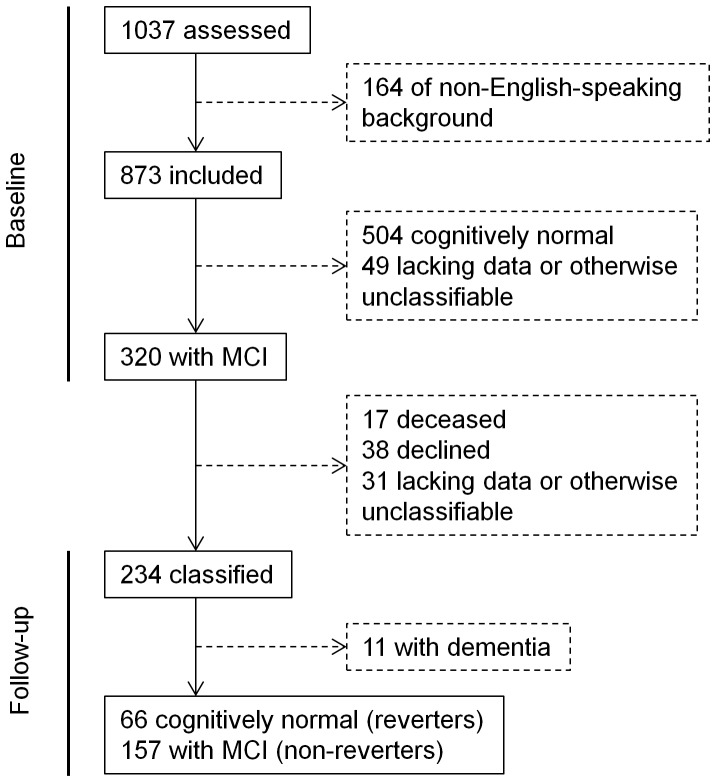
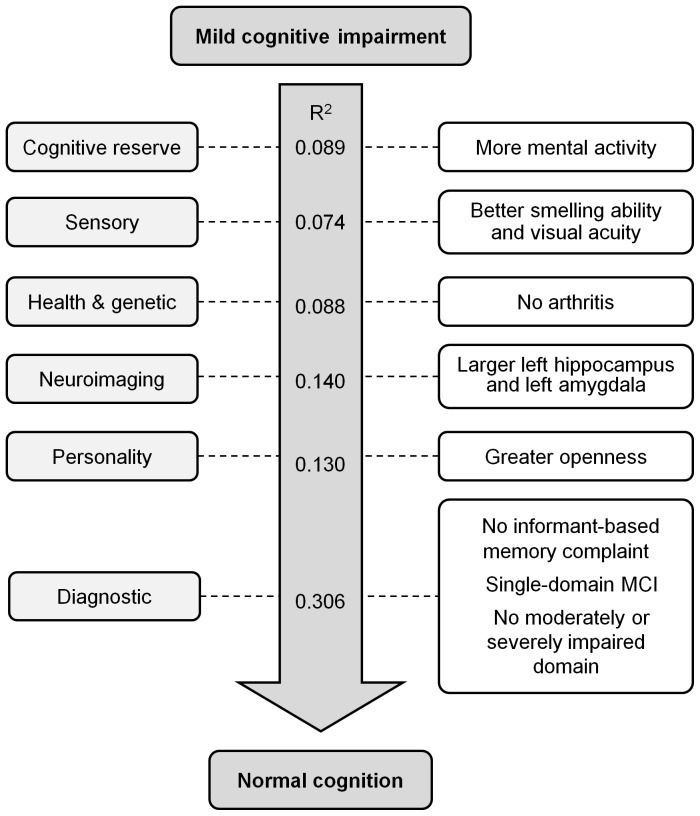
INTRODUCTION: Mild cognitive impairment (MCI) is associated with an increased risk of developing dementia. However, many individuals diagnosed with MCI are found to have reverted to normal cognition on follow-up. This study investigated factors predicting or associated with reversion from MCI to normal cognition. METHODS: Our analyses considered 223 participants (48.9% male) aged 71-89 years, drawn from the prospective, population-based Sydney Memory and Ageing Study. All were diagnosed with MCI at baseline and subsequently classified with either normal cognition or repeat diagnosis of MCI after two years (a further 11 participants who progressed from MCI to dementia were excluded). Associations with reversion were investigated for (1) baseline factors that included diagnostic features, personality, neuroimaging, sociodemographics, lifestyle, and physical and mental health; (2) longitudinal change in potentially modifiable factors. RESULTS: There were 66 reverters to normal cognition and 157 non-reverters (stable MCI). Regression analyses identified diagnostic features as most predictive of prognosis, with reversion less likely in participants with multiple-domain MCI (p = 0.011), a moderately or severely impaired cognitive domain (p = 0.002 and p = 0.006), or an informant-based memory complaint (p = 0.031). Reversion was also less likely for participants with arthritis (p = 0.037), but more likely for participants with higher complex mental activity (p = 0.003), greater openness to experience (p = 0.041), better vision (p = 0.014), better smelling ability (p = 0.040), or larger combined volume of the left hippocampus and left amygdala (p<0.040). Reversion was also associated with a larger drop in diastolic blood pressure between baseline and follow-up (p = 0.026). DISCUSSION: Numerous factors are associated with reversion from MCI to normal cognition. Assessing these factors could facilitate more accurate prognosis of individuals with MCI. Participation in cognitively enriching activities and efforts to lower blood pressure might promote reversion.
Overview
The claims and statistics of this paper haven’t been checked yet.
Run the check — free, no account needed. It reads the open-access text and checks the sources it cites.
Integrity signals
Registry
Cites
Statistics
Figures
Verification
Claims the paper makes
The claims and statistics of this paper haven’t been checked yet.
Run the check — free, no account needed. It reads the open-access text and checks the sources it cites.
Self-check
Percentages, sums and reported differences re-computed from the paper’s own numbers.
The self-check needs the paper’s full text.
Citations
Cites
Folstein, M. F., Folstein, S. E., & McHugh, P. R. (1975) · Journal of Psychiatric Research · doi:10.1016/0022-3956(75)90026-6 · Cited by 88,282
Chobanian, A. V. (2003) · JAMA · doi:10.1001/jama.289.19.2560 · Cited by 25,386
Hirono, N., Mori, E., Ikejiri, Y., Imamura, T., Shimomura, T., Hashimoto, M., Yamashita, H., & Ikeda, M. (1997) · PubMed · Cited by 21,012
Kok, J. S., Berg, I. J., & Scherder, E. J. A. (2013) · Dementia and Geriatric Cognitive Disorders Extra · doi:10.1159/000353441 · Cited by 20,589
Older Adults' Reasons for Using Technology while Aging in Place
Peek, S. T. M., Luijkx, K. G., Rijnaard, M. D., Nieboer, M. E., van der Voort, C. S., Aarts, S., van Hoof, J., Vrijhoef, H. J., & Wouters, E. (2015) · Gerontology · doi:10.1159/000430949 · Cited by 19,852
Sensitivity and False Alarm Rate of a Fall Sensor in Long-Term Fall Detection in the Elderly
Kangas, M., Korpelainen, R., Vikman, I., Nyberg, L., & Jämsä, T. J. (2014) · Gerontology · doi:10.1159/000362720 · Cited by 19,007
Tzourio-Mazoyer, N., Landeau, B., Papathanassiou, D., Crivello, F., Etard, O., Delcroix, N., Mazoyer, B., & Joliot, M. (2002) · NeuroImage · doi:10.1006/nimg.2001.0978 · Cited by 16,319
Development and validation of a geriatric depression screening scale: a preliminary report
Yesavage, J. A., Brink, T. L., Rose, T. L., Lum, O., Huang, V., Adey, M., & Leirer, V. O. (1982) · Journal of Psychiatric Research · doi:10.1016/0022-3956(82)90033-4 · Cited by 15,025
A simulation study of the number of events per variable in logistic regression analysis
Peduzzi, P., Concato, J., Kemper, E., Holford, T. R., & Feinstein, A. R. (1996) · Journal of Clinical Epidemiology · doi:10.1016/s0895-4356(96)00236-3 · Cited by 9,655
Mild Cognitive Impairment: Clinical Characterization and Outcome
Petersen, R. C., Smith, G. E., Waring, S. C., Ivnik, R. J., Tangalos, E. G., & Kokmen, E. (1999) · Archives of Neurology · doi:10.1001/archneur.56.3.303 · Cited by 8,980
Cited by
Sorted by citations
Kirova, A.-M., Bays, R. B., & Lagalwar, S. (2015) · BioMed Research International · doi:10.1155/2015/748212 · Cited by 649
Mild Cognitive Impairment in Clinical Practice: A Review Article
Jongsiriyanyong, S., & Limpawattana, P. (2018) · American Journal of Alzheimer s Disease & Other Dementias® · doi:10.1177/1533317518791401 · Cited by 516
Sanford, A. M. (2017) · Clinics in Geriatric Medicine · doi:10.1016/j.cger.2017.02.005 · Cited by 475
Sachdev, P. S., Lipnicki, D. M., Kochan, N. A., Crawford, J. D., Thalamuthu, A., Andrews, G., Brayne, C., Matthews, F. E., Stephan, B. C. M., Lipton, R. B., et al. (2015) · PLOS ONE · doi:10.1371/journal.pone.0142388 · Cited by 380
Self-citationCanevelli, M., Grande, G., Lacorte, E., Quarchioni, E., Cesari, M., Mariani, C., Bruno, G., & Vanacore, N. (2016) · Journal of the American Medical Directors Association · doi:10.1016/j.jamda.2016.06.020 · Cited by 226
Qu, Y., Hu, H.-Y., Ou, Y.-N., Shen, X.-N., Xu, W., Wang, Z.-T., Dong, Q., Tan, L., & Yu, J.-T. (2020) · Neuroscience & Biobehavioral Reviews · doi:10.1016/j.neubiorev.2020.05.012 · Cited by 240
Enhancement of Vasoreactivity and Cognition by Intranasal Insulin in Type 2 Diabetes
Novak, V., Milberg, W., Hao, Y., Munshi, M. N., Novák, P., Galica, A. M., Manor, B., Roberson, P. K., Craft, S., & Abduljalil, A. (2013) · Diabetes Care · doi:10.2337/dc13-1672 · Cited by 210
Reversion From Mild Cognitive Impairment to Normal Cognition
Malek‐Ahmadi, M. H. (2016) · Alzheimer Disease & Associated Disorders · doi:10.1097/wad.0000000000000145 · Cited by 197
Gjøra, L., Strand, B. H., Bergh, S., Borza, T., Brækhus, A., Engedal, K., Johannessen, A., Kvello-Alme, M., Krokstad, S., Livingston, G., et al. (2021) · Journal of Alzheimer s Disease · doi:10.3233/jad-201275 · Cited by 185
Does mild cognitive impairment always lead to dementia? A review
Pandya, S. Y., Clem, M. A., Silva, L. M., & Woon, F. L. M. (2016) · Journal of the Neurological Sciences · doi:10.1016/j.jns.2016.07.055 · Cited by 160
Shimada, H., Doi, T., Lee, S., & Makizako, H. (2019) · Alzheimer s Research & Therapy · doi:10.1186/s13195-019-0480-5 · Cited by 156
Mild Cognitive Impairment in newly diagnosed Parkinson's disease: A longitudinal prospective study
Santangelo, G., Vitale, C., Picillo, M., Moccia, M., Cuoco, S., Longo, K., Pezzella, D., di Grazia, A., Erro, R., Pellecchia, M. T., et al. (2015) · Parkinsonism & Related Disorders · doi:10.1016/j.parkreldis.2015.08.024 · Cited by 149
McGirr, A., Nathan, S., Ghahremani, M., Gill, S., Smith, E. E., & Ismail, Z. (2022) · Neurology · doi:10.1212/wnl.0000000000200256 · Cited by 143
Makizako, H., Liu-Ambrose, T. Y. L., Shimada, H., Doi, T., Park, H., Tsutsumimoto, K., Uemura, K., & Suzuki, T. (2014) · The Journals of Gerontology Series A · doi:10.1093/gerona/glu136 · Cited by 131
Delbroek, T., Vermeylen, W., & Spildooren, J. (2017) · Journal of Physical Therapy Science · doi:10.1589/jpts.29.1137 · Cited by 127
The Comprehensive Assessment of Neurodegeneration and Dementia: Canadian Cohort Study
Chertkow, H. M., BORRIE, M. J., Whitehead, V., Black, S. E., Feldman, H., Gauthier, S. G., Hogan, D. B., Masellis, M., McGilton, K. S., Rockwood, K. J., et al. (2019) · Canadian Journal of Neurological Sciences / Journal Canadien des Sciences Neurologiques · doi:10.1017/cjn.2019.27 · Cited by 113
Mild Cognitive Impairment that Does Not Progress to Dementia: A Population‐Based Study
Ganguli, M., Jia, Y., Hughes, T. F., Snitz, B. E., Chang, C. H., Berman, S., Sullivan, K., & Kamboh, M. I. (2018) · Journal of the American Geriatrics Society · doi:10.1111/jgs.15642 · Cited by 107
Wolfsgruber, S., for the AgeCoDe Study Group, Kleineidam, L., Wagner, M., Mösch, E., Bickel, H., Lϋhmann, D., Ernst, A., Wiese, B., Steinmann, S., et al. (2016) · Journal of Alzheimer's Disease · doi:10.3233/jad-160407 · Cited by 94
DSM-5 and Mental Disorders in Older Individuals
Sachdev, P. S., Mohan, A., Taylor, L., & Jeste, D. V. (2015) · Harvard Review of Psychiatry · doi:10.1097/hrp.0000000000000090 · Cited by 100
Self-citationThe Bidirectional Relationship between Vision and Cognition
Vu, T. A., Fenwick, E., Gan, A. T. L., Man, R. E. K., Tan, B. K. J., Gupta, P., Ho, K. C., Ortiz, C. A. R., Trompet, S., Gussekloo, J., et al. (2020) · Ophthalmology · doi:10.1016/j.ophtha.2020.12.010 · Cited by 97
Predictors of Reversion from Mild Cognitive Impairment to Normal Cognition
Pandya, S. Y., Lacritz, L. H., Weiner, M., Deschner, M., & Woon, F. L. M. (2017) · Dementia and Geriatric Cognitive Disorders · doi:10.1159/000456070 · Cited by 81
Chen, B., Wang, M., He, Q., Wang, Y., Lai, X., Chen, H., & Li, M. (2022) · Frontiers in Medicine · doi:10.3389/fmed.2022.1009794 · Cited by 78
Living With Ambiguity: A Metasynthesis of Qualitative Research on Mild Cognitive Impairment
Gomersall, T., Astell, A., Nygård, L., Sixsmith, A., Mihailidis, A., & Hwang, A. (2015) · The Gerontologist · doi:10.1093/geront/gnv067 · Cited by 73
Overton, M., Pihlsgård, M., & Elmståhl, S. (2019) · Dementia and Geriatric Cognitive Disorders · doi:10.1159/000506255 · Cited by 71
Cognitive Reserve and Mild Cognitive Impairment
Iraniparast, M., Shi, Y., Wu, Y., Zeng, L., Maxwell, C. J., Kryscio, R. J., John, P. D. S., SantaCruz, K. S., & Tyas, S. L. (2022) · Neurology · doi:10.1212/wnl.0000000000200051 · Cited by 79
Friend or Foe? Defining the Role of Glutamate in Aging and Alzheimer’s Disease
Cox, M. F., Hascup, E. R., Bartke, A., & Hascup, K. N. (2022) · Frontiers in Aging · doi:10.3389/fragi.2022.929474 · Cited by 73
Sanz‐Blasco, R., de León, J. M. R. S., Ávila‐Villanueva, M., Valentí, M., Gómez‐Ramírez, J., & Fernández‐Blázquez, M. A. (2021) · Alzheimer s & Dementia · doi:10.1002/alz.12448 · Cited by 66
Tokuchi, R., Hishikawa, N., Kurata, T., Sato, K., Kono, S., Yamashita, T., Deguchi, K., & Abe, K. (2014) · Journal of the Neurological Sciences · doi:10.1016/j.jns.2014.09.012 · Cited by 68
Plácido, J. D. S. S., de Almeida, C. A. B., Ferreira, J. V., Silva, F. D. O., Monteiro-Júnior, R. S., Tangen, G. G., Laks, J., & Deslandes, A. C. (2022) · Experimental Gerontology · doi:10.1016/j.exger.2022.111852 · Cited by 62
Factors for predicting reversion from mild cognitive impairment to normal cognition: A meta‐analysis
Xue, H., Hou, P. K., Li, Y., Mao, X., Wu, L., & Liu, Y. (2019) · International Journal of Geriatric Psychiatry · doi:10.1002/gps.5159 · Cited by 63
Mazerolle, M., Régner, I., Barber, S. J., Paccalin, M., Miazola, A.-C., Huguet, P., & Rigalleau, F. (2016) · The Journals of Gerontology Series B · doi:10.1093/geronb/gbw083 · Cited by 64
Gomersall, T., Smith, S. K., Blewett, C., & Astell, A. J. (2017) · British Journal of Health Psychology · doi:10.1111/bjhp.12255 · Cited by 54
Conversion and Reversion Rates in Japanese Older People With Mild Cognitive Impairment
Shimada, H., Makizako, H., Doi, T., Lee, S., & Lee, S. (2017) · Journal of the American Medical Directors Association · doi:10.1016/j.jamda.2017.05.017 · Cited by 52
Mild Cognitive Impairment: An Overview
Bhattarai, B., & Nagaraj, H. (2022) · IntechOpen eBooks · doi:10.5772/intechopen.106192 · Cited by 56
Mild cognitive impairment in adult: A neuropsychological review
Chandra, M., Yanhong, O., & Venkatesh, D. (2013) · Annals of Indian Academy of Neurology · doi:10.4103/0972-2327.116907 · Cited by 57
Neuropsychiatric Symptoms and the Diagnostic Stability of Mild Cognitive Impairment
Sugarman, M. A., Alosco, M. L., Tripodis, Y., Steinberg, E. G., & Stern, R. A. (2018) · Journal of Alzheimer s Disease · doi:10.3233/jad-170527 · Cited by 57
Röhr, S., Villringer, A., Angermeyer, M. C., Luck, T., & Riedel-Heller, S. G. (2016) · BMC Geriatrics · doi:10.1186/s12877-016-0353-8 · Cited by 45
Gao, Q., Gwee, X., Feng, L., Nyunt, M. S. Z., Feng, L., Collinson, S. L., Chong, M. S., Lim, W. S., Lee, T.-S. W., Yap, P. L. K., et al. (2018) · Dementia and Geriatric Cognitive Disorders Extra · doi:10.1159/000488936 · Cited by 45
Angevaare, M. J., Vonk, J. M. J., Bertola, L., Zahodne, L. B., Watson, C. W., Boehme, A., Schupf, N., Mayeux, R. P., Geerlings, M. I., & Manly, J. J. (2021) · Neurology · doi:10.1212/wnl.0000000000013017 · Cited by 45
Oltra‐Cucarella, J., Sánchez‐SanSegundo, M., Lipnicki, D. M., Sachdev, P. S., Crawford, J. D., Pérez-Vicente, J. A., Cabello‐Rodríguez, L., Ferrer‐Cascales, R., & Initiative, A. D. N. (2018) · Journal of the American Geriatrics Society · doi:10.1111/jgs.15412 · Cited by 46
Self-citationArmstrong, J. J., Mitnitski, A., Andrew, M. K., Launer, L. J., White, L. R., & Rockwood, K. (2015) · Alzheimer's Research & Therapy · doi:10.1186/s13195-015-0120-7 · Cited by 42
Brodaty, H., Aerts, L., Crawford, J. D., Heffernan, M., Kochan, N. A., Reppermund, S., Kang, K., Maston, K., Draper, B., Trollor, J. N., et al. (2016) · American Journal of Geriatric Psychiatry · doi:10.1016/j.jagp.2016.12.012 · Cited by 42
Self-citationZheng, G., Ye, B., Xia, R., Qiu, P., Li, M., Zheng, Y., & Xiong, Z. (2021) · Brain Plasticity · doi:10.3233/bpl-210121 · Cited by 38
Diabetic retinopathy and cognitive dysfunction: a systematic review and meta-analysis
Wu, M., Mei, F., Hu, K., Feng, L., Wang, Z., Gao, Q., Chen, F., Zhao, L., Li, X., & Ma, B. (2022) · Acta Diabetologica · doi:10.1007/s00592-021-01829-0 · Cited by 39
Wang, Y., Song, M., Yu, L., Wang, L., An, C., Xun, S., Zhao, X., Gao, Y., & Wang, X. (2015) · PLoS ONE · doi:10.1371/journal.pone.0124566 · Cited by 40
Predicting Stability of Mild Cognitive Impairment (MCI): Findings of a Community Based Sample
Ellendt, S., Voβ, B., Kohn, N., Wagels, L., Goerlich, K. S., Drexler, E. I., Schneider, F. W., & Habel, U. (2016) · Current Alzheimer Research · doi:10.2174/1567205014666161213120807 · Cited by 37
Hippocampal atrophy in people with memory deficits: results from the population-based IPREA study
Ferrarini, L., van Lew, B., Reiber, J. H. C., Gandin, C., Galluzzo, L., Scafato, E., Frisoni, G. B., Milles, J., & Pievani, M. (2014) · International Psychogeriatrics · doi:10.1017/s1041610213002627 · Cited by 35
Personality traits, cognitive states, and mortality in older adulthood.
Yoneda, T. B., Graham, E. K., Lozinski, T., Bennett, D. A., Mroczek, D. K., Piccinin, A. M., Hofer, S. M., & Terrera, G. M. (2022) · Journal of Personality and Social Psychology · doi:10.1037/pspp0000418 · Cited by 41
Baldimtsi, E. N., Mouzakidis, C., Karathanasi, E. M., Verykouki, E., Hassandra, M., Galanis, E., Hatzigeorgiadis, A., Γούδας, Μ., Zikas, P., Evangelou, G., et al. (2023) · Journal of Alzheimer s Disease Reports · doi:10.3233/adr-230099 · Cited by 36
Risk factors for mild cognitive impairment in type 2 diabetes: a systematic review and meta-analysis
Zhao, Y., Wang, H., Tang, G., Wang, L., Tian, X., & Li, R. (2025) · Frontiers in Endocrinology · doi:10.3389/fendo.2025.1617248 · Cited by 31
Chung, S. J., Park, Y.-H., Yoo, H. S., Lee, Y. H., Ye, B. S., Sohn, Y. H., Lee, J., & Lee, P. H. (2019) · Neurobiology of Aging · doi:10.1016/j.neurobiolaging.2019.02.023 · Cited by 30
Tondo, G., Boccalini, C., Caminiti, S. P., Presotto, L., Filippi, M., Magnani, G., Frisoni, G. B., Iannaccone, S., & Perani, D. (2021) · Journal of Alzheimer s Disease · doi:10.3233/jad-201351 · Cited by 29
Skirbekk, V., Bowen, C. E., Haberg, A. K., Jugessur, A., Engdahl, B., Bratsberg, B., Zotcheva, E., Selbæk, G., Kohler, H., Weiss, J., et al. (2022) · Journal of Aging and Health · doi:10.1177/08982643221131926 · Cited by 29
Diabetes and Prediabetes Inhibit Reversion from Mild Cognitive Impairment to Normal Cognition
Makino, K., Lee, S., Bae, S., Chiba, I., Harada, K., Katayama, O., Shinkai, Y., Makizako, H., & Shimada, H. (2021) · Journal of the American Medical Directors Association · doi:10.1016/j.jamda.2021.02.033 · Cited by 32
Patient Perspectives about Mild Cognitive Impairment: A Systematic Review
Blatchford, L., & Cook, J. (2020) · Clinical Gerontologist · doi:10.1080/07317115.2020.1805536 · Cited by 24
Subjective Memory Complaints: Symptoms and Outcome in Different Research Settings
Archer, H. A., Newson, M., & Coulthard, E. J. (2015) · Journal of Alzheimer s Disease · doi:10.3233/jad-150108 · Cited by 26
Fang, M. L., Coatta, K., Badger, M., Wu, S., Easton, M., Nygård, L., Astell, A. J., & Sixsmith, A. J. (2015) · Journal of Applied Gerontology · doi:10.1177/0733464815589987 · Cited by 31
Biomarker‐based stability in limbic‐predominant amnestic mild cognitive impairment
Tondo, G., Carli, G., Santangelo, R., Mattoli, M. V., Presotto, L., Filippi, M., Magnani, G., Iannaccone, S., Cerami, C., Perani, D., et al. (2020) · European Journal of Neurology · doi:10.1111/ene.14639 · Cited by 24
Howland, M., Tatsuoka, C. M., Smyth, K. A., & Sajatovic, M. (2016) · CNS Neuroscience & Therapeutics · doi:10.1111/cns.12515 · Cited by 24
Sydney Memory and Ageing Study: An epidemiological cohort study of brain ageing and dementia
Tsang, R. S. M., Sachdev, P. S., Reppermund, S., Kochan, N. A., Kang, K., Crawford, J., Wen, W. X., Draper, B., Trollor, J. N., Slavin, M. J., et al. (2013) · International Review of Psychiatry · doi:10.3109/09540261.2013.860890 · Cited by 25
Self-citationQian, Y., Chen, X., Tang, D., Kelley, A. S., & Li, J. (2021) · The Journals of Gerontology: Series A · doi:10.1093/gerona/glab043 · Cited by 23
Kim, Y. J., Cho, S.-K., Kim, Y. J., Lee, J. S., Lee, J., Jang, Y. K., Vogel, J. W., Na, D. L., Kim, C., & Seo, S. W. (2019) · Alzheimer s Research & Therapy · doi:10.1186/s13195-018-0462-z · Cited by 23
Cummings, L. (2020) · Cambridge University Press eBooks · doi:10.1017/9781108587921 · Cited by 4
Aimagambetova, B., Ariko, T., Merritt, S. S., & Rundek, T. (2024) · BMC Neurology · doi:10.1186/s12883-024-03905-8 · Cited by 21
Hessen, E., Nordlund, A., Stålhammar, J., Eckerström, M., Bjerke, M., Eckerström, C., Göthlin, M., Fladby, T., Reinvang, I., & Wallin, A. (2015) · Journal of Alzheimer s Disease · doi:10.3233/jad-150109 · Cited by 21
Bidzan, L., Bidzan, M., & Pąchalska, M. (2016) · Medical Science Monitor · doi:10.12659/msm.899004 · Cited by 21
Predictors That a Diagnosis of Mild Cognitive Impairment Will Remain Stable 3 Years Later
Clem, M. A., Holliday, R. P., Pandya, S. Y., Hynan, L. S., Lacritz, L. H., & Woon, F. L. M. (2017) · Cognitive and Behavioral Neurology · doi:10.1097/wnn.0000000000000119 · Cited by 26
Canevelli, M., Bruno, G., Remiddi, F., Vico, C., Lacorte, E., Vanacore, N., & Cesari, M. (2017) · Frontiers in Medicine · doi:10.3389/fmed.2017.00184 · Cited by 22
Chung, J. Y., Yoon, H., Kim, H., Choi, K. Y., Lee, J. J., Lee, K. H., & Seo, E. H. (2019) · Neuropsychiatric Disease and Treatment · doi:10.2147/ndt.s223958 · Cited by 21
Mild cognitive impairment—not always what it seems
Richard, E., & Brayne, C. (2014) · Nature Reviews Neurology · doi:10.1038/nrneurol.2014.23 · Cited by 20
A Multifactor Approach to Mild Cognitive Impairment
Qarni, T., & Salardini, A. (2019) · Seminars in Neurology · doi:10.1055/s-0039-1678585 · Cited by 21
The Potential Role of miRNAs in Cognitive Frailty
Carini, G., Musazzi, L., Bolzetta, F., Cester, A., Fiorentini, C., Ieraci, A., Maggi, S., Popoli, M., Veronese, N., & Barbon, A. (2021) · Frontiers in Aging Neuroscience · doi:10.3389/fnagi.2021.763110 · Cited by 19
Masika, G. M., Yu, D. S. F., Li, P. W. C., Wong, A., & Lin, R. S. Y. (2020) · International Journal of Older People Nursing · doi:10.1111/opn.12348 · Cited by 17
Overton, M., Sjögren, B., Elmståhl, S., & Rosso, A. (2022) · Journal of Alzheimer s Disease · doi:10.3233/jad-220597 · Cited by 20
Predementia neurocognitive impairment in the elderly
Levin, O. S. (2019) · S S Korsakov Journal of Neurology and Psychiatry · doi:10.17116/jnevro201911909210 · Cited by 20
Al-Sari, U. A., Tobias, J. H., Archer, H. A., & Clark, E. (2016) · International Journal of Geriatric Psychiatry · doi:10.1002/gps.4555 · Cited by 18
Guzmán, A., Gillanders, D., Stevenson, A., & Ross, K. (2021) · Dementia · doi:10.1177/1471301219893862 · Cited by 16
Ma, D. Y., Wong, C., Leung, G. T. Y., Fung, A. W. T., Chan, W. C., & LAM, L. C. W. (2016) · Journal of the American Medical Directors Association · doi:10.1016/j.jamda.2016.10.003 · Cited by 17
Vonk, J. M. J., Greving, J. P., Gudnason, V. G., Launer, L. J., & Geerlings, M. I. (2021) · European Journal of Epidemiology · doi:10.1007/s10654-021-00785-x · Cited by 19
Lee, S. L., Thomas, P., & Fenech, M. F. (2015) · Mutation research. Fundamental and molecular mechanisms of mutagenesis · doi:10.1016/j.mrfmmm.2014.12.012 · Cited by 18
Issues about the use of subjective cognitive decline in Alzheimer's disease research
Canevelli, M., Blasimme, A., Vanacore, N., Bruno, G., & Cesari, M. (2014) · Alzheimer s & Dementia · doi:10.1016/j.jalz.2014.07.154 · Cited by 17
LaPlume, A. A., Paterson, T. S. E., Gardner, S. L., Stokes, K. A., Freedman, M., Levine, B., Troyer, A. K., & Anderson, N. D. (2021) · Journal of Clinical and Experimental Neuropsychology · doi:10.1080/13803395.2021.1982867 · Cited by 15
Dang, M., Yang, C., Chen, K., Lu, P., Li, H., Zhang, Z., & for the Beijing Aging Brain Rejuvenation Initiative, F. T. A. D. N. I. (2023) · Alzheimer's Research & Therapy · doi:10.1186/s13195-023-01167-z · Cited by 16
“…rMCI has received increasing attention in recent years, almost all relevant studies have been limited to describing the rMCI rate and influencing factors, such as higher levels of complex mental activity (e.g. reading books), better vision/smelling ability, and lower diastolic blood pressure [20].”
BackgroundResultLi, Z., Heckman, M. G., Kanekiyo, T., Martens, Y. A., Day, G. S., Vassilaki, M. E., Liu, C., Bennett, D. A., Petersen, R. C., Zhao, N., et al. (2022) · Neurology · doi:10.1212/wnl.0000000000200387 · Cited by 16
Zhang, X., Liang, C., Feng, M., Xin, H., Fu, Y., Gao, Y., Sui, C., Wang, N., Wang, Y., Zhang, N., et al. (2024) · CNS Neuroscience & Therapeutics · doi:10.1111/cns.70005 · Cited by 15
Less agreeable, better preserved? A PET amyloid and MRI study in a community-based cohort
Giannakopoulos, P., Rodriguez, C. K., Montandon, M., Garibotto, V., Haller, S., & Herrmann, F. R. (2020) · Neurobiology of Aging · doi:10.1016/j.neurobiolaging.2020.02.004 · Cited by 16
Klekociuk, S. Z., & Summers, M. J. (2013) · European Journal of Neurology · doi:10.1111/ene.12333 · Cited by 15
Voices from the field: Expert reflections on mild cognitive impairment
Peters, K. R., & Katz, S. (2015) · Dementia · doi:10.1177/1471301214562135 · Cited by 16
Yu, H., Tan, C., Huang, S.-J., Zhang, X.-H., Tan, L., & Xu, W. (2024) · Journal of Affective Disorders · doi:10.1016/j.jad.2024.03.009 · Cited by 14
Peng, S.-Y., Wu, I., Sun, C., Lee, C., Liu, C., Lin, Y., & Yeung, L. (2021) · Translational Vision Science & Technology · doi:10.1167/tvst.10.14.9 · Cited by 14
Wenzel, K. C., Puymbroeck, M. V., Gagnon, R. J., Lewis, S. T., McGuire, F. A., & Vidotto, J. (2024) · Journal of Cognitive Enhancement · doi:10.1007/s41465-024-00286-1 · Cited by 17
Jang, A. R., & Yoon, J. Y. (2019) · Geriatrics and gerontology international/Geriatrics & gerontology international · doi:10.1111/ggi.13783 · Cited by 12
García‐Carpintero, S., Domínguez-Bértalo, J., Pedrero-Prieto, C. M., Frontiñán-Rubio, J., Amo‐Salas, M., Durán‐Prado, M., Pérez, E. G., Vaamonde, J., & Alcain, F. J. (2021) · Antioxidants · doi:10.3390/antiox10020143 · Cited by 12
Executive Functions in Alzheimer’s Disease: A Systematic Review
Silva, P. C. D., Oliveira, L. L. V. D., Teixeira, R. L. P., Brito, M. L. D. A., & Filiipe, A. R. T. M. (2022) · Journal of Alzheimer s Disease Reports · doi:10.3233/adr-210059 · Cited by 12
Yu, H., Tan, L., Jiao, M.-J., Lv, Y.-J., Zhang, X.-H., Tan, C., Xu, W., & Initiative, A. D. N. (2025) · BMC Medicine · doi:10.1186/s12916-025-04092-0 · Cited by 15
Risk factors for mild cognitive impairment among older adults in a hospital in southern Nigeria
Anieto, A. C., Owolabi, A. O., Owolabi, M. O., Nwajei, A. I., & Onwuka, M. O. (2023) · African Journal of Primary Health Care & Family Medicine · doi:10.4102/phcfm.v15i1.3942 · Cited by 10
Moradi, K., Faghani, S., Abdolalizadeh, A., Khomeijani-Farahani, M., Ashraf‐Ganjouei, A., & Initiative, A. D. N. (2021) · Journal of Alzheimer s Disease Reports · doi:10.3233/adr-200229 · Cited by 10
Lee, N.-J., Kim, H.-J., Choi, Y., Kim, T.-B., & Jung, B. (2022) · Aging Clinical and Experimental Research · doi:10.1007/s40520-022-02290-x · Cited by 9
The Flexibility of Physio-Cognitive Decline Syndrome: A Longitudinal Cohort Study
Lin, Y., Chung, C., Lee, P., Chou, K., Chang, L.-H., Lin, S., Lee, Y., Lin, C., & Wang, P. (2022) · Frontiers in Public Health · doi:10.3389/fpubh.2022.820383 · Cited by 9
Pedraza, O. L., Perilla, H. J., Cruz, A., Botero, J. A., Montalvo, M. C., Salazar, A. M., Muñoz, Y., Díaz, J. M., & Plata, S. J. (2016) · Acta neurológica colombiana · doi:10.22379/2422402282 · Cited by 9
Metadata
- Authors
- Sachdev, P. S., Lipnicki, D. M., Crawford, J., Reppermund, S., Kochan, N. A., Trollor, J. N., Wen, W., Draper, B., Slavin, M. J., Kang, K., Lux, O., Mather, K. A., Brodaty, H., Memory, T. S., & Team, A. S.
- Affiliations
- UNSW Sydney (AU)
- Corresponding author
- Sachdev, Perminder S.
- ORCID
- Venue
- PLoS ONE
- Publisher
- Public Library of Science (PLoS)
- Published
- 2013-03-27
- Volume
- 8
- Issue
- 3
- Pages
- e59649
- ISSN
- 1932-6203 (ISSN-L)
- PMC
- PMC3609866
- OpenAlex
- W1984399440
- Cited by
- 193
- References
- 63
- Citations by year
- 2026: 4 · 2025: 13 · 2024: 16 · 2023: 12 · 2022: 26 · 2021: 22 · 2020: 28 · 2019: 13 · 2018: 9 · 2017: 7 · 2016: 14 · 2015: 15 · 2014: 10 · 2013: 4
- FWCI
- 10.19
- Type
- journal article
- Language
- en
- Open access
- gold
- doi.org
- Locations
- PLoS ONE (publishedVersion, cc-by)
- Europe PMC (PubMed Central) (publishedVersion, other-oa)
- PubMed Central (publishedVersion, cc-by)
- PubMed (publishedVersion)
- UNSWorks (University of New South Wales, Sydney, Australia) (submittedVersion, cc-by-nc-nd)
- UNSWorks (UNSW Sydney) (submittedVersion, cc-by-nc-nd)
- DOAJ (DOAJ: Directory of Open Access Journals) (submittedVersion, cc-by-sa)
- Figshare (submittedVersion, cc-by)
- Funders
- Eli Lilly and Company
- Pfizer
- Sanofi
- Neuroscience Research Australia
- Medical Research Council (350833)
- Topics
- Health Sciences › Medicine › Psychiatry and Mental health › Dementia and Cognitive Impairment Research
- Health Sciences › Medicine › Oncology › Cancer-related cognitive impairment studies
- Social Sciences › Psychology › Experimental and Cognitive Psychology › Cognitive Abilities and Testing
- Keywords
- mild cognitive impairment, normal cognition, dementia risk, prognosis, arthritis, personality, openness to experience, vision, olfaction, hippocampus, amygdala, diastolic blood pressure, cognitive enrichment, Sydney Memory and Ageing Study
- MeSH terms
- Aged, Aged, 80 and over, Antihypertensive Agents, Cognition, Demography, Female, Follow-Up Studies, Health, Humans, Life Style, Male, Cognitive Dysfunction
About these checks
Registry, retraction, Cites and statistics results are computed, not judged, with one exception: a printed reference that no index lists is read once by a model before it counts as a citation error. Claims are extracted by a model and kept only when their quote appears verbatim in the text; each cited source is then checked, with a model’s help, for whether it says what the claim relies on. Those verdicts can be wrong — read the claim’s quote and the cited source before relying on one.
Statistics and arithmetic are recomputed, not judged.
Confidence bands are shown only for fields calibrated on our annotated test set. None is calibrated yet, so no band is shown.
What counts as a claim ›How we measure confidence ›How we check this ›
Are you an author, or do you see a problem with this page? Request a review
