

The DOI matches its Crossref record; 42 of the 42 references it cites were found in a registry or an index.
Pathological Neural Attractor Dynamics in Slowly Growing Gliomas Supports an Optimal Time Frame for White Matter Plasticity
Abstract
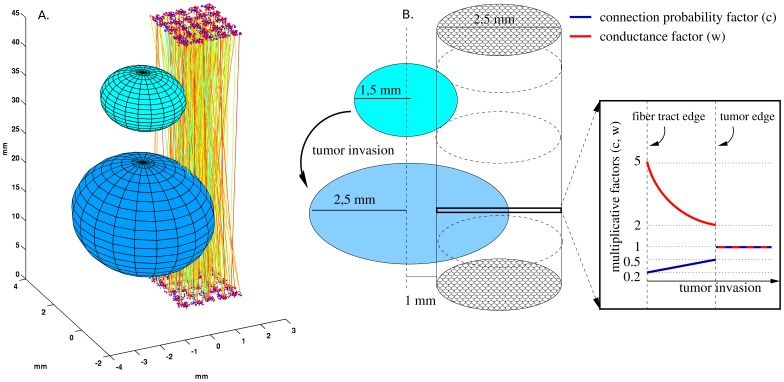
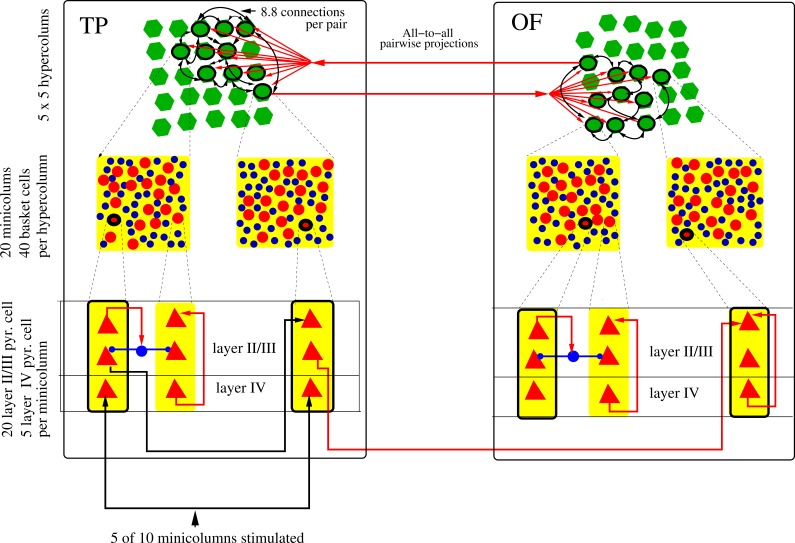
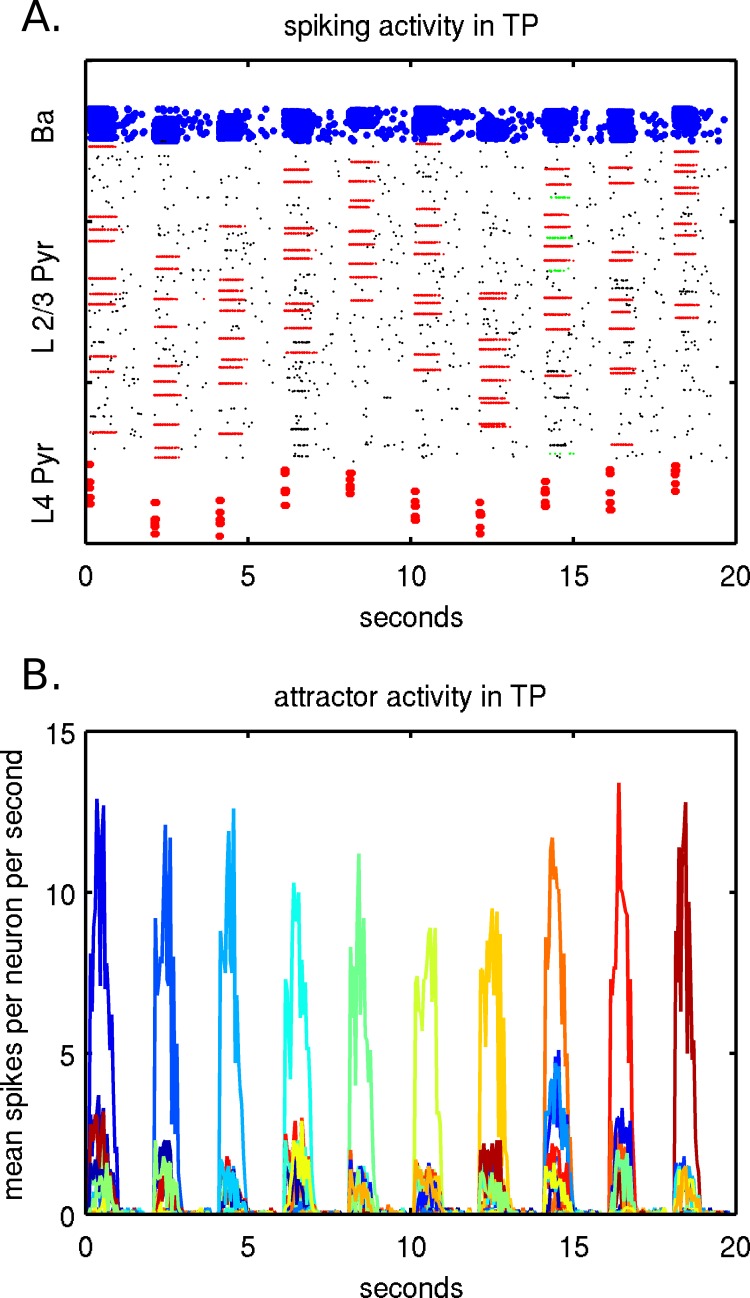
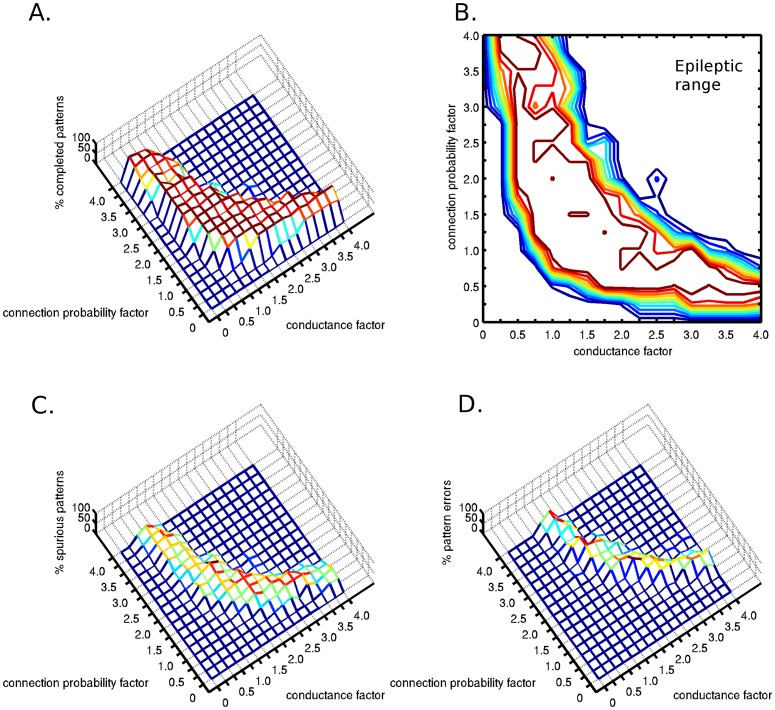
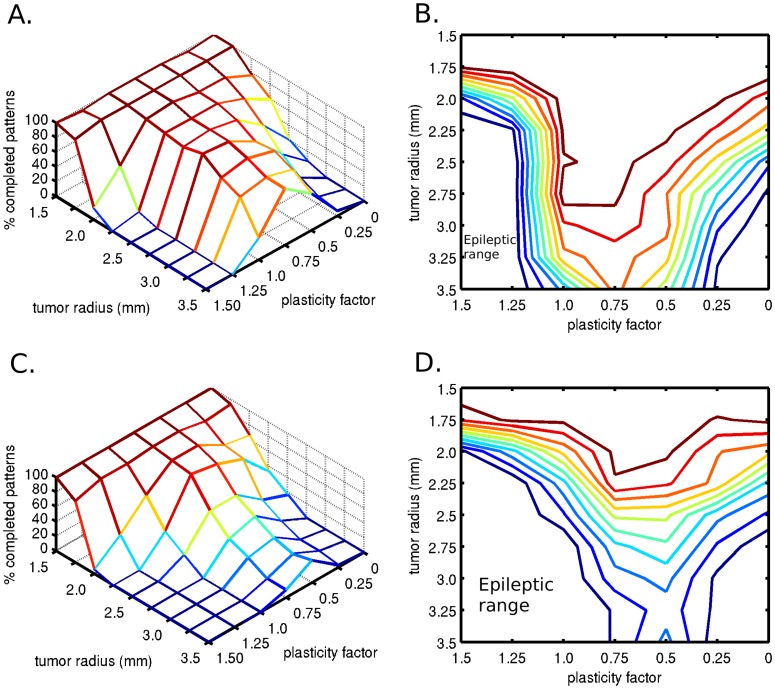
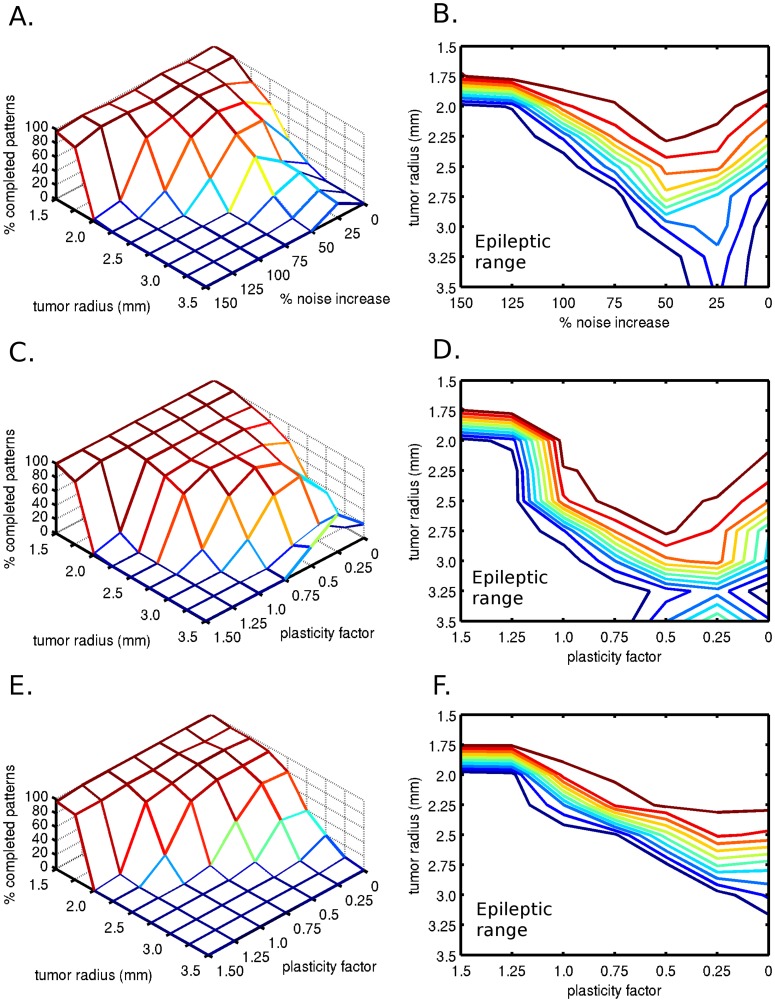
Neurological function in patients with slowly growing brain tumors can be preserved even after extensive tumor resection. However, the global process of cortical reshaping and cerebral redistribution cannot be understood without taking into account the white matter tracts. The aim of this study was to predict the functional consequences of tumor-induced white matter damage by computer simulation. A computational model was proposed, incorporating two cortical patches and the white matter connections of the uncinate fasciculus. Tumor-induced structural changes were modeled such that different aspects of the connectivity were altered, mimicking the biological heterogeneity of gliomas. The network performance was quantified by comparing memory pattern recall and the plastic compensatory capacity of the network was analyzed. The model predicts an optimal level of synaptic conductance boost that compensates for tumor-induced connectivity loss. Tumor density appears to change the optimal plasticity regime, but tumor size does not. Compensatory conductance values that are too high lead to performance loss in the network and eventually to epileptic activity. Tumors of different configurations show differences in memory recall performance with slightly lower plasticity values for dense tumors compared to more diffuse tumors. Simulation results also suggest an optimal noise level that is capable of increasing the recall performance in tumor-induced white matter damage. In conclusion, the model presented here is able to capture the influence of different tumor-related parameters on memory pattern recall decline and provides a new way to study the functional consequences of white matter invasion by slowly growing brain tumors.
Overview
The claims and statistics of this paper haven’t been checked yet.
Run the check — free, no account needed. It reads the open-access text and checks the sources it cites.
Integrity signals
Registry
Cites
Statistics
Figures
Verification
Claims the paper makes
The claims and statistics of this paper haven’t been checked yet.
Run the check — free, no account needed. It reads the open-access text and checks the sources it cites.
Claims other papers make about this one
Each is checked against this paper’s own text: does it say what the citing paper says it does?
In the citing paper
“Such “decanalization” of development results in lasting developmental anomalies with all of the behavioral consequences of an improperly wired NN (81–83).”
From Behavior-related gene regulatory networks: A new level of organization in the brain (2020) · cites this paper as [83]
Self-check
Percentages, sums and reported differences re-computed from the paper’s own numbers.
The self-check needs the paper’s full text.
Citations
Cites
The 2007 WHO Classification of Tumours of the Central Nervous System
Louis, D. N., Ohgaki, H., Wiestler, O. D., Cavenee, W. K., Burger, P. C., Jouvet, A., Scheithauer, B. W., & Kleihues, P. (2007) · Acta Neuropathologica · doi:10.1007/s00401-007-0243-4 · Cited by 15,397
Cancer Invasion and the Microenvironment: Plasticity and Reciprocity
Friedl, P., & Alexander, S. (2011) · Cell · doi:10.1016/j.cell.2011.11.016 · Cited by 1,940
— Tumors of the Central Nervous System
(2013) · Pediatric Radiotherapy Planning and Treatment · doi:10.1201/b14554-7 · Cited by 1,751
Carnevale, N. T., & Hines, M. L. (2006) · Cambridge University Press eBooks · doi:10.1017/cbo9780511541612 · Cited by 1,121
Carnevale, N. T., & Hines, M. L. (2006) · Cited by 874
Klein, M., Heimans, J., Aaronson, N., van der Ploeg, H., Grit, J., Muller, M., Postma, T., Mooij, J., Boerman, R., Beute, G., et al. (2002) · The Lancet · doi:10.1016/s0140-6736(02)11398-5 · Cited by 634
Contrasting acute and slow-growing lesions: a new door to brain plasticity
Desmurget, M., Bonnetblanc, F., & Duffau, H. (2006) · Brain · doi:10.1093/brain/awl300 · Cited by 515
Self-citationContinuous growth of mean tumor diameter in a subset of grade II gliomas
Mandonnet, E., Delattre, J., Tanguy, M., Swanson, K. R., Carpentier, A. F., Duffau, H., Cornu, P., Van Effenterre, R., Alvord, E. C., & Capelle, L. (2003) · Annals of Neurology · doi:10.1002/ana.10528 · Cited by 493
Self-citationA quantitative model for differential motility of gliomas in grey and white matter
Swanson, K. R., Alvord, E. C., & Murray, J. D. (2000) · Cell Proliferation · doi:10.1046/j.1365-2184.2000.00177.x · Cited by 458
Incidence of gliomas by anatomic location
Larjavaara, S., Mäntylä, R., Salminen, T., Haapasalo, H., Raitanen, J., Jääskeläinen, J., & Auvinen, A. (2007) · Neuro-Oncology · doi:10.1215/15228517-2007-016 · Cited by 396
Ius, T., Angelini, E., Thiebaut de Schotten, M., Mandonnet, E., & Duffau, H. (2011) · NeuroImage · doi:10.1016/j.neuroimage.2011.03.022 · Cited by 374
Self-citationExperience-dependent structural plasticity in the cortex
Fu, M., & Zuo, Y. (2011) · Trends in Neurosciences · doi:10.1016/j.tins.2011.02.001 · Cited by 322
Salami, M., Itami, C., Tsumoto, T., & Kimura, F. (2003) · Proceedings of the National Academy of Sciences · doi:10.1073/pnas.0937380100 · Cited by 314
Seizures in low-grade gliomas: natural history, pathogenesis, and outcome after treatments
Ruda, R., Bello, L., Duffau, H., & Soffietti, R. (2012) · Neuro-Oncology · doi:10.1093/neuonc/nos199 · Cited by 280
Self-citationSwanson, K. R., Alvord, E. C., & Murray, J. D. (2002) · British Journal of Cancer · doi:10.1038/sj.bjc.6600021 · Cited by 252
Mapping functional connectivity in patients with brain lesions
Guggisberg, A. G., Honma, S. M., Findlay, A. M., Dalal, S. S., Kirsch, H. E., Berger, M. S., & Nagarajan, S. S. (2008) · Annals of Neurology · doi:10.1002/ana.21224 · Cited by 230
Highley, J. R. (2002) · Cerebral Cortex · doi:10.1093/cercor/12.11.1218 · Cited by 207
Dynamic history of low‐grade gliomas before and after temozolomide treatment
Ricard, D., Kaloshi, G., Benouaich‐Amiel, A., Lejeune, J., Marie, Y., Mandonnet, E., Kujas, M., Mokhtari, K., Taillibert, S., Laigle–Donadey, F., et al. (2007) · Annals of Neurology · doi:10.1002/ana.21125 · Cited by 206
Self-citationSpecification of Neocortical Areas and Thalamocortical Connections
O’Leary, D. D. M., Schlaggar, B. L., & Tuttle, R. (1994) · Annual Review of Neuroscience · doi:10.1146/annurev.ne.17.030194.002223 · Cited by 186
Mandonnet, E., Capelle, L., & Duffau, H. (2006) · Journal of Neuro-Oncology · doi:10.1007/s11060-005-9084-y · Cited by 177
Self-citationPartial Cortical Deafferentation Promotes Development of Paroxysmal Activity
Topolnik, L. (2003) · Cerebral Cortex · doi:10.1093/cercor/13.8.883 · Cited by 156
Cognition and resective surgery for diffuse infiltrative glioma: an overview
Klein, M., Duffau, H., & Hamer, P. C. D. W. (2012) · Journal of Neuro-Oncology · doi:10.1007/s11060-012-0811-x · Cited by 154
Self-citationMandonnet, E., Pallud, J., Olivier Clatz, A., Taillandier, L., Ender Konukoglu, A., Duffau, H., & Capelle, L. (2008) · Neurosurgical Review · doi:10.1007/s10143-008-0128-6 · Cited by 118
Self-citationAwake surgery for incidental WHO grade II gliomas involving eloquent areas
Duffau, H. (2011) · Acta Neurochirurgica · doi:10.1007/s00701-011-1216-x · Cited by 117
Self-citationDoes post-lesional subcortical plasticity exist in the human brain?
Duffau, H. (2009) · Neuroscience Research · doi:10.1016/j.neures.2009.07.002 · Cited by 117
Self-citationNeurocognitive sequelae in the treatment of low-grade gliomas
TAPHOORN, M. J. B. (2003) · Seminars in Oncology · doi:10.1053/j.seminoncol.2003.11.023 · Cited by 115
The relationships between depression and brain tumors
Litofsky, N. S., & Resnick, A. G. (2009) · Journal of Neuro-Oncology · doi:10.1007/s11060-009-9825-4 · Cited by 111
Pathological Effect of Homeostatic Synaptic Scaling on Network Dynamics in Diseases of the Cortex
Frӧhlich, F., Bazhenov, M., & B, T. J. S. A. (2008) · Journal of Neuroscience · doi:10.1523/jneurosci.4263-07.2008 · Cited by 95
Modifications of Default-Mode Network Connectivity in Patients with Cerebral Glioma
Esposito, R., Mattei, P. A., Briganti, C., Romani, G. L., Tartaro, A., & Caulo, M. (2012) · PLoS ONE · doi:10.1371/journal.pone.0040231 · Cited by 91
Seizures and the Natural History of World Health Organization Grade II Gliomas: A Review
Smits, A., & Duffau, H. (2011) · Neurosurgery · doi:10.1227/neu.0b013e31820c3419 · Cited by 87
Self-citationConduction in bundles of demyelinated nerve fibers: computer simulation
Reutskiy, S., Rossoni, E., & Tirozzi, B. (2003) · Biological Cybernetics · doi:10.1007/s00422-003-0430-x · Cited by 74
Keidel, J. L., Welbourne, S. R., & Ralph, M. A. L. (2010) · Neuropsychologia · doi:10.1016/j.neuropsychologia.2010.02.019 · Cited by 68
Connectivity constraints on cortical reorganization of neural circuits involved in object naming
Papagno, C., Gallucci, M., Casarotti, A., Castellano, A., Falini, A., Fava, E., Giussani, C. G., Carrabba, G. G., Bello, L., & Caramazza, A. (2011) · NeuroImage · doi:10.1016/j.neuroimage.2011.01.005 · Cited by 66
A model for cortical rewiring following deafferentation and focal stroke
Butz, M. (2009) · Frontiers in Computational Neuroscience · doi:10.3389/neuro.10.010.2009 · Cited by 63
Computational modeling of brain tumors: discrete, continuum or hybrid?
Wang, Z., & Deisboeck, T. S. (2008) · Scientific Modeling and Simulation SMNS · doi:10.1007/s10820-008-9094-0 · Cited by 63
Factors affecting the cerebral network in brain tumor patients
Heimans, J. J., & Reijneveld, J. C. (2012) · Journal of Neuro-Oncology · doi:10.1007/s11060-012-0814-7 · Cited by 60
Sex difference in brain nerve conduction velocity in normal humans
Reed, T. E., Vernon, P. A., & Johnson, A. M. (2004) · Neuropsychologia · doi:10.1016/j.neuropsychologia.2004.02.016 · Cited by 59
Volman, V., Bazhenov, M., & B, T. J. S. A. (2011) · Proceedings of the National Academy of Sciences · doi:10.1073/pnas.1112066108 · Cited by 33
Fractionated resection on low grade gliomas involving Brocaʼs area and insights to brain plasticity
Wu, C., Pu, S., Lin, Y., Wang, Y., Jiang, T., Xie, J., Wei, M., Yi, X., & Wang, X. (2008) · Chinese Medical Journal · doi:10.1097/00029330-200810020-00015 · Cited by 19
Supratentorial WHO grade II glioma invasion: a morphologic study using sequential conventional MRI
Chen, X., Dai, J., & Jiang, T. (2010) · British Journal of Neurosurgery · doi:10.3109/02688690903518239 · Cited by 18
Is Attentional Blink a Byproduct of Neocortical Attractors?
Silverstein, D. N., & Lansner, A. (2011) · Frontiers in Computational Neuroscience · doi:10.3389/fncom.2011.00013 · Cited by 12
Self-citationQuantitative Approach of the Natural Course of Diffuse Low-Grade Gliomas
Pallud, J., & Mandonnet, E. (2011) · Springer eBooks · doi:10.1007/978-94-007-0618-7_18 · Cited by 5
Cited by
Duffau, H. (2014) · Cortex · doi:10.1016/j.cortex.2013.08.005 · Cited by 331
Self-citationBehavior-related gene regulatory networks: A new level of organization in the brain
Sinha, S., Jones, B. M., Traniello, I. M., Bukhari, S. A., Halfon, M. S., Hofmann, H. A., Huang, S., Katz, P. S., Keagy, J., Lynch, V. J., et al. (2020) · Proceedings of the National Academy of Sciences · doi:10.1073/pnas.1921625117 · Cited by 85
Metadata
- Authors
- Szalisznyo, K., Silverstein, D. N., Duffau, H., & Smits, A.
- Venue
- PLoS ONE
- Publisher
- Public Library of Science (PLoS)
- Published
- 2013-07-26
- Volume
- 8
- Issue
- 7
- Pages
- e69798
- ISSN
- 1932-6203
- PMC
- PMC3724895
- Cited by
- 40
- References
- 42
- Language
- en
About these checks
Registry, retraction, Cites and statistics results are computed, not judged, with one exception: a printed reference that no index lists is read once by a model before it counts as a citation error. Claims are extracted by a model and kept only when their quote appears verbatim in the text; each cited source is then checked, with a model’s help, for whether it says what the claim relies on. Those verdicts can be wrong — read the claim’s quote and the cited source before relying on one.
Statistics and arithmetic are recomputed, not judged.
Confidence bands are shown only for fields calibrated on our annotated test set. None is calibrated yet, so no band is shown.
What counts as a claim ›How we measure confidence ›How we check this ›
Are you an author, or do you see a problem with this page? Request a review
Data sources
Bibliographic data: Semantic Scholar, OpenAlex, Crossref.
Contains information from the Semantic Scholar Academic Graph Datasets, made available under the ODC Attribution License (ODC-BY 1.0).
Semantic Scholar’s data is described in: Kinney, R., et al. (2023). The Semantic Scholar Open Data Platform. arXiv:2301.10140.
