

The DOI matches its Crossref record; 4 of the 4 references it cites were found in a registry or an index.
The First Peopling of South America: New Evidence from Y-Chromosome Haplogroup Q
Overview
The claims and statistics of this paper haven’t been checked yet.
Run the check — free, no account needed. It reads the open-access text and checks the sources it cites.
Integrity signals
Registry
Cites
Statistics
Figures
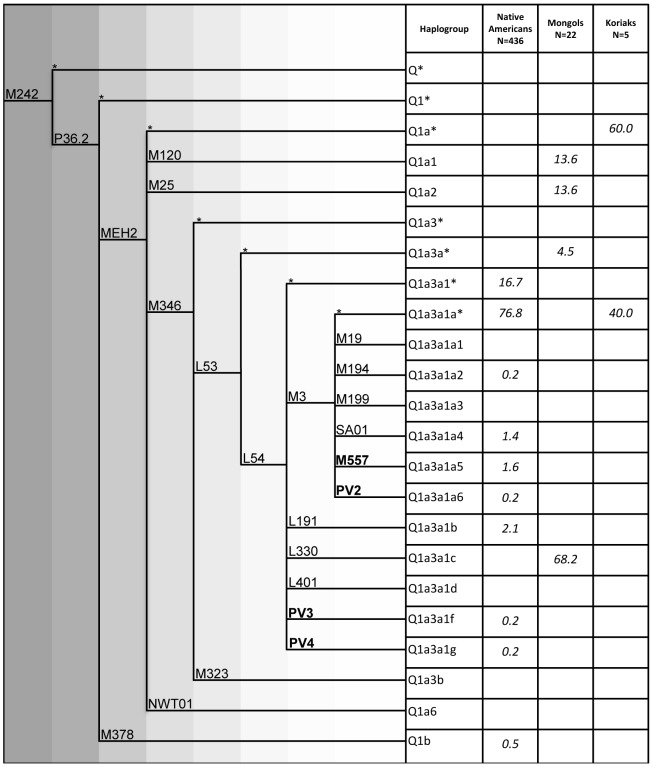
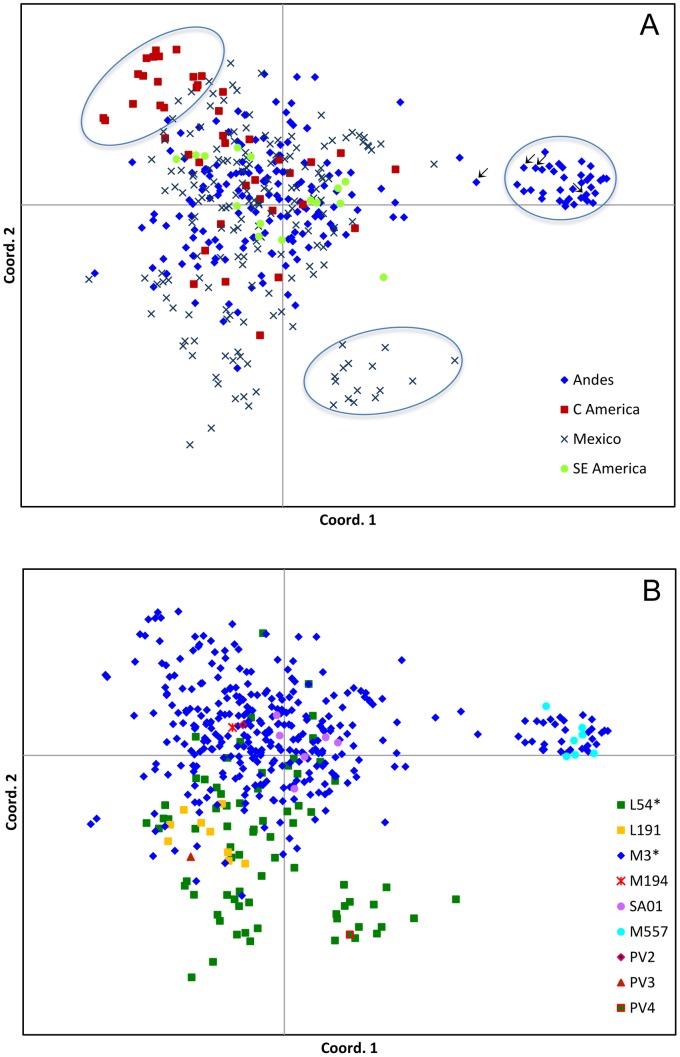
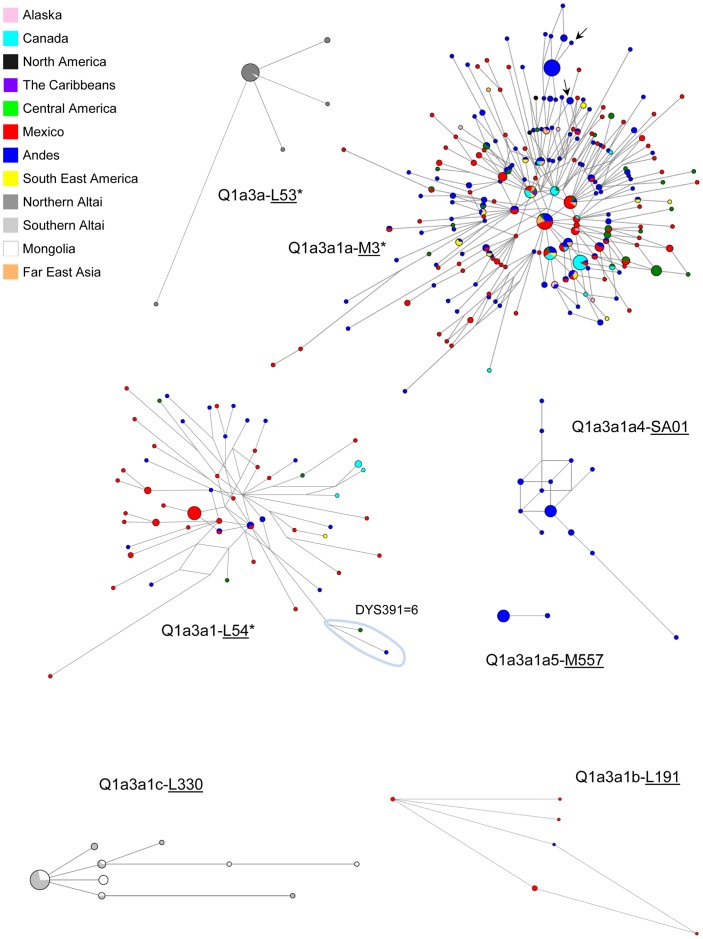
Verification
Claims the paper makes
The claims and statistics of this paper haven’t been checked yet.
Run the check — free, no account needed. It reads the open-access text and checks the sources it cites.
Claims other papers make about this one
Each is checked against this paper’s own text: does it say what the citing paper says it does?
In the citing paper
“Genetic evidence showed that Yeniseian and Samoyedic speakers had genetic affinities to northern Altaians with high frequencies of haplogroup Q-M242 (xL54), while southern Altaians had many L54 samples and showed similarities with Turkic-speaking populations (Dulik et al. 2012b; Battaglia et al. 2013; Flegontov et al. 2016).”
From Dispersals of the Siberian Y-chromosome haplogroup Q in Eurasia (2018) · cites this paper as Battaglia et al. 2013
Self-check
Percentages, sums and reported differences re-computed from the paper’s own numbers.
The self-check needs the paper’s full text.
Citations
Cites
Median-joining networks for inferring intraspecific phylogenies
Bandelt, H. J., Forster, P., & Rohl, A. (1999) · Molecular Biology and Evolution · doi:10.1093/oxfordjournals.molbev.a026036 · Cited by 11,742
Ancient human genome sequence of an extinct Palaeo-Eskimo
Rasmussen, M., Li, Y., Lindgreen, S., Pedersen, J. S., Albrechtsen, A., Moltke, I., Metspalu, M., Metspalu, E., Kivisild, T., Gupta, R., et al. (2010) · Nature · doi:10.1038/nature08835 · Cited by 849
The Initial Domestication of Cucurbita pepo in the Americas 10,000 Years Ago
Smith, B. D. (1997) · Science · doi:10.1126/science.276.5314.932 · Cited by 351
Dulik, M. C., Zhadanov, S. I., Osipova, L. P., Askapuli, A., Gau, L., Gokcumen, O., Rubinstein, S., & Schurr, T. G. (2012) · The American Journal of Human Genetics · doi:10.1016/j.ajhg.2011.12.014 · Cited by 161
Research works printed but not linked: 86
- JM Galanter, 2012, Development of a panel of genome-wide ancestry informative markers to study admixture throughout the Americas, PLoS Genet, 8, e1002554, 10.1371/journal.pgen.1002554 · DOI
- DH O'Rourke, 2010, The human genetic history of the Americas: the final frontier, Curr Biol, 20, R202, 10.1016/j.cub.2009.11.051 · DOI · Paper page
- E Tamm, 2007, Beringian standstill and spread of Native American founders, PLoS One, 2, e829, 10.1371/journal.pone.0000829 · DOI · Paper page
- A Achilli, 2008, The phylogeny of the four pan-American MtDNA haplogroups: implications for evolutionary and disease studies, PLoS One, 3, e1764, 10.1371/journal.pone.0001764 · DOI
- NJ Fagundes, 2008, Mitochondrial population genomics supports a single pre-Clovis origin with a coastal route for the peopling of the Americas, Am J Hum Genet, 82, 583, 10.1016/j.ajhg.2007.11.013 · DOI · Paper page
- UA Perego, 2009, Distinctive Paleo-Indian migration routes from Beringia marked by two rare mtDNA haplogroups, Curr Biol, 19, 1, 10.1016/j.cub.2008.11.058 · DOI · Paper page
- UA Perego, 2010, The initial peopling of the Americas: a growing number of founding mitochondrial genomes from Beringia, Genome Res, 20, 1174, 10.1101/gr.109231.110 · DOI
- S Kumar, 2011, Large scale mitochondrial sequencing in Mexican Americans suggests a reappraisal of Native American origins, BMC Evol Biol, 11, 293, 10.1186/1471-2148-11-293 · DOI
- M Bodner, 2012, Rapid coastal spread of First Americans: novel insights from South America's Southern Cone mitochondrial genomes, Genome Res, 22, 811, 10.1101/gr.131722.111 · DOI
- M de Saint Pierre, 2012, An alternative model for the early peopling of southern South America revealed by analyses of three mitochondrial DNA haplogroups, PLoS One, 7, e43486, 10.1371/journal.pone.0043486 · DOI
- M de Saint Pierre, 2012, Arrival of Paleo-Indians to the southern cone of South America: new clues from mitogenomes, PLoS One, 7, e51311, 10.1371/journal.pone.0051311 · DOI
- UA Perego, 2012, Decrypting the mitochondrial gene pool of modern Panamanians, PLoS One, 7, e38337, 10.1371/journal.pone.0038337 · DOI
- SL Zegura, 2004, High-resolution SNPs and microsatellite haplotypes point to a single, recent entry of Native American Y chromosomes into the Americas, Mol Biol Evol, 21, 164, 10.1093/molbev/msh009 · DOI
- PA Underhill, 1996, A pre-Columbian Y chromosome-specific transition and its implications for human evolutionary history, Proc Natl Acad Sci U S A, 93, 196, 10.1073/pnas.93.1.196 · DOI
- T Karafet, 1997, Y chromosome markers and Trans-Bering Strait dispersals, Am J Phys Anthropol, 102, 301, 10.1002/(SICI)1096-8644(199703)102:3<301::AID-AJPA1>3.0.CO;2-Y · DOI
- TM Karafet, 1999, Ancestral Asian source(s) of new world Y-chromosome founder haplotypes, Am J Hum Genet, 64, 817, 10.1086/302282 · DOI
- TM Karafet, 2002, High levels of Y-chromosome differentiation among Native Siberian populations and the genetic signature of a boreal hunter-gatherer way of life, Hum Biol, 74, 761, 10.1353/hub.2003.0006 · DOI · Paper page
- JT Lell, 1997, Y chromosome polymorphisms in native American and Siberian populations: identification of native American Y chromosome haplotypes, Hum Genet, 100, 536, 10.1007/s004390050548 · DOI · Paper page
- JT Lell, 2002, The dual origin and Siberian affinities of Native American Y chromosomes, Am J Hum Genet, 70, 192, 10.1086/338457 · DOI · Paper page
- MC Bortolini, 2003, Y-chromosome evidence for differing ancient demographic histories in the Americas, Am J Hum Genet, 73, 524, 10.1086/377588 · DOI · Paper page
- de Acosta J, Mangan JE, Lopez-Morillas F, Mignolo WD (2002) Natural and moral history of the Indies. Durham, NC: Duke University Press. · DOI
- PS Martin, 1973, The discovery of America: The First Americans may have swept the Western Hemisphere and decimated its fauna within 1000 years, Science, 179, 969, 10.1126/science.179.4077.969 · DOI · Paper page
- Haynes G (2002) The early settlement of North America: The Clovis Era: Cambridge University Press.
- T Goebel, 2008, The late Pleistocene dispersal of modern humans in the Americas, Science, 319, 1497, 10.1126/science.1153569 · DOI · Paper page
- Fagan BM (2004) The great journey: The peopling of ancient America. Gainesville: University Press of Florida.
- 1986, The settlement of the Americans: a comparison of the linguistic, dental, and genetic evidence, Curr Anthropol, 27, 477, 10.1086/203472 · DOI
- A Torroni, 1992, Native American mitochondrial DNA analysis indicates that the Amerind and the Nadene populations were founded by two independent migrations, Genetics, 130, 153, 10.1093/genetics/130.1.153 · DOI
- A Torroni, 1993, Asian affinities and continental radiation of the four founding Native American mtDNAs, Am J Hum Genet, 53, 563
- DA Merriwether, 1995, Distribution of the four founding lineage haplotypes in Native Americans suggests a single wave of migration for the New World, Am J Phys Anthropol, 98, 411, 10.1002/ajpa.1330980404 · DOI
- SL Bonatto, 1997, A single and early migration for the peopling of the Americas supported by mitochondrial DNA sequence data, Proc Natl Acad Sci U S A, 94, 1866, 10.1073/pnas.94.5.1866 · DOI
- NV Volodko, 2008, Mitochondrial genome diversity in Arctic Siberians, with particular reference to the evolutionary history of Beringia and Pleistocenic peopling of the Americas, Am J Hum Genet, 82, 1084, 10.1016/j.ajhg.2008.03.019 · DOI
- DA Bolnick, 2006, Asymmetric male and female genetic histories among Native Americans from Eastern North America, Mol Biol Evol, 23, 2161, 10.1093/molbev/msl088 · DOI · Paper page
- K Hunley, 2005, Gene flow across linguistic boundaries in Native North American populations, Proc Natl Acad Sci U S A, 102, 1312, 10.1073/pnas.0409301102 · DOI
- D Reich, 2012, Reconstructing Native American population history, Nature, 488, 370, 10.1038/nature11258 · DOI · Paper page
- C Phillips, 2008, D9S1120, a simple STR with a common Native American-specific allele: forensic optimization, locus characterization and allele frequency studies, Forensic Sci Int Genet, 3, 7, 10.1016/j.fsigen.2008.07.002 · DOI
- KB Schroeder, 2009, Haplotypic background of a private allele at high frequency in the Americas, Mol Biol Evol, 26, 995, 10.1093/molbev/msp024 · DOI
- TM Karafet, 2008, New binary polymorphisms reshape and increase resolution of the human Y chromosomal haplogroup tree, Genome Res, 18, 830, 10.1101/gr.7172008 · DOI · Paper page
- Dillehay TD (1997) Monte Verde, a Late Pleistocene settlement in Chile: the archaeological context and interpretation. Washington, DC: Smithsonian Institution Press.
- B Hooshiar Kashani, 2012, Mitochondrial haplogroup C4c: a rare lineage entering America through the ice-free corridor?, Am J Phys Anthropol, 147, 35, 10.1002/ajpa.21614 · DOI
- TD Dillehay, 2008, Monte Verde: seaweed, food, medicine, and the peopling of South America, Science, 320, 784, 10.1126/science.1156533 · DOI · Paper page
- DL Jenkins, 2012, Clovis age western stemmed projectile points and human coprolites at the Paisley Caves, Science, 337, 223, 10.1126/science.1218443 · DOI · Paper page
- TD Dillehay, 1999, The late Pleistocene cultures of South America, Evolutionary Anthropology: Issues, News, and Reviews, 7, 206, 10.1002/(SICI)1520-6505(1999)7:6<206::AID-EVAN5>3.0.CO;2-G · DOI
- JM Erlandson, 2011, Paleoindian seafaring, maritime technologies, and coastal foraging on California's Channel Islands, Science, 331, 1181, 10.1126/science.1201477 · DOI
- AG Fix, 2005, Rapid deployment of the five founding Amerind mtDNA haplogroups via coastal and riverine colonization, Am J Phys Anthropol, 128, 430, 10.1002/ajpa.20230 · DOI
- TD Dillehay, 2009, Probing deeper into first American studies, Proc Natl Acad Sci U S A, 106, 971, 10.1073/pnas.0808424106 · DOI
- MC Dulik, 2012, Y-chromosome analysis reveals genetic divergence and new founding native lineages in Athapaskan- and Eskimoan-speaking populations, Proc Natl Acad Sci U S A, 109, 8471, 10.1073/pnas.1118760109 · DOI · Paper page
- W Wei, 2013, A calibrated human Y-chromosomal phylogeny based on resequencing, Genome Res, 23, 388, 10.1101/gr.143198.112 · DOI
- S Sengupta, 2006, Polarity and temporality of high-resolution y-chromosome distributions in India identify both indigenous and exogenous expansions and reveal minor genetic influence of Central Asian pastoralists, Am J Hum Genet, 78, 202, 10.1086/499411 · DOI · Paper page
- N Al-Zahery, 2011, In search of the genetic footprints of Sumerians: a survey of Y-chromosome and mtDNA variation in the Marsh Arabs of Iraq, BMC Evol Biol, 11, 288, 10.1186/1471-2148-11-288 · DOI
- V Grugni, 2012, Ancient migratory events in the Middle East: new clues from the Y-chromosome variation of modern Iranians, PLoS One, 7, e41252, 10.1371/journal.pone.0041252 · DOI
- H Zhong, 2011, Extended Y chromosome investigation suggests postglacial migrations of modern humans into East Asia via the northern route, Mol Biol Evol, 28, 717, 10.1093/molbev/msq247 · DOI · Paper page
- MS Jota, 2011, A new subhaplogroup of native American Y-Chromosomes from the Andes, Am J Phys Anthropol, 146, 553, 10.1002/ajpa.21519 · DOI · Paper page
- LA Zhivotovsky, 2004, The effective mutation rate at Y chromosome short tandem repeats, with application to human population-divergence time, Am J Hum Genet, 74, 50, 10.1086/380911 · DOI
- LA Zhivotovsky, 2006, Difference between evolutionarily effective and germ line mutation rate due to stochastically varying haplogroup size, Mol Biol Evol, 23, 2268, 10.1093/molbev/msl105 · DOI
- B Malyarchuk, 2011, Ancient links between Siberians and Native Americans revealed by subtyping the Y chromosome haplogroup Q1a, J Hum Genet, 56, 583, 10.1038/jhg.2011.64 · DOI · Paper page
- WA Neves, 2012, Rock art at the pleistocene/holocene boundary in Eastern South America, PLoS One, 7, e32228, 10.1371/journal.pone.0032228 · DOI
- V Acuña-Alonzo, 2010, A functional ABCA1 gene variant is associated with low HDL-cholesterol levels and shows evidence of positive selection in Native Americans, Hum Mol Genet, 19, 2877, 10.1093/hmg/ddq173 · DOI
- L Tovo-Rodrigues, 2010, Dopamine receptor D4 allele distribution in Amerindians: a reflection of past behavior differences?, Am J Phys Anthropol, 143, 458, 10.1002/ajpa.21358 · DOI
- T Hünemeier, 2012, Evolutionary responses to a constructed niche: ancient Mesoamericans as a model of gene-culture coevolution, PLoS One, 7, e38862, 10.1371/journal.pone.0038862 · DOI
- M Gayà-Vidal, 2011, mtDNA and Y-chromosome diversity in Aymaras and Quechuas from Bolivia: different stories and special genetic traits of the Andean Altiplano populations, Am J Phys Anthropol, 145, 215, 10.1002/ajpa.21487 · DOI
- K Sandoval, 2012, Y-chromosome diversity in Native Mexicans reveals continental transition of genetic structure in the Americas, Am J Phys Anthropol, 148, 395, 10.1002/ajpa.22062 · DOI
- G Bailliet, 2009, Brief communication: Restricted geographic distribution for Y-Q* paragroup in South America, Am J Phys Anthropol, 140, 578, 10.1002/ajpa.21133 · DOI
- LJ Martínez-González, 2012, Distribution of Y chromosomal STRs loci in Mayan and Mestizo populations from Guatemala, Forensic Sci Int Genet, 6, 136, 10.1016/j.fsigen.2011.04.003 · DOI
- M Kayser, 2003, Y chromosome STR haplotypes and the genetic structure of U.S. populations of African, European, and Hispanic ancestry, Genome Res, 13, 624, 10.1101/gr.463003 · DOI
- MS Ascunce, 2008, Y-chromosome variability in four Native American populations from Panama, Hum Biol, 80, 287, 10.3378/1534-6617-80.3.287 · DOI
- C Nuñez, 2010, Reconstructing the population history of Nicaragua by means of mtDNA, Y-chromosome STRs, and autosomal STR markers, Am J Phys Anthropol, 143, 591, 10.1002/ajpa.21355 · DOI
- F Cruciani, 2004, Phylogeographic analysis of haplogroup E3b (E-M215) Y chromosomes reveals multiple migratory events within and out of Africa, Am J Hum Genet, 74, 1014, 10.1086/386294 · DOI
- O Semino, 2004, Origin, diffusion, and differentiation of Y-chromosome haplogroups E and J: inferences on the neolithization of Europe and later migratory events in the Mediterranean area, Am J Hum Genet, 74, 1023, 10.1086/386295 · DOI
- RJ King, 2008, Differential Y-chromosome Anatolian influences on the Greek and Cretan Neolithic, Ann Hum Genet, 72, 205, 10.1111/j.1469-1809.2007.00414.x · DOI
- NM Myres, 2009, Y-chromosome short tandem repeat intermediate variant alleles DYS392.2, DYS449.2, and DYS385.2 delineate new phylogenetic substructure in human Y-chromosome haplogroup tree, Croat Med J, 50, 239, 10.3325/cmj.2009.50.239 · DOI
- M Baca, 2012, Ancient DNA reveals kinship burial patterns of a pre-Columbian Andean community, BMC Genet, 13, 30, 10.1186/1471-2156-13-30 · DOI
- A Ruiz-Linares, 1999, Microsatellites provide evidence for Y chromosome diversity among the founders of the New World, Proc Natl Acad Sci U S A, 96, 6312, 10.1073/pnas.96.11.6312 · DOI
- U Toscanini, 2011, Male lineages in South American Native groups: evidence of M19 traveling south, Am J Phys Anthropol, 146, 188, 10.1002/ajpa.21562 · DOI
- M Regueiro, 2013, On the origins, rapid expansion and genetic diversity of native Americans from hunting-gatherers to agriculturalists, Am J Phys Anthropol, 150, 333, 10.1002/ajpa.22207 · DOI
- R González-José, 2008, The peopling of America: craniofacial shape variation on a continental scale and its interpretation from an interdisciplinary view, Am J Phys Anthropol, 137, 175, 10.1002/ajpa.20854 · DOI
- R Bisso-Machado, 2011, Distribution of Y-chromosome Q lineages in Native Americans, Am J Hum Biol, 23, 563, 10.1002/ajhb.21173 · DOI
- VV Pitulko, 2004, The Yana RHS site: humans in the Arctic before the last glacial maximum, Science, 303, 52, 10.1126/science.1085219 · DOI · Paper page
- V Battaglia, 2009, Y-chromosomal evidence of the cultural diffusion of agriculture in Southeast Europe, Eur J Hum Genet, 17, 820, 10.1038/ejhg.2008.249 · DOI
- TW Athey, 2006, Haplogroup prediction from Y-STR values using a bayesian-allele frequency approach, J Genet Geneal, 2, 34
- C Cinnioğlu, 2004, Excavating Y-chromosome haplotype strata in Anatolia, Hum Genet, 114, 127, 10.1007/s00439-003-1031-4 · DOI · Paper page
- Consortium The Y Chromosome, 2002, A nomenclature system for the tree of human Y-chromosomal binary haplogroups, Genome Res, 12, 339, 10.1101/gr.217602 · DOI · Paper page
- Kayser M, Caglià A, Corach D, Fretwell N, Gehrig C, <etal>et al</etal>.. (1997) Evaluation of Y-chromosomal STRs: a multicenter study. Int J Legal Med 110: 125–133, 141–129. · DOI
- VL Pascali, 1999, Coordinating Y-chromosomal STR research for the Courts, Int J Legal Med, 112, 1, 10.1007/s004140050188 · DOI
- L Excoffier, 2010, Arlequin suite ver 3.5: a new series of programs to perform population genetics analyses under Linux and Windows, Mol Ecol Resour, 10, 564, 10.1111/j.1755-0998.2010.02847.x · DOI
- R Peakall, 2012, GenAlEx 6.5: genetic analysis in Excel. Population genetic software for teaching and research–an update, Bioinformatics, 28, 2537, 10.1093/bioinformatics/bts460 · DOI
- HJ Bandelt, 1995, Mitochondrial portraits of human populations using median networks, Genetics, 141, 743, 10.1093/genetics/141.2.743 · DOI
Cited by
Genomic evidence for the Pleistocene and recent population history of Native Americans
Raghavan, M., Steinrücken, M., Harris, K., Schiffels, S., Rasmussen, S., DeGiorgio, M., Albrechtsen, A., Valdiosera, C., Ávila-Arcos, M. C., Malaspinas, A.-S., et al. (2015) · Science · doi:10.1126/science.aab3884 · Cited by 540
New Archaeological Evidence for an Early Human Presence at Monte Verde, Chile
Dillehay, T. D., Ocampo, C., Saavedra, J., Sawakuchi, A. O., Vega, R. M., Pino, M., Collins, M. B., Scott Cummings, L., Arregui, I., Villagran, X. S., et al. (2015) · PLoS ONE · doi:10.1371/journal.pone.0141923 · Cited by 307
Dispersals of the Siberian Y-chromosome haplogroup Q in Eurasia
Huang, Y.-Z., Pamjav, H., Flegontov, P., Stenzl, V., Wen, S.-Q., Tong, X.-Z., Wang, C.-C., Wang, L.-X., Wei, L.-H., Gao, J.-Y., et al. (2018) · Molecular Genetics and Genomics · doi:10.1007/s00438-017-1363-8 · Cited by 34
Metadata
- Authors
- Battaglia, V., Grugni, V., Perego, U. A., Angerhofer, N., Gomez-Palmieri, J. E., Woodward, S. R., Achilli, A., Myres, N., Torroni, A., & Semino, O.
- Venue
- PLoS ONE
- Publisher
- Public Library of Science (PLoS)
- Published
- 2013-08-21
- Volume
- 8
- Issue
- 8
- Pages
- e71390
- ISSN
- 1932-6203
- PMC
- PMC3749222
- Cited by
- 71
- References
- 4
- Language
- en
About these checks
Registry, retraction, Cites and statistics results are computed, not judged, with one exception: a printed reference that no index lists is read once by a model before it counts as a citation error. Claims are extracted by a model and kept only when their quote appears verbatim in the text; each cited source is then checked, with a model’s help, for whether it says what the claim relies on. Those verdicts can be wrong — read the claim’s quote and the cited source before relying on one.
Statistics and arithmetic are recomputed, not judged.
Confidence bands are shown only for fields calibrated on our annotated test set. None is calibrated yet, so no band is shown.
What counts as a claim ›How we measure confidence ›How we check this ›
Are you an author, or do you see a problem with this page? Request a review
