

The DOI matches its Crossref record; 66 of the 66 references it cites were found in a registry or an index.
Testosterone Induces Molecular Changes in Dopamine Signaling Pathway Molecules in the Adolescent Male Rat Nigrostriatal Pathway
Open accessAbstract
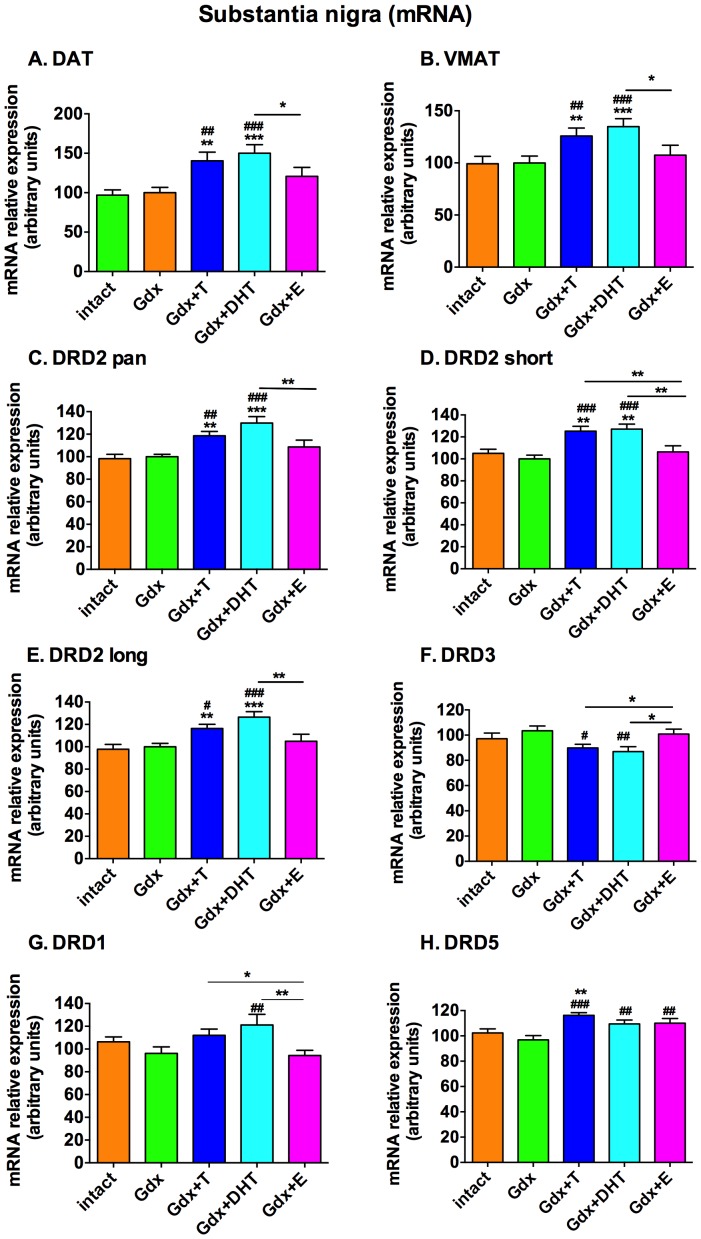
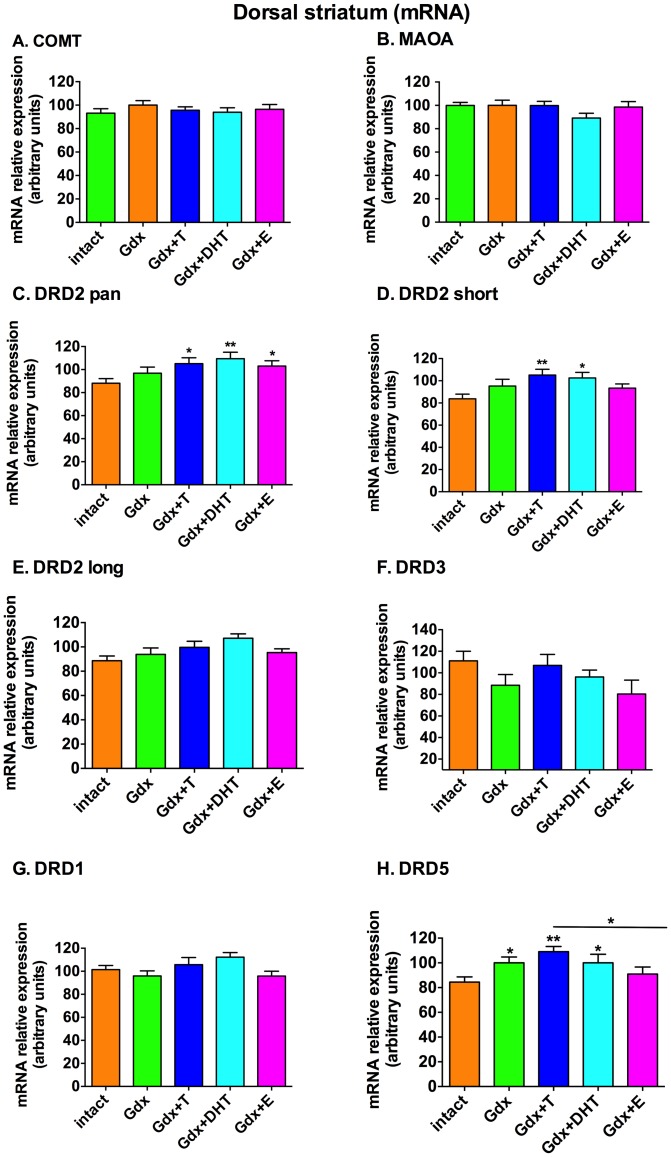
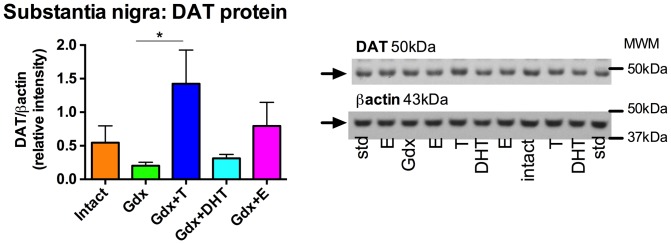
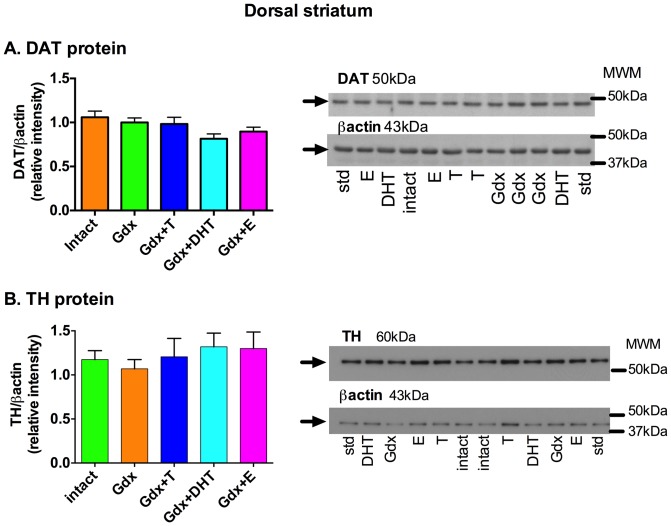
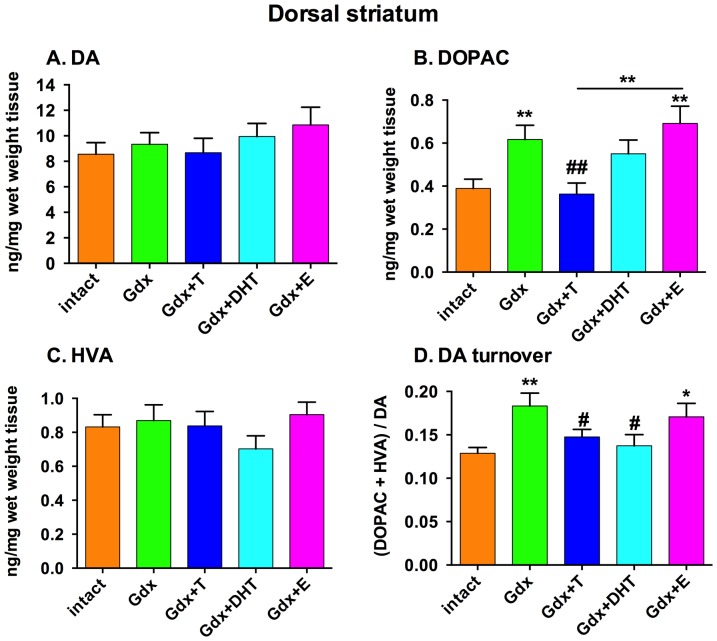
Adolescent males have an increased risk of developing schizophrenia, implicating testosterone in the precipitation of dopamine-related psychopathology. Evidence from adult rodent brain indicates that testosterone can modulate nigrostriatal dopamine. However, studies are required to understand the role testosterone plays in maturation of dopamine pathways during adolescence and to elucidate the molecular mechanism(s) by which testosterone exerts its effects. We hypothesized that molecular indices of dopamine neurotransmission [synthesis (tyrosine hydroxylase), breakdown (catechol-O-methyl transferase; monoamine oxygenase), transport [vesicular monoamine transporter (VMAT), dopamine transporter (DAT)] and receptors (DRD1-D5)] would be changed by testosterone or its metabolites, dihydrotestosterone and 17β-estradiol, in the nigrostriatal pathway of adolescent male rats. We found that testosterone and dihydrotestosterone increased DAT and VMAT mRNAs in the substantia nigra and that testosterone increased DAT protein at the region of the cell bodies, but not in target regions in the striatum. Dopamine receptor D2 mRNA was increased and D3 mRNA was decreased in substantia nigra and/or striatum by androgens. These data suggest that increased testosterone at adolescence may change dopamine responsivity of the nigrostriatal pathway by modulating, at a molecular level, the capacity of neurons to transport and respond to dopamine. Further, dopamine turnover was increased in the dorsal striatum following gonadectomy and this was prevented by testosterone replacement. Gene expression changes in the dopaminergic cell body region may serve to modulate both dendritic dopamine feedback inhibition and reuptake in the dopaminergic somatodendritic field as well as dopamine release and re-uptake dynamics at the presynaptic terminals in the striatum. These testosterone-induced changes of molecular indices of dopamine neurotransmission in males are primarily androgen receptor-driven events as estradiol had minimal effect. We conclude that nigrostriatal responsivity to dopamine may be modulated by testosterone acting via androgen receptors to alter gene expression of molecules involved in dopamine signaling during adolescence.
Overview
The claims and statistics of this paper haven’t been checked yet.
Run the check — free, no account needed. It reads the open-access text and checks the sources it cites.
Integrity signals
Registry
Cites
Statistics
Figures
Verification
Claims the paper makes
The claims and statistics of this paper haven’t been checked yet.
Run the check — free, no account needed. It reads the open-access text and checks the sources it cites.
Claims other papers make about this one
Each is checked against this paper’s own text: does it say what the citing paper says it does?
In the citing paper
“For example, castration or testosterone injections during mid to late adolescence (p45-p60) alter various markers of dopaminergic function in male rats (Purves-Tyson et al., 2014), though gonadal hormones are not necessary for male-specific peaks in striatal dopamine receptor expression (Andersen et al., 2002).”
From Does puberty mark a transition in sensitive periods for plasticity in the associative neocortex? (2017) · cites this paper as Purves-Tyson et al., 2014
Self-check
Percentages, sums and reported differences re-computed from the paper’s own numbers.
The self-check needs the paper’s full text.
Citations
Cites
The Rat Brain in Stereotaxic Coordinates
Paxinos, G., & Watson, C. (1983) · Elsevier eBooks · doi:10.1016/c2009-0-63235-9 · Cited by 28,585 · cited 1×
“Brains were removed and tissue blocks containing midbrain and striatum were dissected following a Rat Brain Atlas [38].”
Vandesompele, J., De Preter, K., Pattyn, F., Poppe, B., Van Roy, N., De Paepe, A., & Speleman, F. (2002) · Genome Biology · doi:10.1186/gb-2002-3-7-research0034 · Cited by 20,038 · cited 1×
“The geometric means of the three housekeeping genes used for each region were calculated as described previously [41].”
MethodAChE-stained horizontal sections of the rat brain in stereotaxic coordinates
Paxinos, G., WATSON, C. R. R., & Emson, P. C. (1980) · Journal of Neuroscience Methods · doi:10.1016/0165-0270(80)90021-7 · Cited by 4,514
The physiology, signaling, and pharmacology of dopamine receptors
Beaulieu, J.-M., & Gainetdinov, R. R. (2011) · Pharmacological Reviews · doi:10.1124/pr.110.002642 · Cited by 2,763
The Dopamine Hypothesis of Schizophrenia: Version III--The Final Common Pathway
Howes, O. D., & Kapur, S. (2009) · Schizophrenia Bulletin · doi:10.1093/schbul/sbp006 · Cited by 2,693
Effect of COMT Val 108/158 Met genotype on frontal lobe function and risk for schizophrenia
Egan, M. F., Goldberg, T. E., Kolachana, B. S., Callicott, J. H., Mazzanti, C. M., Straub, R. E., Goldman, D. A., & Weinberger, D. R. (2001) · Proceedings of the National Academy of Sciences · doi:10.1073/pnas.111134598 · Cited by 2,416 · cited 6×
“Dopamine is broken down by catechol-O-methyl transferase (COMT) and monoamine oxidase (MAOA and MAOB) enzymes to the main metabolites, 3,4-dihydroxyphenylacetic acid (DOPAC) and homovanillic acid (HVA) (reviewed in [9]).”
BackgroundInfluentialSchizophrenia: A Concise Overview of Incidence, Prevalence, and Mortality
McGrath, J., Saha, S., Chant, D., & Welham, J. (2008) · Epidemiologic Reviews · doi:10.1093/epirev/mxn001 · Cited by 2,280
McGrath, J., Saha, S., Welham, J., El Saadi, O., MacCauley, C., & Chant, D. (2004) · BMC Medicine · doi:10.1186/1741-7015-2-13 · Cited by 1,072
Increased baseline occupancy of D 2 receptors by dopamine in schizophrenia
Abi-Dargham, A., Rodenhiser, J., Printz, D., Zea-Ponce, Y., Gil, R., Kegeles, L. S., Weiss, R., Cooper, T. B., Mann, J. J., Van Heertum, R. L., et al. (2000) · Proceedings of the National Academy of Sciences · doi:10.1073/pnas.97.14.8104 · Cited by 1,020
Howes, O. D., Kambeitz, J., Kim, E., Stahl, D., Slifstein, M., Abi-Dargham, A., & Kapur, S. (2012) · Archives of General Psychiatry · doi:10.1001/archgenpsychiatry.2012.169 · Cited by 967 · cited 1×
“influenced by testosterone could have relevance for schizophrenia as a recent meta-analysis of imaging studies concluded that the largest dopaminergic abnormality in schizophrenia is presynaptic [4], which implicates an intrinsic dysfunction in dopamine neurons themselves.”
ResultSex Differences in the Risk of Schizophrenia: Evidence From Meta-analysis
Aleman, A., Kahn, R. S., & Selten, J.-P. (2003) · Archives of General Psychiatry · doi:10.1001/archpsyc.60.6.565 · Cited by 818
Sex differences in schizophrenia, a review of the literature
Dr. Alice Leung, M. D., & Psych., P. C. M. R. C. (2000) · Acta Psychiatrica Scandinavica · doi:10.1111/j.0065-1591.2000.0ap25.x · Cited by 761
Increased dopamine transmission in schizophrenia: relationship to illness phases
Laruelle, M. A., Abi‐Dargham, A., Gil, R. B., Kegeles, L. S., & Innis, R. B. (1999) · Biological Psychiatry · doi:10.1016/s0006-3223(99)00067-0 · Cited by 724
Lacey, M. G., Mercuri, N. B., & North, R. A. (1987) · The Journal of Physiology · doi:10.1113/jphysiol.1987.sp016787 · Cited by 614 · cited 1×
“and indirectly modifying dopamine release at axon terminals [45,46].”
BackgroundIncreased Synaptic Dopamine Function in Associative Regions of the Striatum in Schizophrenia
Kegeles, L. S., Abi-Dargham, A., Frankle, W. G., Gil, R., Cooper, T. B., Slifstein, M., Hwang, D.-R., Huang, Y., Haber, S. N., & Laruelle, M. (2010) · Archives of General Psychiatry · doi:10.1001/archgenpsychiatry.2010.10 · Cited by 565 · cited 2×
“development of psychosis [7,8] but the underlying molecular cause(s) of this dopamine dysregulation are unknown.”
BackgroundPreputial Separation as an External Sign of Pubertal Development in the Male Rat1
Korenbrot, C. C., Huhtaniemi, I. T., & Weiner, R. I. (1977) · Biology of Reproduction · doi:10.1095/biolreprod17.2.298 · Cited by 487 · cited 1×
“Although androgen-dependent physiological changes (preputial separation) at adolescence are reported in male Sprague-Dawley rats as early as day postnatal day 38 [54] they are more commonly reported between postnatal days 45 and 48 [55].”
BackgroundNirenberg, M. J., Vaughan, R., Uhl, G. R., Kuhar, M. J., & Pickel, V. (1996) · Journal of Neuroscience · doi:10.1523/jneurosci.16-02-00436.1996 · Cited by 481
Induction of spermatogenesis by androgens in gonadotropin-deficient (hpg) mice
Singh, J., O’Neill, C. J., & Handelsman, D. J. (1995) · Endocrinology · doi:10.1210/endo.136.12.7588276 · Cited by 406 · cited 1×
“The implants have been characterized in previous studies and achieve supraphysiological, steady-state serum hormone levels and androgen implants maintain seminal vesicle weights comparable to that in untreated animals [16,28,35].”
BackgroundVesicular Dopamine Release Elicits an Inhibitory Postsynaptic Current in Midbrain Dopamine Neurons
Beckstead, M. J., Grandy, D. K., Wickman, K. D., & Williams, J. T. (2004) · Neuron · doi:10.1016/j.neuron.2004.05.019 · Cited by 368
Catechol- O -Methyltransferase Genotype and Dopamine Regulation in the Human Brain
Akil, M., Kolachana, B. S., Rothmond, D. A., Hyde, T. M., Weinberger, D. R., & Kleinman, J. E. (2003) · The Journal of Neuroscience · doi:10.1523/jneurosci.23-06-02008.2003 · Cited by 325 · cited 6×
“Dopamine is broken down by catechol-O-methyl transferase (COMT) and monoamine oxidase (MAOA and MAOB) enzymes to the main metabolites, 3,4-dihydroxyphenylacetic acid (DOPAC) and homovanillic acid (HVA) (reviewed in [9]).”
BackgroundInfluentialZirkin, B. R., Santulli, R. J., Awoniyi, C. A., & EWING, L. L. (1989) · Endocrinology · doi:10.1210/endo-124-6-3043 · Cited by 309
Targeting the dopamine D2receptor in schizophrenia
Seeman, P. M. (2006) · Expert Opinion on Therapeutic Targets · doi:10.1517/14728222.10.4.515 · Cited by 304
Hersch, S. M., Yi, H. L., Heilman, C. J., Edwards, R. H., & Levey, A. I. (1997) · The Journal of Comparative Neurology · doi:10.1002/(sici)1096-9861(19971117)388:2 · Cited by 290
Harwood, D. T., & Handelsman, D. J. (2009) · Clinica Chimica Acta · doi:10.1016/j.cca.2009.09.003 · Cited by 243 · cited 1×
“T, DHT and E were quantified in serum using stable isotope dilution liquid chromatography-tandem mass spectroscopy as described [36] and adapted for rodents [37].”
MethodNirenberg, M. J., Chan, J., Liu, Y., Edwards, R. H., & Pickel, V. M. (1996) · Journal of Neuroscience · doi:10.1523/jneurosci.16-13-04135.1996 · Cited by 240 · cited 12×
“1A) and VMAT mRNA (F = 4.18, df = (4,65), p = 0.005) (Fig.”
BackgroundInfluentialThe 5 alpha-reductase in the brain: molecular aspects and relation to brain function.
Celotti, F., Melcangi, R. C., & Martini, L. (1992) · PubMed · Cited by 237
Distribution of estrogen receptor alpha and beta immunoreactive profiles in the postnatal rat brain
Pérez, S. E., Chen, E.-Y., & Mufson, E. J. (2003) · Developmental Brain Research · doi:10.1016/s0165-3806(03)00223-2 · Cited by 228
Hermans, E. J., Bos, P. A., Ossewaarde, L., Ramsey, N. F., Fernández, G., & van Honk, J. (2010) · NeuroImage · doi:10.1016/j.neuroimage.2010.04.019 · Cited by 208 · cited 2×
“Studies in women using functional magnetic resonance imaging support the hypothesis that exogenous testosterone affects dopaminergic activity [57] and our study, albeit in males, indicates the potential molecular correlates that may underlie this.”
BackgroundHanda, R. J., Pak, T. R., Kudwa, A. E., Lund, T. D., & Hinds, L. (2008) · Hormones and Behavior · doi:10.1016/j.yhbeh.2007.09.012 · Cited by 205
Kritzer, M., & Creutz, L. M. (2008) · Journal of Neuroscience · doi:10.1523/jneurosci.2637-08.2008 · Cited by 180
Sex steroids and schizophrenia
Markham, J. A. (2011) · Reviews in Endocrine and Metabolic Disorders · doi:10.1007/s11154-011-9184-2 · Cited by 154
Variants in the estrogen receptor alpha gene and its mRNA contribute to risk for schizophrenia
Weickert, C. S., Miranda‐Angulo, A. L., Wong, J., Perlman, W. R., Ward, S. E., Vakkalanka, R., Straub, R. E., Weinberger, D. R., & Kleinman, J. E. (2008) · Human Molecular Genetics · doi:10.1093/hmg/ddn130 · Cited by 154 · cited 1×
“A variant of the ESR1 gene has also been shown as a genetic risk factor for schizophrenia [63].”
BackgroundAnabolic–androgenic steroid dependence? Insights from animals and humans
Wood, R. I. (2008) · Frontiers in Neuroendocrinology · doi:10.1016/j.yfrne.2007.12.002 · Cited by 149
Noriega, N. C., Howdeshell, K. L., Furr, J., Lambright, C. R., Wilson, V. S., & Gray, L. E. (2009) · Toxicological Sciences · doi:10.1093/toxsci/kfp129 · Cited by 131
SEXUAL MATURATION DATA FOR CRL SPRAGUE-DAWLEY RATS: CRITERIA AND CONFOUNDING FACTORS
Lewis, E. M., Barnett, J. F., Freshwater, L., Hoberman, A. M., & Christian, M. S. (2002) · Drug and Chemical Toxicology · doi:10.1081/dct-120014794 · Cited by 129 · cited 1×
“Although androgen-dependent physiological changes (preputial separation) at adolescence are reported in male Sprague-Dawley rats as early as day postnatal day 38 [54] they are more commonly reported between postnatal days 45 and 48 [55].”
BackgroundSex Differences in Cocaine-Stimulated Motor Behavior Disparate Effects of Gonadectomy
Walker, Q. (2001) · Neuropsychopharmacology · doi:10.1016/s0893-133x(00)00248-7 · Cited by 128
Meta-analysis identifies an association between the dopamine D2 receptor gene and schizophrenia
Glatt, S. J., Faraone, S. V., & Tsuang, M. T. (2003) · Molecular Psychiatry · doi:10.1038/sj.mp.4001321 · Cited by 126 · cited 1×
“Indeed, genetic variation in a number of genes involved in dopamine regulation have been linked to schizophrenia risk, including DRD2 [58,59], VMAT2 (psychotic disorder) [60] and COMT [61,62].”
BackgroundSilva, M. A. D. S., Mattern, C., Topic, B., Buddenberg, T., & Huston, J. P. (2008) · European Neuropsychopharmacology · doi:10.1016/j.euroneuro.2008.08.003 · Cited by 124
Purves-Tyson, T. D., Handelsman, D. J., Double, K. L., Owens, S. J., Bustamante, S., & Weickert, C. S. (2012) · BMC Neuroscience · doi:10.1186/1471-2202-13-95 · Cited by 111 · cited 10×
“ment increased TH protein levels in the substantia nigra in adolescent male rats [16], however, we now show that contrary to our prediction that testosterone would increase TH in the striatum”
BackgroundMethodResultInfluentialSelection of Reference Gene Expression in a Schizophrenia Brain Cohort
Weickert, C. S., Sheedy, D. L., Rothmond, D. A., Dedova, I. V., Fung, S. J., Garrick, T. M., Wong, J., Harding, A. J., Sivagnanansundaram, S., Hunt, C. E., et al. (2010) · Australian & New Zealand Journal of Psychiatry · doi:10.3109/00048670903393662 · Cited by 110
Thiblin, I., Finn, A., Ross, S. B., & Stenfors, C. (1999) · British Journal of Pharmacology · doi:10.1038/sj.bjp.0702412 · Cited by 108
McNamara, K. M., Harwood, D. T., Simanainen, U., Walters, K. A., Jimenez, M., & Handelsman, D. J. (2010) · The Journal of Steroid Biochemistry and Molecular Biology · doi:10.1016/j.jsbmb.2010.02.001 · Cited by 105 · cited 1×
“T, DHT and E were quantified in serum using stable isotope dilution liquid chromatography-tandem mass spectroscopy as described [36] and adapted for rodents [37].”
MethodHuck, S. W. (2008) · Routledge eBooks · doi:10.4324/9780203889282 · Cited by 95
Kontur, P. J., Dawson, R., & Monjan, A. A. (1984) · Journal of Neuroscience Methods · doi:10.1016/0165-0270(84)90003-7 · Cited by 87
Molecular profiling of postnatal development of the hypothalamus in female and male rats1
Walker, D. M., Kirson, D., Perez, L. F., & Gore, A. C. (2012) · Biology of Reproduction · doi:10.1095/biolreprod.112.102798 · Cited by 72
Aubele, T., & Kritzer, M. (2011) · Cerebral Cortex · doi:10.1093/cercor/bhq083 · Cited by 66 · cited 1×
“Changes reported in the adult rat prefrontal cortex indicate decreased dopamine concentrations four days post gonadectomy but dopamine was increased at 28-days post gonadectomy [56].”
BackgroundBlystone, C. R., Furr, J., Lambright, C. S., Howdeshell, K. L., Ryan, B. C., Wilson, V. S., LeBlanc, G. A., & Gray, L. E. (2007) · Toxicological Sciences · doi:10.1093/toxsci/kfm004 · Cited by 65
Glatt, S. J., & Jönsson, E. G. (2006) · American Journal of Medical Genetics Part B Neuropsychiatric Genetics · doi:10.1002/ajmg.b.30273 · Cited by 63 · cited 1×
“Indeed, genetic variation in a number of genes involved in dopamine regulation have been linked to schizophrenia risk, including DRD2 [58,59], VMAT2 (psychotic disorder) [60] and COMT [61,62].”
BackgroundBai, Y., Chang, F., Zhou, R., Jin, P., Matsumoto, H., Sokabe, M., & Chen, L. (2011) · Endocrinology · doi:10.1210/en.2010-1042 · Cited by 61
Kindlundh, A. M. S., Rahman, S., Lindblom, J., & Nyberg, F. (2004) · Neuroscience Letters · doi:10.1016/j.neulet.2003.11.040 · Cited by 60
Androgen Decreases Dopamine Neurone Survival in Rat Midbrain
Johnson, M. L., Day, A. E., Ho, C. C., Walker, Q. D., Francis, R., & Kuhn, C. M. (2010) · Journal of Neuroendocrinology · doi:10.1111/j.1365-2826.2010.01965.x · Cited by 57
Saksena, S. K., & Lau, I. F. (1979) · Experimental Aging Research · doi:10.1080/03610737908257197 · Cited by 55 · cited 1×
“In addition, the male brain is not testosterone naı̈ve prior to when testosterone levels start to increase [31].”
BackgroundAllan, C. M., Couse, J. F., Simanainen, U., Spaliviero, J. A., Jimenez, M., Rodriguez, K. F., Korach, K. S., & Handelsman, D. J. (2010) · Endocrinology · doi:10.1210/en.2009-1477 · Cited by 54
Stereotyped behavior elicited by amphetamine in the rat: Influences of the testes
Beatty, W. W., Dodge, A. M., & Traylor, K. L. (1982) · Pharmacology Biochemistry and Behavior · doi:10.1016/0091-3057(82)90416-6 · Cited by 50
Alburges, M. E., Narang, N., & Wamsley, J. K. (1993) · Biomedical Chromatography · doi:10.1002/bmc.1130070605 · Cited by 47 · cited 1×
“Dorsal striatum samples were analysed for dopamine, DOPAC and HVA, using high pressure liquid chromatography with electrochemical detection as previously described [39,40].”
MethodPurves-Tyson, T. D., Arshi, M., Handelsman, D. J., Cheng, Y., & Keast, J. R. (2007) · Neuroscience · doi:10.1016/j.neuroscience.2007.05.043 · Cited by 47 · cited 1×
“The implants have been characterized in previous studies and achieve supraphysiological, steady-state serum hormone levels and androgen implants maintain seminal vesicle weights comparable to that in untreated animals [16,28,35].”
BackgroundDluzen, D. E., & Ramirez, V. D. (1989) · Journal of Neuroendocrinology · doi:10.1111/j.1365-2826.1989.tb00117.x · Cited by 43
Simons, C. J. P., van Winkel, R., & GROUP (2012) · Schizophrenia Bulletin · doi:10.1093/schbul/sbs067 · Cited by 43 · cited 1×
“Indeed, genetic variation in a number of genes involved in dopamine regulation have been linked to schizophrenia risk, including DRD2 [58,59], VMAT2 (psychotic disorder) [60] and COMT [61,62].”
BackgroundMeyers, B. L., D’Agostino, A. E., Walker, J., & Kritzer, M. F. (2009) · Neuroscience · doi:10.1016/j.neuroscience.2009.11.013 · Cited by 34
Morris, R. W., Fung, S. J., Rothmond, D. A., Richards, B., Ward, S. E., Noble, P. L., Woodward, R. A., Weickert, C. S., & Winslow, J. (2009) · Psychoneuroendocrinology · doi:10.1016/j.psyneuen.2009.12.002 · Cited by 33 · cited 1×
“hydroxylase (TH), the rate-limiting enzyme in dopamine synthesis, in the striatum of adolescent male rhesus macaques [22].”
BackgroundReproductive hormones control striatal tyrosine hydroxylase activity in the male rat
Abreu, P. M., Hernández, G., Calzadilla, C. H., & Alonso, R. (1988) · Neuroscience Letters · doi:10.1016/0304-3940(88)90659-3 · Cited by 25 · cited 1×
“In addition, gonadectomy reduced TH activity in the striatum of adult male rats and this reduction was prevented by testosterone [23].”
BackgroundBirgner, C., Kindlundh-Högberg, A. M. S., Oreland, L., Alsiö, J., Lindblom, J., Schiöth, H. B., & Bergström, L. (2008) · Brain Research · doi:10.1016/j.brainres.2008.05.014 · Cited by 24
Ravizza, T., Velı́šková, J., & Moshé, S. L. (2003) · Neuroscience Letters · doi:10.1016/s0304-3940(02)01317-4 · Cited by 12
Simons, C. J. P., & van Winkel, R. (2012) · Schizophrenia Research · doi:10.1016/s0920-9964(12)70432-2 · Cited by 1
Ciliax (1999) · doi:10.1002/(sici)1096-9861(19990621)409:1
Cited by
Sorted by citations
Does puberty mark a transition in sensitive periods for plasticity in the associative neocortex?
Piekarski, D. J., Johnson, C. M., Boivin, J. R., Thomas, A. W., Lin, W. C., Delevich, K., M. Galarce, E., & Wilbrecht, L. (2017) · Brain Research · doi:10.1016/j.brainres.2016.08.042 · Cited by 175
“markers of dopaminergic function in male rats (Purves-Tyson et al., 2014), though gonadal hormones are not necessary for male-specific peaks in striatal dopamine receptor expression (Andersen et al.”
BackgroundKolla, N. J., & Bortolato, M. (2020) · Progress in Neurobiology · doi:10.1016/j.pneurobio.2020.101875 · Cited by 138
“Ample evidence has shown that, by acting on androgen receptors, this hormone increases the synthesis of both MAOA as well as tyrosine hydroxylase (TH), the rate-limiting enzyme for dopamine synthesis (Goldstein et al., 1992; Purves-Tyson et al., 2014).”
BackgroundNeuroendocrinology of reward in anorexia nervosa and bulimia nervosa: Beyond leptin and ghrelin
Berner, L. A., Brown, T. A., Lavender, J. M., Lopez, E., Wierenga, C. E., & Kaye, W. H. (2018) · Molecular and Cellular Endocrinology · doi:10.1016/j.mce.2018.10.018 · Cited by 133
Gluskin, B. S., & Mickey, B. J. (2016) · Translational Psychiatry · doi:10.1038/tp.2016.22 · Cited by 119
Mahfouz, A. E., Lelieveldt, B. P. F., Grefhorst, A., van Weert, L. T. C. M., Mol, I. M., Sips, H. C. M., van den Heuvel, J. K., Datson, N. A., Visser, J. A., Reinders, M. J. T., et al. (2016) · Proceedings of the National Academy of Sciences · doi:10.1073/pnas.1520376113 · Cited by 88
“We analyzed the coexpression of the 62 coregulators with the steroid receptors in dopaminergic regions in the ventral tegmental area (VTA) and substantia nigra (SN), which are known targets of steroid actions (25, 26) (Figs.”
Background
Metadata
- Authors
- Purves-Tyson, T. D., Owens, S. J., Double, K. L., Desai, R., Handelsman, D. J., & Weickert, C. S.
- Affiliations
- UNSW Sydney (AU)
- The University of Sydney (AU)
- Corresponding author
- Purves-Tyson, Tertia D.
- Owens, Samantha J.
- Double, Kay L.
- Desai, Reena
- Handelsman, David J.
- Weickert, Cynthia Shannon
- ORCID
- Venue
- PLoS ONE
- Publisher
- Public Library of Science (PLoS)
- Published
- 2014-03-11
- Volume
- 9
- Issue
- 3
- Pages
- e91151
- ISSN
- 1932-6203 (ISSN-L)
- PMC
- PMC3949980
- OpenAlex
- W2003231418
- Cited by
- 109
- References
- 66
- Citations by year
- 2026: 9 · 2025: 8 · 2024: 7 · 2023: 11 · 2022: 6 · 2021: 7 · 2020: 11 · 2019: 13 · 2018: 9 · 2017: 12 · 2016: 7 · 2015: 5 · 2014: 4
- FWCI
- 4.26
- Type
- journal article
- Language
- en
- Open access
- gold
- doi.org
- Locations
- PLoS ONE (publishedVersion, cc-by)
- Europe PMC (PubMed Central) (publishedVersion, other-oa)
- PubMed Central (publishedVersion, cc-by)
- PubMed (publishedVersion)
- UNSWorks (UNSW Sydney) (submittedVersion, cc-by-nc-nd)
- DOAJ (DOAJ: Directory of Open Access Journals) (submittedVersion, cc-by-sa)
- Funders
- Neuroscience Research Australia
- University of New South Wales
- NSW Ministry of Health
- Macquarie Group Foundation
- Medical Research Council
- Topics
- Life Sciences › Neuroscience › Cellular and Molecular Neuroscience › Neurotransmitter Receptor Influence on Behavior
- Health Sciences › Medicine › Psychiatry and Mental health › Schizophrenia research and treatment
- Life Sciences › Neuroscience › Cellular and Molecular Neuroscience › Neuroscience and Neuropharmacology Research
- Keywords
- testosterone, dopamine signaling, nigrostriatal pathway, adolescence, dopamine transporter, vesicular monoamine transporter, dopamine receptors, dopamine D2 receptor, dopamine D3 receptor, dihydrotestosterone, estradiol, androgen receptor, substantia nigra, dorsal striatum, dopamine turnover, schizophrenia risk, gonadectomy, gene expression
- MeSH terms
- Animals, Corpus Striatum, Dopamine, Gene Expression Regulation, Male, Synaptic Transmission, Orchiectomy, Receptors, Dopamine, RNA, Messenger, Gonadal Steroid Hormones, Substantia Nigra, Testosterone, Signal Transduction, Dopamine Plasma Membrane Transport Proteins, Rats
About these checks
Registry, retraction, Cites and statistics results are computed, not judged, with one exception: a printed reference that no index lists is read once by a model before it counts as a citation error. Claims are extracted by a model and kept only when their quote appears verbatim in the text; each cited source is then checked, with a model’s help, for whether it says what the claim relies on. Those verdicts can be wrong — read the claim’s quote and the cited source before relying on one.
Statistics and arithmetic are recomputed, not judged.
Confidence bands are shown only for fields calibrated on our annotated test set. None is calibrated yet, so no band is shown.
What counts as a claim ›How we measure confidence ›How we check this ›
Are you an author, or do you see a problem with this page? Request a review
