

Human Traumatic Brain Injury Induces Autoantibody Response against Glial Fibrillary Acidic Protein and Its Breakdown Products
Open accessThe DOI matches its Crossref record; 71 of the 71 references it cites were found in a registry or an index.
Abstract
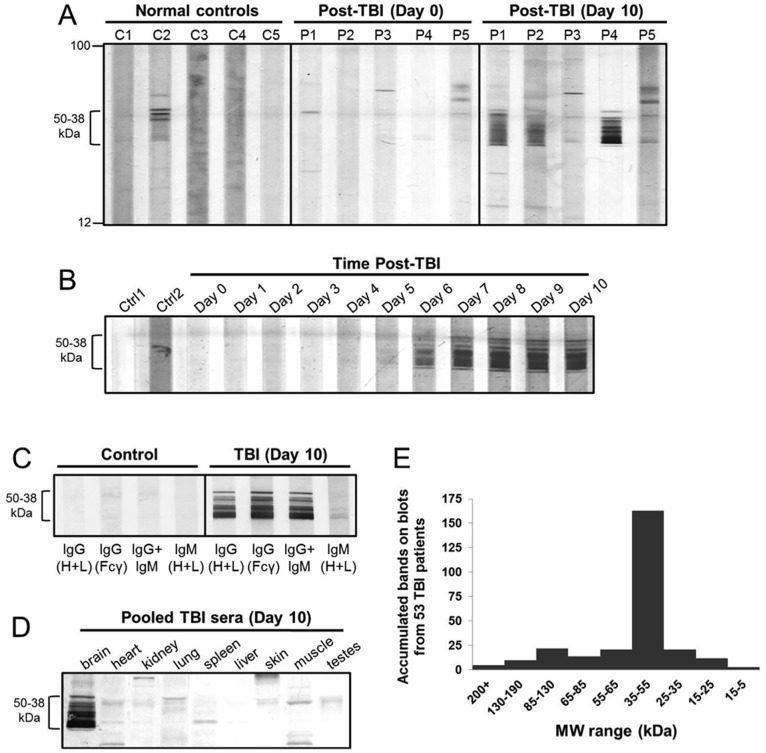
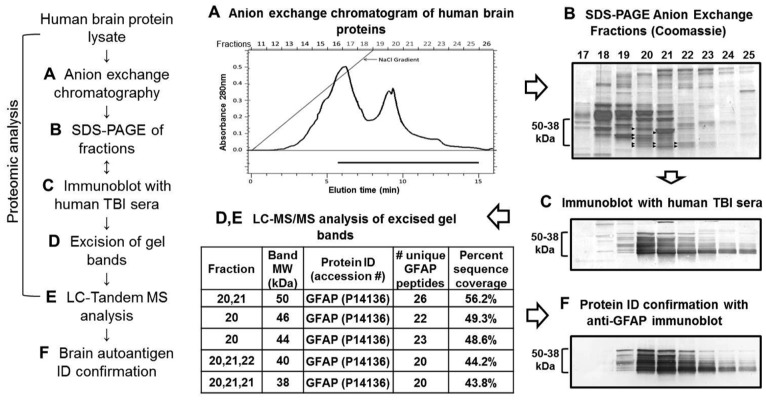
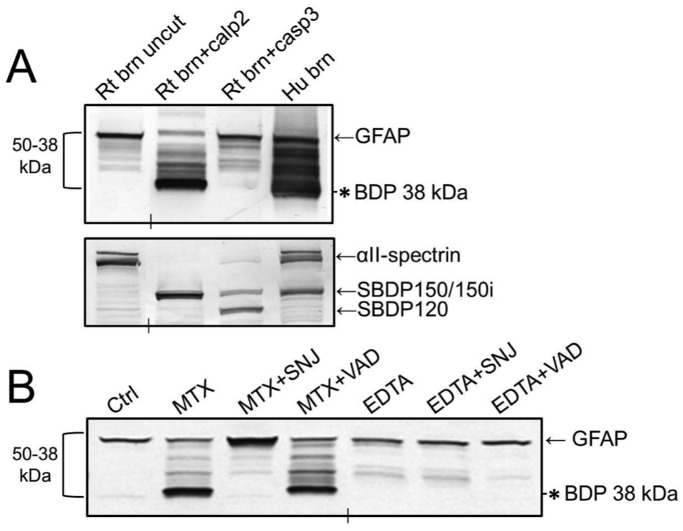
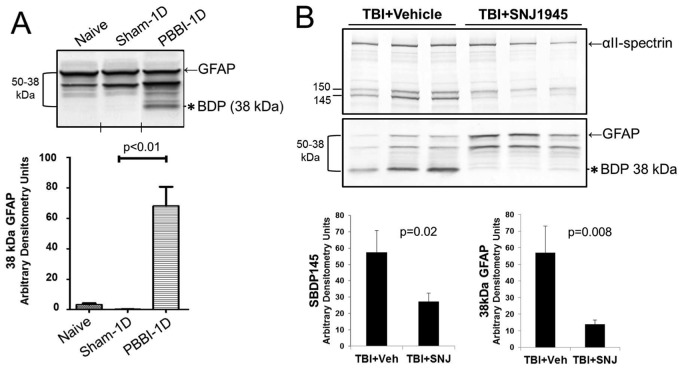
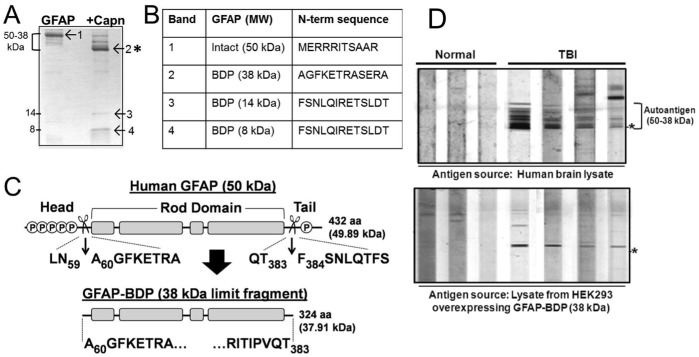
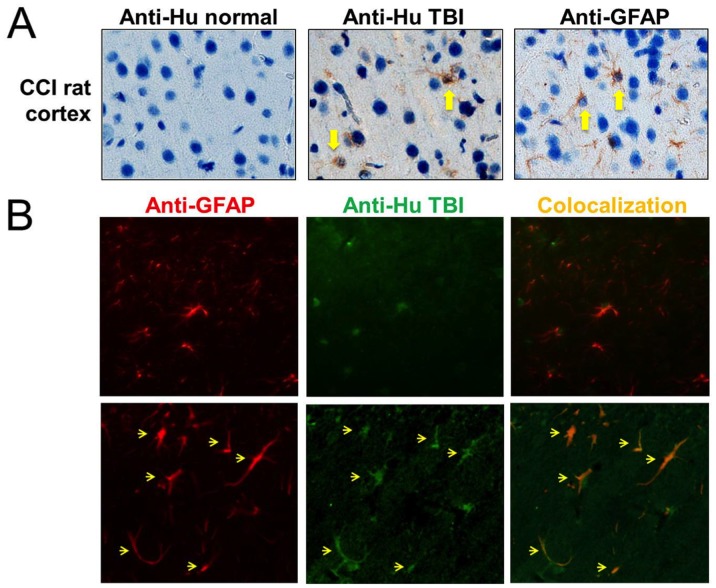
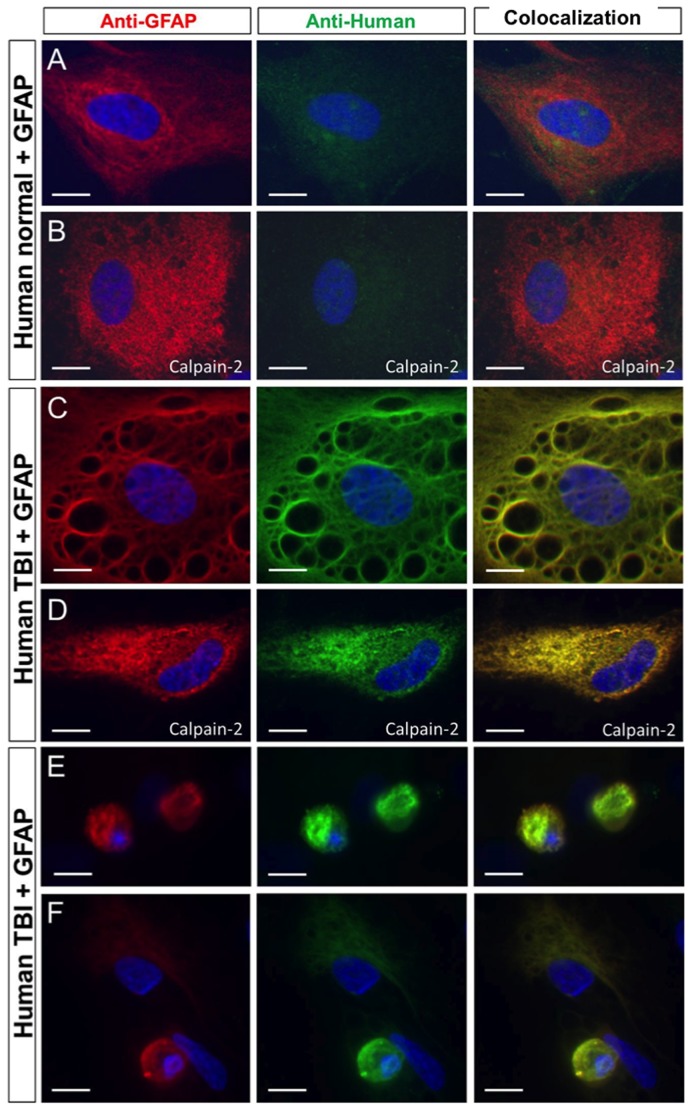
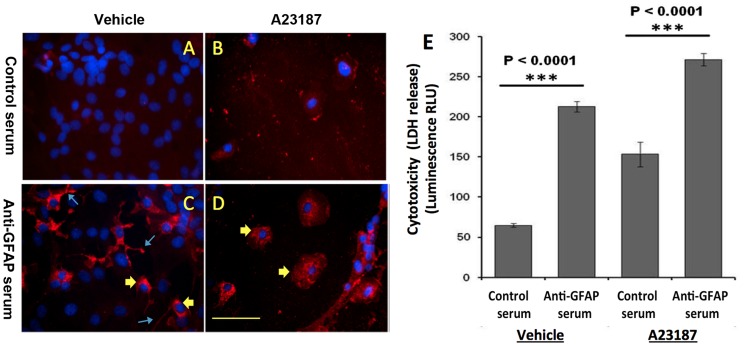
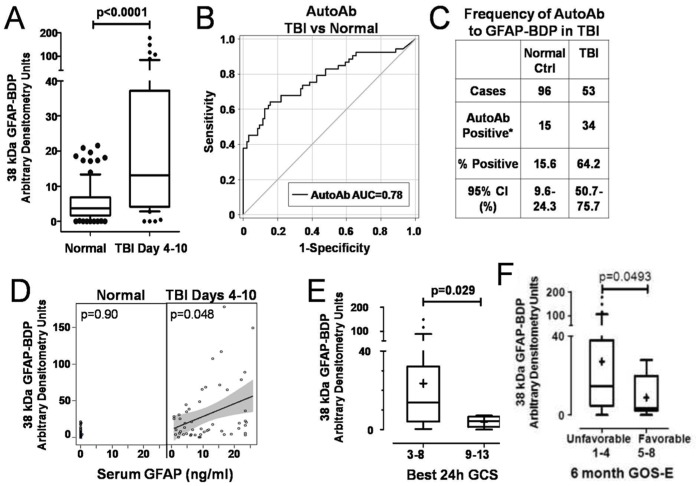
The role of systemic autoimmunity in human traumatic brain injury (TBI) and other forms of brain injuries is recognized but not well understood. In this study, a systematic investigation was performed to identify serum autoantibody responses to brain-specific proteins after TBI in humans. TBI autoantibodies showed predominant immunoreactivity against a cluster of bands from 38-50 kDa on human brain immunoblots, which were identified as GFAP and GFAP breakdown products. GFAP autoantibody levels increased by 7 days after injury, and were of the IgG subtype predominantly. Results from in vitro tests and rat TBI experiments also indicated that calpain was responsible for removing the amino and carboxyl termini of GFAP to yield a 38 kDa fragment. Additionally, TBI autoantibody staining co-localized with GFAP in injured rat brain and in primary rat astrocytes. These results suggest that GFAP breakdown products persist within degenerating astrocytes in the brain. Anti-GFAP autoantibody also can enter living astroglia cells in culture and its presence appears to compromise glial cell health. TBI patients showed an average 3.77 fold increase in anti-GFAP autoantibody levels from early (0-1 days) to late (7-10 days) times post injury. Changes in autoantibody levels were negatively correlated with outcome as measured by GOS-E score at 6 months, suggesting that TBI patients with greater anti-GFAP immune-responses had worse outcomes. Due to the long lasting nature of IgG, a test to detect anti-GFAP autoantibodies is likely to prolong the temporal window for assessment of brain damage in human patients.
Overview
The claims and statistics of this paper haven’t been checked yet.
Free: it reads the open-access text and checks the first 5 claims that cite a source we can check. Create a free account to check every claim.
Integrity signals
Registry
Cites
Statistics
Figures
Verification
Claims the paper makes
The claims and statistics of this paper haven’t been checked yet.
Free: it reads the open-access text and checks the first 5 claims that cite a source we can check. Create a free account to check every claim.
Claims other papers make about this one
Each is checked against this paper’s own text: does it say what the citing paper says it does?
The cited source says what the claim attributes to it.
In the citing paper
“In that study, the authors did not evaluate the effects of TBI on pituitary function, but they clearly demonstrated that serum levels of glial fibrillary acidic protein autoantibodies increased up to 7 days after the injury.”
From Pituitary Dysfunction After Traumatic Brain Injury: A Clinical and Pathophysiological Approach (2015) · cites this paper as [166]
Self-check
Percentages, sums and reported differences re-computed from the paper’s own numbers.
The self-check needs the paper’s full text.
Citations
Cites
1 retracted
Liu, M. C., Akle, V., Zheng, W., Dave, J. R., Tortella, F. C., Hayes, R. L., & Wang, K. K. W. (2006) · Biochemical Journal · doi:10.1042/bj20050905 · Cited by 86 · cited 1×
“caspases are activated in apoptosis [3,4].”
Self-citationRetractedA Statistical Model for Identifying Proteins by Tandem Mass Spectrometry
Nesvizhskii, A. I., Keller, A., Kolker, E., & Aebersold, R. (2003) · Analytical Chemistry · doi:10.1021/ac0341261 · Cited by 4,809
WILSON, J. T. L., PETTIGREW, L. E. L., & TEASDALE, G. M. (1998) · Journal of Neurotrauma · doi:10.1089/neu.1998.15.573 · Cited by 2,386 · cited 1×
“GOS-E) Patient GOS-E scores were assigned to dichotomous ‘‘favorable’’ vs ‘‘unfavorable’’ outcome groups according to recommendations and conventions extensively reported in the literature [33,34].”
BackgroundMiddeldorp, J., & Hol, E. M. (2011) · Progress in Neurobiology · doi:10.1016/j.pneurobio.2011.01.005 · Cited by 1,080 · cited 1×
“GFAP is an intermediate filament protein specifically localized to the cytoskeleton of mature astrocytes, the most abundant cell type in the central nervous system [32].”
BackgroundCalpain and caspase: can you tell the difference?
Wang, K. K. W. (2000) · Trends in Neurosciences · doi:10.1016/s0166-2236(99)01479-4 · Cited by 912 · cited 1×
“caspases are activated in apoptosis [3,4].”
Self-citationBlood–brain barrier breakdown as a therapeutic target in traumatic brain injury
Shlosberg, D., Benifla, M., Kaufer, D., & Friedman, A. (2010) · Nature Reviews Neurology · doi:10.1038/nrneurol.2010.74 · Cited by 897 · cited 1×
“Animal model studies and clinical data both indicate that blood-brain barrier (BBB) breakdown frequently follows head trauma [1,2,5–7].”
BackgroundOrigin and progeny of reactive gliosis: A source of multipotent cells in the injured brain
Buffo, A., Rite, I., Tripathi, P., Lepier, A., Colak, D., Horn, A.-P., Mori, T., & Götz, M. (2008) · Proceedings of the National Academy of Sciences · doi:10.1073/pnas.0709002105 · Cited by 765 · cited 1×
“In injured brain, astrocytes respond by proliferating and upregulating GFAP in a process termed reactive gliosis [50].”
BackgroundBerger, T., Rubner, P., Schautzer, F., Egg, R., Ulmer, H., Mayringer, I., Dilitz, E., Deisenhammer, F., & Reindl, M. (2003) · New England Journal of Medicine · doi:10.1056/nejmoa022328 · Cited by 616 · cited 1×
“Fro example, measurement of autoantibodies by western blot-based methods might have limited clinical applications [63–65].”
MethodTEASDALE, G. M., PETTIGREW, L. E. L., WILSON, J. T. L., MURRAY, G., & JENNETT, B. (1998) · Journal of Neurotrauma · doi:10.1089/neu.1998.15.587 · Cited by 554 · cited 1×
“GOS-E) Patient GOS-E scores were assigned to dichotomous ‘‘favorable’’ vs ‘‘unfavorable’’ outcome groups according to recommendations and conventions extensively reported in the literature [33,34].”
BackgroundPapa, L., Lewis, L. M., Falk, J. L., Zhang, Z., Silvestri, S., Giordano, P., Brophy, G. M., Demery, J. A., Dixit, N. K., Ferguson, I., et al. (2012) · Annals of Emergency Medicine · doi:10.1016/j.annemergmed.2011.08.021 · Cited by 332 · cited 1×
“[67] both recently described the GFAP/BDP antigens are detected in serum after mild-moderate TBI.”
BackgroundSelf-citation
Cited by
Items 101–199 of 199
Is temperature an important variable in recovery after mild traumatic brain injury?
Atkins, C. M., Bramlett, H. M., & Dietrich, W. D. (2017) · F1000Research · doi:10.12688/f1000research.12025.1 · Cited by 16
Nakhjiri, E., Vafaee, M. S., Hojjati, S. M. M., Shahabi, P., & Shahpasand, K. (2020) · Molecular Neurobiology · doi:10.1007/s12035-020-02061-7 · Cited by 16
Alanazi, N., Fitzgerald, M., Hume, P. A., Hellewell, S. C., Horncastle, A., Anyaegbu, C. C., Papini, M. G., Hargreaves, N., Halicki, M., Entwistle, I. R., et al. (2024) · International Journal of Molecular Sciences · doi:10.3390/ijms25147811 · Cited by 16
Vertical Nanowire Electrode Arrays as Novel Electrochemical Label‐Free Immunosensors
Nasr, B., Chana, G., Lee, T. T., Nguyen, T. C., Abeyrathne, C. D., D’Abaco, G. M., Dottori, M., & Skafidas, E. S. (2015) · Small · doi:10.1002/smll.201403540 · Cited by 16
Neuroimmunoendocrinology of SARS-CoV-2 Infection
Bellastella, G., Cirillo, P., Carbone, C., Scappaticcio, L., Maio, A., Botta, G., Tomasuolo, M., Longo, M., Pontillo, A., Bellastella, A., et al. (2022) · Biomedicines · doi:10.3390/biomedicines10112855 · Cited by 16
Autoantibodies in CNS Trauma and Neuropsychiatric Disorders: A New Generation of Biomarkers
Kobeissy, F. H. (2015) · CRC Press eBooks · doi:10.1201/b18126-36 · Cited by 13
Self-citationPin, E., Petricoin, E. F., Cortés, N., Bowman, T. G., Andersson, E., Uhlén, M., Nilsson, P., & Caswell, S. V. (2021) · Journal of Neurotrauma · doi:10.1089/neu.2020.7375 · Cited by 15
“13 Recently, Marchi and coworkers 14 identified autoantibodies against S100 Calcium Binding Protein B (S100B) correlating with subconcussive events.”
Barthel, P. C., Staabs, F., Li, L. Y., Buthut, M., Otto, C., Ruprecht, K., Prüß, H., & Höltje, M. (2023) · Brain Behavior & Immunity - Health · doi:10.1016/j.bbih.2023.100609 · Cited by 13
“GFAP-autoantibodies with unknown relevance were also found in patients with other neurologic diseases, for example traumatic brain injury, glioma or epilepsy (Zhang et al., 2014; Wei et al., 2013; Savas et al., 2021).”
BackgroundLiao, Y., Wen, L., Zheng, R., Shen, Y., Ha, T.-A., Lin, M., Cheng, R., Gao, Y., & Shang, P. (2024) · Molecular Neurobiology · doi:10.1007/s12035-024-04660-0 · Cited by 15
Autoimmunity and Traumatic Brain Injury
Yang, Z., Zhu, T., Weissman, A. S., Jaalouk, E., Rathore, D. S., Romo, P., Shi, Y., Wagner, A. K., & Wang, K. (2017) · Current Physical Medicine and Rehabilitation Reports · doi:10.1007/s40141-017-0146-9 · Cited by 14
“In parallel, we have ga the red ev idence tha t unexpec ted ly shows an immunodominant autoantibody response to GFAP and its cleaved fragments in a subset of subacute and chronic patients with TBI [17].”
InfluentialSelf-citationA Comparative Study of 141 Glial Fibrillary Acidic Protein Immunoglobulin G Positive Cases
Zhang, S., Li, H., Lin, P., Liu, D., Wang, Z., Yang, J., Ruan, S., Zhao, Y., Lan, Z., Yang, X. C., et al. (2025) · European Journal of Neurology · doi:10.1111/ene.70102 · Cited by 13
“Previous research has also identified GFAP-IgG as a potential biomarker for brain injury, with its titer being associated with the prognosis of brain injury [29, 30].”
Neuropathological investigation of patients with prolonged anorexia nervosa
Kawakami, I., Iritani, S., Riku, Y., Umeda, K., Takase, M., Ikeda, K., Niizato, K., Arai, T., Yoshida, M., Oshima, K., et al. (2022) · Psychiatry and Clinical Neurosciences · doi:10.1111/pcn.13340 · Cited by 11
“Human brain immunoblots from a case of traumatic brain injury revealed a cluster of bands from 38 to 50 kDa, which were identified as GFAP and GFAP breakdown products, and the presence of GFAP autoantibodies was suggested.(27) Another report described the detection of proteolyzed fragments of GFAP in Western blots of…”
BackgroundPrPC expression and calpain activity independently mediate the effects of closed head injury in mice
Rubenstein, R., Wang, K., Chiu, A., Grinkina, N., Sharma, D. R., Agarwal, S., Lin, F. Y., & Yang, Z. (2016) · Behavioural Brain Research · doi:10.1016/j.bbr.2016.04.041 · Cited by 12
Self-citationCharacterization of a panel of monoclonal antibodies recognizing specific epitopes on GFAP
Lin, N., Messing, A., & Perng, M. (2017) · PLoS ONE · doi:10.1371/journal.pone.0180694 · Cited by 17
“Zhang et al. found that this proteinase could be calpains [50], which cleave GFAP in vitro at N59–A60 and T383–F384 producing a cluster of breakdown products between 38 and 50 kDa [51].”
Iannucci, J., Dominy, R., Bandopadhyay, S., Arthur, E. M., Noarbe, B. P., Jullienne, A., Krkasharyan, M., Tobin, R. P., Pereverzev, A., Beevers, S., et al. (2024) · Journal of Neuroinflammation · doi:10.1186/s12974-024-03146-z · Cited by 14
“This is supported by the previous observations of brain specific antibodies in the CSF and serum of TBI patients [98, 17, 99–103].”
BackgroundResultHeaven, M. R., Wilson, L. S., Barnes, S., & Brenner, M. (2019) · Journal of Biological Chemistry · doi:10.1074/jbc.ra119.009777 · Cited by 11
“The sequences of the degradation bands present in our AxD patient samples are not known, but the series of bands observed is quite similar to those seen in a variety of other control and diseased post-mortem samples (24 –27) and has been attributed to digestion by calpain (27, 38, 39).”
BackgroundDeDominicis, K. E., Hwang, H. M., Cartagena, C. M., Shear, D. A., & Boutté, A. M. (2018) · Frontiers in Neurology · doi:10.3389/fneur.2018.00490 · Cited by 13
“Generation of GFAP-BDPs and SBDP-145/150 are products of calpain-mediated proteolysis (26), whereas proteolysis by caspase-3 activity results primarily in generation of SBDP-120 (42).”
BackgroundBlood-brain barrier disruption, traumatic encephalopathy, and cognitive decline in retired athletes
Greene, C., Brennan, D., Mirloo, S., Connolly, R., O’Callaghan, J., Reddy, A., Henderson, J., Porkoláb, G., McGlinchey, A. S., Hanley, N., et al. (2026) · Science Translational Medicine · doi:10.1126/scitranslmed.adu6037 · Cited by 15
Cecchi, R., Camatti, J., Schirripa, M. L., Ragona, M., Pinelli, S., & Cucurachi, N. (2024) · Forensic Science Medicine and Pathology · doi:10.1007/s12024-024-00874-9 · Cited by 14
“The role of S100B, NSE and GFAP in PMB remains questionable [38–40].”
Exploring Calcium Channels as Potential Therapeutic Targets in Blast Traumatic Brain Injury
Wachtler, N., O’Brien, R., Ehrlich, B. E., & McGuone, D. (2025) · Pharmaceuticals · doi:10.3390/ph18020223 · Cited by 14
“Notably, non-blast TBI has been associated with brain-specific antibodies against GFAP [92], suggesting additional potential links between deiminated proteins, astrogliosis, and autoimmunity [33].”
Schneider, L. E., Reichert, E. C., Faulkner, J., Reichert, B., Sonnen, J. A., & Hawryluk, G. W. J. (2019) · Journal of neurosurgery · doi:10.3171/2018.10.jns181517 · Cited by 10
Murine Esophagus Expresses Glial-Derived Central Nervous System Antigens
Kapitza, C., Chunder, R., Scheller, A., Given, K. S., Macklin, W. B., Enders, M., Küerten, S., Neuhuber, W., & Wörl, J. (2021) · International Journal of Molecular Sciences · doi:10.3390/ijms22063233 · Cited by 11
“In addition, GFAP-autoantibodies could not only be found in patients with traumatic brain or spinal cord injury [68,69], but also in those with autoimmune GFAP-astrocytopathy, where at least 20% show autonomic dysfunctions including dysphagia [70].”
BackgroundWagner, A. K., Franzese, K. M., Weppner, J. L., Kwasnica, C. M., Galang, G., Edinger, J. M., & Linsenmeyer, M. A. (2020) · Elsevier eBooks · doi:10.1016/b978-0-323-62539-5.00043-6 · Cited by 19
Gschmack, E., Monoranu, C., Marouf, H., Meyer, S., Lessel, L., Idris, R., Berg, D., Maetzler, W., Steigerwald, F., Volkmann, J., et al. (2022) · Journal of Neural Transmission · doi:10.1007/s00702-022-02495-4 · Cited by 9
“2018), and/or develop after traumatic brain injury (Zhang et al. 2014; Wang et al. 2016).”
BackgroundWang, Y., Jia, W., Zhu, J., Xu, R., & Lin, Y. (2022) · Chinese Chemical Letters · doi:10.1016/j.cclet.2022.107746 · Cited by 10
Goede, A., Dreßler, J., Sommer, G., Schober, K., Franke, H., & Ondruschka, B. (2015) · Rechtsmedizin · doi:10.1007/s00194-015-0040-7 · Cited by 8
Hansen, N., STÖCKER, W., Wiltfang, J., Bartels, C., Rentzsch, K., & Bouter, C. (2022) · Frontiers in Immunology · doi:10.3389/fimmu.2021.760021 · Cited by 8
“Cell culture experiments (18) showed that GFAP autoantibodies can disrupt glial cell functioning by entering living astroglia cells, supporting the hypothesis of astroglial-derived neurodegeneration in our patient.”
BackgroundHansen, N., Fitzner, D., STÖCKER, W., Wiltfang, J., & Bartels, C. (2021) · Brain Sciences · doi:10.3390/brainsci11091208 · Cited by 7
“lymphocyte infiltration and B-cell activation leading to the production of antibodies for neural antigens such as those described in patients that develop glial fibrillary acid protein autoantibodies [9,10] (Table 1).”
BackgroundCipriani, C., Tartaglione, A. M., Giudice, M., D’Avorio, E., Petrone, V., Toschi, N., Chiarotti, F., Miele, M. T., Calamandrei, G., Garaci, E., et al. (2022) · International Journal of Molecular Sciences · doi:10.3390/ijms232213930 · Cited by 9
“damage and neuroinflammation [55] was increased in the PFC from Poly I:C mice, in line with a previous report in preclinical models with an ASD-like phenotype induced by early immune activation [56].”
ResultGasso, V. Y., Hahut, A. M., Yermolenko, S. V., Hasso, I. A., Ağca, C. A., Sukharenko, E. V., & Nedzvetsky, V. S. (2020) · Biosystems Diversity · doi:10.15421/012033 · Cited by 8
Kanuri, S. H., & Sirrkay, P. J. (2025) · Neurology International · doi:10.3390/neurolint17090134 · Cited by 7
“Furthermore, it has been shown that patients who harbor these antibodies for a longer period of time seem to have worse clinical outcomes as compared to those without them [65].”
InfluentialGómez‐Gálvez, Y., Fuller, H. R., Synowsky, S. A., Shirran, S. L., & Gates, M. A. (2020) · Journal of Neuroscience Research · doi:10.1002/jnr.24622 · Cited by 8
“Known molecular weights were obtained from Lee et al. (2000) (calpain 1), Fujita et al. (1998) and Zhang et al. (2014) (calpain 2), Mouser, Head, Ha, and Rohn (2006) (caspase 3) and Chen, Hagemann, Quinlan, Messing, and Perng (2013) (caspase 6).”
Autoimmune glial fibrillary acidic protein astrocytopathy
Kimura, A., Takekoshi, A., Yoshikura, N., Nakanishi, E., & Shimohata, T. (2019) · Clinical and Experimental Neuroimmunology · doi:10.1111/cen3.12538 · Cited by 6
Complex Autoantibody Responses Occur Following Moderate to Severe Traumatic Brain InjuryPreprint
Needham, E., Stoevesandt, O., Thelin, E. P., Zetterberg, H., Zanier, E. R., Nimer, F. A., Ashton, N. J., Outtrim, J. G., Newcombe, V., Mousa, H. S., et al. (2020) · medRxiv · doi:10.1101/2020.07.24.20161786 · Cited by 6
“GFAP is rapidly emerging as the most prominent protein biomarker in TBI (Bazarian et al., 2018; Steyerberg et al., 2019; Thelin et al., 2019; Yue et al., 2019), and has been suggested to be the dominant autoantigen following TBI in past reports (Zhang et al., 2014).”
BackgroundInfluentialSelf-citationRhind, S. G., Shiu, M. Y., Vartanian, O. A., Tenn, C. C., Nakashima, A., Jetly, R., Yang, Z., & Wang, K. (2024) · International Journal of Molecular Sciences · doi:10.3390/ijms252413683 · Cited by 7
Self-citationAgoston, D. V. (2021) · Frontiers in Neurology · doi:10.3389/fneur.2021.752937 · Cited by 5
Hart, B. A. ‘., & Weissert, R. (2016) · Multiple Sclerosis Journal - Experimental Translational and Clinical · doi:10.1177/2055217316630999 · Cited by 6
“Despite the massive release of multiple myelin as well as non-myelin antigens after traumatic brain injury, a narrow B cell response against astrocytic glial fibrillary acidic protein (GFAP) can be detected, but not against myelin.(3) This raises the question why autoimmunity against myelin is rare in these disorders,…”
BackgroundBellastella, G., Maiorino, M. I., Longo, M., Cirillo, P., Scappaticcio, L., Vietri, M. T., Bellastella, A., Esposito, K., & Bellis, A. D. (2020) · International Journal of Molecular Sciences · doi:10.3390/ijms21041392 · Cited by 6
“Changes in autoantibody levels were negatively correlated with outcome as measured by a Glasgow outcome scale- extended (GOS-E) score at 6 months, suggesting that TBI patients with greater anti-GFAP immune responses had worse outcomes [37].”
MethodRozental, A. J., McGrath, S., Mooney, A. P., Hinson, S. R., McKeon, A. B., Pittock, S. J., Gross, C. C., & Tyler, K. L. (2021) · American Journal of Veterinary Research · doi:10.2460/ajvr.82.2.132 · Cited by 5
Emerging themes from the literature on circulating biomarkers of traumatic brain injury
Paziana, K., & Korley, F. K. (2015) · Future Neurology · doi:10.2217/fnl.15.13 · Cited by 5
Kobeissy, F. H., Ahmad, F. A., Shaito, A. A., Hasan, H. A., Hady, S. A., Nasrallah, L., Shaito, N., Hassan, H. H., Zibara, K., Yadikar, H., et al. (2020) · Elsevier eBooks · doi:10.1016/b978-0-12-816346-7.00029-4 · Cited by 4
Self-citationKimura, A. (2024) · Rinsho Shinkeigaku · doi:10.5692/clinicalneurol.cn-001925 · Cited by 4
Surzenko, N., Bastidas, J. C., Reid, R. W., Curaba, J., Zhang, W., Bostan, H., Wilson, M. E., Dominique, A., Roberson, J., Ignacio, G., et al. (2024) · The FASEB Journal · doi:10.1096/fj.202301859r · Cited by 4
Schneider, L. E., Roukerd, M. R., Faulkner, J., Reichert, E. C., Abou‐Al‐Shaar, H., Flis, A. E., Rubiano, A. M., & Hawryluk, G. W. J. (2022) · Neuroscience Research · doi:10.1016/j.neures.2022.03.009 · Cited by 4
Rohdin, C., Ljungvall, I., Jäderlund, K. H., Svensson, A. C., Lindblad‐Toh, K., & Häggström, J. U. (2024) · Veterinary Record · doi:10.1002/vetr.3895 · Cited by 6
Autoantibodies in CNS Trauma and Neuropsychiatric Disorders
Kobeissy, F. H., & Moshourab, R. A. (2015) · Cited by 4
Self-citationWang, K., Yang, Z., Chiu, A., Lin, F. Y., & Rubenstein, R. (2015) · Molecular Neurobiology · doi:10.1007/s12035-015-9407-8 · Cited by 5
“3) and with (ii) GFAP-BDPs induced by calpain (GBDP-38K) and by caspase (GBDP-22K) [34] (Fig.”
Self-citationMazlan, M. (2017) · Elsevier eBooks · doi:10.1016/b978-0-323-47904-2.00043-x · Cited by 4
Ceccherini‐Nelli, A., Bucuci, E., Burback, L., Li, D., Alikouzehgaran, M., Latif, Z., Morin, K., Ganapathy, K., Salsali, M., Abdullah, U., et al. (2021) · Frontiers in Psychiatry · doi:10.3389/fpsyt.2021.693788 · Cited by 6
“Autoimmunity has also been invoked to explain the pathophysiology of subgroups of patients with schizophrenia spectrum and other psychotic disorders (32, 33), mood disorders (34, 35), PTSD (36–38), neurocognitive disorders (39, 40), including those secondary to traumatic brain injury (41, 42).”
BackgroundIsolation and proteomics analysis of cerebrospinal fluid exosome subtypes
Chen, X., Liu, W., ZHANG, W., Li, Y., Wang, Z., Gao, M., & Zhang, X. (2025) · Chinese Journal of Chromatography · doi:10.3724/sp.j.1123.2024.10014 · Cited by 4
Abou‐El‐Hassan, H., Bernstock, J. D., Chalif, J. I., Yahya, T., Rezende, R. M., Weiner, H. L., & Izzy, S. (2023) · Frontiers in Cellular Neuroscience · doi:10.3389/fncel.2023.1322325 · Cited by 4
Hussain, E., Prokop, J. W., Nonnemacher, E., Ashrafi, N., Yılmaz, A., Mimi, R. A., Khalid, A., Krinickis, K., Lomeikaite, V., Sanfilippo, L., et al. (2025) · Critical Care · doi:10.1186/s13054-025-05789-7 · Cited by 5
“This is consistent with other studies highlighting B-cell behavior [43–45].”
The adaptive immune system in traumatic brain injury: A focus on T and B lymphocytes
Daglas, M., Medcalf, R. L., & Sashindranath, M. (2022) · Elsevier eBooks · doi:10.1016/b978-0-12-823036-7.00044-x · Cited by 3
Duchniewicz, M. A., Lee, J. Y. W., Menon, D. K., & Needham, E. (2023) · Journal of Neurotrauma · doi:10.1089/neu.2023.0187 · Cited by 3
Xue, X., Mei, S., Huang, A., Wu, Z., Zeng, J., Song, H., An, J., Zhang, L., Liu, G., Zhou, L., et al. (2024) · Brain Sciences · doi:10.3390/brainsci14080787 · Cited by 4
“GFAP, one of the cytoskeletal structure proteins in astrocytes, is highly expressed in the CNS and has been proven to be a useful blood biomarker of astrogliosis in neurodegenerative conditions [40].”
BackgroundLazarus, R. C., Buonora, J. E., Kamnaksh, A., Flora, M. N., Freedy, J. G., Holstein, G. R., Martinelli, G. P., Jacobowitz, D. M., Agoston, D. V., & Mueller, G. P. (2017) · Springer eBooks · doi:10.1007/978-3-319-58244-3_16 · Cited by 3
Penhale, S. H., Waters, A. B., Sarkar, S., McQuillan, L. E., Maczuzak, J., Datta, S., Lamb, D. G., Robertson, C. S., Rubenstein, R., Wagner, A. K., et al. (2025) · Journal of Neurotrauma · doi:10.1089/neu.2024.0566 · Cited by 4
“36 Furthermore, the effects of TBI have been identi fi ed at many levels of vasculature in all severities of TBI.”
Self-citationThe role of autoimmunity after traumatic brain injury
Das, M., Mohapatra, S. S., & Mohapatra, S. (2020) · Elsevier eBooks · doi:10.1016/b978-0-12-816346-7.00005-1 · Cited by 2
Dinç, B., YILMAZ, V. T., Aslan, M., Aycan, İ. Ö., Kiraz, N., Kısaoğlu, A., Dandin, Ö., Hadimioğlu, N., & Ertuğ, Z. (2021) · Transplantation Proceedings · doi:10.1016/j.transproceed.2021.07.007 · Cited by 2
Assessing the Global Impact on the Mouse Kidney After Traumatic Brain Injury: A Transcriptomic Study
Chan, W., Hsu, Y., Cheng, C.-P., Chou, K.-N., Chen, C.-L., Huang, S., Kan, W., & Chiu, Y. (2022) · Journal of Inflammation Research · doi:10.2147/jir.s375088 · Cited by 2
Biomarkers in Brain Traumatic Injury
Sabet, H. S., Sabet, F. S., Shojaei, K., Yaghoubi, F., & Jafarian, M. (2022) · The Neuroscience Journal of Shefaye Khatam · doi:10.52547/shefa.11.1.133 · Cited by 2
Xian, L., Xu, X., Mai, Y., Guo, T., Chen, Z., & Deng, X. (2024) · Medicine · doi:10.1097/md.0000000000039740 · Cited by 3
“A study by 2 groups of scientists [40,41] inferred that autoantibodies precise to CNS proteins were identified in BI patients’ serum, implying a broken tolerance.”
BackgroundInnate immune proteins as biomarkers for CNS injury: critical evaluation (WO2013119673 A1)
Jha, M. K., Lee, H., Kim, S., & Suk, K. (2014) · Expert Opinion on Therapeutic Patents · doi:10.1517/13543776.2014.972937 · Cited by 2
“However, several reports have well-validated blood biomarkers as indicators of CNS trauma [28-32].”
BackgroundHuang, J., Huang, W., Zhou, R., Lin, W., Chen, T., & Long, Y. (2023) · Annals of Translational Medicine · doi:10.21037/atm.2019.07.12 · Cited by 21
“Serum GFAP antibody positivity can occur for a variety of conditions, such as traumatic brain injury, brain tumors, autism, lead exposure, or diabetes (3-6).”
BackgroundTraumatic brain injury: glial fibrillary acidic protein posttranslational modification
Fert‐Bober, J., Pandey, R., Dardov, V. J., Meter, T. E. V., Edmonds, D. J., & Eyk, J. E. V. (2020) · Elsevier eBooks · doi:10.1016/b978-0-12-816346-7.00006-3 · Cited by 3
Kochis, R. M., Ahota, A., Garcia, H. B., Gottlieb, R. Z., Ruelas, E. B., & Cauwenberghs, G. (2021) · Annual International Conference of the IEEE Engineering in Medicine and Biology Society (EMBC) · doi:10.1109/embc46164.2021.9629960 · Cited by 2
“Additionally, it has been shown that the levels of IgG in patients with a history of subsequent TBIs have higher levels of antibodies relative to patients without TBI history [5].”
BackgroundClinical conversations: nurses who work with patients with interstitial cystitis.
Bates, P., Getz, B. R., Gibbs, E., Neu, L., & Pobursky, J. (2000) · PubMed · Cited by 2
Clinical characteristics of patients with GFAP-IgG coexisting with AQP4-IgG or MOG-IgG
Li, Q., & Chen, X. (2025) · Frontiers in Immunology · doi:10.3389/fimmu.2025.1610486 · Cited by 1
Research progress on biomarkers of traumatic brain injury
Shen, X., Cheng, S., Chen, S., Wang, M., Li, T., Xu, W., Zhang, Y., Yuan, P., & Shi, L. (2026) · Animal Models and Experimental Medicine · doi:10.1002/ame2.70173 · Cited by 1
“…After severe TBI, notable increases in GFAP levels have been detected within the CSF and the blood components of serum and plasma within a period of 3 to 34 h. 177,185,203,225,226 As early as 1999, research already indicated an elevation in serum GFAP levels among patients with severe head trauma.”
Brain injury biomarkers: Proteins and autoantibodies interplay
Abdelhady, S., Issa, H., Ashekyan, O., Haidar, M. A., Outani, O., Samir, Y., Belal, E., Shakkour, Z., Mondello, S., & Kobeissy, F. H. (2022) · Elsevier eBooks · doi:10.1016/b978-0-12-823347-4.00036-1 · Cited by 1
Self-citationSignificance of Autoantibodies
Hampe, C. S. (2019) · Contemporary clinical neuroscience · doi:10.1007/978-3-030-19515-1_4 · Cited by 2
Understanding the Cause of Chronic Traumatic Encephalopathy and Related Dementias
Roukerd, M. R., Stump, A. J., & Hawryluk, G. W. J. (2020) · World Neurosurgery · doi:10.1016/j.wneu.2020.09.120 · Cited by 1
Sîrbulescu, R. F., Ilieş, I., Amelung, L., & Zupanc, G. K. H. (2022) · Journal of Comparative Physiology A · doi:10.1007/s00359-022-01591-w · Cited by 1
Traumatic Brain Injury and Neurodegenerative Disease
McGuire, D. (2018) · Wiley eBooks · doi:10.1002/9781118772034.ch26 · Cited by 2
James, W. S., & Lemole, G. M. (2015) · Springer eBooks · doi:10.1007/978-1-4939-2671-8_21
Sindi, R. A. (2015) · Nottingham Trent University's Institutional Repository (Nottingham Trent Repository) · Cited by 1
Immunopathology of the Nervous System
Remick, A. K., Pershing, M. L., Papenfuss, T. L., Lanigan, L. G., Beck, M. J., & Toot, J. (2017) · Molecular and integrative toxicology · doi:10.1007/978-3-319-47385-7_5 · Cited by 1
Yaremenko, L. M., Grabovyi, O. M., & Shepelev, S. E. (2017) · Neurophysiology · doi:10.1007/s11062-017-9669-z
Understanding Pain in Individuals with Traumatic Brain Injury
Yang, A. H., Ough, J. K., & Nampiaparampil, D. E. (2018) · Springer eBooks · doi:10.1007/978-3-319-95369-4_12
Clinical and Biochemical Predictors of Fatality in Traumatic Brain Injury
Muballe, K. D., Sewani-Rusike, C. R., Longo‐Mbenza, B., & Iputo, J. E. (2020) · Journal of Surgery · doi:10.11648/j.js.20200805.11 · Cited by 1
“The biomarkers studied included, neuron specific enolase, glial fibrillary acidic proteins, S100B protein, myelin basic protein, cleaved tau protein, spectrin break down products, ubiquitin C-terminal hydrolase-1 (UCH-L1), besides apolipoprotein E, angiotensin-1 converting enzyme, D2 dopamine receptor subtype, P53 gen…”
BackgroundSerum biomarkers in mild traumatic brain injury
Martiníková, M., Ružiňák, R., Donáth, V., Kurča, E., & Sivák, Š. (2021) · Neurologie pro praxi · doi:10.36290/neu.2021.066
Biomarkers of Cardiopulmonary Injury and Impact of Bromine Toxicity
Bordcoch, G., & Juncos, J. X. M. (2022) · Biomarkers in disease · doi:10.1007/978-3-030-87225-0_46-1
Biomarkers of Cardiopulmonary Injury and Impact of Bromine Toxicity
Bordcoch, G., & Juncos, J. X. M. (2023) · Biomarkers in disease · doi:10.1007/978-3-031-07392-2_46
Neurosurgical sports injury (an established unit)
Abouhashem, S. E. (2023) · The Egyptian Journal of Neurosurgery : the official publication of the Egyptian Society of Neurological Surgeons/Egyptian journal of neurosurgery · doi:10.1186/s41984-023-00200-5 · Cited by 3
“TBI patients showed about a four-fold increase in the anti-GFAP antibody levels within the first 10 days and 6 months after injury compared to the healthy control group [36, 37].”
Backgroundความชุกและปัจจัยที่สัมพันธ์กับภาวะพร่องฮอร์โมนต่อมหมวกไตแบบทุติยภูมิในอดีตนักมวยไทย
พิชญ์ชัยประเสริฐ, ส., & สนับบุญ, ธ. (2017) · Chula Digiverse · doi:10.58837/chula.the.2017.1638
Significance of Autoantibodies
Hampe, C. S. (2024) · Springer eBooks · doi:10.1007/978-3-031-24297-7_4-1
The Immune Response in Two Models of Traumatic Injury of the Immature Brain
Al-Khateeb, Z. F., Henson, S. M., Tremoleda, J. L., & Michael-Titus, A. T. (2024) · Cells · doi:10.3390/cells13191612 · Cited by 1
Significance of Autoantibodies
Hampe, C. S. (2024) · Springer eBooks · doi:10.1007/978-3-031-60006-7_4
Liang, S., & Hu, Z. (2024) · Biomedical Papers · doi:10.5507/bp.2024.038
The role of biomarkers in the early diagnosis of traumatic brain injury
Hassan, N. H., Osman, I. Y. A., Osman, N. E., Goda, M. A. H., Balol, M. A. A. A., Abdelah, E. M., Ahmed, A. O., & Gomaa, E. H. (2025) · International Journal of Community Medicine and Public Health · doi:10.18203/2394-6040.ijcmph20253317
Shi, Q., Hu, T.-T., Liang, B., Fang, Y.-H., Xu, L., Chen, L., Tong, X.-G., & Yan, H. (2026) · Journal of Neurotrauma · doi:10.1177/08977151251404034
“11,12 Previous studies have demonstrated the production of autoantibodies that target multiple brain-derived proteins following TBI.”
Genetic Diversity Influences Response and Outcome to Blast Traumatic Brain Injury in a Murine Model
Georges, A. P., Browne, K. D., Augustin, D. V., Bello, A. H., Cullen, D. K., & Meaney, D. F. (2026) · Neurotrauma Reports · doi:10.1177/2689288x251411057
“Clinical studies have documented diverse autoantibody responses following TBI, including antibodies against GFAP , 65,66 S100B , 67 and neural antigens such as MAG .”
Heidemann, P. L., Nilsson, C., Schmidt, S. G., Lattwein, E., Agerholm, J. S., Blaabjerg, M., & Gredal, H. (2026) · Journal of Veterinary Internal Medicine · doi:10.1093/jvimsj/aalag086
“40 It is not clear if the secondary immune reaction towardsGFAPexacerbates inflammation,butthepresenceofanti-GFAP-autoantibodies does correlate negatively with outcome.”
Rubio, S., Somers, V. A., & Fraussen, J. (2026) · Neurobiology of Disease · doi:10.1016/j.nbd.2026.107471
Lawrence, E., Fulton, D. J., Brown, P., Suresh, S., Morris, M., Goggolidou, P., Chaithanya, S., Abbawy, M., Wild, A., Nasa, P., et al. (2026) · Brain and Behavior · doi:10.1002/brb3.71542
“Notably, 15.6% of healthy controls also had GFAP autoantibodies, likely due to minor, unreported head injuries (Zhang et al. 2014 ).”
InfluentialAroor, A., Sadri, Z., Pinzón-Hoyos, N., Schartz, N. D., & Brewster, A. L. (2026) · Brain Structure and Function · doi:10.1007/s00429-026-03175-9 · Cited by 1
“…hours after injury and are reported to be more sensitive than full-length GFAP for detecting acute astrocyte pathology, potentially indicating a shift from reactive gliosis to astrocyte degeneration (Yang and Wang 2015 , Yang et al. 2022, Zhang et al. 2014 , Yang et al. 2018, Abdelhak et al. 2022).”
Onigbinde, S. B., Solomon, J., Sandilya, V., Daramola, O., Fowowe, M., Adeniyi, M., Kobeissy, F. H., Mondello, S., Puccio, A. M., & Mechref, Y. S. (2026) · Journal of Proteome Research · doi:10.1021/acs.jproteome.5c01154
Self-citationVaughn, M. N., Acheson, D. T., Powell, S. B., DeWit, J. M., Yurgil, K. A., Nievergelt, C. M., Baker, D. G., Risbrough, V. B., & Zhou, X. (2026) · Molecular Psychiatry · doi:10.1038/s41380-026-03883-y · Cited by 1
ОСОБЛИВОСТІ НЕЙРОАВТОІМУННИХ РЕАКЦІЙ ПІСЛЯ БОЙОВОЇ ЧЕРЕПНО-МОЗКОВОЇ ТРАВМИ
Belska, L. M., Ивановна, К. А., Panteleichuk, A. B., & Eg, P. (2026) · Immunology and Allergy Science and Practice · doi:10.37321/immunology.2026.3-09
Metadata
- Authors
- Zhang, Z., Zoltewicz, J. S., Mondello, S., Newsom, K. J., Yang, Z., Yang, B., Kobeissy, F., Guingab, J., Glushakova, O., Robicsek, S., Heaton, S., Buki, A., Hannay, J., Gold, M. S., Rubenstein, R., Lu, X.-C. M., Dave, J. R., Schmid, K., Tortella, F., Robertson, C. S., & Wang, K. K. W.
- Affiliations
- Banyan Biomarkers (United States) (US)
- University of Florida (US)
- University of Messina (IT)
- University of Florida Health (US)
- SUNY Downstate Health Sciences University (US)
- Walter Reed Army Institute of Research (US)
- Baylor College of Medicine (US)
- Corresponding author
- Zhang, Zhiqun
- Zoltewicz, J. Susie
- Wang, Kevin K. W.
- ORCID
- Venue
- PLoS ONE
- Publisher
- Public Library of Science (PLoS)
- Published
- 2014-03-25
- Volume
- 9
- Issue
- 3
- Pages
- e92698
- ISSN
- 1932-6203 (ISSN-L)
- PMC
- PMC3965455
- OpenAlex
- W2085281517
- Semantic Scholar
- e80c01fdab639dbf4a2efbc9669e9615dbac4901
- Cited by
- 200
- References
- 70
- Citations by year
- 2026: 11 · 2025: 10 · 2024: 18 · 2023: 13 · 2022: 21 · 2021: 20 · 2020: 19 · 2019: 15 · 2018: 11 · 2017: 20 · 2016: 13 · 2015: 22 · 2014: 5
- FWCI
- 13.04
- Type
- journal article
- Language
- en
- Update notices
- correction (2014-06-25)
- Open access
- gold
- doi.org
- Locations
- PLoS ONE (publishedVersion, cc-by)
- Europe PMC (PubMed Central) (publishedVersion, other-oa)
- PubMed Central (publishedVersion, cc-by)
- PubMed (publishedVersion)
- DOAJ (DOAJ: Directory of Open Access Journals) (submittedVersion, cc-by-sa)
- Figshare (submittedVersion, cc-by)
- Funders
- U.S. Department of Defense (DAMD170310772)
- University of Pittsburgh
- National Institutes of Health
- National Institute of Neurological Disorders and Stroke (R01NS051431, R01NS052831, R01NS049175)
- Topics
- Health Sciences › Medicine › Clinical Neurology › Traumatic Brain Injury and Neurovascular Disturbances
- Health Sciences › Medicine › Clinical Neurology › Traumatic Brain Injury Research
- Health Sciences › Medicine › Clinical Neurology › Spinal Cord Injury Research
- Keywords
- traumatic brain injury, autoantibodies, glial fibrillary acidic protein, calpain, astrocytes, systemic autoimmunity, IgG, brain damage biomarkers, functional outcome, rat model
- MeSH terms
- Adult, Animals, Astrocytes, Autoantibodies, Brain Injuries, Female, Glial Fibrillary Acidic Protein, Humans, Immunoglobulin G, Male, Time Factors, Rats, Sprague-Dawley, Rats
About these checks
Registry, retraction, Cites and statistics results are computed, not judged, with one exception: a printed reference that no index lists is read once by a model before it counts as a citation error. Claims are extracted by a model and kept only when their quote appears verbatim in the text; each cited source is then checked, with a model’s help, for whether it says what the claim relies on. Those verdicts can be wrong — read the claim’s quote and the cited source before relying on one.
Statistics and arithmetic are recomputed, not judged.
Confidence bands are shown only for fields calibrated on our annotated test set. None is calibrated yet, so no band is shown.
What counts as a claim ›How we measure confidence ›How we check this ›
Are you an author, or do you see a problem with this page? Request a review
Data sources
Bibliographic data: Semantic Scholar, OpenAlex, Crossref.
Contains information from the Semantic Scholar Academic Graph Datasets, made available under the ODC Attribution License (ODC-BY 1.0).
Semantic Scholar’s data is described in: Kinney, R., et al. (2023). The Semantic Scholar Open Data Platform. arXiv:2301.10140.
