

The DOI matches its Crossref record; 28 of the 28 references it cites were found in a registry or an index.
Alzheimer's Associated β-Amyloid Protein Inhibits Influenza A Virus and Modulates Viral Interactions with Phagocytes
Open accessAbstract
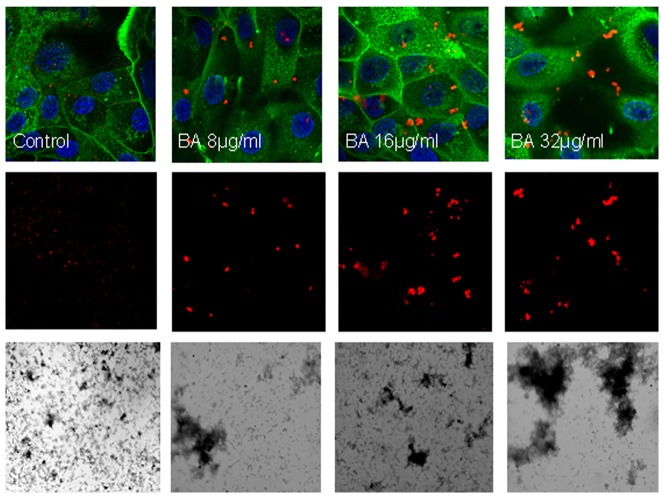
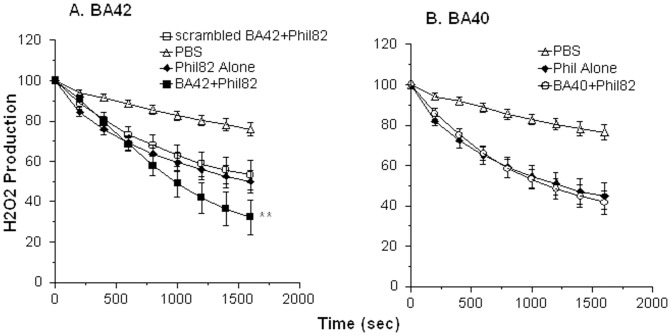
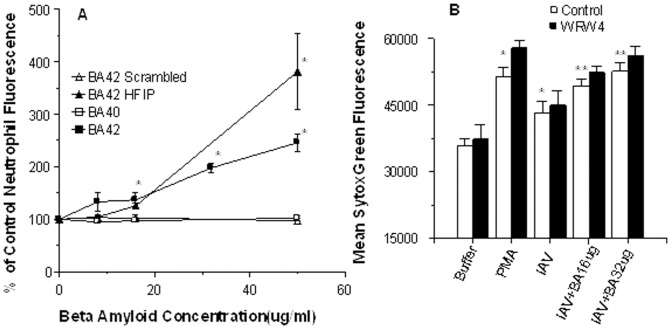
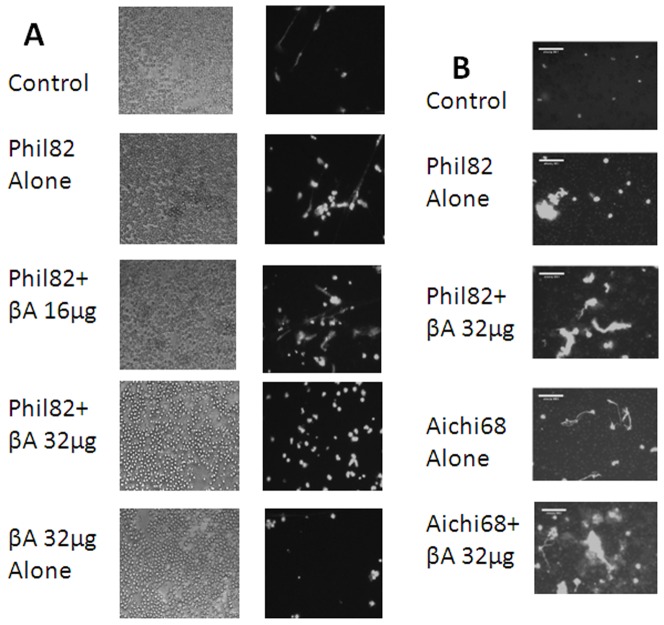
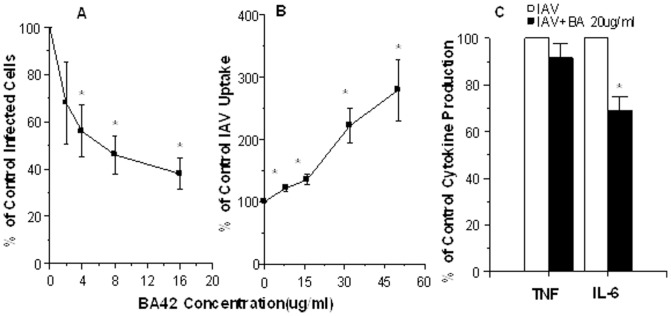
Accumulation of β-Amyloid (βA) is a key pathogenetic factor in Alzheimer's disease; however, the normal function of βA is unknown. Recent studies have shown that βA can inhibit growth of bacteria and fungi. In this paper we show that βA also inhibits replication of seasonal and pandemic strains of H3N2 and H1N1 influenza A virus (IAV) in vitro. The 42 amino acid fragment of βA (βA42) had greater activity than the 40 amino acid fragment. Direct incubation of the virus with βA42 was needed to achieve optimal inhibition. Using quantitative PCR assays βA42 was shown to reduce viral uptake by epithelial cells after 45 minutes and to reduce supernatant virus at 24 hours post infection. βA42 caused aggregation of IAV particles as detected by light transmission assays and electron and confocal microscopy. βA42 did not stimulate neutrophil H2O2 production or extracellular trap formation on its own, but it increased both responses stimulated by IAV. In addition, βA42 increased uptake of IAV by neutrophils. βA42 reduced viral protein synthesis in monocytes and reduced IAV-induced interleukin-6 production by these cells. Hence, we demonstrate for the first time that βA has antiviral activity and modulates viral interactions with phagocytes.
Overview
The claims and statistics of this paper haven’t been checked yet.
Run the check — free, no account needed. It reads the open-access text and checks the sources it cites.
Integrity signals
Registry
Cites
Statistics
Figures
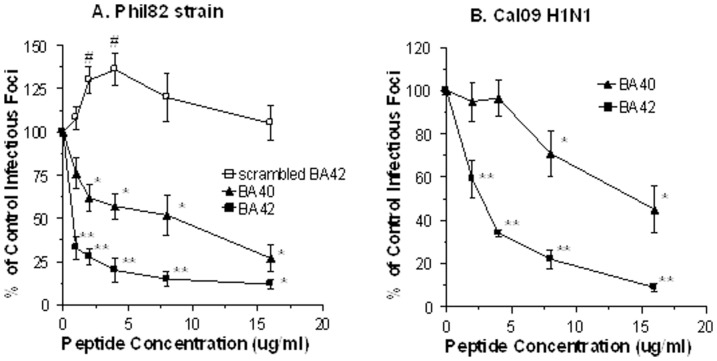
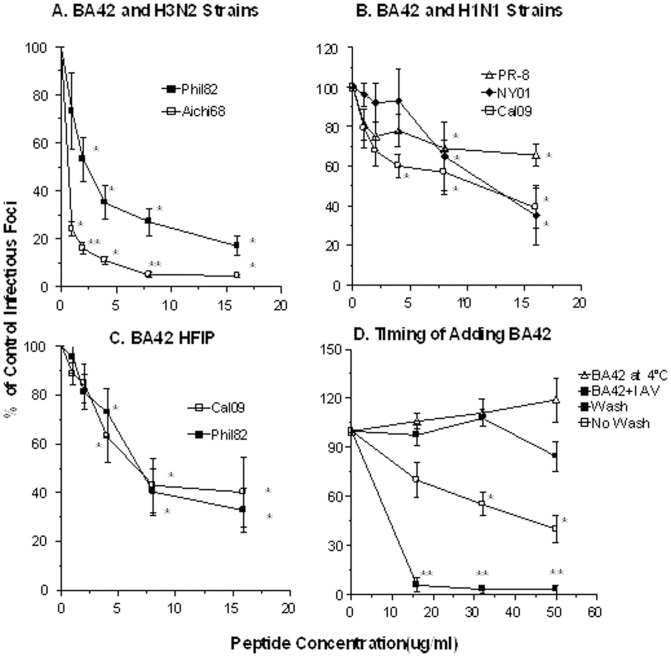
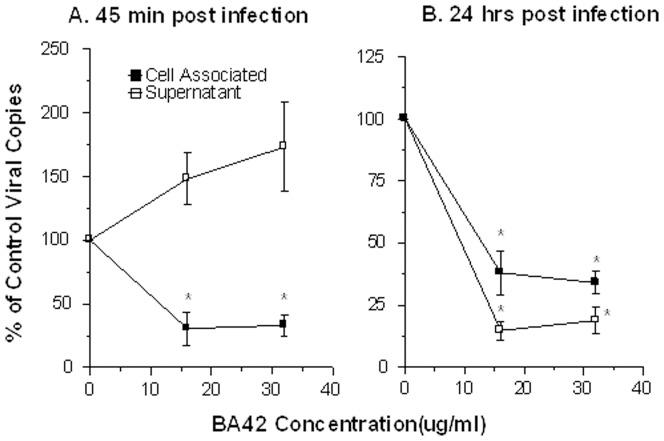
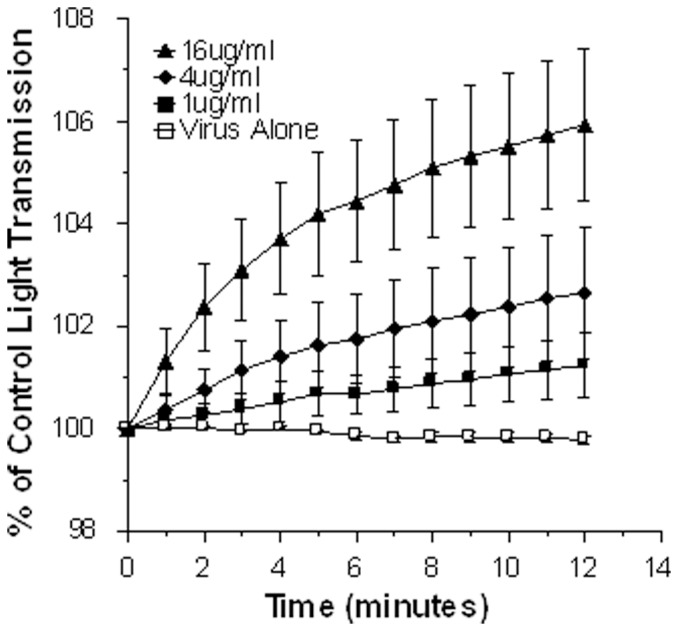
Verification
Claims the paper makes
The claims and statistics of this paper haven’t been checked yet.
Run the check — free, no account needed. It reads the open-access text and checks the sources it cites.
Claims other papers make about this one
Each is checked against this paper’s own text: does it say what the citing paper says it does?
The cited source says what the claim attributes to it.
In the citing paper
“Aβ42 can also suppress influenza A virus replication in vitro, and significantly increase the uptake of these viruses by neutrophils [112].”
From What would it take to prove that a chronic infection is a causal agent in Alzheimer’s disease? (2025) · cites this paper as [112]
The cited source says what the claim attributes to it.
In the citing paper
“Both Aβ42 and Aβ40 inhibited infectivity by influenza A.”
From What would it take to prove that a chronic infection is a causal agent in Alzheimer’s disease? (2025) · cites this paper as [112]
In the citing paper
“Other studies showed that Amyloid-β protein has antimicrobial properties [115], specifically against Influenza A [116]”
From Cognitive decline following acute viral infections: literature review and projections for post-COVID-19 (2022) · cites this paper as [116]
In the citing paper
“Aβ stimulated the aggregation of viral particles, which facilitated leukocyte-mediated uptake of viruses.405”
From Amyloid β-based therapy for Alzheimer’s disease: Challenges, successes and future (2023) · cites this paper as [405]
Self-check
Percentages, sums and reported differences re-computed from the paper’s own numbers.
The self-check needs the paper’s full text.
Citations
Cites
Isolation and quantification of soluble Alzheimer's β-peptide from biological fluids
Seubert, P., Vigo-Pelfrey, C., Esch, F., Lee, M., Dovey, H., Davis, D., Sinha, S., Schiossmacher, M., Whaley, J., Swindlehurst, C., et al. (1992) · Nature · doi:10.1038/359325a0 · Cited by 1,731
Oligomeric and fibrillar species of amyloid-β peptides differentially affect neuronal viability
Dahlgren, K. N., Manelli, A. M., Stine, W. B., Baker, L. K., Krafft, G. A., & LaDu, M. J. (2002) · Journal of Biological Chemistry · doi:10.1074/jbc.m201750200 · Cited by 1,452
The Alzheimer's Disease-Associated Amyloid β-Protein Is an Antimicrobial Peptide
Soscia, S. J., Kirby, J. E., Washicosky, K. J., Tucker, S. M., Ingelsson, M., Hyman, B., Burton, M. A., Goldstein, L. E., Duong, S., Tanzi, R. E., et al. (2010) · PLoS ONE · doi:10.1371/journal.pone.0009505 · Cited by 1,060
Alarmins: chemotactic activators of immune responses
Oppenheim, J. J., & Yang, D. (2005) · Current Opinion in Immunology · doi:10.1016/j.coi.2005.06.002 · Cited by 780
Biochemistry of Amyloid -Protein and Amyloid Deposits in Alzheimer DiseasePreprint
Masters, C. L., & Selkoe, D. J. (2012) · Cold Spring Harbor Perspectives in Medicine · doi:10.1101/cshperspect.a006262 · Cited by 554
Herpes simplex virus infection causes cellular β-amyloid accumulation and secretase upregulation
Wozniak, M. A., Itzhaki, R. F., Shipley, S. J., & Dobson, C. B. (2007) · Neuroscience Letters · doi:10.1016/j.neulet.2007.09.077 · Cited by 339
Fibrillar Amyloid-β Peptides Activate Microglia via TLR2: Implications for Alzheimer’s Disease
Jana, M., Palencia, C. A., & Pahan, K. (2008) · The Journal of Immunology · doi:10.4049/jimmunol.181.10.7254 · Cited by 338
Richard, K. L., Filali, M., Préfontaine, P., & Rivest, S. (2008) · The Journal of Neuroscience · doi:10.1523/jneurosci.1146-08.2008 · Cited by 298
Tripathi, S., Tecle, T., Verma, A., Crouch, E. C., White, M. R., & Hartshorn, K. L. (2012) · Journal of General Virology · doi:10.1099/vir.0.045013-0 · Cited by 213
Self-citationLurain, N. S., Hanson, B. A., Martinson, J., Leurgans, S. E., Landay, A. L., Bennett, D. A., & Schneider, J. A. (2013) · The Journal of Infectious Diseases · doi:10.1093/infdis/jit210 · Cited by 159
Chiara, G. D., Marcocci, M. E., Civitelli, L., Argnani, R., Piacentini, R., Ripoli, C., Manservigi, R., Grassi, C., Garaci, E., & Palamara, A. T. (2010) · PLoS ONE · doi:10.1371/journal.pone.0013989 · Cited by 152
Interactions of α-, β-, and θ-Defensins with Influenza A Virus and Surfactant Protein D
Doss, M., White, M. R., Tecle, T., Gantz, D., Crouch, E. C., Jung, G., Ruchala, P., Waring, A. J., Lehrer, R. I., & Hartshorn, K. L. (2009) · The Journal of Immunology · doi:10.4049/jimmunol.0804049 · Cited by 138
Self-citationBiochemistry and Molecular Biology of Amyloid β‐Protein and the Mechanism of Alzheimer's Disease
(2008) · Handbook of Clinical Neurology · doi:10.1016/s0072-9752(07)01223-7 · Cited by 137
Hartshorn, K. L., White, M. R., Tecle, T., Holmskov, U., & Crouch, E. C. (2006) · The Journal of Immunology · doi:10.4049/jimmunol.176.11.6962 · Cited by 126
Self-citationEffects of influenza A virus on human neutrophil calcium metabolism.
Hartshorn, K. L., Collamer, M. A., Auerbach, M. R., Myers, J., Pavlotsky, N., & Tauber, A. I. (1988) · The Journal of Immunology · doi:10.4049/jimmunol.141.4.1295 · Cited by 116
Self-citationTecle, T., White, M. R., Gantz, D., Crouch, E. C., & Hartshorn, K. L. (2007) · The Journal of Immunology · doi:10.4049/jimmunol.178.12.8046 · Cited by 110
Self-citationAzevedo, E. P., Guimarães-Costa, A. B., Torezani, G. S., Braga, C. A. C. A., Palhano, F. L., Kelly, J. W., Saraiva, E. M., & Foguel, D. (2012) · Journal of Biological Chemistry · doi:10.1074/jbc.m112.369942 · Cited by 100
Jang, H., Ma, B., Lal, R., & Nussinov, R. (2008) · Biophysical Journal · doi:10.1529/biophysj.108.134551 · Cited by 95
Job, E. R., Deng, Y., Tate, M. D., Bottazzi, B., Crouch, E. C., Dean, M. M., Mantovani, A., Brööks, A. G., & Reading, P. C. (2010) · The Journal of Immunology · doi:10.4049/jimmunol.1001613 · Cited by 94
Slowik, A., Merres, J., Elfgen, A., Jansen, S., Mohr, F., Wruck, C. J., Pufe, T., & Brandenburg, L. (2012) · Molecular Neurodegeneration · doi:10.1186/1750-1326-7-55 · Cited by 87
Qi, L., Kash, J. C., Dugan, V. G., Jagger, B. W., Lau, Y.-F., Sheng, Z.-M., Crouch, E. C., Hartshorn, K. L., & Taubenberger, J. K. (2011) · Virology · doi:10.1016/j.virol.2011.01.029 · Cited by 76
Self-citationHuman H-Ficolin Inhibits Replication of Seasonal and Pandemic Influenza A Viruses
Verma, A., White, M. R., Vathipadiekal, V., Tripathi, S., Mbianda, J., Ieong, M., Qi, L., Taubenberger, J. K., Takahashi, K., Jensenius, J. C., et al. (2012) · The Journal of Immunology · doi:10.4049/jimmunol.1103786 · Cited by 64
Self-citationCharacterization of influenza A virus activation of the human neutrophil
Hartshorn, K. L., Collamer, M. A., White, M. R., Schwartz, J. H., & Tauber, A. (1990) · Blood · doi:10.1182/blood.v75.1.218.218 · Cited by 61
Self-citationShinya, K., Makino, A., Tanaka, H., Hatta, M., Watanabe, T., Le, M. Q., Imai, H., & Kawaoka, Y. (2011) · Journal of Virology · doi:10.1128/jvi.00148-11 · Cited by 59
Influenza A Viruses Upregulate Neutrophil Toll‐Like Receptor 2 Expression and Function
Lee, R. M., White, M. R., & Hartshorn, K. L. (2006) · Scandinavian Journal of Immunology · doi:10.1111/j.1365-3083.2005.01714.x · Cited by 40
Self-citationZhang, J., Liu, J., Katafiasz, B. J., Fox, H. S., & Xiong, H. (2011) · Journal of Neuroimmune Pharmacology · doi:10.1007/s11481-011-9259-6 · Cited by 34
Mannose-Binding Lectin Binds to Amyloid Protein and Modulates Inflammation
Larvie, M., Shoup, T. M., Chang, W., Chigweshe, L., Hartshorn, K. L., White, M. R., Stahl, G. L., Elmaleh, D. R., & Takahashi, K. (2012) · BioMed Research International · doi:10.1155/2012/929803 · Cited by 26
Self-citationAntimicrobial activity of peptides derived from human ß‐amyloid precursor protein
Papareddy, P., Mörgelin, M., Walse, B., Schmidtchen, A., & Malmsten, M. (2012) · Journal of Peptide Science · doi:10.1002/psc.1439 · Cited by 22
Cited by
Sorted by citations
Amyloid β-based therapy for Alzheimer’s disease: Challenges, successes and future
Zhang, Y., Chen, H., Li, R., Sterling, K., & Song, W. (2023) · Signal Transduction and Targeted Therapy · doi:10.1038/s41392-023-01484-7 · Cited by 988
“Aβ stimulated the aggregation of viral particles, which facilitated leukocyte-mediated uptake of viruses.(405) In addition, the damaged host cells released nucleic acids containing Aβ aggregates, which were immunogenic and elicited the secretion of type I interferons (IFNs) by adjacent microglia to accomplish the anti…”
BackgroundKumar, D. K. V., Choi, S. H., Washicosky, K. J., Eimer, W. A., Tucker, S., Ghofrani, J., Lefkowitz, A., McColl, G., Goldstein, L. E., Tanzi, R. E., et al. (2016) · Science Translational Medicine · doi:10.1126/scitranslmed.aaf1059 · Cited by 971
Eimer, W. A., Vijaya Kumar, D. K., Navalpur Shanmugam, N. K., Rodriguez, A. S., Mitchell, T., Washicosky, K. J., György, B., Breakefield, X. O., Tanzi, R. E., & Moir, R. D. (2018) · Neuron · doi:10.1016/j.neuron.2018.06.030 · Cited by 674
Microbes and Alzheimer’s Disease
Itzhaki, R. F., Lathe, R., Balin, B. J., Ball, M. J., Bearer, E. L., Braak, H., Bullido, M. J., Carter, C., Clerici, M., Cosby, S. L., et al. (2016) · Journal of Alzheimer’s Disease · doi:10.3233/jad-160152 · Cited by 532
The antimicrobial protection hypothesis of Alzheimer’s disease
Moir, R. D., Lathe, R., & Tanzi, R. E. (2018) · Alzheimer's & Dementia · doi:10.1016/j.jalz.2018.06.3040 · Cited by 456
Metadata
- Authors
- White, M. R., Kandel, R., Tripathi, S., Condon, D., Qi, L., Taubenberger, J., & Hartshorn, K. L.
- Affiliations
- Boston University (US)
- Harvard University (US)
- National Institute of Allergy and Infectious Diseases (US)
- Corresponding author
- Hartshorn, Kevan L.
- Venue
- PLoS ONE
- Publisher
- Public Library of Science (PLoS)
- Published
- 2014-07-02
- Volume
- 9
- Issue
- 7
- Pages
- e101364
- ISSN
- 1932-6203 (ISSN-L)
- PMC
- PMC4079246
- OpenAlex
- W2164223927
- Cited by
- 193
- References
- 28
- Citations by year
- 2026: 13 · 2025: 19 · 2024: 15 · 2023: 13 · 2022: 32 · 2021: 23 · 2020: 18 · 2019: 13 · 2018: 12 · 2017: 12 · 2016: 15 · 2015: 4 · 2014: 4
- FWCI
- 8.84
- Type
- journal article
- Language
- en
- Open access
- gold
- doi.org
- Licence
- Locations
- PLoS ONE (publishedVersion, public-domain)
- Europe PMC (PubMed Central) (publishedVersion, public-domain)
- PubMed Central (publishedVersion, public-domain)
- PubMed (publishedVersion)
- Digital Access to Scholarship at Harvard (DASH) (Harvard University) (submittedVersion, cc-by)
- DOAJ (DOAJ: Directory of Open Access Journals) (submittedVersion, cc-by-sa)
- Funders
- National Institutes of Health
- National Heart, Lung, and Blood Institute (R01HL069031, HL-069031)
- National Institute of Allergy and Infectious Diseases (AI-83222, P01AI083222)
- Topics
- Health Sciences › Medicine › Epidemiology › Influenza Virus Research Studies
- Life Sciences › Neuroscience › Cellular and Molecular Neuroscience › Alzheimer's disease research and treatments
- Life Sciences › Neuroscience › Neurology › Neuroinflammation and Neurodegeneration Mechanisms
- Keywords
- amyloid-beta, Alzheimer's disease, influenza A virus, antiviral activity, amyloid-beta 42, H3N2, H1N1, viral replication inhibition, viral uptake, virus aggregation, neutrophils, neutrophil extracellular traps, hydrogen peroxide, monocytes, interleukin-6, phagocytes
- MeSH terms
- Animals, Antiviral Agents, Cell Line, Humans, Influenza, Human, Monocytes, Neutrophils, Orthomyxoviridae Infections, Influenza A virus, Peptide Fragments, Phagocytes, Amyloid beta-Peptides, Influenza A Virus, H1N1 Subtype, Influenza A Virus, H3N2 Subtype, Host-Pathogen Interactions
About these checks
Registry, retraction, Cites and statistics results are computed, not judged, with one exception: a printed reference that no index lists is read once by a model before it counts as a citation error. Claims are extracted by a model and kept only when their quote appears verbatim in the text; each cited source is then checked, with a model’s help, for whether it says what the claim relies on. Those verdicts can be wrong — read the claim’s quote and the cited source before relying on one.
Statistics and arithmetic are recomputed, not judged.
Confidence bands are shown only for fields calibrated on our annotated test set. None is calibrated yet, so no band is shown.
What counts as a claim ›How we measure confidence ›How we check this ›
Are you an author, or do you see a problem with this page? Request a review
