

The DOI matches its Crossref record; 60 of the 60 references it cites were found in a registry or an index.
A Longitudinal Assessment of Sleep Timing, Circadian Phase, and Phase Angle of Entrainment across Human Adolescence
Open accessAbstract
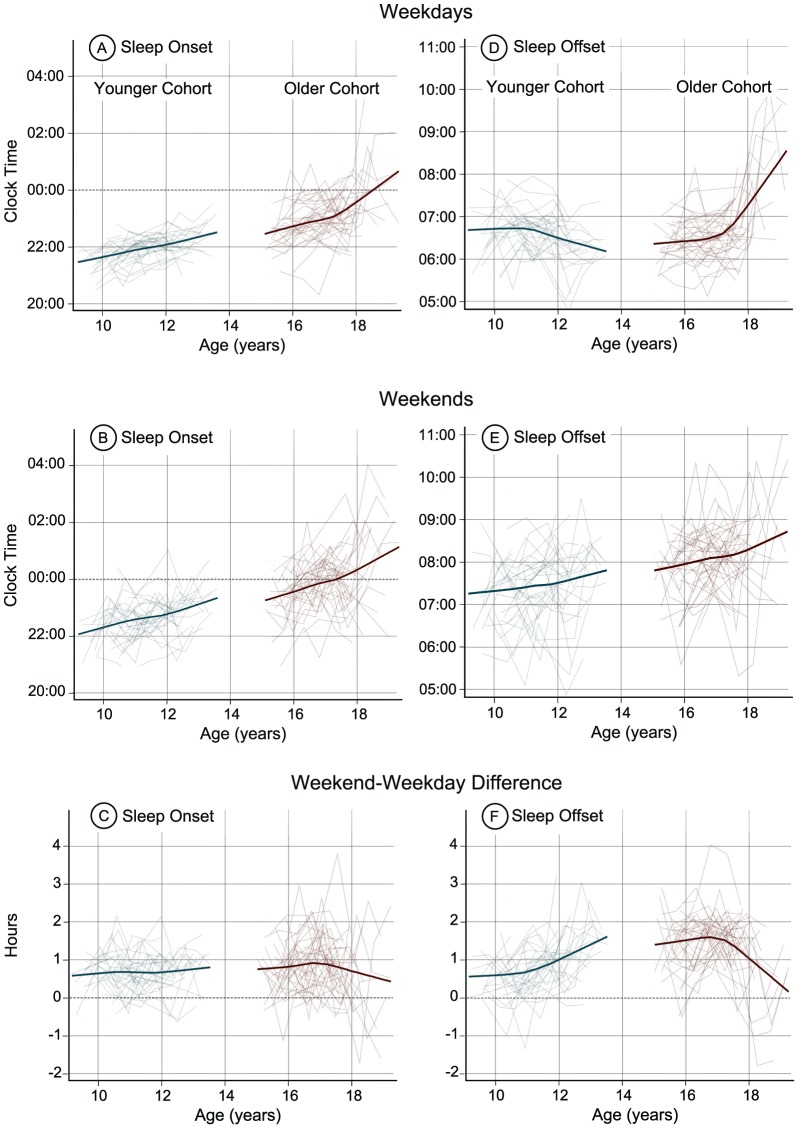
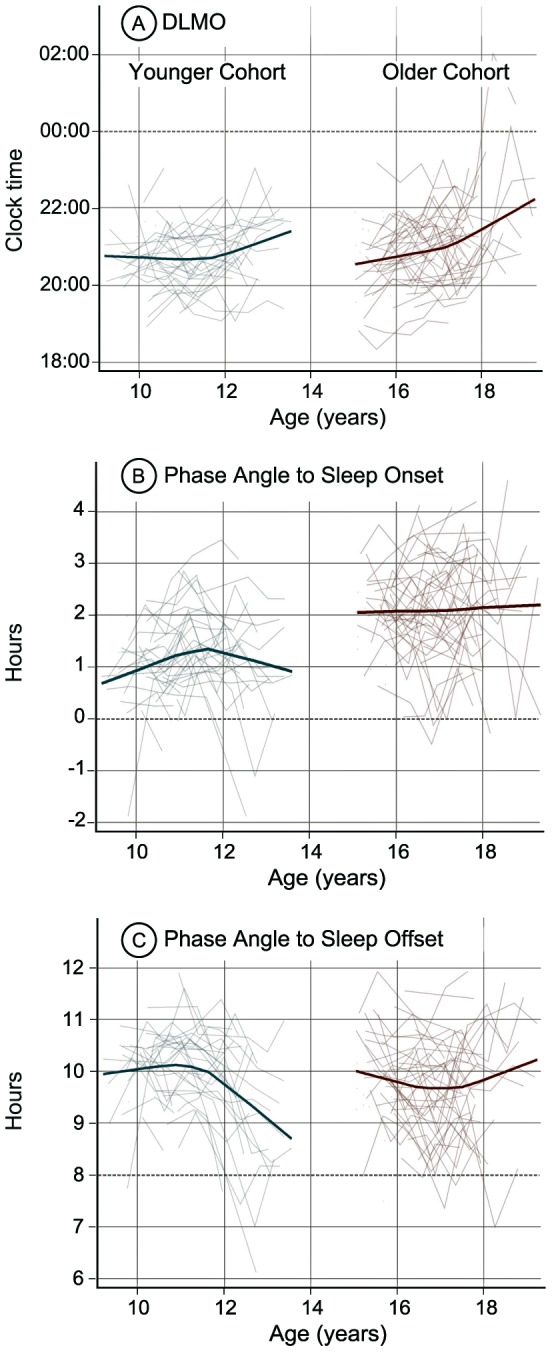
The aim of this descriptive analysis was to examine sleep timing, circadian phase, and phase angle of entrainment across adolescence in a longitudinal study design. Ninety-four adolescents participated; 38 (21 boys) were 9-10 years ("younger cohort") and 56 (30 boys) were 15-16 years ("older cohort") at the baseline assessment. Participants completed a baseline and then follow-up assessments approximately every six months for 2.5 years. At each assessment, participants wore a wrist actigraph for at least one week at home to measure self-selected sleep timing before salivary dim light melatonin onset (DLMO) phase - a marker of the circadian timing system - was measured in the laboratory. Weekday and weekend sleep onset and offset and weekend-weekday differences were derived from actigraphy. Phase angles were the time durations from DLMO to weekday sleep onset and offset times. Each cohort showed later sleep onset (weekend and weekday), later weekend sleep offset, and later DLMO with age. Weekday sleep offset shifted earlier with age in the younger cohort and later in the older cohort after age 17. Weekend-weekday sleep offset differences increased with age in the younger cohort and decreased in the older cohort after age 17. DLMO to sleep offset phase angle narrowed with age in the younger cohort and became broader in the older cohort. The older cohort had a wider sleep onset phase angle compared to the younger cohort; however, an age-related phase angle increase was seen in the younger cohort only. Individual differences were seen in these developmental trajectories. This descriptive study indicated that circadian phase and self-selected sleep delayed across adolescence, though school-day sleep offset advanced until no longer in high school, whereupon offset was later. Phase angle changes are described as an interaction of developmental changes in sleep regulation interacting with psychosocial factors (e.g., bedtime autonomy).
Overview
The claims and statistics of this paper haven’t been checked yet.
Run the check — free, no account needed. It reads the open-access text and checks the sources it cites.
Integrity signals
Registry
Cites
Statistics
Figures
Verification
Claims the paper makes
The claims and statistics of this paper haven’t been checked yet.
Run the check — free, no account needed. It reads the open-access text and checks the sources it cites.
Claims other papers make about this one
Each is checked against this paper’s own text: does it say what the citing paper says it does?
In the citing paper
“In general, the timing of sleep onset and waking and other biological rhythms (for example, fluctuations in melatonin levels) is earlier relative to adults during early childhood8,9 and shifts later during adolescence, and this shift in timing may be conserved among rodents and non-human primates (NHPs)10.”
From Rhythms of life: circadian disruption and brain disorders across the lifespan (2019) · cites this paper as [10]
In the citing paper
“Early school start times, which are typically more than an hour earlier in US high schools (ages 15–18 years) than in elementary schools (ages 9–10 years) or middle schools (ages 11–13 years), may contribute to these problems of shorter sleep10,148.”
From Rhythms of life: circadian disruption and brain disorders across the lifespan (2019) · cites this paper as [10]
In the citing paper
“circadian rhythms naturally delay”
From Impact of Sleep and Circadian Rhythms on Addiction Vulnerability in Adolescents (2018) · cites this paper as [38]
In the citing paper
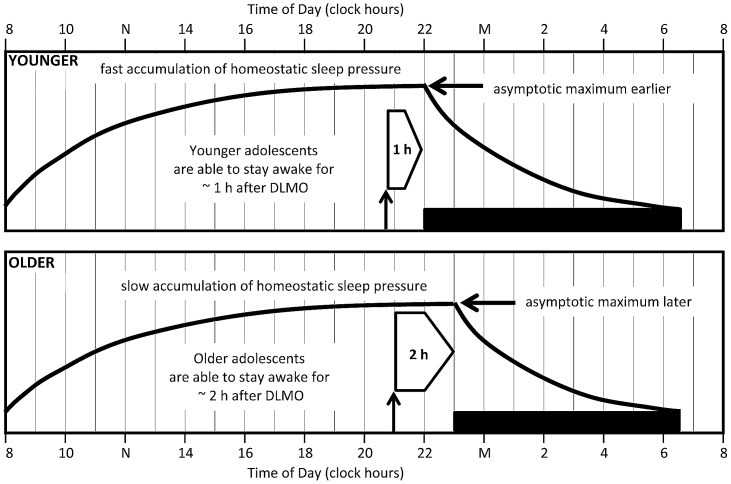
“Changes in sleep/circadian timing appear to result from both phase delays in the timing of the circadian clock (38), and a slower accumulation in homeostatic sleep drive (37).”
From Impact of Sleep and Circadian Rhythms on Addiction Vulnerability in Adolescents (2018) · cites this paper as [38]
In the citing paper
“Decreased sleep duration and increased sleep disturbance may be a consequence of delayed sleep timing, conflicting with school start times on weekdays, (typically earlier in high school than in elementary or middle school), resulting in circadian misalignment and sleep loss (38,45).”
From Impact of Sleep and Circadian Rhythms on Addiction Vulnerability in Adolescents (2018) · cites this paper as [38]
Self-check
Percentages, sums and reported differences re-computed from the paper’s own numbers.
The self-check needs the paper’s full text.
Citations
Cites
Tanner, J. M. (1978) · Medical Entomology and Zoology · Cited by 3,742
Social Jetlag: Misalignment of Biological and Social Time
Wittmann, M., Dinich, J., Merrow, M., & Roenneberg, T. (2006) · Chronobiology International · doi:10.1080/07420520500545979 · Cited by 2,625 · cited 1×
“Larger degrees of social jetlag have been associated with reduced alertness and performance [40,41,42,43], greater use of alcohol, nicotine and caffeine, and an increased risk for depression and obesity [39,44,45].”
BackgroundSleep Patterns and Predictors of Disturbed Sleep in a Large Population of College Students
Lund, H. G., Reider, B. D., Whiting, A. B., & Prichard, J. R. (2010) · Journal of Adolescent Health · doi:10.1016/j.jadohealth.2009.06.016 · Cited by 1,907 · cited 1×
“A previous crosssectional comparison [38] and longitudinal assessment [23] of sleep times across the transition from high school to college also showed a pattern of delayed wake-up times.”
BackgroundSleep Schedules and Daytime Functioning in Adolescents
Wolfson, A. R., & Carskadon, M. A. (1998) · Child Development · doi:10.1111/j.1467-8624.1998.tb06149.x · Cited by 1,676 · cited 4×
“Other previous cross-sectional survey findings showed a similar delayed pattern across the adolescent years [1,21], though not as large as that reported by Roenneberg and colleagues.”
BackgroundResultInfluentialSelf-citationA marker for the end of adolescence
Roenneberg, T., Kuehnle, T., Pramstaller, P. P., Ricken, J., Havel, M., Guth, A., & Merrow, M. (2004) · Current Biology · doi:10.1016/j.cub.2004.11.039 · Cited by 1,585 · cited 2×
“A shift toward ‘‘eveningness’’ also emerges as youngsters age [10], and this shift appears to be linked to pubertal development [11,12].”
BackgroundActivity-Based Sleep-Wake Identification: An Empirical Test of Methodological Issues
Sadeh, A., Sharkey, M., & Carskadon, M. A. (1994) · Sleep · doi:10.1093/sleep/17.3.201 · Cited by 1,487 · cited 1×
“, Ardsley, NY, USA) to estimate sleep/wake using the validated ‘‘Sadeh’’ algorithm [34].”
MethodSelf-citationRoenneberg, T., Allebrandt, K. V., Merrow, M., & Vetter, C. (2012) · Current Biology · doi:10.1016/j.cub.2012.03.038 · Cited by 1,407 · cited 2×
“Roenneberg and colleagues [39] reported that the degree to which weekend and weekday sleep timing differ increases over the second decade of life, and they relate the phenomenon to the construct of ‘‘social jetlag’’ (i.”
BackgroundSleep Duration From Infancy to Adolescence: Reference Values and Generational Trends
Iglowstein, I., Jenni, O. G., Molinari, L., & Largo, R. H. (2003) · PEDIATRICS · doi:10.1542/peds.111.2.302 · Cited by 1,318 · cited 1×
“sleep time [1,9,13,14,15,16,17,18,19].”
Association between Puberty and Delayed Phase Preference
Carskadon, M. A., Vieira, C., & Acebo, C. (1993) · Sleep · doi:10.1093/sleep/16.3.258 · Cited by 1,167 · cited 1×
“A shift toward ‘‘eveningness’’ also emerges as youngsters age [10], and this shift appears to be linked to pubertal development [11,12].”
BackgroundSelf-citationSleep, circadian rhythms, and delayed phase in adolescence
Crowley, S. J., Acebo, C., & Carskadon, M. A. (2007) · Sleep Medicine · doi:10.1016/j.sleep.2006.12.002 · Cited by 1,127 · cited 1×
“times on non-school or vacation mornings as youngsters age [1,2,3,4,5,6,7].”
BackgroundSelf-citation
Cited by
Sorted by citations
Items 201–273 of 273
Consumers’ Device Choice in E-Retail: Do Regulatory Focus and Chronotype Matter?
Haider, S. W., Zhuang, G., Ikram, A., & Anwar, B. (2020) · KSII Transactions on Internet and Information Systems · doi:10.3837/tiis.2020.01.009 · Cited by 3
“In their work, Crowley et al. (2014) [49] stated that mobile phone emissions can delay sleeping cycles and that individuals with a later bedtime are more addicted to their mobile.”
BackgroundSleep Quality and Social Jetlag in Young Adults During the Social Distancing Caused by COVID-19
Salles, C., de Almondes, K. M., de Araújo, M. S., Marques, I., Gonzaga, L. H., Cruz, M. G. M. E., Aguiar, C. V. N., & Dias, C. M. C. C. (2023) · Sleep Science · doi:10.1055/s-0043-1770806 · Cited by 5
Optimal sleep and circadian habits in infants and children
LeBourgeois, M. K., Hartstein, L. E., Wong, S. D., & Ricker, A. A. (2021) · Elsevier eBooks · doi:10.1016/b978-0-12-822963-7.00020-7 · Cited by 3
Self-citationThe Relationship Between Circadian Phase and Sleep Timing in Preschool-Aged Children
Hartstein, L. E., Akacem, L. D., Wright, K. P., & LeBourgeois, M. K. (2025) · Journal of Biological Rhythms · doi:10.1177/07487304251377616 · Cited by 2
“The phase angle between DLMO and sleep onset grows wider across adolescence, with the largest increase observed between ages 9 and 11.5 years (Crowley et al., 2014).”
InfluentialSelf-citationMartínez‐Sánchez, Y. A., Hipólide, D. C., de Freitas, R. S., & Pompéia, S. (2025) · British Journal of Developmental Psychology · doi:10.1111/bjdp.70028 · Cited by 2
“Importantly, Crowley et al. (2014) found that adrenal maturity level effects on melatonin added significant information to the shift to later sleep onset on weekdays compared to single effects across chronological age, particularly from pubertal stage three.”
InfluentialMicic, G., Reynolds, A. C., Phillips, A. J. K., Zee, P. P., Richardson, C. E., Burgess, H. J., Lack, L. C., CATCHESIDE, P. G., Goldstein, C. A., Scott, H., et al. (2026) · Sleep Medicine Reviews · doi:10.1016/j.smrv.2026.102240 · Cited by 3
Sleep regulates drug seeking and relapse – a perspective
Liu, Y.-Z., Martin, H. R., Hasler, B. P., Franzen, P. L., Seney, M. L., Torregrossa, M. M., McClung, C. A., Dong, Y., & Huang, Y. H. (2026) · Molecular Psychiatry · doi:10.1038/s41380-025-03406-1 · Cited by 2
Monterastelli, A. J., Misiunaite, I., Eastman, C. I., & Crowley, S. J. (2026) · Scientific Reports · doi:10.1038/s41598-026-37985-y · Cited by 2
“Previous work shows that the interval between DLMO and sleep onset is narrower in younger children and adolescents compared to older adolescents and adults 49,86,87 .”
Self-citationGuglielmi, V., Lopes, M. W. R., Santos, E. H. R., Brilhante, W., Grava, F., & Pedrazzoli, M. (2022) · Revista Brasileira de Educação Física e Esporte · doi:10.11606/issn.1981-4690.2022e36193227 · Cited by 2
METHODS OF STUDYING THE DYNAMICS OF SOME SLEEP QUALITY INDEXES IN ANTARCTIC WINTERERS
Shylo, O. V., Lutsenko, D. G., Danylenko, K. M., Babiychuk, G. A., & Moiseyenko, Y. (2018) · Ukrainian Antarctic Journal · doi:10.33275/1727-7485.16.2017.77 · Cited by 2
“При этом такие устройства обладают рядом преимуществ и позволяют длительно неинвазивно регистрировать двигательную активность человека как во время бодрствования, так и во время сна (Arendt, Middleton, 2017, Palinkas, Suedfeld, 2008, Crowley et al., 2014, Lockley, Skene, Arendt, 1999, Winnebeck et…”
Understanding Circadian Physiology in Early Childhood: the Role of Napping and Light at Night
Akacem, L. D. (2016) · CU Scholar (University of Colorado Boulder) · Cited by 2
All the Clocks Are Ticking: Sleep Health and Metabolism
Lewin, D. S. (2018) · Journal of Adolescent Health · doi:10.1016/j.jadohealth.2018.05.002 · Cited by 2
Alfonsi, V., Carbone, A., Scarpelli, S., Gorgoni, M., Luchini, A., D’Andrea, P., Cherubini, S., Costarelli, C., Couyoumdjian, A., Laghi, F., et al. (2023) · Nature and Science of Sleep · doi:10.2147/nss.s437958 · Cited by 2
The Impact of the Double School Shift System on Lifestyle Behaviors Among Mexican Adolescents
Peng, Y., Arboleda-Merino, L., Arrona‐Palacios, A., Cantoral, A., Téllez‐Rojo, M. M., Peterson, K. E., Torres-Olascoaga, L. A., & Jansen, E. C. (2024) · Journal of Adolescent Health · doi:10.1016/j.jadohealth.2024.01.026 · Cited by 2
Wright, I. D., Rugh, K. E., Kamhout, S., Broadbent, M., York, N., & Duraccio, K. M. (2025) · Journal of Sleep Research · doi:10.1111/jsr.70154 · Cited by 1
“…angle was > 2 h but < 4 (which reflects the anticipated amount of time that would elapse between DLMO and sleep initiation in dim-light conditions) (Crowley et al. 2014; Pandi-Perumal et al. 2007), and ‘misaligned,’ signifying that there was less than a time gap of < 2 h between DLMO and averaged…”
InfluentialCalculating dim light melatonin onset in children: A comparison of four estimation methods
Cox, R. C., Sagman, I., & Hartstein, L. E. (2026) · Chronobiology International · doi:10.1080/07420528.2026.2633233 · Cited by 1
“This threshold has since been used throughout the literature as standard practice in developmental populations, from toddlers/preschoolers (LeBourgeois et al. 2013; Hartstein et al. 2025) to adolescents (Crowley et al. 2014; Chapa et al. 2025).”
Internet gaming disorder in adolescents: the role of chronotype and sleep disturbances
Berker, M., Temelli, G., Karatoprak, S., & Dönmez, Y. E. (2026) · Biological Rhythm Research · doi:10.1080/09291016.2026.2656895 · Cited by 1
“Previous studies have demonstrated that exposure to media screens such as televisions, video games, mobile phones, and computers is associated with insufficient or poor-quality sleep (Carney et al. 2006; Crowley et al. 2014).”
Olorunmoteni, O. E., Popoola, B. O., Daniel, J. O. I., Dlepu, P., Gómez-Olivé, F. X., Olubowale, O. V., Fatusi, A. O., & Scheuermaier, K. D. (2026) · PLoS ONE · doi:10.1371/journal.pone.0353671 · Cited by 1
“Younger adolescents had better sleep than older adolescents, which is consistent with the known larger phase delay in older adolescents compared to younger adolescents [88].”
Sleep Is Integral to School Health and Adolescent Wellbeing: An Evidence‐Based Call to Action
Saletin, J., Ziporyn, T. D., Wolfson, A. R., & Crowley, S. J. (2026) · Journal of School Health · doi:10.1111/josh.70251 · Cited by 1
Self-citationChanges in Sleep Patterns in Korean Early Adolescents during Sexual Maturation
Han, T., Chae, K. Y., Yoo, E.-G., Jung, M. K., Ha, E. K., Han, M. Y., Jee, H. M., & Rhie, S. (2022) · Annals of Child Neurology · doi:10.26815/acn.2022.00080 · Cited by 1
“interval between DLMO and sleep onset is also prolonged in adolescents [4].”
BackgroundGamble, M. C., & Logan, R. W. (2023) · Elsevier eBooks · doi:10.1016/b978-0-12-823453-2.00009-6 · Cited by 1
Using Light to Facilitate Circadian Entrainment from Day to Night Flights
Shattuck, N. L., Matsangas, P., Reily, J., McDonough, M., & Giles, K. B. (2023) · Aerospace Medicine and Human Performance · doi:10.3357/amhp.6161.2023 · Cited by 2
Baek, K., Jeong, J., Kim, H.-W., Shin, D.-H., Kim, J., Lee, G.-H., & Cho, J. W. (2024) · JMIR Formative Research · doi:10.2196/52977 · Cited by 1
“Adolescents, particularly those in the later stages (typically aged 13-18 years), often require more sleep than prepubertal children (generally under 10 years old) [8-10].”
BackgroundSleep timing in flies from “adolescence” to adulthood
Domenie, E., Cusumano, P., Montagnese, S., & Costa, R. (2024) · Fly · doi:10.1080/19336934.2024.2448022 · Cited by 1
Etiopathogenesis of Circadian Sleep–Wake Rhythm Disorders
Domaç, F. M. (2020) · Elsevier eBooks · doi:10.1016/b978-0-12-816658-1.00009-0 · Cited by 1
Kuula, L. (2018) · Työväentutkimus Vuosikirja · Cited by 1
Lang, C., Richardson, C. E., Micic, G., & Gradisar, M. (2021) · doi:10.31234/osf.io/npkeu · Cited by 1
Cross-National Variations in Adolescent Sleep Patterns: A Time-Use StudyPreprint
Román, J. G., Gracia, P., & Zerbini, G. (2023) · doi:10.31219/osf.io/h2fv5 · Cited by 1
Barriers and facilitating factors in delaying school start times
Fitzpatrick, J. M. (2016) · UA Campus Repository (The University of Arizona)
A 13-year-old boy who falls asleep in school
DelRosso, L. M. (2016) · Elsevier eBooks · doi:10.1016/b978-0-323-39277-8.00033-6
Objective data contribute to the school start time debate
Agostini, A. (2019) · SLEEP · doi:10.1093/sleep/zsz021
Hoff, B. F. (2018) · Illinois Digital Environment for Access to Learning and Scholarship (University of Illinois at Urbana-Champaign)
Evaluation and Management of the Sleepless Child
Pelayo, R. (2019) · Allergy and Sleep · doi:10.1007/978-3-030-14738-9_9
Chronotype and Performance in Students
Shimura, A. (2020) · Elsevier eBooks · doi:10.1016/b978-0-12-816658-1.00002-8
Adolescent social anxiety and clock disruption. A commentary
Touitou, Y., Touitou, D., & Reinberg, A. (2020) · Journal of Affective Disorders · doi:10.1016/j.jad.2020.01.148
Poirot, I., Brion, A., Schroder, C. M., & Touitou, Y. (2016) · Dunod eBooks · doi:10.3917/dunod.schro.2016.01.0089 · Cited by 1
Subjective Happiness and Sleep in University Students with High Myopia
Iehisa, I., Negishi, K., Sakamoto, R., Torii, H., Ayaki, M., & Tsubota, K. (2020) · Psych · doi:10.3390/psych2040021
Circadian and homeostatic variation of alertness in police officers on rotating shifts
Gonzales-Aste, F. (2019) · eScholarship@McGill (McGill) · doi:10.82308/13238
Prominent Features in Sleep Disorder Disease in Bioinformatics Using Relevant Data Sets
Deepthi, P. N., Kakarla, N. M. L., & Swathi, K. (2021) · Lecture notes in networks and systems · doi:10.1007/978-981-16-1941-0_46
Vidal, H., & Shochat, T. (2021) · Elsevier eBooks · doi:10.1016/b978-0-12-822963-7.00207-3
(2022) · Érès eBooks · doi:10.3917/eres.lebre.2022.01.0245
Circadian Rhythm Sleep Wake Disorders
Chan, J. W. Y. (2022) · Springer eBooks · doi:10.1007/978-981-19-5791-8_12
Circadian rhythms in pediatric craniopharyngioma
Kamara, D., Crowley, S., Crabtree, V., Hancock, D., Li, Y.-M., Darji, H., Semko, J., Wise, M., Merchant, T., & Mandrell, B. (2023) · Frontiers in Sleep · doi:10.3389/frsle.2023.1153144 · Cited by 1
“Phase angles of entrainment demonstrate alignment between circadian phase and sleep timing and are defined as the time between DLMO and sleep onset and offset (Crowley et al., 2014).”
BackgroundSelf-citationThe influence of remote learning on sleep patterns of teenagers
Adam, E., & Replogle, J. B. S. (2021) · Journal of Emerging Investigators · doi:10.59720/20-243
“In alignment with previous studies (14, 18), the majority”
BackgroundResultCochilo em adolescentes e fatores relacionados
Inazumi, C. K. (2019) · doi:10.47749/t/unicamp.2019.1230326
Ilbak, İ., & Açak, M. (2024) · Journal of Kinesiology and Exercise Sciences · doi:10.5604/01.3001.0054.6843
Crowley, S. J., & Carskadon, M. A. (2024) · Elsevier eBooks · doi:10.1016/b978-0-323-75566-5.00004-6
Self-citationThe Non-Image-Forming Effects of Daylight: An Analysis for Design Practice Purposes
Chen, T., & Zhang, Z. (2024) · Buildings · doi:10.3390/buildings14103313
Feasibility of an At-Home Experimental Circadian Misalignment Induction for Adolescents
Beebe, D. W., Fidler, A. L., McLaughlin, L. E., Grove, S., & Crowley, S. J. (2025) · Clocks & Sleep · doi:10.3390/clockssleep7010004 · Cited by 1
Self-citationRimma, G., & Carotenuto, M. (2025) · IntechOpen eBooks · doi:10.5772/intechopen.1009279
Sleep and Circadian Development in the Early and Developing Years
Donskoy, I., & Oyegbile-Chidi, T. O. (2025) · Oxford University Press eBooks · doi:10.1093/oxfordhb/9780197602751.013.47
Lam, M. I., Tong, L. K., Xu, Q., & Cheong, P. L. (2025) · Journal of Affective Disorders · doi:10.1016/j.jad.2025.120098
Sex differences in sleep health
Meers, J. M., Stout-Aguilar, J., & Nowakowski, S. (2025) · Elsevier eBooks · doi:10.1016/b978-0-443-13954-3.00022-x · Cited by 1
Transition of Sleep Problems Subgroups and Its Predictors in Chinese Early Adolescents
Long, J., Li, R., Sun, Y., Zhong, Y., & Li, X. (2025) · The Journal of Early Adolescence · doi:10.1177/02724316251408903
“Puberty triggers a circadian phase delay (Crowley et al., 2014), which, coupled with increased emotional lability, growing autonomy over sleep schedules, and heightened parent-child con fl ict (Meijer et al., 2016; Sawyer et al., 2012) creates a perfect storm for sleep dif fi culties (McMakin &…”
Adolescent sleep: a bulwark for healthy brain development
O’Hora, K., & Saletin, J. (2026) · SLEEP · doi:10.1093/sleep/zsag081
Duraccio, K. M., Craig, A., Kamhout, S., Wright, I. D., Crandall, G., York, N., & Jensen, C. D. (2026) · SLEEP Advances · doi:10.1093/sleepadvances/zpag036
Bui, C., Lemery‐Chalfant, K., Clifford, S., Davis, M. C., & Doane, L. D. (2026) · Sleep Medicine · doi:10.1016/j.sleep.2026.108997
Krimizi, I., Toubekis, A. G., Klentrou, P., & Botonis, P. G. (2026) · Pediatric Exercise Science · doi:10.1123/pes.2024-0183
Parker, A. J., Wiggins, J. L., & Bhutani, S. (2026) · Journal of Sleep Research · doi:10.1111/jsr.70355
“Although this circadian delay is normative (Crowley et al. 2014; Roenneberg et al. 2004; Thorleifsdottir et al. 2002; Yang et al. 2005), its negative consequences are amplified by social constraints such as early school start times, creating a misalignment between adolescents' biological clocks and…”
Xu, F., Hu, J., Yu, M., Wang, M., & Zhu, G. (2026) · BMC Public Health · doi:10.1186/s12889-026-27945-6
“Of note, sleep disturbances are multidimensional, encompassing not only duration but also sleep quality, circadian timing, and disturbances such as nightmares [22, 23].”
Espinoza-Abad, R., Gogeascoechea-Trejo, M. D. C., & García‐García, F. (2026) · Sleep Medicine · doi:10.1016/j.sleep.2026.109095
Eğilmez, Ü., Ekici, F., Kandeğer, A., & Selvı, Y. (2026) · International Journal of Psychiatry in Clinical Practice · doi:10.1080/13651501.2026.2695468
“…a hormone secreted predominantly at night, plays a crucial role in initiating and regulating the sleep–wake cycle. its secretion is influenced by chronotype; morning types tend to show earlier melatonin onset, whereas evening types exhibit delayed secretion (crowley et al., 2014; Zisapel, 2018).”
Structural Brain Correlates of Insufficient Sleep in Adolescents: A Narrative Review of MRI Evidence
Ananth, R., Swierz, J., Shafizadeh, B., Martin, S., Lim, M. M., & Cho, Y. (2026) · Children · doi:10.3390/children13070903
“Across adolescence, the circadian timing system undergoes progressive delays toward later sleep-wake patterns, correlating with pubertal maturation [18,19].”
Physiologic Changes in Sleep Across the Lifespan
Zandieh, S. O., & Katz, E. S. (2026) · Respiratory medicine · doi:10.1007/978-3-032-29861-4_3
Sánchez‐Charcopa, L. A., Miño, C., Yáñez-Sepúlveda, R., Montenegro-Espinosa, J. A., Quiroz-Cárdenas, F., Cisneros-Vásquez, E., Ridgell, L., Cristi‐Montero, C., Yon, D. K., & López-Gil, J. F. (2026) · European Journal of Pediatrics · doi:10.1007/s00431-026-07250-5
“During adolescence, physiological changes in the underlying regulatory processes of circadian timing and sleep homeostasis [4], combined with environmental influences such as social demands, may delay the sleep onset [5].”
Bormes, G., Love, J. J., Burns, A. C., Akeju, O., Cherry, J. C., Kantesaria, N., Kunorozva, L., Qadri, S., Rahman, S. A., Scheer, F. A. J. L., et al. (2026) · SLEEP Advances · doi:10.1093/sleepadvances/zpag081
“Eligible participants included anyone over the age of 23 [ 23] who could read and write at an 8 th -grade English reading level.”
Jex, J., Downs, A. L., Kamhout, S., Wright, I. D., Wright, A., Zhang, V., & Duraccio, K. M. (2026) · Frontiers in Sleep · doi:10.3389/frsle.2026.1826938
“This chronic weekday sleep deprivation is often compensated by later and longer periods of sleep on weekends, a phenomenon known as social jetlag (Carskadon, 2011; Crowley et al., 2014).”
InfluentialWieland, C., Friedrich, M., Sender, A., Leuteritz, K., Brock, H., Geue, K., Mehnert, A., & Richter, D. (2026) · Journal of Cancer Research and Clinical Oncology · doi:10.1007/s00432-026-06627-1
“AYA patients are at an elevated biological and behavioral risk for circadian dysregulation and short sleep due to the shift in circadian rhythm and self-selected bedtime that occurs during adolescence and young adulthood (Hagenauer et al. 2009; Crowley et al. 2014).”
Rivas, M. F., Campos-Rius, J., Mendoza-Puente, M., Ocete, C., Pinilla, J., & Calero-Cano, J. C. (2026) · Biological Rhythm Research · doi:10.1080/09291016.2026.2737427
The ontogeny of circadian–social coupling
Confino, S., & Zada, D. (2026) · Trends Open · doi:10.1016/j.treopn.2026.09.004
Rawcliffe, A. J., Martin, H., Ratna, E., Salt, B., Weaver, J., & Roberts, A. (2026) · SLEEP · doi:10.1093/sleep/zsag263
Kamhout, S., Bellini, S. G., Luke, S. G., Homer, K. J., Broadbent, M., & Duraccio, K. M. (2026) · Frontiers in Nutrition · doi:10.3389/fnut.2026.1978612
Metadata
- Authors
- Crowley, S. J., Van Reen, E., LeBourgeois, M. K., Acebo, C., Tarokh, L., Seifer, R., Barker, D. H., & Carskadon, M. A.
- Affiliations
- Rush University Medical Center (US)
- University of Colorado Boulder (US)
- Brown University (US)
- University of Bern (CH)
- University of South Australia (AU)
- Corresponding author
- Crowley, Stephanie J.
- ORCID
- Venue
- PLoS ONE
- Publisher
- Public Library of Science (PLoS)
- Published
- 2014-11-07
- Volume
- 9
- Issue
- 11
- Pages
- e112199
- ISSN
- 1932-6203 (ISSN-L)
- PMC
- PMC4224451
- OpenAlex
- W2090080078
- Cited by
- 273
- References
- 60
- Citations by year
- 2026: 27 · 2025: 19 · 2024: 21 · 2023: 31 · 2022: 25 · 2021: 26 · 2020: 22 · 2019: 33 · 2018: 25 · 2017: 21 · 2016: 15 · 2015: 8
- FWCI
- 7.15
- Type
- journal article
- Language
- en
- Open access
- gold
- doi.org
- Locations
- PLoS ONE (publishedVersion, cc-by)
- Europe PMC (PubMed Central) (publishedVersion, cc-by)
- PubMed Central (publishedVersion, cc-by)
- PubMed (publishedVersion)
- RePEc: Research Papers in Economics (submittedVersion)
- BORIS (University Library Bern) (submittedVersion, cc-by)
- DOAJ (DOAJ: Directory of Open Access Journals) (submittedVersion, cc-by-sa)
- UniSA Research Outputs Repository (University of South Australia) (submittedVersion)
- Open Access CRIS of the University of Bern
- Funders
- Brown University
- Jazz Pharmaceuticals
- National Institutes of Health
- National Institute on Alcohol Abuse and Alcoholism (AA 13252, R01AA013252)
- Topics
- Life Sciences › Neuroscience › Endocrine and Autonomic Systems › Circadian rhythm and melatonin
- Social Sciences › Psychology › Experimental and Cognitive Psychology › Sleep and related disorders
- Life Sciences › Neuroscience › Cognitive Neuroscience › Sleep and Wakefulness Research
- Keywords
- sleep timing, circadian phase, adolescence, dim light melatonin onset, sleep onset, sleep offset, circadian entrainment, salivary melatonin
- MeSH terms
- Adolescent, Aging, Child, Circadian Rhythm, Female, Humans, Longitudinal Studies, Male, Melatonin, Saliva, Sex Characteristics, Sleep, Time Factors, Actigraphy
About these checks
Registry, retraction, Cites and statistics results are computed, not judged, with one exception: a printed reference that no index lists is read once by a model before it counts as a citation error. Claims are extracted by a model and kept only when their quote appears verbatim in the text; each cited source is then checked, with a model’s help, for whether it says what the claim relies on. Those verdicts can be wrong — read the claim’s quote and the cited source before relying on one.
Statistics and arithmetic are recomputed, not judged.
Confidence bands are shown only for fields calibrated on our annotated test set. None is calibrated yet, so no band is shown.
What counts as a claim ›How we measure confidence ›How we check this ›
Are you an author, or do you see a problem with this page? Request a review
