

The DOI matches its Crossref record; 60 of the 60 references it cites were found in a registry or an index.
A Longitudinal Assessment of Sleep Timing, Circadian Phase, and Phase Angle of Entrainment across Human Adolescence
Open accessAbstract
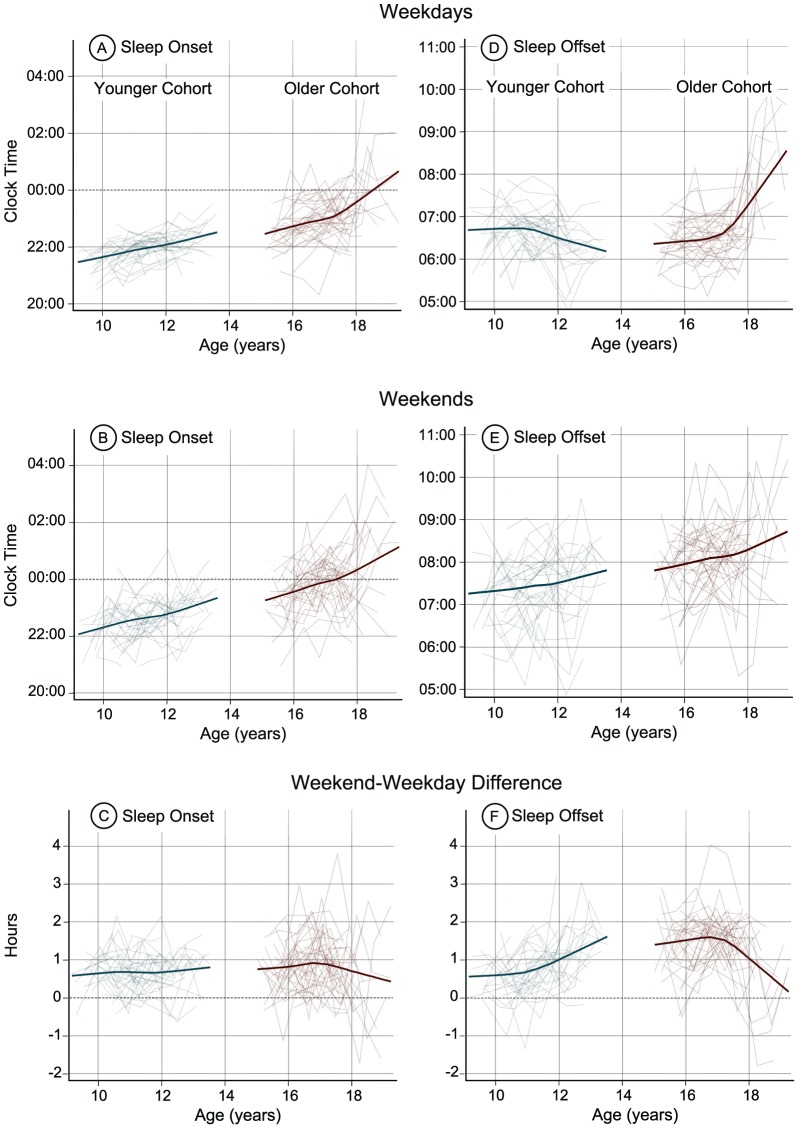
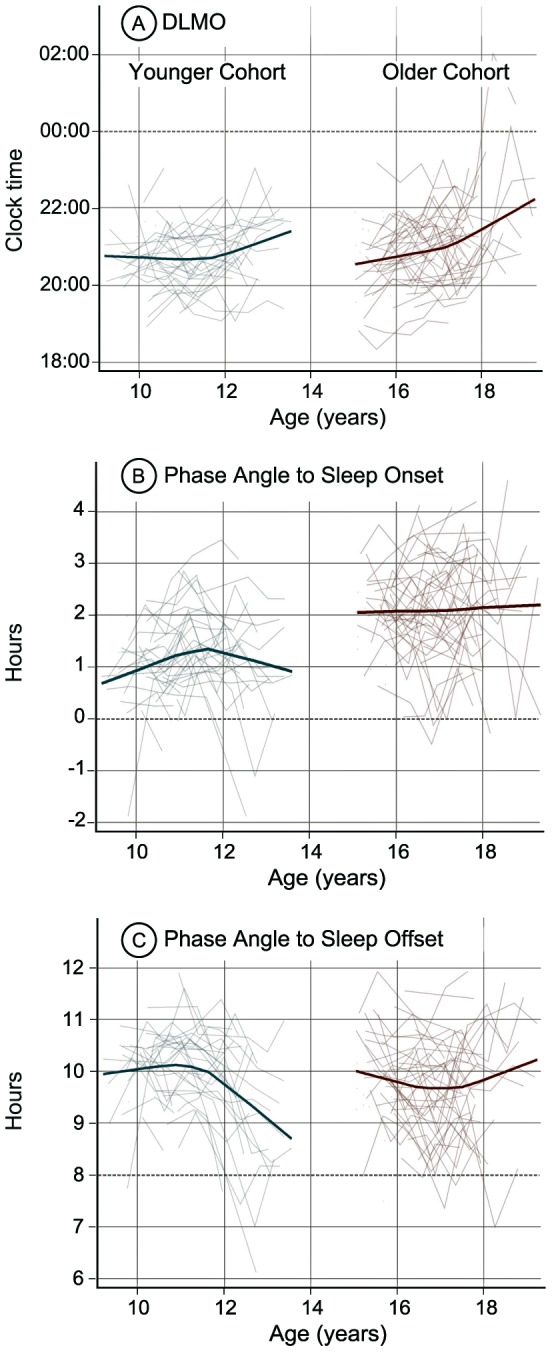
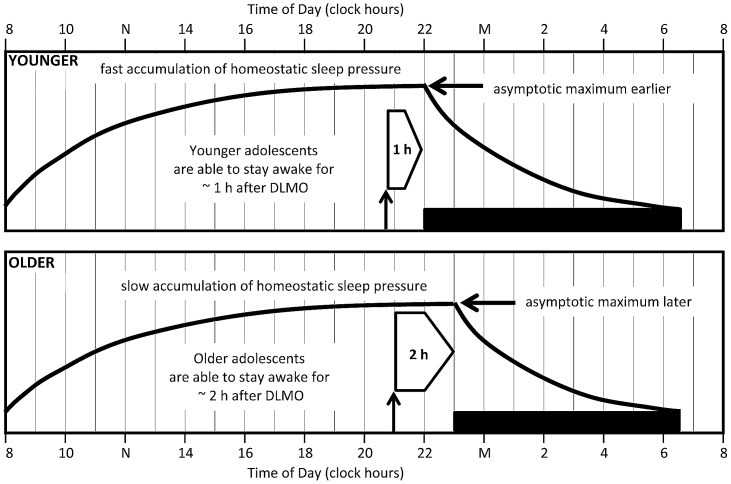
The aim of this descriptive analysis was to examine sleep timing, circadian phase, and phase angle of entrainment across adolescence in a longitudinal study design. Ninety-four adolescents participated; 38 (21 boys) were 9-10 years ("younger cohort") and 56 (30 boys) were 15-16 years ("older cohort") at the baseline assessment. Participants completed a baseline and then follow-up assessments approximately every six months for 2.5 years. At each assessment, participants wore a wrist actigraph for at least one week at home to measure self-selected sleep timing before salivary dim light melatonin onset (DLMO) phase - a marker of the circadian timing system - was measured in the laboratory. Weekday and weekend sleep onset and offset and weekend-weekday differences were derived from actigraphy. Phase angles were the time durations from DLMO to weekday sleep onset and offset times. Each cohort showed later sleep onset (weekend and weekday), later weekend sleep offset, and later DLMO with age. Weekday sleep offset shifted earlier with age in the younger cohort and later in the older cohort after age 17. Weekend-weekday sleep offset differences increased with age in the younger cohort and decreased in the older cohort after age 17. DLMO to sleep offset phase angle narrowed with age in the younger cohort and became broader in the older cohort. The older cohort had a wider sleep onset phase angle compared to the younger cohort; however, an age-related phase angle increase was seen in the younger cohort only. Individual differences were seen in these developmental trajectories. This descriptive study indicated that circadian phase and self-selected sleep delayed across adolescence, though school-day sleep offset advanced until no longer in high school, whereupon offset was later. Phase angle changes are described as an interaction of developmental changes in sleep regulation interacting with psychosocial factors (e.g., bedtime autonomy).
Overview
The claims and statistics of this paper haven’t been checked yet.
Run the check — free, no account needed. It reads the open-access text and checks the sources it cites.
Integrity signals
Registry
Cites
Statistics
Figures
Verification
Claims the paper makes
The claims and statistics of this paper haven’t been checked yet.
Run the check — free, no account needed. It reads the open-access text and checks the sources it cites.
Claims other papers make about this one
Each is checked against this paper’s own text: does it say what the citing paper says it does?
In the citing paper
“In general, the timing of sleep onset and waking and other biological rhythms (for example, fluctuations in melatonin levels) is earlier relative to adults during early childhood8,9 and shifts later during adolescence, and this shift in timing may be conserved among rodents and non-human primates (NHPs)10.”
From Rhythms of life: circadian disruption and brain disorders across the lifespan (2019) · cites this paper as [10]
In the citing paper
“Early school start times, which are typically more than an hour earlier in US high schools (ages 15–18 years) than in elementary schools (ages 9–10 years) or middle schools (ages 11–13 years), may contribute to these problems of shorter sleep10,148.”
From Rhythms of life: circadian disruption and brain disorders across the lifespan (2019) · cites this paper as [10]
In the citing paper
“circadian rhythms naturally delay”
From Impact of Sleep and Circadian Rhythms on Addiction Vulnerability in Adolescents (2018) · cites this paper as [38]
In the citing paper
“Changes in sleep/circadian timing appear to result from both phase delays in the timing of the circadian clock (38), and a slower accumulation in homeostatic sleep drive (37).”
From Impact of Sleep and Circadian Rhythms on Addiction Vulnerability in Adolescents (2018) · cites this paper as [38]
In the citing paper
“Decreased sleep duration and increased sleep disturbance may be a consequence of delayed sleep timing, conflicting with school start times on weekdays, (typically earlier in high school than in elementary or middle school), resulting in circadian misalignment and sleep loss (38,45).”
From Impact of Sleep and Circadian Rhythms on Addiction Vulnerability in Adolescents (2018) · cites this paper as [38]
Self-check
Percentages, sums and reported differences re-computed from the paper’s own numbers.
The self-check needs the paper’s full text.
Citations
Cites
Tanner, J. M. (1978) · Medical Entomology and Zoology · Cited by 3,742
Social Jetlag: Misalignment of Biological and Social Time
Wittmann, M., Dinich, J., Merrow, M., & Roenneberg, T. (2006) · Chronobiology International · doi:10.1080/07420520500545979 · Cited by 2,625 · cited 1×
“Larger degrees of social jetlag have been associated with reduced alertness and performance [40,41,42,43], greater use of alcohol, nicotine and caffeine, and an increased risk for depression and obesity [39,44,45].”
BackgroundSleep Patterns and Predictors of Disturbed Sleep in a Large Population of College Students
Lund, H. G., Reider, B. D., Whiting, A. B., & Prichard, J. R. (2010) · Journal of Adolescent Health · doi:10.1016/j.jadohealth.2009.06.016 · Cited by 1,907 · cited 1×
“A previous crosssectional comparison [38] and longitudinal assessment [23] of sleep times across the transition from high school to college also showed a pattern of delayed wake-up times.”
BackgroundSleep Schedules and Daytime Functioning in Adolescents
Wolfson, A. R., & Carskadon, M. A. (1998) · Child Development · doi:10.1111/j.1467-8624.1998.tb06149.x · Cited by 1,676 · cited 4×
“Other previous cross-sectional survey findings showed a similar delayed pattern across the adolescent years [1,21], though not as large as that reported by Roenneberg and colleagues.”
BackgroundResultInfluentialSelf-citationA marker for the end of adolescence
Roenneberg, T., Kuehnle, T., Pramstaller, P. P., Ricken, J., Havel, M., Guth, A., & Merrow, M. (2004) · Current Biology · doi:10.1016/j.cub.2004.11.039 · Cited by 1,585 · cited 2×
“A shift toward ‘‘eveningness’’ also emerges as youngsters age [10], and this shift appears to be linked to pubertal development [11,12].”
BackgroundActivity-Based Sleep-Wake Identification: An Empirical Test of Methodological Issues
Sadeh, A., Sharkey, M., & Carskadon, M. A. (1994) · Sleep · doi:10.1093/sleep/17.3.201 · Cited by 1,487 · cited 1×
“, Ardsley, NY, USA) to estimate sleep/wake using the validated ‘‘Sadeh’’ algorithm [34].”
MethodSelf-citationRoenneberg, T., Allebrandt, K. V., Merrow, M., & Vetter, C. (2012) · Current Biology · doi:10.1016/j.cub.2012.03.038 · Cited by 1,407 · cited 2×
“Roenneberg and colleagues [39] reported that the degree to which weekend and weekday sleep timing differ increases over the second decade of life, and they relate the phenomenon to the construct of ‘‘social jetlag’’ (i.”
BackgroundSleep Duration From Infancy to Adolescence: Reference Values and Generational Trends
Iglowstein, I., Jenni, O. G., Molinari, L., & Largo, R. H. (2003) · PEDIATRICS · doi:10.1542/peds.111.2.302 · Cited by 1,318 · cited 1×
“sleep time [1,9,13,14,15,16,17,18,19].”
Association between Puberty and Delayed Phase Preference
Carskadon, M. A., Vieira, C., & Acebo, C. (1993) · Sleep · doi:10.1093/sleep/16.3.258 · Cited by 1,167 · cited 1×
“A shift toward ‘‘eveningness’’ also emerges as youngsters age [10], and this shift appears to be linked to pubertal development [11,12].”
BackgroundSelf-citationSleep, circadian rhythms, and delayed phase in adolescence
Crowley, S. J., Acebo, C., & Carskadon, M. A. (2007) · Sleep Medicine · doi:10.1016/j.sleep.2006.12.002 · Cited by 1,127 · cited 1×
“times on non-school or vacation mornings as youngsters age [1,2,3,4,5,6,7].”
BackgroundSelf-citationSmith, C. S., Reilly, C., & Midkiff, K. (1989) · Journal of Applied Psychology · doi:10.1037/0021-9010.74.5.728 · Cited by 1,106 · cited 1×
“Morningness/eveningness, a measure of when someone feels at their peak level of functioning, was also measured at each assessment using the Morningness questionnaire of Smith and colleagues [33].”
MethodA Phase Response Curve to Single Bright Light Pulses in Human Subjects
Khalsa, S. B. S., Jewett, M. E., Cajochen, C., & Czeisler, C. A. (2003) · The Journal of Physiology · doi:10.1113/jphysiol.2003.040477 · Cited by 1,040 · cited 1×
“If we apply the (presumed) properties of the phase response to light [46,47,48,49,50] such evening light exposure should produce a delay of circadian timing (i.”
MethodRegulation of adolescent sleep: Implications for behavior
CARSKADON, M. A., ACEBO, C., & JENNI, O. G. (2004) · Annals of the New York Academy of Sciences · doi:10.1196/annals.1308.032 · Cited by 792
Self-citationAdolescent Sleep Patterns, Circadian Timing, and Sleepiness at a Transition to Early School Days
Carskadon, M. A., Wolfson, A. R., Acebo, C., Tzischinsky, O., & Seifer, R. (1998) · Sleep · doi:10.1093/sleep/21.8.871 · Cited by 769
Self-citationAcebo, C., Sadeh, A., Seifer, R., Tzischinsky, O., Wolfson, A. R., Hafer, A., & Carskadon, M. A. (1999) · Sleep · doi:10.1093/sleep/22.1.95 · Cited by 721 · cited 1×
“The following variables were derived according to the procedures of Acebo and colleagues [35]: sleep onset time (the first minute of at least 3 consecutive minutes of sleep), sleep offset time (the last minute of at least 5 consecutive minutes of sleep before the end of the scoring interval), and sleep minutes (minute…”
MethodSelf-citationCircadian preference, sleep and daytime behaviour in adolescence
Giannotti, F., Cortesi, F., Sebastiani, T., & Ottaviano, S. (2002) · Journal of Sleep Research · doi:10.1046/j.1365-2869.2002.00302.x · Cited by 703 · cited 1×
“times on non-school or vacation mornings as youngsters age [1,2,3,4,5,6,7].”
BackgroundEvidence for the validity of a sleep habits survey for adolescents
Wolfson, A. R., Carskadon, M. A., Acebo, C., Seifer, R., Fallone, G., Labyak, S. E., & Martin, J. L. (2003) · Sleep · doi:10.1093/sleep/26.2.213 · Cited by 682 · cited 1×
“Cross-sectional and longitudinal studies using actigraphically-estimated sleep support these findings [8,9].”
ResultSelf-citationA human phase-response curve to light
Minors, D. S., Waterhouse, J. M., & Wirz‐Justice, A. (1991) · Neuroscience Letters · doi:10.1016/0304-3940(91)90051-t · Cited by 640
Sex difference in the near-24-hour intrinsic period of the human circadian timing system
Duffy, J. F., Cain, S. W., Chang, A., Phillips, A. J. K., Münch, M. Y., Gronfier, C., Wyatt, J. K., Dijk, D., Wright, K. P., & Czeisler, C. A. (2011) · Proceedings of the National Academy of Sciences · doi:10.1073/pnas.1010666108 · Cited by 601 · cited 1×
“Recent data indicate sex differences in underlying circadian physiology and its temporal relationship to sleep [55,61,62].”
Backgroundden Bulck, J. V. (2004) · SLEEP · doi:10.1093/sleep/27.1.101 · Cited by 594
Adolescent changes in the homeostatic and circadian regulation of sleep
Hagenauer, M. H., Perryman, J. I., Lee, T. M., & Carskadon, M. A. (2009) · Developmental Neuroscience · doi:10.1159/000216538 · Cited by 593 · cited 2×
“One study from juvenile mice showed a heightened phase delay response to evening light exposure [30], supporting the hypothesis for a developmental difference in the circadian clock’s response to light.”
BackgroundSelf-citationPatterns of sleep and sleepiness in adolescents.
Carskadon, M. A. (1990) · PubMed · Cited by 550
Self-citationHow can we learn about developmental processes from cross-sectional studies, or can we?
Kraemer, H. C., Yesavage, J. A., Taylor, J. L., & Kupfer, D. (2000) · American Journal of Psychiatry · doi:10.1176/appi.ajp.157.2.163 · Cited by 548 · cited 1×
“While cross-sectional studies are a crucial step to understanding developmental differences, the findings can be misleading as this approach does not account for individual differences in developmental trajectories [22].”
BackgroundDepression scores associate with chronotype and social jetlag in a rural population
Levandovski, R., Dantas, G., Fernandes, L. C., Caumo, W., Torres, I., Roenneberg, T., Hidalgo, M. P. L., & Allebrandt, K. V. (2011) · Chronobiology International · doi:10.3109/07420528.2011.602445 · Cited by 527 · cited 1×
“Larger degrees of social jetlag have been associated with reduced alertness and performance [40,41,42,43], greater use of alcohol, nicotine and caffeine, and an increased risk for depression and obesity [39,44,45].”
BackgroundSleepless in Chicago: Tracking the Effects of Adolescent Sleep Loss During the Middle School Years
Fredriksen, K., Rhodes, J., Reddy, R., & Way, N. (2004) · Child Development · doi:10.1111/j.1467-8624.2004.00655.x · Cited by 510 · cited 1×
“sleep time [1,9,13,14,15,16,17,18,19].”
Gradisar, M., Wolfson, A. R., Harvey, A. G., Hale, L., Rosenberg, R., & Czeisler, C. A. (2013) · Journal of Clinical Sleep Medicine · doi:10.5664/jcsm.3272 · Cited by 498 · cited 1×
“Delayed sleep timing during adolescence is partly driven by environmental factors that can displace sleep, such as part-time work, homework, television-watching, or other media use [24,25,26]; however, changes to the homeostatic sleep [27] and circadian timing systems [28,29], particularly during pubertal development,…”
BackgroundHomeostatic sleep regulation in adolescents
Jenni, O. G., Achermann, P., & Carskadon, M. A. (2005) · Sleep · doi:10.1093/sleep/28.11.1446 · Cited by 469 · cited 4×
“Delayed sleep timing during adolescence is partly driven by environmental factors that can displace sleep, such as part-time work, homework, television-watching, or other media use [24,25,26]; however, changes to the homeostatic sleep [27] and circadian timing systems [28,29], particularly during pubertal development,…”
BackgroundResultInfluentialSelf-citationAge-related changes in sleep/wake patterns among Korean teenagers
Yang, C.-K., Kim, J. K., Patel, S. R., & Lee, J.-H. (2005) · PEDIATRICS · doi:10.1542/peds.2004-0815g · Cited by 385
Development of sleep patterns in early adolescence
Laberge, L., Petit, D., Simard, C., Vitaro, F., Tremblay, R. E., & Montplaisir, J. Y. (2001) · Journal of Sleep Research · doi:10.1046/j.1365-2869.2001.00242.x · Cited by 382 · cited 5×
“In summary, previous longitudinal studies focused on early [2,9] or late adolescence [23] and the only longitudinal study that focused on a relatively wide age range, followed youngsters for one year only [20].”
BackgroundInfluentialSleep and Risk-Taking Behavior in Adolescents
O'Brien, E. M., & Mindell, J. A. (2005) · Behavioral Sleep Medicine · doi:10.1207/s15402010bsm0303_1 · Cited by 363
Sex Differences in Phase Angle of Entrainment and Melatonin Amplitude in Humans
Cain, S. W., Dennison, C. F., Zeitzer, J. M., Guzik, A. M., Khalsa, S. B. S., Santhi, N., Schoen, M. W., Czeisler, C. A., & Duffy, J. F. (2010) · Journal of Biological Rhythms · doi:10.1177/0748730410374943 · Cited by 343 · cited 1×
“Recent data indicate sex differences in underlying circadian physiology and its temporal relationship to sleep [55,61,62].”
BackgroundSleep and sleep habits from childhood to young adulthood over a 10-year period
Thorleifsdottir, B., Björnsson, J. K., Benediktsdottir, B., Gislason, T., & Kristbjarnarson, H. (2002) · Journal of Psychosomatic Research · doi:10.1016/s0022-3999(02)00444-0 · Cited by 337
An Approach to Studying Circadian Rhythms of Adolescent Humans
Carskadon, M. A., Acebo, C., Richardson, G. S., Tate, B. A., & Seifer, R. (1997) · Journal of Biological Rhythms · doi:10.1177/074873049701200309 · Cited by 301 · cited 4×
“DLMO phase, expressed in 24-hour clock time, was determined by linear interpolation across the time points before and after the melatonin concentration increased to and stayed above 4 pg/mL [29].”
BackgroundMethodInfluentialSelf-citationOlds, T., Blunden, S. L., Petkov, J., & Forchino, F. (2010) · Sleep Medicine Reviews · doi:10.1016/j.smrv.2009.12.002 · Cited by 287 · cited 1×
“sleep time [1,9,13,14,15,16,17,18,19].”
Human phase response curve to a 1 h pulse of bright white light
Hilaire, M. A. S., Gooley, J. J., Khalsa, S. B. S., Kronauer, R. E., Czeisler, C. A., & Lockley, S. W. (2012) · The Journal of Physiology · doi:10.1113/jphysiol.2012.227892 · Cited by 277 · cited 1×
“If we apply the (presumed) properties of the phase response to light [46,47,48,49,50] such evening light exposure should produce a delay of circadian timing (i.”
MethodSleep tendency during extended wakefulness: Insights into adolescent sleep regulation and behavior
TAYLOR, D. J., JENNI, O. G., ACEBO, C., & CARSKADON, M. A. (2005) · Journal of Sleep Research · doi:10.1111/j.1365-2869.2005.00467.x · Cited by 264 · cited 1×
“5 hours awake provides further support for this developmental difference in sleep pressure [60].”
BackgroundSelf-citationSleep and the transition to adolescence: a longitudinal study
Sadeh, A., Dahl, R. E., Shahar, G., & Rosenblat-Stein, S. (2009) · SLEEP · doi:10.1093/sleep/32.12.1602 · Cited by 243 · cited 4×
“Two previous longitudinal studies showed a similar 1-hour parent-reported bedtime delay and actigraphic sleep onset delay during early adolescence, though clock times were descriptively earlier [2] or later [9] than the current sample.”
BackgroundResultInfluentialSleep characteristics of adolescents: A longitudinal study
de Andrade, M. M. M., Benedito‐Silva, A. A., Domenice, S., Arnhold, I. J. P., & Menna-Barreto, L. S. (1993) · Journal of Adolescent Health · doi:10.1016/s1054-139x(08)80016-x · Cited by 216 · cited 3×
“Andrade and colleagues [20] reported a delay in self-reported weekend wake-up time (on average between 34 and 39 minutes) in Brazilian adolescents (12–16 years); however, measurements were taken over one year only.”
BackgroundLater School Start Time Is Associated with Improved Sleep and Daytime Functioning in Adolescents
Boergers, J., Gable, C. J., & Owens, J. A. (2014) · Journal of Developmental & Behavioral Pediatrics · doi:10.1097/dbp.0000000000000018 · Cited by 212 · cited 1×
“Previous work comparing sleep/wake schedules in response to differences in school start times showed that sleep onset times remain unchanged, but wake-up times shift earlier or later in tandem with the school schedules [36,37].”
BackgroundMaslowsky, J., & Ozer, E. J. (2013) · Journal of Adolescent Health · doi:10.1016/j.jadohealth.2013.10.201 · Cited by 209 · cited 1×
“sleep time [1,9,13,14,15,16,17,18,19].”
Middle School Start Times: The Importance of a Good Night's Sleep for Young Adolescents
Wolfson, A. R., Spaulding, N. L., Dandrow, C., & Baroni, E. M. (2007) · Behavioral Sleep Medicine · doi:10.1080/15402000701263809 · Cited by 206 · cited 1×
“Previous work comparing sleep/wake schedules in response to differences in school start times showed that sleep onset times remain unchanged, but wake-up times shift earlier or later in tandem with the school schedules [36,37].”
BackgroundSleep Need in Adolescents: A Longitudinal Approach
Strauch, I., & Meier-Schiesser, B. (1988) · SLEEP · doi:10.1093/sleep/11.4.378 · Cited by 177 · cited 1×
“sleep time [1,9,13,14,15,16,17,18,19].”
Crowley, S. J., Acebo, C., Fallone, G., & Carskadon, M. A. (2006) · SLEEP · doi:10.1093/sleep/29.12.1632 · Cited by 160 · cited 3×
“Phase angles to sleep onset in our younger cohort and in a previously studied group of 9–12 year olds [31] was similar (,1 h) to these toddlers.”
BackgroundResultInfluentialSelf-citationSLEEP LOGS OF YOUNG ADULTS WITH SELF-SELECTED SLEEP TIMES PREDICT THE DIM LIGHT MELATONIN ONSET
Martin, S. K., & Eastman, C. I. (2002) · Chronobiology International · doi:10.1081/cbi-120006080 · Cited by 159 · cited 1×
“Our older cohort, however, had a phase angle to sleep onset average closer to 2 h, similar to that reported for adults on self-selected sleep schedules [53,54,55].”
ResultThe dim light melatonin onset following fixed and free sleep schedules
Burgess, H. J., & Eastman, C. I. (2005) · Journal of Sleep Research · doi:10.1111/j.1365-2869.2005.00470.x · Cited by 156 · cited 1×
“Our older cohort, however, had a phase angle to sleep onset average closer to 2 h, similar to that reported for adults on self-selected sleep schedules [53,54,55].”
ResultLoessl, B., Valerius, G., Kopasz, M., Hornyak, M., Riemann, D. W., & Voderholzer, U. (2008) · Child Care Health and Development · doi:10.1111/j.1365-2214.2008.00845.x · Cited by 142
Adolescent sleepiness: increased risk in a high-risk population
Carskadon, M. A. (1990) · Journal of Safety Research · doi:10.1016/0022-4375(90)90038-d · Cited by 126 · cited 1×
“Delayed sleep timing during adolescence is partly driven by environmental factors that can displace sleep, such as part-time work, homework, television-watching, or other media use [24,25,26]; however, changes to the homeostatic sleep [27] and circadian timing systems [28,29], particularly during pubertal development,…”
BackgroundSelf-citationCircadian phase response curves to light in older and young women and men
Kripke, D. F., Elliott, J. A., Youngstedt, S. D., & Rex, K. M. (2007) · Journal of Circadian Rhythms · doi:10.1186/1740-3391-5-4 · Cited by 126
Sleeping-in on the weekend delays circadian phase and increases sleepiness the following week
TAYLOR, A., WRIGHT, H. R., & LACK, L. C. (2008) · Sleep and Biological Rhythms · doi:10.1111/j.1479-8425.2008.00356.x · Cited by 122
Differences in Sleep and Circadian Preference between Eastern and Western German Adolescents
Randler, C. (2008) · Chronobiology International · doi:10.1080/07420520802257794 · Cited by 90 · cited 1×
“times on non-school or vacation mornings as youngsters age [1,2,3,4,5,6,7].”
BackgroundCircadian Phase and Its Relationship to Nighttime Sleep in Toddlers
LeBourgeois, M. K., Carskadon, M. A., Akacem, L. D., Simpkin, C. T., Wright, K. P., Achermann, P., & Jenni, O. G. (2013) · Journal of Biological Rhythms · doi:10.1177/0748730413506543 · Cited by 88 · cited 1×
“Thus, for example, LeBourgeois and colleagues [52] recently reported a median DLMO phase to sleep onset interval of about 65 minutes in toddlers aged 30–36 months sleeping on their habitual parentselected sleep schedules.”
BackgroundSelf-citationCampbell, I. G., Darchia, N., Higgins, L. M., Dykan, I. V., Davis, N. M., de Bie, E., & Feinberg, I. (2011) · SLEEP · doi:10.1093/sleep/34.1.83 · Cited by 87 · cited 1×
“While the decay of homeostatic sleep pressure across sleep does not change [27,58,59], the accumulation of sleep pressure across waking does.”
BackgroundHuman phase response curve to intermittent blue light using a commercially available device
Revell, V. L., Molina, T. A., & Eastman, C. I. (2012) · The Journal of Physiology · doi:10.1113/jphysiol.2012.235416 · Cited by 78 · cited 1×
“If we apply the (presumed) properties of the phase response to light [46,47,48,49,50] such evening light exposure should produce a delay of circadian timing (i.”
MethodA Single Dose of Melatonin Prevents the Phase Delay Associated with a Delayed Weekend Sleep Pattern
Yang, C., Spielman, A. J., D’Ambrosio, P., Serizaw, S., Nunes, J., & Birnbaum, J. (2001) · SLEEP · doi:10.1093/sleep/24.3.272 · Cited by 77
Sex of College Students Moderates Associations among Bedtime, Time in Bed, and Circadian Phase Angle
Reen, E. V., Sharkey, K. M., Roane, B. M., Barker, D., Seifer, R., Raffray, T., Bond, T. L. Y., & Carskadon, M. A. (2013) · Journal of Biological Rhythms · doi:10.1177/0748730413511771 · Cited by 64
Self-citationSLEEP PATTERNS IN HIGH SCHOOL AND UNIVERSITY STUDENTS: A LONGITUDINAL STUDY
Urner, M., Tornic, J., & Bloch, K. E. (2009) · Chronobiology International · doi:10.3109/07420520903244600 · Cited by 64 · cited 3×
“A previous crosssectional comparison [38] and longitudinal assessment [23] of sleep times across the transition from high school to college also showed a pattern of delayed wake-up times.”
BackgroundConsequences of the timing of menarche on female adolescent sleep phase preference
Frey, S., Balu, S., Greusing, S., Rothen, N., & Cajochen, C. (2009) · PLoS ONE · doi:10.1371/journal.pone.0005217 · Cited by 58 · cited 1×
“A shift toward ‘‘eveningness’’ also emerges as youngsters age [10], and this shift appears to be linked to pubertal development [11,12].”
BackgroundDissipation of sleep pressure is stable across adolescence
Tarokh, L., Carskadon, M. A., & Achermann, P. (2012) · Neuroscience · doi:10.1016/j.neuroscience.2012.04.055 · Cited by 53 · cited 1×
“While the decay of homeostatic sleep pressure across sleep does not change [27,58,59], the accumulation of sleep pressure across waking does.”
BackgroundSelf-citationThe effect of a delayed weekend sleep pattern on sleep and morning functioning
Yang, C., & Spielman, A. J. (2001) · Psychology and Health · doi:10.1080/08870440108405869 · Cited by 47 · cited 1×
“Larger degrees of social jetlag have been associated with reduced alertness and performance [40,41,42,43], greater use of alcohol, nicotine and caffeine, and an increased risk for depression and obesity [39,44,45].”
BackgroundCan small shifts in circadian phase affect performance?
Burgess, H. J., Legasto, C. S., Fogg, L., & Smith, M. R. (2012) · Applied Ergonomics · doi:10.1016/j.apergo.2012.05.007 · Cited by 28 · cited 1×
“Larger degrees of social jetlag have been associated with reduced alertness and performance [40,41,42,43], greater use of alcohol, nicotine and caffeine, and an increased risk for depression and obesity [39,44,45].”
Background
Cited by
Sorted by citations
Rhythms of life: circadian disruption and brain disorders across the lifespan
Logan, R. W., & McClung, C. A. (2019) · Nature Reviews Neuroscience · doi:10.1038/s41583-018-0088-y · Cited by 713
An update on adolescent sleep: New evidence informing the perfect storm model ☆
Crowley, S. J., Wolfson, A. R., Tarokh, L., & Carskadon, M. A. (2018) · Journal of Adolescence · doi:10.1016/j.adolescence.2018.06.001 · Cited by 684
Self-citationSleep in adolescence: Physiology, cognition and mental health
Tarokh, L., Saletin, J. M., & Carskadon, M. A. (2016) · Neuroscience & Biobehavioral Reviews · doi:10.1016/j.neubiorev.2016.08.008 · Cited by 552
Self-citationChronotypes in the US–influence of age and sex
Fischer, D., Lombardi, D. A., Marucci-Wellman, H., & Roenneberg, T. (2017) · PLOS ONE · doi:10.1371/journal.pone.0178782 · Cited by 502
Circadian disruption and human health
Fishbein, A. B., Knutson, K. L., & Zee, P. C. (2021) · Journal of Clinical Investigation · doi:10.1172/jci148286 · Cited by 468
“Because adolescents are susceptible to phase delays (8, 186, 187), circadian misalignment is commonly associated with greater metabolic effects in this population (188, 189) and potentially effects on the CV system (190).”
Background
Metadata
- Authors
- Crowley, S. J., Van Reen, E., LeBourgeois, M. K., Acebo, C., Tarokh, L., Seifer, R., Barker, D. H., & Carskadon, M. A.
- Affiliations
- Rush University Medical Center (US)
- University of Colorado Boulder (US)
- Brown University (US)
- University of Bern (CH)
- University of South Australia (AU)
- Corresponding author
- Crowley, Stephanie J.
- ORCID
- Venue
- PLoS ONE
- Publisher
- Public Library of Science (PLoS)
- Published
- 2014-11-07
- Volume
- 9
- Issue
- 11
- Pages
- e112199
- ISSN
- 1932-6203 (ISSN-L)
- PMC
- PMC4224451
- OpenAlex
- W2090080078
- Cited by
- 273
- References
- 60
- Citations by year
- 2026: 27 · 2025: 19 · 2024: 21 · 2023: 31 · 2022: 25 · 2021: 26 · 2020: 22 · 2019: 33 · 2018: 25 · 2017: 21 · 2016: 15 · 2015: 8
- FWCI
- 7.15
- Type
- journal article
- Language
- en
- Open access
- gold
- doi.org
- Locations
- PLoS ONE (publishedVersion, cc-by)
- Europe PMC (PubMed Central) (publishedVersion, cc-by)
- PubMed Central (publishedVersion, cc-by)
- PubMed (publishedVersion)
- RePEc: Research Papers in Economics (submittedVersion)
- BORIS (University Library Bern) (submittedVersion, cc-by)
- DOAJ (DOAJ: Directory of Open Access Journals) (submittedVersion, cc-by-sa)
- UniSA Research Outputs Repository (University of South Australia) (submittedVersion)
- Open Access CRIS of the University of Bern
- Funders
- Brown University
- Jazz Pharmaceuticals
- National Institutes of Health
- National Institute on Alcohol Abuse and Alcoholism (AA 13252, R01AA013252)
- Topics
- Life Sciences › Neuroscience › Endocrine and Autonomic Systems › Circadian rhythm and melatonin
- Social Sciences › Psychology › Experimental and Cognitive Psychology › Sleep and related disorders
- Life Sciences › Neuroscience › Cognitive Neuroscience › Sleep and Wakefulness Research
- Keywords
- sleep timing, circadian phase, adolescence, dim light melatonin onset, sleep onset, sleep offset, circadian entrainment, salivary melatonin
- MeSH terms
- Adolescent, Aging, Child, Circadian Rhythm, Female, Humans, Longitudinal Studies, Male, Melatonin, Saliva, Sex Characteristics, Sleep, Time Factors, Actigraphy
About these checks
Registry, retraction, Cites and statistics results are computed, not judged, with one exception: a printed reference that no index lists is read once by a model before it counts as a citation error. Claims are extracted by a model and kept only when their quote appears verbatim in the text; each cited source is then checked, with a model’s help, for whether it says what the claim relies on. Those verdicts can be wrong — read the claim’s quote and the cited source before relying on one.
Statistics and arithmetic are recomputed, not judged.
Confidence bands are shown only for fields calibrated on our annotated test set. None is calibrated yet, so no band is shown.
What counts as a claim ›How we measure confidence ›How we check this ›
Are you an author, or do you see a problem with this page? Request a review
