

The DOI matches its Crossref record; 60 of the 60 references it cites were found in a registry or an index.
A Longitudinal Assessment of Sleep Timing, Circadian Phase, and Phase Angle of Entrainment across Human Adolescence
Open accessAbstract
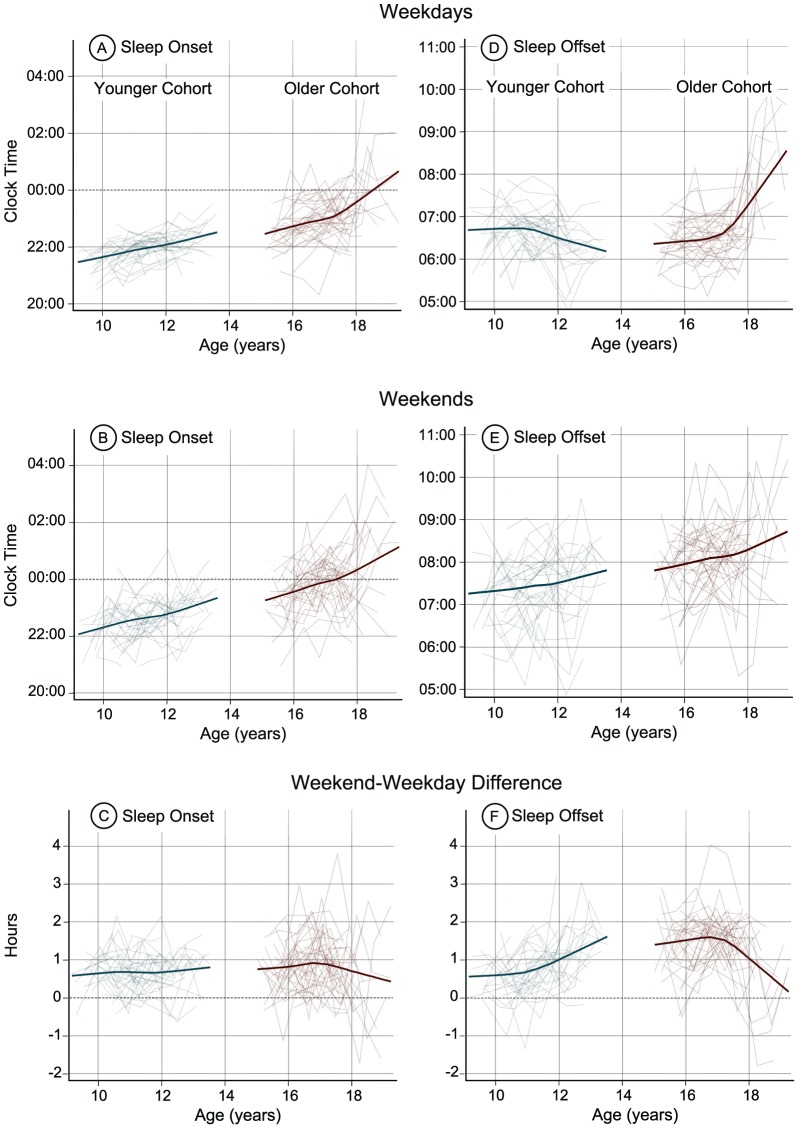
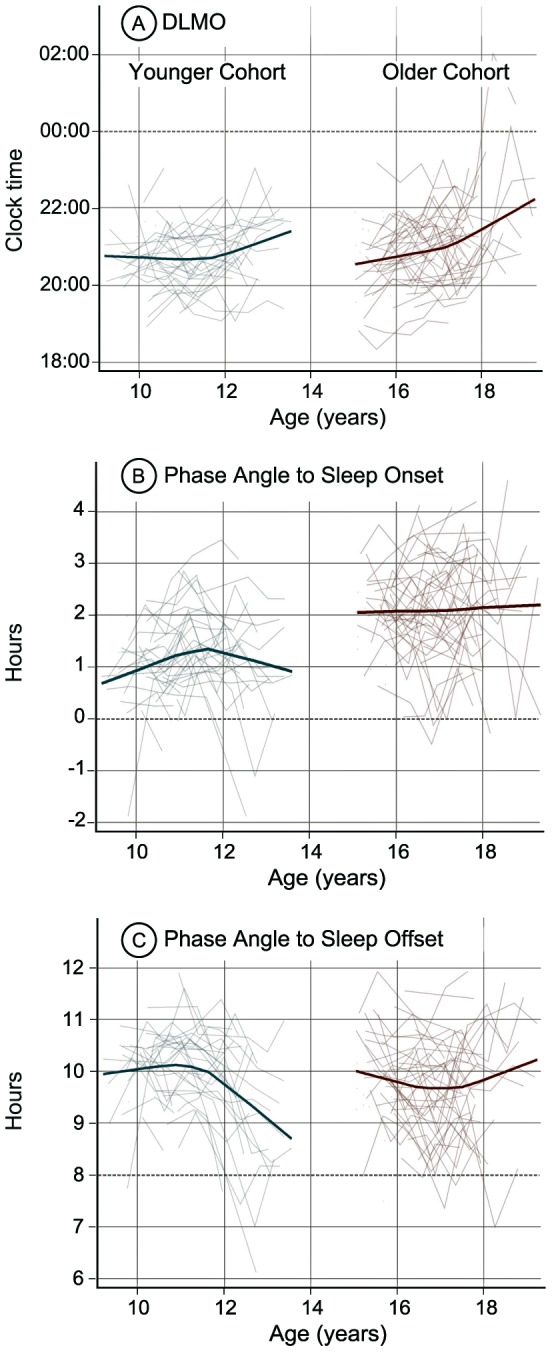
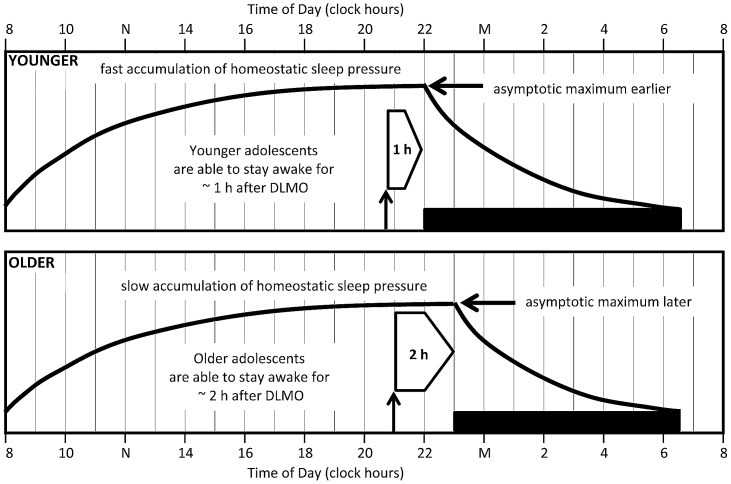
The aim of this descriptive analysis was to examine sleep timing, circadian phase, and phase angle of entrainment across adolescence in a longitudinal study design. Ninety-four adolescents participated; 38 (21 boys) were 9-10 years ("younger cohort") and 56 (30 boys) were 15-16 years ("older cohort") at the baseline assessment. Participants completed a baseline and then follow-up assessments approximately every six months for 2.5 years. At each assessment, participants wore a wrist actigraph for at least one week at home to measure self-selected sleep timing before salivary dim light melatonin onset (DLMO) phase - a marker of the circadian timing system - was measured in the laboratory. Weekday and weekend sleep onset and offset and weekend-weekday differences were derived from actigraphy. Phase angles were the time durations from DLMO to weekday sleep onset and offset times. Each cohort showed later sleep onset (weekend and weekday), later weekend sleep offset, and later DLMO with age. Weekday sleep offset shifted earlier with age in the younger cohort and later in the older cohort after age 17. Weekend-weekday sleep offset differences increased with age in the younger cohort and decreased in the older cohort after age 17. DLMO to sleep offset phase angle narrowed with age in the younger cohort and became broader in the older cohort. The older cohort had a wider sleep onset phase angle compared to the younger cohort; however, an age-related phase angle increase was seen in the younger cohort only. Individual differences were seen in these developmental trajectories. This descriptive study indicated that circadian phase and self-selected sleep delayed across adolescence, though school-day sleep offset advanced until no longer in high school, whereupon offset was later. Phase angle changes are described as an interaction of developmental changes in sleep regulation interacting with psychosocial factors (e.g., bedtime autonomy).
Overview
The claims and statistics of this paper haven’t been checked yet.
Run the check — free, no account needed. It reads the open-access text and checks the sources it cites.
Integrity signals
Registry
Cites
Statistics
Figures
Verification
Claims the paper makes
The claims and statistics of this paper haven’t been checked yet.
Run the check — free, no account needed. It reads the open-access text and checks the sources it cites.
Claims other papers make about this one
Each is checked against this paper’s own text: does it say what the citing paper says it does?
In the citing paper
“In general, the timing of sleep onset and waking and other biological rhythms (for example, fluctuations in melatonin levels) is earlier relative to adults during early childhood8,9 and shifts later during adolescence, and this shift in timing may be conserved among rodents and non-human primates (NHPs)10.”
From Rhythms of life: circadian disruption and brain disorders across the lifespan (2019) · cites this paper as [10]
In the citing paper
“Early school start times, which are typically more than an hour earlier in US high schools (ages 15–18 years) than in elementary schools (ages 9–10 years) or middle schools (ages 11–13 years), may contribute to these problems of shorter sleep10,148.”
From Rhythms of life: circadian disruption and brain disorders across the lifespan (2019) · cites this paper as [10]
In the citing paper
“circadian rhythms naturally delay”
From Impact of Sleep and Circadian Rhythms on Addiction Vulnerability in Adolescents (2018) · cites this paper as [38]
In the citing paper
“Changes in sleep/circadian timing appear to result from both phase delays in the timing of the circadian clock (38), and a slower accumulation in homeostatic sleep drive (37).”
From Impact of Sleep and Circadian Rhythms on Addiction Vulnerability in Adolescents (2018) · cites this paper as [38]
In the citing paper
“Decreased sleep duration and increased sleep disturbance may be a consequence of delayed sleep timing, conflicting with school start times on weekdays, (typically earlier in high school than in elementary or middle school), resulting in circadian misalignment and sleep loss (38,45).”
From Impact of Sleep and Circadian Rhythms on Addiction Vulnerability in Adolescents (2018) · cites this paper as [38]
Self-check
Percentages, sums and reported differences re-computed from the paper’s own numbers.
The self-check needs the paper’s full text.
Citations
Cites
Tanner, J. M. (1978) · Medical Entomology and Zoology · Cited by 3,742
Social Jetlag: Misalignment of Biological and Social Time
Wittmann, M., Dinich, J., Merrow, M., & Roenneberg, T. (2006) · Chronobiology International · doi:10.1080/07420520500545979 · Cited by 2,625 · cited 1×
“Larger degrees of social jetlag have been associated with reduced alertness and performance [40,41,42,43], greater use of alcohol, nicotine and caffeine, and an increased risk for depression and obesity [39,44,45].”
BackgroundSleep Patterns and Predictors of Disturbed Sleep in a Large Population of College Students
Lund, H. G., Reider, B. D., Whiting, A. B., & Prichard, J. R. (2010) · Journal of Adolescent Health · doi:10.1016/j.jadohealth.2009.06.016 · Cited by 1,907 · cited 1×
“A previous crosssectional comparison [38] and longitudinal assessment [23] of sleep times across the transition from high school to college also showed a pattern of delayed wake-up times.”
BackgroundSleep Schedules and Daytime Functioning in Adolescents
Wolfson, A. R., & Carskadon, M. A. (1998) · Child Development · doi:10.1111/j.1467-8624.1998.tb06149.x · Cited by 1,676 · cited 4×
“Other previous cross-sectional survey findings showed a similar delayed pattern across the adolescent years [1,21], though not as large as that reported by Roenneberg and colleagues.”
BackgroundResultInfluentialSelf-citationA marker for the end of adolescence
Roenneberg, T., Kuehnle, T., Pramstaller, P. P., Ricken, J., Havel, M., Guth, A., & Merrow, M. (2004) · Current Biology · doi:10.1016/j.cub.2004.11.039 · Cited by 1,585 · cited 2×
“A shift toward ‘‘eveningness’’ also emerges as youngsters age [10], and this shift appears to be linked to pubertal development [11,12].”
BackgroundActivity-Based Sleep-Wake Identification: An Empirical Test of Methodological Issues
Sadeh, A., Sharkey, M., & Carskadon, M. A. (1994) · Sleep · doi:10.1093/sleep/17.3.201 · Cited by 1,487 · cited 1×
“, Ardsley, NY, USA) to estimate sleep/wake using the validated ‘‘Sadeh’’ algorithm [34].”
MethodSelf-citationRoenneberg, T., Allebrandt, K. V., Merrow, M., & Vetter, C. (2012) · Current Biology · doi:10.1016/j.cub.2012.03.038 · Cited by 1,407 · cited 2×
“Roenneberg and colleagues [39] reported that the degree to which weekend and weekday sleep timing differ increases over the second decade of life, and they relate the phenomenon to the construct of ‘‘social jetlag’’ (i.”
BackgroundSleep Duration From Infancy to Adolescence: Reference Values and Generational Trends
Iglowstein, I., Jenni, O. G., Molinari, L., & Largo, R. H. (2003) · PEDIATRICS · doi:10.1542/peds.111.2.302 · Cited by 1,318 · cited 1×
“sleep time [1,9,13,14,15,16,17,18,19].”
Association between Puberty and Delayed Phase Preference
Carskadon, M. A., Vieira, C., & Acebo, C. (1993) · Sleep · doi:10.1093/sleep/16.3.258 · Cited by 1,167 · cited 1×
“A shift toward ‘‘eveningness’’ also emerges as youngsters age [10], and this shift appears to be linked to pubertal development [11,12].”
BackgroundSelf-citationSleep, circadian rhythms, and delayed phase in adolescence
Crowley, S. J., Acebo, C., & Carskadon, M. A. (2007) · Sleep Medicine · doi:10.1016/j.sleep.2006.12.002 · Cited by 1,127 · cited 1×
“times on non-school or vacation mornings as youngsters age [1,2,3,4,5,6,7].”
BackgroundSelf-citation
Cited by
Sorted by citations
Rhythms of life: circadian disruption and brain disorders across the lifespan
Logan, R. W., & McClung, C. A. (2019) · Nature Reviews Neuroscience · doi:10.1038/s41583-018-0088-y · Cited by 713
An update on adolescent sleep: New evidence informing the perfect storm model ☆
Crowley, S. J., Wolfson, A. R., Tarokh, L., & Carskadon, M. A. (2018) · Journal of Adolescence · doi:10.1016/j.adolescence.2018.06.001 · Cited by 684
Self-citationSleep in adolescence: Physiology, cognition and mental health
Tarokh, L., Saletin, J. M., & Carskadon, M. A. (2016) · Neuroscience & Biobehavioral Reviews · doi:10.1016/j.neubiorev.2016.08.008 · Cited by 552
Self-citationChronotypes in the US–influence of age and sex
Fischer, D., Lombardi, D. A., Marucci-Wellman, H., & Roenneberg, T. (2017) · PLOS ONE · doi:10.1371/journal.pone.0178782 · Cited by 502
Circadian disruption and human health
Fishbein, A. B., Knutson, K. L., & Zee, P. C. (2021) · Journal of Clinical Investigation · doi:10.1172/jci148286 · Cited by 468
“Because adolescents are susceptible to phase delays (8, 186, 187), circadian misalignment is commonly associated with greater metabolic effects in this population (188, 189) and potentially effects on the CV system (190).”
BackgroundLater circadian timing of food intake is associated with increased body fat
McHill, A. W., Phillips, A. J., Czeisler, C. A., Keating, L., Yee, K., Barger, L. K., Garaulet, M., Scheer, F. A., & Klerman, E. B. (2017) · The American Journal of Clinical Nutrition · doi:10.3945/ajcn.117.161588 · Cited by 414
Circadian disruption: what do we actually mean?
Vetter, C. (2020) · European Journal of Neuroscience · doi:10.1111/ejn.14255 · Cited by 333
“Changes in circadian phase over the lifespan (Roenneberg et al., 2004; Crowley et al., 2014), as well as changes in work schedules and other environmental challenges over time, contribute to the difficulty of estimating a cumulative lifetime exposure.”
BackgroundTouitou, Y., Touitou, D., & Reinberg, A. (2016) · Journal of Physiology-Paris · doi:10.1016/j.jphysparis.2017.05.001 · Cited by 297
Chronotype and mental health: recent advances
Taylor, B. J., & Hasler, B. P. (2018) · Current Psychiatry Reports · doi:10.1007/s11920-018-0925-8 · Cited by 289
Galland, B. C., Short, M. A., Terrill, P. I., Rigney, G., Haszard, J. J., Coussens, S. W., Foster-Owens, M. D., & Biggs, S. N. (2018) · SLEEP · doi:10.1093/sleep/zsy017 · Cited by 235
“Sleep offset across most age groups remained relatively stable across younger age groups with a tendency for later sleep offset in older age groups; 20 to 24 min later in 12–14 and 15–18 years age groups, respectively, compared with the 9–11 years age group confirming self-report data of sleep timing across similar ag…”
Impact of Sleep and Circadian Rhythms on Addiction Vulnerability in Adolescents
Logan, R. W., Hasler, B. P., Forbes, E. E., Franzen, P. L., Torregrossa, M. M., Huang, Y. H., Buysse, D. J., Clark, D. B., & McClung, C. A. (2018) · Biological Psychiatry · doi:10.1016/j.biopsych.2017.11.035 · Cited by 194
“6 sleep/circadian timing appear to result from both phase delays in the timing of the circadian clock (38), and a slower accumulation in homeostatic sleep drive (37).”
BackgroundMismatch of Sleep and Work Timing and Risk of Type 2 Diabetes
Vetter, C., Devore, E. E., Ramin, C. A., Speizer, F. E., Willett, W. C., & Schernhammer, E. S. (2015) · Diabetes Care · doi:10.2337/dc15-0302 · Cited by 195
“However, even though chronotype appears to change with age (39), existing evidence suggests that once adulthood is”
BackgroundBidirectional, Daily Temporal Associations between Sleep and Physical Activity in Adolescents
Master, L., Nye, R. T., Lee, S., Nahmod, N. G., Mariani, S., Hale, L. E., & Buxton, O. M. (2019) · Scientific Reports · doi:10.1038/s41598-019-44059-9 · Cited by 187
The Lighting Environment, Its Metrology, and Non-visual Responses
Schlangen, L. J. M., & Price, L. (2021) · Frontiers in Neurology · doi:10.3389/fneur.2021.624861 · Cited by 164
“The sleep-wake cycle closely follows the 24 h melatonin cycle: habitual bedtime is about 2 h after the melatonin onset (in dim light), while habitual wake-up typically occurs about 10 h after melatonin onset (in dim light), with melatonin onset being defined as the time point at which the salivary melatonin concentrat…”
BackgroundSkeldon, A. C., Phillips, A. J. K., & Dijk, D.-J. (2017) · Scientific Reports · doi:10.1038/srep45158 · Cited by 155
Having Trouble Typing? What on Earth Is Chronotype?
Roenneberg, T. (2015) · Journal of Biological Rhythms · doi:10.1177/0748730415603835 · Cited by 151
“Mid-sleep times are a fairly good representation of dim-light melatonin onset (Burgess and Eastman, 2005; Crowley et al., 2014; Kantermann et al., 2015; Kitamura et al., 2014; Simpkin et al., 2014; Wright et al., 2013), but such a test cannot even be performed between the MEQ and some other objective measurement that…”
BackgroundSun, W., Ling, J., Zhu, X., Lee, T. M. C., & Li, S. X. (2019) · Sleep Medicine Reviews · doi:10.1016/j.smrv.2019.04.003 · Cited by 120
Kennaway, D. J. (2023) · SLEEP · doi:10.1093/sleep/zsad033 · Cited by 110
Decreased sleep quality in high myopia children
Ayaki, M., Torii, H., Tsubota, K., & Negishi, K. (2016) · Scientific Reports · doi:10.1038/srep33902 · Cited by 111
Lo, J. C., Lee, S. M., Teo, L. M., Lim, J., Gooley, J. J., & Chee, M. W. L. (2017) · Sleep · doi:10.1093/sleep/zsw042 · Cited by 102
“Also, dissimilar to our protocol, adolescents may delay their bedtimes on weekends relative to weekdays so that the sleep timing becomes more in line with the maturational delay of their biological clock.(5,6) Furthermore, in our protocol, as the test batteries were administered at the same clock times, participants w…”
Suleiman, A. B., & Dahl, R. E. (2017) · Journal of Adolescent Health · doi:10.1016/j.jadohealth.2016.12.010 · Cited by 95
“In brief, pubertal hormones contribute to three important changes: (1) increased sensitivity to the biological effects of lightdespecially light striking the retina when the circadian system “expects” darkness before bedtime [68]; (2) increasedmotivational salience and arousal response to social stimuli [17]; and (3)…”
BackgroundSmartphone addiction risk and daytime sleepiness in Korean adolescents
Chung, J. E., Choi, S. A., Kim, K. T., Yee, J., Kim, J. H., Seong, J. W., Seong, J. M., Kim, J. Y., Lee, K. E., & Gwak, H. S. (2018) · Journal of Paediatrics and Child Health · doi:10.1111/jpc.13901 · Cited by 99
Simon, S. L., McWhirter, L., Diniz Behn, C., Bubar, K. M., Kaar, J. L., Pyle, L., Rahat, H., Garcia-Reyes, Y., Carreau, A.-M., Wright, K. P., et al. (2019) · The Journal of Clinical Endocrinology & Metabolism · doi:10.1210/jc.2018-02385 · Cited by 87
Time to learn: H ow chronotype impacts education
Zerbini, G., & Merrow, M. W. (2017) · PsyCh Journal · doi:10.1002/pchj.178 · Cited by 85
“Several studies have reported that adolescents sleep longer and later than adults (Crowley et al., 2014; Klerman & Dijk, 2008; Roenneberg et al., 2004).”
BackgroundMeta-analysis of age and actigraphy-assessed sleep characteristics across the lifespan
Evans, M. A., Buysse, D. J., Marsland, A. L., Wright, A. G. C., Foust, J. E., Carroll, L. W., Kohli, N., Mehra, R., Jasper, A. A., Srinivasan, S., et al. (2021) · SLEEP · doi:10.1093/sleep/zsab088 · Cited by 86
Baldini, V., Gnazzo, M., Rapelli, G., Marchi, M., Pingani, L., Ferrari, S., Ronchi, D. D., Varallo, G., Starace, F., Franceschini, C., et al. (2024) · Frontiers in Psychiatry · doi:10.3389/fpsyt.2024.1341686 · Cited by 88
“…subjects showed the highest percentage of insuf fi cient sleep and frequent nocturnal awakenings, those between 18 and 19 years had the highest rate of insuf fi cient sleep and dif fi culty falling asleep, and adolescents 17-year-old presented an elevated dif fi culty in waking up in the morning (11).”
Defining the rest interval associated with the main sleep period in actigraph scoring
Chow, C. M., Wong, S. N., Shin, M., Maddox, R. G., Feilds, K.-L., Paxton, K., Hawke, C. I., Hazell, P., & Steinbeck, K. S. (2016) · Nature and Science of Sleep · doi:10.2147/nss.s114969 · Cited by 80
“19 While actigraphy appears as a simple, nonuser dependent method, a number of specific technical considerations need to be accounted for when evaluating sleep.”
Changing school start times: impact on sleep in primary and secondary school students
Meltzer, L. J., Wahlstrom, K. L., Plog, A. E., & Strand, M. J. (2021) · SLEEP · doi:10.1093/sleep/zsab048 · Cited by 78
“Furthermore, biological changes in the circadian rhythm and self-reported delays in circadian preference (i.e. time one feels most alert and awake) typically begin between 11 and 13 years, when students in the United States are transitioning from elementary to middle school [19, 20].”
BackgroundThe relationship between sleep and problematic smartphone use among adolescents: A systematic review
Mac Cárthaigh, S., Griffin, C., & Perry, J. (2020) · Developmental Review · doi:10.1016/j.dr.2020.100897 · Cited by 75
Crowley, S. J., Suh, C. A., Molina, T. A., Fogg, L., Sharkey, K. M., & Carskadon, M. A. (2015) · Sleep Medicine · doi:10.1016/j.sleep.2015.11.019 · Cited by 72
“Adolescents may be particularly vulnerable to CRSWDs as symptoms of delayed sleep–wake phase disorder (DSPD) often begin to appear at this age [14,15] Sleep timing shifts later [16–19] in healthy adolescents, driven in part by homeostatic and circadian rhythm changes that have been linked to puberty [20–22].”
BackgroundSelf-citationRelationships Between Smoking and Sleep Problems in Black and White Adolescents
Bellatorre, A., Choi, K., Lewin, D. S., Haynie, D. L., & Simons‐Morton, B. G. (2016) · SLEEP · doi:10.1093/sleep/zsw031 · Cited by 77
“5 hr) and timing (10:30 pm–8:00 am) and the absence of sleep disorders.(7,8) Based on health surveillance studies, just under 70% of high school students report insufficient sleep (<7 hours on school nights) and approximately 15% report grossly insufficient sleep (<5 hours on school nights).”
Koo, D. L., Yang, K. I., Kim, J. H., Kim, D., Sunwoo, J., Hwangbo, Y., Lee, H. R., & Hong, S. B. (2020) · Journal of Sleep Research · doi:10.1111/jsr.13063 · Cited by 79
“…changes in circadian rhythms, environmental and psychosocial factors, such as early school start times and competing academic and social demands (Crowley et al., 2014;Gregory & Sadeh, 2012), may result in a higher prevalence of insufficient sleep in adolescents (Paruthi et al., 2016; Wheaton,…”
BackgroundFontanellaz-Castiglione, C. E. G., Schaufler, S., Wild, S., Hamann, C., Kaess, M., & Tarokh, L. (2023) · Journal of Sleep Research · doi:10.1111/jsr.13865 · Cited by 84
“2023;32:e13865. wileyonlinelibrary.com/journal/jsr 1 of 11 https://doi.org/10.1111/jsr.13865 school week remain stable, as they are dictated by school start times (Crowley et al., 2014).”
BackgroundInfluentialSelf-citationMechanisms Underlying Tumor Suppressive Properties of Melatonin
Bondy, S. C., & Campbell, A. (2018) · International Journal of Molecular Sciences · doi:10.3390/ijms19082205 · Cited by 73
“Dim light melatonin onset, an important component of the endogenous circadian phase, is delayed in adolescents [15].”
BackgroundSmarr, B. L., & Schirmer, A. E. (2018) · Scientific Reports · doi:10.1038/s41598-018-23044-8 · Cited by 72
Developmental trends in sleep during adolescents' transition to young adulthood
Park, H., Chiang, J. J., Irwin, M. R., Bower, J. E., McCreath, H. E., & Fuligni, A. J. (2019) · Sleep Medicine · doi:10.1016/j.sleep.2019.04.007 · Cited by 72
“Our findings align with a longitudinal study that reported preliminary patterns of declining weekend sleep durations in late adolescence to young adulthood (15e19 years), although the reports were limited to basic descriptive average sleep duration by age group based on 56 participants [19].”
BackgroundResultInfluentialHuman Adolescent Phase Response Curves to Bright White Light
Crowley, S. J., & Eastman, C. I. (2017) · Journal of Biological Rhythms · doi:10.1177/0748730417713423 · Cited by 69
Self-citationUsing big data to explore worldwide trends in objective sleep in the transition to adulthood
Kuula, L., Gradisar, M., Martinmäki, K., Richardson, C. E., Bonnar, D., Bartel, K., Lang, C., Leinonen, L., & Pesonen, A. (2019) · Sleep Medicine · doi:10.1016/j.sleep.2019.07.024 · Cited by 67
“However, our findings mirror previous studies regarding sleep timing during development [2,22,32], so it is likely that measurement error in this sample was minimized.”
BackgroundResultLower school performance in late chronotypes: underlying factors and mechanisms
Zerbini, G., van der Vinne, V., Otto, L., Kantermann, T., Krijnen, W. P., Roenneberg, T., & Merrow, M. W. (2017) · Scientific Reports · doi:10.1038/s41598-017-04076-y · Cited by 80
The challenges of adolescent sleep
Illingworth, G. (2020) · Interface Focus · doi:10.1098/rsfs.2019.0080 · Cited by 62
“Importantly, wake times have been shown to be less constrained after adolescents have left school [52] and are at university [53], and their sleep timing is no longer influenced by school schedules.”
BackgroundSleep and glycemic control in adolescents with type 1 diabetes
von Schnurbein, J., Boettcher, C., Brandt, S., Karges, B., Dunstheimer, D., Galler, A., Denzer, C., Denzer, F., Vollbach, H., Wabitsch, M., et al. (2017) · Pediatric Diabetes · doi:10.1111/pedi.12538 · Cited by 67
“In addition, adolescents commence their sleep on average later than adults,(14) and concurrently show a later circadian phase.(15) As they have to get up early for school, adolescents tend to accumulate high sleep debts during the week which they try to compensate for on the weekend.”
BackgroundPediatric sleep: current knowledge, gaps, and opportunities for the future
Reynolds, A., Spaeth, A. M., Hale, L. E., Williamson, A. A., LeBourgeois, M. K., Wong, S. D., Hartstein, L. E., Levenson, J. C., Kwon, M., Hart, C. N., et al. (2023) · SLEEP · doi:10.1093/sleep/zsad060 · Cited by 76
“The timing of the circadian clock delays throughout childhood: melatonin onset occurs at ~19:30 in toddlers and at ~20:40 in 9 to 10-year-olds [27, 28].”
BackgroundSelf-citationThe Timing of the Circadian Clock and Sleep Differ between Napping and Non-Napping Toddlers
Akacem, L. D., Simpkin, C. T., Carskadon, M. A., Wright, K. P., Jenni, O. G., Achermann, P., & LeBourgeois, M. K. (2015) · PLoS ONE · doi:10.1371/journal.pone.0125181 · Cited by 68
“In our previously published work, we found an average DLMO time of 19:29 in a sample of 45 napping toddlers, whereas a DLMO of 20:42 was reported in 9 year-old children who were assessed during the academic year [19, 23].”
BackgroundSelf-citationChong, K. H., Parrish, A., Cliff, D. P., Kemp, B. J., Zhang, Z., & Okely, A. D. (2019) · Journal of science and medicine in sport · doi:10.1016/j.jsams.2019.12.002 · Cited by 60
Correlates of Sleep Duration in Early Childhood: A Systematic Review
Zhang, Z., Sousa‐Sá, E., Pereira, J. R., Okely, A. D., Feng, X., & Santos, R. (2020) · Behavioral Sleep Medicine · doi:10.1080/15402002.2020.1772264 · Cited by 66
“Even if there is no requirement for a scheduled wakeup time, young children with later bedtimes may still sleep less at night, as the underlying mechanism is related to circadian phases (Crowley et al., 2014).”
BackgroundSimon, S. L., Behn, C. D., Cree‐Green, M., Kaar, J. L., Pyle, L. L., Hawkins, S. M. M., Rahat, H., Garcia‐Reyes, Y., Wright, K. P., & Nadeau, K. J. (2018) · The Journal of Pediatrics · doi:10.1016/j.jpeds.2018.10.027 · Cited by 61
“Phase angles of entrainment, a quantification of the temporal alignment between actual sleep behaviors with the internal circadian clock, were computed as the interval between each circadian marker (DLMOn and DLMOff) and actigraphic estimates of sleep (bedtime and wake time).(28) THE JOURNAL OF PEDIATRICS • www.”
Sex differences in sleep health
Meers, J. M., Stout-Aguilar, J., & Nowakowski, S. (2019) · Elsevier eBooks · doi:10.1016/b978-0-12-815373-4.00003-4 · Cited by 69
Quante, M., Khandpur, N., Kontos, E. Z., Bakker, J. P., Owens, J. A., & Redline, S. S. (2018) · Sleep Medicine · doi:10.1016/j.sleep.2018.10.044 · Cited by 59
“The National Sleep Foundation Sleep in America Poll found that 75% of 12th graders had sleep durations of less than 8 hours per night compared with 16% of sixth graders [5,6], although an average of 8–10 hours of sleep is recommended by the American Academy of Sleep Medicine (AASM) for teenagers [7,8].”
BackgroundWahlstrom, K., & Owens, J. (2017) · Current Opinion in Psychiatry · doi:10.1097/yco.0000000000000368 · Cited by 49
Sleep and circadian risk factors for alcohol problems: a brief overview and proposed mechanisms
Hasler, B. P., & Pedersen, S. L. (2019) · Current Opinion in Psychology · doi:10.1016/j.copsyc.2019.09.005 · Cited by 51
“,, per salivary melatonin) [2]; and (2) a slower accumulation of homeostatic sleep pressure (i.”
BackgroundSleep and Circadian Rhythms in Adolescence
Tarokh, L., Short, M. A., Crowley, S. J., Fontanellaz-Castiglione, C. E. G., & Carskadon, M. A. (2019) · Current Sleep Medicine Reports · doi:10.1007/s40675-019-00155-w · Cited by 62
Self-citationSoehner, A. M., Bertocci, M. A., Levenson, J. C., Goldstein, T. R., Rooks, B., Merranko, J. A., Hafeman, D., Diler, R. S., Axelson, D., Goldstein, B. I., et al. (2019) · Journal of the American Academy of Child & Adolescent Psychiatry · doi:10.1016/j.jaac.2018.09.448 · Cited by 51
Human seasonal and circadian studies in Antarctica (Halley, 75°S)
Arendt, J., & Middleton, B. (2017) · General and Comparative Endocrinology · doi:10.1016/j.ygcen.2017.05.010 · Cited by 54
“Actigraphy provides an acceptable methodology particularly for long term evaluation of sleep rhythms and diagnosis of circadian rhythm sleep disorders e.g. (Crowley et al., 2014; Lockley et al., 1999a,b).”
Associations between brain structure and sleep patterns across adolescent development
Jalbrzikowski, M., Hayes, R. A., Scully, K. E., Franzen, P. L., Hasler, B. P., Siegle, G. J., Buysse, D. J., Dahl, R. E., Forbes, E. E., Ladouceur, C. D., et al. (2021) · SLEEP · doi:10.1093/sleep/zsab120 · Cited by 51
Keller, L. K., Grünewald, B., Vetter, C., Roenneberg, T., & Schulte‐Körne, G. (2017) · European Child & Adolescent Psychiatry · doi:10.1007/s00787-017-0977-z · Cited by 45
McHill, A. W., Czeisler, C. A., Phillips, A. J. K., Keating, L., Barger, L. K., Garaulet, M., Scheer, F. A. J. L., & Klerman, E. B. (2019) · Nutrients · doi:10.3390/nu11030587 · Cited by 48
“since the timing of DLMO, sleep onset, and the subsequent difference between DLMO and sleep onset, change with age [37,38].”
BackgroundEffect of chronotype on motor skills specific to soccer in adolescent players
Roveda, E., Mulè, A., Galasso, L., Castelli, L., Scurati, R., Michielon, G., Esposito, F., Caumo, A., & Montaruli, A. (2020) · Chronobiology International · doi:10.1080/07420528.2020.1729787 · Cited by 49
“…shift toward evening preference begins during adolescence, between age 12 and 13 years (Russo et al. 2007), stops at about 14 years, then gradually changes after age 18 (Crowley et al. 2014; DíazMorales and Sorroche 2008; Koscec Bjelajac et al. 2014; Randler 2008a; Roenneberg et al. 2004).”
BackgroundMaskevich, S., Cassanet, A., Allen, N. B., Trinder, J. C., & Bei, B. (2019) · Sleep Medicine · doi:10.1016/j.sleep.2019.10.006 · Cited by 50
Akacem, L. D., Wright, K. P., & LeBourgeois, M. K. (2016) · Neurobiology of Sleep and Circadian Rhythms · doi:10.1016/j.nbscr.2016.11.002 · Cited by 45
Self-citationRoy, S., Abudu, A., Salinas, I., Sinha, N., Cline-Fedewa, H. M., Yaw, A. M., Qi, W., Lydic, T. A., Takahashi, D. L., Hennebold, J. D., et al. (2022) · Endocrinology · doi:10.1210/endocr/bqac127 · Cited by 44
Sleep in Adolescents and Young Adults in the Year After Cancer Treatment
Daniel, L. C., Aggarwal, R., & Schwartz, L. A. (2017) · Journal of Adolescent and Young Adult Oncology · doi:10.1089/jayao.2017.0006 · Cited by 45
“7,8 Although there may be environmental influences, laboratory studies indicate a biological basis for this change.”
Ritchie, H., Burke, T. M., Dear, T. B., McHill, A. W., Axelsson, J., & Wright, K. P. (2017) · Journal of Sleep Research · doi:10.1111/jsr.12525 · Cited by 42
“, 2013; Pittendrigh and Daan, 1976), age (Crowley et al., 2014; Duffy et al., 1999; Lebourgeois et al., 2013; Roenneberg et al., 2004) and light exposure history (Wright et al.”
BackgroundFree‐running circadian period in adolescents and adults
Crowley, S. J., & Eastman, C. I. (2018) · Journal of Sleep Research · doi:10.1111/jsr.12678 · Cited by 46
“Sleep timing shifts later over the course of adolescence (second decade; age 10–20 years; Crowley et al., 2014; Roenneberg et al., 2004), and older adolescents endorse more evening-type behaviour compared with young adolescents (Carskadon, Vieira, & Acebo, 1993; Giannotti, Cortesi, Sebastiani, & Ottaviano, 2002).”
BackgroundInfluentialSelf-citationInteractions between sleep duration and quality as predictors of adolescents' adjustment
El‐Sheikh, M., Saini, E. K., Gillis, B. T., & Kelly, R. J. (2019) · Sleep Health · doi:10.1016/j.sleh.2018.11.004 · Cited by 43
“There are many key sleep parameters that we did not examine including night-to-night variability(36) and chronobiology.(37) As the literature on interactions between various sleep parameters expands, assessment of various sleep/wake domains is warranted.”
SleepOMICS: How Big Data Can Revolutionize Sleep Science
Bragazzi, N. L., Guglielmi, O., & Garbarino, S. (2019) · International Journal of Environmental Research and Public Health · doi:10.3390/ijerph16020291 · Cited by 40
“Profound changes in the current economy and labor market in an increasingly frantic society (“the post-modern 24 h society”), which have led to fragmentation of work, part-time jobs, night shifts, and the widespread use of the new media, new information, and communication technologies (ICTs), may have contributed to t…”
BackgroundLo, J. C.-Y., Leong, R. L. F., Ng, A., Jamaluddin, S. A., Ong, J. L., Ghorbani, S., Lau, T., Chee, N. I. Y. N., Gooley, J. J., & Chee, M. W. L. (2020) · SLEEP · doi:10.1093/sleep/zsaa129 · Cited by 37
“In such societies, later bedtimes arise not only from the maturational delay in circadian rhythms [7, 8] and slower build-up of homeostatic sleep pressure [9], but also a perceived need to study longer and later into the night [10].”
BackgroundVariable School Start Times and Middle School Student's Sleep Health and Academic Performance
Lewin, D. S., Wang, G., Chen, Y. I., Skora, E., Hoehn, J., Baylor, A., & Wang, J. (2017) · Journal of Adolescent Health · doi:10.1016/j.jadohealth.2017.02.017 · Cited by 37
Adolescent sleep and school performance — the problem of sleepy teenagers
Sharman, R. L., & Illingworth, G. (2019) · Current Opinion in Physiology · doi:10.1016/j.cophys.2019.11.006 · Cited by 37
A Model of Adolescent Sleep Health and Risk for Type 2 Diabetes
Simon, S. L., HIGGINS, J. A., Melanson, E. L., Wright, K. P., & Nadeau, K. J. (2021) · Current Diabetes Reports · doi:10.1007/s11892-020-01373-1 · Cited by 44
Setyowati, A., Chung, M., & Yusuf, A. (2019) · Journal of Public Health in Africa · doi:10.4081/jphia.2019.1172 · Cited by 37
Misiunaite, I., Eastman, C. I., & Crowley, S. J. (2020) · Frontiers in Neuroscience · doi:10.3389/fnins.2020.00099 · Cited by 35
“The circadian timing system is later (phase delayed) (Carskadon et al., 1997, 2004; Crowley et al., 2014) and homeostatic sleep pressure accumulates at a slower rate during waking in more mature adolescents compared to their prepubertal peers (Jenni et al.”
BackgroundSelf-citationStone, J., Phillips, A., Chachos, E., Hand, A., Lu, S., Carskadon, M., Klerman, E., Lockley, S., Wiley, J., Bei, B., et al. (2021) · Journal of Pineal Research · doi:10.1111/jpi.12757 · Cited by 29
Self-citationSleep timing is associated with self-reported dietary patterns in 9- to 15-year-olds
Thellman, K. E., Dmitrieva, J., Miller, A. L., Harsh, J., & LeBourgeois, M. K. (2017) · Sleep Health · doi:10.1016/j.sleh.2017.05.005 · Cited by 36
Self-citationSleep, Nutrition, and Injury Risk in Adolescent Athletes: A Narrative Review
Mason, L., Connolly, J., Devenney, L. E., Lacey, K., O’Donovan, J., & Doherty, R. (2023) · Nutrients · doi:10.3390/nu15245101 · Cited by 48
“Sleep–wake cycles also undergo development These adaptations to sleep regulation increase sleep pressure tolerance (reduced adenosine accumulation) [70–72] and are driven by the maturation of physiological, psychological, and cognitive functioning along with delays in circadian rhythmicity [73],…”
BackgroundLang, C., Richardson, C. E., Micic, G., & Gradisar, M. (2022) · Frontiers in Psychiatry · doi:10.3389/fpsyt.2022.785079 · Cited by 36
“This is in line with their phase angle, which not only corroborates the phase angles of a normal sleeping teenage cohort (32, 33), but also remains consistent between school- and weekend nights.”
BackgroundResultde Zwart, B. J., Beulens, J. W. J., Elders, P. J. M., & Rutters, F. (2018) · Sleep Medicine · doi:10.1016/j.sleep.2018.03.024 · Cited by 33
Wallace, M. L., Kissel, N., Hall, M. H., Germain, A., Matthews, K. A., Troxel, W. M., Franzen, P. L., Buysse, D. J., Reynolds, C., Roecklein, K. A., et al. (2022) · Psychosomatic Medicine · doi:10.1097/psy.0000000000001060 · Cited by 34
“These findings largely accord with existing data from meta-analytic or large-scale sleep studies (15,16,19,30,31).”
BackgroundResultMarriner, A. M., Pestell, C., Bayliss, D. M., McCann, M., & Bucks, R. S. (2017) · Journal of Sleep Research · doi:10.1111/jsr.12526 · Cited by 33
“This is consistent with studies that report a shift from ‘morningness’ to ‘eveningness’ as children progress through adolescence (Crowley et al., 2014).”
ResultLater school start times in a flexible system improve teenage sleep
Winnebeck, E. C., Vuori-Brodowski, M. T., Biller, A. M., Molenda, C., Fischer, D., Zerbini, G., & Roenneberg, T. (2020) · Sleep · doi:10.1093/sleep/zsz307 · Cited by 30
Dim Light Melatonin Onset and Affect in Adolescents With an Evening Circadian Preference
Dolsen, E. A., & Harvey, A. G. (2017) · Journal of Adolescent Health · doi:10.1016/j.jadohealth.2017.07.019 · Cited by 31
Hoyt, M. A., Mazza, M. C., Ahmad, Z. N., Darabos, K., & Applebaum, A. J. (2020) · International Journal of Behavioral Medicine · doi:10.1007/s12529-019-09842-y · Cited by 34
“Moreover, young adults might be at a heightened risk for dysregulated sleep, including a short sleep duration, as sleep timing (both behaviorally and circadian phasing) shifts to later hours across young adulthood [13, 14].”
BackgroundMorning brain: real-world neural evidence that high school class times matter
Dikker, S., Haegens, S., Bevilacqua, D., Davidesco, I., Wan, L., Kaggen, L., McClintock, J., Chaloner, K., Ding, M., West, T. V., et al. (2020) · Social Cognitive and Affective Neuroscience · doi:10.1093/scan/nsaa142 · Cited by 44
“exist across all ages, this sharp change in circadian rhythms toward ‘eveningness’ is so consistent and distinct that it is often regarded as a reliable biomarker for the onset of adolescence (Carskadon et al., 1998, 2006; Dewald et al., 2010; Preckel et al., 2011; Crowley et al., 2014), resulting in a starkmismatch b…”
Crowley, S. J., Velez, S. L., Killen, L., Cvengros, J. A., Fogg, L., & Eastman, C. I. (2022) · SLEEP · doi:10.1093/sleep/zsac202 · Cited by 33
Self-citationEstevan, I., Silva, A., Vetter, C., & Tassino, B. (2020) · Journal of Biological Rhythms · doi:10.1177/0748730420927601 · Cited by 51
Onaolapo, O. J., & Onaolapo, A. Y. (2017) · Birth Defects Research · doi:10.1002/bdr2.1171 · Cited by 31
Smith, A. C. M., Morse, R. S., Introne, W. J., & Duncan, W. C. (2019) · American Journal of Medical Genetics Part A · doi:10.1002/ajmg.a.61003 · Cited by 31
“Such changes have been documented in healthy individuals (Crowley et al., 2014).”
BackgroundA developmental perspective on sleep consistency: Preschool age through emerging adulthood
Nicholson, L. M., Bohnert, A. M., & Crowley, S. J. (2022) · Behavioral Sleep Medicine · doi:10.1080/15402002.2021.2024192 · Cited by 30
“Similar to the cohort studies above, findings indicate a delay in wake times (on weekends only) and bedtimes as well as an increase in SJ with age (Crowley et al., 2014).”
ResultSelf-citationHiguchi, S., Lee, S., Kozaki, T., Harada, T., & Tanaka, I. (2016) · Chronobiology International · doi:10.3109/07420528.2016.1152978 · Cited by 32
“The result of short phase angle in children is in accordance with the previous study (Crowley et al., 2014).”
ResultJamieson, D., Shan, Z., Lagopoulos, J., & Hermens, D. F. (2021) · Sleep Medicine Reviews · doi:10.1016/j.smrv.2021.101450 · Cited by 28
The Negative Effects of Travel on Student Athletes Through Sleep and Circadian Disruption
Heller, H. C., Herzog, E. D., Brager, A. J., Poe, G. R., Allada, R., Scheer, F. A. J. L., Carskadon, M. A., de la Iglesia, H. O., Jang, R. S., Montero, A., et al. (2023) · Journal of Biological Rhythms · doi:10.1177/07487304231207330 · Cited by 30
“Common in this age-cohort is an intrinsic delay in the phasing of their circadian rhythms that began when they were in middle school and continue typically into emerging adulthood (Carskadon, 2011; Crowley et al., 2014).”
BackgroundSelf-citationSchool start times and academic achievement - A systematic review on grades and test scores
Biller, A. M., Meissner, K., Winnebeck, E. C., & Zerbini, G. (2022) · Sleep Medicine Reviews · doi:10.1016/j.smrv.2021.101582 · Cited by 27
Dolsen, E. A., Wyatt, J. K., & Harvey, A. G. (2018) · Journal of Clinical Child & Adolescent Psychology · doi:10.1080/15374416.2017.1416620 · Cited by 27
“…late bedtimes and shut-eye times are behavioral indicators of an evening circadian preference (Carskadon, Acebo, Richardson, Tate, & Seifer, 1997; Crowley et al., 2006, 2014; Roenneberg et al., 2004), and frequently combine with early-morning school start times to result in shorter sleep…”
BackgroundChronotyp und Depression bei Jugendlichen – ein Review
Keller, L. K., Zöschg, S., Grünewald, B., Roenneberg, T., & Schulte‐Körne, G. (2016) · Zeitschrift für Kinder- und Jugendpsychiatrie und Psychotherapie · doi:10.1024/1422-4917/a000406 · Cited by 27
Shift-specific associations between age, chronotype and sleep duration
Schuster, M., Oberlinner, C., & Claus, M. (2019) · Chronobiology International · doi:10.1080/07420528.2019.1586719 · Cited by 29
“A longitudinal study by Crowley et al. (Crowley et al. 2014) also indicated a self-selected sleep delay with increasing age among children and adolescents.”
BackgroundBidirectional association between light exposure and sleep in adolescents
Estevan, I., Tassino, B., Vetter, C., & da Silva, A. C. R. (2021) · Journal of Sleep Research · doi:10.1111/jsr.13501 · Cited by 27
Teixeira, G. P., Barreto, A. D. C. F., Mota, M. C., & Crispim, C. A. (2019) · Chronobiology International · doi:10.1080/07420528.2019.1652830 · Cited by 27
“Campus Umuarama, Uberlândia, MG 38405-320, Brazil *Both authors contributed similarly to the writing of this article © 2019 Taylor & Francis Group, LLC (Crowley et al. 2014; Kutsuma et al. 2014).”
BackgroundCheung, F., Ho, A., Chan, J., Li, X., Chan, N., Zhang, J.-H., Ho, C.-S., Wing, Y. K., & Li, S. (2022) · Chronobiology International · doi:10.1080/07420528.2022.2025821 · Cited by 24
“Given that the circadian presentation of youths (e.g., increased eveningness tendency) is expected to be different from that of other age groups (Crowley et al. 2014; Randjelovic et al. 2021), the lack of validation of chronotype measures in youth may hinder the development of circadian research in…”
BackgroundInfluentialEarlier Bedtime and Its Effect on Adolescent Sleep Duration
Campbell, I. G., Cruz-Basilio, A., Figueroa, J. G., & Bottom, V. B. (2023) · PEDIATRICS · doi:10.1542/peds.2022-060607 · Cited by 26
Circadian preferences and sleep in 15- to 20-year old Finnish students
Lehto, J. E., Aho, O., Eklund, M., Heinaro, M., Kettunen, S., Peltomäki, A., Ylä-Kotola, K., Öst, K., & Partonen, T. (2016) · Sleep Science · doi:10.1016/j.slsci.2016.06.003 · Cited by 25
“In line with previous research [2,6,9,29], we found that compared to weekdays, bedtime and wake-up time were later and time in bed longer during the weekend.”
Lin, L. N., Chang, L., Hurng, B., Wu, C.-C., Yen, L.-L., & Chang, H. (2017) · SLEEP · doi:10.1093/sleep/zsx211 · Cited by 27
Metadata
- Authors
- Crowley, S. J., Van Reen, E., LeBourgeois, M. K., Acebo, C., Tarokh, L., Seifer, R., Barker, D. H., & Carskadon, M. A.
- Affiliations
- Rush University Medical Center (US)
- University of Colorado Boulder (US)
- Brown University (US)
- University of Bern (CH)
- University of South Australia (AU)
- Corresponding author
- Crowley, Stephanie J.
- ORCID
- Venue
- PLoS ONE
- Publisher
- Public Library of Science (PLoS)
- Published
- 2014-11-07
- Volume
- 9
- Issue
- 11
- Pages
- e112199
- ISSN
- 1932-6203 (ISSN-L)
- PMC
- PMC4224451
- OpenAlex
- W2090080078
- Cited by
- 273
- References
- 60
- Citations by year
- 2026: 27 · 2025: 19 · 2024: 21 · 2023: 31 · 2022: 25 · 2021: 26 · 2020: 22 · 2019: 33 · 2018: 25 · 2017: 21 · 2016: 15 · 2015: 8
- FWCI
- 7.15
- Type
- journal article
- Language
- en
- Open access
- gold
- doi.org
- Locations
- PLoS ONE (publishedVersion, cc-by)
- Europe PMC (PubMed Central) (publishedVersion, cc-by)
- PubMed Central (publishedVersion, cc-by)
- PubMed (publishedVersion)
- RePEc: Research Papers in Economics (submittedVersion)
- BORIS (University Library Bern) (submittedVersion, cc-by)
- DOAJ (DOAJ: Directory of Open Access Journals) (submittedVersion, cc-by-sa)
- UniSA Research Outputs Repository (University of South Australia) (submittedVersion)
- Open Access CRIS of the University of Bern
- Funders
- Brown University
- Jazz Pharmaceuticals
- National Institutes of Health
- National Institute on Alcohol Abuse and Alcoholism (AA 13252, R01AA013252)
- Topics
- Life Sciences › Neuroscience › Endocrine and Autonomic Systems › Circadian rhythm and melatonin
- Social Sciences › Psychology › Experimental and Cognitive Psychology › Sleep and related disorders
- Life Sciences › Neuroscience › Cognitive Neuroscience › Sleep and Wakefulness Research
- Keywords
- sleep timing, circadian phase, adolescence, dim light melatonin onset, sleep onset, sleep offset, circadian entrainment, salivary melatonin
- MeSH terms
- Adolescent, Aging, Child, Circadian Rhythm, Female, Humans, Longitudinal Studies, Male, Melatonin, Saliva, Sex Characteristics, Sleep, Time Factors, Actigraphy
About these checks
Registry, retraction, Cites and statistics results are computed, not judged, with one exception: a printed reference that no index lists is read once by a model before it counts as a citation error. Claims are extracted by a model and kept only when their quote appears verbatim in the text; each cited source is then checked, with a model’s help, for whether it says what the claim relies on. Those verdicts can be wrong — read the claim’s quote and the cited source before relying on one.
Statistics and arithmetic are recomputed, not judged.
Confidence bands are shown only for fields calibrated on our annotated test set. None is calibrated yet, so no band is shown.
What counts as a claim ›How we measure confidence ›How we check this ›
Are you an author, or do you see a problem with this page? Request a review
