

Synergistic Antifungal Activity of Berberine Derivative B-7b and Fluconazole
Open accessThe DOI matches its Crossref record; 54 of the 55 references it cites were found in a registry or an index.
Abstract
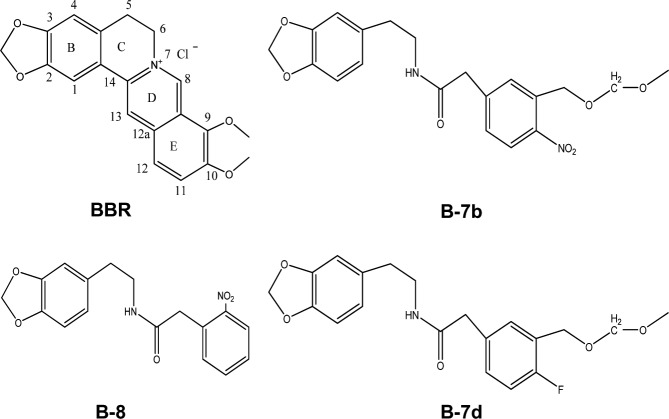
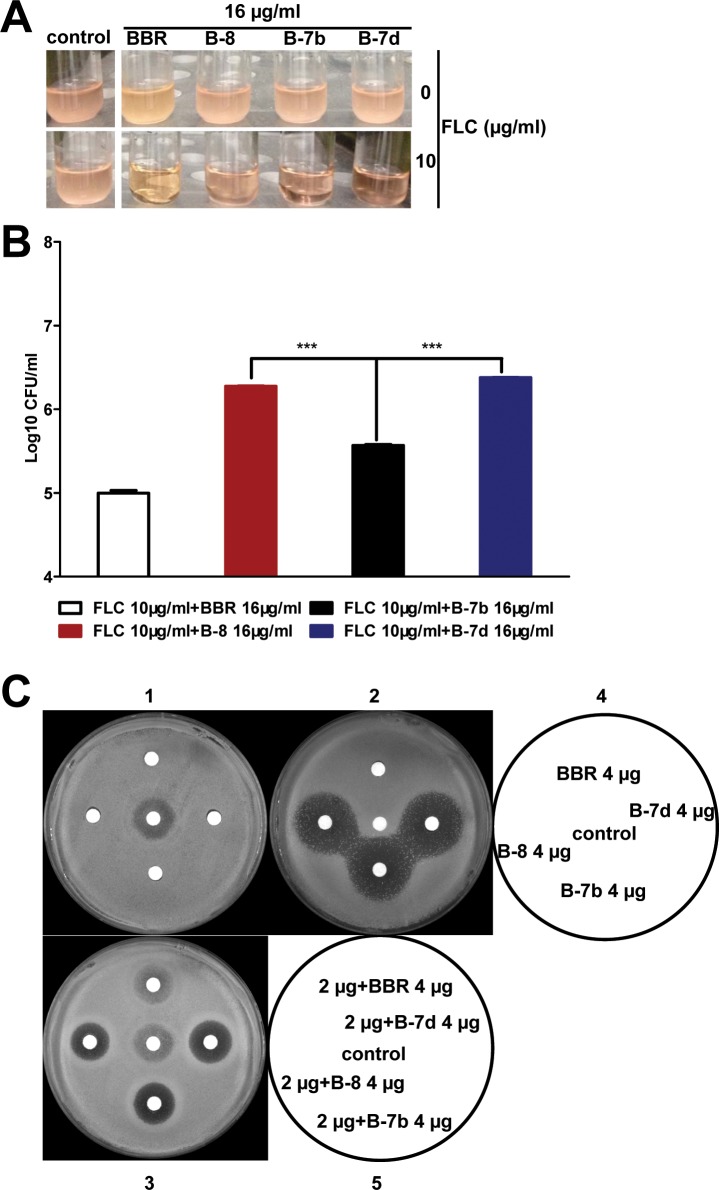
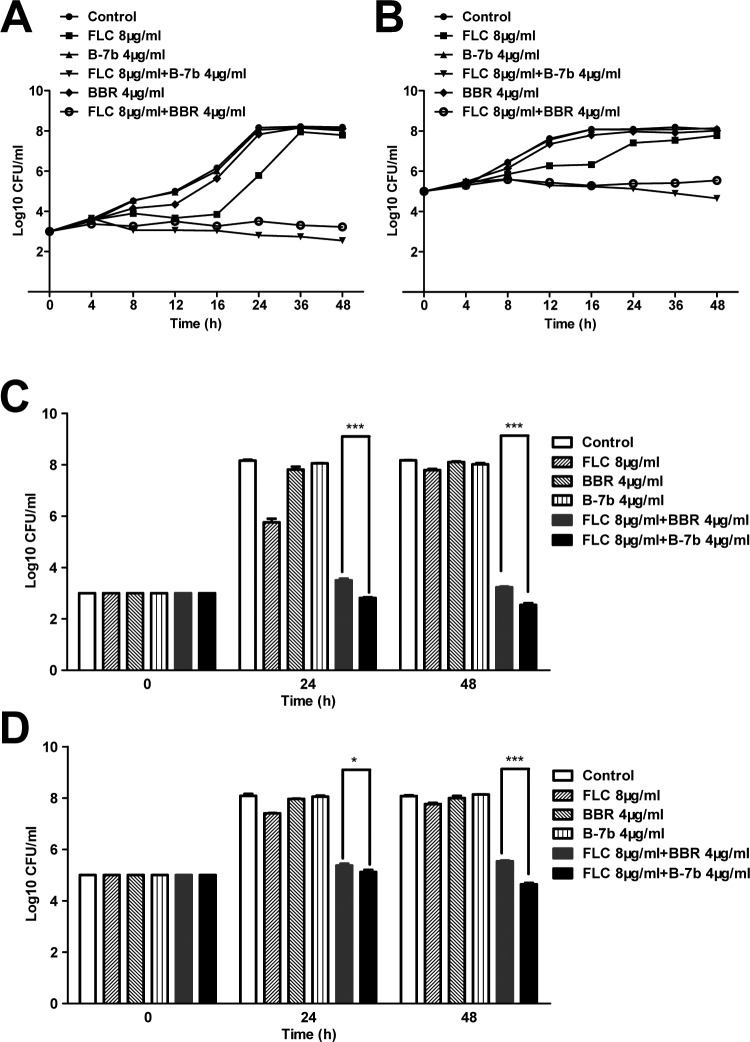
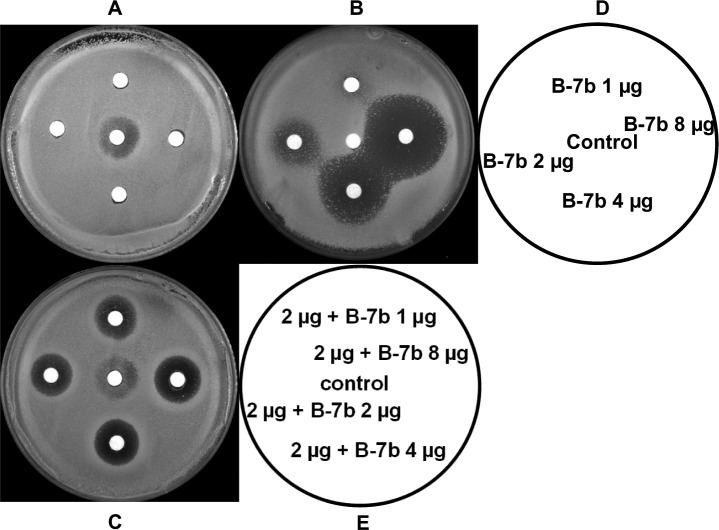
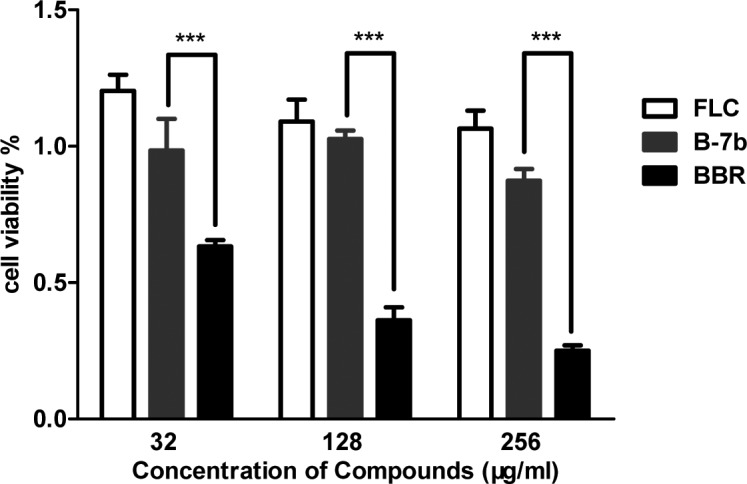
Our previous study demonstrated berberine (BBR) and fluconazole (FLC) used concomitantly exhibited a synergism against FLC-resistant Candida albicans in vitro. We also suggested BBR played a major antifungal role in the synergism of FLC and BBR, while FLC increased intracellular BBR concentrations. Our following systematic structural modification and reconstruction of BBR core identified the novel scaffold of N-(2-(benzo[d][1,3]dioxol-5-yl)ethyl)-2-(substituted phenyl)acet-amide derivatives 7a-i, including B-7b and B-7d exhibiting remarkable synergistic antifungal activity and low cytotoxicity. Here, the study mainly investigated the synergistic activity of FLC and B-7b and the underlying mechanism. In vitro interaction of FLC and B-7b was investigated against 30 FLC-resistant clinical isolates of C. albicans and non-C. albicans species, including Candida tropicalis, Candida parapsilosis, Candida glabrata, Candida krusei and Cryptococcus neoformans. The potent synergistic activity of B-7b in combination with FLC against FLC-resistant C. albicans was found through the checkerboard microdilution assay. The findings of agar diffusion tests and time-kill curves confirmed its better synergism with FLC. And as expected, B-7b exhibited much lower cytotoxicity than BBR to human umbilical vein endothelial cells. In contrast to BBR, we found that endogenous ROS augmentation was not involved in the synergism of FLC and B-7b. According to the results from our present comparative proteomic study, it seemed that the disruption of protein folding and processing and the weakening of cells' self-defensive ability contributed to the synergism of FLC and B-7b. Together, these results suggested novel scaffold BBR derivative B-7b could be a promising synergist in combination with FLC for the treatment of invasive fungal infections.
Overview
The claims and statistics of this paper haven’t been checked yet.
Free: it reads the open-access text and checks the first 5 claims that cite a source we can check. Create a free account to check every claim.
Integrity signals
Registry
Cites
Statistics
Figures
Verification
Claims the paper makes
The claims and statistics of this paper haven’t been checked yet.
Free: it reads the open-access text and checks the first 5 claims that cite a source we can check. Create a free account to check every claim.
Claims other papers make about this one
Each is checked against this paper’s own text: does it say what the citing paper says it does?
The cited source says what the claim attributes to it.
In the citing paper
“Berberine has shown a synergistic antifungal effect with azoles, especially with fluconazole (58).”
From Recent Progress in Research on Mitochondrion-Targeted Antifungal Drugs: a Review (2023) · cites this paper as [58]
Self-check
Percentages, sums and reported differences re-computed from the paper’s own numbers.
The self-check needs the paper’s full text.
Citations
Cites
Systematic and integrative analysis of large gene lists using DAVID bioinformatics resources
Huang, D. W., Sherman, B. T., & Lempicki, R. A. (2009) · Nature Protocols · doi:10.1038/nprot.2008.211 · Cited by 35,890 · cited 1×
“gov/) for functional annotation and KEGG (the Kyoto Encylopedia of Genes and Genomes) pathway analysis [36].”
MethodWisplinghoff, H., Bischoff, T., Tallent, S. M., Seifert, H., Wenzel, R. P., & Edmond, M. B. (2004) · Clinical Infectious Diseases · doi:10.1086/421946 · Cited by 4,496
STRING v9.1: protein-protein interaction networks, with increased coverage and integration
Franceschini, A., Szklarczyk, D., Frankild, S., Kuhn, M., Simonovic, M., Roth, A., Lin, J., Minguez, P., Bork, P., von Mering, C., et al. (2012) · Nucleic Acids Research · doi:10.1093/nar/gks1094 · Cited by 4,398 · cited 1×
“1 (Search Tool for the Retrieval of Interacting Genes) database [38].”
BackgroundKAAS: an automatic genome annotation and pathway reconstruction server
Moriya, Y., Itoh, M., Okuda, S., Yoshizawa, A. C., & Kanehisa, M. (2007) · Nucleic Acids Research · doi:10.1093/nar/gkm321 · Cited by 4,153
Szklarczyk, D., Franceschini, A., Kuhn, M., Simonovic, M., Roth, A., Minguez, P., Doerks, T., Stark, M., Muller, J., Bork, P., et al. (2011) · Nucleic Acids Research · doi:10.1093/nar/gkq973 · Cited by 3,460
STRING: a database of predicted functional associations between proteins
Mering, C. V. (2003) · Nucleic Acids Research · doi:10.1093/nar/gkg034 · Cited by 2,913
Scudiero, D. A., Shoemaker, R. H., Paull, K. D., Monks, A. P., Tierney, S., Nofziger, T. H., Currens, M. J., Seniff, D. A., & Boyd, M. R. (1988) · PubMed · Cited by 2,737
Synergy, antagonism, and what the chequerboard puts between them
Odds, F. C. (2003) · Journal of Antimicrobial Chemotherapy · doi:10.1093/jac/dkg301 · Cited by 2,481 · cited 1×
“5 but 4 was considered indifferent [33].”
Attributable Mortality of Nosocomial Candidemia, Revisited
Gudlaugsson, O., Gillespie, S., Lee, K., Berg, J. V., Hu, J., Messer, S., Herwaldt, L., Pfaller, M., & Diekema, D. (2003) · Clinical Infectious Diseases · doi:10.1086/378745 · Cited by 1,140
Horn, D. L., Neofytos, D., Anaissie, E. J., Fishman, J. A., Steinbach, W. J., Olyaei, A. J., Marr, K. A., Pfaller, M. A., Chang, C., & Webster, K. M. (2009) · Clinical Infectious Diseases · doi:10.1086/599039 · Cited by 956
Trends in the postmortem epidemiology of invasive fungal infections at a University Hospital
Groll, A. H., Shah, P. M., Mentzel, C., Schneider, M., Just-Nuebling, G., & Huebner, K. (1996) · Journal of Infection · doi:10.1016/s0163-4453(96)92700-0 · Cited by 778
Pfaller, M. A., & Diekema, D. J. (2004) · Journal of Clinical Microbiology · doi:10.1128/jcm.42.10.4419-4431.2004 · Cited by 694
Resistance Mechanisms in Clinical Isolates of Candida albicans
White, T. C., Holleman, S., Dy, F., Mirels, L. F., & Stevens, D. A. (2002) · Antimicrobial Agents and Chemotherapy · doi:10.1128/aac.46.6.1704-1713.2002 · Cited by 461 · cited 1×
“Fluconazole (FLC) is most widely used due to its high bioavailability and low toxicity [12,13].”
BackgroundHao, B., Oehlmann, S., Sowa, M. E., Harper, J. W., & Pavletich, N. P. (2007) · Molecular Cell · doi:10.1016/j.molcel.2007.02.022 · Cited by 460 · cited 1×
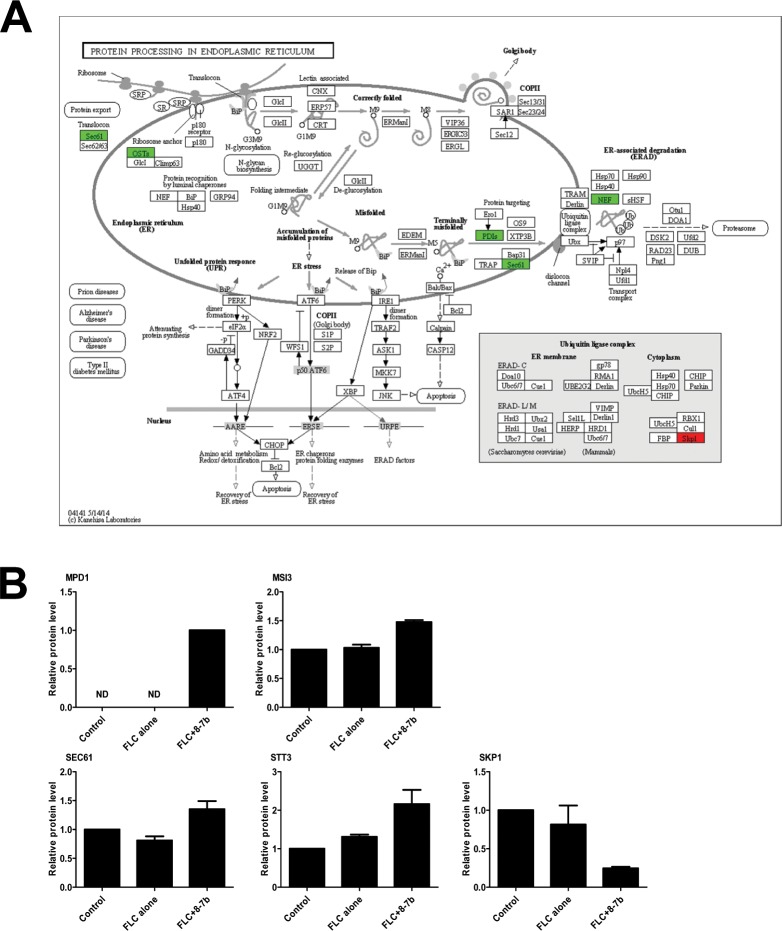
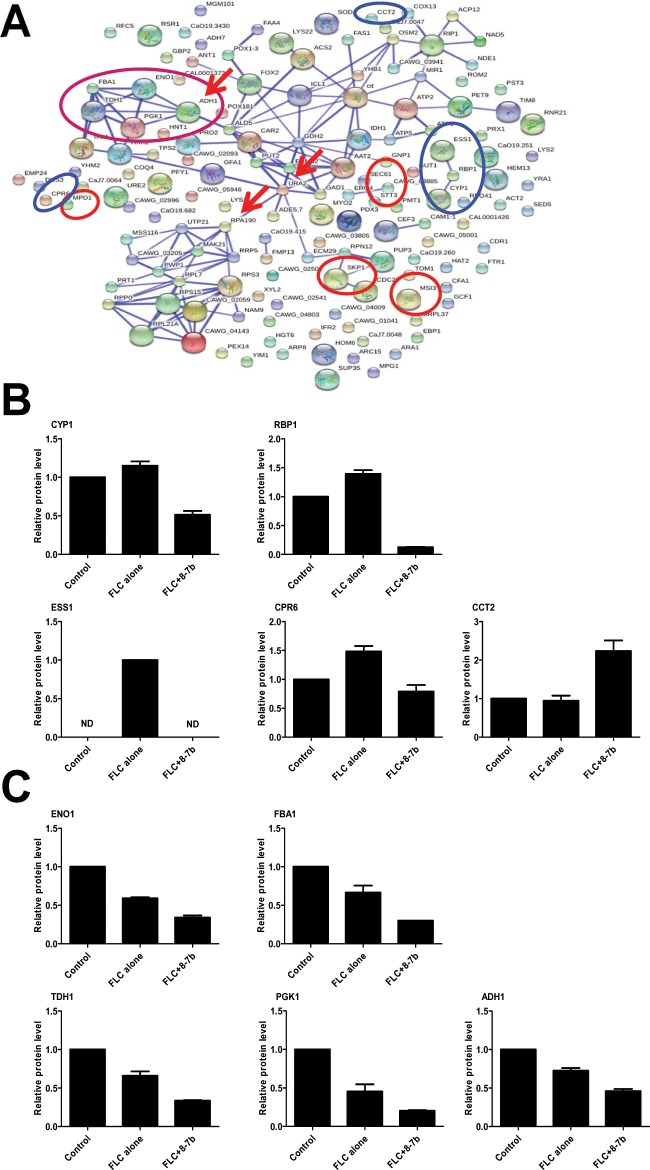
“cerevisiae) [43,44], was significantly down-regulated and had no any interactions with other four proteins as analyzed by STRING (Fig 9A).”
BackgroundMavor, A., Thewes, S., & Hube, B. (2005) · Current Drug Targets · doi:10.2174/138945005774912735 · Cited by 252
Acute toxicity of berberine and its correlation with the blood concentration in mice
Kheir, M. M., Wang, Y., Hua, L., Hu, J., Li, L., Lei, F., & Du, L. (2010) · Food and Chemical Toxicology · doi:10.1016/j.fct.2010.01.033 · Cited by 235
Self-citationUpregulation of ERG Genes in Candida Species by Azoles and Other Sterol Biosynthesis Inhibitors
Henry, K. W., Nickels, J. T., & Edlind, T. D. (2000) · Antimicrobial Agents and Chemotherapy · doi:10.1128/aac.44.10.2693-2700.2000 · Cited by 216 · cited 2×
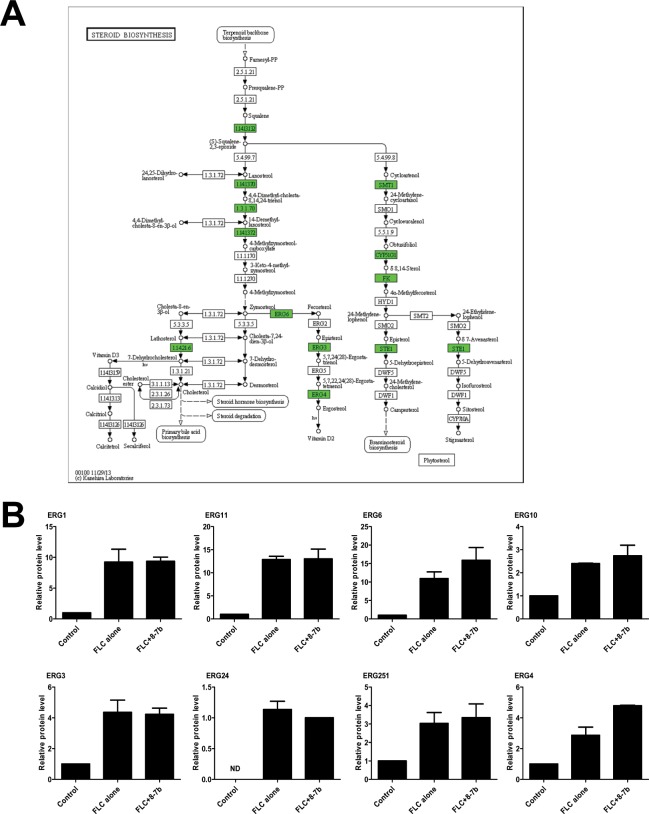
“Consistent with known protein annotation previously [41,42], proteins including Erg1, Erg3, Erg4, Erg6, Erg251, Erg11, and Erg10 involved in ergosterol biosynthesis were all up-regulated in FLC- and FLC+B-7btreated sample compared to Control sample (Fig 7B).”
ResultManagement and outcome of bloodstream infections due to Candida species in England and Wales
Kibbler, C. C., Seaton, S., Barnes, R. A., Gransden, W. R., Holliman, R. E., Johnson, E. M., Perry, J. D., Sullivan, D. J., & Wilson, J. A. (2003) · Journal of Hospital Infection · doi:10.1016/s0195-6701(03)00085-9 · Cited by 187
Cross‐species discovery of syncretic drug combinations that potentiate the antifungal fluconazole
Spitzer, M., Griffiths, E., Blakely, K. M., Wildenhain, J., Ejim, L., Rossi, L., De Pascale, G., Curak, J., Brown, E., Tyers, M., et al. (2011) · Molecular Systems Biology · doi:10.1038/msb.2011.31 · Cited by 183 · cited 1×
“FLC) contribute to the development of new antifungal therapeutics [25,26].”
BackgroundIizuka, N., Miyamoto, K., Okita, K., Tangoku, A., Hayashi, H., Yosino, S., Abe, T., Morioka, T., Hazama, S., & Oka, M. (2000) · Cancer Letters · doi:10.1016/s0304-3835(99)00264-5 · Cited by 170
Liu, S., Hou, Y., Chen, X., Gao, Y., Li, H., & Sun, S. (2014) · International Journal of Antimicrobial Agents · doi:10.1016/j.ijantimicag.2013.12.009 · Cited by 164 · cited 1×
“FLC) contribute to the development of new antifungal therapeutics [25,26].”
BackgroundQuan, H., Cao, Y.-Y., Xu, Z., Zhao, J.-X., Gao, P.-H., Qin, X.-F., & Jiang, Y.-Y. (2006) · Antimicrobial Agents and Chemotherapy · doi:10.1128/aac.50.3.1096-1099.2006 · Cited by 148 · cited 6×
“Synergism and antagonism were defined as a respective increase or decrease of 2 log10 CFU/ml in antifungal activity produced by the combination compared with that by the more active agent alone after 24 h, while a change of<2 log10 CFU/ ml was considered indifferent [27].”
BackgroundMethodResultInfluentialSelf-citationKohli, A., Smriti, N., Mukhopadhyay, K., Rattan, A., & Prasad, R. (2002) · Antimicrobial Agents and Chemotherapy · doi:10.1128/aac.46.4.1046-1052.2002 · Cited by 136 · cited 1×
“Fluconazole (FLC) is most widely used due to its high bioavailability and low toxicity [12,13].”
BackgroundSánchez-Martínez, C., & Pérez‐Martín, J. (2001) · Current Opinion in Microbiology · doi:10.1016/s1369-5274(00)00191-0 · Cited by 132 · cited 3×
“albicans, and identified the novel scaffold of N-(2-(benzo[d][1,3]dioxol-5-yl)ethyl)-2(substituted phenyl) acetamides such as B-8, B-7b and B-7d.”
BackgroundMulu, A., Kassu, A., Anagaw, B., Moges, B., Gelaw, A., Alemayehu, M., Belyhun, Y., Biadglegne, F., Hurissa, Z., Moges, F., et al. (2013) · BMC Infectious Diseases · doi:10.1186/1471-2334-13-82 · Cited by 126 · cited 1×
“albicans infections in the clinic [14,15].”
Trends in the postmortem epidemiology of invasive fungal infections at a university hospital
Lehrnbecher, T., Frank, C., Engels, K., Kriener, S., Groll, A. H., & Schwabe, D. (2010) · Journal of Infection · doi:10.1016/j.jinf.2010.06.018 · Cited by 116
Copping, V. M. S., Barelle, C. J., Hube, B., Gow, N. A. R., Brown, A. J. P., & Odds, F. C. (2005) · Journal of Antimicrobial Chemotherapy · doi:10.1093/jac/dki088 · Cited by 113
Xu, Y., Wang, Y., Yan, L., Liang, R.-M., Dai, B.-D., Tang, R.-J., Gao, P.-H., & Jiang, Y.-Y. (2009) · Journal of Proteome Research · doi:10.1021/pr9005074 · Cited by 113
Self-citationKaneda, Y., Torii, M., Tanaka, T., & Aikawa, M. (1991) · Annals of Tropical Medicine & Parasitology · doi:10.1080/00034983.1991.11812586 · Cited by 109
In vitro synergism between berberine and miconazole against planktonic and biofilm Candida cultures
Wei, G., Xu, X., & Wu, C. D. (2011) · Archives of Oral Biology · doi:10.1016/j.archoralbio.2010.11.021 · Cited by 95
Bertram, G., Swoboda, R. K., Gooday, G. W., Gow, N. A. R., & Brown, A. J. P. (1996) · Yeast · doi:10.1002/(sici)1097-0061(199602)12:2<115::aid-yea889>3.0.co;2-e · Cited by 90 · cited 1×
“Adh1, an immunogenic alcohol dehydrogenase, play a role in adherence and response to the extracellular matrix and stimulus [49,50].”
BackgroundProteomic response to amino acid starvation in Candida albicans and Saccharomyces cerevisiae
Yin, Z., Stead, D., Selway, L., Walker, J., Riba‐Garcia, I., Mclnerney, T., Gaskell, S., Oliver, S. G., Cash, P., & Brown, A. J. P. (2004) · PROTEOMICS · doi:10.1002/pmic.200300760 · Cited by 86
Berberine Synergy with Amphotericin B against Disseminated Candidiasis in Mice
Han, Y., & Lee, J.-H. (2005) · Biological and Pharmaceutical Bulletin · doi:10.1248/bpb.28.541 · Cited by 82
Nano LC–MS/MS: A Robust Setup for Proteomic Analysis
Gaspari, M., & Cuda, G. (2011) · Methods in molecular biology · doi:10.1007/978-1-61779-319-6_9 · Cited by 78 · cited 1×
“The above obtained protein supernatant was applied to an EASY-nano liquid chromatography (LC) system (Proxeon Biosystem) coupled online to an ESI-LTQ-Orbitrap Velos mass spectrometer (Thermo Fisher Scientific) as a previously described method [35].”
MethodFluconazole Assists Berberine To Kill Fluconazole-Resistant Candida albicans
Li, D.-D., Xu, Y., Zhang, D.-Z., Quan, H., Mylonakis, E., Hu, D.-D., Li, M.-B., Zhao, L.-X., Zhu, L.-H., Wang, Y., et al. (2013) · Antimicrobial Agents and Chemotherapy · doi:10.1128/aac.00499-13 · Cited by 78 · cited 1×
“albicans cells, especially in the nucleus, where BBR probably binds to DNA, causing cell cycle arrest and DNA damage, as described in detail previously [28].”
BackgroundSelf-citationHuang, S., Cao, Y. Y., Dai, B. D., Sun, X. R., Zhu, Z. Y., Cao, Y. B., Wang, Y., Gao, P. H., & Jiang, Y. Y. (2008) · Biological & Pharmaceutical Bulletin · doi:10.1248/bpb.31.2234 · Cited by 73 · cited 1×
“albicans such as: increasing reactive oxygen species (ROS) to promote apoptosis [45], and inhibiting drug efflux pumps to increase intracellular drug concentration [46,47].”
BackgroundSelf-citationIn vitro antifungal activity of the berberine and its synergism with fluconazole
Iwazaki, R. S., Endo, E. H., Ueda‐Nakamura, T., Nakamura, C. V., Garcia, L. B., & Filho, B. P. D. (2009) · Antonie van Leeuwenhoek · doi:10.1007/s10482-009-9394-8 · Cited by 73
Fungal infections in ICU patients: epidemiology and the role of diagnostics.
Morace, G., & Borghi, E. (2010) · PubMed · Cited by 72
Zirkel, J., Klinker, H., Kuhn, A., Abele-Horn, M., Tappe, D., Turnwald, D., Einsele, H., & Heinz, W. J. (2012) · Medical Mycology · doi:10.3109/13693786.2011.587211 · Cited by 70
Evaluation of species distribution and risk factors of candidemia: A multicenter case-control study
Yapar, N., Pullukcu, H., Avkan-Oguz, V., Sayin-Kutlu, S., Ertugrul, B., Sacar, S., Cetin, B., & Kaya, O. (2011) · Medical Mycology · doi:10.3109/13693786.2010.501344 · Cited by 69
Update on the epidemiology and management of cryptococcal meningitis
Desalermos, A. P., Kourkoumpetis, T. K., & Mylonakis, E. E. (2012) · Expert Opinion on Pharmacotherapy · doi:10.1517/14656566.2012.658773 · Cited by 65
Antibodies to α5β1 and αvβ3 integrins react with Candida albicans alcohol dehydrogenase
Klotz, S. A., Pendrak, M. L., & Hein, R. C. (2001) · Microbiology · doi:10.1099/00221287-147-11-3159 · Cited by 56
Structural modification of berberine alkaloids in relation to cytotoxic activity in vitro
Orfila, L., Rodrı́guez, M., Colman, T., Hasegawa, M., Merentes, E., & Arvelo, F. A. (2000) · Journal of Ethnopharmacology · doi:10.1016/s0378-8741(00)00177-x · Cited by 54 · cited 2×
“It is necessary to assess the toxicity of B-7b because of the high toxicity of BBR itself [30, 31].”
BackgroundWittekind, M. G., Kolb, J. M., Dodd, J. A., Yamagishi, M., Mémet, S., Buhler, J., & Nomura, M. (1990) · Molecular and Cellular Biology · doi:10.1128/mcb.10.5.2049 · Cited by 46
The Ess1 Prolyl Isomerase Is Required for Growth and Morphogenetic Switching in Candida albicans
Devasahayam, G., Chaturvedi, V., & Hanes, S. D. (2002) · Genetics · doi:10.1093/genetics/160.1.37 · Cited by 46
Inhibition of In-vitro Lymphocyte Transformation by the Isoquinoline Alkaloid Berberine
Ckless, K., Schlottfeldt, J. L., Pasqual, M., Moyna, P., Henriques, J. A. P., & Wajner, M. (1995) · Journal of Pharmacy and Pharmacology · doi:10.1111/j.2042-7158.1995.tb03291.x · Cited by 45
Combination of Baicalein and Amphotericin B Accelerates Candida albicans Apoptosis
Fu, Z., Lu, H., Zhu, Z., Yan, L., Jiang, Y., & Cao, Y. (2011) · Biological and Pharmaceutical Bulletin · doi:10.1248/bpb.34.214 · Cited by 45 · cited 1×
“albicans such as: increasing reactive oxygen species (ROS) to promote apoptosis [45], and inhibiting drug efflux pumps to increase intracellular drug concentration [46,47].”
BackgroundSelf-citationBerberine inhibition of electrogenic ion transport in rat colon
Taylor, C. T., & Baird, A. W. (1995) · British Journal of Pharmacology · doi:10.1111/j.1476-5381.1995.tb17224.x · Cited by 43
Sánchez‐Chapula, J. (1996) · British Journal of Pharmacology · doi:10.1111/j.1476-5381.1996.tb15302.x · Cited by 41
Synergistic mechanisms of retigeric acid B and azoles against Candida albicans
Sun, L., Cheng, A., Wu, X. Z., Zhang, H. J., & Lou, H. (2009) · Journal of Applied Microbiology · doi:10.1111/j.1365-2672.2009.04429.x · Cited by 32 · cited 1×
“albicans such as: increasing reactive oxygen species (ROS) to promote apoptosis [45], and inhibiting drug efflux pumps to increase intracellular drug concentration [46,47].”
BackgroundLiu, H., Wang, L., Li, Y., Liu, J., An, M., Zhu, S.-L., Cao, Y., Jiang, Z., Zhao, M.-Z., Cai, Z. J., et al. (2013) · ChemMedChem · doi:10.1002/cmdc.201300332 · Cited by 25 · cited 2×
“As described in detail previously [32], we carried out a series of systematic structural modification and reconstruction of BBR core, aiming to seeking novel synergistic agents with lower cytotoxicity to improve the effectiveness of FLC against FLC-resistant C.”
BackgroundMethodSelf-citation(2000) · PubMed · Cited by 25
Carlsson, M. J. L., Gustavsson, M., Hu, G., Murén, E., & Ronne, H. (2013) · PLoS ONE · doi:10.1371/journal.pone.0052094 · Cited by 15 · cited 1×
“cerevisiae, Ura2 is bifunctional carbamoylphosphate synthetase/aspartate transcarbamylase and catalyzes the first two enzymatic steps in the de novo biosynthesis of pyrimidines [51,52], while it is not verified by direct assays and still uncharacterized in C.”
BackgroundVoříšek, J., Techniková, Z., Schwippel, J., & Benoist, P. (2002) · Yeast · doi:10.1002/yea.845 · Cited by 5 · cited 1×
“cerevisiae, Ura2 is bifunctional carbamoylphosphate synthetase/aspartate transcarbamylase and catalyzes the first two enzymatic steps in the de novo biosynthesis of pyrimidines [51,52], while it is not verified by direct assays and still uncharacterized in C.”
Background
Research works printed but not linked: 1
- Berberine. Alternative medicine review: a journal of clinical therapeutic. 2000; 5(2): 175– 7. PubMed. 10767672
Cited by
Techniques for the Assessment of In Vitro and In Vivo Antifungal Combinations
Bidaud, A.-L., Schwarz, P., Herbreteau, G., & Dannaoui, É. (2021) · Journal of Fungi · doi:10.3390/jof7020113 · Cited by 114
Ferreira, G. R. S., Brito, J. D. S., Procópio, T. F., Santos, N. D. D. L., de Lima, B. J. R. C., Coelho, L. C. B. B., Navarro, D. M. D. A. F., Paiva, P. M. G., Soares, T., de Moura, M. C., et al. (2018) · Microbial Pathogenesis · doi:10.1016/j.micpath.2018.08.027 · Cited by 65
Augmenting Azoles with Drug Synergy to Expand the Antifungal Toolbox
Kane, A., & Carter, D. A. (2022) · Pharmaceuticals · doi:10.3390/ph15040482 · Cited by 59
Recent Progress in Research on Mitochondrion-Targeted Antifungal Drugs: a Review
Qin, Y., Wang, J., Lv, Q., & Han, B. (2023) · Antimicrobial Agents and Chemotherapy · doi:10.1128/aac.00003-23 · Cited by 38
“Berberine has shown a synergistic antifungal effect with azoles, especially with fluconazole (58).”
BackgroundLi, L., Zhang, T., Xu, J., Wu, J., Wang, Y., Qiu, X.-R., Zhang, Y., Hou, W.-T., Yan, L., An, M., et al. (2019) · Frontiers in Microbiology · doi:10.3389/fmicb.2019.02071 · Cited by 36
Self-citation
Metadata
- Authors
- Li, L. P., Liu, W., Liu, H., Zhu, F., Zhang, D. Z., Shen, H., Xu, Z., Qi, Y. P., Zhang, S. Q., Chen, S. M., He, L. J., Cao, X. J., Huang, X., Zhang, J. D., Yan, L., An, M. M., & Jiang, Y. Y.
- Affiliations
- Tongji University (CN)
- Second Military Medical University (CN)
- Corresponding author
- Yan, Lan
- An, Mao Mao
- Jiang, Yuan Ying
- ORCID
- Venue
- PLOS ONE
- Publisher
- Public Library of Science (PLoS)
- Published
- 2015-05-19
- Volume
- 10
- Issue
- 5
- Pages
- e0126393
- ISSN
- 1932-6203 (ISSN-L)
- PMC
- PMC4438075
- OpenAlex
- W305477801
- Cited by
- 17
- References
- 55
- Citations by year
- 2026: 1 · 2024: 1 · 2023: 2 · 2022: 1 · 2021: 2 · 2020: 2 · 2019: 1 · 2018: 1 · 2017: 2 · 2016: 3 · 2015: 1
- FWCI
- 1.82
- Type
- journal article
- Language
- en
- Open access
- gold
- doi.org
- Licence
- Locations
- PLoS ONE (publishedVersion, cc-by)
- Europe PMC (PubMed Central) (publishedVersion, cc-by)
- PubMed Central (publishedVersion, cc-by)
- PubMed (publishedVersion)
- DOAJ (DOAJ: Directory of Open Access Journals) (submittedVersion)
- Figshare (submittedVersion, cc-by)
- Funders
- National Natural Science Foundation of China (81202563, 81330083, 81471924)
- Anhui University
- National Science and Technology Major Project
- Topics
- Health Sciences › Medicine › Infectious Diseases › Antifungal resistance and susceptibility
- Health Sciences › Medicine › Pharmacology (medical) › Berberine and alkaloids research
- Life Sciences › Agricultural and Biological Sciences › Plant Science › Fungal Plant Pathogen Control
- Keywords
- berberine derivatives, fluconazole, antifungal synergy, fluconazole resistance, Candida albicans, Candida tropicalis, Candida parapsilosis, Candida glabrata, Candida krusei, Cryptococcus neoformans, invasive fungal infections, cytotoxicity, reactive oxygen species
- MeSH terms
- Antifungal Agents, Berberine, Candida, Cryptococcus neoformans, Drug Synergism, Microbial Sensitivity Tests, Fluconazole, Drug Resistance, Fungal
About these checks
Registry, retraction, Cites and statistics results are computed, not judged, with one exception: a printed reference that no index lists is read once by a model before it counts as a citation error. Claims are extracted by a model and kept only when their quote appears verbatim in the text; each cited source is then checked, with a model’s help, for whether it says what the claim relies on. Those verdicts can be wrong — read the claim’s quote and the cited source before relying on one.
Statistics and arithmetic are recomputed, not judged.
Confidence bands are shown only for fields calibrated on our annotated test set. None is calibrated yet, so no band is shown.
What counts as a claim ›How we measure confidence ›How we check this ›
Are you an author, or do you see a problem with this page? Request a review
Data sources
Bibliographic data: Semantic Scholar, OpenAlex, Crossref.
Contains information from the Semantic Scholar Academic Graph Datasets, made available under the ODC Attribution License (ODC-BY 1.0).
Semantic Scholar’s data is described in: Kinney, R., et al. (2023). The Semantic Scholar Open Data Platform. arXiv:2301.10140.
