

The DOI matches its Crossref record; 36 of the 66 references it cites were found in a registry or an index.
The Oligopoly of Academic Publishers in the Digital Era
Open accessAbstract
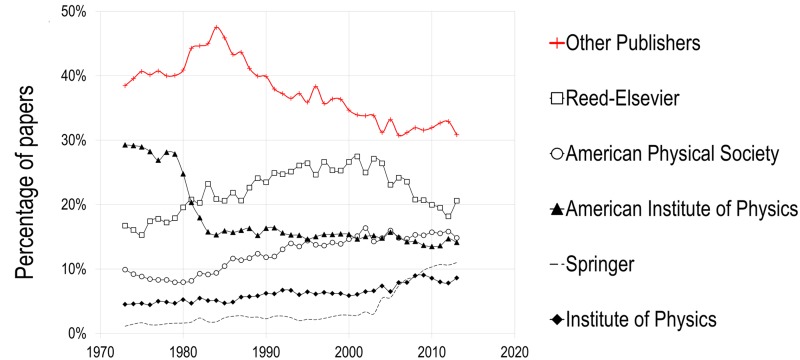
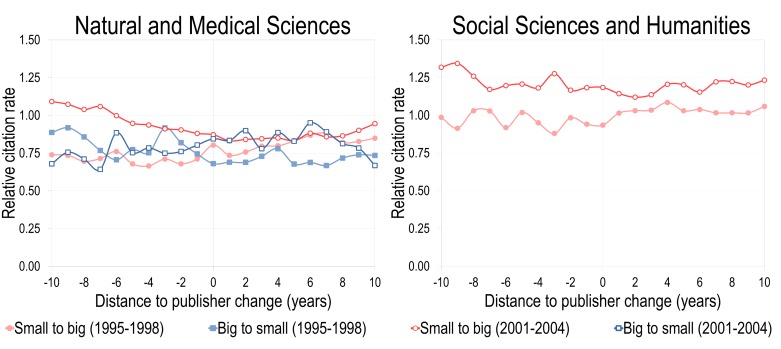
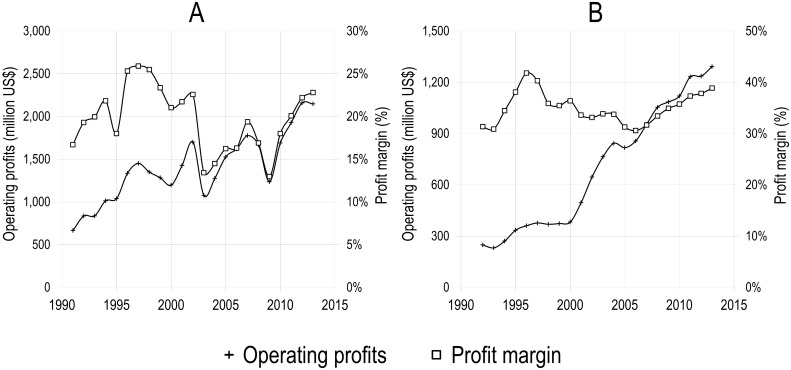
The consolidation of the scientific publishing industry has been the topic of much debate within and outside the scientific community, especially in relation to major publishers' high profit margins. However, the share of scientific output published in the journals of these major publishers, as well as its evolution over time and across various disciplines, has not yet been analyzed. This paper provides such analysis, based on 45 million documents indexed in the Web of Science over the period 1973-2013. It shows that in both natural and medical sciences (NMS) and social sciences and humanities (SSH), Reed-Elsevier, Wiley-Blackwell, Springer, and Taylor & Francis increased their share of the published output, especially since the advent of the digital era (mid-1990s). Combined, the top five most prolific publishers account for more than 50% of all papers published in 2013. Disciplines of the social sciences have the highest level of concentration (70% of papers from the top five publishers), while the humanities have remained relatively independent (20% from top five publishers). NMS disciplines are in between, mainly because of the strength of their scientific societies, such as the ACS in chemistry or APS in physics. The paper also examines the migration of journals between small and big publishing houses and explores the effect of publisher change on citation impact. It concludes with a discussion on the economics of scholarly publishing.
Overview
The claims and statistics of this paper haven’t been checked yet.
Run the check — free, no account needed. It reads the open-access text and checks the sources it cites.
Integrity signals
Registry
Cites
Statistics
Figures
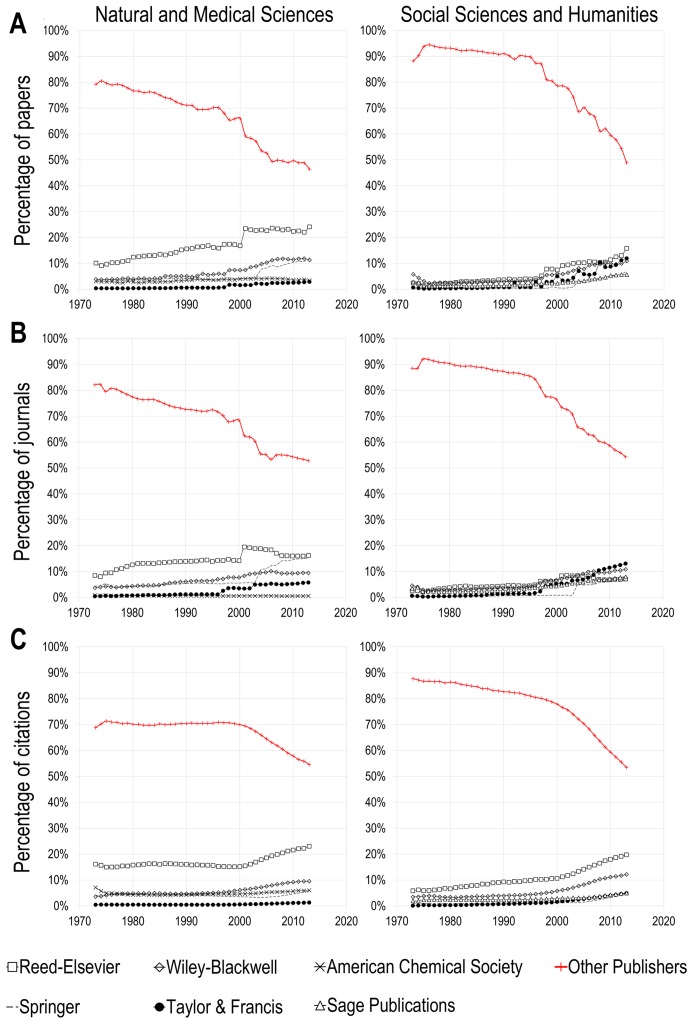
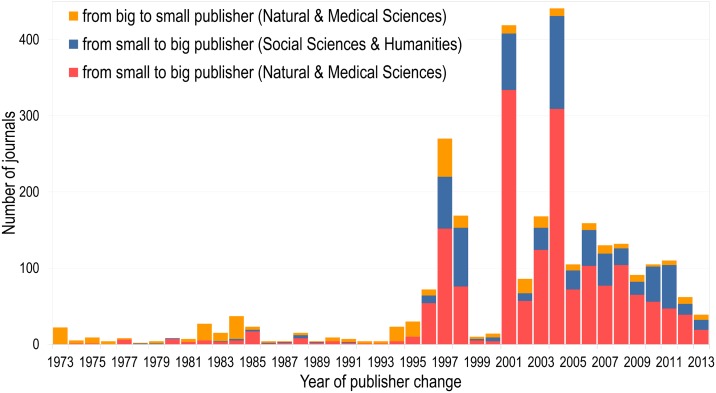
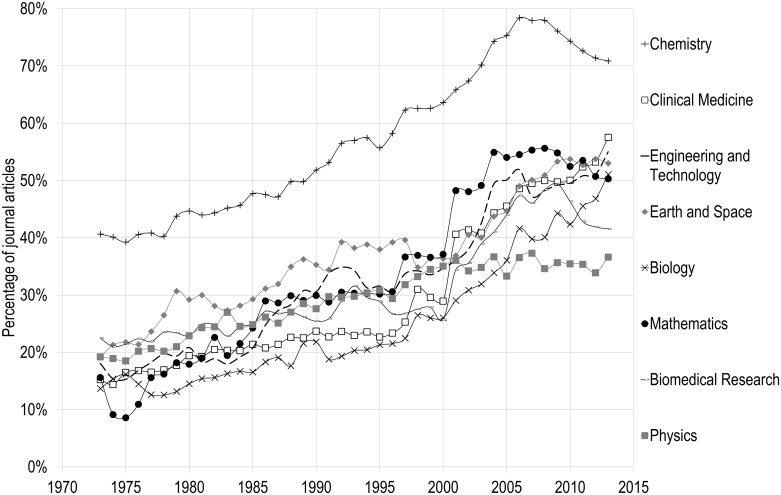
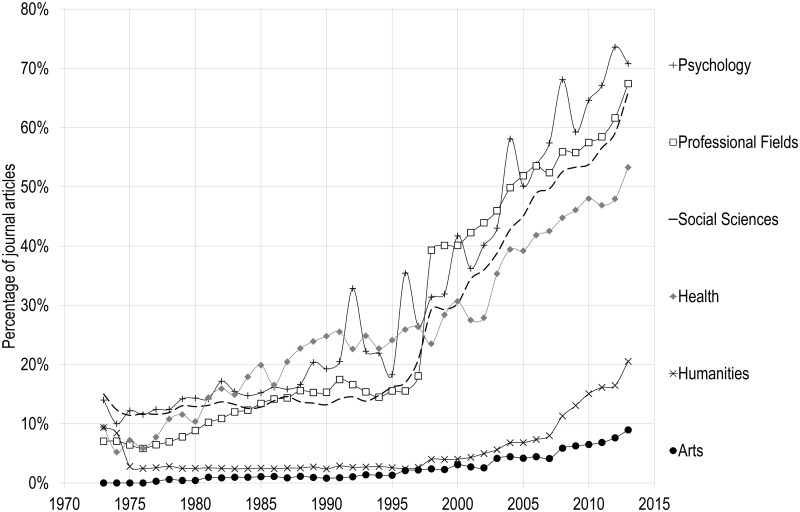
Verification
Claims the paper makes
The claims and statistics of this paper haven’t been checked yet.
Run the check — free, no account needed. It reads the open-access text and checks the sources it cites.
Claims other papers make about this one
Each is checked against this paper’s own text: does it say what the citing paper says it does?
The cited source says what the claim attributes to it.
In the citing paper
“Global influence and market dominance show that these publishers represent a significant proportion of global scholarly output (Larivière et al., 2015).”
From Use of artificial intelligence tools in the publishing process: expectations from publishers through author guidelines (2026) · cites this paper as Larivière et al., 2015
Self-check
Percentages, sums and reported differences re-computed from the paper’s own numbers.
The self-check needs the paper’s full text.
Citations
Cites
Information rules - a strategic guide to the network economy
Shapiro, C., & Varian, H. (1999) · The Journal of Economic Education · doi:10.2307/1183273 · Cited by 5,225 · cited 1×
“Scholarly publications themselves can be considered information goods with high fixed and low variable costs [35,36].”
BackgroundStirling, D. (2003) · SGMD · doi:10.1145/776985.776997 · Cited by 1,563
Zuckerman, H., & Merton, R. (1971) · Minerva · doi:10.1007/bf01553188 · Cited by 789
Scholarship in the Digital Age: Information, Infrastructure, and the Internet
Borgman, C. L. (2007) · doi:10.7551/mitpress/7434.001.0001 · Cited by 512
Archambault, É., Vignola-Gagné, É., Côté, G., Larivière, V., & Gingrasb, Y. (2006) · Scientometrics · doi:10.1007/s11192-006-0115-z · Cited by 507 · cited 1×
“Moreover, these disciplines make a much more important use of books [9] and generally rely on local journals [29], all of which are factors that make it much less interesting for big publishers to buy journals or found new ones in the arts and humanities.”
BackgroundSelf-citationWhat you didn't know that you needed to know.
Holtermann, M. K. (2017) · Tidsskrift for Den Norske Laegeforening · doi:10.4045/tidsskr.17.0540 · Cited by 492 · cited 2×
“4 billion US dollars in 2011 [31], the majority of which were generated by a few publishing houses, the scientific journal publishing market faces oligopolistic conditions, where big players such as Elsevier, Springer, Taylor & Francis, Wiley-Blackwell and Wolters Kluwer determine annually increasing subscription rate…”
BackgroundTragic Loss or Good Riddance? The Impending Demise of Traditional Scholary Journals
Odlyzko, A. (1996) · Journal of universal computer science (Online) · doi:10.3217/jucs-000-00-0003 · Cited by 303 · cited 1×
“Indeed, many authors have discussed the various transformations of the scholarly communication landscape brought by the digital era (see, among others, Borgman [14–15]; Kling and Callahan [16]; Tenopir & King [17]; Odlyzko [18]).”
BackgroundLarivière, V., Archambault, É., Gingras, Y., & Vignola-Gagné, É. (2006) · J. Assoc. Inf. Sci. Technol. · doi:10.1002/asi.20349 · Cited by 294 · cited 2×
“During the 20 century they consolidated their position as the main media for diffusing research [6], especially in the natural and medical sciences [9].”
BackgroundSelf-citationCalvert, P. (2001) · doi:10.1108/oir.2001.25.3.214.2 · Cited by 215
Larivière, V., Archambault, É., & Gingras, Y. (2008) · J. Assoc. Inf. Sci. Technol. · doi:10.1002/asi.20744 · Cited by 188 · cited 1×
“Also, the transition from print to electronic—a strong argument for journals to convert to commercial publishers—has happened at a much slower pace in those disciplines as the use for recent scientific information is less pressing [28].”
BackgroundSelf-citation
Research works printed but not linked: 3
- AJ Meadows, 1979, The Scientific Journal
- BI Mierzejewska, 2008, Doctoral dissertation, University of St. Gallen, Graduate School of Business Administration, Economics, Law and Social Sciences
- M Ware, 2012, An overview of scientific and scholarly journal publishing
Cited by
Sorted by citations
Items 401–500 of 897
Simmonds, R. (2019) · Lab animal · doi:10.1038/s41684-019-0241-x · Cited by 5
Information Has Value: Teaching with the ACRL Framework in a STEM Setting
Bohémier, K. (2018) · Science & technology libraries (New York, N.Y.) · doi:10.1080/0194262x.2018.1531805 · Cited by 5
“There have also been corporate mergers (Larivière, Haustein, and Mongeon 2015).”
BackgroundMethodThe “space of physics journals”: topological structure and the Journal Impact Factor
Katchanov, Y. L., & Markova, Y. V. (2017) · Scientometrics · doi:10.1007/s11192-017-2471-2 · Cited by 6
“The SPJ can be treated, amongst other things, as a projection of competitive relations within the triad ‘‘transnational publishers—professional physics societies—regional publishers’’ (cf. Larivière et al. 2015; Greshake 2017): • In cluster 1 professional physics societies are dominant.”
BackgroundOpenness of Spanish scholarly journals as measured by access and rights
Melero, R., Laakso, M., & Navas-Fernández, M. (2017) · Learned Publishing · doi:10.1002/leap.1095 · Cited by 5
Costos de publicación en acceso abierto bajo el modelo APC: Argentina y Colombia
Soto-Herrera, D. A., Beigel, F., & Pallares, C. (2025) · Revista Interamericana de Bibliotecología · doi:10.17533/udea.rib.v48n1e357790 · Cited by 5
“…están asociadas de forma continua a un debate mundial sobre la concentración de la oferta de productos académicos en un reducido número de editoriales, fenómeno denomina-do desde los modelos económicos y de la sociología de la ciencia oligopolios dominantes (Berger, 2021; Larivière et al., 2015).”
Terlizzi, M. S., Zukerfeld, M., & Beigel, F. (2025) · Anais da Academia Brasileira de Ciências · doi:10.1590/0001-3765202520241184 · Cited by 5
A Multimodal Move Analysis of Graphical Abstracts in Medicine and Chemistry
Florek, C. S., & Hendges, G. R. (2023) · ESP Today · doi:10.18485/esptoday.2023.11.2.3 · Cited by 5
“Putting It Together, That’s What Counts”: Data Foam, a Snowball and Researcher Evaluation
Andrews, P. C. S. (2017) · Springer eBooks · doi:10.1007/978-3-319-58232-0_9 · Cited by 6
Journal Peer Review and Editorial Evaluation: Cautious Innovator or Sleepy Giant?
Horbach, S., & Halffman, W. (2019) · Minerva · doi:10.1007/s11024-019-09388-z · Cited by 4
Changing the Landscape of Archaeological Publishing
Beck, J., Flad, R. K., Alex, B., Caramanica, A., Costopoulos, A., Kawa, N. C., Marwick, B., Warinner, C., Bardolph, D. N., Borck, L., et al. (2026) · Current Anthropology · doi:10.1086/739789 · Cited by 4
“For example, the aggregation of for-pro fi t publishing houses into monopolies (Larivière, Haustein, and Mongeon 2015) and the related serials crisis as journal subscriptions became bundled and exorbitantly expensive had their genesis in the 1990s and early 2000s (McGuigan 2004).”
REGIONAL AND LOCAL JOURNALS IN THE ACADEMIC ECOSYSTEM
Koçyiğit, B. F., Aukenov, N., Yessirkepov, M., & Nurmashev, B. (2025) · Central Asian Journal of Medical Hypotheses and Ethics · doi:10.47316/cajmhe.2025.6.4.01 · Cited by 4
Farrow, R. (2025) · BMC Research Notes · doi:10.1186/s13104-025-07608-2 · Cited by 3
“Academic publishers continue to aggressively defend their market dominance while open alternatives continue to perpetuate [22, 23].”
Why I declare a conflict of interest and you should not
Acem, E., Aczél, B., Albayrak‐Aydemir, N., Brown, N. J. L., Dudda, L. A., Elsherif, M. M., Gjoneska, B., Kowal, M., Krishna, A., Miłkoś, S., et al. (2025) · Theory and Society · doi:10.1007/s11186-025-09641-3 · Cited by 5
“Doctoral candidates, for example, may be required by institutional policies to produce a minimum number of publications before being permitted to defend their dissertations (Larivière et al., 2015).”
Gutenberg 2.0 − Academic publishing in the digital world
Maier, G. (2025) · World Development · doi:10.1016/j.worlddev.2025.107146 · Cited by 4
Beyond Quality: Predicting Citation Impact in Business Research Using Data Science
Pérez-Campdesuñer, R., Sánchez-Rodríguez, A., Martínez-Vivar, R., Miguel-Guzmán, M. D., & García-Vidal, G. (2025) · Publications · doi:10.3390/publications13030042 · Cited by 4
“Similarly, Larivi è re et al. (2015) analyzed data from the Web of Science and found an average growth rate of approximately 3–4% per year in indexed publications between 1980 and 2012.”
Sasvári, P., & Lendvai, G. (2025) · J. Informetrics · doi:10.1016/j.joi.2025.101680 · Cited by 4
Retractions of COVID-19-Related Research Publications During and After the Pandemic
Mattoon, E. R., Casadevall, A., & Fang, F. C. (2025) · The Journal of Law Medicine & Ethics · doi:10.1017/jme.2025.33 · Cited by 4
“10 Open access and the consolidation of for-profit publishers 11 carry incentives for journals to publish as many articles as possible.”
Wang, J. (2025) · Current Medical Research and Opinion · doi:10.1080/03007995.2025.2488949 · Cited by 3
The Changing Landscape of Scholarly Publishing and Urban Planning
Forsyth, A. (2025) · Journal of Planning Literature · doi:10.1177/08854122251330207 · Cited by 2
“Since the mid-1990s, the largest commercial publishers have bought smaller commercial publishers and taken over association journals, particularly in the social sciences (Larivière, Haustein, and Mongeon 2015; Sharp et al. 2023).”
InfluentialThe Journal Attention Cycle: Indicators as Assets in the Chinese Scientific Publishing Economy
Wang, J., Halffman, W., & Horbach, S. P. J. M. (2025) · Science Technology & Human Values · doi:10.1177/01622439251322530 · Cited by 5
“At the largest global publishers (Larivière, Haustein and Mongeon 2015), the editorial process itself is subject to business logics, with long procedural chains, highly specialized division of labor, and standardized practices (Horbach and Halffman 2020).”
Analisis Bibliometrik Perkembangan Riset Digital Humanities
Judijanto, L., Rohmah, S., & Salfin, S. (2024) · Sanskara Ilmu Sosial dan Humaniora · doi:10.58812/sish.v2i01.501 · Cited by 4
Demystifying multilingual LIS journals in Scopus: Languages, coverage, metrics, and implications
Kim, E. (2024) · Journal of Library and Information Sciences · doi:10.1177/09610006241285510 · Cited by 4
“This pattern of publishers is supported by previous studies (Kim and Atteraya, 2023; Kim and Jeong, 2023; Larivière et al., 2015).”
Citations in Chemistry at the Dawn of Open Science
Ciriminna, R., Angellotti, G., Luque, R., & Pagliaro, M. (2023) · ACS Omega · doi:10.1021/acsomega.3c07037 · Cited by 5
Krapež, K. (2023) · Learned Publishing · doi:10.1002/leap.1575 · Cited by 4
“This rise in dominance can be attributed primarily to two factors: a trend of a greater concentration of companies in the journal publishing market (Larivière et al., 2015), and the widespread digitization of academic works (Borghi & Karapapa, 2013), followed by the emergence of e-services based on…”
BackgroundHerausgeberschaft und Verantwortung: Über die Un-/Abhängigkeit wissenschaftlicher Fachzeitschriften
Knöchelmann, M. (2023) · BIBLIOTHEK Forschung und Praxis · doi:10.1515/bfp-2022-0090 · Cited by 5
The Economics of Scientific Publishing
Zarif, A. (2023) · The Yale Journal of Biology and Medicine · doi:10.59249/omsp9618 · Cited by 4
“creation of new journals as necessary to meet (or indeed, create) academic demand which underlies the expansion in scientific output [2,3].”
BackgroundTaubert, N., Hobert, A., Jahn, N., Bruns, A., & Iravani, E. (2023) · Scientometrics · doi:10.1007/s11192-023-04716-3 · Cited by 6
Gamifying piracy: functions and users of the Z-library
Kjellström, Z. (2022) · J. Documentation · doi:10.1108/jd-09-2021-0174 · Cited by 4
Noel, M. (2022) · Frontiers in Research Metrics and Analytics · doi:10.3389/frma.2022.747846 · Cited by 4
Toma, C., Padureanu, L., & Toma, B. (2022) · bioRxiv (Cold Spring Harbor Laboratory) · doi:10.1101/2022.01.23.477400
“These changes occur in an atypical market where publishers have high profit margins [4], do not pay for purchased goods (authors are not paid), do not pay for quality control (peer review), and have a monopoly on the content of published articles (Ingelfinger law) [5].”
BackgroundA study of interdisciplinary accounting research: analysing the diversity of cited references
Xu, L.-N., Dellaportas, S., & Wang, J. (2021) · Accounting and Finance · doi:10.1111/acfi.12856 · Cited by 4
Unsub Extender: A Python-based web application for visualizing Unsub data
Schares, E. (2021) · Quantitative Science Studies · doi:10.1162/qss_a_00200 · Cited by 4
“Larivière et al. (2015) report that over 50% of all journal articles published in 2013 and indexed by the Web of Science database were published by only five companies: Elsevier, Wiley, Springer Nature, Taylor & Francis, and SAGE.”
BackgroundMethodInfluentialCiro, J. B. (2021) · Journal of Library and Information Sciences · doi:10.1177/09610006211016533 · Cited by 4
“In its earliest days, research dissemination was carried out through personal correspondence (Larivière et al., 2015).”
BackgroundInfluentialToll-based access vs pirate access: a webometric study of academic publishers
Amin, R., Ayoub, A., Amin, S., & Wani, Z. A. (2021) · Digital Library Perspectives · doi:10.1108/dlp-12-2020-0127 · Cited by 4
Asai, S. (2021) · Scientometrics · doi:10.1007/s11192-021-03949-4 · Cited by 4
“Larivière et al. (2015) have asserted that the growth of large publishers’ is attributable to the launch of new journals, and to their acquisitions of small and medium-sized publishers.”
BackgroundOn the Im/possibilities of Anti-racist and Decolonial Publishing as Pedagogical Praxis
Verhaeghe, Przybylo, & Patel (2018) · Feminist Teacher · doi:10.5406/femteacher.28.2-3.0079 · Cited by 4
Open Access and Academic Journals in Canada: A Political Science Perspective
Papillon, M., O’Neill, B., Bourque, M., Marland, A., & White, G. (2019) · Canadian Journal of Political Science/Revue canadienne de science politique · doi:10.1017/s0008423919000799 · Cited by 4
“The large profit margins that the top five commercial publishers make on their so-called big deal subscriptions, under which they bundle their journals and sell them as a package to university libraries, are often blamed for this inflationary pace (Larivière et al., 2015; Anderson, 2017).”
Las vías abiertas de América Latina
Fushimi, M., & López, F. A. (2019) · Palabra Clave [La Plata] · doi:10.24215/18539912e076 · Cited by 4
The NIH public access policy did not harm biomedical journals
Peterson, A., Johnson, P., Barve, N., Emmett, A., Greenberg, M., Bolick, J., & Qiao, H. (2019) · PLoS Biology · doi:10.1371/journal.pbio.3000352 · Cited by 4
“, publishers)—they have focused on the (nonexistent) decreased viability of the publishing enterprise [12,16] or imagined decreased quality of peer review [17].”
BackgroundMarginalisation of ‘global South’ epistemics: the case of a soil science textbook
Milaras, M., & McKay, T. (2019) · Scholarship of Teaching and Learning in the South · doi:10.36615/sotls.v3i2.93 · Cited by 4
Una geopolítica del acceso abierto: información, software y lectura
Rodriguez-Medina, L. (2019) · Estudios Sociológicos de El Colegio de México · doi:10.24201/es.2019v37n111.1708 · Cited by 4
González-Sala, F., Osca-Lluch, J., & Haba-Osca, J. (2019) · Resources · doi:10.3390/resources8020111 · Cited by 4
“On the one hand, it highlights that the large publishing groups that have the oligopoly of scientific publications [9] are present in 31 of the Dutch journals (83.”
BackgroundBanzato, G., & Rozemblum, C. (2019) · Palabra Clave [La Plata] · doi:10.24215/18539912e069 · Cited by 4
Living in Denial: The Relationship between Access Denied Turnaways and ILL Requests
Smith, M. (2019) · The Serials librarian · doi:10.1080/0361526x.2019.1593914 · Cited by 4
“These vendors, along with the American Chemical Society (ACS), represent the most prolific publishers/providers and combined publish more than 50% of all articles in both the natural and medical sciences and in the social sciences and humanities.(22) Because the institution has full access to all ACS journals and thei…”
BackgroundBook Citations in PhD Science Dissertations: An Examination of Commercial Book Publishers' Influence
Phillips, R. (2019) · Library Trends · doi:10.1353/lib.2018.0037 · Cited by 4
Good practices for sharing analysis-ready data in mammalogy and biodiversity research
Arregoitia, L. D. V., Cooper, N., & D'Elía, G. (2018) · doi:10.4404/hystrix-00133-2018 · Cited by 4
“As scientific communications transitioned from print to electronic publishing, the portable document format (PDF) became the established file format for the electronic distribution of journal articles (Larivière et al., 2015).”
MethodInterpretando a internacionalização dos periódicos científicos brasileiros
da Silveira, L., Benedet, L., & Santillán-Aldana, J. (2018) · Motrivivência · doi:10.5007/2175-8042.2018v30n54p90 · Cited by 4
Getting the best out of data for open access monograph presses: A case study of UCL Press
Montgomery, L., Neylon, C., Ozaygen, A., & Leaver, T. (2018) · Learned Publishing · doi:10.1002/leap.1168 · Cited by 4
“In contrast to the natural and medical sciences, which are dominated by a handful of large publishing houses (Lariviere, Haustein, & Mongeon, 2015), humanities and social sciences (HSS) publishing is characterized by a lack of commercial concentration among pub-lishers (Outsell, 2015) and the key…”
ResultThe case for openness in engineering research
Berg, D. R., & Niemeyer, K. E. (2018) · F1000Research · doi:10.12688/f1000research.14593.2 · Cited by 4
Triggle, C. R. (2015) · Biochemical Pharmacology · doi:10.1016/j.bcp.2015.06.029 · Cited by 4
Un estudio descriptivo de la presencia, visibilidad y calidad de las revistas de terapia ocupacional
Sobrido-Prieto, M., Talavera-Valverde, M., & Souto-Gómez, A.-I. (2021) · Cadernos Brasileiros de Terapia Ocupacional · doi:10.1590/2526-8910.ctoao2205 · Cited by 4
“Así de las cinco editoriales comerciales que controlan la producción mundial (Reed-Elsevier, Wiley-Black-well, Springer and Taylor and Francis and Sage Publications) (Larivière et al., 2015), dos, Routledge Taylor & Francis Onlines (30,4”
BackgroundThe Institutionalisation of Evaluation Theoretical Background, Analytical Concept and Methods
Meyer, W., Stockmann, R., & Taube, L. (2020) · The Institutionalisation of Evaluation in Europe · doi:10.1007/978-3-030-32284-7_1 · Cited by 4
Salatino, M. (2020) · Springer eBooks · doi:10.1007/978-3-030-45394-7_6 · Cited by 4
Tortosa-Pérez, M., Sala, F. G., de Oliver, J. S. P., & Aguilar-Bustamante, C. (2020) · Anales de Psicología · doi:10.6018/analesps.388691 · Cited by 4
Should copyright be transferred before a manuscript is accepted?
da Silva, J. A. T. (2017) · Annals of Translational Medicine · doi:10.21037/atm.2017.07.39 · Cited by 4
“From experience, most plant science journals published by Springer Nature follow this pattern of copyright transfer.”
BackgroundInfluentialAntay, V. A. M., Campos-Ramos, R., Tupia, J. M. P., & Visconti-Lopez, F. J. (2026) · Journal of Robotic Surgery · doi:10.1007/s11701-026-03435-0 · Cited by 3
“This pattern may reflect the predominance of English in scientific communication and the strong presence of major international publishers in these countries, including Elsevier and Springer Nature, which serve as major platforms for disseminating research in neurosurgery and spinal surgery [ 41 ].”
Otroshcenko, M., Kramarenko, O., Hudkov, S., Maletova, O., & Utkina, M. (2026) · Digital Library Perspectives · doi:10.1108/dlp-08-2025-0122 · Cited by 3
Wang, X.-W., Jia, P., & Xie, W. (2026) · J. Informetrics · doi:10.1016/j.joi.2026.101768 · Cited by 3
The Scandal of Academic Publishing
Macdonald, S. (2025) · Publishing Research Quarterly · doi:10.1007/s12109-025-10042-8 · Cited by 6
“The growth of the Big Five has been prodigious: 20% of the world market in 1973, 30% in 1996, 50% in 2006 and 53% in 2013 (Larivière et al. 2015; see also McGuigan and Russell 2008; Monbiot 2011).”
High Costs, Long Waits, and Ethical Dilemmas: A Review of Challenges in Academic Publishing
Madegowda, M. J. (2025) · Journal of Scientometric Research · doi:10.5530/jscires.20250015 · Cited by 3
“[59] Finally, two more studies shed light on the wider ramifications of the evolving academic publishing sector and the tactical solutions required to traverse this terrain, emphasizing the part libraries and institutions play in adjusting to these developments.”
A data mining-based study on academic publication retractions in the 21st Century
Shen, Q., Gao, X.-Y., & Xiong, X.-M. (2025) · Accountability in Research · doi:10.1080/08989621.2025.2528064 · Cited by 3
“Across all subjects, Elsevier, Springer, Wiley, and Taylor & Francis have a higher number of retractions in part because they publish a large proportion of journals in biomedical research (Larivière et al. 2015), making a greater number of retractions inevitable compared to other publishers.”
Does Publisher Volume Matter? A Cross-Sectional Analysis of Scopus Journal Publishing Patterns
Kim, E. (2025) · Publ. · doi:10.3390/publications13020017 · Cited by 3
“The oligopoly theory explains the dominance of power among major publishers (Larivi è re et al., 2015), whereas the evolution of digital publishing enables large publishers to expand rapidly, reshaping the academic landscape (Hyland, 2021).”
Polarization in BRICS and G7: Scopus-Indexed Journal Production Trends (2013–2023)
Kim, E., Ramakrishnan, S., & Chiu, J. L. (2025) · Publications · doi:10.3390/publications13010009 · Cited by 3
A comprehensive comparative analysis of publication monopoly phenomenon in scientific journals
Zhang, C., Ren, Z., Xiang, G., Yu, W.-B., Xu, Z., Liu, J., & Chen, Y.-D. (2025) · J. Informetrics · doi:10.1016/j.joi.2024.101628 · Cited by 3
A reflection on governance, ethics and intellectual boundary enforcement in academic journals
Ozkazanc-Pan, B. (2024) · Equality, Diversity and Inclusion · doi:10.1108/edi-09-2024-0421 · Cited by 3
Singson, M., Leeladharan, M., & Thiyagarajan, S. (2024) · Performance Measurement and Metrics · doi:10.1108/pmm-06-2024-0031 · Cited by 5
The Citation Economy as a Site of Extraction for Surveillance Publishing
Colbert‐Lewis, D., Maminta, L., McElroy, K., Slaght, G., & Swartz, M. (2024) · Canadian Journal of Academic Librarianship · doi:10.33137/cjal-rcbu.v10.43293 · Cited by 3
The Beauty and Importance of Scientific Journals
López-Riquelme, G. O., Solís‐Chagoyán, H., Padilla, D. V. C., & Maza, N. A. R. (2024) · ArtefaCToS Revista de estudios sobre la ciencia y la tecnología · doi:10.14201/art2024.32052 · Cited by 9
Sarzi, D., & Leta, J. (2024) · Quantitative Science Studies · doi:10.1162/qss_a_00308 · Cited by 3
“It is worth remembering that the concept of an OA journal is relatively recent compared with subscription-based journals, which include prestigious journals that are organized in an increasingly oligopolistic market structure (Larivière, Haustein, & Mongeon, 2015; Sunye, Shima, & Setenareski, 2019).”
BackgroundAssessing the Use of Scholarly Communication Platforms in Zambia
A., S., Subramani, S., Yadav, U., Mushanga, K., & Amees, M. (2024) · Libri · doi:10.1515/libri-2023-0049 · Cited by 3
Models of generating cultural authority: Academics and journalists on a digital platform
Zilberstein, S. (2024) · Poetics · doi:10.1016/j.poetic.2024.101871 · Cited by 6
Autonomous, bidding, credible, decentralized, ethical, and funded (ABCDEF) publishing
Oka, T., Takashima, K., Ueda, K., Mori, Y., Sasaki, K., Hamada, H., Yamagata, M., & Yamada, Y. (2023) · F1000Research · doi:10.12688/f1000research.130188.2 · Cited by 3
“Finally, there is excessive centralization of authority, 10,11 and funding is often concentrated on limited numbers of scientists and publishers.”
Limitations of the “Indian one nation, one subscription” policy proposal and a way forward
Koley, M., & Lala, K. (2023) · Journal of Library and Information Sciences · doi:10.1177/09610006221146771 · Cited by 3
“Currently, five major commercial publishing companies dominate the scholarly publishing industry, enjoy an oligopoly over the market, and their market power drives the subscription price of academic journals (Larivière et al., 2015).”
BackgroundSchimmel, C. (2023) · Journal of Scholarly Publishing · doi:10.3138/jsp-2022-0048 · Cited by 2
“(9) University of Westminster TripleC Y 0.”
Zukerfeld, M., Liaudat, S., Terlizzi, M. S., Monti, C., & Unzurrunzaga, C. (2022) · Tapuya Latin American Science Technology and Society · doi:10.1080/25729861.2022.2117491 · Cited by 3
“Meanwhile, nation states and science and technology agencies determine access policies for scientific literature, which involves negotiation with a small number of large publishers that reap extraordinary profits (Larivière, Haustein, and Mongeon 2015).”
BackgroundOpen Research Data: Experimenting Towards a Publishing Infrastructure
Okune, A., Otsuki, G., Schütz, T., Dréano, C., Invernizzi, N., Khandekar, A., Kaşdoğan, D., Kenner, A., Raman, S., Vasen, F., et al. (2022) · Engaging Science, Technology, and Society · doi:10.17351/ests2022.1885 · Cited by 3
Velasco, N. Y. G., Montoya, L. F. A., & Velasco, N. S. G. (2022) · Revista Historia de la Educación Latinoamericana · doi:10.19053/01227238.15690 · Cited by 3
Avaliação educacional na formação de professores: análise das editoras, periódicos e artigos
Frossard, M., Carneiro, F. F. B., & dos Santos, W. (2022) · Em Questão · doi:10.19132/1808-5245282.115453 · Cited by 3
The Uptake and Impact of a Label for Peer-Reviewed Books
Vandewalle, E., Guns, R., & Engels, T. C. E. (2022) · Frontiers in Research Metrics and Analytics · doi:10.3389/frma.2021.746452 · Cited by 3
Walters, W. H. (2022) · Scientometrics · doi:10.1007/s11192-021-04205-5 · Cited by 3
“The largest commercial publishers and their comprehensive journal collections (“big deals”) have been singled out for special censure (e.g., Bergstrom, 2001; Larivière et al., 2015; Mongeon et al., 2021; Wenzler, 2017).”
BackgroundMcLean, J., & Ladd, K. (2021) · The Serials librarian · doi:10.1080/0361526x.2021.2008582 · Cited by 3
From Orality to Open: Innovations in Multimedia Monograph Publishing in the Humanities
Turin, M. (2021) · Pop! Public. Open. Participatory · doi:10.54590/pop.2021.005 · Cited by 3
“Next, such publishers subject the writing to some form of lesser or greater peer review, for which the reviewer is usually also not paid (Larivière, Haustein, and Mongeon 2015, 11).”
BackgroundOpen Access in Geochemistry from Preprints to Data Sharing: Past, Present, and Future
Pourret, O., & Irawan, D. E. (2021) · Publ. · doi:10.31223/x50059 · Cited by 3
“The existing system, which is run by a few for-profit publishers, has grown prohibitively expensive for our universities [11].”
BackgroundAcceso a la literatura científica desde Sci-Hub
Monti, C., & Unzurrunzaga, C. (2021) · Hipertextos · doi:10.24215/23143924e022 · Cited by 3
Cobrar por publicar en revistas académicas, una amenaza al ecosistema latinoamericano no comercial
Córdoba, S. (2020) · doi:10.5281/zenodo.4312259 · Cited by 3
Open access publishing in chemistry: a practical perspective informing new education
Pagliaro, M. (2020) · Insights: The UKSG Journal · doi:10.22541/au.160564394.45377856/v1 · Cited by 3
Schmidt, N. B. (2020) · doi:10.5281/zenodo.4011296 · Cited by 3
Reasons for describing universities’ linguistic capital
Chardenet, P., & Ferreira-Meyers, K. (2020) · European Journal of Higher Education · doi:10.1080/21568235.2020.1777448 · Cited by 3
“As commercial companies, their economic approach is limiting costs and increasing profits (Larivière, Haustein, and Mongeon 2015).”
BackgroundPerspectivas do e-book acadêmico de acesso aberto
Blattmann, U., Fachin, J., & Werlang, E. (2020) · doi:10.26512/rici.v13.n2.2020.21154 · Cited by 3
An Exploratory Study of Research Data Governance in the U.S.
Kouper, I., Raymond, A. H., & Giroux, S. A. (2020) · Open Information Science · doi:10.1515/opis-2020-0010 · Cited by 16
Open science: human emancipation or bureaucratic serfdom?
Pievatolo, M. C. (2019) · doi:10.2423/i22394303v10sp35 · Cited by 3
Scientific Publishing: Education as the Key Enabler for the Transition to Open Science
Pagliaro, M. (2019) · doi:10.20944/preprints201910.0057.v1 · Cited by 3
“In 1973, the share was slightly more than 20% [5].”
BackgroundLearned societies in Finland 2018
Korkeamäki, L., Late, E., Pölönen, J., Ryynänen-Karjalainen, L., & Syrjämäki, S. (2019) · Tieteellisten seurain valtuuskunnan verkkojulkaisuja · doi:10.23847/isbn.9789525995190 · Cited by 3
Is Scholarly Publishing Like Rock and Roll?
Lewis, D. W. (2019) · Journal of Librarianship and Scholarly Communication · doi:10.7710/2162-3309.2333 · Cited by 3
Gerencialismo universitario y publicación científica
de Haro, F. D. (2019) · Debats. Revista de cultura, poder i societat · doi:10.28939/iam.debats.133-1.4 · Cited by 3
“En 2013, y refiriendo apenas las publicaciones en la categoría de ciencias sociales, Emerald publicó el 16,4 % y Springer el 7,1 % del total, un porcentaje 4,4 y 21,3 veces superior respectivamente al que poseían en 1990 (Larivière et ál., 2015).”
BackgroundEditor’s essay: committing to community
Sha, B.-L. (2019) · Journal of Public Relations Research · doi:10.1080/1062726x.2019.1645910 · Cited by 3
Applying Rational Choice Theory to Authors' Behaviors in Unethical Publishing in China
Xia, J. (2018) · Library trends · doi:10.1353/lib.2018.0035 · Cited by 8
The rent's too high: Self-archive for fair online publication costsPreprint
Thibault, R. T., MacPherson, A., Harnad, S., & Raz, A. (2018) · arXiv.org · doi:10.31234/osf.io/hk4gn · Cited by 3
“Five companies publish over half of all scientific articles (1).”
BackgroundThe Darkest Hour: Private Information Control and the End of Democratic Science
Caso, R. (2018) · Palgrave Critical University Studies · doi:10.2139/ssrn.3189519 · Cited by 3
Economic Implications and Stakeholder Reactions in a Digital University Environment
Laaser, W. (2018) · doi:10.6018/red/57/4 · Cited by 3
Metadata
- Authors
- Larivière, V., Haustein, S., & Mongeon, P.
- Affiliations
- Université du Québec à Montréal (CA)
- Université de Montréal (CA)
- Corresponding author
- Larivière, Vincent
- Venue
- PLOS ONE
- Publisher
- Public Library of Science (PLoS)
- Published
- 2015-06-10
- Volume
- 10
- Issue
- 6
- Pages
- e0127502
- ISSN
- 1932-6203 (ISSN-L)
- PMC
- PMC4465327
- OpenAlex
- W1655306493
- Cited by
- 1,240
- References
- 66
- Citations by year
- 2026: 104 · 2025: 132 · 2024: 97 · 2023: 115 · 2022: 146 · 2021: 128 · 2020: 125 · 2019: 124 · 2018: 97 · 2017: 90 · 2016: 64 · 2015: 15
- FWCI
- 80.89
- Type
- journal article
- Language
- en
- Open access
- gold
- doi.org
- Licence
- Locations
- PLoS ONE (publishedVersion, cc-by)
- Europe PMC (PubMed Central) (publishedVersion, cc-by)
- PubMed Central (publishedVersion, cc-by)
- PubMed (publishedVersion)
- Lincoln (University of Nebraska) (submittedVersion, cc-by)
- RePEc: Research Papers in Economics (submittedVersion)
- DOAJ (DOAJ: Directory of Open Access Journals) (submittedVersion, cc-by-sa)
- Papyrus : Institutional Repository (Université de Montréal) (submittedVersion, cc-by)
- Funders
- Canada Research Chairs
- Topics
- Social Sciences › Library and Information Sciences › scientometrics and bibliometrics research
- Social Sciences › Library and Information Sciences › Publishing and Scholarly Communication
- Social Sciences › Library and Information Sciences › Academic Publishing and Open Access
- Keywords
- scholarly publishing, scientific publishing industry, oligopoly, digital era, journal migration, publisher change, citation impact, humanities and social sciences, Web of Science, Reed Elsevier, Springer, Taylor & Francis
- MeSH terms
- Publishing, Journal Impact Factor
About these checks
Registry, retraction, Cites and statistics results are computed, not judged, with one exception: a printed reference that no index lists is read once by a model before it counts as a citation error. Claims are extracted by a model and kept only when their quote appears verbatim in the text; each cited source is then checked, with a model’s help, for whether it says what the claim relies on. Those verdicts can be wrong — read the claim’s quote and the cited source before relying on one.
Statistics and arithmetic are recomputed, not judged.
Confidence bands are shown only for fields calibrated on our annotated test set. None is calibrated yet, so no band is shown.
What counts as a claim ›How we measure confidence ›How we check this ›
Are you an author, or do you see a problem with this page? Request a review
