

The DOI matches its Crossref record; 36 of the 66 references it cites were found in a registry or an index.
The Oligopoly of Academic Publishers in the Digital Era
Open accessAbstract
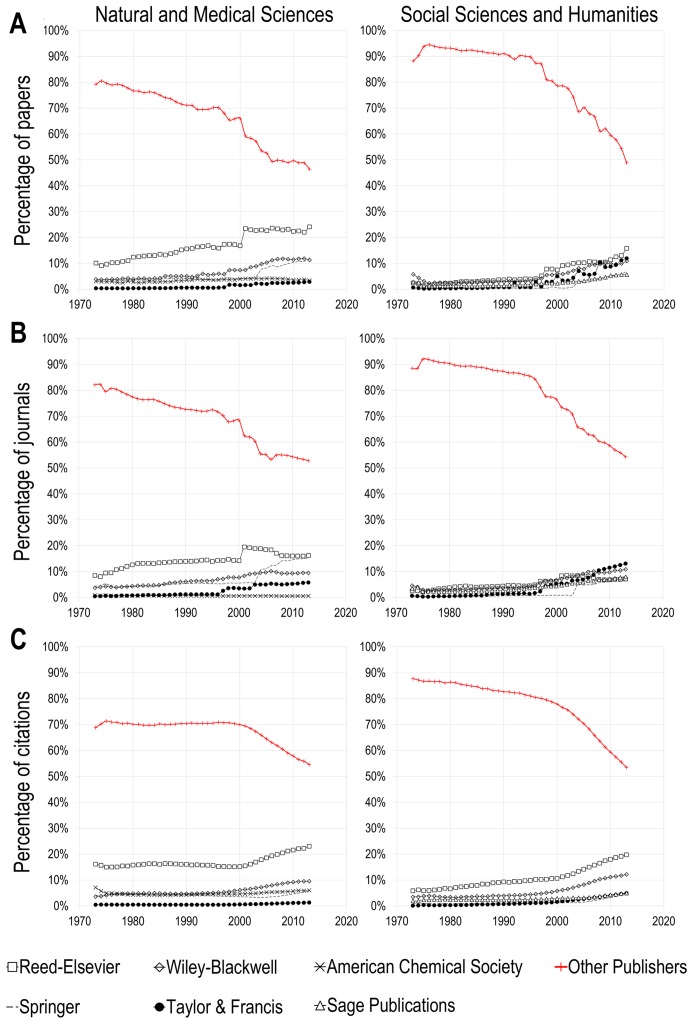
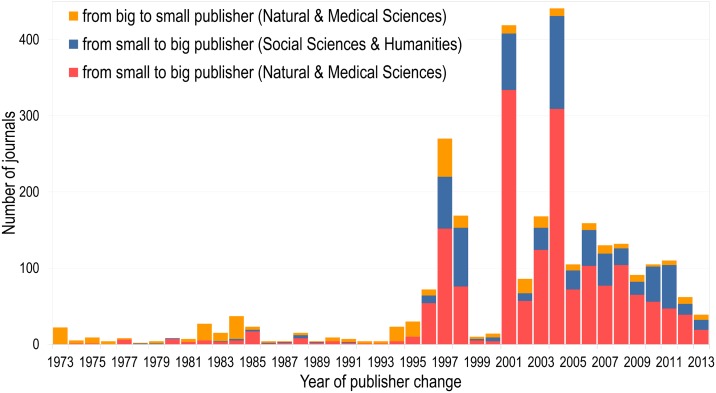
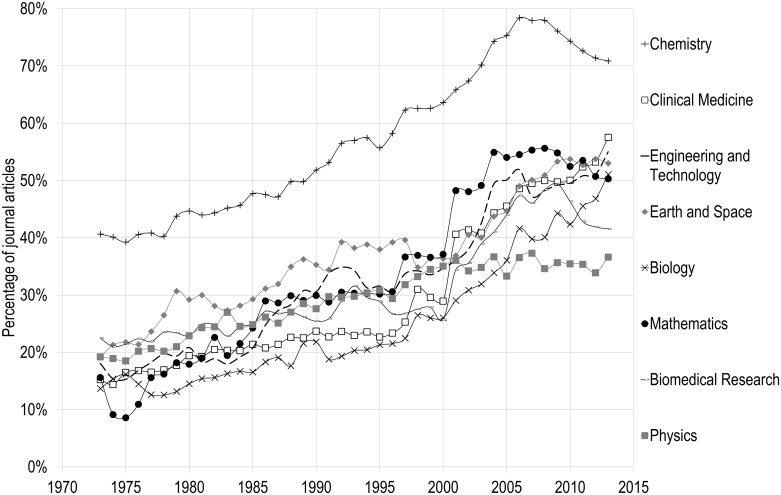
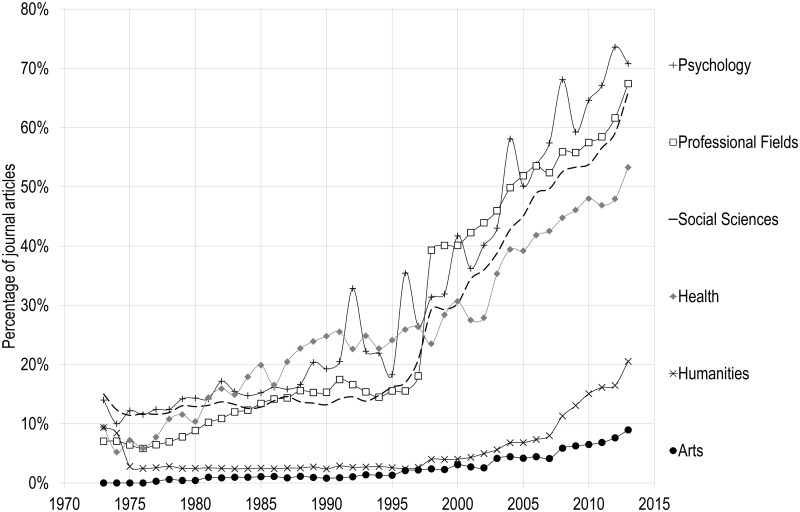
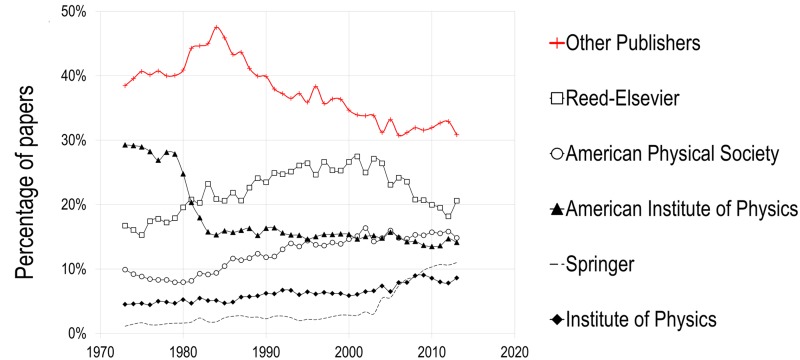
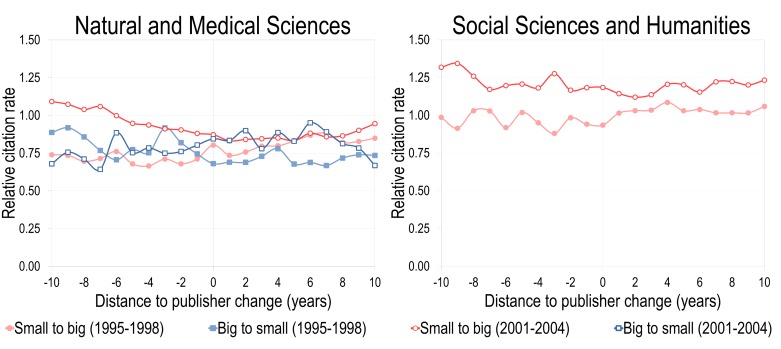
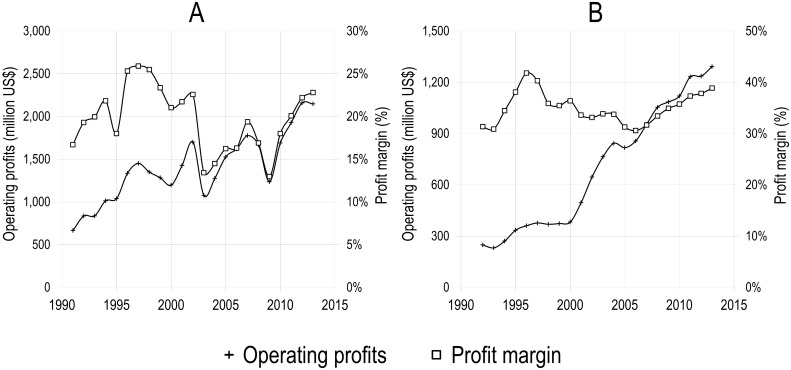
The consolidation of the scientific publishing industry has been the topic of much debate within and outside the scientific community, especially in relation to major publishers' high profit margins. However, the share of scientific output published in the journals of these major publishers, as well as its evolution over time and across various disciplines, has not yet been analyzed. This paper provides such analysis, based on 45 million documents indexed in the Web of Science over the period 1973-2013. It shows that in both natural and medical sciences (NMS) and social sciences and humanities (SSH), Reed-Elsevier, Wiley-Blackwell, Springer, and Taylor & Francis increased their share of the published output, especially since the advent of the digital era (mid-1990s). Combined, the top five most prolific publishers account for more than 50% of all papers published in 2013. Disciplines of the social sciences have the highest level of concentration (70% of papers from the top five publishers), while the humanities have remained relatively independent (20% from top five publishers). NMS disciplines are in between, mainly because of the strength of their scientific societies, such as the ACS in chemistry or APS in physics. The paper also examines the migration of journals between small and big publishing houses and explores the effect of publisher change on citation impact. It concludes with a discussion on the economics of scholarly publishing.
Overview
The claims and statistics of this paper haven’t been checked yet.
Run the check — free, no account needed. It reads the open-access text and checks the sources it cites.
Integrity signals
Registry
Cites
Statistics
Figures
Verification
Claims the paper makes
The claims and statistics of this paper haven’t been checked yet.
Run the check — free, no account needed. It reads the open-access text and checks the sources it cites.
Claims other papers make about this one
Each is checked against this paper’s own text: does it say what the citing paper says it does?
The cited source says what the claim attributes to it.
In the citing paper
“Global influence and market dominance show that these publishers represent a significant proportion of global scholarly output (Larivière et al., 2015).”
From Use of artificial intelligence tools in the publishing process: expectations from publishers through author guidelines (2026) · cites this paper as Larivière et al., 2015
Self-check
Percentages, sums and reported differences re-computed from the paper’s own numbers.
The self-check needs the paper’s full text.
Citations
Cites
Information rules - a strategic guide to the network economy
Shapiro, C., & Varian, H. (1999) · The Journal of Economic Education · doi:10.2307/1183273 · Cited by 5,225 · cited 1×
“Scholarly publications themselves can be considered information goods with high fixed and low variable costs [35,36].”
BackgroundStirling, D. (2003) · SGMD · doi:10.1145/776985.776997 · Cited by 1,563
Zuckerman, H., & Merton, R. (1971) · Minerva · doi:10.1007/bf01553188 · Cited by 789
Scholarship in the Digital Age: Information, Infrastructure, and the Internet
Borgman, C. L. (2007) · doi:10.7551/mitpress/7434.001.0001 · Cited by 512
Archambault, É., Vignola-Gagné, É., Côté, G., Larivière, V., & Gingrasb, Y. (2006) · Scientometrics · doi:10.1007/s11192-006-0115-z · Cited by 507 · cited 1×
“Moreover, these disciplines make a much more important use of books [9] and generally rely on local journals [29], all of which are factors that make it much less interesting for big publishers to buy journals or found new ones in the arts and humanities.”
BackgroundSelf-citationWhat you didn't know that you needed to know.
Holtermann, M. K. (2017) · Tidsskrift for Den Norske Laegeforening · doi:10.4045/tidsskr.17.0540 · Cited by 492 · cited 2×
“4 billion US dollars in 2011 [31], the majority of which were generated by a few publishing houses, the scientific journal publishing market faces oligopolistic conditions, where big players such as Elsevier, Springer, Taylor & Francis, Wiley-Blackwell and Wolters Kluwer determine annually increasing subscription rate…”
BackgroundTragic Loss or Good Riddance? The Impending Demise of Traditional Scholary Journals
Odlyzko, A. (1996) · Journal of universal computer science (Online) · doi:10.3217/jucs-000-00-0003 · Cited by 303 · cited 1×
“Indeed, many authors have discussed the various transformations of the scholarly communication landscape brought by the digital era (see, among others, Borgman [14–15]; Kling and Callahan [16]; Tenopir & King [17]; Odlyzko [18]).”
BackgroundLarivière, V., Archambault, É., Gingras, Y., & Vignola-Gagné, É. (2006) · J. Assoc. Inf. Sci. Technol. · doi:10.1002/asi.20349 · Cited by 294 · cited 2×
“During the 20 century they consolidated their position as the main media for diffusing research [6], especially in the natural and medical sciences [9].”
BackgroundSelf-citationCalvert, P. (2001) · doi:10.1108/oir.2001.25.3.214.2 · Cited by 215
Larivière, V., Archambault, É., & Gingras, Y. (2008) · J. Assoc. Inf. Sci. Technol. · doi:10.1002/asi.20744 · Cited by 188 · cited 1×
“Also, the transition from print to electronic—a strong argument for journals to convert to commercial publishers—has happened at a much slower pace in those disciplines as the use for recent scientific information is less pressing [28].”
BackgroundSelf-citation
Research works printed but not linked: 3
- AJ Meadows, 1979, The Scientific Journal
- BI Mierzejewska, 2008, Doctoral dissertation, University of St. Gallen, Graduate School of Business Administration, Economics, Law and Social Sciences
- M Ware, 2012, An overview of scientific and scholarly journal publishing
Cited by
Sorted by citations
The journal coverage of Web of Science and Scopus: A comparative analysis
Mongeon, P., & Paul-Hus, A. (2016) · Scientometrics · doi:10.1007/s11192-015-1765-5 · Cited by 5,274
“López-Illescas et al. (2008) compared oncological journals coverage in WoS and Scopus and found that Scopus covered a larger number of titles.”
BackgroundSelf-citationThe academic, economic and societal impacts of Open Access: an evidence-based review
Tennant, J., Waldner, F., Jacques, D., Masuzzo, P., Collister, L., & Hartgerink, C. (2016) · F1000Research · doi:10.12688/f1000research.8460.1 · Cited by 592
The Academic, Economic and Societal Impacts of Open Access: An Evidence-Based Review
Tennant, J. P., Waldner, F., Jacques, D. C., Masuzzo, P., Collister, L. B., & Hartgerink, C. H. J. (2016) · F1000Research · doi:10.12688/f1000research.8460.3 · Cited by 560
The strain on scientific publishing
Hanson, M. A., Barreiro, P. G., Crosetto, P., & Brockington, D. (2024) · Quantitative Science Studies · doi:10.1162/qss_a_00327 · Cited by 345
A user-friendly method to merge Scopus and Web of Science data during bibliometric analysis
Caputo, A., & Kargina, M. (2021) · Journal of Marketing Analytics · doi:10.1057/s41270-021-00142-7 · Cited by 346
A multi-disciplinary perspective on emergent and future innovations in peer review
Tennant, J., Dugan, J. M., Graziotin, D., Jacques, D., Waldner, F., Mietchen, D., Elkhatib, Y., Collister, L., Pikas, C. K., Crick, T., et al. (2017) · F1000Research · doi:10.12688/f1000research.12037.1 · Cited by 299
Regional disparities in Web of Science and Scopus journal coverage
Asubiaro, T., Onaolapo, S., & Mills, D. (2024) · Scientometrics · doi:10.1007/s11192-024-04948-x · Cited by 232
“…and North America are also the home for “big five” of academic publishing companies that publish more than 50% of the papers that are indexed in Web of Science (Larivière et al., 2015), which may have reinforced their position of dominance in Web of Science and Scopus (Mongeon & Paul-Hus, 2016).”
The Open Innovation in Science research field: a collaborative conceptualisation approach
Beck, S., Bergenholtz, C., Bogers, M. L. A. M., Brasseur, T.-M., Conradsen, M. L., Marco, D. D., Distel, A. P., Dobusch, L., Dörler, D., Effert, A., et al. (2020) · Industry and Innovation · doi:10.1080/13662716.2020.1792274 · Cited by 284
“…around open access hinge on the role of incumbent commercial publishers, with new actors from library publishers to funders vying to disrupt what has been termed an ‘oligopoly’ (Larivière, Haustein, and Mongeon 2015) with the help of open-source publishing tools and platforms (Maxwell et al. 2019).”
BackgroundMapping the Literature on Academic Publishing: A Bibliometric Analysis on WOS
Yan, L., & Zhiping, W. (2023) · SAGE Open · doi:10.1177/21582440231158562 · Cited by 243
“Of the 20 articles, the references with ‘‘*’’ are the highly cited in field, placing in the top 1% of the academic field (e.g., Agha et al., 2017; Dinh et al., 2014; Hyland, 2016; Larivière et al., 2015; Shamseer et al., 2017; Xia et al., 2015).”
BackgroundInfluentialA systematic identification and analysis of scientists on Twitter
Ke, Q., Ahn, Y.-Y., & Sugimoto, C. R. (2017) · PLOS ONE · doi:10.1371/journal.pone.0175368 · Cited by 175
The changing forms and expectations of peer review
Horbach, S. P. J. M., & Halffman, W. (. W. (2018) · Research Integrity and Peer Review · doi:10.1186/s41073-018-0051-5 · Cited by 179
Fyfe, A., Coate, K., Curry, S., Lawson, S., Moxham, N., & Røstvik, C. (2017) · Edinburgh Napier Research Repository (Edinburgh Napier University) · doi:10.5281/zenodo.546100 · Cited by 176
Sci-Hub provides access to nearly all scholarly literature
Himmelstein, D. S., Romero, A. R., Levernier, J., Munro, T. A., McLaughlin, S. R., Tzovaras, B. G., & Greene, C. S. (2018) · eLife · doi:10.7554/elife.32822 · Cited by 197
“DOI: https://doi.org/10.7554/eLife.32822 1 of 22 FEATURE ARTICLE (Bosch and Henderson, 2017; Lawson et al., 2015; Lawson, 2017a).”
InfluentialPrecision medicine and therapies of the future
Sisodiya, S. (2020) · Epilepsia · doi:10.1111/epi.16539 · Cited by 139
Irreproducibility in Preclinical Biomedical Research: Perceptions, Uncertainties, and Knowledge Gaps
Jarvis, M. F., & Williams, M. (2016) · Trends in Pharmacological Sciences · doi:10.1016/j.tips.2015.12.001 · Cited by 129
To what extent is inclusion in the Web of Science an indicator of journal ‘quality’?
Chavarro, D., Ràfols, I., & Tang, P. (2018) · Research Evaluation · doi:10.1093/reseval/rvy001 · Cited by 115
Smith, E. M. R., Haustein, S., Mongeon, P., Shu, F., Ridde, V., & Larivière, V. (2017) · Health Research Policy and Systems · doi:10.1186/s12961-017-0235-3 · Cited by 115
“To understand who benefits financially from OA, we identified publishers of journals (as seen in [40]).”
BackgroundSelf-citationButler, L.-A., Matthias, L., Simard, M.-A., Mongeon, P., & Haustein, S. (2023) · Quantitative Science Studies · doi:10.1162/qss_a_00272 · Cited by 112
“Larivière et al. (2015) found that Elsevier, Wiley-Blackwell, Springer (before the merger with Nature in 2015), and Taylor & Francis publish more than half of the scholarly journal literature indexed in WoS.”
Self-citationWhy researchers publish in non-mainstream journals: Training, knowledge bridging, and gap filling
Chavarro, D., Tang, P., & Ràfols, I. (2017) · Research Policy · doi:10.1016/j.respol.2017.08.002 · Cited by 143
“Facebook for Academics”: The Convergence of Self-Branding and Social Media Logic on Academia.edu
Duffy, B. E., & Pooley, J. D. (2017) · Social Media + Society · doi:10.1177/2056305117696523 · Cited by 163
Shashi, S., Cerchione, R., Singh, R., Centobelli, P., & Shabani, A. (2018) · International Journal of Logistics Management · doi:10.1108/ijlm-01-2017-0007 · Cited by 103
The present and future of peer review: Ideas, interventions, and evidence
Aczél, B., Barwich, A., Diekman, A. B., Fishbach, A., Goldstone, R. L., Gómez, P., Gundersen, O. E., von Hippel, P. T., Holcombe, A. O., Lewandowsky, S., et al. (2025) · Proceedings of the National Academy of Sciences · doi:10.1073/pnas.2401232121 · Cited by 117
Siler, K. (2020) · Journal of the Association for Information Science and Technology · doi:10.1002/asi.24339 · Cited by 105
“…when those rents are attached to a highstatus product or institution.7 Relatedly, none of the large oligopolistic publishers identified by Larivière, Haustein, and Mongeon (2015) as dominating the academic publishing market (including Reed-Elsevier, Wiley-Blackwell, Springer, Sage, and…”
BackgroundSpace and scale in higher education: the glonacal agency heuristic revisited
Marginson, S. (2022) · Higher Education · doi:10.1007/s10734-022-00955-0 · Cited by 89
“Nations foster global hubs (Lee, 2015). Site-based local university corporations and national consortia establish MOOC platforms in the global scale. Combining scales brings new or hybrid spaces into being. In a study of the International Baccalaureate, Resnik (2012) finds that where international organisations and co…”
BackgroundOpen access publishing - noble intention, flawed reality.
Frank, J., Foster, R., & Pagliari, C. (2022) · Social Science & Medicine (1967) · doi:10.1016/j.socscimed.2022.115592 · Cited by 87
Drivers of article processing charges in open access
Budzinski, O., Grebel, T., Wolling, J., & Zhang, X.-J. (2020) · Scientometrics · doi:10.1007/s11192-020-03578-3 · Cited by 84
Inequality in Knowledge Production: The Integration of Academic Infrastructure by Big Publishers
Posada, A., & Chen, G. (2018) · International Conference on Electronic Publishing · doi:10.4000/proceedings.elpub.2018.30 · Cited by 80
“…Workflow services such as WileyPLUS, provides online testing and is integrated with Wiley’s textbooks through the features of online tutorials (John Wiley & Sons 2018a), reducing the need for lecturers, the individuals within the education process, to develop questions and enhancing dependency.”
BackgroundMethodGrowth of hybrid open access, 2009–2016
Björk, B.-C. (2017) · PeerJ · doi:10.7717/peerj.3878 · Cited by 80
Predatory and Exploitative Behaviour in Academic Publishing: An Assessment
Teixeira da Silva, J. A., Dobránszki, J., Tsigaris, P., & Al-Khatib, A. (2019) · The Journal of Academic Librarianship · doi:10.1016/j.acalib.2019.102071 · Cited by 77
Open to the public: paywalls and the public rationale for open access medical research publishing
Day, S., Rennie, S., Luo, D., & Tucker, J. (2020) · Research Involvement and Engagement · doi:10.1186/s40900-020-0182-y · Cited by 77
Current market rates for scholarly publishing services
Grossmann, A., & Brembs, B. (2021) · F1000Research · doi:10.12688/f1000research.27468.2 · Cited by 76
A comparative study of the coverage of African journals in Web of Science, Scopus, and CrossRef
Asubiaro, T. V., & Onaolapo, S. (2023) · Journal of the Association for Information Science and Technology · doi:10.1002/asi.24758 · Cited by 77
“Similarly, the top five most prolific academic publishers— Sage, Reed-Elsevier (owner of Scopus), Springer, Taylor and Francis, and Wiley-Blackwell accounted for more than 50% of all the journals in Web of Science and Scopus (Butler et al., 2022; Larivière et al., 2015).”
BackgroundThe ability of different peer review procedures to flag problematic publications
Horbach, S. P. J. M., & Halffman, W. (2019) · Scientometrics · doi:10.1007/s11192-018-2969-2 · Cited by 73
Who games metrics and rankings? Institutional niches and journal impact factor inflation
Siler, K., & Larivière, V. (2022) · Research Policy · doi:10.1016/j.respol.2022.104608 · Cited by 70
Self-citationScholarly journal publishing in transition- from restricted to open access
Björk, B. (2017) · Electronic Markets · doi:10.1007/s12525-017-0249-2 · Cited by 75
Stop Predatory Publishers Now: Act Collaboratively
Moher, D., & Moher, E. (2016) · Annals of Internal Medicine · doi:10.7326/m15-3015 · Cited by 67
“Legitimate publishers could provide leadership and funding to spearhead these initiatives (6).”
BackgroundThe Pricing of Open Access Journals: Diverse Niches and Sources of Value in Academic Publishing
Siler, K., & Frenken, K. (2020) · Quantitative Science Studies · doi:10.1162/qss_a_00016 · Cited by 64
The crisis of peer review: Part of the evolution of science
Horta, H., & Jung, J. (2024) · Higher Education Quarterly · doi:10.1111/hequ.12511 · Cited by 77
Who are the 100 largest scientific publishers by journal count? A webscraping approach
Nishikawa-Pacher, A. (2022) · Journal of Documentation · doi:10.1108/jd-04-2022-0083 · Cited by 65
Promote scientific integrity via journal peer review data
Lee, C. J., & Moher, D. (2017) · Science · doi:10.1126/science.aan4141 · Cited by 72
Towards a philosophy of academic publishing
Peters, M., Jandrić, P., Irwin, R., Locke, K., Devine, N., Heraud, R., Gibbons, A., Besley, T., White, J., Forster, D. J., et al. (2016) · The Methodology and Philosophy of Collective Writing · doi:10.1080/00131857.2016.1240987 · Cited by 63
“As they have increased their control over knowledge, big publishing houses have become highly profitable businesses (Clobridge, 2014; Larivière et al., 2015).”
BackgroundArtificial neural networks for sustainable development: a critical review
Gue, I. H. V., Ubando, A. T., Tseng, M., & Tan, R. R. (2020) · Clean Technologies and Environmental Policy · doi:10.1007/s10098-020-01883-2 · Cited by 74
S&T indicators in the wild: Contextualization and participation for responsible metrics
Ràfols, I. (2018) · Research Evaluation · doi:10.1093/reseval/rvy030 · Cited by 80
Siler, K., Haustein, S., Smith, E. M. R., Larivière, V., & Alperín, J. P. (2018) · PeerJ · doi:10.7717/peerj.4269 · Cited by 71
Self-citationTowards a Decentralized Process for Scientific Publication and Peer Review using Blockchain and IPFS
Tenorio-Fornés, A., García, V. J., Llop-Vila, D., Sánchez‐Ruiz, A. A., & Hassan, S. (2019) · Hawaii International Conference on System Sciences (HICSS) · doi:10.24251/hicss.2019.560 · Cited by 73
“It aims to challenge the technical infrastructure that supports the middleman role of the oligopoly of traditional publishers [11].”
BackgroundIs It Such a Big Deal? On the Cost of Journal Use in the Digital Era
Shu, F., Mongeon, P., Haustein, S., Siler, K., Alperin, J. P., & Larivière, V. (2018) · College and Research Libraries · doi:10.5860/crl.79.6.785 · Cited by 56
Self-citationThe misalignment of incentives in academic publishing and implications for journal reform
Trueblood, J. S., Allison, D. B., Field, S. M., Fishbach, A., Gaillard, S. D. M., Gigerenzer, G., Holmes, W. R., Lewandowsky, S., Matzke, D., Murphy, M. C., et al. (2025) · Proceedings of the National Academy of Sciences · doi:10.1073/pnas.2401231121 · Cited by 56
Engels, T. C. E., Starčič, A. I., Kulczycki, E., Pölönen, J., & Sivertsen, G. (2018) · Aslib Journal of Information Management · doi:10.1108/ajim-05-2018-0127 · Cited by 55
Looking into Pandora's Box: The Content of Sci-Hub and its UsagePreprint
Greshake, B. (2017) · bioRxiv · doi:10.1101/124495 · Cited by 55
Anjum, G., & Aziz, M. (2024) · Frontiers in Psychology · doi:10.3389/fpsyg.2024.1368663 · Cited by 79
“…accessibility to scholarly publications, particularly accentuated by subscription-based models, presents a significant barrier to the dissemination and utilization of scientific knowledge, disproportionately impacting researchers in the Global South (Chan and Costa, 2005; Larivière et al., 2015).”
BackgroundSitumeang, R., Mazancová, J., & Roubík, H. (2022) · Energies · doi:10.3390/en15145105 · Cited by 53
O ecossistema da Ciência Aberta
da Silva, F. C. C., & da Silveira, L. (2019) · Transinformação · doi:10.1590/2318-0889201931e190001 · Cited by 107
Zhu, M., & Cole, J. M. (2022) · Journal of Chemical Information and Modeling · doi:10.1021/acs.jcim.1c01198 · Cited by 57
Decentralizing science: Towards an interoperable open peer review ecosystem using blockchain
Tenorio-Fornés, A., Tirador, E. P., Sánchez‐Ruiz, A. A., & Hassan, S. (2021) · Information Processing & Management · doi:10.1016/j.ipm.2021.102724 · Cited by 58
And the credit goes to … - Ghost and honorary authorship among social scientists
Pruschak, G., & Hopp, C. (2022) · PLoS ONE · doi:10.1371/journal.pone.0267312 · Cited by 84
Guédon, J., Consulting, U., Kramer, B., Laakso, M., Schmidt, B., Šimukovič, E., Hansen, J., Kiley, R., Kitson, A., van der Stelt, W., et al. (2019) · doi:10.2777/836532 · Cited by 50
Research trends, themes, and insights on artificial neural networks for smart cities towards SDG-11
Jain, A., Gue, I. H. V., & Jain, P. (2023) · Journal of Cleaner Production · doi:10.1016/j.jclepro.2023.137300 · Cited by 63
Toward an inclusive agenda of Open Science for Communication Research: a Latin American approach
de Oliveira, T. D., Marques, F. P. J., Leão, A. V., de Albuquerque, A. L. T., Prado, J., Grohmann, R., Clinio, A., Cogo, D., & Guazina, L. (2021) · Journal of Communications · doi:10.31235/osf.io/awykg · Cited by 47
Expert systems in oil palm precision agriculture: A decade systematic review
Tan, X. J., Cheor, W. L., Yeo, K. S., & Leow, W. Z. (2022) · Journal of King Saud University - Computer and Information Sciences · doi:10.1016/j.jksuci.2022.02.006 · Cited by 50
“…an oligopoly relationship in publications and the iden-tified trend is aligned with a previous finding involved analysis of 4 decades (i.e., 1973–2013) of publishing trend where Elsevier, Taylor & Francis, and Springer are amongst the top publishers in various topics (Larivière et al., 2015).”
The political economy of academic publishing: On the commodification of a public good
Puehringer, S., Rath, J., & Griesebner, T. (2021) · PLoS ONE · doi:10.1371/journal.pone.0253226 · Cited by 46
“In a similar vein, very high market concentrations have also been reported on the EU level [14, 26] as well as for different academic disciplines [16, 30].”
BackgroundOpen access publishers: The new players
Rodrigues, R., Abadal, E., & de Araújo, B. K. H. (2020) · PLoS ONE · doi:10.1371/journal.pone.0233432 · Cited by 44
“108) [19] conclude that “the role of universities and research councils cannot be over-emphasized, as they are at the heart of the research evaluation system and decide what has value.”
BackgroundInfluentialOn the use of blockchain-based mechanisms to tackle academic misconduct
Mohan, V. (2019) · Research Policy · doi:10.1016/j.respol.2019.103805 · Cited by 53
Market Power of Publishers in Setting Article Processing Charges for Open Access Journals
Asai, S. (2020) · Scientometrics · doi:10.1007/s11192-020-03402-y · Cited by 41
Prestige or Perish: Publishing Decisions in Academic Archaeology
Beck, J., Gjesfjeld, E., & Chrisomalis, S. (2021) · American Antiquity · doi:10.1017/aaq.2021.64 · Cited by 41
Hartgerink, C. H. J., & van Zelst, M. (2018) · Publications · doi:10.3390/publications6020021 · Cited by 21
“Furthermore, scholarly communication has become highly 38 centralized, where over 50% of all papers are published by as little as five publishers (over 39 70% for social sciences) [2].”
BackgroundLawson, S., Gray, J., & Mauri, M. (2015) · doi:10.16995/olh.72 · Cited by 39
The transformation of the academic publishing market: multiple perspectives on innovation
Ponte, D., Mierzejewska, B. I., & Klein, S. (2017) · Electronic Markets · doi:10.1007/s12525-017-0250-9 · Cited by 38
Innovating editorial practices: academic publishers at work
Horbach, S., & Halffman, W. (2020) · Research Integrity and Peer Review · doi:10.1186/s41073-020-00097-w · Cited by 37
Perverse incentives and the political economy of South African academic journal publishing
Tomaselli, K. (2018) · South African Journal of Science · doi:10.17159/sajs.2018/4341 · Cited by 37
“The taxpayer pays multiply: (1) taxpayers sponsor the work done by academics, whose universities then, (2) pay to access it in publication form, and who also (3) underwrite the DHET publication incentive.”
BackgroundMethodInfluentialThe oligopoly of open access publishing
Shu, F., & Larivière, V. (2023) · Scientometrics · doi:10.1007/s11192-023-04876-2 · Cited by 36
“Scholarly publishing is one of the most profitable businesses (Larivière et al., 2015), and the market share of this industry can also be measured in terms of sales or revenues.”
Self-citationPlan S in Latin America: A Precautionary Note
Debat, H., & Babini, D. (2019) · Scholarly and Research Communication · doi:10.22230/src.2020v11n1a347 · Cited by 36
Innovation in Latin America through the lens of bibliometrics: crammed and fading away
Cortés-Sánchez, J. D. (2018) · Scientometrics · doi:10.1007/s11192-019-03201-0 · Cited by 36
The Chinese scientific publication system: Specific features, specific challenges
Wang, J., Halffman, W., & Zwart, H. A. E. (2020) · Learned Publishing · doi:10.1002/leap.1326 · Cited by 43
An Inadvertent Concurrent Replication
Lemons, C. J., King, S. A., Davidson, K. A., Berryessa, T. L., Gajjar, S. A., & Sacks, L. H. (2016) · Remedial and Special Education · doi:10.1177/0741932516631116 · Cited by 43
“Instead, science pursues “an infinite, yet attainable aim: that of ever discovering new, deeper, and more general problems, and of subjecting our ever tentative answers to ever renewed and more rigorous tests” (Popper, 1959, p. 281). Considering the importance of replication in scientific inquiry, Makel and Plucker (2…”
BackgroundUniversities in a knowledge economy or ecology? Policy, contestation and abjection
Wright, S. (2016) · Critical Policy Studies · doi:10.1080/19460171.2016.1142457 · Cited by 65
“Scientific journal publishing generated a total revenue of $9.4 billion in 2011 and the top five publishers accounted for more than 50% of all papers published in 2013 (Larivière, Haustein, and Mongeon 2015).”
BackgroundInfluentialOpen access at the national level: A comprehensive analysis of publications by Finnish researchers
Pölönen, J., Laakso, M., Guns, R., Kulczycki, E., & Sivertsen, G. (2020) · Quantitative Science Studies · doi:10.1162/qss_a_00084 · Cited by 43
“Most attention in the national and international OA policies is focused on the large international commercial publishers—Elsevier, Springer Nature, Wiley-Blackwell, Taylor & Francis, Sage, and ACS—that according to recent analyses covermore than half of the international journal publishing indexed inWoS (Larivière et…”
BackgroundResultInfluentialKarmakar, M., Banshal, S. K., & Singh, V. K. (2020) · Scientometrics · doi:10.1007/s11192-020-03574-7 · Cited by 33
Comparing human and AI expertise in the academic peer review process: towards a hybrid approach
Farber, S. (2025) · Higher Education Research & Development · doi:10.1080/07294360.2024.2445575 · Cited by 33
“Furthermore, as the academic publishing landscape continues to evolve, with increasing research output and new journals (Larivière et al., 2015), peer review processes potentially may have to consider harnessing AI efficiency to meet the increased demand.”
van Bellen, S., Alperin, J., & Larivière, V. (2024) · PLoS ONE · doi:10.1371/journal.pone.0327015 · Cited by 33
“Since the Larivière et al . paper published a decade ago [1], the oligopolistic structure of the scholarly journal ecosystem has been used as a reference framework in many studies [4–8].”
InfluentialSelf-citationThe future of academic publishing
Ahmed, A., Al-Khatib, A., Boum, Y., Debat, H., Gurmendi-Dunkelberg, A., Hinchliffe, L., Jarrad, F., Mastroianni, A. M., Mineault, P., Pennington, C., et al. (2023) · Nature Human Behaviour · doi:10.1038/s41562-023-01637-2 · Cited by 33
The Impact of the German 'DEAL' on Competition in the Academic Publishing Market
Haucap, J., Moshgbar, N., & Schmal, W. (2021) · Social Science Research Network · doi:10.2139/ssrn.3815451 · Cited by 32
Free editors and peers: squeezing the lemon dry
da Silva, J. A. T., & Katavić, V. (2016) · Ethics & bioethics · doi:10.1515/ebce-2016-0011 · Cited by 32
“How then did science reach this state where professionals are exploited by the publishing industry using almost 100% pro bono work, leading to record profits year upon year , sometimes in billions of US$ (Larivière, Haustein & Mongeon, 2015)?”
BackgroundThe Role of Publons in the Context of Open Peer Review
da Silva, J. A. T., & Nazarovets, S. (2022) · Publishing research quarterly · doi:10.1007/s12109-022-09914-0 · Cited by 31
“However, there may be an element of exploitation, especially by for-profit publishers, some of which reap massive economic returns from peer-reviewed papers [15].”
BackgroundMills, D. (2022) · Oxford Review of Education · doi:10.1080/03054985.2022.2072285 · Cited by 44
“At every stage of research, academics have become increasingly reliant on the tools of what Larivière et al. (2015) call a ‘publishing oligopoly’.”
MethodMills, D., Branford, A., Inouye, K., Robinson, N., & Kingori, P. (2021) · Journal of African Cultural Studies · doi:10.1080/13696815.2020.1864304 · Cited by 36
“Elsevier is one of the most profitable of the five major international academic publishers, with its science division regularly recording annual profit margins of between 30% and 40% (Larivière et al. 2015).”
BackgroundAre publications on zoological taxonomy under attack?
Pinto, Â., Mejdalani, G., Mounce, R., Silveira, L. F., Marinoni, L., & Rafael, J. (2020) · Royal Society Open Science · doi:10.1098/rsos.201617 · Cited by 31
“In a system full of anachronisms, in which traditional journals supported by museums or scientific societies are struggling to survive and the commercialized scientific publishing industry is led by giant publishers such as John Wiley & Sons, Elsevier and Springer Nature, among others, with profit margins higher than…”
BackgroundOpen access to journal articles in oncology: current situation and citation impact
Hua, F., Sun, H., Walsh, T., Glenny, A., & Worthington, H. V. (2017) · Annals of Oncology · doi:10.1093/annonc/mdx398 · Cited by 36
“As in previous similar research [12, 21], publishers were divided into three categories: (i) non-commercial (e.”
Cortés-Sánchez, J. D. (2020) · European Research on Management and Business Economics · doi:10.1016/j.iedeen.2019.12.003 · Cited by 31
Policies on artificial intelligence chatbots among academic publishers: a cross-sectional audit
Bhavsar, D., Duffy, L., Jo, H., Lokker, C., Haynes, R. B., Iorio, A., Marušić, A., & Ng, J. Y. (2025) · Research Integrity and Peer Review · doi:10.1186/s41073-025-00158-y · Cited by 42
“While policies surrounding topics such as copyright and plagia-rism have long existed in academic publication, the creation of new policies to parallel societal and technological advances is an ongoing process essential to maintaining publication integrity [1].”
de Oliveira, G. S., & Baggs, E. (2023) · Cambridge University Press eBooks · doi:10.1017/9781009303538 · Cited by 57
“This makes academic publishing one of the most profitable businesses in the world (see, e.g., Larivière et al., 2015).”
BackgroundKnöchelmann, M. (2021) · Science & Technology Studies · doi:10.23987/sts.94964 · Cited by 59
“Publishers, especially the oligopoly of large forprofit institutions (Larivière et al., 2015), have been the first to co-opt OA and re-shape its purpose.”
BackgroundIntroduction: The Politics of Open Access — Decolonizing Research or Corporate Capture?
Meagher, K. (2021) · Development and Change · doi:10.1111/dech.12630 · Cited by 30
“…margins of the top corporate publishers have continued to rise even after the shift to OA, reaching between 20% and over 30% per year among some of the top publishers which makes them comparable to Walmart and Amazon (Lariviere et al. 2015; Hiltzik 2019; Posada and Chen 2018; Shu et al. 2018).”
BackgroundInfluentialBrazilian Publication Profiles: Where and How Brazilian authors publish.
McManus, C., Neves, A. A. B., & Maranhão, A. (2020) · Anais da Academia Brasileira de Ciências · doi:10.1590/0001-3765202020200328 · Cited by 30
Artificial Intelligence (AI) in Breast Imaging: A Scientometric Umbrella Review
Tan, X. J., Cheor, W. L., Lim, L. L., Rahman, K. S. A., & Bakrin, I. H. (2022) · Diagnostics · doi:10.3390/diagnostics12123111 · Cited by 38
Scholarly Communication and the Dilemma of Collective Action: Why Academic Journals Cost Too Much
Wenzler, J. (2017) · College and Research Libraries · doi:10.5860/crl.78.2.183 · Cited by 29
Csomós, G., & Farkas, J. (2022) · Scientometrics · doi:10.1007/s11192-022-04586-1 · Cited by 28
“…Springer Nature, and other major subscription-based publishers such as Wiley and Taylor & Francis have been dominating the global academic publishing market for a long time occupying leading positions among the academic publishers in most countries worldwide (Hagve, 2022; Larivière et al., 2015).”
BackgroundThe oligopoly’s shift to open access publishing
Butler, L.-A., Matthias, L., Simard, M.-A., Mongeon, P., & Haustein, S. (2022) · Proceedings of the Annual Conference of CAIS / Actes du congrès annuel de l'ACSI · doi:10.29173/cais1262 · Cited by 28
“Since the beginning of the digital era, these companies have acquired small publishers and now control the majority of scholarly journal publishing (Larivière et al., 2015), generating profit margins as high as 37% (Aspesi et al., 2019).”
BackgroundResultSelf-citationMoore, S. A. (2020) · J. Assoc. Inf. Sci. Technol. · doi:10.1002/asi.24306 · Cited by 28
The ClarivateTM Analytics acquisition of Publons – an evolution or commodification of peer review?
da Silva, J. A. T., & Al-Khatib, A. (2019) · Research Ethics · doi:10.1177/1747016117739941 · Cited by 28
“According to Larivière et al. (2015), five publishers (Elsevier, Taylor & Francis, Wiley-Blackwell, Springer, and SAGE Publications) accounted for 50% of all publications in 2013, with annual profit margins for several of these entering the billion US dollars mark.”
BackgroundConcern noted: a descriptive study of editorial expressions of concern in PubMed and PubMed Central
Vaught, M., Jordan, D. C., & Bastian, H. (2017) · Research Integrity and Peer Review · doi:10.1186/s41073-017-0030-2 · Cited by 34
“In addition, the 6 largest publishers (by number of publications) in natural and medical sciences and social sciences and humanities were searched [19].”
Background
Metadata
- Authors
- Larivière, V., Haustein, S., & Mongeon, P.
- Affiliations
- Université du Québec à Montréal (CA)
- Université de Montréal (CA)
- Corresponding author
- Larivière, Vincent
- Venue
- PLOS ONE
- Publisher
- Public Library of Science (PLoS)
- Published
- 2015-06-10
- Volume
- 10
- Issue
- 6
- Pages
- e0127502
- ISSN
- 1932-6203 (ISSN-L)
- PMC
- PMC4465327
- OpenAlex
- W1655306493
- Cited by
- 1,240
- References
- 66
- Citations by year
- 2026: 104 · 2025: 132 · 2024: 97 · 2023: 115 · 2022: 146 · 2021: 128 · 2020: 125 · 2019: 124 · 2018: 97 · 2017: 90 · 2016: 64 · 2015: 15
- FWCI
- 80.89
- Type
- journal article
- Language
- en
- Open access
- gold
- doi.org
- Licence
- Locations
- PLoS ONE (publishedVersion, cc-by)
- Europe PMC (PubMed Central) (publishedVersion, cc-by)
- PubMed Central (publishedVersion, cc-by)
- PubMed (publishedVersion)
- Lincoln (University of Nebraska) (submittedVersion, cc-by)
- RePEc: Research Papers in Economics (submittedVersion)
- DOAJ (DOAJ: Directory of Open Access Journals) (submittedVersion, cc-by-sa)
- Papyrus : Institutional Repository (Université de Montréal) (submittedVersion, cc-by)
- Funders
- Canada Research Chairs
- Topics
- Social Sciences › Library and Information Sciences › scientometrics and bibliometrics research
- Social Sciences › Library and Information Sciences › Publishing and Scholarly Communication
- Social Sciences › Library and Information Sciences › Academic Publishing and Open Access
- Keywords
- scholarly publishing, scientific publishing industry, oligopoly, digital era, journal migration, publisher change, citation impact, humanities and social sciences, Web of Science, Reed Elsevier, Springer, Taylor & Francis
- MeSH terms
- Publishing, Journal Impact Factor
About these checks
Registry, retraction, Cites and statistics results are computed, not judged, with one exception: a printed reference that no index lists is read once by a model before it counts as a citation error. Claims are extracted by a model and kept only when their quote appears verbatim in the text; each cited source is then checked, with a model’s help, for whether it says what the claim relies on. Those verdicts can be wrong — read the claim’s quote and the cited source before relying on one.
Statistics and arithmetic are recomputed, not judged.
Confidence bands are shown only for fields calibrated on our annotated test set. None is calibrated yet, so no band is shown.
What counts as a claim ›How we measure confidence ›How we check this ›
Are you an author, or do you see a problem with this page? Request a review
