

The DOI matches its Crossref record; 57 of the 57 references it cites were found in a registry or an index.
Transnational Corporations as ‘Keystone Actors’ in Marine Ecosystems
Open accessAbstract
Keystone species have a disproportionate influence on the structure and function of ecosystems. Here we analyze whether a keystone-like pattern can be observed in the relationship between transnational corporations and marine ecosystems globally. We show how thirteen corporations control 11-16% of the global marine catch (9-13 million tons) and 19-40% of the largest and most valuable stocks, including species that play important roles in their respective ecosystem. They dominate all segments of seafood production, operate through an extensive global network of subsidiaries and are profoundly involved in fisheries and aquaculture decision-making. Based on our findings, we define these companies as keystone actors of the Anthropocene. The phenomenon of keystone actors represents an increasingly important feature of the human-dominated world. Sustainable leadership by keystone actors could result in cascading effects throughout the entire seafood industry and enable a critical transition towards improved management of marine living resources and ecosystems.
Overview
The claims and statistics of this paper haven’t been checked yet.
Run the check — free, no account needed. It reads the open-access text and checks the sources it cites.
Integrity signals
Registry
Cites
Statistics
Figures
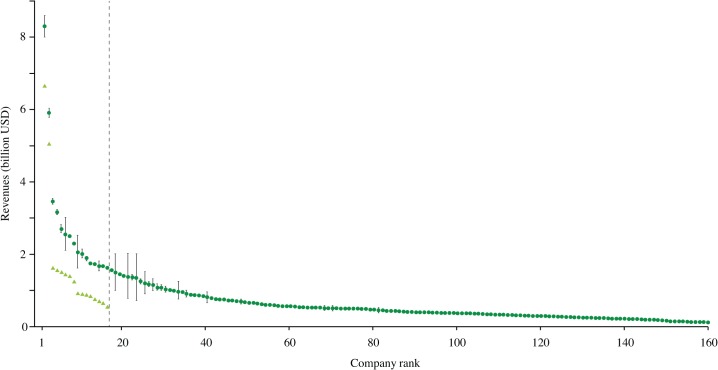
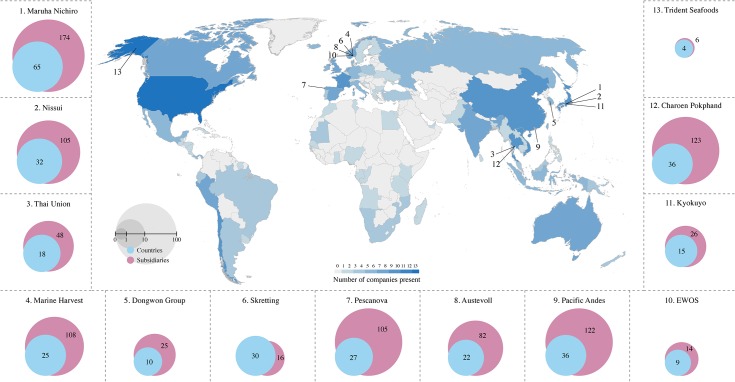
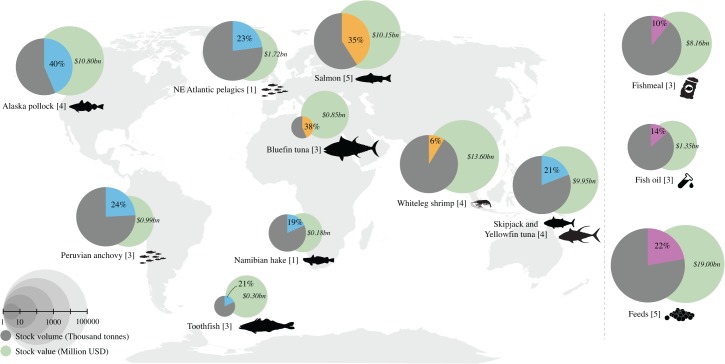
Verification
Claims the paper makes
The claims and statistics of this paper haven’t been checked yet.
Run the check — free, no account needed. It reads the open-access text and checks the sources it cites.
Claims other papers make about this one
Each is checked against this paper’s own text: does it say what the citing paper says it does?
The source backs part of the claim, not all of it — or backs it for a different population, condition or comparison.
In the citing paper
“A handful of transnational corporations control large (>50%) shares of supply chains in agriculture, fishing, logging, and mining ( 71 , 72 )”
From Pervasive human-driven decline of life on Earth points to the need for transformative change (2019) · cites this paper as [71]
Experimental — accuracy not yet measuredThe check wasn’t confident either way, so it gives no verdict — never disputed.
In the citing paper
“whereas funds channeled through tax havens support most illegal, unreported, and unregulated fishing ( 71 , 73 ), creating governance challenges.”
From Pervasive human-driven decline of life on Earth points to the need for transformative change (2019) · cites this paper as [71]
Experimental — accuracy not yet measured
Self-check
Percentages, sums and reported differences re-computed from the paper’s own numbers.
The self-check needs the paper’s full text.
Citations
Cites
Emergence of Scaling in Random Networks
Barabási, A.-L., & Albert, R. (1999) · Science · doi:10.1126/science.286.5439.509 · Cited by 36,135
Catastrophic shifts in ecosystems
Scheffer, M., Carpenter, S., Foley, J. A., Folke, C., & Walker, B. (2001) · Nature · doi:10.1038/35098000 · Cited by 7,510
Self-citationThe interaction of TIGIT with PVR and PVRL2 inhibits human NK cell cytotoxicity
Stanietsky, N., Simic, H., Arapovic, J., Toporik, A., Levy, O., Novik, A., Levine, Z., Beiman, M., Dassa, L., Achdout, H., et al. (2009) · Proceedings of the National Academy of Sciences · doi:10.1073/pnas.0903474106 · Cited by 3,524
The Anthropocene: Are Humans Now Overwhelming the Great Forces of Nature
Steffen, W., Crutzen, P. J., & McNeill, J. R. (2007) · AMBIO: A Journal of the Human Environment · doi:10.1579/0044-7447(2007)36[614:taahno]2.0.co;2 · Cited by 3,487
Effect of aquaculture on world fish supplies.
Naylor, R. L., Goldburg, R. J., Primavera, J. H., Kautsky, N., Beveridge, M. C. M., Clay, J., Folke, C., Lubchenco, J., Mooney, H., & Troell, M. (2000) · Nature · doi:10.1038/35016500 · Cited by 3,063
Self-citationTowards sustainability in world fisheries.
Pauly, D., Christensen, V., Guénette, S., Pitcher, T. J., Sumaila, U. R., Walters, C. J., Watson, R., & Zeller, D. (2002) · Nature · doi:10.1038/nature01017 · Cited by 3,019
The Anthropocene: conceptual and historical perspectives
Steffen, W., Grinevald, J., Crutzen, P., & McNeill, J. (2011) · Philosophical Transactions of the Royal Society A: Mathematical, Physical and Engineering Sciences · doi:10.1098/rsta.2010.0327 · Cited by 2,411
Anticipating Critical Transitions
Scheffer, M., Carpenter, S. R., Lenton, T. M., Bascompte, J., Brock, W., Dakos, V., van de Koppel, J., van de Leemput, I. A., Levin, S. A., van Nes, E. H., et al. (2012) · Science · doi:10.1126/science.1225244 · Cited by 2,208
Challenges in the Quest for Keystones
Power, M. E., Tilman, D., Estes, J. A., Menge, B. A., Bond, W. J., Mills, L. S., Daily, G., Castilla, J. C., Lubchenco, J., & Paine, R. T. (1996) · BioScience · doi:10.2307/1312990 · Cited by 2,018
Feeding aquaculture in an era of finite resources
Naylor, R. L., Hardy, R. W., Bureau, D., Chiu, A., Elliott, M., Farrell, A. P., Forster, I. P., Gatlin, D. M., Goldburg, R. J., Hua, K., et al. (2009) · Proceedings of the National Academy of Sciences · doi:10.1073/pnas.0905235106 · Cited by 1,588
Research works printed but not linked: 1
- Anonymous. <chapter-title>In for the long term—Sustainability Report 2011</chapter-title>. <publisher-loc>Hong Kong</publisher-loc>: <publisher-name>Pacific Andes</publisher-name>, <year>2012</year>.
Cited by
Sorted by citations
Pervasive human-driven decline of life on Earth points to the need for transformative change
Díaz, S., Settele, J., Brondízio, E. S., Ngo, H. T., Agard, J., Arneth, A., Balvanera, P., Brauman, K. A., Butchart, S. H. M., Chan, K. M. A., et al. (2019) · Science · doi:10.1126/science.aax3100 · Cited by 2,926
Social-ecological resilience and biosphere-based sustainability science
Folke, C., Biggs, R., Norström, A. V., Reyers, B., & Rockström, J. (2016) · Ecology and Society · doi:10.5751/es-08748-210341 · Cited by 1,485
Self-citationFolke, C. (2016) · Ecology and Society · doi:10.5751/es-09088-210444 · Cited by 982
Self-citationOur future in the Anthropocene biosphere
Folke, C., Polasky, S., Rockström, J., Galaz, V., Westley, F. R., Lamont, M., Scheffer, M., Österblom, H., Carpenter, S. R., Chapin, F. S., et al. (2021) · AMBIO · doi:10.1007/s13280-021-01544-8 · Cited by 863
Self-citationThe Blue Acceleration: The Trajectory of Human Expansion into the Ocean
Jouffray, J., Blasiak, R., Norström, A. V., Österblom, H., & Nyström, M. (2020) · One Earth · doi:10.1016/j.oneear.2019.12.016 · Cited by 797
Self-citationTowards food supply chain resilience to environmental shocks
Davis, K. F., Downs, S., & Gephart, J. A. (2020) · Nature Food · doi:10.1038/s43016-020-00196-3 · Cited by 575
Blue growth: savior or ocean grabbing?
Barbesgaard, M. (2017) · The Journal of Peasant Studies · doi:10.1080/03066150.2017.1377186 · Cited by 357
Anatomy and resilience of the global production ecosystem
Nyström, M., Jouffray, J.-B., Norström, A. V., Crona, B., Søgaard Jørgensen, P., Carpenter, S. R., Bodin, Ö., Galaz, V., & Folke, C. (2019) · Nature · doi:10.1038/s41586-019-1712-3 · Cited by 343
Self-citationSocial-Ecological Systems Insights for Navigating the Dynamics of the Anthropocene
Reyers, B., Folke, C., Moore, M., Biggs, R., & Galaz, V. (2018) · Annual Review of Environment and Resources · doi:10.1146/annurev-environ-110615-085349 · Cited by 355
Self-citationCo-productive agility and four collaborative pathways to sustainability transformations
Chambers, J. M., Wyborn, C. A., Klenk, N. L., Ryan, M., Şerban, A., Bennett, N. J., Brennan, R. E., Charli-Joseph, L., Fernández‐Giménez, M. E., Galvin, K. A., et al. (2021) · Global Environmental Change · doi:10.1016/j.gloenvcha.2021.102422 · Cited by 304
Self-citationTransnational corporations and the challenge of biosphere stewardship
Folke, C., Österblom, H., Jouffray, J.-B., Lambin, E. F., Adger, W. N., Scheffer, M., Crona, B. I., Nyström, M., Levin, S. A., Carpenter, S. R., et al. (2019) · Nature Ecology & Evolution · doi:10.1038/s41559-019-0978-z · Cited by 290
Self-citationEmerging COVID-19 impacts, responses, and lessons for building resilience in the seafood system
Love, D. C., Allison, E. H., Asche, F., Belton, B., Cottrell, R. S., Froehlich, H. E., Gephart, J. A., Hicks, C. C., Little, D. C., Nussbaumer, E. M., et al. (2021) · Global Food Security · doi:10.1016/j.gfs.2021.100494 · Cited by 277
Self-citationLittle, D. C., Newton, R., & Beveridge, M. C. M. (2016) · Proceedings of The Nutrition Society · doi:10.1017/s0029665116000665 · Cited by 283
Structure and evolution of the global seafood trade network
Gephart, J. A., & Pace, M. L. (2015) · Environmental Research Letters · doi:10.1088/1748-9326/10/12/125014 · Cited by 247
Keys, P. W., Galaz, V., Dyer, M., Matthews, N., Folke, C., Nyström, M., & Cornell, S. E. (2019) · Nature Sustainability · doi:10.1038/s41893-019-0327-x · Cited by 230
Self-citationAccounting and accountability in the Anthropocene
Bebbington, J., Österblom, H., Crona, B., Jouffray, J., Larrínaga, C., Russell, S., & Scholtens, B. (2019) · Accounting Auditing & Accountability Journal · doi:10.1108/aaaj-11-2018-3745 · Cited by 237
Self-citationWhy Finance Should Care about Ecology
Scholtens, B. (2017) · Trends in Ecology & Evolution · doi:10.1016/j.tree.2017.03.013 · Cited by 197
Rewiring food systems to enhance human health and biosphere stewardship
Gordon, L. J., Bignet, V., Crona, B., Henriksson, P. J. G., Holt, T. V., Jonell, M., Lindahl, T., Troell, M. F., Barthel, S., Deutsch, L., et al. (2017) · Environmental Research Letters · doi:10.1088/1748-9326/aa81dc · Cited by 204
Self-citationOperationalizing Network Theory for Ecosystem Service Assessments
Dee, L. E., Allesina, S., Bonn, A., Eklöf, A., Gaines, S. D., Hines, J., Jacob, U., McDonald‐Madden, E., Possingham, H. P., Schröter, M., et al. (2016) · Trends in Ecology & Evolution · doi:10.1016/j.tree.2016.10.011 · Cited by 180
Modern slavery and the race to fish
Tickler, D. M., Meeuwig, J. J., Bryant, K., David, F., Forrest, J. A. H., Gordon, E., Larsen, J. J., Oh, B. Z. L., Pauly, D. F., Sumaila, U. R., et al. (2018) · Nature Communications · doi:10.1038/s41467-018-07118-9 · Cited by 197
Corporate control and global governance of marine genetic resources
Blasiak, R., Jouffray, J., Wabnitz, C. C. C., Sundström, E., & Österblom, H. (2018) · Science Advances · doi:10.1126/sciadv.aar5237 · Cited by 179
Self-citationCrona, B., Holt, T. V., Petersson, M. T., Daw, T. M., & Buchary, E. A. (2015) · Global Environmental Change · doi:10.1016/j.gloenvcha.2015.07.006 · Cited by 181
Self-citationConceptualizing power to study social-ecological interactions
Boonstra, W. J. (2016) · Ecology and Society · doi:10.5751/es-07966-210121 · Cited by 191
Small‐scale fisheries and local food systems: Transformations, threats and opportunities
Arthur, R. I., Skerritt, D. J., Schuhbauer, A., Ebrahim, N., Friend, R., & Sumaila, U. R. (2021) · Fish and Fisheries · doi:10.1111/faf.12602 · Cited by 182
Galaz, V., Crona, B., Dauriach, A., Scholtens, B., & Steffen, W. (2018) · Global Environmental Change · doi:10.1016/j.gloenvcha.2018.09.008 · Cited by 166
Self-citationAssessing coupling interactions in a safe and just operating space for regional sustainability
Han, D., Yu, D., & Qiu, J. (2023) · Nature Communications · doi:10.1038/s41467-023-37073-z · Cited by 158
Hamann, M., Berry, K., Chaigneau, T., Curry, T., Heilmayr, R., Henriksson, P. J. G., Hentati‐Sundberg, J., Jina, A., Lindkvist, E., López-Maldonado, Y., et al. (2018) · Annual Review of Environment and Resources · doi:10.1146/annurev-environ-102017-025949 · Cited by 153
Tax havens and global environmental degradation
Galaz, V., Crona, B., Dauriach, A., Jouffray, J.-B., Österblom, H., & Fichtner, J. (2018) · Nature Ecology & Evolution · doi:10.1038/s41559-018-0497-3 · Cited by 149
Self-citationThe Ocean 100: Transnational corporations in the ocean economy
Virdin, J., Vegh, T., Jouffray, J., Blasiak, R., Mason, S. A., Österblom, H., Vermeer, D., Wachtmeister, H., & Werner, N. (2021) · Science Advances · doi:10.1126/sciadv.abc8041 · Cited by 144
Self-citationPurcell, S. W., Crona, B., Lalavanua, W., & Eriksson, H. (2017) · Marine Policy · doi:10.1016/j.marpol.2017.09.001 · Cited by 141
Self-citationHumans as a Hyperkeystone Species
Worm, B., & Paine, R. T. (2016) · Trends in Ecology & Evolution · doi:10.1016/j.tree.2016.05.008 · Cited by 152
Integrating the Water Planetary Boundary With Water Management From Local to Global Scales
Zipper, S. C., Jaramillo, F., Wang‐Erlandsson, L., Cornell, S. E., Gleeson, T., Porkka, M., Häyhä, T., Crépin, A., Fetzer, I., Gerten, D., et al. (2020) · Earth's Future · doi:10.1029/2019ef001377 · Cited by 135
zu Ermgassen, S., Howard, M., Bennun, L., Addison, P., Bull, J. W., Loveridge, R., Pollard, E., & Starkey, M. P. (2022) · Journal of Cleaner Production · doi:10.1016/j.jclepro.2022.134798 · Cited by 134
How to pay for saving biodiversity
Barbier, E. B., Burgess, J. C., & Dean, T. J. (2018) · Science · doi:10.1126/science.aar3454 · Cited by 129
Making more effective use of human behavioural science in conservation interventions
Balmford, A. P., Bradbury, R. B., Bauer, J. M., Broad, S., Burgess, G., Burgman, M. A., Byerly, H., Clayton, S., Espelosin, D., Ferraro, P. J., et al. (2021) · Biological Conservation · doi:10.1016/j.biocon.2021.109256 · Cited by 129
Emergence of a global science–business initiative for ocean stewardship
Österblom, H., Jouffray, J., Folke, C., & Rockström, J. (2017) · Proceedings of the National Academy of Sciences · doi:10.1073/pnas.1704453114 · Cited by 122
Self-citationInequality in nature and society
Scheffer, M., van Bavel, B., van de Leemput, I. A., & van Nes, E. H. (2017) · Proceedings of the National Academy of Sciences · doi:10.1073/pnas.1706412114 · Cited by 121
Bolster legal boundaries to stay within planetary boundaries
Chapron, G., Epstein, Y., Trouwborst, A., & López‐Bao, J. V. (2017) · Nature Ecology & Evolution · doi:10.1038/s41559-017-0086 · Cited by 112
Skouloudis, A., Malesios, C., & Dimitrakopoulos, P. G. (2019) · Ecological Indicators · doi:10.1016/j.ecolind.2018.11.060 · Cited by 115
Havice, E., & Campling, L. (2017) · Economic Geography · doi:10.1080/00130095.2017.1292848 · Cited by 100
Ecosystem services and the resilience of agricultural landscapes
Bennett, E. M., Baird, J., Baulch, H. M., Chaplin‐Kramer, R., Fraser, E., Loring, P., Morrison, P. H., Parrott, L., Sherren, K., Winkler, K. J., et al. (2021) · Advances in ecological research/Advances in Ecological Research · doi:10.1016/bs.aecr.2021.01.001 · Cited by 111
Leverage points in the financial sector for seafood sustainability
Jouffray, J., Crona, B., Wassénius, E., Bebbington, J., & Scholtens, B. (2019) · Science Advances · doi:10.1126/sciadv.aax3324 · Cited by 99
Self-citationReconstructing overfishing: Moving beyond Malthus for effective and equitable solutions
Finkbeiner, E. M., Bennett, N. J., Frawley, T. H., Mason, J. G., Briscoe, D. K., Brooks, C. M., Ng, C. A., Ouréns, R., Seto, K. L., Swanson, S. S., et al. (2017) · Fish and Fisheries · doi:10.1111/faf.12245 · Cited by 104
Follow that fish: Uncovering the hidden blue economy in coral reef fisheries
Grafeld, S., Oleson, K. L. L., Teneva, L. T., & Kittinger, J. N. (2017) · PLoS ONE · doi:10.1371/journal.pone.0182104 · Cited by 93
Assessing social-ecological vulnerability of coastal systems to fishing and tourism
Lazzari, N., Becerro, M. A., Sanabria‐Fernández, J. A., & Martín‐López, B. (2021) · The Science of The Total Environment · doi:10.1016/j.scitotenv.2021.147078 · Cited by 92
International business is contributing to environmental crises
Yu, H., Bansal, P., & Arjaliès, D. (2023) · Journal of International Business Studies · doi:10.1057/s41267-022-00590-y · Cited by 83
Maury, O., Campling, L., Arrizabalaga, H., Aumont, O., Bopp, L., Merino, G., Squires, D., Cheung, W. W. L., Goujon, M., Guivarch, C., et al. (2017) · Global Environmental Change · doi:10.1016/j.gloenvcha.2017.06.007 · Cited by 78
Self-citationMarine Ecosystem Science on an Intertwined Planet
Österblom, H., Crona, B., Folke, C., Nyström, M., & Troell, M. F. (2016) · Ecosystems · doi:10.1007/s10021-016-9998-6 · Cited by 77
Self-citationSocial drivers forewarn of marine regime shifts
Hicks, C. C., Crowder, L. B., Graham, N. A. J., Kittinger, J. N., & Cornu, E. L. (2016) · Frontiers in Ecology and the Environment · doi:10.1002/fee.1284 · Cited by 78
Transnational corporations, biosphere stewardship, and sustainable futures
Österblom, H., Bebbington, J., Blasiak, R., Sobkowiak, M., & Folke, C. (2022) · Annual Review of Environment and Resources · doi:10.1146/annurev-environ-120120-052845 · Cited by 70
Self-citationDrakou, E. G., Kermagoret, C., Liquete, C., Ruiz‐Frau, A., Burkhard, K., Lillebø, A. I., van Oudenhoven, A. P. E., Ballé-Béganton, J., Rodrigues, J. G., Nieminen, E., et al. (2017) · International Journal of Biodiversity Science Ecosystems Services & Management · doi:10.1080/21513732.2017.1417330 · Cited by 74
Gupta, J., Scholtens, J., Perch, L., Dankelman, I., Seager, J., Sánder, F., Stanley-Jones, M., & Kempf, I. (2019) · Sustainability Science · doi:10.1007/s11625-019-00708-6 · Cited by 78
Marine enzymes: Classification and application in various industries
Ghattavi, S., & Homaei, A. A. (2023) · International Journal of Biological Macromolecules · doi:10.1016/j.ijbiomac.2023.123136 · Cited by 71
Decent work in fisheries: Current trends and key considerations for future research and policy
Lozano, A. J. G., Sparks, J. L. D., Durgana, D. P., Farthing, C. M., Fitzpatrick, J., Krogh-Poulsen, B., McDonald, G. G., McDonald, S., Ota, Y., Sarto, N., et al. (2021) · Marine Policy · doi:10.1016/j.marpol.2021.104922 · Cited by 64
Salomon, A. K., Quinlan, A., Pang, G. H., Okamoto, D. K., & Vázquez‐Vera, L. (2019) · Ecology and Society · doi:10.5751/es-11044-240316 · Cited by 62
Investment in resilient food systems in the most vulnerable and fragile regions is critical
Queiroz, C., Norström, A. V., Downing, A., Harmáčková, Z. V., De Coning, C., Adams, V., Bakarr, M., Baedeker, T., Chitate, A., Gaffney, O., et al. (2021) · Nature Food · doi:10.1038/s43016-021-00345-2 · Cited by 61
Self-citationHopkins, C. R., Roberts, S. I., Caveen, A., Graham, C., & Burns, N. M. (2023) · Marine Policy · doi:10.1016/j.marpol.2023.105910 · Cited by 61
The role of corporate social responsibility in creating a Seussian world of seafood sustainability
Bailey, M., Packer, H., Schiller, L., Tlusty, M. F., & Swartz, W. (2018) · Fish and Fisheries · doi:10.1111/faf.12289 · Cited by 61
Philanthropic foundations as agents of environmental governance: a research agenda
Betsill, M. M., Enrici, A., Cornu, E. L., & Gruby, R. L. (2021) · Environmental Politics · doi:10.1080/09644016.2021.1955494 · Cited by 59
Emerging themes to support ambitious UK marine biodiversity conservation
Rees, S. E., Sheehan, E. V., Stewart, B. D., Clark, R., Appleby, T., Attrill, M. J., Jones, P. J. S., Johnson, D. E., Bradshaw, N., Pittman, S. J., et al. (2020) · Marine Policy · doi:10.1016/j.marpol.2020.103864 · Cited by 64
Compositional dynamics of multilevel innovation platforms in agricultural research for development
Lamers, D., Schut, M., Klerkx, L., & van Asten, P. (2017) · Science and Public Policy · doi:10.1093/scipol/scx009 · Cited by 57
Over 90 endangered fish and invertebrates are caught in industrial fisheries
Roberson, L., Watson, R. A., & Klein, C. J. (2020) · Nature Communications · doi:10.1038/s41467-020-18505-6 · Cited by 56
Rethinking sustainability of marine fisheries for a fast-changing planet
Roberts, C. M., Béné, C., Bennett, N. J., Boon, J. S., Cheung, W. W. L., Cury, P. M., Defeo, O., Cleyndert, G. D. J., Froese, R., Gascuel, D., et al. (2024) · npj Ocean Sustainability · doi:10.1038/s44183-024-00078-2 · Cited by 55
Making global oceans governance in/visible with Smart Earth: The case of Global Fishing Watch
Drakopulos, L., Silver, J. J., Nost, E., Gray, N. J., & Hawkins, R. (2022) · Environment and Planning E Nature and Space · doi:10.1177/25148486221111786 · Cited by 53
Mapping the unjust global distribution of harmful fisheries subsidies
Skerritt, D. J., Schuhbauer, A., Villasante, S., Cisneros-Montemayor, A. M., Bennett, N. J., Mallory, T. G., Lam, V. W. L., Arthur, R. I., Cheung, W. W. L., Teh, L., et al. (2023) · Marine Policy · doi:10.1016/j.marpol.2023.105611 · Cited by 58
Ecosystem service flows: A systematic literature review of marine systems
Chalkiadakis, C., Drakou, E. G., & Kraak, M. J. (2022) · Ecosystem Services · doi:10.1016/j.ecoser.2022.101412 · Cited by 53
Who is the high seas fishing industry?
Carmine, G., Mayorga, J., Miller, N. A., Park, J., Halpin, P. N., Crespo, G. O., Österblom, H., Sala, E., & Jacquet, J. (2020) · One Earth · doi:10.1016/j.oneear.2020.11.017 · Cited by 51
Self-citationAccounting in the Anthropocene: A roadmap for stewardship
Bebbington, J., & Rubin, A. (2022) · Accounting and Business Research · doi:10.1080/00014788.2022.2079780 · Cited by 50
Social fields and natural systems: integrating knowledge about society and nature
Olsson, L., & Jerneck, A. (2018) · Ecology and Society · doi:10.5751/es-10333-230326 · Cited by 57
Ecological Finance Theory: New Foundations
Lagoarde‐Segot, T., & Martínez, E. A. (2020) · International Review of Financial Analysis · doi:10.1016/j.irfa.2021.101741 · Cited by 52
Agency in Earth System Governance
Betsill, M. M., Benney, T. M., Gerlak, A. K., Brown, C., Chan, S., Enechi, O., Mitchell, R., Möller, I., Patterson, J., Scobie, M., et al. (2020) · Cambridge University Press eBooks · doi:10.1017/9781108688277 · Cited by 52
Scientific mobilization of keystone actors for biosphere stewardship
Österblom, H., Folke, C., Rocha, J., Bebbington, J., Blasiak, R., Jouffray, J., Selig, E. R., Wabnitz, C. C. C., Bengtsson, F., Crona, B., et al. (2022) · Scientific Reports · doi:10.1038/s41598-022-07023-8 · Cited by 51
Self-citationScience-Industry Collaboration: Sideways or Highways to Ocean Sustainability?
Österblom, H., Cvitanovic, C., van Putten, I. E., Addison, P., Blasiak, R., Jouffray, J., Bebbington, J., Hall, J., Ison, S., Bris, A. L., et al. (2020) · One Earth · doi:10.1016/j.oneear.2020.06.011 · Cited by 46
Self-citationRole of communities in fisheries management: “one would first need to imagine it”
Berkes, F., & Nayak, P. K. (2018) · MAST. Maritime studies/Maritime studies · doi:10.1007/s40152-018-0120-x · Cited by 51
When ecosystems and their services are not co-located: oceans and coasts
Drakou, E. G., Pendleton, L. H., Effron, M., Ingram, J. C., & Teneva, L. T. (2017) · ICES Journal of Marine Science · doi:10.1093/icesjms/fsx026 · Cited by 45
Packer, H., Swartz, W., Ota, Y., & Bailey, M. (2019) · Sustainability · doi:10.3390/su11082254 · Cited by 44
Emerging COVID-19 impacts, responses, and lessons for building resilience in the seafood systemPreprint
Love, D. C., Allison, E. H., Asche, F., Belton, B., Cottrell, R. S., Froehlich, H. E., Gephart, J. A., Hicks, C. C., Little, D. C., Nussbaumer, E. M., et al. (2020) · doi:10.31235/osf.io/x8aew · Cited by 44
Self-citationHileman, J. D., Kallstenius, I., Häyhä, T., Palm, C., & Cornell, S. (2020) · PLoS ONE · doi:10.1371/journal.pone.0241453 · Cited by 49
Bycatch levies could reconcile trade-offs between blue growth and biodiversity conservation
Booth, H. L., Arlidge, W. N. S., Squires, D., & Milner‐Gulland, E. J. (2021) · Nature Ecology & Evolution · doi:10.1038/s41559-021-01444-w · Cited by 44
Evolving Perspectives of Stewardship in the Seafood Industry
Blasiak, R., Dauriach, A., Jouffray, J., Folke, C., Österblom, H., Bebbington, J., Bengtsson, F., Causevic, A., Geerts, B., Grønbrekk, W., et al. (2021) · Frontiers in Marine Science · doi:10.3389/fmars.2021.671837 · Cited by 48
Self-citationSociology for sustainability science
Longo, S. B., Isgren, E., Clark, B., Jorgenson, A. K., Jerneck, A., Olsson, L., Kelly, O. M., Harnesk, D., & York, R. (2021) · Discover Sustainability · doi:10.1007/s43621-021-00056-5 · Cited by 44
Timberlake, T. P., Cirtwill, A. R., Baral, S., Bhusal, D. R., Devkota, K., Fry, H. A. H., Kortsch, S., Myers, S. S., Roslin, T. V., Saville, N. M., et al. (2022) · People and Nature · doi:10.1002/pan3.10295 · Cited by 38
Lindfors, E. T., & Jakobsen, S. (2021) · Marine Policy · doi:10.1016/j.marpol.2021.104855 · Cited by 36
Equity and justice should underpin the discourse on tipping points
Pereira, L. M., Gianelli, I., Achieng, T., Amon, D. J., Archibald, S. A., Arif, S., Castro, A., Chimbadzwa, T. P., Coetzer, K., Field, T.-L., et al. (2024) · Earth System Dynamics · doi:10.5194/esd-15-341-2024 · Cited by 41
Haas, B., Fleming, A., Haward, M., & McGee, J. (2019) · Reviews in Fish Biology and Fisheries · doi:10.1007/s11160-018-09546-8 · Cited by 36
Understanding and Managing Social–Ecological Tipping Points in Primary Industries
Yletyinen, J., Brown, P. H., Pech, R. P., Hodges, D., Hulme, P. E., Malcolm, T. F., Maseyk, F. J. F., Peltzer, D. A., Perry, G. L. W., Richardson, S. J., et al. (2019) · BioScience · doi:10.1093/biosci/biz031 · Cited by 36
Management Education and Earth System Science: Transformation as if Planetary Boundaries Mattered
Edwards, M., Alcaraz, J. M. M., & Cornell, S. (2018) · Business & Society · doi:10.1177/0007650318816513 · Cited by 34
The political ecology of gear bans in two fisheries: Florida's net ban and Alaska's Salmon wars
Loring, P. A. (2016) · Fish and Fisheries · doi:10.1111/faf.12169 · Cited by 33
Graziano, M., Fox, C., Alexander, K. A., Pita, C., Heymans, J. J., Crumlish, M., Hughes, A. D., Ghanawi, J., & Cannella, L. (2017) · Marine Policy · doi:10.1016/j.marpol.2017.10.014 · Cited by 32
Private adaptation to climate risks: Evidence from the world’s largest mining companies
Gustafsson, M., Morales, J. E. R., & Dellmuth, L. (2021) · Climate Risk Management · doi:10.1016/j.crm.2021.100386 · Cited by 32
Exploring the transformative potential of urban food
Hebinck, A., Selomane, O., Veen, E. J., de Vrieze, A., Hasnain, S., Sellberg, M. M., Sovová, L., Thompson, K. A., Vervoort, J., & Wood, A. (2021) · npj Urban Sustainability · doi:10.1038/s42949-021-00041-x · Cited by 39
A review of how we study coastal and marine conflicts: is social science taking a broad enough view?
Dahlet, L. I., Selim, S. A., & van Putten, I. E. (2023) · MAST. Maritime studies/Maritime studies · doi:10.1007/s40152-023-00319-z · Cited by 34
What are the research priorities for marine ecosystem services?
Rodríguez, S. R., & Villasante, S. (2016) · Marine Policy · doi:10.1016/j.marpol.2016.01.020 · Cited by 31
Mapping the global network of fisheries science collaboration
Syed, S., Aodha, L. N., Scougal, C., & Spruit, M. R. (2019) · Fish and Fisheries · doi:10.1111/faf.12379 · Cited by 31
CSR accounting ‘new wave’ researchers: ‘step up to the plate’… or ‘stay out of the game’
Cho, C. H. (2020) · Accounting and Management Information Systems · doi:10.24818/jamis.2020.04001 · Cited by 30
Österblom, H., Wabnitz, C. C. C., Tladi, D., Allison, E. H., Arnaud‐Haond, S., Bebbington, J., Bennett, N. J., Blasiak, R., Boonstra, W., Choudhury, A., et al. (2023) · Springer eBooks · doi:10.1007/978-3-031-16277-0_13 · Cited by 29
Self-citationFrom servant to master: Power repositioning of emerging-market companies in global value chains
Pananond, P. (2016) · Asian Business & Management · doi:10.1057/abm.2016.7 · Cited by 29
Rapidly increasing eco‐certification coverage transforming management of world’s tuna fisheries
Schiller, L., & Bailey, M. (2021) · Fish and Fisheries · doi:10.1111/faf.12539 · Cited by 28
The conceptual framework of the national blue economic system: A multiagent perspective
Qi, X. (2022) · Marine Policy · doi:10.1016/j.marpol.2022.105287 · Cited by 27
Scott, C. P., Mach, L., Lucas, K. M., & Myers, A. E. (2024) · Human Ecology · doi:10.1007/s10745-023-00462-5 · Cited by 27
Metadata
- Authors
- Österblom, H., Jouffray, J.-B., Folke, C., Crona, B., Troell, M., Merrie, A., & Rockström, J.
- Affiliations
- Stockholm Resilience Centre (SE)
- Royal Swedish Academy of Sciences (SE)
- Corresponding author
- Österblom, Henrik
- Jouffray, Jean-Baptiste
- Folke, Carl
- Crona, Beatrice
- Troell, Max
- Merrie, Andrew
- Rockström, Johan
- ORCID
- Venue
- PLOS ONE
- Publisher
- Public Library of Science (PLoS)
- Published
- 2015-05-27
- Volume
- 10
- Issue
- 5
- Pages
- e0127533
- ISSN
- 1932-6203 (ISSN-L)
- PMC
- PMC4446349
- OpenAlex
- W1560630840
- Cited by
- 276
- References
- 55
- Citations by year
- 2026: 16 · 2025: 25 · 2024: 27 · 2023: 35 · 2022: 27 · 2021: 29 · 2020: 40 · 2019: 20 · 2018: 19 · 2017: 21 · 2016: 15 · 2015: 2
- FWCI
- 15.58
- Type
- journal article
- Language
- en
- Open access
- gold
- doi.org
- Licence
- Locations
- PLoS ONE (publishedVersion, cc-by)
- PubMed Central (publishedVersion, cc-by)
- PubMed (publishedVersion)
- RePEc: Research Papers in Economics (submittedVersion)
- DOAJ (DOAJ: Directory of Open Access Journals) (submittedVersion, cc-by-sa)
- Figshare (submittedVersion, cc-by)
- Topics
- Life Sciences › Agricultural and Biological Sciences › Aquatic Science › Marine and fisheries research
- Physical Sciences › Environmental Science › Management, Monitoring, Policy and Law › Coastal and Marine Management
- Physical Sciences › Environmental Science › Ecology › Coastal Fisheries and Human Impacts
- Keywords
- multinational corporations, marine ecosystems, seafood production, fisheries, aquaculture, subsidiaries, fish stocks, Anthropocene, sustainable leadership, marine resource management
- MeSH terms
- Animals, Fisheries, Industry, Oceans and Seas, Professional Corporations, Ecosystem, Aquaculture, Internationality, Ecological and Environmental Phenomena, Policy
About these checks
Registry, retraction, Cites and statistics results are computed, not judged, with one exception: a printed reference that no index lists is read once by a model before it counts as a citation error. Claims are extracted by a model and kept only when their quote appears verbatim in the text; each cited source is then checked, with a model’s help, for whether it says what the claim relies on. Those verdicts can be wrong — read the claim’s quote and the cited source before relying on one.
Statistics and arithmetic are recomputed, not judged.
Confidence bands are shown only for fields calibrated on our annotated test set. None is calibrated yet, so no band is shown.
What counts as a claim ›How we measure confidence ›How we check this ›
Are you an author, or do you see a problem with this page? Request a review
