

C/EBPβ Promotes Immunity to Oral Candidiasis through Regulation of β-Defensins
Open accessThe DOI matches its Crossref record; 52 of the 53 references it cites were found in a registry or an index.
Abstract
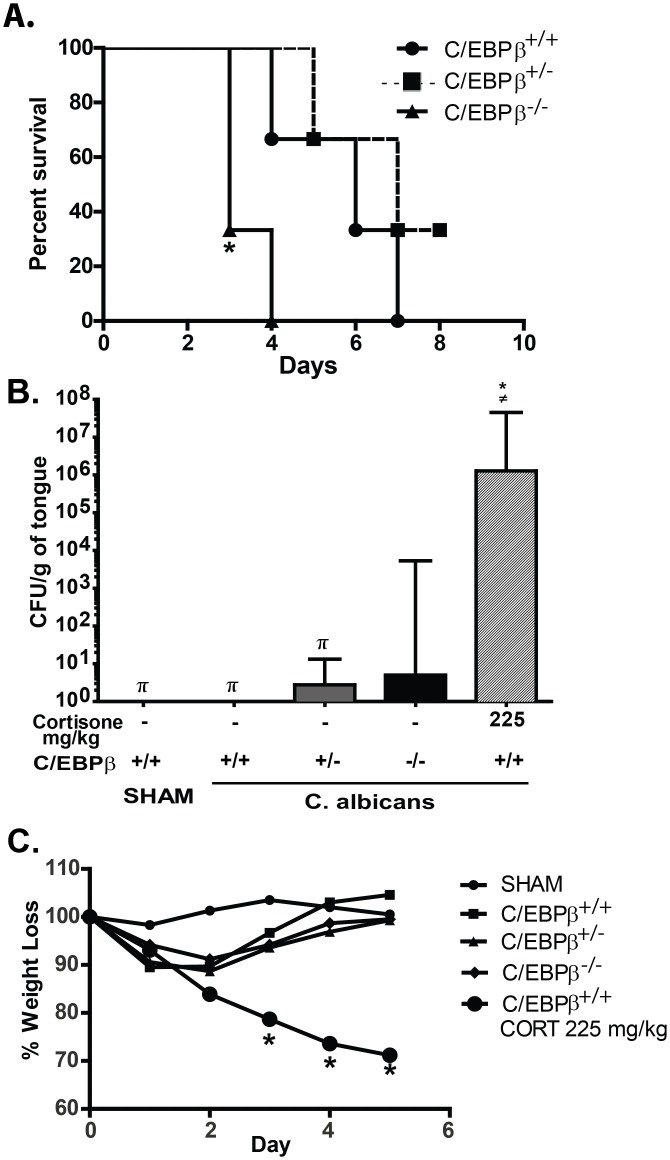
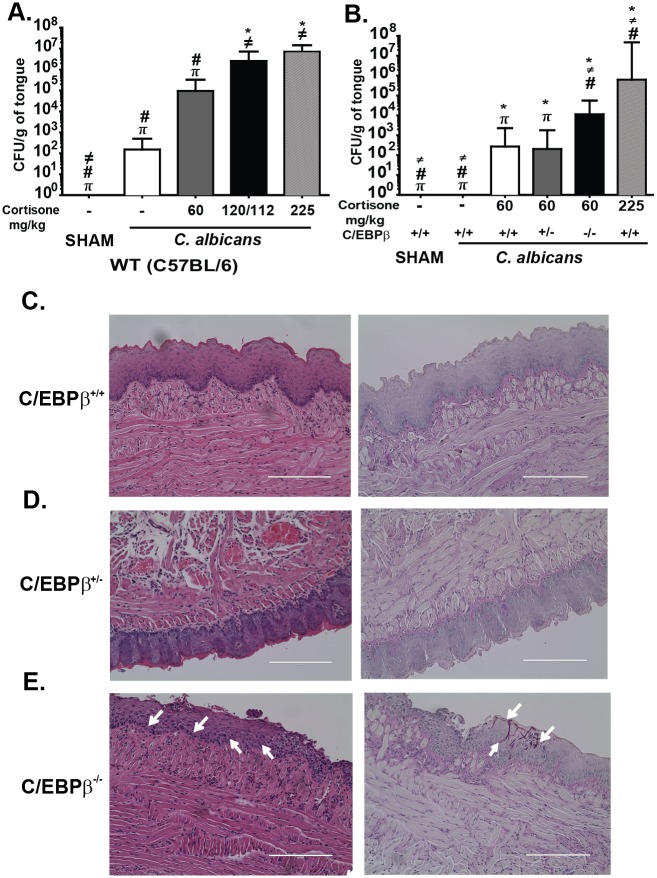
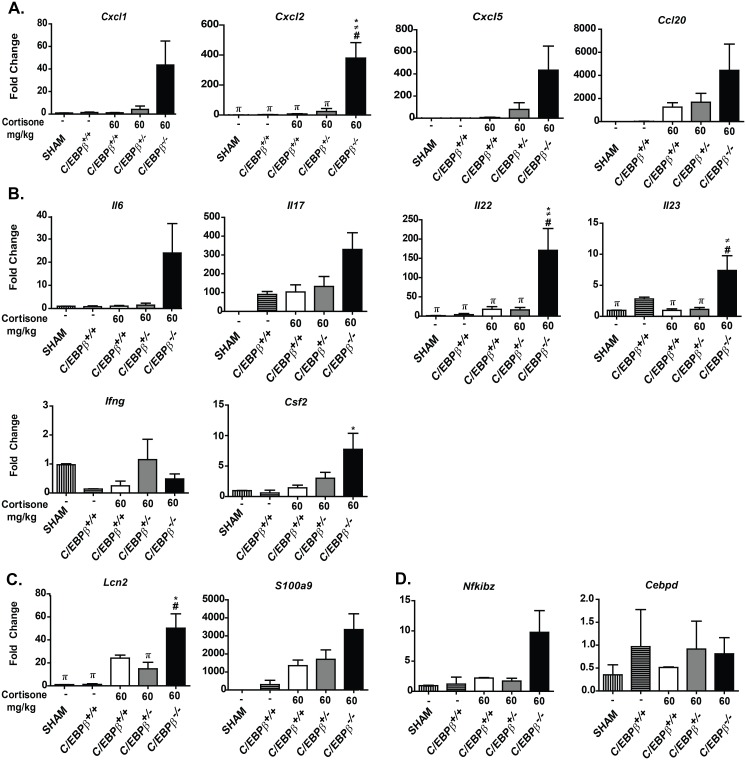
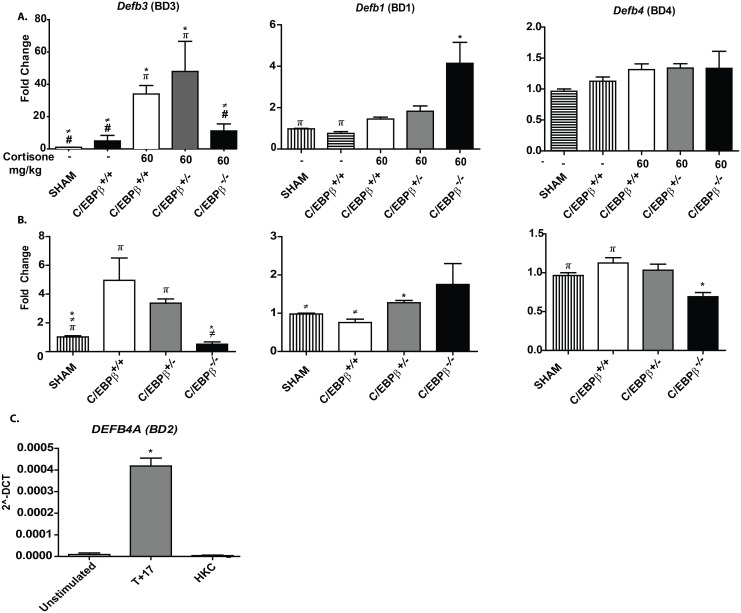
Humans or mice subjected to immunosuppression, such as corticosteroids or anti-cytokine biologic therapies, are susceptible to mucosal infections by the commensal fungus Candida albicans. Recently it has become evident that the Th17/IL-17 axis is essential for immunity to candidiasis, but the downstream events that control immunity to this fungus are poorly understood. The CCAAT/Enhancer Binding Protein-β (C/EBPβ) transcription factor is important for signaling by multiple inflammatory stimuli, including IL-17. C/EBPβ is regulated in a variety of ways by IL-17, and controls several downstream IL-17 target genes. However, the role of C/EBPβ in vivo is poorly understood, in part because C/EBPβ-deficient mice are challenging to breed and work with. In this study, we sought to understand the role of C/EBPβ in the context of an IL-17-dependent immune response, using C. albicans infection as a model system. Confirming prior findings, we found that C/EBPβ is required for immunity to systemic candidiasis. In contrast, C/EBPβ(-/-) mice were resistant to oropharyngeal candidiasis (OPC), in a manner indistinguishable from immunocompetent WT mice. However, C/EBPβ(-/-) mice experienced more severe OPC than WT mice in the context of cortisone-induced immunosuppression. Expression of the antimicrobial peptide β-defensin (BD)-3 correlated strongly with susceptibility in C/EBPβ(-/-) mice, but no other IL-17-dependent genes were associated with susceptibility. Therefore, C/EBPβ contributes to immunity to mucosal candidiasis during cortisone immunosuppression in a manner linked to β-defensin 3 expression, but is apparently dispensable for the IL-17-dependent response.
Overview
The claims and statistics of this paper haven’t been checked yet.
Free: it reads the open-access text and checks the first 5 claims that cite a source we can check. Create a free account to check every claim.
Integrity signals
Registry
Cites
Statistics
Figures
Verification
Claims the paper makes
The claims and statistics of this paper haven’t been checked yet.
Free: it reads the open-access text and checks the first 5 claims that cite a source we can check. Create a free account to check every claim.
Claims other papers make about this one
Each is checked against this paper’s own text: does it say what the citing paper says it does?
The cited source says what the claim attributes to it.
In the citing paper
“C/EBPβ-/- mice are susceptible to systemic candidiasis [48,49].”
From The Kallikrein-Kinin System: A Novel Mediator of IL-17-Driven Anti-Candida Immunity in the Kidney (2016) · cites this paper as [49]
Self-check
Percentages, sums and reported differences re-computed from the paper’s own numbers.
The self-check needs the paper’s full text.
Citations
Cites
Hidden Killers: Human Fungal Infections
Brown, G. D., Denning, D. W., Gow, N. A. R., Levitz, S. M., Netea, M. G., & White, T. C. (2012) · Science Translational Medicine · doi:10.1126/scitranslmed.3004404 · Cited by 4,284 · cited 1×
“albicans, or indeed any other fungi [4].”
Surface phenotype and antigenic specificity of human interleukin 17–producing T helper memory cells
Acosta-Rodriguez, E. V., Rivino, L., Geginat, J., Jarrossay, D., Gattorno, M., Lanzavecchia, A., Sallusto, F., & Napolitani, G. (2007) · Nature Immunology · doi:10.1038/ni1467 · Cited by 1,828 · cited 1×
“albicans-reactive T helper cells are of the Th17 lineage [5].”
Backgroundβ-Defensins: Linking Innate and Adaptive Immunity Through Dendritic and T Cell CCR6
Yang, D., Chertov, O., Bykovskaia, S. N., Chen, Q., Buffo, M. J., Shogan, J., Anderson, M., Schröder, J. M., Wang, J. M., Howard, O. M. Z., et al. (1999) · Science · doi:10.1126/science.286.5439.525 · Cited by 1,809
The IL-23-IL-17 immune axis: from mechanisms to therapeutic testing
Gaffen, S. L., Jain, R., Garg, A. V., & Cua, D. J. (2014) · Nature reviews. Immunology · doi:10.1038/nri3707 · Cited by 1,585 · cited 1×
“Although best known for its activation of pro-inflammatory signaling pathways such as NF-κB and MAPK, IL-17 also activates transcription factors (TFs) belonging to the CCAAT/Enhancer Binding Protein (C/EBP) family [10, 11].”
Self-citationCCAAT/enhancer-binding proteins: structure, function and regulation
RAMJI, D. P., & FOKA, P. (2002) · Biochemical Journal · doi:10.1042/bj20020508 · Cited by 1,400 · cited 1×
“Historically, C/EBPβ has been most extensively studied in the setting of IL-1 and LPS signaling [19, 20].”
BackgroundDickson, M. A., Hahn, W. C., Ino, Y., Ronfard, V., Wu, J. Y., Weinberg, R. A., Louis, D. N., Li, F. P., & Rheinwald, J. G. (2000) · Molecular and Cellular Biology · doi:10.1128/mcb.20.4.1436-1447.2000 · Cited by 1,104 · cited 5×
“OKF6/TERT2 cells [25] were provided by J.”
BackgroundInfluentialChronic Mucocutaneous Candidiasis in Humans with Inborn Errors of Interleukin-17 Immunity
Puel, A., Cypowyj, S., Bustamante, J., Wright, J. F., Liu, L., Lim, H. K., Migaud, M., Israel, L., Chrabieh, M., Audry, M., et al. (2011) · Science · doi:10.1126/science.1200439 · Cited by 1,056 · cited 3×
“Humans with mutations in the IL17RA gene have been identified with CMC [7].”
BackgroundConti, H. R., Shen, F., Nayyar, N., Stocum, E., Sun, J. N., Lindemann, M. J., Ho, A. W., Hai, J. H., Yu, J. J., Jung, J. W., et al. (2009) · Journal of Experimental Medicine · doi:10.1084/jem.20081463 · Cited by 1,024 · cited 6×
“albicans than mice given high dose corticosteroids [23], indicating that C/EBPβ appears to contribute to the non-IL-17-dependent arm of antifungal immunity.”
BackgroundInfluentialSelf-citationTanaka, T., Akira, S., Yoshida, K., Umemoto, M., Yoneda, Y., Shirafuji, N., Fujiwara, H., Suematsu, S., Yoshida, N., & Kishimoto, T. (1995) · Cell · doi:10.1016/0092-8674(95)90418-2 · Cited by 528 · cited 6×
“Indeed, neither IL-6-/- nor Lcn2-/- mice are susceptible to OPC [29, 40], which is consistent with the resistance of C/EBPβ-/- mice to this disease.”
BackgroundResultInfluentialKao, C.-Y., Chen, Y., Thai, P., Wachi, S., Huang, F., Kim, C., Harper, R. W., & Wu, R. (2004) · The Journal of Immunology · doi:10.4049/jimmunol.173.5.3482 · Cited by 424
Cited by
Conti, H. R., Bruno, V. M., Childs, E. E., Daugherty, S., Hunter, J. P., Mengesha, B. G., Saevig, D. L., Hendricks, M. R., Coleman, B. M., Brane, L., et al. (2016) · Cell Host & Microbe · doi:10.1016/j.chom.2016.10.001 · Cited by 177
“IL-17 is implicated in regulation of murine BD3 and its human homologue BD2 (Figs 1, 5-6, (Conti et al., 2009; Jia et al., 2000; Simpson-Abelson et al., 2015)).”
BackgroundSelf-citationMarenholz, I., Grosche, S., Kalb, B., Rüschendorf, F., Blümchen, K., Schlags, R., Harandi, N., Price, M., Hansen, G., Seidenberg, J., et al. (2017) · Nature Communications · doi:10.1038/s41467-017-01220-0 · Cited by 130
Human antimicrobial peptides in ocular surface defense
Mohammed, I., Said, D. G., & Dua, H. S. (2017) · Progress in Retinal and Eye Research · doi:10.1016/j.preteyeres.2017.03.004 · Cited by 99
Dainichi, T., Matsumoto, R., Mostafa, A., & Kabashima, K. (2019) · Frontiers in Immunology · doi:10.3389/fimmu.2019.01107 · Cited by 96
Qie, C., Jiang, J., Liu, W., Hu, X., Chen, W., Xie, X., & Liu, J. (2020) · Theranostics · doi:10.7150/thno.45614 · Cited by 71
CCAAT/Enhancer-binding protein β promotes pathogenesis of EAE
Simpson-Abelson, M. R., Hernández-Mir, G., Childs, E. E., Cruz, J. A., Poholek, A. C., Chattopadhyay, A., Gaffen, S. L., & McGeachy, M. J. (2017) · Cytokine · doi:10.1016/j.cyto.2017.01.005 · Cited by 57
Self-citationThe Kallikrein-Kinin System: A Novel Mediator of IL-17-Driven Anti-Candida Immunity in the Kidney
Ramani, K., Garg, A. V., Jawale, C. V., Conti, H. R., Whibley, N., Jackson, E. K., Shiva, S. S., Horne, W., Kolls, J. K., Gaffen, S. L., et al. (2016) · PLOS Pathogens · doi:10.1371/journal.ppat.1005952 · Cited by 43
Self-citationTargeting Th17 cells: a promising strategy to treat oral mucosal inflammatory diseases
Wang, Y., Xue, N., Wang, Z., Zeng, X. Y., Ji, N., & Chen, Q. (2023) · Frontiers in Immunology · doi:10.3389/fimmu.2023.1236856 · Cited by 36
IκBζ is an essential mediator of immunity to oropharyngeal candidiasis
Taylor, T. C., Coleman, B. M., Arunkumar, S. P., Dey, I., Dillon, J. T., Ponde, N. O., Poholek, A. C., Schwartz, D. M., McGeachy, M. J., Conti, H. R., et al. (2023) · Cell Host & Microbe · doi:10.1016/j.chom.2023.08.016 · Cited by 24
Self-citationCandida albicans Modulates Murine and Human Beta Defensin-1 during Vaginitis
Miró, M. S., Caeiro, J. P., Rodríguez, E., Vargas, L., Vigezzi, C., Icely, P. A., Castillo, G. D. V., Azcurra, A. I., Abiega, C. D., Riera, F. O., et al. (2021) · Journal of Fungi · doi:10.3390/jof8010020 · Cited by 19
“BD regulation has been well documented in Candida infection, especially in the gastrointestinal tract, and also in the course of human esophagitis [16], oropharyngeal and gastric murine models [17,18], in vitro studies [17,19], and in human oral infections with reduced levels of salivary hDB13 [20].”
BackgroundYang, X., Liu, X., Li, J., Zhang, P., Li, H., Chen, G., Zhang, W., Wang, T., Frazer, I. H., & Ni, G. (2022) · Cancers · doi:10.3390/cancers14235785 · Cited by 19
“It was demonstrated that C/EBPβ promotes immunity to mucosal candidiasis during cortisone immunosuppression in a manner associated with the expression of β-defensin 3 [63].”
BackgroundChen, Y., Han, Z., Zhang, S., Liu, H., Wang, K., Liu, J., Liu, F., Yu, S., Sai, N., Mai, H., et al. (2024) · International Journal of Molecular Sciences · doi:10.3390/ijms25042408 · Cited by 9
MiR-320 inhibits PRRSV replication by targeting PRRSV ORF6 and porcine CEBPB
Gao, X., You, X., Wang, G., Liu, M., Ye, L., Meng, Y., Luo, G., Xu, D., & Liu, M. (2024) · Veterinary Research · doi:10.1186/s13567-024-01309-7 · Cited by 9
Beute, J. E., Kim, A. Y., Park, J. J., Yang, A., Torres-Shafer, K., Mullins, D. W., & Sundstrom, P. (2022) · Frontiers in Cellular and Infection Microbiology · doi:10.3389/fcimb.2022.979701 · Cited by 6
Tan, J., Wang, D., Dong, W., Zhang, J., Li, Y., Zhao, L., Wu, X., Ren, L., Zhang, J., & Feng, Y. (2025) · Cell Cycle · doi:10.1080/15384101.2025.2539655 · Cited by 6
“These proteins target genes involved in various processes, including glycolysis and immune responses [10,11].”
Galvis, C. A. N., Cardona‐Londoño, K. J., Cardozo, M. O., & Elcoroaristizabal-Martín, X. (2022) · Heliyon · doi:10.1016/j.heliyon.2022.e10576 · Cited by 5
“In contrast, Cebpb / mice were resistant to oral candidiasis [39].”
BackgroundYang, L., Cheng, T., & Shao, J. (2023) · Medical Mycology · doi:10.1093/mmy/myad077 · Cited by 4
Liu, Y.-P., Wu, X., Meng, J.-H., Ding, M., Xu, F., Zhang, J., Yao, J., & Wang, B. (2019) · Genes · doi:10.3390/genes10100802 · Cited by 4
“Second, CEBPB is essential for regulation of the immune system [38,39] and is also involved in neuropsychiatric disorders [37] and nervous system-related signaling pathways [40].”
BackgroundPowder diet exacerbates oropharyngeal candidiasis in a mouse model
Vázquez-Muñoz, R., Thompson, A. M., Sobue, T., & Dongari‐Bagtzoglou, A. I. (2024) · Applied and Environmental Microbiology · doi:10.1128/aem.01713-23 · Cited by 2
“This is contrary to the established effects of cortisone dosing on fungal burdens with the pellet diet (23, 36, 37).”
Result[Progress on the role of Toll-like receptors in Candida albicans infections].
Yun, Z., & Jianping, P. (2016) · PubMed Central · doi:10.3785/j.issn.1008-9292.2016.05.14
Tezuka, J., Dainichi, T., Nomura, T., & Kabashima, K. (2020) · European Journal of Dermatology · doi:10.1684/ejd.2020.3814
“Of note, expression of hBD-2 is significantly impaired in congenital mucocutaneous candidiasis patients [3] and its animal model [4], suggesting critical roles for hBD-2 in the defence against candidiasis.”
BackgroundAdditional file 1 of MiR-320 inhibits PRRSV replication by targeting PRRSV ORF6 and porcine CEBPB
Gao, X., You, X., Wang, G., Liu, M., Ye, L., Meng, Y., Luo, G., Xu, D., & Liu, M. (2024) · Figshare · doi:10.6084/m9.figshare.25834119
Additional file 2 of MiR-320 inhibits PRRSV replication by targeting PRRSV ORF6 and porcine CEBPB
Gao, X., You, X., Wang, G., Liu, M., Ye, L., Meng, Y., Luo, G., Xu, D., & Liu, M. (2024) · Figshare · doi:10.6084/m9.figshare.25834275
Lubkin, A., Fellows, A., Dias, L. D. S., Oikonomou, V., & Lionakis, M. S. (2026) · mBio · doi:10.1128/mbio.02170-26
“We investigated the role of type-17 immunity in OPC susceptibility in a cortisone acetate model (8).”
Metadata
- Authors
- Simpson-Abelson, M. R., Childs, E. E., Ferreira, M. C., Bishu, S., Conti, H. R., & Gaffen, S. L.
- Affiliations
- University of Pittsburgh (US)
- Corresponding author
- Gaffen, Sarah L.
- Venue
- PLoS ONE
- Publisher
- Public Library of Science (PLoS)
- Published
- 2015-08-28
- Volume
- 10
- Issue
- 8
- Pages
- e0136538
- ISSN
- 1932-6203 (ISSN-L)
- PMC
- PMC4552893
- OpenAlex
- W1934986900
- Cited by
- 24
- References
- 53
- Citations by year
- 2026: 1 · 2025: 1 · 2024: 5 · 2023: 3 · 2022: 3 · 2021: 1 · 2020: 2 · 2019: 2 · 2017: 3 · 2016: 3
- FWCI
- 1.56
- Type
- journal article
- Language
- en
- Open access
- gold
- doi.org
- Licence
- Locations
- PLoS ONE (publishedVersion, cc-by)
- Europe PMC (PubMed Central) (publishedVersion, cc-by)
- PubMed Central (publishedVersion, cc-by)
- PubMed (publishedVersion)
- D-Scholarship@Pitt (University of Pittsburgh) (acceptedVersion)
- DOAJ (DOAJ: Directory of Open Access Journals) (submittedVersion)
- Funders
- Arthritis Foundation
- Amgen
- Eli Lilly and Company
- Pfizer
- University of Pittsburgh
- National Institutes of Health (5r37de022550-12, DE022550)
- National Institute of Allergy and Infectious Diseases (F32-AI098423, R01AI107825, F31AI098423, AI107825)
- National Institute of Dental and Craniofacial Research (R37-DE022550, F32DE023293, R01DE022550, R01DE023815, DE022550, DE023815)
- Topics
- Health Sciences › Medicine › Infectious Diseases › Antifungal resistance and susceptibility
- Life Sciences › Immunology and Microbiology › Microbiology › Antimicrobial Peptides and Activities
- Life Sciences › Immunology and Microbiology › Immunology › Immunodeficiency and Autoimmune Disorders
- Keywords
- C/EBPβ, oral candidiasis, Candida albicans, human beta-defensin 3, IL-17, Th17 cells, mucosal candidiasis, antimicrobial peptides, transcriptional regulation, systemic candidiasis
- MeSH terms
- Animals, Candida albicans, Candidiasis, Oral, Gene Expression Regulation, Mice, Knockout, Interleukin-17, CCAAT-Enhancer-Binding Protein-beta, beta-Defensins, Mice
About these checks
Registry, retraction, Cites and statistics results are computed, not judged, with one exception: a printed reference that no index lists is read once by a model before it counts as a citation error. Claims are extracted by a model and kept only when their quote appears verbatim in the text; each cited source is then checked, with a model’s help, for whether it says what the claim relies on. Those verdicts can be wrong — read the claim’s quote and the cited source before relying on one.
Statistics and arithmetic are recomputed, not judged.
Confidence bands are shown only for fields calibrated on our annotated test set. None is calibrated yet, so no band is shown.
What counts as a claim ›How we measure confidence ›How we check this ›
Are you an author, or do you see a problem with this page? Request a review
Data sources
Bibliographic data: Semantic Scholar, OpenAlex, Crossref.
Contains information from the Semantic Scholar Academic Graph Datasets, made available under the ODC Attribution License (ODC-BY 1.0).
Semantic Scholar’s data is described in: Kinney, R., et al. (2023). The Semantic Scholar Open Data Platform. arXiv:2301.10140.
