

The DOI matches its Crossref record; 78 of the 79 references it cites were found in a registry or an index.
Analytical and Clinical Validation of a Digital Sequencing Panel for Quantitative, Highly Accurate Evaluation of Cell-Free Circulating Tumor DNA
Open accessAbstract
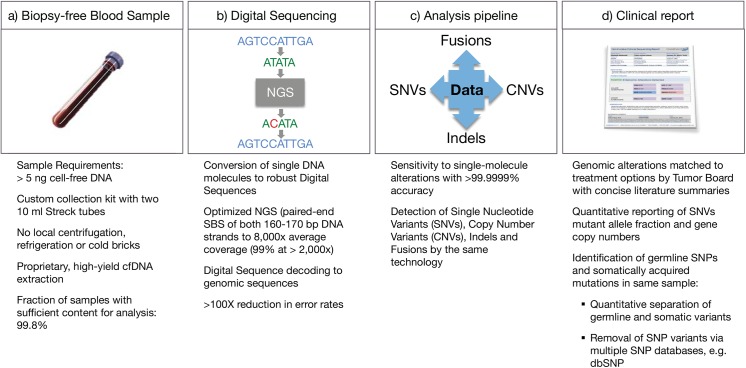
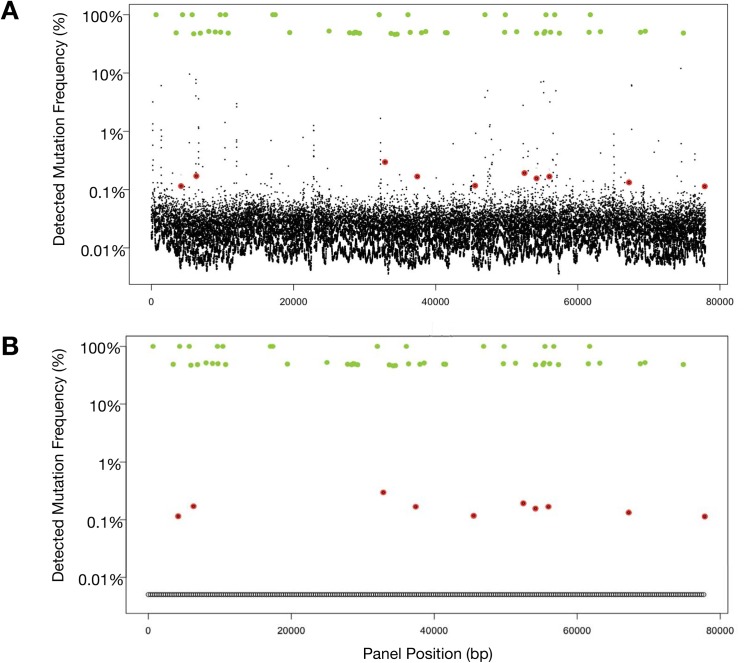
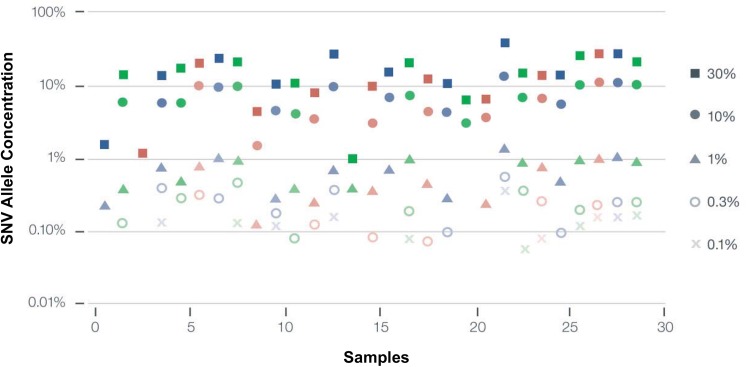
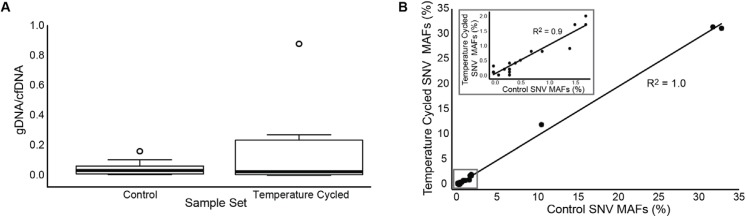
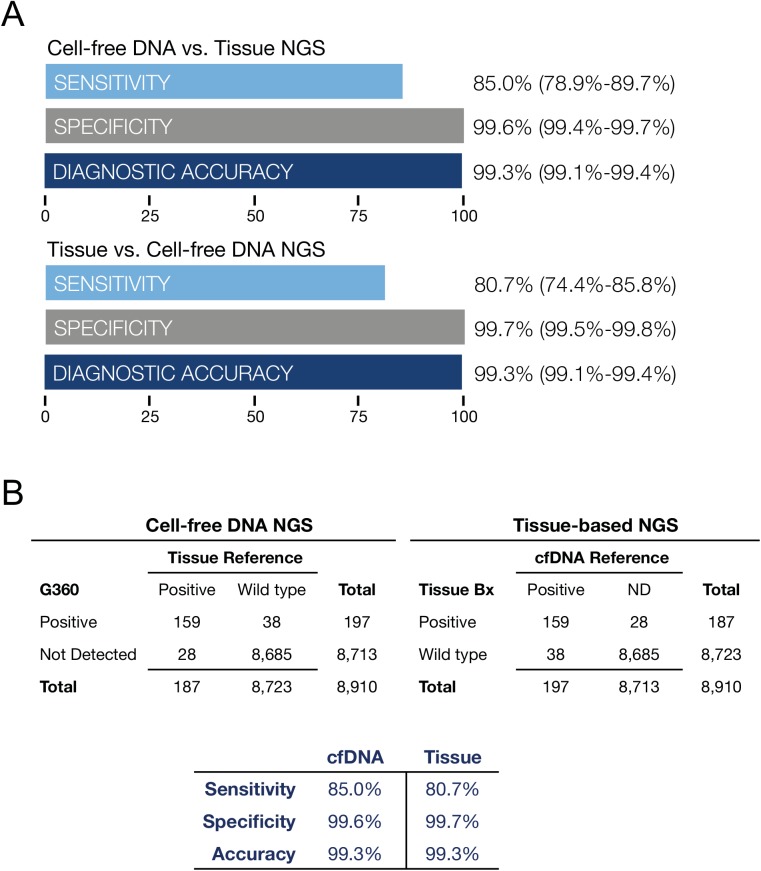
Next-generation sequencing of cell-free circulating solid tumor DNA addresses two challenges in contemporary cancer care. First this method of massively parallel and deep sequencing enables assessment of a comprehensive panel of genomic targets from a single sample, and second, it obviates the need for repeat invasive tissue biopsies. Digital Sequencing™ is a novel method for high-quality sequencing of circulating tumor DNA simultaneously across a comprehensive panel of over 50 cancer-related genes with a simple blood test. Here we report the analytic and clinical validation of the gene panel. Analytic sensitivity down to 0.1% mutant allele fraction is demonstrated via serial dilution studies of known samples. Near-perfect analytic specificity (> 99.9999%) enables complete coverage of many genes without the false positives typically seen with traditional sequencing assays at mutant allele frequencies or fractions below 5%. We compared digital sequencing of plasma-derived cell-free DNA to tissue-based sequencing on 165 consecutive matched samples from five outside centers in patients with stage III-IV solid tumor cancers. Clinical sensitivity of plasma-derived NGS was 85.0%, comparable to 80.7% sensitivity for tissue. The assay success rate on 1,000 consecutive samples in clinical practice was 99.8%. Digital sequencing of plasma-derived DNA is indicated in advanced cancer patients to prevent repeated invasive biopsies when the initial biopsy is inadequate, unobtainable for genomic testing, or uninformative, or when the patient's cancer has progressed despite treatment. Its clinical utility is derived from reduction in the costs, complications and delays associated with invasive tissue biopsies for genomic testing.
Overview
The claims and statistics of this paper haven’t been checked yet.
Run the check — free, no account needed. It reads the open-access text and checks the sources it cites.
Integrity signals
Registry
Cites
Statistics
Figures
Verification
Claims the paper makes
The claims and statistics of this paper haven’t been checked yet.
Run the check — free, no account needed. It reads the open-access text and checks the sources it cites.
Claims other papers make about this one
Each is checked against this paper’s own text: does it say what the citing paper says it does?
In the citing paper
“Moreover, ctDNA is readily detectable in lung cancer patient blood (20, 27, 29, 30), and sensitivity of variant detection was recently shown to be higher in ctDNA than CTCs (25).”
Self-check
Percentages, sums and reported differences re-computed from the paper’s own numbers.
The self-check needs the paper’s full text.
Citations
Cites
Initial sequencing and analysis of the human genome
International Human Genome Sequencing Consortium, Whitehead Institute for Biomedical Research, C. F. G. R., Lander, E. S., Linton, L. M., Birren, B., Nusbaum, C., Zody, M. C., Baldwin, J., Devon, K., Dewar, K., et al. (2001) · Nature · doi:10.1038/35057062 · Cited by 24,216
Intratumor Heterogeneity and Branched Evolution Revealed by Multiregion Sequencing
Gerlinger, M., Rowan, A. J., Horswell, S., Larkin, J., Endesfelder, D., Gronroos, E., Martinez, P., Matthews, N., Stewart, A., Tarpey, P., et al. (2012) · New England Journal of Medicine · doi:10.1056/nejmoa1113205 · Cited by 7,774 · cited 1×
“different biopsies of the two tumors each typically missed one-third of the nonsynonymous somatic mutations found elsewhere in the tumor despite sequencing to 250-fold coverage [13].”
BackgroundNowell, P. C. (1976) · Science · doi:10.1126/science.959840 · Cited by 6,471 · cited 1×
“Peter Nowell posited almost 40 years ago that “each patient's cancer may require individual specific therapy, and even this may be thwarted by emergence of a genetically variant subline [subclone] resistant to the treatment” [62].”
BackgroundDetection of Circulating Tumor DNA in Early- and Late-Stage Human Malignancies
Bettegowda, C., Sausen, M., Leary, R. J., Kinde, I., Wang, Y., Agrawal, N., Bartlett, B. R., Wang, H., Luber, B., Alani, R. M., et al. (2014) · Science Translational Medicine · doi:10.1126/scitranslmed.3007094 · Cited by 5,067
Glucocorticoid-induced thymocyte apoptosis is associated with endogenous endonuclease activation
Wyllie, A. H. (1980) · Nature · doi:10.1038/284555a0 · Cited by 4,495 · cited 1×
“Cell-free circulating tumor DNA consists mainly of 166 base pair double-stranded DNA fragments resulting from apoptosis, necrosis or release of nuclear DNA into the circulation [18,19].”
BackgroundAccurate whole human genome sequencing using reversible terminator chemistry
Bentley, D. R., Balasubramanian, S., Swerdlow, H. P., Smith, G. P., Milton, J., Brown, C. G., Hall, K. P., Evers, D. J., Barnes, C. L., Bignell, H. R., et al. (2008) · Nature · doi:10.1038/nature07517 · Cited by 3,684 · cited 2×
“The 165 matched plasma and tissue samples were both analyzed on the Illumina Hi-Seq 2500 platform, the cfDNA analyzed using the digital sequencing method described herein and the DNA isolated from tissue samples analyzed using standard prep as per the manufacturer’s instructions [76].”
MethodA collection of breast cancer cell lines for the study of functionally distinct cancer subtypes
Neve, R. M., Chin, K., Fridlyand, J., Yeh, J., Baehner, F. L., Fevr, T., Clark, L., Bayani, N., Coppé, J., Tong, F. K., et al. (2006) · Cancer Cell · doi:10.1016/j.ccr.2006.10.008 · Cited by 3,224
Towards complete and accurate reporting of studies of diagnostic accuracy: The STARD Initiative.
Bossuyt, P. M., Reitsma, J. B., Bruns, D. E., Gatsonis, C. A., Glasziou, P. P., Irwig, L. M., Lijmer, J. G., Moher, D., Rennie, D., de Vet, H. C. W., et al. (2003) · Annals of Internal Medicine · doi:10.7326/0003-4819-138-1-200301070-00010 · Cited by 3,219
Towards complete and accurate reporting of studies of diagnostic accuracy: the STARD initiative
Bossuyt, P. M., Reitsma, J. B., Bruns, D. E., Gatsonis, C. A., Glasziou, P. P., Irwig, L. M., Lijmer, J. G., Moher, D., Rennie, D., & de Vet, H. C. W. (2003) · BMJ · doi:10.1136/bmj.326.7379.41 · Cited by 3,215
Cell-free nucleic acids as biomarkers in cancer patients
Schwarzenbach, H., Hoon, D. S. �., & Pantel, K. (2011) · Nature reviews. Cancer · doi:10.1038/nrc3066 · Cited by 2,897
Research works printed but not linked: 5
- Rosen S. World Market for Cancer Diagnostics, 5th Edition. 2013.
- P Mandel, 1948, Les acides nucléiques du plasma sanguin chez l’homme, CR Acad Sci Paris, 142, 241
- AmirAli Talasaz, 2014, Non-invasive and sequential profiling of metastatic solid tumors by Digital Sequencing of cell-free DNA [Abstract 3422S], Am Soc Hum Genet Annu Meet
- A Drilon, 2015, Broad, hybrid capture-based next-generation sequencing identifies actionable genomic alterations in “driver-negative” lung adenocarcinomas, Clin Cancer Res Off J Am Assoc Cancer Res
- Maryke Appel Victoria van Kets, 2014, Kapa Hyper Prep: A next-generation kit for fast and efficient library construction from challenging DNA samples. [Abstract], Adv Genome Biol Technol
Cited by
Sorted by citations
Items 401–500 of 701
Plasma DNA Analysis in Prostate Cancer: Opportunities for Improving Clinical Management
Wu, A., & Attard, G. (2018) · Clinical Chemistry · doi:10.1373/clinchem.2018.287250 · Cited by 18
Blood-Based Next-Generation Sequencing Analysis of Appendiceal Cancers
Shaib, W. L., Zakka, K. M., Staley, C. A., Roberts, A., Akce, M., Wu, C. S.-Y., Alese, O. B., & El‐Rayes, B. F. (2019) · The Oncologist · doi:10.1634/theoncologist.2019-0558 · Cited by 18
“, as a result of immune lysis), as well as the somatic ctDNA [28].”
BackgroundVidula, N., Niemierko, A., Malvarosa, G., Yuen, M., Lennerz, J. K., Iafrate, A. J., Wander, S. A., Spring, L. M., Juric, D., Isakoff, S. J., et al. (2021) · Clinical Cancer Research · doi:10.1158/1078-0432.ccr-20-3444 · Cited by 17
“No targeted trial available (1) On first line therapy (10)”
BackgroundAnalysis of cfDNA fragmentomics metrics and commercial targeted sequencing panels
Helzer, K. T., Sharifi, M. N., Sperger, J. M., Chrostek, M. R., Bootsma, M. L., Reese, S. R., Taylor, A. K., Kaufmann, K. R., Krause, H. M., Schehr, J. L., et al. (2025) · Nature Communications · doi:10.1038/s41467-025-64153-z · Cited by 16
Lin, E., Hahn, A. W., Nussenzveig, R. H., Wesołowski, S., Sayegh, N., Maughan, B. L., McFarland, T. R., Rathi, N., Sirohi, D., Sonpavde, G., et al. (2021) · The Oncologist · doi:10.1002/onco.13869 · Cited by 16
“CNAs were determined by evaluating whether gene-level probe counts were overrepresented compared with the baseline diploid count, established within each patient’s own sample, using prespecified statistical decision thresholds [12, 13].”
MethodInfluentialAffolter, K. E., Hellwig, S., Nix, D. A., Bronner, M. P., Thomas, A., Fuertes, C. L., Hamil, C. L., Garrido‐Laguna, I., Scaife, C. L., Mulvihill, S. J., et al. (2021) · Neoplasia · doi:10.1016/j.neo.2021.06.005 · Cited by 16
“[15] Lanman RB , Mortimer SA , Zill OA , Sebisanovic D , Lopez R , Blau S ,”
BackgroundMakarem, M., Ezeife, D. A., Smith, A. C., Li, J. J. N., Law, J. H., Tsao, M., & Leighl, N. B. (2021) · Current Oncology · doi:10.3390/curroncol28050284 · Cited by 16
“Finally, circulating tumor DNA (ctDNA) testing using a commercial assay in all patients was also included as a clinician-initiated strategy [22].”
MethodClinical application of circulating tumor DNA in breast cancer
Chan, J. C. H., Chow, J. C. H., Ho, C. H. M., Tsui, T. Y. M., & Cho, W. C. S. (2021) · Journal of Cancer Research and Clinical Oncology · doi:10.1007/s00432-021-03588-5 · Cited by 20
Koh, Y., Nakano, K., Katayama, K., Yamamichi, G., Yumiba, S., Tomiyama, E., Matsushita, M., Hayashi, Y., Yamamoto, Y., Kato, T., et al. (2022) · International Journal of Urology · doi:10.1111/iju.14816 · Cited by 16
Clinical applications of liquid biopsies in gastrointestinal oncology
Zhu, J., & Strickler, J. H. (2016) · Journal of Gastrointestinal Oncology · doi:10.21037/jgo.2016.08.08 · Cited by 15
“His pleural effusion had fewer than 1% malignant cells on cytospin and a NGS assay was unable to detect tumor DNA.”
InfluentialA liquid biopsy in primary lung cancer
Yoneda, K., Imanishi, N., Ichiki, Y., & Tanaka, F. (2018) · Surgery Today · doi:10.1007/s00595-018-1659-2 · Cited by 17
“At present, several NGS-based platforms, such as Guardant360 (Guardant Health, Redwood City, CA, USA) [43] and FoundationACT (Foundation Medicine, Cambridge, MA, USA) [74], are commercially available.”
Origin of circulating free DNA in patients with lung cancer
Abe, T., Nakashima, C., Sato, A., Harada, Y., Sueoka, E., Kimura, S. H., Kawaguchi, A., & Sueoka‐Aragane, N. (2020) · PLoS ONE · doi:10.1371/journal.pone.0235611 · Cited by 16
Emerging uses of circulating tumor DNA in advanced stage non-small cell lung cancer
Marmarelis, M. E., Thompson, J. C., Aggarwal, C., Evans, T. L., Carpenter, E. L., Cohen, R. B., Langer, C. J., & Bauml, J. M. (2017) · Annals of Translational Medicine · doi:10.21037/atm.2017.07.29 · Cited by 15
“Targeted NGS of ctDNA has been shown to provide a high degree of accuracy across multiple tumor types (23,24).”
BackgroundGhatalia, P., Smith, C. H., Winer, A., Gou, J., Kiedrowski, L. A., Slifker, M. J., Saltzberg, P. D., Bubes, N., Anari, F. M., Kasireddy, V., et al. (2019) · Frontiers in Oncology · doi:10.3389/fonc.2018.00652 · Cited by 15
“For each sample, cfDNA was extracted from stabilized whole blood and between 5 and 30 ng of cfDNA input per sample was analyzed as described previously (3, 13).”
BackgroundMethodFerreira, D., Miranda, J., Martins‐Lopes, P., Adega, F., & Chaves, R. (2021) · International Journal of Molecular Sciences · doi:10.3390/ijms22083815 · Cited by 15
“• Foundation-One Liquid CDx (Foundation Medicine, Cambridge, MA, USA)—designed to detect alterations, such as point mutations, insertions and deletions, in 311 genes, rearrangements in four genes, and copy number variations in three genes using a targeted high-throughput hybridization-based capture technology [5]; • G…”
MethodHsiehchen, D., Kainthla, R., Kline, H., Siglinsky, E., Ahn, C. W., & Zhu, H. (2025) · Nature Communications · doi:10.1038/s41467-025-60757-7 · Cited by 15
Mamann, A., Pradat, Y., Bidard, F., Delaloge, S., Cabel, L., Faull, I., Marques, S., Bachelot, T., Dalenc, F., Rouge, T. D. L. M., et al. (2025) · Annals of Oncology · doi:10.1016/j.annonc.2025.06.015 · Cited by 15
Circulating tumor DNA: toward evolving the clinical paradigm of pancreatic ductal adenocarcinoma
Topham, J. T., Renouf, D. J., & Schaeffer, D. F. (2023) · Therapeutic Advances in Medical Oncology · doi:10.1177/17588359231157651 · Cited by 14
Overview of the role of liquid biopsy in cancer management
Assi, T., Khoury, R., Ibrahim, R., Baz, M., Ibrahim, T., & Cesne, A. L. (2023) · Translational Oncology · doi:10.1016/j.tranon.2023.101702 · Cited by 15
Wever, B. M. M., & Steenbergen, R. D. M. (2024) · Molecular Oncology · doi:10.1002/1878-0261.13628 · Cited by 15
“The abundance of tumor-derived cfDNA also differs per tumor type and stage, depending on tumor localization and vascularization [23,24].”
Till, J. E., McDaniel, L., Chang, C., Long, Q., Pfeiffer, S. M., Lyman, J. P., Padrón, L., Maurer, D. M., Yu, J. X., Spencer, C. N., et al. (2024) · Nature Communications · doi:10.1038/s41467-024-49915-5 · Cited by 16
“Additionally, a sensitivity analysis at LODs of 0.10% and 0.25%, levels typically used for clinical NGS ctDNA testing 27 also yielded similar results (Supplementary Table 5).”
InfluentialGenomic Landscape of ctDNA and Real-World Outcomes in Advanced Endometrial Cancer
Pina, P. S., Clemens, K. M., Bubie, A., Grant, B., Haynes, G., Zhang, N. J., Drusbosky, L. M., & Lheureux, S. (2024) · Clinical Cancer Research · doi:10.1158/1078-0432.ccr-24-2105 · Cited by 14
Possible application of circulating free tumor DNA in non-small cell lung cancer patients
Karachaliou, N., Sosa, A. E., Molina‐Vila, M. Á., Ruiz, M. C., & Rosell, R. (2017) · Journal of Thoracic Disease · doi:10.21037/jtd.2017.09.59 · Cited by 14
“For instance, platelets can sequester tumor RNA through a microvesicle driven mechanism and can be Table 2 Commercially developed liquid biopsy kits Test Company Methodology Mutations detected Status Reference Cobas EGFR Mutation test v2 Roche Molecular diagnostics Real-time PCR amplification test Exon 18 (G719X) subs…”
BackgroundInfluentialThe cornerstone of integrating circulating tumor DNA into cancer management
Li, Z., Yi, L., Gao, P., Zhang, R., & Li, J. (2018) · Biochimica et Biophysica Acta (BBA) - Reviews on Cancer · doi:10.1016/j.bbcan.2018.11.002 · Cited by 14
Cell-Free Circulating Epimarks in Cancer Monitoring
Duforestel, M., Briand, J., Bougras-Cartron, G., Heymann, D., Frenel, J., Vallette, F. M., & Cartron, P. (2020) · Epigenomics · doi:10.2217/epi-2019-0170 · Cited by 15
The Role of the Liquid Biopsy in Decision-Making for Patients with Non-Small Cell Lung Cancer
Akhoundova, D., Mosquera, J., Musmann, L. E., Britschgi, C., Rütsche, C., Rechsteiner, M., Nadal, E., Campelo, M. R. G., & Fontecedro, A. C. (2020) · Journal of Clinical Medicine · doi:10.3390/jcm9113674 · Cited by 14
“NGS-based liquid biopsy assays, such as OncomineTM Lung cfDNA Assay or GUARDANT360® Circulating Tumor DNA Assay, have shown sensitivities for detection of covered genomic alterations ranging from 58% to 87%, with specificities up to 99–100% [86,87].”
MethodJonas, H., Simnica, D., Bußmann, L., Zech, H. B., Doescher, J., Laban, S. A., Busch, C., & Binder, M. (2022) · Oral Oncology · doi:10.1016/j.oraloncology.2022.105733 · Cited by 14
Jacob, S. L., Kiedrowski, L. A., & Chae, Y. K. (2020) · Heliyon · doi:10.1016/j.heliyon.2020.e03841 · Cited by 14
Locally Recurrent Secretory Carcinoma of the Breast with NTRK3 Gene Fusion
Mortensen, L. J., Ordulu, Z., Dagogo‐Jack, I., Bossuyt, V., Winters, L. N., Taghian, A. G., Smith, B. L., Ellisen, L. W., Kiedrowski, L. A., Lennerz, J. K., et al. (2021) · The Oncologist · doi:10.1002/onco.13880 · Cited by 14
“Guardant360 is a commercially available, NGS-based assay that identifies potential tumorrelated (somatic) genomic alterations via sequencing of critical exons within up to 83 cancer-related genes [25, 26].”
BackgroundKato, S., Gumas, S., Adashek, J. J., Okamura, R., Lee, S., Sicklick, J. K., & Kurzrock, R. (2022) · Molecular Oncology · doi:10.1002/1878-0261.13293 · Cited by 13
“Blood-derived cfDNA analysis was performed by Guardant Health ( N = 66; Redwood City, CA, USA, www.guardanthealth.com), a CLIA-certified laboratory with assay panels of 54 ( N = 1), 68 ( N = 4), 70 ( N = 17) and 73 genes ( N = 44) [19].”
MethodGerratana, L., Davis, A. A., Velimirovic, M., Clifton, K., Hensing, W. L., Shah, A. N., Dai, C. S., Reduzzi, C., D’Amico, P., Wehbe, F., et al. (2023) · Breast Cancer Research · doi:10.1186/s13058-023-01718-0 · Cited by 13
“…using the commercial Guardant360 ™ NGS platform (Guardant Health, CA), a 72-gene panel based on single-molecule digital sequencing was utilized to detect somatic single nucleotide variants (SNVs), insertions/deletions (indels), gene fusions/rearrangements and copy number variations (CNVs) [21–23].”
MethodFGFR2-fusions define a clinically actionable molecular subset of pancreatic cancer
Stein, L., Murugesan, K., Reeser, J. W., Risch, Z. A., Wing, M. R., Paruchuri, A., Samorodnitsky, E., Hoskins, E. L., Dao, T., Smith, A. M., et al. (2024) · npj Precision Oncology · doi:10.1038/s41698-024-00683-x · Cited by 13
“Similar to patient 3, concurrent testing with Guardant 360 failed to detect his FGFR2-INA fusionwhileFGFR-Dxdetectedit at 0.62%after90 weeks on pemigatinib 11,12 .”
ResultInfluentialHicks, J. K., Saller, J. J., Wang, E., Boyle, T. A., & Gray, J. E. (2017) · Lung Cancer · doi:10.1016/j.lungcan.2017.06.015 · Cited by 13
BRCAness and prostate cancer: diagnostic and therapeutic considerations
Dhawan, M., & Ryan, C. J. (2018) · Prostate Cancer and Prostatic Diseases · doi:10.1038/s41391-018-0069-2 · Cited by 14
Decoding the evolutionary response to prostate cancer therapy by plasma genome sequencing
Ramesh, N., Sei, E., Tsai, P. C., Bai, S., Zhao, Y., Troncoso, P., Corn, P. G., Logothetis, C. J., Zurita, A. J., & Navin, N. E. (2020) · Genome biology · doi:10.1186/s13059-020-02045-9 · Cited by 11
Rosenberg, S., Okamura, R., Kato, S., Soussi, T., & Kurzrock, R. (2020) · Molecular Cancer Therapeutics · doi:10.1158/1535-7163.mct-20-0097 · Cited by 13
“Post-sequencing bioinformatics matches the complementary strands of each barcoded DNA fragment to remove false-positive results(24).”
BackgroundMethodInfluentialNovel Somatic Alterations in Unicentric and Idiopathic Multicentric Castleman Disease
Goodman, A., Jeong, A.-R., Phillips, A. D., Wang, H.-Y., Sokol, E., Cohen, P. R., Sicklick, J., Fajgenbaum, D., & Kurzrock, R. (2021) · European Journal of Haematology · doi:10.1111/ejh.13702 · Cited by 13
“33 Briefly, at least 5.0 ng of DNA was extracted from peripheral blood and oligo-nucleotide barcoding of each DNA strand was performed.”
MethodInfluentialShah, U. J., Alsulimani, A., Ahmad, F., Mathkor, D. M., Alsaieedi, A., Harakeh, S., Nasiruddin, M., & Haque, S. (2022) · Biotechnology and Genetic Engineering Reviews · doi:10.1080/02648725.2022.2108994 · Cited by 14
“Next-generation high-throughput sequencing technologies are currently being applied to detect extensive plasma cfDNA alterations (Gale et al., 2018; Kockan et al., 2017; Lanman et al., 2015; Verma et al., 2020).”
BackgroundArray‐basierte Sensorik mit der “chemischen Nase” in der Diagnostik und Wirkstoffentdeckung
Geng, Y., Peveler, W. J., & Rotello, V. M. (2018) · Angewandte Chemie · doi:10.1002/ange.201809607 · Cited by 13
Hagi, T., Kurokawa, Y., Takahashi, T., Saito, T., Yamashita, K., Tanaka, K., Makino, T., Yamasaki, M., Nakajima, K., Mori, M., et al. (2019) · Oncology · doi:10.1159/000504808 · Cited by 13
Matsudera, S., Kano, Y., Aoyagi, Y., Tohyama, K., Takahashi, K., Kumaki, Y., Mitsumura, T., Kimura, K., Onishi, I., Takemoto, A., et al. (2021) · Annals of Surgical Oncology · doi:10.1245/s10434-021-09856-5 · Cited by 13
Khaddour, K., Ansstas, M., & Ansstas, G. (2021) · Molecular Case Studies · doi:10.1101/mcs.a006129 · Cited by 13
“Longitudinal analysis of ctDNA was performed on the patient’s peripheral blood using Guardant360 CDx before starting nivolumab and olaparib and at 2 mo (Lanman et al. 2015).”
MethodMyint, K. Z. Y., Shimabuku, M., Horio, R., Kaneda, M., Shimizu, Y., & Taguchi, J. (2023) · Cancer Treatment and Research Communications · doi:10.1016/j.ctarc.2023.100701 · Cited by 14
Laguna, J. C., Pastor, B., Nalda, I., Hijazo‐Pechero, S., Teixidó, C., Potrony, M., Puig‐Butillé, J. A., & Mezquita, L. (2024) · British Journal of Cancer · doi:10.1038/s41416-024-02607-9 · Cited by 13
“To alert clinicians, certain assays [35, 36] provide explanation in the reports that the alterations identi fi ed may include somatic or germline alterations.”
Ye, P. P., Viens, R., Shelburne, K. E., Langpap, S., Bower, X., Shi, J. J., Zhou, W., Wignall, J., Zhu, J. J., Woodward, B. D., et al. (2025) · Scientific Reports · doi:10.1038/s41598-025-90013-3 · Cited by 12
“…we did not test contrived tumor fractions less than 0.25% in this study, Northstar Response should theoretically have superior CV at even smaller tumor fractions, which is particularly relevant because a significant percent of somatic mutations in late-stage cancer patients have VAF below 0.2% 19 .”
InfluentialJazieh, K., Tsai, J., Solomon, S. R., Zhu, M., Sinicrope, F. A., Pedersen, K. S., Fernández-Zapico, M. E., & Xie, H. (2025) · Clinical Cancer Research · doi:10.1158/1078-0432.ccr-24-2948 · Cited by 14
Kuligina, E. S., Yanus, G. A., & Имянитов, Е. Н. (2025) · Exploration of Targeted Anti-tumor Therapy · doi:10.37349/etat.2025.1002333 · Cited by 12
Utility of cell-free nucleic acid and circulating tumor cell analyses in prostate cancer
Sonpavde, G., & Gourdin, T. S. (2018) · Asian Journal of Andrology · doi:10.4103/aja.aja_1_18 · Cited by 12
Non-invasive genotyping of metastatic colorectal cancer using circulating cell free DNA
Shi, X., Duose, D. Y., Mehrotra, M., Harmon, M. A., Hu, P. C., Wistuba, I. I., Kopetz, S., & Luthra, R. (2019) · Cancer Genetics · doi:10.1016/j.cancergen.2019.06.004 · Cited by 12
Kunimasa, K., Kato, K., Imamura, F., & Kukita, Y. (2019) · PLoS ONE · doi:10.1371/journal.pone.0222233 · Cited by 12
Harada, Y., Sato, A., Nakamura, H., Kai, K., Kitamura, S., Nakamura, T., Kurihara, Y., Ikeda, S., Sueoka, E., Kimura, S. H., et al. (2023) · BMC Cancer · doi:10.1186/s12885-022-10428-3 · Cited by 13
Dizman, N., Bergerot, P. G., Bergerot, C. D., Lanman, R. B., Raymond, V. M., Banks, K. C., Jones, J. O., & Pal, S. K. (2017) · European Urology · doi:10.1016/j.eururo.2017.08.006 · Cited by 12
“Methods related to this Clinical Laboratory Improvement Amendments-certified, College of American Pathologists-accredited test have been previously published [4].”
MethodOno, A., Isaka, M., Serizawa, M., Omae, K., Kojima, H., Nakashima, K., Omori, S., Wakuda, K., Kenmotsu, H., Naito, T., et al. (2018) · Lung Cancer · doi:10.1016/j.lungcan.2018.12.005 · Cited by 12
Cell-free DNA testing: future applications in gastroenterology and hepatology
Zandvakili, I., & Lazaridis, K. N. (2019) · Therapeutic Advances in Gastroenterology · doi:10.1177/1756284819841896 · Cited by 12
Detection of mutational patterns in cell‐free DNA of colorectal cancer by custom amplicon sequencing
Herrmann, S., Zhan, T., Betge, J., Rauscher, B., Belle, S., Gutting, T., Schulte, N., Jesenofsky, R., Härtel, N., Gaiser, T., et al. (2019) · Molecular Oncology · doi:10.1002/1878-0261.12539 · Cited by 12
“While some mutations in key oncogenes occur at high frequency across many tumors, most genetic alterations are tissue-specific or even highly variable between cancers of the same tissue origin (Lanman et al., 2015).”
BackgroundAlhalabi, O., Hahn, A. W., Msaouel, P., Andreev-Drakhlin, A. Y., Meric‐Bernstam, F., Naing, A., Piha-Paul, S. A., Jankú, F., Pant, S., Yap, T. A., et al. (2020) · Molecular Cancer Research · doi:10.1158/1541-7786.mcr-20-0751 · Cited by 12
“Tumor NGS was either performed on tumor tissue, using one of five CLIA-certified laboratory tests with a range of 50–400 cancer-related genes assessed, or circulating tumor DNA (ctDNA), using Guardant360.”
MethodSueoka‐Aragane, N., Nakashima, C., Yoshida, H., Matsumoto, N., Iwanaga, K., Ebi, N., Nishiyama, A., Yatera, K., Kuyama, S., Fukuda, M., et al. (2021) · Cancer Medicine · doi:10.1002/cam4.3929 · Cited by 13
Characterizing the Cancer Genome in BloodPreprint
Dawson, S. (2018) · Cold Spring Harbor Perspectives in Medicine · doi:10.1101/cshperspect.a026880 · Cited by 12
“2014) or hybrid capture (e.g., Newman et al. 2014, 2016; Lanman et al. 2015; Phallen et al. 2017) target enrichment have been used to sequence specified genomic regions in plasma DNA and detect mutations in panels of commonly altered genes across various tumor types.”
BackgroundMethodNoji, R., Tohyama, K., Nakamura, S., Naito, T., Oikawa, Y., Kuroshima, T., Tomioka, H., Michi, Y., Ikeda, S., Asakage, T., et al. (2024) · International Journal of Molecular Sciences · doi:10.3390/ijms26010235 · Cited by 11
“Guardant360 sequences 74 cancer-associated genes to identify somatic alterations. cfDNA was extracted from plasma, enriched for targeted regions, and sequenced using the Illumina platform with hg19 as the reference genome [35–37].”
Homologous recombination deficiency and hemizygosity drive resistance in breast cancer
Safonov, A. M., Lee, M. K., Brown, D. N., Bielo, L. B., Mehine, M. M., Bandlamudi, C., O’Leary, B., Shao, H., Vicente, L., Muldoon, D. M., et al. (2026) · Nature · doi:10.1038/s41586-026-10197-0 · Cited by 13
“75).”
The Landscape of ctDNA in Appendiceal Adenocarcinoma
White, M. G., Zeineddine, M. A. A., Fallon, E. A., Zeineddine, F. A., Dansby, J., Chowdhury, S., Hornstein, N. J., Yousef, A. M. G., Yousef, M., Bhutiani, N., et al. (2024) · Clinical Cancer Research · doi:10.1158/1078-0432.ccr-24-2474 · Cited by 11
Plasma T790M Result Alters Treatment Options in a Previously T790 Wild-Type EGFR -Mutant Lung Cancer
Piotrowska, Z., Drapkin, B. J., Engelman, J. A., Nagy, R. J., Lanman, R. B., & Sequist, L. V. D. (2016) · Journal of Thoracic Oncology · doi:10.1016/j.jtho.2016.03.020 · Cited by 11
“Targeted NGS of the ctDNA (Guardant Health, Inc., Redwood City, CA) identified EGFR L858R at a 13%mutant allele fraction (MAF) with a subpopulation of T790M at 1.5% MAF.1 Shortly thereafter (4 weeks into nivolumab treatment), the patient’s cough worsened and hemoptysis and gait imbalance developed.”
BackgroundInfluentialThe Opportunities and Challenges of Molecular Tagging Next-Generation Sequencing in Liquid Biopsy
Luca, G. D., & Dono, M. (2021) · Molecular Diagnosis & Therapy · doi:10.1007/s40291-021-00542-6 · Cited by 11
“) NGS panel includes 73 cancer-related genes with an expected sequencing depth of ~ 15,000×, which enables variant calling and filtering of SNVs, indels, CNVs, and fusions [70, 71].”
BackgroundMiyahira, A. K., Roychowdhury, S., Goswami, S., Ippolito, J. E., Priceman, S. J., Pritchard, C. C., Sfanos, K. S., Subudhi, S. K., Simons, J. W., Pienta, K. J., et al. (2016) · The Prostate · doi:10.1002/pros.23260 · Cited by 11
Identification of Actionable Genomic Alterations Using Circulating Cell-Free DNA
Sánchez, N., Kahle, M., Bailey, A. M., Wathoo, C., Balaji, K., Demirhan, M. E., Yang, D., Javle, M. M., Kaseb, A. O., Eng, C., et al. (2019) · JCO Precision Oncology · doi:10.1200/po.19.00017 · Cited by 11
“Amplification levels detected ranged from positive, strongly positive, to very strongly positive, as previously defined.(9-14) Genes most frequently reported with very strong positive amplification levels were CCNE1, FGFR1, MET, ERBB2, and AR.”
BackgroundMethodPutting comprehensive genomic profiling of ctDNA to work: 10 proposed use cases
Desai, A. P., Pasquina, L. W., Nulsen, C., Keller-Evans, R. B., Mata, D. A., Tukachinsky, H., & Oxnard, G. R. (2024) · The Journal of Liquid Biopsy · doi:10.1016/j.jlb.2024.100140 · Cited by 10
“Multiple panels emerged in parallel with the inclusion of key genes for a range of common cancer types, spanning up to 72 genes [8 – 10] or more [7,11].”
Zollinger, D. R., Rivers, E., Fine, A. D., Huang, Y., Son, J., Kalyan, A., Gray, W., Baharian, G., Hammond, C., Ram, R. R., et al. (2024) · PLoS ONE · doi:10.1371/journal.pone.0302129 · Cited by 10
Racial Differences in ctDNA Profiles, Targeted Therapy Use, and Outcomes in Metastatic Breast Cancer
Podany, E. L., Foffano, L., Gerratana, L., Medford, A. J., Clifton, K., Tapiavala, S., Velimirovic, M., Lipsyc-Sharf, M. D., Reduzzi, C., Bubie, A., et al. (2025) · JAMA Network Open · doi:10.1001/jamanetworkopen.2024.61899 · Cited by 10
Wang, X., Gao, Y., Wang, B., Zhang, Z., Liang, C., Feng, H., Guo, Y., Da, J., Mo, M., Zhang, M., et al. (2017) · Archives of Pathology & Laboratory Medicine · doi:10.5858/arpa.2016-0083-oa · Cited by 10
He, K., Zhang, S., Shao, L. L., Yin, J. C., Wu, X., Shao, Y. W., Yuan, S., & Yu, J. (2019) · Cancer Letters · doi:10.1016/j.canlet.2019.12.004 · Cited by 9
The History and Future of Basic and Translational Cell-Free DNA Research at a Glance
Gahan, P. B., Schwarzenbach, H., & Anker, P. (2022) · Diagnostics · doi:10.3390/diagnostics12051192 · Cited by 10
“In particular, ctDNA analyses using NGS cancer gene panels have been demonstrated to have the potential to increase the access of ctDNA assays to clinical trials [98].”
MethodIzawa, N., Masuishi, T., Takahashi, N., Shoji, H., Yamamoto, Y., Matsumoto, T., Sugiyama, K., Kajiwara, T., Kawakami, K., Aomatsu, N., et al. (2023) · Targeted Oncology · doi:10.1007/s11523-023-00963-9 · Cited by 12
“Cell-free ctDNA in plasma acquired before the protocol treatment was analyzed using the Guardant360 assay [22].”
MethodAlhalabi, O., Wilson, N. R., Xiao, L., Lin, Y., Khandelwal, J., Moussa, M. J., Msaouel, P., Navai, N., Gao, J., Kamat, A. M., et al. (2023) · European Urology Oncology · doi:10.1016/j.euo.2023.09.004 · Cited by 10
Korphaisarn, K., Loree, J. M., Nguyen, V., Coulson, R., Holla, V. R., Litzenburger, B. C., Chen, K., Mills, G. B., Maru, D. M., Meric-Bernstan, F., et al. (2017) · Oncotarget · doi:10.18632/oncotarget.18357 · Cited by 10
“The minimum detectable mutant allele is dependent on the concentration of ctDNA in a patient’s serum at the time of blood draw [31].”
BackgroundZugazagoitia, J., Rueda, D., Carrizo, N., Enguita, A. B., Gómez-Sánchez, D., Díaz-Serrano, A., Jiménez, E., Mérida, A., Calero, R., Luján, R. G., et al. (2017) · Clinical Lung Cancer · doi:10.1016/j.cllc.2017.06.008 · Cited by 10
“In this regard, robust NGS assays for cell-free circulating tumor DNA analysis have already been validated(23) and have demonstrated their utility in advanced-stage lung cancer clinical cohorts(24).”
Loong, H. H.-F., Raymond, V. M., Shiotsu, Y., Chua, D. T. T., Teo, P. M. L., Yung, T., Skrzypczak, S. M., Lanman, R. B., & Mok, T. S. K. (2018) · Clinical Lung Cancer · doi:10.1016/j.cllc.2018.04.022 · Cited by 10
“ultracentrifugation, 5 to 30 ng of cfDNA was isolated for digital sequencing, as previously described.(26,27) All exons in 19 genes and critical exons (those known to harbor somatic mutations) of 54”
Circulating Tumor DNA: Clinical Monitoring and Early Detection
Corcoran, R. B. (2018) · Annual Review of Cancer Biology · doi:10.1146/annurev-cancerbio-030518-055719 · Cited by 10
“…coupled with deep sequencing coverage and error-suppression algorithms, NGS methods can now detect mutations in cfDNA present at allele frequencies of 0.1% or less (Adalsteinsson et al. 2017; Forshew et al. 2012; Kinde et al. 2011; Leary et al. 2010; Murtaza et al. 2013; Newman et al. 2014, 2016).”
BackgroundInfluentialCirculating tumor DNA and their added value in molecular oncology
Leers, M. P. G. (2019) · Clinical Chemistry and Laboratory Medicine (CCLM) · doi:10.1515/cclm-2019-0436 · Cited by 12
“Large-scale control studies have demonstrated high concordance rates of between 80% and 90% for plasma and tissue samples extracted simultaneously, especially with regard to alterations in key driver genes [38, 39].”
BackgroundChapman, L. O., Ledet, E. M., Barata, P. C., Cotogno, P., Manogue, C., Moses, M. W., Christensen, B. R., Steinwald, P., Ranasinghe, L., Layton, J. L., et al. (2019) · Clinical Genitourinary Cancer · doi:10.1016/j.clgc.2019.10.022 · Cited by 10
Advances in the Detection of Pancreatic Cancer Through Liquid Biopsy
Yan, T.-B., Huang, J., Huang, S., Ahir, B. K., Li, L.-M., Mo, Z., & Zhong, J. (2021) · Frontiers in Oncology · doi:10.3389/fonc.2021.801173 · Cited by 10
Atkins, A., Gupta, P., Zhang, B. M., Tsai, W., Lucas, J., Javey, M., Vora, A., & Mei, R. (2019) · Molecular Diagnosis & Therapy · doi:10.1007/s40291-019-00406-0 · Cited by 10
Khan, S. R., Scheffler, M., Soomar, S. M., Rashid, Y. A., Moosajee, M., Ahmad, A., Raza, A., & Shahab Uddin, M. S. (2023) · Pathology - Research and Practice · doi:10.1016/j.prp.2023.154455 · Cited by 9
Frameshift mutations in peripheral blood as a biomarker for surveillance of Lynch syndrome
Song, Y., Loomans-Kropp, H. A., Baugher, R. N., Somerville, B., Baxter, S. S., Kerr, T. D., Plona, T. M., Mellott, S. D., Young, T. B., Lawhorn, H. E., et al. (2024) · JNCI Journal of the National Cancer Institute · doi:10.1093/jnci/djae060 · Cited by 9
Circulating tumor DNA in colorectal cancer: biology, methods and applications
Chen, H., An, Y., Wang, C., & Zhou, J. (2025) · Discover Oncology · doi:10.1007/s12672-025-02220-z · Cited by 10
Milsap, A., Tsai, J., Jafry, B. H., Kim, A. C., Kazmi, S. M. A., & Verma, N. (2025) · npj Precision Oncology · doi:10.1038/s41698-025-00975-w · Cited by 9
“Guardant360 is a plasma-based “ liquid biopsy, ” which sequences ctDNA and reports on single nucleotide variants, insertions/deletions, ampli fi cations, and fusions on up to 83 genes with additional reporting on microsatellite instability (MSI) and tumor mutational burden (TMB) 21,22 .”
Hephzibah Cathryn, R., Kumar, S. U., Ramanathan, G., Naayanan, P. J., Sathiyarajeswaren, P., Devi, M. S. S., Satish Srinivas, K., & Doss, C. G. P. (2022) · Journal of Cellular Biochemistry · doi:10.1002/jcb.30354 · Cited by 9
“Hephzibah Cathryn R.(1) | Udhaya Kumar S.”
Macías, M., Cañada-Higueras, E., Alegre, E., Bielsa, A., Gracia, J., Patiño‐García, A., Ferrer, R., Sendino, T., Andueza, M. P., Mateos, B., et al. (2020) · Clinical Chemistry and Laboratory Medicine (CCLM) · doi:10.1515/cclm-2019-1267 · Cited by 9
“1%, similar to that claimed for G360 [22].”
MethodResultInfluentialGenetic Alterations Detected by Circulating Tumor DNA in HER2-Low Metastatic Breast Cancer
Hensing, W. L., Gerratana, L., Clifton, K., Medford, A. J., Velimirovic, M., Shah, A. N., D’Amico, P., Reduzzi, C., Zhang, Q., Dai, C. S., et al. (2023) · Clinical Cancer Research · doi:10.1158/1078-0432.ccr-22-3785 · Cited by 8
Nicoś, M., Sroka‐Bartnicka, A., Kalinka‐Warzocha, E., & Krawczyk, P. A. (2025) · Cancers · doi:10.3390/cancers17040563 · Cited by 8
“…means that patients had detectable EGFR mutations in plasma at baseline and had paired plasma samples from baseline and at progression or treatment discontinuation [79,80]. ctDNA extracted from paired plasma samples was analyzed using a 74-gene NGS panel (Guardant Health, Guardant 360 assay) [81].”
NF1-depleted ER + breast cancers are differentially sensitive to CDK4/6 inhibitors
Zheng, Z.-Y., Chen, A., Jaehnig, E. J., Anurag, M., Lei, J. T., Feng, L., Wang, C., Fandino, D. M., Singh, P., Kennedy, H., et al. (2025) · Science Translational Medicine · doi:10.1126/scitranslmed.adq5492 · Cited by 9
Targeting the Deterministic Evolutionary Trajectories of Clear Cell Renal Cell Carcinoma
Kowalewski, A., Zdrenka, M., Grzanka, D., & Szylberg, Ł. (2020) · Cancers · doi:10.3390/cancers12113300 · Cited by 8
Noninvasive genomic profiling of somatic mutations in oral cavity cancers
Xi, Y., Negrao, M. V., Akagi, K., Xiao, W., Jiang, B., Warner, S. C., Dunn, J. D., Wang, J., Symer, D. E., & Gillison, M. L. (2023) · Oral Oncology · doi:10.1016/j.oraloncology.2023.106372 · Cited by 8
Varela, M., Villatoro, S., Lorenzo, D., Piulats, J. M., & Mitjana, J. M. C. (2024) · Cancers · doi:10.3390/cancers16173053 · Cited by 8
“This technique can detect alterations at levels as low as 0.01%, with a sensitivity of 85% and specificity of close to 100% [58,59].”
BackgroundInfluentialLiquid biopsy - emergence of a new era in personalized cancer care
Abraham, J., Singh, S., & Joshi, S. P. (2018) · Applied cancer research/Applied Cancer Research · doi:10.1186/s41241-018-0053-0 · Cited by 8
“com) platform has been designed to identify tumor-related genomic alterations via complete exon sequencing in 73 different genes in cfDNA from blood [93, 94].”
Fuchs, V., Kian, W., Lichtenberg, R. S., Cooper, J. M., Remilah, A. A., Levin, D., Peled, N., & Roisman, L. C. (2022) · Clinical Drug Investigation · doi:10.1007/s40261-021-01116-4 · Cited by 8
“Processing the ctDNA was previously described [10].”
Jia, J., Howard, L. E., Liu, Y., Starr, M. D., Brady, J. C., Niedzwiecki, D., Strickler, J. H., & Nixon, A. B. (2022) · Cancer Chemotherapy and Pharmacology · doi:10.1007/s00280-022-04404-8 · Cited by 8
“cfDNA in plasma was analyzed using the Guardant360® panel employing methodologies for amplification determination as previously reported [20].”
MethodDevereaux, K. A., Souers, R. J., Merker, J. D., Lindeman, N. I., Graham, R. P., Hameed, M., Vasalos, P., Moncur, J. T., Lockwood, C. M., & Xian, R. R. (2022) · Archives of Pathology & Laboratory Medicine · doi:10.5858/arpa.2021-0585-cp · Cited by 8
Zhao, C., Li, J.-H., Zhang, Y., Han, R., Wang, Y., Li, L., Zhang, Y., Zhu, M., Zheng, J., Du, H., et al. (2022) · Cancer Medicine · doi:10.1002/cam4.5410 · Cited by 8
Absence of copy number gain ofEGFR: A possible predictive marker of long‐term response to afatinib
Nakamura, T., Sato, A., Nakashima, C., Abe, T., Iwanaga, K., Umeguchi, H., Kawaguchi, A., & Sueoka‐Aragane, N. (2022) · Cancer Science · doi:10.1111/cas.15655 · Cited by 8
Ellison, C. K., Sun, Y., Hogg, G., Fox, J., Tao, H., McCarthy, E., Sagoe, B., Azab, M. A., Mazloom, A. R., Tynan, J. A., et al. (2016) · Clinical Chemistry · doi:10.1373/clinchem.2016.260034 · Cited by 8
Metadata
- Authors
- Lanman, R. B., Mortimer, S. A., Zill, O. A., Sebisanovic, D., Lopez, R., Blau, S., Collisson, E. A., Divers, S. G., Hoon, D. S. B., Kopetz, E. S., Lee, J., Nikolinakos, P. G., Baca, A. M., Kermani, B. G., Eltoukhy, H., & Talasaz, A.
- Affiliations
- Guardant (United States) (US)
- Northwest Medical Specialties (US)
- University of California, San Francisco (US)
- Saint John's Health Center (US)
- Samsung Medical Center (KR)
- University Cancer and Blood Center (US)
- Corresponding author
- Lanman, Richard B.
- Talasaz, AmirAli
- ORCID
- Venue
- PLoS ONE
- Publisher
- Public Library of Science (PLoS)
- Published
- 2015-10-16
- Volume
- 10
- Issue
- 10
- Pages
- e0140712
- ISSN
- 1932-6203 (ISSN-L)
- PMC
- PMC4608804
- OpenAlex
- W1864344361
- Cited by
- 695
- References
- 79
- Citations by year
- 2026: 24 · 2025: 46 · 2024: 40 · 2023: 66 · 2022: 57 · 2021: 60 · 2020: 82 · 2019: 92 · 2018: 102 · 2017: 91 · 2016: 31 · 2015: 3
- FWCI
- 25.02
- Type
- journal article
- Language
- en
- Open access
- gold
- doi.org
- Licence
- Locations
- PLoS ONE (publishedVersion, cc-by)
- Europe PMC (PubMed Central) (publishedVersion, cc-by)
- PubMed Central (publishedVersion, cc-by)
- PubMed (publishedVersion)
- DOAJ (DOAJ: Directory of Open Access Journals) (submittedVersion, cc-by-sa)
- eScholarship (California Digital Library) (submittedVersion, cc-by)
- Figshare (submittedVersion, cc-by)
- Funders
- National Cancer Institute (P30CA016672)
- Topics
- Life Sciences › Biochemistry, Genetics and Molecular Biology › Cancer Research › Cancer Genomics and Diagnostics
- Health Sciences › Medicine › Pediatrics, Perinatology and Child Health › Prenatal Screening and Diagnostics
- Life Sciences › Biochemistry, Genetics and Molecular Biology › Genetics › BRCA gene mutations in cancer
- Keywords
- circulating tumor DNA, cell-free DNA, liquid biopsy, cancer gene panel, clinical validation, mutant allele fraction, solid tumors, biopsy alternative
- MeSH terms
- DNA, Neoplasm, Female, Humans, Male, Neoplasms, High-Throughput Nucleotide Sequencing
About these checks
Registry, retraction, Cites and statistics results are computed, not judged, with one exception: a printed reference that no index lists is read once by a model before it counts as a citation error. Claims are extracted by a model and kept only when their quote appears verbatim in the text; each cited source is then checked, with a model’s help, for whether it says what the claim relies on. Those verdicts can be wrong — read the claim’s quote and the cited source before relying on one.
Statistics and arithmetic are recomputed, not judged.
Confidence bands are shown only for fields calibrated on our annotated test set. None is calibrated yet, so no band is shown.
What counts as a claim ›How we measure confidence ›How we check this ›
Are you an author, or do you see a problem with this page? Request a review
