

The DOI matches its Crossref record; 89 of the 89 references it cites were found in a registry or an index.
A Comprehensive Behavioral Test Battery to Assess Learning and Memory in 129S6/Tg2576 Mice
Open accessAbstract
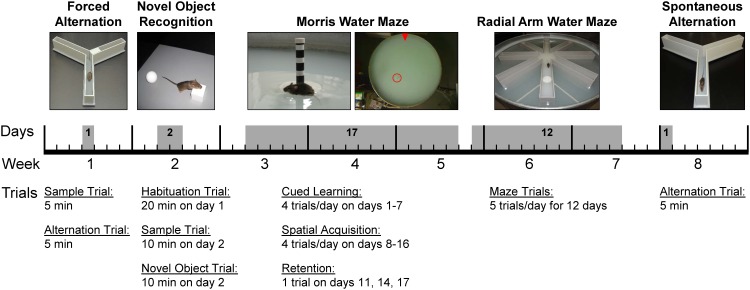
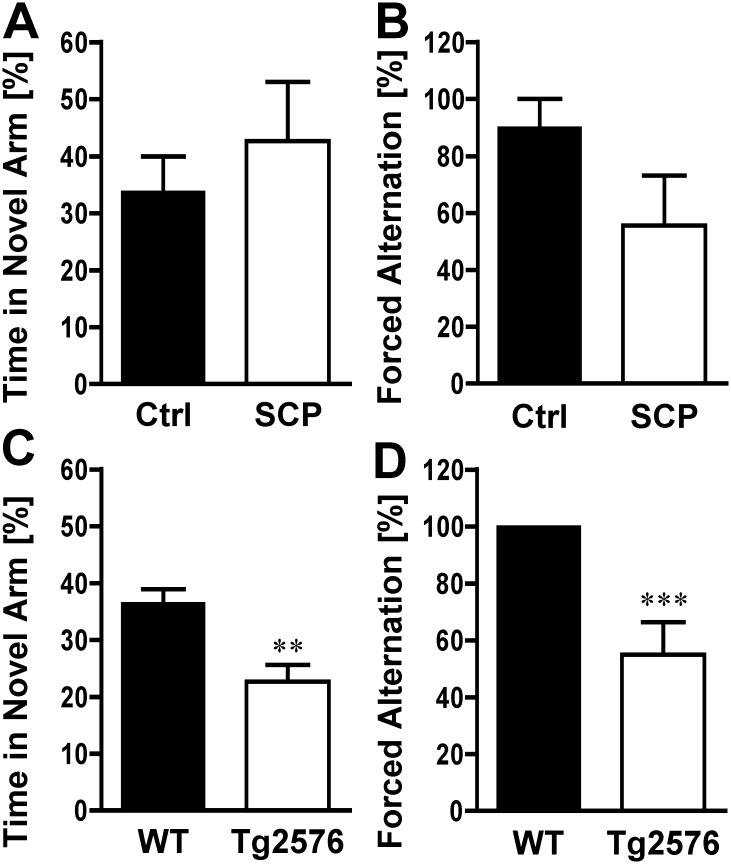
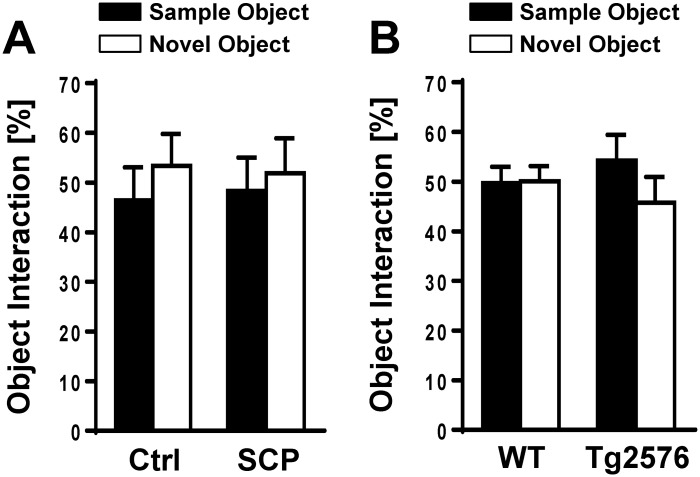
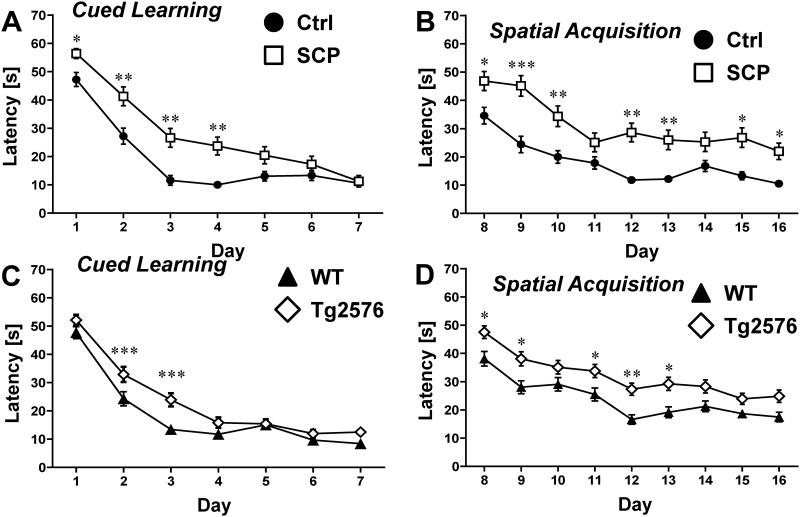
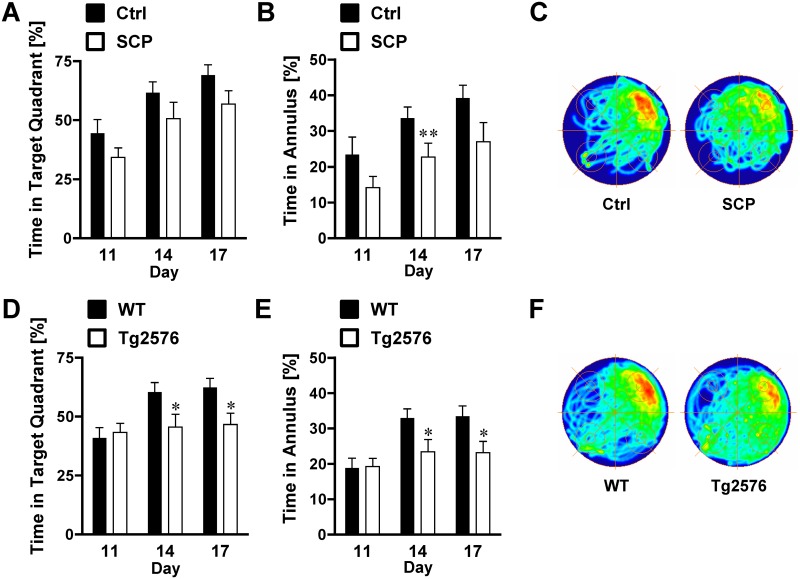
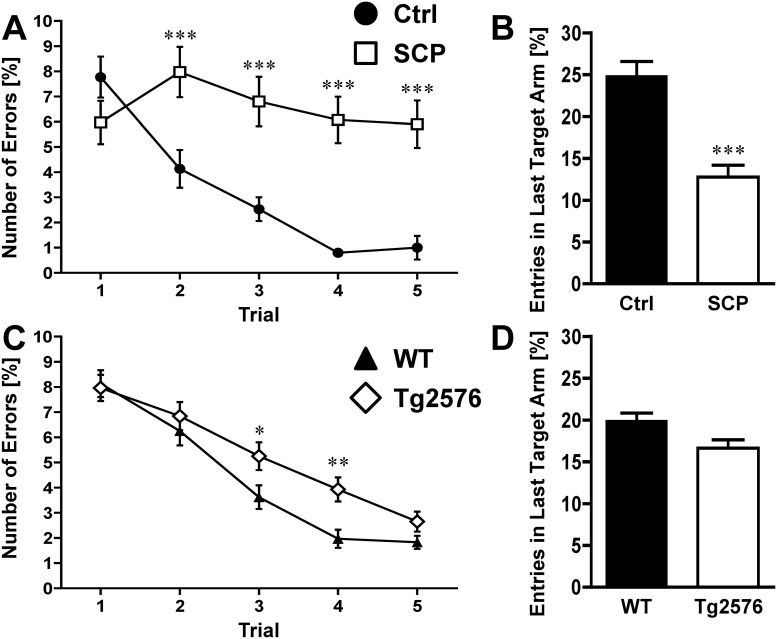
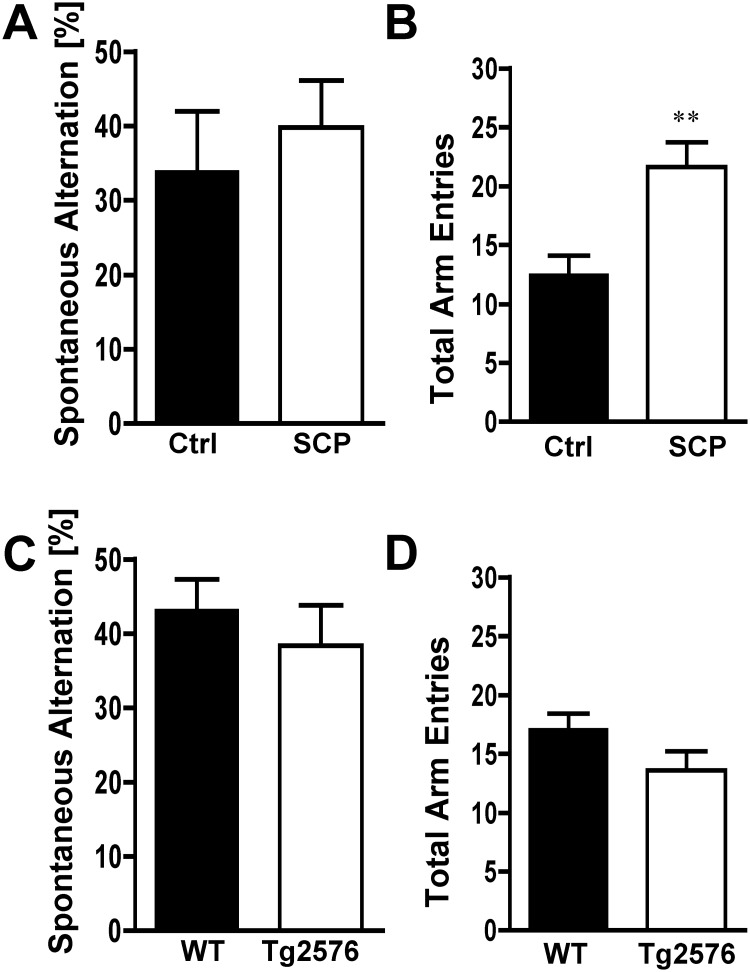
Transgenic Tg2576 mice overexpressing human amyloid precursor protein (hAPP) are a widely used Alzheimer's disease (AD) mouse model to evaluate treatment effects on amyloid beta (Aβ) pathology and cognition. Tg2576 mice on a B6;SJL background strain carry a recessive rd1 mutation that leads to early retinal degeneration and visual impairment in homozygous carriers. This can impair performance in behavioral tests that rely on visual cues, and thus, affect study results. Therefore, B6;SJL/Tg2576 mice were systematically backcrossed with 129S6/SvEvTac mice resulting in 129S6/Tg2576 mice that lack the rd1 mutation. 129S6/Tg2576 mice do not develop retinal degeneration but still show Aβ accumulation in the brain that is comparable to the original B6;SJL/Tg2576 mouse. However, comprehensive studies on cognitive decline in 129S6/Tg2576 mice are limited. In this study, we used two dementia mouse models on a 129S6 background--scopolamine-treated 129S6/SvEvTac mice (3-5 month-old) and transgenic 129S6/Tg2576 mice (11-13 month-old)-to establish a behavioral test battery for assessing learning and memory. The test battery consisted of five tests to evaluate different aspects of cognitive impairment: a Y-Maze forced alternation task, a novel object recognition test, the Morris water maze, the radial arm water maze, and a Y-maze spontaneous alternation task. We first established this behavioral test battery with the scopolamine-induced dementia model using 129S6/SvEvTac mice and then evaluated 129S6/Tg2576 mice using the same testing protocol. Both models showed distinctive patterns of cognitive impairment. Together, the non-invasive behavioral test battery presented here allows detecting cognitive impairment in scopolamine-treated 129S6/SvEvTac mice and in transgenic 129S6/Tg2576 mice. Due to the modular nature of this test battery, more behavioral tests, e.g. invasive assays to gain additional cognitive information, can easily be added.
Overview
The claims and statistics of this paper haven’t been checked yet.
Run the check — free, no account needed. It reads the open-access text and checks the sources it cites.
Integrity signals
Registry
Cites
Statistics
Figures
Verification
Claims the paper makes
The claims and statistics of this paper haven’t been checked yet.
Run the check — free, no account needed. It reads the open-access text and checks the sources it cites.
Claims other papers make about this one
Each is checked against this paper’s own text: does it say what the citing paper says it does?
In the citing paper
“For behavioral tests, exclusion criteria were pre-established following published guidance 71,79,80.”
From Exercise hormone irisin is a critical regulator of cognitive function (2021) · cites this paper as [71]
Self-check
Percentages, sums and reported differences re-computed from the paper’s own numbers.
The self-check needs the paper’s full text.
Citations
Cites
McKhann, G., Drachman, D., Folstein, M., Katzman, R., Price, D., & Stadlan, E. M. (1984) · Neurology · doi:10.1212/wnl.34.7.939 · Cited by 27,915
The Amyloid Hypothesis of Alzheimer’s Disease: Progress and Problems on the Road to Therapeutics
Hardy, J., & Selkoe, D. J. (2002) · Science · doi:10.1126/science.1072994 · Cited by 13,864
Amyloid oligomers exacerbate tau pathology in a mouse model of tauopathy
Selenica, M.-L. B., Brownlow, M., Jimenez, J. P., Lee, D. C., Pena, G., Dickey, C. A., Gordon, M. N., & Morgan, D. (2013) · Neurodegenerative Diseases · doi:10.1159/000337230 · Cited by 10,359
Developments of a water-maze procedure for studying spatial learning in the rat
Morris, R. (1984) · Journal of Neuroscience Methods · doi:10.1016/0165-0270(84)90007-4 · Cited by 7,180
The cholinergic hypothesis of geriatric memory dysfunction
Bartus, R. T., Dean, R. L., Beer, B., & Lippa, A. S. (1982) · Science · doi:10.1126/science.7046051 · Cited by 5,545 · cited 1×
“Scopolamine-induced dementia has been studied in rodents and humans, but no work has been published on scopolamine-induced dementia in 129S6 mice [42, 43].”
Background2016 Alzheimer's disease facts and figures
Alzheimer's Association (2016) · Alzheimer's & Dementia · doi:10.1016/j.jalz.2016.03.001 · Cited by 5,069
Morris water maze: procedures for assessing spatial and related forms of learning and memory
Vorhees, C. V., & Williams, M. T. (2006) · Nature Protocols · doi:10.1038/nprot.2006.116 · Cited by 4,629
Correlative Memory Deficits, Aβ Elevation, and Amyloid Plaques in Transgenic Mice
Hsiao, K., Chapman, P., Nilsen, S., Eckman, C., Harigaya, Y., Younkin, S., Yang, F., & Cole, G. (1996) · Science · doi:10.1126/science.274.5284.99 · Cited by 4,210 · cited 4×
“B6;SJL/Tg2576 mice overexpress the human amyloid precursor protein (hAPP) 695 isoform that harbors the Swedish double mutation found in some cases of familial AD [5].”
BackgroundMethodInfluentialHearing loss and cognitive decline in older adults
Lin, F. R., Yaffe, K., Xia, J., Xue, Q.-L., Harris, T. B., Purchase-Helzner, E., Satterfield, S., Ayonayon, H. N., Ferrucci, L., Simonsick, E. M., et al. (2013) · JAMA Internal Medicine · doi:10.1001/jamainternmed.2013.1868 · Cited by 4,017
2013 Alzheimer's disease facts and figures
Thies, W. H., & Bleiler, L. (2013) · Alzheimer s & Dementia · doi:10.1016/j.jalz.2013.02.003 · Cited by 3,372
Cited by
Sorted by citations
Items 201–282 of 282
Babalola, K. T., Oyebanjo, O. T., Adekoya, V. A., Adeniyi, I. A., Ajayi, A. M., & Onasanwo, S. A. (2021) · Oriental Pharmacy and Experimental Medicine · doi:10.1007/s13596-021-00578-3 · Cited by 5
CA1 Spike Timing is Impaired in the 129S Inbred Strain During Cognitive Tasks
Adeyelu, T. T., Shrestha, A., Adeniyi, P. A., Lee, C. C., & Ogundele, O. M. (2021) · Neuroscience · doi:10.1016/j.neuroscience.2021.11.021 · Cited by 5
Considerations for Small Animal Physical Rehabilitation
Greising, S. M., Basten, A. M., Schifino, A. G., & Call, J. A. (2022) · Physiology in health and disease · doi:10.1007/978-3-030-95884-8_2 · Cited by 5
The temporal effect of hippocampal Arc in the working memory paradigm during novelty exploration
Shandilya, M., & Gautam, A. (2020) · Brain Research Bulletin · doi:10.1016/j.brainresbull.2020.02.013 · Cited by 5
Codocedo, J. F., Mera-Reina, C., Lin, P. B., Puntambekar, S. S., Casali, B. T., Jury, N., Martínez, P., Lasagna‐Reeves, C. A., & Landreth, G. E. (2023) · bioRxiv (Cold Spring Harbor Laboratory) · doi:10.1101/2023.11.11.566270 · Cited by 5
“Mice were acclimated to the testing room under ambient lighting conditions for 1 h. Spontaneous alternation performance was tested using a symmetrical Y-maze.”
MethodInfluentialThioredoxin-1 Downregulation in the SNpc Exacerbates the Cognitive Impairment Induced by MPTP
Zhang, X., Yan, F., He, X. J., Chen, Y., Gu, R., Dong, X., Wei, Y., Bai, L., & Bai, J. (2025) · Antioxidants and Redox Signaling · doi:10.1089/ars.2024.0630 · Cited by 4
“According to our previous methods, the MWM test was used to assess mouse spatial learning and memory (Klein et al., 2016; Sharma et al., 2010; Wolf et al., 2016; Zhang et al., 2018b).”
Capucho, A. M., Ponce-de-Leão, J., Flôr, K. C., Melo, G. M., Fernandes, M., Sacramento, J. F., & Conde, S. V. (2026) · Pharmacological Research · doi:10.1016/j.phrs.2026.108140 · Cited by 6
Guida, F., Iannotta, M., Lauritano, A., Infantino, R., Salviati, E., Verde, R., Luongo, L., Sommella, E., Iannotti, F. A., Campiglia, P., et al. (2024) · Acta Neuropathologica Communications · doi:10.1186/s40478-024-01820-0 · Cited by 6
“To assess spatial memory the Y maze test was used at 30 and 60 days post injury [14], with a forced alternation protocol adapted by Wolf et al. [15].”
MethodBiose, I. J., Chastain, W. H., Solch-Ottaiano, R. J., Grayson, V. S., Wang, H., Banerjee, S., & Bix, G. J. (2024) · Annals of Neurosciences · doi:10.1177/09727531231192759 · Cited by 4
“69 Hence, white matter damage in the striatum will impact memory function, which our analyses suggest exercise ameliorates.”
BackgroundSalari, S., & Bagheri, M. (2024) · The Neuroscience Journal of Shefaye Khatam · doi:10.61186/shefa.12.4.81 · Cited by 4
Yu, Y., Shao, N., Zhang, X., Zhao, W., Zhang, B., Tang, J., & Tang, S. (2025) · Experimental Gerontology · doi:10.1016/j.exger.2025.112769 · Cited by 4
“The Morris water maze (MWM) procedure was employed to assess spatial learning and reference memory function after SD, and it included 5 days of spatial learning trials and 1 day of a probe trial (Wolf et al., 2016).”
Efriandi, T. (2021) · Journal of Public Health Policy · doi:10.1057/s41271-020-00267-6 · Cited by 4
Asghar, H., Siddiqui, A., Batool, L., Batool, Z., & Ahmed, T. (2024) · BioMetals · doi:10.1007/s10534-023-00570-1 · Cited by 4
“The sequence and duration of the behavioral tests were designed carefully after a thorough literature review (Eltokhi et al. 2020; Hånell and Marklund 2014; McIlwain et al. 2001; Wolf et al. 2016) to avoid overlap between behaviors.”
Kelliny, S., Xiong, J., Bobrovskaya, L., & Zhou, X. (2021) · Neurotoxicity Research · doi:10.1007/s12640-021-00405-2 · Cited by 4
Cui, M., Pan, X., Fan, Z., Wu, S., Ji, R., Wang, X., Kong, X., Wu, Z., Song, L., Song, W., et al. (2024) · eLife · doi:10.7554/elife.99862 · Cited by 4
Risco-Acevedo, D., Subirós, N., Camacho, H., Ramírez-Sánchez, J., Rodríguez-Virulich, Y., Etchegoyen-Amoros, A., Fuentes-Morales, D., Palenzuela, D. O., Pérez-Saad, H., & García-del-Barco-Herrera, D. (2025) · Experimental Brain Research · doi:10.1007/s00221-025-07183-9 · Cited by 3
“To evaluate spatial reference memory, a modified version of the Y-maze test was conducted, based on the protocol described by Wolf et al. (2016).”
Cui, M., Pan, X., Fan, Z., Wu, S., Ji, R., Wang, X., Kong, X., Wu, Z., Song, L., Song, W., et al. (2024) · eLife · doi:10.7554/elife.99862.3 · Cited by 7
Danduga, R. C. S. R., Dondapati, S. R., Kola, P. K., Kavati, S. S. H., & Singapalli, M. S. (2019) · Neurology Psychiatry and Brain Research · doi:10.1016/j.npbr.2019.07.006 · Cited by 3
Latina, V., Introna, M. D., Caligiuri, C., Loviglio, A., Florio, R., Regina, F. L., Pignataro, A., Ammassari‐Teule, M., Calissano, P., & Amadoro, G. (2023) · Pharmaceutics · doi:10.3390/pharmaceutics15020509 · Cited by 3
Nolasco, G. S., Escoto, G. A., David, L. F. S., Tejano, A. C. V., & Yamauchi, F. A. B. (2023) · Journal of Healthcare and Biomedical Science · doi:10.31098/jhbs.v2i1.1835 · Cited by 3
“This behavioral test assessed the memory retrieval of mice in correlation to cognitive learning (Umukoro et al., 2015; Wolf et al., 2016; Casadesus et al., 2006)”
MethodScopolamine increases perseveration in mice subjected to the detour test
Juszczak, G. R., & Stryjek, R. (2018) · Behavioural Brain Research · doi:10.1016/j.bbr.2018.07.028 · Cited by 3
Gerbatin, R. R., Augusto, J., Boutouil, H., Reschke, C. R., & Henshall, D. C. (2021) · bioRxiv (Cold Spring Harbor Laboratory) · doi:10.1101/2021.08.27.457904 · Cited by 3
Paulo, S. L., Ribeiro‐Rodrigues, L., Rodrigues, R. S., Mateus, J. M., Fonseca‐Gomes, J., Soares, R., Diógenes, M. J., Solá, S., Sebastião, A. M., Ribeiro, F. F., et al. (2021) · Journal of Alzheimer s Disease · doi:10.3233/jad-201567 · Cited by 2
Behavioral evaluation of aging in experimental animals
Pérez‐Villalba, A., & Fariñas, I. (2021) · Elsevier eBooks · doi:10.1016/b978-0-12-818000-6.00049-4 · Cited by 2
Jana, S. (2020) · Scholarly Journal of Psychology and Behavioral Sciences · doi:10.32474/sjpbs.2020.04.000193 · Cited by 2
Working and Reference Memory Impairments Induced by Passive Chronic Cocaine Administration in Mice
Mañas‐Padilla, M. C., Ávila‐Gámiz, F., Gil‐Rodríguez, S., Salido, L. S., Santín, L. J., & Castilla‐Ortega, E. (2021) · Neuromethods · doi:10.1007/978-1-0716-1748-9_11 · Cited by 2
Salari, S., & Bagheri, M. (2016) · Research Repository Portal (Ilam University of Medical Sciences) · Cited by 4
A Novel Single Animal Motor Function Tracking System Using Simple, Readily Available Software
Dona, K. R., Goss-Varley, M., Shoffstall, A. J., & Capadona, J. R. (2018) · Journal of Visualized Experiments · doi:10.3791/57917 · Cited by 2
Yusha’u, Y., Adam, U. M., Wahab, A. A., Saleh, M. I. A., & Ya’u, J. (2021) · Neuroscience Research Notes · doi:10.31117/neuroscirn.v4i3.75 · Cited by 2
Disease modification upon brief exposure to tofacitinib during chronic epilepsyPreprint
Hoffman, O. R., Koehler, J. L., Espina, J. E. C., Patterson, A. M., Gohar, E. S., Coleman, E. M., Schoenike, B. A., Espinosa‐García, C., Paredes, F., Varvel, N. H., et al. (2023) · bioRxiv (Cold Spring Harbor Laboratory) · doi:10.1101/2023.08.07.552299 · Cited by 2
Jeong, S., Yoon, K. S., Lee, J., Jo, E. S., Kim, D., & Choi, S. O. (2022) · Drug and Chemical Toxicology · doi:10.1080/01480545.2022.2049289 · Cited by 1
“The light in the testing chamber was dimmed to 30 ± 5 lux in order to mitigate their anxiety (Wolf et al. 2016).”
In Vivo Assays for Amyloid-Related Diseases
Espargaró, A., Álvarez-Berbel, I., Busquets, M. A., & Sabaté, R. (2024) · Annual Review of Analytical Chemistry · doi:10.1146/annurev-anchem-061622-023326 · Cited by 1
Li, M., Qiao, C., Li, X., Huang, M., Wang, Z., & Shi, L. (2025) · Integrative Zoology · doi:10.1111/1749-4877.70010 · Cited by 1
Fine motor function deficits in the 5xFAD mouse model of Alzheimer’s disease
Valiantis, S., Perentos, N., Koupparis, A. M., Hadjipapas, A., Papacostas, S., & Kousiappa, I. (2026) · Behavioural Brain Research · doi:10.1016/j.bbr.2026.116097 · Cited by 1
Yolanda, S., Redjeki, S., Andraini, T., Santoso, . I. S., Ibrahim, N., & Mailani, R. (2019) · The Indonesian Biomedical Journal · doi:10.18585/inabj.v11i2.731 · Cited by 2
Rizi, A. A., Amjad, L., Shahrani, M., & Amini-Khoei, H. (2023) · Archives of Razi Institute · doi:10.32592/ari.2024.79.2.248 · Cited by 1
Hassanen, E. I., Mansour, H. A., Issa, M. Y., Ibrahim, M. A., Mohamed, W. A., & Mahmoud, M. A. (2024) · Food and Chemical Toxicology · doi:10.1016/j.fct.2024.115021 · Cited by 1
Jana, S. (2021) · Psychology & Psychological Research International Journal · doi:10.23880/pprij-16000270 · Cited by 1
Daneman, R. (2019) · Faculty Opinions – Post-Publication Peer Review of the Biomedical Literature · doi:10.3410/f.735754089.793561303 · Cited by 1
Chartampila, E., Elayouby, K. S., Leary, P., LaFrancois, J. J., Alcantara‐Gonzalez, D., Jain, S. S., Gerencer, K., Botterill, J. J., Ginsberg, S. D., & Scharfman, H. E. (2023) · bioRxiv (Cold Spring Harbor Laboratory) · doi:10.1101/2023.05.12.540428 · Cited by 1
Chartampila, E., Elayouby, K. S., Leary, P., LaFrancois, J. J., Alcantara‐Gonzalez, D., Jain, S. S., Gerencer, K., Botterill, J. J., Ginsberg, S. D., & Scharfman, H. E. (2023) · eLife · doi:10.7554/elife.89889.1 · Cited by 1
Chartampila, E., Elayouby, K. S., Leary, P., LaFrancois, J. J., Alcantara‐Gonzalez, D., Jain, S. S., Gerencer, K., Botterill, J. J., Ginsberg, S. D., & Scharfman, H. E. (2024) · eLife · doi:10.7554/elife.89889.2 · Cited by 1
Gerstenmayer, M. (2018) · theses.fr (ABES) · doi:10.70675/5aa7fd45z24caz43e9zaaadzeb1ca21e8661 · Cited by 1
Tactile discrimination learning in mice
Pacchiarini, N. (2019) · ORCA Online Research @Cardiff (Cardiff University)
Inflammation drives synucleinopathy propagationPreprint
Kim, T.-K., Bae, E.-J., Jung, B. C., Choi, M.-S., Shin, S.-J., Kim, J. T., Jung, M., Ulusoy, A., Song, M.-Y., Lee, J. S., et al. (2021) · Research Square · doi:10.21203/rs.3.rs-774660/v1
“To measure the prefrontal cortex-and hippocampus-dependent spatial memory de�cits 32 , we tested the spontaneous alternation behavior (SAB) and continuous alternation (CA) of mice using a standard protocol 33 .”
Robens, B. K., McGraw, C. M., & Poduri, A. (2021) · Elsevier eBooks · doi:10.1016/b978-0-12-819641-0.00147-x
Kelliny, S., Xiong, J., Bobrovskaya, L., & Zhou, X. (2021) · Research Square · doi:10.21203/rs.3.rs-306628/v1
Tanaka, S. (2019) · Faculty Opinions – Post-Publication Peer Review of the Biomedical Literature · doi:10.3410/f.735447386.793559189
Andraini, T., Mardatillah, J., Kartinah, N. T., Paramita, N., Santoso, . I. S., Yolanda, S., Puspasari, B. C., & Rusli, H. (2022) · Comparative Exercise Physiology · doi:10.3920/cep220020
Selection of animal models for drug efficacy
Veening-Griffioen, D. H. (2023) · Utrecht University Repository (Utrecht University) · doi:10.33540/1605
Effects of environmental enrichment on the behavioural consequences of early-life stress in rats
Dief, A. E., Ezz, Y., Elshorbagy, A. K., Deacon, R. M. J., Alrifaee, A., Eltahan, A., Mansour, C. W., & Shaheen, A. (2023) · Bulletin of Egyptian Society for Physiological Sciences · doi:10.21608/besps.2023.211010.1143
Iteire, K. A. (2023) · Dusunen Adam The Journal of Psychiatry and Neurological Sciences · doi:10.14744/dajpns.2023.00216
“Percentage alternation is related to exploratory behavior and cognitive function impairment (37).”
BackgroundEvaluation of Anti-amnesic Activity of Ethanolic Extract of Averrhoa carambola Leaves
Kumar, D., Gupta, A., Verma, N. K., & Kumar, S. (2024) · International Journal of Pharmaceutical Quality Assurance · doi:10.25258/ijpqa.15.1.65
Chartampila, E., Elayouby, K. S., Leary, P., LaFrancois, J. J., Alcantara‐Gonzalez, D., Jain, S. S., Gerencer, K., Botterill, J. J., Ginsberg, S. D., & Scharfman, H. E. (2024) · eLife · doi:10.7554/elife.89889.3
Asowata-Ayodele, A. M., Olusola, A., Olatuyi, L., Afolabi, F., Olatunji, B. P., & salemcity, A. (2024) · Research Square · doi:10.21203/rs.3.rs-5272101/v1
Cui, M., Pan, X., Fan, Z., Wu, S., Ji, R., Wang, X., Kong, X., Wu, Z., Song, L., Song, W., et al. (2024) · eLife · doi:10.7554/elife.99862.2
Mouse Models of Alzheimer’s Disease
Sanfeliu, C., & Pallàs, M. (2024) · Neuromethods · doi:10.1007/978-1-0716-4232-0_13
Koca, R. Ö., Görmüş, Z. I. S., Solak, H., Gültekin, B., Ozdemir, A., Güneş, C. E., Kurar, E., & Kutlu, S. (2025) · Medicina · doi:10.3390/medicina61081315
“The platform and cues are kept constant in each session to evaluate the cognitive functions of the experimental animal [18,19].”
Excess iron may accelerate amyloid beta accumulation in the brains of older mice
Song, S., & Shin, J. (2025) · Neurobiology of Aging · doi:10.1016/j.neurobiolaging.2025.12.003
Hu, S. X., Lopez-Robles, Y., Liu, E., Lin, Y., Chen, W., Manjunath, C., Zhao, Z., Zhang, L., & Ma, Q. (2026) · Fluids and Barriers of the CNS · doi:10.1186/s12987-025-00755-5
“The data were analyzed via NIH Image J software 1.54e with the MouBeAT plugin [40].”
Iwasaki, M., Kurokawa, S., Suzuki, H., Nakamura, A. J., & Toyoda, A. (2026) · Physiology and Behavior · doi:10.1016/j.physbeh.2026.115265
Bergeron, S. (2018) · theses.fr (ABES) · doi:10.70675/36a54739zd120z440bzac6aze1ff3180f9f1
Xu, F., Yi, Y., Chi, L., Liu, B., Zhang, W., Wu, Q., & Li, Z. (2026) · European Journal of Pharmacology · doi:10.1016/j.ejphar.2026.178847
Anxiety-like behaviour in mice after mild repetitive head impacts during the subacute phase
Durgala, A., Horvath, M., Skrabanova, M., Cente, M., & Filipčík, P. (2026) · Frontiers in Behavioral Neuroscience · doi:10.3389/fnbeh.2026.1839876
“The Y-maze test followed a modified protocol (Prieur and Jadavji, 2019; Wolf et al., 2016).”
Ma, Y., Jin, Y., Wang, Z., Zheng, C., Cheng, L., Wu, F., Hao, Y., & Fang, B. (2026) · Food Research International · doi:10.1016/j.foodres.2026.119668
CUBONI, G., Campuzano, C., Vignozzi, L., Liotta, R., Pinzauti, D., Vitale, G., Tonellato, M., Gesù, R. D., Biazzo, M., Rigoni, M., et al. (2026) · bioRxiv (Cold Spring Harbor Laboratory) · doi:10.64898/2026.06.23.733929
Risco-Acevedo, D., Subirós, N., Camacho, H., Ramírez-Sánchez, J., Rodríguez-Virulich, Y., Etchegoyen-Amoros, A., Hernández-Estrada, W., Wong-Guerra, M., Montano-Peguero, Y., Estrada-Olivares, T., et al. (2026) · Neurotoxicity Research · doi:10.1007/s12640-026-00807-0
“To assess spatial working memory, we conducted a modified version of the Y-maze test, following the protocol previ - ously described by Wolf et al. (2016).”
Mahmoud, O. A., Ayoub, I. M., Tawfiq, R. A., Eldahshan, O. A., & Singab, A. N. B. (2026) · Beni-Suef University Journal of Basic and Applied Sciences · doi:10.1186/s43088-026-00769-4
“The box and the objects were cleansed with 70% ethanol after each animal [40, 41].”
Junaid, M., Ashraf, S., Arshad, A., Bakhtiari, M. N., Hussain, S., & Shahnaz, G. (2026) · Journal of Drug Delivery Science and Technology · doi:10.1016/j.jddst.2026.108758
Zhang, X., Moon, H.-J., Siahaan, T. J., & Zhao, L. (2026) · bioRxiv (Cold Spring Harbor Laboratory) · doi:10.64898/2026.07.30.741628
Fareed, N., Youssef, F. S., Labib, R. M., Tawfiq, R., & El‐Kersh, D. M. (2026) · Journal of Food Science · doi:10.1111/1750-3841.71397
Elwakil, B. H., Helal, A. M., El‐Khatib, M., Abdelnaser, A., Darwish, A. A.-E., Shehata, N. S., Akl, S. H., Moneer, E. A., Bakr, B. A., & Wakil, A. E. (2026) · Journal of Biomedical Materials Research Part B Applied Biomaterials · doi:10.1002/jbm.b.70150
Xu, K., Yang, T., Dong, H.-R., Yin, T.-S., Yin, J.-J., Song, L.-J., Xiao, B., Yin, J.-Z., Liu, C.-S., Ma, C.-G., et al. (2026) · Metabolic brain disease · doi:10.1007/s11011-026-01935-4
“The Y-maze test, employing a three-arm configuration, was used to assess spatial mem - ory and novelty-seeking behavior (Wolf et al. 2016 ).”
Braga, S. P., Dezanetti, T., OLIVEIRA, V. E. D., Delanogare, E., Kraus, S. I., & Moreira, E. L. G. (2026) · Anais da Academia Brasileira de Ciências · doi:10.1590/0001-3765202620250505
Metadata
- Authors
- Wolf, A., Bauer, B., Abner, E. L., Ashkenazy-Frolinger, T., & Hartz, A. M. S.
- Affiliations
- University of Minnesota, Duluth (US)
- University of Kentucky (US)
- Corresponding author
- Hartz, Anika M. S.
- Venue
- PLOS ONE
- Publisher
- Public Library of Science (PLoS)
- Published
- 2016-01-25
- Volume
- 11
- Issue
- 1
- Pages
- e0147733
- ISSN
- 1932-6203 (ISSN-L)
- PMC
- PMC4726499
- OpenAlex
- W2426168356
- Cited by
- 281
- References
- 89
- Citations by year
- 2026: 16 · 2025: 20 · 2024: 28 · 2023: 37 · 2022: 30 · 2021: 33 · 2020: 37 · 2019: 28 · 2018: 40 · 2017: 6 · 2016: 6
- FWCI
- 21.46
- Type
- journal article
- Language
- en
- Open access
- gold
- doi.org
- Licence
- Locations
- PLoS ONE (publishedVersion, cc-by)
- Europe PMC (PubMed Central) (publishedVersion, cc-by)
- PubMed Central (publishedVersion, cc-by)
- PubMed (publishedVersion)
- UKnowledge (University of Kentucky) (submittedVersion, cc-by)
- DOAJ (DOAJ: Directory of Open Access Journals) (submittedVersion, cc-by-sa)
- Figshare (submittedVersion, cc-by)
- Funders
- University of Kentucky (P30 AG028383, AG028383)
- National Institute on Aging (AG-028383, P30AG028383, R01AG039621)
- Topics
- Life Sciences › Neuroscience › Cellular and Molecular Neuroscience › Alzheimer's disease research and treatments
- Life Sciences › Neuroscience › Cognitive Neuroscience › Memory and Neural Mechanisms
- Health Sciences › Medicine › Psychiatry and Mental health › Dementia and Cognitive Impairment Research
- Keywords
- mouse models of Alzheimer's disease, amyloid precursor protein overexpression, retinal degeneration, scopolamine-induced dementia, cognitive impairment, learning and memory, novel object recognition, Morris water maze, radial arm water maze, spontaneous alternation, amyloid-beta pathology
- MeSH terms
- Animals, Behavior, Animal, Male, Memory, Mice, Transgenic, Maze Learning, Mice
About these checks
Registry, retraction, Cites and statistics results are computed, not judged, with one exception: a printed reference that no index lists is read once by a model before it counts as a citation error. Claims are extracted by a model and kept only when their quote appears verbatim in the text; each cited source is then checked, with a model’s help, for whether it says what the claim relies on. Those verdicts can be wrong — read the claim’s quote and the cited source before relying on one.
Statistics and arithmetic are recomputed, not judged.
Confidence bands are shown only for fields calibrated on our annotated test set. None is calibrated yet, so no band is shown.
What counts as a claim ›How we measure confidence ›How we check this ›
Are you an author, or do you see a problem with this page? Request a review
