

The DOI matches its Crossref record; 89 of the 89 references it cites were found in a registry or an index.
A Comprehensive Behavioral Test Battery to Assess Learning and Memory in 129S6/Tg2576 Mice
Open accessAbstract
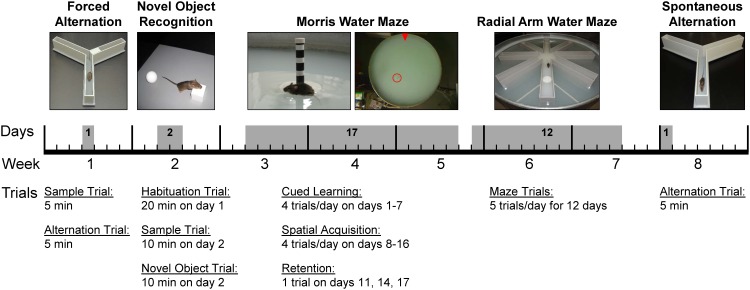
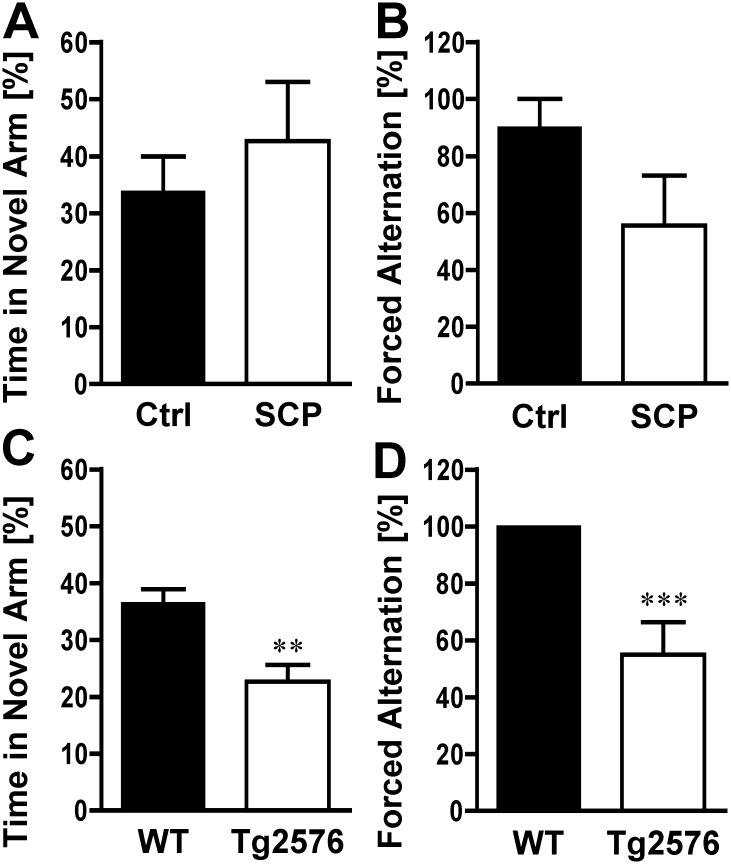
Transgenic Tg2576 mice overexpressing human amyloid precursor protein (hAPP) are a widely used Alzheimer's disease (AD) mouse model to evaluate treatment effects on amyloid beta (Aβ) pathology and cognition. Tg2576 mice on a B6;SJL background strain carry a recessive rd1 mutation that leads to early retinal degeneration and visual impairment in homozygous carriers. This can impair performance in behavioral tests that rely on visual cues, and thus, affect study results. Therefore, B6;SJL/Tg2576 mice were systematically backcrossed with 129S6/SvEvTac mice resulting in 129S6/Tg2576 mice that lack the rd1 mutation. 129S6/Tg2576 mice do not develop retinal degeneration but still show Aβ accumulation in the brain that is comparable to the original B6;SJL/Tg2576 mouse. However, comprehensive studies on cognitive decline in 129S6/Tg2576 mice are limited. In this study, we used two dementia mouse models on a 129S6 background--scopolamine-treated 129S6/SvEvTac mice (3-5 month-old) and transgenic 129S6/Tg2576 mice (11-13 month-old)-to establish a behavioral test battery for assessing learning and memory. The test battery consisted of five tests to evaluate different aspects of cognitive impairment: a Y-Maze forced alternation task, a novel object recognition test, the Morris water maze, the radial arm water maze, and a Y-maze spontaneous alternation task. We first established this behavioral test battery with the scopolamine-induced dementia model using 129S6/SvEvTac mice and then evaluated 129S6/Tg2576 mice using the same testing protocol. Both models showed distinctive patterns of cognitive impairment. Together, the non-invasive behavioral test battery presented here allows detecting cognitive impairment in scopolamine-treated 129S6/SvEvTac mice and in transgenic 129S6/Tg2576 mice. Due to the modular nature of this test battery, more behavioral tests, e.g. invasive assays to gain additional cognitive information, can easily be added.
Overview
The claims and statistics of this paper haven’t been checked yet.
Run the check — free, no account needed. It reads the open-access text and checks the sources it cites.
Integrity signals
Registry
Cites
Statistics
Figures
Verification
Claims the paper makes
The claims and statistics of this paper haven’t been checked yet.
Run the check — free, no account needed. It reads the open-access text and checks the sources it cites.
Claims other papers make about this one
Each is checked against this paper’s own text: does it say what the citing paper says it does?
In the citing paper
“For behavioral tests, exclusion criteria were pre-established following published guidance 71,79,80.”
From Exercise hormone irisin is a critical regulator of cognitive function (2021) · cites this paper as [71]
Self-check
Percentages, sums and reported differences re-computed from the paper’s own numbers.
The self-check needs the paper’s full text.
Citations
Cites
McKhann, G., Drachman, D., Folstein, M., Katzman, R., Price, D., & Stadlan, E. M. (1984) · Neurology · doi:10.1212/wnl.34.7.939 · Cited by 27,915
The Amyloid Hypothesis of Alzheimer’s Disease: Progress and Problems on the Road to Therapeutics
Hardy, J., & Selkoe, D. J. (2002) · Science · doi:10.1126/science.1072994 · Cited by 13,864
Amyloid oligomers exacerbate tau pathology in a mouse model of tauopathy
Selenica, M.-L. B., Brownlow, M., Jimenez, J. P., Lee, D. C., Pena, G., Dickey, C. A., Gordon, M. N., & Morgan, D. (2013) · Neurodegenerative Diseases · doi:10.1159/000337230 · Cited by 10,359
Developments of a water-maze procedure for studying spatial learning in the rat
Morris, R. (1984) · Journal of Neuroscience Methods · doi:10.1016/0165-0270(84)90007-4 · Cited by 7,180
The cholinergic hypothesis of geriatric memory dysfunction
Bartus, R. T., Dean, R. L., Beer, B., & Lippa, A. S. (1982) · Science · doi:10.1126/science.7046051 · Cited by 5,545 · cited 1×
“Scopolamine-induced dementia has been studied in rodents and humans, but no work has been published on scopolamine-induced dementia in 129S6 mice [42, 43].”
Background2016 Alzheimer's disease facts and figures
Alzheimer's Association (2016) · Alzheimer's & Dementia · doi:10.1016/j.jalz.2016.03.001 · Cited by 5,069
Morris water maze: procedures for assessing spatial and related forms of learning and memory
Vorhees, C. V., & Williams, M. T. (2006) · Nature Protocols · doi:10.1038/nprot.2006.116 · Cited by 4,629
Correlative Memory Deficits, Aβ Elevation, and Amyloid Plaques in Transgenic Mice
Hsiao, K., Chapman, P., Nilsen, S., Eckman, C., Harigaya, Y., Younkin, S., Yang, F., & Cole, G. (1996) · Science · doi:10.1126/science.274.5284.99 · Cited by 4,210 · cited 4×
“B6;SJL/Tg2576 mice overexpress the human amyloid precursor protein (hAPP) 695 isoform that harbors the Swedish double mutation found in some cases of familial AD [5].”
BackgroundMethodInfluentialHearing loss and cognitive decline in older adults
Lin, F. R., Yaffe, K., Xia, J., Xue, Q.-L., Harris, T. B., Purchase-Helzner, E., Satterfield, S., Ayonayon, H. N., Ferrucci, L., Simonsick, E. M., et al. (2013) · JAMA Internal Medicine · doi:10.1001/jamainternmed.2013.1868 · Cited by 4,017
2013 Alzheimer's disease facts and figures
Thies, W. H., & Bleiler, L. (2013) · Alzheimer s & Dementia · doi:10.1016/j.jalz.2013.02.003 · Cited by 3,372
A new one-trial test for neurobiological studies of memory in rats. 1: behavioral data
Ennaceur, A., & Delacour, J. (1988) · Behavioural Brain Research · doi:10.1016/0166-4328(88)90157-x · Cited by 3,223 · cited 2×
“Sitting or leaning on the object was not considered object exploration [23, 24].”
BackgroundThe novel object recognition memory: neurobiology, test procedure, and its modifications
Antunes, M., & Biala, G. (2012) · Cognitive Processing · doi:10.1007/s10339-011-0430-z · Cited by 2,390 · cited 1×
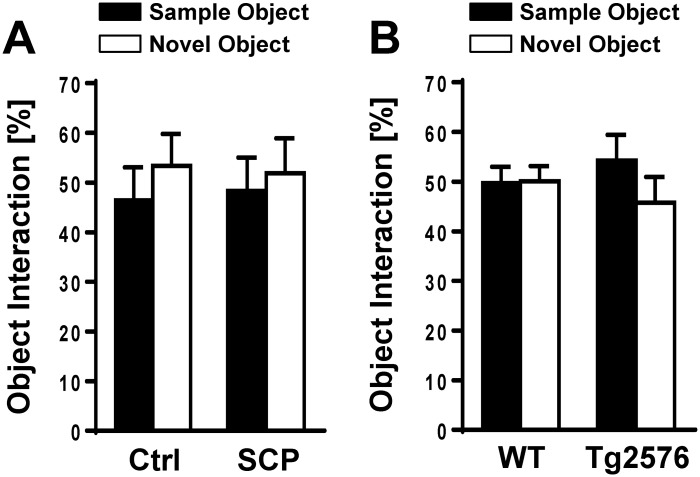
“The novel object recognition test is used to assess recognition memory in mice and is based on the inherent tendency of rodents to explore a novel object longer than a familiar one [38].”
MethodAβ peptide vaccination prevents memory loss in an animal model of Alzheimer's disease
Morgan, D., Diamond, D. M., Gottschall, P. E., Ugen, K. E., Dickey, C. A., Hardy, J., Duff, K., Jantzen, P. T., DiCarlo, G., Wilcock, D. M., et al. (2000) · Nature · doi:10.1038/35050116 · Cited by 1,506
The Clinical Diagnosis of Alzheimer's Disease
Wade, J. P. H., Mirsen, T. R., Hachinski, V. C., Fisman, M., Lau, C. S., & Merskey, H. (1987) · Archives of Neurology · doi:10.1001/archneur.1987.00520130016010 · Cited by 1,416
Holcomb, L., Gordon, M. N., McGowan, E., Yu, X., Benkovic, S., Jantzen, P., Wright, K., Saad, I., Mueller, R., Morgan, D., et al. (1998) · Nature Medicine · doi:10.1038/nm0198-097 · Cited by 1,386 · cited 1×
“Overall, the available data from Tg2576 mice on a B6;SJL or a mixed C57 background vary widely, with some studies showing memory deficits as early as 3 months of age [28, 83], while others detect no difference in mice at various ages [17, 28, 44–46].”
Crawley, J. N., Belknap, J. K., Collins, A. C., Crabbe, J. C., Frankel, W. N., Henderson, N. D., HITZEMANN, R. J., Maxson, S. C., Miner, L. L., Silva, A. J., et al. (1997) · Psychopharmacology · doi:10.1007/s002130050327 · Cited by 1,372 · cited 1×
“Mice had in average less than 24 arm entries over the course of 5 minutes [33, 34, 63, 65].”
BackgroundBevins, R. A., & Besheer, J. (2006) · Nature Protocols · doi:10.1038/nprot.2006.205 · Cited by 1,278 · cited 3×
“Object interaction [%] for the novel object was calculated as (novel object interaction x 100) / (sample object interaction + novel object interaction) [25].”
Background2014 Alzheimer's disease facts and figures
Alzheimer's Association (2014) · Alzheimer s & Dementia · doi:10.1016/j.jalz.2014.02.001 · Cited by 1,064
Kawarabayashi, T., Younkin, L. H., Saido, T. C., Shoji, M., Ashe, K. H., & Younkin, S. G. (2001) · The Journal of Neuroscience · doi:10.1523/jneurosci.21-02-00372.2001 · Cited by 1,053
T-maze alternation in the rodent
Deacon, R. M. J., & Rawlins, J. N. P. (2006) · Nature Protocols · doi:10.1038/nprot.2006.2 · Cited by 903 · cited 2×
“Alternation tasks measure the disposition of rodents to explore new environments and are used to evaluate working memory and exploratory behavior [23, 37].”
BackgroundMethodThe neurobiological basis of spontaneous alternation
Lalonde, R. (2002) · Neuroscience & Biobehavioral Reviews · doi:10.1016/s0149-7634(01)00041-0 · Cited by 857 · cited 1×
“Overall, mice in this study showed between 22 and 35 arm entries over the course of 5 min, which is low compared to literature values of other mouse strains, and might indicate anxiety [33, 34, 63, 64].”
ResultRetinal degeneration mutants in the mouse
Chang, B., Hawes, N. L., Hurd, R. E., Davisson, M. T., Nusinowitz, S., & Heckenlively, J. R. (2002) · Vision Research · doi:10.1016/s0042-6989(01)00146-8 · Cited by 840
Wood, J. G., Mirra, S. S., Pollock, N. J., & Binder, L. I. (1986) · Proceedings of the National Academy of Sciences · doi:10.1073/pnas.83.11.4040 · Cited by 763 · cited 1×
“AD is characterized by accumulation of amyloid beta (A β ) and tau protein in the brain, which results in neurodegeneration followed by progressive cognitive decline [2 – 4].”
BackgroundThe Relationship between Aβ and Memory in the Tg2576 Mouse Model of Alzheimer's Disease
Westerman, M. A., Cooper-Blacketer, D., Mariash, A., Kotilinek, L., Kawarabayashi, T., Younkin, L. H., Carlson, G. A., Younkin, S. G., & Ashe, K. H. (2002) · Journal of Neuroscience · doi:10.1523/jneurosci.22-05-01858.2002 · Cited by 731
Klinkenberg, I., & Blokland, A. (2010) · Neuroscience & Biobehavioral Reviews · doi:10.1016/j.neubiorev.2010.04.001 · Cited by 714 · cited 1×
“Scopolamine-induced dementia has been studied in rodents and humans, but no work has been published on scopolamine-induced dementia in 129S6 mice [42, 43].”
BackgroundThe Neuropsychological Profile of Alzheimer DiseasePreprint
Weıntraub, S., Wicklund, A. H., & Salmon, D. P. (2012) · Cold Spring Harbor Perspectives in Medicine · doi:10.1101/cshperspect.a006171 · Cited by 638
Functional Alterations in Memory Networks in Early Alzheimer’s Disease
Sperling, R. A., Dickerson, B. C., Pihlajamaki, M. M., Vannini, P., LaViolette, P. S., Vitolo, O. V., Hedden, T., Becker, J. A., Rentz, D. M., Selkoe, D. J., et al. (2010) · NeuroMolecular Medicine · doi:10.1007/s12017-009-8109-7 · Cited by 617 · cited 1×
“The radial arm water maze test is used to assess episodic-like memory in rodents, which is one of the earliest clinical symptoms of AD [29, 39, 73, 74].”
MethodHalagappa, V. K. M., Guo, Z., Pearson, M., Matsuoka, Y., Cutler, R. G., LaFerla, F. M., & Mattson, M. P. (2007) · Neurobiology of Disease · doi:10.1016/j.nbd.2006.12.019 · Cited by 580 · cited 1×
“Fourth, we omitted tests involving food restriction, since this can influence Aβ levels and cognitive performance in mouse AD models [61, 62].”
MethodThe use of behavioral test batteries: Effects of training history
McIlwain, K. L., Merriweather, M. Y., Yuva-Paylor, L. A., & Paylor, R. (2001) · Physiology & Behavior · doi:10.1016/s0031-9384(01)00528-5 · Cited by 579 · cited 2×
“Therefore, the little object interaction could be in part due to the specific genetic background of the mice tested [33, 34, 57 – 59, Third, another potential reason why the trends were not statistically significant could be due to the similarity of the objects used in this test.”
BackgroundSarter, M. F., Bodewitz, G., & Stephens, D. (1988) · Psychopharmacology · doi:10.1007/bf00212843 · Cited by 533 · cited 1×
“…in learning memory (Morris and radial arm water maze), working memory (alternation), object discrimination (novel object recognition), spatial memory (Morris and radial arm water maze), long-term memory (radial arm water maze), and episodic-like memory (radial arm water maze) [24, 29, 35, 51 – 53].”
BackgroundHsiao, K., Borchelt, D., Olson, K., Johannsdottir, R., Kitt, C. A., Yunis, W. S., Xu, S., Eckman, C., Younkin, S. G., Price, D., et al. (1995) · Neuron · doi:10.1016/0896-6273(95)90107-8 · Cited by 527 · cited 1×
“Spontaneous Alternation [%] was defined as consecutive entries in 3 different arms (ABC), divided by the number of possible alternations (total arm entries minus 2; [30]).”
BackgroundDifferential effect of the rd mutation on rods and cones in the mouse retina.
Carter‐Dawson, L. D., LaVail, M. M., & Sidman, R. L. (1978) · PubMed · Cited by 495
Arendash, G. W., Schleif, W. S., Rezai-Zadeh, K. P., Jackson, E. K., Zacharia, L. C., Cracchiolo, J. R., Shippy, D. C., & Tan, J. (2006) · Neuroscience · doi:10.1016/j.neuroscience.2006.07.021 · Cited by 476 · cited 1×
“[81] showed impaired memory in Tg (APPsw) mice at 8–9 months of age.”
BackgroundHandbook Of Behavioral Neuroscience
(2008) · Handbook of behavioral neuroscience · doi:10.1016/s1569-7339(08)00237-3 · Cited by 425
Wilcock, D. M., Rojiani, A. M., Rosenthal, A., Subbarao, S., Freeman, M. J., Gordon, M. N., & Morgan, D. (2004) · Journal of Neuroinflammation · doi:10.1186/1742-2094-1-24 · Cited by 392
Holcomb, L. A., Gordon, M. N., Jantzen, P., Hsiao, K., Duff, K., & Morgan, D. (1999) · Behavior Genetics · doi:10.1023/a:1021691918517 · Cited by 353 · cited 3×
“B6;SJL/Tg2576 mice have memory impairment starting at about 6 months of age [7], but in some studies memory impairment could not be reproduced [31, 44, 46].”
BackgroundResultOwen, E. H., Logue, S. F., Rasmussen, D. L., & Wehner, J. M. (1997) · Neuroscience · doi:10.1016/s0306-4522(97)00165-6 · Cited by 347
Savonenko, A., Xu, G. M., Melnikova, T., Morton, J. L., Gonzales, V., Wong, M. P. F., Price, D. L., Tang, F., Markowska, A. L., & Borchelt, D. R. (2005) · Neurobiology of Disease · doi:10.1016/j.nbd.2004.10.022 · Cited by 346 · cited 4×
“To determine long-term memory, entries into the target arm of the previous day’s first trial were also analyzed for days 2–12 [29].”
BackgroundMethodInfluentialCaloric restriction attenuates β‐amyloid neuropathology in a mouse model of Alzheimer's disease
Wang, J., Ho, L., Qin, W., Rocher, A. B., Seror, I., Humala, N., Maniar, K. P., Dolios, G., Wang, R., Hof, P. R., et al. (2005) · The FASEB Journal · doi:10.1096/fj.04-3182fje · Cited by 324 · cited 1×
“Fourth, we omitted tests involving food restriction, since this can influence Aβ levels and cognitive performance in mouse AD models [61, 62].”
MethodHolmes, A., Li, Q., Murphy, D. L., Gold, E. N., & Crawley, J. N. (2003) · Genes Brain & Behavior · doi:10.1046/j.1601-1848.2003.00050.x · Cited by 316 · cited 2×
“Mice had in average less than 24 arm entries over the course of 5 minutes [33, 34, 63, 65].”
BackgroundResultMandillo, S., Tucci, V., Hölter, S. M., Méziane, H., Banchaabouchi, M. A., Kallnik, M., Lad, H. V., Nolan, P. M., Ouagazzal, A., Coghill, E. L., et al. (2008) · Physiological Genomics · doi:10.1152/physiolgenomics.90207.2008 · Cited by 286 · cited 1×
“…in learning memory (Morris and radial arm water maze), working memory (alternation), object discrimination (novel object recognition), spatial memory (Morris and radial arm water maze), long-term memory (radial arm water maze), and episodic-like memory (radial arm water maze) [24, 29, 35, 51 – 53].”
BackgroundHolmes, A., Wrenn, C. C., Harris, A. P., Thayer, K. E., & Crawley, J. N. (2002) · Genes Brain & Behavior · doi:10.1046/j.1601-1848.2001.00005.x · Cited by 284 · cited 3×
“Mice had in average less than 24 arm entries over the course of 5 minutes [33, 34, 63, 65].”
BackgroundResultAlamed, J., Wilcock, D. M., Diamond, D. M., Gordon, M. N., & Morgan, D. (2006) · Nature Protocols · doi:10.1038/nprot.2006.275 · Cited by 256 · cited 1×
“…in learning memory (Morris and radial arm water maze), working memory (alternation), object discrimination (novel object recognition), spatial memory (Morris and radial arm water maze), long-term memory (radial arm water maze), and episodic-like memory (radial arm water maze) [24, 29, 35, 51 – 53].”
BackgroundBehavioral characterization of the Tg2576 transgenic model of Alzheimer's disease through 19 months
King, D. L., & Arendash, G. W. (2002) · Physiology & Behavior · doi:10.1016/s0031-9384(02)00639-x · Cited by 250 · cited 3×
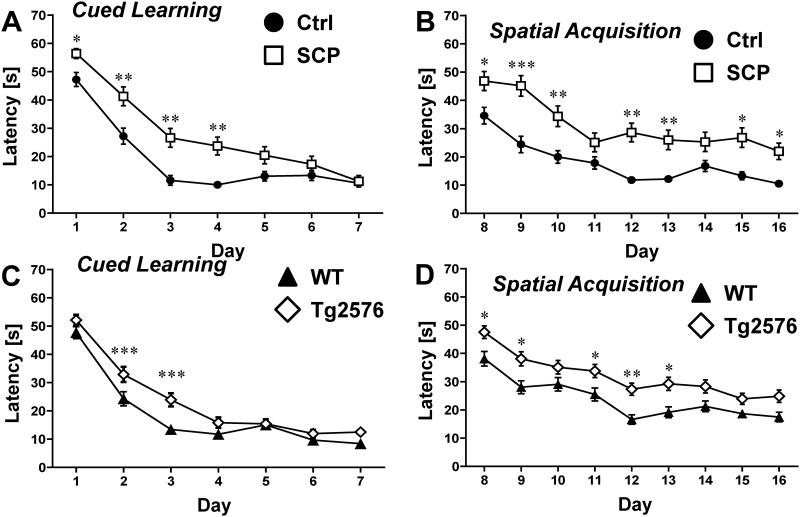
“Since then, multiple studies have been conducted by this and other groups using B6;SJL/Tg2576 mice in the Morris water maze [7, 9, 28, 31].”
BackgroundResultShirey-Rice, J. K., Brady, A. E., Jones, P. J., Davis, A. A., Bridges, T. M., Kennedy, J. P., Jadhav, S. B., Menon, U. N., Xiang, Z., Watson, M. L., et al. (2009) · Journal of Neuroscience · doi:10.1523/jneurosci.3930-09.2009 · Cited by 237
Hongpaisan, J., Sun, M., & Alkon, D. L. (2011) · Journal of Neuroscience · doi:10.1523/jneurosci.5209-10.2011 · Cited by 231
King, D. L., Arendash, G. W., Crawford, F., Sterk, T., Menendez, J., & MULLAN, M. J. (1999) · Behavioural Brain Research · doi:10.1016/s0166-4328(99)00037-6 · Cited by 230
Taglialatela, G., Hogan, D., Zhang, W.-R., & Dineley, K. (2009) · Behavioural Brain Research · doi:10.1016/j.bbr.2008.12.034 · Cited by 217 · cited 3×
“Mice with less than 7 s of total object interaction in either trial were excluded from the analysis [26].”
BackgroundMethodBehavioral and physiological mouse assays for anxiety: a survey in nine mouse strains
Bouwknecht, J. A., & Paylor, R. (2002) · Behavioural Brain Research · doi:10.1016/s0166-4328(02)00200-0 · Cited by 209
The influence of visual ability on learning and memory performance in 13 strains of micePreprint
Brown, R. E., & Wong, A. A. (2007) · Learning & Memory · doi:10.1101/lm.473907 · Cited by 186
Behavioural profiles of inbred mouse strains used as transgenic backgrounds. II: cognitive tests
Brooks, S. P., Pask, T., Jones, L., & Dunnett, S. B. (2004) · Genes Brain & Behavior · doi:10.1111/j.1601-183x.2004.00109.x · Cited by 180 · cited 2×
“The behavior of mice can vary significantly by lineage, resulting in different cognitive outcomes for each strain [32 – 36].”
BackgroundContet, C. (2001) · Behavioural Brain Research · doi:10.1016/s0166-4328(01)00231-5 · Cited by 176 · cited 3×
“Mice had in average less than 24 arm entries over the course of 5 minutes [33, 34, 63, 65].”
BackgroundResultBertaina‐Anglade, V., Enjuanes, E., Morillon, D., & Rochelle, C. D. L. (2006) · Journal of Pharmacological and Toxicological Methods · doi:10.1016/j.vascn.2006.04.001 · Cited by 165 · cited 2×
“Indeed, an extended intertrial interval can lead to low performance [25, 68].”
BackgroundThree weeks of running wheel exposure improves cognitive performance in the aged Tg2576 mouse
Nichol, K. E., Parachikova, A. I., & Cotman, C. W. (2007) · Behavioural Brain Research · doi:10.1016/j.bbr.2007.06.027 · Cited by 163
Swonger, A. K., & Rech, R. H. (1972) · Journal of Comparative and Physiological Psychology · doi:10.1037/h0033690 · Cited by 160 · cited 1×
“Spontaneous alternation using a Y-maze is a test for habituation and spatial working memory [37, 40].”
MethodWilcock, D. M., Alamed, J., Gottschall, P. E., Grimm, J., Rosenthal, A., Pons, J., Ronan, V., Symmonds, K., Gordon, M. N., & Morgan, D. (2006) · Journal of Neuroscience · doi:10.1523/jneurosci.0695-06.2006 · Cited by 155
Scopolamine-induced deficits in a two-trial object recognition task in mice
Dodart, J., Mathis, C., & Ungerer, A. (1997) · Neuroreport · doi:10.1097/00001756-199703240-00023 · Cited by 149 · cited 2×
“First, the length of the intertrial interval determines the level of difficulty of this memory task, and thus, the performance in the object recognition test [26, 68, 69].”
BackgroundMethodMelnikova, T., Savonenko, A. V., Wang, Q., Liang, X., Hand, T. A., Wu, L., Kaufmann, W. E., Vehmas, A. K., & Andreasson, K. I. (2006) · Neuroscience · doi:10.1016/j.neuroscience.2006.05.001 · Cited by 134 · cited 1×
“The protocol for the forced alternation test was modified from Melnikova et al. [21].”
MethodFukumoto, H., Takahashi, H., Tarui, N., Matsui, J., Tomita, T., Hirode, M., Sagayama, M., Maeda, R., Kawamoto, M., Hirai, K., et al. (2010) · Journal of Neuroscience · doi:10.1523/jneurosci.2884-10.2010 · Cited by 130 · cited 1×
“In the present novel object recognition test protocol, we incorporated a one-hour intertrial interval, which is a common intertrial interval in protocols of scopolamine-induced dementia and the Tg2576 model [20, 26, 66, 69, 70].”
MethodAge-dependent and -independent behavioral deficits in Tg2576 mice
Deacon, R. M. J., Cholerton, L. L., Talbot, K., Nair‐Roberts, R. G., Sanderson, D. J., Romberg, C., Koroś, E., Bornemann, K. D., & Rawlins, J. N. P. (2008) · Behavioural Brain Research · doi:10.1016/j.bbr.2007.12.024 · Cited by 125 · cited 1×
“B6;SJL/Tg2576 mice have memory impairment starting at about 6 months of age [7], but in some studies memory impairment could not be reproduced [31, 44, 46].”
BackgroundKiyota, T., Yamamoto, M., Xiong, H., Lambert, M. P., Klein, W. L., Gendelman, H. E., Ransohoff, R. M., & Ikezu, T. (2009) · PLoS ONE · doi:10.1371/journal.pone.0006197 · Cited by 114 · cited 1×
“[76] showed cognitive deficits in 129-Sve/Tg2576 mice at 8–9 months of age using a 6-arm radial arm water maze, whereas mice at 2–3 months of age had no such deficits.”
MethodThe aged mouse as a model of cognitive decline with special emphasis on studies in NMRI mice
Gower, A. J., & Lamberty, Y. (1993) · Behavioural Brain Research · doi:10.1016/0166-4328(93)90132-a · Cited by 109
Stewart, S., Cacucci, F., & Lever, C. (2011) · Journal of Alzheimer s Disease · doi:10.3233/jad-2011-101827 · Cited by 106 · cited 1×
“Although various tests have been used to characterize the behavioral/cognitive profile of B6;SJL/Tg2576 mice (reviewed in [11]), evaluating cognition in this AD model is challenging because one has to consider strain and model specific characteristics that can influence the results of cognitive testing.”
MethodThe spatio-temporal pattern of photoreceptor degeneration in the aged rd / rd mouse retina
Jimenez, A. J., García-Fernández, J. M., González, B., & Foster, R. G. (1996) · Cell and Tissue Research · doi:10.1007/s004410050579 · Cited by 100 · cited 1×
“Since B6;SJL/Tg2576 mice carry the recessive Pde6brd1 (rd1) mutation, homozygous rd1 carriers have retinal degeneration and visual deficits at 7–9 weeks of age [12, 15, 47].”
BackgroundAbramov, U., Puussaar, T., Raud, S., Kurrikoff, K., & Vasar, E. (2008) · Neuroscience Letters · doi:10.1016/j.neulet.2008.07.075 · Cited by 95 · cited 3×
“Given that 129S6 mice naturally have high anxiety and low activity levels, which can lead to poor performance in behavioral tests such as passive avoidance or the Barnes maze, we selected tests that are minimally invasive and stressful [34, 57 – 60].”
BackgroundInterrogating rodents regarding their object and spatial memory
Clark, R. E., & Martin, S. J. (2005) · Current Opinion in Neurobiology · doi:10.1016/j.conb.2005.08.014 · Cited by 88 · cited 2×
“Alternation tasks measure the disposition of rodents to explore new environments and are used to evaluate working memory and exploratory behavior [23, 37].”
BackgroundAmelioration of early cognitive deficits by aged garlic extract in Alzheimer's transgenic mice
Chauhan, N. B., & Sandoval, J. (2007) · Phytotherapy Research · doi:10.1002/ptr.2122 · Cited by 86 · cited 1×
“Since then, multiple studies have been conducted by this and other groups using B6;SJL/Tg2576 mice in the Morris water maze [7, 9, 28, 31].”
ResultGoncalves, M. B. C. V., Clarke, E. E., Hobbs, C., Malmqvist, T., Deacon, R. M. J., Jack, J., & Corcoran, J. P. T. (2013) · European Journal of Neuroscience · doi:10.1111/ejn.12142 · Cited by 81
Capurro, V., Busquet, P., Lopes, J. P., Bertorelli, R., Tarozzo, G., Bolognesi, M. L., Piomelli, D., Reggiani, A. M., & Cavalli, A. (2013) · PLoS ONE · doi:10.1371/journal.pone.0056870 · Cited by 79
Changes in behaviors of male C57BL/6J mice across adult life span and effects of dietary restriction
Fahlström, A., Zeberg, H., & Ulfhake, B. (2011) · AGE · doi:10.1007/s11357-011-9320-7 · Cited by 74
Bardgett, M. E., Davis, N. N., Schultheis, P. J., & Griffith, M. S. (2010) · Neurobiology of Learning and Memory · doi:10.1016/j.nlm.2010.10.008 · Cited by 67 · cited 4×
“Second, we selected tests that have been established for the original B6;SJL/Tg2576 mouse model [5, 8 – 11, 31, 44, 45].”
BackgroundMethodInfluentialDissociation of disinhibitory effects of scopolamine: Strain and task factors
Anisman, H. (1975) · Pharmacology Biochemistry and Behavior · doi:10.1016/0091-3057(75)90182-3 · Cited by 64 · cited 3×
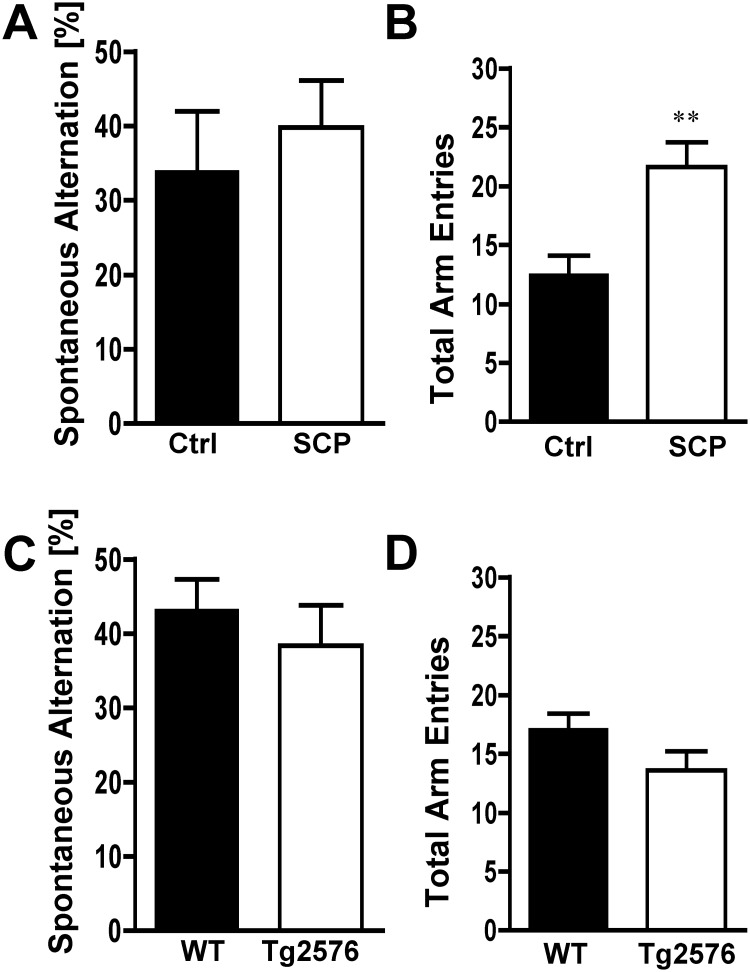
“001) suggesting increased general activity produced by scopolamine as reported before (Fig 7B; [22, 41]).”
BackgroundMethodDetecting spatial memory deficits beyond blindness in tg2576 Alzheimer mice
Yassine, N., Lazaris, A., Dorner‐Ciossek, C., Després, O., Meyer, L., Maître, M., Mensah‐Nyagan, A. G., Cassel, J., & Mathis, C. (2012) · Neurobiology of Aging · doi:10.1016/j.neurobiolaging.2012.06.016 · Cited by 58 · cited 1×
“However, retinal degeneration can confound experimental data in this test and introduce an impediment if outcomes are analyzed without considering the rd genotype [16, 17].”
BackgroundDissociation of the effects of scopolamine and d-amphetamine on a spontaneous alternation task
Kokkinidis, L., & Anisman, H. (1976) · Pharmacology Biochemistry and Behavior · doi:10.1016/0091-3057(76)90081-2 · Cited by 52 · cited 1×
“In contrast, decreased levels of spontaneous alternation were shown in Swiss-Webster mice dosed with 1 mg/kg scopolamine-HBr and in A/J, DBA/2J and C57BL/6J mice dosed with 10 mg/ kg scopolamine-HBr compared to saline-injected mice [22, 82].”
MethodClapcote, S. J., Lazar, N. L., Bechard, A. R., Wood, G. A., & Roder, J. (2005) · PubMed · Cited by 51
Apparent Behavioral Benefits of Tau Overexpression in P301L Tau Transgenic Mice
Morgan, D., Munireddy, S., Alamed, J., DeLeon, J., Diamond, D. M., Bickford, P. C., Hutton, M. L., Lewis, J. M., McGowan, E. M., & Gordon, M. N. (2008) · Journal of Alzheimer s Disease · doi:10.3233/jad-2008-15407 · Cited by 46 · cited 1×
“[45] utilized a novel 2-day protocol and showed that 8-month old C57/ Tg2576 mice had memory deficiencies.”
MethodGarcia, M. F., Gordon, M. N., Hutton, M. L., Lewis, J. M., McGowan, E. M., Dickey, C. A., Morgan, D., & Arendash, G. W. (2003) · Neuroreport · doi:10.1097/00001756-200401190-00015 · Cited by 45 · cited 1×
“However, retinal degeneration can confound experimental data in this test and introduce an impediment if outcomes are analyzed without considering the rd genotype [16, 17].”
BackgroundRustay, N. R., Cronin, E. A., Curzon, P., Markosyan, S., Bitner, R. S., Ellis, T. A., Waring, J. F., Decker, M. W., Rueter, L. E., & Browman, K. E. (2009) · Brain Research · doi:10.1016/j.brainres.2009.11.040 · Cited by 38 · cited 7×
“[18] showed that 7-month old 129S6/Tg2576 and B6;SJL/Tg2576 mice have comparable Aβ plasma concentrations and plaque loads in the brain.”
BackgroundMethodResultInfluentialStavnezer, A. J., Hyde, L. A., Bimonte, H. A., Armstrong, C. M., & Denenberg, V. H. (2002) · Behavioural Brain Research · doi:10.1016/s0166-4328(02)00021-9 · Cited by 37
Behavioral consequences of ovarian atrophy and estrogen replacement in the APPswe mouse
Golub, M. S., Germann, S. L., Mercer, M., Gordon, M. N., Morgan, D., Mayer, L. P., & Hoyer, P. B. (2007) · Neurobiology of Aging · doi:10.1016/j.neurobiolaging.2007.03.015 · Cited by 36 · cited 2×
“At 6 – 12 months of age, B6;SJL/Tg2576 mice develop cognitive impairment [7], which has been the focus of numerous studies [5, 8 – 10].”
BackgroundLaursen, B., Mørk, A., Plath, N., Kristiansen, U., & Bastlund, J. F. (2013) · Brain Research · doi:10.1016/j.brainres.2013.10.055 · Cited by 33
NOMURA, Y., Nishiyama, N., Saito, H., & Matsuki, N. (1994) · Biological and Pharmaceutical Bulletin · doi:10.1248/bpb.17.490 · Cited by 33 · cited 1×
“001) suggesting increased general activity produced by scopolamine as reported before (Fig 7B; [22, 41]).”
BackgroundProfiling psychomotor and cognitive aging in four-way cross mice
Sumien, N., Sims, M. N., Taylor, H., & Forster, M. J. (2006) · AGE · doi:10.1007/s11357-006-9015-7 · Cited by 32
Zhang, W., Song, M., Cui, Y., Wang, H., Zhu, L., Niu, Y.-Y., Yang, L., Lu, Y., & Chen, H. (2008) · Neuroscience Letters · doi:10.1016/j.neulet.2008.07.048 · Cited by 29 · cited 2×
“[71] showed that Kunming mice dosed with 0.”
BackgroundHan, R.-W., Zhang, R.-S., Chang, M., Peng, Y.-L., Wang, P., Hu, S.-Q., Choi, C., Yin, M., Wang, R., & Han, Y. (2012) · Brain Research · doi:10.1016/j.brainres.2012.06.015 · Cited by 28 · cited 3×
“[66] showed similar learning and memory deficits after treatment with 0.”
BackgroundMethodWolff, M., Benhassine, N., Costet, P., Hen, R., Ségu, L., & Buhot, M.-C. (2003) · Learning & Memory · doi:10.1101/lm.60103 · Cited by 23 · cited 2×
“) did not influence performance at a 5 min inter-trial interval, but impaired performance at a 60 min inter-trial interval [75].”
BackgroundMethodNavarro-Francés, C. I., & Arenas, M. C. (2014) · Behavioural Processes · doi:10.1016/j.beproc.2014.02.009 · Cited by 23 · cited 1×
“Given that 129S6 mice naturally have high anxiety and low activity levels, which can lead to poor performance in behavioral tests such as passive avoidance or the Barnes maze, we selected tests that are minimally invasive and stressful [34, 57 – 60].”
Effects of NK-4 in a Transgenic Mouse Model of Alzheimer's Disease
Ohta, H., Arai, S., Akita, K., Ohta, T., & Fukuda, S. (2012) · PLoS ONE · doi:10.1371/journal.pone.0030007 · Cited by 17 · cited 5×
“[20], who assessed behavior and cognition of 129S6/Tg2576 mice at 3, 6 and 12 months of age using various tests.”
BackgroundMethodInfluentialChapter 5.5 Transgenic mouse models of Alzheimer's disease and episodic-like memory
Borchelt, D., & Savonenko, A. V. (2008) · Handbook of behavioral neuroscience · doi:10.1016/s1569-7339(08)00230-0 · Cited by 4
Cited by
Sorted by citations
Inflammation and aging: signaling pathways and intervention therapies
Li, X., Li, C., Zhang, W., Wang, Y., Qian, P., & Huang, H. (2023) · Signal Transduction and Targeted Therapy · doi:10.1038/s41392-023-01502-8 · Cited by 1,443
Yousef, H., Czupalla, C. J., Lee, D., Chen, M. B., Burke, A. N., Zera, K. A., Zandstra, J., Berber, E., Lehallier, B., Mathur, V., et al. (2019) · Nature Medicine · doi:10.1038/s41591-019-0440-4 · Cited by 442
CD22 blockade restores homeostatic microglial phagocytosis in ageing brains
Pluvinage, J. V., Haney, M. S., Smith, B. A. H., Sun, J., Iram, T., Bonanno, L., Li, L., Lee, D. P., Morgens, D. W., Yang, A. C., et al. (2019) · Nature · doi:10.1038/s41586-019-1088-4 · Cited by 459
Exercise hormone irisin is a critical regulator of cognitive function
Islam, M. R., Valaris, S., Young, M. F., Haley, E. B., Luo, R., Bond, S. F., Mazuera, S., Kitchen, R. R., Caldarone, B. J., Bettio, L. E. B., et al. (2021) · Nature Metabolism · doi:10.1038/s42255-021-00438-z · Cited by 403
Novel Object Recognition and Object Location Behavioral Testing in Mice on a Budget
Denninger, J. K., Smith, B. M., & Kirby, E. D. (2018) · Journal of Visualized Experiments · doi:10.3791/58593 · Cited by 273
Metadata
- Authors
- Wolf, A., Bauer, B., Abner, E. L., Ashkenazy-Frolinger, T., & Hartz, A. M. S.
- Affiliations
- University of Minnesota, Duluth (US)
- University of Kentucky (US)
- Corresponding author
- Hartz, Anika M. S.
- Venue
- PLOS ONE
- Publisher
- Public Library of Science (PLoS)
- Published
- 2016-01-25
- Volume
- 11
- Issue
- 1
- Pages
- e0147733
- ISSN
- 1932-6203 (ISSN-L)
- PMC
- PMC4726499
- OpenAlex
- W2426168356
- Cited by
- 281
- References
- 89
- Citations by year
- 2026: 16 · 2025: 20 · 2024: 28 · 2023: 37 · 2022: 30 · 2021: 33 · 2020: 37 · 2019: 28 · 2018: 40 · 2017: 6 · 2016: 6
- FWCI
- 21.46
- Type
- journal article
- Language
- en
- Open access
- gold
- doi.org
- Licence
- Locations
- PLoS ONE (publishedVersion, cc-by)
- Europe PMC (PubMed Central) (publishedVersion, cc-by)
- PubMed Central (publishedVersion, cc-by)
- PubMed (publishedVersion)
- UKnowledge (University of Kentucky) (submittedVersion, cc-by)
- DOAJ (DOAJ: Directory of Open Access Journals) (submittedVersion, cc-by-sa)
- Figshare (submittedVersion, cc-by)
- Funders
- University of Kentucky (P30 AG028383, AG028383)
- National Institute on Aging (AG-028383, P30AG028383, R01AG039621)
- Topics
- Life Sciences › Neuroscience › Cellular and Molecular Neuroscience › Alzheimer's disease research and treatments
- Life Sciences › Neuroscience › Cognitive Neuroscience › Memory and Neural Mechanisms
- Health Sciences › Medicine › Psychiatry and Mental health › Dementia and Cognitive Impairment Research
- Keywords
- mouse models of Alzheimer's disease, amyloid precursor protein overexpression, retinal degeneration, scopolamine-induced dementia, cognitive impairment, learning and memory, novel object recognition, Morris water maze, radial arm water maze, spontaneous alternation, amyloid-beta pathology
- MeSH terms
- Animals, Behavior, Animal, Male, Memory, Mice, Transgenic, Maze Learning, Mice
About these checks
Registry, retraction, Cites and statistics results are computed, not judged, with one exception: a printed reference that no index lists is read once by a model before it counts as a citation error. Claims are extracted by a model and kept only when their quote appears verbatim in the text; each cited source is then checked, with a model’s help, for whether it says what the claim relies on. Those verdicts can be wrong — read the claim’s quote and the cited source before relying on one.
Statistics and arithmetic are recomputed, not judged.
Confidence bands are shown only for fields calibrated on our annotated test set. None is calibrated yet, so no band is shown.
What counts as a claim ›How we measure confidence ›How we check this ›
Are you an author, or do you see a problem with this page? Request a review
