

The DOI matches its Crossref record; 61 of the 62 references it cites were found in a registry or an index.
Influence of Pyrolysis Temperature on Physico-Chemical Properties of Corn Stover (Zea mays L.) Biochar and Feasibility for Carbon Capture and Energy Balance
Open accessAbstract
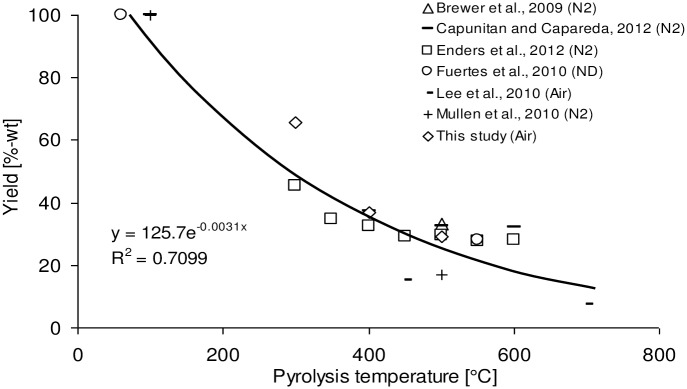
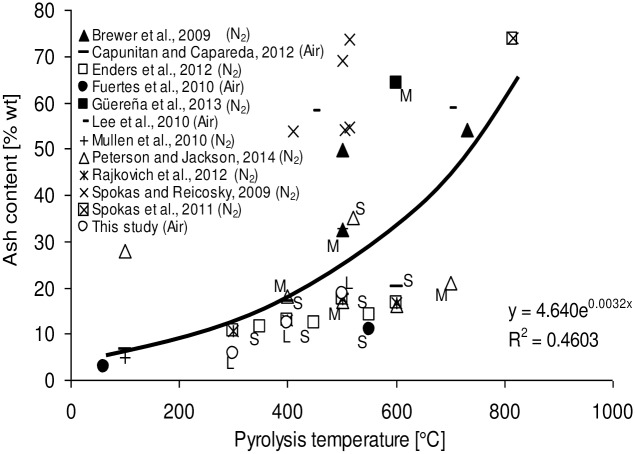
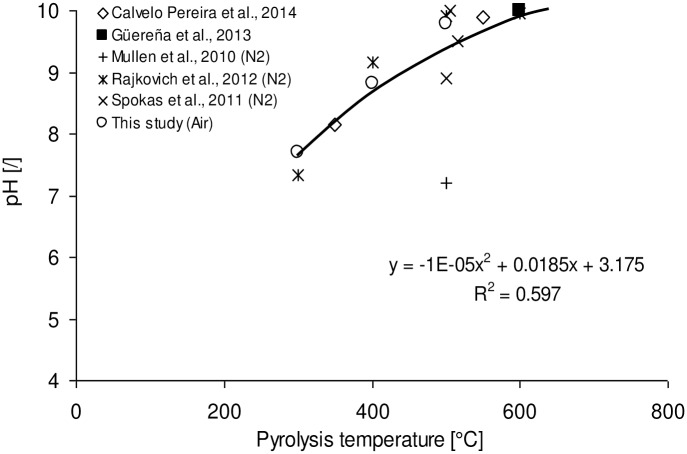
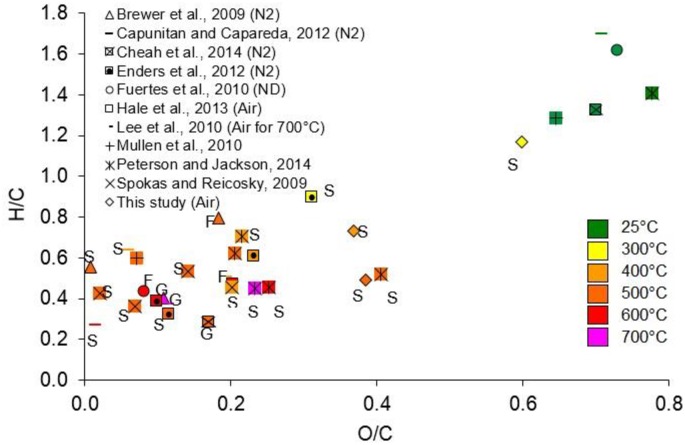
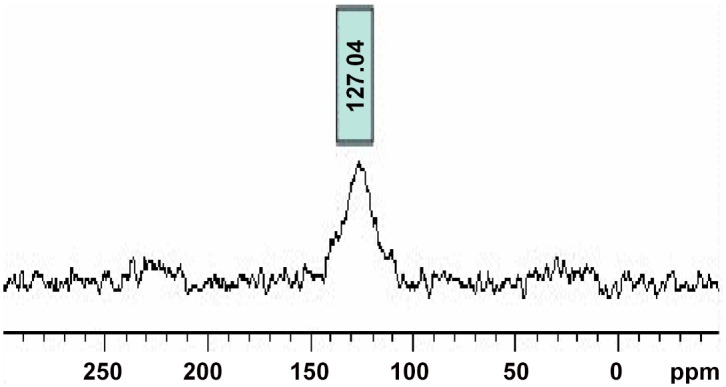
This study examined the influence of pyrolysis temperature on biochar characteristics and evaluated its suitability for carbon capture and energy production. Biochar was produced from corn stover using slow pyrolysis at 300, 400 and 500°C and 2 hrs holding time. The experimental biochars were characterized by elemental analysis, BET, FTIR, TGA/DTA, NMR (C-13). Higher heating value (HHV) of feedstock and biochars was measured using bomb calorimeter. Results show that carbon content of corn stover biochar increased from 45.5% to 64.5%, with increasing pyrolysis temperatures. A decrease in H:C and O:C ratios as well as volatile matter, coupled with increase in the concentration of aromatic carbon in the biochar as determined by FTIR and NMR (C-13) demonstrates a higher biochar carbon stability at 500°C. It was estimated that corn stover pyrolysed at 500°C could provide of 10.12 MJ/kg thermal energy. Pyrolysis is therefore a potential technology with its carbon-negative, energy positive and soil amendment benefits thus creating win- win scenario.
Overview
The claims and statistics of this paper haven’t been checked yet.
Run the check — free, no account needed. It reads the open-access text and checks the sources it cites.
Integrity signals
Registry
Cites
Statistics
Figures
Verification
Claims the paper makes
The claims and statistics of this paper haven’t been checked yet.
Run the check — free, no account needed. It reads the open-access text and checks the sources it cites.
Claims other papers make about this one
Each is checked against this paper’s own text: does it say what the citing paper says it does?
The cited source says what the claim attributes to it.
In the citing paper
“increased pyrolysis temperature caused an increase of 5.7-18.7% in ash content”
From Biochar physicochemical properties: pyrolysis temperature and feedstock kind effects (2020) · cites this paper as Rafiq et al. 2016
Self-check
Percentages, sums and reported differences re-computed from the paper’s own numbers.
The self-check needs the paper’s full text.
Citations
Cites
中華人民共和国国家統計局 (1988) · Medical Entomology and Zoology · Cited by 12,443
Characteristics of hemicellulose, cellulose and lignin pyrolysis
Yang, H., Yan, R., Chen, H., Lee, D. H., & Zheng, C. (2007) · Fuel · doi:10.1016/j.fuel.2006.12.013 · Cited by 8,155
Dynamic Molecular Structure of Plant Biomass-Derived Black Carbon (Biochar)
Keiluweit, M., Nico, P. S., Johnson, M. G., & Kleber, M. (2010) · Environmental Science & Technology · doi:10.1021/es9031419 · Cited by 3,230
Bio-char Sequestration in Terrestrial Ecosystems – A Review
Lehmann, J., Gaunt, J., & Rondon, M. (2006) · Mitigation and Adaptation Strategies for Global Change · doi:10.1007/s11027-005-9006-5 · Cited by 3,053
Australian laboratory handbook of soil and water chemical methods.
Rayment, G. E., & Higginson, F. R. (1992) · Cited by 2,571
The forms of alkalis in the biochar produced from crop residues at different temperatures
Yuan, J.-H., Xu, R.-K., & Zhang, H. (2011) · Bioresource Technology · doi:10.1016/j.biortech.2010.11.018 · Cited by 2,029
Chen, B., Zhou, D., & Zhu, L. (2008) · Environmental Science & Technology · doi:10.1021/es8002684 · Cited by 1,823
The Art, Science, and Technology of Charcoal Production
Antal, M. J., & Grønli, M. (2003) · Industrial & Engineering Chemistry Research · doi:10.1021/ie0207919 · Cited by 1,623
(2007) · Advances in chemical engineering · doi:10.1016/s0065-2377(07)x3200-9 · Cited by 1,448
Roberts, K. G., Gloy, B. A., Joseph, S., Scott, N. R., & Lehmann, J. (2010) · Environmental Science & Technology · doi:10.1021/es902266r · Cited by 1,243
Self-citation
Research works printed but not linked: 1
- SE Hale, 2013, The sorption and desorption of phosphate-P, ammonium-N and nitrate-N in cacao shell and corn cob biochars, Chemosphere, 91, 1612, 10.1016/j.chemosphere.2012.12.057 · DOI · Paper page
Cited by
Sorted by citations
Biochar physicochemical properties: pyrolysis temperature and feedstock kind effects
Tomczyk, A., Sokołowska, Z., & Boguta, P. (2020) · Reviews in Environmental Science and Bio/Technology · doi:10.1007/s11157-020-09523-3 · Cited by 2,948
Biochar application for the remediation of salt-affected soils: Challenges and opportunities
Ullah, S., Dahlawi, S. M. A., Naeem, A., Rengel, Z., & Naidu, R. (2017) · The Science of The Total Environment · doi:10.1016/j.scitotenv.2017.12.257 · Cited by 709
Shaheen, S. M., Niazi, N. K., Hassan, N. E. E., Bibi, I., Wang, H., Tsang, D. C. W., Ok, Y. S., Bolan, N., & Rinklebe, J. (2019) · International Materials Reviews · doi:10.1080/09506608.2018.1473096 · Cited by 527
Review of biochar for the management of contaminated soil: Preparation, application and prospect
Yuan, P., Wang, J., Pan, Y., Shen, B., & Wu, C. (2018) · The Science of The Total Environment · doi:10.1016/j.scitotenv.2018.12.400 · Cited by 513
A comprehensive review on physical activation of biochar for energy and environmental applications
Sajjadi, B., Chen, W.-Y., & Egiebor, N. O. (2019) · Reviews in Chemical Engineering · doi:10.1515/revce-2017-0113 · Cited by 475
Metadata
- Authors
- Rafiq, M. K., Bachmann, R. T., Rafiq, M. T., Shang, Z., Joseph, S., & Long, R.
- Affiliations
- International Islamic University, Islamabad (PK)
- University of Kuala Lumpur (MY)
- State Key Laboratory of Herbage Improvement and Grassland Agro-ecosystems (CN)
- UNSW Sydney (AU)
- Corresponding author
- Long, Ruijun
- Venue
- PLOS ONE
- Publisher
- Public Library of Science (PLoS)
- Published
- 2016-06-21
- Volume
- 11
- Issue
- 6
- Pages
- e0156894
- ISSN
- 1932-6203 (ISSN-L)
- PMC
- PMC4915615
- OpenAlex
- W2474748449
- Cited by
- 376
- References
- 62
- Citations by year
- 2026: 40 · 2025: 50 · 2024: 53 · 2023: 44 · 2022: 41 · 2021: 59 · 2020: 46 · 2019: 15 · 2018: 18 · 2017: 7 · 2016: 1
- FWCI
- 6.58
- Type
- journal article
- Language
- en
- Open access
- gold
- doi.org
- Licence
- Locations
- PLoS ONE (publishedVersion, cc-by)
- Europe PMC (PubMed Central) (publishedVersion, cc-by)
- PubMed Central (publishedVersion, cc-by)
- PubMed (publishedVersion)
- Lanzhou University Institutional Repository (submittedVersion)
- UNSWorks (UNSW Sydney) (submittedVersion, cc-by)
- DOAJ (DOAJ: Directory of Open Access Journals) (submittedVersion)
- UNSWorks (University of New South Wales, Sydney, Australia) (submittedVersion, cc-by)
- Greater South Information System
- Funders
- National Natural Science Foundation of China (411714.)
- Ministry of Science and Technology of the People's Republic of China (CN) (2012BAC01B02-3)
- Topics
- Physical Sciences › Energy › Fuel Technology › Thermochemical Biomass Conversion Processes
- Physical Sciences › Chemical Engineering › Filtration and Separation › Carbon Dioxide Capture Technologies
- Life Sciences › Agricultural and Biological Sciences › Soil Science › Soil Carbon and Nitrogen Dynamics
- Keywords
- corn stover, biochar, pyrolysis temperature, slow pyrolysis, CO2 capture, energy balance, higher heating value, carbon content, aromatic carbon, volatile matter, soil amendment, biomass energy
- MeSH terms
- Agriculture, Carbon, Charcoal, China, Zea mays, Feasibility Studies, Hydrogen-Ion Concentration, Surface Properties, Temperature, Thermogravimetry, Waste Products, X-Ray Diffraction, Porosity, Spectroscopy, Fourier Transform Infrared, Chemical Phenomena, Carbon-13 Magnetic Resonance Spectroscopy
About these checks
Registry, retraction, Cites and statistics results are computed, not judged, with one exception: a printed reference that no index lists is read once by a model before it counts as a citation error. Claims are extracted by a model and kept only when their quote appears verbatim in the text; each cited source is then checked, with a model’s help, for whether it says what the claim relies on. Those verdicts can be wrong — read the claim’s quote and the cited source before relying on one.
Statistics and arithmetic are recomputed, not judged.
Confidence bands are shown only for fields calibrated on our annotated test set. None is calibrated yet, so no band is shown.
What counts as a claim ›How we measure confidence ›How we check this ›
Are you an author, or do you see a problem with this page? Request a review
