

The DOI matches its Crossref record; 70 of the 70 references it cites were found in a registry or an index.
Effects of Arabinoxylan and Resistant Starch on Intestinal Microbiota and Short-Chain Fatty Acids in Subjects with Metabolic Syndrome: A Randomised Crossover Study
Open accessAbstract
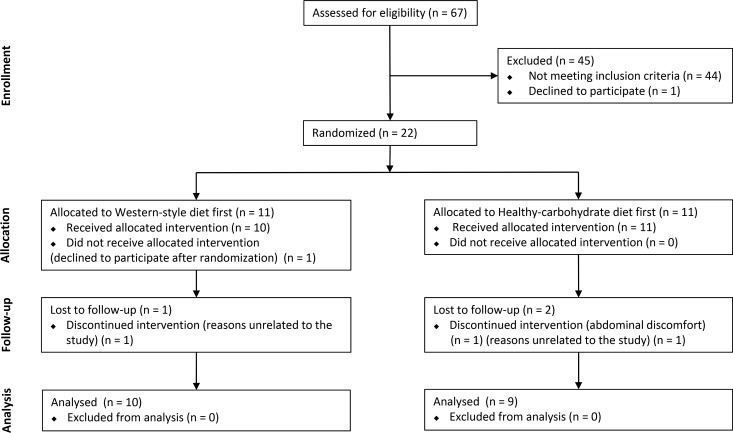
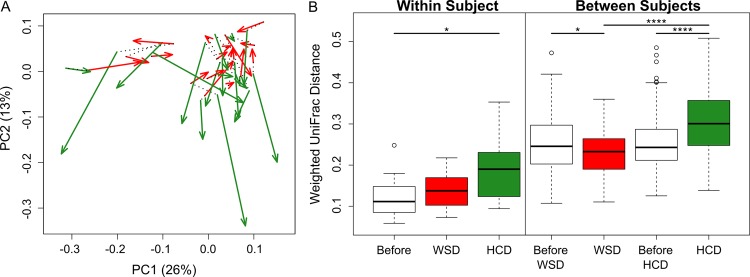
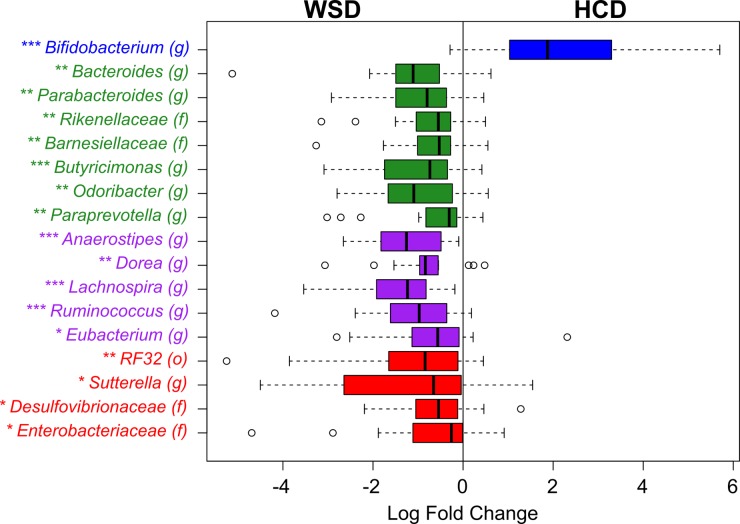
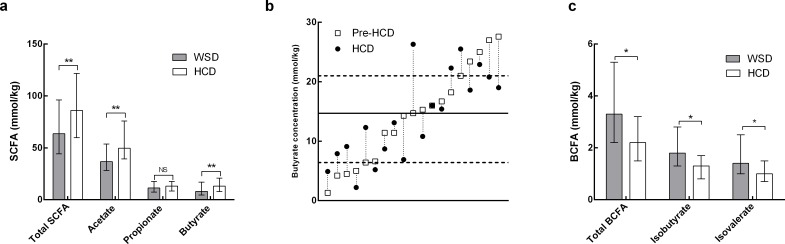
Recently, the intestinal microbiota has been emphasised as an important contributor to the development of metabolic syndrome. Dietary fibre may exert beneficial effects through modulation of the intestinal microbiota and metabolic end products. We investigated the effects of a diet enriched with two different dietary fibres, arabinoxylan and resistant starch type 2, on the gut microbiome and faecal short-chain fatty acids. Nineteen adults with metabolic syndrome completed this randomised crossover study with two 4-week interventions of a diet enriched with arabinoxylan and resistant starch and a low-fibre Western-style diet. Faecal samples were collected before and at the end of the interventions for fermentative end-product analysis and 16S ribosomal RNA bacterial gene amplification for identification of bacterial taxa. Faecal carbohydrate residues were used to verify compliance. The diet enriched with arabinoxylan and resistant starch resulted in significant reductions in the total species diversity of the faecal-associated intestinal microbiota but also increased the heterogeneity of bacterial communities both between and within subjects. The proportion of Bifidobacterium was increased by arabinoxylan and resistant starch consumption (P<0.001), whereas the proportions of certain bacterial genera associated with dysbiotic intestinal communities were reduced. Furthermore, the total short-chain fatty acids (P<0.01), acetate (P<0.01) and butyrate concentrations (P<0.01) were higher by the end of the diet enriched with arabinoxylan and resistant starch compared with those resulting from the Western-style diet. The concentrations of isobutyrate (P = 0.05) and isovalerate (P = 0.03) decreased in response to the arabinoxylan and resistant starch enriched diet, indicating reduced protein fermentation. In conclusion, arabinoxylan and resistant starch intake changes the microbiome and short-chain fatty acid compositions, with potential beneficial effects on colonic health and metabolic syndrome. TRIAL REGISTRATION: ClinicalTrials.gov NCT01618526.
Overview
The claims and statistics of this paper haven’t been checked yet.
Run the check — free, no account needed. It reads the open-access text and checks the sources it cites.
Integrity signals
Registry
Cites
Statistics
Figures
Verification
Claims the paper makes
The claims and statistics of this paper haven’t been checked yet.
Run the check — free, no account needed. It reads the open-access text and checks the sources it cites.
Claims other papers make about this one
Each is checked against this paper’s own text: does it say what the citing paper says it does?
In the citing paper
“BCFAs could be especially important microbial messengers in scenarios of high-protein, low-complex carbohydrate (i.e., dietary fiber) consumption, as studies have shown that consumption of these diets can increase the microbial production of BCFAs (121, 380, 381).”
From Diet and the Microbiota–Gut–Brain Axis: Sowing the Seeds of Good Mental Health (2021) · cites this paper as [381]
Self-check
Percentages, sums and reported differences re-computed from the paper’s own numbers.
The self-check needs the paper’s full text.
Citations
Cites
1 retracted
An overview of randomization techniques: An unbiased assessment of outcome in clinical research
Suresh, K. (2011) · Journal of Human Reproductive Sciences · doi:10.4103/0974-1208.82352 · Cited by 1,070 · cited 1×
“The diet allocation sequence was determined by the study coordinators using a simple randomisation method.[29] The cereal key foods were incorporated into the subjects’ habitual diets (see dietary counselling) and constituted approximately 50% of their total daily energy needs.”
RetractedR: A Language and Environment for Statistical Computing
R Core Team (2000) · doi:10.32614/r.manuals · Cited by 355,893
QIIME allows analysis of high-throughput community sequencing data
Caporaso, J. G., Kuczynski, J., Stombaugh, J., Bittinger, K., Bushman, F. D., Costello, E. K., Fierer, N., Peña, A. G., Goodrich, J. K., Gordon, J. I., et al. (2010) · Nature Methods · doi:10.1038/nmeth.f.303 · Cited by 34,887 · cited 1×
“0.[41] Demultiplexing and quality filtering were performed with the default settings, except that a minimum average quality score of 30 was used for quality filtering instead of the default score of 25, and the reverse primer sequences were removed.”
MethodSearch and clustering orders of magnitude faster than BLAST
Edgar, R. C. (2010) · Bioinformatics · doi:10.1093/bioinformatics/btq461 · Cited by 21,098
Greengenes, a Chimera-Checked 16S rRNA Gene Database and Workbench Compatible with ARB
DeSantis, T. Z., Hugenholtz, P., Larsen, N., Rojas, M., Brodie, E. L., Keller, K., Huber, T., Dalevi, D., Hu, P., & Andersen, G. L. (2006) · Applied and Environmental Microbiology · doi:10.1128/aem.03006-05 · Cited by 10,891 · cited 1×
“The open-reference OTU picking strategy in QIIME was used to select operational taxonomic units (OTUs) with 97% sequence identity to sequences in Greengenes (release 13_8) database[42] and to each other, according to the UCLUST algorithm.”
The metabolic syndrome—a new worldwide definition
Alberti, K. G. M., Zimmet, P., & Shaw, J. (2005) · The Lancet · doi:10.1016/s0140-6736(05)67402-8 · Cited by 9,352 · cited 7×
“In conclusion, the results of our study support the hypothesis that high intake of both RS and AX is capable of changing the intestinal microbiota and SCFA production in subjects with MetS in contrast with a low-fibre WSD.”
InfluentialUniFrac: a New Phylogenetic Method for Comparing Microbial Communities
Lozupone, C., & Knight, R. (2005) · Applied and Environmental Microbiology · doi:10.1128/aem.71.12.8228-8235.2005 · Cited by 8,227
Linking long-term dietary patterns with gut microbial enterotypes
Wu, G. D., Chen, J., Hoffmann, C., Bittinger, K., Chen, Y.-Y., Keilbaugh, S. A., Bewtra, M., Knights, D., Walters, W. A., Knight, R., et al. (2011) · Science · doi:10.1126/science.1208344 · Cited by 6,513
Conservation evaluation and phylogenetic diversity
Faith, D. (1992) · Biological Conservation · doi:10.1016/0006-3207(92)91201-3 · Cited by 5,495 · cited 1×
“The Chao1 diversity index, Phylogenetic Diversity Whole Tree,[45] and observed species were determined for increasing numbers of randomly sampled sequences per sample to generate alpha diversity rarefaction curves.”
MethodRichness of human gut microbiome correlates with metabolic markers
Le Chatelier, E., Nielsen, T., Qin, J., Prifti, E., Hildebrand, F., Falony, G., Almeida, M., Arumugam, M., Batto, J.-M., Kennedy, S., et al. (2013) · Nature · doi:10.1038/nature12506 · Cited by 4,662
Cited by
Sorted by citations
Items 101–181 of 181
Beneficial microbiome and diet interplay in early-onset colorectal cancer
Zhou, Z., Kleis, L., Depetris-Chauvin, A., Jaskulski, S., Damerell, V., Michels, K. B., Gigic, B., Nöthlings, U., & Panagiotou, G. (2024) · EMBO Molecular Medicine · doi:10.1038/s44321-024-00177-0 · Cited by 23
Lee, J. H. J., & Zhu, J. (2020) · Experimental Biology and Medicine · doi:10.1177/1535370220979952 · Cited by 17
“, a healthy-carbohydrate diet with arabinoxylan- and resistant starch-enriched cereal foods, or a Western diet based on refined grains was given to participants diagnosed with MetS in a randomized and crossover fashion.(57) The substantially enhanced values of acetic acid and butyric acid were observed along with the…”
BackgroundMethodResultLiu, Y., Ajila, C. M., Polic, I. I., & LaPointe, G. (2021) · Journal of Functional Foods · doi:10.1016/j.jff.2021.104735 · Cited by 16
Chen, D., Wang, A., Lv, J., Peng, Y., Zheng, Y., Zuo, J., Kan, J., Zong, S., Zeng, X., & Liu, J. (2024) · International Journal of Biological Macromolecules · doi:10.1016/j.ijbiomac.2024.135340 · Cited by 15
Kaur, N., Pandey, S., & Bhushan, K. (2025) · Journal of Food Science · doi:10.1111/1750-3841.70239 · Cited by 14
Resistant Starch in Wheat‐, Barley‐, Rye‐, and Oat‐Based Foods: A Review
Nguyen, S. N., Drawbridge, P. C., & Trust Beta (2021) · Starch - Stärke · doi:10.1002/star.202100251 · Cited by 16
Chen, Y., Liao, X., Li, Y., Cao, H., Zhang, F., Fei, B., Bao, C., Cao, H., Mao, Y., Chen, X., et al. (2023) · Trials · doi:10.1186/s13063-023-07137-y · Cited by 14
Branched- Chain Fatty Acids and Obesity: A Narrative Review
Yang, S.-J., Yu, X.-K., & Qun, Z. (2025) · Nutrition Reviews · doi:10.1093/nutrit/nuaf022 · Cited by 13
Non-Digestible Carbohydrate and the Risk of Colorectal Neoplasia: A Systematic Review
Rao, M., Gao, C., Hou, J., Gu, J., Law, B. Y. K., & Xu, Y. (2020) · Nutrition and Cancer · doi:10.1080/01635581.2020.1742360 · Cited by 13
Smith, A. D., Chen, C. T., Cheung, L., Ward, R. E., Hintze, K. J., & Dawson, H. D. (2022) · Frontiers in Nutrition · doi:10.3389/fnut.2022.782667 · Cited by 13
Xiong, W., Zhang, B., Gu, Z., Muir, J. G., & Dhital, S. (2022) · International Journal of Biological Macromolecules · doi:10.1016/j.ijbiomac.2022.12.108 · Cited by 14
Modulation of gut microbiota by dietary macronutrients in type 2 diabetes: a review
Hang, H. J., Battousse, O., & Ramadas, A. (2021) · Progress In Microbes & Molecular Biology · doi:10.36877/pmmb.0000182 · Cited by 14
Vacca, M., Khalil, M., Rampino, A., Celano, G., Lanza, E., Caponio, G. R., Ungaro, F., Bertolino, A., Ciaula, A. D., Angelis, M. D., et al. (2024) · Journal of Functional Foods · doi:10.1016/j.jff.2024.106598 · Cited by 11
Targeted Approaches for In Situ Gut Microbiome Manipulation
Cresci, G., Lampe, J. W., & Gibson, G. R. (2020) · Journal of Parenteral and Enteral Nutrition · doi:10.1002/jpen.1779 · Cited by 12
Morel, S., DELVIN, E. E., Marcil, V., & Levy, E. H. (2020) · Antioxidants and Redox Signaling · doi:10.1089/ars.2020.8102 · Cited by 11
“Cancer or its therapy may damage the hypothalamic–pituitary axis and engender imbalances in growth hormone (GH), gonadotropin (follicle-stimulating hormone [FSH] and luteinizing hormone [LH]), thyroid stimulating hormone, and adrenocorticotropin with the induction of MetS (46).”
InfluentialProcessing Matters in Nutrient-Matched Laboratory Diets for Mice—Energy and Nutrient Digestibility
Böswald, L. F., Wenderlein, J., Straubinger, R. K., Ulrich, S., & Kienzle, E. (2021) · Animals · doi:10.3390/ani11020523 · Cited by 11
“and the higher ratio of acetic to propionic acid, which indicate microbial fermentative activity, support that assumption [15,21].”
BackgroundDietary interventions, intestinal microenvironment, and obesity: a systematic review
dos Santos, J. G., Alves, B. C., Hammes, T. O., & Dall’Alba, V. (2019) · Nutrition Reviews · doi:10.1093/nutrit/nuz022 · Cited by 10
Cereal Arabinoxylans—Their Enzymatic Degradation and Relevance for Breadmaking and Human Health
González-Alonso, V., Verce, M., Vuyst, L. D., & Leroy, F. (2026) · Comprehensive Reviews in Food Science and Food Safety · doi:10.1111/1541-4337.70391 · Cited by 11
“Among the very diverse gut microbiota, Bacteroides , Bifidobacterium , Roseburia , Ruminococcus , and Prevotella stand out regarding AX degradation (Hughes et al. 2007 ; El Kaoutari et al. 2013 ; Hald et al. 2016 ; Feng et al. 2018 ; Huang et al. 2019 ).”
Alfilasari, N., Sirivongpaisal, P., & Wichienchot, S. (2021) · Current Microbiology · doi:10.1007/s00284-021-02564-z · Cited by 9
Food-breastmilk combinations alter the colonic microbiome of weaning infants: an in silico study
da Silva, V. G., Smith, N. W., Mullaney, J. A., Wall, C. R., Roy, N. C., & McNabb, W. C. (2024) · mSystems · doi:10.1128/msystems.00577-24 · Cited by 9
“Interventions on adults consuming wheat arabinoxylan reported increased fecal butyrate concentration (70, 71).”
BackgroundCraciun, C. I., Măgureanu, D. C., Bocșan, I. C., Craciun, A. E., Buzoianu, A. D., & Maria Adriana, N. E. A. G. (2026) · Diabetology · doi:10.3390/diabetology7030059 · Cited by 9
Christensen, L. H., Hjorth, M. F., Krych, Ł., Licht, T. R., Lauritzen, L., Magkos, F., & Roager, H. M. (2022) · Frontiers in Nutrition · doi:10.3389/fnut.2022.947349 · Cited by 7
Zha, Z., Wang, X., Wang, G., Yin, H., & Wang, H. (2023) · International Journal of Biological Macromolecules · doi:10.1016/j.ijbiomac.2023.124413 · Cited by 8
Schupfer, E., Ooi, S. L., Jeffries, T. C., Wang, S., Micalos, P. S., & Pak, S. C. (2023) · Molecules · doi:10.3390/molecules28145400 · Cited by 7
“Arabinoxylans (AXs) are the nondigestible fibre of cereal grains, including wheat, rice, rye, maize, and sorghum [9].”
BackgroundInfluentialRole of gut microbiota in metabolic syndrome: a review of recent evidence
Alveirinho, M., Freitas, P., & Faleiro, M. L. (2020) · Porto Biomedical Journal · doi:10.1097/j.pbj.0000000000000105 · Cited by 6
“However, no changes were observed in anthropometric data and blood biochemistry was not analysed.(11) One study evaluated the effect of consumption of kimchi, a dish typical of Korean cuisine, on intestinal microbiota.”
BackgroundKabthymer, R. H., Karim, M. N., Hodge, A. M., & de Courten, B. V. (2023) · Diabetes Obesity and Metabolism · doi:10.1111/dom.15054 · Cited by 5
“Previous studies assessing the effect of dietary fibre on diabetes have reported that total fibre reduced diabetes incidence(5,6); others report that cereal fibre, but not total fibre, had a protective role.(6,7) It is less widely understood whether high intakes of whole grains and insoluble cereal fibre, which are ge…”
BackgroundNutrition, Immunity, and Autoimmune Diseases
Arabi, S., Molazadeh, M., & Rezaei, N. (2019) · Springer eBooks · doi:10.1007/978-3-030-16073-9_21 · Cited by 6
Xu, J., Kong, H., Li, C., Ban, X., & Li, Z. (2024) · Food Science and Human Wellness · doi:10.26599/fshw.2024.9250055 · Cited by 6
Deciphering the role of dietary modifications and gut dysbiosis in Non-Alcoholic Fatty Liver Disease
Vachher, M., Kaur, K., Marothia, M., Burman, A., Deepanjana, & Bansal, S. (2025) · Human Nutrition & Metabolism · doi:10.1016/j.hnm.2025.200305 · Cited by 7
Sulistyowati, E., Handayani, D., Soeharto, S., & Rudijanto, A. (2021) · TURKISH JOURNAL OF MEDICAL SCIENCES · doi:10.3906/sag-1911-14 · Cited by 5
Hernández, M. A. G., Canfora, E. E., & Blaak, E. E. (2021) · Beneficial Microbes · doi:10.3920/bm2020.0179 · Cited by 5
Smith, A. D., Chen, C. T., Cheung, L., & Dawson, H. D. (2023) · Frontiers in Nutrition · doi:10.3389/fnut.2022.1057318 · Cited by 5
Lutze, G., Römhild, W., Elwert, J., Leppelt, J., & Kutschmann, K. (2003) · PubMed · Cited by 5
“We Are What We Eat”: How Diet Impacts the Gut Microbiota in Adulthood
Wang, T., Roest, D. I. M., Smidt, H., & Zoetendal, E. G. (2019) · Springer eBooks · doi:10.1007/978-3-030-28737-5_11 · Cited by 5
Xu, Y., Liang, Y., & Kim, J. E. (2025) · Nutrients · doi:10.3390/nu17172840 · Cited by 4
“One potential mechanism underlying the observed improvement is that AX consumption increases the production of SCFAs [61,62,100,101].”
Rybicka, A., Medel, P., Gómez, E., Carro, M. D., & García, J. (2024) · Animals · doi:10.3390/ani14172612 · Cited by 4
“Fibre supplementation in the diet alters the richness of the microbiota, although the proportions and diversity of fibre-degrading bacteria depend on the structure and composition of the fibre sources [70,71].”
BackgroundAshman, S., & Krishnamurthy, H. K. (2019) · Elsevier eBooks · doi:10.1016/b978-0-12-816665-9.00004-4 · Cited by 4
Nutritional and industrial quality assessment of Spanish durum wheat commercial cultivars
Garcia-Calabres, V., Andrade, F., Tabbita, F., Castilla, A., SILLERO, J. C., Hernández‐Espinosa, N., Ibba, M. I., Guzmán, C., & Álvarez, J. B. (2025) · Journal of the Science of Food and Agriculture · doi:10.1002/jsfa.14396 · Cited by 3
“17 Likewise, AXs act on blood glucose levels by controlling the hypoglycaemic effect of the postprandial response.”
Advanced Understanding of Dietary Fiber With Omics
Park, S., Park, J., Lee, Y. S., Shin, N., & Yang, M. (2025) · Food Supplements and Biomaterials for Health · doi:10.52361/fsbh.2025.5.e13 · Cited by 4
Hartung, C. B., Kelder, A., Woltemate, S., Geffers, R., von Felde, A., Knudsen, K. E. B., Visscher, C., & Vital, M. (2025) · Current Research in Microbial Sciences · doi:10.1016/j.crmicr.2025.100532 · Cited by 2
“For individual fibers this is often not the case, where community structure can strongly influence outcomes (Walker et al., 2011; Hald et al., 2016; Van-Wehle and Vital, 2024).”
Almidón resistente como prebiótico y sus beneficios en el organismo humano
Olayo-Contreras, V. M., Alemán-Castillo, S. E., Rodríguez-Castillejos, G., & Castillo-Ruíz, O. (2022) · TIP Revista Especializada en Ciencias Químico-Biológicas · doi:10.22201/fesz.23958723e.2021.406 · Cited by 3
Martinez, T. M., Wachsmuth, H. R., Meyer, R. K., Weninger, S. N., Lane, A. I., Kangath, A., Schiro, G., Laubitz, D., Stern, J. H., & Duca, F. A. (2023) · Nutrition & Metabolism · doi:10.1186/s12986-023-00767-8 · Cited by 3
Arabinoxylan Concentrate from Wheat as a Functional Food Ingredient to Improve Glucose Homeostasis
Knudsen, K. E. B., Lærke, H. N., Hedemann, M. S., Nielsen, K. L., Kasprzak, M., Jeppesen, P. B., Hartvigsen, M. L., & Hermansen, K. (2025) · Nutrients · doi:10.3390/nu17091561 · Cited by 3
“…enriched with AX and resistant starch resulted in significant changes in the microbiota community with an increased proportion of Bifidobacterium and decreased proportions of certain bacterial genera associated with dysbiotic intestinal communities for the diet rich in AX and resistant starch [47].”
From Gut Microbiomes to Infectious Pathogens: Neurological Disease Game Changers
Muhasina, K. M., Ghosh, P., Nagappan, K., Palaniswamy, D. S., Begum, R., Islam, M. R., Tagde, P., Shaikh, N. K., Farahim, F., & Mondal, T. K. (2024) · Molecular Neurobiology · doi:10.1007/s12035-024-04323-0 · Cited by 5
Testa, R., Salamone, D., Rivellese, A. A., Riccardi, G., Vitale, M., Giacco, R., & Costabile, G. (2025) · Nutrients · doi:10.3390/nu17203290 · Cited by 2
“Some studies have demonstrated that foods rich in arabinoxylans can increase both serum and fecal concentrations of butyric acid [3,20].”
Fermentation-driven interactions of gut microbes with their environment
Berretta, A., & Schwab, C. (2025) · Essays in Biochemistry · doi:10.1042/ebc20253057 · Cited by 2
“At the same time, concentrations and proportions of BCCA were significantly lower in healthy individuals than in patients with certain metabolic disorders [61,62].”
Śliżewska, K., Włodarczyk, M., Barczyńska, R., Kapuśniak, J., Socha, P., Wierzbicka, A., & Kotowska, A. (2024) · Nutrients · doi:10.3390/nu16142321 · Cited by 2
“For example, the results presented in a study by [53] are evidently comparable with the results presented in this article.”
BackgroundResultInfluentialManaging Glucose Homeostasis Through the Gut Microbiome
Weninger, S. N., Manley, A., & Duca, F. A. (2025) · Annual Review of Physiology · doi:10.1146/annurev-physiol-051524-094728 · Cited by 3
Prebiotic and Probiotic Potential of Cereals
Sharma, K., Kaur, R., Kumar, V., Kumar, S., Singh, A., & Gautam, N. (2022) · Springer eBooks · doi:10.1007/978-3-031-05611-6_7 · Cited by 2
Microbes, human milk, and prebiotics
Kujawska, M., Collado, M. C., & Hall, L. J. (2020) · Elsevier eBooks · doi:10.1016/b978-0-12-818097-6.00009-2 · Cited by 1
Genetic and Epigenetic Regulation by Gut Microbe-Modulated Metabolites in Chronic Metabolic Diseases
Sumi, S., & Kartha, C. C. (2022) · Springer eBooks · doi:10.1007/978-981-16-7672-7_5 · Cited by 1
D’Alessandro, M., Gottardi, D., Arboleya, S., Alvarado-Jasso, G. M., Parolin, C., Vitali, B., Lanciotti, R., Gueimonde, M., & Patrignani, F. (2025) · Foods · doi:10.3390/foods14061022 · Cited by 2
“A diet high in protein and low in complex carbohydrates (typical of the Western diet), increases levels of BCFAs in vitro [51], both in animal and human intervention studies [52,53].”
Chatchatee, P., Breedveld, A. C., Eussen, S. R. B. M., Nowak-Wegrzyn, A. H., Lange, L., Benjaponpitak, S., Chong, K. W., Sangsupawanich, P., Wopereis, H., Nijhuis, M. M. O., et al. (2025) · Frontiers in Allergy · doi:10.3389/falgy.2025.1667162 · Cited by 1
Fiber intake and laxation in people with normal bowel function: a systematic review
Balk, E. M., Couch, E., Mai, H. J., Chen, Y., Adam, G. P., Kanaan, G., Caputo, E. L., Trikalinos, T. A., Williams, G. M., Duncanson, K., et al. (2026) · American Journal of Clinical Nutrition · doi:10.1016/j.ajcnut.2026.101212 · Cited by 2
Gao, W., Wu, Z., Gan, J., Zhang, X., Shi, C., Yang, Z., Su, Q., Hou, S., Han, L., & Gui, L. (2026) · AMB Express · doi:10.1186/s13568-026-02024-6 · Cited by 1
“The Bifidobacterium decomposed carbohydrates through the unique ‘bifid shunt’ metabolic pathway (Hald et al. 2016) and efficiently produces acetic acid and lactic acid (Usta-Gorgun and Yilmaz-Ersan 2020).”
黄, 伟. (2026) · Hans Journal of Food and Nutrition Science · doi:10.12677/hjfns.2026.152014 · Cited by 1
The Impact of Yoyo Dieting and Resistant Starch on Weight Loss and Gut Microbiome in C57Bl/6 Mice
Phuong-Nguyen, K., O’Hely, M., Kowalski, G. M., McGee, S. L., Aston‐Mourney, K., Connor, T., Mahmood, M. Q., & Rivera, L. R. (2024) · Nutrients · doi:10.3390/nu16183138 · Cited by 4
The Intricate Relationship between Diabetes, Diet and the Gut Microbiota
Pîrcălăbioru, G. G., Picu, A. A., Petcu, L. M., Popa, M., & Chifiriuc, M. C. (2018) · InTech eBooks · doi:10.5772/intechopen.70602 · Cited by 1
“A diet enriched with arabinoxylan and resistant starch consumed by adults with metabolic syndrome leads to a reduction in the total species diversity of the faecal associated intestinal microbiota and an increase in Bifidobacterium and butyrate levels [122].”
BackgroundRho, Y. (2021) · The Atrium (University of Guelph) · Cited by 1
The role of hydrogenotrophic microbiota in the human gut
Wang, T. (2022) · doi:10.18174/569022 · Cited by 1
An investigation of the cellular uptake and mechanisms of action of MGN-3 on inflammatory processes
Tan, S. (2026) · e-space (Manchester Metropolitan University) · doi:10.83056/mmu.32479668
Impact of gut-derived metabollites on substrate metabolism and metabolic health
Gonzalez Hernandez Manuel, A. (2020) · Research Publications (Maastricht University) · doi:10.26481/dis.20201027mgh
Indonesian Brown rice improves obesity parameters and dysbiosis of gut microbiota
Sulistyowati, E., Handayani, D., Soeharto, S., Huang, X., & Rudijanto, A. (2023) · Mediterranean Journal of Nutrition and Metabolism · doi:10.3233/mnm-220108
Ölmez, M., Kara, K., Ramay, M. S., Rıaz, R., & Şahin, T. (2023) · Tropical Animal Health and Production · doi:10.1007/s11250-023-03692-3
“According to a study, it was found that diets rich in arabinoxylan and resistant starch have the ability to alter the gut microbiota by stimulating the growth of Bifidobacteria and increasing the production of short-chain fatty acids, particularly acetate and butyrate (Hald et al. 2016).”
BackgroundGut microbiota and metabolic syndrome: What's new?
Saberi‐Karimian, M., Bana, H. S., Fazeli, M., Tabatabaeizadeh, S., Ferns, G. A., & Ghayour‐Mobarhan, M. (2024) · Elsevier eBooks · doi:10.1016/b978-0-323-85732-1.00050-5
McMath, A. L., Khan, N. A., Sutkus, L. T., Golden, R. K., Joung, S., Dilger, R. N., & Donovan, S. M. (2024) · Elsevier eBooks · doi:10.1016/b978-0-323-99971-7.00009-6 · Cited by 1
Li, Z., & Nie, Q. (2025) · Elsevier eBooks · doi:10.1016/b978-0-443-21630-5.00011-3
Hardjo, M., Yustisia, I., Fitriana, N., Kadir, S., & Azis, I. (2025) · Natural Resources for Human Health · doi:10.53365/nrfhh/204986
Martinez, T. M., Wachsmuth, H. R., Meyer, R. K., Weninger, S. N., Lane, A. I., Kangath, A., Schiro, G., Laubitz, D., Stern, J. H., & Duca, F. A. (2023) · Figshare · doi:10.6084/m9.figshare.24406718
Martinez, T. M., Wachsmuth, H. R., Meyer, R. K., Weninger, S. N., Lane, A. I., Kangath, A., Schiro, G., Laubitz, D., Stern, J. H., & Duca, F. A. (2024) · Figshare · doi:10.6084/m9.figshare.24406902
Ren, Y., Li, Y., Wang, L., Fan, M., & Ren, Y. (2026) · Food Bioscience · doi:10.1016/j.fbio.2026.109591
D’Urso, F., & Broccolo, F. (2026) · Applied Sciences · doi:10.3390/app16168007
Shahbaztabari, N., Shahverdi, M., Taherkhani, S., Hosseini, E., & Amjadi, F. (2026) · Probiotics and Antimicrobial Proteins · doi:10.1007/s12602-026-10917-y
Shams, A., Han, S., Fatima, H., Li, F., Bai, Z., Yue, C., Wang, L., Guo, J., Li, P., & Luo, D. (2026) · Food Reviews International · doi:10.1080/87559129.2026.2739447
From gut microbiome to aging brain: Butyrate as a neurogeroscience effector
Mitrea, L., Calinoiu, L.-F., Martau, G.-A., Teleky, B.-E., Cocean, A.-M., Odocheanu, R., Stefanescu, B.-E., & Vodnar, D.-C. (2026) · Neuroscience & Biobehavioral Reviews · doi:10.1016/j.neubiorev.2026.107037
The Milpa diet and the gut microbiota: nutritional, microbial, and health implications
Mojica, L., Gonzalez-Garcia, J., & Gamboa, R. G. (2026) · Food Bioscience · doi:10.1016/j.fbio.2026.110244
Xu, Z., Liu, Y., Wu, H., Xu, H., & Li, Z. (2026) · Nutrients · doi:10.3390/nu18203394
“RS4 and combined arabinoxylan–RS studies broaden the immunometabolic context in other populations [20,71].”
Metadata
- Authors
- Hald, S., Schioldan, A. G., Moore, M. E., Dige, A., Lærke, H. N., Agnholt, J., Bach Knudsen, K. E., Hermansen, K., Marco, M. L., Gregersen, S., & Dahlerup, J. F.
- Affiliations
- Aarhus University Hospital (DK)
- University of California, Davis (US)
- Aarhus University (DK)
- Corresponding author
- Hald, Stine
- Schioldan, Anne Grethe
- ORCID
- Venue
- PLoS ONE
- Publisher
- Public Library of Science (PLoS)
- Published
- 2016-07-19
- Volume
- 11
- Issue
- 7
- Pages
- e0159223
- ISSN
- 1932-6203 (ISSN-L)
- PMC
- PMC4951149
- OpenAlex
- W2501184989
- Cited by
- 180
- References
- 70
- Citations by year
- 2026: 14 · 2025: 19 · 2024: 19 · 2023: 13 · 2022: 23 · 2021: 29 · 2020: 35 · 2019: 10 · 2018: 9 · 2017: 8
- FWCI
- 4.68
- Type
- journal article
- Language
- en
- Open access
- gold
- doi.org
- Licence
- Locations
- PLoS ONE (publishedVersion, cc-by)
- Europe PMC (PubMed Central) (publishedVersion, cc-by)
- PubMed Central (publishedVersion, cc-by)
- PubMed (publishedVersion)
- DOAJ (DOAJ: Directory of Open Access Journals) (submittedVersion, cc-by-sa)
- eScholarship (California Digital Library) (submittedVersion)
- Figshare (submittedVersion, cc-by)
- Funders
- The Danish Strategic Research Council (10-093526)
- Topics
- Life Sciences › Biochemistry, Genetics and Molecular Biology › Molecular Biology › Gut microbiota and health
- Health Sciences › Nursing › Nutrition and Dietetics › Food composition and properties
- Health Sciences › Nursing › Nutrition and Dietetics › Microbial Metabolites in Food Biotechnology
- Keywords
- arabinoxylan, dietary fiber, metabolic syndrome, gut microbiota, short-chain fatty acids, Bifidobacterium, gut dysbiosis, butyrate, acetate, protein fermentation, Western diet
- MeSH terms
- Gastrointestinal Microbiome, Aged, Bifidobacterium, Dietary Fiber, Energy Metabolism, Fatty Acids, Volatile, Feces, Female, Humans, Male, Middle Aged, RNA, Ribosomal, 16S, Starch, Xylans, Cross-Over Studies, Metabolic Syndrome, Gastrointestinal Tract, Microbiota
About these checks
Registry, retraction, Cites and statistics results are computed, not judged, with one exception: a printed reference that no index lists is read once by a model before it counts as a citation error. Claims are extracted by a model and kept only when their quote appears verbatim in the text; each cited source is then checked, with a model’s help, for whether it says what the claim relies on. Those verdicts can be wrong — read the claim’s quote and the cited source before relying on one.
Statistics and arithmetic are recomputed, not judged.
Confidence bands are shown only for fields calibrated on our annotated test set. None is calibrated yet, so no band is shown.
What counts as a claim ›How we measure confidence ›How we check this ›
Are you an author, or do you see a problem with this page? Request a review
