

The DOI matches its Crossref record; 70 of the 70 references it cites were found in a registry or an index.
Effects of Arabinoxylan and Resistant Starch on Intestinal Microbiota and Short-Chain Fatty Acids in Subjects with Metabolic Syndrome: A Randomised Crossover Study
Open accessAbstract
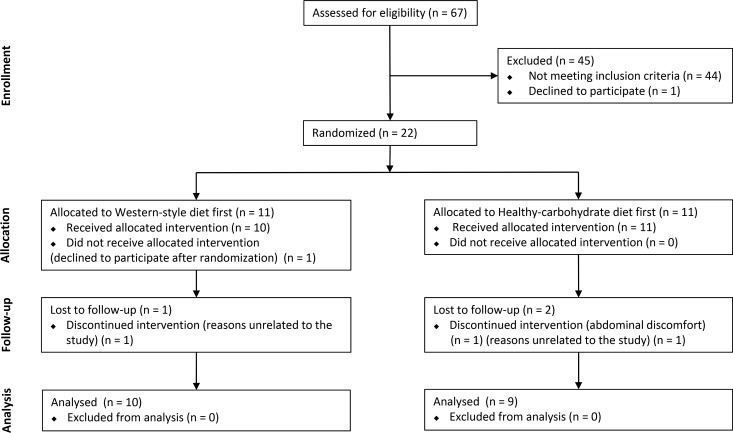
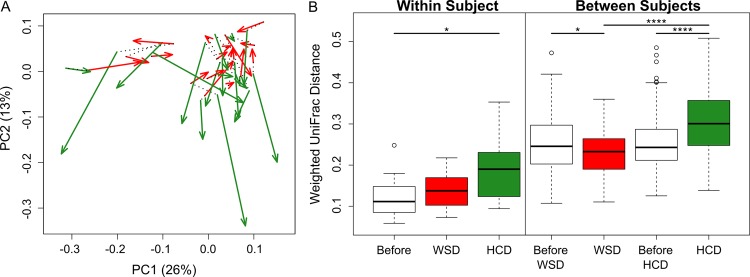
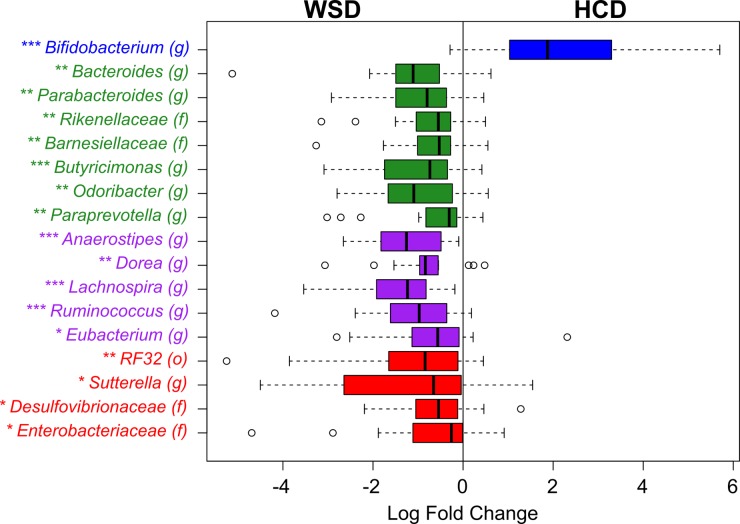
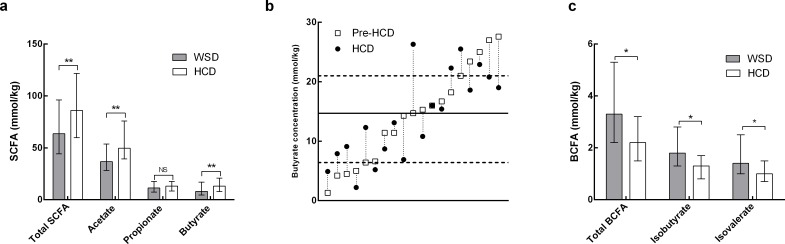
Recently, the intestinal microbiota has been emphasised as an important contributor to the development of metabolic syndrome. Dietary fibre may exert beneficial effects through modulation of the intestinal microbiota and metabolic end products. We investigated the effects of a diet enriched with two different dietary fibres, arabinoxylan and resistant starch type 2, on the gut microbiome and faecal short-chain fatty acids. Nineteen adults with metabolic syndrome completed this randomised crossover study with two 4-week interventions of a diet enriched with arabinoxylan and resistant starch and a low-fibre Western-style diet. Faecal samples were collected before and at the end of the interventions for fermentative end-product analysis and 16S ribosomal RNA bacterial gene amplification for identification of bacterial taxa. Faecal carbohydrate residues were used to verify compliance. The diet enriched with arabinoxylan and resistant starch resulted in significant reductions in the total species diversity of the faecal-associated intestinal microbiota but also increased the heterogeneity of bacterial communities both between and within subjects. The proportion of Bifidobacterium was increased by arabinoxylan and resistant starch consumption (P<0.001), whereas the proportions of certain bacterial genera associated with dysbiotic intestinal communities were reduced. Furthermore, the total short-chain fatty acids (P<0.01), acetate (P<0.01) and butyrate concentrations (P<0.01) were higher by the end of the diet enriched with arabinoxylan and resistant starch compared with those resulting from the Western-style diet. The concentrations of isobutyrate (P = 0.05) and isovalerate (P = 0.03) decreased in response to the arabinoxylan and resistant starch enriched diet, indicating reduced protein fermentation. In conclusion, arabinoxylan and resistant starch intake changes the microbiome and short-chain fatty acid compositions, with potential beneficial effects on colonic health and metabolic syndrome. TRIAL REGISTRATION: ClinicalTrials.gov NCT01618526.
Overview
The claims and statistics of this paper haven’t been checked yet.
Run the check — free, no account needed. It reads the open-access text and checks the sources it cites.
Integrity signals
Registry
Cites
Statistics
Figures
Verification
Claims the paper makes
The claims and statistics of this paper haven’t been checked yet.
Run the check — free, no account needed. It reads the open-access text and checks the sources it cites.
Claims other papers make about this one
Each is checked against this paper’s own text: does it say what the citing paper says it does?
In the citing paper
“BCFAs could be especially important microbial messengers in scenarios of high-protein, low-complex carbohydrate (i.e., dietary fiber) consumption, as studies have shown that consumption of these diets can increase the microbial production of BCFAs (121, 380, 381).”
From Diet and the Microbiota–Gut–Brain Axis: Sowing the Seeds of Good Mental Health (2021) · cites this paper as [381]
Self-check
Percentages, sums and reported differences re-computed from the paper’s own numbers.
The self-check needs the paper’s full text.
Citations
Cites
1 retracted
An overview of randomization techniques: An unbiased assessment of outcome in clinical research
Suresh, K. (2011) · Journal of Human Reproductive Sciences · doi:10.4103/0974-1208.82352 · Cited by 1,070 · cited 1×
“The diet allocation sequence was determined by the study coordinators using a simple randomisation method.[29] The cereal key foods were incorporated into the subjects’ habitual diets (see dietary counselling) and constituted approximately 50% of their total daily energy needs.”
RetractedR: A Language and Environment for Statistical Computing
R Core Team (2000) · doi:10.32614/r.manuals · Cited by 355,893
QIIME allows analysis of high-throughput community sequencing data
Caporaso, J. G., Kuczynski, J., Stombaugh, J., Bittinger, K., Bushman, F. D., Costello, E. K., Fierer, N., Peña, A. G., Goodrich, J. K., Gordon, J. I., et al. (2010) · Nature Methods · doi:10.1038/nmeth.f.303 · Cited by 34,887 · cited 1×
“0.[41] Demultiplexing and quality filtering were performed with the default settings, except that a minimum average quality score of 30 was used for quality filtering instead of the default score of 25, and the reverse primer sequences were removed.”
MethodSearch and clustering orders of magnitude faster than BLAST
Edgar, R. C. (2010) · Bioinformatics · doi:10.1093/bioinformatics/btq461 · Cited by 21,098
Greengenes, a Chimera-Checked 16S rRNA Gene Database and Workbench Compatible with ARB
DeSantis, T. Z., Hugenholtz, P., Larsen, N., Rojas, M., Brodie, E. L., Keller, K., Huber, T., Dalevi, D., Hu, P., & Andersen, G. L. (2006) · Applied and Environmental Microbiology · doi:10.1128/aem.03006-05 · Cited by 10,891 · cited 1×
“The open-reference OTU picking strategy in QIIME was used to select operational taxonomic units (OTUs) with 97% sequence identity to sequences in Greengenes (release 13_8) database[42] and to each other, according to the UCLUST algorithm.”
The metabolic syndrome—a new worldwide definition
Alberti, K. G. M., Zimmet, P., & Shaw, J. (2005) · The Lancet · doi:10.1016/s0140-6736(05)67402-8 · Cited by 9,352 · cited 7×
“In conclusion, the results of our study support the hypothesis that high intake of both RS and AX is capable of changing the intestinal microbiota and SCFA production in subjects with MetS in contrast with a low-fibre WSD.”
InfluentialUniFrac: a New Phylogenetic Method for Comparing Microbial Communities
Lozupone, C., & Knight, R. (2005) · Applied and Environmental Microbiology · doi:10.1128/aem.71.12.8228-8235.2005 · Cited by 8,227
Linking long-term dietary patterns with gut microbial enterotypes
Wu, G. D., Chen, J., Hoffmann, C., Bittinger, K., Chen, Y.-Y., Keilbaugh, S. A., Bewtra, M., Knights, D., Walters, W. A., Knight, R., et al. (2011) · Science · doi:10.1126/science.1208344 · Cited by 6,513
Conservation evaluation and phylogenetic diversity
Faith, D. (1992) · Biological Conservation · doi:10.1016/0006-3207(92)91201-3 · Cited by 5,495 · cited 1×
“The Chao1 diversity index, Phylogenetic Diversity Whole Tree,[45] and observed species were determined for increasing numbers of randomly sampled sequences per sample to generate alpha diversity rarefaction curves.”
MethodRichness of human gut microbiome correlates with metabolic markers
Le Chatelier, E., Nielsen, T., Qin, J., Prifti, E., Hildebrand, F., Falony, G., Almeida, M., Arumugam, M., Batto, J.-M., Kennedy, S., et al. (2013) · Nature · doi:10.1038/nature12506 · Cited by 4,662
Quality-filtering vastly improves diversity estimates from Illumina amplicon sequencing
Bokulich, N. A., Subramanian, S., Faith, J. J., Gevers, D., Gordon, J. I., Knight, R. D., Mills, D. A., & Caporaso, J. G. (2012) · Nature Methods · doi:10.1038/nmeth.2276 · Cited by 4,525 · cited 1×
“005%)[44] were removed from the OTU table prior to further analysis.”
Method(1992) · PubMed · Cited by 3,809
Stool form scale as a useful guide to intestinal transit time
Lewis, S. J., & Heaton, K. W. (1997) · Scandinavian Journal of Gastroenterology · doi:10.3109/00365529709011203 · Cited by 3,244
Review article: the role of butyrate on colonic function
HAMER, H. M., JONKERS, D., VENEMA, K., VANHOUTVIN, S., TROOST, F. J., & BRUMMER, R. ‐. (2008) · Alimentary Pharmacology & Therapeutics · doi:10.1111/j.1365-2036.2007.03562.x · Cited by 2,721 · cited 1×
“This finding indicates reduced protein fermentation, which counteracts the accumulation of potentially harmful metabolites.[68] Bacteroides, an abundant human gut resident[69] Arabinoxylan, Resistant Starch and SCFA”
BackgroundButyrate improves insulin sensitivity and increases energy expenditure in mice
Gao, Z., Yin, J., Zhang, J., Ward, R. E., Martin, R. J., Lefevre, M., Cefalu, W. T., & Ye, J. (2009) · Diabetes · doi:10.2337/db08-1637 · Cited by 2,204 · cited 1×
“[6 – 8] SCFA production depends on the type of ingested DF, the microbiota, the colonic transit time and the colonic pH .”
FRANCIS, C. Y., MORRIS, J., & WHORWELL, P. J. (1997) · Alimentary Pharmacology & Therapeutics · doi:10.1046/j.1365-2036.1997.142318000.x · Cited by 1,708 · cited 1×
“An internally validated questionnaire based on verified scoring systems and rating scales[31 – 34] was used to assess general wellbeing and gastrointestinal symptoms.”
Dominant and diet-responsive groups of bacteria within the human colonic microbiota
Walker, A. W., Ince, J., Duncan, S. H., Webster, L. M., Holtrop, G., Ze, X., Brown, D., Stares, M. D., Scott, P., Bergerat, A., et al. (2011) · The ISME Journal · doi:10.1038/ismej.2010.118 · Cited by 1,632
Carbohydrate and lignin contents of plant materials used in animal feeding
Knudsen, K. E. B. (1997) · Animal Feed Science and Technology · doi:10.1016/s0377-8401(97)00009-6 · Cited by 1,548
Lin, H. V., Frassetto, A., Kowalik Jr, E. J., Nawrocki, A. R., Lu, M. M., Kosinski, J. R., Hubert, J. A., Szeto, D., Yao, X., Forrest, G., et al. (2012) · PLoS ONE · doi:10.1371/journal.pone.0035240 · Cited by 1,378
Png, C. W., Lindén, S. K., Gilshenan, K. S., Zoetendal, E. G., McSweeney, C. S., Sly, L. I., McGuckin, M. A., & Florin, T. H. J. (2010) · American Journal of Gastroenterology · doi:10.1038/ajg.2010.281 · Cited by 1,364 · cited 1×
“The specific Ruminococcus species enriched by the WSD are members of the Lachnospiraceae family, which includes species previously associated with inflammatory bowel disease.[64] In the present study, we were unable to differentiate between the contribution of AX and that of RS to the enhanced SCFA production.”
BackgroundIso- and anteiso-fatty acids in bacteria: biosynthesis, function, and taxonomic significance
Kaneda, T. (1991) · Microbiological Reviews · doi:10.1128/mr.55.2.288-302.1991 · Cited by 1,363
Effects of Dietary Fiber and Its Components on Metabolic Health
Lattimer, J. M., & Haub, M. D. (2010) · Nutrients · doi:10.3390/nu2121266 · Cited by 1,333 · cited 2×
“[9] Resistant starch (RS) is a homo-polysaccharide of glucose[10] resistant to digestion in the upper gastro-intestinal tract[11] because of physical indigestibility (type 1), granularity (type 2), retrogradation during heating (type 3), or chemical modification (type 4).[10] RS type 2 is a readily available pure form…”
BackgroundSvedlund, J., Sjödin, I., & Dotevall, G. (1988) · Digestive Diseases and Sciences · doi:10.1007/bf01535722 · Cited by 1,319
Englyst, H. N., & Cummings, J. H. (1984) · The Analyst · doi:10.1039/an9840900937 · Cited by 1,095
Ruminococcus bromii is a keystone species for the degradation of resistant starch in the human colon
Ze, X., Duncan, S. H., Louis, P., & Flint, H. J. (2012) · The ISME Journal · doi:10.1038/ismej.2012.4 · Cited by 1,060
The influence of diet on the gut microbiota
Scott, K. P., Gratz, S. W., Sheridan, P. O., Flint, H. J., & Duncan, S. H. (2013) · Pharmacological Research · doi:10.1016/j.phrs.2012.10.020 · Cited by 1,052 · cited 2×
“[6–8] SCFA production depends on the type of ingested DF, the microbiota, the colonic transit time and the colonic pH.[9] Resistant starch (RS) is a homo-polysaccharide of glucose[10] resistant to digestion in the upper gastro-intestinal tract[11] because of physical indigestibility (type 1), granularity (type 2), ret…”
BackgroundEnglyst, H. N., Wiggins, H. S., & Cummings, J. H. (1982) · The Analyst · doi:10.1039/an9820700307 · Cited by 856
Belenguer, A., Duncan, S. H., Calder, A. G., Holtrop, G., Louis, P., Lobley, G. E., & Flint, H. J. (2006) · Applied and Environmental Microbiology · doi:10.1128/aem.72.5.3593-3599.2006 · Cited by 856
Jančeková, K., Ruprich, J., de Vries, J. H. M., Jakubiková, M., & Veer, P. V. (2009) · British Journal Of Nutrition · doi:10.1017/s0007114509990602 · Cited by 732 · cited 3×
“[3, 16] Fermentation of an AX concentrate can be expected to be rapid and accompanied by a pH drop, mainly in the caecum,[66] whereas the fermentation of AX from a whole-grain matrix will be slower, with pH drops not only in the caecum but also in the proximal and mid colon.”
BackgroundInfluentialMartínez, I., Kim, J., Duffy, P. R., Schlegel, V. L., & Walter, J. (2010) · PLoS ONE · doi:10.1371/journal.pone.0015046 · Cited by 645 · cited 4×
“[54] The capacity of DF to promote Bifidobacterium has been found in many studies.[14, 15, 55] Bifidobacterium is a saccharolytic bacterium that produces acetate and lactic acid as a result of fermentative growth.”
BackgroundInfluentialSalonen, A., Lahti, L., Salojärvi, J., Holtrop, G., Korpela, K., Duncan, S. H., Date, P., Farquharson, F., Johnstone, A. M., Lobley, G. E., et al. (2014) · The ISME Journal · doi:10.1038/ismej.2014.63 · Cited by 626 · cited 2×
“This finding corroborates that of a previous study reporting that a diet high in RS is associated with decreased bacterial diversity relative to other diets.[52] However, we also found that HCD consumption increased the inter- and intra-individual variation of the intestinal microbiota.”
ResultIntestinal microbiota in health and disease: Role of bifidobacteria in gut homeostasis
Tojo, R. (2014) · World Journal of Gastroenterology · doi:10.3748/wjg.v20.i41.15163 · Cited by 533 · cited 1×
“[54] The capacity of DF to promote Bifidobacterium has been found in many studies.”
BackgroundNeyrinck, A. M., Possemiers, S., Druart, C., Van de Wiele, T., De Backer, F., Cani, P. D., Larondelle, Y., & Delzenne, N. M. (2011) · PLoS ONE · doi:10.1371/journal.pone.0020944 · Cited by 465 · cited 1×
“[3, 21] The proportions of Bacteroides, Prevotella, Roseburia and Bifidobacterium species have been shown to be increased after an AXenriched high-fat diet in mice,[22] whereas AX provided in a whole-grain rye diet in a human intervention study failed to show changes in the microbiota.”
BackgroundContribution of acetate to butyrate formation by human faecal bacteria
Duncan, S. H., Holtrop, G., Lobley, G. E., Calder, A. G., Stewart, C. S., & Flint, H. J. (2004) · British Journal of Nutrition · doi:10.1079/bjn20041150 · Cited by 449 · cited 1×
“[60, 61] An in vitro study has also found that up to 90% of produced butyrate is derived from acetate.[62] The explanation why we did not find a diet effect on lactic acid may Fig 4.”
BackgroundWheat arabinoxylans: Exploiting variation in amount and composition to develop enhanced varieties
Saulnier, L., Sado, P.-E., Branlard, G., Charmet, G., & Guillon, F. (2007) · Journal of Cereal Science · doi:10.1016/j.jcs.2007.06.014 · Cited by 429 · cited 4×
“[20] In the present study, this situation was even more complex because the RS provided from raw potato starch was degraded more rapidly than that from high-amylose corn starch, which was degraded at a slower rate at more distal locations.[20] Based on the results of Nielsen et al.”
BackgroundResultInfluentialDigestion and physiological properties of resistant starch in the human large bowel
Cummings, J. H., Beatty, E. R., Kingman, S. M., Bingham, S. A., & Englyst, H. N. (1996) · British Journal Of Nutrition · doi:10.1079/bjn19960177 · Cited by 409 · cited 1×
“Cummings et al.[71] have also reported decreased BCFAs after RS-enriched diet consumption.”
BackgroundMeasurement of resistant starch
McCleary, B. V., & Monaghan, D. A. (2002) · Journal of AOAC INTERNATIONAL · doi:10.1093/jaoac/85.3.665 · Cited by 379 · cited 2×
“The total RS levels in foods were determined by the AOAC method (AOAC Official Method 2002.02), as described by McCleary & Monaghan[35] and non-starch polysaccharides (NSPs) in foods and faeces, as described by Bach Knudsen[36] except that acid hydrolysis was performed in 2 M H 2 SO 4 for one hour instead of in 1 M H…”
InfluentialRios-Covian, D., Gueimonde, M., Duncan, S. H., Flint, H. J., & de los Reyes-Gavilan, C. G. (2015) · FEMS Microbiology Letters · doi:10.1093/femsle/fnv176 · Cited by 371 · cited 1×
“Acetate production by Bifidobacterium confers protection against gastrointestinal pathogens[58, 59] and it may be consumed by butyrate-producing bacteria in the gut.[60, 61] An in vitro study has also found that up to 90% of produced butyrate is derived from acetate.”
BackgroundBourriaud, C., Robins, R. J., Martin, L., Kozlowski, F., Tenailleau, E., Cherbut, C., & Michel, C. (2005) · Journal of Applied Microbiology · doi:10.1111/j.1365-2672.2005.02605.x · Cited by 345 · cited 1×
“be that it is readily fermented whereby it also acts as a precursor for butyrate synthesis.[63] Therefore, the increased faecal butyrate concentration is most likely the result of increased acetate and lactic acid produced by Bifidobacterium rather than stimulation of butyrate-producing microorganisms.”
BackgroundHaenen, D., Zhang, J., Souza da Silva, C., Bosch, G., van der Meer, I. M., van Arkel, J., van den Borne, J. J. G. C., Pérez Gutiérrez, O., Smidt, H., Kemp, B., et al. (2013) · The Journal of Nutrition · doi:10.3945/jn.112.169672 · Cited by 341 · cited 2×
“Previously, RS type 2 has been shown to augment butyrate production[12, 13] and to modify the composition of the intestinal microbiota[5, 14 – 16] typically by increasing the proportions of Bifidobacterium species , Ruminococcus bromii [14, 17] and Eubacterium rectale .”
Jensen, M. T., Cox, R. P., & Jensen, B. B. (1995) · Animal Science · doi:10.1017/s1357729800013837 · Cited by 309
YAMASHITA, H., FUJISAWA, K., ITO, E., IDEI, S., KAWAGUCHI, N., KIMOTO, M., HIEMORI, M., & TSUJI, H. (2007) · Bioscience, Biotechnology, and Biochemistry · doi:10.1271/bbb.60668 · Cited by 297 · cited 1×
“[6 – 8] SCFA production depends on the type of ingested DF, the microbiota, the colonic transit time and the colonic pH .”
Starch utilization by the human large intestinal microflora
Macfarlane, G. T., & Englyst, H. N. (1986) · Journal of Applied Bacteriology · doi:10.1111/j.1365-2672.1986.tb01073.x · Cited by 265
Arabinoxylan fibre improves metabolic control in people with Type II diabetes
Lu, Z. X., Walker, K., Muir, J., & O’Dea, K. (2004) · European Journal of Clinical Nutrition · doi:10.1038/sj.ejcn.1601857 · Cited by 258
Fukuda, S., Toh, H., Taylor, T. D., Ohno, H., & Hattori, M. (2012) · Gut Microbes · doi:10.4161/gmic.21214 · Cited by 257 · cited 1×
“Acetate production by Bifidobacterium confers protection against gastrointestinal pathogens[58, 59] and it may be consumed by butyrate-producing bacteria in the gut.”
BackgroundEffect of resistant starch on colonic fermentation, bile acid metabolism, and mucosal proliferation
van Munster, I. P., Tangerman, A., & Nagengast, F. M. (1994) · Digestive Diseases and Sciences · doi:10.1007/bf02087431 · Cited by 247 · cited 1×
“Previously, RS type 2 has been shown to augment butyrate production[12, 13] and to modify the composition of the intestinal microbiota[5, 14 – 16] typically by increasing the proportions of Bifidobacterium species , Ruminococcus bromii [14, 17] and Eubacterium rectale .”
Abell, G. C. J., Cooke, C. M., Bennett, C. N., Conlon, M. A., & McOrist, A. L. (2008) · FEMS Microbiology Ecology · doi:10.1111/j.1574-6941.2008.00527.x · Cited by 239 · cited 1×
“Previously, RS type 2 has been shown to augment butyrate production[12, 13] and to modify the composition of the intestinal microbiota[5, 14–16] typically by increasing the proportions of Bifidobacterium species, Ruminococcus bromii[14, 17] and Eubacterium rectale.”
BackgroundTachon, S., Zhou, J., Keenan, M. J., Martin, R. J., & Marco, M. L. (2012) · FEMS Microbiology Ecology · doi:10.1111/j.1574-6941.2012.01475.x · Cited by 212
Garcia, A. L., Otto, B., Reich, S.-C., Weickert, M. O., Steiniger, J., Machowetz, A., Rudovich, N. N., Möhlig, M., Katz, N., Speth, M., et al. (2007) · European Journal of Clinical Nutrition · doi:10.1038/sj.ejcn.1602525 · Cited by 203
Rigottier‐Gois, L., Bourhis, A.-G. L., Gramet, G., Rochet, V., & Dore, J. M. (2003) · FEMS Microbiology Ecology · doi:10.1111/j.1574-6941.2003.tb01063.x · Cited by 169 · cited 1×
“[68] Bacteroides, an abundant human gut resident[69] Arabinoxylan, Resistant Starch and SCFA”
BackgroundWhole-grain rye and wheat foods and markers of bowel health in overweight middle-aged men
McIntosh, G. H., Noakes, M., Royle, P. J., & Foster, P. (2003) · American Journal of Clinical Nutrition · doi:10.1093/ajcn/77.4.967 · Cited by 169 · cited 3×
“[20] It is the main DF component in wheat and rye[20] and has also been shown to enhance SCFA and butyrate production.[3, 21] The proportions of Bacteroides, Prevotella, Roseburia and Bifidobacterium species have been shown to be increased after an AXenriched high-fat diet in mice,[22] whereas AX provided in a whole-g…”
BackgroundInfluentialNielsen, T. S., Lærke, H. N., Theil, P. K., Sørensen, J. F., Saarinen, M., Forssten, S. D., & Knudsen, K. E. B. (2014) · British Journal Of Nutrition · doi:10.1017/s000711451400302x · Cited by 136 · cited 7×
“[20] Based on the results of Nielsen et al.[15], we speculate that the RS from high-amylose corn starch was responsible for the higher RS levels found in the faeces after HCD consumption.”
InfluentialWeaver, G. A., Krause, J., Miller, T., & Wolin, M. J. (1992) · American Journal of Clinical Nutrition · doi:10.1093/ajcn/55.1.70 · Cited by 133
Nutrition, the gut microbiome and the metabolic syndrome
Kovatcheva‐Datchary, P., & Arora, T. (2013) · Best Practice & Research Clinical Gastroenterology · doi:10.1016/j.bpg.2013.03.017 · Cited by 122
Knudsen, K. E. B., Serena, A., Kjær, A. K. B., Jørgensen, H. J. H., & Engberg, R. M. (2005) · Journal of Nutrition · doi:10.1093/jn/135.7.1696 · Cited by 115 · cited 1×
“[3, 21] The proportions of Bacteroides , Pre-votella , Roseburia and Bifidobacterium species have been shown to be increased after an AX-enriched high-fat diet in mice,[22] whereas AX provided in a whole-grain rye diet in a human intervention study failed to show changes in the microbiota.”
Hartvigsen, M. L., Gregersen, S., Lærke, H. N., Holst, J. J., Knudsen, K. E. B., & Hermansen, K. (2013) · European Journal of Clinical Nutrition · doi:10.1038/ejcn.2013.236 · Cited by 104
Lappi, J., Salojärvi, J., Kolehmainen, M., Mykkänen, H. M., Poutanen, K. S., de Vos, W. M., & Salonen, A. (2013) · Journal of Nutrition · doi:10.3945/jn.112.172668 · Cited by 102
Stjernman, H., Grännö, C., Järnerot, G., Ockander, L., Tysk, C., Blomberg, B., Ström, M., & Hjortswang, H. (2007) · Inflammatory Bowel Diseases · doi:10.1002/ibd.20255 · Cited by 90 · cited 1×
“An internally validated questionnaire based on verified scoring systems and rating scales[31 – 34] was used to assess general wellbeing and gastrointestinal symptoms.”
McInnis, E. A., Kalanetra, K. M., Mills, D. A., & Maga, E. A. (2014) · Food Microbiology · doi:10.1016/j.fm.2014.07.021 · Cited by 88 · cited 1×
“The 16S rRNA V4 region was amplified by PCR using the barcoded F515 forward primer and R806.[39, 40] Amplification was performed using Ex Taq DNA Polymerase (TaKaRa, Otsu, Japan) for 30 cycles of 94°C for 45 seconds, 54°C for 60 seconds, and 72°C for 30 seconds.”
Ingerslev, A. K., Theil, P. K., Hedemann, M. S., Lærke, H. N., & Knudsen, K. E. B. (2014) · British Journal Of Nutrition · doi:10.1017/s0007114513004066 · Cited by 82
Garcia, A., Steiniger, J., Reich, S., Weickert, M., Harsch, I., Machowetz, A., Mohlig, M., Spranger, J., Rudovich, N., Meuser, F., et al. (2006) · Hormone and Metabolic Research · doi:10.1055/s-2006-955089 · Cited by 73 · cited 1×
“[23] Both RS and AX have been found to improve metabolic parameters in humans,[24 – 26] but there is little knowledge of how these fibres in combination influence the microbiome and SCFA production in predia-betic subjects, i.e. those with MetS.”
Julious, S. A., Campbell, M. J., & Altman, D. G. (1999) · Journal of Biopharmaceutical Statistics · doi:10.1081/bip-100101174 · Cited by 60 · cited 1×
“The power calculation was done using software developed by Schoenfeld[48] and by formulas given by Julious et al.[49] The total number of subjects needed to obtain a statistical power of 90% for a type I error of 5% in a crossover trial was calculated to be 13.”
MethodYang, J., Keshavarzian, A., & Rose, D. J. (2013) · Journal of Medicinal Food · doi:10.1089/jmf.2012.0292 · Cited by 58 · cited 1×
“[54] The capacity of DF to promote Bifidobacterium has been found in many studies.[14, 15, 55] Bifidobacterium is a saccharolytic bacterium that produces acetate and lactic acid as a result of fermentative growth.”
BackgroundBelobrajdic, D. P., Bird, A. R., Conlon, M. A., Williams, B. A., Kang, S., McSweeney, C. S., Zhang, D., Bryden, W. L., Gidley, M. J., & Topping, D. L. (2011) · British Journal Of Nutrition · doi:10.1017/s0007114511004338 · Cited by 48 · cited 2×
“[15, 30] However, a concentrate of AX from wheat has been demonstrated not to affect the colonic butyrate concentration or the caecal digesta butyrate pool in pigs.[65] The reasons for these differences in butyrate response among these studies cannot be determined with certainty but may potentially be related to the m…”
BackgroundTanner, S. A., Chassard, C., Zihler, A., & Lacroix, C. (2014) · Gut Pathogens · doi:10.1186/s13099-014-0044-y · Cited by 46
Nordgaard, I., Hove, H., Clausen, M. R., & Mortensen, P. B. (1996) · Scandinavian Journal of Gastroenterology · doi:10.3109/00365529609003122 · Cited by 35 · cited 1×
“Based on a Danish study population treated with approximately 18 g of dietary fibre (Plantago ovata seeds) for 4 weeks,[47] we anticipated that the standard deviation of the mean difference in butyrate concentrations between the diets would be 7.”
MethodMargollés, A., & Sánchez, B. (2012) · Applied and Environmental Microbiology · doi:10.1128/aem.00129-12 · Cited by 35
Next-Generation Sequencing Reveals Significant Bacterial Diversity of Botrytized Wine
Bokulich, N. A., Joseph, C. M. L., Allen, G., Benson, A. K., & Mills, D. A. (2012) · PLoS ONE · doi:10.1371/journal.pone.0036357 · Cited by 25 · cited 1×
“The 16S rRNA V4 region was amplified by PCR using the barcoded F515 forward primer and R806.[39, 40] Amplification was performed using Ex Taq DNA Polymerase (TaKaRa, Otsu, Japan) for 30 cycles of 94°C for 45 seconds, 54°C for 60 seconds, and 72°C for 30 seconds.”
Jonsdottir, S. E., Brader, L., Gunnarsdóttir, I., Magnúsdóttir, Ó. K., Schwab, U., Kolehmainen, M., Risérus, U., Herzig, K., Cloetens, L., Helgegren, H., et al. (2013) · Food & Nutrition Research · doi:10.3402/fnr.v57i0.21391 · Cited by 18 · cited 1×
“[66] Still, Jonsdottir et al.[67] found a mean DF intake of 22 g/d in a Nordic population with MetS, which is similar to the reported baseline intake among the subjects reported here.”
Result
Cited by
Sorted by citations
Short chain fatty acids in human gut and metabolic health
Blaak, E. E., Canfora, E. E., Theis, S., Frost, G., Groen, A. K., Mithieux, G., Nauta, A., Scott, K., Stahl, B., van Harsselaar, J., et al. (2020) · Beneficial Microbes · doi:10.3920/bm2020.0057 · Cited by 1,103
“Of note, an increased saccharolytic fermentation in the distal colon may also decrease microbial products derived from proteolytic fermentation (Hald et al. , 2016), such as the branched SCFA isobutyrate and isovalerate, ammonia and hydrogen sulphide.”
Gut Microbiota and Short Chain Fatty Acids: Implications in Glucose Homeostasis
Portincasa, P., Bonfrate, L., Vacca, M., Angelis, M. D., Farella, I., Lanza, E., Khalil, M., Wang, D. Q. ‐., Sperandio, M., & Ciaula, A. D. (2022) · International Journal of Molecular Sciences · doi:10.3390/ijms23031105 · Cited by 1,053
“[117] investigated, in MetS subjects, the effects of arabinoxylan (from whole grain rye and wheat bran) and resistant starch type 2 (from raw potato starch and maize starch) on intestinal microbiota and also included a specific focus onto SCFAs.”
BackgroundImpact of Diet-Modulated Butyrate Production on Intestinal Barrier Function and Inflammation
Bach Knudsen, K. E., Lærke, H. N., Hedemann, M. S., Nielsen, T. S., Ingerslev, A. K., Gundelund Nielsen, D. S., Theil, P. K., Purup, S., Hald, S., Schioldan, A. G., et al. (2018) · Nutrients · doi:10.3390/nu10101499 · Cited by 572
“AX + RS Human MetS Faecal SCFA ↑ Faecal butyrate ↑ MCP1 ↓ IL-23A ↓ F-calprotectin ↓ [50,52]”
BackgroundMethodInfluentialSelf-citationLazăr, V., Diţu, L.-M., Pîrcălăbioru, G. G., Gheorghe, I., Curuțiu, C., Holban, A. M., Picu, A. A., Petcu, L. M., & Chifiriuc, M. C. (2018) · Frontiers in Immunology · doi:10.3389/fimmu.2018.01830 · Cited by 552
Role of Dietary Nutrients in the Modulation of Gut Microbiota: A Narrative Review
Yang, Q., Liang, Q., Balakrishnan, B., Belobrajdic, D. P., Feng, Q.-J., & Zhang, W. Y. (2020) · Nutrients · doi:10.3390/nu12020381 · Cited by 487
“Arabinoxylan Hald et al. (2016) Arabinoxylan (AX)-enriched diet (whole-grain rye and enzyme-treated wheat bran) for 4 weeks and baseline as reference/clinical trials (24 subjects: 39–75 years with metabolic syndrome) [174] ↑ ↓ Arabinoxylan (AX)-enriched diet (whole-grain rye and enzyme-treated…”
Method
Metadata
- Authors
- Hald, S., Schioldan, A. G., Moore, M. E., Dige, A., Lærke, H. N., Agnholt, J., Bach Knudsen, K. E., Hermansen, K., Marco, M. L., Gregersen, S., & Dahlerup, J. F.
- Affiliations
- Aarhus University Hospital (DK)
- University of California, Davis (US)
- Aarhus University (DK)
- Corresponding author
- Hald, Stine
- Schioldan, Anne Grethe
- ORCID
- Venue
- PLoS ONE
- Publisher
- Public Library of Science (PLoS)
- Published
- 2016-07-19
- Volume
- 11
- Issue
- 7
- Pages
- e0159223
- ISSN
- 1932-6203 (ISSN-L)
- PMC
- PMC4951149
- OpenAlex
- W2501184989
- Cited by
- 180
- References
- 70
- Citations by year
- 2026: 14 · 2025: 19 · 2024: 19 · 2023: 13 · 2022: 23 · 2021: 29 · 2020: 35 · 2019: 10 · 2018: 9 · 2017: 8
- FWCI
- 4.68
- Type
- journal article
- Language
- en
- Open access
- gold
- doi.org
- Licence
- Locations
- PLoS ONE (publishedVersion, cc-by)
- Europe PMC (PubMed Central) (publishedVersion, cc-by)
- PubMed Central (publishedVersion, cc-by)
- PubMed (publishedVersion)
- DOAJ (DOAJ: Directory of Open Access Journals) (submittedVersion, cc-by-sa)
- eScholarship (California Digital Library) (submittedVersion)
- Figshare (submittedVersion, cc-by)
- Funders
- The Danish Strategic Research Council (10-093526)
- Topics
- Life Sciences › Biochemistry, Genetics and Molecular Biology › Molecular Biology › Gut microbiota and health
- Health Sciences › Nursing › Nutrition and Dietetics › Food composition and properties
- Health Sciences › Nursing › Nutrition and Dietetics › Microbial Metabolites in Food Biotechnology
- Keywords
- arabinoxylan, dietary fiber, metabolic syndrome, gut microbiota, short-chain fatty acids, Bifidobacterium, gut dysbiosis, butyrate, acetate, protein fermentation, Western diet
- MeSH terms
- Gastrointestinal Microbiome, Aged, Bifidobacterium, Dietary Fiber, Energy Metabolism, Fatty Acids, Volatile, Feces, Female, Humans, Male, Middle Aged, RNA, Ribosomal, 16S, Starch, Xylans, Cross-Over Studies, Metabolic Syndrome, Gastrointestinal Tract, Microbiota
About these checks
Registry, retraction, Cites and statistics results are computed, not judged, with one exception: a printed reference that no index lists is read once by a model before it counts as a citation error. Claims are extracted by a model and kept only when their quote appears verbatim in the text; each cited source is then checked, with a model’s help, for whether it says what the claim relies on. Those verdicts can be wrong — read the claim’s quote and the cited source before relying on one.
Statistics and arithmetic are recomputed, not judged.
Confidence bands are shown only for fields calibrated on our annotated test set. None is calibrated yet, so no band is shown.
What counts as a claim ›How we measure confidence ›How we check this ›
Are you an author, or do you see a problem with this page? Request a review
