

The relationship between greenspace and the mental wellbeing of adults: A systematic review
Open accessThe DOI matches its Crossref record; 90 of the 91 references it cites were found in a registry or an index.
Abstract
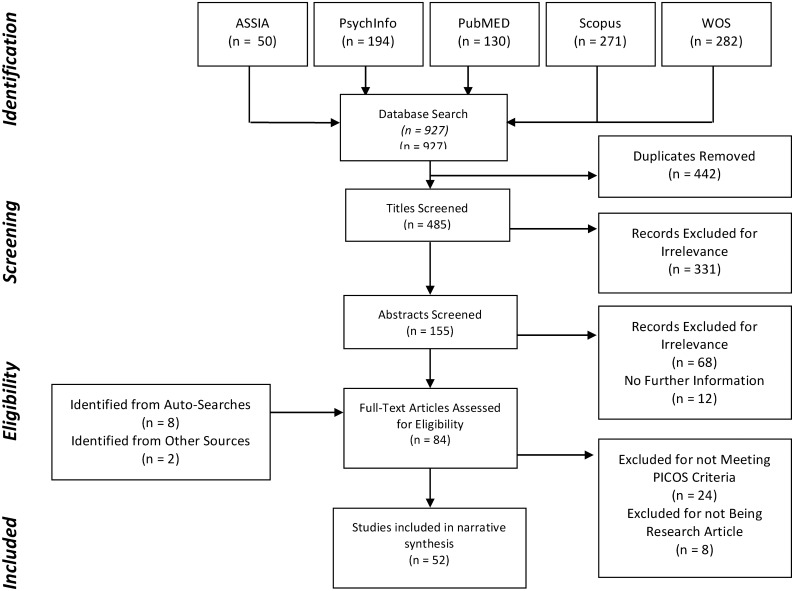
INTRODUCTION: The view that interacting with nature enhances mental wellbeing is commonplace, despite a dearth of evidence or even agreed definitions of 'nature'. The aim of this review was to systematically appraise the evidence for associations between greenspace and mental wellbeing, stratified by the different ways in which greenspace has been conceptualised in quantitative research. METHODS: We undertook a comprehensive database search and thorough screening of articles which included a measure of greenspace and validated mental wellbeing tool, to capture aspects of hedonic and/or eudaimonic wellbeing. Quality and risk of bias in research were assessed to create grades of evidence. We undertook detailed narrative synthesis of the 50 studies which met the review inclusion criteria, as methodological heterogeneity precluded meta-analysis. RESULTS: Results of a quality assessment and narrative synthesis suggest associations between different greenspace characteristics and mental wellbeing. We identified six ways in which greenspace was conceptualised and measured: (i) amount of local-area greenspace; (ii) greenspace type; (iii) visits to greenspace; (iv) views of greenspace; (v) greenspace accessibility; and (vi) self-reported connection to nature. There was adequate evidence for associations between the amount of local-area greenspace and life satisfaction (hedonic wellbeing), but not personal flourishing (eudaimonic wellbeing). Evidence for associations between mental wellbeing and visits to greenspace, accessibility, and types of greenspace was limited. There was inadequate evidence for associations with views of greenspace and connectedness to nature. Several studies reported variation in associations between greenspace and wellbeing by life course stage, gender, levels of physically activity or attitudes to nature. CONCLUSIONS: Greenspace has positive associations with mental wellbeing (particularly hedonic wellbeing), but the evidence is not currently sufficient or specific enough to guide planning decisions. Further studies are needed, based on dynamic measures of greenspace, reflecting access and uses of greenspace, and measures of both eudaimonic and hedonic mental wellbeing.
Overview
The claims and statistics of this paper haven’t been checked yet.
Free: it reads the open-access text and checks the first 5 claims that cite a source we can check. Create a free account to check every claim.
Integrity signals
Registry
Cites
Statistics
Figures
Verification
Claims the paper makes
The claims and statistics of this paper haven’t been checked yet.
Free: it reads the open-access text and checks the first 5 claims that cite a source we can check. Create a free account to check every claim.
Claims other papers make about this one
Each is checked against this paper’s own text: does it say what the citing paper says it does?
The source backs part of the claim, not all of it — or backs it for a different population, condition or comparison.
In the citing paper
“These show an association between exposure to greenspace and/or outdoor nature-based interventions, and reduced symptoms of stress, depression and anxiety, and increased wellbeing (Houlden et al., 2018;Corazon et al., 2019).”
From Exploring the role of exposure to green and blue spaces in preventing anxiety and depression among young people aged 14–24 years living in urban settings: A systematic review and conceptual framework (2022) · cites this paper as Houlden et al., 2018
Experimental — accuracy not yet measured
Self-check
Percentages, sums and reported differences re-computed from the paper’s own numbers.
The self-check needs the paper’s full text.
Citations
Cites
The Cochrane Collaboration's tool for assessing risk of bias in randomised trials
Higgins, J. P. T., Altman, D. G., Gotzsche, P. C., Juni, P., Moher, D., Oxman, A. D., Savovic, J., Schulz, K. F., Weeks, L., Sterne, J. A. C., et al. (2011) · BMJ · doi:10.1136/bmj.d5928 · Cited by 33,817
Development and validation of brief measures of positive and negative affect: The PANAS scales.
Watson, D., Clark, L. A., & Tellegen, A. (1988) · Journal of Personality and Social Psychology · doi:10.1037/0022-3514.54.6.1063 · Cited by 32,433
Cochrane Handbook for Systematic Reviews of Interventions: Cochrane Book Series
(2008) · doi:10.1002/9780470712184 · Cited by 25,048 · cited 3×
“For quality appraisal, risk of bias was assessed using Cochrane-recommended criteria [32]:”
BackgroundMethodDermyshi, E., Wang, Y., Yan, C., Hong, W., Qiu, G., Gong, X., & Zhang, T. (2017) · Neonatology · doi:10.1159/000454668 · Cited by 24,451
(2014) · Medical Entomology and Zoology · Cited by 17,633
On Happiness and Human Potentials: A Review of Research on Hedonic and Eudaimonic Well-Being
Ryan, R. M., & Deci, E. L. (2001) · Annual Review of Psychology · doi:10.1146/annurev.psych.52.1.141 · Cited by 11,567
The structure of psychological well-being revisited.
Ryff, C. D., & Keyes, C. L. M. (1995) · Journal of Personality and Social Psychology · doi:10.1037//0022-3514.69.4.719 · Cited by 10,285
Stress recovery during exposure to natural and urban environments
Ulrich, R. S., Simons, R. F., Losito, B. D., Fiorito, E., Miles, M. A., & Zelson, M. (1991) · Journal of Environmental Psychology · doi:10.1016/s0272-4944(05)80184-7 · Cited by 5,990 · cited 1×
“of the terms ‘nature’ and ‘natural’ [10, 16], and features that may appear ‘natural’ are often arti-”
Cochrane Handbook for Systematic Reviews of Interventions
Higgins, J. P. T., Green, S., & Ben Van Den, A. (2020) · International Coaching Psychology Review · doi:10.53841/bpsicpr.2020.15.2.123 · Cited by 5,670
The Warwick-Edinburgh Mental Well-being Scale (WEMWBS): development and UK validation
Tennant, R., Hiller, L., Fishwick, R., Platt, S., Joseph, S., Weich, S., Parkinson, J., Secker, J., & Stewart-Brown, S. (2007) · Health and Quality of Life Outcomes · doi:10.1186/1477-7525-5-63 · Cited by 5,031 · cited 1×
“new things”, and “close to others” [81]; there is also a reduced 7-item version, known as”
BackgroundSelf-citation
Research works printed but not linked: 2
- World Health Organisation. Urban green spaces and health—a review of evidence. 2016.
- Guðmundsdóttir D, editor The short Warwick-Edinburgh mental well-being scale (SWEMWBS): Internal validity and the relationship between SWEMWBS, age, gender and other health and well-being measures. 2nd Applied Positive Psychology Conference, Warwick; 2009.
Cited by
Linking public urban green spaces and human well-being: A systematic review
Reyes-Riveros, R., Altamirano, A., De La Barrera, F., Rozas-Vásquez, D., Vieli, L., & Meli, P. (2021) · Urban Forestry & Urban Greening · doi:10.1016/j.ufug.2021.127105 · Cited by 584
Spatial dimensions of the influence of urban green-blue spaces on human health: A systematic review
Labib, S. M., Lindley, S., & Huck, J. J. (2020) · Environmental Research · doi:10.1016/j.envres.2019.108869 · Cited by 482
“These categories were derived from definitions of greenspace exposure and pathways provided in previous review articles (Hartig et al., 2014; Markevych et al., 2017; Houlden et al., 2018; Lee and Maheswaran, 2011).”
MethodSlater, S. J., Christiana, R. W., & Gustat, J. (2020) · Preventing Chronic Disease · doi:10.5888/pcd17.200204 · Cited by 388
Greenspace and human health: An umbrella review
Yang, B.-Y., Zhao, T., Hu, L.-X., Browning, M. H. E. M., Heinrich, J., Dharmage, S. C., Jalaludin, B., Knibbs, L. D., Liu, X.-X., Luo, Y.-N., et al. (2021) · The Innovation · doi:10.1016/j.xinn.2021.100164 · Cited by 313
“Houlden et al.28 52 Adequate evidence for protective associations between local greenspace and life satisfaction, but not personal flourishing.”
BackgroundInfluentialThe effect of exposure to the natural environment on stress reduction: A meta-analysis
Yao, W., Zhang, X., & Gong, Q. (2021) · Urban Forestry & Urban Greening · doi:10.1016/j.ufug.2020.126932 · Cited by 300
Wang, R., Helbich, M., Yao, Y., Zhang, J., Liu, P., Yuan, Y., & Liu, Y. (2019) · Environmental Research · doi:10.1016/j.envres.2019.108535 · Cited by 300
“Regardless of these mixed findings, a systematic review found a stronger tendency that exposure to more greenery seems to be beneficial for mental health and wellbeing [2].”
BackgroundPoortinga, W., Bird, N., Hallingberg, B., Phillips, R., & Williams, D. (2021) · Landscape and Urban Planning · doi:10.1016/j.landurbplan.2021.104092 · Cited by 286
The Benefits and Limits of Urban Tree Planting for Environmental and Human Health
Pataki, D. E., Alberti, M., Cadenasso, M. L., Felson, A. J., McDonnell, M. J., Pincetl, S., Pouyat, R. V., Setälä, H., & Whitlow, T. H. (2021) · Frontiers in Ecology and Evolution · doi:10.3389/fevo.2021.603757 · Cited by 262
Home garden use during COVID-19: Associations with physical and mental wellbeing in older adults
Corley, J., Okely, J. A., Taylor, A. M., Page, D., Welstead, M., Skarabela, B., Redmond, P., Cox, S. R., & Russ, T. C. (2021) · Journal of Environmental Psychology · doi:10.1016/j.jenvp.2020.101545 · Cited by 261
Defining pathways to healthy sustainable urban development
Tonne, C., Adair, L., Adlakha, D., Anguelovski, I., Belesova, K., Berger, M., Brelsford, C., Dadvand, P., Dimitrova, A., Giles-Corti, B., et al. (2021) · Environment International · doi:10.1016/j.envint.2020.106236 · Cited by 245
The association between green space and adolescents' mental well-being: a systematic review
Zhang, Y., Mavoa, S., Zhao, J., Raphael, D., & Smith, M. (2020) · International Journal of Environmental Research and Public Health · doi:10.3390/ijerph17186640 · Cited by 240
“The definition of green space varies across studies and lacks consensus [21].”
BackgroundVenkataramanan, V., Packman, A. I., Peters, D. R., Lopez, D., McCuskey, D. J., McDonald, R. I., Miller, W. M., & Young, S. L. (2019) · Journal of Environmental Management · doi:10.1016/j.jenvman.2019.05.028 · Cited by 234
“Reviews on the broader relationships between nature or greenspace and human health have highlighted the importance of this connection, but also the preponderance of observational and cross-sectional studies that lack the ability to establish causality (Demuzere et al., 2014; Hartig and Kahn, 2016; Houghton and Castill…”
BackgroundBerdejo‐Espinola, V., Suárez‐Castro, A. F., Amano, T., Fielding, K. S., Oh, R. R. Y., & Fuller, R. A. (2021) · People and Nature · doi:10.1002/pan3.10218 · Cited by 222
“Many of these actions Health and well-being benefits derived from urban nature can reduce many of the stresses associated with urban living (Houlden et al., 2018; Keniger et al., 2013; Twohig-Bennet & Jones, 2018; Zhang et al., 2017).”
Zhang, R., Zhang, C.-Q., & Rhodes, R. E. (2021) · Environmental Research · doi:10.1016/j.envres.2021.111233 · Cited by 197
Green façades: Their contribution to stress recovery and well-being in high-density cities
Elsadek, M., Liu, B., & Lian, Z. (2019) · Urban Forestry & Urban Greening · doi:10.1016/j.ufug.2019.126446 · Cited by 190
A systematic map of research exploring the effect of greenspace on mental health
Collins, R. M., Spake, R., Brown, K. A., Ogutu, B. O., Smith, D., & Eigenbrod, F. (2020) · Landscape and Urban Planning · doi:10.1016/j.landurbplan.2020.103823 · Cited by 187
“Existing reviews, both systematic and narrative, have identified longitudinal assessment of the relationship between greenspace and mental health as a research priority (e.g., Hartig et al., 2014; Houlden et al., 2018).”
BackgroundMarx, W., Manger, S. H., Blencowe, M., Murray, G., Ho, F. Y.-Y., Lawn, S., Blumenthal, J. A., Schuch, F., Stubbs, B., Ruusunen, A., et al. (2023) · The World Journal of Biological Psychiatry · doi:10.1080/15622975.2022.2112074 · Cited by 179
“The evidence supporting a positive association between nature intensity and mental wellbeing is, however, limited (Houlden et al. 2018).”
BackgroundBiodiversity and Health in the Urban Environment
Marselle, M. R., Lindley, S. J., Cook, P. A., & Bonn, A. (2021) · Current Environmental Health Reports · doi:10.1007/s40572-021-00313-9 · Cited by 167
Ecosystem services and well-being dimensions related to urban green spaces – A systematic review
Pinto, L. V., Inácio, M., Ferreira, C. S. S., Ferreira, A. D., & Pereira, P. (2022) · Sustainable Cities and Society · doi:10.1016/j.scs.2022.104072 · Cited by 166
Roberts, H., van Lissa, C., Hagedoorn, P., Kellar, I., & Helbich, M. (2019) · Environmental Research · doi:10.1016/j.envres.2019.108606 · Cited by 165
“The natural environment is increasingly recognised as a potential buffer to poor mental health (Gascon et al., 2015; Houlden et al., 2018; Rautio et al., 2017; Van Den Berg et al., 2015).”
BackgroundWhite, M. P., Hartig, T., Martin, L., Pahl, S., van den Berg, A. E., Wells, N. M., Costongs, C., Dzhambov, A. M., Elliott, L. R., Godfrey, A., et al. (2023) · Environment International · doi:10.1016/j.envint.2023.108234 · Cited by 158
“…features within individuals ’ residential environments (e.g. neighbourhood greenspace, coasts) are associated with both higher subjective wellbeing (Houlden et al., 2018; Garrett et al., 2019; White et al., 2021), lower psychological distress (Nutsford et al., 2016; Dzhambov et al., 2019), a…”
BackgroundPublic park attributes, park visits, and associated health status
Grilli, G., Mohan, G., & Curtis, J. A. (2020) · Landscape and Urban Planning · doi:10.1016/j.landurbplan.2020.103814 · Cited by 177
Dzhambov, A. M., Hartig, T., Tilov, B., Atanasova, V., Makakova, D. R., & Dimitrova, D. D. (2019) · Environmental Research · doi:10.1016/j.envres.2019.108708 · Cited by 144
Bray, I., Reece, R., Sinnett, D., Martin, F., & Hayward, R. (2022) · Environmental Research · doi:10.1016/j.envres.2022.114081 · Cited by 124
Chen, C., Li, H., Luo, W., Xie, J., Yao, J., Wu, L., & Xia, Y. (2021) · The Science of The Total Environment · doi:10.1016/j.scitotenv.2021.151605 · Cited by 130
How do different types and characteristics of green space impact mental health? A scoping review
Beute, F., Marselle, M. R., Olszewska-Guizzo, A., Andreucci, M. B., Lammel, A., Davies, Z. G., Glanville, J., Keune, H., O’Brien, L., Remmen, R., et al. (2023) · People and Nature · doi:10.1002/pan3.10529 · Cited by 180
“Exposure to green space has been shown to have beneficial effects on mental health (e.g. Gascon et al., 2015; Hartig et al., 2014; Houlden et al., 2018; Meredith et al., 2020; Tillmann, Tobin, et al., 2018; Van den Berg et al., 2015; Vanaken & Danckaerts, 2018).”
BackgroundResultInfluentialRice, W. L., & Pan, B. (2021) · Wellbeing Space and Society · doi:10.1016/j.wss.2021.100037 · Cited by 127
A spatial analysis of proximate greenspace and mental wellbeing in London
Houlden, V., de Albuquerque, J. P., Weich, S., & Jarvis, S. A. (2019) · Applied Geography · doi:10.1016/j.apgeog.2019.102036 · Cited by 130
“Previous studies have tended to examine relationships between greenspace and health using non-spatial techniques, such as linear or logistic regression (Houlden et al., 2018), which are prone to be threatened by the spatial dependence of the relationships between greenspace and health.”
BackgroundSelf-citationExposure to urban greenspace and pathways to respiratory health: An exploratory systematic review
Mueller, W., Milner, J., Loh, M. M., Vardoulakis, S., & Wilkinson, P. (2022) · The Science of The Total Environment · doi:10.1016/j.scitotenv.2022.154447 · Cited by 128
“While it appears that a bene fi cial association exists with mortality, and potentially respiratory hospital (Houlden et al., 2018).”
Features of urban green spaces associated with positive emotions, mindfulness and relaxation
Olszewska-Guizzo, A., Sia, A., Fogel, A. M., & Ho, R. (2022) · Scientific Reports · doi:10.1038/s41598-022-24637-0 · Cited by 139
Accessing green space in Melbourne: Measuring inequity and household mobility
Sharifi, F., Nygaard, C. A., Stone, W. M., & Levin, I. (2020) · Landscape and Urban Planning · doi:10.1016/j.landurbplan.2020.104004 · Cited by 113
Putra, I. G. N. E., Astell-Burt, T., Cliff, D. P., Vella, S. A., John, E. E., & Feng, X. (2020) · Frontiers in Psychology · doi:10.3389/fpsyg.2020.00859 · Cited by 102
Lehberger, M., Kleih, A., & Sparke, K. (2021) · Landscape and Urban Planning · doi:10.1016/j.landurbplan.2021.104108 · Cited by 118
“However, the definitions of what constitutes a public green space and how to measure it varies between studies (Houlden et al., 2018).”
BackgroundGreenspace Interventions, Stress and Cortisol: A Scoping Review
Jones, R., Tarter, R. R., & Ross, A. M. (2021) · International Journal of Environmental Research and Public Health · doi:10.3390/ijerph18062802 · Cited by 141
“review, greenspace interventions (GSI) will be considered a subset of nature-based interventions (NBI), which is consistent with well-cited current literature [1,10,16,19,20].”
BackgroundFactors that enhance or hinder social cohesion in urban greenspaces: A literature review
Clarke, M. K., Cadaval, S., Wallace, C. E., Anderson, E. C., Egerer, M., Dinkins, L., & Platero, R. (2023) · Urban forestry & urban greening · doi:10.1016/j.ufug.2023.127936 · Cited by 122
What is the impact of nature on human health? A scoping review of the literature
Nejade, R., Grace, D., & Bowman, L. (2022) · Journal of Global Health · doi:10.7189/jogh.12.04099 · Cited by 124
Yang, T., Barnett, R., Fan, Y., & Li, L. (2019) · Health & Place · doi:10.1016/j.healthplace.2019.102199 · Cited by 103
Different types of urban natural environments influence various dimensions of self-reported health
Jarvis, I., Koehoorn, M., Gergel, S. E., & van den Bosch, M. (2020) · Environmental Research · doi:10.1016/j.envres.2020.109614 · Cited by 85
de Vries, S., Nieuwenhuizen, W., Farjon, H., van Hinsberg, A., & Dirkx, J. (2020) · Landscape and Urban Planning · doi:10.1016/j.landurbplan.2020.103972 · Cited by 103
Life Course Nature Exposure and Mental Health Outcomes: A Systematic Review and Future Directions
Li, D., Menotti, T., Ding, Y., & Wells, N. M. (2021) · International Journal of Environmental Research and Public Health · doi:10.3390/ijerph18105146 · Cited by 100
Pasanen, T., White, M. P., Elliott, L. R., van den Bosch, M. A., Bratman, G. N., Ojala, A., Korpela, K., & Fleming, L. E. (2023) · Environmental Research · doi:10.1016/j.envres.2023.116324 · Cited by 109
Alene, E. T., & Hou, Y. (2024) · City and Environment Interactions · doi:10.1016/j.cacint.2024.100159 · Cited by 129
Houlden, V., Jani, A. R., & Hong, A. (2021) · Urban forestry & urban greening · doi:10.1016/j.ufug.2021.127385 · Cited by 103
Self-citationGeary, R. S., Thompson, D., Mizen, A., Akbari, A., Garrett, J. K., Rowney, F. M., Watkins, A. J., Lyons, R. A., Stratton, G., Lovell, R., et al. (2023) · The Lancet Planetary Health · doi:10.1016/s2542-5196(23)00212-7 · Cited by 111
“33 Household-level metrics of ambient greenness exposure and potential access to GBS were derived and linked at a granular spatial resolution, thereby reducing spatial smoothing and ecological fallacy.”
Feng, X., & Astell-Burt, T. (2018) · BMC Psychiatry · doi:10.1186/s12888-018-1926-1 · Cited by 82
Impact of Changed Use of Greenspace during COVID-19 Pandemic on Depression and Anxiety
Heo, S., Desai, M. U., Lowe, S. R., & Bell, M. L. (2021) · International Journal of Environmental Research and Public Health · doi:10.3390/ijerph18115842 · Cited by 88
“In particular, a major health benefit of greenspace is mental health, with documented links to lower risk of major depression (MD) and generalized anxiety disorder (GAD) [2].”
BackgroundLudwig, C., Hecht, R., Lautenbach, S., Schorcht, M., & Zipf, A. (2021) · ISPRS International Journal of Geo-Information · doi:10.3390/ijgi10040251 · Cited by 90
Heterogeneity in the subjective well-being impact of access to urban green space
Sharifi, F., Nygaard, C. A., & Stone, W. M. (2021) · Sustainable Cities and Society · doi:10.1016/j.scs.2021.103244 · Cited by 91
Green gentrification or gentrified greening: Metropolitan Melbourne
Sharifi, F., Nygaard, C. A., Stone, W. M., & Levin, I. (2021) · Land Use Policy · doi:10.1016/j.landusepol.2021.105577 · Cited by 71
Happiness in urban green spaces: A systematic literature review
Syamili, M. S., Takala, T., Korrensalo, A., & Tuittila, E. (2023) · Urban forestry & urban greening · doi:10.1016/j.ufug.2023.128042 · Cited by 98
Yao, W., Chen, F., Wang, S., & Zhang, X. (2021) · Frontiers in Public Health · doi:10.3389/fpubh.2021.758457 · Cited by 75
Green space and subjective well-being in the Just City: A scoping review
Sharifi, F., Levin, I., Stone, W. M., & Nygaard, C. A. (2021) · Environmental Science & Policy · doi:10.1016/j.envsci.2021.03.008 · Cited by 73
Petrunoff, N., Yi, N. X., Dickens, B. S. L., Sia, A., Koo, J. R., Cook, A. R., Lin, W. H., Lü, Y., Hsing, A. W., van Dam, R. M., et al. (2021) · International Journal of Behavioral Nutrition and Physical Activity · doi:10.1186/s12966-021-01147-2 · Cited by 71
“Whilst park and greenspace usage may seem like a relatively simple variable to measure, the evidence to date of a relationship with wellbeing has been hampered by a low volume of studies, inconsistent methods, and varying study quality [18].”
BackgroundResultInfluentialUrban residential quarter green space and life satisfaction
Jiang, Y., & Huang, G. (2022) · Urban forestry & urban greening · doi:10.1016/j.ufug.2022.127510 · Cited by 67
The importance of ecological quality of public green and blue spaces for subjective well-being
Knight, S. J., McClean, C. J., & White, P. C. L. (2022) · Landscape and Urban Planning · doi:10.1016/j.landurbplan.2022.104510 · Cited by 82
From quantity to quality: Effects of urban greenness on life satisfaction and social inequality
Wu, W., Tan, W., Wang, R., & Chen, W. Y. (2023) · Landscape and Urban Planning · doi:10.1016/j.landurbplan.2023.104843 · Cited by 70
Coventry, P. A., Neale, C., Dyke, A., Pateman, R. M., & Cinderby, S. (2019) · International Journal of Environmental Research and Public Health · doi:10.3390/ijerph16152712 · Cited by 75
“However, it is not well known whether different types of activities in green space are associated with differential effects on mental health [19].”
BackgroundYue, Y., Dong-feng, Y., & Dyck, D. V. (2022) · Health & Place · doi:10.1016/j.healthplace.2022.102856 · Cited by 64
Liu, Q., Luo, S., Shen, Y., Zhu, Z., Yao, X., Li, Q., Tarin, M. W. K., Zheng, J., & Zhuo, Z. (2022) · Urban forestry & urban greening · doi:10.1016/j.ufug.2022.127474 · Cited by 62
Gonzales‐Inca, C., Pentti, J., Stenholm, S., Suominen, S., Vahtera, J., & Käyhkö, N. (2022) · Health & Place · doi:10.1016/j.healthplace.2022.102760 · Cited by 68
Residing near allergenic trees can increase risk of allergies later in life: LISA Leipzig study
Markevych, I., Ludwig, R., Baumbach, C., Standl, M., Heinrich, J., Herberth, G., de Hoogh, K., Pritsch, K., & Weikl, F. (2020) · Environmental Research · doi:10.1016/j.envres.2020.110132 · Cited by 57
Petrunoff, N., Edney, S. M., Yi, N. X., Dickens, B. S. L., Koo, J. R., Xin, W. N., Sia, A., Leong, D. Y. W., van Dam, R. M., Cook, A. R., et al. (2022) · Health & Place · doi:10.1016/j.healthplace.2022.102790 · Cited by 66
Wei, H., Hauer, R. J., Sun, Y., Meng, L., & Guo, P. (2022) · Urban forestry & urban greening · doi:10.1016/j.ufug.2022.127772 · Cited by 59
Humanity for Habitat: Residential Yards as an Opportunity for Biodiversity Conservation
Lerman, S. B., Larson, K. L., Narango, D. L., Goddard, M. A., & Marra, P. P. (2023) · BioScience · doi:10.1093/biosci/biad085 · Cited by 69
Ogwu, M. C., & Kosoe, E. A. (2025) · Sustainability · doi:10.3390/su17093838 · Cited by 84
Associations of Urban Built Environment with Cardiovascular Risks and Mortality: a Systematic Review
Lai, K. Y., Webster, C. J., Gallacher, J., & Sarkar, C. (2023) · Journal of Urban Health · doi:10.1007/s11524-023-00764-5 · Cited by 69
Yu, C., & Kwan, M. (2024) · Health & Place · doi:10.1016/j.healthplace.2024.103213 · Cited by 60
Nawrath, M., Guenat, S., Elsey, H., & Dallimer, M. (2020) · Environmental Research · doi:10.1016/j.envres.2020.110625 · Cited by 66
Lai, K. Y., Sarkar, C., Sun, Z., & Scott, I. (2020) · Urban forestry & urban greening · doi:10.1016/j.ufug.2020.126720 · Cited by 70
“Compared with the large body of studies exploring the associations between common urban greenspace and perceived restorativeness or other mental health-related outcomes (de Vries et al., 2003; Lachowycz and Jones, 2013; Sarkar et al., 2018; Houlden et al., 2018), the potential health effects of greenspace with special…”
BackgroundReece, R., Bray, I., Sinnett, D., Hayward, R., & Martin, F. (2021) · Journal of Public Mental Health · doi:10.1108/jpmh-02-2021-0030 · Cited by 50
“…interventions can have positive associations with mental well-being and emotional measures related to stress relief (Corazon et al., 2019; Houlden et al., 2018), as well as some positive benefits to mental well-being when exercising outdoors compared to indoors (Thompson Coon et al.,…”
BackgroundPutra, I. G. N. E., Astell‐Burt, T., Cliff, D. P., Vella, S. A., & Feng, X. (2021) · Urban forestry & urban greening · doi:10.1016/j.ufug.2021.127264 · Cited by 60
Wilkie, S., & Davinson, N. (2021) · Landscape and Urban Planning · doi:10.1016/j.landurbplan.2021.104166 · Cited by 66
“…5 promotes physical activity (Kruize et al., 2019; van den Bosch & Ode Sang, 2017), improves 6 subjective wellbeing and perceived quality of life (Houlden et al., 2018; McMahan & Estes, 7 2015; Twohig-Bennett & Jones, 2018; van den Bosch, et al., 2017; van den Berg, et al. 8 2015), and…”
BackgroundGonçalves, P., Grilo, F., Mendes, R. C., Vierikko, K., Elands, B. H. M., Marques, T. A., & Santos‐Reis, M. (2021) · Ecology and Society · doi:10.5751/es-12598-260325 · Cited by 58
“Evidence supports the positive effect of experiencing nature on mental well-being (Houlden et al. 2018, Menardo et al. 2021), but little is known about the specific roles of different attributes of nature, i.e., biodiversity, or the mechanisms that might allow them to exert their influence (Botzat…”
BackgroundBerry, M. S., Repke, M. A., Metcalf, A. L., & Jordan, K. E. (2020) · Frontiers in Psychology · doi:10.3389/fpsyg.2020.01682 · Cited by 52
Fletcher, D. H., Likongwe, P., CHIOTHA, S. S., Nduwayezu, G., Mallick, D. L., Md., N. U., Rahman, A. U., Golovátina‐Mora, P., Lotero, L., Bricker, S. H., et al. (2021) · The Science of The Total Environment · doi:10.1016/j.scitotenv.2021.147238 · Cited by 52
Balikçi, S., Giezen, M., & Arundel, R. (2021) · Journal of Environmental Planning and Management · doi:10.1080/09640568.2021.1971069 · Cited by 55
“…quality of greenery impacts its usability and the extent of positive environmental effects (Zhang et al. 2017), whereas accessibility to greenspaces is key to understanding their specific mental and physical wellbeing potential for the local population (Ten Brink et al. 2016; Houlden et al. 2018).”
BackgroundBaxter, L., Burton, A., & Fancourt, D. E. (2022) · BMC Psychology · doi:10.1186/s40359-022-00775-y · Cited by 69
“Access to, and use of green space such as parks and gardens has been found to support mental health and improve symptoms [12, 13], whilst volunteering can reduce depression and improve life satisfaction [14].”
BackgroundBiasin, A., Masiero, M., Amato, G., & Pettenella, D. (2023) · Land · doi:10.3390/land12020280 · Cited by 61
Browning, M. H. E. M., & Rigolon, A. (2019) · Environmental Research · doi:10.1016/j.envres.2019.04.016 · Cited by 45
Bikomeye, J. C., Beyer, A., Kwarteng, J. L., & Beyer, K. M. M. (2022) · International Journal of Environmental Research and Public Health · doi:10.3390/ijerph19042426 · Cited by 45
du Toit, A., Thomson, R. J., & Page, A. (2022) · International Journal of Wellbeing · doi:10.5502/ijw.v12i2.1897 · Cited by 64
Wang, P., Han, L., Hao, R., & Mei, R. (2022) · Urban forestry & urban greening · doi:10.1016/j.ufug.2022.127784 · Cited by 53
Yang, Y., Peng, C., Yeung, C. Y., Ren, C., Luo, H., Lü, Y., YIP, P. S. F., & Webster, C. J. (2022) · Landscape and Urban Planning · doi:10.1016/j.landurbplan.2022.104660 · Cited by 47
“The first one is a subjective method that uses self-reported questionnaires, which ask participants to rate their perception of exposure to urban greenery components, including the distance, size, satisfaction, or report their visiting behaviour (Houlden et al., 2018).”
MethodOutdoor artificial light at night: A forgotten factor in green space and health research
Stanhope, J., Liddicoat, C., & Weinstein, P. (2021) · Environmental Research · doi:10.1016/j.envres.2021.111012 · Cited by 49
Zeng, C., Lin, W. C., Li, N., Wen, Y., Wang, Y., Jiang, W., Zhang, J., Zhong, H., Chen, X., Luo, W., et al. (2021) · Forests · doi:10.3390/f12101380 · Cited by 46
“Emotions are the physiological and psychological reactions of human beings and play an important role in human cognition [3,4].”
BackgroundXie, J., Liu, B., & Elsadek, M. (2021) · International Journal of Environmental Research and Public Health · doi:10.3390/ijerph181910258 · Cited by 55
“Although the World Health Organization and the United Nations both agree that green spaces are necessary for healthy and livable environments [45], closing parks and green spaces limits this option for improving mental health during the COVID ‐ 19 pan ‐ demic.”
BackgroundTurunen, A. W., Halonen, J., Korpela, K., Ojala, A., Pasanen, T., Siponen, T., Tiittanen, P., Tyrväinen, L., Yli-Tuomi, T., & Lanki, T. (2023) · Occupational and Environmental Medicine · doi:10.1136/oemed-2022-108491 · Cited by 40
Masiero, M., Biasin, A., Amato, G., Malaggi, F., Pettenella, D., Nastasio, P., & Anelli, S. (2022) · Forests · doi:10.3390/f13030444 · Cited by 49
Kühn, S., Schmalen, K., Beijers, R., Tyborowska, A., Roelofs, K., & de Weerth, C. (2023) · Environment and Behavior · doi:10.1177/00139165231183095 · Cited by 45
“The present literature linking long-term green space exposure to mental health indicates a positive association between the amount of green space around the home address and life satisfaction (hedonic wellbeing) (for a review, see Houlden et al., 2018).”
Murnane, L. C., Forsyth, A. K., Koukounaras, J., Pilgrim, C. H. C., Shaw, K., Brown, W. A., Mourtzakis, M., Tierney, A. C., & Burton, P. R. (2021) · European Journal of Surgical Oncology · doi:10.1016/j.ejso.2021.02.008 · Cited by 46
The effects of blue spaces on mental health and associated biomarkers
Hermanski, A., McClelland, J. D., Pearce-Walker, J. I., Ruiz, J. M., & Verhougstraete, M. P. (2021) · International Journal of Mental Health · doi:10.1080/00207411.2021.1910173 · Cited by 66
“A literature review on green spaces and mental health found visits to green spaces had limited strength and views of green spaces had inadequate strength (Houlden et al., 2018), neither of which presented conclusive results; however, this does suggest that visits may be more beneficial.”
BackgroundGreen space and suicide mortality in Japan: An ecological study
Jiang, W., Stickley, A., & Ueda, M. (2021) · Social Science & Medicine · doi:10.1016/j.socscimed.2021.114137 · Cited by 42
Exploring the health effects of neighborhood greenness on Lilong residents in Shanghai
Xiao, Y., Miao, S., Zhang, Y., Chen, H., & Wu, W. (2021) · Urban forestry & urban greening · doi:10.1016/j.ufug.2021.127383 · Cited by 43
The Relationship Between Greenspace Exposure and Psychopathology Symptoms: A Systematic Review
Tran, I., Sabol, O., & Mote, J. (2022) · Biological Psychiatry Global Open Science · doi:10.1016/j.bpsgos.2022.01.004 · Cited by 50
“While previous reviews have focused on the relationship between greenspace exposure and overall mental well-being, including citing individual studies that assess psychopathology (5,26,27), no review to date has aimed to specifically assess the relationship between greenspace exposure and psychopathology symptom incid…”
BackgroundThe Hierarchy of Walking Needs and the COVID-19 Pandemic
Paydar, M. M., & Fard, A. K. (2021) · International Journal of Environmental Research and Public Health · doi:10.3390/ijerph18147461 · Cited by 41
Park, S. H., Petrunoff, N., Wang, N. X., van Dam, R. M., Sia, A., Tan, C. S., & Müller‐Riemenschneider, F. (2022) · Mental health and physical activity · doi:10.1016/j.mhpa.2022.100440 · Cited by 47
Green Space and Health in Mainland China: A Systematic Review
Rahimi‐Ardabili, H., Astell‐Burt, T., Nguyen, P., Zhang, J., Jiang, Y., Dong, G., & Feng, X. (2021) · International Journal of Environmental Research and Public Health · doi:10.3390/ijerph18189937 · Cited by 44
Impact of dynamic greenspace exposure on symptomatology in individuals with schizophrenia
Henson, P., Pearson, J., Keshavan, M. S., & Torous, J. B. (2020) · PLoS ONE · doi:10.1371/journal.pone.0238498 · Cited by 45
“A recent review of 52 studies on greenspace and mental health noted the need for dynamic models of greenspace that utilize data for actual exposure, instead of theoretical exposure [13].”
BackgroundTang, J. Y. ‐., CHUI, C. H.-K., LOU, V. W. Q., Chiu, R. L. H., Kwok, R. K. H., Tse, M., Leung, A. Y. M., Chau, P. H., & Lum, T. Y. S. (2021) · Journal of Applied Gerontology · doi:10.1177/0733464821991298 · Cited by 41
“Previous studies investigating the association between outdoor environment and health have mainly focused on exposure to green space, and have consistently demonstrated the beneficial impact on mental health associated with the availability of green space (Houlden et al., 2018; Wu et al., 2015), as have studies on sel…”
BackgroundInfluentialA real-time gesture recognition system using near-infrared imagery
Mantecón, T., del‐Blanco, C. R., Jaureguizar, F., & Garcia, N. N. (2019) · PLoS ONE · doi:10.1371/journal.pone.0223320 · Cited by 37
Metadata
- Authors
- Houlden, V., Weich, S., Porto de Albuquerque, J., Jarvis, S., & Rees, K.
- Affiliations
- University of Warwick (GB)
- University of Sheffield (GB)
- Corresponding author
- Houlden, Victoria
- Weich, Scott
- Jarvis, Stephen
- Rees, Karen
- Venue
- PLOS ONE
- Publisher
- Public Library of Science (PLoS)
- Published
- 2018-09-12
- Volume
- 13
- Issue
- 9
- Pages
- e0203000
- ISSN
- 1932-6203 (ISSN-L)
- PMC
- PMC6135392
- OpenAlex
- W2889994901
- Cited by
- 471
- References
- 91
- Citations by year
- 2026: 52 · 2025: 79 · 2024: 60 · 2023: 73 · 2022: 84 · 2021: 73 · 2020: 31 · 2019: 18 · 2018: 1
- FWCI
- 3.24
- Type
- journal article
- Language
- en
- Open access
- gold
- doi.org
- Licence
- Locations
- PLoS ONE (publishedVersion, cc-by)
- Europe PMC (PubMed Central) (publishedVersion, cc-by)
- PubMed Central (publishedVersion, cc-by)
- PubMed (publishedVersion)
- White Rose Research Online (University of Leeds, The University of Sheffield, University of York) (acceptedVersion)
- Warwick Research Archive Portal (University of Warwick) (acceptedVersion)
- ENLIGHTEN (Jurnal Bimbingan dan Konseling Islam) (acceptedVersion, cc-by-sa)
- RePEc: Research Papers in Economics (submittedVersion)
- DOAJ (DOAJ: Directory of Open Access Journals) (submittedVersion, cc-by-sa)
- Figshare (submittedVersion, cc-by)
- University of Birmingham Research Portal (University of Birmingham) (submittedVersion, other-oa)
- University of Birmingham Research Portal (University of Birmingham) (submittedVersion, cc-by)
- Newcastle University ePrints (Newcastle Univesity) (cc-by)
- Funders
- Engineering and Physical Sciences Research Council (EP/L016400/1)
- Topics
- Social Sciences › Urban Studies › Urban Green Space and Health
- Social Sciences › Psychology › Social Psychology › Psychological Well-being and Life Satisfaction
- Social Sciences › Business, Management and Accounting › Tourism, Leisure and Hospitality Management › Recreation, Leisure, Wilderness Management
- Keywords
- green spaces, psychological well-being, hedonic well-being, eudaimonic well-being, life satisfaction, personal flourishing, nature connection, green space accessibility, nature exposure, urban green space, life stages, gender differences
- MeSH terms
- Adult, Humans, Mental Health, Nature, Self Report
About these checks
Registry, retraction, Cites and statistics results are computed, not judged, with one exception: a printed reference that no index lists is read once by a model before it counts as a citation error. Claims are extracted by a model and kept only when their quote appears verbatim in the text; each cited source is then checked, with a model’s help, for whether it says what the claim relies on. Those verdicts can be wrong — read the claim’s quote and the cited source before relying on one.
Statistics and arithmetic are recomputed, not judged.
Confidence bands are shown only for fields calibrated on our annotated test set. None is calibrated yet, so no band is shown.
What counts as a claim ›How we measure confidence ›How we check this ›
Are you an author, or do you see a problem with this page? Request a review
Data sources
Bibliographic data: Semantic Scholar, OpenAlex, Crossref.
Contains information from the Semantic Scholar Academic Graph Datasets, made available under the ODC Attribution License (ODC-BY 1.0).
Semantic Scholar’s data is described in: Kinney, R., et al. (2023). The Semantic Scholar Open Data Platform. arXiv:2301.10140.
