

The relationship between greenspace and the mental wellbeing of adults: A systematic review
Open accessThe DOI matches its Crossref record; 90 of the 91 references it cites were found in a registry or an index.
Abstract
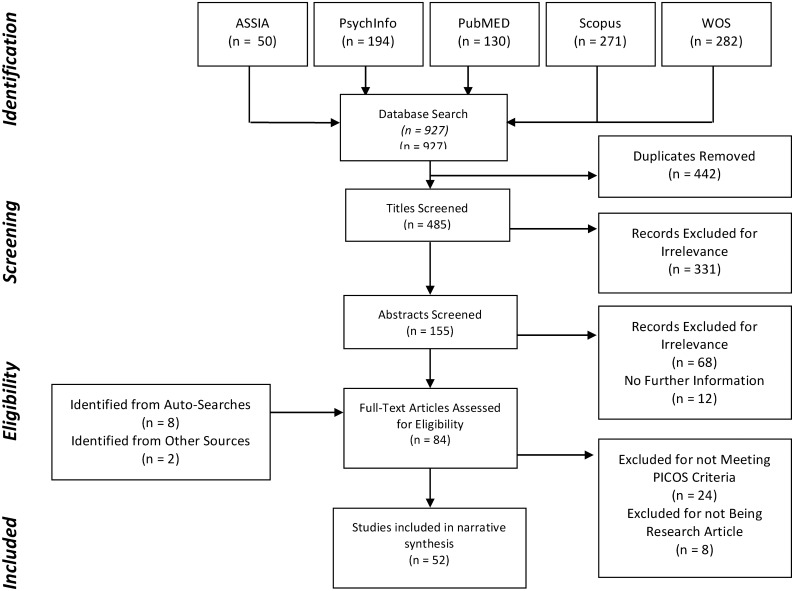
INTRODUCTION: The view that interacting with nature enhances mental wellbeing is commonplace, despite a dearth of evidence or even agreed definitions of 'nature'. The aim of this review was to systematically appraise the evidence for associations between greenspace and mental wellbeing, stratified by the different ways in which greenspace has been conceptualised in quantitative research. METHODS: We undertook a comprehensive database search and thorough screening of articles which included a measure of greenspace and validated mental wellbeing tool, to capture aspects of hedonic and/or eudaimonic wellbeing. Quality and risk of bias in research were assessed to create grades of evidence. We undertook detailed narrative synthesis of the 50 studies which met the review inclusion criteria, as methodological heterogeneity precluded meta-analysis. RESULTS: Results of a quality assessment and narrative synthesis suggest associations between different greenspace characteristics and mental wellbeing. We identified six ways in which greenspace was conceptualised and measured: (i) amount of local-area greenspace; (ii) greenspace type; (iii) visits to greenspace; (iv) views of greenspace; (v) greenspace accessibility; and (vi) self-reported connection to nature. There was adequate evidence for associations between the amount of local-area greenspace and life satisfaction (hedonic wellbeing), but not personal flourishing (eudaimonic wellbeing). Evidence for associations between mental wellbeing and visits to greenspace, accessibility, and types of greenspace was limited. There was inadequate evidence for associations with views of greenspace and connectedness to nature. Several studies reported variation in associations between greenspace and wellbeing by life course stage, gender, levels of physically activity or attitudes to nature. CONCLUSIONS: Greenspace has positive associations with mental wellbeing (particularly hedonic wellbeing), but the evidence is not currently sufficient or specific enough to guide planning decisions. Further studies are needed, based on dynamic measures of greenspace, reflecting access and uses of greenspace, and measures of both eudaimonic and hedonic mental wellbeing.
Overview
The claims and statistics of this paper haven’t been checked yet.
Free: it reads the open-access text and checks the first 5 claims that cite a source we can check. Create a free account to check every claim.
Integrity signals
Registry
Cites
Statistics
Figures
Verification
Claims the paper makes
The claims and statistics of this paper haven’t been checked yet.
Free: it reads the open-access text and checks the first 5 claims that cite a source we can check. Create a free account to check every claim.
Claims other papers make about this one
Each is checked against this paper’s own text: does it say what the citing paper says it does?
The source backs part of the claim, not all of it — or backs it for a different population, condition or comparison.
In the citing paper
“These show an association between exposure to greenspace and/or outdoor nature-based interventions, and reduced symptoms of stress, depression and anxiety, and increased wellbeing (Houlden et al., 2018;Corazon et al., 2019).”
From Exploring the role of exposure to green and blue spaces in preventing anxiety and depression among young people aged 14–24 years living in urban settings: A systematic review and conceptual framework (2022) · cites this paper as Houlden et al., 2018
Experimental — accuracy not yet measured
Self-check
Percentages, sums and reported differences re-computed from the paper’s own numbers.
The self-check needs the paper’s full text.
Citations
Cites
The Cochrane Collaboration's tool for assessing risk of bias in randomised trials
Higgins, J. P. T., Altman, D. G., Gotzsche, P. C., Juni, P., Moher, D., Oxman, A. D., Savovic, J., Schulz, K. F., Weeks, L., Sterne, J. A. C., et al. (2011) · BMJ · doi:10.1136/bmj.d5928 · Cited by 33,817
Development and validation of brief measures of positive and negative affect: The PANAS scales.
Watson, D., Clark, L. A., & Tellegen, A. (1988) · Journal of Personality and Social Psychology · doi:10.1037/0022-3514.54.6.1063 · Cited by 32,433
Cochrane Handbook for Systematic Reviews of Interventions: Cochrane Book Series
(2008) · doi:10.1002/9780470712184 · Cited by 25,048 · cited 3×
“For quality appraisal, risk of bias was assessed using Cochrane-recommended criteria [32]:”
BackgroundMethodDermyshi, E., Wang, Y., Yan, C., Hong, W., Qiu, G., Gong, X., & Zhang, T. (2017) · Neonatology · doi:10.1159/000454668 · Cited by 24,451
(2014) · Medical Entomology and Zoology · Cited by 17,633
On Happiness and Human Potentials: A Review of Research on Hedonic and Eudaimonic Well-Being
Ryan, R. M., & Deci, E. L. (2001) · Annual Review of Psychology · doi:10.1146/annurev.psych.52.1.141 · Cited by 11,567
The structure of psychological well-being revisited.
Ryff, C. D., & Keyes, C. L. M. (1995) · Journal of Personality and Social Psychology · doi:10.1037//0022-3514.69.4.719 · Cited by 10,285
Stress recovery during exposure to natural and urban environments
Ulrich, R. S., Simons, R. F., Losito, B. D., Fiorito, E., Miles, M. A., & Zelson, M. (1991) · Journal of Environmental Psychology · doi:10.1016/s0272-4944(05)80184-7 · Cited by 5,990 · cited 1×
“of the terms ‘nature’ and ‘natural’ [10, 16], and features that may appear ‘natural’ are often arti-”
Cochrane Handbook for Systematic Reviews of Interventions
Higgins, J. P. T., Green, S., & Ben Van Den, A. (2020) · International Coaching Psychology Review · doi:10.53841/bpsicpr.2020.15.2.123 · Cited by 5,670
The Warwick-Edinburgh Mental Well-being Scale (WEMWBS): development and UK validation
Tennant, R., Hiller, L., Fishwick, R., Platt, S., Joseph, S., Weich, S., Parkinson, J., Secker, J., & Stewart-Brown, S. (2007) · Health and Quality of Life Outcomes · doi:10.1186/1477-7525-5-63 · Cited by 5,031 · cited 1×
“new things”, and “close to others” [81]; there is also a reduced 7-item version, known as”
BackgroundSelf-citation
Research works printed but not linked: 2
- World Health Organisation. Urban green spaces and health—a review of evidence. 2016.
- Guðmundsdóttir D, editor The short Warwick-Edinburgh mental well-being scale (SWEMWBS): Internal validity and the relationship between SWEMWBS, age, gender and other health and well-being measures. 2nd Applied Positive Psychology Conference, Warwick; 2009.
Cited by
Items 201–300 of 467
Sponge city construction and population health
Li, Y. (2024) · Frontiers in Public Health · doi:10.3389/fpubh.2024.1285568 · Cited by 15
Young, M. T., Vispute, S., Serghiou, S., Kumok, A., Shah, Y. K., Lane, K., Black‐Ingersoll, F., Brochu, P., Bharel, M., Skenazy, S., et al. (2024) · The Lancet Planetary Health · doi:10.1016/s2542-5196(24)00125-6 · Cited by 12
Alexandra Troughton, M. S. N., Chin, M., & Amankwaa, I. (2024) · Health & Place · doi:10.1016/j.healthplace.2024.103344 · Cited by 14
Conceptualizing and Measuring Megacity Resilience with an Integrated Approach: The Case of China
Yang, J., Ding, Y., & Lin, Z. (2022) · Sustainability · doi:10.3390/su141811685 · Cited by 12
Morris, S., Newhouse, I., Larocque, T., Gillis, K.-J., Smith, L., & Nisbet, E. K. L. (2021) · International journal of exercise science · doi:10.70252/sote9757 · Cited by 12
Dussler, R., & Deringer, S. A. (2020) · Journal of Interpretation Research · doi:10.1177/1092587220963556 · Cited by 13
“Although the physical, social, and psychological benefits of time spent in nature are well documented (Houlden et al., 2018; Mayer et al., 2008; Mygind et al., 2019), a disconnect exists between interest in participating and actual participation in a nature activity (Kellert et al., 2017).”
BackgroundThwaites, O., Mizen, A., & Fry, R. (2024) · Landscape and Urban Planning · doi:10.1016/j.landurbplan.2023.104971 · Cited by 10
Gong, K., Wang, C., & Yin, J. (2024) · Buildings · doi:10.3390/buildings14092854 · Cited by 17
“A NE is increasingly recognized as a potential buffer against poor mental health [25–27].”
Deng, B., Boden, J. M., Ye, N., Morgenroth, J. A., Campbell, M. H., Eggleton, P., McLeod, G., & Hobbs, M. (2024) · Environment International · doi:10.1016/j.envint.2024.109223 · Cited by 14
Wu, H. J., Gong, C., Wang, R., Niu, X. M., Cao, Y., Cao, C., & Hu, C. (2025) · Land · doi:10.3390/land14010077 · Cited by 14
Zhang, X., Lin, E. S., Yin, J., & Tan, P. Y. (2025) · Urban forestry & urban greening · doi:10.1016/j.ufug.2025.128975 · Cited by 13
Mental Hygiene: What It Is, Implications, and Future Directions
Tremblay, G., Rodrigues, N. C., & Gulati, S. (2021) · Journal of Prevention and Health Promotion · doi:10.1177/26320770211000376 · Cited by 15
“Despite the differences in the data on nature exposure, consensus data suggest that nature exposure is positively associated with mental well-being (Houlden et al., 2018).”
BackgroundWilkie, S., Platt, T., & Trotter, H. (2023) · Current Research in Ecological and Social Psychology · doi:10.1016/j.cresp.2023.100127 · Cited by 12
Shrestha, T., Chi, C. V. Y., Cassarino, M., Foley, S., & Blasi, Z. D. (2023) · PLoS ONE · doi:10.1371/journal.pone.0273139 · Cited by 14
“This has resulted in a call for researchers to broaden their definition of nature exposure and investigate different types of natural settings and their characteristics [1, 14, 18].”
BackgroundHuerta, C. M. (2023) · PLoS ONE · doi:10.1371/journal.pone.0295013 · Cited by 11
Yang, W., Li, X., & Feng, X. (2024) · Urban forestry & urban greening · doi:10.1016/j.ufug.2024.128329 · Cited by 11
Ziari, K., & Zebardast, K. (2024) · Geomatica · doi:10.1016/j.geomat.2024.100022 · Cited by 12
Public space and everyday heritage: An inquiry into children's and adults' perception
Ginzarly, M., El-Khoury, R., & Srour, F. J. (2024) · City Culture and Society · doi:10.1016/j.ccs.2024.100594 · Cited by 9
Rivera, E., Arundell, L., Parker, K. E., Veitch, J., Salmon, J., Ridgers, N. D., Timperio, A. F., Sahlqvist, S., & Loh, V. H. Y. (2024) · Health Promotion International · doi:10.1093/heapro/daae137 · Cited by 10
“Similar to pre-pandemic research among adolescents and adults (Houlden et al ., 2018; Zhang et al ., 2020), we observed positive associations between park visitation and park visit frequency (≥1/week) with well-being, suggesting that visiting parks and visiting at least once per week may improve…”
BackgroundResultUnlocking urban climate adaptation imaginaries
Loroño-Leturiondo, M., Olazabal, M., Lewis, W., Amorim‐Maia, A. T., & Zabala, A. (2025) · Nature Cities · doi:10.1038/s44284-025-00354-3 · Cited by 15
“By contrast, the idea of health and well-being shows no real relevance across imaginaries, despite the widely accepted connection between health and climate change adaptation 47,48 .”
Mei, L., & Zhang, Y. (2025) · Urban forestry & urban greening · doi:10.1016/j.ufug.2025.129007 · Cited by 9
Cohort Profile: The Green and Blue Spaces (GBS) and mental health in Wales e-cohort
Thompson, D. A., Geary, R. S., Rowney, F. M., Fry, R. J., Watkins, A. J., Wheeler, B. W., Mizen, A., Akbari, A., Lyons, R. A., Stratton, G., et al. (2022) · International Journal of Epidemiology · doi:10.1093/ije/dyac080 · Cited by 9
“My place in the grand scheme of things”: perspective from nature and sustainability science
Gould, R. K., Merrylees, E., Hackenburg, D. M., & Marquina, T. G. (2023) · Sustainability Science · doi:10.1007/s11625-023-01339-8 · Cited by 11
“As noted in the introduction, extensive research demonstrates that exposure to nature benefits mental health and cognitive function (Bratman et al. 2012, 2019; Thomsen et al. 2018; Houlden et al. 2018).”
BackgroundGreenness and neuropsychiatric symptoms in dementia
Tondelli, M., Chiari, A., Vinceti, G., Galli, C., Salemme, S., Filippini, T., Carbone, C., Minafra, C., Luca, C. D., Prandi, R., et al. (2023) · Environmental Research · doi:10.1016/j.envres.2023.117652 · Cited by 10
“Exposure to green space has been suggested to lower depression, stress, and schizophrenia risk, to improve children ’ s cognitive development, and to reduce neural activity linked to psychiatric disorders (see Houlden et al., 2018 for a review).”
BackgroundKNAPP, K. M., Venner, S., McNulty, J. P., & Rainford, L. A. (2022) · Radiography · doi:10.1016/j.radi.2022.07.003 · Cited by 9
Sallay, V., Martos, T., Rosta‐Filep, O., Horváth, Z., & Korpela, K. (2023) · Journal of Environmental Psychology · doi:10.1016/j.jenvp.2023.102084 · Cited by 10
Lemyre, A., & Messina, J. P. (2023) · Environmental Research · doi:10.1016/j.envres.2023.117360 · Cited by 12
Zhang, L., & Wu, Z. (2021) · Journal of Asian Architecture and Building Engineering · doi:10.1080/13467581.2021.1906257 · Cited by 9
“Existing researches on community public space around the world are mostly related to the physical (Tsai et al. 2019) and mental (Wood et al. 2017) health of residents, while behavior itself as one of the medium affecting psychology is rarely discussed (Houlden et al. 2018).”
BackgroundDo greenness and landscape indices for greenspace correlate with suicide ratio?
Lee, H., Chang, H.-T., Herianto, S., Wu, C., Liu, W., Yu, C.-P., Pan, W., & Wu, C. (2023) · Landscape and Urban Planning · doi:10.1016/j.landurbplan.2023.104935 · Cited by 9
Carver, A., Rachele, J. N., Sugiyama, T., Giles‐Corti, B., Burton, N. W., & Turrell, G. (2024) · Health & Place · doi:10.1016/j.healthplace.2024.103311 · Cited by 13
Yang, Y., Xu, M., Lin, C.-M., Sun, Q., Li, J., Peng, L., & Chang, W. (2024) · Forests · doi:10.3390/f15122208 · Cited by 9
Walters, J. R., Bell, T. L., & Pfautsch, S. (2025) · Land · doi:10.3390/land14030576 · Cited by 9
Singh, S., van de Wouw, M., Tomfohr‐Madsen, L. M., Lebel, C. A., & Giesbrecht, G. F. (2025) · Environment International · doi:10.1016/j.envint.2025.109572 · Cited by 11
Zhu, J. C., Huang, Y., Cao, Z., Zhang, Y., Ding, Y., & Du, J. (2025) · ISPRS International Journal of Geo-Information · doi:10.3390/ijgi14080287 · Cited by 8
Murphy, L. F., Kalpakjian, C. Z., Charlifue, S. W., Heinemann, A. W., Slavin, M. D., Rohrbach, T., Tulsky, D. S., & Botticello, A. (2022) · Spinal Cord · doi:10.1038/s41393-021-00736-z · Cited by 10
Campos, P. (2021) · Urbani izziv · doi:10.5379/urbani-izziv-en-2021-32-02-05 · Cited by 8
“The experience of nature and green spaces offers mental benefits and affective responses (Houlden et al., 2018).”
BackgroundThe symbiotic city: Voices of nature in urban transformations
Stuiver, M. (2022) · Wageningen Academic Publishers eBooks · doi:10.3920/978-90-8686-935-0 · Cited by 11
Fouad, A. T. Z., Sinnett, D., Bray, I., McClatchey, R., & Reece, R. (2023) · Land · doi:10.3390/land12040728 · Cited by 9
Is Urban Renewal with Campaign-Style Governance Characteristics Satisfying in China?
Liu, H., Chen, Y., & Ma, L. (2023) · Social Indicators Research · doi:10.1007/s11205-023-03209-3 · Cited by 8
“…public facilities can provide essential resources and services for surrounding residents, and their spatial distribution may directly affect the circulation and allocation of public service resources, effectively influencing the social life enjoyed by surrounding residents (Houlden et al., 2018).”
BackgroundChipman, J., Shi, X., Gilbert‐Diamond, D., Khatchikian, C. E., Baker, E., Nieuwenhuijsen, M. J., & Karagas, M. R. (2024) · GeoHealth · doi:10.1029/2023gh000905 · Cited by 9
“2 of 12 mental and emotional health (Barton & Pretty, 2010; Helbich et al., 2018; Holt et al., 2019; Houlden et al., 2018; Korpela et al., 2014), and cognitive development (Amoly et al., 2014; Dadvand et al., 2015).”
BackgroundGrau-Ruiz, R., Løvoll, H. S., & Dyrdal, G. M. (2024) · Journal of Happiness Studies · doi:10.1007/s10902-024-00732-z · Cited by 10
“However, in studies linking greenspace or green exercise with SWB, the impacts on hedonic measures are better documented than eudaimonic measures (Houlden et al., 2018; Kelley, 2019).”
Nature As Medicine: Mind, Body, and Soil
Victorson, D. E., Luberto, C. M., & Koffler, K. (2020) · The Journal of Alternative and Complementary Medicine · doi:10.1089/acm.2020.0221 · Cited by 8
Moore, H. E., Siriwardena, A. N., Gussy, M. G., Hill, B., Tanser, F. C., & Spaight, R. (2022) · American Journal of Men s Health · doi:10.1177/15579883221082428 · Cited by 8
“Factors other than community-scale socioeconomic status are likely to influence mental health outcomes during a pandemic that involves “lockdown,” such as landscape features, including access to health services (Goddard & Smith, 2001) and green spaces for recreation (Houlden et al., 2018).”
BackgroundDurlak, W., Dudkiewicz, M., & Milecka, M. (2022) · Land · doi:10.3390/land11111914 · Cited by 8
Zhou, B., Fang, Q., Riaz, M. F., & Ali, T. (2022) · International Journal of Environmental Research and Public Health · doi:10.3390/ijerph192114220 · Cited by 13
Moran, D., Jordaan, J. A., & Jones, P. (2023) · European Journal of Criminology · doi:10.1177/14773708231186302 · Cited by 10
“A recent systematic review (Houlden et al., 2018) found evidence for hedonic well-being (life satisfaction) being related to presence of local greenspace, though there was less evidence to support an impact on well-being derived from visits to different types of green-space and wider greenspace…”
BackgroundCapturing the well-being exposome in poly-environmental scores.
van de Weijer, M. P., Pelt, D. H. M., Baselmans, B. M. L., Ligthart, L., Huider, F., Hottenga, J., Pool, R., & Bartels, M. (2023) · Journal of Environmental Psychology · doi:10.1016/j.jenvp.2023.102208 · Cited by 10
“For example, meta-analyses suggest a role for social support (Jiameng & Huiyong, 2013), green space exposure (Houlden, Weich, Albuquerque, Jarvis, & Rees, 2018), and socioeconomic status (Tan, Kraus, Carpenter, & Adler, 2020), among many other factors.”
BackgroundMothering occupations: A review identifying mothering occupations
Odgers, S., Thomas, Y., & Tokolahi, E. (2023) · Australian Occupational Therapy Journal · doi:10.1111/1440-1630.12921 · Cited by 12
Nordbø, E. C. A., & Nordh, H. (2025) · Urban forestry & urban greening · doi:10.1016/j.ufug.2025.128777 · Cited by 15
Paydar, M., & Fard, A. K. (2025) · Infrastructures · doi:10.3390/infrastructures10060137 · Cited by 7
“There is evidence from experimental and empirical studies that exposure to natural surroundings and urban greenery is associated with restoration from stress and mental fatigue [71–73].”
Lin, Y., Ma, X., Zhao, B., La, C., Zhang, P., & Luo, Q. (2025) · Frontiers in Public Health · doi:10.3389/fpubh.2025.1674536 · Cited by 12
“This result aligns with previous research, reinforcing the beneficial role of urban green spaces in promoting mental well-being (19, 51).”
Zhu, J., Gu, X., Zhang, L., & Yang, M. J. (2022) · Open House International · doi:10.1108/ohi-05-2022-0144 · Cited by 8
Lemyre, A., Chrisinger, B. W., Palmer-Cooper, E. C., & Messina, J. P. (2023) · Cities & Health · doi:10.1080/23748834.2023.2282851 · Cited by 9
Yang, X., Orjuela, J. P., McCoy, E. J., Vich, G., Anaya-Boig, E., Ávila-Palència, I., Brand, C., Carrasco‐Turigas, G., Dons, E., Gerike, R., et al. (2022) · Environmental Research · doi:10.1016/j.envres.2022.114083 · Cited by 9
Johnson, M. L., & Sachdeva, S. S. (2022) · Frontiers in Sustainable Cities · doi:10.3389/frsc.2022.725870 · Cited by 8
“Being outdoors in greenspace can allow for physical activity and increase social contact, both of which can positively affect psychosocial wellbeing (Fox, 1999; Kawachi and Berkman, 2001; Houlden et al., 2018).”
BackgroundThe Role of Home Gardens in Developing Cities for Improving Workers' Psychological Conditions
Lazuardi, S. N., Sulistyantara, B., & Pratiwi, P. I. (2022) · Journal of Contemporary Urban Affairs · doi:10.25034/ijcua.2022.v6n2-9 · Cited by 7
Si, B., Noor, A. I. M., & Wen, K. (2024) · International Journal of Academic Research in Environment and Geography · doi:10.46886/ijareg/v10-i1/9120 · Cited by 7
Fenton, M. P., Smail, E. J., Konyayev, K., McCall-Junkin, P., & LoTemplio, S. B. (2025) · Environment and Behavior · doi:10.1177/00139165251330274 · Cited by 7
“In a systematic review, evidence supported associations between greenspace exposure and mental wellbeing, with adequate evidence for associations between urban greenspace exposure and life satisfaction among adults (Houlden et al., 2018).”
Wang, D., Li, H., & Liu, P. (2025) · Frontiers in Public Health · doi:10.3389/fpubh.2025.1547499 · Cited by 9
“The natural environment is related to natural ecology, and the current focus is on the areas such as neighborhood green spaces (20, 21), and neighborhood parks (22).”
Schendl, A., Bullock, J. M., de Menezes, R. P., & Willcock, S. (2025) · People and Nature · doi:10.1002/pan3.70081 · Cited by 10
“However, disparities in greenspace distribution and accessibility exacerbate health inequalities, particularly in underserved or ‘left-behind’ areas (Houlden et al., 2018).”
Wu, Q., Li, C., Zhang, L., & Zhou, Y. (2025) · npj Mental Health Research · doi:10.1038/s44184-025-00152-8 · Cited by 7
“Improved environments such as urban green spaces have been proven to offer not only a sense of safety and relaxation but also social opportunities and psychological resilience 22,54 .”
Nawrath, M., Merlina, A., Knight, J., Welch, S. A., Rashidian, M., & Seifert-Dähnn, I. (2026) · Information · doi:10.3390/info17050501 · Cited by 8
Global identification and mapping of socio-ecological production landscapes with the Satoyama Index
Natori, Y., & Hino, A. (2021) · PLoS ONE · doi:10.1371/journal.pone.0256327 · Cited by 9
Examining neighborhood effects on mental health utilizing a novel two-stage modeling approach
Boderie, N. W., van Kippersluis, H., Been, J. V., van Lenthe, F. J., & Groeniger, J. O. (2023) · Annals of Epidemiology · doi:10.1016/j.annepidem.2023.04.012 · Cited by 10
Chien, J., Wu, C., & Chan, C. (2021) · Journal of the Formosan Medical Association · doi:10.1016/j.jfma.2021.11.004 · Cited by 7
Anthropause appreciation, biophilia, and ecophilosophical contemplations amidst a global pandemic
Kolandai‐Matchett, K., Milne, B. J., McLay, J., von Randow, M., & Lay‐Yee, R. (2022) · Journal of Environmental Psychology · doi:10.1016/j.jenvp.2022.101943 · Cited by 10
Chapter 10: Nature, health and well-being: evidence and examples
de Vries, S. (2022) · Wageningen Academic Publishers eBooks · doi:10.3920/978-90-8686-935-0_10 · Cited by 6
Li, X., Chen, J., Lai, Y., Zhu, W., & Ding, Y. (2025) · Energy and Buildings · doi:10.1016/j.enbuild.2025.115961 · Cited by 5
Samadi-Todar, Z., & Hami, A. (2025) · Landscape and Ecological Engineering · doi:10.1007/s11355-025-00666-5 · Cited by 7
“Urban green spaces (as part of public open spaces) improve overall health and provide ecosystem services (Gianfredi et al. 2021; Kondo et al. 2018), as well as mental and physical health (Callaghan et al. 2021; Houlden et al. 2018; Yang et al. 2021) of the adult population.”
Wollgast, L., Kersjes, C., Hövener, C., & Michalski, N. (2025) · Bundesgesundheitsblatt - Gesundheitsforschung - Gesundheitsschutz · doi:10.1007/s00103-025-04123-4 · Cited by 7
“…ge-1118 sundheitsfördernde oder -gefährdende Eigenschaften des Wohnortes, die sich auf die bebaute Umwelt (z.B. Grünflä-chen, Versiegelung; [20]), Umweltrisi-kofaktoren (Lärmbelästigung, Luftver-schmutzung; [21, 22]) und Aspekte der sozialen Umwelt wie gesellschaftliche Kohäsion (soziales…”
Wang, H., & Fei, X. (2025) · Urban forestry & urban greening · doi:10.1016/j.ufug.2025.129125 · Cited by 6
Urban green and blue space characteristics contributing to multiple perceived health benefits
Kajosaari, A., Arnberger, A., WENMAKERS, S., & Humer, A. (2025) · Urban forestry & urban greening · doi:10.1016/j.ufug.2025.129229 · Cited by 10
Mental health benefits of specific blue space types and characteristics: A systematic evidence map
Beute, F., Marselle, M. R., Olszewska-Guizzo, A., Andreucci, M. B., Lammel, A., Davies, Z., Glanville, J., Keune, H., O’Brien, L., Remmen, R., et al. (2026) · Environmental Research · doi:10.1016/j.envres.2026.124054 · Cited by 8
Gray, D., Hewlett, D., Hammon, J., & Aburrow, S. (2023) · Springer eBooks · doi:10.1007/978-3-031-40783-3_9 · Cited by 6
Greenspace exposure and associated health outcomes: a systematic review of reviews
Bryer, B., Odebeatu, C. C., Lee, W. R., Vitangcol, K. J., Gallegos-Rejas, V. M., Osborne, N. J., Williams, G., & Darssan, D. (2024) · F1000Research · doi:10.12688/f1000research.148878.1 · Cited by 16
“There is an increasing number of systematic reviews and meta-analyses on the relationship between greenspace exposure and health outcomes (Houlden et al., 2018; Lambert et al., 2017; Lee et al., 2020; Rojas-Rueda et al., 2019; Yuan et al., 2021).”
Urban vegetation and well‐being: A cross‐sectional study in Montreal, Canada
Sousa‐Silva, R., Kestens, Y., Stephens, Z. P., Thierry, B., Schoenig, D., Fuller, D., Winters, M., & Smargiassi, A. (2025) · People and Nature · doi:10.1002/pan3.10771 · Cited by 8
Perceived distance to greenery affects psychological restoration
Ma, H., Zhang, Y., Cui, Q., Kwan, M., & Cai, J. (2025) · Environment and Planning B Urban Analytics and City Science · doi:10.1177/23998083251362610 · Cited by 10
“Research has shown that the perceived proximity of green elements can affect stress reduction and cognitive restoration (Houlden et al., 2018).”
Mapping, measuring, and valuing the benefits of nature-based solutions in cities
Guerry, A. D., Lonsdorf, E. V., Nootenboom, C., Remme, R. P., Griffin, R. M., Waters, H., Polasky, S., Han, B., Wu, T., Janke, B. D., et al. (2023) · Edward Elgar Publishing eBooks · doi:10.4337/9781800376762.00023 · Cited by 10
Lotto, R. D., Sessi, M., & Venco, E. M. (2022) · Sustainability · doi:10.3390/su14041993 · Cited by 5
Freedom, fun, friendship and freezing! Women’s perspectives of participation in open water swimming
Christie, M., Elliott, D. L., & Wilbraham, S. J. (2025) · Sport in Society · doi:10.1080/17430437.2025.2470158 · Cited by 4
Drivers of woody plant phylogenetic and taxonomic beta diversity across an urban density gradient
Muvengwi, J., Ndagurwa, H. G. T., Nyenda, T., Witkowski, E. T. F., & Mbiba, M. (2025) · Urban Ecosystems · doi:10.1007/s11252-025-01742-2 · Cited by 6
“…ecosystems through reduction of urban temperatures (Ziter et al. 2019), absorption of pollution (Nowak et al. 2006, 2018) and storm water (Bartens et al. 2009), and a variety of human health benefits such as recuperation from stress, and reduction of general mental fatigue (Houlden et al. 2018).”
Nature-based solution to increase mental well-being in nursing home
Hami, A., Ghasemzadeh, R., & Samadi-Todar, Z. (2025) · Landscape Architecture and Sustainability · doi:10.1016/j.las.2025.100017 · Cited by 5
Subjective Well-Being, Active Travel, and Socioeconomic Segregation
Paydar, M., & Fard, A. K. (2025) · Sustainability · doi:10.3390/su172310571 · Cited by 4
Invisible and overlooked: young people’s perceptions of managing green spaces for mental wellbeing
Whitten, M. (2025) · Cities & Health · doi:10.1080/23748834.2025.2458394 · Cited by 9
Kangarloo, T., Mote, J., Abplanalp, S. J., Gold, A., James, P., Gard, D. E., & Fulford, D. (2023) · JMIR Formative Research · doi:10.2196/44323 · Cited by 5
Tsokani, A., Dimopoulos, T., Vourazanis, E., Στριμπάκος, Ν., Billis, E. V., Pepera, G., & Kapreli, E. (2023) · Applied Sciences · doi:10.3390/app131810077 · Cited by 6
Krzeptowska-Moszkowicz, I., Moszkowicz, Ł., & Porada, K. (2023) · Sustainability · doi:10.3390/su151914420 · Cited by 6
Brooks, C. P., Kidger, J., Hickman, M., & Gouais, A. L. (2024) · Health & Place · doi:10.1016/j.healthplace.2024.103332 · Cited by 6
Grau-Ruiz, R., & Løvoll, H. S. (2024) · Journal of Adventure Education & Outdoor Learning · doi:10.1080/14729679.2024.2412081 · Cited by 7
“However, quantitative research on the relationship between greenspace and wellbeing is biased towards hedonic wellbeing (Houlden et al., 2018), with few large-scale studies (e.g., Grau-Ruiz et al., 2024) examining the relation between outdoor spaces and meaning in life.”
Zhou, X., Sho, K., Qiu, H., Chang, S. E., & Cen, Q. (2024) · Environmental and Sustainability Indicators · doi:10.1016/j.indic.2024.100548 · Cited by 9
Humanizing Public Open Spaces in Jeddah: The Case of Prince Majid Park
Abouhassan, M., Anwar, R., & Elkhateeb, S. (2025) · Sustainability · doi:10.3390/su17062551 · Cited by 4
“Kevin Lynch’s book The Image of the City , published in 1960, introduced a new concept of the city, beginning with the perception of the city from its inhabitants, including studies that lead to a deeper understanding of the issues related to wayfinding and orientation [25].”
Turley, R., Roberts, S., Foster, C., Willis, S., Morgan, H. E., Warner, N., Mann, M. K., Scourfield, J., El-Banna, A., Evans, R., et al. (2020) · ORCA Online Research @Cardiff (Cardiff University) · Cited by 10
Selvaraj, P., Krishnamoorthy, A., Vivekanandhan, S., & Manoharan, H. (2022) · Heliyon · doi:10.1016/j.heliyon.2022.e09327 · Cited by 5
“Accordingly, individuals with higher mental wellbeing could pose greater potential in managing life stressors and maintain positive mental health (Houlden et al., 2018).”
Bray, I., Reece, R., Sinnett, D., Martin, F., & Hayward, R. C. (2021) · Research Square · doi:10.21203/rs.3.rs-255123/v1 · Cited by 4
Sarkar, A., & Pujara, T. (2025) · Cities & Health · doi:10.1080/23748834.2025.2457847 · Cited by 5
Xu, Z., Moro, F., Baldoni, N., Mauro, M., Marini, S., Bragonzoni, L., Dallolio, L., Pinelli, E., Zinno, R., Astorino, G., et al. (2025) · Urban Science · doi:10.3390/urbansci9060192 · Cited by 3
“Green spaces, defined as natural or semi-natural areas within urban environments, have independently demonstrated positive associations with mental health [8–10].”
The effect of place-based nature interventions on human health: A systematic review
Fry, D., Antoine, J., Simpson, K., Steed, A.-C., Branas, C. C., Nieuwenhuijsen, M. J., Mmari, K., & Kondo, M. C. (2025) · Environmental Research · doi:10.1016/j.envres.2025.123157 · Cited by 7
Gendered inequities in urban green space: a systematic review of access, safety, and daily usage
Samadi-Todar, Z., & Hami, A. (2026) · GeoJournal · doi:10.1007/s10708-026-11659-8 · Cited by 5
“…impacting both physical and mental health (Callaghan et al., 2021; García de Jalón et al., 2020; Gascon et al., 2017; Gianfredi et al., 2021; Hami et al., 2025a, 2025b; Houlden et al., 2018; Kabisch, 2019; Kondo et al., 2018; Samadi-Todar & Hami, 2025; Vegaraju & Amiri, 2024; Zhang et al., 2021).”
Active mobility in the green space: A spatial and temporal analysis of Indro Montanelli Park
Yang, L. (2025) · Journal of Transport & Health · doi:10.1016/j.jth.2025.102018 · Cited by 3
Salmi, I. (2025) · Humanities and Social Sciences Communications · doi:10.1057/s41599-025-05483-7 · Cited by 5
“…and psychological health and functioning, and prosocial and pro-environmental inclinations (Barragan-Jason et al. 2022 & 2023; de Keijzer et al. 2016; Houlden et al. 2018; Oh et al. 2017; Putra et al. 2020; Shuda et al. 2020; Trøstrup et al. 2019; Weeland et al. 2019; Whitburn et al. 2019).”
Metadata
- Authors
- Houlden, V., Weich, S., Porto de Albuquerque, J., Jarvis, S., & Rees, K.
- Affiliations
- University of Warwick (GB)
- University of Sheffield (GB)
- Corresponding author
- Houlden, Victoria
- Weich, Scott
- Jarvis, Stephen
- Rees, Karen
- Venue
- PLOS ONE
- Publisher
- Public Library of Science (PLoS)
- Published
- 2018-09-12
- Volume
- 13
- Issue
- 9
- Pages
- e0203000
- ISSN
- 1932-6203 (ISSN-L)
- PMC
- PMC6135392
- OpenAlex
- W2889994901
- Cited by
- 471
- References
- 91
- Citations by year
- 2026: 52 · 2025: 79 · 2024: 60 · 2023: 73 · 2022: 84 · 2021: 73 · 2020: 31 · 2019: 18 · 2018: 1
- FWCI
- 3.24
- Type
- journal article
- Language
- en
- Open access
- gold
- doi.org
- Licence
- Locations
- PLoS ONE (publishedVersion, cc-by)
- Europe PMC (PubMed Central) (publishedVersion, cc-by)
- PubMed Central (publishedVersion, cc-by)
- PubMed (publishedVersion)
- White Rose Research Online (University of Leeds, The University of Sheffield, University of York) (acceptedVersion)
- Warwick Research Archive Portal (University of Warwick) (acceptedVersion)
- ENLIGHTEN (Jurnal Bimbingan dan Konseling Islam) (acceptedVersion, cc-by-sa)
- RePEc: Research Papers in Economics (submittedVersion)
- DOAJ (DOAJ: Directory of Open Access Journals) (submittedVersion, cc-by-sa)
- Figshare (submittedVersion, cc-by)
- University of Birmingham Research Portal (University of Birmingham) (submittedVersion, other-oa)
- University of Birmingham Research Portal (University of Birmingham) (submittedVersion, cc-by)
- Newcastle University ePrints (Newcastle Univesity) (cc-by)
- Funders
- Engineering and Physical Sciences Research Council (EP/L016400/1)
- Topics
- Social Sciences › Urban Studies › Urban Green Space and Health
- Social Sciences › Psychology › Social Psychology › Psychological Well-being and Life Satisfaction
- Social Sciences › Business, Management and Accounting › Tourism, Leisure and Hospitality Management › Recreation, Leisure, Wilderness Management
- Keywords
- green spaces, psychological well-being, hedonic well-being, eudaimonic well-being, life satisfaction, personal flourishing, nature connection, green space accessibility, nature exposure, urban green space, life stages, gender differences
- MeSH terms
- Adult, Humans, Mental Health, Nature, Self Report
About these checks
Registry, retraction, Cites and statistics results are computed, not judged, with one exception: a printed reference that no index lists is read once by a model before it counts as a citation error. Claims are extracted by a model and kept only when their quote appears verbatim in the text; each cited source is then checked, with a model’s help, for whether it says what the claim relies on. Those verdicts can be wrong — read the claim’s quote and the cited source before relying on one.
Statistics and arithmetic are recomputed, not judged.
Confidence bands are shown only for fields calibrated on our annotated test set. None is calibrated yet, so no band is shown.
What counts as a claim ›How we measure confidence ›How we check this ›
Are you an author, or do you see a problem with this page? Request a review
Data sources
Bibliographic data: Semantic Scholar, OpenAlex, Crossref.
Contains information from the Semantic Scholar Academic Graph Datasets, made available under the ODC Attribution License (ODC-BY 1.0).
Semantic Scholar’s data is described in: Kinney, R., et al. (2023). The Semantic Scholar Open Data Platform. arXiv:2301.10140.
