

The relationship between greenspace and the mental wellbeing of adults: A systematic review
Open accessThe DOI matches its Crossref record; 90 of the 91 references it cites were found in a registry or an index.
Abstract
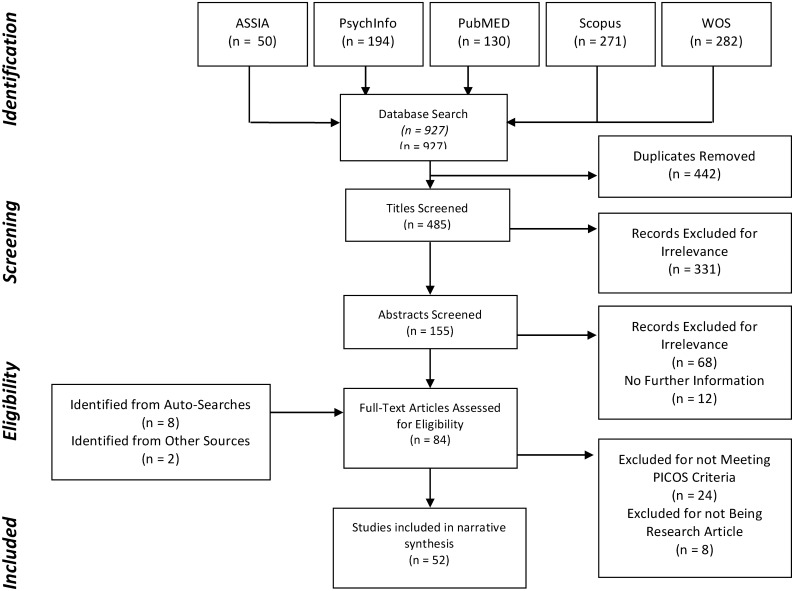
INTRODUCTION: The view that interacting with nature enhances mental wellbeing is commonplace, despite a dearth of evidence or even agreed definitions of 'nature'. The aim of this review was to systematically appraise the evidence for associations between greenspace and mental wellbeing, stratified by the different ways in which greenspace has been conceptualised in quantitative research. METHODS: We undertook a comprehensive database search and thorough screening of articles which included a measure of greenspace and validated mental wellbeing tool, to capture aspects of hedonic and/or eudaimonic wellbeing. Quality and risk of bias in research were assessed to create grades of evidence. We undertook detailed narrative synthesis of the 50 studies which met the review inclusion criteria, as methodological heterogeneity precluded meta-analysis. RESULTS: Results of a quality assessment and narrative synthesis suggest associations between different greenspace characteristics and mental wellbeing. We identified six ways in which greenspace was conceptualised and measured: (i) amount of local-area greenspace; (ii) greenspace type; (iii) visits to greenspace; (iv) views of greenspace; (v) greenspace accessibility; and (vi) self-reported connection to nature. There was adequate evidence for associations between the amount of local-area greenspace and life satisfaction (hedonic wellbeing), but not personal flourishing (eudaimonic wellbeing). Evidence for associations between mental wellbeing and visits to greenspace, accessibility, and types of greenspace was limited. There was inadequate evidence for associations with views of greenspace and connectedness to nature. Several studies reported variation in associations between greenspace and wellbeing by life course stage, gender, levels of physically activity or attitudes to nature. CONCLUSIONS: Greenspace has positive associations with mental wellbeing (particularly hedonic wellbeing), but the evidence is not currently sufficient or specific enough to guide planning decisions. Further studies are needed, based on dynamic measures of greenspace, reflecting access and uses of greenspace, and measures of both eudaimonic and hedonic mental wellbeing.
Overview
The claims and statistics of this paper haven’t been checked yet.
Free: it reads the open-access text and checks the first 5 claims that cite a source we can check. Create a free account to check every claim.
Integrity signals
Registry
Cites
Statistics
Figures
Verification
Claims the paper makes
The claims and statistics of this paper haven’t been checked yet.
Free: it reads the open-access text and checks the first 5 claims that cite a source we can check. Create a free account to check every claim.
Claims other papers make about this one
Each is checked against this paper’s own text: does it say what the citing paper says it does?
The source backs part of the claim, not all of it — or backs it for a different population, condition or comparison.
In the citing paper
“These show an association between exposure to greenspace and/or outdoor nature-based interventions, and reduced symptoms of stress, depression and anxiety, and increased wellbeing (Houlden et al., 2018;Corazon et al., 2019).”
From Exploring the role of exposure to green and blue spaces in preventing anxiety and depression among young people aged 14–24 years living in urban settings: A systematic review and conceptual framework (2022) · cites this paper as Houlden et al., 2018
Experimental — accuracy not yet measured
Self-check
Percentages, sums and reported differences re-computed from the paper’s own numbers.
The self-check needs the paper’s full text.
Citations
Cites
The Cochrane Collaboration's tool for assessing risk of bias in randomised trials
Higgins, J. P. T., Altman, D. G., Gotzsche, P. C., Juni, P., Moher, D., Oxman, A. D., Savovic, J., Schulz, K. F., Weeks, L., Sterne, J. A. C., et al. (2011) · BMJ · doi:10.1136/bmj.d5928 · Cited by 33,817
Development and validation of brief measures of positive and negative affect: The PANAS scales.
Watson, D., Clark, L. A., & Tellegen, A. (1988) · Journal of Personality and Social Psychology · doi:10.1037/0022-3514.54.6.1063 · Cited by 32,433
Cochrane Handbook for Systematic Reviews of Interventions: Cochrane Book Series
(2008) · doi:10.1002/9780470712184 · Cited by 25,048 · cited 3×
“For quality appraisal, risk of bias was assessed using Cochrane-recommended criteria [32]:”
BackgroundMethodDermyshi, E., Wang, Y., Yan, C., Hong, W., Qiu, G., Gong, X., & Zhang, T. (2017) · Neonatology · doi:10.1159/000454668 · Cited by 24,451
(2014) · Medical Entomology and Zoology · Cited by 17,633
On Happiness and Human Potentials: A Review of Research on Hedonic and Eudaimonic Well-Being
Ryan, R. M., & Deci, E. L. (2001) · Annual Review of Psychology · doi:10.1146/annurev.psych.52.1.141 · Cited by 11,567
The structure of psychological well-being revisited.
Ryff, C. D., & Keyes, C. L. M. (1995) · Journal of Personality and Social Psychology · doi:10.1037//0022-3514.69.4.719 · Cited by 10,285
Stress recovery during exposure to natural and urban environments
Ulrich, R. S., Simons, R. F., Losito, B. D., Fiorito, E., Miles, M. A., & Zelson, M. (1991) · Journal of Environmental Psychology · doi:10.1016/s0272-4944(05)80184-7 · Cited by 5,990 · cited 1×
“of the terms ‘nature’ and ‘natural’ [10, 16], and features that may appear ‘natural’ are often arti-”
Cochrane Handbook for Systematic Reviews of Interventions
Higgins, J. P. T., Green, S., & Ben Van Den, A. (2020) · International Coaching Psychology Review · doi:10.53841/bpsicpr.2020.15.2.123 · Cited by 5,670
The Warwick-Edinburgh Mental Well-being Scale (WEMWBS): development and UK validation
Tennant, R., Hiller, L., Fishwick, R., Platt, S., Joseph, S., Weich, S., Parkinson, J., Secker, J., & Stewart-Brown, S. (2007) · Health and Quality of Life Outcomes · doi:10.1186/1477-7525-5-63 · Cited by 5,031 · cited 1×
“new things”, and “close to others” [81]; there is also a reduced 7-item version, known as”
BackgroundSelf-citation
Research works printed but not linked: 2
- World Health Organisation. Urban green spaces and health—a review of evidence. 2016.
- Guðmundsdóttir D, editor The short Warwick-Edinburgh mental well-being scale (SWEMWBS): Internal validity and the relationship between SWEMWBS, age, gender and other health and well-being measures. 2nd Applied Positive Psychology Conference, Warwick; 2009.
Cited by
Items 101–200 of 467
Inauen, J., Contzen, N., Frick, V., Kadel, P., Keller, J., Kollmann, J., Mata, J., & van Valkengoed, A. M. (2021) · European Psychologist · doi:10.1027/1016-9040/a000438 · Cited by 60
“Environmental psychology is further concerned with the impact of the environment on people, especially on their well-being (e.g., favorable impacts of green spaces; Houlden et al., 2018 ).”
Exploring sense of place in relation to urban facilities – evidence from Lisbon
Westerholt, R., Acedo, A., & Naranjo-Zolotov, M. (2022) · Cities · doi:10.1016/j.cities.2022.103750 · Cited by 43
Benton, J. S., Cotterill, S., Anderson, J., Macintyre, V. G., Gittins, M., Dennis, M., & French, D. (2021) · International Journal of Behavioral Nutrition and Physical Activity · doi:10.1186/s12966-021-01088-w · Cited by 45
Mizen, A., Thompson, D. A., Watkins, A. J., Akbari, A., Garrett, J. K., Geary, R. S., Lovell, R., Lyons, R. A., Nieuwenhuijsen, M. J., Parker, S. C., et al. (2024) · Journal of Exposure Science & Environmental Epidemiology · doi:10.1038/s41370-024-00650-5 · Cited by 48
Yang, Z., Kwan, M., Liu, D., & Huang, J. W. (2025) · Urban forestry & urban greening · doi:10.1016/j.ufug.2025.128683 · Cited by 41
Srugo, S., de Groh, M., Jiang, Y., Morrison, H., Hamilton, H., & Villeneuve, P. (2019) · International Journal of Environmental Research and Public Health · doi:10.3390/ijerph16224364 · Cited by 34
“Still, it is presently unclear whether the presence of greenspace or its access and use is more impactful on mental health outcomes [40].”
BackgroundZhang, C., Wang, C., Chen, C., Tao, L., Jin, J., Wang, Z., & Jia, B. (2021) · Environmental Research · doi:10.1016/j.envres.2021.111795 · Cited by 42
Elsamani, Y., Mejía, C., & Kajikawa, Y. (2023) · PLoS ONE · doi:10.1371/journal.pone.0280005 · Cited by 67
“It discusses topics such as the impact of physical activities in natural environments on physical and mental well-being [84, 85], how blue spaces such as oceans impact health and well-being [86], their therapeutic potential [87], and the impact of green spaces on mental well-being [88] and stress levels [89].”
BackgroundGhasemi, K., Behzadfar, M., Borhani, K., & Nouri, Z. (2022) · Ecological Indicators · doi:10.1016/j.ecolind.2022.109455 · Cited by 43
Benton, J. S., Anderson, J., Pulis, M., Cotterill, S., Hunter, R. F., & French, D. (2020) · Cities & Health · doi:10.1080/23748834.2020.1775383 · Cited by 38
“…of robust natural experimental studies of the causal effects of the urban environment on physical activity and wellbeing, particularly in Europe (Hunter et al. 2015, Benton et al. 2016b, Roberts et al. 2018, MacMillan et al. 2018, Kärmeniemi et al. 2018, Houlden et al. 2018, Moore et al. 2018).”
BackgroundThe effect of water immersion on vection in virtual reality
Fauville, G., Queiroz, A. C. M., Woolsey, E. S., Kelly, J. W., & Bailenson, J. N. (2021) · Scientific Reports · doi:10.1038/s41598-020-80100-y · Cited by 38
Imperatori, C., Massullo, C., Rossi, E. D., Carbone, G. A., Theodorou, A., Scopelliti, M., Romano, L., Gatto, C. D., Allegrini, G., Carrus, G., et al. (2023) · Frontiers in Psychology · doi:10.3389/fpsyg.2023.1171215 · Cited by 38
“The literature on contact with nature has consistently shown that mere exposure to certain types of natural environments may cause beneficial effects on humans (e.g., Bowler et al., 2010; Hartig et al., 2014; Houlden et al., 2018; Beute et al., 2020; Gladwin et al., 2022).”
BackgroundDoes nature make us happier? A spatial error model of greenspace types and mental wellbeing
Houlden, V., de Albuquerque, J. P., Weich, S., & Jarvis, S. A. (2019) · Environment and Planning B Urban Analytics and City Science · doi:10.1177/2399808319887395 · Cited by 36
“Attention Restoration Theory proposes that effortful, directed attention is required to undertake everyday tasks, while nature is inherently fascinating, providing an opportunity to mentally reset (Kaplan, 1984).”
BackgroundSelf-citationHøj, S. B., Paquet, C., Caron, J., & Daniel, M. (2021) · Health & Place · doi:10.1016/j.healthplace.2020.102501 · Cited by 34
Benton, J. S., Cotterill, S., Anderson, J., Macintyre, V. G., Gittins, M., Dennis, M., Lindley, S. J., & French, D. (2021) · Wellbeing Space and Society · doi:10.1016/j.wss.2021.100029 · Cited by 37
Cui, Q., Huang, Y., Yang, G., & Chen, Y. (2022) · International Journal of Environmental Research and Public Health · doi:10.3390/ijerph19159611 · Cited by 32
The Economic Value of Health Benefits Associated with Urban Park Investment
Wilson, J., & Xiao, X. (2023) · International Journal of Environmental Research and Public Health · doi:10.3390/ijerph20064815 · Cited by 43
Russo, A. (2024) · Sustainability · doi:10.3390/su16135751 · Cited by 39
Carmichael, C., Danks, C., & Vatovec, C. M. (2019) · Sustainability · doi:10.3390/su11205688 · Cited by 30
“Abundant scholarship identifies some dimensions of the physical and mental health benefits of green infrastructure in urban environments (for reviews see [20,21]).”
BackgroundBaxter, L., & Fancourt, D. E. (2020) · PLoS ONE · doi:10.1371/journal.pone.0235334 · Cited by 38
There is an urgent need for a global rural health research agenda
Bain, L. E., & Adeagbo, O. (2022) · Pan African Medical Journal · doi:10.11604/pamj.2022.43.147.38189 · Cited by 41
“Access to green spaces, far more common in rural settings, are increasingly being reported to be associated with better mental health outcomes [16].”
BackgroundLiu, Y., Zhao, B., Cheng, Y., Zhao, T., Zhang, A., Cheng, S., & Zhang, J. (2023) · Environmental Research · doi:10.1016/j.envres.2023.115344 · Cited by 32
Li, A., Mansour, A., & Bentley, R. (2023) · Health & Place · doi:10.1016/j.healthplace.2023.103103 · Cited by 32
Tiscareno-Osorno, X., Demetriou, Y., Marques, A., Peralta, M., Jorge, R., Macintyre, T. E., MacIntyre, D., Smith, S. W., Sheffield, D., Jones, M. V., et al. (2023) · Environment and Behavior · doi:10.1177/00139165231212321 · Cited by 34
Methodological guidance for selecting buffers in greenspace–health studies
Sakhvidi, M. J. Z., Browning, M. H. E. M., Samuelsson, K., Labib, S. M., Psyllidis, A., Amegah, A. K., Astell‐Burt, T., Bach, A., Jerrett, M., Bratman, G. N., et al. (2025) · The Lancet Planetary Health · doi:10.1016/j.lanplh.2025.101370 · Cited by 59
Berry, M. S., Rung, J. M., Crawford, M. C., Yurasek, A. M., Ferreiro, A. V., & Almog, S. (2021) · Behavioural Processes · doi:10.1016/j.beproc.2021.104344 · Cited by 34
Li, X., Qu, J., Zhao, Z., Zhao, Y., Xie, H., & Yin, H. (2021) · Journal of Cleaner Production · doi:10.1016/j.jclepro.2021.127779 · Cited by 28
Tong, K., Thompson, C. W., Carin-Levy, G., Liddle, J., Morton, S., & Mead, G. E. (2025) · Age and Ageing · doi:10.1093/ageing/afaf084 · Cited by 44
“Nature exposure has been shown to enhance physical [5–11], cognitive, and emotional [8, 12–14] and social health [15].”
Ricciardi, E., Spano, G., Tinella, L., Lopez, A., Clemente, C., Bosco, A., & Caffò, A. O. (2023) · International Journal of Environmental Research and Public Health · doi:10.3390/ijerph20085540 · Cited by 29
“Nevertheless, evidence on the effect of visiting greenspace on mental health were still limited [38].”
BackgroundVisiting nature is associated with lower socioeconomic inequalities in well-being in Wales
Garrett, J. K., Rowney, F. M., White, M. P., Lovell, R., Fry, R. J., Akbari, A., Geary, R. S., Lyons, R. A., Mizen, A., Nieuwenhuijsen, M. J., et al. (2023) · Scientific Reports · doi:10.1038/s41598-023-35427-7 · Cited by 40
“For instance, a systematic review on this issue 34 found only four ‘good’ quality studies included in the review (all cross-sectional), one found positive associations with time in nature and mental health and vitality domains of the SF-36 in four European cities 64 , one found a positive…”
BackgroundHossain, M. M., Sultana, A., Ma, P., Fan, Q., Sharma, R., Purohit, N., & Sharmin, D. F. (2020) · PsyArXiv (OSF Preprints) · doi:10.31234/osf.io/4r3mh · Cited by 38
The relative effects of access to public greenspace and private gardens on mental health
Collins, R., Smith, D. M., Ogutu, B., Brown, K. A., Eigenbrod, F., & Spake, R. (2023) · Landscape and Urban Planning · doi:10.1016/j.landurbplan.2023.104902 · Cited by 28
Co-creating community wellbeing initiatives: what is the evidence and how do they work?
Powell, N., Dalton, H. E., Lawrence-Bourne, J., & Perkins, D. A. (2024) · International Journal of Mental Health Systems · doi:10.1186/s13033-024-00645-7 · Cited by 46
Socioeconomic deprivation modifies green space and mental health associations: A within person study
Belcher, R. N., Murray, K. A., Reeves, J. P., & Fecht, D. (2024) · Environment International · doi:10.1016/j.envint.2024.109036 · Cited by 34
Shrestha, T., Chi, C. V. Y., Cassarino, M., Foley, S., & Blasi, Z. D. (2025) · Environment International · doi:10.1016/j.envint.2024.109217 · Cited by 40
Fletcher, E. I., & Collins, C. M. (2020) · Urban forestry & urban greening · doi:10.1016/j.ufug.2020.126823 · Cited by 36
Jenkins, M., Lee, C., Mackenzie, S. H., Hargreaves, E. A., Hodge, K. P., & Calverley, J. R. (2022) · Frontiers in Psychology · doi:10.3389/fpsyg.2022.783840 · Cited by 34
Gauging the happiness benefit of US urban parks through Twitter
Schwartz, A. J., Dodds, P. S., O’Neil-Dunne, J. P. M., Ricketts, T. H., & Danforth, C. M. (2022) · PLoS ONE · doi:10.1371/journal.pone.0261056 · Cited by 31
“A review found that while local-area greenspace was positively associated with mental well-being across multiple studies, the evidence is not currently sufficient enough to guide planning decisions [9].”
BackgroundSmyth, N., Thorn, L., Wood, C., Hall, D., & Lister, C. (2022) · Healthcare · doi:10.3390/healthcare10060978 · Cited by 46
“Furthermore, living near green space is associated with psychophysiological benefits, such as healthier salivary cortisol profiles [11] and better wellbeing [12].”
BackgroundLing, T.-Y. J., Hung, W.-K., Lin, C.-T., & Lu, M. (2020) · Sustainability · doi:10.3390/su122310020 · Cited by 31
“The increasing physical activity, social interaction, and the provision of vertical green must meet the contextual constraints while satisfying the recreational needs [36,65,66].”
BackgroundInfluentialKalliolevo, H., Gordon, A., Sharma, R., Bull, J. W., & Bekessy, S. A. (2021) · Conservation Science and Practice · doi:10.1111/csp2.512 · Cited by 33
“…with increased physical activity (James, Banay, Hart, & Laden, 2015), positive mental health (Houlden, Weich, Porto de Albuquerque, Jarvis, & Rees, 2018; Wood, Hooper, Foster, & Bull, 2017), reduced stress levels (Tyrväinen et al., 2014), lower incidence of allergies (Hanski et al., 2012;…”
Happiness and well-being: The value and findings from genetic studies
van de Weijer, M. P., de Vries, L. P., & Bartels, M. (2022) · Elsevier eBooks · doi:10.1016/b978-0-12-821514-2.00016-7 · Cited by 35
Ma, L., Shi, W., & Wu, L. (2023) · Applied Geography · doi:10.1016/j.apgeog.2023.103085 · Cited by 29
Anderson, J., Benton, J. S., Ye, J., Barker, E. A., Macintyre, V. G., Wilkinson, J., Rothwell, J. J., Dennis, M., & French, D. (2024) · Environment International · doi:10.1016/j.envint.2024.108669 · Cited by 31
Geary, R. S., Thompson, D. A., Garrett, J. K., Mizen, A., Rowney, F. M., Song, J., White, M. P., Lovell, R., Watkins, A. J., Lyons, R. A., et al. (2023) · Public Health Research · doi:10.3310/lqpt9410 · Cited by 48
Victorson, D. E., Doninger, G. L., Victorson, S., Victorson, G., Hall, L., Maletich, C., Corr, B. R., Scortino, K., Burns, Z., Allen, L., et al. (2021) · International Journal of Environmental Research and Public Health · doi:10.3390/ijerph182312622 · Cited by 24
Krzeptowska-Moszkowicz, I., Moszkowicz, Ł., & Porada, K. (2022) · Land · doi:10.3390/land11050760 · Cited by 28
Baka, A., & Mabon, L. (2022) · Landscape Research · doi:10.1080/01426397.2022.2051458 · Cited by 25
“…and the additional societal positives provided by urban greenspaces are argued to support wellbeing – defined as happiness and life satisfaction (Houlden, Weich, Porto de Albuquerque, Jarvis, & Rees, 2018) – and resilience in terms of being able to absorb, respond to and recover from pressures…”
Association between Park Visitation and Physical Activity among Adults in Bangkok, Thailand
Arifwidodo, S. D., Chandrasiri, O., Rasri, N., Sirawarong, W., Ratanawichit, P., & Sangyuan, N. (2022) · Sustainability · doi:10.3390/su141912938 · Cited by 22
“In previous studies, socioeconomic characteristics, such as income and education, race, gender, and physical health, were considered important factors in determining park visitation [10,11].”
BackgroundRüger, H., Hoherz, S., Schneider, N., Fliege, H., Bellinger, M. M., & Wiernik, B. M. (2023) · Applied Research in Quality of Life · doi:10.1007/s11482-023-10169-w · Cited by 28
“Nonetheless, more recent reviews and studies show associations of SWB with different green space characteristics (Hadavi, 2017; Houlden et al., 2018) as well as beneficial effects on health and mortality (Mears et al., 2020).”
BackgroundMouly, T. A., Mishra, G. D., Hystad, P., Nieuwenhuijsen, M. J., & Knibbs, L. D. (2023) · Environment International · doi:10.1016/j.envint.2023.108110 · Cited by 27
Urban Green Spaces and Healthy Living: A Landscape Architecture Perspective
Russo, A. (2024) · Urban Science · doi:10.3390/urbansci8040213 · Cited by 33
Maurer, M. L., Cook, E. M., Yoon, L., Visnic, O., Orlove, B., Culligan, P. J., & Mailloux, B. J. (2021) · Frontiers in Sustainable Cities · doi:10.3389/frsc.2021.709997 · Cited by 21
“Previous research has established that improvements to SWB are a key ecosystem service provided by greenspace (Russell et al., 2013; Jennings et al., 2016; Houlden et al., 2018), and indicates that contact with greenspace can lead to reductions in stress and anxiety and increases in happiness (Herzog et al.”
BackgroundMcCormack, G. R., Petersen, J. A., Naish, C., Ghoneim, D., & Doyle–Baker, P. K. (2022) · Cities & Health · doi:10.1080/23748834.2021.2016218 · Cited by 29
Garza-Terán, G., Tapia-Fonllem, C. O., Fraijo-Sing, B., Borbón-Mendívil, D., & Poggio, L. (2022) · Frontiers in Psychology · doi:10.3389/fpsyg.2022.864836 · Cited by 49
Kanelli, A. A., Kokkinaki, M., Sinvare, M. D., Malesios, C., Dimitrakopoulos, P. G., & Kalantzi, O. (2023) · Sustainability · doi:10.3390/su15118831 · Cited by 27
Neighborhoods, psychological distress, and the quest for causality.
Jokela, M. (2020) · Current Opinion in Psychology · doi:10.1016/j.copsyc.2019.06.009 · Cited by 20
Li, H., Browning, M. H. E. M., Cao, Y., & Zhang, G. (2022) · Behavioral Sciences · doi:10.3390/bs12030084 · Cited by 23
Aghabozorgi, K., van der Jagt, A., Bell, S., & Brown, C. (2023) · Health & Place · doi:10.1016/j.healthplace.2023.103141 · Cited by 25
Choi, H. S., Bruyns, G., Zhang, W., Cheng, D. S., & Sharma, S. (2023) · Urban Science · doi:10.3390/urbansci7040125 · Cited by 20
KERSE, Y., & Kerse, G. (2025) · BMC Psychology · doi:10.1186/s40359-025-03501-6 · Cited by 29
“Consequently, individuals who are able to fulfill their potential, cope effectively with everyday stressors, and experience psychological growth are considered to have sound mental well-being [21].”
Biodiversity, Microbiomes, and Human Health
Stanhope, J., Breed, M. F., & Weinstein, P. (2022) · Progress in inflammation research · doi:10.1007/978-3-030-91051-8_3 · Cited by 19
Bolanis, D., Vergunst, F., Mavoa, S., Schmelefske, E., Khoury, B., Turecki, G., Orri, M., & Geoffroy, M. (2023) · The Science of The Total Environment · doi:10.1016/j.scitotenv.2023.167451 · Cited by 23
Finnemann, A., Huth, K. B. S., Borsboom, D., Epskamp, S., & van der Maas, H. L. J. (2024) · Science Advances · doi:10.1126/sciadv.adn1636 · Cited by 24
Wu, W., Tan, W., Chen, W. Y., & Wang, R. (2024) · Cities · doi:10.1016/j.cities.2024.105496 · Cited by 18
Kua, K. P., & Lee, S. W. H. (2021) · Perspectives in Public Health · doi:10.1177/17579139211011496 · Cited by 23
Paydar, M. M., Fard, A. K., & Khaghani, M. (2020) · Sustainability · doi:10.3390/su12187263 · Cited by 20
“[54] found associations between the amount of local-area green space and mental wellbeing.”
BackgroundHaro, J. L., Chávez, L. F. J. G., Zavalza, A. R. P., & Gómez-Varela, J. (2024) · Journal of Health and Pollution · doi:10.1289/jhp1040 · Cited by 29
Hua, J., Ren, C., Yin, S., & Chen, W. Y. (2025) · Urban forestry & urban greening · doi:10.1016/j.ufug.2025.128753 · Cited by 19
Alvarez, H. A. O., Browning, M. H. E. M., Neophytou, A. M., & Bratman, G. N. (2021) · International Journal of Environmental Research and Public Health · doi:10.3390/ijerph18020520 · Cited by 17
“Several theories grounded in evolutionary psychology posit a human preference for natural environments [4,36,39,41,64,65] and are commonly called upon to explain the link between greenness and health [63,66,67].”
BackgroundWilkie, S., & Davinson, N. (2021) · Journal of the British Academy · doi:10.5871/jba/009s7.033 · Cited by 19
Disparities in Self-Reported Neighborhood Park Access Among Adults in Philadelphia
McIntire, R. K., Halstead, T., Dajee, D., Buckley, M. E., McGregor, K. A., & Larson, S. L. (2022) · Urban forestry & urban greening · doi:10.1016/j.ufug.2022.127790 · Cited by 20
Paydar, M. M., & Fard, A. K. (2021) · Sustainability · doi:10.3390/su131910580 · Cited by 22
Investigate the complexities of environmental determinants of sleep health disparities
Alhasan, D. M., Gaston, S. A., & Jackson, C. L. (2022) · SLEEP · doi:10.1093/sleep/zsac145 · Cited by 19
McDougall, C. W., Elliott, L. R., White, M. P., Grellier, J., Bell, S., Bratman, G. N., Nieuwenhuijsen, M. J., Lima, M. L., Ojala, A., Cirach, M., et al. (2024) · Journal of Environmental Psychology · doi:10.1016/j.jenvp.2024.102479 · Cited by 18
Applying the Mandala of Health in the Anthropocene
Langmaid, G. R., Patrick, R., Kingsley, J., & Lawson, J. T. (2020) · Health Promotion Journal of Australia · doi:10.1002/hpja.434 · Cited by 26
Xie, X., Li, Y., Wang, R., & Gou, Z. (2023) · Land · doi:10.3390/land12040798 · Cited by 18
Can Campus Green Spaces Be Restorative? A Case Study from Tanzania
Kanelli, A. A., Vardaka, M.-L., Malesios, C., Katima, Z., & Kalantzi, O. (2024) · Sustainability · doi:10.3390/su16031094 · Cited by 18
“Exposure to UGSs [20–25], time spent and frequency [21,26–29], proximity or accessibility [24,30–33], perceived greenness, or view to such open spaces [34–38] contribute to the relief of stress, risk reduction for depression, and recovery from mental fatigue.”
Bakhtsiyarava, M., Ju, Y., Moran, M. R., Rodríguez, D. A., Dronova, I., Delclòs‐Alió, X., Moore, K., Castillo‐Riquelme, M., & Anza‐Ramirez, C. (2024) · Applied Geography · doi:10.1016/j.apgeog.2024.103219 · Cited by 17
Moorcroft, H., Hampton, S., & Whitmarsh, L. E. (2025) · PLOS Climate · doi:10.1371/journal.pclm.0000573 · Cited by 15
Tarkiainen, L., Moustgaard, H., Korhonen, K., Noordzij, J. M., Beenackers, M. A., van Lenthe, F. J., Burström, B., & Martikainen, P. (2020) · Journal of Epidemiology & Community Health · doi:10.1136/jech-2020-214276 · Cited by 18
Castro, C. V., & Rifai, H. S. (2021) · Sustainability · doi:10.3390/su131911018 · Cited by 19
Rural Areas and Well-Being in EU Countries + UK: A Taxonomy and a Cluster Analysis
Marino, D., & Tebala, D. (2022) · Sustainability · doi:10.3390/su142215213 · Cited by 14
Effects of indoor plants on office workers: a field study in multiple Dutch organizations
de Vries, S., Hermans, T., & Langers, F. (2023) · Frontiers in Psychology · doi:10.3389/fpsyg.2023.1196106 · Cited by 17
“The presence of vegetation in the residential environment has been shown to be associated with human health and well-being, physically as well as mentally (Houlden et al., 2018; De La Fuente et al., 2021).”
BackgroundSupporting urban greenspace with microbial symbiosis
Stewart, J. D., Kiers, E. T., Anthony, M., & Kiers, A. H. (2023) · Plants People Planet · doi:10.1002/ppp3.10403 · Cited by 18
Li, H., Browning, M. H. E. M., Bardhan, M., Ying, M., Zhang, X., Cao, Y., & Zhang, G. (2024) · International Journal of Environmental Health Research · doi:10.1080/09603123.2024.2334767 · Cited by 21
“This notion has been supported by numerous studies (McCormick 2017; Houlden et al. 2018; Zhang et al. 2020; Reyes-Riveros et al. 2021).”
Exposure to green spaces and schizophrenia: a systematic review
Marcham, L., & Ellett, L. (2024) · Psychological Medicine · doi:10.1017/s0033291724001533 · Cited by 18
Symonds, P., Milner, J., Mohajeri, N., Aplin, J., Hale, J., Lloyd, S. J., Fremont, H., Younkin, S. G., Shrubsole, C., Robertson, L., et al. (2020) · Wellcome Open Research · doi:10.12688/wellcomeopenres.16345.2 · Cited by 17
Olsen, J., Caryl, F., McCrorie, P., & Mitchell, R. (2022) · Landscape and Urban Planning · doi:10.1016/j.landurbplan.2022.104425 · Cited by 18
Green space and substance use and addiction: A new frontier
Wiley, E. R., Seabrook, J. A., Gilliland, J., Anderson, K. K., & Stranges, S. (2019) · Addictive Behaviors · doi:10.1016/j.addbeh.2019.106155 · Cited by 15
The good life in rural and urban Senegal: A qualitative and quantitative study
Duboz, P., Macia, E., Diallo, A. H., Cohen, E., Bergouignan, A., & Seck, S. M. (2021) · PLoS ONE · doi:10.1371/journal.pone.0252134 · Cited by 19
“Similarly, the analysis of the impact of ecosystem services and of the benefits provided by daily contact with nature (restoration of stress, improvement of life satisfaction), mostly carried out in Northern countries and not fully demonstrated for rural populations (for a review, see [78]), remains to be deepened.”
BackgroundSaint‐Onge, K., Coulombe, S., Philibert, M. D., Wiesztort, L., & Houle, J. (2022) · Wellbeing Space and Society · doi:10.1016/j.wss.2022.100095 · Cited by 21
Which characteristics represent the gentrification affected by parks? A study case in Nanjing, China
Huang, Y., Hong, X., Yao, X., & Yin, M. (2024) · Ecological Indicators · doi:10.1016/j.ecolind.2024.111862 · Cited by 16
Poortinga, W., Denney, J., Kelly, K. M., Oates, R., Phillips, R., Oliver, H., & Hallingberg, B. (2024) · Journal of Environmental Psychology · doi:10.1016/j.jenvp.2024.102376 · Cited by 17
“The way in which green space has been both conceptualised and measured has varied significantly throughout the literature (Houlden et al., 2018).”
BackgroundActive travel and subjective well-being in Temuco, Chile
Paydar, M., & Fard, A. K. (2024) · Journal of Transport Geography · doi:10.1016/j.jtrangeo.2024.104070 · Cited by 13
Liu, S., Su, C., Yang, R., Zhao, J., Liu, K., Ham, K.-M., Takeda, S., & Zhang, J. (2022) · Land · doi:10.3390/land11070990 · Cited by 13
Reduction in the use of green spaces during the COVID-19 pandemic and its impact on mental health
Borgi, M., Collacchi, B., Cirulli, F., & Medda, E. (2023) · Health & Place · doi:10.1016/j.healthplace.2023.103093 · Cited by 17
Species diversity enhances perceptions of urban coastlines at multiple scales
Fairchild, T. P., Weedon, J., & Griffin, J. N. (2022) · People and Nature · doi:10.1002/pan3.10330 · Cited by 17
Deng, H., Kandt, J., Signorelli, V., & Shelton, N. J. (2025) · Landscape and Urban Planning · doi:10.1016/j.landurbplan.2025.105407 · Cited by 14
A cross-national analysis of demographic variation in self-rated mental health across 22 countries
Okafor, C. N., Jean-Berluche, D., Paltzer, J., Kwon, E., Grigoropoulou, N., VanderWeele, T. J., & Johnson, B. R. (2025) · Communications Medicine · doi:10.1038/s43856-025-01038-8 · Cited by 14
“Urban environments further present chronic stressors — such as noise pollution, overcrowding, poor air quality, and a lack of greenspace — thatareallassociatedwithpoorermentalhealthoutcomes 73 – 75 .”
Metadata
- Authors
- Houlden, V., Weich, S., Porto de Albuquerque, J., Jarvis, S., & Rees, K.
- Affiliations
- University of Warwick (GB)
- University of Sheffield (GB)
- Corresponding author
- Houlden, Victoria
- Weich, Scott
- Jarvis, Stephen
- Rees, Karen
- Venue
- PLOS ONE
- Publisher
- Public Library of Science (PLoS)
- Published
- 2018-09-12
- Volume
- 13
- Issue
- 9
- Pages
- e0203000
- ISSN
- 1932-6203 (ISSN-L)
- PMC
- PMC6135392
- OpenAlex
- W2889994901
- Cited by
- 471
- References
- 91
- Citations by year
- 2026: 52 · 2025: 79 · 2024: 60 · 2023: 73 · 2022: 84 · 2021: 73 · 2020: 31 · 2019: 18 · 2018: 1
- FWCI
- 3.24
- Type
- journal article
- Language
- en
- Open access
- gold
- doi.org
- Licence
- Locations
- PLoS ONE (publishedVersion, cc-by)
- Europe PMC (PubMed Central) (publishedVersion, cc-by)
- PubMed Central (publishedVersion, cc-by)
- PubMed (publishedVersion)
- White Rose Research Online (University of Leeds, The University of Sheffield, University of York) (acceptedVersion)
- Warwick Research Archive Portal (University of Warwick) (acceptedVersion)
- ENLIGHTEN (Jurnal Bimbingan dan Konseling Islam) (acceptedVersion, cc-by-sa)
- RePEc: Research Papers in Economics (submittedVersion)
- DOAJ (DOAJ: Directory of Open Access Journals) (submittedVersion, cc-by-sa)
- Figshare (submittedVersion, cc-by)
- University of Birmingham Research Portal (University of Birmingham) (submittedVersion, other-oa)
- University of Birmingham Research Portal (University of Birmingham) (submittedVersion, cc-by)
- Newcastle University ePrints (Newcastle Univesity) (cc-by)
- Funders
- Engineering and Physical Sciences Research Council (EP/L016400/1)
- Topics
- Social Sciences › Urban Studies › Urban Green Space and Health
- Social Sciences › Psychology › Social Psychology › Psychological Well-being and Life Satisfaction
- Social Sciences › Business, Management and Accounting › Tourism, Leisure and Hospitality Management › Recreation, Leisure, Wilderness Management
- Keywords
- green spaces, psychological well-being, hedonic well-being, eudaimonic well-being, life satisfaction, personal flourishing, nature connection, green space accessibility, nature exposure, urban green space, life stages, gender differences
- MeSH terms
- Adult, Humans, Mental Health, Nature, Self Report
About these checks
Registry, retraction, Cites and statistics results are computed, not judged, with one exception: a printed reference that no index lists is read once by a model before it counts as a citation error. Claims are extracted by a model and kept only when their quote appears verbatim in the text; each cited source is then checked, with a model’s help, for whether it says what the claim relies on. Those verdicts can be wrong — read the claim’s quote and the cited source before relying on one.
Statistics and arithmetic are recomputed, not judged.
Confidence bands are shown only for fields calibrated on our annotated test set. None is calibrated yet, so no band is shown.
What counts as a claim ›How we measure confidence ›How we check this ›
Are you an author, or do you see a problem with this page? Request a review
Data sources
Bibliographic data: Semantic Scholar, OpenAlex, Crossref.
Contains information from the Semantic Scholar Academic Graph Datasets, made available under the ODC Attribution License (ODC-BY 1.0).
Semantic Scholar’s data is described in: Kinney, R., et al. (2023). The Semantic Scholar Open Data Platform. arXiv:2301.10140.
