

Transcriptomic and proteomic host response to Aspergillus fumigatus conidia in an air-liquid interface model of human bronchial epithelium
Open accessThe DOI matches its Crossref record; 97 of the 97 references it cites were found in a registry or an index.
Abstract
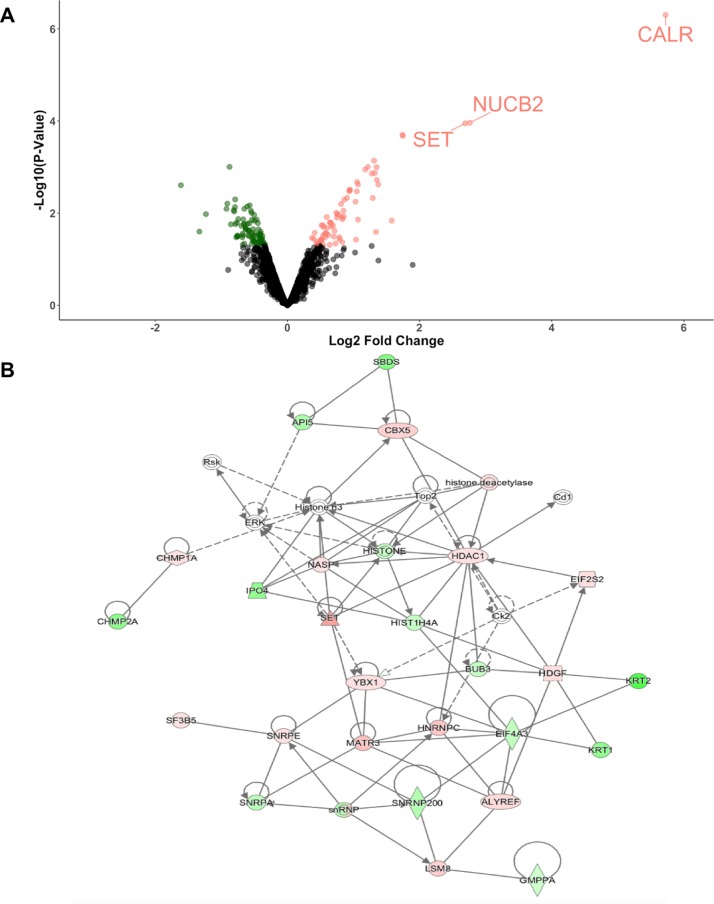
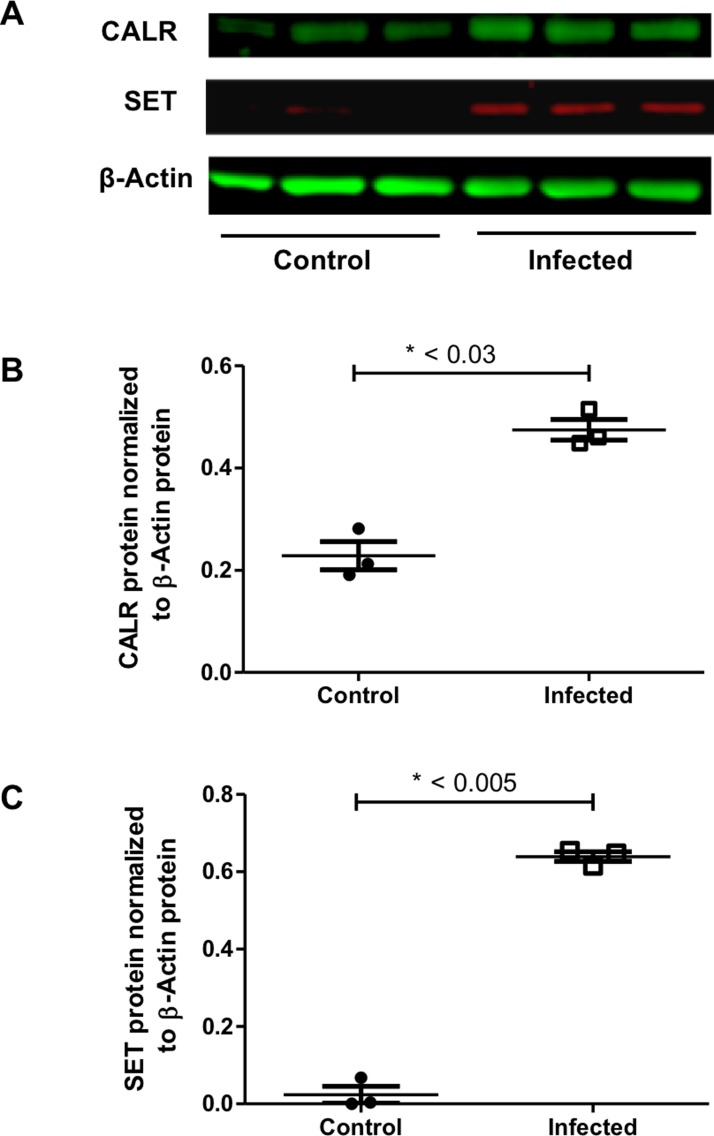
Aspergillus fumigatus (A. fumigatus) is a wide-spread fungus that is a potent allergen in hypersensitive individuals but also an opportunistic pathogen in immunocompromised patients. It reproduces asexually by releasing airborne conidiospores (conidia). Upon inhalation, fungal conidia are capable of reaching the airway epithelial cells (AECs) in bronchial and alveolar tissues. Previous studies have predominantly used submerged monolayer cultures for studying this host-pathogen interaction; however, these cultures do not recapitulate the mucocililary differentiation phenotype of the in vivo epithelium in the respiratory tract. Thus, the aim of this study was to use well-differentiated primary human bronchial epithelial cells (HBECs) grown at the air-liquid interface (ALI) to determine their transcriptomic and proteomic responses following interaction with A. fumigatus conidia. We visualized conidial interaction with HBECs using confocal laser scanning microscopy (CLSM), and applied NanoString nCounter and shotgun proteomics to assess gene expression changes in the human cells upon interaction with A. fumigatus conidia. Western blot analysis was used to assess the expression of top three differentially expressed proteins, CALR, SET and NUCB2. CLSM showed that, unlike submerged monolayer cultures, well-differentiated ALI cultures of primary HBECs were estimated to internalize less than 1% of bound conidia. Nevertheless, transcriptomic and proteomic analyses revealed numerous differentially expressed host genes; these were enriched for pathways including apoptosis/autophagy, translation, unfolded protein response and cell cycle (up-regulated); complement and coagulation pathways, iron homeostasis, nonsense mediated decay and rRNA binding (down-regulated). CALR and SET were confirmed to be up-regulated in ALI cultures of primary HBECs upon exposure to A. fumigatus via western blot analysis. Therefore, using transcriptomics and proteomics approaches, ALI models recapitulating the bronchial epithelial barrier in the conductive zone of the respiratory tract can provide novel insights to the molecular response of bronchial epithelial cells upon exposure to A. fumigatus conidia.
Overview
The claims and statistics of this paper haven’t been checked yet.
Free: it reads the open-access text and checks the first 5 claims that cite a source we can check. Create a free account to check every claim.
Integrity signals
Registry
Cites
Statistics
Figures
Verification
Claims the paper makes
The claims and statistics of this paper haven’t been checked yet.
Free: it reads the open-access text and checks the first 5 claims that cite a source we can check. Create a free account to check every claim.
Claims other papers make about this one
Each is checked against this paper’s own text: does it say what the citing paper says it does?
In the citing paper
“and (ii) the unique ability of germinating conidia to cross epithelia via an actin-mediated process in the absence of damage to the epithelial cell (Fig. 7).”
From Aspergillus fumigatus and Aspergillosis in 2019 (2019) · cites this paper as [227]
In the citing paper
“Importantly, recent in vivo studies in immunocompetent mice (226) and in primary human respiratory EC air-liquid cultures (204, 227) clearly demonstrated (i) the lack of phagocytic activity of ECs”
From Aspergillus fumigatus and Aspergillosis in 2019 (2019) · cites this paper as [227]
In the citing paper
“Importantly, recent in vivo studies in immunocompetent mice (226) and in primary human respiratory EC air-liquid cultures (204, 227) clearly demonstrated (i) the lack of phagocytic activity of ECs and (ii) the unique ability of germinating conidia to cross epithelia via an actin-mediated process in the absence of damage to the epithelial cell (Fig. 7).”
From Aspergillus fumigatus and Aspergillosis in 2019 (2019) · cites this paper as [227]
Self-check
Percentages, sums and reported differences re-computed from the paper’s own numbers.
The self-check needs the paper’s full text.
Citations
Cites
Gene Ontology: tool for the unification of biology
Ashburner, M., Ball, C. A., Blake, J. A., Botstein, D., Butler, H., Cherry, J. M., Davis, A. P., Dolinski, K., Dwight, S. S., Eppig, J. T., et al. (2000) · Nature Genetics · doi:10.1038/75556 · Cited by 43,206
Enrichr: a comprehensive gene set enrichment analysis web server 2016 update
Kuleshov, M. V., Jones, M. R., Rouillard, A. D., Fernandez, N. F., Duan, Q., Wang, Z., Koplev, S., Jenkins, S. L., Jagodnik, K. M., Lachmann, A., et al. (2016) · Nucleic Acids Research · doi:10.1093/nar/gkw377 · Cited by 10,799
Enrichr: interactive and collaborative HTML5 gene list enrichment analysis tool
Chen, E. Y., Tan, C. M., Kou, Y., Duan, Q., Wang, Z., Meirelles, G. V., Clark, N. R., & Ma’ayan, A. (2013) · BMC Bioinformatics · doi:10.1186/1471-2105-14-128 · Cited by 7,814
Bindea, G., Mlecnik, B., Hackl, H., Charoentong, P., Tosolini, M., Kirilovsky, A., Fridman, W.-H., Pagès, F., Trajanoski, Z., & Galon, J. (2009) · Bioinformatics · doi:10.1093/bioinformatics/btp101 · Cited by 6,280
Causal analysis approaches in Ingenuity Pathway Analysis
Krämer, A., Green, J., Pollard, J., & Tugendreich, S. (2014) · Bioinformatics · doi:10.1093/bioinformatics/btt703 · Cited by 5,724
Rappsilber, J., Mann, M., & Ishihama, Y. (2007) · Nature Protocols · doi:10.1038/nprot.2007.261 · Cited by 4,641
The unfolded protein response: controlling cell fate decisions under ER stress and beyond
Hetz, C. (2012) · Nature Reviews Molecular Cell Biology · doi:10.1038/nrm3270 · Cited by 4,093
Global and Multi-National Prevalence of Fungal Diseases-Estimate Precision
Bongomin, F., Gago, S., Oladele, R., & Denning, D. (2017) · Journal of Fungi · doi:10.3390/jof3040057 · Cited by 2,953
Aspergillus fumigatus and Aspergillosis
Latgé, J.-P. (1999) · Clinical Microbiology Reviews · doi:10.1128/cmr.12.2.310 · Cited by 2,307
TEER Measurement Techniques for In Vitro Barrier Model Systems
Srinivasan, B., Kolli, A. R., Esch, M. B., Abaci, H. E., Shuler, M. L., & Hickman, J. J. (2015) · SLAS Technology · doi:10.1177/2211068214561025 · Cited by 2,145
ER stress-induced cell death mechanisms
Sano, R., & Reed, J. C. (2013) · Biochimica et Biophysica Acta (BBA) - Molecular Cell Research · doi:10.1016/j.bbamcr.2013.06.028 · Cited by 1,988
Expansion of the Gene Ontology knowledgebase and resources
The Gene Ontology Consortium (2017) · Nucleic Acids Research · doi:10.1093/nar/gkw1108 · Cited by 1,850
CluePedia Cytoscape plugin: pathway insights using integrated experimental and in silico data
Bindea, G., Galon, J., & Mlecnik, B. (2013) · Bioinformatics · doi:10.1093/bioinformatics/btt019 · Cited by 1,061
Pathogenesis of Aspergillus fumigatus in Invasive Aspergillosis
Dagenais, T. R. T., & Keller, N. P. (2009) · Clinical Microbiology Reviews · doi:10.1128/cmr.00055-08 · Cited by 993
Unbiased quantitative proteomics of lipid rafts reveals high specificity for signaling factors
Foster, L. J., de Hoog, C. L., & Mann, M. (2003) · Proceedings of the National Academy of Sciences · doi:10.1073/pnas.0631608100 · Cited by 834
Self-citationBroncho-pulmonary Aspergillosis : A Review and a Report of Eight New Cases
Hinson, K. F. W., Moon, A. J., & Plummer, N. S. (1952) · Thorax · doi:10.1136/thx.7.4.317 · Cited by 790
Mucociliary clearance in the airways.
Wanner, A., Salathé, M., & O'Riordan, T. G. (1996) · American Journal of Respiratory and Critical Care Medicine · doi:10.1164/ajrccm.154.6.8970383 · Cited by 731
Segal, B. H. (2009) · New England Journal of Medicine · doi:10.1056/nejmra0808853 · Cited by 661
The Clinical Spectrum of Pulmonary Aspergillosis
Soubani, A. O., & Chandrasekar, P. H. (2002) · Chest · doi:10.1378/chest.121.6.1988 · Cited by 594
Denning, D. W., Riniotis, K., Dobrashian, R., & Sambatakou, H. (2003) · Clinical Infectious Diseases · doi:10.1086/376526 · Cited by 554
Schrettl, M., Bignell, E., Kragl, C., Joechl, C., Rogers, T., Arst, H. N., Haynes, K., & Haas, H. (2004) · The Journal of Experimental Medicine · doi:10.1084/jem.20041242 · Cited by 493
Autophagy and apoptosis: what is the connection?
Gump, J. M., & Thorburn, A. (2011) · Trends in Cell Biology · doi:10.1016/j.tcb.2011.03.007 · Cited by 492
Aspergillus fumigatus—What Makes the Species a Ubiquitous Human Fungal Pathogen?
Kwon-Chung, K. J., & Sugui, J. A. (2013) · PLoS Pathogens · doi:10.1371/journal.ppat.1003743 · Cited by 432
Sugimoto, M. A., Vago, J. P., Teixeira, M. M., & Sousa, L. P. (2016) · Journal of Immunology Research · doi:10.1155/2016/8239258 · Cited by 414
The Transcription Factor c-Maf Controls the Production of Interleukin-4 but Not Other Th2 Cytokines
Kim, J. I., Ho, I.-C., Grusby, M. J., & Glimcher, L. H. (1999) · Immunity · doi:10.1016/s1074-7613(00)80073-4 · Cited by 382
Kauffman, H. F., Tomee, J. F. C., van de Riet, M. A., Timmerman, A. J. B., & Borger, P. (2000) · Journal of Allergy and Clinical Immunology · doi:10.1067/mai.2000.106210 · Cited by 359
Regulation and function of the human HSP90AA1 gene
Zuehlke, A. D., Beebe, K., Neckers, L., & Prince, T. (2015) · Gene · doi:10.1016/j.gene.2015.06.018 · Cited by 347
Karp, P. H., Moninger, T. O., Weber, S. P., Nesselhauf, T. S., Launspach, J. L., Zabner, J., & Welsh, M. J. (2003) · Epithelial Cell Culture Protocols · doi:10.1385/1-59259-185-x:115 · Cited by 342
The ins and outs of calreticulin: from the ER lumen to the extracellular space
Johnson, S. (2001) · Trends in Cell Biology · doi:10.1016/s0962-8924(01)01926-2 · Cited by 336
Large-scale identification of ubiquitination sites by mass spectrometry
Udeshi, N. D., Mertins, P., Svinkina, T., & Carr, S. A. (2013) · Nature Protocols · doi:10.1038/nprot.2013.120 · Cited by 296
Theil, E. C. (2004) · Annual Review of Nutrition · doi:10.1146/annurev.nutr.24.012003.132212 · Cited by 292
Allergic bronchopulmonary aspergillosis in cystic fibrosis
Laufer, P., Fink, J. N., Bruns, W. T., Unger, G. F., Kalbfleisch, J. H., Greenberger, P. A., & Patterson, R. (1984) · Journal of Allergy and Clinical Immunology · doi:10.1016/0091-6749(84)90482-2 · Cited by 278
Mery, L., Mesaeli, N., Michalak, M., Opas, M., Lew, D. P., & Krause, K.-H. (1996) · Journal of Biological Chemistry · doi:10.1074/jbc.271.16.9332 · Cited by 271
The airway epithelium: more than just a structural barrier
Tam, A., Wadsworth, S., Dorscheid, D., Man, S. F. P., & Sin, D. D. (2011) · Therapeutic Advances in Respiratory Disease · doi:10.1177/1753465810396539 · Cited by 245
Self-citationHissen, A. H. T., Wan, A. N. C., Warwas, M. L., Pinto, L. J., & Moore, M. M. (2005) · Infection and Immunity · doi:10.1128/iai.73.9.5493-5503.2005 · Cited by 243
Self-citationEvaluation of Differentiated Human Bronchial Epithelial Cell Culture Systems for Asthma Research
Stewart, C. E., Torr, E. E., Mohd Jamili, N. H., Bosquillon, C., & Sayers, I. (2012) · Journal of Allergy · doi:10.1155/2012/943982 · Cited by 215
Allergic Bronchopulmonary Aspergillosis in Asthma and Cystic Fibrosis
Knutsen, A. P., & Slavin, R. G. (2011) · Clinical and Developmental Immunology · doi:10.1155/2011/843763 · Cited by 209
Koltsida, O., Hausding, M., Stavropoulos, A., Koch, S., Tzelepis, G., Übel, C., Kotenko, S. V., Sideras, P., Lehr, H. A., Tepe, M., et al. (2011) · EMBO Molecular Medicine · doi:10.1002/emmm.201100142 · Cited by 207
Tomee, J. F. C., Wierenga, A. T. J., Hiemstra, P. S., & Kauffman, H. F. (1997) · The Journal of Infectious Diseases · doi:10.1086/517272 · Cited by 201
Control of gene expression through the nonsense-mediated RNA decay pathway
Nickless, A., Bailis, J. M., & You, Z. (2017) · Cell & Bioscience · doi:10.1186/s13578-017-0153-7 · Cited by 196
The innate immune response to Aspergillus fumigatus
Balloy, V., & Chignard, M. (2009) · Microbes and Infection · doi:10.1016/j.micinf.2009.07.002 · Cited by 188
Wasylnka, J. A., & Moore, M. M. (2002) · Infection and Immunity · doi:10.1128/iai.70.6.3156-3163.2002 · Cited by 188
Self-citationNovel Roles for Caspase-8 in IL-1β and Inflammasome Regulation
Gurung, P., & Kanneganti, T.-D. (2015) · The American Journal of Pathology · doi:10.1016/j.ajpath.2014.08.025 · Cited by 179
Beresford, P. J., Zhang, D., Oh, D. Y., Fan, Z., Greer, E. L., Russo, M. L., Jaju, M., & Lieberman, J. (2001) · Journal of Biological Chemistry · doi:10.1074/jbc.m108137200 · Cited by 178
Sources and incidence of airborne Aspergillus fumigatus (Fres)
MULLINS, J., HARVEY, R., & SEATON, A. (1976) · Clinical & Experimental Allergy · doi:10.1111/j.1365-2222.1976.tb01899.x · Cited by 177
Xu, X., Xiong, X., & Sun, Y. (2016) · Science China Life Sciences · doi:10.1007/s11427-016-0018-0 · Cited by 168
Allergic bronchopulmonary aspergillosis and the evaluation of the patient with asthma
Greenberger, P. A., & Patterson, R. (1988) · Journal of Allergy and Clinical Immunology · doi:10.1016/0091-6749(88)91034-2 · Cited by 166
Aspergillus fumigatus conidia survive and germinate in acidic organelles of A549 epithelial cells
Wasylnka, J. A., & Moore, M. M. (2003) · Journal of Cell Science · doi:10.1242/jcs.00329 · Cited by 161
Self-citationHuman primary bronchial lung cell constructs: The new respiratory models
BéruBé, K., Prytherch, Z., Job, C., & Hughes, T. (2010) · Toxicology · doi:10.1016/j.tox.2010.04.004 · Cited by 158
Forbes, B., Shah, A., Martin, G. P., & Lansley, A. B. (2003) · International Journal of Pharmaceutics · doi:10.1016/s0378-5173(03)00129-7 · Cited by 156
Internalization of Aspergillus fumigatus conidia by epithelial and endothelial cells
Paris, S., Boisvieux-Ulrich, E., Crestani, B., Houcine, O., Taramelli, D., Lombardi, L., & Latgé, J. P. (1997) · Infection and Immunity · doi:10.1128/iai.65.4.1510-1514.1997 · Cited by 149
Borger, P., Koëter, G. H., Timmerman, J. A. B., Vellenga, E., Tomee, J. F. C., & Kauffman, H. F. (1999) · The Journal of Infectious Diseases · doi:10.1086/315027 · Cited by 146
Interactions of Aspergillus fumigatus Conidia with Airway Epithelial Cells: A Critical Review
Croft, C. A., Culibrk, L., Moore, M. M., & Tebbutt, S. J. (2016) · Frontiers in Microbiology · doi:10.3389/fmicb.2016.00472 · Cited by 142
Self-citationBen‐Ami, R., Lewis, R. E., & Kontoyiannis, D. P. (2010) · British Journal of Haematology · doi:10.1111/j.1365-2141.2010.08283.x · Cited by 133
The Opportunistic Human Pathogenic Fungus Aspergillus fumigatus Evades the Host Complement System
Behnsen, J., Hartmann, A., Schmaler, J., Gehrke, A., Brakhage, A. A., & Zipfel, P. F. (2008) · Infection and Immunity · doi:10.1128/iai.01037-07 · Cited by 116
Sun, W., Lu, X., Li, X., Sun, Q.-Y., Su, X., Song, Y., Sun, H., & Shi, Y. P. (2012) · European Journal of Clinical Microbiology & Infectious Diseases · doi:10.1007/s10096-012-1624-8 · Cited by 112
A pathologic study of allergic bronchopulmonary aspergillosis
Slavin, R. G., BEDROSSIAN, C. W. M., Hutcheson, P. S., Pittman, S., Salinas‐Madrigal, L., Tsai, C. C., & Gleich, G. J. (1988) · Journal of Allergy and Clinical Immunology · doi:10.1016/0091-6749(88)91044-5 · Cited by 110
Molecular mechanism of Aspergillus fumigatus adherence to host constituents
Sheppard, D. C. (2011) · Current Opinion in Microbiology · doi:10.1016/j.mib.2011.07.006 · Cited by 103
Epithelial Cell Culture Protocols
Wise, C. (2002) · Humana Press eBooks · doi:10.1385/159259185x · Cited by 102
Balloy, V., Sallenave, J.-M., Wu, Y., Touqui, L., Latgé, J.-P., Si-Tahar, M., & Chignard, M. (2008) · Journal of Biological Chemistry · doi:10.1074/jbc.m803149200 · Cited by 102
Antosiewicz, J., Ziolkowski, W., Kaczor, J. J., & Herman-Antosiewicz, A. (2007) · Free Radical Biology and Medicine · doi:10.1016/j.freeradbiomed.2007.04.023 · Cited by 102
Wasylnka, J. A., & Moore, M. M. (2000) · Infection and Immunity · doi:10.1128/iai.68.6.3377-3384.2000 · Cited by 100
Self-citationAntimicrobial and immunoregulatory properties of human tryptophan 2,3‐dioxygenase
Schmidt, S. K., Müller, A., Heseler, K., Woite, C., Spekker, K., MacKenzie, C. R., & Däubener, W. (2009) · European Journal of Immunology · doi:10.1002/eji.200939535 · Cited by 99
Interaction of the pathogenic mold Aspergillus fumigatus with lung epithelial cells
Osherov, N. (2012) · Frontiers in Microbiology · doi:10.3389/fmicb.2012.00346 · Cited by 96
Systematic evaluation of medium-throughput mRNA abundance platforms
Prokopec, S. D., Watson, J. D., Waggott, D. M., Smith, A. B., Wu, A. H., Okey, A. B., Pohjanvirta, R., & Boutros, P. C. (2013) · RNA · doi:10.1261/rna.034710.112 · Cited by 87
Becker, K. L., Gresnigt, M. S., Smeekens, S. P., Jacobs, C. W., Magis‐Escurra, C., Jaeger, M., Wang, X., Lubbers, R., Oosting, M., Joosten, L. A. B., et al. (2015) · Clinical & Experimental Allergy · doi:10.1111/cea.12354 · Cited by 83
Interaction of airway epithelial cells (A549) with spores and mycelium of Aspergillus fumigatus
Zhang, Z., Liu, R., Noordhoek, J. A., & Kauffman, H. F. (2005) · Journal of Infection · doi:10.1016/j.jinf.2004.12.012 · Cited by 82
Binding and Germination of Aspergillus fumigatus Conidia on Cultured A549 Pneumocytes
DeHart, D. J., Agwu, D. E., Julian, N. C., & Washburn, R. G. (1997) · Journal of Infectious Diseases · doi:10.1093/infdis/175.1.146 · Cited by 82
Estradiol Increases Mucus Synthesis in Bronchial Epithelial Cells
Tam, A., Wadsworth, S. J., Dorscheid, D. R., Man, S.-F. P., & Sin, D. D. (2014) · PLoS ONE · doi:10.1371/journal.pone.0100633 · Cited by 80
Self-citationFirst Line of Defense: Innate Cell-Mediated Control of Pulmonary Aspergillosis
Espinosa, V., & Rivera, A. (2016) · Frontiers in Microbiology · doi:10.3389/fmicb.2016.00272 · Cited by 77
Bellanger, A.-P., Millon, L., Khoufache, K., Rivollet, D., Bièche, I., Laurendeau, I., Vidaud, M., Botterel, F., & Bretagne, S. (2009) · Journal of Medical Microbiology · doi:10.1099/jmm.0.005488-0 · Cited by 71
The Mysterious Ways of the Chemokine CXCL5
Koltsova, E. K., & Ley, K. F. (2010) · Immunity · doi:10.1016/j.immuni.2010.07.012 · Cited by 70
Phagocytosis of Aspergillus fumigatus conidia by primary nasal epithelial cells in vitro
Botterel, F., Gross, K., Ibrahim-Granet, O., Khoufache, K., Escabasse, V., Coste, A., Cordonnier, C., Escudier, E., & Bretagne, S. (2008) · BMC Microbiology · doi:10.1186/1471-2180-8-97 · Cited by 70
Oosthuizen, J. L., Gomez, P., Ruan, J., Hackett, T. L., Moore, M. M., Knight, D. A., & Tebbutt, S. J. (2011) · PLoS ONE · doi:10.1371/journal.pone.0020527 · Cited by 69
Self-citationHan, X., Yu, R., Zhen, D., Tao, S., Schmidt, M., & Han, L. (2011) · PLoS ONE · doi:10.1371/journal.pone.0021468 · Cited by 62
Role of Neutrophils in Invasive Aspergillosis ▿
Feldmesser, M. (2006) · Infection and Immunity · doi:10.1128/iai.01551-06 · Cited by 57
Aspergillus fumigatus conidia induce interferon-β signalling in respiratory epithelial cells
Beisswenger, C., Hess, C., & Bals, R. (2012) · European Respiratory Journal · doi:10.1183/09031936.00096110 · Cited by 56
Chen, F., Zhang, C., Jia, X., Wang, S., Wang, J., Chen, Y., Zhao, J., Tian, S., Han, X., & Han, L. (2015) · PLOS ONE · doi:10.1371/journal.pone.0135720 · Cited by 52
Gomez, P., Hackett, T. L., Moore, M. M., Knight, D. A., & Tebbutt, S. J. (2010) · BMC Genomics · doi:10.1186/1471-2164-11-358 · Cited by 52
Self-citationSystems Biology Approaches for Host–Fungal Interactions: An Expanding Multi-Omics Frontier
Culibrk, L., Croft, C. A., & Tebbutt, S. J. (2016) · OMICS: A Journal of Integrative Biology · doi:10.1089/omi.2015.0185 · Cited by 48
Self-citationJia, X., Chen, F., Pan, W., Yu, R., Tian, S., Han, G., Fang, H., Wang, S., Zhao, J., Li, X., et al. (2014) · Microbes and Infection · doi:10.1016/j.micinf.2014.03.001 · Cited by 41
POLARIZED CULTURES OF HUMAN AIRWAY EPITHELIUM FROM NASAL SCRAPINGS AND BRONCHIAL BRUSHINGS
Lopez-Souza, N., Avila, P. C., & Widdicombe, J. H. (2003) · In Vitro Cellular & Developmental Biology - Animal · doi:10.1290/1543-706x(2003)039<0266:pcohae>2.0.co;2 · Cited by 41
Cozens, D., Grahame, E., Sutherland, E., Taylor, G., Berry, C. C., & Davies, R. L. (2018) · Scientific Reports · doi:10.1038/s41598-017-19079-y · Cited by 39
Aldajani, W. A., Salazar, F., Sewell, H. F., Knox, A. J., & Ghaemmaghami, A. M. (2016) · Oncotarget · doi:10.18632/oncotarget.11586 · Cited by 37
Sharon, H., Amar, D., Levdansky, E., Mircus, G., Shadkchan, Y., Shamir, R., & Osherov, N. (2011) · PLoS ONE · doi:10.1371/journal.pone.0017509 · Cited by 35
Glycosylation and annexin II cell surface translocation mediate airway epithelial wound repair
Patchell, B. J., Wojcik, K. R., Yang, T.-L., White, S. R., & Dorscheid, D. R. (2007) · American Journal of Physiology-Lung Cellular and Molecular Physiology · doi:10.1152/ajplung.00412.2006 · Cited by 35
Self-citationAlbright, C. D., Jones, R. T., Hudson, E. A., Fontana, J. A., Trump, B. F., & Resau, J. H. (1990) · Cell Biology and Toxicology · doi:10.1007/bf00120804 · Cited by 29
Khoufache, K., Cabaret, O., Farrugia, C., Rivollet, D., Alliot, A., Allaire, E., Cordonnier, C., Bretagne, S., & Botterel, F. (2010) · Medical Mycology · doi:10.3109/13693786.2010.496119 · Cited by 28
30 years of battling the cell wall
Latgé, J. P. (2016) · Medical Mycology · doi:10.1093/mmy/myw076 · Cited by 27
Fekkar, A., Balloy, V., Pionneau, C., Marinach-Patrice, C., Chignard, M., & Mazier, D. (2012) · The Journal of Infectious Diseases · doi:10.1093/infdis/jis031 · Cited by 25
Kalniņa, Z., Siliņa, K., Brüvere, R., Gabruševa, N., Stengrēvics, A., Barnikol-Watanabe, S., Leja, M., & Linē, A. (2009) · European Journal of Histochemistry · doi:10.4081/ejh.2009.e2 · Cited by 24
Xu, J., Singhera, G. K., & Dorscheid, D. R. (2015) · Respiratory Research · doi:10.1186/s12931-015-0177-7 · Cited by 23
Self-citationRammaert, B., Jouvion, G., de Chaumont, F., Garcia-Hermoso, D., Szczepaniak, C., Renaudat, C., Olivo-Marin, J.-C., Chrétien, F., Dromer, F., & Bretagne, S. (2015) · The American Journal of Pathology · doi:10.1016/j.ajpath.2015.04.027 · Cited by 22
Reference gene stability in peripheral blood mononuclear cells determined by qPCR and NanoString
Radke, L., Giese, C., Lubitz, A., Hinderlich, S., Sandig, G., Hummel, M., & Frohme, M. (2014) · Microchimica Acta · doi:10.1007/s00604-014-1221-x · Cited by 20
Steube, K. G., Meyer, C., Uphoff, C. C., & Drexler, H. G. (2003) · In Vitro Cellular & Developmental Biology - Animal · doi:10.1290/0308057 · Cited by 18
Host Soluble Mediators: Defying the Immunological Inertness of Aspergillus fumigatus Conidia
Wong, S. S. W., & Aimanianda, V. (2017) · Journal of Fungi · doi:10.3390/jof4010003 · Cited by 17
Kalniņa, Z., Siliņa, K., Brüvere, R., Gabruševa, N., Stengrēvics, A., Barnikol-Watanabe, S., Leja, M., & Linē, A. (2009) · European Journal of Histochemistry · doi:10.4081/ejh.2009.7 · Cited by 16
Research works printed but not linked: 2
- Wasylnka JA, Moore MM. Uptake of Aspergillus fumigatus Conidia by Phagocytic and Nonphagocytic Cells In Vitro: Quantitation Using Strains Expressing Green Fluorescent Protein. Infect Immun. 2002 6; 70(6): 3156– 63. 10.1128/IAI.70.6.3156-3163.2002 12011010 PMC127978 · DOI · Paper page
- Zheng J, Zuo J, Han Y, Zhang L, Yan L, Shen L, et al Gliotoxin produced by Aspergillus fumigatus induces apoptosis of human bronchial epithelial cells via the Bcl-2 pathway. Int J Clin Exp Med. 2017 6 30; 10: 8854– 65.
Cited by
Aspergillus fumigatus and Aspergillosis in 2019
Latgé, J.-P., & Chamilos, G. (2019) · Clinical Microbiology Reviews · doi:10.1128/cmr.00140-18 · Cited by 1,400
Ball, B., Bermas, A., Carruthers‐Lay, D., & Geddes‐McAlister, J. (2019) · Journal of Fungi · doi:10.3390/jof5020052 · Cited by 67
Arunachalam, D., Ramanathan, S. M., Menon, A., Madhav, L., Ramaswamy, G., Prajna, N. V., Lalitha, P., & Dharmalingam, K. (2022) · BMC Genomics · doi:10.1186/s12864-021-08218-5 · Cited by 54
In vitroinfection models to study fungal–host interactions
Last, A., Maurer, M., Mosig, A. S., Gresnigt, M. S., & Hube, B. (2021) · FEMS Microbiology Reviews · doi:10.1093/femsre/fuab005 · Cited by 49
Development of lung tissue models and their applications
Petpiroon, N., Netkueakul, W., Sukrak, K., Wang, C., Liang, Y. T., Wang, M., Liu, Y., Li, Q., Kamran, R., Naruse, K., et al. (2023) · Life Sciences · doi:10.1016/j.lfs.2023.122208 · Cited by 44
Metadata
- Authors
- Toor, A., Culibrk, L., Singhera, G. K., Moon, K.-M., Prudova, A., Foster, L. J., Moore, M. M., Dorscheid, D. R., & Tebbutt, S. J.
- Affiliations
- University of British Columbia (CA)
- Simon Fraser University (CA)
- Corresponding author
- Tebbutt, Scott J.
- ORCID
- Venue
- PLOS ONE
- Publisher
- Public Library of Science (PLoS)
- Published
- 2018-12-27
- Volume
- 13
- Issue
- 12
- Pages
- e0209652
- ISSN
- 1932-6203 (ISSN-L)
- PMC
- PMC6307744
- OpenAlex
- W2907002983
- Cited by
- 32
- References
- 96
- Citations by year
- 2026: 3 · 2025: 3 · 2024: 1 · 2023: 3 · 2022: 4 · 2021: 8 · 2020: 7 · 2019: 3
- FWCI
- 3.40
- Type
- journal article
- Language
- en
- Open access
- gold
- doi.org
- Licence
- Locations
- PLoS ONE (publishedVersion, cc-by)
- Europe PMC (PubMed Central) (publishedVersion, cc-by)
- PubMed Central (publishedVersion, cc-by)
- PubMed (publishedVersion)
- DOAJ (DOAJ: Directory of Open Access Journals) (submittedVersion, cc-by-sa)
- Figshare (submittedVersion, cc-by)
- Funders
- BC Proteomics Network
- Natural Sciences and Engineering Research Council of Canada (RGPIN-2015-05043)
- Topics
- Health Sciences › Medicine › Infectious Diseases › Antifungal resistance and susceptibility
- Life Sciences › Biochemistry, Genetics and Molecular Biology › Molecular Biology › Fungal and yeast genetics research
- Health Sciences › Medicine › Pulmonary and Respiratory Medicine › Asthma and respiratory diseases
- Keywords
- Aspergillus fumigatus, fungal conidia, host-pathogen interaction, air-liquid interface, human bronchial epithelial cells, epithelial barrier function, transcriptomics, proteomics, calreticulin, sets, NUCB2, unfolded protein response, complement and coagulation pathways, iron homeostasis
- MeSH terms
- Aspergillosis, Aspergillus fumigatus, Humans, Spores, Fungal, Computational Biology, Proteome, Respiratory Mucosa, Gene Expression Profiling, Proteomics, Host-Pathogen Interactions, Transcriptome, Gene Ontology
About these checks
Registry, retraction, Cites and statistics results are computed, not judged, with one exception: a printed reference that no index lists is read once by a model before it counts as a citation error. Claims are extracted by a model and kept only when their quote appears verbatim in the text; each cited source is then checked, with a model’s help, for whether it says what the claim relies on. Those verdicts can be wrong — read the claim’s quote and the cited source before relying on one.
Statistics and arithmetic are recomputed, not judged.
Confidence bands are shown only for fields calibrated on our annotated test set. None is calibrated yet, so no band is shown.
What counts as a claim ›How we measure confidence ›How we check this ›
Are you an author, or do you see a problem with this page? Request a review
Data sources
Bibliographic data: Semantic Scholar, OpenAlex, Crossref.
Contains information from the Semantic Scholar Academic Graph Datasets, made available under the ODC Attribution License (ODC-BY 1.0).
Semantic Scholar’s data is described in: Kinney, R., et al. (2023). The Semantic Scholar Open Data Platform. arXiv:2301.10140.
