

Emotion regulation in patients with somatic symptom and related disorders: A systematic review
Open accessThe DOI matches its Crossref record; 158 of the 160 references it cites were found in a registry or an index, and 2 are not checked yet.
Abstract
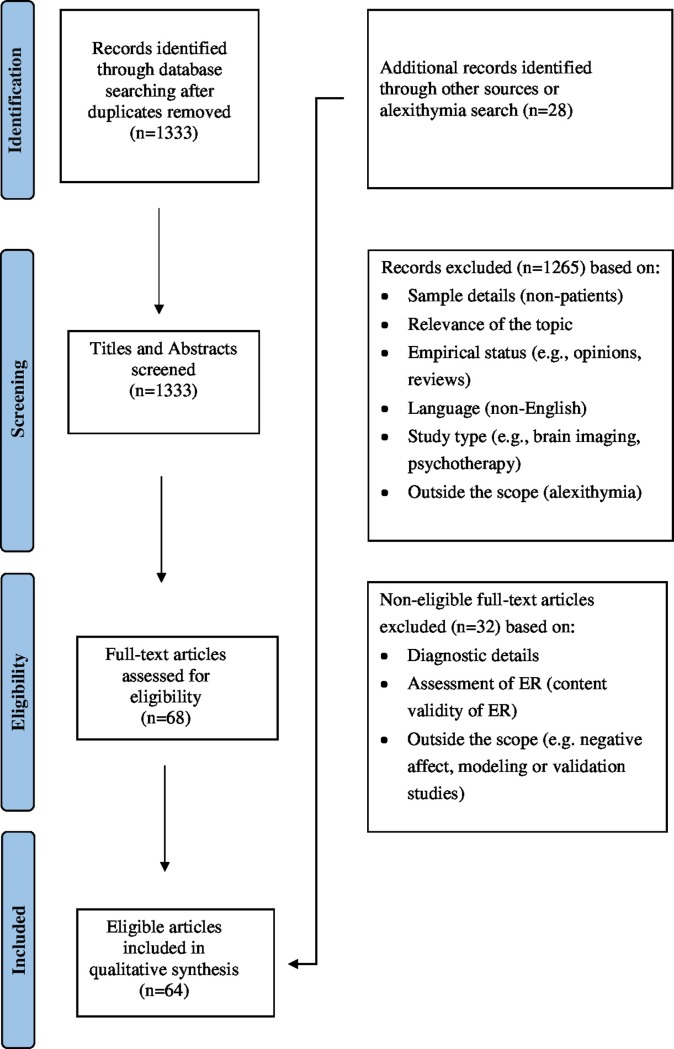
BACKGROUND: Somatic symptoms and related disorders (SSD) are prevalent phenomena in the health-care system. Disturbances in emotion regulation (ER) are commonly observed in patients suffering from SSD. OBJECTIVES: This review aimed to examine ER processes that characterize SSD by a systematic analysis of the available empirical studies. DATA SOURCES: PsycINFO and PubMed databases for the articles published between January 1985 and June 2018. SEARCH TERMS: "emotion/al regulation" or "affect regulation" and various forms of SSD. STUDY ELIGIBILITY CRITERIA: Empirical studies that a) assigned adolescent or adult patients suffering from SSD based on a clinical diagnosis, and b) examined the relationship between ER and SSD, were included. STUDY SYNTHESIS METHODS: A tabular summary of the articles was generated according to study characteristics, study quality, variables, and findings. The findings were organized based on ER variables used in the articles and diagnoses of SSD, which were then re-organized under the main constituents of ER (attention, body, and knowledge). RESULTS: The findings of the 64 articles largely supported the association between SSD and disturbances in ER, which are usually shared by different diagnoses of SSD. The results indicate that patients show a reduced engagement with cognitive content of emotions. On the other hand, bodily constituents of ER seem to depict an over-reactive pattern. Similarly, the patients tend to encounter difficulties in flexibly disengaging their (spontaneous) attention from emotional material. LIMITATIONS: There is a scarcity of longitudinal designs, randomized controlled trials, experiments, and diary studies suited to investigate the short- and long-term causal relationship between ER and SSD. Symptoms of SSD and measures to assess emotion regulation are heterogeneous. CONCLUSIONS AND IMPLICATIONS: Assessment of ER processes is potentially useful to understand SSD and for treatment planning. Furthermore, a concurrent investigation of the dynamic interaction of the ER modalities promises insights for better understanding of the role of ER in development, course, and maintenance of SSD.
Overview
The claims and statistics of this paper haven’t been checked yet.
Free: it reads the open-access text and checks the first 5 claims that cite a source we can check. Create a free account to check every claim.
Integrity signals
Registry
Cites
Statistics
Figures
Verification
Claims the paper makes
The claims and statistics of this paper haven’t been checked yet.
Free: it reads the open-access text and checks the first 5 claims that cite a source we can check. Create a free account to check every claim.
Claims other papers make about this one
Each is checked against this paper’s own text: does it say what the citing paper says it does?
The source backs part of the claim, not all of it — or backs it for a different population, condition or comparison.
In the citing paper
“However, a concurrent somatoform disorder is accompanied by more severely altered body and brain structures related to increased hypervigilance and catastrophizing (62, 63).”
From The integration of yoga breathing techniques in cognitive behavioral therapy for post-traumatic stress disorder: A pragmatic randomized controlled trial (2023) · cites this paper as [63]
Experimental — accuracy not yet measuredThe source backs part of the claim, not all of it — or backs it for a different population, condition or comparison.
In the citing paper
“This increase in emotion regulation is crucial in patients with somatic complaints as a lack of emotional awareness and an overuse of maladaptive emotion regulation strategies are considered basic psychological liabilities of Somatic Symptom Disorder (Waller and Scheidt, 2004; Garnefski et al., 2017; Okur Güney et al., 2019).”
From Does the practice of mindfulness reduce somatic symptoms and COVID-19-related anxiety? A community-based survey (2022) · cites this paper as Okur Güney et al., 2019
Experimental — accuracy not yet measured
Self-check
Percentages, sums and reported differences re-computed from the paper’s own numbers.
The self-check needs the paper’s full text.
Citations
Cites
Diagnostic and Statistical Manual of Mental Disorders
Williams, J. B. W., & First, M. (2013) · Encyclopedia of Social Work · doi:10.1093/acrefore/9780199975839.013.104 · Cited by 109,519
Statistical Power Analysis for the Behavioral Sciences
Muller, K. (1989) · Technometrics · doi:10.1080/00401706.1989.10488618 · Cited by 99,167
Preferred Reporting Items for Systematic Reviews and Meta-Analyses: the PRISMA statement
Moher, D., Liberati, A., Tetzlaff, J., Altman, D. G., & for the PRISMA Group (2009) · BMJ · doi:10.1136/bmj.b2535 · Cited by 83,823
Statistical power analysis for the behavioral sciences
(1990) · Computers, Environment and Urban Systems · doi:10.1016/0198-9715(90)90050-4 · Cited by 65,269
Preferred Reporting Items for Systematic Reviews and Meta-Analyses: The PRISMA Statement
Moher, D., Liberati, A., Tetzlaff, J., Altman, D. G., & The PRISMA Group (2009) · PLoS Medicine · doi:10.1371/journal.pmed.1000097 · Cited by 64,042
Preferred reporting items for systematic reviews and meta-analyses: the PRISMA Statement.
(2009) · PubMed Central · Cited by 44,859
Wang, G., Ma, R., Qiao, G., Wada, K., Aizawa, Y., & Satoh, T. (2015) · Integrative Medicine International · doi:10.1159/000368408 · Cited by 18,657
The emerging field of emotion regulation: an integrative review
Gross, J. J. (1998) · Review of General Psychology · doi:10.1037/1089-2680.2.3.271 · Cited by 9,916
Gratz, K. L., & Roemer, L. (2004) · Journal of Psychopathology and Behavioral Assessment · doi:10.1023/b:joba.0000007455.08539.94 · Cited by 8,942
Diagnostic and Statistical Manual of Mental Disorders
Siegel, L. J., & Fletcher‐Janzem, E. (2008) · Encyclopedia of Special Education · doi:10.1002/9780470373699.speced0655 · Cited by 8,477
Research works printed but not linked: 3
- Witthöft M, Loch N, Jasper F. Somatoforme beschwerden und stile der emotionsregulation. = Somatoform symptoms and strategies of emotion regulation. Verhaltenstherapie & Verhaltensmedizin. 2013; 34: 444– 464.
- Henningsen Peter. Somatic Symptom Disorder and Illness Anxiety Disorder. The American Psychiatric Association Publishing (2019). pp. 305– 321.
- Freud S. Repression In Strachy J. (Ed. & Trans.), The standard edition of the complete works of Sigmund Freud (Vol. 14, pp. 143_160). London: Hogarth Press (Originally published 1915).; 1961.
Cited by
Interoceptive pathways to understand and treat mental health conditions
Nord, C. L., & Garfinkel, S. N. (2022) · Trends in Cognitive Sciences · doi:10.1016/j.tics.2022.03.004 · Cited by 199
“show reduced emotional awareness [115], suggesting a potential disposition for physical interpretations.”
Abbass, A., Town, J., Holmes, H., Luyten, P., Cooper, A., Russell, L., Lumley, M. A., Schubiner, H., Allinson, J., Bernier, D., et al. (2020) · Psychotherapy and Psychosomatics · doi:10.1159/000507738 · Cited by 75
“…helping the patient to somatically experience and process unconscious feelings to correct emotion dysregulation underlying somatic symptoms in FSD [12] while other methods such as Time Limited Dynamic Psychotherapy [13], Luborsky’s Supportive Expressive Therapy [14] and Malan’s Short-term Dynamic…”
Self-protection as an adaptive female strategy
Benenson, J. F., Webb, C. E., & Wrangham, R. W. (2021) · Behavioral and Brain Sciences · doi:10.1017/s0140525x21002417 · Cited by 76
Schnabel, K., Petzke, T. M., & Witthöft, M. (2022) · Clinical Psychology Review · doi:10.1016/j.cpr.2022.102196 · Cited by 61
Self-citationThe impact of traumatic childhood experiences on interoception: disregarding one’s own body
Schmitz, M., Back, S. N., Seitz, K. I., Harbrecht, N. K., Streckert, L., Schulz, A., Herpertz, S. C., & Bertsch, K. (2023) · Borderline Personality Disorder and Emotion Dysregulation · doi:10.1186/s40479-023-00212-5 · Cited by 65
Raugh, I. M., & Strauss, G. P. (2024) · Emotion · doi:10.1037/emo0001308 · Cited by 47
Maroti, D., Lumley, M. A., Schubiner, H., Lilliengren, P., Bileviciute-Ljungar, I., Ljótsson, B., & Johansson, R. (2022) · Journal of Psychosomatic Research · doi:10.1016/j.jpsychores.2022.111068 · Cited by 40
Maroti, D., Ek, J., Widlund, R.-M., Schubiner, H. H., Lumley, M. A., Lilliengren, P., Bilevičiūtė-Ljungar, I., Ljótsson, B., & Johansson, R. (2021) · Frontiers in Psychiatry · doi:10.3389/fpsyt.2021.620359 · Cited by 39
“Emotional processing of trauma, including engaging in emotional awareness, differentiation, disclosure, and expression, is commonly disturbed in SSD (26).”
Hechler, T. (2020) · Pain · doi:10.1097/j.pain.0000000000002099 · Cited by 32
“Recent studies showed that half of the parents of children with placing these parents at risk of both altered interoception and maladaptive ER.19,59 As parents are assumed to play a pivotal role in the development of interoception53 and ER,64 I postulate that altered parental interoception and maladaptive ER demonstra…”
BackgroundInfluentialWright, L. A., Roberts, N. P., Barawi, K., Simon, N. A., Zammit, S., McElroy, E., & Bisson, J. I. (2020) · Journal of Traumatic Stress · doi:10.1002/jts.22619 · Cited by 38
Bael, K. V., Scarfo, J., Suleyman, E., Katherveloo, J., Grimble, N., & Ball, M. (2024) · PLoS ONE · doi:10.1371/journal.pone.0310411 · Cited by 45
Corpas, J., Moriana, J. A., Martínez, J. F. V., & Gálvez‐Lara, M. (2021) · Psychotherapy Research · doi:10.1080/10503307.2021.1952331 · Cited by 31
“By contrast, and in line with the systematic review of Okur et al. (2019), it was predicted by the modification of the emotional regulation strategies.”
ResultFunctional somatic symptoms and emotion regulation in children and adolescents
Jungmann, S. M., Wagner, L., Klein, M., & Kaurin, A. (2022) · Clinical Psychology in Europe · doi:10.32872/cpe.4299 · Cited by 37
“Moreover, difficulties in emotion processing, expression, and regulation have been reported to be related to higher levels of FSS (Okur Güney et al., 2019; Schwarz et al., 2017).”
BackgroundEmotional Reactivity, Emotion Regulation, and Regulatory Choice in Somatic Symptom Disorder
Schnabel, K., Schulz, S. M., & Witthöft, M. (2022) · Psychosomatic Medicine · doi:10.1097/psy.0000000000001118 · Cited by 28
“A recent comprehensive review including 64 studies clearly supports a relationship between SSD and ER difficulties (26).”
BackgroundMewes, R., Feneberg, A. C., Doerr, J. M., & Nater, U. M. (2022) · Psychosomatic Medicine · doi:10.1097/psy.0000000000001006 · Cited by 19
Grigaitytė, I., & Söderberg, P. (2021) · Nordic Psychology · doi:10.1080/19012276.2021.1902845 · Cited by 24
Hennemann, S., Wenzel, M., den Bergh, O. V., Wessels, M., & Witthöft, M. (2023) · Journal of Psychosomatic Research · doi:10.1016/j.jpsychores.2023.111429 · Cited by 21
Haller, H., Mitzinger, D., & Cramer, H. (2023) · Frontiers in Psychiatry · doi:10.3389/fpsyt.2023.1101046 · Cited by 17
“However, a concurrent somatoform disorder is accompanied by more severely altered body and brain structures related to increased hypervigilance and catastrophizing (62, 63).”
BackgroundAbasi, I., Ghapanchi, A., Toussaint, A. C., Bitarafan, M., Zarabi, H., Derakhshan, F. S., Banihashem, S., Mohammadi, N., Ghasemzadeh, M. R., & Derakhshan, M. K. (2022) · General Hospital Psychiatry · doi:10.1016/j.genhosppsych.2022.04.010 · Cited by 21
Komasi, S., Hemmati, A., Rahmani, K., & Rezaei, F. (2023) · Scientific Reports · doi:10.1038/s41598-023-40545-3 · Cited by 20
“The PID-5 facets are less involved in the underlying psychopathology of somatoform disorders, including attachment style, emotional awareness and dysregulation, and alexithymia 57–61 .”
BackgroundFalahatdoost, M., Dolatshahi, B., Pourshahbaz, A., Dehghani, M., Yalguzaghaji, M., & Mohammadi, Z. (2020) · Journal of Education and Health Promotion · doi:10.4103/jehp.jehp_102_20 · Cited by 25
“[19,20] In other words, emotion regulation problems or other sorts of dysfunctional emotion regulation can potentially play a mediating role in the relationship between attachment types and health‐related problems.[21] A research by Kotler et al.”
BackgroundSomatic Symptom Disorder and Health Anxiety
Sauer, K. S., Witthöft, M., & Rief, W. (2023) · Neurologic Clinics · doi:10.1016/j.ncl.2023.02.009 · Cited by 22
Ifeagwazi, C. M., Nwokpoku, E. E., Chukwuorji, J. C., Eze, J. E., & Abiama, E. E. (2019) · International Journal of Prisoner Health · doi:10.1108/ijph-02-2019-0009 · Cited by 17
Heshmati, R., Azmoodeh, S., & Caltabiano, M. L. (2021) · The Journal of Nervous and Mental Disease · doi:10.1097/nmd.0000000000001323 · Cited by 20
“The exact mechanism underlying the association between experiential avoidance and somatic symptoms is not clear (Güney et al., 2019).”
BackgroundKreiter, D., Drukker, M., Mujagic, Z., Vork, L., Rutten, B. P. F., van Os, J., Masclee, A., Kruimel, J. W., & Leue, C. (2020) · Journal of Psychosomatic Research · doi:10.1016/j.jpsychores.2020.110351 · Cited by 19
Münker, L., Rimvall, M. K., Frostholm, L., Ørnbøl, E., Wellnitz, K. B., Jeppesen, P., Rosmalen, J. G. M., & Rask, C. U. (2024) · BMC Psychiatry · doi:10.1186/s12888-024-05937-3 · Cited by 22
Families With Violence Exposure and the Intergenerational Transmission of Somatization
Glaus, J., Moser, D. A., Serpa, S. R., Jouabli, S., Turri, F., Plessen, K. J., & Schechter, D. S. (2022) · Frontiers in Psychiatry · doi:10.3389/fpsyt.2022.820652 · Cited by 27
The Pain-Invalidation Scale: Measuring Patient Perceptions of Invalidation Toward Chronic Pain
Nicola, M., Correia, H., Ditchburn, G. J., & Drummond, P. D. (2022) · Journal of Pain · doi:10.1016/j.jpain.2022.06.008 · Cited by 13
Park, B., Lee, S., Jang, Y., & Park, H. Y. (2024) · Brain Behavior and Immunity · doi:10.1016/j.bbi.2024.02.017 · Cited by 12
Zhu, Z., Qi, X., Pei, Y., Wang, J., & Wu, B. (2023) · Aging & Mental Health · doi:10.1080/13607863.2022.2164253 · Cited by 10
Beliefs about emotions predict psychological stress related to somatic symptoms
Reininger, K. M., Biel, H. M., Hennig, T., Zitzmann, S., Weigel, A., Spitzer, C., Toussaint, A. C., & Löwe, B. (2023) · British Journal of Clinical Psychology · doi:10.1111/bjc.12438 · Cited by 14
Changes in interoceptive accuracy related to emotional interference in somatic symptom disorder
Lee, D., Kim, S. J., Cheon, J., Jung, Y., & Kang, J. I. (2024) · BMC Psychology · doi:10.1186/s40359-024-01778-7 · Cited by 17
“Accumulating research on somatoform disorders has consistently suggested impaired emotional regulation in subjects with somatoform disorders [46, 47].”
BackgroundHennemann, S., Witthöft, M., Kleinstäuber, M., Böhme, K., Baumeister, H., Ebert, D. D., & Probst, T. (2022) · Journal of Psychosomatic Research · doi:10.1016/j.jpsychores.2022.110761 · Cited by 10
Krivzov, J., Baert, F., Meganck, R., & Cornelis, S. (2020) · Journal of Counseling Psychology · doi:10.1037/cou0000529 · Cited by 13
Weigel, A., Dantoft, T. M., Jørgensen, T., Carstensen, T. B. W., Löwe, B., Weinman, J. A., & Frostholm, L. (2022) · Clinical Psychology in Europe · doi:10.32872/cpe.7739 · Cited by 10
“Firstly, the higher levels of neg ative cognitive representations and emotional reactions observed in individuals with functional disorders confirm previous research that perceptual, cognitive, and emotion regulation processes may play a more salient role in functional disorders as compared to well-defined physical il…”
BackgroundInfluentialThe Association of Emotion Regulation and Somatic Symptoms
Petzke, T. M., & Witthöft, M. (2024) · Psychosomatic Medicine · doi:10.1097/psy.0000000000001310 · Cited by 20
“Regarding the questionnaire measures, these diagnostic markers were correlated to ERQ-reappraisal, indicating that people with more symptoms use reappraisal less often or effectively in their daily lives, which is in line with findings by Okur Güney et al. (28) and Schnabel et al. (29).”
BackgroundResultTo feel is to heal—introduction to Emotional Awareness and Expression Therapy
Maroti, D., Frisch, S., & Lumley, M. A. (2025) · Der Schmerz · doi:10.1007/s00482-025-00878-6 · Cited by 12
Factors Associated With Placebo Treatment Response in Functional Dyspepsia Clinical Trials
Jones, M., Guthrie-Lyons, L., Sato, Y. A., & Talley, N. J. (2022) · The American Journal of Gastroenterology · doi:10.14309/ajg.0000000000002097 · Cited by 9
“A third possibility is that, given the association between functional dyspepsia and problems of emotion regulation (28), the attention and care offered during the conduct of the trial reduces attendant psychological morbidity and thereby the level of symptoms experienced.”
BackgroundMejía, N. G., Lommen, M. J. J., Ernst, A. F., & Castro-Camacho, L. (2024) · Journal of Affective Disorders Reports · doi:10.1016/j.jadr.2024.100756 · Cited by 10
Trautmann, S., Muehlhan, M., Berking, M., Miethe, S., Wigger, J., & Dragan, M. (2024) · British Journal of Clinical Psychology · doi:10.1111/bjc.12493 · Cited by 8
Park, H. Y., Jang, Y., Hong, A., Yoon, E., & Yoon, I. (2025) · Dialogues in Clinical Neuroscience · doi:10.1080/19585969.2025.2482123 · Cited by 6
“…such as heightened health anxiety, dysfunctional cognitive appraisal, and a self-concept of bodily weakness contributing to symptom manifestation (Okur Güney et al. 2019). studies suggest that patients with ssD may also exhibit altered autonomic reactivity, fronto-striatal circuit dysfunction,…”
Kang, S., Park, C. I., Kim, S. J., & Kang, J. I. (2025) · BMC Psychology · doi:10.1186/s40359-025-03087-z · Cited by 13
“Finally, the implementation of these strategies may increase fixation on physical symptoms and exacerbate functional impairments [7, 9].”
Pruessner, L., Hartmann, S., Ehmann, A.-L., Barnow, S., Bauer, U. M. M., & Helm, P. (2025) · JAMA Network Open · doi:10.1001/jamanetworkopen.2025.38813 · Cited by 8
Selvi, K. (2022) · Dusunen Adam The Journal of Psychiatry and Neurological Sciences · doi:10.14744/dajpns.2022.00167 · Cited by 7
Bahremand, M., & Komasi, S. (2022) · Frontiers in Psychology · doi:10.3389/fpsyg.2022.1011737 · Cited by 8
Modeling the Determinants of Subjective Well-Being in Schizophrenia
Jeong, J. H., Kim, J., Kang, N., Ahn, Y.-M., Kim, Y. S., Lee, D. H., & Kim, S. H. (2024) · Schizophrenia Bulletin · doi:10.1093/schbul/sbae156 · Cited by 5
Selvi, K., & Bozo, Ö. (2023) · Journal of Rational-Emotive & Cognitive-Behavior Therapy · doi:10.1007/s10942-023-00520-3 · Cited by 7
“Given the mixed results regarding the relationship between lack of awareness and somatic symptoms in the literature (see Okur Güney et al., 2019; Schnabel et al., 2022 for review studies), this finding might not be surprising.”
BackgroundResultInfluentialBautista, A., & Venta, A. C. (2024) · Journal of Affective Disorders · doi:10.1016/j.jad.2024.01.235 · Cited by 15
Unconscious Activation of Negative Emotional Memories Increases Pain Unpleasantness
Frisch, S., Walter, S., Rebhann, V., Gruss, S., Geisel, D., Bär, K., Gündel, H., Lane, R. D., & Smith, R. S. (2024) · Psychosomatic Medicine · doi:10.1097/psy.0000000000001315 · Cited by 6
Longitudinal qEEG changes correlate with clinical outcomes in patients with somatic symptom disorder
Hong, J. K., Park, H. Y., Yoon, I., & Jang, Y. E. (2021) · Journal of Psychosomatic Research · doi:10.1016/j.jpsychores.2021.110637 · Cited by 6
Yoo, S. D., & Park, E. J. (2022) · Journal of Clinical Medicine · doi:10.3390/jcm12010104 · Cited by 7
“Patients with somatic symptoms tend to have less parasympathetic activation during emotional tasks [43].”
BackgroundKrempel, L., Stricker, J., & Martin, A. (2023) · International Journal of Behavioral Medicine · doi:10.1007/s12529-023-10238-2 · Cited by 8
Seiffge‐Krenke, I., & Sattel, H. C. (2024) · Frontiers in Psychiatry · doi:10.3389/fpsyt.2024.1257403 · Cited by 13
Güney, Z. E. O., Cardone, D., Sattel, H. C., Ariens, S., Witthöft, M., Merla, A., Kuppens, P., & Henningsen, P. (2021) · Psychosomatic Medicine · doi:10.1097/psy.0000000000001032 · Cited by 8
“Based on previous research having underlined anger-regulation difficulties in patients experiencing chronic pain (11,48), we focused on an anger context.”
BackgroundA review on somatic symptoms and emotion regulation from a cultural perspective
Kaynar-Yaman, G. (2025) · Nordic Journal of Psychiatry · doi:10.1080/08039488.2025.2604652 · Cited by 6
“In most cases, multiple physical symptoms coexist, and this situation is often interlaced with the individual’s psychological state or stress factors in their social environment [18].”
Hüsing, P., Löwe, B., & Biedermann, S. V. (2025) · Journal of Psychosomatic Research · doi:10.1016/j.jpsychores.2025.112151 · Cited by 5
Sætren, S. S., Augusti, E., Myhre, M. C., & Hafstad, G. S. (2022) · European Child & Adolescent Psychiatry · doi:10.1007/s00787-022-01988-7 · Cited by 9
“Theoretical models [24, 25] as well as empirical studies [15] acknowledge that emotion dysregulation contributes to the development and progression of somatic symptoms.”
BackgroundInfluentialIri, H., Makvandi, B., Bakhtiarpour, S., & Hafezi, F. (2020) · Journal of Occupational Health and Epidemiology · doi:10.29252/johe.9.2.68 · Cited by 6
“Individuals sometimes suffer from emotional disorders due to some challenges faced in their life, which consequently threatens their emotional health and self-esteem [6, 7].”
BackgroundSomatic symptoms with psychogenic or psychiatric background: Characteristics and pitfalls
Akaishi, T., Abe, M., Masaura, A., Tanaka, J., Takayama, S., Onodera, K., Numata, T., Ishizawa, K., Suzuki, S., Ohsawa, M., et al. (2021) · Journal of Family Medicine and Primary Care · doi:10.4103/jfmpc.jfmpc_1100_20 · Cited by 4
“Journal of Family Medicine and Primary Care 1022 Volume 10 : Issue 2 : February 2021 illnesses.[5,6] The correct diagnosis of SSD is important not only to treat patients with anxiolytics but also to avoid overlooking non‐psychotic diseases that can otherwise be treated with proper therapeutic interventions.”
BackgroundFrisch, S., & Gündel, H. (2022) · Journal of Psychosomatic Research · doi:10.1016/j.jpsychores.2022.111132 · Cited by 6
Micheli, N., Porcelli, P., Barrault-Couchouron, M., & Dantzer, C. (2022) · Frontiers in Psychology · doi:10.3389/fpsyg.2022.996559 · Cited by 3
Maroti, D. (2025) · Frontiers in Psychiatry · doi:10.3389/fpsyt.2025.1481405 · Cited by 4
Putica, A., Agathos, J. A., & Felmingham, K. L. (2025) · Nature Reviews Psychology · doi:10.1038/s44159-025-00479-1 · Cited by 8
“cycle of heightened threat perception and symptom amplification that is characteristic of FND 67,203 .”
Türkel, N. N., Aksu, M. H., Ertek, İ. E., & Çoşar, B. (2025) · Psychiatry Investigation · doi:10.30773/pi.2024.0368 · Cited by 6
“45 This has been supported by neuroimaging studies conducted by Burklund et al., 46 which revealed that emotion labeling and reappraisal share common neural mechanisms.”
Psychosocial and Psychodynamic Considerations Informing Factitious Disorder
Dickerman, A. L., & Jimenez, X. F. (2023) · Psychodynamic Psychiatry · doi:10.1521/pdps.2023.51.1.98 · Cited by 3
Treur, R. M., Treur, J., & Koole, S. L. (2023) · Integrated science · doi:10.1007/978-3-031-27945-4_10 · Cited by 5
Ventura, L., Vindel, A. C., Muñoz‐Navarro, R., Barrio‐Martínez, S., Medrano, L. A., Moriana, J. A., Ruiz‐Rodríguez, P., Carpallo-González, M., & González‐Blanch, C. (2021) · Journal of Psychosomatic Research · doi:10.1016/j.jpsychores.2021.110573 · Cited by 5
Martínez-Soto, J., & Frausto, V. M. R. (2021) · Revista de Psicología · doi:10.18800/psico.202201.011 · Cited by 4
“…limitaciones del estudio se pueden mencionar algunos aspectos empíricos de relevancia a considerar, sobresaliendo la necesidad de tomar en cuenta algunas variables clínicas relacionadas el desarrollo, curso y adaptación psicológica de los pacientes con respecto a su enfermedad (Okur et al., 2019).”
BackgroundGhapanchi, A., Abasi, I., Rimes, K. A., Bitarafan, M., Zarabi, H., Derakhshan, F. S., Derakhshan, M. K., Ghanadanzadeh, S., Whitley, H., & Shamsi, A. (2023) · Iranian Journal of Psychiatry · doi:10.18502/ijps.v19i1.14343 · Cited by 3
“Another explanation could be that patients with SSD often have reduced mental awareness of emotions (43).”
BackgroundWeijters, R. M. M. M., Almela, M., Boxtel, G. J. M. V., & de Vroege, L. (2024) · Journal of Clinical and Experimental Neuropsychology · doi:10.1080/13803395.2024.2383282 · Cited by 3
“The most frequent symptoms include headaches, fatigue, exhaustion, pain in different body locations, and disturbances in organ systems (i.e., gastro-intestinal symptoms) (Güney et al., 2019; Henningsen et al., 2007).”
Funk, M., Reinke, M., Löwe, B., & Engelmann, P. (2025) · PLoS ONE · doi:10.1371/journal.pone.0317905 · Cited by 7
“Since prior studies repeatedly confirmed the association between emotion regulation deficits and persistent somatic symptoms [11,46], emotion recognition and regulation is also worth investigating in patients with Long COVID.”
Pitluk, M., Gabyzon, M. E., & Engelhard, E. S. (2021) · The Arts in Psychotherapy · doi:10.1016/j.aip.2021.101821 · Cited by 8
Theory of Mind in Somatization and Depression: Is It Cause or Phenomenon?
Çetin, Ş., Varma, G. S., Uğurlu, T. T., & Özdel, O. İ. (2021) · PubMed · doi:10.1097/nmd.0000000000001399 · Cited by 4
“It is indicated that individuals with somatoform disorder experience challenges in regulating emotions and drawing their attention away from emotional content, and it is thought that they fail to process the cognitive content of emotions (Okur-Güney et al. 2019).”
BackgroundSivandian, M., & Falahzade, H. (2025) · Journal of Education and Health Promotion · doi:10.4103/jehp.jehp_1358_23 · Cited by 5
Mersin, S., Kuş, İ., & Mercan, N. (2025) · Perspectives In Psychiatric Care · doi:10.1155/ppc/8533257 · Cited by 3
“Terefore, enhancing emotional awareness and understanding difculties in emotion regulation play a key role in reducing somatization [83].”
Somatic Symptom and Related Disorders and Mild Traumatic Brain Injury: A Systematic Review
Jobin, K., Wilson, A. J., King, R., Eliason, P., Galarneau, J.-M. F., Gilmour, G. S., & Debert, C. T. (2025) · Psychosomatic Medicine · doi:10.1097/psy.0000000000001427 · Cited by 2
Grounding in dance movement therapy for people with persistent physical complaints
Silva, F., Dokter, D., & Samaritter, R. (2025) · Body Movement and Dance in Psychotherapy · doi:10.1080/17432979.2025.2555226 · Cited by 2
Arpacı, R., Can, Z., & Tanrıverdi, D. (2025) · Journal of Rational-Emotive & Cognitive-Behavior Therapy · doi:10.1007/s10942-025-00609-x · Cited by 2
“The literature indicates that emotion regulation difficulties are associated with problems such as depression, anxiety, bipolar disorder, and somatization (Hofmann et al., 2012; Daros et al., 2021; De Prisco et al., 2023 ; Okur Güney et al., 2019).”
InfluentialSubjective and physiological reactivity to emotional stressors in somatic symptom disorder
Gitzen, H., Schmidt, J., & Martin, A. (2023) · International Journal of Psychophysiology · doi:10.1016/j.ijpsycho.2023.112273 · Cited by 2
Metzen, E., Nayyeri, M. D., Schäfer, R., Dinger, U., Franz, M., Seitz, R. J., & Rademacher, J. (2025) · NeuroImage · doi:10.1016/j.neuroimage.2025.121036 · Cited by 4
Somatic Symptom and Related Disorders in Children and Adolescents
Hulgaard, D. R., Tsang, K. K., Ibeziako, P. I., & Rask, C. U. (2020) · Elsevier eBooks · doi:10.1016/b978-0-12-818697-8.00035-2 · Cited by 4
Flores-Hens, M., Gálvez‐Lara, M., Vindel, A. C., & Moriana, J. A. (2024) · APUNTES DE PSICOLOGÍA · doi:10.55414/ap.v42i1.1545 · Cited by 1
“…del tratamiento en la variable de síntomas somatomorfos no correlacionaron con ningún cambio en las variables cognitivas ni estrategias de regulación, a pesar de que se ha establecido que la regulación emocional es un elemento importante en el mantenimiento de estos síntomas (Okur et al., 2019).”
BackgroundCharacteristics of patients with somatoform pain disorder
Barth, L., Baumbach, L., Hajek, A., Götzmann, L., Feiks, K., Rufer, M., Schwegler, K., Schwennen, B., Bernhardt, K., Wutzler, U., et al. (2024) · Journal of General and Family Medicine · doi:10.1002/jgf2.735 · Cited by 1
Pereira, M. G., Machado, A. M., Vilaça, M., Faria, S., Monteiro, I., & Santos, M. (2025) · Healthcare · doi:10.3390/healthcare13101151 · Cited by 3
“Individuals with somatic symptoms are more vulnerable to shortcomings in this process, particularly during the attention deployment stage, which hinders their ability to identify emotions, often leading to emotional suppression and avoidance of the emotional situation [20,22,23].”
Jang, Y., Yoon, E., Hong, A., & Park, H. Y. (2025) · Comprehensive Psychiatry · doi:10.1016/j.comppsych.2025.152626 · Cited by 2
Mejía, N. G., Castro-Camacho, L., Daniels, J. K., Ernst, A. F., Timmerman, M. E., & Lommen, M. J. J. (2025) · Psicologia Reflexão e Crítica · doi:10.1186/s41155-025-00368-9 · Cited by 4
“…as rumination, suppression, and distraction have been linked with PTSD, depression, anxiety, substance use, and pain (Day et al., 2022; Finstad et al., 2021; Güney et al., 2019; McNeill & Galovski, 2015; Morasco et al., 2013; Post et al., 2021; Stander et al., 2014; Timmer-Murillo et al., 2023).”
Peeters, M. W. H., Mannheim, I., van Westrienen, P. E., van Dijk, L., Elia, A., Valterova, K., van de Garde-Perik, E., Heck, P., Lavrijssen, N., Schouten, G., et al. (2025) · JMIR Formative Research · doi:10.2196/75836 · Cited by 2
“PPS is characterized by a close interplay between symptoms and stress regulation: difficulties in perceiving bodily signals [18], regulating emotions [19, 20], and maintaining autonomic balance [21] may exacerbate stress responses, which in turn can worsen symptoms [22].”
von Below, C., Hagfeldt, K., Hallonlöf, V., Lilliengren, P., & Maroti, D. (2026) · Journal of Contemporary Psychotherapy · doi:10.1007/s10879-026-09720-1 · Cited by 1
Peters, L., Matysiak, A., Hübener, S., Lohse, A. W., Löwe, B., & Maehder, K. (2026) · General Hospital Psychiatry · doi:10.1016/j.genhosppsych.2026.03.004 · Cited by 1
Mejía, N. G., Daniels, J. K., Lommen, M. J. J., James, L. E., & Ernst, A. F. (2026) · Psychology Health & Medicine · doi:10.1080/13548506.2026.2680331 · Cited by 1
Joos, A. A. B. (2020) · Swiss Archives of Neurology Psychiatry and Psychotherapy · doi:10.4414/sanp.2020.03081 · Cited by 2
Henningsen, P., Bouman, T. K., & Hausteiner‐Wiehle, C. (2023) · Oxford University Press eBooks · doi:10.1093/med-psych/9780197542521.003.0022 · Cited by 3
Shahini, N., Mirzadeh, M., & Lashkarbolouk, N. (2023) · SAGE Open Medical Case Reports · doi:10.1177/2050313x231179304 · Cited by 3
Barth, L., Trautmann, S., Feiks, K., Siegel, A. M., Rufer, M., Schwegler, K., Schwennen, B., Bernhardt, K., Wutzler, U., Wittmann, L., et al. (2024) · Neuropsychoanalysis · doi:10.1080/15294145.2024.2414345 · Cited by 2
“There is evidence that pain is associated with di ffi culties in adaptive emotion regulation and an increased experience of negative emotions (Okur Güney et al., 2019).”
Studer, S., Nuhn, C., Weise, C., & Kleinstäuber, M. (2025) · Journal of Psychosomatic Research · doi:10.1016/j.jpsychores.2025.112069 · Cited by 3
Catrambone, V., & Valenza, G. (2021) · Springer eBooks · doi:10.1007/978-3-030-79934-2_1 · Cited by 1
Recent advances in the linkage of attachment and pain: A new review
Failo, A. (2021) · Elsevier eBooks · doi:10.1016/b978-0-12-818988-7.00027-3 · Cited by 3
Bayraktarlı, E., & Kılıç, N. (2022) · Nesne Psikoloji Dergisi · doi:10.7816/nesne-10-25-08 · Cited by 5
Effectiveness of psychotherapy for Hwa-Byung: A systematic review of interventional studies
Kwon, C.-Y., & Lee, B. (2025) · Medicine · doi:10.1097/md.0000000000041315
Sirchak, Y. S., Boldizhar, O. O., Грига, В. И., & Петричко, О. І. (2019) · GASTROENTEROLOGY · doi:10.22141/2308-2097.53.4.2019.182403
Metadata
- Authors
- Okur Güney, Z. E., Sattel, H., Witthöft, M., & Henningsen, P.
- Affiliations
- TUM Klinikum (DE)
- Johannes Gutenberg University Mainz (DE)
- Venue
- PLoS ONE
- Publisher
- Public Library of Science (PLoS)
- Published
- 2019-06-07
- Volume
- 14
- Issue
- 6
- Pages
- e0217277
- ISSN
- 1932-6203 (ISSN-L)
- PMC
- PMC6555516
- OpenAlex
- W2972364724
- Cited by
- 133
- References
- 160
- Citations by year
- 2026: 10 · 2025: 35 · 2024: 19 · 2023: 19 · 2022: 20 · 2021: 18 · 2020: 10 · 2019: 2
- FWCI
- 2.11
- Type
- journal article
- Language
- en
- Open access
- gold
- doi.org
- Licence
- Locations
- PLoS ONE (publishedVersion, cc-by)
- PubMed Central (publishedVersion, cc-by)
- PubMed (publishedVersion)
- DOAJ (DOAJ: Directory of Open Access Journals) (submittedVersion, cc-by-sa)
- Figshare (submittedVersion, cc-by)
- mediaTUM – the media and publications repository of the Technical University Munich (Technical University Munich) (submittedVersion, other-oa)
- mediaTUM – the media and publications repository of the Technical University Munich (Technical University Munich) (submittedVersion)
- Funders
- Marie Curie Initial Training Network, “TESIS: Towards an Embodied Science of Intersubjectivity” (FP7-PEOPLE-2010-ITN, 264828)
- Topics
- Health Sciences › Medicine › Psychiatry and Mental health › Psychosomatic Disorders and Their Treatments
- Social Sciences › Psychology › Experimental and Cognitive Psychology › Anxiety, Depression, Psychometrics, Treatment, Cognitive Processes
- Social Sciences › Psychology › Clinical Psychology › Personality Disorders and Psychopathology
- Keywords
- emotion regulation, somatic symptom and related disorders, attentional bias, cognitive reappraisal, body awareness, somatic symptoms, treatment planning
- MeSH terms
- Medically Unexplained Symptoms, Delivery of Health Care, Emotions, Humans
About these checks
Registry, retraction, Cites and statistics results are computed, not judged, with one exception: a printed reference that no index lists is read once by a model before it counts as a citation error. Claims are extracted by a model and kept only when their quote appears verbatim in the text; each cited source is then checked, with a model’s help, for whether it says what the claim relies on. Those verdicts can be wrong — read the claim’s quote and the cited source before relying on one.
Statistics and arithmetic are recomputed, not judged.
Confidence bands are shown only for fields calibrated on our annotated test set. None is calibrated yet, so no band is shown.
What counts as a claim ›How we measure confidence ›How we check this ›
Are you an author, or do you see a problem with this page? Request a review
Data sources
Bibliographic data: Semantic Scholar, OpenAlex, Crossref.
Contains information from the Semantic Scholar Academic Graph Datasets, made available under the ODC Attribution License (ODC-BY 1.0).
Semantic Scholar’s data is described in: Kinney, R., et al. (2023). The Semantic Scholar Open Data Platform. arXiv:2301.10140.
