

The DOI matches its Crossref record; 127 of the 132 references it cites were found in a registry or an index.
A systemic review of maternal wellbeing and its relationship with maternal fetal attachment and early postpartum bonding
Open accessAbstract
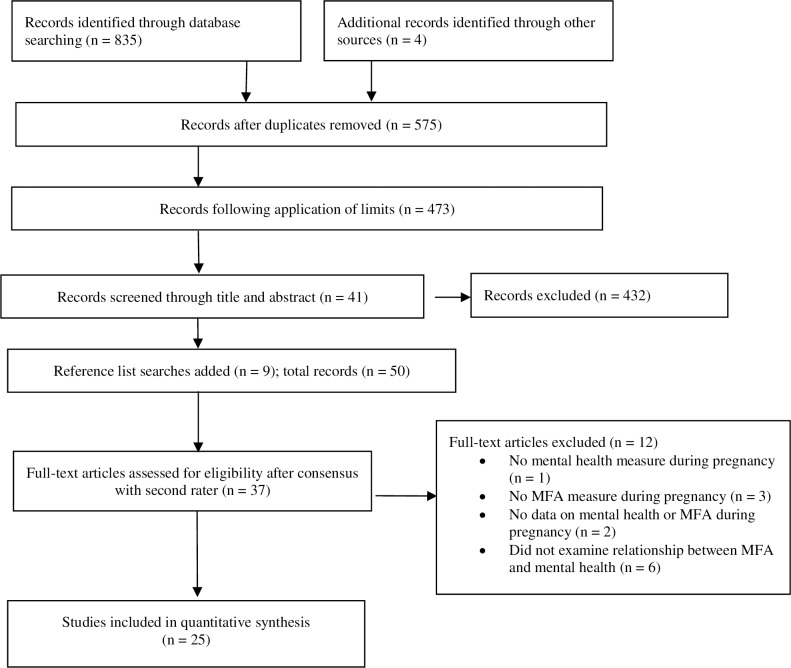
BACKGROUND: An emerging body of literature suggests there is a relationship between a pregnant woman's psychological wellbeing and the development of maternal-fetal attachment (MFA) and early postpartum bonding. The nature of this relationship is not well understood because of the limited theoretical framework surrounding the construct of MFA and variations in study methods and data collection points. In this systematic review, we synthesize the published literature to determine the nature of the relationship from the antenatal to early postnatal period and to provide recommendations for future research and clinical practice. METHOD: Using the preferred reporting items for systematic reviews and meta-analyses (PRISMA) approach, four electronic databases were searched for peer-reviewed empirical studies, published in English. Articles were considered for inclusion if data was collected on at least one domain of maternal wellbeing/mental health and MFA during pregnancy or MFA during pregnancy and the mother-infant relationship during the early postpartum period (up to 12 weeks). No date parameters were applied to the search strategy. The review was registered with PROPSERO (registration number: CRD42018096174). RESULTS: 25 studies examining maternal mental health and MFA/postpartum bonding were selected for inclusion in this review. Key findings identified from the review were: a need to validate existing mental health measures or develop new measures specific for use in antenatal populations; inconsistencies in data collection points throughout pregnancy and postpartum; a lack of consensus about the construct of MFA and the way it is assessed; and a continued focus on postpartum outcomes. CONCLUSION: Scientific gaps remain in our understanding of the relationship between maternal mental health and both MFA and postpartum bonding which limit our theoretical understanding of the MFA construct. Recommendations for future research are to employ prospective longitudinal designs that span the full pregnancy and postpartum period, and for consistency in the terminology and methodology used when considering MFA. A re-focus of research attention on the theory behind MFA will allow a richer and more holistic account of the emerging relationship between mother and baby.
Overview
The claims and statistics of this paper haven’t been checked yet.
Run the check — free, no account needed. It reads the open-access text and checks the sources it cites.
Integrity signals
Registry
Cites
Statistics
Figures
Verification
Claims the paper makes
The claims and statistics of this paper haven’t been checked yet.
Run the check — free, no account needed. It reads the open-access text and checks the sources it cites.
Claims other papers make about this one
Each is checked against this paper’s own text: does it say what the citing paper says it does?
The source backs part of the claim, not all of it — or backs it for a different population, condition or comparison.
In the citing paper
“Three prior narrative reviews (Edwards, 2017; McNamara et al., 2019; Tichelman et al., 2019) reported that maternal depression, anxiety, and stress symptoms were associated with mother-infant bonding problems”
From Associations between maternal psychological distress and mother-infant bonding: a systematic review and meta-analysis (2023) · cites this paper as McNamara et al., 2019
Experimental — accuracy not yet measuredThe source backs part of the claim, not all of it — or backs it for a different population, condition or comparison.
In the citing paper
“A systematic review by McNamara et al. (2019) demonstrated that psychological distress is an important risk factor for poor preand postnatal bonding in mothers.”
From Mindfulness, Self-compassion, and Psychological Wellbeing as Correlates of Paternal Bonding in Pregnancy. (2025) · cites this paper as McNamara et al. (2019)
Experimental — accuracy not yet measuredThe check wasn’t confident either way, so it gives no verdict — never disputed.
In the citing paper
“though a separate SA-based study found no significant associations between poor breastfeeding outcomes and mental health [45].”
From Exploring the effects of mental health on bonding and caregiving among pregnant and postpartum persons with likely depression and/or PTSD in South Africa: a qualitative analysis (2026) · cites this paper as [45]
Experimental — accuracy not yet measured
Self-check
Percentages, sums and reported differences re-computed from the paper’s own numbers.
The self-check needs the paper’s full text.
Citations
Cites
Preferred Reporting Items for Systematic Reviews and Meta-Analyses: the PRISMA statement
Moher, D., Liberati, A., Tetzlaff, J., Altman, D. G., & for the PRISMA Group (2009) · BMJ · doi:10.1136/bmj.b2535 · Cited by 83,823
Preferred Reporting Items for Systematic Reviews and Meta-Analyses: The PRISMA Statement
Moher, D., Liberati, A., Tetzlaff, J., Altman, D. G., & The PRISMA Group (2009) · PLoS Medicine · doi:10.1371/journal.pmed.1000097 · Cited by 64,042
Preferred reporting items for systematic reviews and meta-analyses: The PRISMA statement
Moher, D., Liberati, A., Tetzlaff, J., Altman, D. G., & the PRISMA Group* (2009) · Annals of Internal Medicine · doi:10.7326/0003-4819-151-4-200908180-00135 · Cited by 37,554
Wang, G., Ma, R., Qiao, G., Wada, K., Aizawa, Y., & Satoh, T. (2015) · Integrative Medicine International · doi:10.1159/000368408 · Cited by 18,762
Stress, social support, and the buffering hypothesis
Cohen, S., & Wills, T. A. (1985) · Psychological Bulletin · doi:10.1037/0033-2909.98.2.310 · Cited by 18,093
Preferred reporting items for systematic reviews and meta-analyses: The PRISMA statement
Moher, D., Liberati, A., Tetzlaff, J., & Altman, D. G. (2010) · International Journal of Surgery · doi:10.1016/j.ijsu.2010.02.007 · Cited by 12,156
Diagnostic and Statistical Manual of Mental Disorders
Siegel, L. J., & Fletcher‐Janzen, E. (2008) · Wiley eBooks · doi:10.1002/9780470373699.speced0655 · Cited by 8,467
Attachment and loss: Retrospect and prospect.
Bowlby, J. (1982) · American Journal of Orthopsychiatry · doi:10.1111/j.1939-0025.1982.tb01456.x · Cited by 2,930 · cited 1×
“It is well recognized that early attachment relationships play an important role in a child’s psychological, cognitive and social development [30, 31].”
BackgroundDevelopment of a critical appraisal tool to assess the quality of cross-sectional studies (AXIS)
Downes, M. J., Brennan, M. L., Williams, H. C., & Dean, R. S. (2016) · BMJ Open · doi:10.1136/bmjopen-2016-011458 · Cited by 2,376 · cited 7×
“The checklist design of the AXIS does not provide a cut-off numerical score for study eligibility.”
MethodInfluentialThe challenge of defining wellbeing
Dodge, R., Daly, A., Huyton, J., & Sanders, L. (2012) · International Journal of Wellbeing · doi:10.5502/ijw.v2i3.4 · Cited by 2,166 · cited 1×
“These experiences may have a cumulative impact on an individual’s ability to balance psychological, social and physical resources with life challenges and stressors–a term referred to as ‘wellbeing’ [13].”
Background
Research works printed but not linked: 2
- S Berra, 2008, A tool (corrected) for the critical appraisal of epidemiological cross-sectional studies, Gaceta Sanitaria, 22, 492
- S Marcus, 2009, Depression during pregnancy: Rates, risks and consequences, Canadian Journal of Clinical Psychopharmacology, 16, 15
Cited by
Sorted by citations
A global analysis of the determinants of maternal health and transitions in maternal mortality
Souza, J. P., Day, L. T., Rezende-Gomes, A. C., Zhang, J., Mori, R., Baguiya, A., Jayaratne, K., Osoti, A. O., Vogel, J. P., Campbell, O. M. R., et al. (2023) · The Lancet Global Health · doi:10.1016/s2214-109x(23)00468-0 · Cited by 455
O’Dea, G. A., Youssef, G. J., Hagg, L. J., Francis, L. M., Spry, E. A., Rossen, L., Smith, I., Teague, S. J., Mansour, K., Booth, A., et al. (2023) · Archives of Women's Mental Health · doi:10.1007/s00737-023-01332-1 · Cited by 213
“Three prior narrative reviews (Edwards, 2017; McNamara et al., 2019; Tichelman et al., 2019) reported that maternal depression, anxiety, and stress symptoms were associated with mother-infant bonding problems, however, no metaanalysis of these associations was conducted.”
BackgroundLutkiewicz, K., Bieleninik, Ł., Cieślak, M., & Bidzan, M. (2020) · International Journal of Environmental Research and Public Health · doi:10.3390/ijerph17155427 · Cited by 153
“According to a systematic review conducted by McNamara et al. (2019), only two reports examined the relationship between anxiety and maternal–infant bonding [16].”
BackgroundResultInfluentialWittkowski, A., Vatter, S., Muhinyi, A., Garrett, C., & Henderson, M. (2020) · Clinical Psychology Review · doi:10.1016/j.cpr.2020.101906 · Cited by 121
McNab, S., Dryer, S., Fitzgerald, L., Gomez, P., Bhatti, A. M., Kenyi, E. E., Somji, A., Khadka, N., & Stalls, S. (2022) · BMC Pregnancy and Childbirth · doi:10.1186/s12884-022-04589-z · Cited by 102
Radoš, S. N., Hairston, I. S., & Handelzalts, J. E. (2023) · Journal of Reproductive and Infant Psychology · doi:10.1080/02646838.2022.2162487 · Cited by 61
“In contrast, stress (McNamara et al., 2019; Nakić Radoš, 2021), body dissatisfaction, disordered eating, depressive rumination, or subjective wellbeing (McNamara et al., 2019) have not been linked with bonding.”
BackgroundResultInfluentialRøhder, K., Væver, M. S., Aarestrup, A. K., Jacobsen, R. K., Smith‐Nielsen, J., & Schiøtz, M. L. (2020) · PLoS ONE · doi:10.1371/journal.pone.0239208 · Cited by 59
Smith, M. M., Mitchell, A. S., Townsend, M. L., & Herbert, J. S. (2020) · PLoS ONE · doi:10.1371/journal.pone.0243898 · Cited by 54
“Although there is some contention over the best way to define this bond in terms of the traditional attachment relationship [3], MFA broadly refers to the mother’s attempts to love, care for, and protect her unborn child.”
BackgroundSelf-citationFilippetti, M. L., Clarke, A. D. F., & Rigato, S. (2022) · BMC Pregnancy and Childbirth · doi:10.1186/s12884-022-04387-7 · Cited by 68
“However, a recent systematic review [14] reported mixed results suggesting that the association between depression and maternal antenatal attachment might be more complex than previously thought.”
de Waal, N., Boekhorst, M. G. B. M., Nyklı́ček, I., & Pop, V. J. M. (2023) · Infant Behavior and Development · doi:10.1016/j.infbeh.2023.101871 · Cited by 53
Grandparental Support and Maternal Postpartum Mental Health
Riem, M. M. E., Bakermans‐Kranenburg, M. J., Cima, M., & van IJzendoorn, M. H. (2023) · Human Nature · doi:10.1007/s12110-023-09440-8 · Cited by 61
“Social support is generally associated with improved mother-infant bonding and can buffer the negative effects of poor maternal mental health on the mother-infant relationship (McNamara et al., 2019).”
BackgroundMotegi, T., Watanabe, Y., Fukui, N., Ogawa, M., Hashijiri, K., Tsuboya, R., Sugai, T., Egawa, J., Araki, R., Haino, K., et al. (2020) · Neuropsychiatric Disease and Treatment · doi:10.2147/ndt.s287036 · Cited by 46
Risi, A., Pickard, J. A., & Bird, A. L. (2021) · PLoS ONE · doi:10.1371/journal.pone.0260891 · Cited by 78
“The AXIS has been effectively used by other reviews within the parental mental health field [68].”
MethodDöblin, S., Seefeld, L., Weise, V., Kopp, M., Knappe, S., Asselmann, E., Martini, J., & Garthus‐Niegel, S. (2023) · BMC Pregnancy and Childbirth · doi:10.1186/s12884-023-05611-8 · Cited by 43
“Indeed, since greater maternal well-being seems to be associated with stronger prepartum mother-infant-bonding [98], the same could be true for postpartum bonding, and taking a broader approach, for fathers as well.”
BackgroundHeatwaves and wildfires suffocate our healthy start to life: time to assess impact and take action
Bansal, A., Cherbuin, N., Davis, D. L., Peek, M. J., Wingett, A., Christensen, B. K., Carlisle, H. R., Broom, M., Schoenaker, D. A. J. M., Dahlstrom, J. E., et al. (2023) · The Lancet Planetary Health · doi:10.1016/s2542-5196(23)00134-1 · Cited by 37
“46,47 Despite the known association of other natural disasters with maternal and child mental health, 41 the effect of heat waves and wildfires on these outcomes has not been adequately investigated.”
Bieleninik, Ł., Lutkiewicz, K., Jurek, P., & Bidzan, M. (2021) · Frontiers in Psychology · doi:10.3389/fpsyg.2021.628650 · Cited by 37
Gioia, M. C., Cerasa, A., Muggeo, V. M. R., Tonin, P., Cajiao-Nieto, J., Aloi, A., Martino, I., Tenuta, F., Costabile, A., & Craig, F. (2023) · Frontiers in Psychology · doi:10.3389/fpsyg.2022.1095030 · Cited by 37
“In addition, previous studies also detected that MFA intensity may be affected by factors such as maternal age (Čėsnaitė et al., 2019; McNamara et al., 2019).”
BackgroundAnxiety, Prenatal Attachment, and Depressive Symptoms in Women with Diabetes in Pregnancy
Napoli, A., Lamis, D. A., Berardelli, I., Canzonetta, V., Sarubbi, S., Rogante, E., Napoli, P.-L., Serafini, G., Erbuto, D., Tambelli, R., et al. (2020) · International Journal of Environmental Research and Public Health · doi:10.3390/ijerph17020425 · Cited by 34
“Moreover, the closer the prenatal attachment of a mother to her unborn child, the fewer symptoms of depression she reports during the last term of pregnancy and postpartum, demonstrating that maternal mood may negatively impact a mother’s ability to bond with her baby during pregnancy [75].”
BackgroundChildbirth, trauma and family relationships
Reshef, S., Mouadeb, D., Sela, Y., Weiniger, F. C., & Freedman, S. (2023) · European Journal of Psychotraumatology · doi:10.1080/20008066.2022.2157481 · Cited by 34
“It is known that mothers who suffer from depression may express diminished emotional involvement, impaired communication, and reduced synchronicity with their babies (Bailham & Joseph, 2003; Brockington, 2004; McNamara et al., 2019).”
BackgroundCrombag, N. M. T. H., Sacco, A., Stocks, B., Vloo, P. D., van der Merwe, J., Gallagher, K., David, A. L., Marlow, N., & Deprest, J. A. (2021) · Prenatal Diagnosis · doi:10.1002/pd.5996 · Cited by 32
Craig, F., Gioia, M. C., Muggeo, V. M. R., Cajiao-Nieto, J., Aloi, A., Martino, I., Tenuta, F., Cerasa, A., & Costabile, A. (2021) · Journal of Affective Disorders · doi:10.1016/j.jad.2021.08.102 · Cited by 30
The role of pregnancy acceptability in maternal mental health and bonding during pregnancy
McNamara, J., Risi, A., Bird, A. L., Townsend, M. L., & Herbert, J. S. (2022) · BMC Pregnancy and Childbirth · doi:10.1186/s12884-022-04558-6 · Cited by 30
Self-citationTesfaye, Y., & Agenagnew, L. (2021) · Journal of Pregnancy · doi:10.1155/2021/5047432 · Cited by 34
Sacchi, C., Miscioscia, M., Visentin, S., & Simonelli, A. (2021) · BMC Pregnancy and Childbirth · doi:10.1186/s12884-021-03964-6 · Cited by 31
“So far, studies investigating the characteristics of pregnancy associated with MFA have largely suggested mutual influences between MFA and maternal mental health [18], with negative associations reported for depressive symptoms [19, 20] and anxiety [21].”
BackgroundLi, H. (2022) · Psychiatric Quarterly · doi:10.1007/s11126-022-10011-w · Cited by 33
Firouzbakht, M., Rahmani, N., Nia, H. S., & Omidvar, S. (2022) · BMC Psychiatry · doi:10.1186/s12888-022-03792-8 · Cited by 27
“Also, optimism and resilience decrease levels of psychological distress among pregnant [21].”
BackgroundThe effectiveness of psychoeducation interventions on prenatal attachment: A systematic review
Yuen, W. S., Lo, H. C., Wong, W. N., & Ngai, F. (2021) · Midwifery · doi:10.1016/j.midw.2021.103184 · Cited by 23
Branjerdporn, G., Meredith, P. J., Wilson, T., & Strong, J. (2021) · Journal of Child and Family Studies · doi:10.1007/s10826-020-01876-1 · Cited by 26
The problematic use of mobile phone and mental health: A review study in Iran
Amiri, M., Dowran, B., Salimi, H., & Zarghami, M. H. (2020) · Journal of Education and Health Promotion · doi:10.4103/jehp.jehp_268_20 · Cited by 23
“Articles which met fewer criteria should be interpreted with caution.[26] Each article was evaluated separately by at least two authors.”
MethodMaternal‐fetal attachment, parenting stress during infancy, and child outcomes at age 3 years
Hruschak, J. L., Palopoli, A. C., Thomason, M. E., & Trentacosta, C. J. (2022) · Infant Mental Health Journal · doi:10.1002/imhj.22004 · Cited by 21
Nasreen, H. E., Pasi, H., Aris, M. A., Rahman, J. A., Rus, R. M., & Edhborg, M. (2021) · Archives of Women s Mental Health · doi:10.1007/s00737-021-01165-w · Cited by 20
“Consistent with prior research, depressive symptoms were positively associated with the impaired bonding with infant in both mothers (Figueiredo et al. 2009; McNamara et al. 2019; Lutkiewicz et al. 2020; Takaharu et al. 2020) and fathers (Kerstis et al.”
ResultEyal, M. N. –., & Ben‐Ari, O. T. –. (2023) · Journal of Reproductive and Infant Psychology · doi:10.1080/02646838.2023.2222143 · Cited by 24
“Over the years, many studies have sought to identify the factors that reduce or promote well-being among pregnant women (Agostini et al., 2015; Fisher et al., 2013; McNamara et al., 2019; Verreault et al., 2014).”
Ilska, M., Brandt‐Salmeri, A., & Kołodziej‐Zaleska, A. (2020) · Personality and Individual Differences · doi:10.1016/j.paid.2020.110098 · Cited by 18
Hashijiri, K., Watanabe, Y., Fukui, N., Motegi, T., Ogawa, M., Egawa, J., Enomoto, T., & Someya, T. (2021) · Neuropsychiatric Disease and Treatment · doi:10.2147/ndt.s336819 · Cited by 18
“Systematic reviews have indicated that maternal depression is negatively associated with bonding.(3,4) In addition, bonding difficulties may predict neonatal emotional abuse.”
BackgroundRanjbar, F., Warmelink, C., Mousavi, R., & Gharacheh, M. (2022) · International Journal of Reproductive BioMedicine (IJRM) · doi:10.18502/ijrm.v19i12.10058 · Cited by 18
“According to a recent systematic review, there is a scientific gap in understanding the association between maternal mental health and MFA which limits the theoretical understanding of the MFA construct (37).”
Chua, J. Y. X., Choolani, M. A., Chee, C. Y. I., Yi, H., Chan, Y. H., Lalor, J., Chong, Y. S., & Shorey, S. (2024) · International Journal of Nursing Studies · doi:10.1016/j.ijnurstu.2024.104906 · Cited by 18
Mother-infant bonding and its associated factors during postpartum period
Mazúchová, L., Kelčíková, S., Maskálová, E., Malinovská, N., & Grendár, M. (2021) · Kontakt · doi:10.32725/kont.2021.018 · Cited by 19
“…contact (SSC) support (Mazúchová et al., 2020; Moore et al., 2012), pregnancy planning (Ekrami et al., 2020) maternal psychiatric disorder (McNamara et al., 2019), particularly depressive symptoms (Nieto et al., 2017), and finally parental stress related to caring for a child with an…”
BackgroundMokhtarian-Gilani, T., Kariman, N., Nia, H. S., Doulabi, M. A., & Nasiri, M. (2022) · BMC Pregnancy and Childbirth · doi:10.1186/s12884-022-04900-y · Cited by 17
“A systematic review revealed a wide knowledge gap regarding the relationship of maternal-fetal attachment and early postpartum bonding with maternal mental health and highlighted the necessity of developing valid instruments for postpartum QOL assessment (48).”
BackgroundRoche, D., Rafferty, A. R., Holden, S., Killeen, S. L., Kennelly, M. A., & McAuliffe, F. M. (2022) · International Journal of Environmental Research and Public Health · doi:10.3390/ijerph20010034 · Cited by 17
“Individuals with pre-existing mental health concerns may be unable to balance the psychological, social, and physical demands of pregnancy with life’s daily challenges, thus creating a debilitating sense of inadequate ‘well-being’ [11].”
BackgroundKucharska, M. (2020) · Health Psychology Report · doi:10.5114/hpr.2020.97295 · Cited by 17
“The degree of maternal-fetal attachment in a healthy pregnancy also appears to increase as the pregnancy progresses, as indicated in most previous studies (see: Bielawska-Batorowicz, 1995; Caccia et al., 1991; McNamara et al., 2019; Walsh et al., 2014).”
ResultMaternal-fetal bonding during the COVID-19 pandemic
Koire, A. M., Mittal, L. P., Erdei, C., & Liu, C. H. (2021) · BMC Pregnancy and Childbirth · doi:10.1186/s12884-021-04272-9 · Cited by 24
“Individual characteristics such as psychological resilience or distress tolerance are thought to have a role on one’s well-being during the COVID-19 pandemic [35–37] but have not been well-studied even under non-pandemic conditions [38].”
BackgroundWhatsapp Yenidoğan Ebe Desteğinin Postpartum Sürece Etkisi
Yurtsal, Z. B., & Eroğlu, V. (2021) · Uludağ Üniversitesi Tıp Fakültesi Dergisi · doi:10.32708/uutfd.893207 · Cited by 15
Pazzagli, C., Buratta, L., Coletti, E., & Mazzeschi, C. (2023) · Journal of Psychosomatic Obstetrics & Gynecology · doi:10.1080/0167482x.2023.2264487 · Cited by 17
Göbel, A., Lüersen, L., Asselmann, E., Arck, P., Diemert, A., Garthus‐Niegel, S., Mudra, S., & Martini, J. (2024) · BMC Pregnancy and Childbirth · doi:10.1186/s12884-024-06964-4 · Cited by 14
“Across samples, participants reporting more depressive symptoms also reported less optimal bonding to the infant, which is also in line with previous literature [17, 20].”
Adesão à consulta puerperal: facilitadores e barreiras
Pinto, I. R., Martins, V. E., de Oliveira, J. F., de Oliveira, K. F., Paschoini, M. C., & Ruiz, M. T. (2020) · Escola Anna Nery · doi:10.1590/2177-9465-ean-2020-0249 · Cited by 14
Fukui, N., Motegi, T., Watanabe, Y., Hashijiri, K., Tsuboya, R., Ogawa, M., Sugai, T., Egawa, J., Enomoto, T., & Someya, T. (2021) · Psychiatry and Clinical Neurosciences · doi:10.1111/pcn.13289 · Cited by 14
“Among the relevant studies focused on the early postpartum period, McNamara et al.(5) performed”
BackgroundInfluentialRelationship of Self-Esteem With Body Image and Attitudes Toward Motherhood and Pregnancy
Zamiri-Miandoab, N., Kamalifard, M., & Mirghafourvand, M. (2022) · Journal of Psychosocial Nursing and Mental Health Services · doi:10.3928/02793695-20220330-01 · Cited by 20
Potharst, E. S., Kuijl, M., Wind, D., & Bögels, S. M. (2022) · International Journal of Environmental Research and Public Health · doi:10.3390/ijerph19137571 · Cited by 15
Jussila, H., Pelto, J., Korja, R., Ekholm, E. M. K., Pajulo, M., Karlsson, L., & Karlsson, H. (2020) · BMC Pregnancy and Childbirth · doi:10.1186/s12884-020-03393-x · Cited by 14
Murakami, K., Ishikuro, M., Obara, T., Noda, A., Ueno, F., Onuma, T., Matsuzaki, F., Takahashi, I., Kikuchi, S., Kobayashi, N., et al. (2023) · Journal of Affective Disorders · doi:10.1016/j.jad.2023.01.044 · Cited by 13
Dilcen, H. Y., Akın, B., & Türkmen, H. (2021) · Perspectives In Psychiatric Care · doi:10.1111/ppc.12875 · Cited by 12
Intergenerational study of depression: a convergence of findings and opportunities
Weissman, M. M. (2019) · Psychological Medicine · doi:10.1017/s0033291719002939 · Cited by 13
“These methodologic limitations and differences between studies should not obscure the similarities of the findings between studies (O’Higgins et al., 2013; McNamara et al., 2019).”
ResultO'Reilly, G., Cheung, P. S., & McCaffrey, T. (2023) · Journal of Midwifery & Women s Health · doi:10.1111/jmwh.13463 · Cited by 11
Murakami, K., Noda, A., Ishikuro, M., Obara, T., Ueno, F., Onuma, T., Matsuzaki, F., Kikuchi, S., Kobayashi, N., Hamada, H., et al. (2023) · Archives of Women s Mental Health · doi:10.1007/s00737-023-01298-0 · Cited by 11
“Depression was shown to be associated with poor bonding (McNamara et al., 2019; Tichelman et al., 2019).”
BackgroundLaifer, L. M., Maras, O. R., Sáez, G., Gervais, S. J., & Brock, R. L. (2023) · Sex Roles · doi:10.1007/s11199-023-01360-2 · Cited by 11
My ‘normal’ isn't your normal...What is maternal wellbeing? A scoping review
Baldwin, A., Capper, T. S., & Naughton, S. (2024) · Midwifery · doi:10.1016/j.midw.2024.104250 · Cited by 11
Predictors of Parent‐Infant Bonding Among Postpartum Chinese Mothers and Fathers
Ngai, F., & Lam, W. (2022) · Journal of Midwifery & Women s Health · doi:10.1111/jmwh.13440 · Cited by 12
de Waal, N., Lodder, P., Nyklíček, I., Hulsbosch, L. P., van den Heuvel, M. I., van der Gucht, K., de Caluwé, E., Pop, V. J. M., & Boekhorst, M. G. B. M. (2024) · Early Human Development · doi:10.1016/j.earlhumdev.2024.106082 · Cited by 10
Maternal and paternal attachment levels in the prenatal period
Uğurlu, M., Arslan, G., & Özdemir, Ö. (2023) · Gulhane Medical Journal · doi:10.4274/gulhane.galenos.2023.98598 · Cited by 12
“Maternal attachment in the prenatal period is the emotion, feeling, and love that a mother feels for her unborn baby (8,9).”
BackgroundSanni, S. O., Adeoye, I. A., Bella-Awusah, T. T., & Bello, O. O. (2024) · Discover Mental Health · doi:10.1007/s44192-024-00104-2 · Cited by 10
“Significantly, PPD impairs the woman’s ability to develop a strong emotional bond with her baby in 6–41% of mother pairs [20, 23].”
BackgroundLutkiewicz, K., & Bidzan, M. (2022) · Frontiers in Psychiatry · doi:10.3389/fpsyt.2022.935871 · Cited by 10
“(72), where six out of seven studies found that higher MFA was connected with the higher level of social support (72).”
BackgroundJussila, H., Ekholm, E. M. K., & Pajulo, M. (2020) · International Journal of Mental Health and Addiction · doi:10.1007/s11469-019-00205-y · Cited by 9
“High-quality prenatal parenting is considered protective in the presence of antenatal adversities (Glover and Capron 2017) but, despite decades of research, the construct and assessment of maternal-fetal attachment is still being debated (McNamara et al. 2019).”
BackgroundDere, S. S., Varotariya, J. K., Ghildiyal, R., Sharma, S. A., & Kaur, D. (2019) · Industrial Psychiatry Journal · doi:10.4103/ipj.ipj_66_19 · Cited by 12
“In contrast, mothers with a positive adjustment with pregnancy tend to go through better outcomes and bonding with baby in postpartum.[4-6] various mechanisms mediating the effects of maternal psychopathology on the fetus include increased release of catecholamines, overstimulation of maternal and fetal hypothalamic-p…”
BackgroundMoniri, M., Rashidi, F., Mirghafourvand, M., Rezaei, M., & Ghanbari-Homaie, S. (2023) · BMC Psychology · doi:10.1186/s40359-023-01475-x · Cited by 9
“Some factors such as mother’s mental health, social support, marital satisfaction [5, 6], pregnancy experience [6], and fear of childbirth [7] have been proposed as predictors of MFA.”
BackgroundMethodThe Protective Role of Maternal-Fetal Bonding for Postpartum Bonding Following a NICU Admission
Ciciolla, L. M., Shreffler, K. M., Quigley, A. N., Price, J. R., & Gold, K. P. (2024) · Maternal and Child Health Journal · doi:10.1007/s10995-023-03873-4 · Cited by 10
“There may be additional factors associated both with NICU admission and postpartum bonding that were not measured, such as maternal psychopathology, substance use, and maternal health problems (McNamara et al., 2019; Roque et al., 2017; Vanderbilt et al., 2018).”
Lindblom, J., Pajulo, M., Nolvi, S., Tervahartiala, K., Karlsson, H., Karlsson, L., & Korja, R. (2022) · Frontiers in Psychology · doi:10.3389/fpsyg.2022.855190 · Cited by 12
“, 2011), older mothers also tend to experience lower maternal-fetal attachment during pregnancy (McNamara et al., 2019).”
BackgroundMeneo, D., Baldi, E., Cerolini, S., Curati, S., Bastianini, S., Berteotti, C., Simonazzi, G., Manconi, M., Zoccoli, G., Bartolo, P. D., et al. (2024) · BMC Psychology · doi:10.1186/s40359-024-01827-1 · Cited by 14
“Emotional and psychological peripartum wellbeing is protective for post-partum mental health, emotion regulation and maternal-fetal attachment, influencing not only mother-child attachment but also child’s later development and the emotional balance of the whole family [7].”
BackgroundFactors related to a disturbance in the mother-child bond and attachment
Díaz-Ogallar, M. A., Hernández‐Martínez, A., Abad, M. L., & Martínez‐Galiano, J. M. (2024) · Journal of Pediatric Nursing · doi:10.1016/j.pedn.2024.02.009 · Cited by 8
Pohárnok, M., Kopcsó, K., & Polgár, P. I. (2022) · Midwifery · doi:10.1016/j.midw.2022.103422 · Cited by 10
Hadathy, D. E., Malaeb, D. N., Hallit, S. R., Fekih‐Romdhane, F., & Barakat, H. (2024) · BMC Psychiatry · doi:10.1186/s12888-024-05745-9 · Cited by 9
“Furthermore, a systematic review conducted by McNamara et al. (2019) found that 15 of 19 research studies showed the evidence that postpartum depression is associated with maternal–infant bonding [16].”
BackgroundCan, F. G., Akış, G., & Solmaz, E. (2024) · Journal of Pediatric Nursing · doi:10.1016/j.pedn.2024.10.021 · Cited by 7
Pellerone, M., Torvisco, J. M., Razza, S. G., Commodari, E., & Miccichè, S. (2023) · International Journal of Environmental Research and Public Health · doi:10.3390/ijerph20206945 · Cited by 8
“The greater gestational age also seems to be associated with a higher level of MFA [38], probably due to more intense fetal activity and more frequent fetal monitoring.”
BackgroundThe role of lack of grandparental support in perinatal depression
Riem, M. M. E., Perrykkad, K., Watson, S., Wynter, K. H., van IJzendoorn, M. H., & Galbally, M. (2024) · Journal of Affective Disorders · doi:10.1016/j.jad.2024.05.104 · Cited by 7
Mother-child bond and its relationship with maternal postpartum depression
Díaz-Ogállar, M. A., Hernández-Martínez, A., Linares-Abad, M., & Martínez-Galiano, J. M. (2024) · Journal of Reproductive and Infant Psychology · doi:10.1080/02646838.2024.2397126 · Cited by 7
“…associate high levels of depression during pregnancy with a lower level of bonding before and after delivery, in the same way that continued low mood has been related to the presence of bonding difficulties after childbirth (McNamara et al., 2019; O’Higgins et al., 2013; Sockol et al., 2014).”
Hoseini, S., Motaghi, Z., Nazari, A., & Goli, S. (2020) · مجله پزشکی بالینی ابن سینا · doi:10.29252/ajcm.27.2.85 · Cited by 7
Nivedhitha, K. S., & Geetha, S. (2020) · Journal of Leisure Research · doi:10.1080/00222216.2020.1834891 · Cited by 7
“Since psychological wellbeing has been strongly associated with PA (McNamara et al., 2019), SV becomes a suitable candidate to explore its effect on PA.”
BackgroundPazzagli, C., Buratta, L., Cenci, G. I., Coletti, E., Giuliani, M. L., & Mazzeschi, C. (2022) · International Journal of Environmental Research and Public Health · doi:10.3390/ijerph19126957 · Cited by 8
“There is a fairly sizable body of literature examining MFB, but the prevalence of research with cross-sectional designs limits the findings on the predictive aspects of MFB, and there are even fewer studies on its consequences [15,25].”
BackgroundMethodInfluentialNěmcová, H., Kuklová, M., Hrdličková, K., Hořáková, A., & Šebela, A. (2025) · BMC Psychology · doi:10.1186/s40359-024-02308-1 · Cited by 10
“Previous research has indicated that prenatal depressive symptoms can negatively affect a mother’s ability to bond with her fetus [36].”
InfluentialHatakka, E., Flykt, M. S., Rusanen, E., Kylliäinen, A., Paavonen, E. J., & Kiviruusu, O. H. (2025) · Child Psychiatry & Human Development · doi:10.1007/s10578-025-01886-4 · Cited by 6
Hebrew validation of the postpartum bonding questionnaire: a study of mothers and fathers
Hakhmigari, M. K., Segal, H., Peled, Y., & Handelzalts, J. E. (2023) · Journal of Reproductive and Infant Psychology · doi:10.1080/02646838.2023.2247014 · Cited by 6
“In almost all the studies reported in two recent meta-analyses, an association was found between depressive symptoms and poor mother-infant bonding with moderate to strong correlations (McNamara et al., 2019; Tichelman et al., 2019).”
Dişsiz, M., Bingöl, F. B., Bal, M. D., Yılmaz, Z. D. K., Karakoç, A., & Bilgin, Z. (2024) · Journal of Pediatric Nursing · doi:10.1016/j.pedn.2024.03.012 · Cited by 6
Abbreviated Version of the Maternal-Fetal Attachment Scale: Evidence of Validity and Reliability
Lima, C. D. A., Brito, M. F. S. F., de PINHO, L., Leão, G. M. M. S., Ruas, S. J. S., & Silveira, M. F. (2022) · Paidéia (Ribeirão Preto) · doi:10.1590/1982-4327e3233 · Cited by 6
“Since then, the MFAS has been widely applied in research on the topic, as evidenced in a systematic review (McNamara et al., 2019).”
BackgroundMethodInfluentialTaylor, A., Whittaker, A., Chandler, A., & Carnegie, E. (2023) · International Journal of Drug Policy · doi:10.1016/j.drugpo.2023.104061 · Cited by 6
Skelton, E., Smith, A. J., Harrison, G., Rutherford, M., Ayers, S., & Malamateniou, C. (2023) · PLoS ONE · doi:10.1371/journal.pone.0286578 · Cited by 6
“Fathers’ response to pregnancy ultrasound is thought to be a predictor for prenatal bonding [10], and this has potentially significant implications considering the further association between paternal support, maternal bonding and postnatal attachment [48].”
BackgroundHorton, E., & Robledo, C. G. “. (2023) · The Family Journal · doi:10.1177/10664807231198867 · Cited by 6
“While the literature base clearly accentuates the impact of perinatal and prenatal mental health on maternal attachment, signi fi cant gaps in our understanding of postpartum bonding, particularly in clinical practice, remain (Mcnamara et al., 2019).”
BackgroundThe Effect of Music Intervention on Fetal Education via Doppler Fetal Monitor
Lee, L., Chang, Y., Liang, W.-J., & Huang, Y.-C. (2022) · Children · doi:10.3390/children9060918 · Cited by 6
“other and promotes healthy thoughts, attitudes, and behaviors in pregnant women [7].”
BackgroundAkdağ, B., Erdem, D., Bektaş, M., & Yardımcı, F. (2023) · Archives of Women s Mental Health · doi:10.1007/s00737-023-01343-y · Cited by 5
“This can be explained by several reasons, including a lack of emotional resources, self-perceived parenting inadequacies, negative attitudes toward caregiving, and lack of maternal identity (McNamara et al. 2019).”
BackgroundEyal, M. N. –., & Ben‐Ari, O. T. –. (2023) · Journal of Reproductive and Infant Psychology · doi:10.1080/02646838.2023.2284290 · Cited by 7
“Higher relationship quality with the partner has also been associated with another protective factor: perceived maternal-foetal bonding (McNamara et al., 2019).”
Khalil, D., George, Z., Dannawey, E., Hijawi, J., ElFishawy, S., & Jenuwine, E. (2023) · Research in Nursing & Health · doi:10.1002/nur.22365 · Cited by 7
Infurna, M. R., Fazio, L., Bevacqua, E., Costanzo, G., Falgares, G., Maiorana, A., Giannone, F., & Antonucci, L. A. (2024) · BMC Psychology · doi:10.1186/s40359-024-02024-w · Cited by 7
“This finding is consistent with previous studies showing that distress experienced by mothers can negatively affect the establishment of adequate prenatal attachment bonding and the development of appropriate parenting attitudes [5, 11], although the literature is not fully consistent [37, 51].”
Kara, P., & Nazik, E. (2021) · Çukurova medical journal (Online)/Çukurova medical journal · doi:10.17826/cumj.894664 · Cited by 5
Mothers' Experiences of Husband’s Involvement in Maternal Fetal Attachment: A Qualitative Study
Abasi, E., Borghei, N. S., Farjamfar, M., Goli, S., & Keramat, A. (2022) · Iranian Journal of Psychiatry and Behavioral Sciences · doi:10.5812/ijpbs.119140 · Cited by 5
Ciciolla, L. M., Addante, S., Shreffler, K. M., & Croff, J. M. (2023) · Women s Health Reports · doi:10.1089/whr.2022.0090 · Cited by 5
Konno, K. (2021) · Japan Journal of Nursing Science · doi:10.1111/jjns.12381 · Cited by 4
The Relationship Between Postpartum Depression and Maternal Attachment in Primiparous Women
Öz, T., Seven, Z. D., & İrevül, G. (2024) · Journal of Modern Nursing Practice and Research · doi:10.53964/jmnpr.2024012 · Cited by 4
Yurt, G., & Çankaya, S. (2022) · Early Child Development and Care · doi:10.1080/03004430.2022.2093867 · Cited by 4
Adolescent pregnancies and adherence to puerperal consultation
Pinto, I. R., da Silva, J. A., Parra, P. C., Wernet, M., Fonseca, L. M. M., & Ruiz, M. T. (2022) · Revista Latino-Americana de Enfermagem · doi:10.1590/1518-8345.6269.3702 · Cited by 4
“6% (03) had previous abortion experience; all (22) had prenatal care with an adequate number of consultations (six or more consultations), and 77.”
BackgroundAlavi, H., Zaheri, F., & Shahoei, R. (2023) · Cellular Molecular and Biomedical Reports · doi:10.55705/cmbr.2022.355559.1055 · Cited by 4
Little, E., Bain, L., & Hahn‐Holbrook, J. (2023) · Journal of Affective Disorders · doi:10.1016/j.jad.2023.08.044 · Cited by 4
Cheung, P. S., MOHAMAD, M. R., Fitzpatrick, K., Tighe, S. M., Clifford, A. M., & McCaffrey, T. (2024) · Nordic Journal of Music Therapy · doi:10.1080/08098131.2024.2396099 · Cited by 4
“Additionally, participants’ pregnancy status, where maternal-foetal attachment may play a role, could be a contributing factor, as higher maternal-foetal attachment is positively associated with improved psychological well-being (McNamara et al., 2019).”
Metadata
- Authors
- McNamara, J., Townsend, M. L., & Herbert, J. S.
- Affiliations
- University of Wollongong (AU)
- Corresponding author
- McNamara, Josephine
- Venue
- PLOS ONE
- Publisher
- Public Library of Science (PLoS)
- Published
- 2019-07-25
- Volume
- 14
- Issue
- 7
- Pages
- e0220032
- ISSN
- 1932-6203 (ISSN-L)
- PMC
- PMC6657859
- OpenAlex
- W2963294809
- Cited by
- 222
- References
- 132
- Citations by year
- 2026: 25 · 2025: 33 · 2024: 37 · 2023: 42 · 2022: 36 · 2021: 29 · 2020: 18 · 2019: 2
- FWCI
- 19.56
- Type
- journal article
- Language
- en
- Open access
- gold
- doi.org
- Licence
- Locations
- PLoS ONE (publishedVersion, cc-by)
- PubMed Central (publishedVersion, cc-by)
- PubMed (publishedVersion)
- Figshare (acceptedVersion)
- Research Online (University of Wollongong) (submittedVersion)
- DOAJ (DOAJ: Directory of Open Access Journals) (submittedVersion, cc-by-sa)
- Topics
- Health Sciences › Medicine › Public Health, Environmental and Occupational Health › Maternal Mental Health During Pregnancy and Postpartum
- Social Sciences › Psychology › Social Psychology › Attachment and Relationship Dynamics
- Health Sciences › Medicine › Obstetrics and Gynecology › Maternal and Perinatal Health Interventions
- Keywords
- maternal well-being, maternal mental health, maternal-fetal attachment, postpartum bonding, mother-infant relationship, prenatal period, early postpartum period, construct validity
- MeSH terms
- Maternal Health, Female, Humans, Mother-Child Relations, Pregnancy, Prospective Studies, Pregnant People, Postpartum Period
About these checks
Registry, retraction, Cites and statistics results are computed, not judged, with one exception: a printed reference that no index lists is read once by a model before it counts as a citation error. Claims are extracted by a model and kept only when their quote appears verbatim in the text; each cited source is then checked, with a model’s help, for whether it says what the claim relies on. Those verdicts can be wrong — read the claim’s quote and the cited source before relying on one.
Statistics and arithmetic are recomputed, not judged.
Confidence bands are shown only for fields calibrated on our annotated test set. None is calibrated yet, so no band is shown.
What counts as a claim ›How we measure confidence ›How we check this ›
Are you an author, or do you see a problem with this page? Request a review
