

Global reach of ageism on older persons' health: a systematic review
Open accessThe DOI matches its Crossref record; 166 of the 169 references it cites were found in a registry or an index; 18 of the 61 sources its claims cite were checked for support.
Abstract
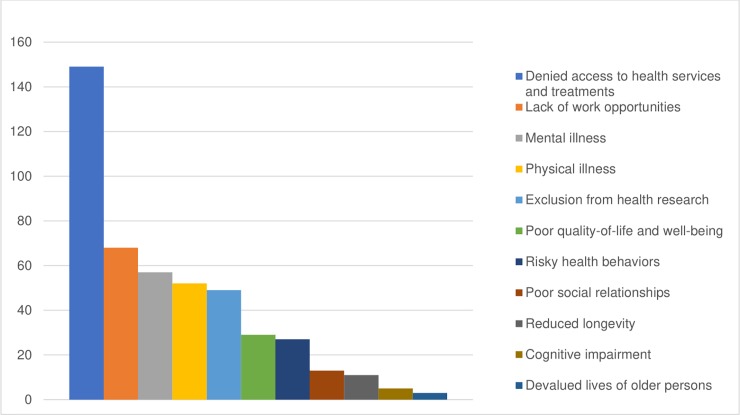
OBJECTIVE: Although there is anecdotal evidence of ageism occurring at both the structural level (in which societal institutions reinforce systematic bias against older persons) and individual level (in which older persons take in the negative views of aging of their culture), previous systematic reviews have not examined how both levels simultaneously influence health. Thus, the impact of ageism may be underestimated. We hypothesized that a comprehensive systematic review would reveal that these ageism levels adversely impact the health of older persons across geography, health outcomes, and time. METHOD: A literature search was performed using 14 databases with no restrictions on region, language, and publication type. The systematic search yielded 13,691 papers for screening, 638 for full review, and 422 studies for analyses. Sensitivity analyses that adjusted for sample size and study quality were conducted using standardized tools. The study protocol is registered (PROSPERO CRD42018090857). RESULTS: Ageism led to significantly worse health outcomes in 95.5% of the studies and 74.0% of the 1,159 ageism-health associations examined. The studies reported ageism effects in all 45 countries, 11 health domains, and 25 years studied, with the prevalence of significant findings increasing over time (p < .0001). A greater prevalence of significant ageism-health findings was found in less-developed countries than more-developed countries (p = .0002). Older persons who were less educated were particularly likely to experience adverse health effects of ageism. Evidence of ageism was found across the age, sex, and race/ethnicity of the targeters (i.e., persons perpetrating ageism). CONCLUSION: The current analysis which included over 7 million participants is the most comprehensive review of health consequences of ageism to date. Considering that the analysis revealed that the detrimental impact of ageism on older persons' health has been occurring simultaneously at the structural and individual level in five continents, our systematic review demonstrates the pernicious reach of ageism.
Overview
CoChat Summary
TL;DR
This systematic review of 422 studies and 1,159 ageism-health associations found that ageism predicted significantly worse health in 95.5% of studies and 74.0% of associations across 45 countries, 11 health domains, and 25 years. It concludes that ageism operates at both structural and individual levels and is a global social determinant of older persons’ health.
Key findings
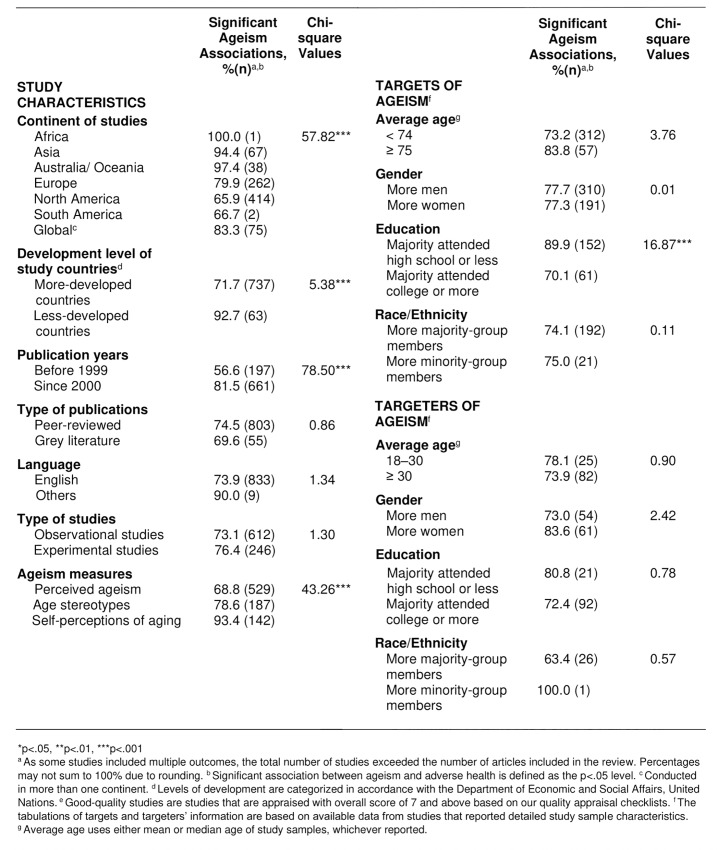
- Ageism was significantly associated with worse health in 95.5% of the 422 studies and 74.0% of the 1,159 associations; evidence appeared in all 11 health domains, all 45 countries, six continents, and every year studied. The proportion of significant associations increased over time: 51.3% (1970–1989), 69.6% (1990–2009), and 85.3% (2010–2017), p < .0001.
- Significant associations were more prevalent in less-developed than more-developed countries (92.7% vs. 71.7%, p = .0002). Less-educated targets were more likely to experience adverse health effects of ageism (89.8% vs. 70.1%, p < .0001), and findings were highest when ageism was operationalized as self-perceptions of aging (93.4%) compared with age stereotypes (78.6%) and perceived ageism (68.8%), p < .0001.
- A secondary model estimated 6.33 million global cases of depression attributable to ageism among persons aged 50 and over: 831,041 in more-developed countries and 5.6 million in less-developed countries.
- Mediation analyses in 25 studies across eight countries found significant pathways; the psychological pathway was supported by the most studies (9 longitudinal, 8 cross-sectional, 2 experimental priming), followed by behavioral (4 studies) and physiological (2 studies).
Methods
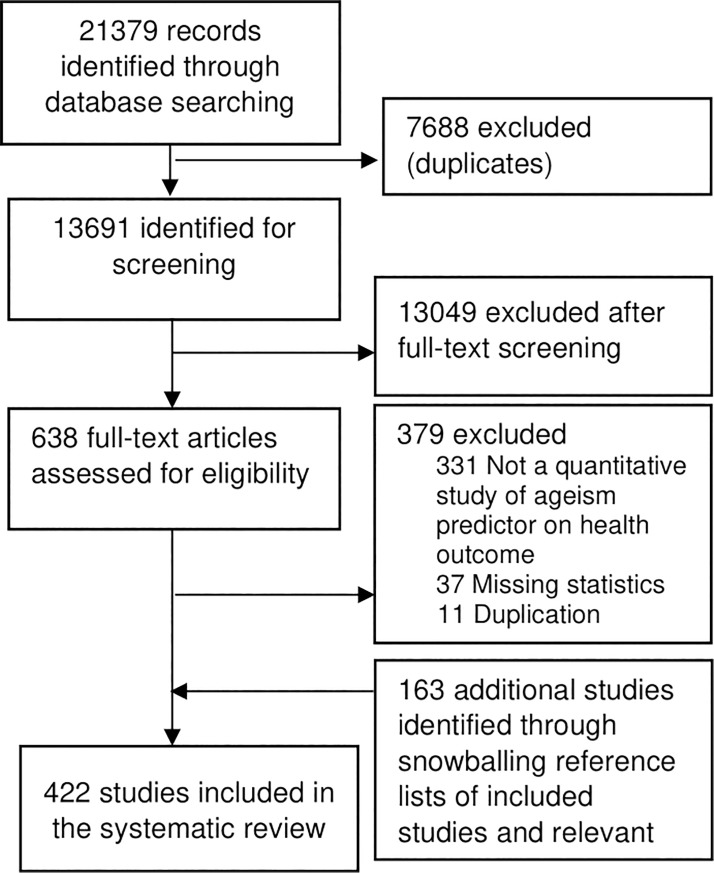
- Systematic review conducted per PRISMA, registered as PROSPERO CRD42018090857. Searches used 14 databases with no restrictions on region, language, or publication type, covering records after 1969 through December 2017; 21,379 citations were retrieved, reduced to 13,691 after duplicates, then 638 full-text reviews and 422 included studies.
- Inclusion criteria required quantitative analysis of ageism effects on health, control for age and relevant covariates or an age-matched design, and ageism targets aged 50 years or older. Data were extracted independently by two investigators; quality was appraised with Newcastle-Ottawa for observational studies and Downs and Black for experimental studies.
- Analyses were descriptive and bivariate chi-squared at study and association levels; evidence of ageism was defined as more than 50% of ageism-health associations being significant. Sensitivity analyses used good-quality studies scoring 7 or above (n = 317; 75.1%) and multivariate logistic regression controlling for study size; the depression estimate used the most homogeneous outcome subset (n = 17, 82.4% using CES-D).
Limitations
- The paper states that significant heterogeneity of study outcomes made a meta-analysis infeasible, and that qualitative studies were not included.
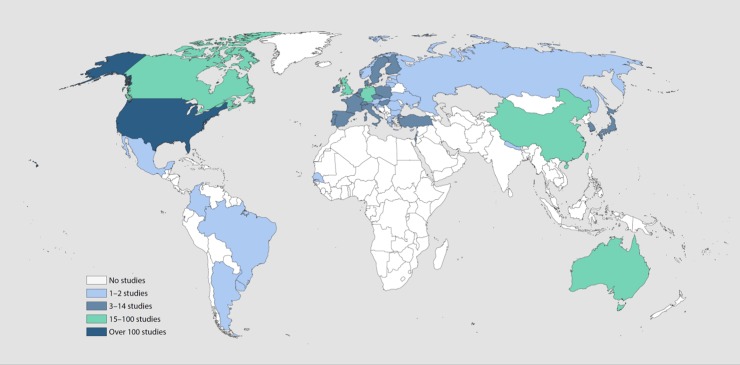
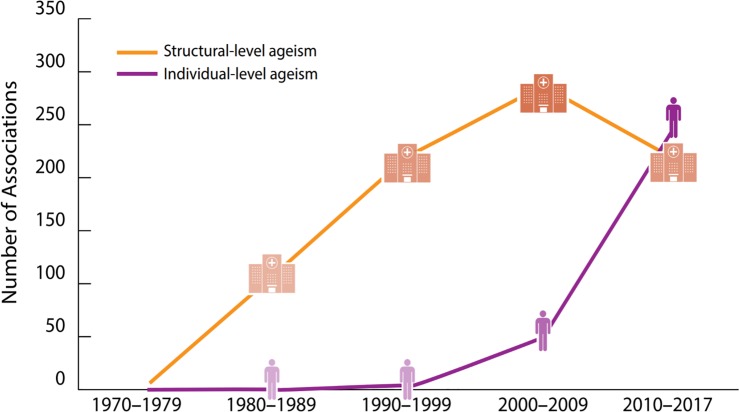
- The paper also notes gaps evident in the literature: only one study took place in Africa, only 8.6% of studies were conducted in less-developed countries despite 92.7% of associations there being significant, few studies (n = 18) formally tested effect modifiers, only four studies examined ageism within dyads, and research attention to structural-level ageism declined since 2010.
Model-written summary. Check it against the paper before relying on it.
Integrity signals
Registry
Cites
Statistics
Figures
Verification
Claims the paper makes
16 Valid · 0 Not valid · 15 Not checked · 79 Own results and interpretations
The cited sources support only part of this claim — read each source’s verdict below.
In the paper
“previous systematic reviews have not examined how both levels simultaneously influence health”
- Also stated in: § Introduction · plain
“Yet, previous ageism studies, and the reviews based on them, have focused on the consequences of ageism operating at the individual level, without assessing the structural sources of ageism.”
§ Global reach of ageism on older persons’ health: A systematic review > Abstract > Objective
What the sources say
- Not checked yetcites [11] Levy BR, Slade MD, Chang ES, Kannoth S, Wang SY. Ageism amplifies cost and prevalence of health conditions. Gerontologist 2018; published online November 13. 10.1093/geront/gny131 30423119 PMC7182003
- Not checked yetcites [12] Horton S, Baker J, Pearce G, Deakin JM. On the malleability of performance- implications for seniors. J Appl Gerontol. 2008; 27: 446– 65. source
- Not checked yetcites [13] Westerhof GJ, Miche M, Brothers AF, et al The influence of subjective aging on health and longevity: a meta-analysis of longitudinal data. Psychol Aging. 2014; 29: 793– 802. 10.1037/a0038016 25365689 source
- Partly supportedcites [14] Lamont RA, Swift HJ, Abrams D. A review and meta-analysis of age-based stereotype threat: negative stereotypes, not facts, do the damage. Psychol Aging. 2015; 30: 180– 93. 10.1037/a0038586 25621742 PMC4360754 sourceExperimental — accuracy not yet measured
The Method sections (Literature Search and Article Selection Criteria; page unavailable) show that this is a review of age-based stereotype threat that selected studies with objective performance measures, not a review of structural and individual ageism jointly influencing health. It therefore serves as an example of a review that did not examine both levels together, but it does not establish the claim about previous systematic reviews generally. (LLM, conf=0.78)
- Not checked yetcites [15] Meisner BA. A meta-analysis of positive and negative age stereotype priming effects on behavior among older adults. J Gerontol B Psychol Sci Soc Sci. 2012; 67: 13– 17. 10.1093/geronb/gbr062 21746872 source
plain- Asserted: passes — The authors put it forward as true.
- Checkable: passes — It can be checked against evidence.
- Load-bearing: passes — The paper’s conclusions depend on it.
- Based: passes — The paper gives a reason why it holds.
- Also stated in: § Introduction · plain
The cited sources support only part of this claim — read each source’s verdict below.
In the paper
“According to SET, these three components of ageism deleteriously influence the health of older persons through psychological, behavioral, and physiological pathways [10].”
§ Global reach of ageism on older persons’ health: A systematic review > Introduction
What the sources say
- Partly supportedcites [10] Levy BR. Stereotype embodiment: a psychosocial approach to aging. Curr Dir Psychol Sci. 2009; 18: 332– 36. 10.1111/j.1467-8721.2009.01662.x 20802838 PMC2927354 sourceExperimental — accuracy not yet measured
The pathway half of the claim is squarely in our copy: 'Utilization of Multiple Pathways' states that 'Age stereotypes appear to exert their influence along three tracks: psychological, behavioral, and physiological,' with examples of detrimental effects on older individuals' health (expectations/self-fulfilling prophecies, reduced healthy practices and self-efficacy, heightened cardiovascular response and events). However, the source nowhere describes 'three components of ageism'; the abstract of Levy (2009) specifies that the theory has FOUR components (internalization across the life span, unconscious operation, salience gain from self-relevance, utilization of multiple pathways), and its object is age stereotypes held by older individuals rather than a tripartite structure of ageism — the only ageism material is the 'Salience Gain From Self-relevance' section on interpersonal/institutional cues. Additionally, the paper hedges ('appear to,' 'likely involves'), which the citing sentence renders as flat causation. (LLM, conf=0.72)
plainstates a cause- Asserted: passes — The authors put it forward as true.
- Checkable: passes — It can be checked against evidence.
- Load-bearing: passes — The paper’s conclusions depend on it.
- Based: passes — The paper gives a reason why it holds.
- Partly supported
The cited sources support only part of this claim — read each source’s verdict below.
In the paper
“five meta-analyses that showed negative age beliefs can adversely affect the health of older persons [11–15]”
§ Global reach of ageism on older persons’ health: A systematic review > Introduction
What the sources say
- Not checked yetcites [11] Levy BR, Slade MD, Chang ES, Kannoth S, Wang SY. Ageism amplifies cost and prevalence of health conditions. Gerontologist 2018; published online November 13. 10.1093/geront/gny131 30423119 PMC7182003
- Not checked yetcites [12] Horton S, Baker J, Pearce G, Deakin JM. On the malleability of performance- implications for seniors. J Appl Gerontol. 2008; 27: 446– 65. source
- Not checked yetcites [13] Westerhof GJ, Miche M, Brothers AF, et al The influence of subjective aging on health and longevity: a meta-analysis of longitudinal data. Psychol Aging. 2014; 29: 793– 802. 10.1037/a0038016 25365689 source
- Partly supportedcites [14] Lamont RA, Swift HJ, Abrams D. A review and meta-analysis of age-based stereotype threat: negative stereotypes, not facts, do the damage. Psychol Aging. 2015; 30: 180– 93. 10.1037/a0038586 25621742 PMC4360754 sourceExperimental — accuracy not yet measured
Lamont, Swift & Abrams (2015) is indeed a meta-analysis showing that negative age stereotypes harm older adults, but the harm it measures is underperformance on stereotype-relevant tasks, not health: the Coding Procedure (Method) defines the outcome set as memory, cognitive, physical, skill-acquisition and driving performance, and the Conclusions state the supported effects are on memory (d = .21) and cognitive performance (d = .68), with the Discussion (Stereotyped Performance Domains) reporting nonsignificant effects for physical performance, driving and skill acquisition. No passage in our copy reports a health outcome (morbidity, mortality, physiological or clinical health) as an effect size or conclusion; health appears only as an unmeasured sample characteristic in the Limitations and as a cited reference (Auman et al., 2005) not pooled here. So the 'adversely affect the health of older persons' element attributed to this source is not supported by it, while the meta-analytic demonstration of harm to cognitive/memory performance is. (LLM, conf=0.70)
- Not checked yetcites [15] Meisner BA. A meta-analysis of positive and negative age stereotype priming effects on behavior among older adults. J Gerontol B Psychol Sci Soc Sci. 2012; 67: 13– 17. 10.1093/geronb/gbr062 21746872 source
plainstates a cause- Asserted: passes — The authors put it forward as true.
- Checkable: passes — It can be checked against evidence.
- Load-bearing: passes — The paper’s conclusions depend on it.
- Based: passes — The paper gives a reason why it holds.
The cited sources support only part of this claim — read each source’s verdict below.
In the paper
“Our current study draws on stereotype embodiment theory (SET) [10], which explains how three distinct, yet interrelated, components of ageism can impact health: age discrimination (i.e., detrimental treatment of older persons); negative age stereotypes (i.e., beliefs about older persons in general); and negative self-perceptions of aging (i.e., beliefs held by older persons about their own aging).”
§ Global reach of ageism on older persons’ health: A systematic review > Introduction
What the sources say
- Partly supportedcites [10] Levy BR. Stereotype embodiment: a psychosocial approach to aging. Curr Dir Psychol Sci. 2009; 18: 332– 36. 10.1111/j.1467-8721.2009.01662.x 20802838 PMC2927354 sourceExperimental — accuracy not yet measured
Our copy of Levy (2009) supports two of the three components the citing sentence attributes to SET: the Abstract defines the approach as 'based on age stereotypes (i.e., beliefs about older people in general)' and reports that negative age stereotypes held earlier in life predict worse health (cardiovascular events over 38 years, Internalization of Stereotypes Across the Life Span), and that stereotypes directed at oneself in old age 'can be classified as self-perceptions of aging' with long-term functional-health and 7.5-year longevity effects (Abstract, Salience Gain From Self-relevance). However, the paper presents the theory as having four components — internalization across the life span, unconscious operation, salience gain from self-relevance, and utilization of multiple pathways (psychological, behavioral, physiological) — not three components of ageism. Age discrimination is discussed only as a source of societal cues (patronizing speech; denial of employment or appropriate medical treatment on the institutional level, Salience Gain From Self-relevance) and as a form of prejudice alongside racism and sexism; no passage treats detrimental treatment itself as a distinct pathway by which ageism impacts health. That element of the claim is therefore not supported by this source. (LLM, conf=0.72)
plainstates a cause- Asserted: passes — The authors put it forward as true.
- Checkable: passes — It can be checked against evidence.
- Load-bearing: passes — The paper’s conclusions depend on it.
- Based: passes — The paper gives a reason why it holds.
- Partly supported
Every source the paper cites for this claim was checked and supports it.
In the paper
“The structural-level and individual-level ageism are inextricably linked because disparaging views of aging, that are propagated by word and deed at the structural level, are assimilated at the individual level [10].”
§ Global reach of ageism on older persons’ health: A systematic review > Introduction
What the sources say
- Supportedcites [10] Levy BR. Stereotype embodiment: a psychosocial approach to aging. Curr Dir Psychol Sci. 2009; 18: 332– 36. 10.1111/j.1467-8721.2009.01662.x 20802838 PMC2927354 source
The Abstract section of Levy (2009) states the core of stereotype embodiment theory: 'stereotypes are embodied when their assimilation from the surrounding culture leads to self-definitions,' and that the process runs 'top-down (from society to the individual) and over time' — i.e., structural/societal propagation and individual assimilation are one linked process. The 'Internalization of Stereotypes Across the Life Span' and 'Salience Gain From Self-relevance' sections elaborate it, describing the 'age stereotypes that permeate society' and pejorative societal cues encountered on interpersonal and institutional levels that individuals absorb. The citing sentence is a faithful paraphrase; only the vocabulary ('structural-level/individual-level ageism') differs from the source's 'surrounding culture/society' and 'institutional level'. (LLM, conf=0.86)
plainstates an association- Asserted: passes — The authors put it forward as true.
- Checkable: passes — It can be checked against evidence.
- Load-bearing: unclear — It is unclear whether the paper’s conclusions depend on it.
- Based: passes — The paper gives a reason why it holds.
- Supported
77 more claims · 10 with their cited sources checked
Create a free account to see all 110 claims and to verify the 43 references still open.
- Probably not a substantial claim. 13
- It may state two separate claims as one. 17
Claims other papers make about this one
Each is checked against this paper’s own text: does it say what the citing paper says it does?
The cited source says what the claim attributes to it.
In the citing paper
“The negative consequences of both structural and individual level ageism on older adults' health have been extensively documented (Chang et al., 2020).”
From Algorithmic harms and digital ageism in the use of surveillance technologies in nursing homes (2022) · cites this paper as Chang et al., 2020
Self-check
Percentages, sums and reported differences re-computed from the paper’s own numbers.
Rated major: it would touch a result — a value a result rests on, reported and recomputed p-values on opposite sides of the significance level, two passages that conflict with no sign which is right, or a cited work retracted before this paper was published.
In the paper
“In 84.6% of the studies and 63.0% of the associations, age dictated whom receives certain procedures or treatments.”
§ Global reach of ageism on older persons’ health: A systematic review > Results > Impact of ageism on health of older persons: Structural level
Reported 63 · recomputed 68.990826
Citations
Cites
The CES-D Scale: A Self-Report Depression Scale for Research in the General Population
Radloff, L. S. (1977) · Applied Psychological Measurement · doi:10.1177/014662167700100306 · Cited by 53,267
Liberati, A., Altman, D. G., Tetzlaff, J., Mulrow, C., Gøtzsche, P. C., Ioannidis, J. P. A., Clarke, M., Devereaux, P. J., Kleijnen, J., & Moher, D. (2009) · PLoS Medicine · doi:10.1371/journal.pmed.1000100 · Cited by 28,164
Liberati, A., Altman, D. G., Tetzlaff, J., Mulrow, C., Gotzsche, P. C., Ioannidis, J. P. A., Clarke, M., Devereaux, P. J., Kleijnen, J., & Moher, D. (2009) · BMJ · doi:10.1136/bmj.b2700 · Cited by 17,648
(2014) · Medical Entomology and Zoology · Cited by 17,633
Methods for the thematic synthesis of qualitative research in systematic reviews
Thomas, J., & Harden, A. (2008) · BMC Medical Research Methodology · doi:10.1186/1471-2288-8-45 · Cited by 9,312
Downs, S. H., & Black, N. (1998) · Journal of Epidemiology and Community Health · doi:10.1136/jech.52.6.377 · Cited by 8,252
Racial Differences in Physical and Mental Health: Socio-economic Status, Stress and Discrimination
Williams, D. R., Yu, Y., Jackson, J. S., & Anderson, N. B. (1997) · Journal of Health Psychology · doi:10.1177/135910539700200305 · Cited by 4,786
Evaluating non-randomised intervention studies
Deeks, J., Dinnes, J., D'Amico, R., Sowden, A., Sakarovitch, C., Song, F., Petticrew, M., & Altman, D. (2003) · Health Technology Assessment · doi:10.3310/hta7270 · Cited by 2,907
Intersectionality and research in psychology
Cole, E. R. (2009) · American Psychologist · doi:10.1037/a0014564 · Cited by 2,722 · cited 1×
“Second, in line with intersectional research [163,164], there is a need to better understand how intersecting systems of power reinforce ageism directed at marginalized groups within older populations.”
Cohort Profile: the Health and Retirement Study (HRS)
Sonnega, A., Faul, J. D., Ofstedal, M. B., Langa, K. M., Phillips, J. W., & Weir, D. R. (2014) · International Journal of Epidemiology · doi:10.1093/ije/dyu067 · Cited by 2,318
Research works printed but not linked: 6
- Levy B. Unconscious ageism In: Palmore EB, Branch LG, Harris DK, editors. Encyclopedia of ageism. New York: Haworth Pastoral Press; 2005 p. 335– 9.
- Butler RN. Ageism. Generations. 2005; 29(3): 84– 6.
- Organisation for Economic Cooperation and Development. Live longer, work longer: A synthesis report. Paris, France: OECD Publishing 2006.
- Higgins J, Green S. Cochrane handbook for systematic reviews for interventions, version 5.1.0. London: The Cochrane Collaboration, 2011.
- Gupta P, Shekhar R, O'Mahony MS. Ageism and sexism in clinical research: are we making any progress? Age Ageing. 2013; 42S3: 12.
- United Nations, Department of Economic and Social Affairs, Population Division. World population ageing 2015.
Cited by
Items 201–300 of 895
Mitigating Ageism through Virtual Reality: Intergenerational Collaborative Escape Room Design
Zou, R., Yin, S., Song, T., Qin, P., & Lee, Y. (2024) · CHI Conference Extended Abstracts on Human Factors in Computing Systems (CHI EA) · doi:10.1145/3613905.3650914 · Cited by 16
Ageism in dental students – a multicentric study in southern Brazil
Guimarães, M. B., Pinto, L. D. R., Bulgarelli, A. F., et al. (2024) · Special Care in Dentistry · doi:10.1111/scd.13048 · Cited by 10
O’Cionnaith, C., Wand, A. P. F., & Peisah, C. (2021) · Clinical Interventions in Aging · doi:10.2147/cia.s311773 · Cited by 11
The dignity of work: An ethical argument against mandatory retirement
Jecker, N. S. (2022) · Journal of Social Philosophy · doi:10.1111/josp.12471 · Cited by 16
‘O outro’ da pandemia da Covid-19: ageísmo contra pessoas idosas em jornais do Brasil e do Chile
de Araújo, P. O., de Freitas, R. A., Duarte, E. D., Cares, L. J., Rodríguez, K. A., Guerra, V., & Carvalho, E. S. D. S. (2022) · Saúde em Debate · doi:10.1590/0103-1104202213402i · Cited by 45
Wand, A. P. F., Karageorge, A., Browne, R., Jessop, T., & Peisah, C. (2023) · International Journal of Geriatric Psychiatry · doi:10.1002/gps.5876 · Cited by 9
Cahapay, M. B. (2021) · Research on Ageing and Social Policy · doi:10.17583/rasp.2020.6066 · Cited by 9
Holmberg, C., Wolf, A., Eide, C., Großschädl, F., Schüttengruber, G., Patel, H., & Heckemann, B. (2020) · Research on Aging · doi:10.1177/0164027520963618 · Cited by 12
Lethal ageism in the shadow of pandemic response tactics
McDonald, T. (2021) · International Nursing Review · doi:10.1111/inr.12700 · Cited by 12
“…of mutual expectations between citizens and governments, between patients and health services, and employers and employees as well as between disadvantaged groups including older people, and those who ignored the safety of others and continued to spread the coronavirus (Chang et al., 2020).”
BackgroundWahl, H., Wettstein, M., Tseng, H.-Y., Schlomann, A., Schmidt, L. I., & Diehl, M. K. (2022) · Developmental Psychology · doi:10.1037/dev0001348 · Cited by 11
Double Stigma in Portuguese Lesbian, Gay, and Bisexual Older Adults: A Study of Health Status
Ribeiro-Gonçalves, J. A., Costa, P. A., & Leal, I. M. P. (2023) · Journal of Sex & Marital Therapy · doi:10.1080/0092623x.2023.2215258 · Cited by 13
“In addition, it has a greater negative impact on older adults from disadvantaged groups, including LGB people (Burnes et al., 2019; Chang et al., 2020; Levy, 2003).”
BackgroundWeissberger, G. H., & Bergman, Y. S. (2023) · Journal of Gerontological Social Work · doi:10.1080/01634372.2023.2246159 · Cited by 11
“Conversely, holding an older subjective age may increase the likelihood that such stereotypes are internalized and cause the individual to change his or her behaviors accordingly (Chang et al., 2020).”
BackgroundAyalon, L., & Roy, S. (2023) · Innovation in Aging · doi:10.1093/geroni/igad095 · Cited by 13
“Ageism has been shown to have detrimental impacts on the health and well-being of older people (Chang et al., 2020).”
BackgroundNishio, M., Haseda, M., Inoue, K., Saito, M., & Kondo, N. (2024) · Age and Ageing · doi:10.1093/ageing/afad224 · Cited by 16
“Societally, ageing brings about shifts in social responsibilities and identities, while also making individuals susceptible to ageism [5].”
BackgroundKatey, D., Agyekum, A., & Morgan, A. K. (2024) · Journal of Global Health · doi:10.7189/jogh.14.03009 · Cited by 9
“While at it, ageism in healthcare accessibility needs to be mitigated since it can result in the neglect of tailored services, limited accessibility, and insufficient attention to the unique health requirements of elderly populations [21,22].”
BackgroundEmergency department crowding: An examination of older adults and vulnerability
MacIsaac, M., & Peter, E. H. (2024) · Nursing Ethics · doi:10.1177/09697330241238333 · Cited by 17
Perceived ageism and psychosocial outcomes during the COVID-19 pandemic
Hajek, A., & König, H. (2024) · Archives of Public Health · doi:10.1186/s13690-024-01297-2 · Cited by 13
“Former research particularly stressed the importance of perceived ageism on physical health (see these recent systematic reviews as an overview: [2, 3]).”
BackgroundResultDeconstructing ageism among older informal workers: a systematic review
Oteng, S. A., Amoah, P. A., & Huang, G. (2024) · International Journal of Sociology and Social Policy · doi:10.1108/ijssp-03-2024-0117 · Cited by 12
Murphy, D. J., Porter, M. M., Mackenzie, C. S., & Chipperfield, J. G. (2024) · Gerontology & Geriatrics Education · doi:10.1080/02701960.2024.2360395 · Cited by 12
“These ageist beliefs can be found in countries across the globe (Ackerman & Chopik, 2021; Chang et al., 2020), and in individuals of all ages (e.g., Barrett & Cantwell, 2007; Cherry CONTACT Michelle M. Porter michelle.porter@umanitoba.ca Clinical Psychology MA student, University of Manitoba,…”
Abbadi, A., Kokoroskos, E., Stamets, M., Vetrano, D. L., Orsini, N., Elmståhl, S., Fagerström, C., Wimo, A. B., Sköldunger, A., Berglund, J. S., et al. (2024) · BMC Medicine · doi:10.1186/s12916-024-03454-4 · Cited by 10
Cheng, H. Y. (2025) · JMIR Formative Research · doi:10.2196/63494 · Cited by 10
Fridberg, H., Wiklund, M., Snellman, F., Rosendahl, E., Hedlund, M., Boraxbekk, C., & Lindelöf, N. (2025) · BMC Geriatrics · doi:10.1186/s12877-024-05635-5 · Cited by 10
Wang, B., Szücs, A., Sandalova, E., Horberg, E. J., O’Keefe, P. A., Island, L., Meij, H. J., Rosenthal, S., & Maier, A. B. (2025) · GeroScience · doi:10.1007/s11357-025-01562-4 · Cited by 16
“Ageistic social norms, for instance, can be internalised by older adults and precipitate their cognitive, mental, and physical decline [41, 42], as these embodied stereotypes reduce willingness and ambitions to engage in activities, social interactions, self-improvement, and future self-care [43,…”
Eight Weeks of Interval Training Led to no Improvement in Cardiovascular Variables in the Elderly
Sant’Ana, L. D. O., Vianna, J. M., dos Reis, N. R., Ribeiro, A. A. D. S., Soares, B. D. O., Novaes, J. D. S., Scartoni, F. R., & Machado, S. E. D. C. (2020) · The Open Sports Sciences Journal · doi:10.2174/1875399x02013010073 · Cited by 10
Everyday life experiences of Chinese community-dwelling oldest old who live alone at home
Ruan, J., Zheng, W., & Zhuang, Y. (2023) · International Journal of Qualitative Studies on Health and Well-Being · doi:10.1080/17482631.2023.2253937 · Cited by 10
Omaña, H., Sureshkumar, A., Äijö, M. A., & Hunter, S. W. (2024) · Physical Therapy · doi:10.1093/ptj/pzae052 · Cited by 11
Life in a world for all ages: From a utopic idea to reality
Ayalon, L. (2020) · Journal of Elder Policy · doi:10.18278/jep.1.1.3 · Cited by 16
Stanciu, A. (2020) · Ageing and Society · doi:10.1017/s0144686x20001257 · Cited by 16
“This form affects not only the psychological and physiological health of the older people themselves but also has consequences for younger people, as they can internalise ageism-related beliefs and behaviours into self-descriptions (Cuddy et al., 2005; Levy, 2009; North and Fiske, 2012, 2013; Lamont et al., 2015; Voss…”
BackgroundAgeism Among Physicians and Nurses in Russia
Punchik, B., Ткачева, О. Н., Рунихина, Н. К., Шарашкина, Н. В., Сергеевна, О. В., Samson, T., Freud, T., & Press, Y. (2021) · Rejuvenation Research · doi:10.1089/rej.2020.2376 · Cited by 9
Veerhuis, N., Harada, T., Murray, K., Andrew, C., Traynor, V., & Randle, M. (2023) · Journal of Applied Gerontology · doi:10.1177/07334648231162696 · Cited by 10
“The use of deficit discourse could be attributed to community perceptions of older age stereotypes which permeate societies across the globe and can lead to poor health outcomes for older adults (Chang et al., 2020).”
BackgroundA phenomenological, intersectional understanding of coping with ageism and racism among older adults
Steward, A. T., Zhu, Y., Fries, C. M. D., Dunbar, A. Z., Trujillo, M., & Hasche, L. K. (2023) · Journal of Aging Studies · doi:10.1016/j.jaging.2023.101186 · Cited by 11
Stjernetun, B. B., Gillsjö, C., Odzakovic, E., & Hällgren, J. (2024) · BMC Nursing · doi:10.1186/s12912-024-01792-5 · Cited by 13
“Ageism is a global issue and has consequences on both a structural and individual level, including denied access to health care services, exclusion from research, shorter life expectancy, less likelihood of recovering from injury, mental illness and declining social life and relationships [2].”
BackgroundÖzsoy, G., & Aksoy, K. (2024) · European Geriatric Medicine · doi:10.1007/s41999-024-00946-7 · Cited by 9
“However, unfortunately, due to outdated beliefs stemming from ageism, digital health applications for older adults in the field of health are implemented with limitations [23].”
Jafari-Koulaee, A., Mohammadi, E., Fox, M. T., Rasekhi, A., & Akha, O. (2024) · Clinical Gerontologist · doi:10.1080/07317115.2024.2401915 · Cited by 11
“…like Iran (Yaghoobzadeh et al., 2023) was that not only some older adults acknowledged the negative attitude of the health system toward older adults, but policymakers and experts in this field also considered this refusal and discrimination of care as a matter of age (Chang et al., 2020).”
Geneviève, L. D., Wangmo, T., Seaward, H., Bouchlaghem, M. A., Blacker, S., & Pageau, F. (2024) · The American Journal of Bioethics · doi:10.1080/15265161.2024.2433419 · Cited by 11
“These stereotypes and prejudices subsequently lead social actions, policies and institutional practices to discriminate against older individuals (Chang et al. 2020; World Health Organization 2021).”
Tina Woods, B., Brown, S. M., & Page, B. (2021) · Plastic & Reconstructive Surgery · doi:10.1097/prs.0000000000008780 · Cited by 10
Chew, G. R. P., Menounos, S., Sheldrick, K. A., Das, A., & Diwan, A. D. (2023) · European Spine Journal · doi:10.1007/s00586-023-07618-3 · Cited by 8
“[26] conducted a systematic review with 7 million participants in 2020 and found that worse health outcomes were found in 95.”
BackgroundCharacter Strengths and Resilience in Older Adults during the COVID-19 Pandemic
Lapierre, S., Chauvette, S., Bolduc, L., Adams-Lemieux, M., Boller, B., & Desjardins, S. (2023) · Canadian Journal on Aging / La Revue canadienne du vieillissement · doi:10.1017/s0714980823000089 · Cited by 10
Ng, R., & Indran, N. (2023) · Journal of Aging & Social Policy · doi:10.1080/08959420.2023.2238538 · Cited by 9
“Despite an abundance of evidence supporting the predominance of negative age stereotypes (Burnes et al., 2019; Chang et al., 2020; Lamont et al., 2015), scholars have drawn attention to the multidimensionality of such stereotypes.”
Beach, P., Hazzan, A. A., Dauenhauer, J. A., & Maine, K. (2024) · Gerontology & Geriatrics Education · doi:10.1080/02701960.2024.2306518 · Cited by 16
“…systematic review found that structural and individual ageism is detrimental to older adults’ health across 11 different domains including reduced longevity, denied access to health care services/ treatments, lack of work opportunities, poor physical & mental health, and more (Chang et al., 2020).”
Schüttengruber, G., Olsson, M. M., Holmberg, C., Großschädl, F., Hessman, E., Sjöblom, H., & Heckemann, B. (2024) · Geriatric Nursing · doi:10.1016/j.gerinurse.2024.05.017 · Cited by 12
Preliminary Validation of Experienced Ageism Measures With Four Populations in the United States
Nyblade, L. C., Stelmach, R. D., West, J. S., Zhu, X., Saalim, K., Wu, C.-H., Stockton, M. A., Adams, E. T., & Kraemer, J. D. (2024) · Ear and Hearing · doi:10.1097/aud.0000000000001475 · Cited by 8
“The negative effects include social exclusion, limited employment opportunities, reduced access to healthcare, reduced mental and physical health, decreases in self-esteem, 63S and ultimately, reductions in lifespans (Levy et al. 2002; Allen 2016; Chang et al. 2020; Marques et al. 2020).”
Older Adults’ Expectations and Experiences With Health care Professionals in Ghana
Issahaku, P. A., & Sulemana, A. (2021) · SAGE Open · doi:10.1177/21582440211040125 · Cited by 11
“Extant research has investigated ageism among health care professionals and reported findings of negative attitudes (Burroughs et al., 2006; Chang et al., 2020; Gomez-Moreno et al., 2019; Lambrinou et al., 2009; Lee et al., 2020; McLafferty & Morrison, 2004; Peake et al., 2003; Rush et al., 2017;…”
BackgroundAccessibility to SARS-CoV-2 swab test during the Covid-19 pandemic: Did age make the difference?
Trevisan, C., Pedone, C., Maggi, S., Noale, M., Bari, M. D., Šojić, A., Molinaro, S., Giacomelli, A., Bianchi, F., Tavio, M., et al. (2021) · Health Policy · doi:10.1016/j.healthpol.2021.10.002 · Cited by 8
Ayalon, L., & Lir, S. A. (2022) · Journal of Applied Gerontology · doi:10.1177/07334648211061477 · Cited by 9
Perceived discrimination in the community pharmacy: A cross-sectional, national survey of adults
Baffoe, J. O., Moczygemba, L. R., & Brown, C. M. (2022) · Journal of the American Pharmacists Association · doi:10.1016/j.japh.2022.10.016 · Cited by 8
Almarwani, M. (2023) · Journal of Multidisciplinary Healthcare · doi:10.2147/jmdh.s398994 · Cited by 13
“Ageism has been well-documented to have negative physical, psychological, and cognitive outcomes in older adults.(7,17) Allen et al 2022 argued that repeated exposure to ageism has the same cumulative effect on body deterioration,”
BackgroundUnderstanding Intersectional Ageism and Stigma of Dementia: Protocol for a Scoping Review
Bacsu, J.-D., Kortzman, A., Fraser, S., Chasteen, A. L., MacDonald, J., & O’Connell, M. E. (2023) · JMIR Research Protocols · doi:10.2196/46093 · Cited by 15
“Specifically, ageism is linked to reduced physical health, poorer mental health, and earlier mortality [16,17].”
Neighborhood Social Environment and Self-Perceptions of Aging
Choi, E. Y., Zelinski, E. M., & Ailshire, J. (2023) · Innovation in Aging · doi:10.1093/geroni/igad038 · Cited by 10
“Negative SPA is associated with older adults’ greater disease burden, poor physical and mental health, impaired functional ability, and even mortality risk, as well as lower levels of well-being and higher levels of social isolation (Chang et al., 2020, for reviews).”
BackgroundAgeism as a Source of Global Mental Health Inequity
Teaster, P. B., & Giwa, A. (2023) · The AMA Journal of Ethic · doi:10.1001/amajethics.2023.765 · Cited by 8
Structural Ageism and the Health of Older Adults
Kilaru, A. S., & Gee, R. E. (2020) · JAMA Health Forum · doi:10.1001/jamahealthforum.2020.1249 · Cited by 8
Association between experiencing low healthcare quality and developing dementia
Aravena, J. M., Chen, X., & Levy, B. R. (2024) · Journal of the American Geriatrics Society · doi:10.1111/jgs.18842 · Cited by 11
“Ageism is common among healthcare professionals and can lead to the denial of access to health services and treatments, 26 limiting the appropriate management of dementia risk factors.”
BackgroundSelf-citationRasset, P., Mange, J., & Augustinova, M. (2024) · Frontiers in Psychology · doi:10.3389/fpsyg.2024.1358403 · Cited by 10
Enhancing quality of life for older adults through university education: a scoping review
Gaia, W. N. G., da Silva, W. V., da Silva, L. S. C. V., Barbosa, M. A. C., Kuhn, N., & da Veiga, C. P. (2024) · Educational Gerontology · doi:10.1080/03601277.2024.2368319 · Cited by 13
“Special attention is given to the role of U3A as noted in the research by Belo et al. (2020), Chang et al. (2020), UNESCO (2020), and Dauenhauer et al. (2022), which exemplifies such initiatives.”
Miguel, I. C., & Carvalhais, L. S. D. A. (2025) · Social Sciences · doi:10.3390/socsci14020103 · Cited by 9
Toward an intragroup approach to alleviate ageism in the second half of life
Ayalon, L. (2025) · The Gerontologist · doi:10.1093/geront/gnaf169 · Cited by 11
Liu, D., Woo, B., Wu, N., Wu, X. V., Ho, C. S. H., & Tam, W. (2026) · International Psychogeriatrics · doi:10.1016/j.inpsyc.2025.100180 · Cited by 9
Chen, Y., Liu, C.-H., Yap, K.-Y., Liu, L. F., Yang, Y.-C., Griffiths, M. D., Hou, W.-L., Huang, C. H., & Lin, C.-W. (2026) · Current Psychology · doi:10.1007/s12144-026-09139-w · Cited by 8
COVID-19, Older Adults and the Ageing Society
Chatterjee, S. C., & Chatterjee, D. (2022) · Routledge eBooks · doi:10.4324/9781003286936 · Cited by 9
Edadismo y discursos de las personas mayores sobre la vejez y el envejecer en Chile
Lizarraga, A. P., Correa, C. B., Bascur, E. F., & Magnère, P. P. (2023) · Athenea Digital Revista de pensamiento e investigación social · doi:10.5565/rev/athenea.3386 · Cited by 11
Piaton, S., Adam, S., Roger‐Leroi, V., & Vallet, G. T. (2024) · Educational Gerontology · doi:10.1080/03601277.2024.2328889 · Cited by 8
“Discrimination against older adults has deleterious consequences on their somatic and psychological health especially when ageism comes from health professionals (Chang et al., 2020; Lamont et al., 2015).”
BackgroundLudwig, V., Kessler, E., Warner, L. M., Pedroso‐Chaparro, M. D. S., Rothermund, K., & Couto, M. C. P. D. P. (2024) · Aging & Mental Health · doi:10.1080/13607863.2024.2354333 · Cited by 12
“Based on these two functions, it is likely that PVoA relate to ageism and acts of age discriminatory behavior, which can negatively impact aging individuals’ mental and physical health (Chang et al., 2020; Jackson et al., 2019).”
Everyday ageism experienced by community-dwelling older people with frailty
Comerford, S., O'Kane, E., Roe, D., et al. (2024) · European Geriatric Medicine · doi:10.1007/s41999-024-01048-0 · Cited by 7
Ageísmo como fenómeno sociocultural invisible que afecta y excluye el cuidado de personas mayores
Campillay, M. C., Carrasco, A. C., Riveros, E. E. R., Lizarraga, A. P., Araya, P. A. D., & Araya-Galleguillos, F. (2021) · Acta bioethica · doi:10.4067/s1726-569x2021000100127 · Cited by 7
The Importance of Views of Aging in the Context of Medical Conditions
Wurm, S., Blawert, A., & Schäfer, S. K. (2022) · International perspectives on aging · doi:10.1007/978-3-031-11073-3_16 · Cited by 12
Steward, A. T., & Hasche, L. K. (2023) · The International Journal of Aging and Human Development · doi:10.1177/00914150231183139 · Cited by 11
“While research has begun to synthesize determinants (Chang et al., 2020) and interventions to reduce ageism (Burnes et al., 2019), few studies have focused on internalized ageism, despite strong evidence that the way ageism is internalized across the lifespan is directly associated with numerous…”
BackgroundResultInfluentialAgeist Communication Experienced by Middle-Aged and Older Canadians
Chasteen, A. L., Tagliamonte, S. A., Pabst, K., & Brunet, S. (2022) · International Journal of Environmental Research and Public Health · doi:10.3390/ijerph19042004 · Cited by 9
“review, the number of studies on ageism from the United States far outpaces those from other nations [12].”
BackgroundSequeira, D., & Jiménez, D. S. (2017) · Revista Akadèmeia · doi:10.61144/0718-9397.2016.140 · Cited by 18
Ageism from the perspective of older adults: A phenomenological study
Yıldırım, G., Yurdakul, B., & Kağnıcı, D. Y. (2024) · Educational Gerontology · doi:10.1080/03601277.2024.2384623 · Cited by 6
Age-related disparities in older adults in trauma
Ghneim, M. H., & Stein, D. M. (2024) · Surgery · doi:10.1016/j.surg.2024.08.038 · Cited by 6
Zoila, F., Filannino, F. M., Panaro, M. A., Sannicandro, I., Cianciulli, A., & Porro, C. (2025) · Frontiers in Aging · doi:10.3389/fragi.2025.1493827 · Cited by 14
Ayalon, L., & Das, S. (2025) · The Journals of Gerontology Series B · doi:10.1093/geronb/gbaf121 · Cited by 6
Özaydın, T., Koçoğlu, D., & Akın, B. (2022) · Collegian Journal of the Royal College of Nursing Australia · doi:10.1016/j.colegn.2022.11.004 · Cited by 8
A qualitative study of older adult trauma survivors’ experiences in acute care and early recovery
Conn, L. G., Nathens, A. B., Scales, D. C., Vogt, K., Wong, C. L., & Haas, B. (2023) · CMAJ Open · doi:10.9778/cmajo.20220013 · Cited by 11
“45 48 Assessment of older adults’ self-image and perceived self-worth after injury and over time may be an important outcome measure to better understand and evaluate their survivorship experiences and concomitant adaptation to aging.”
Ageing in Times of the COVID-19 Pandemic
Simonson, J., Wünsche, J., & Tesch‐Römer, C. (2023) · Springer eBooks · doi:10.1007/978-3-658-40487-1 · Cited by 9
Understanding the Link Between Retirement Timing and Cognition: A Scoping Review
Yauk, J., Veal, B. M., & Dobbs, D. (2023) · Journal of Applied Gerontology · doi:10.1177/07334648231213745 · Cited by 8
“For example, ageism experienced throughout one ’ s life can affect cognition up to 38 years after the experience (Chang et al., 2020).”
BackgroundMisra, D., Buehring, B., Yung, R. L., et al. (2024) · The Lancet Rheumatology · doi:10.1016/s2665-9913(24)00239-x · Cited by 6
Ageism and Empathy Among Dental Students in Southern Brazil
Tôrres, L. H. D. N., Guimarães, M. B., Marchini, L., Rysavy, O., Barlow, P. B., Pendleton, C., & Bulgarelli, A. F. (2025) · Special Care in Dentistry · doi:10.1111/scd.70021 · Cited by 8
AlHakim, R., Alkhouli, M., Hajeer, M. Y., et al. (2025) · Scientific Reports · doi:10.1038/s41598-025-99736-9 · Cited by 6
“In addition, the health outcomes of elderly patients are adversely affected by the younger people’s negativism 15 .”
InfluentialAge management for older worker research evolution and trends: A bibliometric analysis
Nurani, G. A., & Lee, Y.-H. (2025) · Educational Gerontology · doi:10.1080/03601277.2025.2486370 · Cited by 6
“On the other hand, they also reported experiencing fewer learning opportunities, specifically in less-developed countries (Chang et al., 2020).”
Facilitating Age-Conscious Student Development through Lecture-Based Courses on Aging
Russell, E., Thériault, É. R., & Colibaba, A. (2021) · Canadian Journal on Aging / La Revue canadienne du vieillissement · doi:10.1017/s0714980821000246 · Cited by 6
“A recent systematic review (Chang et al., 2020) has demonstrated the serious negative health outcomes of ageism that stem from both structural (institutional) ageism and individual ageism, independent of the perpetrator’s age, sex, or Canadian Journal on Aging / La Revue canadienne du vieillissement”
Clemson, L. M. (2022) · Australian Occupational Therapy Journal · doi:10.1111/1440-1630.12783 · Cited by 10
Graham, K., & Moye, J. A. (2022) · Psychology Learning & Teaching · doi:10.1177/14757257221130483 · Cited by 10
“The presence of biases toward older adults has also been linked to poorer health outcomes for older individuals (see Chang et al., 2020 for review), which makes this an issue of client care as well as a contributing factor to the workforce gap.”
BackgroundSelf-reported hearing and awareness of age-related change: A domain-specific perspective
Wettstein, M., Kornadt, A. E., Heyl, V., & Wahl, H. (2023) · Zeitschrift für Gerontologie und Geriatrie · doi:10.1007/s00391-023-02171-6 · Cited by 9
“Negative views on aging in general are related to poor health outcomes [6] and higher healthcare costs [11].”
BackgroundSenior nursing students' ageism and its associated factors: A national cross-sectional study
Wang, C., Huang, P.-J., & Chuang, Y. (2024) · Nurse Education Today · doi:10.1016/j.nedt.2024.106326 · Cited by 8
Cross-Generational Understandings of Ageism and Its Perceived Impacts on Personal-Public Health
Mayo, D. M., Meuser, T. M., Robnett, R. H., Webster, M., & Woolard, C. E. (2021) · Journal of Gerontological Social Work · doi:10.1080/01634372.2021.2019865 · Cited by 8
“In a systematic review of 422 studies (over seven million participants) on the influence of ageism on older persons’ health, Chang et al. (2020) found evidence of ageism in all 45 reported countries.”
BackgroundEthical considerations in elderly patients with acute coronary syndrome
Ayesta, A., Bonanad, C., Díez‐Villanueva, P., García‐Blas, S., Ariza‐Solé, A., & Martínez‐Sellés, M. (2022) · Reviews in Cardiovascular Medicine · doi:10.31083/j.rcm2302055 · Cited by 6
Development and Feasibility of a Process Based Intervention to Decrease Internalized AgeismPreprint
Murphy, D. J., Porter, M. M., Mackenzie, C. S., & Chipperfield, J. G. (2023) · PsyArXiv (OSF Preprints) · doi:10.31234/osf.io/497xc · Cited by 7
Khalil, M. I. M., Hallit, S. R., Fekih‐Romdhane, F., Bitar, Z., Shaala, R. S., Mousa, E. F. S., Menessy, R. F. M., & Elnakeeb, M. E. (2024) · Research Square · doi:10.21203/rs.3.rs-4534125/v1 · Cited by 5
Codesigning Training for Health Providers to Improve Detection and Response to Elder Abuse
Brijnath, B., Cavuoto, M. G., Feldman, P., Dow, B., Antoniades, J., Ostaszkiewicz, J., Nakrem, S., Stevens, C., Reyes, P., Renshaw, G., et al. (2025) · The Gerontologist · doi:10.1093/geront/gnae153 · Cited by 6
“Even prior to the pandemic, ageist attitudes were noted in Australia (O’Loughlin et al., 2017) and globally (Chang et al., 2020), including among health providers (Wyman et al., 2018).”
Onyeso, O. K., Alumona, C. J., Ojagbemi, A., Onyeso, K. M., Odole, A. C., Victor, J., Doan, J. B., Bello, T., Gureje, O., & Awosoga, O. (2025) · Journal of Aging and Health · doi:10.1177/08982643251329431 · Cited by 7
“This discrimination restricts supportive environments and opportunities for physical activity, contributing to sedentary lifestyles that may accelerate physical decline and impair mobility and health among older adults (Chang et al., 2020).”
García-García, L., Fernándes-Pires, J., Márquez‐González, M., Pedroso‐Chaparro, M. D. S., Benito-Rincón, C., Pérez-Cardona, L. M., & Losada‐Baltar, A. (2025) · The Spanish Journal of Psychology · doi:10.1017/sjp.2025.9 · Cited by 7
“…self-perceptions of aging and a higher frequency of symptoms of psychological distress such as depression, anxiety, or loneliness, through the life cycle (Chang et al., 2020; Fernandes-Pires et al., 2023; Losada-Baltar et al., 2021; Pedroso-Chaparro et al., 2021, 2022, 2023a; Wurm & Schäfer, 2022).”
Ageism and informal learning: Exploring care settings for older adults
Coelho, S. F., Medina, T., & Pinto, I. R. (2025) · Educational Gerontology · doi:10.1080/03601277.2025.2500719 · Cited by 5
“Unfortunately, longevity is not synonymous with living longer and better lives for many people, and ageism is one of the threats to quality of life (Chang et al., 2020).”
Does the Chronic Stress of Everyday Discrimination or Race Itself Better Predict AD Onset Risk?
Gary, K. M., Hoque, M., Yashkin, A. P., Yashin, A. I., & Akushevich, I. V. (2022) · Gerontology and Geriatric Medicine · doi:10.1177/23337214221142944 · Cited by 6
“, whites) could be experiencing high rates of discrimination for the first time related to ageism (Barnes et al., 2008; Chang et al., 2020) and not have the resiliency to deal with this type of chronic strain for this first time, thus leaving them more vulnerable to its effects.”
BackgroundYaş Ayrımcılığı: Etkiler ve Çözüm Önerileri
Dikmen, R. D. (2023) · Geriatrik Bilimler Dergisi · doi:10.47141/geriatrik.1163213 · Cited by 10
Imágenes sobre la vejez y el envejecimiento en los memes de Internet
Pochintesta, P., & Baglione, M. F. (2023) · Perspectivas de la comunicación · doi:10.56754/0718-4867.2023.3385 · Cited by 5
Vasli, P., Pourshahri, E., Pourhasan, K., et al. (2024) · Ethics & Behavior · doi:10.1080/10508422.2024.2321154 · Cited by 5
“These outcomes include reduced life expectancy, cognitive impairments, multiple physiological and psychological problems, some high-risk behaviors, low-quality social ties, and decreased quality of life (Chang et al., 2020).”
Perceived Ageism in Health Care: A Hybrid Concept Analysis
Liu, X., Wang, D., Gu, C., Bao, H., & Luo, Y. (2024) · Journal of Applied Gerontology · doi:10.1177/07334648241248297 · Cited by 6
“Ageism is pervasive and persistent at the healthcare system level, leading to undertreatment, restricted access to health care, and low participation in therapeutic clinical trials among older individuals (Chang et al., 2020).”
Measuring ageism: Psychometric analysis of the Portuguese short form of the Fraboni Scale (FSA-SF)
Neto, J., & Neto, F. F. M. (2024) · Measurement Instruments for the Social Sciences · doi:10.5964/miss.11993 · Cited by 10
“In fact, ageism was shown to raise detrimental consequences on older adults’ health and wellbeing (Bergman et al., 2020; Chang et al., 2020; Gvili & Bodner, 2021; Kornadt et al., 2021; Levy et al., 2020; Schuurman et al., 2022; Shiovitz-Ezra et al., 2023; Wyman et al., 2018).”
BackgroundResearch Landscape on Hidden Workers in Aging Populations: Bibliometric Review
Lee, S., & Kang, W. (2024) · Social Sciences · doi:10.3390/socsci13070342 · Cited by 7
Metadata
- Authors
- Chang, E.-S., Kannoth, S., Levy, S., Wang, S.-Y., Lee, J. E., & Levy, B. R.
- Affiliations
- Yale University (US)
- Corresponding author
- Levy, Becca R.
- Venue
- PLOS ONE
- Publisher
- Public Library of Science (PLoS)
- Published
- 2020-01-15
- Volume
- 15
- Issue
- 1
- Pages
- e0220857
- ISSN
- 1932-6203 (ISSN-L)
- PMC
- PMC6961830
- OpenAlex
- W3000728195
- Semantic Scholar
- b947b2885089ddf627a4c02d71c7653a95809b0e
- Cited by
- 912
- References
- 169
- Citations by year
- 2026: 158 · 2025: 200 · 2024: 157 · 2023: 134 · 2022: 127 · 2021: 91 · 2020: 43
- FWCI
- 17.40
- Type
- journal article
- Language
- en
- Open access
- gold
- doi.org
- Licence
- Locations
- PLoS ONE (publishedVersion, cc-by)
- Europe PMC (PubMed Central) (publishedVersion, cc-by)
- PubMed Central (publishedVersion, cc-by)
- PubMed (publishedVersion)
- RePEc: Research Papers in Economics (submittedVersion)
- DOAJ (DOAJ: Directory of Open Access Journals) (submittedVersion, cc-by-sa)
- Figshare (submittedVersion, cc-by)
- Funders
- World Health Organization
- Yale University
- National Institutes of Health (5u01ag032284-08, UL1TR001863)
- Agency for Healthcare Research and Quality (1K01HS023900, K01 HS023900)
- Yale School of Public Health, Yale University
- National Institute on Aging (#U01AG032284, P30AG021342)
- National Center for Advancing Translational Sciences
- Topics
- Social Sciences › Psychology › Developmental and Educational Psychology › Aging and Gerontology Research
- Social Sciences › Demography › Retirement, Disability, and Employment
- Social Sciences › Health › Health disparities and outcomes
- Keywords
- ageism, health outcomes, educational attainment, developed and developing countries
- MeSH terms
- Aged, Aged, 80 and over, Aging, Depression, Female, Humans, Male, Peer Review, Social Behavior, Databases, Factual, Ageism, Social Discrimination
About these checks
Registry, retraction, Cites and statistics results are computed, not judged, with one exception: a printed reference that no index lists is read once by a model before it counts as a citation error. Claims are extracted by a model and kept only when their quote appears verbatim in the text; each cited source is then checked, with a model’s help, for whether it says what the claim relies on. Those verdicts can be wrong — read the claim’s quote and the cited source before relying on one.
The claim verdicts this report counts are experimental: their accuracy is not yet measured.
A language model drew the claims from the paper on 2026-10-10, under version 3 of the claim definition (model deepseek-v4.1-flash, prompt extract-v3).
A second model labelled each claim on 2026-10-10 (model jev-1.13-20260917, definition revision gold-guideline-v0.2).
Cited sources are checked with a language model’s help (gpt-6-sol and qwen3.8-omni-flash).
Statistics and arithmetic are recomputed, not judged.
Confidence bands are shown only for fields calibrated on our annotated test set. None is calibrated yet, so no band is shown.
What counts as a claim ›How we measure confidence ›How we check this ›
Are you an author, or do you see a problem with this page? Request a review
Data sources
Bibliographic data: Semantic Scholar, OpenAlex, Crossref.
Contains information from the Semantic Scholar Academic Graph Datasets, made available under the ODC Attribution License (ODC-BY 1.0).
Semantic Scholar’s data is described in: Kinney, R., et al. (2023). The Semantic Scholar Open Data Platform. arXiv:2301.10140.
