

The DOI matches its Crossref record; 36 of the 39 references it cites were found in a registry or an index.
A brief diet intervention can reduce symptoms of depression in young adults—a randomised controlled trial
Open accessAbstract
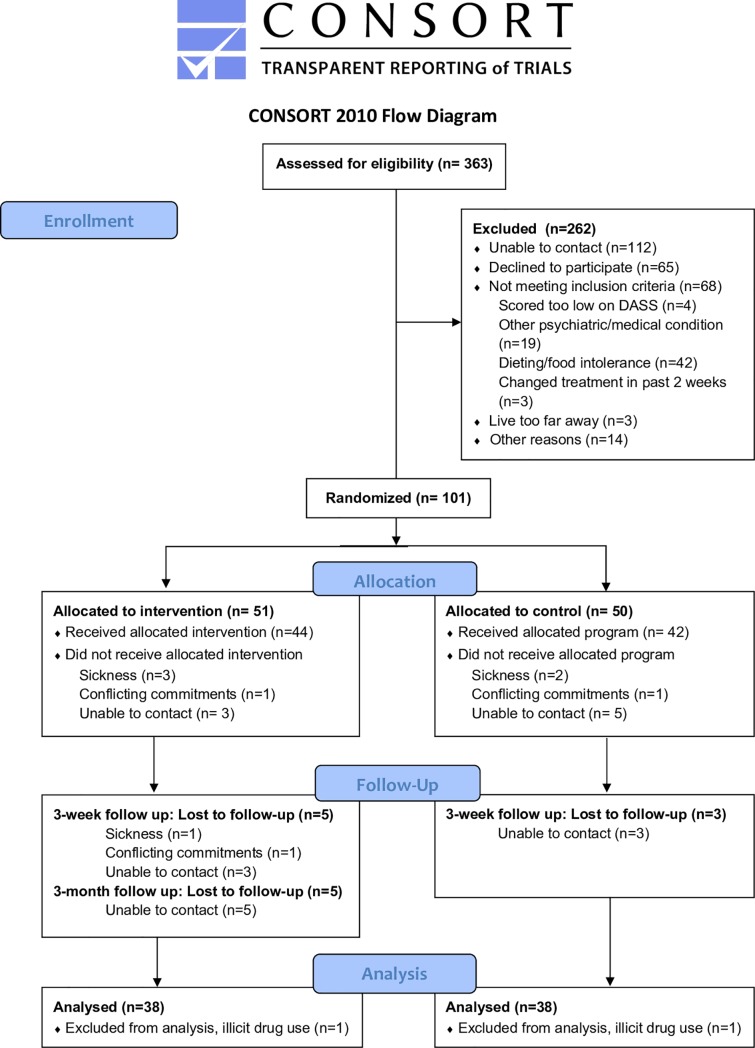
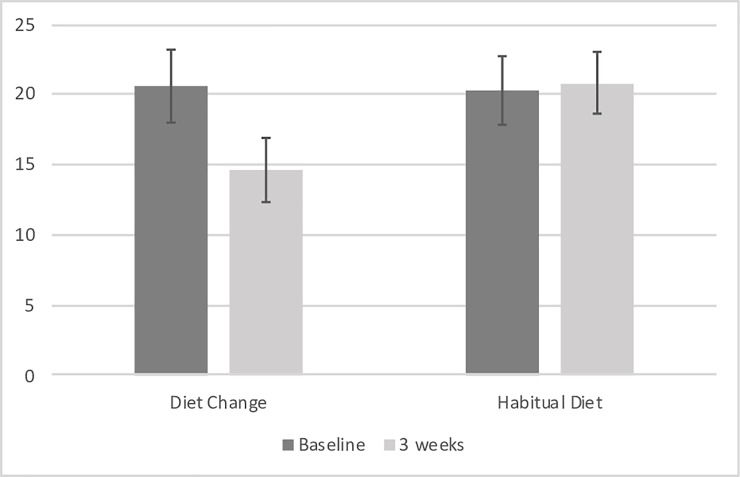
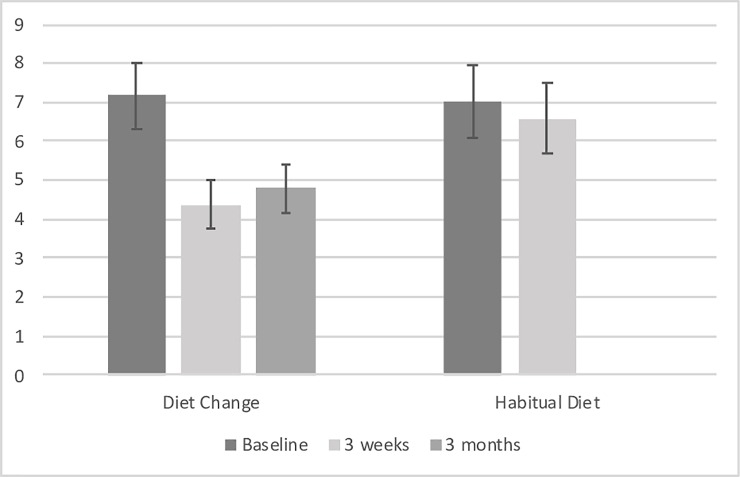
There is strong epidemiological evidence that poor diet is associated with depression. The reverse has also been shown, namely that eating a healthy diet rich in fruit, vegetables, fish and lean meat, is associated with reduced risk of depression. To date, only one randomised controlled trial (RCT) has been conducted with elevated depression symptoms being an inclusion criterion, with results showing that a diet intervention can reduce clinical levels of depression. No such RCTs have been performed in young adults. Young adults with elevated levels of depression symptoms and who habitually consume a poor diet were randomly allocated to a brief 3-week diet intervention (Diet Group) or a habitual diet control group (Control Group). The primary and secondary outcome measures assessed at baseline and after the intervention included symptoms of depression (Centre for Epidemiological Studies Depression Scale; CESD-R; and Depression Anxiety and Stress Scale- 21 depression subscale; DASS-21-D), current mood (Profile of Mood States), self-efficacy (New General Self-Efficacy Scale) and memory (Hopkins Verbal Learning Test). Diet compliance was measured via self-report questionnaires and spectrophotometry. One-hundred-and-one individuals were enrolled in the study and randomly assigned to the Diet Group or the Control Group. Upon completion of the study, there was complete data for 38 individuals in each group. There was good compliance with the diet intervention recommendations assessed using self-report and spectrophotometry. The Diet group had significantly lower self-reported depression symptoms than the Control Group on the CESD-R (p = 0.007, Cohen's d = 0.65) and DASS-21 depression subscale (p = 0.002, Cohen's d = 0.75) controlling for baseline scores on these scales. Reduced DASS-21 depression subscale scores were maintained on follow up phone call 3 months later (p = .009). These results are the first to show that young adults with elevated depression symptoms can engage in and adhere to a diet intervention, and that this can reduce symptoms of depression. The findings provide justification for future research into the duration of these benefits, the impacts of varying diet composition, and their biological basis.
Overview
The claims and statistics of this paper haven’t been checked yet.
Run the check — free, no account needed. It reads the open-access text and checks the sources it cites.
Integrity signals
Registry
Cites
Statistics
Figures
Verification
Claims the paper makes
The claims and statistics of this paper haven’t been checked yet.
Run the check — free, no account needed. It reads the open-access text and checks the sources it cites.
Claims other papers make about this one
Each is checked against this paper’s own text: does it say what the citing paper says it does?
The source backs part of the claim, not all of it — or backs it for a different population, condition or comparison.
In the citing paper
“several recent RCTs (not captured in our meta-review) have reported significant improvements in clinical depression from Mediterranean diet interventions, observing moderately large positive effects 102-104 .”
From A meta-review of "lifestyle psychiatry": the role of exercise, smoking, diet and sleep in the prevention and treatment of mental disorders (2020) · cites this paper as [102]
Experimental — accuracy not yet measuredIn the citing paper
“While there is existing evidence from clinical interventions showing improvements in depression and anxiety symptoms following dietary manipulation (199, 311, 326), these studies have not, to date, collected gut microbiota data.”
From Diet and the Microbiota–Gut–Brain Axis: Sowing the Seeds of Good Mental Health (2021) · cites this paper as [326]
In the citing paper
“On the other hand, several recent smaller trials in individuals with current depression observed moderately large improvements from interventions based on the Mediterranean diet.35 36 37”
From Food and mood: How do diet and nutrition affect mental wellbeing? (2020) · cites this paper as [35]
Self-check
Percentages, sums and reported differences re-computed from the paper’s own numbers.
The self-check needs the paper’s full text.
Citations
Cites
Statistical Power Analysis for the Behavioral Sciences
Muller, K. E., & Cohen, J. (1989) · Technometrics · doi:10.2307/1270020 · Cited by 99,603
The CES-D Scale: A Self-Report Depression Scale for Research in the General Population
Radloff, L. S. (1977) · Applied Psychological Measurement · doi:10.1177/014662167700100306 · Cited by 53,267
International physical activity questionnaire: 12-country reliability and validity
CRAIG, C. L., MARSHALL, A. L., SJ??STR??M, M., BAUMAN, A. E., BOOTH, M. L., AINSWORTH, B. E., PRATT, M., EKELUND, U., YNGVE, A., SALLIS, J. F., et al. (2003) · Medicine & Science in Sports & Exercise · doi:10.1249/01.mss.0000078924.61453.fb · Cited by 21,619
Kessler, R. C., Berglund, P., Demler, O., Jin, R., Merikangas, K. R., & Walters, E. E. (2005) · Archives of General Psychiatry · doi:10.1001/archpsyc.62.6.593 · Cited by 20,391
Jacobson, N. S., & Truax, P. (1991) · Journal of Consulting and Clinical Psychology · doi:10.1037/0022-006x.59.1.12 · Cited by 7,770
Validation of a New General Self-Efficacy Scale
Chen, G., Gully, S. M., & Eden, D. (2001) · Organizational Research Methods · doi:10.1177/109442810141004 · Cited by 3,542
Intention-to-treat concept: A review
Gupta, S. (2011) · Perspectives in Clinical Research · doi:10.4103/2229-3485.83221 · Cited by 1,921
The Use of Psychological Testing for Treatment Planning and Outcomes Assessment
(2004) · doi:10.4324/9781410610614 · Cited by 1,503
The nutrition transition: new trends in the global diet
Drewnowski, A., & Popkin, B. M. (2009) · Nutrition Reviews · doi:10.1111/j.1753-4887.1997.tb01593.x · Cited by 1,440
Jacka, F. N., O’Neil, A., Opie, R., Itsiopoulos, C., Cotton, S., Mohebbi, M., Castle, D., Dash, S., Mihalopoulos, C., Chatterton, M. L., et al. (2017) · BMC Medicine · doi:10.1186/s12916-017-0791-y · Cited by 1,093
Research works printed but not linked: 8
- JS Lai, 2013, Systematic Review and Meta-Analysis of Dietary Patterns and Depression: Observational Studies, Ann Nutr Metab, 63, 428
- S Lovibond, 1995, Manual for the Depression Anxiety and Stress Scales
- 2003, Dietary Guidelines for Australian Adults. A guide to healthy eating
- J Brandt, 1991, Hopkins Verbal Learning Test-Revised (HVLT-R)
- C Randolph, 1999, RBANS Repeatable Battery for the Assessment of Neuropsychological Status: Manual
- D Wechsler, 2008, WAIS-IV: Wechsler Adult Intelligence Scale
- DE Moul, 2002, Preliminary study of the test-retest reliability and concurrent validities of the Pittsburgh Insomnia Rating Scale (PIRS), Sleep, 25, A246
- G Hendrie, 2016, CSIRO Healthy Diet Score
Cited by
Sorted by citations
Firth, J., Solmi, M., Wootton, R. E., Vancampfort, D., Schuch, F. B., Hoare, E., Gilbody, S., Torous, J., Teasdale, S. B., Jackson, S. E., et al. (2020) · World Psychiatry · doi:10.1002/wps.20773 · Cited by 1,242
Diet and depression: Exploring the biological mechanisms of action
Marx, W., Lane, M., Hockey, M., Aslam, H., Berk, M., Walder, K., Borsini, A., Firth, J., Pariante, C. M., Berding, K., et al. (2021) · Molecular Psychiatry · doi:10.1038/s41380-020-00925-x · Cited by 685
Molecular pathways of major depressive disorder converge on the synapse
Fries, G. R., Saldana, V. A., Finnstein, J., & Rein, T. (2023) · Molecular Psychiatry · doi:10.1038/s41380-022-01806-1 · Cited by 504
Food and mood: How do diet and nutrition affect mental wellbeing?
Firth, J., Gangwisch, J. E., Borsini, A., Wootton, R. E., & Mayer, E. A. (2020) · BMJ · doi:10.1136/bmj.m2382 · Cited by 475
Diet and the Microbiota–Gut–Brain Axis: Sowing the Seeds of Good Mental Health
Berding, K., Vlckova, K., Marx, W., Schellekens, H., Stanton, C., Clarke, G., Jacka, F., Dinan, T. G., & Cryan, J. F. (2021) · Advances in Nutrition · doi:10.1093/advances/nmaa181 · Cited by 451
Lane, M. M., Gamage, E., Travica, N., Dissanayaka, T., Ashtree, D. N., Gauci, S., Lotfaliany, M., O’Neil, A., Jacka, F. N., & Marx, W. (2022) · Nutrients · doi:10.3390/nu14132568 · Cited by 320
Irritable bowel syndrome and mental health comorbidity — approach to multidisciplinary management
Staudacher, H. M., Black, C. J., Teasdale, S. B., Mikocka‐Walus, A. A., & Keefer, L. (2023) · Nature Reviews Gastroenterology & Hepatology · doi:10.1038/s41575-023-00794-z · Cited by 292
Jayedi, A., Soltani, S., Abdolshahi, A., & Shab‐Bidar, S. (2020) · British Journal Of Nutrition · doi:10.1017/s0007114520002330 · Cited by 269
Wickham, S.-R., Amarasekara, N. A., Bartonicek, A., & Conner, T. S. (2020) · Frontiers in Psychology · doi:10.3389/fpsyg.2020.579205 · Cited by 223
Marx, W., Manger, S., Blencowe, M., Murray, G., Ho, F. Y., Lawn, S., Blumenthal, J. A., Schuch, F. B., Stubbs, B., Ruusunen, A. A., et al. (2022) · The World Journal of Biological Psychiatry · doi:10.1080/15622975.2022.2112074 · Cited by 200
“…main source of cooking and added oil Consume the daily recommended water intake Avoid excessive alcohol consumption Partially adapted from Opie et al. (2017) improvement in depressive symptoms can be achieved independent of weight loss (Jacka et al. 2017; Parletta et al. 2018; Francis et al. 2019).”
BackgroundInfluentialBayes, J., Schloss, J. M., & Sibbritt, D. W. (2022) · American Journal of Clinical Nutrition · doi:10.1093/ajcn/nqac106 · Cited by 195
Depression, dementia and immune dysregulation
Hayley, S., Hakim, A. M., & Albert, P. R. (2021) · Brain · doi:10.1093/brain/awaa405 · Cited by 186
“Even a short (3-week) diet intervention in adolescence may blunt some, albeit modest, depressive symptoms (Francis et al., 2019).”
BackgroundSarris, J. J., Thomson, R. J., Hargraves, F., Eaton, M., de Manincor, M., Veronese, N., Solmi, M., Stubbs, B., Yung, A. R., & Firth, J. (2020) · BMC Medicine · doi:10.1186/s12916-020-01813-5 · Cited by 147
Mediterranean diet and depression: a population-based cohort study
Yin, W., Löf, M., Chen, R., Hultman, C. M., Fang, F., & Sandin, S. (2021) · International Journal of Behavioral Nutrition and Physical Activity · doi:10.1186/s12966-021-01227-3 · Cited by 150
An integrative collaborative care model for people with mental illness and physical comorbidities
Ee, C., Lake, J., Firth, J., Hargraves, F., de Manincor, M., Meade, T., Marx, W., & Sarris, J. J. (2020) · International Journal of Mental Health Systems · doi:10.1186/s13033-020-00410-6 · Cited by 173
Personalized machine learning of depressed mood using wearables
Shah, R. V., Grennan, G., Zafar-Khan, M., Alim, F., Dey, S., Ramanathan, D., & Mishra, J. (2021) · Translational Psychiatry · doi:10.1038/s41398-021-01445-0 · Cited by 123
The relationship between nutrition and depression in the life process: A mini-review
Ekinci, G. N., & Şanlıer, N. (2022) · Experimental Gerontology · doi:10.1016/j.exger.2022.112072 · Cited by 127
“As a result of the healthy nutrition program applied to young adults for 3 months, it was observed that there was a decrease in depression scores (Francis et al., 2019).”
Yoram Vodovotz, B., Barnard, N. D., Hu, F. B., Jakicic, J. M., Lianov, L. S., Loveland, D., Buysse, D. J., Szigethy, E., Finkel, T., Sowa, G., et al. (2020) · Frontiers in Medicine · doi:10.3389/fmed.2020.585744 · Cited by 116
“Short-term dietary interventions have been shown to improve depression scores in both normal individuals (59) and those with depressive symptoms, the latter finding in both young (60) and general (61) populations.”
BackgroundExercise as a therapeutic modality for the prevention and treatment of depression
Blumenthal, J. A., & Rozanski, A. (2023) · Progress in Cardiovascular Diseases · doi:10.1016/j.pcad.2023.02.008 · Cited by 95
Swainson, J., Reeson, M., Malik, U., Stefanuk, I., Cummins, M., & Sivapalan, S. (2023) · Journal of Affective Disorders · doi:10.1016/j.jad.2023.01.094 · Cited by 92
Bizzozero‐Peroni, B., Martínez‐Vizcaíno, V., Fernández‐Rodríguez, R., Jiménez‐López, E., de Arenas‐Arroyo, S. N., Saz‐Lara, A., Goñi, V. D., & Mesas, A. E. (2023) · Nutrition Reviews · doi:10.1093/nutrit/nuad176 · Cited by 92
Freijy, T. M., Cribb, L., Oliver, G., Metri, N., Opie, R., Jacka, F. N., Hawrelak, J. A., Rucklidge, J. J., Ng, C. H., & Sarris, J. J. (2023) · Frontiers in Neuroscience · doi:10.3389/fnins.2022.1097278 · Cited by 86
Nutrition-based interventions for mood disorders
Martins, L. B., Tibães, J. R. B., Sanches, M., Jacka, F. N., Berk, M., & Teixeira, A. L. (2021) · Expert Review of Neurotherapeutics · doi:10.1080/14737175.2021.1881482 · Cited by 79
Unraveling the Complex Interplay Between Neuroinflammation and Depression: A Comprehensive Review
Sălcudean, A., Popovici, R. A., Pitic, D. E., Sârbu, D., Boroghina, A. R., Jomaa, M., Salehi, M. A., Kher, A. A. M., Lica, M. M., Bodo, C. R., et al. (2025) · International Journal of Molecular Sciences · doi:10.3390/ijms26041645 · Cited by 82
Dietch, D., Kerr‐Gaffney, J., Hockey, M., Marx, W., Ruusunen, A. A., Young, A. H., Berk, M., & Mondelli, V. (2023) · BJPsych Open · doi:10.1192/bjo.2023.36 · Cited by 74
Dharmayani, P. N. A., Juergens, M., Allman-Farinelli, M. A., & Mihrshahi, S. (2021) · International Journal of Environmental Research and Public Health · doi:10.3390/ijerph18020780 · Cited by 74
“Two RCTs showed significant reductions in depressive symptoms in young adults with depression symptoms after a brief diet intervention [81,82].”
BackgroundThe Mediterranean Diet and the Western Diet in Adolescent Depression-Current Reports
Zielińska, M., Łuszczki, E., Michońska, I., & Dereń, K. (2022) · Nutrients · doi:10.3390/nu14204390 · Cited by 76
Staudacher, H. M., Mahoney, S., Canale, K. E., Opie, R., Loughman, A., So, D., Beswick, L., Hair, C., & Jacka, F. N. (2023) · Alimentary Pharmacology & Therapeutics · doi:10.1111/apt.17791 · Cited by 78
“17 The mechanisms by which diet influences anxiety or depression are likely via several interacting direct and indirect pathways, including immune and oxidative stress mechanisms, the microbiome, brain plasticity, neurotransmitter production and mitochondrial function.”
BackgroundZhang, Q., Jin, K., Chen, B., Liu, R., Cheng, S., Zhang, Y., & Lü, J. (2022) · Frontiers in Neuroscience · doi:10.3389/fnins.2022.884579 · Cited by 65
“Similarly, a small or traditional diet comprising fruit, vegetables, and fish positively influenced brain function and behavior (Francis et al., 2019).”
BackgroundMehta, K. J. (2022) · Humanities and Social Sciences Communications · doi:10.1057/s41599-021-01031-1 · Cited by 72
“Alongside, poor diet can lead to depression while a healthy diet reduces the risk of depression (Francis et al., 2019).”
BackgroundNutrition and bipolar disorder: a systematic review
Gabriel, F. C., Oliveira, M., Martella, B. D. M., Berk, M., Brietzke, E., Jacka, F. N., & Lafer, B. (2023) · Nutritional Neuroscience · doi:10.1080/1028415x.2022.2077031 · Cited by 59
“diet’ are yielding more consistently promising results [5,6,101,102].”
BackgroundData fusion based on Searchlight analysis for the prediction of Alzheimer’s disease
Arco, J. E., Ramı́rez, J., Górriz, J. M., & Ruz, M. (2021) · Expert Systems with Applications · doi:10.1016/j.eswa.2021.115549 · Cited by 55
Digital Phenotyping and Feature Extraction on Smartphone Data for Depression Detection
Yang, M., Ngai, E. C. ‐., Hu, X., Hu, B., Liu, J., Erol Gelenbe, A., & Leung, V. C. M. (2024) · Proceedings of the IEEE · doi:10.1109/jproc.2025.3542324 · Cited by 56
“In contrast, engaging in healthy behaviors such as exercise [179], social support [180], and a balanced diet [181] can improve neural functioning, help alleviate symptoms of depression, and promote long-term recovery.”
Hao, W., Gan, H. T., Wang, L., Huang, J., & Chen, J. (2022) · Critical Reviews in Food Science and Nutrition · doi:10.1080/10408398.2022.2099808 · Cited by 51
“The incidence of depression is related to several factors such as dietary structure, changes in hormone levels, dietary habits, and unbalanced dietary nutrient intake (Francis et al. 2019; Swann et al. 2020; Wang et al. 2020).”
BackgroundEvolving data-adaptive support vector machines for binary classification
Dudzik, W., Nalepa, J., & Kawulok, M. (2021) · Knowledge-Based Systems · doi:10.1016/j.knosys.2021.107221 · Cited by 48
Walsh, H., Lee, M. F., & Best, T. (2023) · International Journal of Environmental Research and Public Health · doi:10.3390/ijerph20043258 · Cited by 43
“Four randomised control trials assessed dietary change from unhealthy (Western) to healthy (Mediterranean) dietary patterns and depression; two assessed the general population [14,18,24] and two assessed young adults [19,20].”
BackgroundImproved modeling of the role of mangroves in storm surge attenuation
Chen, Q., Li, Y., Kelly, D. M., Zhang, K., Zachry, B. C., & Rhome, J. R. (2021) · Estuarine Coastal and Shelf Science · doi:10.1016/j.ecss.2021.107515 · Cited by 41
El-Sayed, H. S., Youssef, K., & Hashim, A. F. (2022) · Frontiers in Microbiology · doi:10.3389/fmicb.2022.893053 · Cited by 41
“EVOO is a source of phenolic compounds with a powerful antioxidant activity that includes hydroxytyrosol, tyrosol, and secoiridoid derivatives (Francis et al., 2019).”
BackgroundChopra, C., Mandalika, S., & Kinger, N. (2021) · Nutrition and Health · doi:10.1177/0260106020980532 · Cited by 44
“…dairy, nuts and seeds, olive oil, and spices such as turmeric and cinnamon and low intakes of refined carbohydrates, sugar, high fat food, processed meats and soft drinks) had significantly lower depressive symptoms than those on a habitual, typical Western diet (n¼38) (Francis et al., 2019).”
BackgroundWerneck, A. O., Steele, E. M., Delpino, F. M., Lane, M. M., Marx, W., Jacka, F. N., Stubbs, B., Touvier, M., Srour, B., Louzada, M. L. D. C., et al. (2024) · Clinical Nutrition · doi:10.1016/j.clnu.2024.03.028 · Cited by 45
Automated detection of Alzheimer's disease using bi-directional empirical model decomposition
Koh, J. E. W., Vicnesh, J., Pham, T., Oh, S. L., Ciaccio, E. J., Acharya, U. R., Yeong, C. H., Fabell, M. K. B. M., Rahmat, K., Vijayananthan, A., et al. (2020) · Pattern Recognition Letters · doi:10.1016/j.patrec.2020.03.014 · Cited by 40
Habib, M., Wang, Z., Qiu, S., Zhao, H., & Murthy, A. S. (2022) · IEEE Journal of Biomedical and Health Informatics · doi:10.1109/jbhi.2022.3140433 · Cited by 39
Yadav, J., Allarakha, S., Menon, G. R., John, D., & Nair, S. (2021) · Value in Health Regional Issues · doi:10.1016/j.vhri.2020.12.010 · Cited by 35
Yelverton, C. A., Rafferty, A., Moore, R., Byrne, D. F., Mehegan, J., Cotter, P. D., van Sinderen, D., Murphy, E. F., Killeen, S. L., & McAuliffe, F. M. (2022) · Nutrition · doi:10.1016/j.nut.2021.111582 · Cited by 41
Bayes, J., Schloss, J. M., & Sibbritt, D. W. (2023) · British Journal Of Nutrition · doi:10.1017/s000711452300168x · Cited by 32
“This study included both male and female participants aged 17 – 35 years who displayed elevated symptoms of depression (44) .”
BackgroundResultInfluentialNutrition Provides the Essential Foundation for Optimizing Mental Health
Rucklidge, J. J., Johnstone, J. M., & Kaplan, B. J. (2021) · Evidence-Based Practice in Child and Adolescent Mental Health · doi:10.1080/23794925.2021.1875342 · Cited by 38
“The third study, targeting depressed young adults aged 17–35, taught participants about a whole-foods diet across three weeks (Francis et al., 2019) and also showed greater mental health improvement in those receiving nutritional information compared to no change in those on the waitlist (between…”
BackgroundO’Neill, S., Minehan, M., Knight-Agarwal, C. R., & Turner, M. R. (2022) · Nutrients · doi:10.3390/nu14071398 · Cited by 34
“Multiple regression analysis showed CES-D in FR decreased significantly (p < 0.0001) compared to FL (p < 0.001) post intervention DM, dietary modification; CG, control group; FFQ, Food Frequency Questionnaire; DC, Dietary Change; AGTHE, Australian Guide to Healthy Eating; HD, Habitual Diet; CESD-R, Center for Epidemio…”
BackgroundResultInfluential“Maybe it’s Not Just the Food?” A Food and Mood Focus Group Study
Lee, M. F., Angus, D. J., Walsh, H., & Sargeant, S. J. E. (2023) · International Journal of Environmental Research and Public Health · doi:10.3390/ijerph20032011 · Cited by 28
Diet quality and depression risk: A systematic review and meta-analysis of prospective studies
Molero, P., Lorenzi, F. D., Gędek, A., Strater, C., Popescu, E., Ortuño, F., van der Does, W. A. J., Martínez‐González, M. Á., & Molendijk, M. L. (2025) · Journal of Affective Disorders · doi:10.1016/j.jad.2025.03.162 · Cited by 27
Fernández‐Rodríguez, R., Jiménez‐López, E., Garrido‐Miguel, M., Martínez-Ortega, I. A., Martínez‐Vizcaíno, V., & Mesas, A. E. (2022) · Nutrition Reviews · doi:10.1093/nutrit/nuac022 · Cited by 27
Francis, H., Stevenson, R. J., Tan, L. S. Y., Ehrenfeld, L., Byeon, S., Attuquayefio, T., Gupta, D., & Lim, C. K. (2022) · Frontiers in Nutrition · doi:10.3389/fnut.2022.945538 · Cited by 27
“In young adults, we showed that a brief dietary intervention for 3 weeks, which involved increasing intake of fruit, vegetables, and complex carbohydrates, while reducing the consumption of processed foods, improved depression symptoms in young adults (7).”
BackgroundSelf-citationDiet interventions for depression: Review and recommendations for practice
Staudacher, H. M., Teasdale, S. B., Cowan, C. S. M., Opie, R., Jacka, F. N., & Rocks, T. (2024) · Australian & New Zealand Journal of Psychiatry · doi:10.1177/00048674241289010 · Cited by 35
Gamage, E., Orr, R., Travica, N., Lane, M. M., Dissanayaka, T. D., Kim, J. H., Grosso, G., Godos, J., & Marx, W. (2023) · Neuroscience & Biobehavioral Reviews · doi:10.1016/j.neubiorev.2023.105225 · Cited by 28
Saha, S., Okafor, H., Biediger‐Friedman, L., & Behnke, A. (2021) · Journal of American College Health · doi:10.1080/07448481.2021.1926267 · Cited by 25
A Microbiome-Driven Approach to Combating Depression During the COVID-19 Pandemic
Ghannoum, M. A., Ford, M., Bonomo, R. A., Gamal, A., & McCormick, T. S. (2021) · Frontiers in Nutrition · doi:10.3389/fnut.2021.672390 · Cited by 24
Lee, J. E., Walton, D. M., O’Connor, C. P., Wammes, M., Burton, J. P., & Osuch, E. A. (2022) · International Journal of Molecular Sciences · doi:10.3390/ijms23126643 · Cited by 27
“’s work [45] may lead to significant changes in the GM and mental health of EAs.”
BackgroundMethodInfluentialMagzal, F., Turroni, S., Fabbrini, M., Barone, M., Schorr, A. V., Ofran, A., & Tamir, S. (2023) · Frontiers in Nutrition · doi:10.3389/fnut.2023.1234549 · Cited by 25
Jiménez‐López, E., Mesas, A. E., Visier‐Alfonso, M. E., Pascual‐Morena, C., Martínez‐Vizcaíno, V., Herrera-Gutiérrez, E., & López‐Gil, J. F. (2024) · European Child & Adolescent Psychiatry · doi:10.1007/s00787-023-02351-0 · Cited by 29
“Regarding randomized controlled trials that studied interventions of MD, including nonclinical youth samples, a reduction in depressive symptoms was found in some studies [20], and no difference was found in others [21].”
Yoon, Y. S., & Oh, S. W. (2021) · Nutrition Research and Practice · doi:10.4162/nrp.2021.15.4.516 · Cited by 23
“A recent randomized controlled trial [31] showed that a 3-week simple dietary intervention that emphasizes lean meat, fish, and fresh fruits and vegetables appears to improve depressive symptoms.”
BackgroundPersonalized Machine Learning-Based Prediction of Wellbeing and Empathy in Healthcare Professionals
Nan, J., Herbert, M. S., Purpura, S., Henneken, A. N., Ramanathan, D., & Mishra, J. (2024) · Sensors · doi:10.3390/s24082640 · Cited by 22
“Specifically, within the context of depression, the excessive consumption of processed fats and sugars has been related to the severity of symptoms, and intervention to change such diet patterns has shown success [45–48].”
BackgroundGomes, A. P., Gonçalves, H., Vaz, J. D. S., Kieling, C., Rohde, L. A., Oliveira, I. O., & Soares, A. G. (2021) · Clinical Nutrition · doi:10.1016/j.clnu.2021.03.028 · Cited by 22
Prescott, S. L., Logan, A. C., D’Adamo, C. R., Holton, K. F., Lowry, C. A., Marks, J., Moodie, R., & Poland, B. D. (2024) · International Journal of Environmental Research and Public Health · doi:10.3390/ijerph21020120 · Cited by 27
“…dietary recommendations, young adults ( n = 101) were randomized into a dietary intervention or habitual diet group; the results showed that the diet intervention group had significantly lower self-reported depression symptoms at the end of the study period and at a follow-up 3 months later [161].”
MethodDecker, D. D., Patel, R., Cheavens, J. S., Hayes, S. M., Whitted, W. M., Lee, A. J., Buga, A., Robinson, B. T., Crabtree, C. D., Kackley, M. L., et al. (2025) · Translational Psychiatry · doi:10.1038/s41398-025-03544-8 · Cited by 22
“Thus, weight and fat loss noted in this study could support mood improvement or reduction in depressive symptoms, especially for individuals with comorbid obesity, although we did not detect a signi fi cant association between weight loss and improvement in depression.”
Evolution, adaptation, and new applications of the FODMAP diet
O’Brien, L., Kasti, A. N., Halmos, E. P., Tuck, C. J., & Varney, J. E. (2024) · JGH Open · doi:10.1002/jgh3.13066 · Cited by 21
“53,54 Among the wide-ranging effects of this dietary pattern, numerous studies have highlighted the anti-in fl ammatory properties of the diet and shown that adherence alleviates symptoms of depression and anxiety 55 – 57 and leads to favorable changes in the gut microbiota.”
BackgroundOn the Importance of Mental Health in STEM
Pester, C. W., Noh, G. A., & Fu, A. (2023) · ACS Polymers Au · doi:10.1021/acspolymersau.2c00062 · Cited by 26
Sleep deprivation-induced shifts in gut microbiota: Implications for neurological disorders
Wankhede, N. L., Kale, M. B., Kyada, A., Rekha, M. M., Chaudhary, K., Naidu, K. S., Rahangdale, S. R., Shende, P. V., Taksande, B. G., Khalid, M., et al. (2024) · Neuroscience · doi:10.1016/j.neuroscience.2024.11.070 · Cited by 21
Lu, Z., Chen, C., Zhang, J., Wang, X., Zhang, D., & Li, S. (2022) · Nutrients · doi:10.3390/nu14142856 · Cited by 20
Hu, W., Mao, H., Guan, S., Jin, J., & Xu, D. (2024) · ALPHA PSYCHIATRY · doi:10.5152/alphapsychiatry.2024.231336 · Cited by 20
Lugon, G., Hernáez, Á., Jacka, F. N., Marrugat, J., Ramos, R., Garre‐Olmo, J., Elosúa, R., & Lassale, C. M. (2024) · European Journal of Nutrition · doi:10.1007/s00394-024-03466-z · Cited by 19
Patalano, R., Luca, V. D., Vogt, J., Birov, S., Giovannelli, L., Carruba, G., Pivonello, C., Stroetmann, V. N., Triassi, M., Colao, A., et al. (2021) · International Journal of Environmental Research and Public Health · doi:10.3390/ijerph18020579 · Cited by 19
“Surprisingly, some interesting data have demonstrated that symptoms of depression, anxiety, and stress started to drop significantly after adopting a Mediterranean lifestyle for three weeks [45], or participants stated they felt better emotionally and physically after participating in dietary counseling sessions that…”
BackgroundRaufu, I. A., Ahmed, A. O., Aremu, A., Ameh, J. A., Timme, R., Hendriksen, R. S., & Ambali, A. G. (2021) · International Journal of Food Microbiology · doi:10.1016/j.ijfoodmicro.2021.109245 · Cited by 20
Lee, M. F., Bradbury, J., Yoxall, J., & Sargeant, S. J. E. (2022) · British Journal Of Nutrition · doi:10.1017/s0007114522002410 · Cited by 19
Lee, M. F., Bradbury, J., Yoxall, J., & Sargeant, S. J. E. (2023) · International Journal of Environmental Research and Public Health · doi:10.3390/ijerph20021476 · Cited by 19
A Possible Antidepressive Effect of Dietary Interventions: Emergent Findings and Research Challenges
Ceolin, G., Breda, V., Koning, E., Chinna‐Meyyappan, A., Gomes, F. A., Moreira, J. D., Gerchman, F., & Brietzke, E. M. (2022) · Current Treatment Options in Psychiatry · doi:10.1007/s40501-022-00259-1 · Cited by 21
Chen, T., Chen, C., Fang, C., Cheng, Y., & Lin, K. (2022) · Journal of Affective Disorders · doi:10.1016/j.jad.2022.09.109 · Cited by 18
Diet and depression: future needs to unlock the potential
Marx, W., Lane, M. M., Hockey, M., Aslam, H., Walder, K. R., Borsini, A., Firth, J., Pariante, C. M., Berding, K., Cryan, J. F., et al. (2021) · Molecular Psychiatry · doi:10.1038/s41380-021-01360-2 · Cited by 18
The Gut Microbiome in Anxiety Disorders
Butler, M., Kittel‐Schneider, S., Wagner‐Skacel, J., Mörkl, S., & Clarke, G. A. (2025) · Current Psychiatry Reports · doi:10.1007/s11920-025-01604-w · Cited by 21
“Several subsequent clinical trials, also in Australia, demonstrated similar findings in depressed patients [77–79].”
Lee, M. F., Bradbury, J., Yoxall, J., & Sargeant, S. J. E. (2023) · British Journal of Health Psychology · doi:10.1111/bjhp.12656 · Cited by 18
Antenatal Depression and its Associated Factors: Findings from Kuwait Birth Cohort Study
Al‐Sabah, R., Al‐Taiar, A., Ziyab, A. H., Akhtar, S., & Hammoud, M. S. (2024) · Journal of Epidemiology and Global Health · doi:10.1007/s44197-024-00223-7 · Cited by 22
“Also, a brief intervention with diet that includes fruits and vegetable has been shown to reduce depressive symptoms in adults [74 ].”
BackgroundImmunological Interfaces: The COVID-19 Pandemic and Depression
Perlmutter, A. (2021) · Frontiers in Neurology · doi:10.3389/fneur.2021.657004 · Cited by 18
Lang, X., Liu, Z., Islam, S., Han, G., Rangarajan, S., Tse, L. A., Mushtaha, M., Wang, J., Hu, L., Qiang, D., et al. (2022) · Nutrients · doi:10.3390/nu14235172 · Cited by 16
“, a healthy diet) showed significantly reduced symptoms of depression compared with the habitual diet control group [48].”
BackgroundCabrera-Suárez, B. M., Fleta, J. L. H., Molero, P., González-Pinto, A. M., Lahortiga‐Ramos, F., Cabrera, C., Actis, C. C., Sánchez‐Villegas, A., & PREDI-DEP investigators (2023) · Nutritional Neuroscience · doi:10.1080/1028415x.2023.2283290 · Cited by 17
“Finally, a three-week controlled trial in young adults with a total of 76 participants, found similar results than previous studies [14].”
Reducing whale-ship collisions by better estimating damages to ships
Sèbe, M., Kontovas, C. A., & Pendleton, L. H. (2020) · The Science of The Total Environment · doi:10.1016/j.scitotenv.2020.136643 · Cited by 16
Young, C., Mohebbi, M., Staudacher, H. M., Berk, M., Jacka, F. N., & O'Neil, A. E. (2021) · International Review of Psychiatry · doi:10.1080/09540261.2020.1854193 · Cited by 16
“(Lassale et al., 2019) These extensive data are now supported by three randomized controlled trials of people with depression (Francis et al., 2019; Jacka et al., 2017; Parletta et al., 2019); showing that improving diet quality through a Mediterranean diet can improve depressive symptoms.”
BackgroundRizzo, G., Baroni, L., Bonetto, C., Visaggi, P., Orazzini, M., Solinas, I., Guidi, G., Pugliese, J., Scaramuzza, G., Ovidi, F., et al. (2023) · Nutrients · doi:10.3390/nu15224725 · Cited by 17
“Accordingly, some randomized control trials described an improvement in depression-related symptom scores when subjects changed from an unhealthy diet (Western) to a healthy diet based on plant foods [63,67,68].”
Logan, A. C., D’Adamo, C. R., Pizzorno, J. E., & Prescott, S. L. (2023) · EXPLORE · doi:10.1016/j.explore.2023.12.014 · Cited by 20
Young, C., Mohebbi, M., Staudacher, H. M., KAY‐LAMBKIN, F. J., Berk, M., Jacka, F. N., & O'Neil, A. E. (2021) · JMIR Mental Health · doi:10.2196/24871 · Cited by 14
“This evidence is now supported by intervention studies [10-12] showing that intervening to improve diet quality can improve depressive symptoms.”
Brandley, E. T., Kirkland, A. E., Baron, M. I., Baraniuk, J. N., & Holton, K. F. (2022) · Frontiers in Psychiatry · doi:10.3389/fpsyt.2022.926688 · Cited by 15
“Another group conducted an RCT and analyzed data from the intervention group consuming a Mediterranean-style diet and identified reduced consumption of processed food as the most impactful component for the improvements in depression observed among this group (124).”
BackgroundChemometrics unraveling nutrient dynamics during soybean seed germination
Romeu, S. L. Z., Marques, J. P. R., Montanha, G. S., de Carvalho, H. W. P., & Pereira, F. M. V. (2021) · Microchemical Journal · doi:10.1016/j.microc.2021.106045 · Cited by 15
The Relationship between Diet, Depression, and Alzheimer's Disease: A Narrative Review
Shamsi, H. S. S. A., Rainey‐Smith, S. R., Gardener, S. L., Sohrabi, H. R., Cánovas, R., Martins, R. N., & Fernando, W. M. A. D. B. (2024) · Molecular Nutrition & Food Research · doi:10.1002/mnfr.202300419 · Cited by 17
Crime and Nourishment: A Narrative Review Examining Ultra-Processed Foods, Brain, and Behavior
Prescott, S. L., Logan, A. C., LaFata, E. M., Naik, A., Nelson, D. H., Robinson, M. B., & Soble, L. (2024) · Dietetics · doi:10.3390/dietetics3030025 · Cited by 19
Lacruz-Pleguezuelos, B., Bazán, G. X., Romero-Tapiador, S., Freixer, G., Tolosana, R., Daza, R., Fernández-Díaz, C. M., Molina, S., Crespo, M. C., Laguna, T., et al. (2025) · Clinical Nutrition · doi:10.1016/j.clnu.2025.03.003 · Cited by 13
Oftedal, S., Glozier, N., Holliday, E. G., & Duncan, M. J. (2020) · Journal of Affective Disorders · doi:10.1016/j.jad.2020.05.046 · Cited by 14
Melguizo-Ibáñez, E., Ortega, F. Z., Bădicu, G., Ubago-Jiménez, J. L., Grosz, W. R., & González-Valero, G. (2022) · Journal of Men s Health · doi:10.31083/j.jomh1804100 · Cited by 13
“Also, a higher intake of nuts, vegetables and fruits in their dietary habits reflects an improvement in performance towards academic tasks, with better results obtained by those who follow a healthy dietary pattern compared to students who have a higher intake of precooked meals with a high calorie level and a higher…”
BackgroundWarren, M., O’Connor, C. P., Lee, J. E., Burton, J. P., Walton, D. M., Keathley, J., Wammes, M., & Osuch, E. A. (2024) · Frontiers in Nutrition · doi:10.3389/fnut.2024.1339269 · Cited by 15
Healthy Eating as a New Way of Life: A Qualitative Study of Successful Long-Term Diet Change
James, A., Lawrence, B. J., & O’Connor, M. (2022) · INQUIRY The Journal of Health Care Organization Provision and Financing · doi:10.1177/00469580221090397 · Cited by 24
Kasujja, I., Lund, C., & Salisbury, T. T. (2025) · Children and Youth Services Review · doi:10.1016/j.childyouth.2025.108493 · Cited by 14
Baxter, D. A., & Lovell, G. P. (2021) · Australian Psychologist · doi:10.1080/00050067.2021.1893597 · Cited by 12
“Further robust evidence from randomised controlled trial (RCT) designs, such as Jacka et al.’s (2017) “SMILES” trial, along with Francis and colleagues’ intervention with young adults (Francis et al., 2019), demonstrate the benefit of Mediterranean diet patterns in reducing depression.”
BackgroundThe gut-derived metabolites as mediators of the effect of healthy nutrition on the brain
Leyrolle, Q., Prado-Perez, L., & Layé, S. (2023) · Frontiers in Nutrition · doi:10.3389/fnut.2023.1155533 · Cited by 13
“Moreover, the Medi-diet alleviated depression risks or symptoms in two interventional studies (42, 43) while another intervention based on dietary advice resulting in increased consumption of fibers and polyunsaturated fatty acids (PUFAs) led to a decrease in perceived stress (44).”
BackgroundMaternal Dietary Patterns and Risk of Postpartum Depression: A Systematic Review
Sun, Y., Ferguson, M., Reeves, M. M., & Kelly, J. T. (2023) · Maternal and Child Health Journal · doi:10.1007/s10995-023-03781-7 · Cited by 12
“In order to detect the impact of dietary patterns, it is more effective to monitor over many years, as has been conducted in prior research (Francis et al., 2019; Khosravi et al., 2015).”
Result
Metadata
- Authors
- Francis, H. M., Stevenson, R. J., Chambers, J. R., Gupta, D., Newey, B., & Lim, C. K.
- Affiliations
- Macquarie University (AU)
- Corresponding author
- Francis, Heather M.
- Venue
- PLOS ONE
- Publisher
- Public Library of Science (PLoS)
- Published
- 2019-10-09
- Volume
- 14
- Issue
- 10
- Pages
- e0222768
- ISSN
- 1932-6203 (ISSN-L)
- PMC
- PMC6784975
- OpenAlex
- W2980066052
- Cited by
- 277
- References
- 39
- Citations by year
- 2026: 19 · 2025: 57 · 2024: 51 · 2023: 43 · 2022: 47 · 2021: 37 · 2020: 23
- FWCI
- 24.63
- Type
- journal article
- Language
- en
- Open access
- gold
- doi.org
- Licence
- Locations
- PLoS ONE (publishedVersion, cc-by)
- PubMed Central (publishedVersion, cc-by)
- PubMed (publishedVersion)
- DOAJ (DOAJ: Directory of Open Access Journals) (submittedVersion, cc-by-sa)
- Figshare (submittedVersion, cc-by)
- Funders
- Society for Mental Health Research (Project Grant 2016)
- Topics
- Health Sciences › Medicine › Public Health, Environmental and Occupational Health › Nutritional Studies and Diet
- Health Sciences › Nursing › Nutrition and Dietetics › Nutrition, Health and Food Behavior
- Social Sciences › Psychology › Clinical Psychology › Eating Disorders and Behaviors
- Keywords
- depression, dietary intervention, young adults, depressive symptoms, dietary adherence, mood, self-efficacy, memory, healthy eating
- MeSH terms
- Adult, Depression, Diet, Female, Follow-Up Studies, Health Planning Guidelines, Humans, Male, Patient Compliance, Outcome Assessment, Health Care, Young Adult, Intention to Treat Analysis
About these checks
Registry, retraction, Cites and statistics results are computed, not judged, with one exception: a printed reference that no index lists is read once by a model before it counts as a citation error. Claims are extracted by a model and kept only when their quote appears verbatim in the text; each cited source is then checked, with a model’s help, for whether it says what the claim relies on. Those verdicts can be wrong — read the claim’s quote and the cited source before relying on one.
Statistics and arithmetic are recomputed, not judged.
Confidence bands are shown only for fields calibrated on our annotated test set. None is calibrated yet, so no band is shown.
What counts as a claim ›How we measure confidence ›How we check this ›
Are you an author, or do you see a problem with this page? Request a review
