

The DOI matches its Crossref record; 70 of the 70 references it cites were found in a registry or an index.
Total sleep deprivation increases pain sensitivity, impairs conditioned pain modulation and facilitates temporal summation of pain in healthy participants
Open accessAbstract
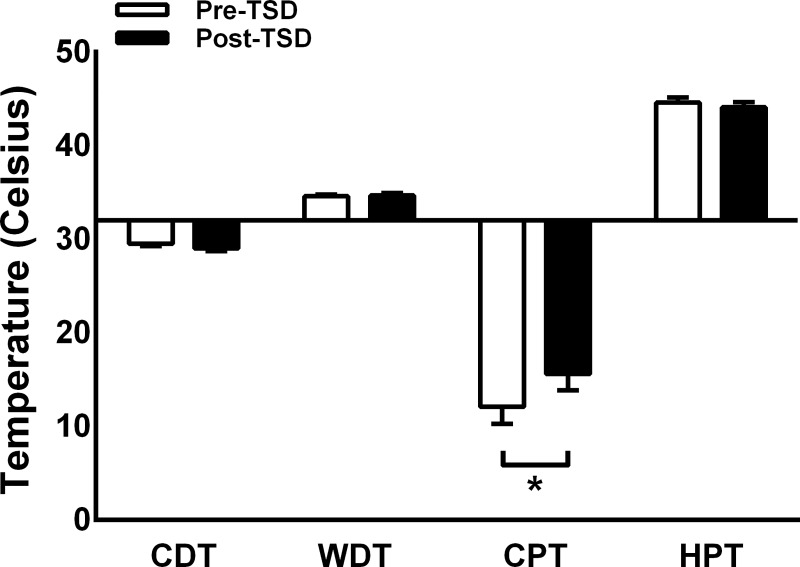
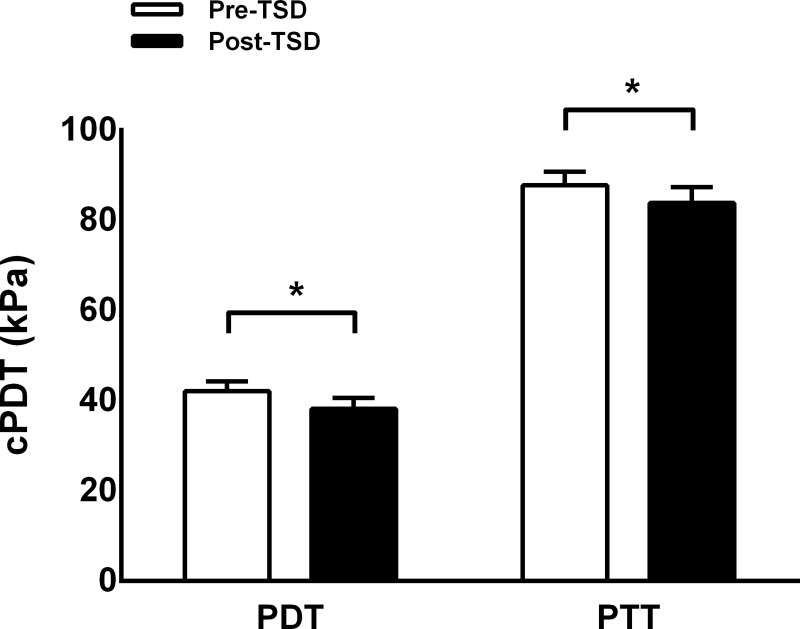
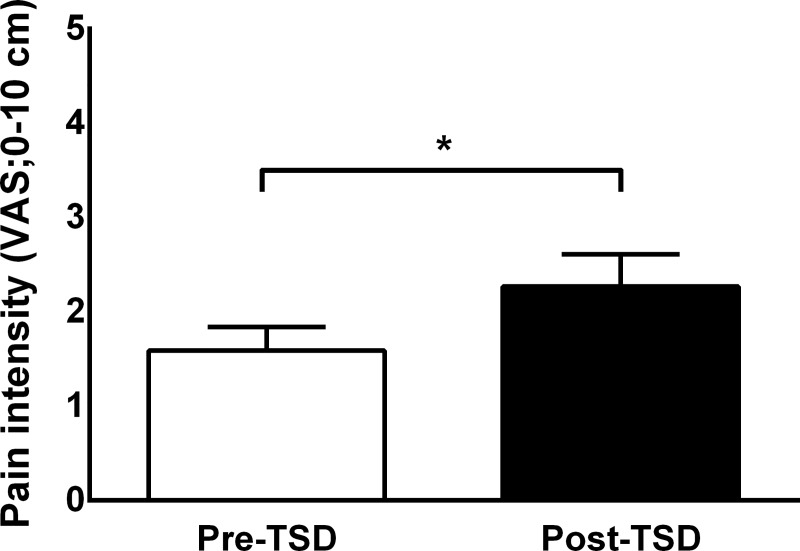
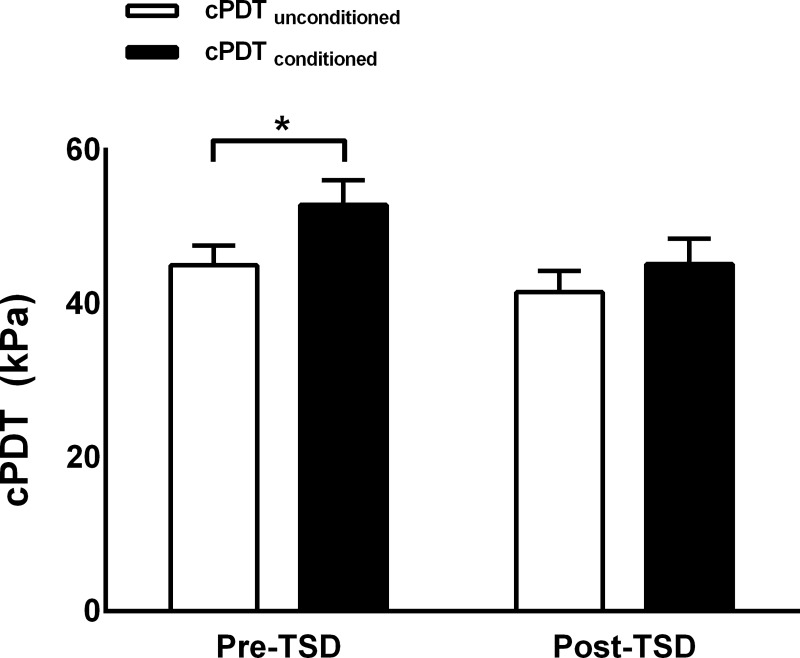
Chronic pain patients often suffer from insomnia or impaired sleep which has been associated with increased pain sensitivity, but a limited amount of studies have investigated the effects of total sleep deprivation on central pain mechanisms. Therefore, the aim of this study was to determine the effects of total sleep deprivation on temporal summation, conditioned pain modulation, thermal and pressure pain sensitivity in healthy participants. Twenty-four healthy participants took part in this two-session trial. The measurements were conducted after a night of habitual sleep (baseline) and following 24 hours of total sleep deprivation. Detection thresholds for cold and warmth and pain thresholds for cold and heat were assessed. Cuff induced pressure pain detection and tolerance thresholds, temporal summation and conditioned pain modulation were assessed with user-independent, computer-controlled cuff algometry. Conditioned pain modulation was significantly impaired, temporal summation was significantly facilitated and pain sensitivity to pressure and cold pain were significantly increased at follow-up compared with baseline. In conclusion, this study found that one night of total sleep deprivation impaired descending pain pathways, facilitated spinal excitability and sensitized peripheral pathways to cold and pressure pain. Future studies are encouraged to investigate if sleep therapy might normalize pain sensitivity in sleep-deprived chronic pain patients.
Overview
The claims and statistics of this paper haven’t been checked yet.
Run the check — free, no account needed. It reads the open-access text and checks the sources it cites.
Integrity signals
Registry
Cites
Statistics
Figures
Verification
Claims the paper makes
The claims and statistics of this paper haven’t been checked yet.
Run the check — free, no account needed. It reads the open-access text and checks the sources it cites.
Claims other papers make about this one
Each is checked against this paper’s own text: does it say what the citing paper says it does?
The cited source says what the claim attributes to it.
In the citing paper
“Sleep-related variables have been shown to predict pain-related outcomes such as disability [74], and sleep disruption is related to increased pain sensitivity and lowered pain thresholds [75].”
From ACTsmart: Guided Smartphone-Delivered Acceptance and Commitment Therapy for Chronic Pain—A Pilot Trial. (2021) · cites this paper as [75]
Self-check
Percentages, sums and reported differences re-computed from the paper’s own numbers.
The self-check needs the paper’s full text.
Citations
Cites
The Pittsburgh Sleep Quality Index: a new instrument for psychiatric practice and research
Buysse, D. J., Reynolds, C. F., Monk, T. H., Berman, S. R., & Kupfer, D. J. (1989) · Psychiatry Research · doi:10.1016/0165-1781(89)90047-4 · Cited by 35,234 · cited 1×
“The PSQI is a validated tool for assessment of sleep quality [40] in which participants evaluate their sleep based on a four-point Likert-type scale (ranging from 0 = “not at all” to 3 = “three times or more per week”), with high scores indicating poor sleep quality [41].”
MethodRolke, R., Baron, R., Maier, C., Tölle, T. R., Treede, R., Beyer, A., Binder, A., Birbaumer, N., Birklein, F., Bötefür, I. C., et al. (2006) · Pain · doi:10.1016/j.pain.2006.01.041 · Cited by 2,606
The association of sleep and pain: an update and a path forward
Finan, P. H., Goodin, B. R., & Smith, M. T. (2013) · The Journal of Pain · doi:10.1016/j.jpain.2013.08.007 · Cited by 1,620 · cited 1×
“In addition, CPM has been shown to be impaired following sleep impairment [4,23].”
BackgroundInfluentialSmith, M. T., & Haythornthwaite, J. A. (2004) · Sleep Medicine Reviews · doi:10.1016/s1087-0792(03)00044-3 · Cited by 914 · cited 3×
“In addition, CPM has been shown to be impaired following sleep impairment [4,23].”
BackgroundInfluentialFactor structure, reliability, and validity of the Pain Catastrophizing Scale
Osman, A., Barrios, F. X., Kopper, B. A., Hauptmann, W., Jones, J., & O'Neill, E. (1997) · Journal of Behavioral Medicine · doi:10.1023/a:1025570508954 · Cited by 881 · cited 1×
“The PCS questionnaire is a validated tool for assessment of thoughts regarding pain [42,43] based on a five-point Likert-type scale (ranging from 0 = “not at all” to 4 = “all the time”) with a high score indicating a high level of catastrophizing thoughts concerning pain [44].”
MethodAssessment and manifestation of central sensitisation across different chronic pain conditions
Arendt‐Nielsen, L., Morlion, B., Perrot, S., Dahan, A., Dickenson, A., Kress, H. G., Wells, C., Bouhassira, D., & Drewes, A. M. (2018) · European Journal of Pain · doi:10.1002/ejp.1140 · Cited by 695
Price, D. D., Hu, J. W., Dubner, R. A., & Gracely, R. H. (1977) · Pain · doi:10.1016/0304-3959(77)90035-5 · Cited by 589
Conditioned Pain Modulation in Populations With Chronic Pain: A Systematic Review and Meta-Analysis
Lewis, G. N., Rice, D. A., & McNair, P. J. (2012) · Journal of Pain · doi:10.1016/j.jpain.2012.07.005 · Cited by 564 · cited 1×
“It is well-established that patients suffering from back pain [19], fibromyalgia [20], or severe osteoarthritis [21] exhibit reduced descending pain inhibitory control and that impaired CPM is associated with worsening of pain [22].”
BackgroundAssessment of mechanisms in localized and widespread musculoskeletal pain
Graven‐Nielsen, T., & Arendt‐Nielsen, L. (2010) · Nature Reviews Rheumatology · doi:10.1038/nrrheum.2010.107 · Cited by 547
The effects of sleep deprivation on pain inhibition and spontaneous pain in women
Smith, M. T., Edwards, R. R., McCann, U. D., & Haythornthwaite, J. A. (2007) · Sleep · doi:10.1093/sleep/30.4.494 · Cited by 539
Onen, S. ‐., Alloui, A., Gross, A. S., Eschalier, A., & Dubray, C. (2001) · Journal of Sleep Research · doi:10.1046/j.1365-2869.2001.00240.x · Cited by 512 · cited 6×
“Contrary to this, other studies report no significant changes in heat pain thresholds among healthy participants after a night of TSD [35,38].”
BackgroundResultInfluentialIdentification of Wake-Active Dopaminergic Neurons in the Ventral Periaqueductal Gray Matter
Lu, J., Jhou, T. C., & Saper, C. B. (2006) · Journal of Neuroscience · doi:10.1523/jneurosci.2244-05.2006 · Cited by 475 · cited 2×
“Furthermore, the raphe nuclei are involved in the descending pain control system [10] and the ascending reticular activating system (ARAS), which is responsible for the transition between sleep and wakefulness [11].”
BackgroundAffleck, G. G., URROWS, S. T., Tennen, H. A., Higgins, P. S., & Abeles, M. (1996) · Pain · doi:10.1016/s0304-3959(96)03226-5 · Cited by 467 · cited 1×
“Additionally, sleep impairments have been described as valuable predictors for new incidences and worsening of symptoms linked to chronic pain conditions like fibromyalgia [5], rheumatoid arthritis (RA)”
BackgroundPud, D., Granovsky, Y., & Yarnitsky, D. (2009) · Pain · doi:10.1016/j.pain.2009.02.015 · Cited by 465 · cited 1×
“A better understanding of how sleep impairment influences central and peripheral pain mechanisms is important to further develop its use in clinical practice [39], either by implementing sleep therapy or through pharmacological treatment targeting endogenous pain modulation.”
BackgroundSecondary hyperalgesia to punctate mechanical stimuli
Ziegler, E. A., Magerl, W., Meyer, R. A., & Treede, R. (1999) · Brain · doi:10.1093/brain/122.12.2245 · Cited by 414
Moldofsky, H. (2001) · Sleep Medicine Reviews · doi:10.1053/smrv.2001.0179 · Cited by 407 · cited 1×
“[6], and orofacial and back pain [7] as patients with co-occurring sleep impairments seem to experience worsened pain symptoms [4,8].”
BackgroundPrevalence and correlates of clinical insomnia co‐occurring with chronic back pain
TANG, N. K. Y., WRIGHT, K. J., & SALKOVSKIS, P. M. (2007) · Journal of Sleep Research · doi:10.1111/j.1365-2869.2007.00571.x · Cited by 383 · cited 1×
“, fibromyalgia [1], burn injuries [2], and back pain [3].”
BackgroundStaud, R. M., Cannon, R. L., Mauderli, A. P., Robinson, M. E., Price, D. D., & Vierck, C. J. (2003) · Pain · doi:10.1016/s0304-3959(02)00344-5 · Cited by 379
Price, D. D., Mao, J., Frenk, H., & Mayer, D. J. (1994) · Pain · doi:10.1016/0304-3959(94)90069-8 · Cited by 364
Role of endogenous pain modulation in chronic pain mechanisms and treatment
Yarnitsky, D. (2015) · Pain · doi:10.1097/01.j.pain.0000460343.46847.58 · Cited by 347 · cited 1×
“TSP and CPM are the human surrogate models for wind-up and descending pain inhibitory control, respectively [17,18].”
BackgroundDuration of sleep contributes to next-day pain report in the general population
Edwards, R. R., Almeida, D. M., Klick, B., Haythornthwaite, J. A., & Smith, M. T. (2008) · Pain · doi:10.1016/j.pain.2008.01.025 · Cited by 321 · cited 1×
“Even reduced sleep duration seems to affect the pain sensitivity as participants with a short sleep duration (< 6 hours) reported increased pain sensitivity the day following the short sleep duration [67].”
BackgroundSchuh-Hofer, S., Wodarski, R., Pfau, D. B., Caspani, O., Magerl, W., Kennedy, J. D., & Treede, R.-D. (2013) · Pain · doi:10.1016/j.pain.2013.04.046 · Cited by 296
van Wijk, G., & Veldhuijzen, D. S. (2010) · The Journal of Pain · doi:10.1016/j.jpain.2009.10.009 · Cited by 281
Sleep Loss Exacerbates Fatigue, Depression, and Pain in Rheumatoid Arthritis
Irwin, M. R., Olmstead, R., Carrillo, C., Sadeghi, N., FitzGerald, J. D., Ranganath, V. K., & Nicassio, P. M. (2012) · Sleep · doi:10.5665/sleep.1742 · Cited by 279
Petersen, K. K., Arendt-Nielsen, L., Simonsen, O., Wilder-Smith, O., & Laursen, M. B. (2015) · Pain · doi:10.1016/j.pain.0000000000000022 · Cited by 269
Beaudreau, S. A., Spira, A. P., Stewart, A. L., Kezirian, E. J., Lui, L., Ensrud, K. E., Redline, S. S., Ancoli‐Israel, S., & Stone, K. L. (2011) · Sleep Medicine · doi:10.1016/j.sleep.2011.04.005 · Cited by 268 · cited 1×
“The PSQI is a validated tool for assessment of sleep quality [40] in which participants evaluate their sleep based on a four-point Likert-type scale (ranging from 0 = “not at all” to 3 = “three times or more per week”), with high scores indicating poor sleep quality [41].”
MethodDisrupted sleep patterns and daily functioning in patients with chronic pain
McCracken, L. M., & Iverson, G. L. (2002) · Pain Research and Management · doi:10.1155/2002/579425 · Cited by 254 · cited 1×
“, fibromyalgia [1], burn injuries [2], and back pain [3].”
BackgroundSleep and pain sensitivity in adults
Sivertsen, B., Lallukka, T. M., Petrie, K. J., Steingrímsdóttir, Ó. A., Stubhaug, A., & Nielsen, C. S. (2015) · Pain · doi:10.1097/j.pain.0000000000000131 · Cited by 248
Andersen, M. L., Martins, P. J. F., D’Almeida, V., Bignotto, M., & Tufik, S. (2005) · Journal of Sleep Research · doi:10.1111/j.1365-2869.2004.00428.x · Cited by 246
Kundermann, B., Spernal, J., Huber, M. T., Krieg, J.-C., & Lautenbacher, S. (2004) · Psychosomatic Medicine · doi:10.1097/01.psy.0000145912.24553.c0 · Cited by 205 · cited 2×
“Nonetheless, the evidence supporting thermal hyperalgesia is conflicting as some studies finds increased pain sensitivity in both heat pain thresholds (HPT) and cold pain thresholds (CPT) among healthy participants subjected to 24 hours of TSD [36,37].”
BackgroundNovati, A., Roman, V., Cetin, T., Hagewoud, R., den Boer, J. A., Luiten, P. G. M., & Meerlo, P. (2008) · SLEEP · doi:10.1093/sleep/31.11.1579 · Cited by 204
Sleep Deprivation Decreases Binding of [11C]Raclopride to Dopamine D2/D3Receptors in the Human Brain
Volkow, N. D., Wang, G., Telang, F., Fowler, J. S., Logan, J., Wong, C., Ma, J., Pradhan, K., Tomasi, D. G., Thanos, P. K., et al. (2008) · Journal of Neuroscience · doi:10.1523/jneurosci.1443-08.2008 · Cited by 202
Corrêa, J. B., Costa, L. O. P., de Oliveira, N. T. B., Sluka, K. A., & Liebano, R. E. (2015) · Experimental Brain Research · doi:10.1007/s00221-015-4309-6 · Cited by 179 · cited 1×
“It is well-established that patients suffering from back pain [19], fibromyalgia [20], or severe osteoarthritis [21] exhibit reduced descending pain inhibitory control and that impaired CPM is associated with worsening of pain [22].”
BackgroundChiu, Y. H., Silman, A. J., Macfarlane, G. J., Ray, D. W., Gupta, A., Dickens, C. M., Morriss, R. K., & McBeth, J. (2005) · Pain · doi:10.1016/j.pain.2005.03.009 · Cited by 178 · cited 2×
“[61] found a decrease in PPTs in participants with self-reported poor sleep, while Aǧargün et al.”
BackgroundPain sensitivity and modulation in primary insomnia
Haack, M., Scott‐Sutherland, J., Santangelo, G., Simpson, N. S., Sethna, N. F., & Mullington, J. M. (2011) · European Journal of Pain · doi:10.1016/j.ejpain.2011.07.007 · Cited by 172 · cited 3×
“Similarly, no association was found between increased TSP and sleep impairments in patients with primary insomnia [49], fibromyalgia [55], and restless legs syndrome [56].”
BackgroundAlsaadi, S. M., McAuley, J. H., Hush, J. M., Lo, S., Bartlett, D. J., Grunstein, R. R., & Maher, C. G. (2014) · Clinical Journal of Pain · doi:10.1097/ajp.0000000000000055 · Cited by 158
Edwards, R. R., Grace, E., Peterson, S., Klick, B., Haythornthwaite, J. A., & Smith, M. T. (2009) · European Journal of Pain · doi:10.1016/j.ejpain.2008.12.007 · Cited by 158
The effect of sleep deprivation on pain perception in healthy subjects: a meta-analysis
Schrimpf, M., Liegl, G., Boeckle, M., Leitner, A., Geisler, P., & Pieh, C. (2015) · Sleep Medicine · doi:10.1016/j.sleep.2015.07.022 · Cited by 154 · cited 1×
“[59] demonstrated that decreased sleep quality was associated with increased pain sensitivity across a range of different test modalities such as pressure algometry, laser stimuli, and thermal tests.”
BackgroundBrainstem modulation of pain during sleep and waking
Foo, H., & Mason, P. (2003) · Sleep Medicine Reviews · doi:10.1053/smrv.2002.0224 · Cited by 145 · cited 2×
“Furthermore, the raphe nuclei are involved in the descending pain control system [10] and the ascending reticular activating system (ARAS), which is responsible for the transition between sleep and wakefulness [11].”
BackgroundThe role of sleep problems in central pain processing in rheumatoid arthritis
Lee, Y., Lü, B., Edwards, R. R., Wasan, A. D., Nassikas, N. J., Clauw, D. J., Solomon, D. H., & Karlson, E. W. (2012) · Arthritis & Rheumatism · doi:10.1002/art.37733 · Cited by 144 · cited 3×
“An association between impaired CPM and decreased sleep quality has been shown in several studies investigating sleep impairment in patients with conditions such as RA [6], fibromyalgia [48], and insomnia [49].”
BackgroundKurien, T., Arendt‐Nielsen, L., Petersen, K. K., Graven‐Nielsen, T., & Scammell, B. E. (2018) · Journal of Pain · doi:10.1016/j.jpain.2018.05.011 · Cited by 139
Sleep disturbances, pain and analgesia in adults hospitalized for burn injuries
RAYMOND, I., Ancoli‐Israel, S., & Choinière, M. (2004) · Sleep Medicine · doi:10.1016/j.sleep.2004.07.007 · Cited by 134
Carstens, E. E., Klumpp, D. J., & Zimmermann, M. (1980) · Journal of Neurophysiology · doi:10.1152/jn.1980.43.2.332 · Cited by 130 · cited 1×
“However, previous studies tested TSP using heat pain, and since pressure pain is primarily mediated by Afiber nociceptor inputs [57] while heat pain depends mainly on C-fiber inputs [58], it was hypothesized that targeting different nociceptive pathways might produce separate results.”
Multiple session experimental pain measurement
Yarnitsky, D., Sprecher, E., Zaslansky, R., & Hemli, J. A. (1996) · Pain · doi:10.1016/0304-3959(96)03110-7 · Cited by 124
Izumi, M., Petersen, K. K., Laursen, M. B., Arendt‐Nielsen, L., & Graven‐Nielsen, T. (2016) · Pain · doi:10.1097/j.pain.0000000000000764 · Cited by 114
The significant other version of the Pain Catastrophizing Scale (PCS-S): Preliminary validation
Caño, A., Leonard, M. T., & Franz, A. (2005) · Pain · doi:10.1016/j.pain.2005.09.009 · Cited by 106 · cited 1×
“The PCS questionnaire is a validated tool for assessment of thoughts regarding pain [42,43] based on a five-point Likert-type scale (ranging from 0 = “not at all” to 4 = “all the time”) with a high score indicating a high level of catastrophizing thoughts concerning pain [44].”
MethodUser‐independent assessment of conditioning pain modulation by cuff pressure algometry
Graven‐Nielsen, T., Izumi, M., Petersen, K. K., & Arendt‐Nielsen, L. (2017) · European Journal of Pain · doi:10.1002/ejp.958 · Cited by 100
Isometric exercises reduce temporal summation of pressure pain in humans
Vaegter, H. B., Handberg, G., & Graven‐Nielsen, T. (2015) · European Journal of Pain · doi:10.1002/ejp.623 · Cited by 91
Wind-up and the NMDA receptor: from animal studies to humans
Ren, K. (1994) · Pain · doi:10.1016/0304-3959(94)90067-1 · Cited by 89
Sleep quality and pain threshold in patients with fibromyalgia
Ağargün, M. Y., Tekeoğlu, İ., Güneş, A., Adak, B., Kara, H., & Ercan, M. (1999) · Comprehensive Psychiatry · doi:10.1016/s0010-440x(99)90008-1 · Cited by 88 · cited 1×
“Additionally, decreased sleep quality has also been linked to decreased mechanical pain thresholds [34,61,62].”
BackgroundThe Role of Sex in Sleep Deprivation Related Changes of Nociception and Conditioned Pain Modulation
Eichhorn, N., Treede, R., & Schuh‐Hofer, S. (2017) · Neuroscience · doi:10.1016/j.neuroscience.2017.09.044 · Cited by 78 · cited 1×
“[50], who demonstrated impaired descending pain inhibitory control following one night of TSD.”
BackgroundNapping Reverses Increased Pain Sensitivity Due to Sleep Restriction
Faraut, B., Léger, D., Medkour, T., Dubois, A., Bayon, V., Chennaoui, M., & Perrot, S. (2015) · PLoS ONE · doi:10.1371/journal.pone.0117425 · Cited by 75 · cited 1×
“Nonetheless, the evidence supporting thermal hyperalgesia is conflicting as some studies finds increased pain sensitivity in both heat pain thresholds (HPT) and cold pain thresholds (CPT) among healthy participants subjected to 24 hours of TSD [36,37].”
BackgroundAzevedo, E., Manzano, G. M., Silva, A., Martins, R. C., Andersen, M. L., & Tufik, S. (2011) · Pain · doi:10.1016/j.pain.2011.04.032 · Cited by 75
Kundermann, B., Hemmeter-Spernal, J., Huber, M., Krieg, J.-C., & Lautenbacher, S. (2007) · Psychosomatic Medicine · doi:10.1097/psy.0b013e31815c1b5d · Cited by 68 · cited 1×
“In this respect, studies have reported that CPT increased [36] and HPT decreased [60] following TSD.”
BackgroundPetersen, K., Olesen, A., Simonsen, O., & Arendt-nielsen, L. (2018) · Pain · doi:10.1097/j.pain.0000000000001427 · Cited by 63 · cited 1×
“Mechanistic pain profiling assesses the underlying pain mechanisms in the peripheral and central nervous system and includes pain thresholds, temporal summation of pain (TSP), and conditioned pain modulation (CPM) [16].”
BackgroundArima, T., Svensson, P. J., Rasmussen, C., Nielsen, K. D., Drewes, A. M., & Arendt‐Nielsen, L. (2001) · Journal of Oral Rehabilitation · doi:10.1046/j.1365-2842.2001.00687.x · Cited by 62 · cited 1×
“[69] reported no interaction between partial sleep deprivation and pain sensitivity and Onen et al.”
BackgroundIs the Deficit in Pain Inhibition in Fibromyalgia Influenced by Sleep Impairments?
Paul-Savoie, É., Marchand, S., Morin, M., Bourgault, P., Brissette, N., Rattanavong, V., Cloutier, C., Bissonnette, A., & Potvin, S. (2012) · The Open Rheumatology Journal · doi:10.2174/1874312901206010296 · Cited by 59
Edwards, R. R., Quartana, P. J., Allen, R. P., Greenbaum, S., Earley, C. J., & Smith, M. T. (2011) · Sleep Medicine · doi:10.1016/j.sleep.2010.09.018 · Cited by 51
Petrov, M. E. R., Goodin, B. R., Cruz‐Almeida, Y., King, C., Glover, T. L., Bulls, H. W., Herbert, M. S., Sibille, K. T., Bartley, E. J., Fessler, B. J., et al. (2015) · Journal of Pain · doi:10.1016/j.jpain.2015.02.004 · Cited by 49
Rolke, R., Baron, R., Maier, C., Tölle, T. R., Treede, R., Beyer, A., Binder, A., Birbaumer, N., Birklein, F., Bötefür, I. C., et al. (2006) · Pain · doi:10.1016/j.pain.2006.09.025 · Cited by 48
Smith, M. T., Edwards, R. R., Stonerock, G. L., & McCann, U. D. (2005) · SLEEP · doi:10.1093/sleep/28.7.809 · Cited by 48 · cited 2×
“For example, some studies have observed increased TSP in participants with sleep impairments due to prolonged REM sleep or osteoarthritis [32,33].”
BackgroundPredictors of Clinical Pain in Fibromyalgia: Examining the Role of Sleep
Anderson, R. J., McCrae, C. S., Staud, R. M., Berry, R. B., & Robinson, M. E. (2012) · Journal of Pain · doi:10.1016/j.jpain.2011.12.009 · Cited by 42 · cited 1×
“Similarly, no association was found between increased TSP and sleep impairments in patients with primary insomnia [49], fibromyalgia [55], and restless legs syndrome [56].”
BackgroundDeMarco, G. J., Baghdoyan, H. A., & Lydic, R. (2003) · The Journal of Comparative Neurology · doi:10.1002/cne.10548 · Cited by 41 · cited 2×
“Though the underlying mechanisms connecting sleep impairments and decreased descending pain inhibitory control are unclear, brain areas such as the periaqueductal gray are known to modulate both sleep stages and nociception [9].”
BackgroundKim, Y., Elmenhorst, D., Weisshaupt, A., Wedekind, F., Kroll, T., McCarley, R. W., Strecker, R. E., & Bauer, A. (2015) · Journal of Sleep Research · doi:10.1111/jsr.12300 · Cited by 37
Conditioned pain modulation is not decreased after partial sleep restriction
Matre, D., Andersen, M. R., Knardahl, S., & Nilsen, K. B. (2015) · European Journal of Pain · doi:10.1002/ejp.741 · Cited by 34
Total sleep deprivation and pain perception during cold noxious stimuli in humans
Larson, R. A., & Carter, J. R. (2016) · Scandinavian Journal of Pain · doi:10.1016/j.sjpain.2016.05.037 · Cited by 32 · cited 1×
“The hyperalgesic effects of 24 hours of TSD in healthy participants have also been demonstrated using a cold pressor test [65,66] and radiant heat laser pulses [64].”
MethodRegulation of acetylcholinesterase in cultured muscle by chemical agents and electrical stimulation
Walker, C. R., & Wilson, B. W. (1976) · Neuroscience · doi:10.1016/0306-4522(76)90076-2 · Cited by 28
Sleepiness does not Modulate Experimental Joint Pain in Healthy Volunteers
Drewes, A. M., Rössel, P., Arendt‐Nielsen, L., Dremstrup, K., Hansen, L. M., Birket‐Smith, L., & Stengaard‐Pedersen, K. (1997) · Scandinavian Journal of Rheumatology · doi:10.3109/03009749709065709 · Cited by 26 · cited 1×
“Contrary to this, other studies report no significant changes in heat pain thresholds among healthy participants after a night of TSD [35,38].”
ResultMatre, D. (2013) · Scandinavian Journal of Pain · doi:10.1016/j.sjpain.2012.11.003 · Cited by 13
The demographics of pain catastrophizing in a primary care sample.
Sansone, R. A., Watts, D. A., & Wiederman, M. W. (2013) · PubMed · Cited by 6
Research works printed but not linked: 2
- Michael T. Smith, 2007, The Effects of Sleep Deprivation on Pain Inhibition and Spontaneous Pain in Women, 30, 494
- MY Ağargün, Sleep quality and pain threshold in patients with fibromyalgia, Compr Psychiatry, 40, 226, 10.1016/S0010-440X(99)90008-1 · DOI
Cited by
Sorted by citations
Kurien, T., Arendt‐Nielsen, L., Petersen, K. K., Graven‐Nielsen, T., & Scammell, B. E. (2018) · Journal of Pain · doi:10.1016/j.jpain.2018.05.011 · Cited by 139
Chang, J. R., Fu, S.-N., Li, X., Li, S. X., Wang, X., Zhou, Z., Pinto, S. M., Samartzis, D., Karppinen, J. I., & Wong, A. Y. L. (2022) · Sleep Medicine Reviews · doi:10.1016/j.smrv.2022.101695 · Cited by 120
Irwin, M. R., Straub, R. H., & Smith, M. T. (2023) · Nature Reviews Rheumatology · doi:10.1038/s41584-023-00997-3 · Cited by 79
Mouraux, A., Bannister, K., Becker, S., Finn, D. P., Pickering, G. P., Pogatzki-Zahn, E. M., & Graven‐Nielsen, T. (2021) · European Journal of Pain · doi:10.1002/ejp.1730 · Cited by 64
“While disrupted sleep leads to an increased sensitivity to experimental pain (Seminowicz et al., 2019; Staffe et al., 2019), disturbed pain can also predict the development and maintenance of persistent pain (Finan et al.”
BackgroundEffect of sleep loss on pain—New conceptual and mechanistic avenues
Kourbanova, K., Alexandre, C., & Latrémolière, A. (2022) · Frontiers in Neuroscience · doi:10.3389/fnins.2022.1009902 · Cited by 59
“Indeed, the increase in heat and mechanical pain caused by sleep loss persists in humans (Roehrs et al., 2006; Tiede et al., 2010; Faraut et al., 2015; Matre et al., 2015, 2016; Odegard et al., 2015; Staffe et al., 2019) and even aggravates in rodents (Page et al.”
BackgroundInfluential
Metadata
- Authors
- Staffe, A. T., Bech, M. W., Clemmensen, S. L. K., Nielsen, H. T., Larsen, D. B., & Petersen, K. K.
- Affiliations
- Aalborg University (DK)
- Corresponding author
- Petersen, Kristian Kjær
- Venue
- PLoS ONE
- Publisher
- Public Library of Science (PLoS)
- Published
- 2019-12-04
- Volume
- 14
- Issue
- 12
- Pages
- e0225849
- ISSN
- 1932-6203 (ISSN-L)
- PMC
- PMC6892491
- OpenAlex
- W2991704716
- Cited by
- 150
- References
- 70
- Citations by year
- 2026: 22 · 2025: 30 · 2024: 21 · 2023: 22 · 2022: 25 · 2021: 22 · 2020: 6 · 2019: 1
- FWCI
- 9.23
- Type
- journal article
- Language
- en
- Open access
- gold
- doi.org
- Licence
- Locations
- PLoS ONE (publishedVersion, cc-by)
- Europe PMC (PubMed Central) (publishedVersion, cc-by)
- PubMed Central (publishedVersion, cc-by)
- PubMed (publishedVersion)
- VBN Forskningsportal (Aalborg Universitet) (submittedVersion, cc-by)
- DOAJ (DOAJ: Directory of Open Access Journals) (submittedVersion, cc-by-sa)
- Figshare (submittedVersion, cc-by)
- Funders
- Danmarks Grundforskningsfond (DNRF121)
- Aalborg Universitet (771126)
- Topics
- Health Sciences › Medicine › Physiology (medical) › Pain Mechanisms and Treatments
- Social Sciences › Psychology › Experimental and Cognitive Psychology › Sleep and Work-Related Fatigue
- Health Sciences › Medicine › Anesthesiology and Pain Medicine › Pain Management and Treatment
- Keywords
- total sleep deprivation, pain sensitivity, conditioned pain modulation, temporal summation, descending pain modulation, thermal pain, pressure pain, cold pain, pain detection threshold, pain tolerance, spinal cord excitability, chronic pain, insomnia, sleep therapy
- MeSH terms
- Adult, Denmark, Female, Humans, Male, Pain Measurement, Sleep, Sleep Deprivation, Thermosensing, Pain Threshold, Young Adult, Public Health Surveillance
About these checks
Registry, retraction, Cites and statistics results are computed, not judged, with one exception: a printed reference that no index lists is read once by a model before it counts as a citation error. Claims are extracted by a model and kept only when their quote appears verbatim in the text; each cited source is then checked, with a model’s help, for whether it says what the claim relies on. Those verdicts can be wrong — read the claim’s quote and the cited source before relying on one.
Statistics and arithmetic are recomputed, not judged.
Confidence bands are shown only for fields calibrated on our annotated test set. None is calibrated yet, so no band is shown.
What counts as a claim ›How we measure confidence ›How we check this ›
Are you an author, or do you see a problem with this page? Request a review
