

Mental health problems and social media exposure during COVID-19 outbreak
Open accessThe DOI matches its Crossref record; 14 of the 14 references it cites were found in a registry or an index; 10 of the 24 sources its claims cite were checked for support.
Abstract
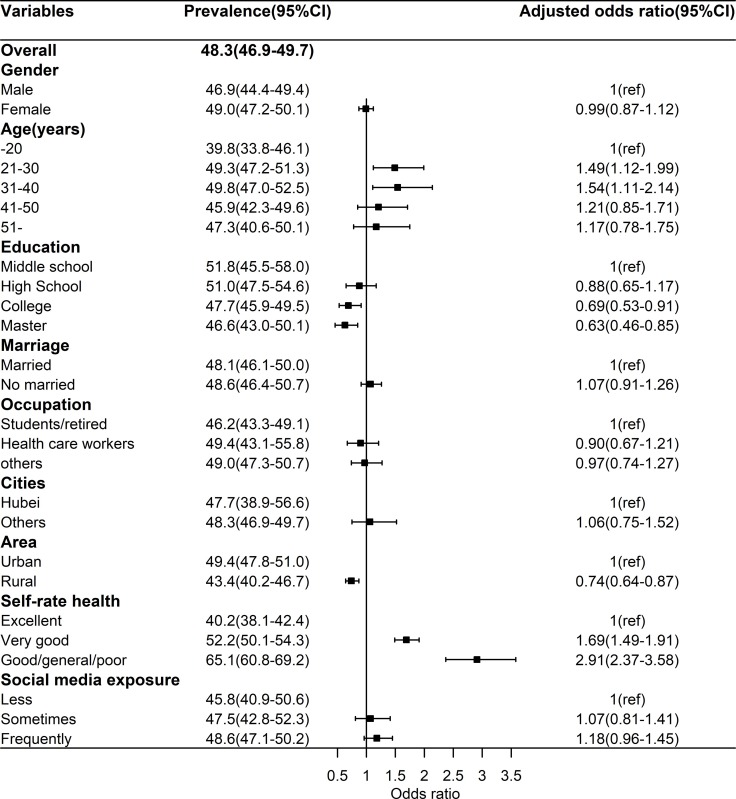
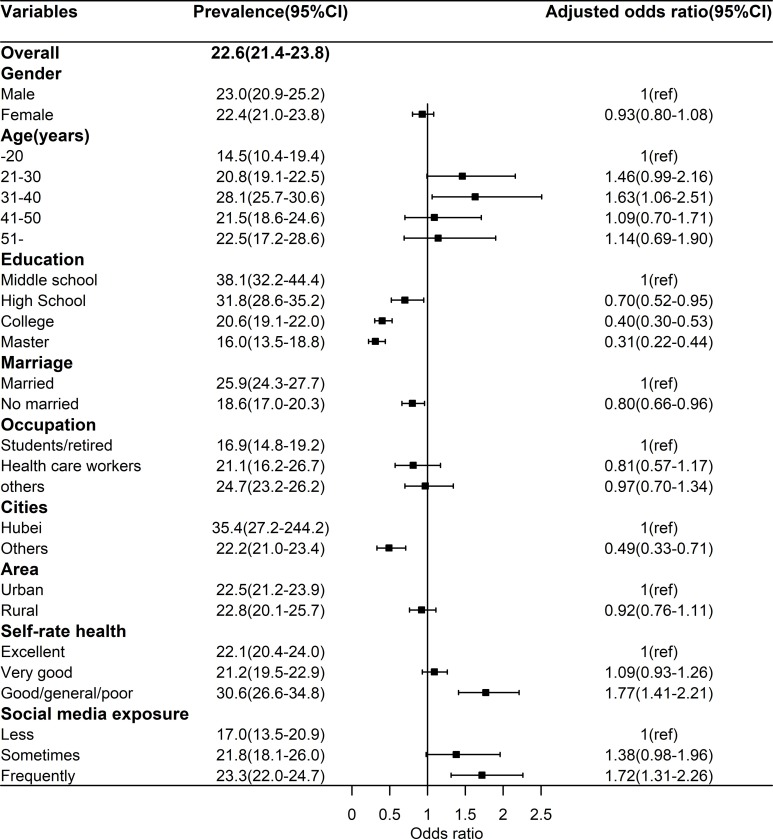
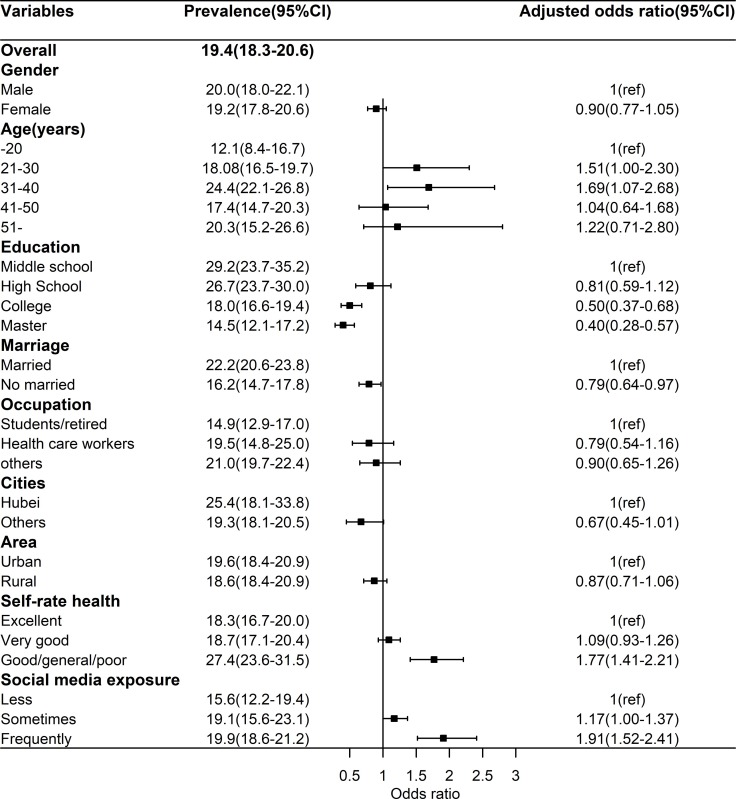
Huge citizens expose to social media during a novel coronavirus disease (COVID-19) outbroke in Wuhan, China. We assess the prevalence of mental health problems and examine their association with social media exposure. A cross-sectional study among Chinese citizens aged≥18 years old was conducted during Jan 31 to Feb 2, 2020. Online survey was used to do rapid assessment. Total of 4872 participants from 31 provinces and autonomous regions were involved in the current study. Besides demographics and social media exposure (SME), depression was assessed by The Chinese version of WHO-Five Well-Being Index (WHO-5) and anxiety was assessed by Chinese version of generalized anxiety disorder scale (GAD-7). multivariable logistic regressions were used to identify associations between social media exposure with mental health problems after controlling for covariates. The prevalence of depression, anxiety and combination of depression and anxiety (CDA) was 48.3% (95%CI: 46.9%-49.7%), 22.6% (95%CI: 21.4%-23.8%) and 19.4% (95%CI: 18.3%-20.6%) during COVID-19 outbroke in Wuhan, China. More than 80% (95%CI:80.9%-83.1%) of participants reported frequently exposed to social media. After controlling for covariates, frequently SME was positively associated with high odds of anxiety (OR = 1.72, 95%CI: 1.31-2.26) and CDA (OR = 1.91, 95%CI: 1.52-2.41) compared with less SME. Our findings show there are high prevalence of mental health problems, which positively associated with frequently SME during the COVID-19 outbreak. These findings implicated the government need pay more attention to mental health problems, especially depression and anxiety among general population and combating with "infodemic" while combating during public health emergency.
Overview
CoChat Summary
## TL;DR
This cross-sectional online survey of 4,872 Chinese adults during the COVID-19 outbreak found high prevalence of depression, anxiety, and co-occurring depression/anxiety. Frequent social media exposure was positively associated with anxiety and with the combination of depression and anxiety, but not significantly with depression alone after adjustment.
## Key findings
- Among 4,827 participants in the results, the prevalence was 48.3% for depression, 22.6% for anxiety, and 19.4% for combination of depression and anxiety (CDA).
- 82.0% of participants reported frequent social media exposure; only 8.8% reported less exposure and 9.2% reported sometimes exposure.
- After controlling for covariates, frequent SME was associated with higher odds of anxiety (OR = 1.72, 95% CI 1.31–2.26) and CDA (OR = 1.91, 95% CI 1.52–2.41) compared with less SME.
- Frequent SME was not significantly associated with depression after adjustment.
- Depression, anxiety, and CDA were all reported as much higher than the cited national sample estimates in China during the same period.
## Methods
- Design: Cross-sectional online survey conducted Jan 31 to Feb 2, 2020 during the COVID-19 outbreak.
- Sample/data: Chinese citizens aged 18 years or older recruited via the Wenjuanxing platform; 5,851 participated and 4,872 completed questionnaires from 31 provinces and autonomous regions were included.
- Measures/analysis: Depression was assessed with the WHO-5 (score <13), anxiety with the GAD-7 (score ≥10), and social media exposure was categorized as less, sometimes, or frequently. The authors used chi-square/trend tests and multivariable logistic regression adjusting for demographic and other covariates.
## Limitations
- The paper states that, because the study is cross-sectional, it is difficult to determine causal relationships between SME and mental health.
- The paper notes possible respondent bias from the online survey, including few elder citizens’ participation.
- The paper states that residual confounding from unmeasured factors cannot be excluded.
- Evident from the text: the sample was online and self-selected, so it may not be fully representative of all Chinese adults.
Model-written summary. Check it against the paper before relying on it.
Integrity signals
Registry
Cites
Statistics
Figures
Verification
Claims the paper makes
7 Valid · 1 Not valid · 6 Not checked · 13 Own results and interpretations
The cited sources support only part of this claim — read each source’s verdict below.
In the paper
“It indicated that participants from Hubei province- the infectious focus directly expose to public health emergency, and may suffer more mental health problemes[17,19].”
§ Mental health problems and social media exposure during COVID-19 outbreak > Discussion
What the sources say
- Not checked — no full text of the sourcecites [17] Xie Z, Xu J, Wu Z. Mental health problems among survivors in hard-hit areas of the 5.12 Wenchuan and 4.20 Lushan earthquakes. J Ment Health 2017; 26(1): 43– 9. 10.1080/09638237.2016.1276525 28084103 source
- Partly supportedcites [19] Mak IW, Chu CM, Pan PC, Yiu MG, Chan VL. Long-term psychiatric morbidities among SARS survivors. Gen Hosp Psychiatry 2009; 31(4): 318– 26. 10.1016/j.genhosppsych.2009.03.001 19555791 PMC7112501 sourceExperimental — accuracy not yet measured
The Introduction describes SARS survivors as direct victims of an outbreak, and the Results (Subgroup analysis of HCWs; page unavailable) report more chronic PTSD among health care workers than other survivors. This supports the general possibility of greater mental-health burden with outbreak exposure, but the paper studies SARS survivors in Hong Kong, not participants from Hubei province or a comparison based on residence in an infectious focus. (LLM, conf=0.82)
hedgedstates a possible cause- Asserted: passes — The authors put it forward as true.
- Checkable: passes — It can be checked against evidence.
- Load-bearing: passes — The paper’s conclusions depend on it.
- Based: passes — The paper gives a reason why it holds.
The cited sources that could be checked couldn’t confirm or dispute this claim.
In the paper
“Besides, many citizens expressed their negative feelings, such as fear, worry, nervous, anxiety et al. on social media, which are contagious social network[21,22].”
§ Mental health problems and social media exposure during COVID-19 outbreak > Discussion
What the sources say
- Not checked — no full text of the sourcecites [21] Kramer AD, Guillory JE, Hancock JT. Experimental evidence of massive-scale emotional contagion through social networks. Proc Natl Acad Sci U S A 2014; 111(24): 8788– 90. 10.1073/pnas.1320040111 24889601 PMC4066473 source
- Could not verifycites [22] Niederkrotenthaler T, Stack S, Till B, et al Association of Increased Youth Suicides in the United States With the Release of 13 Reasons Why. JAMA Psychiatry 2019; 76(9): 933– 40. PMC6547137 31141094 sourceExperimental — accuracy not yet measured
The Discussion and Conclusions discuss possible suicide contagion following a fictional television portrayal, using social-media activity to gauge attention to the show. They do not address whether fear, worry, anxiety, or other negative feelings expressed on social media spread through social networks; searches for negative feelings and emotional contagion found no such passage. The indexed passages provide section labels but no page numbers. (LLM, conf=0.77)
plainstates a cause- Asserted: passes — The authors put it forward as true.
- Checkable: passes — It can be checked against evidence.
- Load-bearing: passes — The paper’s conclusions depend on it.
- Based: passes — The paper gives a reason why it holds.
The sources with a verdict support this claim; the rest weren’t checked yet, have no full text we could read, or their verdicts aren’t rated yet.
In the paper
“These findings are consistent with the previous studies’ that exposing public health emergency can cause public mental health problems, such as Wenchuan and Lushan earthquakes[17], 2014 Ebola Outbreak[7,18], and SARS[19].”
§ Mental health problems and social media exposure during COVID-19 outbreak > Discussion
What the sources say
- Not checked — no full text of the sourcecites [17] Xie Z, Xu J, Wu Z. Mental health problems among survivors in hard-hit areas of the 5.12 Wenchuan and 4.20 Lushan earthquakes. J Ment Health 2017; 26(1): 43– 9. 10.1080/09638237.2016.1276525 28084103 source
- Not checked — no full text of the sourcecites [7] Shultz JM, Baingana F, Neria Y. The 2014 Ebola Outbreak and Mental Health: Current Status and Recommended Response. JAMA 2015; 313(6): 567– 8. 10.1001/jama.2014.17934 25532102 source
- Supportedcites [18] Ji D, Ji YJ, Duan XZ, et al Prevalence of psychological symptoms among Ebola survivors and healthcare workers during the 2014–2015 Ebola outbreak in Sierra Leone: a cross-sectional study. Oncotarget 2017; 8(8): 12784– 91. 10.18632/oncotarget.14498 28061463 PMC5355054 source
For the Ebola example attributed to this source, the Discussion reports pronounced psychological symptoms among Ebola survivors and Sierra Leonean healthcare workers exposed during the outbreak. The Introduction also describes public fear and panic. The earthquake and SARS examples have separate citations and are not attributed to this paper. (LLM, conf=0.90)
- Supportedcites [19] Mak IW, Chu CM, Pan PC, Yiu MG, Chan VL. Long-term psychiatric morbidities among SARS survivors. Gen Hosp Psychiatry 2009; 31(4): 318– 26. 10.1016/j.genhosppsych.2009.03.001 19555791 PMC7112501 source
The citation is attached to SARS, not to the earthquakes or Ebola outbreak. The Discussion (Clinical implications) states that SARS can cause significant, prolonged psychiatric problems, and the Discussion (Range of psychiatric disorders and functional outcome) identifies PTSD, depression, and anxiety disorders among survivors. (LLM, conf=0.90)
plainstates a cause- Asserted: passes — The authors put it forward as true.
- Checkable: passes — It can be checked against evidence.
- Load-bearing: unclear — It is unclear whether the paper’s conclusions depend on it.
- Based: passes — The paper gives a reason why it holds.
A result the paper reports from its own data — it cites no other source for it, so there is none to check. The quote shows it is in the paper.
In the paper
“higher frequency of SME was insignificantly positively associated with the adjusted odds of depression after controlling for all covariates.”
§ Mental health problems and social media exposure during COVID-19 outbreak > Results > Depression and SME
plainstates an association- Asserted: passes — The authors put it forward as true.
- Checkable: passes — It can be checked against evidence.
- Load-bearing: passes — The paper’s conclusions depend on it.
- Based: passes — The paper gives a reason why it holds.
A result the paper reports from its own data — it cites no other source for it, so there is none to check. The quote shows it is in the paper.
In the paper
“After controlling for covariates, frequently SME was positively associated with high odds of anxiety (OR = 1.72, 95%CI: 1.31–2.26) and CDA (OR = 1.91, 95%CI: 1.52–2.41) compared with less SME.”
- Also stated in: § Combination of depression and anxiety and SME · plain
“frequently SME can increase the adjusted odds (OR = 1.91, 95%CI: 1.52–2.41) of CDA compared with less SEM after controlling for all covariates.”
- Also stated in: § Discussion · plain
“frequently SME associated high odds of anxiety and CDA”
§ Mental health problems and social media exposure during COVID-19 outbreak > Abstract Huge citizens expose to social media during a novel coronavirus disease (COVID-19) outbroke in Wuhan, China. We assess the prevalence of mental health problems and examine their association with social media exposure. A cross-sectional study among Chinese citizens aged≥18 years old was conducted during Jan 31 to Feb 2, 2020. Online survey was used to do rapid assessment. Total of 4872 participants from 31 provinces and autonomous regions were involved in the current study. Besides demographics and social media exposure (SME), depression was assessed by The Chinese version of WHO-Five Well-Being Index (WHO-5) and anxiety was assessed by Chinese version of generalized anxiety disorder scale (GAD-7). multivariable logistic regressions were used to identify associations between social media exposure with mental health problems after controlling for covariates. The prevalence of depression, anxiety and combination of depression and anxiety (CDA) was 48.3% (95%CI: 46.9%-49.7%), 22.6% (95%CI: 21.4%-23.8%) and 19.4% (95%CI: 18.3%-20.6%) during COVID-19 outbroke in Wuhan, China. More than 80% (95%CI:80.9%-83.1%) of participants reported frequently exposed to social media. After controlling for covariates, frequently SME was positively associated with high odds of anxiety (OR = 1.72, 95%CI: 1.31–2.26) and CDA (OR = 1.91, 95%CI: 1.52–2.41) compared with less SME. Our findings show there are high prevalence of mental health problems, which positively associated with frequently SME during the COVID-19 outbreak. These findings implicated the government need pay more attention to mental health problems, especially depression and anxiety among general population and combating with “infodemic” while combating during public health emergency.
plainstates an associationn = 4,872- Asserted: passes — The authors put it forward as true.
- Checkable: passes — It can be checked against evidence.
- Load-bearing: passes — The paper’s conclusions depend on it.
- Based: passes — The paper gives a reason why it holds.
- Also stated in: § Combination of depression and anxiety and SME · plain
10 more claims
Create a free account to see all 27 claims and every source verdict.
- Probably not a substantial claim. 8
- It may state two separate claims as one. 4
- The quote only partly states this claim. 1
Claims other papers make about this one
Each is checked against this paper’s own text: does it say what the citing paper says it does?
The source backs part of the claim, not all of it — or backs it for a different population, condition or comparison.
In the citing paper
“In the current pandemic, the additional layer of extensive social media use and exposure to often sensationalized online news while in physical isolation may add new complexities to implementing emotional epidemiology in managing concerns, fears, and misconceptions [96,97], as these tools have been argued to bear negative effects on psychological well-being [97,98].”
From Psychosocial Effects of the COVID-19 Pandemic: Large-scale Quasi-Experimental Study on Social Media (2020) · cites this paper as [96]
Experimental — accuracy not yet measuredThe source backs part of the claim, not all of it — or backs it for a different population, condition or comparison.
In the citing paper
“Recent research has shown that, in the general public, the COVID-19 pandemic is associated with greater levels of psychological distress and a range of psychopathological problems such as depression, anxiety, and post-traumatic stress symptoms (e.g., Gao et al., 2020; Qiu et al., 2020; Wang et al., 2020).”
From Why did all the toilet paper disappear? Distinguishing between panic buying and hoarding during COVID-19 (2021) · cites this paper as Gao et al., 2020
Experimental — accuracy not yet measuredThe source backs part of the claim, not all of it — or backs it for a different population, condition or comparison.
In the citing paper
“Misleading content overload and the distortion of information affect users' stress levels and create mental health problems (Gao et al., 2020).”
From The Psycho-Emotive Effects of AI-Generated Fake News on Social Media Users (2026) · cites this paper as Gao et al., 2020
Experimental — accuracy not yet measuredThe source backs part of the claim, not all of it — or backs it for a different population, condition or comparison.
In the citing paper
“It is known that exposure to news about the process on social media also increases the levels of psychological distress and that the use of social media is higher in young people.[47]”
From Psychological Distress of Breast Cancer Survivors During the COVID-19 Pandemic and Related Factors: A Controlled Study. (2023) · cites this paper as [47]
Experimental — accuracy not yet measuredThe source backs part of the claim, not all of it — or backs it for a different population, condition or comparison.
In the citing paper
“Studies have concluded that perceived poor health status during the COVID-19 period is associated with increased anxiety levels.[47]”
From Psychological Distress of Breast Cancer Survivors During the COVID-19 Pandemic and Related Factors: A Controlled Study. (2023) · cites this paper as [47]
Experimental — accuracy not yet measured
4 more claims about this paper
Create a free account to see every claim other papers make about this one.
Self-check
Percentages, sums and reported differences re-computed from the paper’s own numbers.
Each contradiction between two passages listed here was confirmed by an independent check.
Rated major: it would touch a result — a value a result rests on, reported and recomputed p-values on opposite sides of the significance level, two passages that conflict with no sign which is right, or a cited work retracted before this paper was published.
In the paper
§ Mental health problems and social media exposure during COVID-19 outbreak > Materials and methods > Design and participants
“After removing the participants without completed questionnaires, 4872 participants from 31 provinces and autonomous regions were involved in the current study.”
§ Mental health problems and social media exposure during COVID-19 outbreak > Results > Social media exposure
“Of all 4827 participants, the mean age of was 32.3±10.0 years (ranged 18–85),”
Rated minor: it would not touch a result — a value no result rests on, a p-value that stays on the same side of the significance level, or a conflict that is clerical, resolved elsewhere in the paper, or outside its own findings.
In the paper
§ Mental health problems and social media exposure during COVID-19 outbreak > Abstract
“Total of 4872 participants from 31 provinces and autonomous regions were involved in the current study.”
§ Mental health problems and social media exposure during COVID-19 outbreak > Results > Social media exposure
“Of all 4827 participants, the mean age of was 32.3±10.0 years (ranged 18–85), the proportion of “less”, “sometimes”, and “frequently” of SME was 8.8%(95%CI:8.0%-9.6%), 9.2%(95%CI:8.4%-10.0%) and 82.0%(95%CI:80.9%-83.1%).”
Citations
Cites
A Brief Measure for Assessing Generalized Anxiety Disorder: The GAD-7
Spitzer, R. L., Kroenke, K., Williams, J. B. W., & Löwe, B. (2006) · Archives of Internal Medicine · doi:10.1001/archinte.166.10.1092 · Cited by 31,765 · cited 2×
“Anxiety was assessed by Chinese version of generalized anxiety disorder scale (GAD-7) [15, 16] , which consists 7 symptoms.”
BackgroundMethodExperimental evidence of massive-scale emotional contagion through social networks
Kramer, A. D. I., Guillory, J. E., & Hancock, J. T. (2014) · Proceedings of the National Academy of Sciences · doi:10.1073/pnas.1320040111 · Cited by 3,687 · cited 1×
“on social media, which are contagious social network[21,22].”
BackgroundPrevalence of mental disorders in China: a cross-sectional epidemiological study
Huang, Y., Wang, Y., Wang, H., Liu, Z., Yu, X., Yan, J., Yu, Y., Kou, C., Xu, X., Lu, J., et al. (2019) · The Lancet Psychiatry · doi:10.1016/s2215-0366(18)30511-x · Cited by 2,335 · cited 2×
“So, the current study aims to describes the prevalence and distribution of two major mental disorders-anxiety and depression among Chinese population [13], and examine their associations with social media exposure by rapid assessment during COVID-19 outbreak.”
BackgroundSelf-citationThe mental health of medical workers in Wuhan, China dealing with the 2019 novel coronavirus.
Kang, L., Li, Y., Hu, S., Chen, M., Yang, C., Yang, B. X., Wang, Y., Hu, J., Lai, J., Ma, X., et al. (2020) · The Lancet Psychiatry · doi:10.1016/s2215-0366(20)30047-x · Cited by 2,061 · cited 8×
“%) during COVID-19 outbroke in Wuhan, China.”
BackgroundInfluentialSelf-citation2019-nCoV epidemic: Address mental health care to empower society
Bao, Y., Sun, Y., Meng, S., Shi, J., & Lu, L. (2020) · The Lancet · doi:10.1016/s0140-6736(20)30309-3 · Cited by 2,038 · cited 11×
“%) during COVID-19 outbroke in Wuhan, China.”
BackgroundInfluentialShigemura, J., Ursano, R. J., Morganstein, J. C., Kurosawa, M., & Benedek, D. M. (2020) · Psychiatry and Clinical Neurosciences · doi:10.1111/pcn.12988 · Cited by 1,959 · cited 1×
“The outbreak of COVID-19 in China has caused mental health problems among the public in China[3] and Japan[4] and medical workers in Wuhan[5].”
BackgroundLong-term psychiatric morbidities among SARS survivors
Mak, I. W. C., Chu, C. M., Pan, P. C., Yiu, M. G. C., & Chan, V. L. (2009) · General Hospital Psychiatry · doi:10.1016/j.genhosppsych.2009.03.001 · Cited by 1,018 · cited 2×
“It indicated that participants from Hubei province- the infectious focus directly expose to public health emergency, and may suffer more mental health problemes[17,19].”
BackgroundResultThe 2014 Ebola Outbreak and Mental Health: Current Status and Recommended Response
Shultz, J. M., Baingana, F., & Neria, Y. (2015) · JAMA · doi:10.1001/jama.2014.17934 · Cited by 324
Ji, D., Ji, Y.-J., Duan, X.-Z., Li, W.-G., Sun, Z.-Q., Song, X.-A., Meng, Y.-H., Tang, H.-M., Chu, F., Niu, X.-X., et al. (2017) · Oncotarget · doi:10.18632/oncotarget.14498 · Cited by 257 · cited 1×
“These findings are consistent with the previous studies’ that exposing public health emergency can cause public mental health problems, such as Wenchuan and Lushan earthquakes[17], 2014 Ebola Outbreak[7,18], and SARS[19].”
ResultThe impact of social media on risk perceptions during the MERS outbreak in South Korea
Choi, D.-H., Yoo, W., Noh, G.-Y., & Park, K. (2017) · Computers in Human Behavior · doi:10.1016/j.chb.2017.03.004 · Cited by 246 · cited 1×
“A previous study also shown social media exposure may positively related to forming risk perceptions during the MERS outbreak in South Korea [12] .”
Result
Research works printed but not linked: 2
- Florian Roth, Brönnimann G. Focal Report 8: Risk Analysis Using the Internet for Public Risk Communication. https://www.researchgate.net/publication/256126259. (accessed Feb 12, 2020)
- Xu WF PY, Chen BQ. Assessment of Anxiety and Depression by Self-rating Scales of GAD-7 and PHQ-9 in Cardiovascular Outpatients. World Latest Medicine Information (Electronic Version), 2018, 18(16): 12– 14. (in Chinese)
Cited by
Items 1,801–1,900 of 2,694
Kamal, H., Ritonga, M., & Mudinillah, A. (2024) · AL-ISHLAH Jurnal Pendidikan · doi:10.35445/alishlah.v16i2.5055 · Cited by 3
The effect of COVID-19 phobia on employee performance and job satisfaction: a cross-sectional study
Koçak, H. S., Gümüş, E. Ç., & TAŞDEMİR, D. Ç. (2024) · Malawi Medical Journal · doi:10.4314/mmj.v36i2.7 · Cited by 1
Maher, R., Shousha, H. I., Madbouly, N. M., Afify, S., Moussa, S. S., Asem, N., Abdelazeem, A., Youssif, E. M., Harhira, K. Y., Elmorsy, H., et al. (2024) · Middle East Current Psychiatry · doi:10.1186/s43045-024-00445-2 · Cited by 2
CoML: Machine Learning based approach for COVID-19 related Suicidal Ideation detection
Bouktif, S., Khanday, A. M. U. D., & Ouni, A. (2024) · International Conference on Intelligent Systems and Computer Vision (ISCV) · doi:10.1109/iscv60512.2024.10620100 · Cited by 4
Pjevač, A., Safiye, T., Biševac, E., Mahmutović, E., & Jovanović, M. (2024) · Arhiv za farmaciju · doi:10.5937/arhfarm74-51029 · Cited by 4
Sundaray, B. K., Sarangi, P. P., & Patra, S. K. (2024) · South Asian Journal of Management · doi:10.62206/sajm.31.2.2024.112-129 · Cited by 2
Tan, X., Zhang, S., Ge, R., & Hong, Z. (2024) · Humanities and Social Sciences Communications · doi:10.1057/s41599-024-03685-z · Cited by 3
Sleep Quality Mediates the Effect of Social Media use on Immune Function and Physical Health
Connor, G., & Reed, P. (2024) · Journal of Technology in Behavioral Science · doi:10.1007/s41347-024-00455-1 · Cited by 2
Ramasubramanian, S., Bhatti, S. J., Santia, M., & Tang, L. (2024) · Mass Communication & Society · doi:10.1080/15205436.2024.2420089 · Cited by 5
Shamloo, M. B. B., Kalani, L., Ramezanpour, E., Khaneghah, Z. N., & Rashidi, N. (2022) · Iranian Journal of Psychiatry and Behavioral Sciences · doi:10.5812/ijpbs-127173 · Cited by 2
Graindorge, C., Schrempft, S., Pullen, N., Baysson, H., Zaballa, M.-E., Stringhini, S., Nehme, M., & Guessous, I. (2025) · BMJ Open · doi:10.1136/bmjopen-2024-089011 · Cited by 3
Jia, X., Zhong, H., Wang, Q., & Wu, Q. (2025) · Behavioral Sciences · doi:10.3390/bs15010073 · Cited by 2
Ben‐Ari, O. T. –., Erel‐Brodsky, H., Chasson, M., Ben‐Yaakov, O., Meir, R., & Screier-Tivoni, A. (2025) · Current Psychology · doi:10.1007/s12144-025-07783-2 · Cited by 4
Yanhui, L., Wang, T., Peng, T., & Gao, L. (2025) · International Health · doi:10.1093/inthealth/ihaf046 · Cited by 3
Makama, F. T., James, S. A., & Makama, E. F. (2025) · Cogent Social Sciences · doi:10.1080/23311886.2025.2518437 · Cited by 6
Social Media Integration, Social Support, and Depression Among Older Adults
Guzman, A. A., Brecht, M., Macey, P. M., Coleman, B. L., Aronow, H. U., & Mentes, J. C. (2025) · Research in Gerontological Nursing · doi:10.3928/19404921-20250627-01 · Cited by 2
Awareness of using Radiology in Diagnosing COVID-19 among Radiological Students
Alahmadi, A. A. S., & Abdeen, R. H. (2021) · Journal of Education and e-Learning Research · doi:10.20448/journal.509.2021.81.34.41 · Cited by 2
ADVERSE PSYCHOLOGICAL ASPECTS OF PANDEMICS
Assunção, W. C., de Jesus, W. C., & Carneiro, N. S. P. (2020) · Capim Dourado Diálogos em Extensão · doi:10.20873/uft.2595-7341.2020v3n2p145 · Cited by 2
Akhasbi, H., Belghini, N., & Riyami, B. (2021) · INTED proceedings · doi:10.21125/inted.2021.0466 · Cited by 4
Media behavior of youth in the COVID-19 pandemic in Ukraine
Krainikova, T., Krainikov, E., & Yezhyzhanska, T. (2021) · Innovative Marketing · doi:10.21511/im.17(1).2021.08 · Cited by 2
Anxiety and depression among Egyptians during COVID-19 pandemic: A cross sectional study
Desouky, E. D. E., Fakher, W., ElHawary, A. S., & Salem, M. R. (2021) · Journal of Psychology in Africa · doi:10.1080/14330237.2021.1910414 · Cited by 5
Evaluation of Knowledge about COVID-19 and Its Effect on Psychological States of University Students
Aslan, R., Unal, C., & Yılmaz, H. Ö. (2021) · European Journal of Environment and Public Health · doi:10.21601/ejeph/11059 · Cited by 3
New ways of working: COVID-19 as a catalyst for change in acute mental health services
Tong, K., Crudden, G., Tang, W., McGuinness, D., O’Grady, M., & Doherty, A. M. (2021) · BMJ Leader · doi:10.1136/leader-2020-000366 · Cited by 2
KARADEMİR, Ç., & Şahan, B. (2021) · Kocaeli Üniversitesi Eğitim Dergisi · doi:10.33400/kuje.951888 · Cited by 2
Yixuan, G. U. O., Kato, H., & Matsushita, D. (2022) · Journal of Architecture and Planning (Transactions of AIJ) · doi:10.3130/aija.87.587 · Cited by 4
Kreski, N. T., & Keyes, K. M. (2020) · Journal of Adolescent Health · doi:10.1016/j.jadohealth.2020.09.018 · Cited by 1
Role of Media in Depression to The Viewers Watching Covid 19 Related News
Ullah, A., Khan, A. M., & Siraj, M. (2022) · Journal of Accounting and Finance in Emerging Economies · doi:10.26710/jafee.v8i2.2267 · Cited by 2
Suicide in the context of infodemic during COVID-19 pandemic: A global perspective
Shoib, S., Armiya’u, A. Y., Das, N., Hussaini, S. S., Ahmed, E. M. S., & Chandradasa, M. (2022) · Annals of Medicine and Surgery · doi:10.1016/j.amsu.2022.104070 · Cited by 3
Chela-Àlvarez, X., Sánchez-Rodríguez, C., Bulilete, O., Vidal-Thomàs, M., & Llobera, J. (2022) · The Qualitative Report · doi:10.46743/2160-3715/2022.5153 · Cited by 2
Infodemia da Covid-19 e suas repercussões sobre a saúde mental das mulheres idosas brasileiras
Almeida, T. V., Ribeiro, A. Q., de Oliveira, D. M., de Mendonça, É. T., Pereira, I. M., Cavalcante, R. B., & Moreira, T. R. (2023) · Revista Eletrônica Acervo Saúde · doi:10.25248/reas.e11876.2023 · Cited by 5
A Study of Social Media Engagement on Social Connectedness and Self-Esteem in Young Adults
Saggar, I. (2021) · International Journal of Indian Psychology · doi:10.25215/0902.012 · Cited by 2
Psychological and sleep-related factors among quarantined Omani students returning from abroad
Mukhaini, A. A., Al‐Huseini, S., Al-Kaabi, S., Chan, M. F., Balushi, R. A., Ganguly, S. S., Al‐Adawi, S., & Anwar, H. (2021) · Biological Rhythm Research · doi:10.1080/09291016.2021.1922826 · Cited by 2
Illness Behavior in the Face of COVID-19 Infection: A Qualitative Study on Homecare in Afghanistan
Sadati, A. K., & Mohammadi, K. (2021) · Shiraz E-Medical Journal · doi:10.5812/semj.109798 · Cited by 2
Impactos psicológicos da pandemia do SARS-CoV-2 na população mundial: Uma revisão integrativa
Gomes, M. R. D. S., Silva, L. A., & Barbosa, L. D. D. C. E. S. (2021) · Research Society and Development · doi:10.33448/rsd-v10i6.16286 · Cited by 4
Trankle, S. A., Metusela, C., & Reath, J. (2021) · BMC Family Practice · doi:10.1186/s12875-021-01581-y · Cited by 3
Depressive and anxious symptomatology in a Lebanese sample during the COVID-19 outbreak
Assi, M., Maatouk, I., & Jaspal, R. (2021) · International Journal of Health Promotion and Education · doi:10.1080/14635240.2021.1950561 · Cited by 2
Challenges and Strategies to Mitigate Problematic Social Media Use in Psychiatric Disorders
Macenski, C. L., Hamel, M. P., McDougle, C. J., & Thom, R. P. (2021) · Harvard Review of Psychiatry · doi:10.1097/hrp.0000000000000308 · Cited by 2
Baysan, C., Yavaş, S. P., & Önal, A. E. (2021) · Revista de la Facultad de Medicina · doi:10.15446/revfacmed.v69n4.95387 · Cited by 6
Maslita, V. Q., Saraswati, P., & Hijrianti, U. R. (2021) · Cognicia · doi:10.22219/cognicia.v9i2.18023 · Cited by 11
Student returnees from China's COVID-19 epicenter: Spatio-temporal movement and impact of tracing
Fei, D., Liao, C., & Yang, H. (2021) · Social Science & Medicine · doi:10.1016/j.socscimed.2021.114371 · Cited by 2
Li, Y. (2021) · The International Journal of Information Diversity & Inclusion (IJIDI) · doi:10.33137/ijidi.v5i3.36193 · Cited by 1
Mojarad, F. A., Gorji, M. A. H., Salehiniya, H., & Yaghoubi, T. (2021) · Journal of Education and Health Promotion · doi:10.4103/jehp.jehp_1351_20 · Cited by 2
Intelligent Decision-Making of MAV/UAV in Air Combat Based on DDPG Algorithm
Li, Y., Han, W., Zhong, W., Ji, J., & Mu, W. (2021) · Lecture notes in electrical engineering · doi:10.1007/978-981-15-8155-7_403 · Cited by 2
Ansiedade e depressão: Transtornos psiquiátricos mais prevalentes na pandemia da COVID-19
Ramos, M. L. C. D. C., Krauss, G. P. D. O., Silveira, L. T., Vieira, M. E. S. V. N. D. C., Soares, M. S. G., de Azevedo, M. R. D., Ramos, M. S. C. D. C., de Oliveira, P. F., Santos, S. O., & Oliveira, H. F. (2021) · Research Society and Development · doi:10.33448/rsd-v10i15.22509 · Cited by 7
Ogueji, I. A., Asagba, R. B., & Constantine-Simms, D. (2021) · European Review of Applied Sociology · doi:10.1515/eras-2021-0005 · Cited by 2
Mental Health in the COVID-19 Pandemic and the Role of Social Media
Zhang, Q. (2021) · Springer eBooks · doi:10.1007/978-981-16-4675-1_7 · Cited by 3
Wellbeing of Employees During COVID-19 Pandemic: A Study of Innovative HR Practices of Organisations
Jain, N., & Aggarwal, S. (2021) · Indian Journal of Public Administration · doi:10.1177/00195561211057383 · Cited by 4
YouTube as a source of information on the radiologic approach to COVID-19
Tekin, Z. N., & Özel, C. S. (2021) · Journal of Surgery and Medicine · doi:10.28982/josam.1023148 · Cited by 2
Servatyari, K., Mohammadzadeh, S., Rahmani, K., Yazdanpanah, H., Abdi, M., & Yousefi, F. (2021) · WHO South-East Asia Journal of Public Health · doi:10.4103/who-seajph.who-seajph_29_21 · Cited by 9
Zalech, M. (2021) · Baltic Journal of Health and Physical Activity · doi:10.29359/bjhpa.2021.suppl.2.07 · Cited by 4
ÇELİK, E., Karadağ, M. G., & Bayazıt, A. D. (2022) · Gazi Sağlık Bilimleri Dergisi · doi:10.52881/gsbdergi.1082594 · Cited by 2
Experiences of Tibetan Refugees in India during the COVID-19 Pandemic
Tso, L., & Shukla, M. (2022) · Refuge Canada s Journal on Refuge · doi:10.25071/1920-7336.40877 · Cited by 5
Fromage, G. (2022) · Journal of Aesthetic Nursing · doi:10.12968/joan.2022.11.3.118 · Cited by 2
An Opinion Mining of Text in COVID-19 Issues Along with Comparative Study in ML, BERT & RNN
Sany, M. M. H., Keya, M., Khushbu, S. A., et al. (2022) · Lecture notes in networks and systems · doi:10.1007/978-3-030-98531-8_1 · Cited by 8
The Mediating Role of Self-Alienation between Fear of Covid-19 and Smartphone Addiction
ÖZOK, H. İ., Mukba, G., & Tayiz, V. (2022) · The European Educational Researcher · doi:10.31757/euer.531 · Cited by 2
Altuntaş, S. B., Özkaya, H., Beşel, A., Namlı, S. B., & Albayrak, K. (2022) · Tobacco Induced Diseases · doi:10.18332/tid/149180 · Cited by 2
Brandt, L., Anthonipillai, N. J., López‐Castro, T., Melara, R. D., & Espinosa, A. (2022) · Journal of American College Health · doi:10.1080/07448481.2022.2089844 · Cited by 3
Keeping Employees Safe During Health Crises: The Effects of Media Exposure, HR Practices, and Age
Li, S., Young, H. R., Ghorbani, M., Lee, B. Y., van Knippenberg, D., & Johnson, R. E. (2022) · Journal of Business and Psychology · doi:10.1007/s10869-022-09837-9 · Cited by 4
Falcó, R., Vidal-Arenas, V., Ortet-Walker, J., Marzo, J. C., Piqueras, J. A., & PSICO-RECURSOS COVID-19 Study Group (2022) · World Journal of Psychiatry · doi:10.5498/wjp.v12.i8.1088 · Cited by 2
Level of Fear and Its Determinants in the Indian Population Due to COVID-19 Disease
Lodha, S. M., Acharya, S., Singh, G., Kumar, S., Kohli, S., & Sharma, P. (2022) · Cureus · doi:10.7759/cureus.28612 · Cited by 3
COVID 19: Are Our Green Areas Enough for People’s Well-being
Ismail, W. A. W., Rosley, M. S. F., Ibrahim, W. Y. W., & Rahman, S. R. A. (2022) · International Journal of Built Environment and Sustainability · doi:10.11113/ijbes.v9.n2-3.1031 · Cited by 3
Althumairi, A., AlOtaibi, N., Alumran, A. K., Al-Rayes, S., & Owaidah, A. (2022) · Frontiers in Public Health · doi:10.3389/fpubh.2022.917619 · Cited by 4
Gao, Q., Xu, H., Shi, K., Zhang, Y., Zhang, C., Jiang, Q., Wei, X., & Liu, T. (2022) · Frontiers in Psychiatry · doi:10.3389/fpsyt.2022.962285 · Cited by 4
Data Analysis of Social Media's Impact on COVID19 Pandemic Users' Mental Health
Dewi, D. A. (2022) · Jurnal Online Informatika · doi:10.15575/join.v7i1.912 · Cited by 2
COVID-19 related information seeking: The impact of media on parental concerns
Arnaud, Y., Drouin, O., & Silva, R. B. D. (2022) · Frontiers in Public Health · doi:10.3389/fpubh.2022.977634 · Cited by 3
COVID-19 and Perinatal Stress Experience – a Study Conducted as Part of the COVGEN Initiative
Kentschke, D., Bauer, I., Moser, J., Schleger, F., Hahn, M., Pauluschke‐Fröhlich, J., Jakubowski, P., Abele, H., Preissl, H. T., & Hartkopf, J. (2022) · Geburtshilfe und Frauenheilkunde · doi:10.1055/a-1909-0451 · Cited by 3
Sakyi, B., & Johnson, F. A. (2022) · PLoS ONE · doi:10.1371/journal.pone.0277515 · Cited by 3
STUDY OF EDUCATIONAL RESULTS OF STUDENTS IN DISTANCE LEARNING
Cherdyntseva, E. V., Jakubenko, O. V., & Frolova, P. I. (2022) · Review of Omsk State Pedagogical University Humanitarian research · doi:10.36809/2309-9380-2022-36-235-239 · Cited by 2
Taravati, S., & Farokhnia, M. (2022) · Journal of Family Medicine and Primary Care · doi:10.4103/jfmpc.jfmpc_462_22 · Cited by 2
Demaria, F., & Vicari, S. (2023) · International Journal of Environmental Research and Public Health · doi:10.3390/ijerph20031819 · Cited by 2
The Impact of Information About COVID-19 on the Endocrine Stress System and Cognitive Distortions
Leclère, M., Hysenaj, A., Meha, R., Tahirbegolli, B., Schwarz, P. E. H., Steenblock, C., Prekazi, L., Isufi, A., & Shemsedini, N. (2023) · Hormone and Metabolic Research · doi:10.1055/a-1997-0550 · Cited by 2
Zhang, S., Zhang, Y., Xue, D., Zhang, H., Chao, M., & Liu, T. (2023) · Psychiatry Investigation · doi:10.30773/pi.2022.0146 · Cited by 2
MOÇ, T., & Gülbetekin, E. (2023) · Iğdır üniversitesi sosyal bilimler dergisi · doi:10.54600/igdirsosbilder.1192967 · Cited by 3
Özlü-Erkilic, Z., Kothgassner, O. D., Wenzel, T., Goreis, A., Chen, A., Çeri, V., Mousawi, A. F., & Akkaya-Kalayci, T. (2023) · Current Psychology · doi:10.1007/s12144-023-04366-x · Cited by 3
Üngüren, E., Ceyhan, S., & Türker, N. (2022) · Current Issues in Personality Psychology · doi:10.5114/cipp.2022.116264 · Cited by 3
Predictores de la salud mental durante la cuarentena por la COVID-19
Abreu, Y. D., & Angelucci, L. T. (2023) · Revista de Psicopatología y Psicología Clínica · doi:10.5944/rppc.33264 · Cited by 4
Lopera, A., Duarte, M. A., Echeverri, L. M., Suarez, E., & Lemos, M. (2023) · CES Psicología · doi:10.21615/cesp.6322 · Cited by 2
Chinese Older Adults' Motivations and Preferences for Television Watching During the Pandemic
Yu, H., & Alizadeh, F. (2023) · Malaysian Journal of Social Sciences and Humanities (MJSSH) · doi:10.47405/mjssh.v8i4.2296 · Cited by 3
Anxiety and perceived stress among students due to covid-19 pandemic in Lahore
Ahmad, A., Hassan, Z. F., Ahmad, B., Tariq, K., & Saeed, S. (2023) · The Rehabilitation Journal · doi:10.52567/trj.v7i02.83 · Cited by 2
Busetta, G., Campolo, M. G., & Cava, A. (2023) · Proceedings e report · doi:10.36253/979-12-215-0106-3.33 · Cited by 2
Slima, I. B., Ammar, S., Turki, M., Bouattour, W., & Aloulou, J. (2023) · Scientific African · doi:10.1016/j.sciaf.2023.e01804 · Cited by 2
Corona phobia in the nursing profession: Challenges & opportunities
Gholampour, M. H., Zare‐Kaseb, A., Arbabi, Z., & Ghazanfari, M. J. (2023) · Journal of Nursing Reports in Clinical Practice · doi:10.32598/jnrcp.23.26 · Cited by 3
Faviez, C., Talmatkadi, M., Foulquié, P., Mebarki, A., Schück, S., Burgun, A., & Chen, X. (2023) · JMIR Infodemiology · doi:10.2196/41863 · Cited by 2
Eyüboğlu, D., Eyüboğlu, M., Bayar, D., Tekeli, Ö., Namıduru, D., Ünal, N. E., & Yavuz, B. E. (2023) · Journal of Clinical Psychiatry · doi:10.5505/kpd.2023.46144 · Cited by 4
Huang, H., Dai, Y., Sun, X., et al. (2023) · Clinical ophthalmology · doi:10.2147/opth.s440740 · Cited by 2
The impact of COVID-19 on Internet addiction and mental health: A brief overview
Pjevač, A., Jovanović, M., Safiye, T., Milidrag, A., Rodić, I., & Mihailovic, T. (2023) · AFMN Biomedicine · doi:10.5937/afmnai41-43332 · Cited by 2
Fatima, N., Alvi, M., & Alvi, M. B. (2024) · VAWKUM Transactions on Computer Sciences · doi:10.21015/vtcs.v12i2.2041 · Cited by 2
Dutta, G., & Kumar, T. (2020) · International Journal of Community Medicine and Public Health · doi:10.18203/2394-6040.ijcmph20203420 · Cited by 2
Literature Review: Risk Factos Affecting College Student’s Mental Disorder During Covid19 Pandemic
Farumi, S. S. (2020) · JURNAL KESEHATAN LINGKUNGAN · doi:10.20473/jkl.v12i1si.2020.60-69 · Cited by 2
Hollister, J. M., Lee, J., Elkins, A. J., & Latham, D. (2020) · Journal of the Korean Society for Library and Information Science · doi:10.4275/kslis.2020.54.4.317 · Cited by 4
Avan, G. N. P., Ci̇nemre, B., & Erdogan, A. R. (2021) · Düzce Tıp Fakültesi Dergisi · doi:10.18678/dtfd.823953 · Cited by 2
Cibercondría: Un nuevo ente clínico en el contexto de la pandemia por COVID-19
Ovalle-Quiñones, M., & Vásquez-Tirado, G. A. (2021) · Revista del Cuerpo Médico Hospital Nacional Almanzor Aguinaga Asenjo · doi:10.35434/rcmhnaaa.2020.134.778 · Cited by 9
Information-Based Mobile Application to Tackle COVID-19 Circumstances
Hossain, S., Hasan, M. N., Islam, M. N., Mukto, M. R., Abid, M. S., & Khanam, F. (2021) · Journal of Scientific Research and Reports · doi:10.9734/jsrr/2021/v27i130351 · Cited by 2
COVID-19 and Depression from the Nigerian Perspective; A Mini Review
Oyem, J. C., Ichipi-Ifukor, P. C., & Obi-Ojinika, C. (2021) · Jundishapur Journal of Chronic Disease Care · doi:10.5812/jjcdc.111199 · Cited by 2
Sports High School Students’ Perceptions about COVID-19
Namlı, A., & UCGUL, G. (2021) · International Online Journal of Educational Sciences · doi:10.15345/iojes.2021.02.016 · Cited by 2
Residents as Destination Influencers during COVID-19
Alarcón, E. V., & Caballero-Galeote, L. (2021) · Emerald Group Publishing Limited eBooks · doi:10.1108/978-1-80071-511-020211010 · Cited by 3
Okan, C., Weidemann, G., & Bailey, P. E. (2021) · Elsevier eBooks · doi:10.1016/b978-0-12-824289-6.00017-9 · Cited by 3
Volunteering among medical students during the COVID-19 pandemic: what should be taken into account?
Cassiano, M. S., Veiga-Junior, N. N., Brito, L. G. O., Passeri, S. M. R. R., & Bicudo, A. M. (2021) · Revista Brasileira de Educação Médica · doi:10.1590/1981-5271v45.3-20210058.ing · Cited by 3
SOCIAL MEDIA EXPOSURE AND MENTAL HEALTH DURING COVID-19 OUTBREAK
Sarwar, A., Liaqat, S., Masood, M. U., & Imran, N. (2021) · Khyber Medical University Journal · doi:10.35845/kmuj.2021.20668 · Cited by 5
Effects of Covid-19 pandemic in Turkey: Physical activity, smartphone usage, musculoskeletal system
Suner-Keklik, S., & AKBAS, A. N. (2021) · Journal of Experimental and Clinical Medicine · doi:10.52142/omujecm.38.4.28 · Cited by 2
Metadata
- Authors
- Gao, J., Zheng, P., Jia, Y., Chen, H., Mao, Y., Chen, S., Wang, Y., Fu, H., & Dai, J.
- Affiliations
- Fudan University (CN)
- Corresponding author
- Dai, Junming
- ORCID
- Venue
- PLoS ONE
- Publisher
- Public Library of Science (PLoS)
- Published
- 2020-04-16
- Volume
- 15
- Issue
- 4
- Pages
- e0231924
- ISSN
- 1932-6203 (ISSN-L)
- PMC
- PMC7162477
- OpenAlex
- W3011720761
- Semantic Scholar
- e6352661273fcd34e64ee831c1033952c75f1bee
- Cited by
- 2,830
- References
- 14
- Citations by year
- 2026: 55 · 2025: 140 · 2024: 211 · 2023: 392 · 2022: 599 · 2021: 965 · 2020: 463
- FWCI
- 241.45
- Type
- journal article
- Language
- en
- Open access
- gold
- doi.org
- Licence
- Locations
- PLoS ONE (publishedVersion, cc-by)
- SSRN Electronic Journal (publishedVersion)
- PubMed Central (publishedVersion, cc-by)
- PubMed (publishedVersion)
- RePEc: Research Papers in Economics (submittedVersion, cc-by)
- DOAJ (DOAJ: Directory of Open Access Journals) (submittedVersion, cc-by-sa)
- Figshare (submittedVersion, cc-by)
- Funders
- National key R&D Program of China (2018YFC2002000 & 2018YFC2002001)
- National Natural Science Foundation of China (71573048)
- Topics
- Social Sciences › Psychology › Clinical Psychology › COVID-19 and Mental Health
- Social Sciences › Sociology and Political Science › Impact of Technology on Adolescents
- Social Sciences › Communication › Communication and COVID-19 Impact
- Keywords
- COVID-19 pandemic, social media exposure, mental health, depression, anxiety, infodemic, public health emergencies, prevalence, Wuhan
- MeSH terms
- Betacoronavirus, COVID-19, SARS-CoV-2, Adolescent, Adult, Aged, Aged, 80 and over, Anxiety, Depression, Disease Outbreaks, Female, Humans, Male, Mental Health, Middle Aged, Pneumonia, Viral, Coronavirus Infections, Young Adult, Pandemics, Social Media
About these checks
Registry, retraction, Cites and statistics results are computed, not judged, with one exception: a printed reference that no index lists is read once by a model before it counts as a citation error. Claims are extracted by a model and kept only when their quote appears verbatim in the text; each cited source is then checked, with a model’s help, for whether it says what the claim relies on. Those verdicts can be wrong — read the claim’s quote and the cited source before relying on one.
The claim verdicts this report counts are experimental: their accuracy is not yet measured.
A language model drew the claims from the paper on 2026-10-10, under version 3 of the claim definition (model deepseek-v4.1-flash, prompt extract-v3).
A second model labelled each claim on 2026-10-10 (model jev-1.13-20260917, definition revision gold-guideline-v0.2).
Cited sources are checked with a language model’s help (gpt-6-sol).
Statistics and arithmetic are recomputed, not judged.
Confidence bands are shown only for fields calibrated on our annotated test set. None is calibrated yet, so no band is shown.
What counts as a claim ›How we measure confidence ›How we check this ›
Are you an author, or do you see a problem with this page? Request a review
Data sources
Bibliographic data: Semantic Scholar, OpenAlex, Crossref.
Contains information from the Semantic Scholar Academic Graph Datasets, made available under the ODC Attribution License (ODC-BY 1.0).
Semantic Scholar’s data is described in: Kinney, R., et al. (2023). The Semantic Scholar Open Data Platform. arXiv:2301.10140.
