

The DOI matches its Crossref record; 45 of the 45 references it cites were found in a registry or an index.
The impact of COVID-19 pandemic on physical and mental health of Asians: A study of seven middle-income countries in Asia
Open accessAbstract
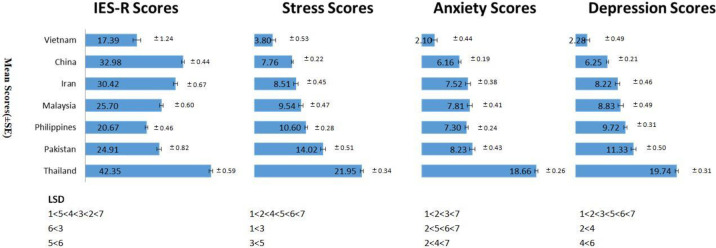
The coronavirus disease (COVID-19) pandemic has impacted the economy, livelihood, and physical and mental well-being of people worldwide. This study aimed to compare the mental health status during the pandemic in the general population of seven middle income countries (MICs) in Asia (China, Iran, Malaysia, Pakistan, Philippines, Thailand, and Vietnam). All the countries used the Impact of Event Scale–Revised (IES-R) and Depression, Anxiety and Stress Scale (DASS-21) to measure mental health. There were 4479 Asians completed the questionnaire with demographic characteristics, physical symptoms and health service utilization, contact history, knowledge and concern, precautionary measure, and rated their mental health with the IES-R and DASS-21. Descriptive statistics, One-Way analysis of variance (ANOVA), and linear regression were used to identify protective and risk factors associated with mental health parameters. There were significant differences in IES-R and DASS-21 scores between 7 MICs (p<0.05). Thailand had all the highest scores of IES-R, DASS-21 stress, anxiety, and depression scores whereas Vietnam had all the lowest scores. The risk factors for adverse mental health during the COVID-19 pandemic include age <30 years, high education background, single and separated status, discrimination by other countries and contact with people with COVID-19 (p<0.05). The protective factors for mental health include male gender, staying with children or more than 6 people in the same household, employment, confidence in doctors, high perceived likelihood of survival, and spending less time on health information (p<0.05). This comparative study among 7 MICs enhanced the understanding of metal health in the general population during the COVID-19 pandemic.
Overview
The claims and statistics of this paper haven’t been checked yet.
Run the check — free, no account needed. It reads the open-access text and checks the sources it cites.
Integrity signals
Registry
Cites
Statistics
Figures
Verification
Claims the paper makes
The claims and statistics of this paper haven’t been checked yet.
Run the check — free, no account needed. It reads the open-access text and checks the sources it cites.
Claims other papers make about this one
Each is checked against this paper’s own text: does it say what the citing paper says it does?
The cited source says what the claim attributes to it.
In the citing paper
“The baseline levels of stress and anxiety among our participants were significantly higher than those found in the same population of university students by previous research [42-44], as well as in the general population [45].”
Self-check
Percentages, sums and reported differences re-computed from the paper’s own numbers.
The self-check needs the paper’s full text.
Citations
Cites
Wang, C., Pan, R., Wan, X., Tan, Y., Xu, L., Ho, C. S., & Ho, R. C. (2020) · International Journal of Environmental Research and Public Health · doi:10.3390/ijerph17051729 · Cited by 9,923 · cited 2×
“Psychometric properties of the questionnaire were established in the initial phase and peak of the COVID-19 epidemic [8, 9].”
BackgroundMethodSelf-citationImpact of COVID-19 pandemic on mental health in the general population: a systematic review
Xiong, J., Lipsitz, O., Nasri, F., Lui, L. M. W., Gill, H., Phan, L., Chen-Li, D., Iacobucci, M., Ho, R., Majeed, A., et al. (2020) · Journal of Affective Disorders · doi:10.1016/j.jad.2020.08.001 · Cited by 5,204 · cited 1×
“A recent systematic review found that relatively high rates of symptoms of anxiety, depression, post-traumatic stress disorder and stress were reported in the general population and health care professionals during the COVID-19 pandemic globally [2, 3].”
BackgroundSelf-citationWang, C., Pan, R., Wan, X., Tan, Y., Xu, L., McIntyre, R. S., Choo, F. N., Tran, B., Ho, R., Sharma, V. K., et al. (2020) · Brain, Behavior, and Immunity · doi:10.1016/j.bbi.2020.04.028 · Cited by 2,571 · cited 2×
“Psychometric properties of the questionnaire were established in the initial phase and peak of the COVID-19 epidemic [8, 9].”
BackgroundSelf-citationHo, C. S., Chee, C. Y., & Ho, R. C. (2020) · Annals of the Academy of Medicine, Singapore · doi:10.47102/annals-acadmedsg.202043 · Cited by 1,699 · cited 1×
“High education background is a risk factor and online psychological interventions such as cognitive behaviour therapy (CBT) and mindfulness-based therapy could improve mental health for highly educated individual [40].”
BackgroundSelf-citationChew, N. W. S., Lee, G. K. H., Tan, B. Y. Q., Jing, M., Goh, Y., Ngiam, N. J. H., Yeo, L. L. L., Ahmad, A., Ahmed Khan, F., Napolean Shanmugam, G., et al. (2020) · Brain, Behavior, and Immunity · doi:10.1016/j.bbi.2020.04.049 · Cited by 1,650 · cited 1×
“The IES-R and DASS-21 scales were previously used in research related to the COVID19 epidemic [8, 12, 20, 21].”
MethodSelf-citationHo, C. S. H., Chee, C. Y., & Ho, R. (2020) · PubMed · Cited by 1,354
Self-citationPsychological impact of the COVID-19 pandemic on health care workers in Singapore
Tan, B. Y. Q., Chew, N. W. S., Lee, G. K. H., Jing, M., Goh, Y., Yeo, L. L. L., Zhang, K., Chin, H.-K., Ahmad, A., Khan, F. A., et al. (2020) · Annals of Internal Medicine · doi:10.7326/m20-1083 · Cited by 1,279 · cited 1×
“The IES-R and DASS-21 scales were previously used in research related to the COVID19 epidemic [8, 12, 20, 21].”
MethodSelf-citationHao, F., Tan, W., Jiang, L., Zhang, L., Zhao, X., Zou, Y., Hu, Y., Luo, X., Jiang, X., McIntyre, R. S., et al. (2020) · Brain, Behavior, and Immunity · doi:10.1016/j.bbi.2020.04.069 · Cited by 968 · cited 1×
“The IES-R and DASS-21 scales were previously used in research related to the COVID19 epidemic [8, 12, 20, 21].”
Self-citationPsychological impact of COVID-19 pandemic in the Philippines
Tee, M. L., Tee, C. A., Anlacan, J. P., Aligam, K. J. G., Reyes, P. W. C., Kuruchittham, V., & Ho, R. C. (2020) · Journal of Affective Disorders · doi:10.1016/j.jad.2020.08.043 · Cited by 634
Self-citationShahsavari, S., Holur, P., Wang, T., Tangherlini, T. R., & Roychowdhury, V. (2020) · Journal of Computational Social Science · doi:10.1007/s42001-020-00086-5 · Cited by 420 · cited 1×
“Mis-information related to the cause of COVID-19 [41], rumours [42] and inconsistent information [43] on COVID-19 symptoms, prevention, treatment and transmission mode were associated with negative psychological impact.”
Background
Cited by
Sorted by citations
Mahmud, S. A. S., Mohsin, M., Dewan, M. N., & Muyeed, A. (2022) · Trends in Psychology · doi:10.1007/s43076-021-00116-9 · Cited by 211
“A study found that the poor sanitation, lack of basic preventive measures, lack of proper testing, and medical facilities are the reasons behind the higher psychological disorder, COVID-19 cases, and deaths in those countries (Wang et al., 2021).”
BackgroundHamaideh, S. H., Al-Modallal, H. M., Tanash, M. I., & Hamdan‐Mansour, A. M. (2021) · Nursing Open · doi:10.1002/nop2.918 · Cited by 195
Chodavadia, P. A., Teo, I., Poremski, D., Fung, D. S. S., & Finkelstein, E. A. (2023) · BMC Psychiatry · doi:10.1186/s12888-023-04581-7 · Cited by 160
Mental Disorders of Bangladeshi Students During the COVID-19 Pandemic: A Systematic Review
Al‐Mamun, F., Hosen, I., Misti, J. M., Kaggwa, M. M., & Mamun, M. A. (2021) · Psychology Research and Behavior Management · doi:10.2147/prbm.s315961 · Cited by 152
“…to 50.9% anxiety, 48.3% depression, 53.8% post-traumatic stress disorder, 38% psychological distress, and 81.9% stress were found) among the general population globally, as consistent with other literatures concerned with either multi-centered cross-sectional studies, 19,20 or systematic reviews.”
InfluentialGabrielli, S., Rizzi, S., Bassi, G., Carbone, S., Maimone, R., Marchesoni, M., & Forti, S. (2021) · JMIR mHealth and uHealth · doi:10.2196/27965 · Cited by 125
“The baseline levels of stress and anxiety among our participants were significantly higher than those found in the same population of university students by previous research [42-44], as well as in the general population [45].”
ResultHidalgo-Andrade, P., Hermosa‐Bosano, C., & Paz, C. (2021) · Psychology Research and Behavior Management · doi:10.2147/prbm.s314844 · Cited by 150
Lizana, P. A., & Vega-Fernández, G. (2021) · International Journal of Environmental Research and Public Health · doi:10.3390/ijerph18147566 · Cited by 149
“This background, along with the catastrophic context generated by the health emergency, causes people to develop mass hysteria, bringing negative consequences for mental and physical health [12,14]; this manifests in diminished hours of physical activity and sleep, and increased alcohol and tobacco use [15].”
BackgroundLu, X., & Lin, Z. (2021) · Frontiers in Psychology · doi:10.3389/fpsyg.2021.759974 · Cited by 138
A global meta-analysis of depression, anxiety, and stress before and during COVID-19.
Daniali, H., Martinussen, M., & Flaten, M. A. (2023) · Health Psychology · doi:10.1037/hea0001259 · Cited by 117
Mautong, H., Gallardo-Rumbea, J. A., Alvarado-Villa, G., Fernández‐Cadena, J. C., Andrade-Molina, D., Orellana-Román, C., & Chérrez-Ojeda, I. (2021) · BMC Psychiatry · doi:10.1186/s12888-021-03214-1 · Cited by 100
Chen, I., Chen, C., Liao, X.-L., Chen, X.-M., Zheng, X., Tsai, Y., Lin, C., Griffiths, M. D., & Pakpour, A. H. (2023) · Acta Psychologica · doi:10.1016/j.actpsy.2023.104042 · Cited by 97
Acceptance and willingness to pay for COVID‐19 vaccines among pregnant women in Vietnam
Nguyen, L. H., Hoang, M. T., Nguyen, L. D., Ninh, L. T., Nguyen, H. T. T., Nguyen, A. D., Vu, L. G., Vu, G. T., Doan, L. P., Latkin, C. A., et al. (2021) · Tropical Medicine & International Health · doi:10.1111/tmi.13666 · Cited by 92
Self-citationMcPherson, K. E., McAloney‐Kocaman, K., McGlinchey, E., Faeth, P. C., & Armour, C. (2021) · Psychiatry Research · doi:10.1016/j.psychres.2021.114138 · Cited by 87
The COVID-19 disaster and mental health—assessing, responding and recovering
Lindert, J., Jakubauskienė, M., & Bilsen, J. J. R. (2021) · European Journal of Public Health · doi:10.1093/eurpub/ckab153 · Cited by 89
Rahman, M. A., Islam, S. M. S., Tungpunkom, P., Sultana, F., Alif, S. M., Banik, B., Salehin, M., Joseph, B., Lam, L., Watts, M. C., et al. (2021) · Globalization and Health · doi:10.1186/s12992-021-00768-3 · Cited by 93
Xu, K., Wang, Z., Qin, M., Gao, Y., Luo, N., Xie, W., Zou, Y., Wang, J., & Ma, X. (2023) · Frontiers in Immunology · doi:10.3389/fimmu.2023.1113156 · Cited by 83
Jaspal, R., & Breakwell, G. M. (2021) · Current Psychology · doi:10.1007/s12144-021-01681-z · Cited by 74
“…to non-Western countries, especially those with a collectivist cultural orientation (e.g., China and Vietnam) to examine the significance of social support to testing and vaccination likelihood in cultural contexts in which the social group is central to identity functioning (Wang et al., 2021).”
BackgroundPappa, S., Chen, J., Barnett, J., Chang, A., Dong, R. K., Xu, W., Yin, A., Chen, B. Z., Delios, A., Chen, R. Z., et al. (2021) · Psychiatry and Clinical Neurosciences · doi:10.1111/pcn.13306 · Cited by 76
“The mean anxiety and depression scores using the Depression, Anxiety and Stress Scale-21 (DASS-21) were statistically significantly lower than all the six Asian nations.(63) Although insomnia was underreported in the studies under the scope of this systematic review, it was evidently the least prevalent mental disorde…”
MethodEpidemiology of depression among displaced people: A systematic review and meta-analysis
Bedaso, A., & Duko, B. (2022) · Psychiatry Research · doi:10.1016/j.psychres.2022.114493 · Cited by 67
Cyberbullying and mental health: past, present and future
Bansal, S., Garg, N., Singh, J., & van der Walt, F. (2024) · Frontiers in Psychology · doi:10.3389/fpsyg.2023.1279234 · Cited by 92
Meta-analysis of prevalence: the psychological sequelae among COVID-19 survivors
Khraisat, B., Toubasi, A. A., AlZoubi, L., Al-Sayegh, T., & Mansour, A. T. (2021) · International Journal of Psychiatry in Clinical Practice · doi:10.1080/13651501.2021.1993924 · Cited by 69
“…with attention deficit hyperactivity disorder, bipolar disorder, depression, and schizophrenia were found to have higher odds of being diagnosed with COVID-19 based on a large control study which suggested that there was a bidirectional link between COVID-19 and mental disorders (Wang et al. 2021).”
BackgroundShen, X., MacDonald, M., Logan, S. W., Parkinson, C., Gorrell, L., & Hatfield, B. E. (2022) · International Journal of Environmental Research and Public Health · doi:10.3390/ijerph19031081 · Cited by 64
“DASS-21 has been validated in both clinical [59] and nonclinical samples [60] and used in several COVID-19 studies [61,62].”
MethodMental health among healthcare workers during COVID-19 pandemic in Thailand
Chinvararak, C., Kerdcharoen, N., Pruttithavorn, W., Polruamngern, N., Asawaroekwisoot, T., Munsukpol, W., & Kirdchok, P. (2022) · PLoS ONE · doi:10.1371/journal.pone.0268704 · Cited by 57
Sajjad, M., Bhatti, A., Hill, B., & Al‐Omari, B. (2023) · BMC Public Health · doi:10.1186/s12889-023-15923-1 · Cited by 53
“Pakistan has similar teaching and learning cultures, primary, secondary, and further education, as well as health care settings to those in Iran [43, 44].”
BackgroundInfluentialTyphoons During the COVID-19 Pandemic in the Philippines: Impact of a Double Crises on Mental Health
Rocha, I. C. N., Costa, A. C. D. S., Islam, Z., Jain, S., Goyal, S., Mohanan, P., Essar, M. Y., & Ahmad, S. (2021) · Disaster Medicine and Public Health Preparedness · doi:10.1017/dmp.2021.140 · Cited by 53
Psychological problems among the university students in Saudi Arabia during the COVID‐19 pandemic
Mohammed, Z., Arafa, A., Atlam, E., El‐Qerafi, N., El‐Shazly, M., Al‐Hazazi, O., & Ewis, A. A. (2021) · International Journal of Clinical Practice · doi:10.1111/ijcp.14853 · Cited by 50
Evaluating the social outcomes of COVID-19 pandemic: empirical evidence from Pakistan
Abbass, K., Basit, A., Niazi, A. A. K., Mufti, R., Zahid, N., & Qazi, T. F. (2022) · Environmental Science and Pollution Research · doi:10.1007/s11356-022-19628-7 · Cited by 43
Parvar, S. Y., Ghamari, N., Pezeshkian, F., & Shahriarirad, R. (2022) · Health Science Reports · doi:10.1002/hsr2.460 · Cited by 52
“Pakistan, Thailand, the Philippines, and Malaysia had the highest rates of depression, anxiety, and stress among middle-income countries.(8) At the time of our study, Iran was the second-highest country in Asia in COVID-19 cases(9,10) and had the highest anxiety score (mean = 7.”
BackgroundHan, L., Zhan, Y., Li, W., Xu, Y., Xu, Y., & Zhao, J. (2021) · JMIR Public Health and Surveillance · doi:10.2196/31052 · Cited by 46
“…addition, knowledge and concerns about COVID-19 (eg, low confidence in doctors, low perceived likelihood of survival, and spending more time gathering health information) [11] and the perceived impact of the pandemic [12] were found to be positively correlated with depression, anxiety, and stress.”
BackgroundYu, L., Cao, Y., Wang, Y., Liu, T., MacDonald, A., Bian, F., Li, X., Wang, X., Zhang, Z., Wang, P., et al. (2023) · Journal of Migration and Health · doi:10.1016/j.jmh.2023.100185 · Cited by 48
Li, N., Li, S., & Fan, L. (2021) · Journal of Adolescent Health · doi:10.1016/j.jadohealth.2021.07.018 · Cited by 52
“This conclusion contradicts a previous study that found that a couple experienced lower psychological distress than single subjects during the COVID-19 pandemic [23].”
Latsou, D., Bolosi, F.-M., Androutsou, L., & Geitona, M. (2022) · Health Services Insights · doi:10.1177/11786329221096042 · Cited by 41
Green, Z. A., & Yıldırım, M. (2022) · Heliyon · doi:10.1016/j.heliyon.2022.e09729 · Cited by 39
Sangrà, P. S., Mir, S. A., Ribeiro, T. C., Esteban‐Sepúlveda, S., Pagès, E. G., López, B., Moya-Prats, J. L. P., Pintor, L., & Aguiló, J. (2021) · Comprehensive Psychiatry · doi:10.1016/j.comppsych.2021.152278 · Cited by 42
Martín, J., Padierna, Á., Villanueva, A., & Quintana, J. M. (2021) · International Journal of Clinical Practice · doi:10.1111/ijcp.14607 · Cited by 38
The impact of media on children during the COVID-19 pandemic: A narrative review
Mesce, M., Ragona, A., Cimino, S., & Cerniglia, L. (2022) · Heliyon · doi:10.1016/j.heliyon.2022.e12489 · Cited by 56
“Earlier literature has focused mainly on adulthood (e.g., Wang et al., 2021a; Wang et al., 2021b) or adolescents (Ren et al., 2021), paying less attention to the impact that media has on children, particularly during COVID-19.”
Lau, S. S. S., Ho, C. C. Y., Pang, R. C. K., Su, S., Kwok, H. H. M., Fung, S.-F., & Ho, R. (2022) · Frontiers in Public Health · doi:10.3389/fpubh.2022.1039450 · Cited by 39
Self-citationPsychosocial impact of COVID-19 pandemic on Malaysian families: a cross-sectional study
Zainudeen, Z. T., Hamid, I. J. A., Azizuddin, M. N. A., Bakar, F. F. A., Sany, S. B., Zolkepli, I. A., & Mangantig, E. (2021) · BMJ Open · doi:10.1136/bmjopen-2021-050523 · Cited by 37
Conteh, I., Yan, J., Dovi, K. S., Bajinka, O., Massey, I. Y., & Turay, B. (2022) · Psychiatry Research Communications · doi:10.1016/j.psycom.2022.100082 · Cited by 37
“countries (MICs) in Asia (China, Iran, Malaysia, Pakistan, Philippines, Thailand, and Vietnam) during the pandemic [57].”
Knowledge and Practice Related to COVID-19 and Mental Health among Adults in Sub-Saharan Africa
Workneh, F., Wang, D., Millogo, O., Worku, A., Chukwu, A. U., Lankoandé, B., Assefa, N., Hemler, E. C., Korte, M. L., Soura, A., et al. (2021) · American Journal of Tropical Medicine and Hygiene · doi:10.4269/ajtmh.21-0219 · Cited by 35
“measures such as lockdowns, quarantine, social isolations, and movement restrictions.(15,16,18,19) Address correspondence to Firehiwot Workneh, Department of Epidemiology and Biostatistics, Addis Continental Institute of Public Health, Yeka sub-city, Woreda 13, Addis Ababa, Ethiopia, E-mail: firehiwotworkneh@addiscont…”
BackgroundInfluentialFear of COVID-19 and depression, anxiety, stress, and PTSD among Syrian refugee parents in Canada
Sharif-Esfahani, P., Hoteit, R., Morr, C. E., & Tamim, H. (2022) · Journal of Migration and Health · doi:10.1016/j.jmh.2022.100081 · Cited by 35
Ahmed, F. R., Bani‐Issa, W., Timmins, F., Dias, J. M., Al‐Yateem, N., Subu, M. A., Alzahmi, S. M., Saqan, R., Rahman, H. A., & AbuRuz, M. E. (2022) · Journal of Nursing Management · doi:10.1111/jonm.13824 · Cited by 35
Lathabhavan, R., & Sudevan, S. (2022) · International Journal of Mental Health and Addiction · doi:10.1007/s11469-021-00735-4 · Cited by 32
Boonyarat, P., Liew, D.-J., & Chang, Y. (2024) · Information Processing & Management · doi:10.1016/j.ipm.2024.103706 · Cited by 36
Ali, N. A., Feroz, A. S., Akber, N., Feroz, R., Meghani, S. N., & Saleem, S. (2021) · BMJ Open · doi:10.1136/bmjopen-2021-049851 · Cited by 32
Ong, A. K. S., Chuenyindee, T., Prasetyo, Y. T., Nadlifatin, R., Persada, S. F., Gumasing, M. J. J., German, J. D., Robas, K. P. E., Young, M. N., & Sittiwatethanasiri, T. (2022) · International Journal of Environmental Research and Public Health · doi:10.3390/ijerph19106111 · Cited by 35
Borualogo, I. S., & Casas, F. (2023) · Child Indicators Research · doi:10.1007/s12187-023-10013-5 · Cited by 31
“Effects of the pandemic are experienced not only in high-income countries (Cowden et al., 2021; Kohls et al., 2021; Pancani et al., 2021; Pieh et al., 2021) but also in low- and middleincome countries (Kola et al., 2021; Wang et al., 2021).”
BackgroundSakti, A. M. T., Mohamad, E. M. W., & Azlan, A. A. (2021) · Journal of Medical Internet Research · doi:10.2196/28249 · Cited by 32
“The health crisis has sparked concerns on the spread of the virus and its containment [39], economic survival [40], and physical and mental well-being [41].”
Lee, E. P. X., Man, R. E. K., Gan, T. L. A., Fenwick, E., Aravindhan, A., Ho, K. C., Sung, S. C., Wong, T. Y., Ho, C. S. H., Gupta, P., et al. (2021) · International Journal of Geriatric Psychiatry · doi:10.1002/gps.5645 · Cited by 30
Self-citationHosen, I., Al‐Mamun, F., & Mamun, M. A. (2021) · Health Science Reports · doi:10.1002/hsr2.398 · Cited by 31
“Mohammed A. Mamun, CHINTA Research Bangladesh, Dhaka, Bangladesh.”
BackgroundInfluentialAfter Over a Year of Pandemic: Mental Well-being and Life Satisfaction of Filipino College Students
Egcas, R. A., Oducado, R. M., Cleofas, J. V., Rabacal, J., & Lausa, S. M. (2021) · Pertanika journal of social science & humanities · doi:10.47836/pjssh.29.4.17 · Cited by 30
Mendoza, N. B., King, R. B., & Haw, J. Y. (2023) · Educational Psychology · doi:10.1080/01443410.2023.2226846 · Cited by 37
Depression, stress, anxiety among jordanian people during COVID-19 pandemic: A survey-based study
Abuhammad, S., Khabour, O. F., Alomari, M. A., & Alzoubi, K. H. (2022) · Informatics in Medicine Unlocked · doi:10.1016/j.imu.2022.100936 · Cited by 29
Geriatric Health Care During the COVID-19 Pandemic: Managing the Health Crisis
Zhu, Y., Liu, Y., & Jiang, H. (2022) · Clinical Interventions in Aging · doi:10.2147/cia.s376519 · Cited by 29
Dehghan, M., Namjoo, Z., Akbarabadi, F. M., Fooladi, Z., & Zakeri, M. A. (2021) · Health Science Reports · doi:10.1002/hsr2.461 · Cited by 30
“Scale-Revised (IES-R), stress, anxiety, and depression scores in some nations, such as Thailand.(3) Furthermore, Poland and the Philippines were the two countries with the highest levels of anxiety, depression, and stress.”
BackgroundOng, A. K. S., Prasetyo, Y. T., Yuduang, N., Nadlifatin, R., Persada, S. F., Robas, K. P. E., Chuenyindee, T., & Buaphiban, T. (2022) · International Journal of Environmental Research and Public Health · doi:10.3390/ijerph19137979 · Cited by 26
“It presents how knowledgeable people are since the COVID-19 virus is prevalent even in other countries [88].”
BackgroundOniszczenko, W. (2021) · PLoS ONE · doi:10.1371/journal.pone.0255750 · Cited by 25
“[26] pointed out that avoiding excessive searching for information PLOS ONE Affective temperaments, cyberchondria, COVID-19”
BackgroundPengpid, S., & Peltzer, K. (2021) · Heliyon · doi:10.1016/j.heliyon.2021.e08635 · Cited by 25
Timming, A. R., French, M. T., & Mortensen, K. (2021) · Journal of Affective Disorders Reports · doi:10.1016/j.jadr.2021.100152 · Cited by 23
Health risk behaviors before and during COVID‐19 and gender differences
Branquinho, C., Paiva, T., Guedes, F. B., Gaspar, T., Tomé, G., & de Matos, M. G. (2021) · Journal of Community Psychology · doi:10.1002/jcop.22705 · Cited by 23
“With strong and recognized psychological and physical consequences (Holmes et al., 2020; Mansfield et al., 2021; Tee et al., 2021; Wang et al., 2021), increased levels of anxiety and depression, the coronavirus disease 2019 (COVID‐19) pandemic has proven detrimental for sleep regulation (Kutana &…”
BackgroundPanicker, R. M., & Chandrasekaran, B. (2022) · Sport Sciences for Health · doi:10.1007/s11332-021-00885-x · Cited by 22
Exploring differences in the subjective well-being of teleworkers prior to and during the pandemic
Pataki-Bittó, F., & Kun, Á. (2022) · International Journal of Workplace Health Management · doi:10.1108/ijwhm-12-2020-0207 · Cited by 30
Shabu, S. A., M-Amin, K. M., Mahmood, K. I., & Shabila, N. P. (2021) · Social Work in Public Health · doi:10.1080/19371918.2021.1915909 · Cited by 22
“The study of the seven middle-income countries in Asia also showed significant differences in the prevalence of precautionary measures among the seven countries (Wang et al., 2021).”
BackgroundResultInfluentialNusair, M. B., Arabyat, R. M., Khasawneh, R. A., Al-Azzam, S. I., Nusir, A. T., & Alhayek, M. Y. (2022) · Human Vaccines & Immunotherapeutics · doi:10.1080/21645515.2021.2017734 · Cited by 23
“The emergence and spread of the coronavirus disease 2019 (COVID-19) came with negative impacts and unprecedented challenges that affected the physical and mental well-being of people worldwide.(1) Although COVID-19 was announced a global pandemic over a year ago, survivors of the disease are still healing from its dev…”
BackgroundWhat has changed in the pharmaceutical care after COVID-19: Pharmacists’ perspective
Kharaba, Z. J., Moutraji, S. A., Khawaldeh, R. A. A., Alfoteih, Y., & Meslamani, A. Z. A. (2022) · Pharmacy Practice · doi:10.18549/pharmpract.2022.2.2656 · Cited by 22
Brągiel, A., & Gambin, M. (2023) · Journal of Affective Disorders Reports · doi:10.1016/j.jadr.2023.100487 · Cited by 22
Effects of teleworking on wellbeing from a gender perspective: a systematic review
Trancón, N. C., Zuazua, M., Segovia, A. O., Cifré, E., & Izquierdo, A. L. G. (2024) · Frontiers in Organizational Psychology · doi:10.3389/forgp.2024.1360373 · Cited by 35
Ho, Y.-C. L., Chew, M. S.-L., Mahirah, D., & Thumboo, J. (2022) · Frontiers in Psychology · doi:10.3389/fpsyg.2022.770927 · Cited by 22
Lusida, M. A. P., Salamah, S., Jonatan, M., Wiyogo, I. O., Asyari, C. H., Ali, N. D., Asmara, J., Wahyuningtyas, R. I., Triyono, E. A., Ratnadewi, N. K., et al. (2022) · PLoS ONE · doi:10.1371/journal.pone.0270966 · Cited by 25
Hagrass, A. I., Almadhoon, H. W., Al‐kafarna, M., Almaghary, B. K., Nourelden, A. Z., Fathallah, A. H., Hasan, M. T., Mohammed, Y. A., Al-Nabahin, A. O., Wafi, D. S., et al. (2022) · BMC Pregnancy and Childbirth · doi:10.1186/s12884-022-04884-9 · Cited by 23
“Introduction SARS-CoV-2 pandemic had negative consequences and presented unprecedented obstacles that harmed people’s physical and mental health around the world [1].”
BackgroundMental Health Condition among University Students of Bangladesh during the Critical COVID-19 Period
Rahman, M. M., Asikunnaby, Khan, S. J., Arony, A., Mamun, Z. A., Procheta, N. F., Sakib, M. S., Aryal, K., Rahman, F., & Islam, A. R. M. T. (2022) · Journal of Clinical Medicine · doi:10.3390/jcm11154617 · Cited by 24
“Study found that the students were associated with higher psychological impact during the COVID-19 pandemic [36].”
BackgroundAndersen, L. H., Fallesen, P., & Bruckner, T. A. (2021) · BMC Public Health · doi:10.1186/s12889-021-11020-3 · Cited by 22
Consequences of COVID-19 on Health, Economy, and Tourism in Asia: A Systematic Review
Saengtabtim, K., Leelawat, N., Tang, J., Suppasri, A., & Imamura, F. (2022) · Sustainability · doi:10.3390/su14084624 · Cited by 21
Yadav, S. S., Saoji, A. A., Somanadhapai, S., Yadav, N. L., Upadhyay, J., Rishi, N. N., & Thapa, R. (2024) · Journal of Ayurveda and Integrative Medicine · doi:10.1016/j.jaim.2024.100897 · Cited by 21
The COVID-19 pandemic and insecurity: the furiousness in Nigerian communities
Akanmu, A. A., Salisu, U. O., Daramola, O. P., Ogunsesan, S. A., Fasina, S. O., Adejare, J. A., Sanni, S. M., & Olatunji, O. M. (2021) · Urban Planning and Transport Research · doi:10.1080/21650020.2021.1946420 · Cited by 22
International survey for assessing COVID-19’s impact on fear and health: study protocol
Lok, K. Y. W., Fong, D., Wong, J. Y. H., Ho, M. M., Choi, E. P. H., Pandian, V., Davidson, P. M., Duan, W., Tarrant, M., Lee, J. J., et al. (2021) · BMJ Open · doi:10.1136/bmjopen-2021-048720 · Cited by 20
Betini, G. S., Hirdes, J. P., Adekpedjou, R., Perlman, C. M., Huculak, N., & Hébert, P. C. (2021) · Frontiers in Psychiatry · doi:10.3389/fpsyt.2021.666261 · Cited by 23
Min, S., Jeong, Y. H., Kim, J., Koo, J. W., & Ahn, Y. M. (2021) · Frontiers in Psychiatry · doi:10.3389/fpsyt.2021.671722 · Cited by 22
Kandula, U. R., & Wake, A. D. (2022) · Psychology Research and Behavior Management · doi:10.2147/prbm.s341299 · Cited by 24
“Thailand received the highest IES-R and DASS-21 stress, anxiety, and depression levels while Vietnam received the lowest.(22)”
BackgroundTay, W. W. Y., Jesuthasan, J., Wan, K. S., Ong, T., & Mustapha, F. I. (2022) · Frontiers in Public Health · doi:10.3389/fpubh.2022.863323 · Cited by 22
Chudzicka-Czupała, A., Chiang, S.-K., Grabowski, D., Żywiołek-Szeja, M., Quek, M., Pudełek, B., Teopiz, K., Ho, R. C. M., & McIntyre, R. (2022) · International Journal of Environmental Research and Public Health · doi:10.3390/ijerph192215405 · Cited by 19
“Total DASS-21 score was used for analysis based on previous studies [27,28].”
MethodSelf-citationPasha, H., Omidvar, S., Faramarzi, M., & Bakhtiari, A. (2023) · BMC Psychiatry · doi:10.1186/s12888-023-04677-0 · Cited by 18
“The results emphasized that the history of chronic diseases exacerbated the prevalence of depression and anxiety [38].”
BackgroundLee, M., Lee, H., Park, J., Kim, H. J., Kwon, R., Lee, S. W., Kim, S. Y., Koyanagi, A., Smith, L., Kim, M. S., et al. (2023) · Scientific Reports · doi:10.1038/s41598-023-49055-8 · Cited by 19
“Furthermore, the pandemic and lifestyle changes, such as reduced stress levels due to remote work or reduced commuting time, can positively impact hypertension control and treatment outcomes 31 .”
BackgroundDigital Financial Inclusion in Emerging Economies: Evidence from Jordan
Khub, A. A., Saeudy, M., & Gerged, A. M. (2024) · Journal of risk and financial management · doi:10.3390/jrfm17020066 · Cited by 19
“For instance, the business environment in Jordan has experienced an increased demand for digital financial services, online products, and operations in the banking sector (Wang et al. 2021).”
BackgroundKaya, Y., Bostan, S., Kaya, A., Karaman, Ö., Karataş, A., & Dereli, S. (2021) · International Journal of Clinical Practice · doi:10.1111/ijcp.14219 · Cited by 20
Wayessa, Z. J., Melesse, G. T., Amaje, E., & Wako, W. G. (2021) · SAGE Open Medicine · doi:10.1177/20503121211032810 · Cited by 21
Mental Health and the COVID-19 Pandemic: Observational Evidence from Malaysia
Tan, E. S. S., Chin, S. A. F. X., Sathapan, M. S. P., Dewi, A. D., Amini, F., Bustami, N. A., Tan, P. Y., Ho, Y. B., & Tan, C. K. (2023) · International Journal of Environmental Research and Public Health · doi:10.3390/ijerph20054046 · Cited by 19
“This is consistent with the previous findings reported in Asian countries [68,75–77].”
BackgroundResultInfluentialFrömel, K., Groffik, D., Valach, P., Šafář, M., & Mitáš, J. (2022) · Journal of School Health · doi:10.1111/josh.13232 · Cited by 18
Li, J., Fong, D., Lok, K. Y. W., Wong, J. Y. H., Ho, M. M., Choi, E. P. H., Pandian, V., Davidson, P. M., Duan, W., Tarrant, M., et al. (2023) · Journal of Global Health · doi:10.7189/jogh.13.06031 · Cited by 17
Halim, S. F. B., Mridha, S., Nasrin, N., Islam, M. K., & Hossain, M. T. (2022) · Sociological Spectrum · doi:10.1080/02732173.2022.2081639 · Cited by 17
Ho, R., Tran, B. X., & McIntyre, R. S. (2021) · Annals of the Academy of Medicine Singapore · doi:10.47102/annals-acadmedsg.202189 · Cited by 17
Self-citationMcCormack, G. R., Doyle–Baker, P. K., Petersen, J. A., & Ghoneim, D. (2021) · BMJ Open · doi:10.1136/bmjopen-2021-050550 · Cited by 19
Iqbal, M., Ma, J., Ullah, Z., Ahmad, N., bin Ibrahim, M., Waqas, M., & Ahmad, M. (2022) · Social Work in Public Health · doi:10.1080/19371918.2022.2066042 · Cited by 17
Liu, H., Ye, B., & Hu, Y. S. (2022) · Psychology Research and Behavior Management · doi:10.2147/prbm.s360455 · Cited by 21
“A survey of seven countries in Asia shows that COVID-19 hits people under the age of 30 most, causing them to significantly increase anxiety and depression.(9) A study found a high rate of anxiety or depressive symptoms due to COVID-19 in the population, ranging from 15% to 16%.”
Cimino, S., Vito, P. D., & Cerniglia, L. (2022) · Current Psychology · doi:10.1007/s12144-022-03360-z · Cited by 17
“The COVID-19 pandemic and the related measures put in place to stem its spread have had a drastic impact on mental health in the general population (Ceban et al., 2021; Lee et al., 2021; Wang et al., 2021; Wang et al., 2021c; Xiong et al., 2020).”
Li, R., Huang, C., Guan, B., Du, J., Zhao, M., & Liu, S. (2023) · Journal of Affective Disorders · doi:10.1016/j.jad.2023.05.055 · Cited by 18
Return of the unexpected: Rural workforce recruitment and retention in the era of COVID‐19
Jones, M., Versace, V. L., Lyle, D. M., & Walsh, S. (2021) · Australian Journal of Rural Health · doi:10.1111/ajr.12817 · Cited by 17
Faraci, P., Bottaro, R., Valenti, G. D., & Craparo, G. (2022) · Psychology Research and Behavior Management · doi:10.2147/prbm.s354083 · Cited by 18
“Beyond the consequences on general health, the spread of the pandemic and the following restrictive measures had a great impact on the world economy and on all people’s daily life in all countries as well as on developing countries.(10) As a result, social distancing – in association with personal risk (e.”
BackgroundCogan, N. A., Archbold, H., Deakin, K., Griffith, B., Berruga, I. S., Smith, S. G., Tanner, G., & Flowers, P. (2022) · International Journal of Mental Health · doi:10.1080/00207411.2022.2056386 · Cited by 17
“2022 Taylor & Francis Group, LLC et al., 2021; Vindegaard & Benros, 2020; Wang et al., 2021; Willis & Chalder, 2021).”
COVID-19 mental health prevalence and its risk factors in South East Asia
Balakrishnan, V., Ng, K. S., Kaur, W., & Lee, Z. L. (2022) · Current Psychology · doi:10.1007/s12144-021-02556-z · Cited by 17
Metadata
- Authors
- Wang, C., Tee, M., Roy, A. E., Fardin, M. A., Srichokchatchawan, W., Habib, H. A., Tran, B. X., Hussain, S., Hoang, M. T., Le, X. T., Ma, W., Pham, H. Q., Shirazi, M., Taneepanichskul, N., Tan, Y., Tee, C., Xu, L., Xu, Z., Vu, G. T., Zhou, D., Koh, B. J., McIntyre, R. S., Ho, C., Ho, R. C., & Kuruchittham, V.
- Affiliations
- Huaibei Normal University (CN)
- University of the Philippines Manila (PH)
- Universiti Malaysia Sarawak (MY)
- Islamic Azad University, Zahedan Branch (IR)
- Chulalongkorn University (TH)
- University of Karachi (PK)
- Johns Hopkins University (US)
- Duy Tan University (VN)
- Hanoi Medical University (VN)
- University of Sistan and Baluchestan (IR)
- Trường ĐH Nguyễn Tất Thành (VN)
- National University of Singapore (SG)
- University Health Network (CA)
- National University Health System (SG)
- Southeast Asia One Health University Network (TH)
- Corresponding author
- Ho, Roger C.
- ORCID
- Venue
- PLOS ONE
- Publisher
- Public Library of Science (PLoS)
- Published
- 2021-02-11
- Volume
- 16
- Issue
- 2
- Pages
- e0246824
- ISSN
- 1932-6203 (ISSN-L)
- PMC
- PMC7877638
- OpenAlex
- W3126849703
- Cited by
- 460
- References
- 44
- Citations by year
- 2026: 13 · 2025: 25 · 2024: 53 · 2023: 111 · 2022: 171 · 2021: 86
- FWCI
- 71.79
- Type
- journal article
- Language
- en
- Open access
- gold
- doi.org
- Licence
- Locations
- PLoS ONE (publishedVersion, cc-by)
- PubMed Central (publishedVersion, cc-by)
- PubMed (publishedVersion)
- Research Explorer (The University of Manchester) (publishedVersion)
- Unimas Institutional Repository (Universiti Malaysia Sarawak) (acceptedVersion)
- National University of Singapore (submittedVersion, cc-by)
- DOAJ (DOAJ: Directory of Open Access Journals) (submittedVersion, cc-by-sa)
- Rare & Special e-Zone (The Hong Kong University of Science and Technology) (submittedVersion)
- Greater South Information System
- Funders
- Huaibei Normal University, China.
- National University of Singapore iHealthtech Other Operating Expenses (R-722-000-004-731)
- Vingroup Innovation Foundation (VINIF) COVID in Vietnam (VINIF.2020.Covid19.DA07)
- Topics
- Social Sciences › Psychology › Clinical Psychology › COVID-19 and Mental Health
- Health Sciences › Medicine › Psychiatry and Mental health › Mental Health Treatment and Access
- Health Sciences › Medicine › Public Health, Environmental and Occupational Health › Maternal Mental Health During Pregnancy and Postpartum
- Keywords
- COVID-19 pandemic, mental health, physical health, anxiety, depression, stress, middle-income countries, Asia, risk factors, protective factors, cross-national comparison, health care utilization, somatic symptoms
- MeSH terms
- COVID-19, SARS-CoV-2, Adolescent, Adult, Anxiety, Asia, Child, Cross-Sectional Studies, Depression, Female, Humans, Male, Mental Health, Middle Aged, Sex Factors, Socioeconomic Factors, Stress, Psychological, Young Adult, Protective Factors
About these checks
Registry, retraction, Cites and statistics results are computed, not judged, with one exception: a printed reference that no index lists is read once by a model before it counts as a citation error. Claims are extracted by a model and kept only when their quote appears verbatim in the text; each cited source is then checked, with a model’s help, for whether it says what the claim relies on. Those verdicts can be wrong — read the claim’s quote and the cited source before relying on one.
Statistics and arithmetic are recomputed, not judged.
Confidence bands are shown only for fields calibrated on our annotated test set. None is calibrated yet, so no band is shown.
What counts as a claim ›How we measure confidence ›How we check this ›
Are you an author, or do you see a problem with this page? Request a review
