

Exploration of consumer preference based on deep learning neural network model in the immersive marketing environment
Open accessThe DOI matches its Crossref record; 36 of the 40 references it cites were found in a registry or an index, and 2 are not checked yet.
Abstract
The study intends to increase the marketing quantity of various commodities and promote the comprehensive development of the market. The study first discusses the principle and current situation of the emerging Immersive Marketing. Then, it analyzes the Deep Learning (DL) Neural Network (NN) model. Finally, a Personalized Recommendation System (PRS) is designed based on the Immersive Marketing environment using the Graph Neural Network (GNN) model. The proposed PRS based on the Immersive Graph Neural Network (IGNN) model has reflected higher advantages over other recommendation systems. The experiment results suggest that Immersive Marketing can fully reflect commodities’ essential attributes and characteristics, improve users’ shopping experience, and promote sales. Meanwhile, the IGNN-based PRS reported here gives users an elevated and immersive shopping experience and entertainment process. Lastly, the model comparison finds that the proposed IGNN outperforms other models. The optimal model parameters are verified as P@20 and R@20 to gain the highest composite index values. In particular, parameter R@20 gives the model a better performance over P@20. The study provides technical references for improving the marketing process of various commodities and entertainment products and contributes to marketing technology development.
Overview
The claims and statistics of this paper haven’t been checked yet.
Free: it reads the open-access text and checks the first 5 claims that cite a source we can check. Create a free account to check every claim.
Integrity signals
Registry
Cites
Statistics
Figures




Verification
Claims the paper makes
The claims and statistics of this paper haven’t been checked yet.
Free: it reads the open-access text and checks the first 5 claims that cite a source we can check. Create a free account to check every claim.
Claims other papers make about this one
Each is checked against this paper’s own text: does it say what the citing paper says it does?
The source backs part of the claim, not all of it — or backs it for a different population, condition or comparison.
In the citing paper
“Additionally, an immersive marketing AI-personalized recommendation system, designed through the use of graph neural networks, has the potential to stimulate consumers' creative thinking and desire to explore [60].”
From The Impact of AI-Personalized Recommendations on Clicking Intentions: Evidence from Chinese E-Commerce (2025) · cites this paper as [60]
Experimental — accuracy not yet measured
Self-check
Percentages, sums and reported differences re-computed from the paper’s own numbers.
The self-check needs the paper’s full text.
Citations
Cites
Anomalous collapses of Nares Strait ice arches leads to enhanced export of Arctic sea ice
Moore, G. W. K., Howell, S. E. L., Brady, M., Xu, X., & McNeil, K. (2021) · Nature Communications · doi:10.1038/s41467-020-20314-w · Cited by 5,155
A review of uncertainty quantification in deep learning: Techniques, applications and challenges
Abdar, M., Pourpanah, F., Hussain, S., Rezazadegan, D., Liu, L., Ghavamzadeh, M., Fieguth, P., Cao, X., Khosravi, A., Acharya, U. R., et al. (2021) · Information Fusion · doi:10.1016/j.inffus.2021.05.008 · Cited by 3,111
Machine learning and deep learning
Janiesch, C., Zschech, P., & Heinrich, K. (2021) · Electronic Markets · doi:10.1007/s12525-021-00475-2 · Cited by 2,959 · cited 1×
“Thereby, they complete data processing by constructing multi-level and nonlinear change models [16].”
MethodDeep Learning for Anomaly Detection: A Review
Pang, G., Shen, C., Cao, L., & Hengel, A. V. D. (2022) · ACM Computing Surveys · doi:10.1145/3439950 · Cited by 2,837 · cited 1×
“In particular, Graph Neural Network (GNN) is widely used in PRS’s graph structure data analysis [21].”
MethodDeep Learning for 3D Point Clouds: A Survey
Guo, Y., Wang, H., Hu, Q., Liu, H., Liu, L., & Bennamoun, M. (2021) · IEEE Transactions on Pattern Analysis and Machine Intelligence · doi:10.1109/tpami.2020.3005434 · Cited by 2,398
Gate-variants of Gated Recurrent Unit (GRU) neural networks
Dey, R., & Salem, F. M. (2017) · 2017 IEEE 60th International Midwest Symposium on Circuits and Systems (MWSCAS) · doi:10.1109/mwscas.2017.8053243 · Cited by 2,186
Deep Learning for Anomaly Detection: A Review
Pang, G., Shen, C., Cao, L., et al. (2020) · Singapore Management University Institutional Knowledge (InK) (Singapore Management University) · doi:10.48550/arxiv.2007.02500 · Cited by 1,718 · cited 1×
“In particular, Graph Neural Network (GNN) is widely used in PRS’s graph structure data analysis [21].”
MethodDeep learning in environmental remote sensing: Achievements and challenges
Yuan, Q., Shen, H., Li, T., Li, Z., Li, S., Jiang, Y., Xu, H., Tan, W., Yang, Q., Wang, J., et al. (2020) · Remote Sensing of Environment · doi:10.1016/j.rse.2020.111716 · Cited by 1,697
Deep Learning--based Text Classification: A Comprehensive Review
Minaee, S., Kalchbrenner, N., Cambria, E., Nikzad, N., Chenaghlu, M., & Gao, J. (2022) · ACM Computing Surveys · doi:10.1145/3439726 · Cited by 1,538 · cited 1×
“At the same time, this paper also analyzes the influence of parameters through ablation experiments [29].”
BackgroundA Survey of Deep Learning and Its Applications: A New Paradigm to Machine Learning
Dargan, S., Kumar, M., Ayyagari, M. R., & Kumar, G. (2020) · Archives of Computational Methods in Engineering · doi:10.1007/s11831-019-09344-w · Cited by 1,198 · cited 1×
“Hence, DL improves ML’s speed and data processing efficiency [18].”
BackgroundDeep learning for the design of photonic structures
Ma, W., Liu, Z., Kudyshev, Z. A., Boltasseva, A., Cai, W., & Liu, Y. (2021) · Nature Photonics · doi:10.1038/s41566-020-0685-y · Cited by 1,136 · cited 1×
“For example, the user’s evaluation of items and the attribute information between users is a bipartite graph [20].”
BackgroundFastai: A Layered API for Deep Learning
Howard, J., & Gugger, S. (2020) · Information · doi:10.3390/info11020108 · Cited by 971
Democratising deep learning for microscopy with ZeroCostDL4Mic
von Chamier, L., Laine, R. F., Jukkala, J., Spahn, C., Krentzel, D., Nehme, E., Lerche, M., Hernández-Pérez, S., Mattila, P. K., Karinou, E., et al. (2021) · Nature Communications · doi:10.1038/s41467-021-22518-0 · Cited by 521 · cited 1×
“Finally, DL realizes the highly accurate and intelligent Machine Learning (ML) [17].”
MethodExperiencing immersive virtual reality in museums
Lee, H., Jung, T. H., tom Dieck, M. C., & Chung, N. (2020) · Information & Management · doi:10.1016/j.im.2019.103229 · Cited by 478 · cited 1×
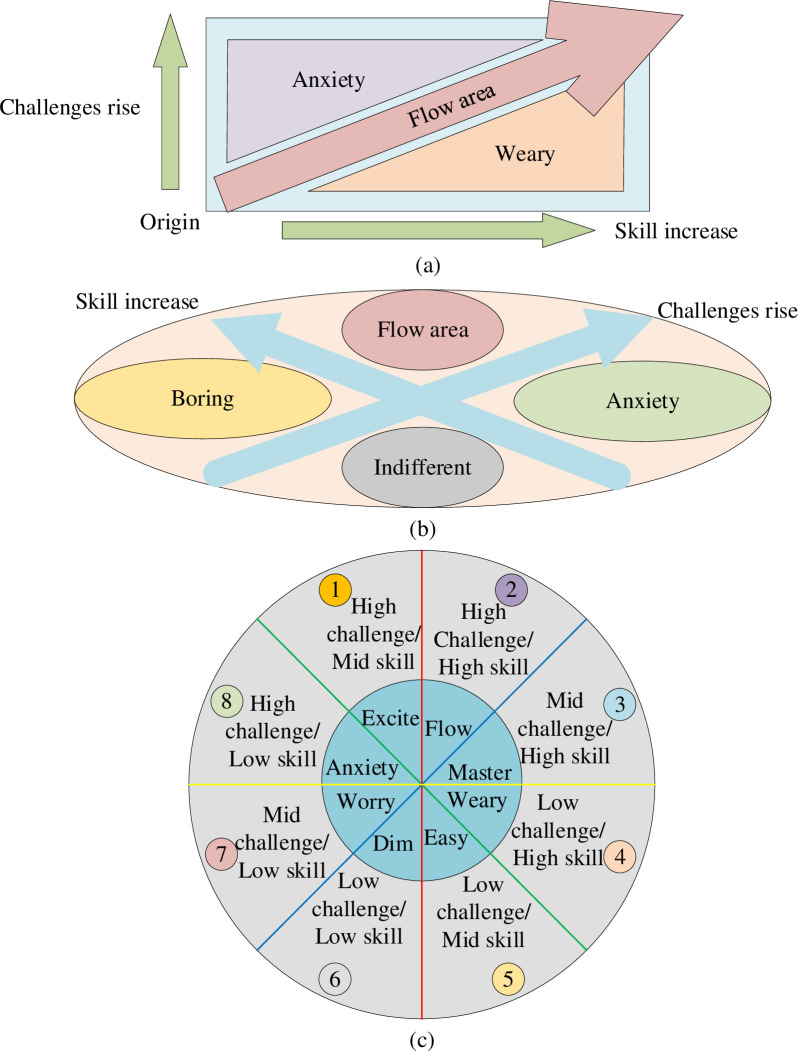
“By comparison, the eight-channel psychological flow model extends the three-channel model to better capture user psychological flow [14].”
BackgroundAn enhanced fast non-dominated solution sorting genetic algorithm for multi-objective problems
Deng, W., Zhang, X., Zhou, Y., Liu, Y., Zhou, X., Chen, H., & Zhao, H. (2022) · Information Sciences · doi:10.1016/j.ins.2021.11.052 · Cited by 462 · cited 1×
“It drives User Experience toward Immersive Experience to improve the marketing effect [12].”
BackgroundImmersive virtual reality as a teaching tool for neuroanatomy
Stepan, K., Zeiger, J., Hanchuk, S., Del Signore, A., Shrivastava, R., Govindaraj, S., & Iloreta, A. (2017) · International Forum of Allergy & Rhinology · doi:10.1002/alr.21986 · Cited by 402
If deep learning is the answer, what is the question?
Saxe, A., Nelli, S., & Summerfield, C. (2021) · Nature Reviews Neuroscience · doi:10.1038/s41583-020-00395-8 · Cited by 397 · cited 1×
“In that case, users’ browsing similarity with their friends must be analyzed based on users’ network locations and circle of friends [25].”
BackgroundDeep Learning Based Text Classification: A Comprehensive Review
Minaee, S., Kalchbrenner, N., Cambria, E., Nikzad, N., Asgari-Chenaghlu, M., & Gao, J. (2020) · arXiv (Cornell University) · doi:10.48550/arxiv.2004.03705 · Cited by 381 · cited 1×
“At the same time, this paper also analyzes the influence of parameters through ablation experiments [29].”
BackgroundEnsemble deep learning in bioinformatics
Cao, Y., Geddes, T. A., Yang, J. Y. H., & Yang, P. (2020) · Nature Machine Intelligence · doi:10.1038/s42256-020-0217-y · Cited by 354 · cited 1×
“GNN mainly has three operations: Aggregate, Combine, and Readout [22].”
Deep Learning applications for COVID-19
Shorten, C., Khoshgoftaar, T. M., & Furht, B. (2021) · Journal of Big Data · doi:10.1186/s40537-020-00392-9 · Cited by 350 · cited 1×
“The Immersive Marketing environment can comprehensively improve users’ shopping experience and promote commodity marketing [2, 3].”
BackgroundAn, S., Choi, Y., & Lee, C.-K. (2021) · Journal of Destination Marketing & Management · doi:10.1016/j.jdmm.2020.100492 · Cited by 289 · cited 1×
“This real-time perception effect offers users a convenient design and Experience, bringing higher consumer satisfaction [8].”
BackgroundDeepDDS: deep graph neural network with attention mechanism to predict synergistic drug combinations
Wang, J., Liu, X., Shen, S., Deng, L., & Liu, H. (2022) · Briefings in Bioinformatics · doi:10.1093/bib/bbab390 · Cited by 261
Personalized Long- and Short-term Preference Learning for Next POI Recommendation
Wu, Y., Li, K., Zhao, G., & Qian, X. (2022) · IEEE Transactions on Knowledge and Data Engineering · doi:10.1109/tkde.2020.3002531 · Cited by 249 · cited 1×
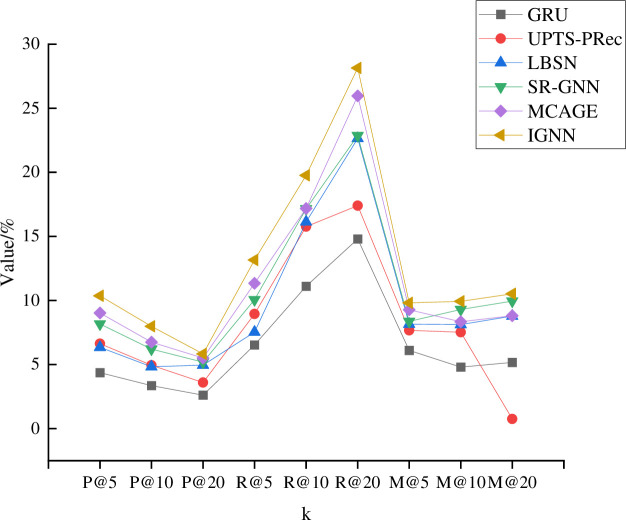
“…reported here is verified by comparing it with Gate Recurrent Unit (GRU) [30], User Preference & Time Sequence-based POI Recommendation (UPTS-Prec) [31], Location-Based Social Network (LBSN), Session-based Recsys-Graph Neural Network (SR-GNN) [32], and Multidimensional Context-Aware Graph…”
MethodA Novel K-Means Clustering Algorithm with a Noise Algorithm for Capturing Urban Hotspots
Ran, X., Zhou, X., Lei, M., Tepsan, W., & Deng, W. (2021) · Applied Sciences · doi:10.3390/app112311202 · Cited by 236 · cited 2×
“The proposed KMC noise algorithm demonstrated excellent clustering performance, accurately obtained the clustering results and effectively captured urban hot spots [5].”
BackgroundPersonalized recommendation system based on knowledge embedding and historical behavior
Hui, B., Zhang, L., Zhou, X., Wen, X., & Nian, Y. (2021) · Applied Intelligence · doi:10.1007/s10489-021-02363-w · Cited by 197
Pleyers, G., & Poncin, I. (2020) · Journal of Retailing and Consumer Services · doi:10.1016/j.jretconser.2020.102175 · Cited by 192 · cited 1×
“Thus, it is difficult to capture the user’s actual psychological flow pattern [13].”
BackgroundCompound Fault Diagnosis Using Optimized MCKD and Sparse Representation for Rolling Bearings
Deng, W., Li, Z., Li, X., Chen, H., & Zhao, H. (2022) · IEEE Transactions on Instrumentation and Measurement · doi:10.1109/tim.2022.3159005 · Cited by 187 · cited 11×
“Immersive Experience based on Virtual Reality (VR) technology can elevate User Experience and reconstruct an Immersive Marketing environment.”
BackgroundInfluentialRolling Element Fault Diagnosis Based on VMD and Sensitivity MCKD
Cui, H., Guan, Y., & Chen, H. (2021) · IEEE Access · doi:10.1109/access.2021.3108972 · Cited by 177 · cited 2×
“Cui et al. (2021) devised a new fault diagnosis method based on Variational Mode Decomposition (VMD) and Maximum Correlation Kurtosis Deconvolution (MCKD) for the rolling body of VMD rolling bearing: VMD-MCKD.”
MethodSaleh, A. M., & Hamoud, T. (2021) · Journal of Big Data · doi:10.1186/s40537-020-00387-6 · Cited by 158
Augmented reality enhancing place satisfaction for heritage tourism marketing
Tsai, S. (2019) · Current Issues in Tourism · doi:10.1080/13683500.2019.1598950 · Cited by 105 · cited 1×
“The Immersive Marketing environment can comprehensively improve users’ shopping experience and promote commodity marketing [2, 3].”
BackgroundLi, G., Li, Y., Chen, H., & Deng, W. (2022) · Applied Sciences · doi:10.3390/app12063139 · Cited by 92 · cited 2×
“The results showed that the controller based on the algorithm had the advantages of slight overshoot, short adjustment time, accurate control, and strong interference immunity [4].”
BackgroundLR-GNN: a graph neural network based on link representation for predicting molecular associations
Kang, C., Zhang, H., Liu, Z., Huang, S., & Yin, Y. (2021) · Briefings in Bioinformatics · doi:10.1093/bib/bbab513 · Cited by 83
Consumer attitude toward virtual stores and its correlates
Lee, B.-J. (2006) · Journal of Retailing and Consumer Services · doi:10.1016/j.jretconser.2006.07.001 · Cited by 80
Economic impacts of innovations in tourism marketing
Štreimikienė, D., & Korneeva, E. N. (2020) · Terra Economicus · doi:10.18522/2073-6606-2020-18-3-182-193 · Cited by 63 · cited 1×
“The core theory of Immersive Experience is the Flow Theory: the positive psychological Experience produced by a specific activity [11].”
BackgroundNarayanan, M., & Cherukuri, A. K. (2016) · IIMB Management Review · doi:10.1016/j.iimb.2016.01.001 · Cited by 43 · cited 1×
“…is verified by comparing it with Gate Recurrent Unit (GRU) [30], User Preference & Time Sequence-based POI Recommendation (UPTS-Prec) [31], Location-Based Social Network (LBSN), Session-based Recsys-Graph Neural Network (SR-GNN) [32], and Multidimensional Context-Aware Graph Embedding (MCAGE) [33].”
MethodUse of Immersive Virtual Technology in Consumer Retailing and Its Effects to Consumer
Lee, W. (2020) · Journal of Distribution Science · doi:10.15722/jds.18.2.202002.5 · Cited by 18 · cited 6×
“As an advanced marketing method, Immersive Marketing has unique characteristics to attract users, bring an intuitive User Experience, and reflect products’ attributes.”
MethodInfluentialAN EXAMINATION ON THE USE OF IMMERSIVE REALITY TECHNOLOGIES IN THE TRAVEL AND TOURISM INDUSTRY
Ercan, F. (2020) · Business And Management Studies An International Journal · doi:10.15295/bmij.v8i2.1510 · Cited by 18 · cited 1×
“Thus, the eight-channel flow model can accurately and effectively reflect and capture the user’s psychological flow Experience [15].”
BackgroundChouyluam, S., Wannapiroon, P., & Nilsook, P. (2021) · International Journal of Trade Economics and Finance · doi:10.18178/ijtef.2021.12.1.689 · Cited by 14 · cited 1×
“It can also comprehensively improve users’ shopping experience to increase sales [1].”
BackgroundTanning Addiction in Adolescents: Directions for Measurement and Intervention Development
Tripp, M. K. (2018) · Journal of Investigative Dermatology · doi:10.1016/j.jid.2018.05.002 · Cited by 3 · cited 1×
“Then, the model reported here is verified by comparing it with Gate Recurrent Unit (GRU) [30], User Preference & Time Sequence-based POI Recommendation (UPTS-Prec) [31], Location-Based Social Network (LBSN), Session-based Recsys-Graph Neural Network (SR-GNN) [32], and Multidimensional Context-Aware Graph Embedding (MC…”
MethodSmartphone-Based Virtual Reality as an Immersive Tool for Teaching Marketing Concepts
Zourrig, H. (2021) · International Journal of Innovative Teaching and Learning in Higher Education · doi:10.4018/ijitlhe.20210101.oa3 · Cited by 3
Cited by
Yin, J., Qiu, X., & Wang, Y. (2025) · Journal of Theoretical and Applied Electronic Commerce Research · doi:10.3390/jtaer20010021 · Cited by 103
“The diverse functional experiences that users encounter when inter-acting with AI-personalized recommendation technology demonstrate its usefulness and ease of use, which in turn serve to actively promote specific behaviors such as clicking and browsing [83].”
Chabane, N., Bouaoune, M. A., Tighilt, R. A. S., Abdar, M., Boc, A., Lord, É., Tahiri, N., Mazoure, B., Acharya, U. R., & Makarenkov, V. (2022) · PLoS ONE · doi:10.1371/journal.pone.0278364 · Cited by 33
“Zheng and Ding [37] proposed a personalized recommendation system based on an Immersive Graph Neural Network (IGNN), which is intended to increase the marketing quantity of various commodities, to improve users’ shopping experience, promote sales, and thus motivate the market development.”
BackgroundSystematic Literature Review of Machine Learning in Virtual Reality and Augmented Reality
Sindu, I. G. P., Hartati, R. S., Sudarma, M., & Gunantara, N. (2023) · Jurnal Nasional Pendidikan Teknik Informatika (JANAPATI) · doi:10.23887/janapati.v12i1.60126 · Cited by 14
Graph Neural Networks: A Bibliometric Mapping of the Research Landscape and Applications
da Silva, A. M. B., Ferreira, N. C. D. S., Braga, L. A. M., Mota, F. B., Maricato, V., & Alves, L. A. (2024) · Information · doi:10.3390/info15100626 · Cited by 14
Ahmadon, M. A. B., Yamaguchi, S., Mahamad, A. K., & Saon, S. B. (2023) · Big Data and Cognitive Computing · doi:10.3390/bdcc7010034 · Cited by 9
“Zheng et al. [24] focus on immersive marketing and applied graph neural network models that consider essential attributes to improve the consumer shopping experience.”
Background
Metadata
- Authors
- Zheng, Q., & Ding, Q.
- Affiliations
- Ningxia University (CN)
- Corresponding author
- Zheng, Qiang
- Venue
- PLOS ONE
- Publisher
- Public Library of Science (PLoS)
- Published
- 2022-05-04
- Volume
- 17
- Issue
- 5
- Pages
- e0268007
- ISSN
- 1932-6203 (ISSN-L)
- PMC
- PMC9067676
- OpenAlex
- W4229068680
- Cited by
- 16
- References
- 34
- Citations by year
- 2026: 2 · 2025: 6 · 2024: 4 · 2023: 3 · 2022: 1
- FWCI
- 3.46
- Type
- journal article
- Language
- en
- Update notices
- correction (2024-06-26)
- Open access
- gold
- doi.org
- Licence
- Locations
- PLoS ONE (publishedVersion, cc-by)
- PubMed Central (publishedVersion, cc-by)
- PubMed (publishedVersion)
- RePEc: Research Papers in Economics (submittedVersion)
- DOAJ (DOAJ: Directory of Open Access Journals) (submittedVersion, cc-by-sa)
- Topics
- Physical Sciences › Computer Science › Information Systems › Recommender Systems and Techniques
- Social Sciences › Business, Management and Accounting › Marketing › Digital Marketing and Social Media
- Social Sciences › Business, Management and Accounting › Marketing › Consumer Retail Behavior Studies
- Keywords
- immersive marketing, consumer preferences, personalized recommendation systems, graph neural networks, deep neural network, customer experience, sales promotion, marketing technology
- MeSH terms
- Deep Learning, Consumer Behavior, Leisure Activities, Neural Networks, Computer, Marketing
About these checks
Registry, retraction, Cites and statistics results are computed, not judged, with one exception: a printed reference that no index lists is read once by a model before it counts as a citation error. Claims are extracted by a model and kept only when their quote appears verbatim in the text; each cited source is then checked, with a model’s help, for whether it says what the claim relies on. Those verdicts can be wrong — read the claim’s quote and the cited source before relying on one.
Statistics and arithmetic are recomputed, not judged.
Confidence bands are shown only for fields calibrated on our annotated test set. None is calibrated yet, so no band is shown.
What counts as a claim ›How we measure confidence ›How we check this ›
Are you an author, or do you see a problem with this page? Request a review
Data sources
Bibliographic data: Semantic Scholar, OpenAlex, Crossref.
Contains information from the Semantic Scholar Academic Graph Datasets, made available under the ODC Attribution License (ODC-BY 1.0).
Semantic Scholar’s data is described in: Kinney, R., et al. (2023). The Semantic Scholar Open Data Platform. arXiv:2301.10140.
