

The DOI matches its Crossref record; 21 of the 21 references it cites were found in a registry or an index.
Hsp90 Orchestrates Stress Response Signaling Governing Fungal Drug Resistance
Open accessAbstract
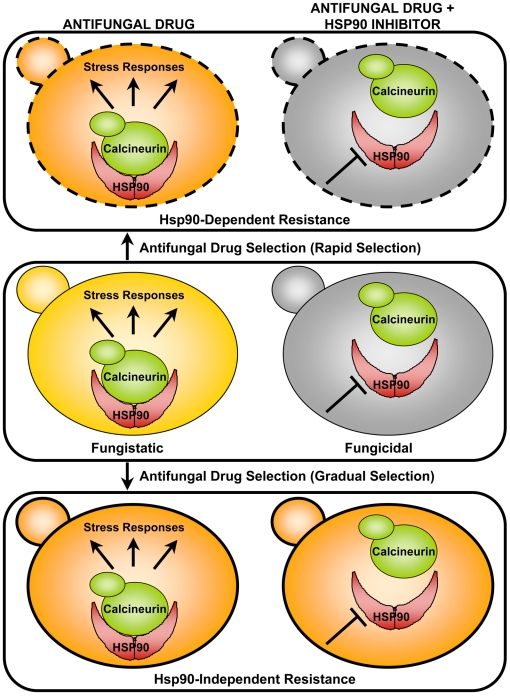
The emergence of drug resistance in microbial pathogens provides a poignant example of an evolutionary process with a profound impact on human health.Fungal drug resistance poses a particular concern given the limited number of clinically useful antifungal drugs and the growing population of immunocompromised individuals vulnerable to life-threatening fungal disease [1].The efficacy of most antifungal drugs is compromised either by host toxicity, fungistatic rather than fungicidal activity, or by the emergence of drug resistance.Recent studies have revealed that compromising the function of the molecular chaperone Hsp90 can render resistant pathogens more responsive to treatment and can thwart the evolution of fungal drug resistance [2].
Overview
The claims and statistics of this paper haven’t been checked yet.
Run the check — free, no account needed. It reads the open-access text and checks the sources it cites.
Integrity signals
Registry
Cites
Statistics
Figures
Verification
Claims the paper makes
The claims and statistics of this paper haven’t been checked yet.
Run the check — free, no account needed. It reads the open-access text and checks the sources it cites.
Claims other papers make about this one
Each is checked against this paper’s own text: does it say what the citing paper says it does?
In the citing paper
“has been shown to potentiate the evolution of drug resistance traits, including some azole resistance mechanisms.”
From Molecular and genetic basis of azole antifungal resistance in the opportunistic pathogenic fungus Candida albicans (2020) · cites this paper as [167]
In the citing paper
“by stabilizing the calcineurin protein and the pathway that is essential in the cellular drug-induced stress response, Hsp90 has been shown to affect not only azole resistance but resistance to the echinocandin drug class as well.”
From Molecular and genetic basis of azole antifungal resistance in the opportunistic pathogenic fungus Candida albicans (2020) · cites this paper as [167]
In the citing paper
“there is increasing evidence of its regulatory role in azole resistance development.”
From Molecular and genetic basis of azole antifungal resistance in the opportunistic pathogenic fungus Candida albicans (2020) · cites this paper as [167]
Self-check
Percentages, sums and reported differences re-computed from the paper’s own numbers.
The self-check needs the paper’s full text.
Citations
Cites
HSP90 and the chaperoning of cancer
Whitesell, L., & Lindquist, S. L. (2005) · Nature Reviews Cancer · doi:10.1038/nrc1716 · Cited by 2,502
Hsp90 as a capacitor for morphological evolution
Rutherford, S. L., & Lindquist, S. (1998) · Nature · doi:10.1038/24550 · Cited by 2,270
Hsp90 as a capacitor of phenotypic variation
Queitsch, C., Sangster, T. A., & Lindquist, S. (2002) · Nature · doi:10.1038/nature749 · Cited by 1,372
Zhao, R., Davey, M., Hsu, Y.-C., Kaplanek, P., Tong, A., Parsons, A. B., Krogan, N., Cagney, G., Mai, D., Greenblatt, J., et al. (2005) · Cell · doi:10.1016/j.cell.2004.12.024 · Cited by 819
Hsp90 Potentiates the Rapid Evolution of New Traits: Drug Resistance in Diverse Fungi
Cowen, L. E., & Lindquist, S. (2005) · Science · doi:10.1126/science.1118370 · Cited by 698
Self-citationCowen, L. E., Singh, S. D., Köhler, J. R., Collins, C., Zaas, A. K., Schell, W. A., Aziz, H., Mylonakis, E., Perfect, J. R., Whitesell, L., et al. (2009) · Proceedings of the National Academy of Sciences · doi:10.1073/pnas.0813394106 · Cited by 413
Self-citationHsp90 Governs Echinocandin Resistance in the Pathogenic Yeast Candida albicans via Calcineurin
Singh, S. D., Robbins, N., Zaas, A. K., Schell, W. A., Perfect, J. R., & Cowen, L. E. (2009) · PLoS Pathogens · doi:10.1371/journal.ppat.1000532 · Cited by 362 · cited 1×
“clinical isolates and creates a fungicidal combination”
Self-citationSanglard, D., Ischer, F., Marchetti, O., Entenza, J., & Bille, J. (2003) · Molecular Microbiology · doi:10.1046/j.1365-2958.2003.03495.x · Cited by 350
Calcineurin is essential for survival during membrane stress in Candida albicans
Cruz, M. C., Goldstein, A. L., Blankenship, J. R., Del Poeta, M., Davis, D., Cardenas, M. E., Perfect, J. R., McCusker, J. H., & Heitman, J. (2002) · The EMBO Journal · doi:10.1093/emboj/21.4.546 · Cited by 342
Calcineurin signaling in Saccharomyces cerevisiae: how yeast go crazy in response to stress.
Cyert, M. S. (2003) · Biochemical and Biophysical Research Communications · doi:10.1016/s0006-291x(03)01552-3 · Cited by 333
Cited by
Sorted by citations
The Response to Heat Shock and Oxidative Stress in Saccharomyces cerevisiae
Morano, K. A., Grant, C. M., & Moye-Rowley, S. (2011) · Genetics · doi:10.1534/genetics.111.128033 · Cited by 674
Drug resistance and tolerance in fungi.
Berman, J., & Krysan, D. J. (2020) · Nature Reviews Microbiology · doi:10.1038/s41579-019-0322-2 · Cited by 642
Mechanisms of Antifungal Drug Resistance
Cowen, L. E., Sanglard, D., Howard, S. J., Rogers, P. D., & Perlin, D. S. (2015) · Cold Spring Harbor Perspectives in Medicine · doi:10.1101/cshperspect.a019752 · Cited by 647
Self-citationLaFayette, S. L., Collins, C., Zaas, A. K., Schell, W. A., Betancourt-Quiroz, M., Gunatilaka, A. A. L., Perfect, J. R., & Cowen, L. E. (2010) · PLoS Pathogens · doi:10.1371/journal.ppat.1001069 · Cited by 329
Self-citationMechanisms of echinocandin antifungal drug resistance
Perlin, D. S. (2015) · Annals of the New York Academy of Sciences · doi:10.1111/nyas.12831 · Cited by 313
An Update on Candida tropicalis Based on Basic and Clinical Approaches
Zuza-Alves, D. L., Rocha, W. P. D. S., & Chaves, G. M. (2017) · Frontiers in Microbiology · doi:10.3389/fmicb.2017.01927 · Cited by 314
Current Perspectives on Echinocandin Class Drugs
Perlin, D. S. (2011) · Future Microbiology · doi:10.2217/fmb.11.19 · Cited by 274
Untangling the fungal niche: the trait-based approach
Crowther, T. W., Maynard, D. S., Crowther, T. R., Peccia, J., Smith, J. R., & Bradford, M. A. (2014) · Frontiers in Microbiology · doi:10.3389/fmicb.2014.00579 · Cited by 257
Elevated Cell Wall Chitin in Candida albicans Confers Echinocandin Resistance In Vivo
Lee, K. K., MacCallum, D. M., Jacobsen, M. D., Walker, L. A., Odds, F. C., Gow, N. A. R., & Munro, C. A. (2012) · Antimicrobial Agents and Chemotherapy · doi:10.1128/aac.00683-11 · Cited by 209
New Horizons in Antifungal Therapy
Pianalto, K. M., & Alspaugh, J. A. (2016) · Journal of Fungi · doi:10.3390/jof2040026 · Cited by 197
Dermatophyte Resistance to Antifungal Drugs: Mechanisms and Prospectus
Martinez-Rossi, N. M., Bitencourt, T. A., Peres, N. T. A., Lang, E. A. S., Gomes, E. V., Quaresemin, N. R., Martins, M. P., Lopes, L. R., & Rossi, A. (2018) · Frontiers in Microbiology · doi:10.3389/fmicb.2018.01108 · Cited by 192
Azole resistance mechanisms in Aspergillus: update and recent advances
Pérez‐Cantero, A., López‐Fernández, L., Guarro, J., & Capilla, J. (2019) · International Journal of Antimicrobial Agents · doi:10.1016/j.ijantimicag.2019.09.011 · Cited by 185
Update on Antifungal Drug Resistance
Perlin, D. S., Shor, E., & Zhao, Y. (2015) · Current Clinical Microbiology Reports · doi:10.1007/s40588-015-0015-1 · Cited by 181
Juvvadi, P. R., Lee, S. C., Heitman, J., & Steinbach, W. J. (2016) · Virulence · doi:10.1080/21505594.2016.1201250 · Cited by 179
Liu, S., Hou, Y., Chen, X., Gao, Y., Li, H., & Sun, S. (2014) · International Journal of Antimicrobial Agents · doi:10.1016/j.ijantimicag.2013.12.009 · Cited by 153
Heat Shock Protein 90 Is Required for Conidiation and Cell Wall Integrity in Aspergillus fumigatus
Lamoth, F., Juvvadi, P. R., Fortwendel, J. R., & Steinbach, W. J. (2012) · Eukaryotic Cell · doi:10.1128/ec.00032-12 · Cited by 136
García‐Effrón, G. (2020) · Journal of Fungi · doi:10.3390/jof6040262 · Cited by 135
Thammahong, A., Puttikamonkul, S., Perfect, J. R., Brennan, R. G., & Cramer, R. A. (2017) · Microbiology and Molecular Biology Reviews · doi:10.1128/mmbr.00053-16 · Cited by 125
Redox regulation of the stability of the SUMO protease SENP3 via interactions with CHIP and Hsp90
Yan, S., Sun, X., Xiang, B., Cang, H., Kang, X., Chen, Y., Li, H., Shi, G., Yeh, E. T. H., Wang, B., et al. (2010) · The EMBO Journal · doi:10.1038/emboj.2010.245 · Cited by 128
It’s not magic – Hsp90 and its effects on genetic and epigenetic variation
Zabinsky, R. A., Mason, G. A., Queitsch, C., & Jarosz, D. F. (2018) · Seminars in Cell and Developmental Biology · doi:10.1016/j.semcdb.2018.05.015 · Cited by 106
Nishimoto, A. T., Sharma, C., & Rogers, P. D. (2020) · Journal of Antimicrobial Chemotherapy · doi:10.1093/jac/dkz400 · Cited by 102
Gong, Y., Li, T., Yu, C., & Sun, S. (2017) · Frontiers in Cellular and Infection Microbiology · doi:10.3389/fcimb.2017.00520 · Cited by 105
Elucidating Drug Resistance in Human Fungal Pathogens
Xie, J. L., Polvi, E. J., Shekhar‐Guturja, T., & Cowen, L. E. (2014) · Future Microbiology · doi:10.2217/fmb.14.18 · Cited by 103
Self-citationpH Signaling in Human Fungal Pathogens: a New Target for Antifungal Strategies
Cornet, M., & Gaillardin, C. M. (2014) · Eukaryotic Cell · doi:10.1128/ec.00313-13 · Cited by 101
The fungal Achilles’ heel: targeting Hsp90 to cripple fungal pathogens
Cowen, L. E. (2013) · Current Opinion in Microbiology · doi:10.1016/j.mib.2013.03.005 · Cited by 102
Self-citationFacilitators of adaptation and antifungal resistance mechanisms in clinically relevant fungi
Hokken, M., Zwaan, B. J., Melchers, W. J. G., & Verweij, P. E. (2019) · Fungal Genetics and Biology · doi:10.1016/j.fgb.2019.103254 · Cited by 98
Chemosensitization as a Means to Augment Commercial Antifungal Agents
Campbell, B. C., Chan, K. L., & Jong Heon, K. I. M. (2012) · Frontiers in Microbiology · doi:10.3389/fmicb.2012.00079 · Cited by 90
Franke, J., Eichner, S., Zeilinger, C., & Kirschning, A. (2013) · Natural Product Reports · doi:10.1039/c3np70012g · Cited by 89
Drug resistance mechanisms and their regulation in non- albicans Candida species
Kołaczkowska, A., & Kołaczkowski, M. (2016) · Journal of Antimicrobial Chemotherapy · doi:10.1093/jac/dkv445 · Cited by 91
Fitness Trade-Offs Associated with the Evolution of Resistance to Antifungal Drug Combinations
Hill, J. A., O’Meara, T. R., & Cowen, L. E. (2015) · Cell Reports · doi:10.1016/j.celrep.2015.01.009 · Cited by 80
Self-citationLiu, S., Mauff, F. L., Sheppard, D. C., & Zhang, S. (2022) · npj Biofilms and Microbiomes · doi:10.1038/s41522-022-00347-3 · Cited by 75
Coping with Stress and the Emergence of Multidrug Resistance in Fungi
Shor, E., & Perlin, D. S. (2015) · PLoS Pathogens · doi:10.1371/journal.ppat.1004668 · Cited by 73
Hameed, S., Dhamgaye, S., Singh, A., Goswami, S. K., & Prasad, R. (2011) · PLoS ONE · doi:10.1371/journal.pone.0018684 · Cited by 69
Mucormycosis associated with COVID‐19 in two kidney transplant patients
Arana, C., Ramírez, R., Xipell, M., Casals, J., Moreno, A., Herrera, S., Bodro, M., Cofán, F., Diekmann, F., & Esforzado, N. (2021) · Transplant Infectious Disease · doi:10.1111/tid.13652 · Cited by 67
Understanding the mechanisms of resistance to azole antifungals in Candida species
Li, Y., Hind, C. K., Furner-Pardoe, J., Sutton, J. M., & Rahman, K. M. (2025) · JAC-Antimicrobial Resistance · doi:10.1093/jacamr/dlaf106 · Cited by 70
Chen, L., Zhang, L., Xie, Y., Wang, Y., Tian, X., Fang, W., Xue, X., & Wang, L. (2023) · Advanced Drug Delivery Reviews · doi:10.1016/j.addr.2023.115007 · Cited by 63
Lewis, R. E., Ben‐Ami, R., Best, L., Albert, N. D., Walsh, T. J., & Kontoyiannis, D. P. (2012) · The Journal of Infectious Diseases · doi:10.1093/infdis/jis767 · Cited by 62
A Call to Arms: Quest for a Cryptococcal Vaccine
Caballero Van Dyke, M. C., & Wormley, F. L. (2018) · Trends in Microbiology · doi:10.1016/j.tim.2017.10.002 · Cited by 61
LaFleur, M. D., Lucumi, E., Napper, A. D., Diamond, S. L., & Lewis, K. (2011) · Journal of Antimicrobial Chemotherapy · doi:10.1093/jac/dkq530 · Cited by 59
Stress‐induced evolution of herbicide resistance and related pleiotropic effects
Dyer, W. E. (2018) · Pest Management Science · doi:10.1002/ps.5043 · Cited by 56
Kosawang, C., Karlsson, M., Jensen, D. F., Dilokpimol, A., & Collinge, D. B. (2014) · BMC Genomics · doi:10.1186/1471-2164-15-55 · Cited by 54
Balkrishna, A., Rohela, A., Kumar, A., Kumar, A., Arya, V., Thakur, P., Olekšák, P., Krejcar, O., Verma, R., Kumar, D., et al. (2021) · Plants · doi:10.3390/plants10061089 · Cited by 60
Singh, A., & Prasad, R. (2011) · PLoS ONE · doi:10.1371/journal.pone.0019266 · Cited by 51
Exploring the Trypanosoma brucei Hsp83 Potential as a Target for Structure Guided Drug Design
Pizarro, J. C., Hills, T. L., Senisterra, G. A., Wernimont, A. K., Mackenzie, C. J., Norcross, N. R., Ferguson, M. A. J., Wyatt, P. G., Gilbert, I. H., & Hui, R. (2013) · PLoS neglected tropical diseases · doi:10.1371/journal.pntd.0002492 · Cited by 51
Antifungal resistance in Aspergillus terreus: A current scenario
Vahedi‐Shahandashti, R., & Lass‐Flörl, C. (2019) · Fungal Genetics and Biology · doi:10.1016/j.fgb.2019.103247 · Cited by 51
Xu, S., Wang, J., Wang, H., Bao, Y., Li, Y., Govindaraju, M., Yao, W., Chen, B., & Zhang, M. (2019) · BMC Genomics · doi:10.1186/s12864-019-5479-6 · Cited by 50
Fabri, J. H. T. M., Rocha, M. C., Fernandes, C. M., Persinoti, G. F., Ries, L. N. A., da Cunha, A. F., Goldman, G. H., Poeta, M. D., & Malavazi, I. (2021) · Frontiers in Microbiology · doi:10.3389/fmicb.2021.656548 · Cited by 50
Rodríguez-Cabán, J. L., González-Velázquez, W., Pérez-Sánchez, L., Gonzalez-Mendez, R. R., & Valle, N. R.-D. (2011) · BMC Microbiology · doi:10.1186/1471-2180-11-162 · Cited by 45
Progress and prospects for targeting Hsp90 to treat fungal infections
Veri, A. O., & Cowen, L. E. (2014) · Parasitology · doi:10.1017/s0031182013002072 · Cited by 46
Self-citationJarosz, D. F. (2015) · Advances in cancer research · doi:10.1016/bs.acr.2015.11.001 · Cited by 41
O’Meara, T. R., Veri, A. O., Polvi, E. J., Li, X., Valaei, S. F., Diezmann, S., & Cowen, L. E. (2016) · PLoS Genetics · doi:10.1371/journal.pgen.1006142 · Cited by 45
Self-citationEmerging Mechanisms of Drug Resistance in Candida albicans
Prasad, R., Nair, R., & Banerjee, A. (2019) · Progress in molecular and subcellular biology · doi:10.1007/978-3-030-13035-0_6 · Cited by 44
Feng, Y., Lu, H., Whiteway, M., & Jiang, Y. (2023) · Journal of Global Antimicrobial Resistance · doi:10.1016/j.jgar.2023.10.019 · Cited by 40
Roilides, E., Antachopoulos, C., & Simitsopoulou, M. (2014) · Mycoses · doi:10.1111/myc.12236 · Cited by 40
Tamayo, D. P., Muñoz, J. F., Torres, I. P., Almeida, A. J., Restrepo, Á., McEwen, J. G., & Hernández, O. (2012) · Fungal Genetics and Biology · doi:10.1016/j.fgb.2012.11.005 · Cited by 39
Cushion, M. T., Ashbaugh, A., Hendrix, K., Linke, M. J., Macioce-Tisdale, N. L., Sayson, S. G., & Porollo, A. (2018) · Antimicrobial Agents and Chemotherapy · doi:10.1128/aac.02513-17 · Cited by 37
Blum, G., Kainzner, B., Grif, K., Dietrich, H., Zeiger, B., Sonnweber, T., & Lass‐Flörl, C. (2012) · Clinical Microbiology and Infection · doi:10.1111/j.1469-0691.2012.03848.x · Cited by 37
Multifactorial Mechanisms of Tolerance to Ketoconazole in Candida albicans
Xu, Y., Lu, H., Zhu, S., Li, W.-Q., Jiang, Y., Berman, J. G., & Yang, F. (2021) · Microbiology Spectrum · doi:10.1128/spectrum.00321-21 · Cited by 35
Mount, H. O., Revie, N. M., Todd, R. T., Anstett, K., Collins, C., Costanzo, M., Boone, C., Robbins, N., Selmecki, A., & Cowen, L. E. (2018) · PLOS Genetics · doi:10.1371/journal.pgen.1007319 · Cited by 34
Self-citationAntifungal Activity of Geldanamycin Alone or in Combination with Fluconazole Against Candida species
Zhang, J., Liu, W. Y., Tan, J., Sun, Y., Wan, Z., & Li, R. (2013) · Mycopathologia · doi:10.1007/s11046-012-9612-1 · Cited by 34
Fu, C., Beattie, S. R., Jezewski, A. J., Robbins, N., Whitesell, L., Krysan, D. J., & Cowen, L. E. (2022) · Genetics · doi:10.1093/genetics/iyab164 · Cited by 31
Self-citationBell, S. L., Chiang, A., & Brodsky, J. L. (2011) · PLoS ONE · doi:10.1371/journal.pone.0020047 · Cited by 31
The molecular mechanism of azole resistance in Aspergillus fumigatus: from bedside to bench and back
Wei, X., Zhang, Y., & Lü, L. (2015) · The Journal of Microbiology · doi:10.1007/s12275-015-5014-7 · Cited by 33
Freitas, J. S., Silva, E. M., Leal, J., Gras, D. E., Martinez-Rossi, N. M., dos Santos, L. D., Palma, M. S., & Rossi, A. (2011) · Cell Stress and Chaperones · doi:10.1007/s12192-011-0267-5 · Cited by 31
Heat Shock Proteins in Dermatophytes: Current Advances and Perspectives
Martinez-Rossi, N. M., Jacob, T. R., Sanches, P. R., Peres, N. T. A., Lang, E. A. S., Martins, M. P., & Rossi, A. (2015) · Current Genomics · doi:10.2174/1389202917666151116212437 · Cited by 32
The relevance of heat shock regulation in fungal pathogens of humans
Brown, A. J. P., Leach, M. D., & Nicholls, S. (2010) · Virulence · doi:10.4161/viru.1.4.12364 · Cited by 30
Ouassaf, M., Bourougaa, L., Al-Mijalli, S. H., Abdallah, E. M., Bhat, A. R., & Kawsar, S. M. A. (2023) · Molecules · doi:10.3390/molecules28248074 · Cited by 30
Wang, H., Ji, Z., Feng, Y., Yan, T., Cao, Y., Lu, H., & Jiang, Y. (2022) · Frontiers in Pharmacology · doi:10.3389/fphar.2022.1101553 · Cited by 27
Chaturvedi, A. K., Weintraub, S. T., Lopez-Ribot, J. L., & Wormley, F. L. (2013) · PROTEOMICS · doi:10.1002/pmic.201300213 · Cited by 30
Collateral sensitivity counteracts the evolution of antifungal drug resistance in Candida auris
Carolus, H., Sofras, D., Boccarella, G., Jacobs, S., Biriukov, V. V., Goossens, L., Chen, A., Vantyghem, I., Verbeeck, T., Pierson, S., et al. (2024) · Nature Microbiology · doi:10.1038/s41564-024-01811-w · Cited by 27
Antifungal adjuvants: Preserving and extending the antifungal arsenal
Butts, A., Palmer, G. E., & Rogers, P. D. (2016) · Virulence · doi:10.1080/21505594.2016.1216283 · Cited by 29
The Hsp90 Co-chaperones Sti1, Aha1, and P23 Regulate Adaptive Responses to Antifungal Azoles
Gu, X., Xue, W., Yin, Y., Liu, H., Li, S., & Sun, X. (2016) · Frontiers in Microbiology · doi:10.3389/fmicb.2016.01571 · Cited by 25
Nagao, J.-I., Cho, T., Uno, J., Ueno, K., Imayoshi, R., Nakayama, H., Chibana, H., & Kaminishi, H. (2012) · FEMS Yeast Research · doi:10.1111/j.1567-1364.2012.00822.x · Cited by 26
The non-Geldanamycin Hsp90 inhibitors enhanced the antifungal activity of fluconazole.
Li, L., An, M., Shen, H., Huang, X., Yao, X., Liu, J., Zhu, F., Zhang, S., Chen, S., He, L., et al. (2015) · PubMed Central · Cited by 25
Target- and prodrug-based design for fungal diseases and cancer-associated fungal infections
Liu, N., Tu, J., Huang, Y., Yang, W., Wang, Q., Li, Z., & Sheng, C. (2023) · Advanced Drug Delivery Reviews · doi:10.1016/j.addr.2023.114819 · Cited by 24
Hsp21 Potentiates Antifungal Drug Tolerance in Candida albicans
Mayer, F. L., Wilson, D., & Hube, B. (2013) · PLoS ONE · doi:10.1371/journal.pone.0060417 · Cited by 25
Li, H., Chen, Z., Zhang, W., Gao, Y., Zhang, X., & Sun, S. (2014) · Journal of Medical Microbiology · doi:10.1099/jmm.0.081760-0 · Cited by 25
A novel anti Candida albicans drug screening system based on high-throughput microfluidic chips
Qiang, L., Guo, J., Han, Y., Jiang, J., Su, X., Liu, H., Qi, Q., & Han, L. G. (2019) · Scientific Reports · doi:10.1038/s41598-019-44298-w · Cited by 22
Peng, C., Andersen, B., Arshid, S., Larsen, M. R., Albergaria, H., Lametsch, R., & Arneborg, N. (2019) · FEMS Microbiology Ecology · doi:10.1093/femsec/fiz126 · Cited by 22
Identification of a Cell Death Pathway in Candida albicans during the Response to Pheromone
Alby, K., Schaefer, D., Sherwood, R. K., Jones, S. K., & Bennett, R. J. (2010) · Eukaryotic Cell · doi:10.1128/ec.00155-10 · Cited by 22
Mechanisms of Azole Potentiation: Insights from Drug Repurposing Approaches
Xiong, J., Lu, H., & Jiang, Y. (2025) · ACS Infectious Diseases · doi:10.1021/acsinfecdis.4c00657 · Cited by 20
Echinocandin-Resistant Candida: Molecular Methods and Phenotypes
Perlin, D. S. (2011) · Current Fungal Infection Reports · doi:10.1007/s12281-011-0054-x · Cited by 20
Jia, Y., Tang, R.-J., Wang, L., Zhang, X., Wang, Y., Jia, X.-M., & Jiang, Y.-Y. (2012) · PLoS ONE · doi:10.1371/journal.pone.0048369 · Cited by 19
Antifungal resistance, combinations and pipeline: oh my!
Stover, K. R., Hawkins, B. K., Keck, J. M., Barber, K. E., & Cretella, D. A. (2023) · Drugs in Context · doi:10.7573/dic.2023-7-1 · Cited by 20
Effect of Nitrosative Stress on the S-Nitroso-Proteome of Paracoccidioides brasiliensis
Navarro, M. V., Chaves, A. F. A., Castilho, D. G., Casula, I., Calado, J. C. P., Conceição, P. M., Iwai, L. K., de Castro, B. F., & Batista, W. L. (2020) · Frontiers in Microbiology · doi:10.3389/fmicb.2020.01184 · Cited by 18
Wang, X., Liu, J., Chen, J., Zhang, M., Tian, C., Peng, X.-P., Li, G., Chang, W., & Lou, H. (2021) · Bioorganic Chemistry · doi:10.1016/j.bioorg.2021.104771 · Cited by 18
Cryptococcusantigens and immune responses: implications for a vaccine
Chaturvedi, A. K., & Wormley, F. L. (2013) · Expert Review of Vaccines · doi:10.1586/14760584.2013.840094 · Cited by 18
Proteomic profiling of the antifungal drug response of Aspergillus fumigatus to voriconazole
Amarsaikhan, N., Albrecht-Eckardt, D., Sasse, C., Braus, G. H., Ogel, Z. B., & Kniemeyer, O. (2017) · International Journal of Medical Microbiology · doi:10.1016/j.ijmm.2017.07.011 · Cited by 16
Aruanno, M., Bachmann, D., Sanglard, D., & Lamoth, F. (2019) · Antimicrobial Agents and Chemotherapy · doi:10.1128/aac.00208-19 · Cited by 16
Vij, R., Hube, B., & Brunke, S. (2021) · Computational and Structural Biotechnology Journal · doi:10.1016/j.csbj.2021.02.003 · Cited by 15
Xiong, J., Wang, L., Feng, Y., Zhen, C., Hang, S., Yu, J., Lu, H., & Jiang, Y. (2024) · Life Sciences · doi:10.1016/j.lfs.2024.122699 · Cited by 15
Verma, R., Pradhan, D., Maseet, M., Singh, H., Jain, A. K., & Khan, L. A. (2020) · Infection Genetics and Evolution · doi:10.1016/j.meegid.2020.104196 · Cited by 15
Wei, T., Zheng, N., Zheng, H., Chen, Y., Hong, P., Liu, W., & Liu, M. (2022) · Medical Mycology · doi:10.1093/mmy/myac084 · Cited by 10
Lin, Y., Jung, H., Bulman, C. A., Ng, J., Vinck, R., O’Beirne, C., Zhong, S., Moser, M. S., Tricoche, N., Peguero, R., et al. (2023) · Journal of Medicinal Chemistry · doi:10.1021/acs.jmedchem.3c01333 · Cited by 9
Echinocandin resistance in human pathogenic fungi
Munro, C. A. (2012) · Expert Review of Anti-infective Therapy · doi:10.1586/eri.11.171 · Cited by 9
Nair, R., Khandelwal, N., Shariq, M., Redhu, A. K., Gaur, N. A., Shaikh, S., & Prasad, R. (2018) · AMB Express · doi:10.1186/s13568-018-0647-7 · Cited by 9
Yang, B., Vaisvil, B., Schmitt, D. P., Collins, J., Young, E. M., Kapatral, V., & Rao, R. P. (2024) · Infection and Immunity · doi:10.1128/iai.00103-24 · Cited by 7
Candida albicans: a historical overview of investigations into an important human pathogen
Shrivastava, M., & Whiteway, M. S. (2025) · Canadian Journal of Microbiology · doi:10.1139/cjm-2025-0036 · Cited by 7
Overcoming Candida biofilm resistance: targeting persister cells with probiotic-derived metabolites
Debta, P., Sahu, B. K., Patra, S. K., Debta, F. M., Mishra, E., & Panda, S. K. (2026) · Frontiers in Antibiotics · doi:10.3389/frabi.2026.1767028 · Cited by 8
Mechanisms of Resistance to Antifungal Agents
Perlin, D. S. (2015) · ASM Press eBooks · doi:10.1128/9781555817381.ch130 · Cited by 7
Metadata
- Authors
- Cowen, L. E.
- Affiliations
- University of Toronto (CA)
- Corresponding author
- Cowen, Leah E.
- ORCID
- Cowen, Leah E.
- Venue
- PLoS Pathogens
- Publisher
- Public Library of Science (PLoS)
- Published
- 2009-08-28
- Volume
- 5
- Issue
- 8
- Pages
- e1000471
- ISSN
- 1553-7366 (ISSN-L)
- 1553-7374
- PMC
- PMC2726949
- OpenAlex
- W2022326366
- Cited by
- 130
- References
- 21
- Citations by year
- 2026: 4 · 2025: 6 · 2024: 3 · 2023: 9 · 2022: 4 · 2021: 7 · 2020: 5 · 2019: 11 · 2018: 6 · 2017: 11 · 2016: 8 · 2015: 9 · 2014: 12 · 2013: 10 · 2012: 8
- FWCI
- 3.35
- Type
- journal article
- Language
- en
- Open access
- gold
- doi.org
- Locations
- PLoS Pathogens (publishedVersion, cc-by)
- PubMed Central (publishedVersion, cc-by)
- PubMed (publishedVersion)
- DOAJ (DOAJ: Directory of Open Access Journals) (submittedVersion, cc-by-sa)
- Funders
- Canadian Institutes of Health Research
- Topics
- Life Sciences › Biochemistry, Genetics and Molecular Biology › Molecular Biology › Heat shock proteins research
- Health Sciences › Medicine › Infectious Diseases › Antifungal resistance and susceptibility
- Life Sciences › Biochemistry, Genetics and Molecular Biology › Molecular Biology › Fungal and yeast genetics research
- Keywords
- HSP90, molecular chaperones, fungal drug resistance, antifungal agents, stress signaling, immunocompromised patients, fungal pathogens, drug resistance evolution
- MeSH terms
- Antifungal Agents, Aspergillus fumigatus, Azoles, Candida albicans, Phenotype, Signal Transduction, HSP90 Heat-Shock Proteins, Calcineurin, Drug Resistance, Fungal, Echinocandins
About these checks
Registry, retraction, Cites and statistics results are computed, not judged, with one exception: a printed reference that no index lists is read once by a model before it counts as a citation error. Claims are extracted by a model and kept only when their quote appears verbatim in the text; each cited source is then checked, with a model’s help, for whether it says what the claim relies on. Those verdicts can be wrong — read the claim’s quote and the cited source before relying on one.
Statistics and arithmetic are recomputed, not judged.
Confidence bands are shown only for fields calibrated on our annotated test set. None is calibrated yet, so no band is shown.
What counts as a claim ›How we measure confidence ›How we check this ›
Are you an author, or do you see a problem with this page? Request a review
