

The DOI matches its Crossref record; 87 of the 87 references it cites were found in a registry or an index.
IRF-3, IRF-5, and IRF-7 Coordinately Regulate the Type I IFN Response in Myeloid Dendritic Cells Downstream of MAVS Signaling
Open accessAbstract
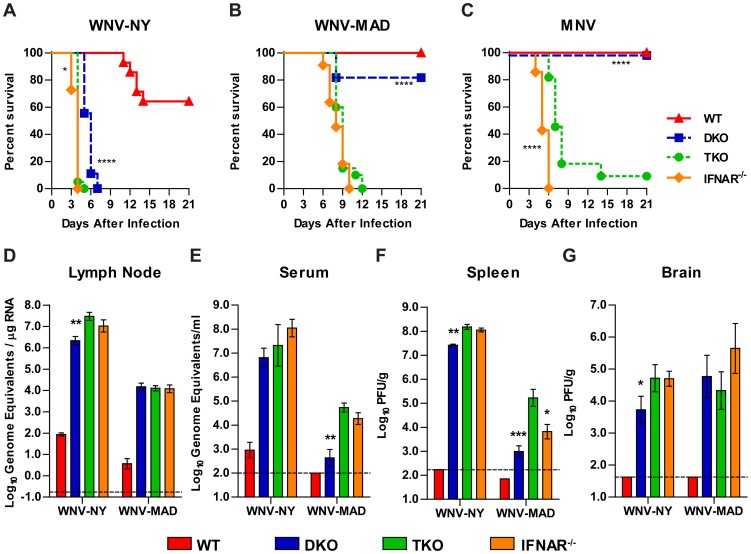
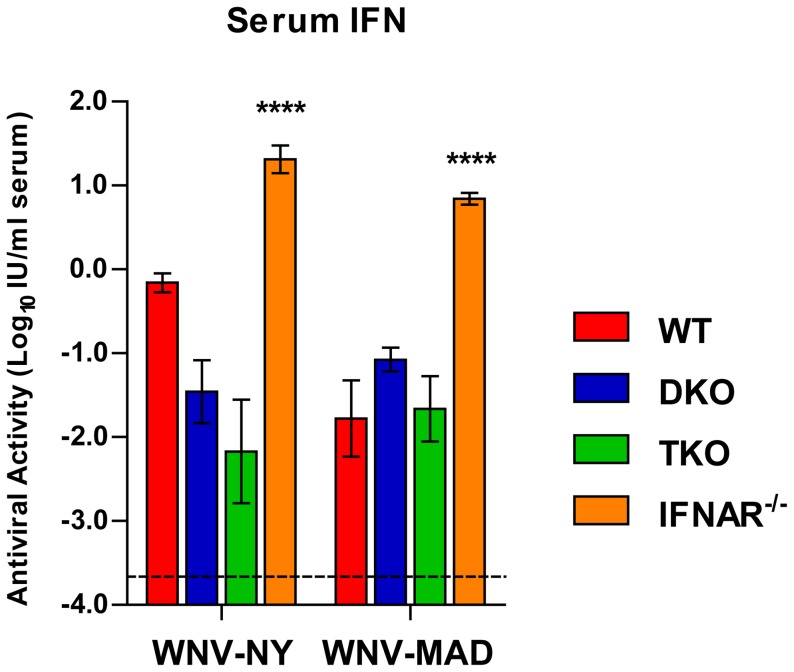
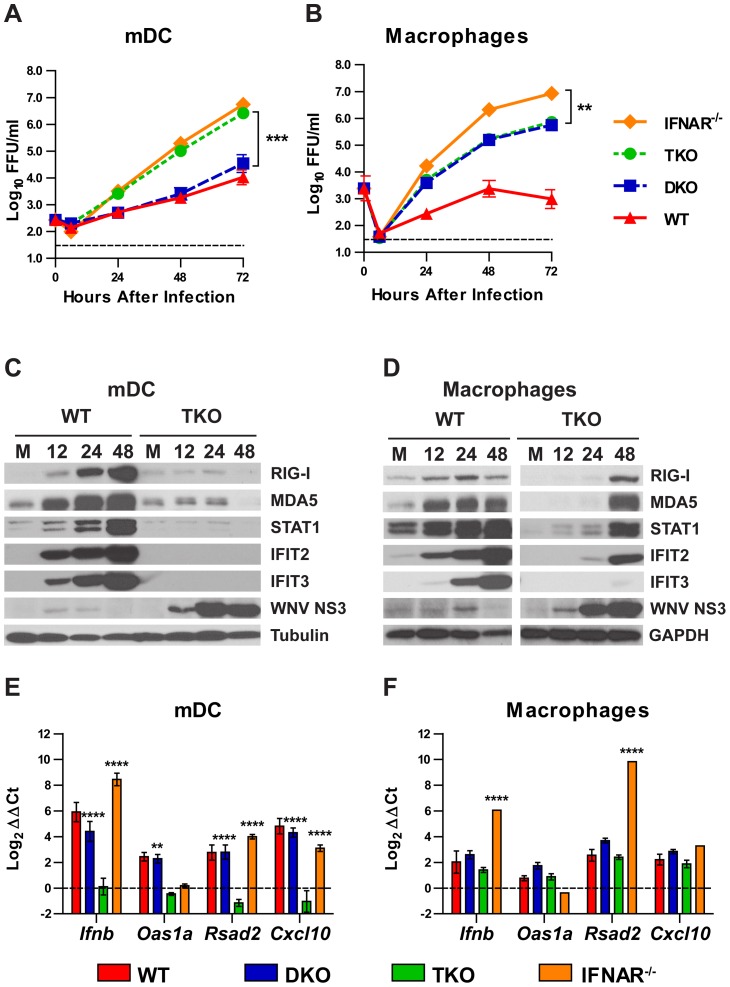
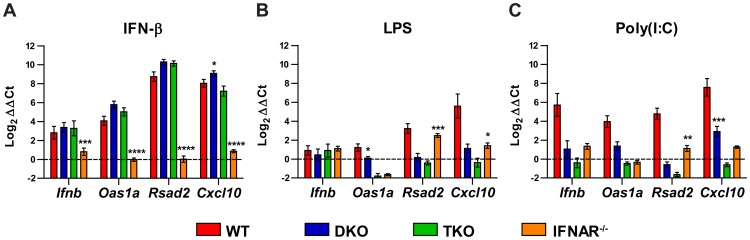
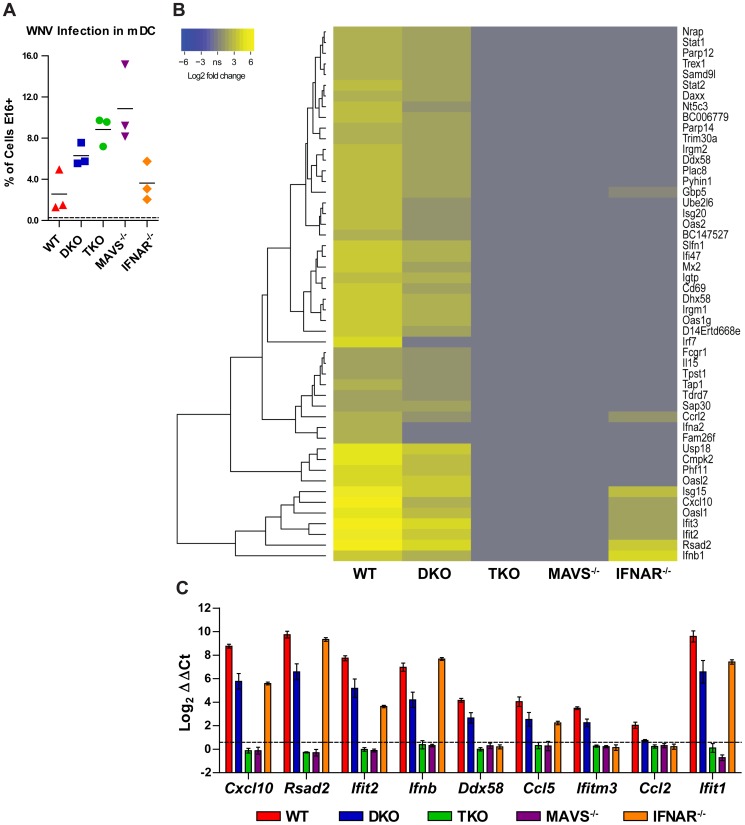
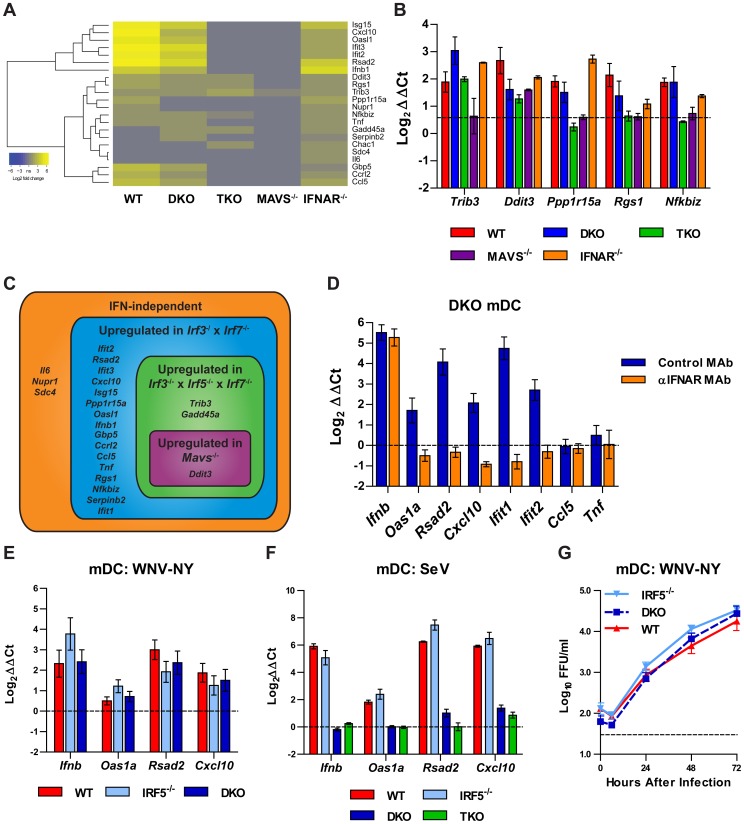
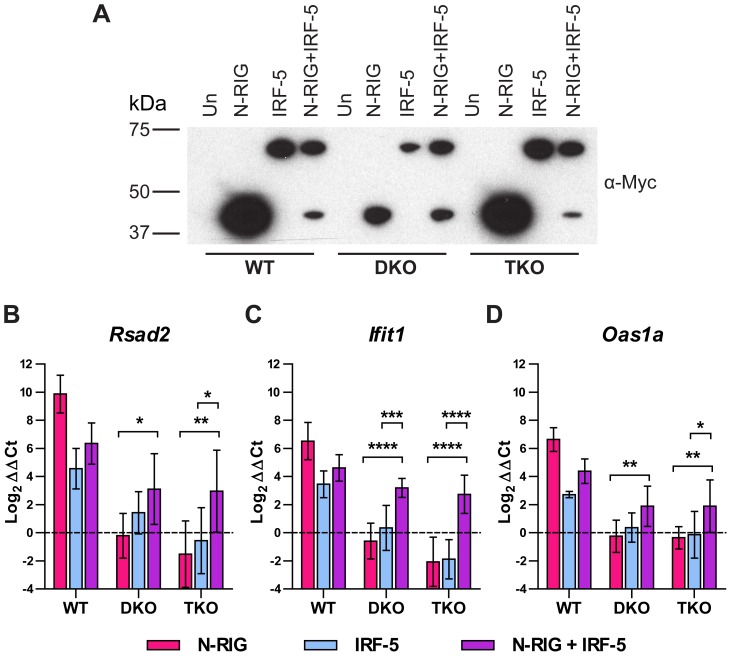
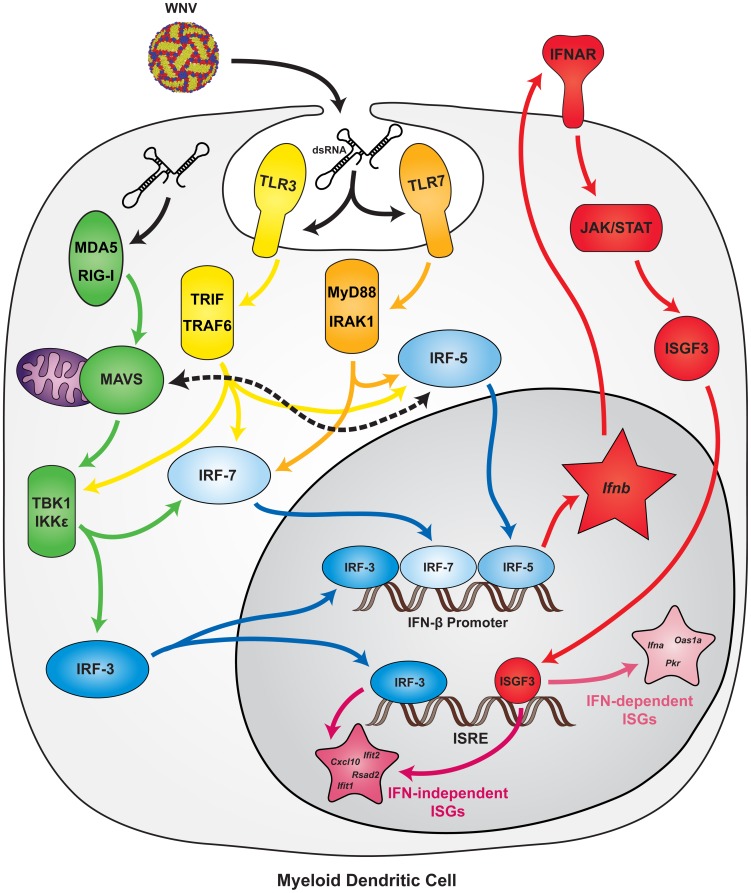
Although the transcription factors IRF-3 and IRF-7 are considered master regulators of type I interferon (IFN) induction and IFN stimulated gene (ISG) expression, Irf3(-/-)×Irf7(-/-) double knockout (DKO) myeloid dendritic cells (mDC) produce relatively normal levels of IFN-β after viral infection. We generated Irf3(-/-)×Irf5(-/-)×Irf7(-/-) triple knockout (TKO) mice to test whether IRF-5 was the source of the residual induction of IFN-β and ISGs in mDCs. In pathogenesis studies with two unrelated positive-sense RNA viruses (West Nile virus (WNV) and murine norovirus), TKO mice succumbed at rates greater than DKO mice and equal to or approaching those of mice lacking the type I IFN receptor (Ifnar(-/-)). In ex vivo studies, after WNV infection or exposure to Toll-like receptor agonists, TKO mDCs failed to produce IFN-β or express ISGs. In contrast, this response was sustained in TKO macrophages following WNV infection. To define IRF-regulated gene signatures, we performed microarray analysis on WNV-infected mDC from wild type (WT), DKO, TKO, or Ifnar(-/-) mice, as well as from mice lacking the RIG-I like receptor adaptor protein MAVS. Whereas the gene induction pattern in DKO mDC was similar to WT cells, remarkably, almost no ISG induction was detected in TKO or Mavs(-/-) mDC. The relative equivalence of TKO and Mavs(-/-) responses suggested that MAVS dominantly regulates ISG induction in mDC. Moreover, we showed that MAVS-dependent induction of ISGs can occur through an IRF-5-dependent yet IRF-3 and IRF-7-independent pathway. Our results establish IRF-3, -5, and -7 as the key transcription factors responsible for mediating the type I IFN and ISG response in mDC during WNV infection and suggest a novel signaling link between MAVS and IRF-5.
Overview
The claims and statistics of this paper haven’t been checked yet.
Run the check — free, no account needed. It reads the open-access text and checks the sources it cites.
Integrity signals
Registry
Cites
Statistics
Figures
Verification
Claims the paper makes
The claims and statistics of this paper haven’t been checked yet.
Run the check — free, no account needed. It reads the open-access text and checks the sources it cites.
Claims other papers make about this one
Each is checked against this paper’s own text: does it say what the citing paper says it does?
In the citing paper
“Enhanced IFN-regulatory factor activity might also explain the observed increase in CXCL9-11 and CXCL13 (Kanda and Watanabe, 2007; Lazear et al., 2013; Muthalagu et al., 2020).”
From SHP2 inhibition diminishes KRASG12C cycling and promotes tumor microenvironment remodeling (2021) · cites this paper as Lazear et al., 2013
Self-check
Percentages, sums and reported differences re-computed from the paper’s own numbers.
The self-check needs the paper’s full text.
Citations
Cites
Analysis of Relative Gene Expression Data Using Real-Time Quantitative PCR and the 2−ΔΔCT Method
Livak, K. J., & Schmittgen, T. D. (2001) · Methods · doi:10.1006/meth.2001.1262 · Cited by 180,860
limma: Linear Models for Microarray Data
Smyth, G. K. (2005) · Statistics for Biology and Health · doi:10.1007/0-387-29362-0_23 · Cited by 5,796
Mechanisms of type-I- and type-II-interferon-mediated signalling
Platanias, L. C. (2005) · Nature reviews. Immunology · doi:10.1038/nri1604 · Cited by 3,631
Bioinformatics and Computational Biology Solutions Using R and Bioconductor
Gentleman, R. C., Carey, V. J., Huber, W. K., Irizarry, R. A., & Dudoit, S. (2005) · Statistics in the health sciences · doi:10.1007/0-387-29362-0 · Cited by 3,470
A diverse range of gene products are effectors of the type I interferon antiviral response
Schoggins, J. W., Wilson, S. J., Panis, M., Murphy, M. Y., Jones, C. T., Bieniasz, P. D., & Rice, C. M. (2011) · Nature · doi:10.1038/nature09907 · Cited by 2,412
IRF-7 is the master regulator of type-I interferon-dependent immune responses
Honda, K., Yanai, H., Negishi, H., Asagiri, M., Sato, M., Mizutani, T., Shimada, N., Ohba, Y., Takaoka, A., Yoshida, N., et al. (2005) · Nature · doi:10.1038/nature03464 · Cited by 2,229
Interferon-inducible antiviral effectors
Sadler, A. J., & Williams, B. R. G. (2008) · Nature Reviews Immunology · doi:10.1038/nri2314 · Cited by 2,160
Type I Inteferon Gene Induction by the Interferon Regulatory Factor Family of Transcription Factors
Honda, K., Takaoka, A., & Taniguchi, T. (2006) · Immunity · doi:10.1016/j.immuni.2006.08.009 · Cited by 1,386
Toll-like receptor 3 mediates West Nile virus entry into the brain causing lethal encephalitis
Wang, T., Town, T., Alexopoulou, L., Anderson, J. F., Fikrig, E., & Flavell, R. A. (2004) · Nature Medicine · doi:10.1038/nm1140 · Cited by 1,142
Integral role of IRF-5 in the gene induction programme activated by Toll-like receptors
Takaoka, A., Yanai, H., Kondo, S., Duncan, G. S., Negishi, H., Mizutani, T., Kano, S., Honda, K., Ohba, Y., Mak, T. W., et al. (2005) · Nature · doi:10.1038/nature03308 · Cited by 1,066
Cited by
Sorted by citations
Items 101–200 of 296
Kwock, J. T., Handfield, C., Suwanpradid, J., Hoang, P., McFadden, M. J., Labagnara, K. F., Floyd, L., Shannon, J. L., Uppala, R., Sarkar, M. K., et al. (2020) · Science Advances · doi:10.1126/sciadv.aay3245 · Cited by 52
Self-citationDwivedy, A., Ashraf, A., Jha, B., Kumar, D., Agarwal, N., & Biswal, B. K. (2021) · Communications Biology · doi:10.1038/s42003-021-01926-4 · Cited by 53
Matthys, V. S., Cimica, V., Dalrymple, N. A., Glennon, N. B., Bianco, C., & Mackow, E. R. (2014) · Journal of Virology · doi:10.1128/jvi.02647-13 · Cited by 53
“IFN- enhanceosome that transcriptionally induce IFN- (28, 29, 32, 41, 42).”
Sheehan, K. C. F., Lazear, H. M., Diamond, M., & Schreiber, R. D. (2015) · PLoS ONE · doi:10.1371/journal.pone.0128636 · Cited by 57
“Type I IFNs are induced after microbial products are sensed via pattern-PLOS recognition receptors (PRRs), which triggers activation and nuclear translocation of IRF-family transcription factors (IRF-1, -3, -5 and -7) [13 – 16].”
Self-citationKundu, K., Dutta, K., Nazmi, A., & Basu, A. (2013) · Cellular Immunology · doi:10.1016/j.cellimm.2013.09.005 · Cited by 52
Interferon Regulatory Factor Signalings in Cardiometabolic Diseases
Zhang, X., Zhang, P., & Li, H. (2015) · Hypertension · doi:10.1161/hypertensionaha.115.04898 · Cited by 51
“In addition to the activation of IRF3 and IRF7, RLR showed a potential capacity to regulate the expression and function of IRF5 and IRF8.(8,70) However, the precise mechanism by which RLR mediates IRF5 and IRF8 activation remains unknown.”
BackgroundCimica, V., Dalrymple, N. A., Roth, E. D., Nasonov, A., & Mackow, E. R. (2014) · mBio · doi:10.1128/mbio.01088-13 · Cited by 49
“TBK1 and its homologue IKK (26, 28, 47) are downstream mediators of RIG-I, MDA5, MAVS, and other cytoplasmic sensors that direct the phosphorylation of IRF3/5/7 and activation of NF- B (26, 27, 29, 31, 41).”
BackgroundThe Innate Immune Playbook for Restricting West Nile Virus Infection
Quicke, K. M., & Suthar, M. S. (2013) · Viruses · doi:10.3390/v5112643 · Cited by 49
Self-citationDanger, diversity and priming in innate antiviral immunity
Collins, S. E., & Mossman, K. L. (2014) · Cytokine & Growth Factor Reviews · doi:10.1016/j.cytogfr.2014.07.002 · Cited by 48
“In myeloid DCs, there is an IRF5 and MAVS dependent induction of IFNb [69].”
BackgroundGreen, R. R., Wilkins, C. R., Thomas, S., Sekine, A., Hendrick, D., Voss, K., Ireton, R. C., Mooney, M. A., Tisoncik-Go, J., Choonoo, G., et al. (2017) · G3 Genes Genomes Genetics · doi:10.1534/g3.117.041624 · Cited by 48
“Oh, and Y. J. Kim, 2013 OASL1 inhibits translation of the type I interferon-regulating transcription factor IRF7.”
BackgroundSelf-citationSTING is required for host defense against neuropathological West Nile virus infection
Wuertz, K. M., Treuting, P. M., Hemann, E. A., Esser‐Nobis, K., Snyder, A. G., Graham, J. B., Daniels, B. P., Wilkins, C. R., Snyder, J. M., Voss, K., et al. (2019) · PLoS Pathogens · doi:10.1371/journal.ppat.1007899 · Cited by 49
“Type I and III IFN are essential to inform the innate and adaptive immune interface to balance development of effective immunity, protect the blood-brain barrier, and limit immune-related pathology in the CNS [19, 23, 24, [35] [36] [37] [38] [39] .”
BackgroundSelf-citationNLR in eXile: Emerging roles of NLRX1 in immunity and human disease
Pickering, R. J., & Booty, L. M. (2020) · Immunology · doi:10.1111/imm.13291 · Cited by 51
Zhang, X., Jiang, D., & Li, H. (2014) · British Journal of Pharmacology · doi:10.1111/bph.12881 · Cited by 44
“Lazear et al. (2012) indicated that the RIG-I like receptor adaptor protein MAVS could induce ISGs through an IRF5-dependent but IRF3- and IRF7-independent pathway.”
BackgroundT-helper 17 cell cytokines and interferon type I: partners in crime in systemic lupus erythematosus?
Brkić, Z., Corneth, O. B. J., van Helden-Meeuwsen, C. G., Dolhain, R. J. E. M., Maria, N. I., Paulissen, S. M. J., Davelaar, N., van Hamburg, J. P., van Daele, P. L. A., Dalm, V. A. S. H., et al. (2014) · Arthritis Research & Therapy · doi:10.1186/ar4499 · Cited by 43
“A possible mechanism explaining the co-occurrence of IFN type I and IL-17/Th17 immune pathway in SLE could be that both IFN type I and production of IL-6 and IL-23 by DCs are regulated through IRF-5 [38,39].”
BackgroundPeli1 facilitates virus replication and promotes neuroinflammation during West Nile virus infection
Luo, H., Winkelmann, E., Zhu, S., Ru, W., Mays, E., Silvas, J. A., Vollmer, L. L., Gao, J., Peng, B., Bopp, N. E., et al. (2018) · Journal of Clinical Investigation · doi:10.1172/jci99902 · Cited by 43
“types are permissive to WNV infection in the peripheral organs (27).”
BackgroundZhang, M., Liu, Y., Wang, P., Guan, X., He, S., Luo, S., Li, C., Hu, K., Jin, W., Du, T., et al. (2015) · The Journal of Immunology · doi:10.4049/jimmunol.1401538 · Cited by 42
Song, Q., Datta, S., Liang, X., Xu, X., Pavicic, P. G., Zhang, X., Zhao, Y., Liu, S., Zhao, J. J., Xu, Y., et al. (2023) · Cellular and Molecular Immunology · doi:10.1038/s41423-022-00966-y · Cited by 43
“Since Axl and Gas6 are ISGs, their gene expression and signaling strength were diminished in MUT mice, which was responsible for the impaired efferocytotic activities during APAP-ALI.”
BackgroundInfluentialInterferon regulatory factors: critical mediators of human lupus
Jensen, M. A., & Niewold, T. B. (2014) · Translational research · doi:10.1016/j.trsl.2014.10.002 · Cited by 41
Taylor, K., Woods, T. A., Winkler, C. W., Carmody, A., & Peterson, K. E. (2014) · Journal of Virology · doi:10.1128/jvi.01866-14 · Cited by 41
IRF5-mediated immune responses and its implications in immunological disorders
Kaur, A., Lee, L., Chow, S.-C., & Fang, C.-M. (2018) · International Reviews of Immunology · doi:10.1080/08830185.2018.1469629 · Cited by 44
Specificity and Function of IRF Family Transcription Factors: Insights from Genomics
Mancino, A., & Natoli, G. (2016) · Journal of Interferon & Cytokine Research · doi:10.1089/jir.2016.0004 · Cited by 39
Du, J., Chen, X., Wang, C., & Sun, H. (2017) · Journal of Ethnopharmacology · doi:10.1016/j.jep.2017.12.009 · Cited by 40
HMGN1 and R848 Synergistically Activate Dendritic Cells Using Multiple Signaling Pathways
Alam, M. M., Yang, D., Trivett, A. L., Meyer, T. J., & Oppenheim, J. J. (2018) · Frontiers in Immunology · doi:10.3389/fimmu.2018.02982 · Cited by 40
“coordinately regulate type 1 IFN induction in mouse BMDCs (40).”
McCarthy, M. K., Reynoso, G. V., Winkler, E. S., Mack, M., Diamond, M., Hickman, H. D., & Morrison, T. E. (2020) · PLoS Pathogens · doi:10.1371/journal.ppat.1008292 · Cited by 39
“Nos2-/-, gp91phox-/(Nox2-/-), Tlr7-/-, Myd88-/-, Irf5-/-, Irf3-/-Irf7-/-, Irf3-/-Irf5-/-Irf7-/-, and Ifnar1-/- mice were bred and housed at the University of Colorado School of Medicine or Washington University under specific pathogen-free conditions.”
BackgroundMethodInfluentialSelf-citationSwaraj, S., & Tripathi, S. (2024) · mBio · doi:10.1128/mbio.02582-24 · Cited by 41
“Despite being a robust inducer of IFN-β, it was not shown to trigger ISGs directly (193).”
BackgroundPinilla-Vera, M., Xiong, Z., Zhao, Y., Zhao, J., Donahoe, M. P., Barge, S., Horne, W. T., Kolls, J. K., McVerry, B. J., Birukova, A., et al. (2016) · PLoS ONE · doi:10.1371/journal.pone.0159329 · Cited by 36
Fatal Zika virus infection in the Americas: A systematic review
Cardona-Ospina, J. A., Henao-SanMartin, V., Acevedo-Mendoza, W. F., Nasner-Posso, K. M., Martínez-Pulgarín, D. F., Restrepo-López, A., Valencia-Gallego, V., Collins, M. H., & Rodriguez-Morales, A. J. (2019) · International Journal of Infectious Diseases · doi:10.1016/j.ijid.2019.08.033 · Cited by 37
Yang, S., Zhan, Y., Zhou, Y., Jiang, Y., Zheng, X., Yu, L., Tong, W., Gao, F., Li, L., Huang, Q., et al. (2016) · Scientific Reports · doi:10.1038/srep29665 · Cited by 38
“Interferon blocks virus replication and inhibits virus dissemination and thus, many viruses have evolved strategies to evade IFN-induced antiviral responses 21–26 .”
Manjunath, S., Mishra, B. P., Mishra, B., Sahoo, A. P., Tiwari, A. K., Rajak, K. K., Muthuchelvan, D., Saxena, S., Santra, L., Sahu, A. R., et al. (2016) · Virus Research · doi:10.1016/j.virusres.2016.12.014 · Cited by 33
“…that induce the expression of virus-responsive genes and pro-inflammatory cytokines, which in turn orchestrate innate immunity, chemokines, and co-stimulatory molecules that promote Tcell activation and specific immunity, restricting viral replication (Akira et al., 2006); (Lazear et al., 2013).”
BackgroundRNA regulatory mechanisms that control antiviral innate immunity
Gokhale, N. S., Smith, J. R., Gelder, R. D. V., & Savan, R. (2021) · Immunological Reviews · doi:10.1111/imr.13019 · Cited by 34
Nandakumar, R., Finsterbusch, K., Lipps, C., Neumann, B., Grashoff, M., Nair, S., Hochnadel, I., Lienenklaus, S., Wappler, I., Steinmann, E., et al. (2013) · Gastroenterology · doi:10.1053/j.gastro.2013.08.037 · Cited by 34
Interferon regulatory factors: A key to tumour immunity
Chen, Y., Li, J., Lü, N., & Shen, X. (2017) · International Immunopharmacology · doi:10.1016/j.intimp.2017.05.010 · Cited by 33
Macrophage polarization regulates the pathogenesis and progression of autoimmune diseases
Wu, S., Zhao, S., Hai, L., Yang, Z., Wang, S., Cui, D., & Xie, J. (2025) · Autoimmunity Reviews · doi:10.1016/j.autrev.2025.103820 · Cited by 37
Interleukin-17A Facilitates Chikungunya Virus Infection by Inhibiting IFN-α2 Expression
Neupane, B., Acharya, D., Nazneen, F., Gonzalez-Fernandez, G., Flynt, A. S., & Bai, F. (2020) · Frontiers in Immunology · doi:10.3389/fimmu.2020.588382 · Cited by 32
“The combined effect of these three transcription factors has been shown to coordinately regulate IFN response during WNV infection (75).”
BackgroundWang, B., Kang, W., Zuo, J., 康文臻, & Sun, Y. (2017) · Frontiers in Immunology · doi:10.3389/fimmu.2017.01431 · Cited by 31
“At the earliest stage of acute infection, the production of IFN-I and other inflammatory cytokines is an essential event to determine the rate of virus replication and spreads (11, 13, 14).”
BackgroundHow the Respiratory Epithelium Senses and Reacts to Influenza Virus
Benam, K. H., Denney, L., & Ho, L. (2018) · American Journal of Respiratory Cell and Molecular Biology · doi:10.1165/rcmb.2018-0247tr · Cited by 33
Myeloid cell-specific Irf5 deficiency stabilizes atherosclerotic plaques in Apoe–/– mice
Leipner, J., Dederichs, T.-S., von Ehr, A., Rauterberg, S., Ehlert, C. A., Merz, J., Dufner, B., Hoppe, N., Krebs, K., Heidt, T., et al. (2021) · Molecular Metabolism · doi:10.1016/j.molmet.2021.101250 · Cited by 31
Thackray, L. B., Shrestha, B., Richner, J. M., Miner, J. J., Pinto, A. K., Lazear, H. M., Gale, M., & Diamond, M. (2014) · Journal of Virology · doi:10.1128/jvi.01545-14 · Cited by 30
“Although IRF5-dependent cytokine induction after TLR agonist stimulation occurs via MyD88- and/or TRIFdependent pathways (18, 51), after viral infection it also depends on RLR- and MAVS-dependent signals (14, 52).”
BackgroundMethodInfluentialSelf-citationForbester, J. L., Clement, M., Wellington, D., Yeung, A. T. Y., Dimonte, S., Marsden, M., Chapman, L., Coomber, E. L., Tolley, C., Lees, E. A., et al. (2020) · Journal of Virology · doi:10.1128/jvi.00121-20 · Cited by 30
“Although certain studies have reported a role for IRF5 in type I IFN induction directly in certain contexts (25, 43, 45), functional redundancies between IRF proteins may exist (46).”
BackgroundHost immune response against DENV and ZIKV infections
Sekaran, S. D., Ismail, A. A., Thergarajan, G., Samudi, C., Rahman, S. K. H., Mani, R. R., Jusof, F. F., Lim, Y. A. L., & Manikam, R. (2022) · Frontiers in Cellular and Infection Microbiology · doi:10.3389/fcimb.2022.975222 · Cited by 30
“, 2011), IRF-5 (Lazear et al., 2013), IRF1 (Brien et al.”
Koma, T., Huang, C., Kolokoltsova, O. A., Brasier, A. R., & Paessler, S. (2013) · Journal of Molecular Biology · doi:10.1016/j.jmb.2013.09.028 · Cited by 30
“Expression of some ISGs could also be mediated directly by IRF-3/IRF-7 independent of IFN production, particularly in dendritic cells and macrophages [75,76].”
BackgroundHantavirus interferon regulation and virulence determinants
Mackow, E. R., Dalrymple, N. A., Cimica, V., Matthys, V. S., Gorbunova, E. E., & Gavrilovskaya, I. N. (2014) · Virus Research · doi:10.1016/j.virusres.2013.12.041 · Cited by 30
“P A A uthor M anuscript (Charoenthongtrakul et al., 2013; Daffis et al., 2009; Delhase et al., 2011; Hacker et al., 2011; Lazear et al., 2013).”
In vitro Anti-viral Activity of Psoraleae Semen Water Extract against Influenza A Viruses
Choi, J., Jin, Y.-H., Kim, J., Oh, T. W., Yim, N., Cho, W., & Yeul, J. (2016) · Frontiers in Pharmacology · doi:10.3389/fphar.2016.00460 · Cited by 30
Kawiecki, A. B., Mayton, E. H., Dutuze, M. F., Goupil, B. A., Langohr, I. M., Piero, F. D., & Christofferson, R. C. (2017) · Virology Journal · doi:10.1186/s12985-017-0749-x · Cited by 29
“These mice have a blunted but not abrogated type I interferon response [18].”
Zimmerman, M. G., Bowen, J. R., McDonald, C. E., Pulendran, B., & Suthar, M. S. (2019) · Journal of Virology · doi:10.1128/jvi.00664-19 · Cited by 29
“Signal transduction through the adaptor protein mitochondrial antiviral signaling (MAVS) triggers the nuclear factor- B (NF- B) and interferon regulatory factor 3 (IRF-3)-, IRF-5-, and IRF-7dependent induction of type I interferon (IFN) and antiviral effector gene transcription (8).”
BackgroundSelf-citationIRF5 is a target of BCR-ABL kinase activity and reduces CML cell proliferation
Massimino, M., Consoli, M. L., Mesuraca, M., Stagno, F., Tirrò, E., Stella, S., Pennisi, M. S., Romano, C., Buffa, P., Bond, H. M., et al. (2014) · Carcinogenesis · doi:10.1093/carcin/bgu013 · Cited by 27
“Among them, IRF5 transcriptionally regulates type I interferon (IFN)-dependent genes, while also modulating cell cycle progression and cell death (4,5).”
BackgroundZhao, J., Vijay, R., Zhao, J., Gale, M., Diamond, M., & Perlman, S. M. (2016) · Journal of Virology · doi:10.1128/jvi.00707-16 · Cited by 28
Self-citationBaek, J.-H., Gomez, I. G., Wada, Y., Roach, A. M., Mahad, D., & Duffield, J. S. (2018) · American Journal Of Pathology · doi:10.1016/j.ajpath.2018.08.018 · Cited by 28
COVID-19: The Emerging Immunopathological Determinants for Recovery or Death
Ahmad, T., Chaudhuri, R., Joshi, M. C., Almatroudi, A., Rahmani, A. H., & Ali, S. M. (2020) · Frontiers in Microbiology · doi:10.3389/fmicb.2020.588409 · Cited by 30
Schmid, S., Sachs, D. M., & tenOever, B. R. (2013) · Journal of Biological Chemistry · doi:10.1074/jbc.m113.519934 · Cited by 28
Anggakusuma, Frentzen, A., Gürlevik, E., Yuan, Q., Steinmann, E., Ott, M., Staeheli, P., Schmid-Burgk, J. L., Schmidt, T., Hornung, V., et al. (2015) · Journal of Virology · doi:10.1128/jvi.03129-14 · Cited by 27
Feng, D., & Barnes, B. J. (2013) · Frontiers in Immunology · doi:10.3389/fimmu.2013.00291 · Cited by 26
“IRF5 has also been recently reported to regulate IFN-β production in myeloid dendritic cells downstream of the mitochondrial antiviral-signaling protein (MAVS) (48).”
BackgroundEtiology and Pathogenesis of Systemic Lupus Erythematosus
Crow, M. K. (2016) · Elsevier eBooks · doi:10.1016/b978-0-323-31696-5.00079-6 · Cited by 27
Systemic HIV-1 infection produces a unique glial footprint in humanized mouse brains
Li, W., Gorantla, S., Gendelman, H. E., & Poluektova, L. Y. (2017) · Disease Models & Mechanisms · doi:10.1242/dmm.031773 · Cited by 26
West Nile Virus Restriction in Mosquito and Human Cells: A Virus under Confinement
Martin, M. F., & Nisole, S. (2020) · Vaccines · doi:10.3390/vaccines8020256 · Cited by 25
“Specifically, TRIM6 was shown to facilitate the activation of the IKKε kinase, upstream of the nuclear translocation of IRF3, thus promoting the expression of ISGs, such as the Vesicle-associated membrane protein 8 (VAMP8).”
BackgroundInfluentialWüst, S., Schad, P. S., Burkart, S. S., & Binder, M. (2021) · Cells · doi:10.3390/cells10102600 · Cited by 24
“While this, to our knowledge, has not been reported before, a non-trivial interaction and cooperation between IRF3, -7, and -5 downstream of MAVS has been observed in flavivirus infection of dendritic cells [9].”
BackgroundCtenopharyngodon idella TBK1 activates innate immune response via IRF7
Yu, N., Xu, X., Qi, G., Liu, D., Chen, X., Ran, X., Jiang, Z., Li, Y., Mao, H., & Hu, C. (2018) · Fish & Shellfish Immunology · doi:10.1016/j.fsi.2018.06.045 · Cited by 24
Chow, K. T., Wilkins, C. R., Narita, M., Green, R. R., Knoll, M. L., Loo, Y., & Gale, M. (2018) · The Journal of Immunology · doi:10.4049/jimmunol.1800221 · Cited by 24
Self-citationSchultz, K. L. W., Troisi, E. M., Baxter, V. K., Glowinski, R. M., & Griffin, D. E. (2018) · Journal of General Virology · doi:10.1099/jgv.0.001174 · Cited by 24
“Zika virus and murine norovirus [24, 59], but mice infected with dengue virus survive [60].”
BackgroundWani, S. A., Sahu, A. R., Khan, R. I. N., Pandey, A., Saxena, S., Hosamani, N., Malla, W. A., Chaudhary, D., Kanchan, S., Sah, V., et al. (2019) · Frontiers in Immunology · doi:10.3389/fimmu.2019.01463 · Cited by 22
“The innate antiviral genes— ISGs; ISG15, ISG20, DDX58, DHX58, IRF3, IRF7, IFIT1, IFIT3, IFIT5, MX1, MX2, and RSAD2 were downregulated in monocytes indicating a dampened antiviral response of monocytes (Supplementary Figure 5).”
BackgroundInfluentialAn attenuated Zika virus NS4B protein mutant is a potent inducer of antiviral immune responses
Li, G., Adam, A., Luo, H., Shan, C., Cao, Z., Fontes-Garfias, C. R., Sarathy, V. V., Teleki, C., Winkelmann, E., Liang, Y., et al. (2019) · npj Vaccines · doi:10.1038/s41541-019-0143-3 · Cited by 23
Patil, A. M., Choi, J., Park, S. O., Uyangaa, E., Kim, B., Kim, K., & Eo, S. K. (2021) · Journal of Neuroinflammation · doi:10.1186/s12974-021-02180-5 · Cited by 22
Jeong, G. U., Lee, S., Kim, D. Y., Lyu, J., Yoon, G. Y., Kim, K., Ku, K. B., Ko, J., & Kwon, Y. (2023) · Journal of Virology · doi:10.1128/jvi.00556-23 · Cited by 21
“Although interferon-stimulated genes (ISGs) were not expected to be differentially expressed in response to the viral infection, ISG expression can be induced by an IFNAR-independent pathway, such as the downstream of MAVS signaling in myeloid dendritic cells (38).”
BackgroundTang, L., Mao, Z., Li, X.-X., Chen, M., Li, S.-B., Tsoi, B., Cao, L., Li, L., Zeng, J.-M., Wang, Z., et al. (2014) · European Journal of Integrative Medicine · doi:10.1016/j.eujim.2014.07.018 · Cited by 21
Chemokine Receptor Ccr7 Restricts Fatal West Nile Virus Encephalitis
Bardina, S. V., Brown, J. A., Michlmayr, D., Hoffman, K. W., Sum, J., Pletnev, A. G., Lira, S. A., & Lim, J. K. (2017) · Journal of Virology · doi:10.1128/jvi.02409-16 · Cited by 21
Promoter Binding and Nuclear Retention Features of Zebrafish IRF Family Members in IFN Response
An, L., Zhao, X., Gong, X.-Y., Li, Y., Qu, Z.-L., Sun, H.-Y., Guo, W., Dan, C., Gui, J., & Zhang, Y.-B. (2022) · Frontiers in Immunology · doi:10.3389/fimmu.2022.861262 · Cited by 20
Setoh, Y. X., Periasamy, P., Peng, N. Y. G., Amarilla, A. A., Slonchak, A., & Khromykh, A. A. (2017) · Viruses · doi:10.3390/v9110326 · Cited by 20
“We choose to use IRF-3−/− × IRF-7−/− MEF th t should not produce ap reciable levels of endogen s type IFN upon WNV infection [22,23] and thus should not compromise downstream readouts of pSTAT1 expression in our assays.”
MethodWang, X., Guo, J., Wang, Y., Xiao, Y., Wang, L., & Hua, S. (2018) · Medical Science Monitor · doi:10.12659/msm.910756 · Cited by 20
“More recent work demonstrated that IRF5 is involved in IFN beta (IFNb) gene induction mediated by West Nile virus or murine norovirus infection [24], indicating that IRF5 may play a central role in the TLR7 pathway induced by ssRNA viruses, such as VSV, NDV, West Nile virus, and influenza virus.”
BackgroundUbiquitination modification: critical regulation of IRF family stability and activity
Liu, B., Jin, J., & Li, Y. (2020) · Science China Life Sciences · doi:10.1007/s11427-020-1796-0 · Cited by 23
A compendium of multi-omics data illuminating host responses to lethal human virus infections
Eisfeld, A. J., Anderson, L., Fan, S., Walters, K., Halfmann, P., Smith, D. W., Thackray, L. B., Tan, Q., Sims, A. M., Menachery, V. D., et al. (2024) · Scientific Data · doi:10.1038/s41597-024-03124-3 · Cited by 20
Self-citationDendritic cell functions in vivo: A user's guide to current and next‐ generation mutant mouse models
Dalod, M., & Scheu, S. (2022) · European Journal of Immunology · doi:10.1002/eji.202149513 · Cited by 19
HIV-2 Vpx Protein Interacts with Interferon Regulatory Factor 5 (IRF5) and Inhibits Its Function
Cheng, X., & Ratner, L. (2014) · Journal of Biological Chemistry · doi:10.1074/jbc.m113.534321 · Cited by 20
“Although the role of IRF5 in induction of innate immunity in HIV infection has not been defined, gene knock-out studies have demonstrated that IRF5 is essential for induction of proinflammatory cytokines and type I IFN production in Newcastle disease virus, VSV, and West Nile virus-infected mice (4, 61, 65).”
BackgroundStoy, N. S. (2021) · Frontiers in Immunology · doi:10.3389/fimmu.2021.638446 · Cited by 19
Recent advances in understanding West Nile virus host immunity and viral pathogenesis
Luo, H., & Wang, T. (2018) · F1000Research · doi:10.12688/f1000research.13362.1 · Cited by 20
Wickramaarachchi, W. D. N., Wan, Q., Lim, B.-S., Jung, H.-B., Zoysa, M. D., Park, M.-A., Lee, J., & Whang, I. (2014) · Fish & Shellfish Immunology · doi:10.1016/j.fsi.2014.02.002 · Cited by 18
Su, Y., Cheng, T., Chen, C., Chang, W., Tsai, N., Kung, C., Wang, H., Lin, W.-C., Huang, C., Chang, Y., et al. (2014) · Journal of Translational Medicine · doi:10.1186/s12967-014-0303-1 · Cited by 18
“, IRF3, IRF5, and IRF7) are downstream of mitochondrial signaling to promote interferon-stimulated gene expression [33,34].”
Proteostasis in dendritic cells is controlled by the PERK signaling axis independently of ATF4
Mendes, A. V., Gigan, J. P., Rodrígues, C. R., Choteau, S. A., Sanséau, D., Barros, D., Almeida, C. R., Camosseto, V., Chasson, L., Chasson, L., et al. (2020) · Life Science Alliance · doi:10.26508/lsa.202000865 · Cited by 20
“…of Ppp1r15a/GADD34 transcription on IKKε/TBK1 confirms that the PPP1R15a gene belongs to a group of genes directly induced by TLR or RLR signaling, as previously suggested by genomic analysis of viral or poly (I:C)-stimulated cells (Freaney et al, 2013; Lazear et al, 2013; Dalet et al, 2017).”
BackgroundDe, G., Chen, A., Zhao, Q., Xie, R., Wang, C., Li, M., Zhao, H., Gu, X., McCarl, L. H., Zhang, F., et al. (2021) · Pharmacological Research · doi:10.1016/j.phrs.2021.105617 · Cited by 18
Lin, T., Xing, J., Tang, X., Sheng, X., Chi, H., & Zhan, W. (2022) · Vaccines · doi:10.3390/vaccines10060946 · Cited by 17
“In addition, IRF3 has been proven to trigger the expression of IFN and ISGs in the early stages of viral infection [36].”
BackgroundPotent Inhibition of Junín Virus Infection by Interferon in Murine Cells
Huang, C., Walker, A. G., Grant, A. M., Kolokoltsova, O. A., Yun, N. E., Seregin, A. V., & Paessler, S. (2014) · PLoS neglected tropical diseases · doi:10.1371/journal.pntd.0002933 · Cited by 17
“1) where the IFN response is largely abrogated [21].”
BackgroundLi, W., Zhu, Z., Cao, W., Yang, F., Zhang, X., Li, D., Zhang, K., Li, P., Mao, R., Liu, X., et al. (2016) · Molecular Immunology · doi:10.1016/j.molimm.2016.05.016 · Cited by 17
Zhou, X., Xu, H., Li, Q., Wang, Q., Liu, H., Huang, Y., Liang, Y. Y., Lie, L., Han, Z., Chen, Y., et al. (2022) · Inflammation Research · doi:10.1007/s00011-022-01638-3 · Cited by 16
“Viperin can be induced by IRF-3 and IRF-7 mediated production of IFNs and combat different virus infection in myeloid DCs [22, 23].”
BackgroundAlippe, Y., Wang, L., Coskun, R., Muraro, S. P., Zhao, F. R., Elam-Noll, M., White, J. M., Vota, D., Hauk, V. C., Gordon, J. I., et al. (2024) · The Journal of Experimental Medicine · doi:10.1084/jem.20240694 · Cited by 16
“The primer sets have been previously published (Gorman et al., 2018; Lazear et al., 2013).”
Self-citationKhan, K. A., Marineau, A., Doyon, P., Acevedo, M., Durette, É., Gingras, A., & Servant, M. J. (2021) · PLoS Pathogens · doi:10.1371/journal.ppat.1009111 · Cited by 15
Rani, L., Sahu, M. R., & Mondal, A. C. (2022) · Neuroscience · doi:10.1016/j.neuroscience.2022.07.007 · Cited by 16
Kim, S. B., Choi, J., Kim, J. H., Uyangaa, E., Patil, A. M., Park, S., Lee, J. H., Kim, K., Han, Y. W., & Eo, S. K. (2015) · Journal of Neuroinflammation · doi:10.1186/s12974-015-0438-x · Cited by 16
“In addition, myeloid cells can produce IFN-I proteins (IFN-α/β) via PRR recognition upon JEV infection, which plays a crucial role in controlling viral replication at the periphery [16] [17] [18] [19] [20] .”
BackgroundThe TIR-Domain Containing Adaptor TRAM Is Required for TLR7 Mediated RANTES Production
Shevlin, E., & Miggin, S. M. (2014) · PLoS ONE · doi:10.1371/journal.pone.0107141 · Cited by 15
“Further, studies have also revealed that IRF5 and IRF7 are involved in TLR7 signaling [31,32], though cell-type dependent disparities exist in terms of their relative contribution to anti-viral immunity [28].”
BackgroundHepatitis C virus-induced innate immune responses in human iPS cell-derived hepatocyte-like cells
Sakurai, F., Kunito, T., Takayama, K., Hashimoto, R., Tachibana, M., Sakamoto, N., Wakita, T., & Mizuguchi, H. (2017) · Virus Research · doi:10.1016/j.virusres.2017.09.004 · Cited by 15
Manjunath, S., Saxena, S., Mishra, B., Santra, L., Sahu, A. R., Wani, S. A., Tiwari, A. K., Mishra, B. P., Singh, R. K., Janga, S. C., et al. (2019) · Research in Veterinary Science · doi:10.1016/j.rvsc.2019.03.014 · Cited by 14
Li, H., Xue, Q., Wan, Y., Chen, Y., Zeng, W., Wei, S., Zhang, Y., Wang, J., & Qi, X. (2021) · Journal of Virology · doi:10.1128/jvi.02045-20 · Cited by 14
“Furthermore, ISGs can also directly be induced by IRF3 after pathogen-associated molecular pattern (PAMP) detection and PRR signaling (11).”
BackgroundDendritic cell subsets involved in type I IFN induction in mouse measles virus infection models
Takaki, H., Oshiumi, H., Matsumoto, M., & Seya, T. (2014) · The International Journal of Biochemistry & Cell Biology · doi:10.1016/j.biocel.2014.05.001 · Cited by 14
Luo, H., Winkelmann, E., Xie, G., Fang, R., Peng, B., Li, L., Lazear, H. M., Paessler, S., Diamond, M., Gale, M., et al. (2017) · Journal of Virology · doi:10.1128/jvi.02097-16 · Cited by 14
“Irf3 and Irf7 are two ISGs important for IFN induction upon WT WNV infection in myeloid DCs (23, 24).”
BackgroundMethodInfluentialSelf-citationGuo, L., Hao, R., Tian, F., An, N., & Wang, K. (2017) · International Immunopharmacology · doi:10.1016/j.intimp.2017.11.035 · Cited by 14
Mao, J., Ye, S., Deng, J., Song, J., Wang, Z., Chen, A., Zhou, P., & Li, S. (2023) · International Journal of Molecular Sciences · doi:10.3390/ijms24065254 · Cited by 13
“RIG-I is responsible for recognizing non-self RNA in the cytoplasm, such as viral RNA, which leads to the translocation of IRF-3 and NF-κB to induce the expression of type 1 interferon (IFN) and inflammatory cytokines, thereby mediating host antiviral immunity [17,18].”
BackgroundPiret, J., Carbonneau, J., Rhéaume, C., Baz, M., & Boivin, G. (2018) · Journal of General Virology · doi:10.1099/jgv.0.000992 · Cited by 13
Microbial recognition by GEF-H1 controls IKKε mediated activation of IRF5
Zhao, Y., Zagani, R., Park, S., Yoshida, N., Shah, P., & Reinecker, H. (2019) · Nature Communications · doi:10.1038/s41467-019-09283-x · Cited by 14
Roe, K., Giordano, D., Young, L. B., Draves, K. E., Holder, U., Suthar, M. S., Gale, M., & Clark, E. A. (2019) · PLoS ONE · doi:10.1371/journal.pone.0218928 · Cited by 13
“Clearly, the absence of MAVS or IFNAR in this critical DC population restricts the induction of antiviral immune responses allowing for uncontrolled virus replication [8,30,33].”
BackgroundSelf-citationKosch, R., Delarocque, J., Claus, P., Becker, S. C., & Jung, K. (2018) · BMC Genomics · doi:10.1186/s12864-018-4914-4 · Cited by 13
“It has been shown, that Irf7 plays a major role in the regulation of Interferone response [57].”
BackgroundEpigenetic regulation of RNA sensors: Sentinels of immune response
Khan, M. I., Nur, S. M., Adhami, V. M., & Mukhtar, H. (2021) · Seminars in Cancer Biology · doi:10.1016/j.semcancer.2020.12.028 · Cited by 12
Velázquez-Salinas, L., Pauszek, S. J., Holinka, L. G., Gladue, D. P., Rekant, S. I., Bishop, E. A., Stenfeldt, C., Verdugo-Rodríguez, A., Borca, M. V., Arzt, J., et al. (2020) · Frontiers in Microbiology · doi:10.3389/fmicb.2020.01123 · Cited by 11
Metadata
- Authors
- Lazear, H. M., Lancaster, A., Wilkins, C., Suthar, M. S., Huang, A., Vick, S. C., Clepper, L., Thackray, L., Brassil, M. M., Virgin, H. W., Nikolich-Zugich, J., Moses, A. V., Gale, M., Früh, K., & Diamond, M. S.
- Affiliations
- Washington University in St. Louis (US)
- Oregon Health & Science University (US)
- University of Washington (US)
- Emory University (US)
- Vaccine and Gene Therapy Institute (US)
- Corresponding author
- Diamond, Michael S.
- ORCID
- Venue
- PLoS Pathogens
- Publisher
- Public Library of Science (PLoS)
- Published
- 2013-01-03
- Volume
- 9
- Issue
- 1
- Pages
- e1003118
- ISSN
- 1553-7366 (ISSN-L)
- 1553-7374
- PMC
- PMC3536698
- OpenAlex
- W2036679352
- Cited by
- 296
- References
- 85
- Citations by year
- 2026: 7 · 2025: 11 · 2024: 12 · 2023: 11 · 2022: 21 · 2021: 25 · 2020: 27 · 2019: 22 · 2018: 30 · 2017: 25 · 2016: 28 · 2015: 20 · 2014: 33 · 2013: 23
- FWCI
- 19.19
- Type
- journal article
- Language
- en
- Update notices
- correction (2013-05-03)
- Open access
- gold
- doi.org
- Locations
- PLoS Pathogens (publishedVersion, cc-by)
- PubMed Central (publishedVersion, cc-by)
- PubMed (publishedVersion)
- Digital Commons@Becker (Washington University School of Medicine) (submittedVersion)
- Carolina Digital Repository (University of North Carolina at Chapel Hill) (submittedVersion)
- DOAJ (DOAJ: Directory of Open Access Journals) (submittedVersion, cc-by-sa)
- Figshare (submittedVersion, cc-by)
- UNC Libraries
- Funders
- National Institutes of Health (n01ai50027-8-0-1, AI083019, AI057160)
- National Institute of Allergy and Infectious Diseases (N01 AI50027, U19AI083019, U54AI081680, N01 AI050027, R01AI074973, U54AI057160)
- Topics
- Life Sciences › Immunology and Microbiology › Immunology › interferon and immune responses
- Life Sciences › Immunology and Microbiology › Immunology › Immune Response and Inflammation
- Life Sciences › Immunology and Microbiology › Immunology › Immunotherapy and Immune Responses
- Keywords
- IRF3, IRF5, IRF7, type I interferon, myeloid dendritic cells, MAVS, interferon-stimulated genes, West Nile virus, murine norovirus, positive-strand RNA viruses, interferon-beta, Toll-like receptor signaling, RIG-I-like receptor signaling, transcription factors, macrophages, viral pathogenesis
- MeSH terms
- Animals, Dendritic Cells, Macrophages, Mice, Inbred C57BL, West Nile Fever, West Nile virus, Signal Transduction, Interferon-beta, Mice, Knockout, Viral Load, Myeloid Cells, Adaptor Proteins, Signal Transducing, Interferon Regulatory Factors, Interferon Regulatory Factor-3, Interferon Regulatory Factor-7, Toll-Like Receptors, Mice, Receptor, Interferon alpha-beta
About these checks
Registry, retraction, Cites and statistics results are computed, not judged, with one exception: a printed reference that no index lists is read once by a model before it counts as a citation error. Claims are extracted by a model and kept only when their quote appears verbatim in the text; each cited source is then checked, with a model’s help, for whether it says what the claim relies on. Those verdicts can be wrong — read the claim’s quote and the cited source before relying on one.
Statistics and arithmetic are recomputed, not judged.
Confidence bands are shown only for fields calibrated on our annotated test set. None is calibrated yet, so no band is shown.
What counts as a claim ›How we measure confidence ›How we check this ›
Are you an author, or do you see a problem with this page? Request a review
