

A Polysaccharide Virulence Factor from Aspergillus fumigatus Elicits Anti-inflammatory Effects through Induction of Interleukin-1 Receptor Antagonist
Open accessThe DOI matches its Crossref record; 35 of the 35 references it cites were found in a registry or an index.
Abstract
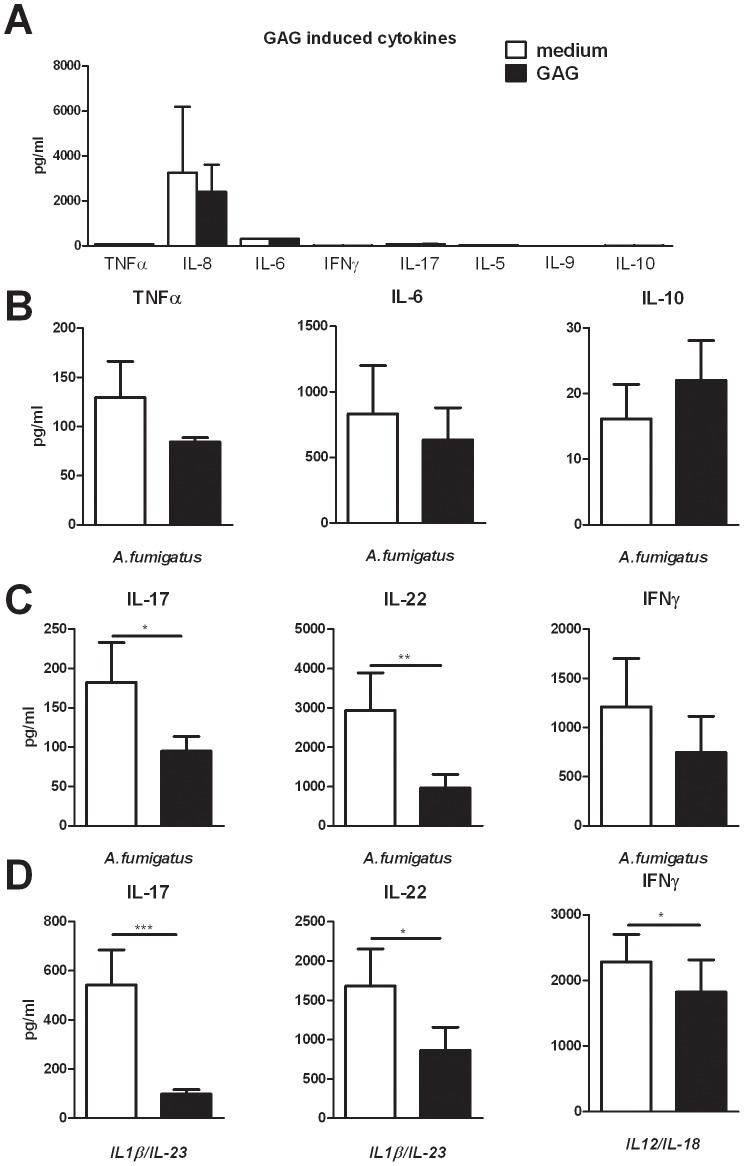
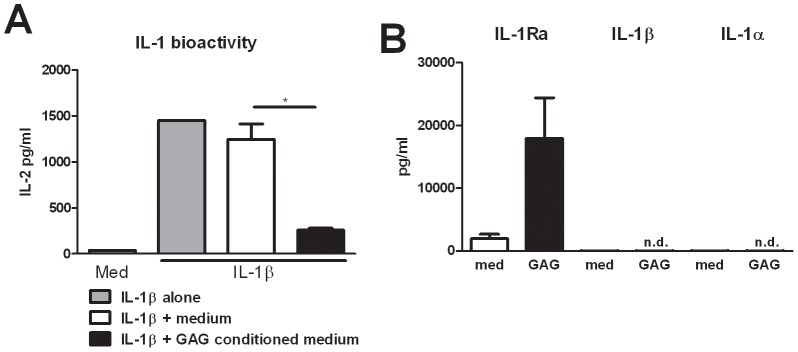
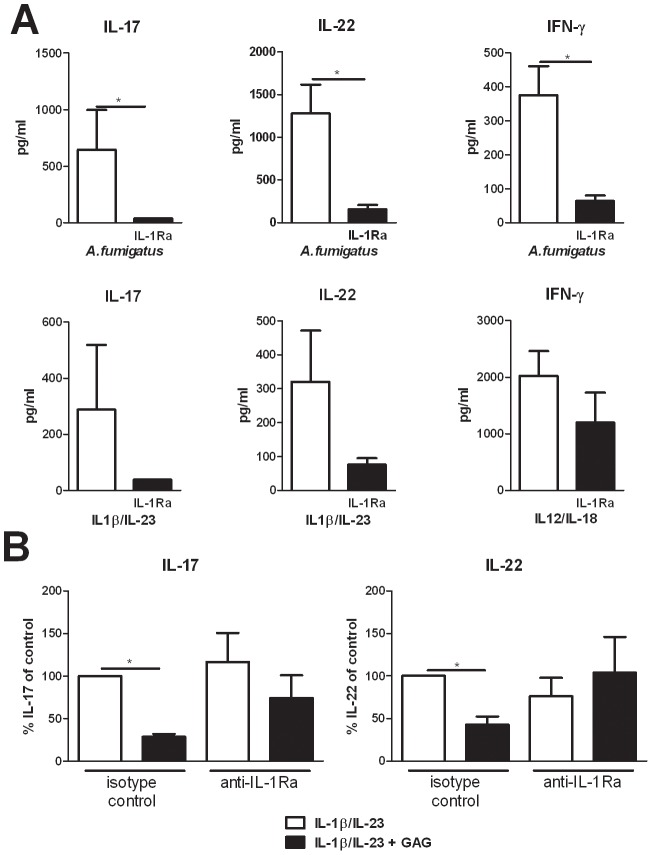
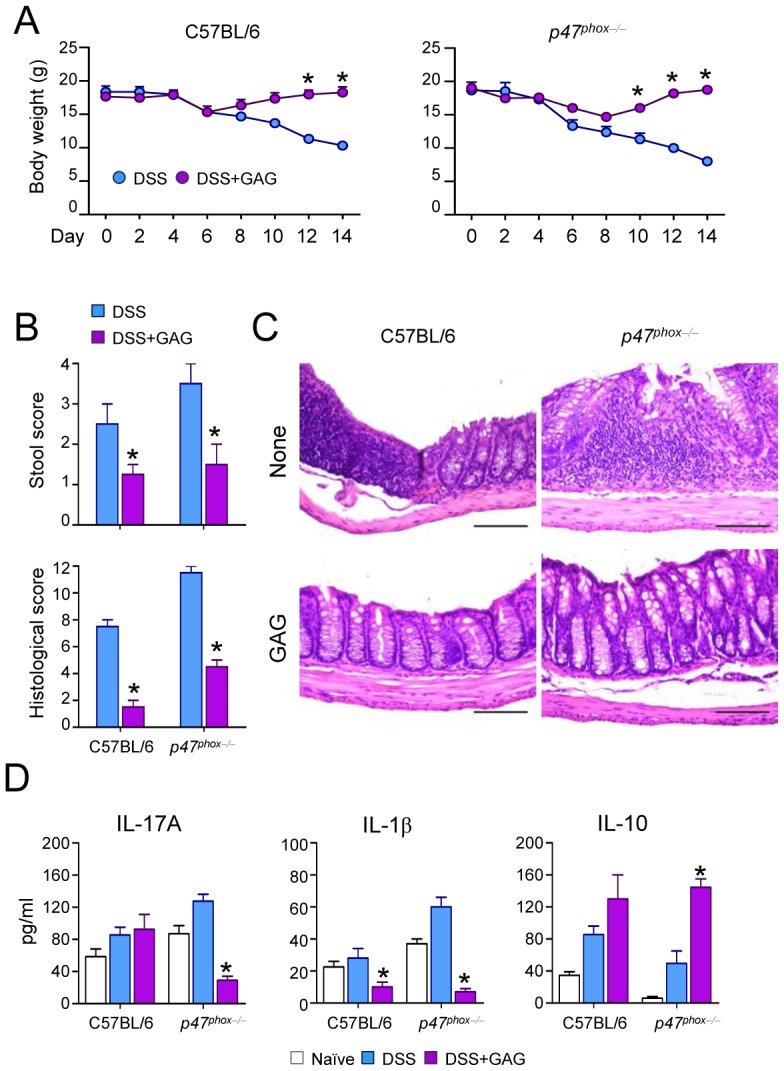
The galactosaminogalactan (GAG) is a cell wall component of Aspergillus fumigatus that has potent anti-inflammatory effects in mice. However, the mechanisms responsible for the anti-inflammatory property of GAG remain to be elucidated. In the present study we used in vitro PBMC stimulation assays to demonstrate, that GAG inhibits proinflammatory T-helper (Th)1 and Th17 cytokine production in human PBMCs by inducing Interleukin-1 receptor antagonist (IL-1Ra), a potent anti-inflammatory cytokine that blocks IL-1 signalling. GAG cannot suppress human T-helper cytokine production in the presence of neutralizing antibodies against IL-1Ra. In a mouse model of invasive aspergillosis, GAG induces IL-1Ra in vivo, and the increased susceptibility to invasive aspergillosis in the presence of GAG in wild type mice is not observed in mice deficient for IL-1Ra. Additionally, we demonstrate that the capacity of GAG to induce IL-1Ra could also be used for treatment of inflammatory diseases, as GAG was able to reduce severity of an experimental model of allergic aspergillosis, and in a murine DSS-induced colitis model. In the setting of invasive aspergillosis, GAG has a significant immunomodulatory function by inducing IL-1Ra and notably IL-1Ra knockout mice are completely protected to invasive pulmonary aspergillosis. This opens new treatment strategies that target IL-1Ra in the setting of acute invasive fungal infection. However, the observation that GAG can also protect mice from allergy and colitis makes GAG or a derivative structure of GAG a potential treatment compound for IL-1 driven inflammatory diseases.
Overview
The claims and statistics of this paper haven’t been checked yet.
Free: it reads the open-access text and checks the first 5 claims that cite a source we can check. Create a free account to check every claim.
Integrity signals
Registry
Cites
Statistics
Figures
![Figure 4 GAG induces IL-1Ra in vivo and IL-1Ra increases susceptibility to aspergillosis. BALB/c and Il1ra−/− mice were intranasally infected with Aspergillus conidia and treated with GAG (250 μg/kg intranasally) the day of infection, and 1, 2 and 3 days post-infection. (A) Il1ra mRNA expression in lung homogenates of mice with invasive aspergillosis, (B) Il1ra mRNA expression in purified cells from lungs of naive mice pre-stimulated with Aspergillus conidia or LPS for 1 hour, and exposed to different GAG concentrations for an additional 18 hours. (C) Survival, (D) fungal growth (CFU/lung, mean +/−SEM), (E) protein levels of IL-1Ra, (F) Mpo expression in lung homogenates, and (G) BAL morphometry [% polymorphonuclear (PMNs) cells and lung histology (PAS stained sections, bars indicate 20× magnification) of Aspergillus-infected mice with or without GAG treatment. Assays were done a day after the last GAG treatment. (H) BAL morphometry [% PMNs or eosinophils (Eo)] and lung histology (PAS stained sections, bars indicate 20× magnification), and (I) expression of Th transcription factors and cytokines in total cells from the draining lymph nodes in mice with ABPA and treated with or without GAG. Naïve means uninfected mice, and none means untreated mice and/or unstimulated cells. (J) IL-5, IL-13 and IL-17 concentrations in culture supernatants of PBMCs pre-incubated 1 h either with medium or GAG (10 μg/ml). After washing, the cells were stimulated for 7 days with heat inactivated 1×10⁷/ml A. fumigatus conidia (n = 4 donors). Data are represented as mean +/− SEM. *, p<0.05; **, p<0.01.](https://figures.cochat.ai/paper-figures/a8002ef6add240c9915f0162170203cd/a-polysaccharide-virulence-factor-from-aspergillus-fumigatus-elicits-anti-figure-4.jpg)
Verification
Claims the paper makes
The claims and statistics of this paper haven’t been checked yet.
Free: it reads the open-access text and checks the first 5 claims that cite a source we can check. Create a free account to check every claim.
Claims other papers make about this one
Each is checked against this paper’s own text: does it say what the citing paper says it does?
The source backs part of the claim, not all of it — or backs it for a different population, condition or comparison.
In the citing paper
“In mouse models of invasive aspergillosis, GAG inhibits Th1 protective antifungal immunity and skews immune responses toward Th2 to facilitate fungal infections (260).”
From Aspergillus fumigatus and Aspergillosis in 2019 (2019) · cites this paper as [260]
Experimental — accuracy not yet measuredThe cited source says what the claim attributes to it.
In the citing paper
“In a model of pulmonary aspergillosis in immunocompetent mice, GAG-induced increases of the fungal burden were largely dependent on the induction of IL-1Ra and subsequent blockade in PMN chemotaxis.”
From Aspergillus fumigatus and Aspergillosis in 2019 (2019) · cites this paper as [260]
The check wasn’t confident either way, so it gives no verdict — never disputed.
In the citing paper
“IL-37, another member of the IL-1 cytokine family, restricted Aspergillus immunopathology by preventing NLRP3-dependent neutrophil recruitment and detrimental immunopathology in murine aspergillosis in cystic fibrosis transgenic mice (260).”
From Aspergillus fumigatus and Aspergillosis in 2019 (2019) · cites this paper as [260]
Experimental — accuracy not yet measuredIn the citing paper
“These results demonstrated that IL-1Ra has an important role during A. fumigatus infections and support the concept that GAG induction of IL-1Ra has important clinical consequences (260).”
From Aspergillus fumigatus and Aspergillosis in 2019 (2019) · cites this paper as [260]
In the citing paper
“In human PBMCs, GAG dampened protective Th1 and Th17 cytokine production by selectively inhibiting IL-1 bioactivity via the induction of IL-1Ra (260).”
From Aspergillus fumigatus and Aspergillosis in 2019 (2019) · cites this paper as [260]
1 more claim about this paper
Create a free account to see every claim other papers make about this one.
Self-check
Percentages, sums and reported differences re-computed from the paper’s own numbers.
The self-check needs the paper’s full text.
Citations
Cites
A CD4+T-cell subset inhibits antigen-specific T-cell responses and prevents colitis
Groux, H., O'Garra, A., Bigler, M., Rouleau, M., Antonenko, S., de Vries, J. E., & Roncarolo, M. G. (1997) · Nature · doi:10.1038/39614 · Cited by 3,588 · cited 1×
“inflammatory cytokine that plays an important role in the protection of colitis [15,16].”
BackgroundInterleukin-1 in the pathogenesis and treatment of inflammatory diseases
Dinarello, C. A. (2011) · Blood · doi:10.1182/blood-2010-07-273417 · Cited by 2,248 · cited 1×
“Bioactivity of the IL-1 signalling pathway is dependent on IL-1 receptor agonists (IL-1a and IL-1b) and IL-1 receptor antagonists [13].”
BackgroundSelf-citationRomani, L. (2011) · Nature Reviews Immunology · doi:10.1038/nri2939 · Cited by 1,793
Self-citationTreating inflammation by blocking interleukin-1 in a broad spectrum of diseases
Dinarello, C. A., Simon, A., & van der Meer, J. W. M. (2012) · Nature Reviews Drug Discovery · doi:10.1038/nrd3800 · Cited by 1,768 · cited 1×
“potential treatment compound for IL-1–mediated diseases, such as joint, bone and muscle diseases and even very common inflammatory diseases such as diabetes and gout [25].”
BackgroundSelf-citationAn Autoinflammatory Disease with Deficiency of the Interleukin-1–Receptor Antagonist
Aksentijevich, I., Masters, S. L., Ferguson, P. J., Dancey, P., Frenkel, J., van Royen-Kerkhoff, A., Laxer, R., Tedgård, U., Cowen, E. W., Pham, T.-H., et al. (2009) · New England Journal of Medicine · doi:10.1056/nejmoa0807865 · Cited by 987
Marr, K. A., Carter, R. A., Boeckh, M., Martin, P., & Corey, L. (2002) · Blood · doi:10.1182/blood-2002-05-1496 · Cited by 957 · cited 1×
“One of the major risk factors that increases susceptibility to invasive aspergillosis is neutropenia [20], and neutrophils are crucial for clearing invasive germinating and hyphal forms of Aspergillus infection [21].”
BackgroundSurface hydrophobin prevents immune recognition of airborne fungal spores
Aimanianda, V., Bayry, J., Bozza, S., Kniemeyer, O., Perruccio, K., Elluru, S. R., Clavaud, C., Paris, S., Brakhage, A. A., Kaveri, S. V., et al. (2009) · Nature · doi:10.1038/nature08264 · Cited by 792 · cited 1×
“Rodlets and melanin, that are present on the conidial surface, shield PAMPs that elicit pro-inflammatory host responses [4,5].”
BackgroundSelf-citationInflammasome activation and IL-1β and IL-18 processing during infection
van de Veerdonk, F. L., Netea, M. G., Dinarello, C. A., & Joosten, L. A. B. (2011) · Trends in Immunology · doi:10.1016/j.it.2011.01.003 · Cited by 691 · cited 1×
“A deficient IL-1 pathway is also detrimental for the host, since it is an important protective pathway required to fight infection [17].”
BackgroundSelf-citationSchaffner, A., Douglas, H., & Braude, A. (1982) · Journal of Clinical Investigation · doi:10.1172/jci110489 · Cited by 615 · cited 1×
“One of the major risk factors that increases susceptibility to invasive aspergillosis is neutropenia [20], and neutrophils are crucial for clearing invasive germinating and hyphal forms of Aspergillus infection [21].”
BackgroundIL-1 acts directly on CD4 T cells to enhance their antigen-driven expansion and differentiation
Ben-Sasson, S. Z., Hu-Li, J., Quiel, J., Cauchetaux, S., Ratner, M., Shapira, I., Dinarello, C. A., & Paul, W. E. (2009) · Proceedings of the National Academy of Sciences · doi:10.1073/pnas.0902745106 · Cited by 568 · cited 1×
“Human Th cytokine responses such as IL-17 and IL-22 production are highly dependent on the IL-1 receptor pathway [11,12].”
BackgroundSelf-citation
Cited by
Items 101–142 of 142
Biology and Function of Exo-Polysaccharides from Human Fungal Pathogens
Chung, K. Y., & Brown, J. C. S. (2020) · Current Clinical Microbiology Reports · doi:10.1007/s40588-020-00137-5 · Cited by 10
Characterization of extracellular vesicles produced by Aspergillus fumigatus protoplastsPreprint
Rizzo, J., Chaze, T., de Miranda, K. R., Roberson, R. W., Gorgette, O., Nimrichter, L., Matondo, M., Latgé, J., Beauvais, A., & Rodrigues, M. L. (2020) · bioRxiv (Cold Spring Harbor Laboratory) · doi:10.1101/2020.05.21.109926 · Cited by 9
Zhang, Y., Gómez‐Redondo, M., Jiménez‐Osés, G., Ardá, A., Overkleeft, H. S., van der Marel, G. A., Jiménez‐Barbero, J., & Codée, J. D. C. (2020) · Angewandte Chemie · doi:10.1002/ange.202003951 · Cited by 8
Xu, Z., Premarathna, M., Liu, J., & Seneviratne, G. (2025) · Critical Reviews in Microbiology · doi:10.1080/1040841x.2025.2482658 · Cited by 10
“…Aspergillus spp. are capable of adjusting to different environments due to their structural constituents like the rodlet layer in their surfaces, functions in spore dispersion and fixation, production of aerial hyphae, and nutritional versatility (Kwon-chung and Sugui 2013; Gresnigt et al. 2014).”
Gupta, L., Hoda, S., Vermani, M., & Vijayaraghavan, P. (2021) · Mycological Progress · doi:10.1007/s11557-021-01677-w · Cited by 6
Diseases Caused by Aspergillus fumigatus
Garcia‐Rubio, R., & Alcázar‐Fuoli, L. (2018) · Elsevier eBooks · doi:10.1016/b978-0-12-809633-8.12078-3 · Cited by 7
Could the Lung Be a Gateway for Amphotericin B to Attack the Army of Fungi?
Patricio, B. F. D. C., Pereira, J. O. D. S. L., Sarcinelli, M. A., de Moraes, B. P. T., Rocha, H. V. A., & Gonçalves-de-Albuquerque, C. F. (2022) · Pharmaceutics · doi:10.3390/pharmaceutics14122707 · Cited by 5
Aspergillus Pneumonia in a Patient With Adult-Onset Still Disease Successfully Treated With Anakinra
Bılgın, E., Erden, A., Kılıç, L., Sarı, A., Armağan, B., Kalyoncu, U., & Karadağ, Ö. (2017) · JCR Journal of Clinical Rheumatology · doi:10.1097/rhu.0000000000000631 · Cited by 5
Cytokine profile in lung transplant recipients with Aspergillus spp colonization
Herrera, S., Gohir, W., Foroutan, F., Aguilar, C., Juvet, S., Martinu, T., Kumar, D., Humar, A., Rotstein, C., Keshavjee, S. H., et al. (2019) · Transplant Infectious Disease · doi:10.1111/tid.13060 · Cited by 5
Challenges posed by fungi to host immunity: Mechanisms of immune evasion
Gu, Y., Wang, H., Wang, Y.-S., Wang, L., & Jia, X.-M. (2026) · hLife · doi:10.1016/j.hlife.2025.12.008 · Cited by 5
“Subsequent studies by Gresnigt et al. further revealed that GAG coop-erated with A. fumigatus conidia to induce IL-1Ra production in peripheral blood mononuclear cells (PBMCs), suppressing interleukin-17 (IL-17), interleukin-22 (IL-22), and interferon-gamma (IFN-γ ) secretion [88].”
Filamentous Fungi Extracellular Vesicles
Gonçalves, T., Oliveira, J., & Fernandes, C. (2021) · Current topics in microbiology and immunology · doi:10.1007/978-3-030-83391-6_5 · Cited by 5
Priyanka, R., Chatterjee, S., & Saha, P. (2020) · International Journal of Pharma and Bio Sciences · doi:10.22376/ijpbs/lpr.2020.10.5.p191-206 · Cited by 4
MicroRNA regulation and host interaction in response to Aspergillus exposure
Shrivastava, M., PANDEY, D., Sharma, P., & Singh, R. (2021) · Biocell · doi:10.32604/biocell.2022.016822 · Cited by 3
Cytosolic receptors and signaling in antifungal immunity
Khau, S., Désoubeaux, G., Si‐Tahar, M., Biquand, É., & Briard, B. (2025) · The EMBO Journal · doi:10.1038/s44318-025-00627-6 · Cited by 3
“On the other hand, cell wall or extracellular GAG can induce IL-1Ra release in human PBMCs, dampening IL-1-mediated in fl ammation (Gresnigt et al, 2014).”
King, J., Dambuza, I. M., Reid, D. M., Yuecel, R., Brown, G. D., & Warris, A. (2023) · Frontiers in Cellular and Infection Microbiology · doi:10.3389/fcimb.2023.1241770 · Cited by 3
“, 2013), and reducing IL-1R1 signalling via the induction of IL-1 receptor antagonist (IL-1Ra) (Gresnigt et al., 2014; Henriet et al., 2016).”
BackgroundWong, S. S. W., Dellière, S., Lafont, E., & Aimanianda, V. (2021) · Elsevier eBooks · doi:10.1016/b978-0-12-818731-9.00045-8 · Cited by 2
Diseases Caused by Aspergillus fumigatus
Garcia‐Rubio, R., & Alcázar‐Fuoli, L. (2018) · Elsevier eBooks · doi:10.1016/b978-0-12-819990-9.12078-5 · Cited by 7
Shen, W., Wang, M., Han, T., Yao, Y., Ying, X., Cui, Y., & Du, P. (2025) · Current Microbiology · doi:10.1007/s00284-025-04487-5 · Cited by 1
“In this study, the methods for the extraction, purification, and treatment of GAG were adapted from the existing literature [9, 10, 12, 26].”
Fungal extracellular vesicles: Advances and perspectives in treatments, therapies, and vaccination
Ferreira, K. S., Lima, S. F., Duarte, L. D. S., & Batista, W. L. (2025) · Current topics in membranes · doi:10.1016/bs.ctm.2025.07.008 · Cited by 1
Trentin, G., Martins‐Santana, L., Taborda, C. P., & Almeida, F. (2026) · Frontiers in Immunology · doi:10.3389/fimmu.2026.1912476 · Cited by 1
8 The Cell Wall Polysaccharides of Aspergillus fumigatus
Lee, M. J., & Sheppard, D. C. (2016) · Springer eBooks · doi:10.1007/978-3-319-27790-5_8 · Cited by 2
When Aspergillus fumigatus Meets the Man
Wong, S. S. W., & Latgé, J. (2017) · Springer eBooks · doi:10.1007/978-3-319-64113-3_4 · Cited by 2
Singh, D., & Mittal, N. (2023) · Elsevier eBooks · doi:10.1016/b978-0-323-99977-9.00031-4 · Cited by 1
Extracellular Proteins and Their Roles in Aspergillus fumigatus Pathogenesis
Jia, L., & Brakhage, A. A. (2024) · The mycota · doi:10.1007/978-3-031-64853-3_4 · Cited by 1
Wong, S. S. W., Dellière, S., Lepas, M., & Aimanianda, V. (2025) · Advances in experimental medicine and biology · doi:10.1007/978-3-031-85340-1_9 · Cited by 2
Host-Induced Stress Response in Human Pathogenic Fungi
Viana, R., Pais, P., Cavalheiro, M., Galocha, M., & Teixeira, M. C. (2021) · Elsevier eBooks · doi:10.1016/b978-0-12-819990-9.00035-4 · Cited by 1
Kischkel, B. (2022) · Digital Library of Theses and Dissertations (Universidade de São Paulo) · doi:10.11606/t.42.2022.tde-13102022-121545 · Cited by 23
Heilig, L., Natasha, F., Trinks, N., Aimanianda, V., Wong, S. S. W., Fontaine, T., Terpitz, U., Strobel, L., Mauff, F. L., Sheppard, D. C., et al. (2023) · bioRxiv (Cold Spring Harbor Laboratory) · doi:10.1101/2023.08.18.553508 · Cited by 1
Self-citationThe IL-1 family in relation to psoriasis
Doble, R. (2014) · White Rose eTheses Online (University of Leeds, The University of Sheffield, University of York)
Manfiolli, A. O., dos Reis, T. F., de Assis, L. J., de Castro, P. A., Silva, L. P., Hori, J. I., Walker, L. A., Munro, C. A., Rajendran, R., Ramage, G., et al. (2020) · The Cell Surface · doi:10.1016/j.tcsw.2020.100035
Caracterização molecular de um receptor acoplado a uma proteína G (GPCR) de Aspergillus fumigatus
Filho, A. P. D. C. (2021) · Digital Library of Theses and Dissertations (Universidade de São Paulo) · doi:10.11606/d.17.2021.tde-08092021-113412 · Cited by 1
Ohno, N. (2020) · Elsevier eBooks · doi:10.1016/b978-0-12-819475-1.00010-9
Luperini, R. S. (2023) · Digital Library of Theses and Dissertations (Universidade de São Paulo) · doi:10.11606/d.17.2023.tde-17102023-105339
Understanding Molecular Pathogenesis of Aspergillus fumigatus
Sen, P., Gupta, L., Singh, A. J. A. R., Kumar, L., Mishra, R. K., & Vijayaraghavan, P. (2024) · Springer eBooks · doi:10.1007/978-981-97-4909-6_19
Natural Killer Cells in Microbial Host Defense: Overview with a Focus on Antifungal Activity
Polyak, M. J., Mok, A. C. H., & Mody, C. H. (2025) · Springer eBooks · doi:10.1007/978-3-662-68816-8_23-1
Exploring Potential Antioxidant and Anti-inflammatory Compounds from the Mangrove Microbiome
Pavithra, R., & Khan, M. S. (2025) · Springer eBooks · doi:10.1007/978-981-96-2602-1_22
Composition and Role of the Extracellular Matrix in Fungal Biofilm Drug Resistance
Kim, M.-J., Żarnowski, R., & Andes, D. R. (2025) · Springer series on biofilms · doi:10.1007/978-3-031-93315-8_8 · Cited by 1
Zhou, Y., Wang, Y., Wu, Y., Zhang, Z., Zhang, Y., Chen, C., Chen, Y., Zhang, Y., & Fang, L. (2026) · iScience · doi:10.1016/j.isci.2026.115208 · Cited by 1
“36,73 Beyond immune dysfunction, additional factors facilitate IPA in immunocompetent individuals.”
Deciphering the immune response to respiratory pathogens - Role of programmed death-ligand 1
Victor, E. S. (2016) · theses.fr (ABES) · doi:10.70675/42f25aeez159bz4bf3z8f30z05634e3e8152
Kordana, N. E., Johnson, A., Puerner, C. T. S., Jones, J. T., Kowalski, C. H., Quinn, K. G., Liu, K.-W., Mauff, F. L., & Cramer, R. A. (2026) · bioRxiv (Cold Spring Harbor Laboratory) · doi:10.64898/2026.06.17.732805
Aspergillus, Aspergillosis, Antifungal Resistance and Dispersal
Wilkinson, D. (2026) · Aerobiology · doi:10.3390/aerobiology4040022
Metadata
- Authors
- Gresnigt, M. S., Bozza, S., Becker, K. L., Joosten, L. A. B., Abdollahi-Roodsaz, S., van der Berg, W. B., Dinarello, C. A., Netea, M. G., Fontaine, T., De Luca, A., Moretti, S., Romani, L., Latge, J.-P., & van de Veerdonk, F. L.
- Affiliations
- Radboud University Medical Center (NL)
- University of Perugia (IT)
- Institut Pasteur (FR)
- Corresponding author
- Romani, Luigina
- ORCID
- Venue
- PLoS Pathogens
- Publisher
- Public Library of Science (PLoS)
- Published
- 2014-03-06
- Volume
- 10
- Issue
- 3
- Pages
- e1003936
- ISSN
- 1553-7366 (ISSN-L)
- 1553-7374
- PMC
- PMC3946377
- OpenAlex
- W2084044646
- Cited by
- 142
- References
- 35
- Citations by year
- 2026: 5 · 2025: 9 · 2024: 7 · 2023: 11 · 2022: 7 · 2021: 16 · 2020: 16 · 2019: 7 · 2018: 9 · 2017: 16 · 2016: 20 · 2015: 9 · 2014: 10
- FWCI
- 12.84
- Type
- journal article
- Language
- en
- Open access
- gold
- doi.org
- Locations
- PLoS Pathogens (publishedVersion, cc-by)
- Europe PMC (PubMed Central) (publishedVersion, cc-by)
- PubMed Central (publishedVersion, cc-by)
- PubMed (publishedVersion)
- Radboud Repository (Radboud University) (submittedVersion)
- HAL (submittedVersion, cc-by)
- DOAJ (DOAJ: Directory of Open Access Journals) (submittedVersion, cc-by-sa)
- Radboud Repository (Radboud University) (submittedVersion, other-oa)
- Funders
- Agence Nationale de la Recherche (ANR-08-PATH-0009, ANR-06-EMPB-0011)
- Radboud Universitair Medisch Centrum
- European Social Fund
- Topics
- Health Sciences › Medicine › Infectious Diseases › Antifungal resistance and susceptibility
- Life Sciences › Biochemistry, Genetics and Molecular Biology › Molecular Biology › Fungal and yeast genetics research
- Life Sciences › Immunology and Microbiology › Immunology › Immune Response and Inflammation
- Keywords
- Aspergillus fumigatus, galactosaminogalactan, interleukin-1 receptor antagonist, anti-inflammatory activity, Th1 cytokines, Th17 cytokines, invasive aspergillosis, allergic bronchopulmonary aspergillosis, colitis, IL-1 signaling, immunomodulation, fungal cell wall
- MeSH terms
- Animals, Aspergillosis, Aspergillus fumigatus, Disease Models, Animal, Enzyme-Linked Immunosorbent Assay, Female, Humans, Leukocytes, Mononuclear, Mice, Inbred BALB C, Polysaccharides, Cytokines, Mice, Knockout, Virulence Factors, Mice, Interleukin 1 Receptor Antagonist Protein, Fungal Polysaccharides
About these checks
Registry, retraction, Cites and statistics results are computed, not judged, with one exception: a printed reference that no index lists is read once by a model before it counts as a citation error. Claims are extracted by a model and kept only when their quote appears verbatim in the text; each cited source is then checked, with a model’s help, for whether it says what the claim relies on. Those verdicts can be wrong — read the claim’s quote and the cited source before relying on one.
Statistics and arithmetic are recomputed, not judged.
Confidence bands are shown only for fields calibrated on our annotated test set. None is calibrated yet, so no band is shown.
What counts as a claim ›How we measure confidence ›How we check this ›
Are you an author, or do you see a problem with this page? Request a review
Data sources
Bibliographic data: Semantic Scholar, OpenAlex, Crossref.
Contains information from the Semantic Scholar Academic Graph Datasets, made available under the ODC Attribution License (ODC-BY 1.0).
Semantic Scholar’s data is described in: Kinney, R., et al. (2023). The Semantic Scholar Open Data Platform. arXiv:2301.10140.
