

A Polysaccharide Virulence Factor from Aspergillus fumigatus Elicits Anti-inflammatory Effects through Induction of Interleukin-1 Receptor Antagonist
Open accessThe DOI matches its Crossref record; 35 of the 35 references it cites were found in a registry or an index.
Abstract
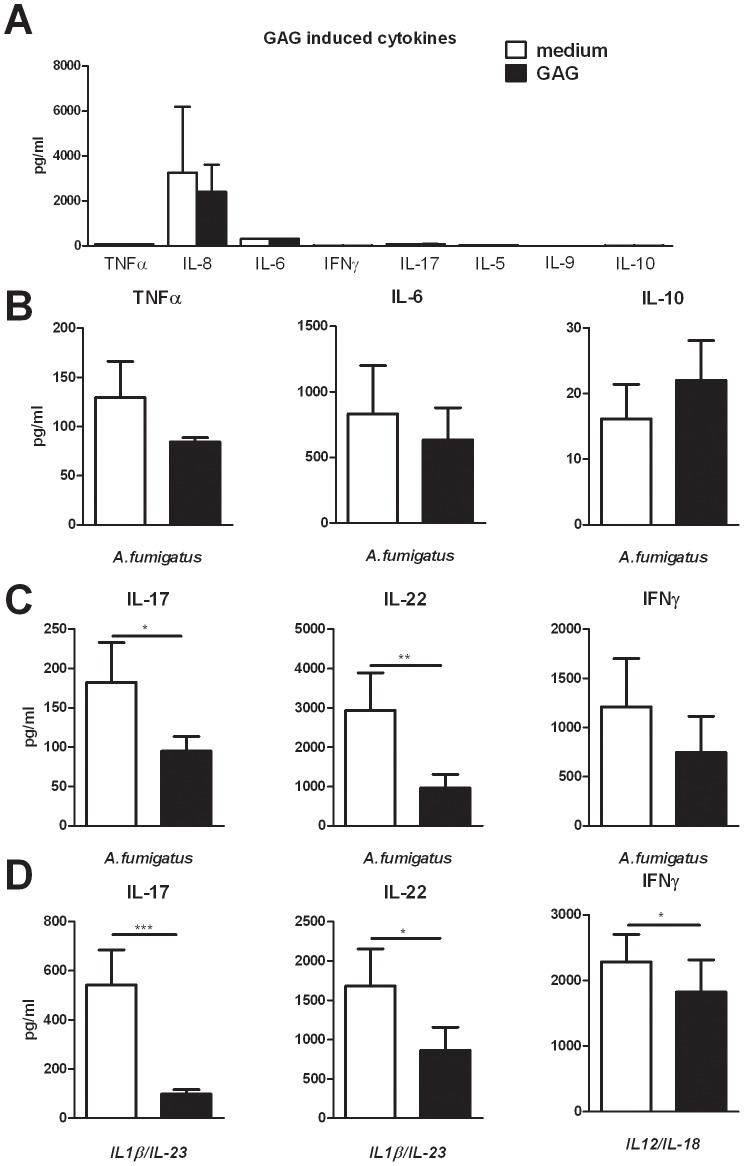
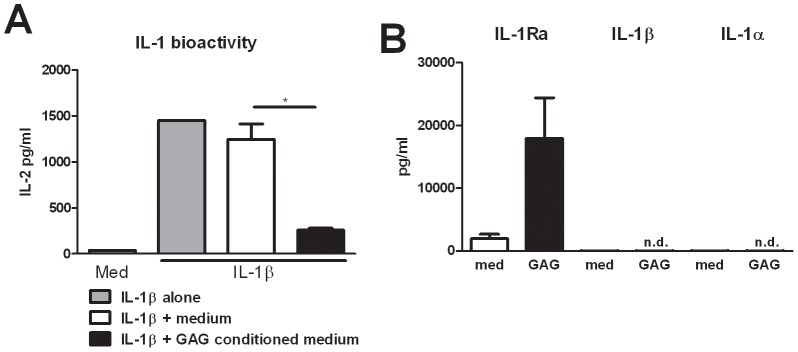
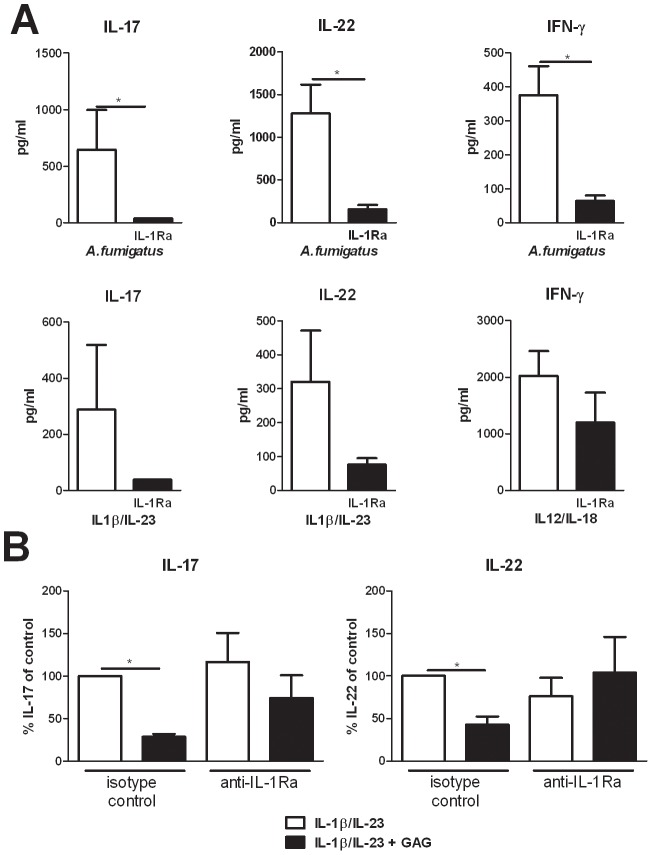
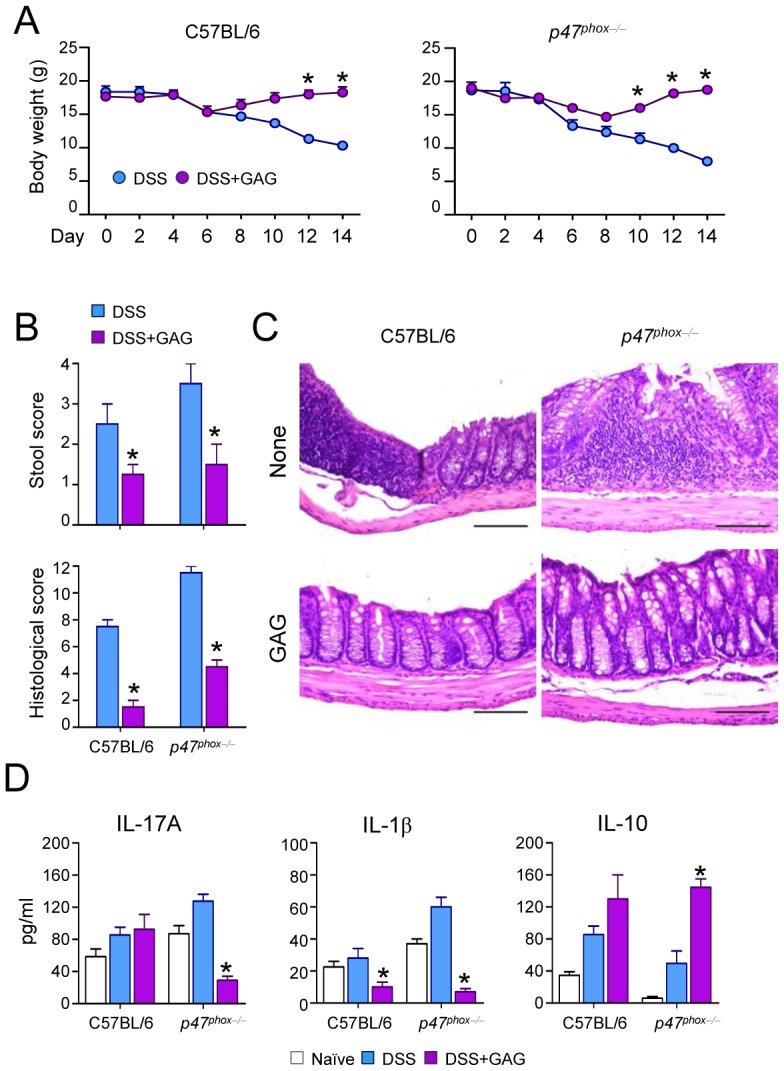
The galactosaminogalactan (GAG) is a cell wall component of Aspergillus fumigatus that has potent anti-inflammatory effects in mice. However, the mechanisms responsible for the anti-inflammatory property of GAG remain to be elucidated. In the present study we used in vitro PBMC stimulation assays to demonstrate, that GAG inhibits proinflammatory T-helper (Th)1 and Th17 cytokine production in human PBMCs by inducing Interleukin-1 receptor antagonist (IL-1Ra), a potent anti-inflammatory cytokine that blocks IL-1 signalling. GAG cannot suppress human T-helper cytokine production in the presence of neutralizing antibodies against IL-1Ra. In a mouse model of invasive aspergillosis, GAG induces IL-1Ra in vivo, and the increased susceptibility to invasive aspergillosis in the presence of GAG in wild type mice is not observed in mice deficient for IL-1Ra. Additionally, we demonstrate that the capacity of GAG to induce IL-1Ra could also be used for treatment of inflammatory diseases, as GAG was able to reduce severity of an experimental model of allergic aspergillosis, and in a murine DSS-induced colitis model. In the setting of invasive aspergillosis, GAG has a significant immunomodulatory function by inducing IL-1Ra and notably IL-1Ra knockout mice are completely protected to invasive pulmonary aspergillosis. This opens new treatment strategies that target IL-1Ra in the setting of acute invasive fungal infection. However, the observation that GAG can also protect mice from allergy and colitis makes GAG or a derivative structure of GAG a potential treatment compound for IL-1 driven inflammatory diseases.
Overview
The claims and statistics of this paper haven’t been checked yet.
Free: it reads the open-access text and checks the first 5 claims that cite a source we can check. Create a free account to check every claim.
Integrity signals
Registry
Cites
Statistics
Figures
![Figure 4 GAG induces IL-1Ra in vivo and IL-1Ra increases susceptibility to aspergillosis. BALB/c and Il1ra−/− mice were intranasally infected with Aspergillus conidia and treated with GAG (250 μg/kg intranasally) the day of infection, and 1, 2 and 3 days post-infection. (A) Il1ra mRNA expression in lung homogenates of mice with invasive aspergillosis, (B) Il1ra mRNA expression in purified cells from lungs of naive mice pre-stimulated with Aspergillus conidia or LPS for 1 hour, and exposed to different GAG concentrations for an additional 18 hours. (C) Survival, (D) fungal growth (CFU/lung, mean +/−SEM), (E) protein levels of IL-1Ra, (F) Mpo expression in lung homogenates, and (G) BAL morphometry [% polymorphonuclear (PMNs) cells and lung histology (PAS stained sections, bars indicate 20× magnification) of Aspergillus-infected mice with or without GAG treatment. Assays were done a day after the last GAG treatment. (H) BAL morphometry [% PMNs or eosinophils (Eo)] and lung histology (PAS stained sections, bars indicate 20× magnification), and (I) expression of Th transcription factors and cytokines in total cells from the draining lymph nodes in mice with ABPA and treated with or without GAG. Naïve means uninfected mice, and none means untreated mice and/or unstimulated cells. (J) IL-5, IL-13 and IL-17 concentrations in culture supernatants of PBMCs pre-incubated 1 h either with medium or GAG (10 μg/ml). After washing, the cells were stimulated for 7 days with heat inactivated 1×10⁷/ml A. fumigatus conidia (n = 4 donors). Data are represented as mean +/− SEM. *, p<0.05; **, p<0.01.](https://figures.cochat.ai/paper-figures/a8002ef6add240c9915f0162170203cd/a-polysaccharide-virulence-factor-from-aspergillus-fumigatus-elicits-anti-figure-4.jpg)
Verification
Claims the paper makes
The claims and statistics of this paper haven’t been checked yet.
Free: it reads the open-access text and checks the first 5 claims that cite a source we can check. Create a free account to check every claim.
Claims other papers make about this one
Each is checked against this paper’s own text: does it say what the citing paper says it does?
The source backs part of the claim, not all of it — or backs it for a different population, condition or comparison.
In the citing paper
“In mouse models of invasive aspergillosis, GAG inhibits Th1 protective antifungal immunity and skews immune responses toward Th2 to facilitate fungal infections (260).”
From Aspergillus fumigatus and Aspergillosis in 2019 (2019) · cites this paper as [260]
Experimental — accuracy not yet measuredThe cited source says what the claim attributes to it.
In the citing paper
“In a model of pulmonary aspergillosis in immunocompetent mice, GAG-induced increases of the fungal burden were largely dependent on the induction of IL-1Ra and subsequent blockade in PMN chemotaxis.”
From Aspergillus fumigatus and Aspergillosis in 2019 (2019) · cites this paper as [260]
The check wasn’t confident either way, so it gives no verdict — never disputed.
In the citing paper
“IL-37, another member of the IL-1 cytokine family, restricted Aspergillus immunopathology by preventing NLRP3-dependent neutrophil recruitment and detrimental immunopathology in murine aspergillosis in cystic fibrosis transgenic mice (260).”
From Aspergillus fumigatus and Aspergillosis in 2019 (2019) · cites this paper as [260]
Experimental — accuracy not yet measuredIn the citing paper
“These results demonstrated that IL-1Ra has an important role during A. fumigatus infections and support the concept that GAG induction of IL-1Ra has important clinical consequences (260).”
From Aspergillus fumigatus and Aspergillosis in 2019 (2019) · cites this paper as [260]
In the citing paper
“In human PBMCs, GAG dampened protective Th1 and Th17 cytokine production by selectively inhibiting IL-1 bioactivity via the induction of IL-1Ra (260).”
From Aspergillus fumigatus and Aspergillosis in 2019 (2019) · cites this paper as [260]
1 more claim about this paper
Create a free account to see every claim other papers make about this one.
Self-check
Percentages, sums and reported differences re-computed from the paper’s own numbers.
The self-check needs the paper’s full text.
Citations
Cites
A CD4+T-cell subset inhibits antigen-specific T-cell responses and prevents colitis
Groux, H., O'Garra, A., Bigler, M., Rouleau, M., Antonenko, S., de Vries, J. E., & Roncarolo, M. G. (1997) · Nature · doi:10.1038/39614 · Cited by 3,588 · cited 1×
“inflammatory cytokine that plays an important role in the protection of colitis [15,16].”
BackgroundInterleukin-1 in the pathogenesis and treatment of inflammatory diseases
Dinarello, C. A. (2011) · Blood · doi:10.1182/blood-2010-07-273417 · Cited by 2,248 · cited 1×
“Bioactivity of the IL-1 signalling pathway is dependent on IL-1 receptor agonists (IL-1a and IL-1b) and IL-1 receptor antagonists [13].”
BackgroundSelf-citationRomani, L. (2011) · Nature Reviews Immunology · doi:10.1038/nri2939 · Cited by 1,793
Self-citationTreating inflammation by blocking interleukin-1 in a broad spectrum of diseases
Dinarello, C. A., Simon, A., & van der Meer, J. W. M. (2012) · Nature Reviews Drug Discovery · doi:10.1038/nrd3800 · Cited by 1,768 · cited 1×
“potential treatment compound for IL-1–mediated diseases, such as joint, bone and muscle diseases and even very common inflammatory diseases such as diabetes and gout [25].”
BackgroundSelf-citationAn Autoinflammatory Disease with Deficiency of the Interleukin-1–Receptor Antagonist
Aksentijevich, I., Masters, S. L., Ferguson, P. J., Dancey, P., Frenkel, J., van Royen-Kerkhoff, A., Laxer, R., Tedgård, U., Cowen, E. W., Pham, T.-H., et al. (2009) · New England Journal of Medicine · doi:10.1056/nejmoa0807865 · Cited by 987
Marr, K. A., Carter, R. A., Boeckh, M., Martin, P., & Corey, L. (2002) · Blood · doi:10.1182/blood-2002-05-1496 · Cited by 957 · cited 1×
“One of the major risk factors that increases susceptibility to invasive aspergillosis is neutropenia [20], and neutrophils are crucial for clearing invasive germinating and hyphal forms of Aspergillus infection [21].”
BackgroundSurface hydrophobin prevents immune recognition of airborne fungal spores
Aimanianda, V., Bayry, J., Bozza, S., Kniemeyer, O., Perruccio, K., Elluru, S. R., Clavaud, C., Paris, S., Brakhage, A. A., Kaveri, S. V., et al. (2009) · Nature · doi:10.1038/nature08264 · Cited by 792 · cited 1×
“Rodlets and melanin, that are present on the conidial surface, shield PAMPs that elicit pro-inflammatory host responses [4,5].”
BackgroundSelf-citationInflammasome activation and IL-1β and IL-18 processing during infection
van de Veerdonk, F. L., Netea, M. G., Dinarello, C. A., & Joosten, L. A. B. (2011) · Trends in Immunology · doi:10.1016/j.it.2011.01.003 · Cited by 691 · cited 1×
“A deficient IL-1 pathway is also detrimental for the host, since it is an important protective pathway required to fight infection [17].”
BackgroundSelf-citationSchaffner, A., Douglas, H., & Braude, A. (1982) · Journal of Clinical Investigation · doi:10.1172/jci110489 · Cited by 615 · cited 1×
“One of the major risk factors that increases susceptibility to invasive aspergillosis is neutropenia [20], and neutrophils are crucial for clearing invasive germinating and hyphal forms of Aspergillus infection [21].”
BackgroundIL-1 acts directly on CD4 T cells to enhance their antigen-driven expansion and differentiation
Ben-Sasson, S. Z., Hu-Li, J., Quiel, J., Cauchetaux, S., Ratner, M., Shapira, I., Dinarello, C. A., & Paul, W. E. (2009) · Proceedings of the National Academy of Sciences · doi:10.1073/pnas.0902745106 · Cited by 568 · cited 1×
“Human Th cytokine responses such as IL-17 and IL-22 production are highly dependent on the IL-1 receptor pathway [11,12].”
BackgroundSelf-citation
Cited by
The Fungal Cell Wall: Structure, Biosynthesis, and Function
Gow, N. A. R., Latge, J.-P., & Munro, C. A. (2017) · Microbiology Spectrum · doi:10.1128/microbiolspec.funk-0035-2016 · Cited by 1,423
Aspergillus fumigatus and Aspergillosis in 2019
Latgé, J.-P., & Chamilos, G. (2019) · Clinical Microbiology Reviews · doi:10.1128/cmr.00140-18 · Cited by 1,400
Self-citationThe Fungal Cell Wall: Candida, Cryptococcus, and Aspergillus Species
Garcia-Rubio, R., de Oliveira, H. C., Rivera, J., & Trevijano-Contador, N. (2020) · Frontiers in Microbiology · doi:10.3389/fmicb.2019.02993 · Cited by 917
Interactions of fungal pathogens with phagocytes
Erwig, L. P., & Gow, N. A. R. (2016) · Nature Reviews Microbiology · doi:10.1038/nrmicro.2015.21 · Cited by 626
Aspergillus fumigatus morphology and dynamic host interactions
van de Veerdonk, F. L., Gresnigt, M. S., Romani, L., Netea, M. G., & Latgé, J.-P. (2017) · Nature Reviews Microbiology · doi:10.1038/nrmicro.2017.90 · Cited by 490
Self-citationPaulussen, C., Hallsworth, J. E., Álvarez‐Pérez, S., Nierman, W. C., Hamill, P. G., Blain, D., Rediers, H., & Lievens, B. (2017) · Microbial Biotechnology · doi:10.1111/1751-7915.12367 · Cited by 334
Latgé, J.-P., Beauvais, A., & Chamilos, G. (2017) · Annual Review of Microbiology · doi:10.1146/annurev-micro-030117-020406 · Cited by 207
Self-citationLee, M. J., Liu, H., Barker, B. M., Snarr, B. D., Gravelat, F. N., Al Abdallah, Q., Gavino, C., Baistrocchi, S. R., Ostapska, H., Xiao, T., et al. (2015) · PLOS Pathogens · doi:10.1371/journal.ppat.1005187 · Cited by 180
“Purified, soluble GAG also induces natural killer (NK) cellmediated apoptosis of neutrophils in vitro [13], and administration of soluble GAG is immunosuppressive through the induction of IL-1RA production [14].”
BackgroundInfluentialSelf-citationBalducci, E., Papi, F., Capialbi, D. E., & Bino, L. D. (2023) · International Journal of Molecular Sciences · doi:10.3390/ijms24044030 · Cited by 194
Aspergillus Cell Wall and Biofilm
Beauvais, A., Fontaine, T., Aimanianda, V., & Latgé, J. (2014) · Mycopathologia · doi:10.1007/s11046-014-9766-0 · Cited by 171
Self-citationFunctional duality of the cell wall
Latgé, J.-P., & Beauvais, A. (2014) · Current Opinion in Microbiology · doi:10.1016/j.mib.2014.05.009 · Cited by 144
Self-citationThe Interface between Fungal Biofilms and Innate Immunity
Kernien, J. F., Snarr, B. D., Sheppard, D. C., & Nett, J. E. (2018) · Frontiers in Immunology · doi:10.3389/fimmu.2017.01968 · Cited by 142
“This observation suggests that GAG impairs neutrophil recruitment during biofilm growth and is consistent with the reports that soluble GAG can modulate immunity through induction of apoptosis in neutrophils and stimulation of anti-inflammatory IL-1Ra production by macrophages in vitro (49, 129).”
ResultCaffrey, A. K., Lehmann, M. M., Zickovich, J. M., Espinosa, V., Shepardson, K. M., Watschke, C. P., Hilmer, K. M., Thammahong, A., Barker, B. M., Rivera, A., et al. (2015) · PLOS Pathogens · doi:10.1371/journal.ppat.1004625 · Cited by 132
Fungal Super Glue: The Biofilm Matrix and Its Composition, Assembly, and Functions
Mitchell, K. F., Zarnowski, R., & Andes, D. R. (2016) · PLOS Pathogens · doi:10.1371/journal.ppat.1005828 · Cited by 132
Galactosaminogalactan activates the inflammasome to provide host protection
Briard, B., Fontaine, T., Samir, P., Place, D. E., Muszkieta, L., Malireddi, R. K. S., Karki, R., Christgen, S., Bomme, P., Vogel, P., et al. (2020) · Nature · doi:10.1038/s41586-020-2996-z · Cited by 127
Self-citationFungal glycans and the innate immune recognition
Barreto‐Bergter, E., & Figueiredo, R. T. (2014) · Frontiers in Cellular and Infection Microbiology · doi:10.3389/fcimb.2014.00145 · Cited by 127
“The immunosuppressive properties of A. fumigatus galactosaminogalactans have been attributed to the inhibition of the production of IFN-γ, neutrophil chemoattractant chemokines, and the induction of IL-1Ra, an antagonist cytokine for the IL-1 receptor (Gresnigt et al., 2014).”
BackgroundJhingran, A., Kasahara, S., Shepardson, K. M., Junecko, B. A. F., Heung, L. J., Kumasaka, D. K., Knoblaugh, S. E., Lin, X., Kazmierczak, B. I., Reinhart, T. A., et al. (2015) · PLOS Pathogens · doi:10.1371/journal.ppat.1004589 · Cited by 108
“fumigatus induces the synthesis of IL-1 receptor antagonist (IL-1RA) and the transcription of IL-36γ and IL-36 receptor antagonist in human peripheral blood mononuclear cells [56,57].”
BackgroundBamford, N. C., Snarr, B. D., Gravelat, F. N., Little, D. J., Lee, M. J., Zacharias, C. A., Chabot, J. C., Geller, A. M., Baptista, S. D., Baker, P., et al. (2015) · Journal of Biological Chemistry · doi:10.1074/jbc.m115.679050 · Cited by 102
“-glucan from dectin-1 recognition, and directly by inducing neutrophil apoptosis and secretion of the immunosuppressive cytokine interleukin 1 receptor antagonist (IL-1RA) (6, 7, 11).”
BackgroundImmune Recognition of Fungal Polysaccharides
Snarr, B., Qureshi, S., & Sheppard, D. (2017) · Journal of Fungi · doi:10.3390/jof3030047 · Cited by 98
“Purified GAG can also stimulate IL-1Ra secretion by human PBMCs, resulting in a suppression of TH1 and TH17 responses [151].”
BackgroundInfluentialAspergillus Biofilm In Vitro and In Vivo
Beauvais, A., & Latgé, J.-P. (2015) · Microbiology Spectrum · doi:10.1128/microbiolspec.mb-0017-2015 · Cited by 93
“The mechanisms responsible for the anti-inflammatory property of GAG were investigated (22).”
BackgroundGalactosaminogalactan (GAG) and its multiple roles in Aspergillus pathogenesis
Speth, C., Rambach, G., Lass-Flörl, C., Howell, P. L., & Sheppard, D. C. (2019) · Virulence · doi:10.1080/21505594.2019.1568174 · Cited by 89
“Detailed studies to elucidate the mechanism of this cytokine inhibition revealed that purified GAG stimulates the secretion of IL-1 receptor antagonist (IL-1Ra) by human PBMCs. IL-1Ra blocks the IL-1R type I receptor and thus suppresses IL-17 and IL-22 protein expression [14,26].”
BackgroundInfluentialSpecial Issue: Fungal Cell Wall
Beauvais, A., & Latgé, J. (2018) · Journal of Fungi · doi:10.3390/jof4030091 · Cited by 104
“GAG has strong, multifunctional adhesive properties [24] and is a virulence factor, inducing neutrophil apoptosis, resistance to neutrophil extracellular traps, and an immunomodulatory function by inducing IL-1Ra [17,18,25].”
The Extracellular Matrix of Fungal Biofilms
Mitchell, K. F., Żarnowski, R., & Andes, D. R. (2016) · Advances in experimental medicine and biology · doi:10.1007/5584_2016_6 · Cited by 111
The Fungal Cell Wall: Structure, Biosynthesis, and Function
Gow, N. A. R., Latge, J.-P., & Munro, C. A. (2017) · The Fungal Kingdom · doi:10.1128/9781555819583.ch12 · Cited by 86
Natural Killer Cells in Antifungal Immunity
Schmidt, S., Tramsen, L., & Lehrnbecher, T. (2017) · Frontiers in Immunology · doi:10.3389/fimmu.2017.01623 · Cited by 99
“Galactosaminogalactan also induces IL-1 receptor antagonist, which leads to the suppression of IL-17 and IL-22 in peripheral blood mononuclear cells (109), and similar effects were observed with Aspergillus chitin (110).”
ResultVictor, E. S., Karnam, A., Fontaine, T., Beauvais, A., Das, M., Hegde, P., Prakhar, P., Holla, S., Balaji, K. N., Kaveri, S. V., et al. (2017) · The Journal of Infectious Diseases · doi:10.1093/infdis/jix469 · Cited by 91
Self-citationThe Cell Biology of the Trichosporon-Host Interaction
Duarte‐Oliveira, C., Rodrigues, F. J. S., Gonçalves, S. M., Goldman, G. H., Carvalho, A., & Cunha, C. (2017) · Frontiers in Cellular and Infection Microbiology · doi:10.3389/fcimb.2017.00118 · Cited by 89
“It remains to be explored whether trichosporonal GAG also functions by inducing the immunoregulatory cytokine IL-1 receptor antagonist (IL-1Ra) (Gresnigt et al., 2014), ultimately pointing to the possibility of targeting IL-1Ra in trichosporonosis.”
BackgroundCharacterization of Extracellular Vesicles Produced by Aspergillus fumigatus Protoplasts
Rizzo, J., Chaze, T., Miranda, K., Roberson, R. W., Gorgette, O., Nimrichter, L., Matondo, M., Latgé, J.-P., Beauvais, A., & Rodrigues, M. L. (2020) · mSphere · doi:10.1128/msphere.00476-20 · Cited by 76
“fumigatus extracellular matrix (44, 45), is localized on the surface 247 of the cell wall, where it acts as a component of the fungal extracellular matrix (46).”
BackgroundSoil Aspergillus Species, Pathogenicity and Control Perspectives
Nji, Q. N., Babalola, O. O., & Mwanza, M. (2023) · Journal of Fungi · doi:10.3390/jof9070766 · Cited by 115
“It induces the antiinflammatory cytokine interleukin-1 receptor antagonist, making individuals more susceptible to aspergillosis [83].”
BackgroundRecent advances in the understanding of the Aspergillus fumigatus cell wall
Lee, M. J., & Sheppard, D. C. (2016) · Journal of Microbiology · doi:10.1007/s12275-016-6045-4 · Cited by 77
“, 2011) and reduced inflammation in murine models of dextran-sulfate induced colitis and allergic aspergillosis (Fontaine et al., 2011; Gresnigt et al., 2014).”
BackgroundInfluentialAspergillosis in Chronic Granulomatous Disease
King, J., Henriet, S., & Warris, A. (2016) · Journal of Fungi · doi:10.3390/jof2020015 · Cited by 84
Liu, S., Le Mauff, F., Sheppard, D. C., & Zhang, S. (2022) · npj Biofilms and Microbiomes · doi:10.1038/s41522-022-00347-3 · Cited by 72
Robinet, P., Baychelier, F., Fontaine, T., Picard, C., Debré, P., Vieillard, V., Latgé, J.-P., & Elbim, C. (2014) · The Journal of Immunology · doi:10.4049/jimmunol.1303180 · Cited by 75
“In addition, the proapoptotic effect of GG on PMNs was observed at a concentration of 20 mg/ml, which is a relevant concentration in vivo, because Aspergillus can secrete GG in a concentration of 50 mg/ml (44).”
BackgroundSelf-citationBecker, K. L., Aimanianda, V., Wang, X., Gresnigt, M. S., Ammerdorffer, A., Jacobs, C. W., Gazendam, R. P., Joosten, L. A. B., Netea, M. G., Latgé, J. P., et al. (2016) · mBio · doi:10.1128/mbio.01823-15 · Cited by 73
“Immunoglobulin opsonization mediates chitin-induced IL1Ra.”
BackgroundSelf-citationRole of inflammasomes/pyroptosis and PANoptosis during fungal infection
Briard, B., Malireddi, R. K. S., & Kanneganti, T. (2021) · PLoS Pathogens · doi:10.1371/journal.ppat.1009358 · Cited by 81
The Multifaceted Role of T-Helper Responses in Host Defense against Aspergillus fumigatus
Dewi, I., Van de Veerdonk, F., & Gresnigt, M. (2017) · Journal of Fungi · doi:10.3390/jof3040055 · Cited by 69
“On the one hand, the Th17 response is activated by stimulation of dectin-1 with β-glucans, whereas on the other hand, galactosaminogalactan (GAG) can inhibit Th17 responses in vitro and in vivo, via induction of IL-1Ra [60].”
BackgroundInfluentialSelf-citationBriard, B., Rasoldier, V., Bomme, P., ElAouad, N., Guerreiro, C., Chassagne, P., Muszkieta, L., Latgé, J.-P., Mulard, L., & Beauvais, A. (2017) · The ISME Journal · doi:10.1038/ismej.2017.32 · Cited by 66
“GAG has been reported previously to be a major adhesin of A. fumigatus with many functions associated to the invasion of the host tissue (Gresnigt et al., 2014; Robinet et al., 2014).”
BackgroundSelf-citationWojtowicz, A., Gresnigt, M. S., Lecompte, T., Bibert, S., Manuel, O., Joosten, L. A. B., Rueger, S., Berger, C., Boggian, K., Cusini, A., et al. (2015) · Journal of Infectious Diseases · doi:10.1093/infdis/jiu636 · Cited by 63
Self-citationGalactosaminogalactan of Aspergillus fumigatus, a bioactive fungal polymer
Briard, B., Muszkieta, L., Latgé, J.-P., & Fontaine, T. (2016) · Mycologia · doi:10.3852/15-312 · Cited by 61
“Citrus pectin induced in vitro a dose-dependent inhibition of IL-1b secretion correlated with an increase secretion of anti-inflammatory cytokines IL-10 and IL-1Ra by human PBMCs (Salman et al. 2008).”
BackgroundSelf-citationImmunoevasive Aspergillus Virulence Factors
Chotirmall, S. H., Mirković, B., Lavelle, G., & McElvaney, N. G. (2014) · Mycopathologia · doi:10.1007/s11046-014-9768-y · Cited by 69
“This confers novel immunoevasive strategies that were previously unrecognized [11].”
Additional oxidative stress reroutes the global response of Aspergillus fumigatus to iron depletion
Kurucz, V., Krüger, T., Antal, K., Dietl, A., Haas, H., Pócsi, I., Kniemeyer, O., & Emri, T. (2018) · BMC Genomics · doi:10.1186/s12864-018-4730-x · Cited by 67
“These include the rodlet and cell wall melanin layers of conidia [11, 12]; the cell wall exopolysaccharide galactosaminogalactan, which has possible anti-inflammatory effects [13]; the production of mycotoxins such as the immune response modulator gliotoxin [14]; elastinolytic proteases [15]; efficient iron and zinc a…”
BackgroundBamford, N. C., Mauff, F. L., Subramanian, A. S., Yip, P., Millán, C., Zhang, Y., Zacharias, C. A., Forman, A., Nitz, M., Codée, J. D. C., et al. (2019) · Journal of Biological Chemistry · doi:10.1074/jbc.ra119.009910 · Cited by 59
“GAG mediates fungal adhesion to host cells and inhibits the host immune response by masking fungal -glucan from dectin-1 recognition and inducing neutrophil apoptosis and secretion of the immunosuppressive cytokine interleukin 1 receptor antagonist (5, 7, 10).”
BackgroundDesoubeaux, G., & Cray, C. (2017) · Frontiers in Microbiology · doi:10.3389/fmicb.2017.00841 · Cited by 55
“5% of the works with no immunosuppressive regimen), or when only local course of invasive aspergillosis was expected like ocular infection (Jie et al., 2009; Zhong et al., 2009, 2016; Ren et al., 2010; Guo et al., 2012; Gresnigt et al., 2014; Taylor et al., 2014a; Jiang et al., 2015, 2016; Li et al., 2015; Xu et al.,…”
BackgroundAspergillus fumigatus biology, immunopathogenicity and drug resistance
van de Veerdonk, F. L., Carvalho, A., Wauters, J., Chamilos, G., & Verweij, P. E. (2025) · Nature Reviews Microbiology · doi:10.1038/s41579-025-01180-z · Cited by 70
“On the one hand, GAG has potent anti-inflammatory properties mediated by the release of IL-1 receptor antagonist, which promotes fungal pathogenicity during pulmonary infection in immuno-compromised mice 39,71 .”
Innate lymphoid cells in lung infection and immunity
Stehle, C., Hernández, D. C., & Romagnani, C. (2018) · Immunological Reviews · doi:10.1111/imr.12712 · Cited by 61
Stuehler, C., Nowakowska, J., Bernardini, C., Topp, M. S., Battegay, M., Passweg, J., & Khanna, N. (2015) · The Journal of Infectious Diseases · doi:10.1093/infdis/jiu607 · Cited by 48
“[42].”
Aspergillus Biofilm In Vitro and In Vivo
Beauvais, A., & Latgé, J.-P. (2015) · Microbial Biofilms · doi:10.1128/9781555817466.ch8 · Cited by 47
Mei, L., Wang, X., Yin, Y., Tang, G., & Wang, C. (2021) · PLoS Pathogens · doi:10.1371/journal.ppat.1009656 · Cited by 45
“In contrast, different studies have confirmed that GAG is required for the development of invasive aspergillosis by mediating adherence, biofilm formation, masking cell wall β-glucans from the dectin-1 recognition and inducing the production of Interleukin-1 receptor antagonist [10,11,13].”
BackgroundResultDeacetylated microbial biofilm exopolysaccharides: It pays to be positive
Ostapska, H., Howell, P. L., & Sheppard, D. C. (2018) · PLoS Pathogens · doi:10.1371/journal.ppat.1007411 · Cited by 49
Namai, F., Shigemori, S., Ogita, T., Sato, T., & Shimosato, T. (2020) · Experimental & Molecular Medicine · doi:10.1038/s12276-020-00507-5 · Cited by 45
Fungal cell wall components modulate our immune system
Briard, B., Fontaine, T., Kanneganti, T.-D., Gow, N. A. R., & Papon, N. (2021) · The Cell Surface · doi:10.1016/j.tcsw.2021.100067 · Cited by 42
Self-citationZhang, Y., Gómez‐Redondo, M., Jiménez‐Osés, G., Ardá, A., Overkleeft, H. S., van der Marel, G. A., Jiménez‐Barbero, J., & Codée, J. D. C. (2020) · Angewandte Chemie International Edition · doi:10.1002/anie.202003951 · Cited by 46
Thammahong, A., Caffrey-Card, A. K., Dhingra, S., Obar, J. J., & Cramer, R. A. (2017) · mBio · doi:10.1128/mbio.00056-17 · Cited by 40
“Furthermore, exogenous GAG inhibits human proinflammatory cytokine production through interleukin-1 (IL-1) signaling by inducing IL-1 receptor antagonist (61).”
BackgroundBronchial Epithelial Cells on the Front Line to Fight Lung Infection-Causing Aspergillus fumigatus
Bigot, J., Guillot, L., Guitard, J., Ruffin, M., Corvol, H., Balloy, V., & Hennequin, C. (2020) · Frontiers in Immunology · doi:10.3389/fimmu.2020.01041 · Cited by 44
Tashiro, M., Takazono, T., & Izumikawa, K. (2024) · Therapeutic Advances in Infectious Disease · doi:10.1177/20499361241253751 · Cited by 65
Beaussart, A., El-Kirat-Chatel, S., Fontaine, T., Latgé, J.-P., & Dufrêne, Y. F. (2015) · Nanoscale · doi:10.1039/c5nr04399a · Cited by 34
Self-citationMacheleidt, J., Scherlach, K., Neuwirth, T., Schmidt‐Heck, W., Straßburger, M., Spraker, J. E., Baccile, J. A., Schroeder, F. C., Keller, N. P., Hertweck, C., et al. (2015) · Molecular Microbiology · doi:10.1111/mmi.12926 · Cited by 41
“Bemis et al. (1998) suggested a role for fumipyrrole in maturation of IL-1β and various publications demonstrated the relevance of this pro-inflammatory cytokine for the immune response during invasive aspergillosis (Sainz et al., 2008; Gresnigt et al., 2014; de Luca et al., 2014).”
BackgroundManfiolli, A. O., dos Reis, T. F., de Assis, L. J., de Castro, P. A., Silva, L. P., Hori, J. I., Walker, L. A., Munro, C. A., Rajendran, R., Ramage, G., et al. (2018) · The Cell Surface · doi:10.1016/j.tcsw.2018.03.002 · Cited by 39
“…GAG, which is secreted during hyphal growth and is present in the A. fumigatus biofilm, mediates adherence and has a role attenuating the host immune response through inducing interleukin-1 receptor antagonist and also by masking β-1,3 glucan (Gravelat et al., 2013; Gresnigt et al., 2014).”
BackgroundMartín‐Cruz, L., Angelina, A., Baydemir, İ., Bulut, O. P., Subiza, J. L., Netea, M. G., Domínguez‐Andrés, J., & Palomares, Ó. (2022) · Frontiers in Immunology · doi:10.3389/fimmu.2022.1066383 · Cited by 38
“The binding of IL-1RA to the same receptor as IL-1b, inhibits IL-1binduced signaling and controlling inflammation during infections (56).”
BackgroundSelf-citation“Under Pressure” – How fungi evade, exploit, and modulate cells of the innate immune system
Lange, T., Kasper, L., Gresnigt, M. S., Brunke, S., & Hube, B. (2023) · Seminars in Immunology · doi:10.1016/j.smim.2023.101738 · Cited by 36
Self-citationPaving the way for predictive diagnostics and personalized treatment of invasive aspergillosis
Coelho, A., Rodrigues, F. J. S., Campos, A. N., de Lacerda, J. F., Carvalho, A., & Cunha, C. (2015) · Frontiers in Microbiology · doi:10.3389/fmicb.2015.00411 · Cited by 32
“…properties of GAG have also been attributed to its potent ability to induce IL-1Ra (Gresnigt et al., 2014), a finding further highlighting a possible therapeutic option targeting IL-1Ra in IA. Genomic and transcriptomic approaches have revealed that fungal pathogenicity depends also…”
BackgroundInfluentialNeutrophil Responses to Aspergillosis: New Roles for Old Players
Cunha, C., Kurzai, O., Löffler, J., Aversa, F., Romani, L. R., & Carvalho, A. (2014) · Mycopathologia · doi:10.1007/s11046-014-9796-7 · Cited by 39
Self-citationReducing Aspergillus fumigatus Virulence through Targeted Dysregulation of the Conidiation Pathway
Stewart, J. I. P., Fava, V. M., Kerkaert, J. D., Subramanian, A. S., Gravelat, F. N., Lehoux, M., Howell, P. L., Cramer, R. A., & Sheppard, D. C. (2020) · mBio · doi:10.1128/mbio.03202-19 · Cited by 28
Gressler, M., Heddergott, C., N'Go, I. C., Renga, G., Oikonomou, V., Moretti, S., Coddeville, B., Gaifem, J., Silvestre, R., Romani, L., et al. (2019) · Frontiers in Cellular and Infection Microbiology · doi:10.3389/fcimb.2019.00365 · Cited by 27
“The capacity of GAG to induce IL-1Ra is responsible for its potent antiinflammatory properties favoringAspergillus infections (Gresnigt et al., 2014).”
BackgroundMethodSelf-citation30 years of battling the cell wall
Latgé, J. P. (2016) · Medical Mycology · doi:10.1093/mmy/myw076 · Cited by 27
Synthetic Oligosaccharides Mimicking Fungal Cell Wall Polysaccharides
Krylov, V. B., & Nifantiev, N. E. (2019) · Current topics in microbiology and immunology · doi:10.1007/82_2019_187 · Cited by 29
Host immune response against fungal biofilms
Mannan, M. A., Nabeela, S., Mishra, R., & Uppuluri, P. (2024) · Current Opinion in Microbiology · doi:10.1016/j.mib.2024.102520 · Cited by 29
How to invade a susceptible host: cellular aspects of aspergillosis
Krappmann, S. (2016) · Current Opinion in Microbiology · doi:10.1016/j.mib.2016.10.002 · Cited by 27
Kashyap, V. H., Mishra, A., Bordoloi, S., Varma, A. K., & Joshi, N. C. (2023) · Mycoses · doi:10.1111/myc.13619 · Cited by 24
Monoclonal Antibodies and Invasive Aspergillosis: Diagnostic and Therapeutic Perspectives
Lian, X., Scott-Thomas, A., Lewis, J. G., Bhatia, M., MacPherson, S. A., Zeng, Y., & Chambers, S. T. (2022) · International Journal of Molecular Sciences · doi:10.3390/ijms23105563 · Cited by 27
“GAG also has been shown to induce neutrophil apoptosis, inhibit the formation of neutrophil extracellular traps (NETs) termed NETosis and pre-inflammation, so as to protect the Aspergillus from killing [23,37,38].”
BackgroundKowalski, C. H., Morelli, K. A., Stajich, J., Nadell, C. D., & Cramer, R. A. (2021) · mBio · doi:10.1128/mbio.03579-20 · Cited by 23
“dulatory effects (65), and its loss increases exposure of inflammatory b-glucans (54).”
Alarmin(g) the innate immune system to invasive fungal infections
Caffrey, A. K., & Obar, J. J. (2016) · Current Opinion in Microbiology · doi:10.1016/j.mib.2016.06.002 · Cited by 22
“Both the NLRP3 and AIM2 inflammasomes work in concert to generate an optimal anti-Aspergillus response [47, 49].”
Aspergillosis and stem cell transplantation: An overview of experimental pathogenesis studies
Al-Bader, N., & Sheppard, D. C. (2016) · Virulence · doi:10.1080/21505594.2016.1231278 · Cited by 29
Ullah, A., Huang, Y., Zhao, K., Hua, Y., Ullah, S., Rahman, M. U., Wang, J., Wang, Q., Hu, X., & Zheng, L. (2023) · BMC Microbiology · doi:10.1186/s12866-023-02945-3 · Cited by 23
“GalNAc is an epitope of galactosaminogalactan (GAG), which is a part of the extracellular matrix of A. fumigatus and is associated with virulence [84, 85].”
BackgroundHenriet, S., van de Sande, W. W. J., Lee, M. J., Simonetti, E. R., Momany, M., Verweij, P. E., Rijs, A. J. M. M., Ferwerda, G., Sheppard, D. C., de Jonge, M. I., et al. (2016) · Journal of Interferon & Cytokine Research · doi:10.1089/jir.2015.0095 · Cited by 21
Unmasking Chemokine‐Inducing Specificity in Oligosaccharide Biomaterial to Promote Hair Growth
Yin, X., Wang, L., Niu, Y., Xie, D., Zhang, Q., Xiao, J. R., Dong, L., & Wang, C. (2023) · Advanced Materials · doi:10.1002/adma.202304655 · Cited by 24
The Role of Interleukin-1 Family Members in the Host Defence Against Aspergillus fumigatus
Gresnigt, M. S., & van de Veerdonk, F. L. (2014) · Mycopathologia · doi:10.1007/s11046-014-9776-y · Cited by 21
“induce IL-1Ra, thereby inhibiting the IL-1 axis and induction of T-helper responses, resulting in an increased susceptibility against aspergillosis [16].”
Self-citationInositol Polyphosphate Kinases, Fungal Virulence and Drug Discovery
Li, C., Lev, S., Saiardi, A., Desmarini, D., Sorrell, T. C., & Djordjevic, J. T. (2016) · Journal of Fungi · doi:10.3390/jof2030024 · Cited by 20
Kischkel, B., Lopes-Bezerra, L. M., Taborda, C. P., Joosten, L. A. B., dos Santos, J. C., & Netea, M. G. (2022) · Cellular Immunology · doi:10.1016/j.cellimm.2022.104555 · Cited by 23
Self-citationElements of dissemination in cryptococcosis
Bednarek, J. M., & Brown, J. C. S. (2024) · mBio · doi:10.1128/mbio.02155-23 · Cited by 22
“Data have shown that extracellular GAG promotes A. fumigatus infection and modulates the host immune response by inducing the expression of anti-inflammatory cytokine, IL-1Ra, inhibiting innate immunity (85).”
Differential Kinetics of Aspergillus nidulans and Aspergillus fumigatus Phagocytosis
Gresnigt, M. S., Becker, K. L., Leenders, F., Alonso, M. F., Wang, X., Meis, J. F. G. M., Bain, J. M., Erwig, L. P., & van de Veerdonk, F. L. (2017) · Journal of Innate Immunity · doi:10.1159/000484562 · Cited by 21
Self-citationThe role of Aspergillus fumigatus polysaccharides in host–pathogen interactions
Zacharias, C. A., & Sheppard, D. C. (2019) · Current Opinion in Microbiology · doi:10.1016/j.mib.2019.04.006 · Cited by 21
IFN-γ Mediated Signaling Improves Fungal Clearance in Experimental Pulmonary Mucormycosis
dos Santos, A. R., Fraga‐Silva, T. F. D. C., Donanzam, D. D. F. A., dos Santos, R. F., Finato, A. C., Soares, C. T., Lara, V. S., Almeida, N. L. M., Andrade, M. I., de Arruda, O. S., et al. (2021) · Mycopathologia · doi:10.1007/s11046-021-00598-2 · Cited by 20
Cell wall of Aspergillus fumigatus: Variability and response to stress
Latgé, J. (2023) · Fungal Biology · doi:10.1016/j.funbio.2023.05.001 · Cited by 17
Yoshida, K., Murayama, M. A., Shimizu, K., Tang, C., Katagiri, N., Matsuo, K., Fukai, F., & Iwakura, Y. (2018) · Biochemical and Biophysical Research Communications · doi:10.1016/j.bbrc.2018.01.116 · Cited by 16
Nedumpun, T., Wongyanin, P., Sirisereewan, C., Ritprajak, P., Palaga, T., Thanawongnuwech, R., & Suradhat, S. (2016) · Journal of General Virology · doi:10.1099/jgv.0.000665 · Cited by 19
Lauruschkat, C. D., Etter, S., Schnack, E., Ebel, F., Schäuble, S., Page, L., Rümens, D., Dragan, M., Schlegel, N., Panagiotou, G., et al. (2021) · Journal of Fungi · doi:10.3390/jof7090698 · Cited by 21
Deshmukh, H., Rambach, G., Sheppard, D. C., Lee, M., Hagleitner, M., Hermann, M., Würzner, R., Lass‐Flörl, C., & Speth, C. (2020) · Microbes and Infection · doi:10.1016/j.micinf.2019.12.004 · Cited by 16
Obar, J. J., Hohl, T. M., & Cramer, R. A. (2016) · Cytokine · doi:10.1016/j.cyto.2016.05.015 · Cited by 18
Chen, Y., Stewart, J. I. P., Liu, S., Sheppard, D. C., Lu, L., & Zhang, S. (2022) · Applied and Environmental Microbiology · doi:10.1128/aem.01535-21 · Cited by 14
Liu, H., Sun, J., Li, M., Cai, W., Chen, Y., Liu, Y., Huang, H., Xie, Z., Zeng, W., & Xi, L. (2022) · Frontiers in Cellular and Infection Microbiology · doi:10.3389/fcimb.2022.810604 · Cited by 14
“IL-1Ra knock out mice were highly resistant to invasive aspergillosis (Gresnigt et al., 2014), which seemed to be paradoxical to the reduced expression of IL-1Ra in CBM patients.”
BackgroundNeves, G. W. P., Curty, N., Kubitschek-Barreira, P. H., Fontaine, T., Souza, G. H. M. F., Cunha, M. L., Goldman, G. H., Beauvais, A., Latgé, J., & Lopes-Bezerra, L. M. (2016) · Journal of Proteomics · doi:10.1016/j.jprot.2016.06.015 · Cited by 14
Self-citationFungal Extracellular Vesicles in Pathophysiology
Garcia‐Ceron, D., Bleackley, M. R., & Anderson, M. A. (2021) · Sub-cellular biochemistry/Subcellular biochemistry · doi:10.1007/978-3-030-67171-6_7 · Cited by 13
Huang, S., Huang, C., Chou, K., Chan, Y., Yang, Y., & Wang, F. (2021) · Journal of Fungi · doi:10.3390/jof7100842 · Cited by 14
“GAG can result in fungal resistance to NADPH-mediated neutrophil killing and against neutrophil-extracellular traps (NETs) [30].”
BackgroundHeilig, L., Natasha, F., Trinks, N., Aimanianda, V., Wong, S. S. W., Fontaine, T., Terpitz, U., Strobel, L., Mauff, F. L., Sheppard, D. C., et al. (2024) · PLoS Pathogens · doi:10.1371/journal.ppat.1012315 · Cited by 16
Self-citationThe Carbohydrate Lectin Receptor Dectin-1 Mediates the Immune Response to Exserohilum rostratum
Reedy, J. L., Negoro, P. E., Feliu, M., Lord, A. K., Khan, N. S., Lukason, D. P., Wiederhold, N. P., Tam, J. M., Mansour, M. K., Patterson, T. F., et al. (2016) · Infection and Immunity · doi:10.1128/iai.00903-16 · Cited by 12
Ostapska, H., Raju, D., Lehoux, M., Lacdao, I., Gilbert, S., Sivarajah, P., Bamford, N. C., Baker, P., Nguyen, T. T. M., Zacharias, C. A., et al. (2021) · mBio · doi:10.1128/mbio.02446-21 · Cited by 14
Exopolysaccharides and Biofilms
Mauff, F. L. (2020) · Current topics in microbiology and immunology · doi:10.1007/82_2020_199 · Cited by 15
Sensing the threat posed by Aspergillus infection
Obar, J. J. (2020) · Current Opinion in Microbiology · doi:10.1016/j.mib.2020.08.004 · Cited by 10
Jafri, M., Li, L., Liang, B., & Luo, M. (2024) · Pharmaceuticals · doi:10.3390/ph17030371 · Cited by 12
“…publications, the exogenous GAGs may suppress IL-1 β -induced IL-6 and IL-8 mRNA expression through three possible ways: (1) Exogenous GAGs can induce the expression of IL-1Ra that competes with IL-1 β for IL-1R, thus blocking the IL-1 receptor inflammation signal-transduction pathway [49–51].”
Background
Metadata
- Authors
- Gresnigt, M. S., Bozza, S., Becker, K. L., Joosten, L. A. B., Abdollahi-Roodsaz, S., van der Berg, W. B., Dinarello, C. A., Netea, M. G., Fontaine, T., De Luca, A., Moretti, S., Romani, L., Latge, J.-P., & van de Veerdonk, F. L.
- Affiliations
- Radboud University Medical Center (NL)
- University of Perugia (IT)
- Institut Pasteur (FR)
- Corresponding author
- Romani, Luigina
- ORCID
- Venue
- PLoS Pathogens
- Publisher
- Public Library of Science (PLoS)
- Published
- 2014-03-06
- Volume
- 10
- Issue
- 3
- Pages
- e1003936
- ISSN
- 1553-7366 (ISSN-L)
- 1553-7374
- PMC
- PMC3946377
- OpenAlex
- W2084044646
- Cited by
- 142
- References
- 35
- Citations by year
- 2026: 5 · 2025: 9 · 2024: 7 · 2023: 11 · 2022: 7 · 2021: 16 · 2020: 16 · 2019: 7 · 2018: 9 · 2017: 16 · 2016: 20 · 2015: 9 · 2014: 10
- FWCI
- 12.84
- Type
- journal article
- Language
- en
- Open access
- gold
- doi.org
- Locations
- PLoS Pathogens (publishedVersion, cc-by)
- Europe PMC (PubMed Central) (publishedVersion, cc-by)
- PubMed Central (publishedVersion, cc-by)
- PubMed (publishedVersion)
- Radboud Repository (Radboud University) (submittedVersion)
- HAL (submittedVersion, cc-by)
- DOAJ (DOAJ: Directory of Open Access Journals) (submittedVersion, cc-by-sa)
- Radboud Repository (Radboud University) (submittedVersion, other-oa)
- Funders
- Agence Nationale de la Recherche (ANR-08-PATH-0009, ANR-06-EMPB-0011)
- Radboud Universitair Medisch Centrum
- European Social Fund
- Topics
- Health Sciences › Medicine › Infectious Diseases › Antifungal resistance and susceptibility
- Life Sciences › Biochemistry, Genetics and Molecular Biology › Molecular Biology › Fungal and yeast genetics research
- Life Sciences › Immunology and Microbiology › Immunology › Immune Response and Inflammation
- Keywords
- Aspergillus fumigatus, galactosaminogalactan, interleukin-1 receptor antagonist, anti-inflammatory activity, Th1 cytokines, Th17 cytokines, invasive aspergillosis, allergic bronchopulmonary aspergillosis, colitis, IL-1 signaling, immunomodulation, fungal cell wall
- MeSH terms
- Animals, Aspergillosis, Aspergillus fumigatus, Disease Models, Animal, Enzyme-Linked Immunosorbent Assay, Female, Humans, Leukocytes, Mononuclear, Mice, Inbred BALB C, Polysaccharides, Cytokines, Mice, Knockout, Virulence Factors, Mice, Interleukin 1 Receptor Antagonist Protein, Fungal Polysaccharides
About these checks
Registry, retraction, Cites and statistics results are computed, not judged, with one exception: a printed reference that no index lists is read once by a model before it counts as a citation error. Claims are extracted by a model and kept only when their quote appears verbatim in the text; each cited source is then checked, with a model’s help, for whether it says what the claim relies on. Those verdicts can be wrong — read the claim’s quote and the cited source before relying on one.
Statistics and arithmetic are recomputed, not judged.
Confidence bands are shown only for fields calibrated on our annotated test set. None is calibrated yet, so no band is shown.
What counts as a claim ›How we measure confidence ›How we check this ›
Are you an author, or do you see a problem with this page? Request a review
Data sources
Bibliographic data: Semantic Scholar, OpenAlex, Crossref.
Contains information from the Semantic Scholar Academic Graph Datasets, made available under the ODC Attribution License (ODC-BY 1.0).
Semantic Scholar’s data is described in: Kinney, R., et al. (2023). The Semantic Scholar Open Data Platform. arXiv:2301.10140.
