

The pH-Responsive PacC Transcription Factor of Aspergillus fumigatus Governs Epithelial Entry and Tissue Invasion during Pulmonary Aspergillosis
Open accessThe DOI matches its Crossref record; 88 of the 88 references it cites were found in a registry or an index.
Abstract
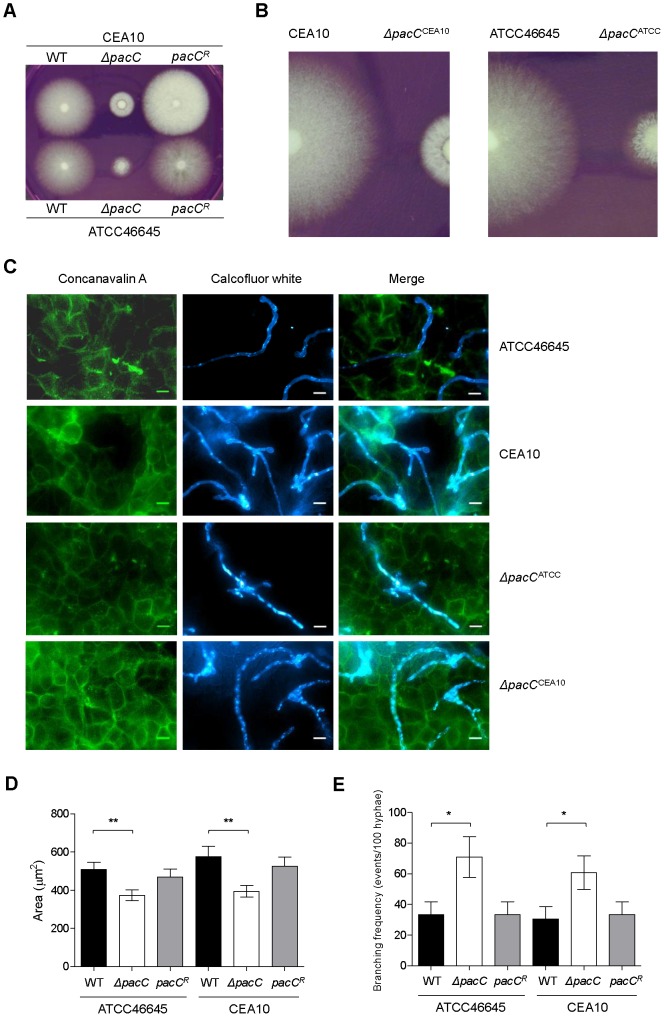
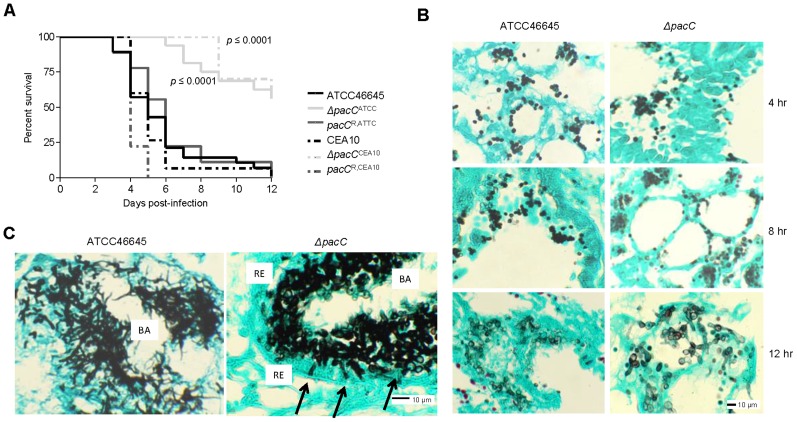
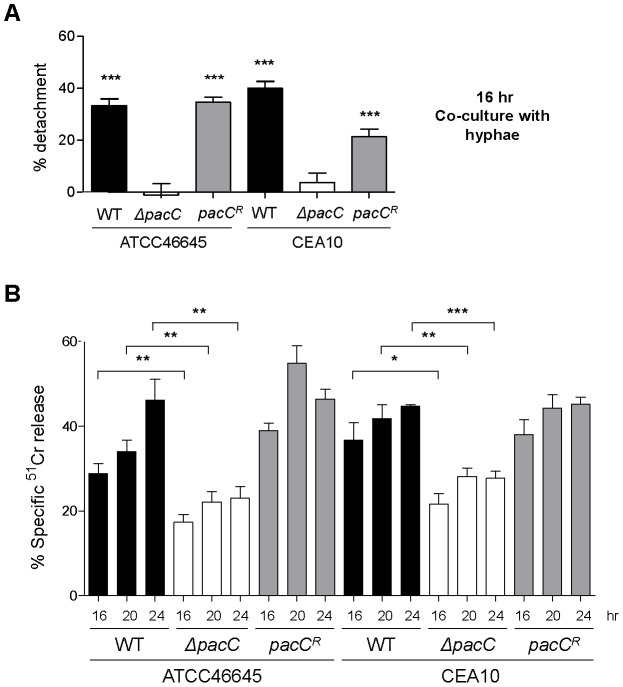
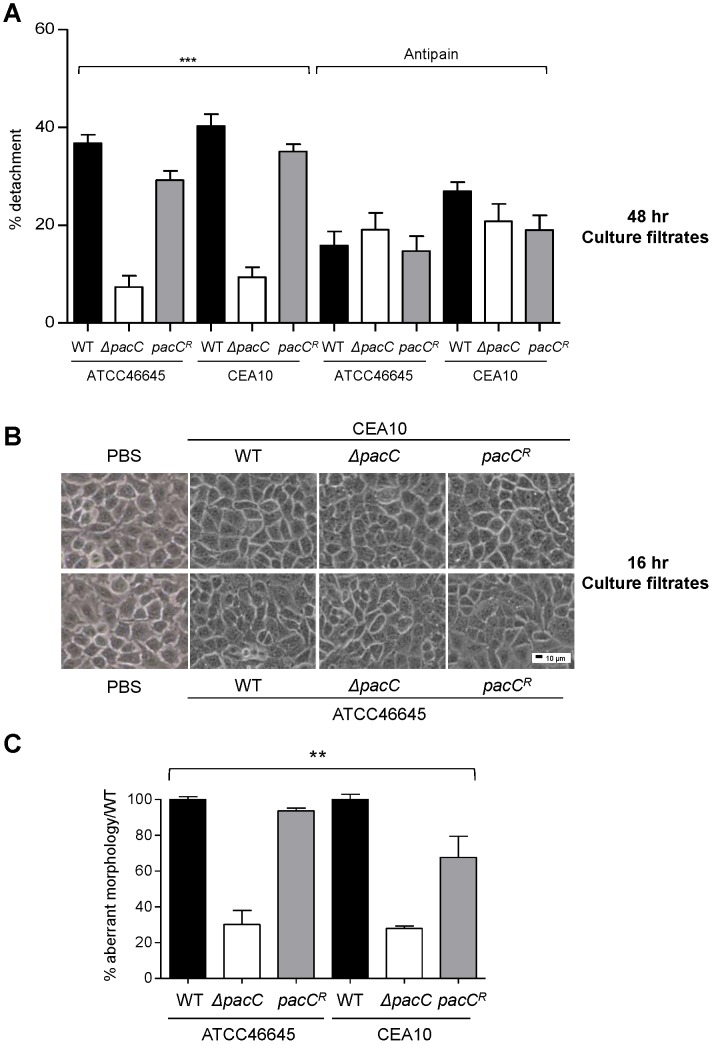
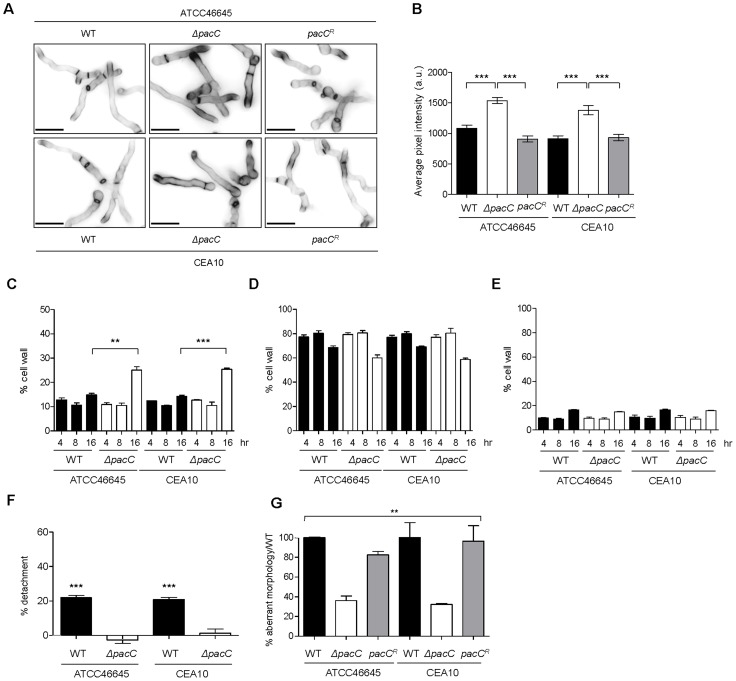
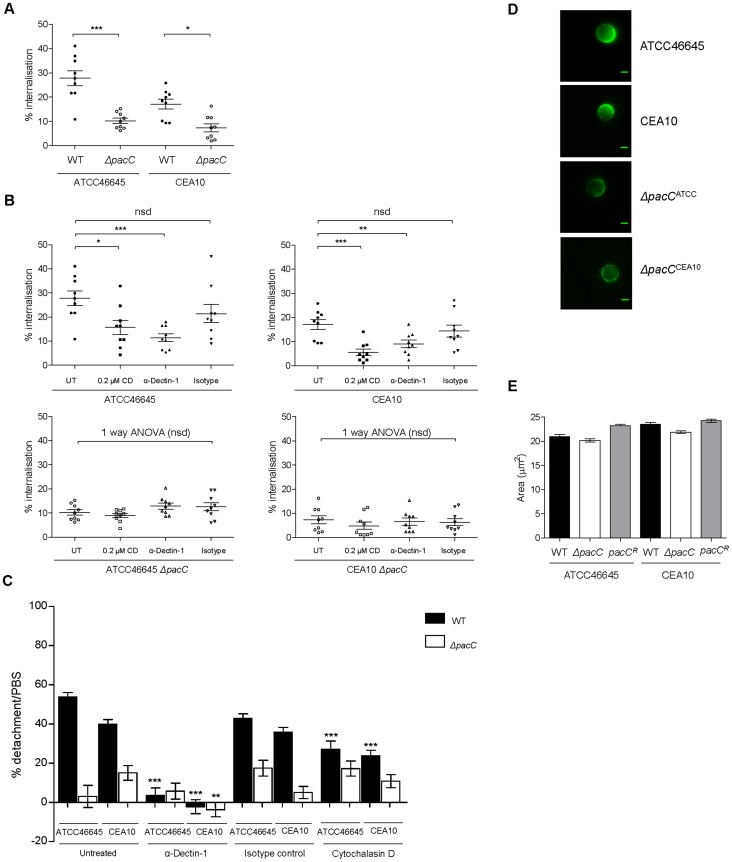
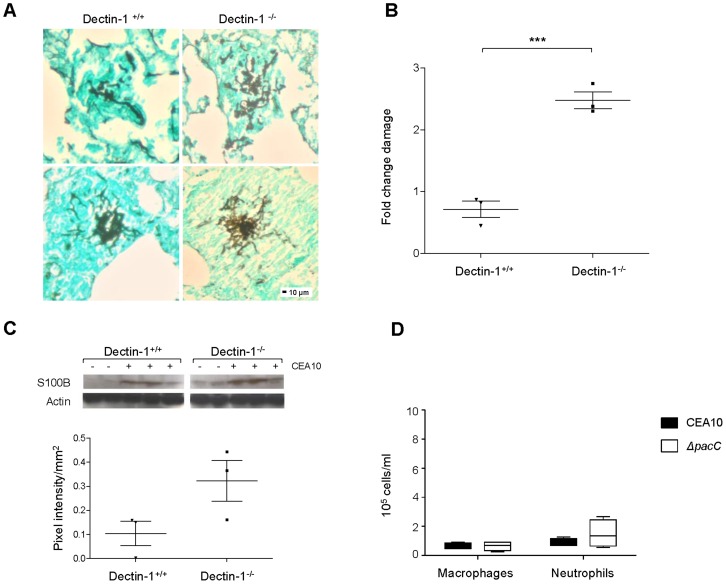
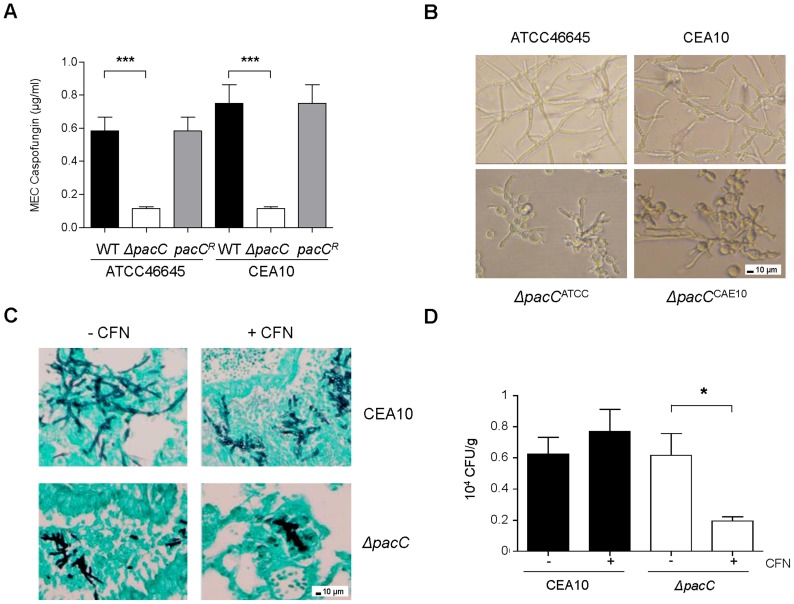
Destruction of the pulmonary epithelium is a major feature of lung diseases caused by the mould pathogen Aspergillus fumigatus. Although it is widely postulated that tissue invasion is governed by fungal proteases, A. fumigatus mutants lacking individual or multiple enzymes remain fully invasive, suggesting a concomitant requirement for other pathogenic activities during host invasion. In this study we discovered, and exploited, a novel, tissue non-invasive, phenotype in A. fumigatus mutants lacking the pH-responsive transcription factor PacC. Our study revealed a novel mode of epithelial entry, occurring in a cell wall-dependent manner prior to protease production, and via the Dectin-1 β-glucan receptor. ΔpacC mutants are defective in both contact-mediated epithelial entry and protease expression, and significantly attenuated for pathogenicity in leukopenic mice. We combined murine infection modelling, in vivo transcriptomics, and in vitro infections of human alveolar epithelia, to delineate two major, and sequentially acting, PacC-dependent processes impacting epithelial integrity in vitro and tissue invasion in the whole animal. We demonstrate that A. fumigatus spores and germlings are internalised by epithelial cells in a contact-, actin-, cell wall- and Dectin-1 dependent manner and ΔpacC mutants, which aberrantly remodel the cell wall during germinative growth, are unable to gain entry into epithelial cells, both in vitro and in vivo. We further show that PacC acts as a global transcriptional regulator of secreted molecules during growth in the leukopenic mammalian lung, and profile the full cohort of secreted gene products expressed during invasive infection. Our study reveals a combinatorial mode of tissue entry dependent upon sequential, and mechanistically distinct, perturbations of the pulmonary epithelium and demonstrates, for the first time a protective role for Dectin-1 blockade in epithelial defences. Infecting ΔpacC mutants are hypersensitive to cell wall-active antifungal agents highlighting the value of PacC signalling as a target for antifungal therapy.
Overview
The claims and statistics of this paper haven’t been checked yet.
Free: it reads the open-access text and checks the first 5 claims that cite a source we can check. Create a free account to check every claim.
Integrity signals
Registry
Cites
Statistics
Figures
Verification
Claims the paper makes
The claims and statistics of this paper haven’t been checked yet.
Free: it reads the open-access text and checks the first 5 claims that cite a source we can check. Create a free account to check every claim.
Claims other papers make about this one
Each is checked against this paper’s own text: does it say what the citing paper says it does?
The source backs part of the claim, not all of it — or backs it for a different population, condition or comparison.
In the citing paper
“Moreover, reduced epithelial cell wall damage due to defective protease secretion was observed with the pacC mutants (223).”
From Aspergillus fumigatus and Aspergillosis in 2019 (2019) · cites this paper as [223]
Experimental — accuracy not yet measuredIn the citing paper
“In this study, A. fumigatus conidia and germlings are internalized by epithelial cells in a Dectin-1-dependent manner”
From Aspergillus fumigatus and Aspergillosis in 2019 (2019) · cites this paper as [223]
In the citing paper
“A recent study with the A549 cell line and mice identified a novel role of the pH-responsive transcription factor (TF) PacC in Aspergillus pathogenicity, linked to epithelial cell penetration.”
From Aspergillus fumigatus and Aspergillosis in 2019 (2019) · cites this paper as [223]
In the citing paper
“and pacC mutants, which aberrantly remodel the cell wall during germinative growth, are able to enter efficiently into epithelial cells.”
From Aspergillus fumigatus and Aspergillosis in 2019 (2019) · cites this paper as [223]
In the citing paper
“However, PacC controls more than pH adaptation, since the pacC mutant has an altered cell wall associated with differences in susceptibility to cell wall drugs (223) (S. Raj, Z. Liu, M. Bromley, and J.-P. Latgé, unpublished data).”
From Aspergillus fumigatus and Aspergillosis in 2019 (2019) · cites this paper as [223]
1 more claim about this paper
Create a free account to see every claim other papers make about this one.
Self-check
Percentages, sums and reported differences re-computed from the paper’s own numbers.
The self-check needs the paper’s full text.
Citations
Cites
Bradford, M. M. (1976) · Analytical Biochemistry · doi:10.1016/0003-2697(76)90527-3 · Cited by 255,302 · cited 1×
“Protein concentrations were determined using the Bradford assay [74].”
MethodTowbin, H., Staehelin, T., & Gordon, J. (1979) · Proceedings of the National Academy of Sciences · doi:10.1073/pnas.76.9.4350 · Cited by 53,385
Raza, H., John, A., & Nemmar, A. (2013) · Cellular Physiology and Biochemistry · doi:10.1159/000350087 · Cited by 47,221
Systematic and integrative analysis of large gene lists using DAVID bioinformatics resources
Huang, D. W., Sherman, B. T., & Lempicki, R. A. (2009) · Nature Protocols · doi:10.1038/nprot.2008.211 · Cited by 35,890 · cited 1×
“gov/) [77,78].”
Huang, D. W., Sherman, B. T., & Lempicki, R. A. (2009) · Nucleic Acids Research · doi:10.1093/nar/gkn923 · Cited by 14,108 · cited 1×
“gov/) [77,78].”
Hidden Killers: Human Fungal Infections
Brown, G. D., Denning, D. W., Gow, N. A. R., Levitz, S. M., Netea, M. G., & White, T. C. (2012) · Science Translational Medicine · doi:10.1126/scitranslmed.3004404 · Cited by 4,284 · cited 2×
“Amongst the resultant diseases, invasive aspergillosis (IA) exerts the highest fatal toll, resulting globally in an estimated 200,000 deaths per annum [1].”
BackgroundAspergillus fumigatus and Aspergillosis
Latgé, J.-P. (1999) · Clinical Microbiology Reviews · doi:10.1128/cmr.12.2.310 · Cited by 2,307 · cited 1×
“fumigatus genome is predicted to encode more than 100 hydrolytic enzymes [55] some of which are assumed as crucial for liberation of proteinaceous nutrients from host tissues [56,57].”
BackgroundThe Genetics of Aspergillus nidulans
Pontecorvo, G., Roper, J. A., Chemmons, L. M., Macdonald, K. D., & Bufton, A. W. J. (1953) · Advances in Genetics · doi:10.1016/s0065-2660(08)60408-3 · Cited by 2,302 · cited 11×
“Aspergillus phenotypic analysis Dilutions of 103 conidia were inoculated onto ACM or supplemented AMM (as shown on Table S3) and incubated for 48 hr and 72 hr respectively.”
MethodInfluentialBrown, G. D., & Gordon, S. (2001) · Nature · doi:10.1038/35092620 · Cited by 1,579
Pappas, P. G., Alexander, B. D., Andes, D. R., Hadley, S., Kauffman, C. A., Freifeld, A., Anaissie, E. J., Brumble, L. M., Herwaldt, L., Ito, J., et al. (2010) · Clinical Infectious Diseases · doi:10.1086/651262 · Cited by 1,570 · cited 1×
“all invasive fungal infections in these cohorts and causes 58% and 34% mortality, respectively, at 12 weeks post-transplant [2–4].”
Background
Cited by
Items 101–167 of 167
Brown, A. J. P., Cowen, L. E., Pietro, A. D., & Quinn, J. (2017) · ASM Press eBooks · doi:10.1128/9781555819583.ch21 · Cited by 15
Khosravi, A., Shokri, H., AL-Heidary, S. H., & Ghafarifar, F. (2018) · Journal de Mycologie Médicale · doi:10.1016/j.mycmed.2018.02.001 · Cited by 11
Rahman, S., van Rhijn, N., Papastamoulis, P., Thomson, D. D., Carter, Z., Gregson, L., Fortune‐Grant, R., Rattray, M., Bromley, J. M., & Bignell, M. E. (2022) · Frontiers in Cellular and Infection Microbiology · doi:10.3389/fcimb.2022.907519 · Cited by 9
“Damage was measured at 16 hours and 24 hours of infection, respectively using high throughput quantitation of epithelial cell detachment and epithelial cell lysis (Bertuzzi et al., 2014; Okaa et al., 2021; Rahman et al., 2021) as indicators of host cell damage.”
InfluentialPapastamoulis, P., Furukawa, T., van Rhijn, N., Bromley, M., Bignell, E., & Rattray, M. (2019) · The International Journal of Biostatistics · doi:10.1515/ijb-2018-0052 · Cited by 9
“In contrast to colonies of wild type isolates, ∆pacC mutants exhibit fewer peripheral invasive hyphae and are composed of a denser hyphal network due to a hyperbranching morphology [4].”
BackgroundResultSelf-citationLiu, H., Lin, J., Phan, Q. T., Bruno, V. M., & Filler, S. G. (2024) · mBio · doi:10.1128/mbio.02671-24 · Cited by 9
“Although it is known that pulmonary epithelial cells express pattern recognition receptors such as dectin-1 (5, 8), there is incomplete understanding of how these cells sense and respond to fungal pathogens such as A. fumigatus .”
Self-citationEpigenetic modulations of mycoendophytes for novel bioactive molecules
Ramesha, K. P., Mohana, N. C., Nuthan, B. R., Rakshith, D., & Satish, S. (2018) · Biocatalysis and Agricultural Biotechnology · doi:10.1016/j.bcab.2018.09.025 · Cited by 9
Toledo, H., Sánchez, C. I., Marín, L., Amich, J., & Calera, J. A. (2021) · Environmental Microbiology · doi:10.1111/1462-2920.15452 · Cited by 8
The sino-nasal warzone: transcriptomic and genomic studies on sino-nasal aspergillosis in dogs
Valdes, I. D., de Ruijter, A. B. P. H., Torres, C., Breuker, J. C. A., Wösten, H. A. B., & de Cock, H. (2020) · npj Biofilms and Microbiomes · doi:10.1038/s41522-020-00163-7 · Cited by 10
Zhang, C., Liu, X., Chen, F., Hu, Y., Li, Z., Liu, Y., Han, X., Sun, Y., & Han, L. (2018) · Microbial Pathogenesis · doi:10.1016/j.micpath.2018.07.007 · Cited by 8
Novel Approaches for Fungal Transcriptomics from Host Samples
Amorim-Vaz, S., & Sanglard, D. (2016) · Frontiers in Microbiology · doi:10.3389/fmicb.2015.01571 · Cited by 11
“…stress, oxidative stress 10, 30, 60 min Microarray (6580 ORF) 972 Enjalbert et al., 2003 pH shift (pH 4 vs. pH 8) 4 h Microarray (6175 ORF) 1084 Bensen et al., 2004 Biofilm formation 24, 48, 72 h Microarray (5907 ORF) 748–856 Garcia-Sanchez et al., 2004 Nitric oxide exposure 10, 40, 70, 120…”
Bertuzzi, M., & Howell, G. J. (2021) · Methods in molecular biology · doi:10.1007/978-1-0716-1182-1_6 · Cited by 7
Self-citationConserved and Divergent Features of pH Sensing in Major Fungal Pathogens
Morvari, S. F. C., McCann, B. L., & Bignell, E. (2023) · Current Clinical Microbiology Reports · doi:10.1007/s40588-023-00195-5 · Cited by 6
Self-citationYu, Y., Hube, B., Kämper, J., Meyer, V., & Krappmann, S. (2017) · Virulence · doi:10.1080/21505594.2017.1356502 · Cited by 7
Jong, T., Stack, C. M., Moffitt, M. C., & Morton, C. O. (2025) · Pathogens · doi:10.3390/pathogens14040335 · Cited by 7
“In A. fumi-gatus , PacC is linked to the response to environmental pH and is also linked to host tissue invasion [140].”
Wang, J., Xiao, C., Liang, S., Noman, M., Cai, Y., Zhang, Z., Zhu, X., Chai, R., Qiu, H., Hao, Z., et al. (2025) · Cell Communication and Signaling · doi:10.1186/s12964-024-02022-w · Cited by 7
“Despite the evident differences in cellular environments between plants and mammals, there may be common response in invasion mechanisms between plant and animal pathogenic fungi under specific environments [63].”
Bertuzzi, M., Schrettl, M., Alcázar‐Fuoli, L., Cairns, T. C., Muñoz, A., Walker, L. A., Herbst, S., Safari, M., Cheverton, A. M., Chen, D., et al. (2015) · PLoS Pathogens · doi:10.1371/journal.ppat.1004943 · Cited by 5
Self-citationInternalization of the host alkaline pH signal in a fungal pathogenPreprint
Brown, H. E., Pianalto, K. M., Fernandes, C. M., Mueller, K. D., Poeta, M. D., & Alspaugh, J. A. (2020) · bioRxiv (Cold Spring Harbor Laboratory) · doi:10.1101/2020.10.19.345280 · Cited by 6
Jia, X., Zhang, X., Hu, Y., Hu, M., Han, X., Sun, Y., & Han, L. (2018) · Frontiers in Microbiology · doi:10.3389/fmicb.2018.02667 · Cited by 4
“Similarly to our results, the evidence of PacC-governed epithelial entry during pulmonary Aspergillosis also came from the comparison between WT and its null mutant (1pacC) that grows more slowly than WT cultured for the same hours (Bertuzzi et al., 2014).”
BackgroundResultRole of pH in the Control of Fungal MAPK Signalling and Pathogenicity
Mariscal, M., Fernandes, T. R., & Pietro, A. D. (2022) · The mycota · doi:10.1007/978-3-031-16503-0_9 · Cited by 4
Novel Host Pathways Govern Epithelial Cell Invasion of Aspergillus fumigatus
Liu, H., Shetty, A. C., Ibrahim, A. S., Filler, S. G., & Bruno, V. M. (2023) · Microbiology Spectrum · doi:10.1128/spectrum.00084-23 · Cited by 4
Self-citationCritical parameters of fungal pathogenicity at the epithelial interphase
Möslinger, A., Allert, S., Vylkova, S., & Hube, B. (2026) · microLife · doi:10.1093/femsml/uqag001 · Cited by 3
“Resting and swollen conidia, as well as germlings, are taken up by induced endocytosis (Wasylnka and Moore 2002 , Han et al. 2011 , Bertuzzi et al. 2014 , Jia et al. 2014 , Bao et al. 2015 , Zhang et al. 2019 ).”
InfluentialShi, W., Zhao, R., Zhu, J.-Q., Wan, X., Wang, L., Li, H., & Qin, S. (2023) · BMC Microbiology · doi:10.1186/s12866-023-02865-2 · Cited by 3
Lectin Receptors Expressed on Myeloid Cells
Brown, G. D., & Crocker, P. R. (2017) · ASM Press eBooks · doi:10.1128/9781555819194.ch25 · Cited by 3
Liu, H., Lin, J., Phan, Q. T., Gravelat, F. N., Sheppard, D. C., & Filler, S. G. (2023) · mSphere · doi:10.1128/msphere.00314-23 · Cited by 3
“Consistent with the previous report (13), Resource Report mSphere both conidia and germlings of the Δ pacC mutant were endocytosed very poorly by A549 cells and this invasion defect was restored with the Δ pacC + pacC complemented strain (Fig.”
BackgroundMethodResultInfluentialSelf-citationDancer, P., Pickard, A., Potocka, W., Earle, K., Fortune‐Grant, R., Kadler, K. E., Bertuzzi, M., & Gago, S. (2022) · bioRxiv (Cold Spring Harbor Laboratory) · doi:10.1101/2022.04.13.488236 · Cited by 3
Self-citationSong, Z., Zhang, H., Ye, L., Lei, Y., Wang, L., Liu, X., Soto, N. M. M., Keller, N. P., Oakley, B. R., Zhao, C., et al. (2026) · Advanced Science · doi:10.1002/advs.202519021 · Cited by 2
Self-citationOrtiz, S. C., Easter, T., Valero, C., Bromley, M., & Bertuzzi, M. (2024) · Fungal Genetics and Biology · doi:10.1016/j.fgb.2024.103942 · Cited by 2
Self-citationEndo, S., Kawauchi, M., Otsuka, Y., Han, J., Sato, R., Koshi, D., Tsuji, K., Yoshimi, A., Tanaka, C., Yano, S., et al. (2025) · Fungal Biology · doi:10.1016/j.funbio.2025.101713 · Cited by 2
Jin, L., Pei, S., Dong, L., Li, X., Kuang, Y., Zhu, W., Chen, X., & Yin, M. (2026) · Journal of Autoimmunity · doi:10.1016/j.jaut.2026.103610 · Cited by 2
Development of a murine model to study the cerebral pathogenesis of Aspergillus fumigatus
Kelty, M. T., & Beattie, S. R. (2023) · mSphere · doi:10.1128/msphere.00468-23 · Cited by 2
Ruf, D., Striegler, K., Brazil, S., Elsaman, H., Singh, K., Lepas, M., Fernando, L. D. P., Brantl, V., Heß, P., Dichtl, K., et al. (2025) · Microbiological Research · doi:10.1016/j.micres.2025.128238 · Cited by 3
Transcriptomic Analyses of Host Colonisation in Fungal Pathogens of Humans
Bignell, E. (2024) · The mycota · doi:10.1007/978-3-031-64853-3_10 · Cited by 1
Self-citationLiang, D., Jiang, Y., Ai, W., Zhang, Y., Mao, C., Ma, T., & Zhang, C. (2025) · Journal of Fungi · doi:10.3390/jof11080580 · Cited by 1
“For example, [23] demonstrated that the ∆ pacC mutant of Aspergillus fumigatus exhibited significantly reduced activity in epithelial cell detachment assays and completely lacked protease activity in gelatin degradation assays, indicating that PacC promotes host invasion by regulating expression of…”
Lu, Y., Wu, D., Hu, J., Peng, G., Zhong, J., Liu, Y., Li, J., Gao, Q., & Yu, X. (2025) · Virulence · doi:10.1080/21505594.2025.2591402 · Cited by 1
“The pH-responsive PacC transcription factor is required for environmental fitness, development, and virulence of different fungal pathogens [30,40].”
Williams, T. J., Griffiths, J. S., Gonzales-Huerta, L. E., Bell, D., Reed, A. K., Shah, A., Naglik, J. R., & Armstrong-James, D. P. H. (2026) · Allergy · doi:10.1111/all.70256 · Cited by 1
Self-citationIn the Crossroad Between Drug Resistance and Virulence in Fungal Pathogens
Cavalheiro, M., & Teixeira, M. C. (2018) · Springer eBooks · doi:10.1007/978-3-030-00683-9_7 · Cited by 1
Automated Quantitative Analysis of Airway Epithelial Cell Detachment Upon Fungal Challenge
Rahman, S., Thomson, D. D., & Bertuzzi, M. (2021) · Methods in molecular biology · doi:10.1007/978-1-0716-1182-1_16 · Cited by 2
Self-citationPalmieri, F., Diserens, J., Gresse, M., Magnin, M., Helle, J., Salamin, B., Bisanti, L., Bernasconi, E., Pernot, J., Shanmuganathan, A., et al. (2024) · Microorganisms · doi:10.3390/microorganisms12102025 · Cited by 1
ACCESSORY GENES CONTRIBUTE TO REWIRING THE TRANSCRIPTIONAL NETWORK IN FUSARIUM OXYSPORUM
Yang, H. S. (2020) · Scholarworks (University of Massachusetts Amherst) · doi:10.7275/17444292 · Cited by 1
Clark, P. S. (2019) · University of Birmingham Institutional Research Archive (University of Birmingham) · Cited by 2
Host-Induced Stress Response in Human Pathogenic Fungi
Viana, R., Pais, P., Cavalheiro, M., Galocha, M., & Teixeira, M. C. (2021) · Elsevier eBooks · doi:10.1016/b978-0-12-819990-9.00035-4 · Cited by 1
Furlong-Silva, J., Vere, G., Nguyen, P. T., Gotts, N., Xu, Y., Colombo, S. A. P., Conn, D. P., McCann, B. L., Cruz, A., Alsharq, L., et al. (2025) · bioRxiv (Cold Spring Harbor Laboratory) · doi:10.1101/2025.07.13.664342 · Cited by 1
“However, these findings were predominantly drawn from either fungal infection models (with immunocompromised mice and/or a large inoculum) or allergy models with allergen extracts 20,77,78,81,82 .”
Self-citationPathogen-Specific Adaptations to Conserved Signaling Pathways in Cryptococcus neoformans
Ost, K. S. (2016) · DukeSpace (Duke University)
Assessment of Aspergillus Section Fumigati in Occupational Environments – A Bibliographic Review
Sousa, P., & Viegas, C. S. B. (2021) · Elsevier eBooks · doi:10.1016/b978-0-12-819990-9.00041-x
Yu, J., & Park, H.-S. (2018) · Faculty Opinions – Post-Publication Peer Review of the Biomedical Literature · doi:10.3410/f.734151230.793552591
Valero, C., Pinzan, C. F., de Castro, P. A., van Rhijn, N., Earle, K., Liu, H., Horta, M. A. C., Kniemeyer, O., Krüger, T., Pschibul, A., et al. (2023) · bioRxiv (Cold Spring Harbor Laboratory) · doi:10.1101/2023.08.22.553365
Self-citationLuperini, R. S. (2023) · Digital Library of Theses and Dissertations (Universidade de São Paulo) · doi:10.11606/d.17.2023.tde-17102023-105339
CRISPR-Cas in Enhancing Secondary Metabolites of Fungi for Use as Bioherbicides
Das, M., Ray, D., Misra, D., & Ray, P. (2025) · Springer eBooks · doi:10.1007/978-3-642-36202-6_247-1
Shi, W.-J., Zhao, R., Zhu, J.-Q., Wan, X.-H., Wang, L.-B., Li, H., & Qin, S. (2024) · Figshare · doi:10.6084/m9.figshare.26585898
Shi, W.-J., Zhao, R., Zhu, J.-Q., Wan, X.-H., Wang, L.-B., Li, H., & Qin, S. (2024) · Figshare · doi:10.6084/m9.figshare.26585904
Shi, W.-J., Zhao, R., Zhu, J.-Q., 万夕和, Wang, L.-B., Li, H., & Qin, S. (2024) · Figshare · doi:10.6084/m9.figshare.26585883
Shi, W.-J., Zhao, R., Zhu, J.-Q., 万夕和, Wang, L.-B., Li, H., & Qin, S. (2024) · Figshare · doi:10.6084/m9.figshare.26585895
Shi, W.-J., Zhao, R., Zhu, J.-Q., 万夕和, Wang, L.-B., Li, H., & Qin, S. (2024) · Figshare · doi:10.6084/m9.figshare.26585907
Shi, W.-J., Zhao, R., Zhu, J.-Q., 万夕和, Wang, L.-B., Li, H., & Qin, S. (2024) · Figshare · doi:10.6084/m9.figshare.26585910
Shi, W.-J., Zhao, R., Zhu, J.-Q., Wan, X.-H., Wang, L.-B., Li, H., & Qin, S. (2024) · Figshare · doi:10.6084/m9.figshare.26585889
Shi, W.-J., Zhao, R., Zhu, J.-Q., 万夕和, Wang, L.-B., Li, H., & Qin, S. (2024) · Figshare · doi:10.6084/m9.figshare.26585886
Shi, W.-J., Zhao, R., Zhu, J.-Q., Wan, X.-H., Wang, L.-B., Li, H., & Qin, S. (2024) · Figshare · doi:10.6084/m9.figshare.26585880
Shi, W.-J., Zhao, R., Zhu, J.-Q., Wan, X.-H., Wang, L.-B., Li, H., & Qin, S. (2024) · Figshare · doi:10.6084/m9.figshare.26585892
Shi, W.-J., Zhao, R., Zhu, J.-Q., 万夕和, Wang, L.-B., Li, H., & Qin, S. (2024) · Figshare · doi:10.6084/m9.figshare.26585901
Control of cytosolic pH homeostasis in the fungal plant pathogen Fusarium oxysporum
Mariscal, M. (2023) · Universidad de Córdoba Insitutional Repository (Universidad de Córdoba)
Earle, K., Ortiz, S. C., Valero, C., Bertuzzi, M., Bowyer, P., Bromley, M., & Gago, S. (2025) · F1000Research · doi:10.12688/f1000research.172319.1
Self-citationLiu, H., Lee, P., Vo, A., Paul, S., Phan, Q. T., Lin, J., Bruno, V. M., Stamnes, M. A., Moye-Rowley, S., & Filler, S. G. (2026) · Microbiology Spectrum · doi:10.1128/spectrum.04036-25
Self-citationInvasive growth in a human fungal pathogen : mechanical forces and cellular reorganization
Puerner, C. T. S. (2020) · theses.fr (ABES) · doi:10.70675/1186056bz53ebz48ecz9c29z9cdd6eb6dde1
Bian, X., Xu, D., Shen, Y., Piracha, Z. Z., Saeed, U., Ozsahin, D. U., & Ma, Z. (2026) · Archives of Microbiology · doi:10.1007/s00203-026-04849-y
“…cell line, have shown that A. fumigatus can disrupt epithelial integrity, activate MAPK and NF-κB signaling, induce cytokine production, and modulate host defense responses under infection-like conditions (Bertuzzi et al. 2014, Bignell et al. 2016, Hohl et al. 2009, Sheppard and Filler 2014 ).”
From the lungs and beyond: host–fungal interactions in disseminated aspergillosis
Sanchez, D., & Beattie, S. R. (2026) · Current Opinion in Microbiology · doi:10.1016/j.mib.2026.102798
Metadata
- Authors
- Bertuzzi, M., Schrettl, M., Alcazar-Fuoli, L., Cairns, T. C., Muñoz, A., Walker, L. A., Herbst, S., Safari, M., Cheverton, A. M., Chen, D., Liu, H., Saijo, S., Fedorova, N. D., Armstrong-James, D., Munro, C. A., Read, N. D., Filler, S. G., Espeso, E. A., Nierman, W. C., Haas, H., & Bignell, E. M.
- Affiliations
- University of Manchester (GB)
- Innsbruck Medical University (AT)
- University of Exeter (GB)
- University of Aberdeen (GB)
- Imperial College London (GB)
- National Institutes of Health (US)
- University of California, Los Angeles (US)
- Chiba University (JP)
- Consejo Superior de Investigaciones Científicas (ES)
- Corresponding author
- Bignell, Elaine M.
- ORCID
- Venue
- PLoS Pathogens
- Publisher
- Public Library of Science (PLoS)
- Published
- 2014-10-16
- Volume
- 10
- Issue
- 10
- Pages
- e1004413
- ISSN
- 1553-7366 (ISSN-L)
- 1553-7374
- PMC
- PMC4199764
- OpenAlex
- W2057948698
- Cited by
- 158
- References
- 88
- Citations by year
- 2026: 7 · 2025: 10 · 2024: 13 · 2023: 13 · 2022: 8 · 2021: 20 · 2020: 16 · 2019: 9 · 2018: 21 · 2017: 16 · 2016: 16 · 2015: 8
- FWCI
- 9.29
- Type
- journal article
- Language
- en
- Update notices
- Open access
- gold
- doi.org
- Licence
- public-domain
- Locations
- PLoS Pathogens (publishedVersion, public-domain)
- Europe PMC (PubMed Central) (publishedVersion, public-domain)
- PubMed Central (publishedVersion, public-domain)
- PubMed (publishedVersion)
- Aberdeen University Research Archive (Aberdeen University) (submittedVersion)
- DIGITAL.CSIC (Spanish National Research Council (CSIC)) (submittedVersion, cc-by)
- LA Referencia (Red Federada de Repositorios Institucionales de Publicaciones Científicas) (submittedVersion, cc-by-nc-sa)
- DOAJ (DOAJ: Directory of Open Access Journals) (submittedVersion, cc-by-sa)
- eScholarship (California Digital Library) (submittedVersion)
- Figshare (submittedVersion, cc-by)
- Research Explorer (The University of Manchester) (submittedVersion, other-oa)
- Spiral (Imperial College London) (submittedVersion)
- Funders
- Wellcome Trust (WT093596MA)
- Imperial College London
- University of Aberdeen
- Austrian Science Fund
- National Institutes of Health
- Medical Research Council (G0501164, MR/L000822/1)
- Biotechnology and Biological Sciences Research Council (BB/G009619/1)
- Japan Society for the Promotion of Science (26293094)
- National Institute of Allergy and Infectious Diseases (R01AI073829)
- Topics
- Health Sciences › Medicine › Infectious Diseases › Antifungal resistance and susceptibility
- Life Sciences › Biochemistry, Genetics and Molecular Biology › Molecular Biology › Fungal and yeast genetics research
- Health Sciences › Medicine › Infectious Diseases › Fungal Infections and Studies
- Keywords
- Aspergillus fumigatus, PacC transcription factor, pulmonary aspergillosis, tissue invasion, Dectin-1, beta-glucan receptor, cell wall, fungal proteases, antifungal drug targets, fungal pathogenesis
- MeSH terms
- Animals, Aspergillus fumigatus, Epithelial Cells, Fungal Proteins, Hydrogen-Ion Concentration, Transcription Factors, Mice, Pulmonary Aspergillosis
About these checks
Registry, retraction, Cites and statistics results are computed, not judged, with one exception: a printed reference that no index lists is read once by a model before it counts as a citation error. Claims are extracted by a model and kept only when their quote appears verbatim in the text; each cited source is then checked, with a model’s help, for whether it says what the claim relies on. Those verdicts can be wrong — read the claim’s quote and the cited source before relying on one.
Statistics and arithmetic are recomputed, not judged.
Confidence bands are shown only for fields calibrated on our annotated test set. None is calibrated yet, so no band is shown.
What counts as a claim ›How we measure confidence ›How we check this ›
Are you an author, or do you see a problem with this page? Request a review
Data sources
Bibliographic data: Semantic Scholar, OpenAlex, Crossref.
Contains information from the Semantic Scholar Academic Graph Datasets, made available under the ODC Attribution License (ODC-BY 1.0).
Semantic Scholar’s data is described in: Kinney, R., et al. (2023). The Semantic Scholar Open Data Platform. arXiv:2301.10140.
